




Abstract
This study explores stratification within the Austrian university system by focusing on social selectivity and gender-segregation across fields of study. We investigate how much the choice of field of study is associated with parental educational background and the gender of the students—especially, how these characteristics vary across individual (teaching) subjects. Teacher training is often regarded as typically chosen by women and preferred by so-called educational climbers. However, previous studies focus on clusters of fields of study and do not take into account the differences between individual (teaching) subjects. We address this research gap by focusing on a comparison between those who have chosen to undergo a teaching program in a specific subject and those who have studied this specific subject without pedagogical training. By using administrative data from first-year students at Austrian state universities (N = 23,400) in 2016–2017, and applying logistic regression analysis, the results demonstrate that in almost all analyzed fields of study, similar patterns of gender-segregation according to the choice of fields of study can be observed, regardless of whether it concerns a teacher training subject or a corresponding equivalent academic subject. Educational climbers tend to opt more frequently for teacher training subjects than for their corresponding fields—especially in some of the mathematics-oriented science, technology, engineering, and mathematics (STEM) subjects. We contribute to comparative sociological literature by introducing the approach of comparing teacher training subjects to their academic equivalents and revealing a more nuanced picture regarding horizontal inequalities in higher education.
Introduction
Since the 1960s, educational expansion has represented a major factor of social change in the countries of Western Europe. Educational expansion was accompanied by sweeping economic changes and democratization efforts, which strived to reduce social and gender-related inequalities in educational and vocational pathways to achieve a more inclusive society (Hadjar and Becker, 2017). While low educational background imposes high individual, economic, and social costs (increased risk of unemployment and illness, loss of tax revenue, higher transfer payments, loss of social cohesion, loss of interest in democracy etc.), a higher level of education reduces the risk of exclusion from cultural, economic, and social participation. For these reasons, the European Union (EU) and many other countries, such as the United States or Australia, have made a strong political effort to increase access, participation, and completion rates of underrepresented groups in higher education and in mobilizing the potential “talent reserves” in society, since the second half of the 20th century (Picht, 1964).
In this context, the number of university students, higher education institutions, and the range of educational courses on offer has increased substantially (Organization for Economic Cooperation and Development (OECD), 2016, 2018a). These developments could be interpreted as an indicator of reduced social inequality. However, numerous studies show that these changes caused more horizontal segregation, that is, stratification within the systems of higher education (Ayalon and Mcdossi, 2018; Ayalon and Yogev, 2005; Helland and Wiborg, 2018; Van de Werfhorst and Luijkx, 2010). According to Triventi (2013b), “Stratification of higher education refers to the degree of variation in selectivity, quality/prestige and labor market value of different courses, fields of study and institutions” (Triventi 2013b: 48–49). Stratification produces a diversity of educational pathways which lead to a variation in life chances, and thus is a major driver of the reproduction of inequalities (Hadjar and Gross, 2016).
In a highly stratified higher education system, types of institutions and fields of study are hierarchically ordered and access to them is strongly affected by social origin (Brown et al., 2013; Triventi et al., 2017). Research in the sociology of education argues that the associated devaluation of academic degrees which accompanied educational expansion further supported growing horizontal segregation within university systems (Cappelli, 2020; Engberg, 2012; Gerber and Cheung, 2008; Lauder and Mayhew, 2020; Lörz et al., 2011; Triventi et al., 2017). Therefore, the professional future of young people is critically dependent not only on a university degree, but also on the subject studied and the awarding institution. Thus, the students’ choice of field of study is one crucial factor in furthering social inequality.
Teacher training is a particularly interesting area of research in the field of reproduction of social inequality, because the effects of socioeconomic and gender-related inequalities are strongly evident in teacher training courses (Cushman, 2007; Denzler, 2014; Heinz, 2015; Keck Frei et al., 2017). The teaching profession is typically regarded as a profession preferred by middle-class students (Erikson and Goldthorpe, 1992; Lautenbach, 2018). Nevertheless, teacher training is also known for being typically chosen by female students and students from low educational backgrounds (Ayalon and Yogev, 2005; Kühne, 2006; Lautenbach, 2018; Lojewski, 2011; Triventi, 2013a; Van de Werfhorst and Kraaykamp, 2001; Van de Werfhorst and Luijkx, 2010; Zarifa, 2012). Although some studies find that the sociodemographic characteristics of teachers do not necessarily affect students’ success in education (Helbig, 2010; Leitgöb et al., 2012), it is recommended that the composition of teachers should reflect the social diversity of the students’ population (OECD, 2016). Teachers are seen as role models and are indirectly involved in the reproduction of gender stereotypes with reference to disciplinary cultures (see e.g. “hard” vs “soft” approaches). Therefore, detailed analyses are highly relevant as they provide a more heterogeneous picture of the student population.
However, most studies do not differentiate between individual fields of study (Helland and Wiborg, 2018; Prix, 2011; Reimer and Pollak, 2010; Triventi, 2013a; Van de Werfhorst and Luijkx, 2010). Instead, most often fields of study are clustered (e.g. teacher training, natural sciences, social sciences and/or health). The available research on stratification of higher education and research focused on teacher training indicate that the individual fields of study, in undifferentiated clusters, may vary significantly in their prestige and the socioeconomic and sociodemographic characteristics of their students (Bergmann and Eder, 1994; Neugebauer, 2013; Rothland, 2011; Treptow, 2006; Willer, 1993).
This study sheds light on these variations by focusing on the choice of field of study and how much this choice is associated with the educational background and gender of the students. We investigate how these characteristics (parental education and gender) vary across different subjects of teacher training courses (e.g. mathematics as a teaching subject) as well as their corresponding non-teacher training equivalents (e.g. mathematics). Importantly, instead of looking at broad subject areas, our study’s aim is to focus on single subjects by making a comparison between those who chose to train as a teacher in a specific subject and those who studied this subject without additional pedagogical training.
This type of comparison enables us to challenge the thesis, posited earlier, that teacher training is typically chosen by women and students from low educational backgrounds. An analysis is conducted into whether women tend to choose a teacher training course more often than the equivalent academic subject without the pedagogical training. Furthermore, this analysis tests whether those whose parents are not educated to the tertiary level more often attempt to “climb the societal ladders” via a teacher training course instead of choosing to study the corresponding non-teacher training subject. Thus, this article provides a twofold comparative perspective. On one hand, teacher training courses are compared separately instead of collectively and, on the other hand, they are interpreted in relation to their corresponding courses.
The overall research question guiding our analysis is the following: To what extent can horizontal segregation be identified within teacher training subjects (e.g. mathematics teacher training) and their corresponding subjects (e.g. mathematics) based on the educational background of parents and the gender of students? By drawing on administrative data from first-year students at Austrian state universities (N = 23,400) 1 in 2016–2017, we computed descriptive statistics as well as multinomial logistic regression analysis. The latter approach enables estimation of the likelihood of choosing a particular subject, dependent on the parental level of education and gender. Average marginal effects (AMEs) were used for an easier interpretation of the corresponding results. By comparing teacher training courses not only against each other, but also with their corresponding subjects (e.g. mathematics as a teaching subject compared with academic mathematics), we are able to investigate whether existing social or gender-related effects are related to a general over- or underrepresentation of certain groups in specific subjects or whether the effects are specific to teacher training courses. So far, the empirical evidence derived by such a differentiated approach is scarce in Austria and beyond, and more research is needed to add depth to the data on the population of prospective teachers.
The study is organized as follows: the theoretical approaches and current empirical findings, outlining the mechanisms of social selectivity and gender-segregation affecting the choice of field of study in general, but also regarding teacher training courses in particular, are presented in section “Social selectivity and gender-segregation in the choice of field of study.” An overview of the Austrian university landscape is provided in section “Higher education and teacher training in Austria.” Section “Data, method, and variables” presents the methodology for the collection of data and research as well as the variables used. The empirical results are presented in section “Results.” The main findings and the contribution of this study are summarized in the concluding section “Discussion and conclusion.”
Social selectivity and gender-segregation in the choice of field of study
In this section, we discuss theoretical approaches which attempt to explain social selectivity in the choice of field of study and present current literature on study choices related to the individuals’ educational background (see section “Social selectivity in the choice of field of study”). In addition, we discuss approaches and current empirical findings that help us to understand the mechanisms responsible for gender-segregation in the choice of field of study (see section “Gender-segregation in the choice of field of study”). Drawing on these considerations, we argue why it is important to study subject-specific choices in teacher training (see section “Importance of analyzing social selectivity and gender segregation in teacher training courses”).
Social selectivity in the choice of field of study
In recent years, an increasing number of studies sought to illuminate horizontal inequalities with respect to student segregation by parental educational background and gender (e.g. Ayalon and Mcdossi, 2018; Lažetić, 2020; Pickard and Ingersoll, 2016; Triventi, 2013a, 2013b; Triventi et al., 2017). Inequalities within higher education systems can manifest themselves in the type of higher education institutions (e.g. universities vs universities of applied sciences (Fachhochschulen)), in the segregation of individual institutions of the same type, as well as in fields of study (Lörz et al., 2011; Shavit et al., 2007; Triventi, 2013a; Van de Werfhorst, 2002).
Rational-choice theories (Boudon, 1974; Erikson and Jonsson, 1996), including the expectancy value perspective (Esser, 1999; Gottfredson, 1981; Holland, 1997), are widely used to explain choice of field of study with reference to social inequality and with respect to teacher training (Denzler and Wolter, 2009; Lautenbach, 2018; Neugebauer, 2013). Research that draws on the rational choice theory and the expectancy value perspective assumes that individuals make their decisions on various education options depending on their subjective assessments of the costs (e.g. duration of studies and tuition fees), the benefits (e.g. low risk of unemployment) and the chance of success (e.g. difficulty of the course) (Bieri Buschor et al., 2012; Bieri Buschor et al., 2014; Boudon, 1974; Eccles, 2011; Erikson and Jonsson, 1996; Esser, 1999; Fischer et al., 2019; Gottfredson, 1981; Hägglund and Lörz, 2020; Holland, 1997; Neugebauer, 2013). From this perspective, it is argued that the evaluation of costs and benefits varies according to the individuals’ socioeconomic position (Denzler and Wolter, 2009) and that students from lower educational backgrounds attach greater importance to financial factors when choosing their course of studies (Becker et al., 2010; Lautenbach, 2018).
The above also applies to the choice of the teaching profession (Eder et al., 2013; Lautenbach, 2018). The teacher training course is often referred to as an “upward mobility course,” which means that those who opt for a teaching career tend to come from lower socioeconomic backgrounds, whereas those from more academically educated families more frequently opt for prestigious fields such as medicine or law (Ayalon and Mcdossi, 2018; Denzler and Wolter, 2009; Hörl, 2008; Lautenbach, 2018; Lojewski, 2011; Reimer and Pollak, 2010; Triventi, 2013a).
This can be explained, among other things, by the fact that the average duration of a teacher training course tends to be comparatively shorter, which also has a mitigating effect on the costs incurred by the course. Students of teaching subjects are more likely to complete their studies in the shortest available time, compared with the students of other subjects.
Furthermore, the teaching qualification is considered comparatively easy to achieve, and hardly any other academic profession is as familiar to students from non-academic backgrounds as that of a teacher. This in turn reduces the more negative self-assessment of educationally disadvantaged students, concerning the chances of successfully mastering the studies required for an academic profession (Denzler and Wolter, 2009; Eder et al., 2013; Lautenbach, 2018). Similarly, the social conditions—such as job security and reliable working hours—of the teaching profession are a greater incentive for students from educationally disadvantaged backgrounds (Eder et al., 2013; Neugebauer, 2013, 2015). This is often explained by the fact that students from lower educational backgrounds exhibit a more pronounced security orientation and practical orientation and show a less pronounced career orientation (Lautenbach, 2018; Neugebauer, 2015).
While the findings are clear that teacher education at both primary and lower secondary level is frequently chosen by students from lower educational backgrounds, it is less clear for teacher education at higher secondary level (Kühne, 2006; Neugebauer, 2013; Reimer and Pollak, 2010; Rothland, 2011). This is due to the fact that the prestige of the teaching profession—at least in the German-speaking countries—differs significantly according to the type of school, with academic secondary schools enjoying higher prestige than teachers at other types of schools (e.g. primary schools) (Lautenbach, 2018).
While this section has highlighted the importance of the students’ educational background for the choice of field of study and choosing teaching as a career, the next section discusses gender-segregation across fields of study.
Gender-segregation in the choice of field of study
In addition to social origin as a significant factor affecting the choice of study, divergent study choices by men and women are also a known phenomenon, reliably observed worldwide and remaining comparatively stable over time (Bieri Buschor et al., 2012; Bieri Buschor et al., 2014; Hägglund and Lörz, 2020). Although there has been a significant reduction in the gender differential in the take-up of medical sciences and law (Reimer and Pollak, 2010), differences in the mathematics-oriented science, technology, engineering, and mathematics (STEM) subjects as well as linguistic subjects are still striking (OECD, 2019; Hägglund and Lörz, 2020; Legewie and DiPrete, 2014a, 2014b).
This can be explained by widely shared cultural beliefs about gender and task competence that bias actors’ perceptions of their competence at various skills, independent of any actual differences in ability or merit. This can lead to different subject choices, as one must feel at least competent at the skills or tasks necessary for a given career in order to commit oneself to pursuing it (Correll, 2001).
These shared cultural beliefs, where notions of masculinity and femininity are culturally embedded, mediated, and solidified through interaction processes with parents, teachers, and peers (Hägglund and Lörz, 2020). Children and adolescents often experience female-centered parental responsibility over many years. Teachers also present gender role models to their students through their own gender-specific subject choices (Alheit, 2009a, 2009b; Klika, 2007). In this context, Hörl (2008) shows that the gender-specific subject choices of girls and boys correspond to the gender-specific subject specializations of their teachers.
In addition, from an expectancy value perspective, it is assumed that men are more likely to pursue career paths associated with improved income prospects and opportunities for advancement, while women anticipate greater responsibility for later family life already during transition to university (Denzler and Wolter, 2009; Hägglund and Lörz, 2020; Lundgreen, 1999; Neugebauer, 2013). Due to gender-segregation and the gap in income between men and women in the labor market, the teaching profession appears to be economically more attractive for women than for men (Hörl, 2008; Neugebauer, 2013; Wolter and Denzler, 2003). For instance, income losses as a result of a career break tend to be lower within the teaching profession than in other occupations. In addition, teaching seems to fit in relatively well with family life (Lojewski, 2011).
The overrepresentation of women within teacher training courses is especially striking for teacher training at the primary and lower secondary levels (Bieri Buschor et al., 2012; Faulstich-Wieland, 2014; Fischer et al., 2019; Kühne, 2006; Neugebauer, 2013). In terms of the subject-specific differentiation of student teachers at the higher secondary level, there are only a few studies that show that women tend to choose linguistic subjects, such as English, German, and Spanish more often than men (Glutsch et al., 2018; Hörl, 2008). On the contrary, men tend to choose mathematics-oriented STEM subjects, history, sports and physical education, and computer sciences more frequently than women (Glutsch et al., 2018; Hörl, 2008; Neunteufl and Atanasoska, 2019). However, those studies only draw on descriptive statistics and mostly focus on only one institution, and therefore can hardly be generalizable. They also do not take into account gender-segregated choices outside of teacher training.
Importance of analyzing social selectivity and gender-segregation in teacher training courses
Due to recurrent teacher shortages throughout Europe (European Commission et al., 2013; OECD, 2018b) and a similar earning potential, one could argue that social selectivity and gender-segregation are not of significant relevance when analyzing teacher training courses. However, differences in prestige and expected future employment market returns can also be found within these courses. As a result, individual employment opportunities depend not only on the overall demand for teachers, but also on the specific teaching subjects, which is why it is important to take a closer look at the extent to which specific subject choices within the teacher training course differ by educational background and gender.
In Austria, which is the national context for the empirical analysis of this study, individual employment opportunities for teacher graduates are clearly dependent on their chosen subject (Public Employment Service Austria, 2018a, 2018b). Despite regional differences, it is particularly clear that those who have chosen natural sciences or technical fields of study, such as physics or computer science, have currently good career prospects. At present, the demand for German, English, and mathematic teachers is also high due to the expected wave of teacher retirements in Austria and due to the fact that these subjects have a high share of teaching hours in the curricula of secondary schools. For subjects with fewer teaching hours, such as Spanish, or psychology/philosophy, the demand is lower. The graduates in these subjects often have to endure long waiting lists before they are assigned a position at a school. Long waiting lists are also reported for teacher candidates in history and economics (Public Employment Service Austria, 2018b).
As a result, many young teacher graduates switch to non-teaching occupations. However, this means that their job opportunities depend on the demand for their chosen field of study in the non-teaching employment market (Public Employment Service Austria, 2018a). In addition, these teaching graduates must compete with graduates of corresponding subjects without pedagogical training. The latter have a competitive advantage due to their more specific qualifications (Public Employment Service Austria, 2018b). Therefore, it can be assumed that future employment prospects also play a vital role in the choice of subject for the student teachers. For these reasons, this study argues that it is highly relevant to investigate horizontal segregation within the teaching profession in relation to educational background and gender.
To summarize, previous studies show a rather ambiguous picture of teacher training courses and social inequality. While some results suggest that women and students with low educational backgrounds are more likely to choose a teacher training course (Becker et al., 2010; Kühne, 2006; Lautenbach, 2018; Reimer and Pollak, 2010), others show that the social composition of students enrolled in teacher training courses does not differ significantly from students in other courses (Neugebauer, 2013; Rothland, 2011). However, to our knowledge, analyses of teacher training courses from a differentiated and relational perspective are still scarce. Previous international studies include clustered fields of study, but they do not provide a detailed social- and gender-related analysis focusing on individual teacher training courses (Helland and Wiborg, 2018; Kühne, 2006; Lautenbach, 2018). And those studies that provide more detailed analyses (e.g. Glutsch et al., 2018; Hörl, 2008; Neunteufl and Atanasoska, 2019) draw mainly on the descriptive statistics of only one institution.
In this regard, we are aiming to explore whether teacher training courses are preferentially chosen by women and by students from low educational backgrounds. Furthermore, we compare teacher training courses with their corresponding subjects (e.g. mathematics as a teaching subject compared with mathematics as a general area of academic study), based on these two criteria (educational background of parents and gender).
It is posited that teacher training courses and their corresponding subjects are comparable according to their disciplinary culture (Lojewski, 2011). Furthermore, they are partly comparable in terms of future career opportunities. The graduates of teacher training subjects may still decide against working as secondary school teachers and choose to pursue a career in their specific field. Non-teacher training students can also become teachers at a later stage, though they need to complete the relevant teaching courses.
In the following section, we outline an overview of the Austrian university landscape and discuss how the presented literature can be applied in this context.
Higher education and teacher training in Austria
In Austria, the transition to university is already marked by a strong selection by social origin: Overall, the university access rate is as high as 27 percent for state universities and amounts to 45 percent across the entire higher education landscape. These admission rates are particularly low when compared internationally (OECD average of 57%). One reason is that Austria has a well-established vocational education and training (VET) system outside of higher education (Federal Ministry of Education, Science and Research, 2020; OECD, 2017; Unger et al., 2020).
Despite being a relatively small country, Austria has 22 state universities, 21 universities of applied sciences (Fachhochschule), 14 teacher training university colleges (Pädagogische Hochschule) and 16 private universities (Federal Ministry of Education, Science and Research, 2021). Compared with the situation in other countries, such as the United Kingdom or the United States, there is little prestige-based segregation among the state universities in Austria. The Austrian university landscape is therefore marked by low institutional differentiation.
In a higher education system where the institutional hierarchy is relatively “flat,” the field of study is more of a determining factor in terms of graduate earnings and status (Marginson, 2016), and so the choice of study field is very significant for measuring stratification based on parental education and gender in Austria. Compared with other countries, where fields of study also vary in terms of tuition fees, in Austria no fees are levied if students complete the study course within a strictly defined study period. The choice of the field of study is therefore less determined by economic barriers, but rather by other mechanisms, such as parental educational background (Dustmann, 2004).
The secondary school leaving certificate (Matura) entitles applicants to undertake a study course of their choice, at the university of their choice. However, a recent change in legislation has allowed universities to implement access restrictions, not for the institution as a whole but for specific courses on offer which faced particularly high levels of applications. These courses include medicine, veterinary medicine, psychology, journalism and communication, business, economics, social sciences, architecture, biology, technology, teacher training, and pharmaceutics. The selection criteria depend on the available places of study in relation to applicants. For instance, the intake for medical training is highly selective, whereas business and teacher training courses are less so.
Teacher training courses were comprehensively reformed in 2015. Up to that point, there was a significant difference between teacher training courses at universities and those offered at university colleges of teacher training: While university graduates were expected to teach at lower- and upper-level academic secondary schools—that is, schools with a secondary school leaving certificate—the college-based teacher training courses prepared students exclusively for primary and new secondary schools (OECD, 2017).
In this context, the type of higher education institution students choose for their teacher training adds another dimension of stratification. However, at present this is not possible to account for, since there is insufficient administrative data on the social origin of the students available for university colleges of teacher training (about 7% of all higher education students). This leads us to expect a lower number of students from low educational backgrounds in our sample, which includes all course entrants enrolled in teacher training courses at state universities in 2016–2017, as studies show that the educational background of students is higher at universities than at university colleges of teacher training (Cramer et al., 2012; Denzler and Wolter, 2009).
Although the Austrian teacher training system, in contrast to most other European countries, is still marked by this separation (Tischler, 2015), university teacher training colleges and “traditional” state universities now offer teacher training courses for individual teaching subjects in the form of joint study courses (“New Teacher Education Scheme”) (Federal Ministry of Education, Science and Research, 2018a, 2018b). The main courses of study for teaching at the secondary level include the basic pedagogical principles, scientific specialization, teaching methodology, as well as teaching praxis and didactics.
In Central European countries, university education for teacher training is offered in two (e.g. Germany and Austria) or more (e.g. Switzerland) subjects (Blömeke et al., 2012). This means that students in Austria have to study two fields of study (e.g. mathematics and biology) when they enroll in teacher training. How this fact is handled in the data is described in the following section.
Data, method, and variables
Data
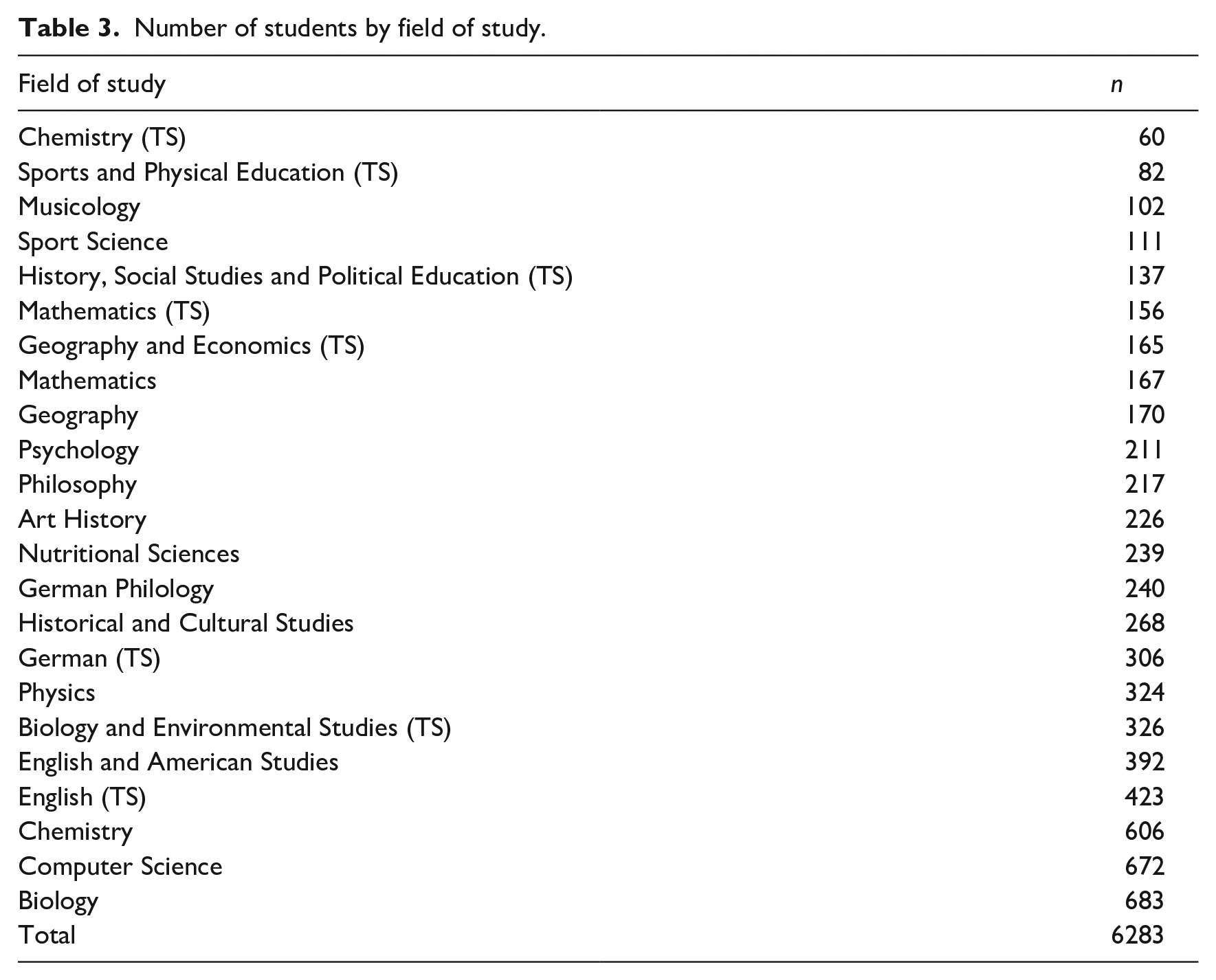
To examine to what extent horizontal segregation can be identified within the teaching specialization (e.g. mathematics teaching degree) and their corresponding subject specialization (e.g. mathematics), based on the educational background of the parents and the gender of the students, administrative data of first-year students regularly enrolled at Austrian state universities in the winter term of 2016–2017 was used (N = 42,017). Since this study focuses on the choice of field of study, only those enrolled for the first time on undergraduate degree courses were included in the final data set (N = 23,400). The data include 146 fields of study. Within these fields, we identified 17 teacher training subjects that also have a corresponding subject without the pedagogical training (34 subjects in total). The remaining fields of study were combined and represent the reference category “other fields of study” (including subjects such as medicine, law, sociology, etc.). Within the data, the share of students who identified as male is 46 percent (54% identified as female) and—with regard to social mobility—33 percent are educational climbers (those whose parents have no secondary school leaving certificate, i.e. below ISCED 3a). A total of 1905 students were enrolled on one of the 17 teacher training courses, the equivalent of 8.14 percent of the 23,400 observations used. On these courses, 37 percent of students are male, 63 percent female and 40 percent are educational climbers. The teacher training courses with the most enrolments were biology and environmental studies (n = 683), chemistry (n = 606), and English (n = 423; Table 3 in Appendix 1).
Regarding the data, four limitations need to be discussed: First, due to privacy policy of Statistics Austria, only courses with at least 60 students in total (teacher training courses and their corresponding courses) were allowed for publication. This is the case for the following eight subject pairs (teacher training and the corresponding subject): biology and environmental studies, chemistry, English, German, mathematics, geography, sports and physical education, and history. Consequently, all 17 subject pairs (34 single subjects) and the reference category “other fields of study” were analyzed (total analysis of 35 subjects), but only those eight subject pairs (N ⩾ 60) are interpreted in the results section (see section “Results”).
Second, the data include only first-year students and their major subject. This means that even though in Austria enrolling in more than one field of study is quite common (Mehrfachinskriptionen) and is even mandatory for teacher training, only students’ first study choice (documented in the data as their major) is included in the official statistical data. This problem appears in most official statistics of the Austrian higher education sector (e.g. Federal Ministry of Education, Science and Research, 2020) as well as the national student social survey (Unger et al., 2020). However, even though we are only able to analyze the major subjects, we can still gather valuable insights regarding the choice of field of study since studies show that subject-oriented choices in teacher training are made regarding the individual interests and requirements as well as motives that are associated with the chosen subjects, and therefore reflect incorporated mechanisms of social selectivity and gender-segregation (Glutsch et al., 2018).
Third, only university students are taken into account, since there is no available administrative data on the social background of students who study at university colleges of teacher training. However, most students are enrolled at public universities and only 7 percent are enrolled in teacher training colleges, which also include teacher training at primary level, and therefore students at these institutions are not a focus of this study.
Fourth, the number of variables in administrative data is more limited compared with that in survey data. Survey data often offer additional information such as the students’ wellbeing, their living conditions, and so on. However, since we are interested in the choice of field of study regarding gender and parental educational background, administrative data provide the necessary information. Despite the limitations mentioned above, using national administrative data has one unique advantage: It allows a more detailed analysis of individual fields of study due to its high case numbers and therefore fits the purpose of this study best.
Method and variables
To verify the thesis of whether teacher training courses are preferred by women and educational climbers, we first compute descriptive statistics and second, estimate multinomial logistic regression models. By computing descriptive statistics, we can compare the share of women and educational climbers in the selected teacher training subjects as well as their corresponding subjects with the share in the category “other fields of study.” Multinomial logistic regression (also called generalized logit or multinomial logit approach) was used to model “m” response categories, given a set of categorical and/or metric predictors. This method was applied to assess if our findings are generally valid, that is, to find out whether the differences in study choice due to gender and/or parental educational background are systematic (“significant”) or purely random, which would not be possible with computing descriptive methods only.
The dependent variable is field of study chosen. It has 35 categories: the 17 teacher training subjects, the 17 corresponding fields of study and one category that summarizes the remaining 112 fields of study. We included all 17 subject-pairs into the regression model in order to prevent biases regarding the results, even though, as stated above, the findings of only eight subject pairs (N ⩾ 60) can be presented and interpreted in the results section due to the privacy policy. The independent variables are gender (male/female) and parental educational background (educational climber/no educational climber). Educational climbers are defined as those whose parents have no secondary school leaving certificate, that is, below ISCED 3a.
Since one of the response categories serves as a baseline (in our case: “all other studies”), “m-1” logit equations are obtained that compare single fields of study that are of interest to this baseline. Any other comparison between two categories can be derived from those fitted equations. Since only the categorical predictors (gender and parental educational background) were used, the coefficients in any of these equations show how the log odds of falling into category “All other studies,” as opposed to a given field of study, change when changing the predictor category from “male” to “female” or from “educational climber” to “no educational climber,” respectively. Since the presence of an interaction between gender and parental level of education cannot be ruled out on theoretical or on empirical grounds (Fox, 2016), Akaike’s information criterion (AIC) was employed for model selection. However, this measure suggested that a model that only contained two main effects was a better choice.
AMEs were computed to enable analysis of the quantity of interest directly (predicted probabilities) and to facilitate interpretation. 2 The AMEs report the effect sizes of coefficients and, in our case, indicate the change in the probability of choosing a particular field of study associated with a change in a respective independent variable (gender or parental educational background). AMEs are estimates with associated standard errors, and thus it is possible to construct a statistical test that allows us to assess the significance (i.e. the generalizability) of our findings.
In the following section, the empirical results are presented, based on the descriptive statistics (see section “Descriptive statistics”) and the regression analysis (see section “Multivariate analysis of subject-specific segregation by gender and parental educational background”).
Results
Descriptive statistics
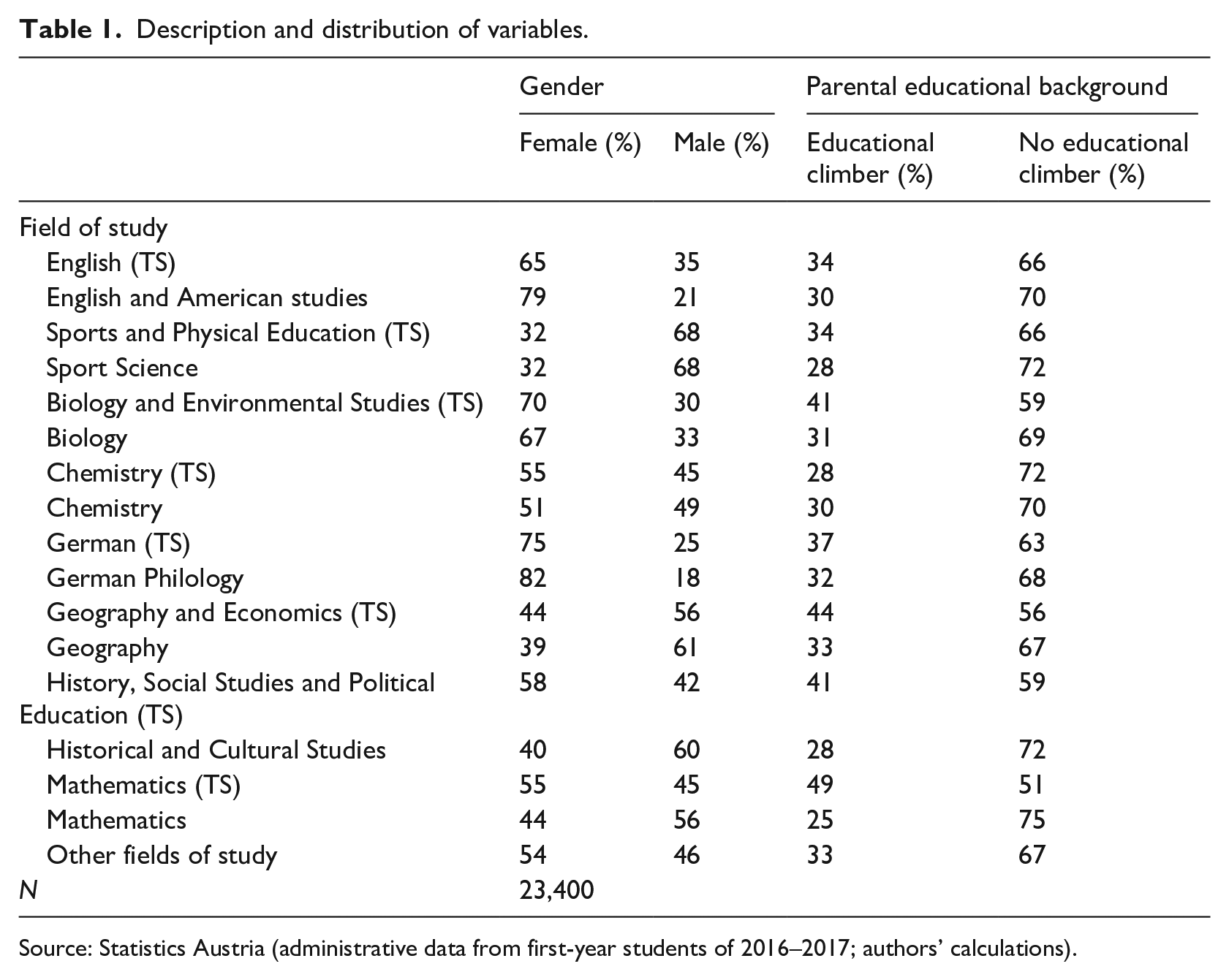
Table 1 shows the descriptive statistics of gender and parental educational background in the different fields of study, or more precisely, teacher training subjects and academic subjects. The left column presents the share of women and men. The right column illustrates the share of educational climbers—those with a non-academic parental background—and non-climbers. The analyzed subjects are presented in the rows, where teaching subjects can be identified by the addition of “TS.”
Description and distribution of variables.
Source: Statistics Austria (administrative data from first-year students of 2016–2017; authors’ calculations).
Gender
Regarding gender, six out of eight analyzed teaching subjects show a higher share of women compared with the share of 54 percent within the reference category “other fields of study” (from a minimum of 55% in Mathematics (TS) to a maximum of 75% in German (TS)). Two teaching subjects show a smaller share of women compared with other fields of study (below 54%): sports and physical education (32%) and geography and economics (44%). With regard to the corresponding subjects, three out of eight subjects show a higher share of female students compared with the share of the reference category (other fields of study): German philology (82%), English and American studies (79%), and biology (67%).
When comparing each teaching subject with its corresponding subject, three subject pairs show the same pattern of a higher share of women compared with the 54 percent within the category “other fields of study”: English, biology, and German. Two subject pairs show the same pattern of a lower share of women than 54 percent: sports and geography. The descriptive statistics show different patterns regarding gender in three subject pairs: Whereas the share of women is slightly higher in history (58%), chemistry (55%), and mathematics (55%) as teaching subjects (compared with the threshold of 54%), their share is lower than 54 percent in the corresponding subjects (chemistry: 51%, mathematics: 44%, and historical and cultural studies: 40%).
Parental educational background
Analyzing two student groups structured by parental educational background and how these are distributed within each subject draws a more coherent picture: Seven out of eight analyzed teaching subjects show a higher share of educational climbers than in the category “other fields of study” (33%). Only the share of educational climbers in chemistry as a teaching subject (28%) is below the average share of educational climbers in other fields of study. With regard to the corresponding subjects, no subject has a higher share of educational climbers, with the exception of geography which shows the same share of 33 percent compared with the category “other fields of study.”
When comparing each teaching subject with its corresponding subject, seven out of eight teaching subjects show a higher share of educational climbers than their corresponding subjects. Only chemistry as a teaching subject (28%) and chemistry as non-teaching subject (30%) have a lower share of educational climbers compared with the reference category “other fields of study” (33%).
The descriptive results suggest that teacher training is mostly preferentially chosen by women and educational climbers. However, to find out whether these differences in study choice are systematic (i.e. generalizable) or random, we estimated a regression model. Its findings are described in the following section.
Multivariate analysis of subject-specific segregation by gender and parental educational background
Table 2 shows the AMEs for choosing a particular field of study compared with all other fields of study on a percentage scale. A significant positive effect is found when the AME is above zero and zero is not included in the confidence interval. A significant negative effect shows an AME below zero and a confidence interval not containing zero. Gender-related effects are displayed in the left column. An AME above zero not only means that the specific subject is more likely to be chosen by women than men, but it also means that women are overrepresented in this specific subject relative to their (already higher) share in the reference category “all other subjects.”
Determinants of choice of field of study.
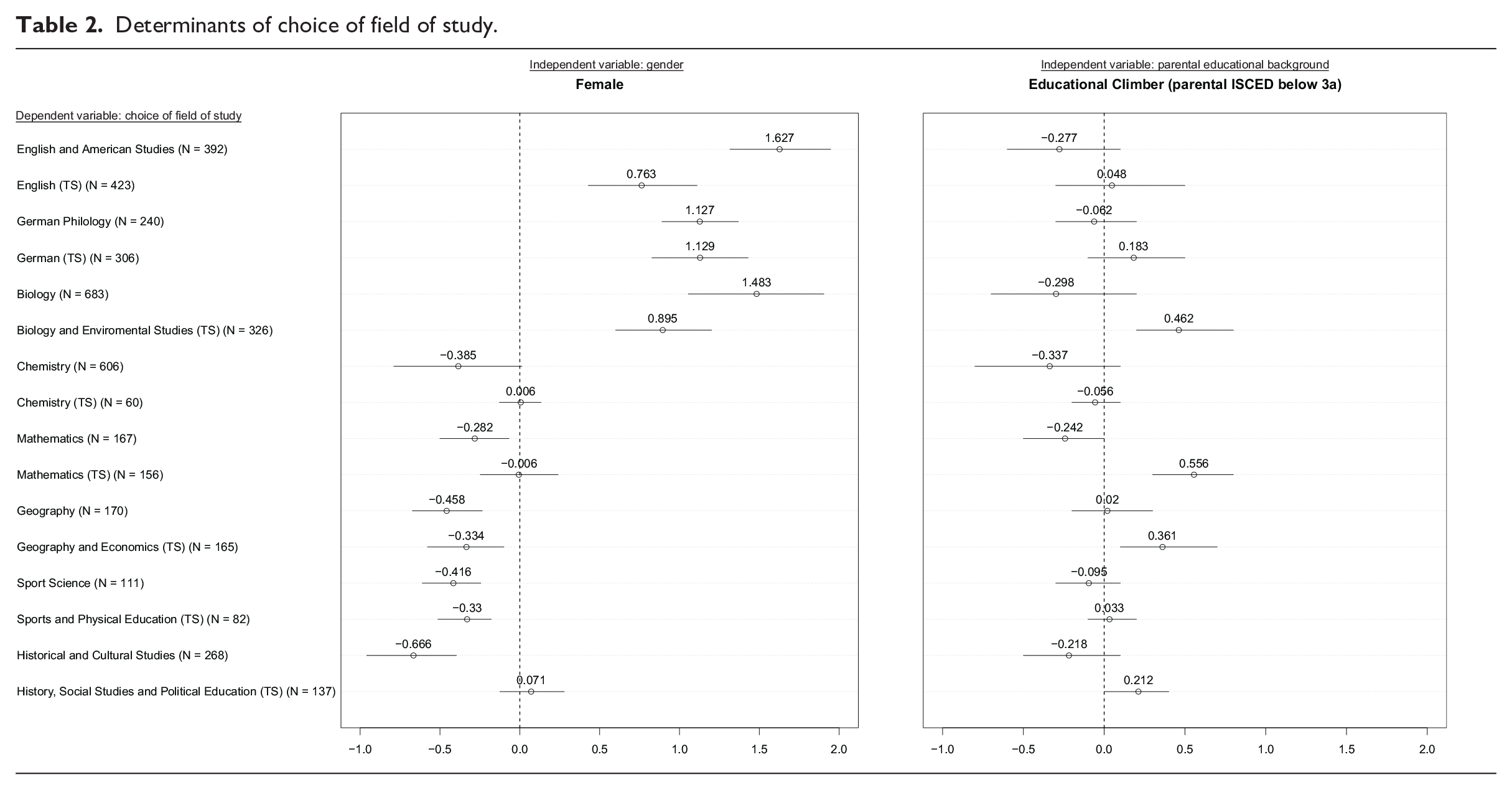
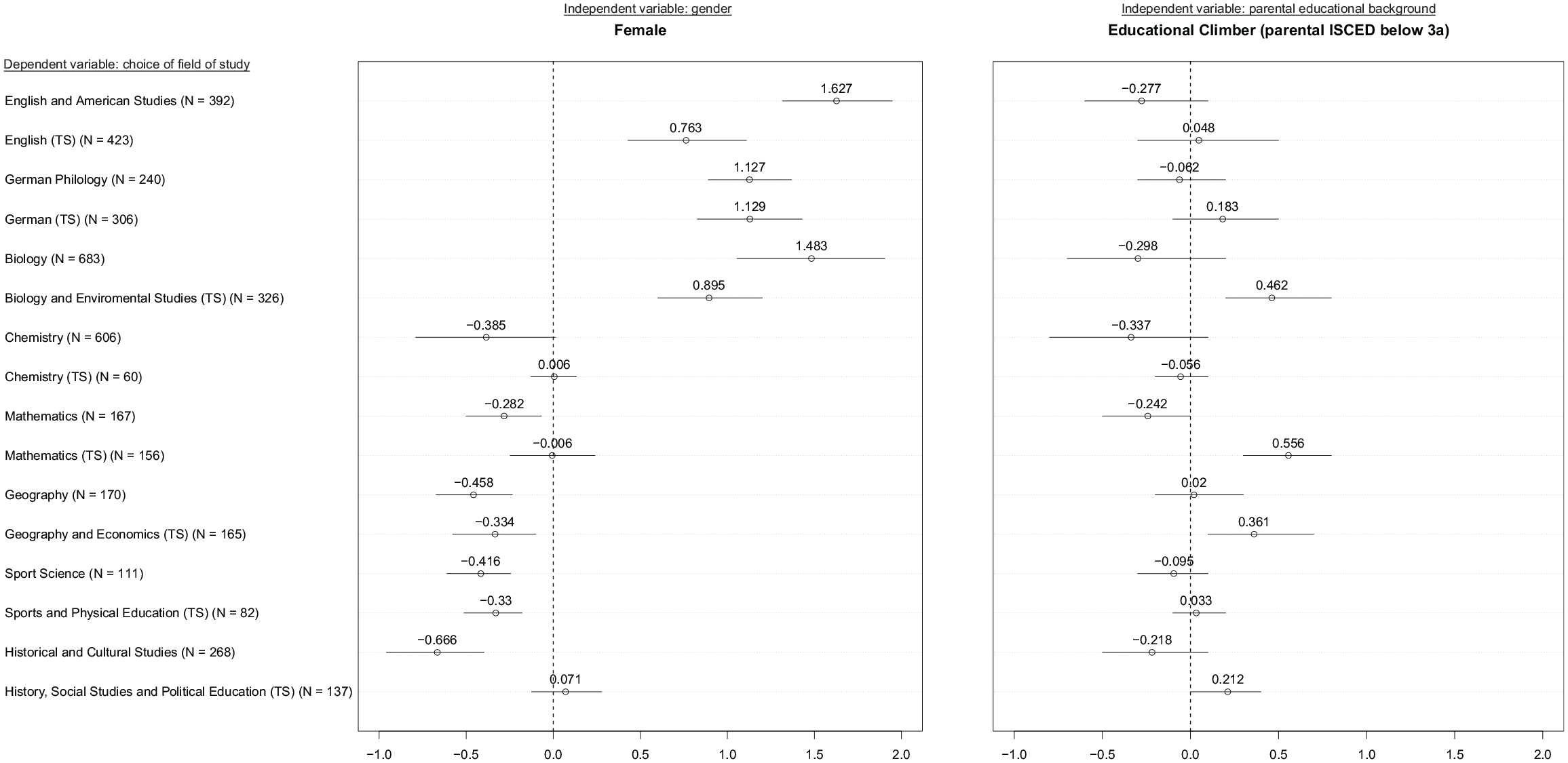
The specific AME can be interpreted as follows: For example, the positive value of 1.483 for the subject biology signifies that moving from (baseline category) “male” to “female” changes the predicted outcome (= percentage of studying this particular subject) by 1.483 percent. This means that among women, the predicted share of studying biology is 1.483 percent higher compared with the predicted share among men. Since the related confidence interval does not include zero, we can conclude that within the subject biology women are significantly overrepresented. For the corresponding teaching subject biology and environmental studies, the predicted share of women studying this subject is 0.895 percent higher compared with the predicted share among men and the confidence interval also does not include zero, that is, women are significantly overrepresented in this subject, too. Nevertheless, the confidence intervals of the two subjects do overlap, and hence we cannot argue that there is a significant difference. 3
Findings on upward educational mobility are displayed in the right column. Educational climbers represent the reference category. An AME above zero suggests that educational climbers are more likely to choose this specific subject (meaning that they are overrepresented), compared with all other fields of study, than students whose parents have at least a secondary school leaving certificate.
Gender
Regarding gender, the AMEs show that the share of women is significantly higher in English, German, and biology than in other fields of study—regardless of whether these subjects are studied as a teaching subject or not. In English and American studies (AME = 1.627) the share of women is even higher than in the corresponding teaching subject (AME = 0.763) and this effect is statistically significant, because the confidence intervals are not overlapping. By contrast, women are significantly underrepresented in geography and sports, regardless of whether they are studying those fields as a teaching subject or not.
When analyzing whether significantly different patterns between teaching subjects and their corresponding subjects can be found, the only example is in historical and cultural studies (AME = −0.666) where women are significantly underrepresented, while in the teaching subject history, social studies, and political education (AME = 0.071) they are not (the confidence intervals of those two subjects are not overlapping).
Parental educational background
Educational climbers are significantly overrepresented in the teaching subjects biology and environmental studies (AME = 0.462), mathematics (AME = 0.556), and geography and economics (AME = 0.361). In the other teaching subjects, no significant differences according to parental educational background were found, as well as in all the corresponding subjects.
Significant differences and opposite effects between the teaching subjects and their corresponding counterparts could be found in biology and mathematics (the confidence intervals of the teaching subject and the corresponding subject do not overlap): In the teaching subjects mathematics (AME = 0.556) and biology and environmental studies (AME = 0.462), educational climbers are significantly overrepresented compared with the academic equivalents (mathematics: AME = −0.242, biology: AME = −0.298).
Discussion and conclusion
In this study, we explored horizontal segregation within teaching subjects (e.g. mathematics as a teaching subject) and their corresponding academic subjects (e.g. mathematics) based on the educational background of the parents and the gender of the students. We focused on whether existing social or gender-related effects relate to a general over- or underrepresentation of certain groups in specific subjects or whether the effects apply specifically to teacher training courses. Our study represents an attempt to answer the question of whether educational climbers and women are over-represented in teaching courses compared with corresponding academic subjects.
This question appears to be highly relevant in the context of the reproduction of social inequality because the effects of socioeconomic and gender-related inequalities are strongly evident in teacher training courses (Denzler, 2014; Heinz, 2015; Keck Frei et al., 2017). Teacher training is known to be typically chosen by women and students from lower educational backgrounds (Ayalon and Yogev, 2005; Kühne, 2006; Lautenbach, 2018; Lojewski, 2011; Triventi, 2013a; Van de Werfhorst and Luijkx, 2010; Zarifa, 2012). However, most studies do not differentiate between individual fields of study (Helland and Wiborg, 2018; Prix, 2011; Reimer and Pollak, 2010).
By drawing on administrative data from first-year students at Austrian state universities (N = 23,400) in 2016–2017, the descriptive statistics seem to confirm the theses of a general overrepresentation of women and educational climbers in teacher training. Nevertheless, the regression analysis provides a more nuanced picture:
Regarding gender, women are significantly overrepresented in three subjects: English, German, and biology and environmental studies. Interestingly, an overrepresentation of women is also significant in the corresponding academic subjects, where the feminization appears to be even higher than in the teaching subjects (e.g. English and American studies). By contrast, women are significantly underrepresented in geography and sports, regardless of whether these subjects are studied as a teaching subject or not.
The underrepresentation of women in geography and sports goes in line with previous research (Glutsch et al., 2018; Hörl, 2008; Neunteufl and Atanasoska, 2019). The strikingly unequal gender ratio in the linguistic subjects as well as in the mathematics-oriented STEM subjects has also been repeatedly reported (OECD, 2019; Hägglund and Lörz, 2020; Legewie and DiPrete, 2014a, 2014b). However, this study reveals an interesting variation within the STEM subjects: Women are significantly more likely to choose biology, whereas this is not the case regarding other STEM subjects such as mathematics and chemistry.
Yazilitas et al. (2013) argue that girls and boys develop different understandings of science due to gendered socialization: While girls tend to associate science more often with health- and environmental-related activities such as developing medicines, boys tend to relate science more often to activities such as building machines. These gender-biased perceptions can lead girls to display greater interest in subjects such as biology and can lead boys to develop a higher interest in mathematics and physics (Nagy et al., 2006; Urhahne, 2006).
Regarding parental educational background, the results of the regression analysis show that educational climbers are significantly overrepresented in three out of eight analyzed teaching subjects (biology and environmental studies, mathematics, and geography and economics), while they are not overrepresented in the non-teaching counterparts. The overrepresentation of educational climbers in these teaching subjects can partly be explained by the relatively good career prospects and job security for graduates of STEM-fields outside of the teaching career. In that sense, these subject choices could be interpreted as being doubly secure in terms of a career within and outside of teaching—a factor that appears to be important and attractive for educational climbers when choosing a field of study and a prospective career (Eder et al., 2013; Neugebauer, 2013, 2015). It is a surprising finding that educational climbers tend to opt significantly more frequently for teaching subjects such as mathematics, which are known as academically demanding. This at least partly contradicts the assumption that educational climbers tend to choose those subjects that are considered to be comparatively easy to achieve and more practically oriented (Denzler and Wolter, 2009; Eder et al., 2013; Lautenbach, 2018).
To summarize, our study contributes to the existing literature, first by demonstrating that in almost all analyzed fields of study similar patterns of gender-segregation with regard to choice of fields of study can be observed—regardless of whether it concerns a teacher training subject or the corresponding equivalent, and second by showing that educational climbers tend to opt more frequently for teacher training subjects than their corresponding fields—especially in some of the mathematics-oriented STEM-subjects. A clustered perspective would not have been able to reveal such variation.
The central contribution of this study to comparative sociological research is its innovative approach of comparing teacher training subjects to their academic equivalents. To our knowledge, it is the first time that such a relational comparison is demonstrated in the comparative educational literature. This approach has revealed a more accurate picture regarding horizontal inequalities in higher education and has led us to conclude that horizontal segregation can be partly identified within the analyzed subjects based on the educational background of parents and the gender of students. Based on this finding, we argue that subject-specific choices, also within teacher training, should be taken into account when analyzing social selectivity and gender-segregation across fields of study.
Using administrative data enabled us to compute this detailed analysis due to its high case numbers. Our suggestion to the scientific community is to make use of such data more often to advance comparative research. In addition, we need continued debate on how such analysis can be used to further initiate the development of measures aimed at attracting motivated students from a variety of social backgrounds to the teaching profession. We also need to ask how measures can be conceptualized to improve equal opportunities for all students.
Footnotes
Appendix 1
Number of students by field of study.
| Field of study | n |
|---|---|
| Chemistry (TS) | 60 |
| Sports and Physical Education (TS) | 82 |
| Musicology | 102 |
| Sport Science | 111 |
| History, Social Studies and Political Education (TS) | 137 |
| Mathematics (TS) | 156 |
| Geography and Economics (TS) | 165 |
| Mathematics | 167 |
| Geography | 170 |
| Psychology | 211 |
| Philosophy | 217 |
| Art History | 226 |
| Nutritional Sciences | 239 |
| German Philology | 240 |
| Historical and Cultural Studies | 268 |
| German (TS) | 306 |
| Physics | 324 |
| Biology and Environmental Studies (TS) | 326 |
| English and American Studies | 392 |
| English (TS) | 423 |
| Chemistry | 606 |
| Computer Science | 672 |
| Biology | 683 |
| Total | 6283 |
Funding
The author(s) received no financial support for the research, authorship, and/or publication of this article.
