



Abstract
This study examines the institutional and legal frameworks governing military engagement in domestic disaster response in Canada, the United States, and New Zealand. As climate-related disasters increase, governments are choosing to rely more on military forces for logistical support and emergency response and relief. Through a comparative analysis, this research explores how military assistance is institutionally structured, authorized, and coordinated, as well as critically assesses strengths, challenges, and best practices. The findings reveal that Canada's tiered approval system, while ensuring civilian oversight, can delay military deployment—a challenged which is compounded by the country's vast size. The United States National Guard model allows state-led military response before federal activation, while New Zealand's centralized system enables faster decision-making, but may risk over-centralization. The study recommends streamlining Canada's approval process, establishing a designated domestic disaster response force, and enhancing interagency coordination.
Keywords
Introduction
Climate change–related disasters are becoming more frequent and severe, with widespread environmental and societal impacts. Intensified extreme weather events are triggering large-scale destruction, displacement, and economic losses. Governments at various levels are increasingly turning to their military forces for disaster relief, leveraging their logistical capabilities, rapid deployment capacity, and specialized training. 1 However, the integration of military resources into domestic disaster response raises critical questions regarding governance, legal authority, and the division of responsibilities between military and civilian authorities. In the existing literature, these challenges are presently being explored under existing frameworks of civil–military cooperation.
Canada's approach to military disaster response is largely governed by the Emergency Management Act and the National Defence Act, which enable the Canadian Armed Forces (CAF) to assist provincial and territorial authorities when their capacities are overwhelmed. These missions, often carried out under Operation LENTUS, have demonstrated the military's unique capacities and critical role in providing emergency assistance, but concerns have been raised regarding the sustainability of frequent domestic military deployments, the efficiency of interagency coordination, and the maintenance of civilian primacy in disaster governance. 2
A comparative analysis offers some valuable insights into alternative models of military engagement in domestic disaster response. In the United States, the National Response Framework (NRF) and the Stafford Act establish federal guidelines for military assistance, while the Posse Comitatus Act restricts military involvement in law enforcement. Emergency management in New Zealand is run under a centralized command system, governed by the Defence Act 1990 and the National Civil Defence Emergency Management Plan Order 2015. The goal is to ensure efficient and rapid coordination with a high degree of interagency collaboration.
While Canada has an established framework for military involvement in domestic disaster and emergency response, many concerned quarters have called for improving coordination and streamlining deployment protocols. How interagency collaboration can be strengthened, how bureaucratic barriers in military deployment requests can be removed (or at least minimized), and what thresholds are designated for military intervention in domestic emergency and disaster situations are the major issues emphasized in the existing literature. Another question concerns whether prioritizing investment in civilian emergency preparedness programs can help to balance reliance on military assistance, ensuring that military engagement remains a strategic supplement rather than a primary response mechanism. 3
In recent years, Canadian governments have increasingly relied on the CAF for domestic disaster response. This trend is driven largely by the increasing frequency and severity of climate-related emergencies. Between 1990 and 2010, the CAF was deployed six times for disaster relief operations. Between 2011 and 2020, this number rose dramatically to over thirty deployments. 4 While the military's ability to provide rapid logistical and operational support is widely recognized, concerns have emerged regarding the sustainability of using military personnel for civilian emergencies. Experts caution that frequent domestic deployments strain military resources, potentially affecting combat readiness and reducing the CAF's capacity for national defence. Additionally, the financial burden of military-led disaster response is often underestimated, as civilian agencies and policymakers tend to perceive the CAF as a readily-available emergency force, without fully accounting for the long-term costs of such deployments. 5 In response to these concerns, some scholars have proposed alternative models, such as the establishment of a dedicated civilian disaster response force. For example, Peter Kikkert suggests that Canada create a specialized workforce focused exclusively on disaster response capabilities, which would reduce dependence on the CAF while enhancing national preparedness. 6 This proposal aligns with broader efforts to ensure that military involvement remains a strategic supplement rather than a primary mechanism in domestic disaster management. As climate-related disasters intensify, policymakers need to reconsider the role of the CAF in domestic disaster response, balancing military readiness with the growing demand for emergency assistance.
In light of the above discourse and recognizing its critical importance, the present study examines the institutional and legal frameworks that govern military engagement in domestic disaster response in Canada, and conducts a comparative analysis with selected Western developed countries, namely the US and New Zealand. It assesses the legislative instruments that authorize military assistance and establish coordination mechanisms between military and civilian agencies. Through this comparative analysis, lessons are identified which can assist in refining Canada's civil–military disaster response framework. In this context, the research is guided by two central research questions: (1) What legislative and legal frameworks exist in Western developed countries to facilitate military engagement in domestic disaster response? (2) What experiences and lessons can be drawn from the studied countries to enhance the effectiveness of civil–military disaster response?
This paper is organized in three parts. First, it presents an analysis of the legal and institutional frameworks for military disaster response in Canada, the USA, and New Zealand. Second, it describes the strengths and challenges of each country-based system, identifying key themes such as coordination mechanisms, legal authority, and civilian oversight. Finally, it offers key lessons and policy recommendations to improve Canada's approach to military engagement in domestic disaster response.
Methods
Since case study research can provide in-depth descriptions and insights into a process or phenomenon, a country case study approach was adopted to comparatively examine the institutional structures and military deployment mechanisms in three Western developed countries: Canada, the US, and New Zealand. These countries were selected based on their unique histories, comparability, cooperation, and socioeconomic characteristics. All of them: (i) are members of Five Eyes and ABCANZ (the American, British, Canadian, Australian, and New Zealand Armies program), which are centred on intelligence cooperation, military standardization, and interoperability; (ii) have high gross domestic product (GDP) per capita and are classified as “developed nations”; and (iii) are vulnerable and subject to climate change–related disasters. This common ground makes their national policies comparable and their experiences more relevant for Canada. Despite these similarities, however, their governance structures differ—Canada and the US operate within federal systems, while New Zealand follows a unitary model—and this difference allows for an interesting and useful comparative analysis of disaster response strategies. Their geographical and socioeconomic settings also differ, as Canada and the US are in North America and New Zealand is in Oceania. These diverse settings highlight the importance of context for military deployment alongside civil administration in domestic emergency and disaster situations.
This study employs a qualitative research approach to conduct systematic reviews and analysis of secondary data procured from various sources: government documents, policy papers, legal documents, and scholarly literature. The comparative qualitative analysis examines how institutions are structured in the selected countries, and how these institutions authorize and coordinate military involvement in domestic disaster response. Data were collected chiefly from four sources: scholarly publications and research papers; news websites and blogs; government and institutional documents; and published books and reports.
A structured search strategy was employed to ensure rigor and replicability. 7 A broad set of keywords was applied across multiple databases, namely Google Scholar, ResearchGate, JSTOR, SpringerLink, Wiley Online Library, and ScienceDirect, for scholarly work sources. Government documents were obtained primarily from FEMA.gov, PublicSafety.gc.ca, DHS.gov, and related sources, while news articles were drawn from CBC.ca and The Globe and Mail. The initial search yielded a total of 459 sources, which were screened for direct relevance to the themes and topics concerned. The distribution of the sources is summarized in Table 1. After applying quality and inclusion criteria, 150 relevant references were reviewed, with fifty-eight sources selected for final analysis.
Source type categorization and search configuration.
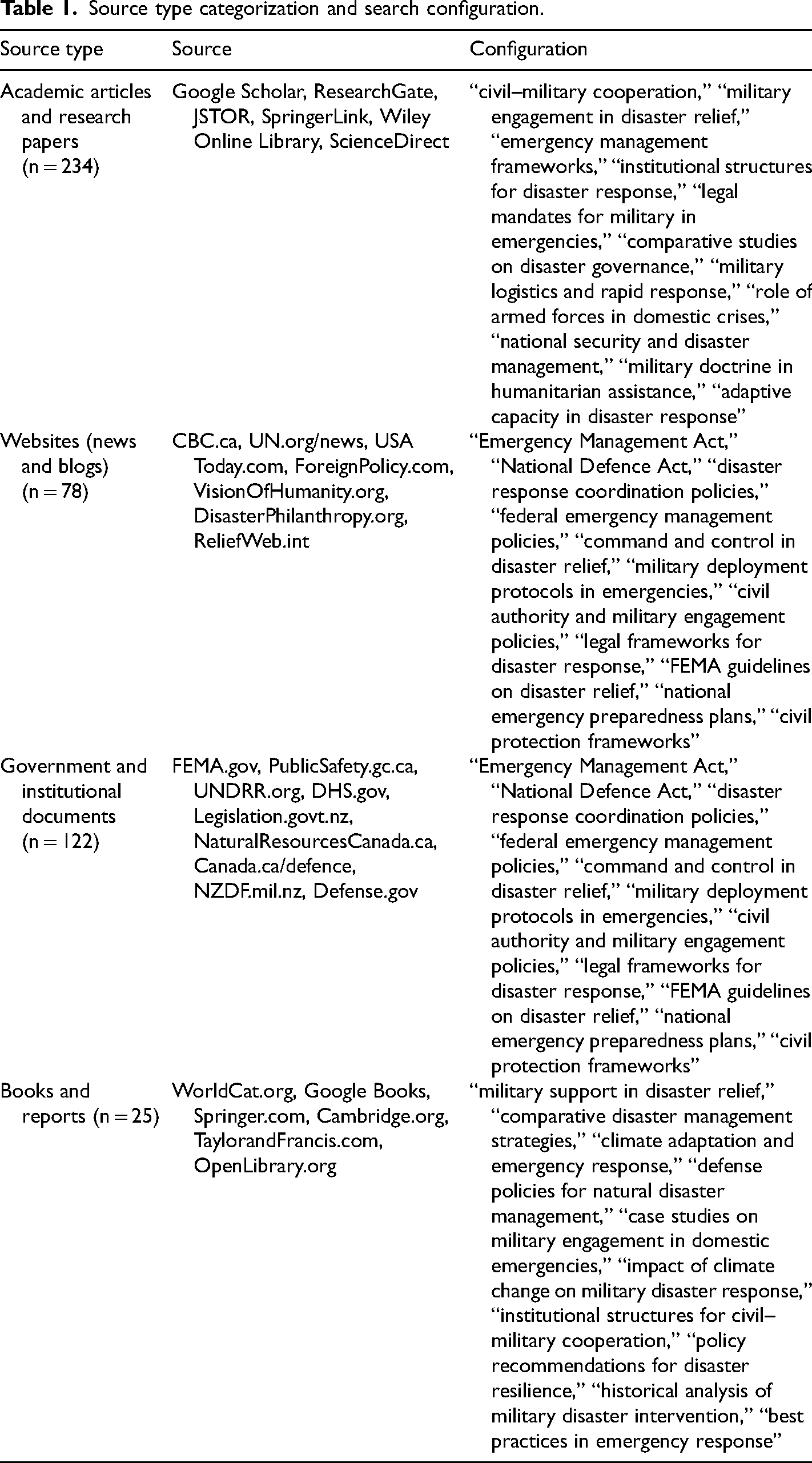
In this paper, the comparative qualitative analysis method systematically examines legal frameworks, command structures, and operational mechanisms governing military disaster response. A thematic approach categorizes key findings, ensuring a structured synthesis. Cross-referencing academic literature, policy documents, and citation of empirical case studies is done throughout to offer a nuanced understanding of how military resources are integrated into disaster response frameworks. Sources were evaluated and checked for credibility and proper citations, to ensure academic integrity.
The context: Increasing climate extremes and military deployment in Canada
The frequency and severity of nature-triggered disasters such as floods, hurricanes, and wildfires have increased significantly worldwide due to climate change, resulting in substantial economic losses and human casualties. Indeed, between 2000 and 2019, the United Nations Office for Disaster Risk Reduction (UNDRR) recorded 7,348 major disaster events, accounting for $2.97 trillion in economic losses and 1.23 million fatalities. 8 Although the number and rates of fatalities have decreased over the past fifty years due to technological advancements and better public safety strategies, economic damage has surged, and intangible impacts like mental health effects and cultural heritage loss have emerged as prominent issues.
In response to the increasing frequency of nature-triggered disasters, federal governments—including those in Canada, the US, and New Zealand—have been increasingly relying on military forces for disaster response. In 2023, the CAF assisted in wildfire containment, while the US and New Zealand militaries engaged in humanitarian and disaster relief missions both domestically and across the Pacific. 9 This trend is not specific to these countries; internationally, in recent years, military forces have increasingly been playing a crucial role in disaster relief. For instance, in Bangladesh, the Armed Forces Division collaborates with civil authorities during disasters, providing essential support in damage assessment, search and rescue, and relief delivery, 10 as seen during Cyclone Sidr in 2007. 11 Similarly, 7,500 members of the Turkish Armed Forces were deployed to aid in disaster-response efforts in the southern part of Turkey after a 7.8 magnitude earthquake in 2003, 12 while the German military played a critical role in restoring infrastructure and logistics following severe storms and flooding in Germany in 2021. 13
In the US, military personnel have been called upon to assist in dealing with large-scale nature-triggered events numerous times in recent decades. In 2005, the US government deployed 70,000 military personnel, including 20,000 federal military forces and 50,000 National Guard troops, 14 to assist with recovery efforts in the aftermath of Hurricane Katrina, which remains one of the costliest natural disasters in the history of the country, with over 1,800 fatalities, $110 billion in total damages, and 1.2 million people displaced. 15 These global examples underscore the vital role of military forces in responding to nature-triggered disasters, but they also highlight the need for new and robust policies and frameworks to ensure effective civil–military cooperation in times of emergency.
In recent decades, Canada has been experiencing rapid climate change, marked by rising sea levels, more frequent and intense weather extremes, and increasing average temperatures. Since 1948, Canada's annual average temperature has increased by 1.7°C, with winter temperatures rising by 3.3°C. These changes have led to significant ecological challenges, such as the drying of the boreal forest and the mountain pine beetle epidemic in British Columbia (BC), which devastated 18 million hectares of trees. 16 In addition, extreme weather events, including floods, wildfires, heatwaves, and tornadoes, have been causing unprecedented destruction across the country. For instance, in 2021, BC experienced record temperatures, severe floods, and multiple EF2-rated tornadoes. 17 In July 2024, devastating wildfires in Jasper, Alberta forced mass evacuations and destroyed nearly 30 percent of the town's structures. The disaster caused significant environmental and economic damage, prompting federal emergency support. 18 To address the growing threat of climate-related disasters, in 2018, the Canadian government committed $2 billion over ten years through the Disaster Mitigation and Adaptation Fund (DMAF) to enhance community resilience to climate-triggered disasters with structural and natural infrastructure projects. 19
The impacts of climate change in Canada are most evident in the rising temperatures, changes in precipitation patterns, declining Arctic snow cover, fluctuating water levels in the Great Lakes, and longer summers. Alarmingly, Canada is warming at twice the global average rate, which has increased the frequency of heatwaves and related hazards and accelerated the decline in glacier and snow cover in the Arctic regions. Such a rapid pace of environmental change has given rise to unprecedented extreme atmospheric events, which have impacted civil infrastructure, agricultural production, industrial and energy infrastructure, and various vital socioeconomic factors affecting citizens’ lives.
The CAF's involvement in responding to nature-triggered disasters has increased significantly over the past few decades. Figure 1 illustrates the major engagement of military forces under Operation LENTUS in response to nature-triggered disasters in Canada during the 1997–2023 period, showing a marked increase in deployments, particularly since 2000. The CAF played a crucial role in the response to the 1997 Manitoba Flood, deploying one tenth of its personnel to assist with the province's relief efforts. Since then, other regions of Canada have also experienced extreme atmospheric events that required military deployment, including the 1999 ice storms in southern Ontario and Quebec, the 2003 wildfire in Kelowna, Hurricane Igor in Newfoundland in 2010, and the 2011 and 2013 floods in Manitoba. Notably, multiple major nature-triggered disasters occurred in the same year—2017—requiring the CAF's engagement in different provinces. In 2023, CAF personnel were deployed after a series of wildfires resulted in significant disruptions and damage in Nova Scotia and other provinces. 20 Such conditions have changed the parameters of demand for CAF's personnel and resources.
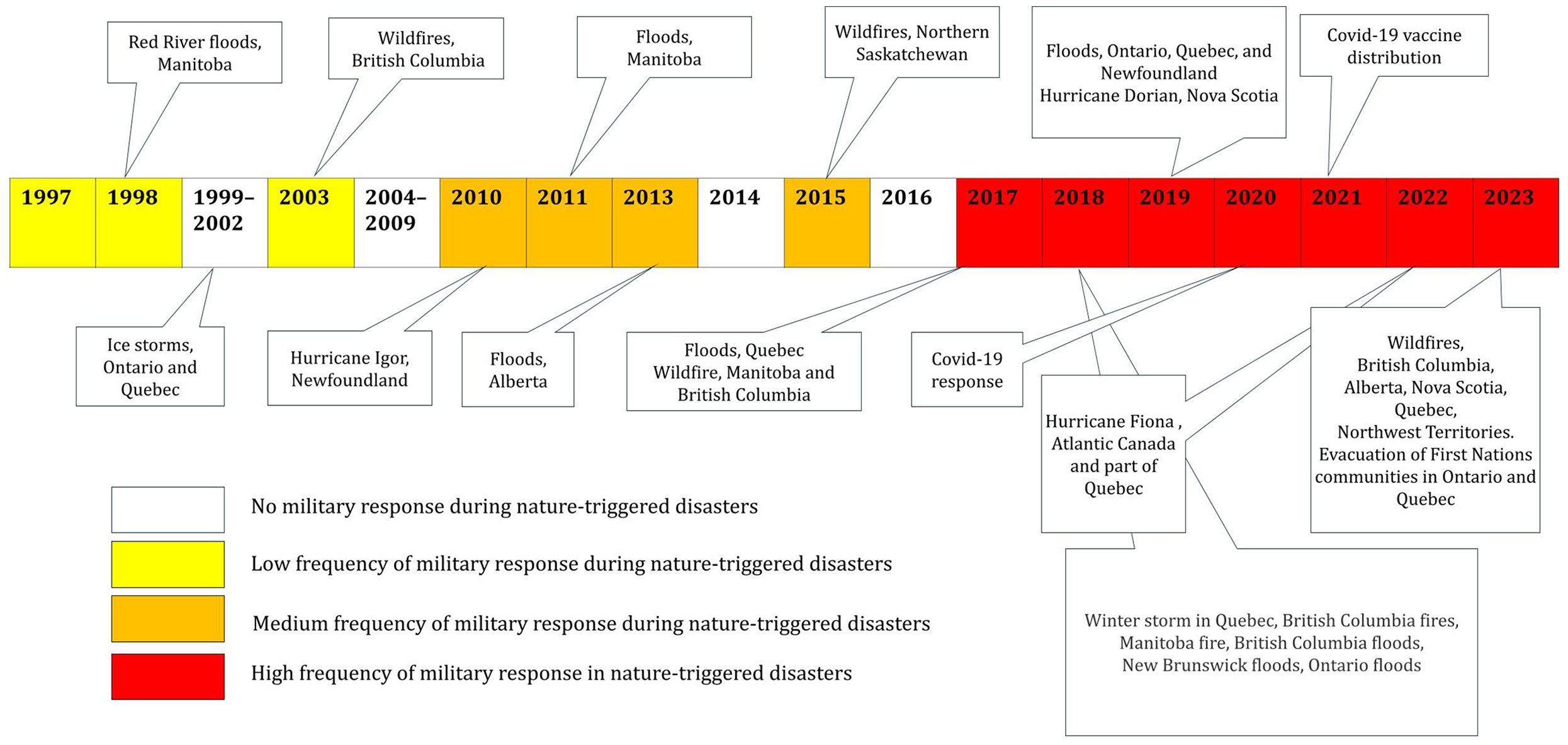
Major engagement of military forces under Operation LENTUS in response to nature-triggered disasters in Canada, 1997–2023. 59
The increasing demand for the deployment of the military in domestic disaster response has raised some concerns. In a 2021 testimony to the Canadian parliament regarding seven military response requests for provincial situations (excluding 118 pandemic-related demands), Major General Paul Prevost emphasized that demands on the military's resources had been steadily increasing in recent years. 21 General Wayne Eyre, chief of the defence staff, expressed similar concerns in 2022 about the strain on the CAF's resources. He stressed that with the increasing frequency and intensity of natural disasters, the military has been deployed more frequently, and not necessarily as a last resort. 22
Divided views on military involvement in domestic disaster response in Canada
In recent decades, the role of the military in domestic disaster response has sparked intense debate in developed countries, including Canada. As nature-triggered disasters become more frequent and severe, the military's support for civilian authorities has come under increasing scrutiny. Some advocate for military involvement in domestic emergencies, while others oppose it.
Conceptually, the military's primary responsibility is national defence—primarily from threats by external enemies—not response to nature-triggered disasters at home. However, in practice, historical perspectives, such as those of Chanakya in Arthashastra, demonstrate the longstanding use of military in civil affairs. 23 The concept of “support to civilian authorities” is not new, as the expectation of military assistance during emergencies dates back more than 2,000 years to the time of Alexander the Great.
Post–World War II Europe saw the establishment of civil defence systems by NATO and the Warsaw Pact countries, wherein the military played a supporting role during peacetime emergencies. As emergencies grow more complex, the capacity of civil authorities requires augmentation, often making military assistance necessary. Furthermore, the intensification of the earth's hydrological cycle due to atmospheric warming, which has led to more frequent and severe disasters, has also increased the need for civil–military cooperation.
Critics of militarization argue against making the military the “first resort” in disaster response, citing concerns over neutrality and the potential overshadowing of civilian relief organizations. 24 They argue that over-reliance on the military could expose deficits in civil authority capacity, especially in developing nations with under-resourced civilian agencies, which could undermine civil society's capabilities and public trust in government institutions. Proponents of military involvement, however, argue that large-scale disasters often overwhelm civilian capacities, necessitating military assistance for effective management. 25
We argue that civil–military cooperation is crucial to ensure effective preparedness and to minimize economic impact, thus promoting long-term political stability through faster recovery. Specialized military personnel also bring valuable expertise to disaster logistics, as seen in the 2004 Indian Ocean tsunami and the 2010 Haiti earthquake. 26 However, as effective civil–military collaboration requires resources, continuous planning, coordination, and sensitivity to cultural contexts, institutional structure must be developed well ahead of a major disaster-event.
The role of the CAF in responding to natural disasters has been a subject of ongoing debate within research and policy circles. The 1997 Red River flood serves as a notable example, showcasing both the strengths and limitations of military intervention. While the military regarded its response as effective, the “command-and-control” approach and focus on urban centres over rural areas drew significant criticism. 27 Haque et al. reported that during the flood, local community members perceived that the CAF, alongside the Manitoba Emergency Management Organization (MEMO) and the Royal Canadian Mounted Police (RCMP), exhibited a “big-brotherly” attitude, employing coercive measures during rural evacuations. 28 It is alleged by the local communities that the forced evacuations disrupted local coping mechanisms and adversely affected community social structures. 29 Additionally, the military's disregard for local knowledge led to early evacuations, misallocating resources needed elsewhere. Miscommunications between local authorities and the military, coupled with a rigid command structure apparently insensitive to local perspectives, further strained relationships between residents and responders. 30
In recent years, as the frequency of natural disasters has increased, the discourse about the CAF's role in domestic emergency responses has become more intense at various political, administrative, and jurisdictional levels. Major Jason A. Hudson attributes this increase to climate change, noting that the increased severity of disasters has made CAF deployments more routine. 31 Highlighting the financial implications of this trend, Donald Saul projected a significant rise in federal spending on military-led disaster responses by 2027, necessitating a re-evaluation of the CAF's domestic role. Some scholars assert that while domestic operations have historically bolstered public confidence in the military, challenges persist. Alex Fremis explains that operations like LENTUS often encounter coordination issues with civilian agencies, partly due to differences in command structures and a lack of joint training. 32 Major D.S. MacGregor, citing the CAF's traditional focus on expeditionary missions over domestic preparedness, suggests a need to realign priorities, 33 while Martin Shadwick advocates for a balanced approach, recommending enhanced interagency collaboration and the development of civilian-led disaster response mechanisms to ensure military involvement remains supportive rather than primary. 34
The increasing reliance on the CAF for domestic disaster response also raises concerns about sustainability and effectiveness. In this context, Christian Leuprecht indicates the moral hazard of using the military as provincial first responders, citing the significant costs and risks involved; 35 for example, such a hazard took place during CAF's extensive involvement during the COVID-19 pandemic. To address domestic emergency response needs and to reduce dependence on the military, Kikkert proposes establishing a non-military disaster workforce, like a Resilience Corps. 36 The Standing Committee on National Defence of Canada echoes these sentiments, emphasizing the need for a strategic reassessment of resource allocation, and advocating for improved civil–military coordination. 37 It is claimed by the military establishment that programs like the Civil–Military Cooperation (CIMIC) Operator course at the Peace Support Training Centre (PSTC) are instrumental in enhancing collaboration between military and civilian agencies. 38 Expanding such initiatives could improve interoperability and response efficiency, helping to keep military involvement in disaster response as an exceptional measure.
In Canada, despite the associated challenges, the integration of the CAF into the disaster-management cycle is both critically urgent and beneficial. The nation's governance structure assigns primary responsibility for emergency management to provincial and territorial governments, with municipalities handling local implementation. The federal government, including the CAF, becomes involved only upon formal request from these jurisdictions. A layered governance structure can lead to delays in mobilizing military assistance, as the process requires navigating intergovernmental protocols and obtaining necessary approvals. The absence of comprehensive, long-term policies further complicates the seamless integration of military resources into civilian-led disaster responses. Additionally, disparities in provincial emergency preparedness and municipal resource constraints create inconsistencies in response efficiency. Since the CAF should be considered “a force of last resort,” balancing its national defence role with increasing domestic disaster response demands remains a serious challenge. 39 Addressing these complexities requires clearer intergovernmental protocols and enhanced coordination between civilian and military authorities.
However, in the federal system, a lack of serious policy attention and long-term planning has remained a major weakness, while continuous planning and liaison between civilian and military officials can ensure the effective use of military resources. Since the civilian jurisdictions are muti-layered into federal, provincial, and municipal entities, cooperation and coordination among these jurisdictions remains a major challenge in Canadian disaster and emergency governance. Increasing climate extremes are forcing our nation to pay attention; the ongoing debate highlights the complexity of military involvement in domestic disaster response and underscores the need for in-depth investigations and multistakeholder deliberations.
Institutional structures and legal frameworks of civil–military cooperation in Canada, the US, and New Zealand
As Canadian institutions and associated policy- and decision-makers can learn from comparative analyses of institutional structures and legal frameworks in other Western developed countries, this section is dedicated to analyzing the structures and frameworks governing civil–military cooperation in Canada, the US, and New Zealand.
Canadian institutional structure of civil–military cooperation and involvement of the CAF in domestic operations
In Canada, the armed forces are intended to be deployed as a “last resort,” yet some experts point out that “last resort” is often defined rather loosely. 40 In general, there are five main reasons why civilian authorities request assistance from the armed forces: i) military forces have an organized capacity to be deployed on short notice; ii) they have specific training that allows them to operate in difficult situations; iii) they possess unique resources, such as water filtering or airlifting capacity; iv) their command, control, coordination, and communication (C4) system is interoperable with incident command systems (ICS); and e) the requesting authorities and citizens have a high degree of trust in the armed forces.
In Canada, a procedural structure governs when it is appropriate to involve the military or call for assistance. The Public Safety Canada protocol contains a National Emergency Response System, which gives provincial authorities the power to declare a state of emergency and coordinate with the federal government, depending on the situation and demand. The provincial government is responsible for coordinating with the federal government if the provincial authority determines it requires outside assistance, which is based on the Emergency Management Act. Since the CAF falls under the authority of the federal government, the federal authority is responsible for dispatching it. In Canada, emergency management responsibilities are shared across municipal, provincial or territorial, and federal governments. Municipal authorities are typically the first responders to emergencies within their jurisdictions. When an emergency exceeds local capacities, municipalities request assistance from their respective provincial or territorial governments, which have the primary responsibility for emergency management within their areas. If the situation escalates beyond provincial or territorial capabilities, these governments may seek federal assistance, including support from the CAF. 41
The tiered approach ensures that emergencies are managed at the most immediate level before involving higher authorities. Within the federal system, The Department of Public Safety then submits a request to the Department of National Defence, which dispatches the military to assist with the emergency.
Laws and conventions governing civil–military collaboration in Canada
As stated above, in Canada, provincial governments have emergency acts that allow them to request assistance from the federal government. Emergency Management Act SC 2007, c. 15 section 2(b) states that the CAF can respond to civil emergencies under the purview of the National Defence Act. 42
According to the National Emergency Response System, federal departments are responsible for planning emergency responses, with their roles defined in the Federal Emergency Response Plan. Notably, there are provisions for addressing potential constraints; for example, it allows a department to seek assistance from other departments if it fails or if its resources become exhausted during the time of crisis.
When a nature-triggered emergency exceeds the responsive capacity of provincial or territorial authorities, they can request assistance from the CAF under Operation LENTUS. CAF members can undertake a range of activities, including filling, distributing, and placing sandbags; mopping up fires; evacuating and transporting people; delivering aid to remote communities; helping law enforcement and provincial authorities relay information to the public; checking on residents; and assessing infrastructure.
Each province also has its own legislative structure for emergency management. For example, The Manitoba Emergency Plan 2018 allows the provincial authorities to call for federal assistance when its responsive capacity is overwhelmed. For assistance from the Department of National Defence, the request for assistance should be made through the provincial assistant deputy minister for emergency management and public safety. 43
Institutional structure of civil–military cooperation in domestic disaster response in the United States
In the United States, the decision to deploy the military during a domestic disaster is made by the president, and National Guards are controlled by the state governors. The president has the authority and executive power to authorize the use of military forces in response to a disaster or emergency situation within the country. 44 The institutional structure of civil–military cooperation in nature-triggered disaster response involves a chain of communication between the departments and authorities at different levels of government. When a disaster exceeds the capabilities of local and state authorities, they can request federal assistance. The request is typically made through the governor of the affected state to the appropriate federal agencies, namely the Federal Emergency Management Agency (FEMA).
A distinct component of the institutional structure of civil–military cooperation for domestic disaster response in the US is the National Guard. The National Guard is a reserve component of the military, consisting of state-based units that operate under dual authority, serving both state and federal roles depending on activation status. Under Title 32 of the US Code, the governor of the state has control over the National Guard for state-level missions, including disaster response. However, under Title 10, the president can federalize the National Guard, placing it under federal command and integrating it with active-duty military forces for large-scale disaster relief efforts. 45 Therefore, it is possible for local or regional authorities to call on the National Guard before seeking assistance from federal authorities.
Upon receiving the request, federal agencies, including FEMA, assess the situation and make recommendations to the president regarding the need for military involvement. They consider factors such as the nature and scale of the disaster, the resources required, and the potential benefits of military assistance. Drawing on these assessments, the president determines whether to authorize the deployment of military forces, taking into account public safety, national security, and the overall response efforts in terms of performance. If the president authorizes military involvement, the appropriate military commands receive the order and activate the necessary military assets and personnel.
According to the Department of Defense (DoD) doctrine, commanders have the authority to provide resources and assistance to civil authorities in situations where a disaster overwhelms the capabilities of local authorities. This authority exists even without, or prior to, a declaration under the Stafford Act. 46 Its purpose is to save lives, alleviate human suffering, and prevent significant property damage. Immediate response actions may include activities authorized under the Stafford Act, such as rescue operations, evacuation efforts, emergency medical treatment, restoration of essential public services, debris removal, management of contaminated areas, distribution of food and essential supplies, and provision of interim emergency communications. These actions can be initiated at the request of civil authorities.
Notably, the doctrine does not mandate a request from state or local officials for the DoD to take action. However, as noted earlier, it emphasizes that the DoD components should not assume the functions of civil government unless absolutely necessary, and even then only on a temporary basis, specifically under conditions of “immediate response.” Any commander who assumes such functions is expected to facilitate the reestablishment of civil responsibility as soon as is feasible. 47
It is important to note that the Posse Comitatus Act, 48 a US federal law, restricts the use of military forces for law enforcement purposes within the country. However, provisions for exceptions exist for specific circumstances, including disaster response and support to civil authorities.
Legal and administrative framework in the United States for military involvement in domestic response to disasters
In the US, military assistance to civil authorities is provided via the Defense Support of Civil Authorities (DSCA) process, which is governed by Department of Defense policy and doctrine. In its 2005 Strategy for Homeland Defense and Civil Support, the DoD defines defence support of civil authorities as “DoD support, including Federal military forces, the Department's career civilian and contractor personnel, and DoD agency and component assets, for domestic emergencies and for designated law enforcement and other activities.” 49 The National Preparedness Goal calls for “a secure and resilient Nation with the capabilities required across the whole community to prevent, protect against, mitigate, respond to, and recover from the threats and hazards that pose the greatest risk.” 50 The NRF is a universal framework for responses to all types of incidents, from natural to anthropogenic, that is governed by five core principles: i) engaged partnership; ii) tiered response; iii) scalable, flexible, and adaptable operational capabilities; iv) unity of effort through unified command; and v) readiness to act.
The DSCA is implemented by following the NRF in responding to disasters. When local and state government resources are overwhelmed during an crisis, federal assistance can be requested via a basic Request for Assistance (RFA) to the DoD. The Stafford Act is the legal authority governing relief for natural and anthropogenic disasters. The Economy Act 51 empowers federal authorities to order goods and/or services from other federal agencies under the condition that these goods or services not be provided by a commercial enterprise as per the contract or convenience. The Military Support to Civilian Law Enforcement Agencies provision 52 is then applied to specific circumstances wherein civilian law enforcement officials and agencies might require military resources, including facilities, training, maintenance, and/or equipment.
The Posse Comitatus Act 53 functions as a boundary for DoD personnel by restricting their involvement in civilian law enforcement activities—for example, by prohibiting actions such as search, seizure, and arrest. The DoD Directive 3025.18 outlines policy and assigns responsibilities for the DSCA. This directive details the procedures and legal basis for civil authorities in setting policies, such as assigning responsibility and criteria for handling requests. 54
Institutional structure of civil–military cooperation in domestic disaster response in New Zealand
In New Zealand, requests for assistance from the NZDF are made through the national controller's office during the response phase of any emergency. The national controller reports to the federal minister and coordinates with New Zealand police personnel. According to the Defence Act 1990, assistance from the NZDF can be requested by the commissioner of police or a deputy commissioner of police, 55 but they are required to provide pertinent information to the prime minister or, if the PM is unavailable, the next most senior available minister. This information details the scope and objectives of the military's involvement, as well as the period of deployment. After a permit is issued at the ministerial level, the chief of defence force can mobilize the NZDF. While the NZDF is deployed under the command of the military, the units assigned to the response are directed by the lead agencies in charge of the effort (Figure 2).
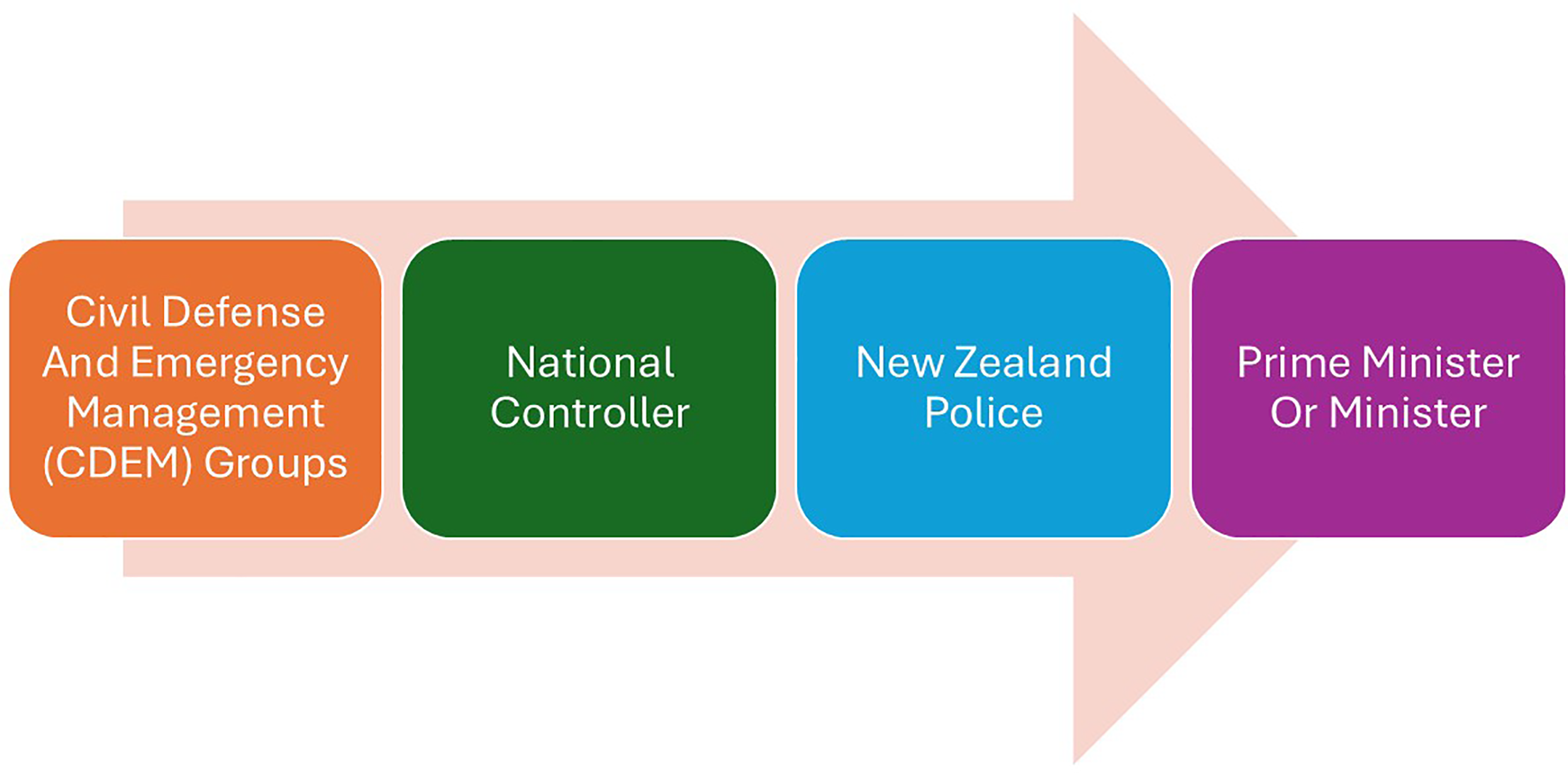
New Zealand's institutional structure of civil and military coordination in domestic operations during natural disasters. 60
Legal and administrative framework in New Zealand for military involvement in domestic response to disasters
The Defence Act 1990 serves as the backbone for civil–military cooperation in nature-triggered disaster response, as it clearly outlines the boundaries of the NZDF's involvement and the processes involved in engaging it. Conversely, the National Civil Defence Emergency Management Plan Order 2015 and the New Zealand Defence Doctrine outline the roles and responsibilities of NZDF during emergencies. The New Zealand Defence Doctrine serves as a guiding framework for the NZDF in its operations and decision-making processes, outlining the fundamental principles, concepts, and strategies that shape the NZDF's approach to national defence and security. Notably, the Defence Doctrine (fourth edition) specifies the NZDF's role in domestic operations, specifically during emergencies, to support civil powers or public service. Providing assistance for emergency relief efforts is one of the security events stipulated in the Defence Doctrine, particularly when such efforts are matters of national survival. 56
The Defence Act 1990 makes specific provisions regulating the use of the NZDF for public service or to assist civil power. For instance, it allows for the military to perform public services or assist during emergencies, both domestically and internationally; however, involvement in industrial disputes requires written authorization from the minister, specifying which military unit is required and the nature of the service to be performed.
The military can assist civil power under certain conditions. Authority from the prime minister or another authorized minister is required when an emergency is imminent, and when the police require assistance in addressing threats to life, property, or public safety. In these instances, the military acts at the request of the police and is empowered to exercise the necessary constabulary powers, with the same civil and criminal liability protections as civilian police. Any authority granted by the minister of defence, prime minister, or any other minister must be promptly communicated to the House of Representatives, along with the reasons for the decision, which enables parliamentary oversight through review of both the decision and its justification. This authority expires after fourteen days unless extended by the House—or, if parliament is dissolved or has expired, by a Proclamation approved by the governor-general in the Executive Council. These provisions ensure that the NZDF's involvement in public services and assisting civil power is governed by clear guidelines and subject to appropriate scrutiny and oversight.
The NZDF's role in domestic emergency response is determined by the National Civil Defence Emergency Management Plan Order 2015. 57 During a crisis, NZDF personnel are not allowed to exercise New Zealand police powers, but may do so if a New Zealand police department makes a request according to the existing laws or in order to save lives.
The role of the NZDF during emergencies is divided into two phases: i) readiness, and ii) response. With respect to readiness, the NZDF prioritizes emergency response preparedness through various measures, including business continuity and contingency plans. It conducts internal training and national exercises and collaborates with the National Emergency Management Agency (NEMA) and Civil Defence Emergency Management (CDEM) on planning and training. These efforts ensure the NZDF's effective emergency response capability within New Zealand.
Regarding the response role of the NZDF during emergencies, the Force implements several measures to ensure effective coordination and support. Liaison officers are assigned to the National Crisis Management Centre (NCMC), Emergency Coordination Centre (ECC), and potentially local Emergency Operations Centres (EOCs). These officers provide advice and updates on NZDF support operations, but are not authorized to accept tasks. The NZDF maintains forces ready for regional and national deployment, including land, air, and sea assets. Coordination of these assets occurs at either the local (ECC) or national level (NCMC), depending on the nature and scale of the emergency. Requests for NZDF support beyond the local levels must be initiated by the CDEM groups through the national controller. These measures ensure the NZDF's effective alignment with crisis management centres and relevant authorities during emergencies.
Synthesis, discussion and implications
This study examines the legal and institutional frameworks governing military involvement in domestic disaster response in Canada, the US, and New Zealand, highlighting key themes including legal structure, response mechanism, strengths, challenges, and the unique aspects of each system. The findings reveal that while all three countries recognize the military as a crucial component of domestic (and international) disaster response, the processes, decision-making structures, and oversight mechanisms differ according to their institutional evolution, governance models, and legal traditions.
A synthesis of the key comparative aspects of military engagement in domestic disasters and emergencies between the selected countries is presented in Table 2. We present these findings sequentially: Canada, the US, and New Zealand.
Comparison of military engagement in domestic disaster response in Canada, the US, and New Zealand.
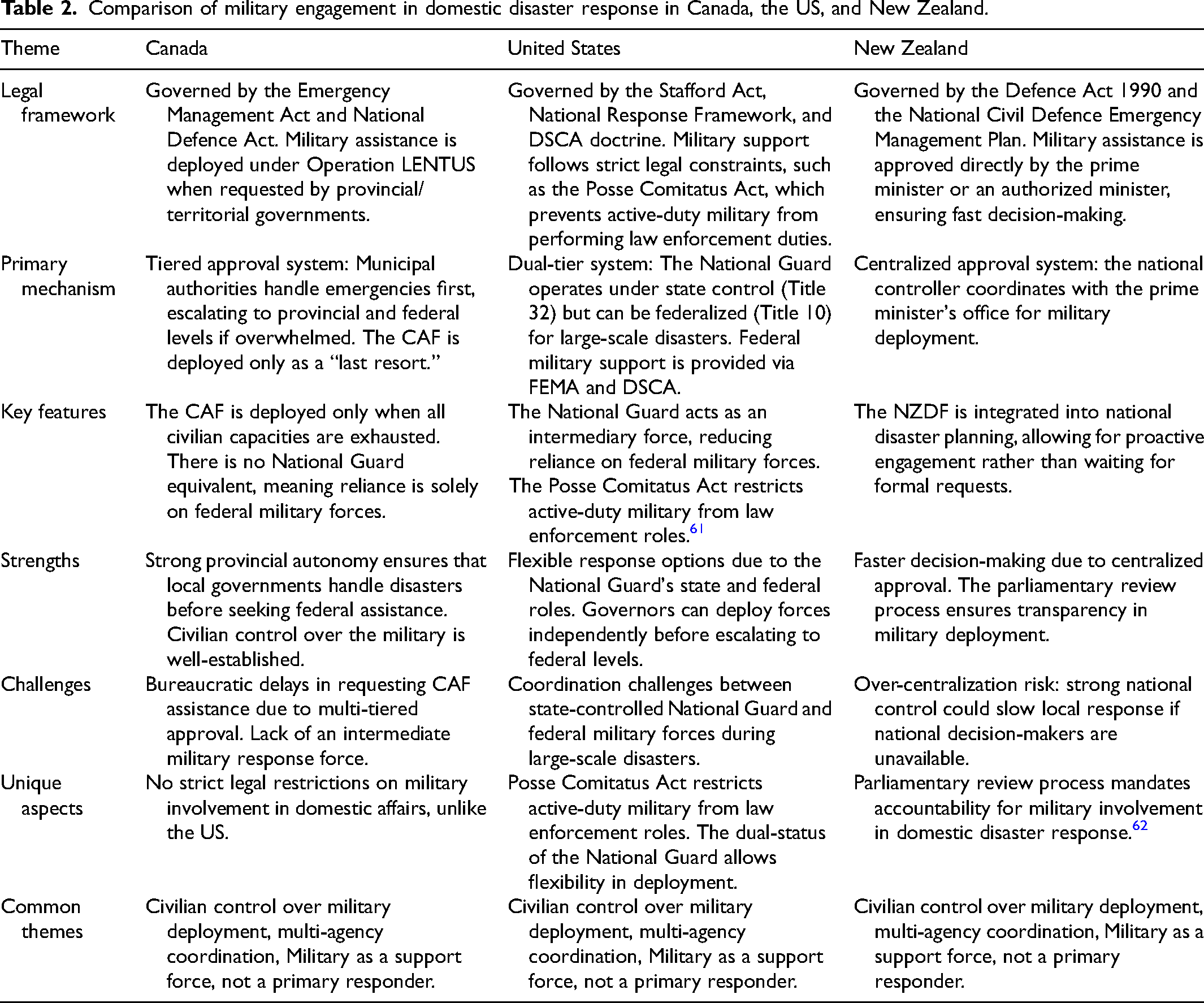
The Emergency Management Act and the National Defence Act allow the CAF to be deployed when provincial or territorial authorities request federal assistance. The primary mechanism follows a tiered approach, where emergencies are first handled at the municipal level, then at the provincial level, and only reach the federal level if local capacities are overwhelmed. Military involvement operates under the “last resort” principle, meaning that the CAF is called in only when all civilian resources are exhausted. 58
A key strength of Canada's system is its clear division of responsibility, ensuring that lower levels of government manage and respond to crises before any federal intervention. However, a major challenge is the bureaucratic delays caused by the multi-layered approval system, which often increases military response time in rapidly developing disasters. Unlike the US, Canada does not have a National Guard equivalent, meaning the country lacks an intermediary force that could be deployed before activating CAF. A distinct aspect of Canada's system is its reliance on the Public Safety Canada protocol, which coordinates emergency response across different government levels. A theme Canada has in common with the US and New Zealand is the emphasis on civilian control over military deployment, ensuring that military forces support but do not replace civilian authorities in disaster management.
The US legal framework for military disaster response is complex, involving multiple laws such as the Stafford Act, the NRF, and the DSCA doctrine. The primary mechanism follows a tiered approach, where local and state authorities handle emergencies before requesting federal support, typically through FEMA. A key feature that distinguishes the US from Canada and New Zealand is the dual authority structure of the National Guard. As noted earlier, under Title 32 the National Guard remains under state control, but under Title 10 it can be federalized by the president and integrated with active-duty forces. This flexibility is a strength, enabling rapid deployment at the state level without federal approval.
However, the task of coordinating state and federal forces often becomes complicated, particularly if command structures are unclear during large-scale disasters. A distinctive aspect of the US system is the Posse Comitatus Act, which restricts active-duty military from engaging in domestic law enforcement, ensuring a strong separation between military and civilian roles. A theme that the US has in common with Canada and New Zealand is the reliance on a structured, multi-agency approach to disaster response, integrating military and civilian capabilities.
As noted earlier, New Zealand's legal framework for military engagement in disaster response is defined by the Defence Act 1990 and the National Civil Defence Emergency Management Plan. Unlike Canada and the US, New Zealand operates under a unitary system, where disaster response decisions are made at the national level rather than by states or provinces. The primary mechanism for deploying the NZDF involves direct approval from the prime minister or another senior minister, with oversight from the national controller. While this centralized approach allows for faster decision-making compared to the federal systems of Canada and the US, it has resulted in an over-reliance on national authorities, often slowing down response efforts in local emergencies.
A unique aspect of New Zealand's model is its parliamentary review process, which ensures that any military involvement in domestic affairs is subject to close legislative scrutiny. A theme that New Zealand has in common with Canada and the USA is its emphasis on civilian control over military operations, which provides legal and institutional safeguards to prevent military overreach during disaster response.
Lessons learned and implications for future direction
The comparative analysis of Canada, the US, and New Zealand reveals key insights into military engagement in domestic disaster response, highlighting areas where Canada can improve its policy framework, operational efficiency, and legal oversight. While Canada benefits from structured governance and strong civilian oversight, the findings of the present study reveal opportunities for further improvement in response speed, interagency coordination, and institutional preparedness for future domestic disasters. Four specific areas of improvement have been identified, as follows:
1. Streamlining military deployment for rapid response
A key challenge in Canada's system is the multi-tiered approval process, which ensures civilian oversight but can cause delays in mobilizing the CAF. Unlike New Zealand's centralized model, which allows for ministerial approval, Canada requires requests to move through multiple governmental levels before a CAF deployment. The US system provides flexibility by allowing National Guard activation at the state level, reducing dependency on federal forces. To reduce response time, Canadian institutions should develop provisions for implementing pre-authorized military engagement thresholds for specific disaster scenarios. A fast-track approval process at the provincial level would likely improve response efficiency while maintaining federal oversight.
2. Establishing an intermediate disaster response force
Unlike the US National Guard, which provides a state-controlled first response option, Canada relies entirely on the CAF, leading to resource strain and delayed engagement in some cases. New Zealand integrates military resources into civilian disaster planning, ensuring readiness before a crisis occurs. The Canadian system should consider creating a National Disaster Response Reserve Unit, composed of CAF reserves, trained civilian responders, and emergency management specialists. This unit could be deployed at the provincial level, providing an intermediate response force before engaging the CAF.
3. Enhancing military-civilian coordination and integration
The US model benefits from FEMA's integration with military assets. The New Zealand system follows a proactive planning model where the military is directly embedded in civilian-led disaster response frameworks. The Canadian approach remains more reactive-oriented, with the CAF deployed upon request rather than fully integrated into emergency planning at all levels. On the one hand, an integrated system of ready-to-go intermediary forces can address the inefficiencies of a reactive-oriented approach. On the other, expanding joint training programs between the CAF, Public Safety Canada, provincial emergency agencies, and local responders—thereby ensuring CAF participation in national and regional disaster preparedness exercises—can enhance the effectiveness and efficiency of collaboration.
4. Strengthening civilian oversight with clear legal constraints
Unlike the US, whose Posse Comitatus Act strictly limits military engagement in law enforcement, Canada has no equivalent legal restriction on military's domestic involvement. New Zealand enforces parliamentary oversight to review military deployments, ensuring transparency and accountability. Here, placing formal legal constraints on military involvement in domestic operations serves to maintain civil–military boundaries. Mandating parliamentary review of military deployments in non-defence-related emergencies in Canada, similar to New Zealand's oversight model, can considerably improve civil institutions’ oversight of the deployment.
Conclusion
This study analyzes the institutional and legal frameworks governing civil–military cooperation in three developed nations—Canada, the US, and New Zealand—to highlight the critical roles played by military forces in domestic disaster response. While all three countries recognize the military as a vital resource in disaster management, the countries’ governance structures, response mechanisms, and legal oversight overlap and diverge in important ways.
As we have shown, Canada's tiered approval system ensures civilian control, but can slow CAF deployment due to bureaucratic delays. In comparison, the US National Guard model offers greater flexibility, while New Zealand's centralized system facilitates rapid decision-making, but risks over-centralization. The findings suggest that Canada could benefit from pre-authorized military engagement thresholds, an intermediate disaster response force, and improved interagency coordination.
In the future, strengthening legal constraints, integrating technology in disaster forecasting, and incorporating climate resilience strategies will be essential for improving Canada's military disaster response framework. By adopting best practices from the US and New Zealand, Canada can build a more agile, efficient, and accountable civil–military cooperation model, ensuring that military engagement remains a strategic supplement rather than a primary disaster response mechanism.
Footnotes
Acknowledgments
This research was funded and supported by a research grant under the Mobilizing Insights in Defense and Security (MINDS) Program of the Department of National Defense (DND), Canada to the second author, The authors are thankful to DND and Carleton University, Ottawa for their financial and logistical supports. The authors are grateful to Dr. Kawser Ahmed, Adjunct Professor, University of Manitoba, Canada, for his support to this research project.
Availability of data and materials
The datasets are available upon reasonable request.
Declaration of conflicting interests
The authors declared no potential conflicts of interest with respect to the research, authorship, and/or publication of this article.
Ethical approval and informed consent statement
The research and data collection protocol were approved by the Joint Faculty Research Ethics Board at the University of Manitoba, Canada (Protocol Number: HE2023-0080). Data for the study were collected with written consent of all participants, by following the University of Manitoba, Canada's ethics protocol.
Funding
The authors disclosed receipt of the following financial support for the research, authorship, and/or publication of this article: This work was supported by the Ministère de la Défense Nationale, (grant number #325972-328100-2000).
