



Abstract
Biomass energy plays an essential role in renewable energy for many reasons, such as reducing the dependence on fossil fuels and lowering greenhouse gas emissions, providing heat, electricity, and biofuels for various applications, and utilizing waste materials for helpful energy products. Besides, it can create employment opportunities and promote rural development, especially in developing countries where biomass resources are abundant and accessible. In the context of renewable energy research and application, this paper aims to develop a multi-objective mixed integer linear programming for designing multiple echelon biomass supply chain networks. The model is formulated to consider the economic costs and environmental impact of biomass distribution from the suppliers to the biomass plants. In this research, the Epsilon constraint method is adopted to generate Pareto fonts, which provides the trade-offs between two objectives. Moreover, sensitivity analysis is implemented to provide decision-makers with information about a network with changed parameters such as demand. Our model allows the decision maker to determine the capacity of warehouses and biomass power plants, inventory levels, type of trucks, etc. The proposed model is verified and evaluated using a practical dataset from Can Tho province, Central Mekong River Delta in Vietnam, generating several benefits for energy security and sustainability. Such a network includes 3 types of power plants, 3 scales of warehouses, 13 potential locations, and 41 suppliers. From the generated solutions, with the proportion of biomass electricity satisfaction varying from 5% to 30%, Hung Phu, O Mon, and Cai Rang industrial parks are the most suitable for power plants.
Keywords
Introduction
The global electricity demand will grow gradually, reaching approximately 29,000 TWh by 2030. 1 In connection with the finiteness of fossil fuels and the consequences of greenhouse gas emissions, the continual rise in energy consumption and environmental concerns has prompted research into various alternative and renewable energy sources.2–6 Bioenergy has been proposed as a sustainable and renewable energy source with significant potential to replace fossil-based energy. Among the crucial bioenergy resources, biomass currently ranks as the fourth-largest energy source worldwide, following coal, oil, and natural gas. Also, it is considered the most important renewable energy option and can produce different energy forms. In 2018, biomass accounted for 13%–14% of primary energy use; by 2050, it is anticipated to make up 50% of all immediate energy consumption worldwide. 7
The simultaneous incorporation of economic, environmental, and social objectives has gained attention when designing supply chain networks in the context of sustainability. 8 Although financial considerations are a typical objective of any supply chain, the prominence of environmental and social concerns in real-world decisions has been widely acknowledged. Therefore, multi-objective optimization problems have gained significant attention from researchers as they typically aim to optimize more than one conflicting objective function.9–12 In which the economic and environmental objectives are widely considered. The transport sector accounts for 70% of total air pollution in urban areas and is caused by burning fuels 13 ; therefore, in this research, we focus on the emissions from transportation activities. Even though many researchers have investigated using new energy vehicles,14,15 almost all vehicles still use diesel to operate, which causes emissions. In 2016, the emissions of greenhouse gases from transportation operations accounted for 24% of global CO2 emissions that significantly contributed to environmental problems. 16
With diverse biomass energy production potentials, Vietnam must continue to propose solutions for developing this clean energy source in the future. The enormous domestic biomass potential (118 million tons/year, according to the Vietnam Energy Institute) can meet commercialization and sustainability goals, which is critical to the long-term viability of renewable energy. 17 However, the exploitation and consumption of biomass energy in Vietnam are currently very low. According to a Vietnam Electricity (EVN) report, 18 biomass energy accounted for 0.53% of total electricity generation in Vietnam in 2019 and 2020. Besides, air pollution is a predominant issue in the National Report on Environmental State from 2016 to 2020 of the Vietnam Ministry of Natural Resources and Environment (MONRE). 19 From 1994 to 2016, the carbon emissions in Vietnam increased from 103.8 to 316.7 billion tons. CO2 associated with the energy industry increased eight times within 22 years and rabidly raised. As a result, the Vietnamese Government objects to reduce 9% the amount of CO2 by 2030. Therefore, using renewable energy and managing emissions sources is one of the future development strategies of the Vietnamese Government.
Based on the motivations above, this research aims to establish a sustainable biomass supply chain in Vietnam that considers the total cost and carbon emissions from transportation activities. A mixed-integer linear programming model is formulated to optimize facility locations and material flows to achieve this objective. Additionally, the ε-constraint method is employed to address multiple objective problems.
In the context of supply chain networks, this research was uniquely conducted and was highlighted compared to previous studies. For example, in line with the biomass supply chain in Vietnam, Nguyen Duc and Nananukul 20 focused on developing advanced methodologies for designing large-scale single-echelon biomass networks. Current research is more concerned with multiple echelons biomass networks. The mathematical model is to select the capacities and locations of warehouses and power plants. While Akhtari et al. 21 formulated the mathematical model for optimizing forest-based biomass supply chains, this study mainly utilized agricultural feedstocks available in Vietnam. Some authors have mainly been interested in multi-criteria decision-making (MCDM) (e.g., references 12, 22]), and this study focused on multiple objectives optimization (e.g., references 9–11, 22).
The main contributions of the current study can be summarized as follows: (i) This study formulates a multi-objective model for biomass supply chain planning. The proposed approach provides a framework for considering the environmental impact of biomass distribution from the suppliers to warehouses and warehouses to the power plants. (ii) The research integrated formulation of facility locations: warehouse and power plants, inventory, and amount of purchased biomass into a single model for energy production. (iii) In this research, the simultaneous minimization of economic costs and carbon footprints from transportation activities is not only better aligned with the ultimate objective of sustainability but also results in more consistent sustainable development. (iv) Finally, the proposed model is evaluated with actual data on implementing a biomass-to-energy production and distribution network in Can Tho province, Central Mekong River Delta in Vietnam, and the results are discussed. Therefore, the findings of this study can make valuable contributions to formulating the national energy strategy and exploring comprehensive possibilities for renewable energy based on biomass in the studied region.
Current research is formed as follows: Section “Problem statement” presents the problem statement. Section “Literature review” reviews the related research in supply chain planning. The solving approach and mathematical model are presented in Sections “Methodology and model formulation” and “Solution approach.” Section “A case study” presents a real-world case study and provides the results obtained from solving the research problem. Lastly, Section “Discussion and implications” presents the overall conclusion of the study.
Problem statement
Figure 1 presents a typical multiple-echelon biomass supply-chain network, including suppliers: biomass sites, warehouses centers, and biomass power plants. In this network, biomass is collected from suppliers such as rice milling factories and farms in different locations and then gathered and stored at warehouses or distribution centers. Afterward, biomass from a warehouse or distribution center was delivered to biomass power plants on their biomass demand to produce electricity. Finally, all generated electricity is fed into the national grid. The decisions made in this study regarding supply chain planning can be classified into two levels: strategic and tactical. The strategic choices are employed to determine the locations of biomass power plants, warehouses, and supplier selection. In contrast, tactical decisions are made to determine the quantities of biomass purchased in each period, inventory level, and biomass shipped to biomass power plants in the proposed biomass supply-chain networks. The research introduces a model that can assist decision-makers in designing the network while considering total or entire costs and environmental or ecological concerns.
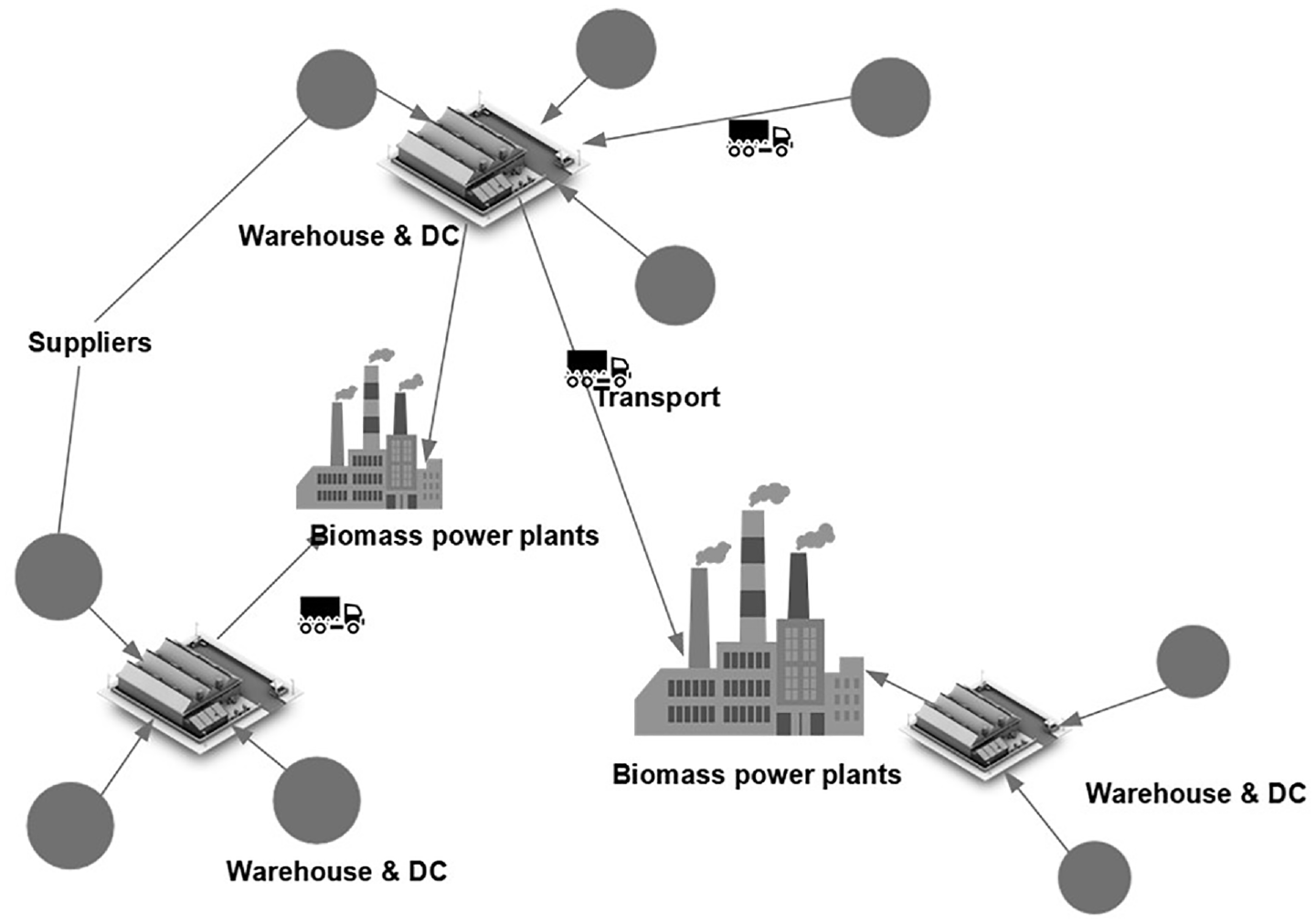
A simple multiple echelons supply chain network.
There are main assumptions in the model that could be noted as follows: The electricity demand is known in advance and must be satisfied. The electricity cannot be kept as inventory over the months. The capacity of warehouses and biomass power plants is known. All model parameters are known, including heat value of biomass, transportation costs, biomass acquisition cost, biomass holding cost, unit carbon emission, fixed cost of opening biomass power plants, and warehouse rental cost. The location of suppliers, warehouses, and potential biomass power plant locations are known, and the distance matrix is defined in advance. The road transportation model is selected to deliver the biomass in the network. Inventory of biomass is allowed only at warehouses. There are no disruptions in the networks.
Literature review
This section presents an overview of published papers related to modeling for the optimization of biomass-based energy systems, with a particular focus on efforts made by various researchers toward sustainable development.
To optimize strategic and tactical decisions in biomass-based supply chains, De Meyer et al. 23 presented a comprehensive mathematical model that evaluates the impact of handling operations on biomass characteristics. These operations must meet the requirements for biomass products delivered to a conversion facility. The mathematical model is a foundation for making strategic, long-term decisions in designing the biomass supply chain. This includes determining the location, capacity, and technological capabilities of intermediate storage and conversion facilities, the sourcing and acquisition of biomass, and its distribution and allocation among facilities. Paolucci et al. 24 developed a two-tier methodology for the optimal design of biomass supply chains using a multi-objective mixed-integer linear programming (MILP) framework to assess both economic and environmental (greenhouse gas) aspects. The model offers quantitative data to support quick and effective decision-making with the supply chain configuring optimally regarding plant size, location, transport logistics, and cultivation. Mirkouei et al. 22 applied an MCDM framework to assess a mixed biomass-based energy supply chain to enhance economic and environmental sustainability benefits. The framework supports decisions that affect sustainability’s economic and ecological features. Support vector machine technology is used in financial analysis to anticipate the distribution of uncertainty parameters and a stochastic optimization model to account for uncertainties in the model. Using a genetic algorithm, the stochastic model reduces the suggested mixed supply chain network’s total yearly cost under uncertainty. The cost-effective supply chain network’s ability to contribute to global warming is assessed using environmental impact analysis and life cycle assessment.
Perrin et al. conducted a case study on miscanthus in France, focusing on an integrated design and sustainable assessment of innovative biomass supply chains. They optimized the sizes of biomass supply chains from both economic and environmental perspectives under various scenarios, considering different annual biomass demand, crop yield, harvest timing, and densification technologies. 25 This study offers direction in supply chain optimization and the construction of technology solutions suited to economic operators and other stakeholders, including policymakers, by emphasizing hot spots concerning biomass supply networks’ economic, environmental, and social implications. Wheeler et al. 12 integrated multi-attribute decision-making methods with a unique Pareto solution of multi-objective optimization in the design of biomass supply chains, specifically focusing on a sugar/ethanol supply chain. This integration was achieved using questionnaires administered to academic experts specializing in the field. Akhtari et al. 21 devised strategic and tactical decision approaches for optimizing forest-based biomass supply chains concerning medium-term supply and demand variations. The model also considers monthly fluctuations in biomass availability, bioenergy/biofuel demand, losses during pre-processing of biomass, and variations in biomass supply that might occur annually owing to changes in harvest level. Based on stochastic programming, parameter search, and simulation-based optimization, Nguyen Duc and Nananukul 20 determined that there should be a solution for the biomass supply-chain model efficiently by maximizing the benefits. At the same time, it should bring transportation costs, purchasing costs, opening fixed costs, inventory costs, penalty costs for missing demands, and unpredictability from factors like supply capacity and power demand into the discussion. The research’s biomass facilities are outfitted with suitable waste management technologies.
Using a multi-stage solution methodology, Durmaz and Bilgen 10 investigated the optimal design and planning of a biomass supply-chain network involving the flow from hen farms to biogas plants. The study utilizes geographic information systems and analytical hierarchy process techniques to identify potential sites for biogas facilities. The multi-objective mixed integer linear programming model made strategic decisions (ideal sites and capacity for biogas facilities) and tactical considerations (transportation network flows). In order to ascertain the optimal quantity, location, and size of the biogas facilities, as well as the network flow and electricity production, two objective functions need to be considered: maximizing the profit and minimizing the total distance between poultry farms and the biogas facilities. Malladi and Sowlati 11 proposed bi-objective optimization models that incorporate carbon pricing policies to achieve a trade-off between the cost and emissions of biomass supply-chain models. Nguyen Duc et al. 9 created models for multi-objective biomass supply chain planning with the dual objectives of reducing overall costs and transportation-related carbon emissions. We must create stochastic and fuzzy models to capture the uncertainties to develop tactical (material flows, truck types, etc.) and strategic (optimal plant locations).
Methodology and model formulation
Methodology
This section provides the details of the proposed solution, mathematical model, and ε-constraint adopted from Eskandari-Khanghahi et al., 26 are provided. The flowchart of the solution process is demonstrated in Figure 2. Firstly, the problem statement is stated to formulate the mathematical model. And then, the mathematical models are developed as multi-objective models that consider total cost and CO2 from transportation activities. Thirdly, the ε-constraint approach is adopted to transform multi-objective models to single objective models. After that, the models are programmed and solved using IBM CPLEX. 27 The generated solutions are presented to decision-makers to evaluate and select. If the solutions are satisfied with the decision maker’s preferences, finish. Otherwise, adjustments need to be made, and rerun the model until the most suitable solution is identified.
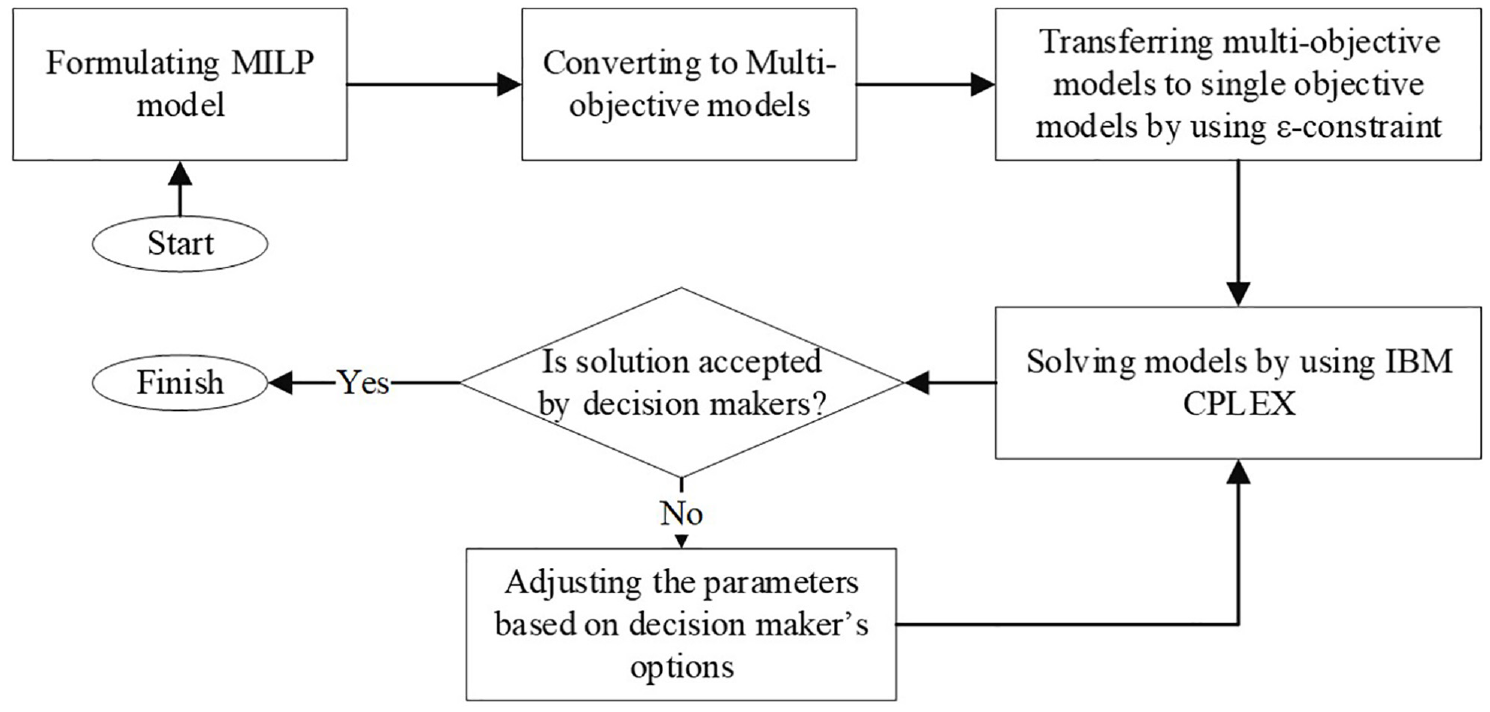
A general flow chart of the research.
There are many methods to optimize facility locations in biomass supply chain networks, such as simulation, 28 multi-criteria decision-making – Best Worst method, 29 and the TODIM-PROMETHEE method, 30 to mention a few. Even though simulation is well-known for capturing uncertainty and generating solutions in a practical time, the solutions are firmly based on the rules that rely on the experience of experts and can not be verified optimally. The MCDM method can handle multiple attributes in selecting the best location, but it is tough to make tactical decisions like inventory levels, type of trucks, etc. Therefore, we develop an optimization model to overcome the above method’s limitations. In many cases, optimization demonstrated the efficience for solving many problems31–33 that can be ulitized to to solve our problems.
Mathematical model
To formulate a mathematical model to design a biomass supply chain network, the mathematical models from references 9, 20, 34 were adopted and modified in this work as follows:
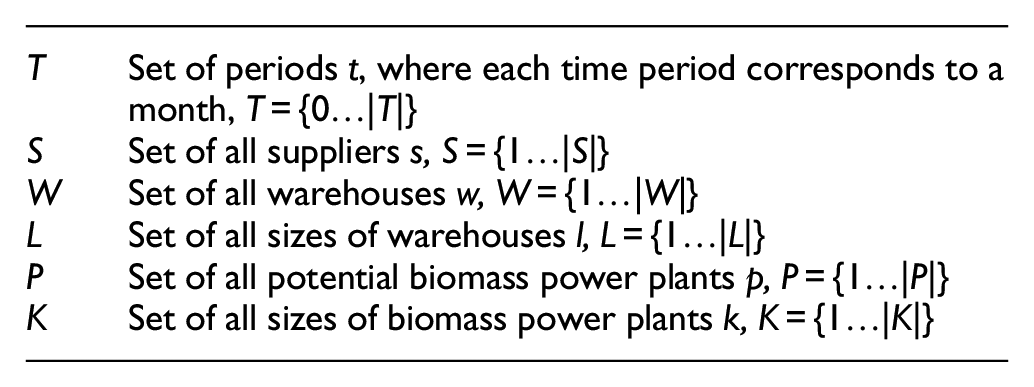
Sets and notations
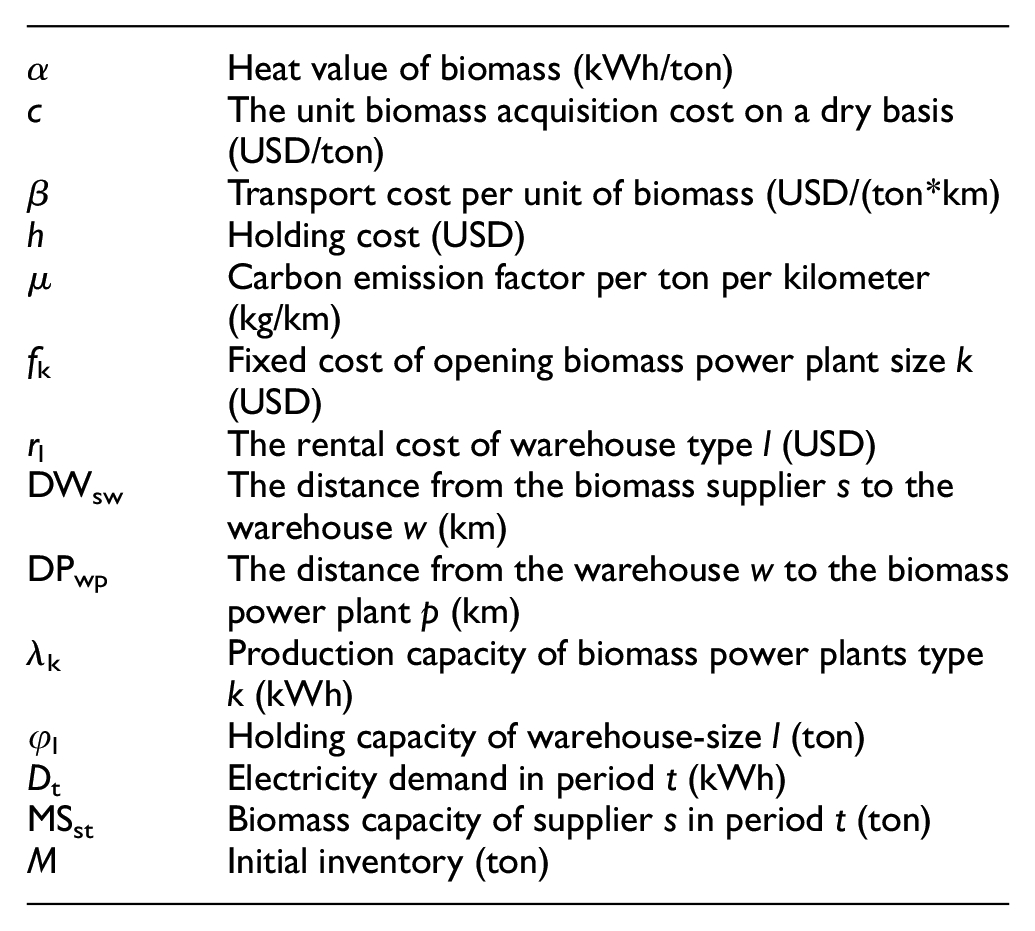
Parameters
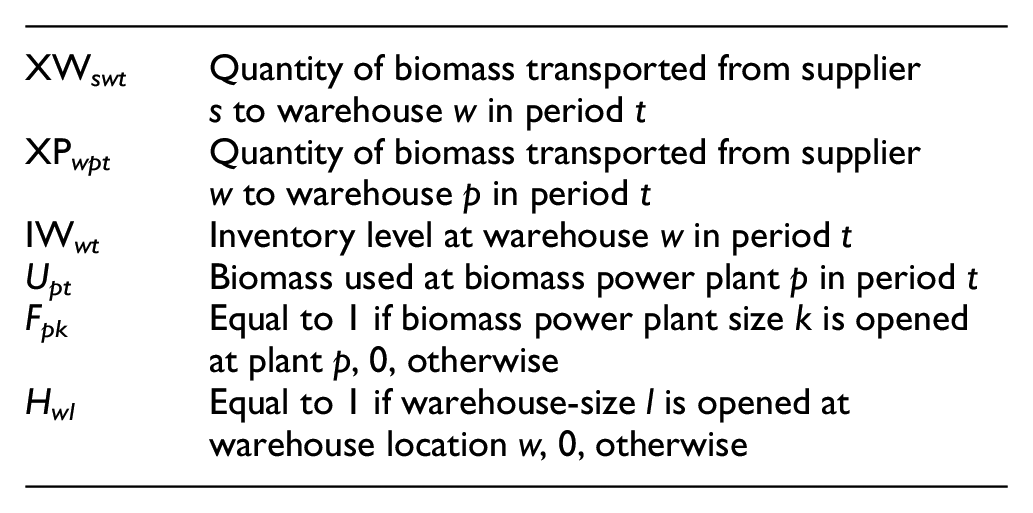
Variables
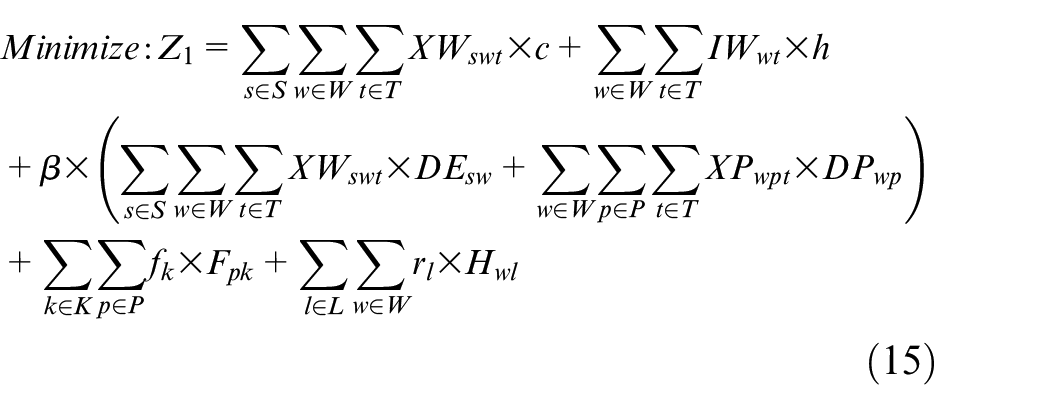
The first model objective is to minimize the overall supply chain cost, as shown in equation (1).
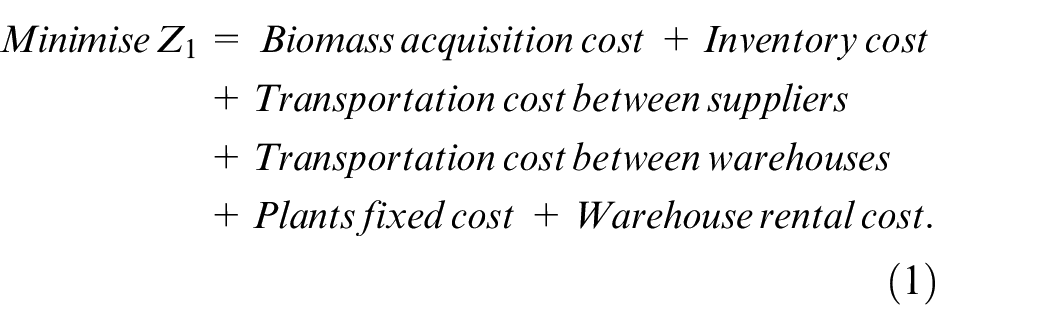
In which:
Biomass acquisition cost =
Inventory cost =
Transportation cost between suppliers and warehouses =
Transportation cost between warehouses and plants =
Plants fixed cost =
Warehouse rental cost =
Equation (2) presents the second model objective that shows the number of carbon emissions from transportation.
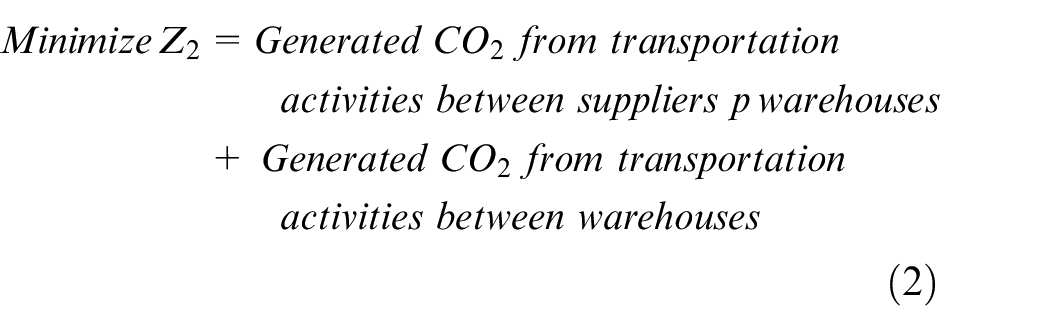
In which:
Generated CO2 from transportation activities between suppliers and warehouses =
Generated CO2 from transportation activities between warehouses and plants =
All model constraints are presented from equations (3) to (13).











Equation (3) explains that each type’s warehouses and distribution centers will provide an amount of initial inventory for producing electricity based on biomass shortage in the early period. Also, equation (4) ensures that the electricity demand from all power plants should reach sufficient consumption. Next, constraint (5) explains that warehouses and distribution centers must meet the biomass power plants’ capacity. Moreover, constraint (6) explains the limitations of several opened power plants. Then, constraint (7) justifies that only one biomass power plant can be opened. Next, constraint (8) calculates the warehouse inventory values. Constraint (9) explains that the warehouse volume must be satisfied. Constraint (10) explains that supplier capacity needs to be met. Constraint (11) justifies that only one warehouse type can be rented. Finally, constraints (12) and (13) help to explain the kind of variables and non-negativity constraints.
Solution approach
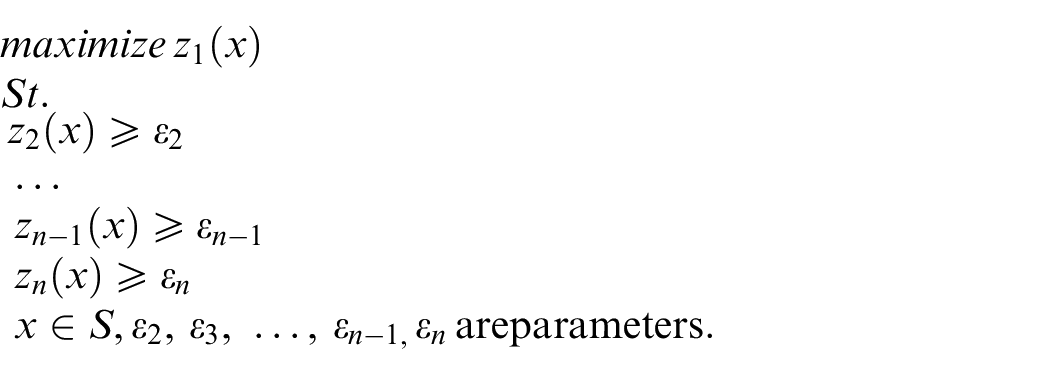
Several solution approaches have been developed to deal with multiple objective problems. This paper uses an ε-constraint method developed by Changkong and Haimes. 35 With the ε-constraint approach, we optimize one of the objective functions when other objective functions are considered constraints with bounds defined by different levels of ε. The typical ε-constraint method application for multiple objective problems is presented below.
Let z1(x), z2(x), z3(x), …, z n (x) be objective functions of an optimization problem where x is the vector of decision variables, x∈S. S is a set of the feasible solutions.

By applying the ε-constraint method, the objectives and constraints of the model are presented below:
According to the above example, the ε-constraint method applied to address the biomass supply chain planning problem with two simultaneous considerations is presented below.
Let Z1 and Z2 be objective functions of minimizing total cost and carbon emissions, respectively. Let λ1L be the optimal value of the fundamental cost objective when the model does not consider the carbon emission objective. Let λ2L be the optimal value of carbon emissions when the model only aims to optimize carbon emissions. Let λ1U be the upper bound of total costs calculated when Z2 equals λ2L. Similarly, the upper bound of carbon emissions (λ2U) can be calculated when the total cost is optimal. Then, it produces the value of the entire cost objective and carbon emissions objective in [λ1L, λ1U] and [λ2L, λ2U], respectively. Changing the form of the multiple objective problems is to optimize the total costs while carbon emissions will be transformed into a constraint, and it is presented as follows:
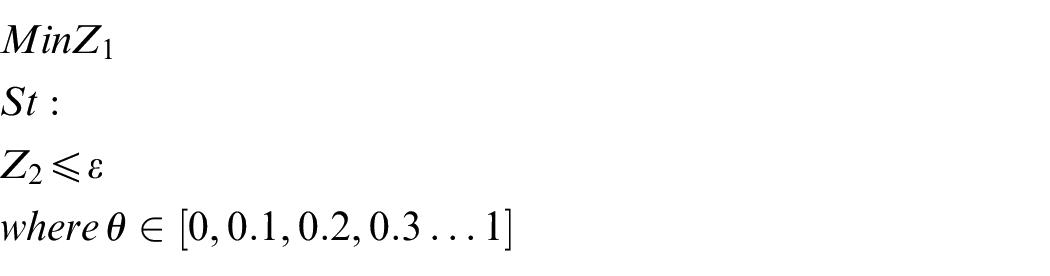
In practical cases, the lowest value of θ can be determined by equation (14).

Our multiple objectives model can be reformulated as below:
Constraints:
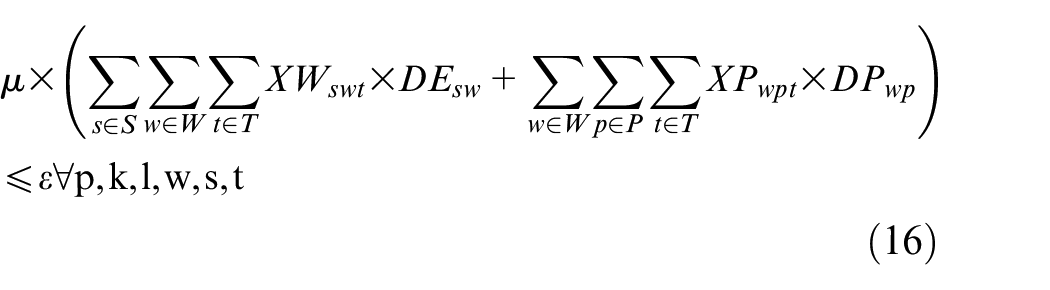

Where λ2U is an upper bound of carbon emissions, θ∈ [0, 0.1, 0.2, 0.3 … 1], and we used equation (3) to (13).
A case study
Input data
Can Tho – general information
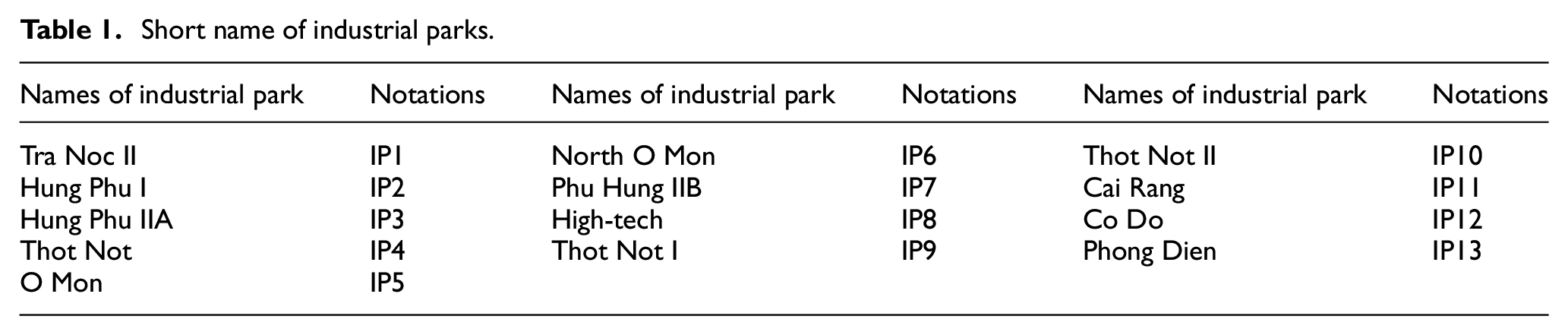
The proposed model is verified and illustrated using a practical case study in Vietnam. The supply chain network focused on using rice husks in Can Tho, Central Mekong River Delta in Vietnam. Such biomass supply network includes the 41 leading rice milling factories (biomass supply nodes). As shown in Figure 3, suppliers are presented using circle symbols and named with S: candidate sites for the warehouse and distribution centers and candidate sites for biomass power plants (demand nodes) with various capacity options. In this research, the warehouse and distribution centers and biomass power plants will be located in 13 industrial parks, which are endnotes, using a square symbol and named with IP as Figure 3. The names and short names of industrial parks are presented in Table 1. Because the availability of land in each industrial park has been limited, each industrial park is aimed to find one warehouse and distribution center or a biomass power plant.
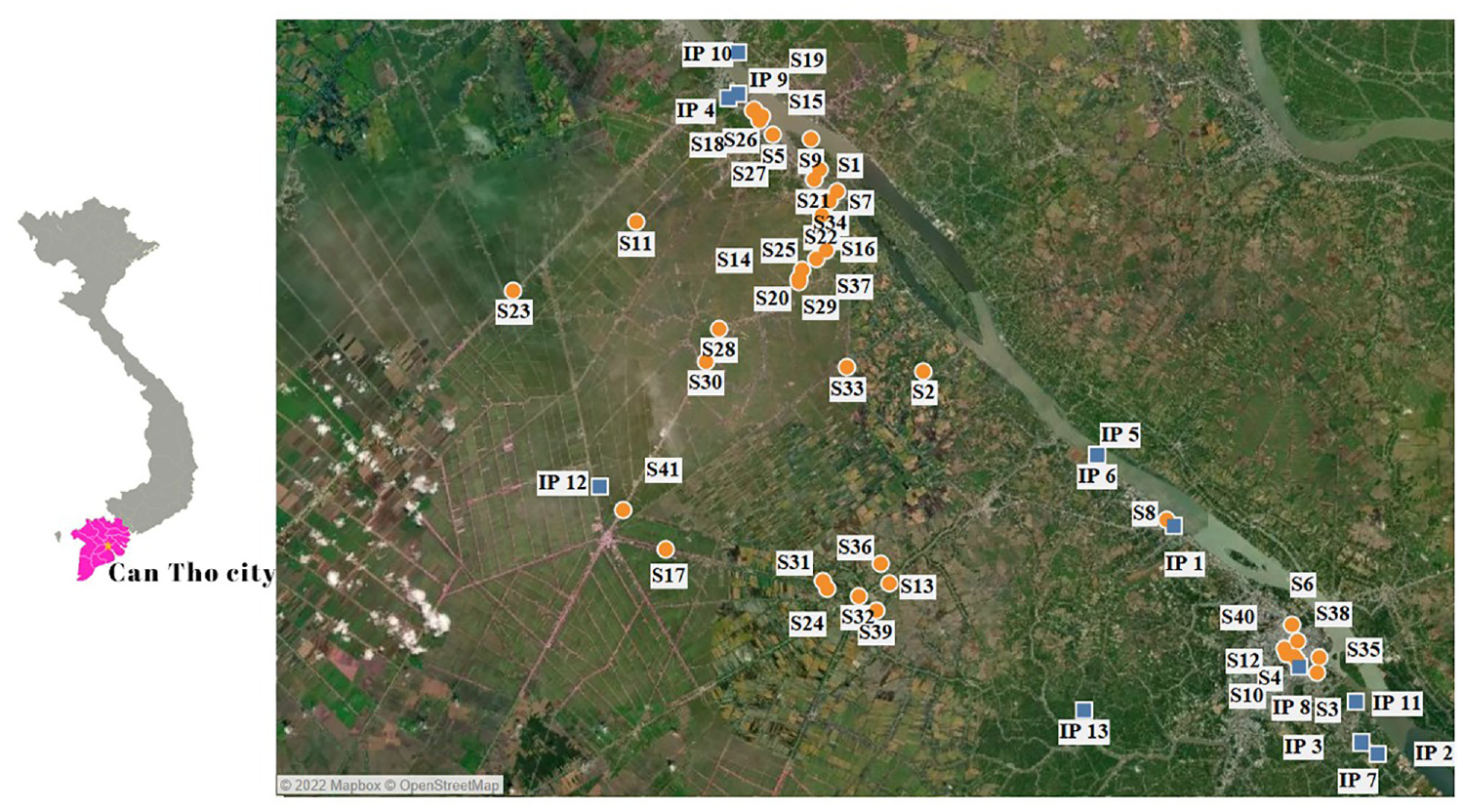
Rice milling factories and industrial parks in Can Tho in the Mekong River Delta in Vietnam.
Short name of industrial parks.
Demand for electricity in Can Tho
Can Tho’s electricity consumption in 2019 was approximately 2470.1 GWh, as shown in Figure 4. In this research, we assume that a part of the electricity demand is satisfied with biomass energy. The proportion of electricity fulfilled by biomass varied from 5% to 25%, which is examined in the sensitivity analyses.
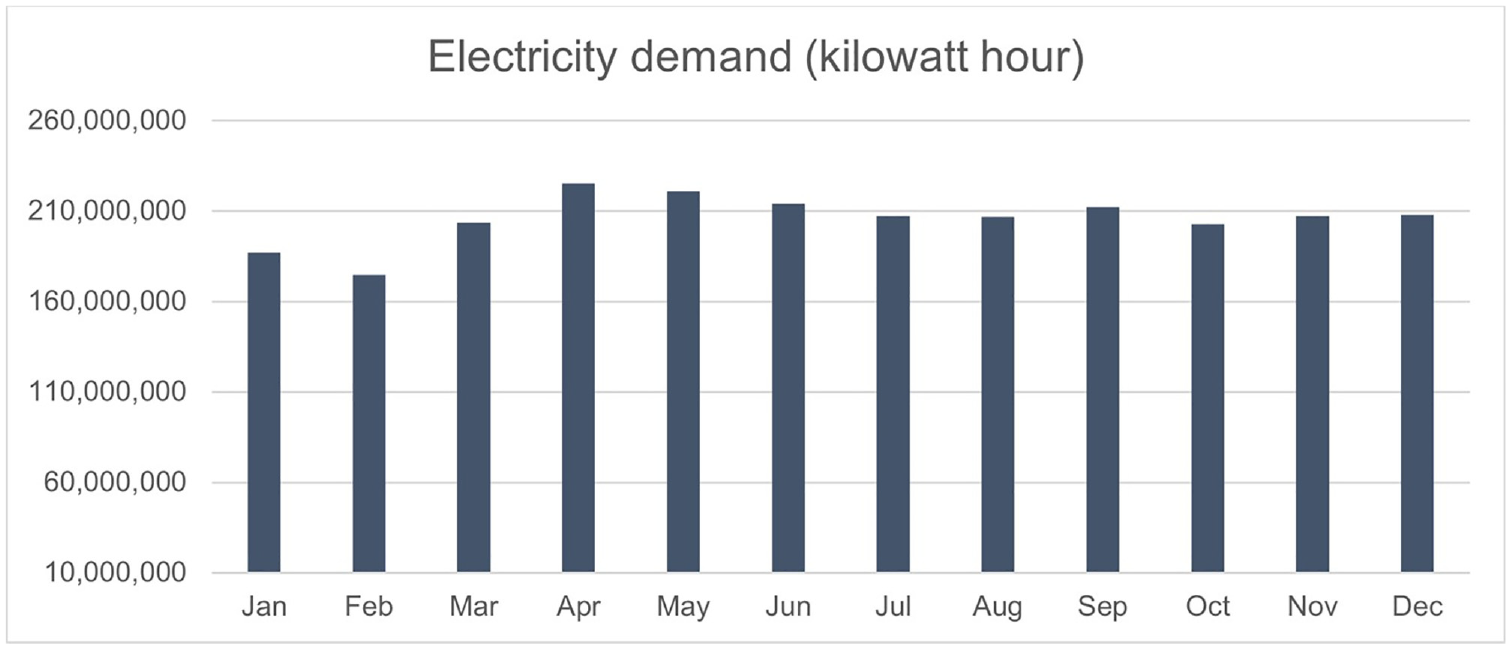
Electricity demand in CanTho, Vietnam 2019. 18
Biomass supply
Mekong Delta – Vietnam rice productivity varies between autumn and spring. 36 The winter rice season usually begins in July or August and finishes in November or December. The autumn rice season is from May or June to mid-August or September. The spring rice season starts with sowing periods from November to December and finishes with harvesting periods in February or March. After drying, rice is collected and stored at rice milling plants. After milling, rice husk is collected for electricity production at biomass power plants. The suppliers’ data and availability of rice husks were collected from 41 leading rice milling factories in Can Tho province. The biomass was collected for $26.36 per ton. The rice husk’s heat value is approximately 78 kWh/ton. 37
Transportation costs and carbon emissions
This research assumes that the rice husk will be collected and transported by third-party logistics using a 10-wheel truck – with a 9-ton capacity. The cost per kilometer per ton is estimated at $ 0.073 within Can Tho city. The number of carbon emissions per kilometer, 42.3 kg, was collected from the truck company’s technical reports. To calculate the distance traveled, we identified the coordinates of each supplier, potential storage facilities, and biomass power plants. Afterward, the Google Maps Platform was used to find the path and distance among locations. Transportation costs are calculated by multiplying the transportation unit prices by the length traveled. Transportation costs are calculated by multiplying the unit prices by the distance traveled. The carbon emissions are calculated by multiplying biomass shipped with the carbon emissions units per ton per kilometer.
Facility cost
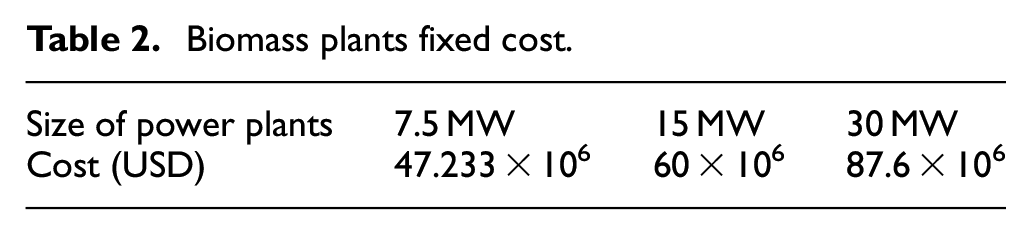
Three biomass power plants could be installed in Can Tho: 7.5, 15, and 30 MW. To calculate the fixed cost of the power plant, we collected data from a similar capacity power plant in Vietnam, as shown in Table 2. Each project has a life cycle equal to 22 years.
Biomass plants fixed cost.
Then they are converted to annual cost by considering the (T), and the interest rate (i) is 15% per year. 38

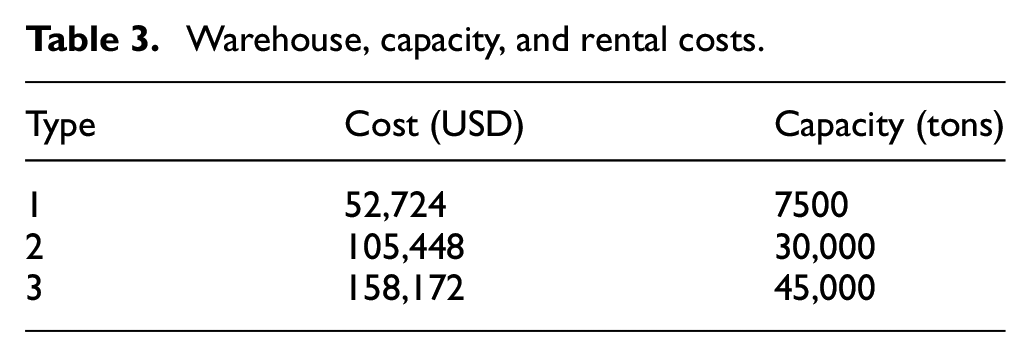
Three types of warehouses can be installed in Can Tho. The rental cost and the capacities of warehouses are shown in Table 3:
Warehouse, capacity, and rental costs.
Output analyses
This paper’s mathematical model and ε-constraint method were programmed in CPLEX 12.10 with a system of CPU specifications Core i7-10510U and RAM 8GB. A multi-objective problem was altered into a single-objective problem by applying the ε-constraint method. To implement the ε-constraint process, users need an objective function that becomes the primary model objective, and the second objective becomes a constraint where the right side of the constraint is determined by a threshold of the second objective multiplied by theta where θ∈ [0, 0.1, 0.2, 0.3 … 1].
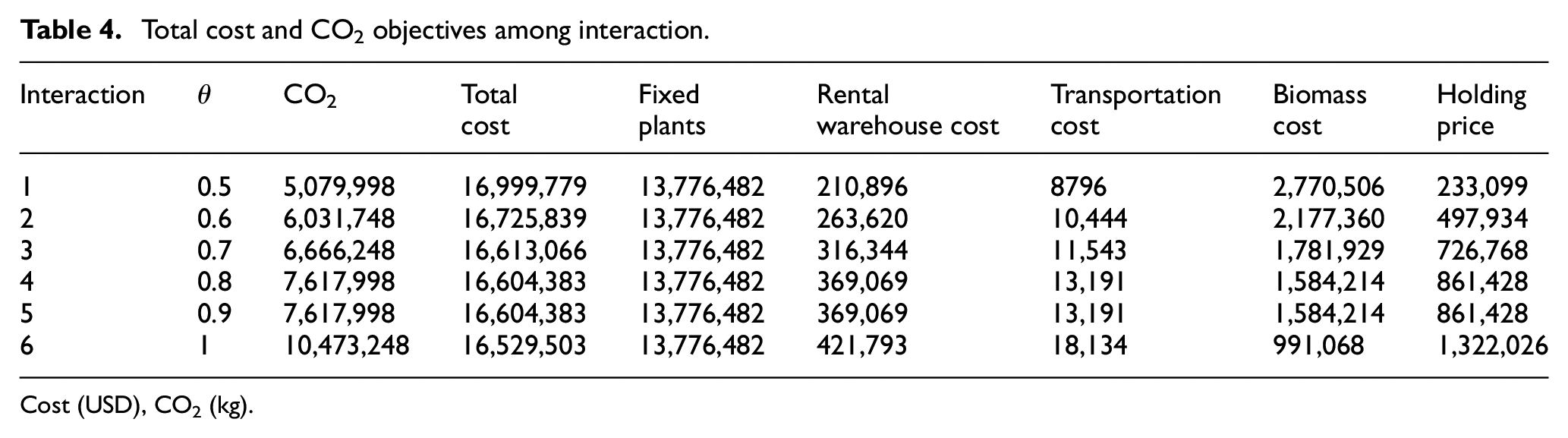
Table 4 shows the instant solution with overall S.C. cost and profit in USD and GHG emissions in kg. Figure 5 shows the Pareto solutions in various iterations. Based on the detailed results, the decision-maker has various options for selecting the optimal solution. All the objective function values should be considered simultaneously. Applying the elbow method, the solution in interaction 3, as marked in Figure 5, should be regarded as the overall cost of the supply chain is 16,613,066 with 6,666,248 kg of GHG emissions generated. Each value of θ corresponds to interaction. Therefore, it could require 11 interactions. However, θ from 0 to 0.4 makes models infeasible; consequently, we report only the remainder. At interaction 3, the model opens a 30 M.W. factory at Hung Phu IIA Industrial Park and two 45,000 tons – warehouses at Hung Phu I Industrial Park and Phu Hung IIB Industrial Park.
Total cost and CO2 objectives among interaction.
Cost (USD), CO2 (kg).
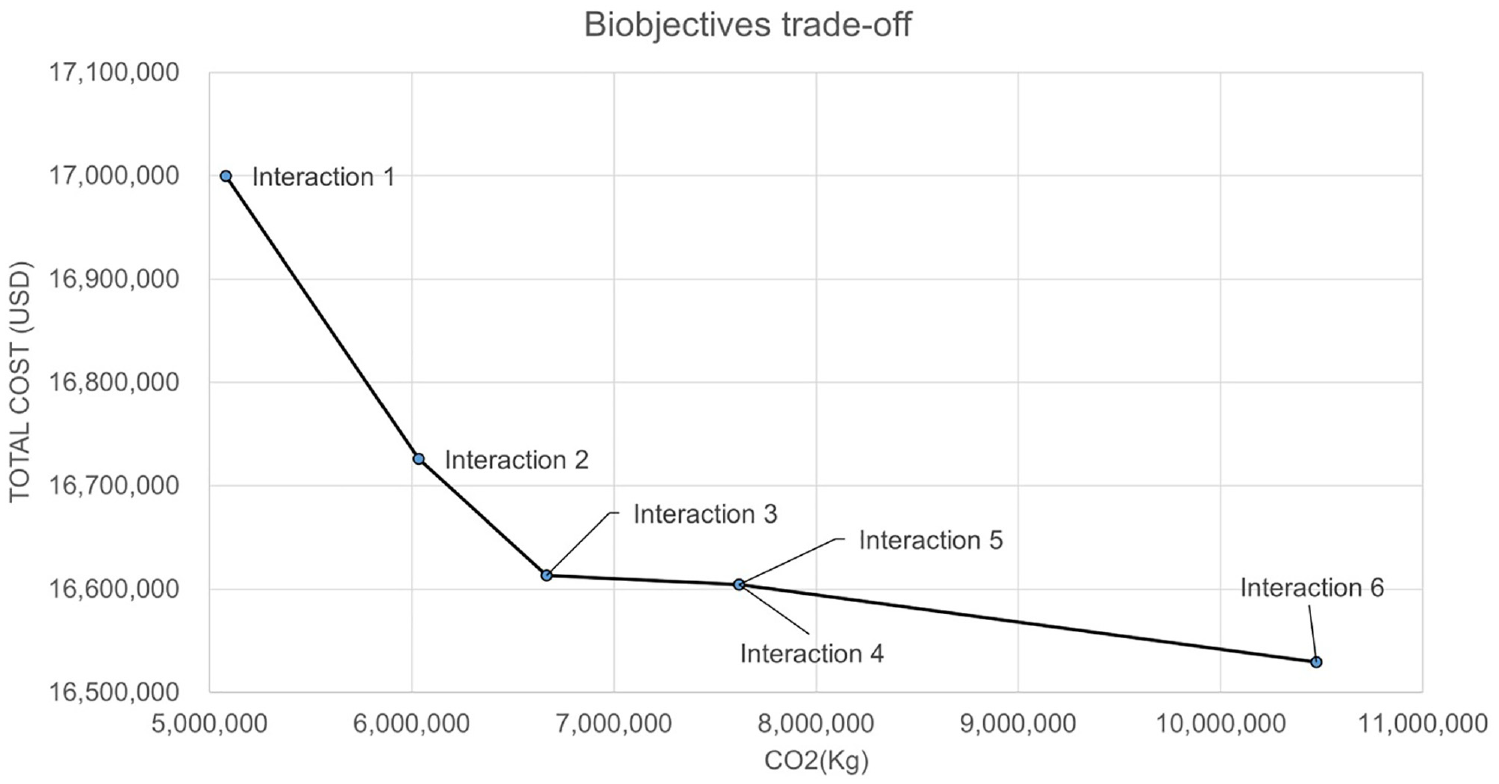
A trade-off between total cost and CO2.
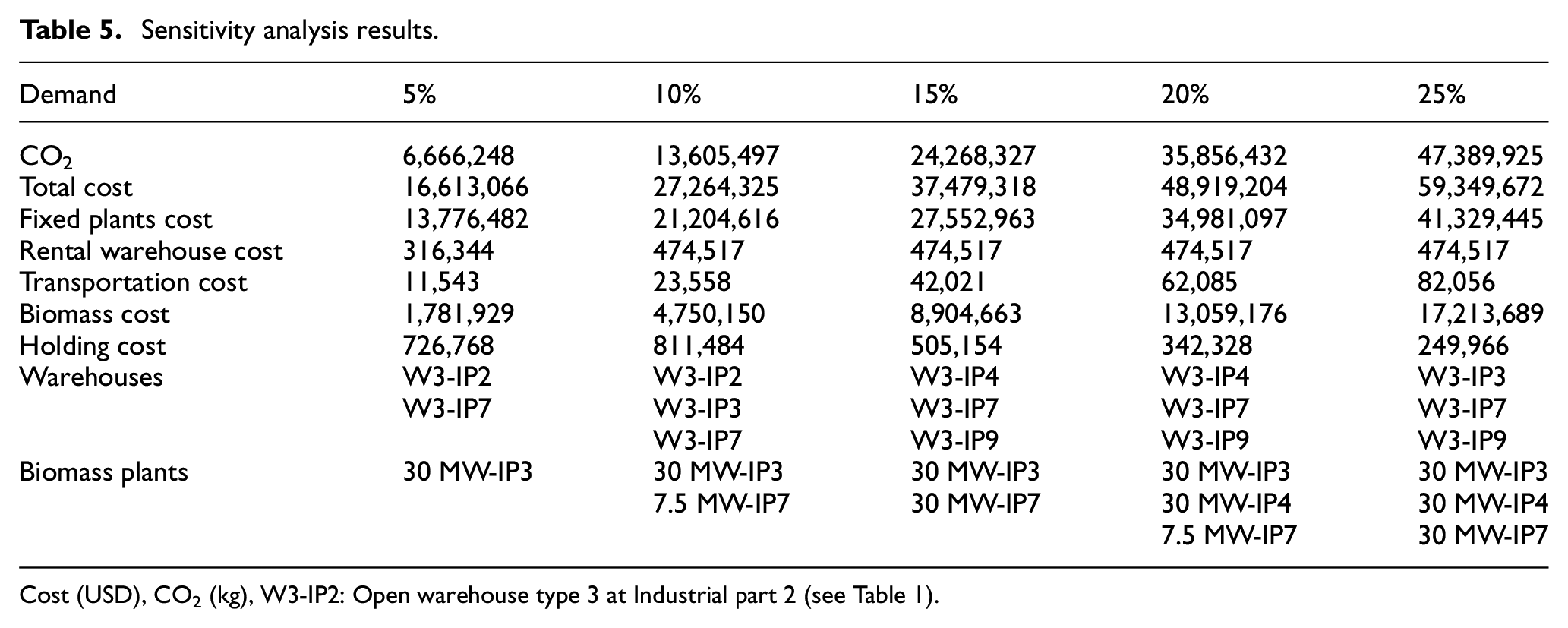
Sensitivity was analyzed based on the demand’s variety to provide a comprehensive picture of biomass supply chain planning in Can Tho. The proportion of biomass electricity satisfaction varies from 5% to 30%. The biomass supplier capacity in Can Tho is stable due to abundant agricultural products in Vietnam. Therefore, sensitivity in supply capacity is omitted in this research. The results from the interaction of all demand scenarios are presented in Table 5.
Sensitivity analysis results.
Cost (USD), CO2 (kg), W3-IP2: Open warehouse type 3 at Industrial part 2 (see Table 1).
The results from this study broadly support the work of other studies in this area of biomass supply chain planning. The current research finding is logically verified by results from Ekşioğlu et al., 39 who analyzed the design and management of the biomass-to-biorefinery supply chain in Mississippi. Ekşioğlu et al. proposed a mathematical model for designing a biomass supply chain. After that, the authors conducted a sensitivity analysis on Investment cost per annual gallon, transportation costs, biomass collection costs, etc., and provided managerial insights. It could be seen that the facilities are located close to suppliers that have a large amount of biomass. Similar to this research, warehouses near the rice milling factories and biomass plants near the warehouses.
Discussion and implications
With increased energy consumption and environmental concerns, many countries have looked for alternative green and sustainable energy resources besides fossil fuels. Bioenergy is a resource with a high potential to displace fossil-based energy. Having diverse biomass energy production potential, according to experts, Vietnam needs to promote solutions for the development of this clean energy source in the future. However, in practice, additional objectives representing economic rewards and societal requirements frequently collide with sustainable production. The proposed methodology could help practitioners construct more sustainable CLSC networks while minimizing total cost and environmental problems. As shown in Table 5, the level of demand uncertainty, defined as the extent to which satisfied demand can be met from biomass sources, plays a crucial role in determining the optimal location and scale of biomass power plants. For instance, when the objective is to meet 5% of the current electricity demand, the model recommends the establishment of a single 30 MW power plant. For a target of 10% of the current electricity demand, the model suggests deploying two power plants, one with a capacity of 30 MW and another with a capacity of 7.5 MW. Finally, in the case of meeting 25% of the current electricity demand, the model recommends the operation of three 30 MW power plants.
This paper uses the ε-constraint method to generate Pareto front solutions. The values of the second objective functions were significantly changed when changing the upper bound through theta value θ. The using ε-constraint method does not provide the optimal solution. However, from Pareto front solutions, the decision maker can comprehensively understand biomass supply chain design. After that, they can have future analyses for making decisions.
Conclusions and future research
With a wide range of biomass energy production potential, it is of substantial importance that Vietnam support strategies for the future growth of this clean energy source. However, in the actual decision-making process, the other goals, which reflect the economic, social, and environmental advantages, frequently clash with sustainable production. This paper presents a multi-objective biomass supply-chain planning methodology with a framework for assessing the environmental impact of biomass distribution from suppliers to biomass plants. This methodology considers economic costs and the carbon footprints of various truck types as the primary objectives. The framework can be applied to design biomass supply chains in other regions, incorporating multi-objective models in optimization. The case study is based on a practical dataset from Can Tho province, Central Mekong River Delta in Vietnam, generating several energy security and sustainability benefits. The model considers conventional parameters such as electricity demand, warehouses, biomass power plant capacity, transportation costs, and locations, to name a few, and one environmental parameter (unit carbon emission). Managerial implications through Pareto front solutions of the present study aid the decision maker in comprehensively understanding biomass supply chain design, which allows them to analyze further to make vital decisions. Sensitivity analysis is implemented to provide decision-makers with information about a network with changed parameters such as demand.
In this study, the authors would like to propose the following contributions. (i) A multiple-echelon biomass supply-chain network with consideration of the total cost and CO2 is configured. (ii)The echelon constraint method is adopted to overcome the difficulties when considering multiple objectives, and then the best network is proposed based on the elbow method. (iii) Finally, a real case study was implemented to analyze the model performance.
This work has some limitations, like other studies. For example, the proposed model uses several warehouses, biomass plant candidates, and suppliers. Therefore, optimizers like GAMS, CPLEX, and AMPL can generate optimal solutions practically. For large-scale, meta-heuristics (e.g., Momenitabar et al., 40 Zandi Atashbar et al. 41 ) or hybrid methodology can be developed to generate quality solutions such as simulation-based optimization (e.g., Nguyen Duc and Nananukul 20 ). In addition to carbon emissions, future research may incorporate the social benefits. 42 It would be interesting to carry out further studies considering multiple objectives could be in the interested field.6,11 Besides, the site selection could be conducted by applying the multi-criteria decision analysis (MCDA) with geographic information system (GIS). 43 Managing uncertainty in the supply chain is crucial to ensure smooth operations and minimize disruptions. Therefore, capturing the uncertainties using stochastic or fuzzy models and multiple objectives could be developed as future research.26,34This current multi-objective Mixed integer linear programming model could be investigated with nonlinear models to enhance the robust results.
Footnotes
Acknowledgements
We acknowledge the National Kaohsiung University of Science and Technology, Hong Bang International University, and Ho Chi Minh City University of Technology (HCMUT), VNU-HCM, for supporting this study.
Declaration of conflicting interests
The author(s) declared no potential conflicts of interest with respect to the research, authorship, and/or publication of this article.
Funding
The author(s) received no financial support for the research, authorship, and/or publication of this article.
