




Abstract
During the time of COVID-19, the use of face masks has become an essential control and prevention measure. The wide usage of disposable face masks has presented a great challenge to governments to face the impact of plastic waste on humans health and the environment. The quality of reusable face masks was assessed in previous research based on general measures such as the fabric, size fit, arrival time, price, and convenience, and based on more-specific measures related to the number of layers and the included filters. However, as the quality of reusable face masks includes several other dimensions, the general measures cannot be enough to ensure a comprehensive evaluation of these products during the COVID-19 outbreak. Nowadays, however, digital social media has provided venues and convenient tools for users to share their opinions, preferences, and experiences on the quality of reusable face masks. Considering reusable face masks, several types have been launched on online platforms to meet the increasing demand during COVID-19. The main goal of this study is to investigate how reusable face masks can be evaluated through online customers’ reviews. This study proposes a combination of qualitative (text mining) and quantitative (survey-based analysis) approaches to provide the researchers with a method of data analysis to inspect the most influential quality factors for the evaluation of reusable face masks. We performed a literature review on the previous works and also collected online customers’ reviews from Amazon.com to find the quality factors of reusable face masks. The review of previous literature on reusable face masks and the result of online reviews analysis indicated that several factors impact customers’ experiences, including filteration efficiency, fabric quality, breathability, design, functionality, environmental impact, comfort, easy to use, easy to clean, economic impact, donning/doffing, quality of seal, vision, communication and safety protection. The presented framework can be complementary to the existing evaluation research methods, which use the strengths of one method to overcome the shortcomings of the other.
Introduction
Given the worldwide expansion of the COVID-19 disease, an increasing request for Personal Protective Equipment (PPE) items that entail gloves, face shields and masks, gowns, coveralls, and goggles has been indicated.1–3 COVID-19 has led to a change in consumers’ behaviors and preferences, as more priority is allocated to items related to hygiene. 4 Among PPE products, personal protective masks (disposable or reusable) have become obligatory for individuals to wear in shops, transportation, and private and public organizations in many countries around the world. Face masks aim to hinder the entrance of respiratory droplets to the nose and the mouth of healthy people from infected people. 5 They make a barrier that can shield the user from fluid spray such as sneezing and hold the bacteria in liquid droplets from entering the user’s nose or mouth. 6 Face masks have been broadly investigated in previous literature focusing on the material of the mask,7–10 filtration efficiency,11–15 design of the mask,16,17 the utility of the mask,6,18–22 and its impact on the environment.23–26
Disposable surgical masks, which are particularly used in clinical settings, have become widely used items among community members to either save themselves or others. The World Health Organization (WHO) indicated that it is anticipated that the demand for medical masks will increase to 89 million per month and encouraged countries to raise the production rate by 40%. 1 It is anticipated that in the USA alone around 89 million medical face masks are needed to face the COVID-19 crisis. 27 In the UK, the plastic innovation hub indicated that the local request for face masks will be near 24.37 billion per year. 28 By February 2020, the daily production of medical masks has increased to 14.8 million in China. 29 In Japan, more than 600 million face masks were needed by April 2020. 24
As wearing disposable face masks has become a fundamental public health measure in the struggle against the spread of the virus, several issues related to their impacts on humans’ health and the environment have been subject to debate. Disposable masks may enable micro-organism leakages or lead to choking sensations from feelings of suffocation. 30 On the other hand, the usage of disposable masks day-by-day has raised other issues related to the environment as most of these masks entail plastic materials or other derivatives of plastics.29,31 There is a huge increase in plastic waste during the COVID-19 because of the wide shift in consumers’ attitudes toward disposable masks. 32 Disposable masks usually entail polypropylene, polyurethane, polyethylene, polystyrene, polyacrylonitrile, and/or polycarbonate, which amplify the problem of plastic or microplastic pollution in the environment. 33 Face masks can reach the waterways, marine water, and freshwater resources and poison marine animals. 29 Face masks dumped in the soil can influence the fauna and lead to animals’ death. Besides, the manufacturing process of disposable masks consumes a high amount of energy. 29 The production of one mask generates about 59 g CO2-eq greenhouse gas and requires 0–30 Wh energy. 34
The negative impacts of disposable masks indicate the need to follow other sustainable directions to address the face mask demand while minimizing the negative impact on the environment. 35 Hence, several waste-management approaches to treat medical waste have been designed. 36 To meet the sustainability requirements, manufacturers have shifted to policies that conserve natural resources. The reuse policy has been indicated as one of the most effective policies that maintain natural resources while keeping the functional features of the item. Particularly, in regions that have a lack of supplies of face masks due to inappropriate supply strategies or panic purchasing behaviors, cloth mask usage has been presented as a suitable choice. Cloth face masks have other advantages as they are cost-effective and eco-friendly.
Several kinds of reusable and washable face masks (also known as cloth masks) have been launched in traditional markets to face the increasing demands. Online stores also such as Amazon and Etsy have witnessed a huge increase in sales of cloth masks. 1 Still, the quality, comfort, and effectiveness of reusable face masks need more investigation. 31 A cloth mask can be made of cotton, nylon, or multi-layered fabric. 37 Diverse types of cloth face masks have disposable filters that contain plastic materials like the material used in medical masks.1,38 Basically, the filtration performance of reusable masks depends on the used material as some materials filter better than others. 29 Other factors that impact the effectiveness of the filtration of reusable masks are the number of layers, thread count, and water resistance. 39 The WHO has presented several recommendations for the usage of reusable face masks. Reusable face masks can be rewashed several times with detergent at 60°C and can only be reused after they are fully dried. Each cloth mask should have at least three layers: an internal layer of absorbent material, a middle layer of synthetic non-woven fabric, and an outer layer made of a non-absorbent fabric to forbid outer infection. 1
It is clear that the urgent need for the usage of reusable face masks has emerged with the increasing volumes of production and usage that are linked with the COVID-19 crisis. Disposable face masks have devastating impacts on the environment, in terms of CO2 emissions, waste on water surfaces, and wildlife. These impacts have been enlarged within the current crisis. The cost of disposable face masks that are being used by individuals daily raised another issue. Reusable face masks are anticipated to reduce the cost and provide economic savings depending on the number of usage times, washing cost, and price. 40 All these issues have led to the proposal of reusable face masks as an easy-to-use and affordable solution. However, in the context of an emerging disease that is still ambiguous, an extensive research effort is required to understand all the surrounding factors that impact its transmission and spread. All these doubts have motivated researchers to focus on the performance of the reusable face masks as a replacement for disposable face masks. As presented in the surveyed literature, the performance of the filtration of the reusable face masks was explored in the majority of studies. Other studies have concentrated on the environmental impact of disposable face masks and the gains that can be achieved when using reusable face masks. 41
While several newly designed reusable masks have been released, their effectiveness is unclear. Therefore it is necessary to consider the quality of the masks in terms of quality criteria such as their comfortability, usefulness, ease of use, suitability, and so on. Accordingly, the consumers’ evaluation through an appropriate approach is important to reveal the quality of these products in the COVID-19 outbreak. Nowadays, digital social media and social big data have played an important role in service quality evaluation.42–44 The data available from customers have had a significant impact on the improvement of services and product quality. In fact, the shopping experience through online platforms entails two main parties: service vendors and consumers. For service vendors, it is significant to understand consumers’ perceptions and, accordingly, meet their needs, gain their satisfaction, and guarantee their continuous usage.45–48 On the other hand, customers seek comments from other users, who have already used a particular product, before they decide to purchase this product. 49 With the rapid development of information technologies, consumers take advantage of web-based platforms to purchase online and post their comments about their online shopping experiences easily. 50 More than 90% of online consumers refer to online reviews before their purchase decisions. 51 Online reviews add two important values to the business: (1) they aid service vendors to understand consumers’ shopping experiences, and (2) they provide consumers with significant details about items and support them during their purchase process.52,53 Many researchers have indicated the vital influence of electronic reviews on business sales,54–56 purchase decisions,57,58 and product choices. 59
Amazon.com has provided an effective platform to collect the online customers’ reviews on reusable masks. Through the analysis of consumers’ online reviews, the reusable masks’ quality from different perspectives can effectively be assessed. The platform has provided significant communication tools in which the consumers can provide their feedback about the usage of different reusable masks through e-WOM in the form of online reviews. The online reviews enable the mask suppliers to specifically find the shortcomings and quality dimensions of the reusable masks. Through online reviews, consumers are able to provide their concerns, opinion, experiences, and knowledge on different brands regarding the usefulness, ease of use, quality, and many other quality dimensions. Figure 1 presents examples of reusable face masks as presented on Amazon.com and the customers’ opinions and experiences on the use of these products. In addition, examples of online customers’ reviews on reusable face masks on Amazon.com are shown in Figure 2.
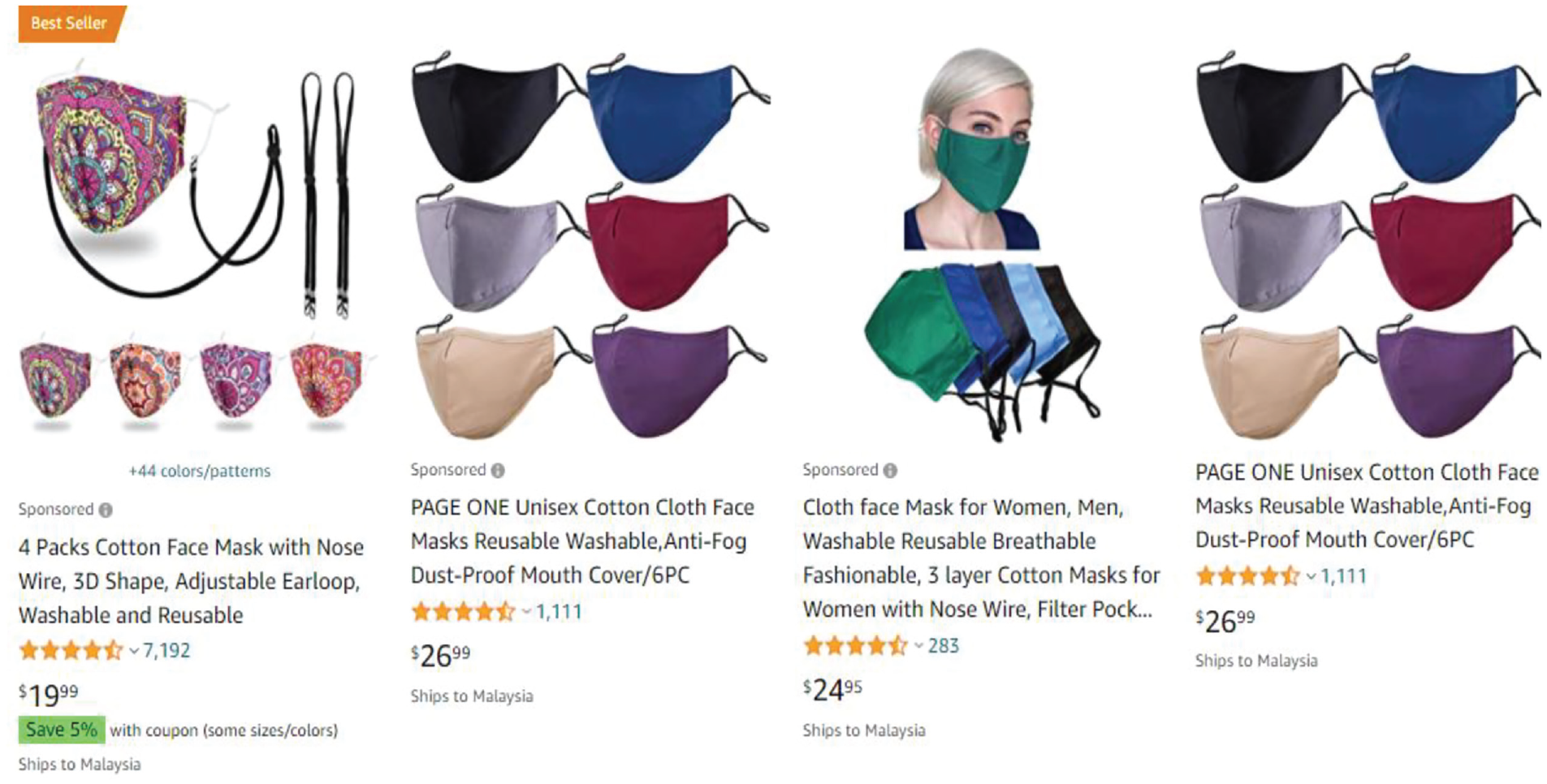
Examples of reusable face masks in Amazon.com.
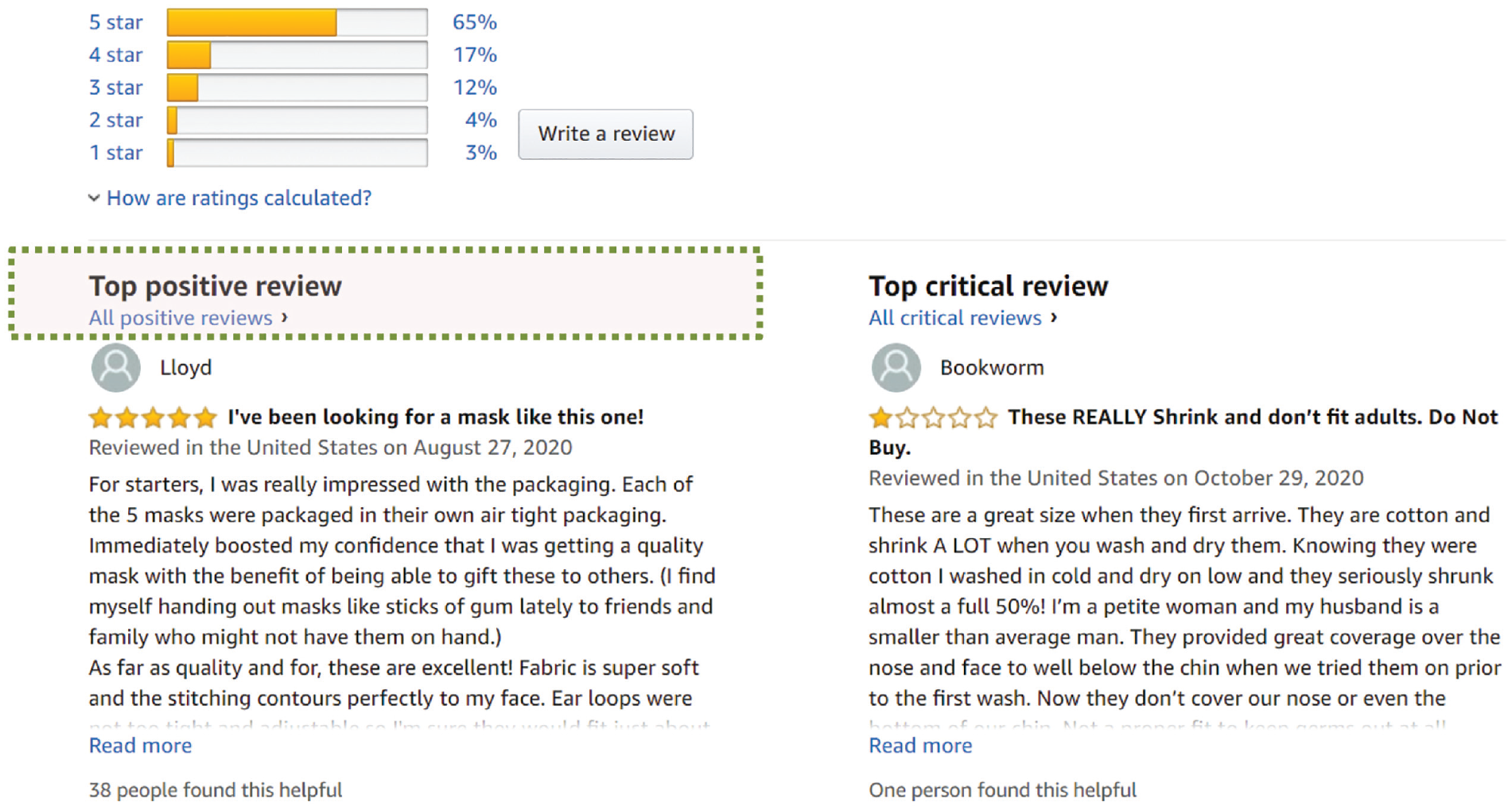
Online customers’ reviews on reusable face masks in Amazon.com.
In previous research, the quality of reusable face masks has been assessed based on general factors like fabric, size fit, arrival time, price, and convenience, as well as more specific factors like the number of layers and filters included. However, because the quality of reusable face masks is determined by several other factors, general measures will not be sufficient to ensure a thorough assessment of these products during the COVID-19 outbreak.60,61 Furthermore, while these metrics can help determine the quality of reusable face masks in some cases, data collected from consumers via questionnaire survey would not be an effective way to measure the quality of reusable face masks. In fact, the results of the questionnaire surveys may not be applicable to the entire population of reusable face mask users during the COVID-19 outbreak. Overall, there are several limitations and shortcomings with the questionnaire survey or other traditional data collection approaches, especially during a disaster such as the COVID-19 outbreak which makes data collection a difficult task. Digital social media, on the other hand, has provided venues and convenient tools for users to share their opinions, preferences, and experiences regarding the quality of reusable face masks. Consumers can share their thoughts on reusable face masks they have previously purchased and learn more about items they are interested in from other customers. In fact, knowledge sharing through Electronic Word of Mouth (e-WOM) which includes an important source of information can significantly influence human behavior. 62 Therefore, e-WOM in the form of online reviews is critically important for the evaluation of the quality of reusable face masks during the COVID-19 outbreak through objective and subjective evaluation criteria, which is difficult through conventional data collection approaches.
As a result, the primary goal of this research is to look into users’ perceptions of several quality aspects of reusable face masks based on online reviews. The researchers in this study propose to use a combination of qualitative (text mining) and quantitative (survey-based analysis) approaches to provide a data analysis method for inspecting the most influential quality factors for the evaluation of reusable face masks.
The proposed two-stage methodology
It is found that the reusable face masks can be appropriately evaluated through online customers’ reviews. In fact, the comments provided by the customers are very informative and useful satisfaction dimensions (e.g. Comfortability, Material, Price) can be discovered from them for reusable masks evaluation. In addition, as seen from the products’ reviews, the number of reviews is quite high for many products which can be a useful source of data to be further processed (e.g. textual data analysis) by machine learning techniques such as text mining approaches. In fact, machine learning for topic modeling to cluster word groups and find similar expressions in the online reviews can be more suitable in relation to the conventional data analysis approaches. They can automatically retrieve the data from online sources, extract the popular topics and reveal the major criteria for product evaluation. Hence, appropriate methods of data analysis for reusable face mask evaluation through online reviews are needed.
In this research, we propose a two-stage methodology for the evaluation of reusable face mask quality in the COVID-19 outbreak (see Figure 3). Developing a new method of analysis is suggested according to the shortcomings of conventional data collection and analysis approaches. In fact, the proposed two-stage methodology includes the stages for the text mining approach to be complementary to the existing conventional data collection and analysis approaches. In addition, the proposed methodology has followed text mining data processing stages together with the main stages for survey-based data analysis which is followed by the majority of researchers.
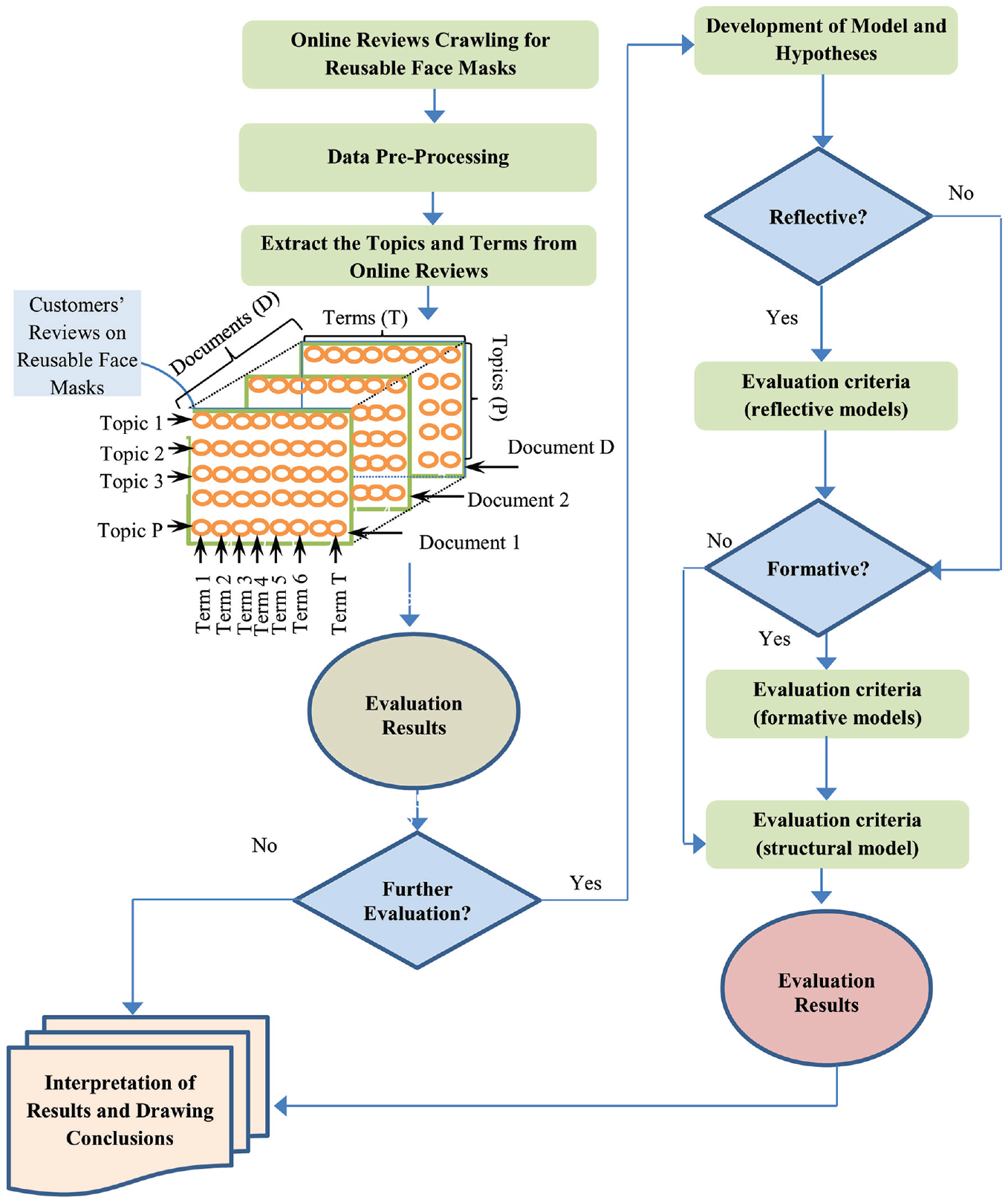
Two-stage methodology for reusable face masks evaluation.
In the first stage of the method, we apply Latent Dirichlet Allocation (LDA) to discover the dimensions of quality factors from online customers’ reviews. As an unsupervised method, LDA proves highly efficient, particularly in its adaptability to handling extensive datasets and disparate time periods characterized by sparse data, as highlighted by Blei et al.
63
The application of LDA in this context aims to extract nuanced dimensions of quality factors, ascertain the relative importance of these dimensions, and identify the words associated with each dimension, all based on meticulously preprocessed comments. Drawing inspiration from the framework established by Tirunillai and Tellis,
64
a “dimension” is conceptualized as a latent construct dispersed across a vocabulary of words that customers employ to describe their experiences in using face masks, akin to a “topic” within the LDA literature. The underlying assumption posits that a sequence of
In the text mining part of the methodology, the quality criteria can be effectively discovered. As seen from the online customers’ reviews, there are many criteria for product evaluation. In fact, opinions that are provided in the form of eWOM can be a rich data source for evaluation criteria discovery. The number of multi-dimensional criteria can vary and depends on the richness of the data. This stage of our proposed methodology includes online reviews crawling for reusable face masks, data pre-processing, extracting the topics and terms from online reviews, first step evaluation results and interpretation of results, and drawing conclusions. The next stage of the proposed methodology is suggested when further evaluations are needed.
In the second stage of the method, we propose to rely on Partial Least Squares Structural Equation Modeling (PLS-SEM) to test a hypothetical model developed based on the discovered quality factors by LDA. PLS-SEM is a statistical method chosen for its ability to analyze and understand complex relationships among different factors. 67 It is especially useful when dealing with limited data, 68 making predictions, and exploring connections between variables. The second stage of evaluation can be performed through survey-based approaches. The constructs and the items can be discovered through text mining approaches and then a questionnaire is developed for data collection. Finally, PLS-SEM can be used for data analysis. Overall, in the second stage of the proposed research method, several stages are suggested; including the development of model and hypotheses, evaluation criteria (reflective and formative models), evaluation criteria (structural model), evaluation results, and interpretation of results and drawing conclusions.
Note that no model has been developed in this study based on the discovered quality factors; instead, our proposal centers on the incorporation of PLS-SEM in the second stage, wherein we intend to execute a systematic analysis of relationships within the theoretical model. In practice, researchers often need to carefully consider the nature of their constructs and the relationships between observed variables when deciding between reflective and formative models in the context of PLS-SEM. Reflective models assume that the latent construct causes the observed variables or indicators. In other words, changes in the latent construct are reflected in the observed variables. Formative models, in contrast, posit that the latent construct is formed by the observed variables. The indicators collectively define the latent construct. This is more suitable when the indicators together create the concept rather than being interchangeable manifestations of it.
Findings
In this section, we provide the findings of this study based on the analysis of online customers’ reviews and literature reviews.
This study collected online customers’ reviews on reusable face masks in Amazon.com. Totally, 3673 reviews were collected in the form of textual reviews. The data were cleaned and the short reviews were removed from the dataset. In addition, non-English reviews were not considered in our data analysis. Thus, 2984 reviews were remained after the data cleaning phase and considered for further analysis. In this study, we used LDA 63 for textual data analysis to perform topic modeling. LDA has been an effective technique for topic modeling.65,69–72 LDA views each document as a collection of topics, and each topic as a collection of words. A corpus with a specific number of documents can be used by LDA to extract a specific number of topics. In this study, the satisfaction dimensions were discovered from the online customers’ reviews from 2984 reviews using LDA. The results are shown in Figure 4. This figure presents the weights for the quality dimensions. These weights indicates the importance of the quality dimensions.
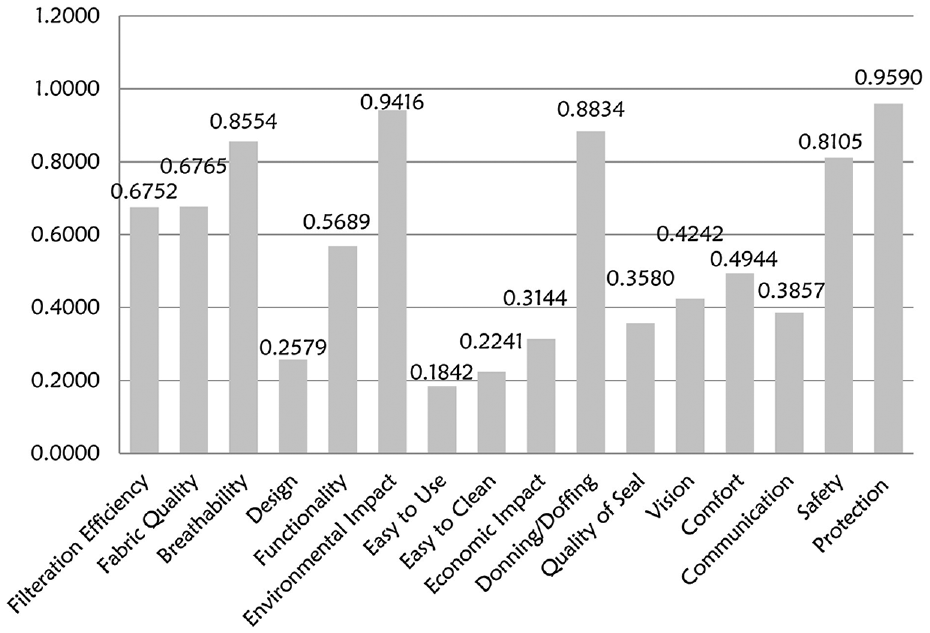
The quality dimensions of reusable face masks discovered by LDA.
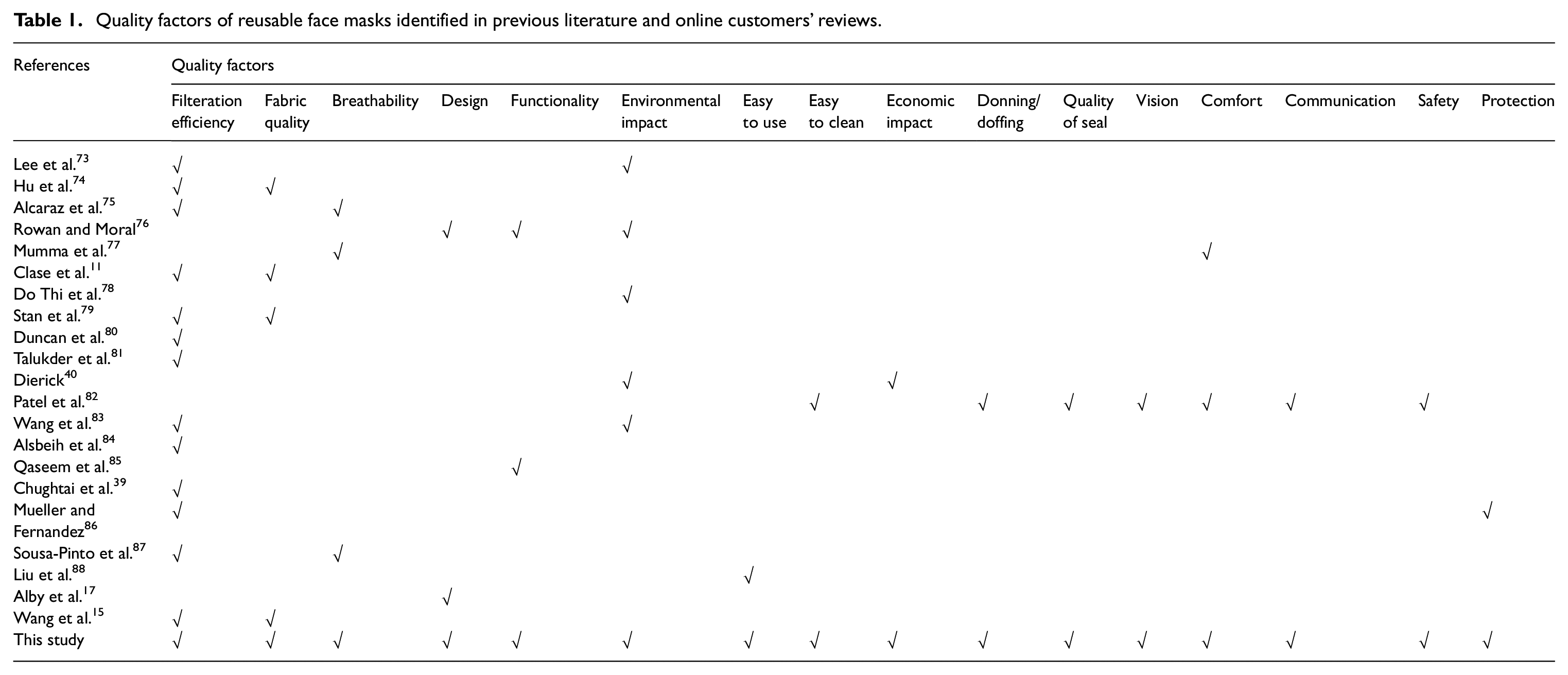
As seen from Figure 4, a total of 16 quality factors were discovered from the online customers’ reviews using LDA which are: Filteration Efficiency (0.6752), Fabric Quality (0.6765), Breathability (0.8554), Design (0.2579), Functionality (0.5689), Environmental Impact (0.9416), Comfort (0.4944), Easy to Use (0.1842), Easy to Clean (0.2241), Economic Impact (0.3144), Donning/Doffing (0.8834), Quality of Seal (0.3580), Vision (0.4242), Communication (0.3857), Safety (0.8105), and Protection (0.9590). To perform a comparison between the finding of the data analysis from online customers’ reviews and the findings of the previous works on reusable face masks for quality factors (dimensions), a summary of the quality factors of reusable face masks in previous literature is presented in Table 1. In this table, we also present the results of the analysis of online customers’ reviews by LDA. From the findings, it is found that the analysis of online customers’ reviews can be an appropriate way for discovering the quality factors of reusable face masks. In fact, the use and analysis of social data can be more effective than old-style methodologies in identifying consumers’ concerns about the quality of reusable face masks. This also can benefit old-style methodologies in developing measurements for the assessment of reusable face masks’ quality.
Quality factors of reusable face masks identified in previous literature and online customers’ reviews.
Discussions
In consumer-based research, it is important to differentiate between consumer surveys and online consumer reviews. Consumer surveys are designed by researchers or decision-makers to collect the data, analyze it, and present inferences that benefit the research and business. Customer surveys typically rely on recruiting participants from large panels and employ sampling approaches for data collection. 89 Survey-based research has been linked to several problems: sampling bias, 90 inconsistency in measurement items, response rates, 91 reliability, and others. Participants are often encouraged to answer the surveys using advertisements or financial rewards. Many consumers do not consider questionnaires seriously and respond to them randomly, adding noise to analysis outcomes. 92 The collected data using the survey-based approach are analyzed quantitively using several techniques such as Structural Equation Modeling (SEM) 93 and multi-criteria decision making techniques.94–97 Consumer reviews are posted by consumers regarding their actual experiences of a particular item or service and browsed by other individuals who seek to use the item or utilize the service. Consumer reviews present a massive amount of consumer-generated content on websites, social media platforms, and applications. 98 Consumer-generated content is presented in several forms such as texts, images, videos, and audio. The text-mining approach using consumer-generated content opens novel directions for researchers and decision-makers in the business to inspect the quality of products and services and aid them to make appropriate plans that meet the increasing market demands.99,100 They are valuable sources of information for services and product quality evaluation.
Online shopping is developing swiftly with the increasing number of online retailers and the rapid development of online markets. 101 Consumers on online platforms search for several sources of information before they reach a purchase decision. Accordingly, consumers’ perceptions of items’ features are influenced by several sources of online information. 102 Nowadays, online retailers are more aware of the role that online reviews play in framing consumers’ decisions and choices 103 and seek to understand their actual shopping experiences. 104 Hence, aiming to enhance their business revenues, online retailers use particular consumer opinion platforms to capture consumers’ perceptions in terms of item and service quality.105,106 Still, with the presence of fake reviews, consumers do not take the quality of online reviews for granted. 107 The quality of online reviews is assessed by consumers, which helps them in assessing the quality of items and reaching suitable decisions. 108 Online reviews of items expand the role of the consumer as a buyer and allow him to be involved in a more interactive shopping experience.109,110 Besides, if the item is assessed by a wide number of consumers, it is more likely that the consumer will trust their perceptions of the quality of the items. 104
Overall, if the average eWOM concerning a product is increased, the value of the product will be enhanced. The customer perceives the product with a large number of reviews as a valuable product and justifies his choice of the product as many other buyers purchased it.58,71,72,111–113 The increased value of the product is linked with increasing users’ perceptions of the quality of the product. When the consumer perceives the quality of the product as high, he will overcome his concerns and focus on other features of the product. 114 Besides, the number of online reviews reflects the popularity of the item.102,115 Consumers’ awareness of a particular product will be enhanced by the increasing number of reviews that the product gets.55,116 Several studies have indicated the impact of the average eWOM on sales in several contexts such as the movie market, 117 restaurant deals, 115 and experience and search products. 118 Still, previous studies have mainly investigated online reviews focusing on the quantitative methodology like valence and volume of negative and positive reviews,119,120 with less emphasis on the qualitative methodology. 100 Hence, there is a need for more studies that investigate several qualitative dimensions of online reviews, which can help in understanding users’ attitudes toward various quality factors based on their previous experiences.
Previous literature has investigated some of these features as indicators of the quality of reusable face masks. In this study, we concentrated on consumers’ reviews of reusable face masks. Particularly, we aimed to inspect several quality factors of reusable face masks from the voice of the consumer. This topic is of great importance, especially in the time of COVID-19, in which the huge increase in the production and consumption of disposable masks has raised several challenges considering its environmental impact. The management of plastic waste has been considered a great challenge to countries even before the COVID-19 virus. 121 Nowadays, this issue has become a huge threat due to the rise of the pollution rate caused by the increased usage of PPE items, with huge impacts on both marine and terrestrial ecosystems. 122 To address the problems related to the usage of disposable masks, reusable face masks have been launched on the traditional and online markets in several types and with various quality features. Wearing reusable face masks is a popular option specifically in developing countries because they are washable, cost-effective, and available. 123 They are usually made of cloth material to cover the nose and the mouth. They have elastic straps to put over the ears or behind the head to keep the mask over the face. Several commercial retailers have launched reusable face masks claiming that they are effective in protecting the individual from infection. Reusable masks have various features considering the shape, the number of layers, coating, fabric type, and maintenance.
Conclusion
Several scientific studies have explored the effectiveness of reusable masks to protect individuals during this outbreak while minimizing the negative influence on the environment. It has been shown that customer survey-based research has been linked to several problems such as sampling bias, 90 inconsistency in measurement items, response rates, 91 reliability, and others. In contrast, online reviews have shown to be an essential source of information in framing consumers’ attitudes and behaviors124–126 and product quality assessment. Therefore, they can also allow service vendors to understand consumers’ perceptions regarding several quality aspects of reusable face masks. Relying solely on the questionnaire survey may not be an effective way to assess the quality of reusable face masks as a limited number of criteria will be included in the survey. In fact, the outcome of the consumers’ studies through questionnaire survey may not be generalizable to the entire population who use different brands of reusable face masks during the COVID-19 outbreak. Overall, there are several limitations and shortcomings with the questionnaire survey or other traditional data collection approaches, especially during a disaster such as the COVID-19 outbreak which makes data collection a difficult task. Accordingly, this research was conducted in the context of reusable face masks and their quality evaluation through other data sources, focusing on electronic word of mouth which is broadly found in the forms of customers’ online reviews on social media and online shopping websites. We found that customers’ online reviews can be an appropriate way to assess the quality of reusable face masks during the COVID-19 outbreak as the real data is widely provided by the consumers, including their satisfaction level, concerns, and quality criteria. Such quality criteria can be effectively used in the quality assessment of face masks during the COVID-19 outbreak. In the previous works, several factors that influence the adoption of reusable face masks have been investigated in two main directions,31,127 (1) factors related to the performance of the mask (Filtration, Breathability, Comfortability) and (2) factors related to the usage of reusable face masks as a sustainable choice (environmental impact). Filtration efficiency indicates the ability of the material of the facemask to prevent droplets from entering the nose or mouth of the user. 128 The breathability of the mask, which reflects the ability of the facemask to allow adequate air permeability, 7 has been investigated in many works. The environmental impact factor, which is related to the influence on the environment caused by the production and usage of the face mask, 41 has been an important quality criterion. 128 Although these criteria are found in the online customers’ reviews, in addition to the textual reviews, these criteria can be considered as the main quality aspects for the customers to assess the products in online forms by multi-criteria assessment systems. This will additionally help provide better assessment results for reusable face masks. Accordingly, this research put forward a new concept regarding reusable face masks evaluation through online’ customers’ reviews and developed a new two-stage methodology for online review analysis combined with the survey-based analysis. Still there is a need to investigate the influence of online reviews on consumers’ perceptions toward reusable face masks through machine learning approaches. Particularly, this study aims to present researchers with a future research direction to explore the role of online reviews on consumers’ perceptions of reusable face masks and their evaluations. Credible and trustworthy outcomes endorsed by suitable studies are vital to present the influence of online reviews on consumers’ evaluations and their perceptions of reusable face masks during the COVID-19 outbreak. The proposed two-stage methodology can be evaluated through real data which is available in online shopping websites for different face mask brands. Our future work includes specific machine learning techniques for analyzing real data to discover the criteria for product quality evaluation through online customers’ reviews. In addition, we aim to extend the platform for multi-criteria decision-making analysis to show how the proposed methodology can be combined with the multi-criteria decision-making approaches for decision-making problems in the evaluation of reusable face mask quality.
Limitations
Although this study has several contributions to the current body of knowledge, it has several limitations that should be addressed in future studies. This study presented a new method that integrates both qualitative (text mining) and quantitative (survey-based analysis) approaches to analyze the most influential quality factors for the evaluation of reusable face masks. Although the presented framework can complement the existing evaluation methods, the proposed framework should be deployed and evaluated carefully in a future study. The study can be further extended using machine learning techniques to extract the customers’ satisfaction dimensions from online reviews. Several machine learning techniques can be used in this context to extract and evaluate the dimensions of customers’ satisfaction with reusable face masks. These techniques entail the approaches used in the text mining of big data of online reviews and the approaches used in the evaluation of the relationships between the extracted dimensions. The proposed framework needs to be evaluated using a survey-based methodology in various sampling sizes to confirm the reliability of the proposed approach and importance of quality factors. Through integrating several techniques of data collection, analysis, and evaluation, a wider perception of customers’ experiences can be presented. The extracted dimensions can be utilized in future studies as a new scale (reflective and formative) for evaluating customers’ experiences with reusable face masks. In addition, in future studies, a comparative study is suggested to identify quality factors of disposable and reusable face masks and their potential impact on the environment.
Footnotes
Declaration of conflicting interests
The author(s) declared no potential conflicts of interest with respect to the research, authorship, and/or publication of this article.
Funding
The author(s) disclosed receipt of the following financial support for the research, authorship, and/or publication of this article: The authors thankful to the Deanship of Scientific Research under the supervision of the Scientific and Engineering Research Center (SERC) at Najran University for funding this work under the rsearch centers funding program grant code NU/RCP/SERC/12/23.

Data availability statement
The datasets generated during and/or analyzed during the current study are available from the corresponding author on reasonable request.