



Abstract
Due to the trade imbalance and poor management, a large number of empty containers are piled up after unpacking in importing regions, while the export-oriented areas are in urgent need of empty containers for replenishment. This paper aims to determine the volume of empty containers transferred from the surplus area to the shortage area and the inventory of each node from the operational level. We subdivide container freight stations into rail stations and road stations and consider using sea, road, and railway as transportation modes to transfer empty containers. A multi-period linear programing model of multimodal empty container repositioning is established aiming at minimizing the cost of empty container repositioning. A real case study of the transportation network in Northeast China is conducted to demonstrate that using multiple modes of transportation can significantly reduce the cost of empty container repositioning compared to using a single mode of transportation.
Introduction
As shown in Figure 1 container transportation refers to the collection and assembly of goods into units using containers, to carry out loading, and unloading operations and using the railway, truck, or ship to complete transportation tasks. 1 Empty containers are important resources for container logistics. Empty container repositioning (ECR) problem arise from the container turnover process, mainly due to the trade imbalance between regions. It is said approximately 20% of all worldwide shipped containers are empty. 2 In export-oriented areas, consignors need empty containers to pack cargoes, thus generating a large number of empty containers demand. If the region lacks empty containers, renting or repositioning them from other areas is necessary. However, the cost of renting containers is too high, logistic enterprises often choose the latter to supplement empty containers. On the other hand, heavy containers are unloaded and transformed into empty containers upon arrival at import-oriented regions. The insufficient demand for empty containers frequently leads to an accumulation of empty containers, giving rise to additional inventory costs.
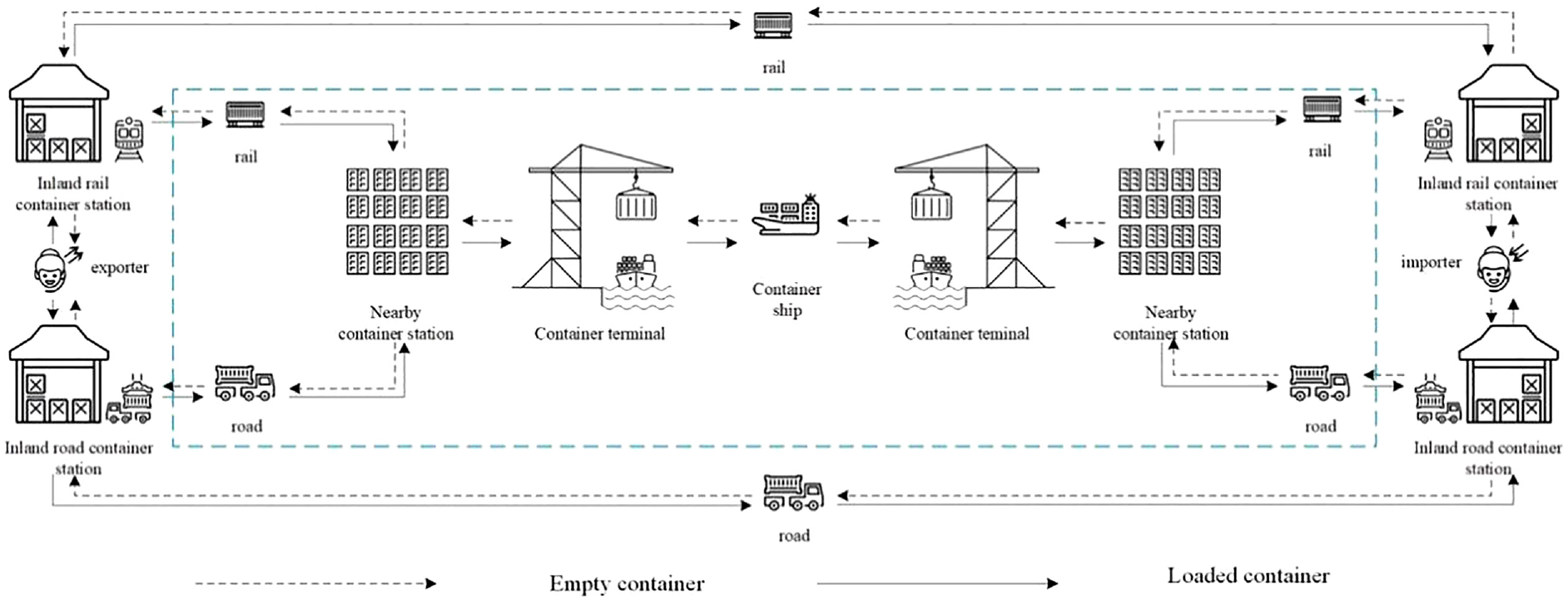
Container transportation network.
In container multimodal transport, the container ports radiate various modes of transport (including railways, highways, inland waterways, etc.) to the inland areas to connect each container freight station with the terminals of the ports, forming a collection and distribution network (as shown in the blue dotted box in Figure 1). According to the definition proposed by Zhu et al., 3 the container freight stations can be divided into three kinds:
(1) A freighter station located within a container terminal. It is an important part of the whole container terminal. Its main task is to undertake receiving, delivery, unpacking, and packing operations, and to store the goods.
(2) A freight station located near the container terminal (nearby station). It is outside the container terminal. Its main task is the same as the former.
(3) Inland freight stations (inland station), which are located in the hinterland of the container terminals, mainly in major inland cities with frequent import and export trade. This kind of container freight station is not only engaged in the unpacking and packing of LCL goods but also the unpacking and packing of FCL goods. Some are the fixed recycling points of the empty container.
To deal with ECR problem, countries with substantial trade volumes or expanding trade potentials, such as China and India, have embarked on the construction of inland freight stations, also known as dry ports. 2 Moreover, these years, multimodal transportation especially sea-rail combined transportation has developed rapidly. 4 In China, there are China Railway Container Transport (CRCT) and China Railway Tielong Container Logistics (CRT) offer rail freight transport services between inland stations and seaports, while China Ocean Shipping Company (COSCO) and China Shipping Container Lines (CSCL) provide liner services between seaports. 2 How to reasonably and effectively transfer empty containers from the port to its hinterland freight station with appropriate modes of transport, has become a focus for many logistic companies. Therefore, it is of practical significance to research ECR problem.
This paper studies the ECR problem at the regional level. The contributions of this article are summarized as follows:
(1) This paper develops a multi-period ECR problem with multiple modes of transport and multiple types of container stations. To our knowledge, this is the first paper to consider a variety of container freight stations, including nearby container stations and inland container stations, and divided them into railway stations and road stations. This problem set is more in line with the actual situation of empty container transportation.
(2) A multi-period ECR model is constructed. The proposed model enables the determination of the repositioning volume of empty containers on each transportation line, the number of leased empty containers, the storage capacity in container freight stations, and the mode of transportation selected for each transportation line.
(3) A practical case study was carried out on the transportation network in Northeast China, demonstrating the model can improve the utilization of empty containers and minimize the operation cost of enterprises. The sensitivity analysis illustrates that utilizing multiple modes of transportation can considerably reduce the expenses related to repositioning empty containers, as opposed to utilizing a single mode of transportation.
The rest of this paper is organized as follows. In the second section, we provide a literature review on the ECR problem and summarize the gaps in the existing literature. Section problem modeling describes the problem definition and explains the modeling approach. In Section computational study, a small case and a real case of the transportation network of Northeast China are presented to verify the practicability of the proposed model. Finally, the last section concludes this paper and points out several future research directions.
Literature review
The ECR problem has garnered significant attention in academia, with numerous researchers investigating various scenarios and proposing solution methodologies. Kuzmicz and Pesch 5 provide a recent review of the ECR problem including various models and solutions. Traditional research on ECR problem initially focused on a single mode of transportation. 6 However, with the development of supply chains and the emergence of multimodal transportation, researchers recognized the limitations of a single mode and began exploring the combination of multiple modes. This approach allows for more flexible and optimized empty container management, reducing costs and improving transportation efficiency. Integrating maritime, rail, and road transport has become a trend in recent years. According to the existing research, this section conducts a literature review from two aspects: research on the ECR problem under the single mode of transportation, and research under the multimode of transportation.
Repositioning in a single mode of transport
The research on ECR problem was first started under a single mode of transportation, there are many articles in this field.6–17
Dang et al. 6 and Hjortnaes et al. 7 study optimizing the ECR problem using road transportation. Dang et al. 6 address the problem of ECR in the hinterland of a port, considering multiple depots and utilizing road transportation. Hjortnaes et al. 7 propose a multi-commodity model that distinguishes between flows of non-damaged and damaged containers. The model is specifically developed for the repositioning of these containers within a network comprising off-dock empty depots, ocean terminals, and inland terminals, using road transportation.
Song et al.,8,9 Moon et al., 10 Zhang et al., 11 Zheng et al., 12 and Lee et al. 13 research shipping empty containers between different ports. Song et al. 8 consider the maritime ECR problem with multiple service routes, multiple ships, and multiple regular routes, and propose two optimization methods, the first is the integer planning model based on a two-stage shortest circuit, and the second is the two-stage integer planning model based on heuristic rules. Moon et al. 10 construct a mixed integer programing model for the ECR problem between container ports and solve the model with an improved genetic algorithm. Dong and Song 9 propose a formulation for the container fleet sizing problem in liner services, considering the number of empty containers to be loaded onto vessels and their repositioning locations. Zhang et al. 11 consider the ECR problem between multi-port under demand uncertainty and designed a polynomial time algorithm to determine the threshold for each decision cycle. Zheng et al. 12 study the ECR problem among various ports and take into account the coordination among liner carriers. Lee et al. 13 constructed a robust optimization model of ECR to minimize the total logistic cost by considering foldable containers under the uncertainty of demand.
Some scholars focus on optimizing the repositioning of empty containers between railway container freight stations through the railway. Yang and Zhang 14 establish a railway ECR optimization model with the objective of transport cost minimization and major container priority transfer. Duan et al. 15 consider the issue of transferring empty and heavy containers between railway administrations. In addition, Duan and his team also consider the railway ECR problem under uncertain environments: They consider the uncertainty of demand and supply, and build an optimization model of empty container transport with random chance constraints and fuzzy chance constraints. 16 Moreover, they also took into account the uncertainty of railway running time. To minimize the sum of transportation costs and opportunity loss costs caused by delayed arrival, they construct an optimization model of ECR based on a robust soft time window. 17
Repositioning in multimodal transportation
Based on a single mode of transport, scholars have started to study ECR problem from the perspective of multimodal transport. Baykasoglu and his team’s research provides valuable insights and references for the ECR problem. Their studies18–21 on fleet planning and management in intermodal transportation systems consider various factors that are relevant to empty container allocation and transportation. By addressing issues such as empty vehicle repositioning, fleet optimization, and strategic planning, their research offers valuable approaches and models that can be applied to optimize the allocation and transportation of empty containers. Zhao et al. 22 investigate the problem of ECR in sea-rail intermodal transportation networks, considering nodes such as ports and stations. Peng et al. 23 study the container transportation flow in the hinterland of a port taking into account both empty and full containers and considering a combination of rail and road transportation modes. Tian et al. 24 study the inventory management of empty containers in multimodal transport considering the change in customer demand and analyzed the optimal inventory levels at seaports and dry ports under cooperative and non-cooperative modes. Zhao 25 considers random factors and environmental factors to study sea-rail ECR problem. Lei et al. 26 add foldable containers to the China-Europe liner and used the sea-road multimodal transport to transfer back empty containers. They consider the demand uncertainty and establish a distributed robust model.
Contribution of this study
Table 1 summarizes the literature related to ECR problem, which is classified according to the modeling approach, the mode of transport, the type of nodes involved in the article, the structure and period of the parameters, and the model decisions. Finally, this paper locates gaps in the academic literature relative to each other. The ECR problem studied in this paper stands out from the existing literature due to the following distinguishing features:
A classification of relevant research.
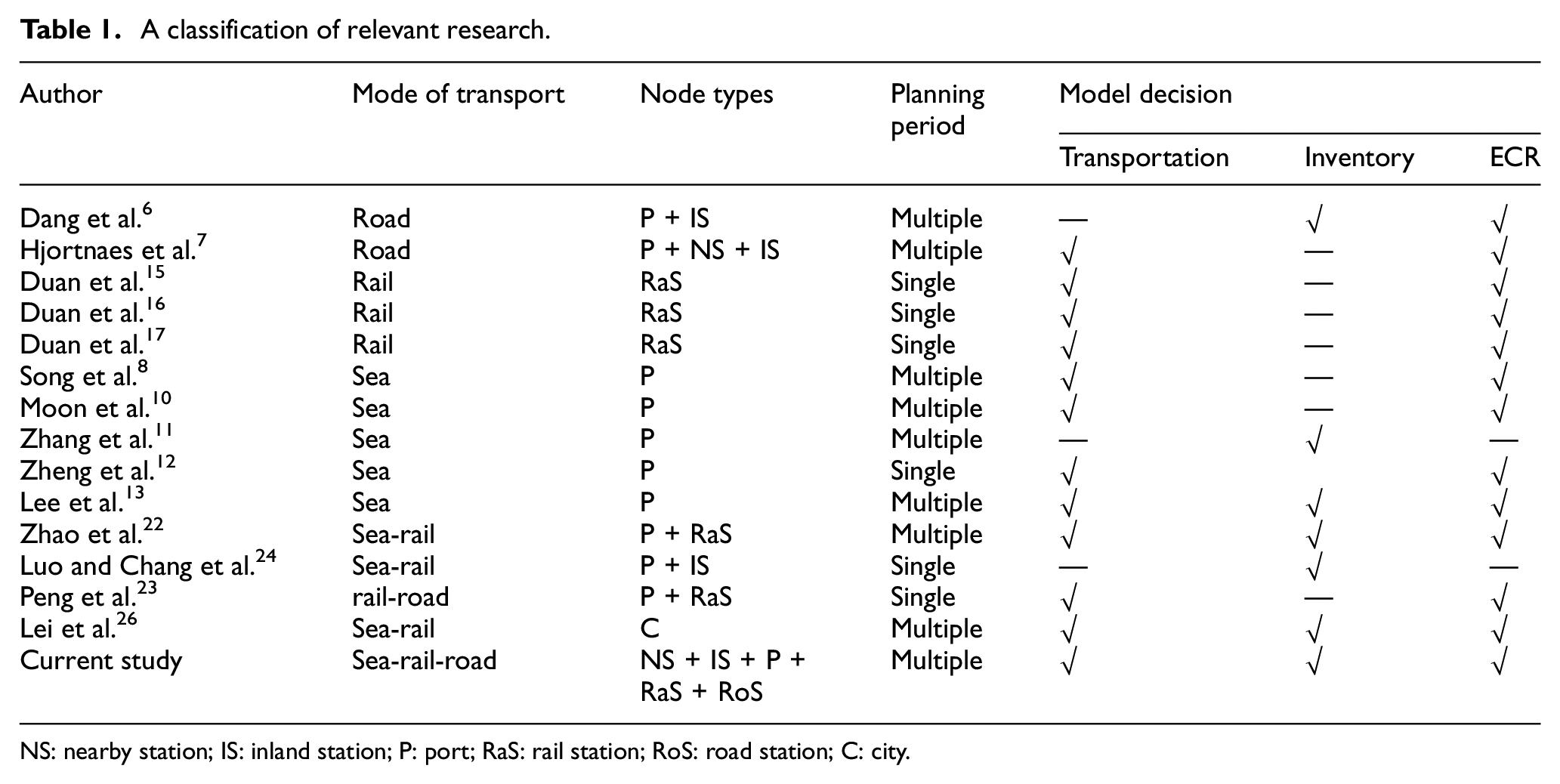
NS: nearby station; IS: inland station; P: port; RaS: rail station; RoS: road station; C: city.
Firstly, in this paper, we consider three modes of transportation in our analysis. We not only focus on determining the transfer of inland empty container flows but also compare the impact on the total cost when fixed empty containers are replenished from overseas. This analysis can help logistics companies make informed decisions and recommendations regarding the optimal allocation and management of empty containers in the supply chain.
Secondly, there is a lack of research that addresses the specific characteristics of different container freight stations, such as those located near the seaport and those in the hinterland, as well as the distinction between railway stations and road stations. This paper fills this gap by considering a diverse range of container freight stations.
Thirdly, a multi-period ECR model is developed in this study, which allows for the determination of several key factors in the empty container repositioning process. These include the repositioning volume of empty containers for each transportation line, the number of leased empty containers, the storage level in container freight stations, and the choice of transportation mode for each transportation line.
Problem modeling
In this section, we describe the ECR problem and present its graphical and mathematical formulations. The assumptions of the ECR problem are also explained.
Description of the problem
The ECR problem can be formally described as follows: given logisitic a set of container ports
As shown in Figure 2, the ECR problem involves different types of empty container flows, namely: (1) overseas positioning, (2) port-to-nearby station transport, (3) transfer between nearby stations and inland stations, and (4) repositioning among different inland stations. These flows contribute to meeting the demand for empty containers through four approaches:
(1)
(2)
(3)
(4)
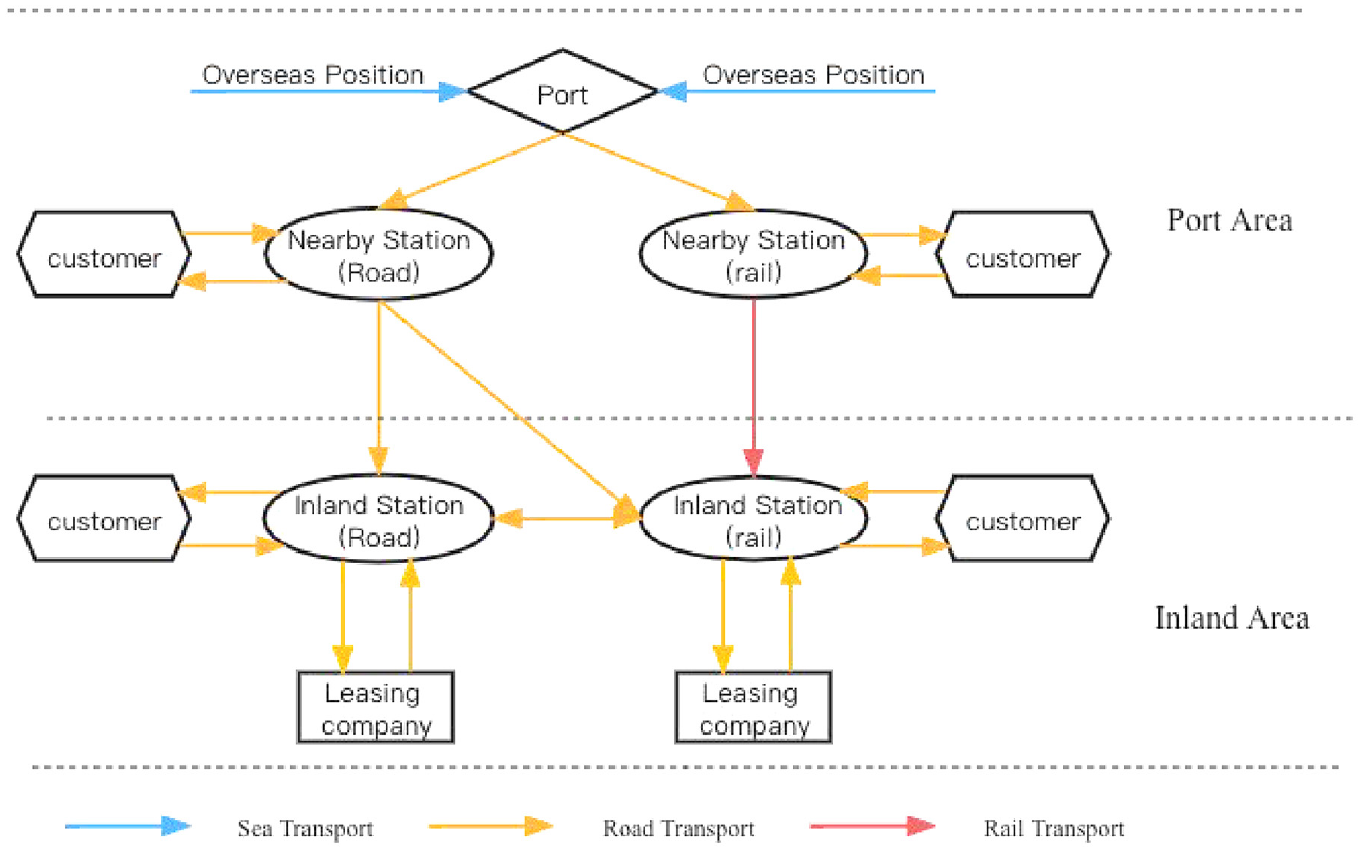
Transportation system for empty container.
Problem setting
In this paper, we establish a sea-rail-road combined ECR network as shown in Figure 3, denoted as
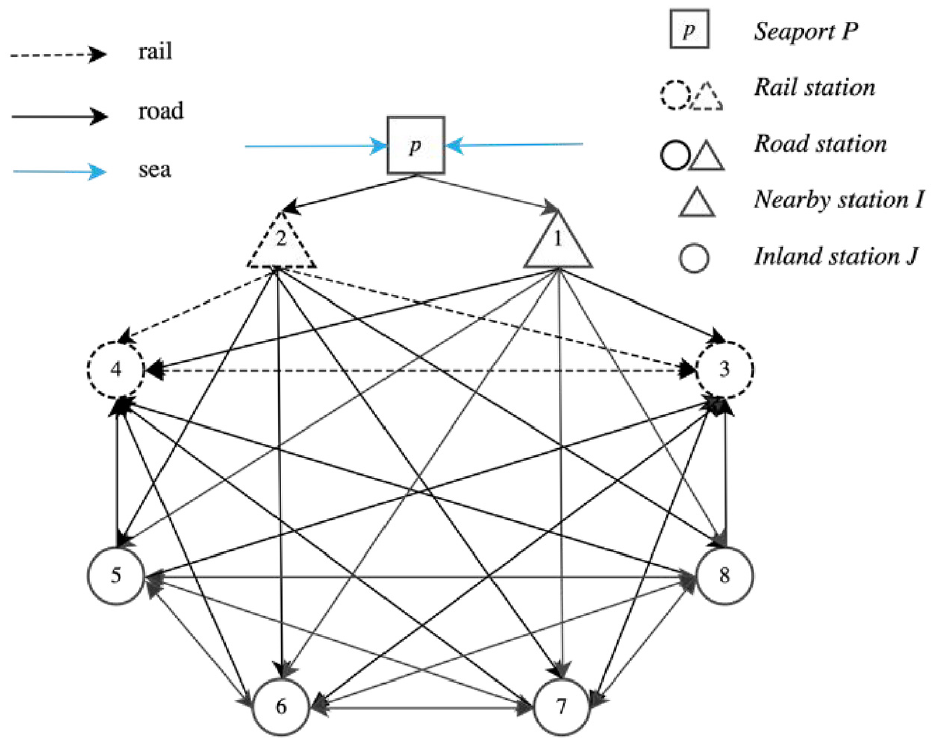
An example of the problem setting.
Let
ECR process is divided into two parts: overseas position and inland empty container transport. (a) In the first stage, logistic companies regularly order empty containers from overseas ports. At the beginning of each planning period, the ordered empty containers arrive at the port. The number of arriving empty containers is known in advance. (b) In the second stage, according to the demand of each freight station, the decision maker needs to decide the number of empty containers transferred from the port to the other freight stations, the transportation mode of empty containers to be transferred, and the quantity of inventory. If the empty container transfer volume still cannot meet the demand, the number of empty containers to be leased should be decided. In the subsequent section, a mathematical model will be presented to aid logistic companies in making decisions during the second stage.
Assumption
The assumptions in this paper are listed as follows:
(1) Only one container type, 40 feet container, is taken into account.
(2) The number of empty containers shipped from overseas in each cycle is known.
(3) During each planning period, there is a fixed number of trains with a predetermined capacity available.
(4) Empty containers could be immediately rented in the stations, and the number of containers is not limited, without considering the return of containers and the transfer of rented containers to other ports.
(5) The container is intact throughout the transfer process, that is, no consideration is given to container maintenance, depreciation, and damage cost.
Modeling approach
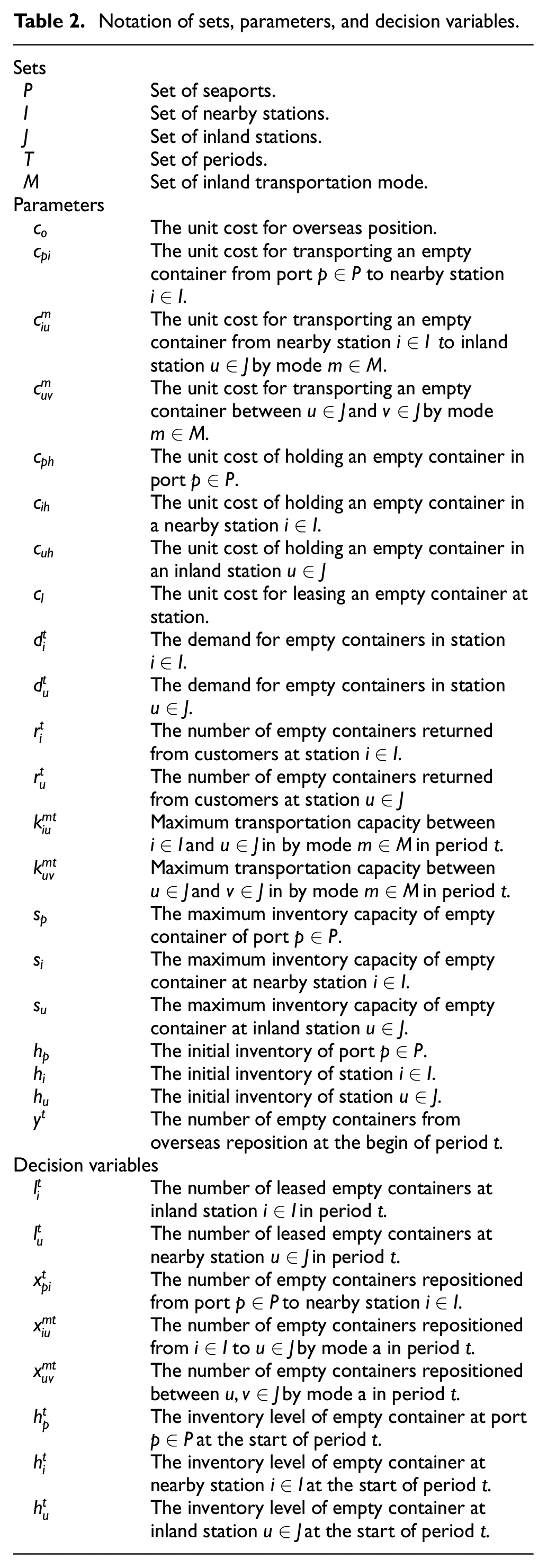
In this section, we establish an integer programing model for multi-period empty container repositioning, aiming to find the optimal volume of empty container inventory of each node and the volume of containers to be transported under the minimum cost. The set, parameters, decision variables of the model, and their specific expressions are shown in Table 2.
Notation of sets, parameters, and decision variables.
The objective function
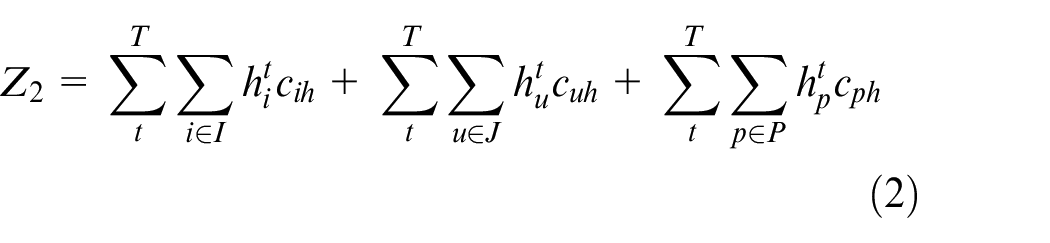
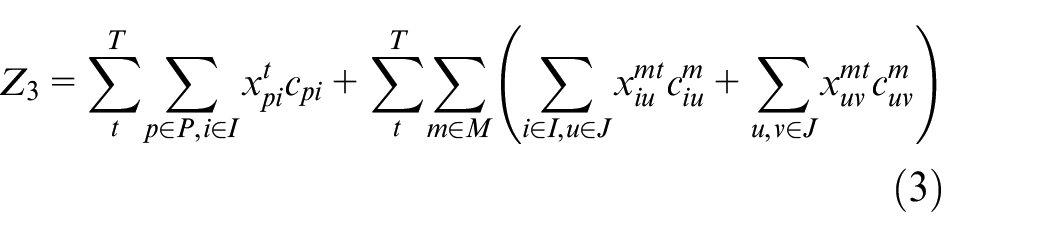
The main objective of this paper is to determine the optimal ECR volume between ports and container freight stations and the empty container inventory of each container freight station in each planning period under the lowest total cost. The cost of transporting empty containers can be divided into four parts:


Containers demand constraints
Constraints (5) and (6) indicate that the demand of each station node must be satisfied. The demand for the nearby station is met by port, leasing, stock at the beginning of the planning period, and return of empty containers by customers. Inland container terminal demand is met by the nearby stations, other inland stations, leasing, inventory at the beginning of the planning period, and empty containers returned by customers.


Inventory constraints
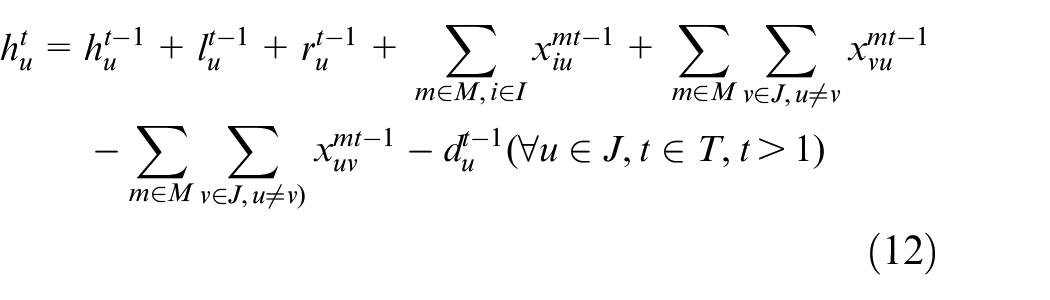
Constraints (7), (9), and (11) indicate that at the beginning of the planning period (









Container flow constraints
Figure 4(a) shows the container flow of the nearby station. In the period



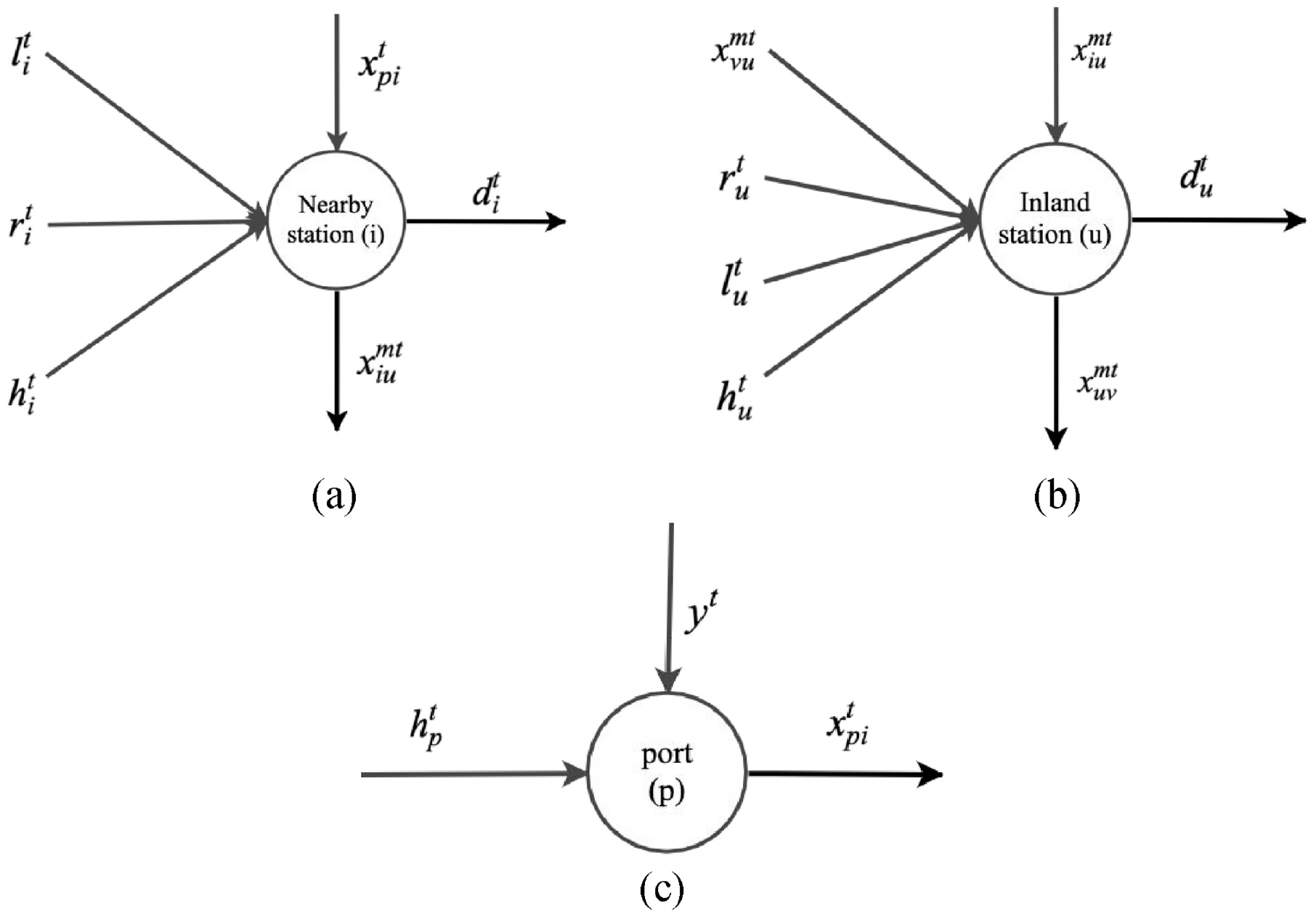
Flow balance of containers: (a) nearby station (i), (b) inland station (u), and (c) port (p).
Transportation capacity constraints
Constraint (19) and (20) represent that the number of empty containers repositioned by mode


Standard constraints
Constraint (21) indicates the standard non-negative integer variable of the model.


Complexity analyses
The decision variables in the proposed model can be categorized into three groups. The first group includes variables associated with leasing, denoted as
Number of decision variables and constrains in the formulation.
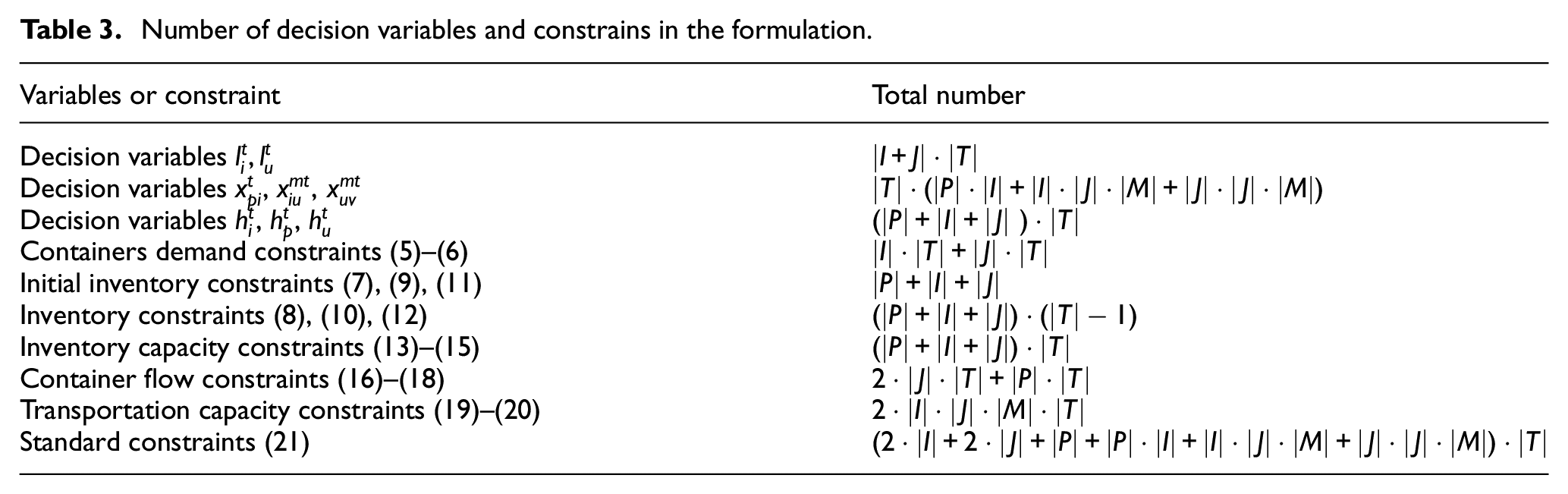
Obviously, the complexity of the proposed model is mainly determined by the size of certain sets, namely the number of stations (i.e.
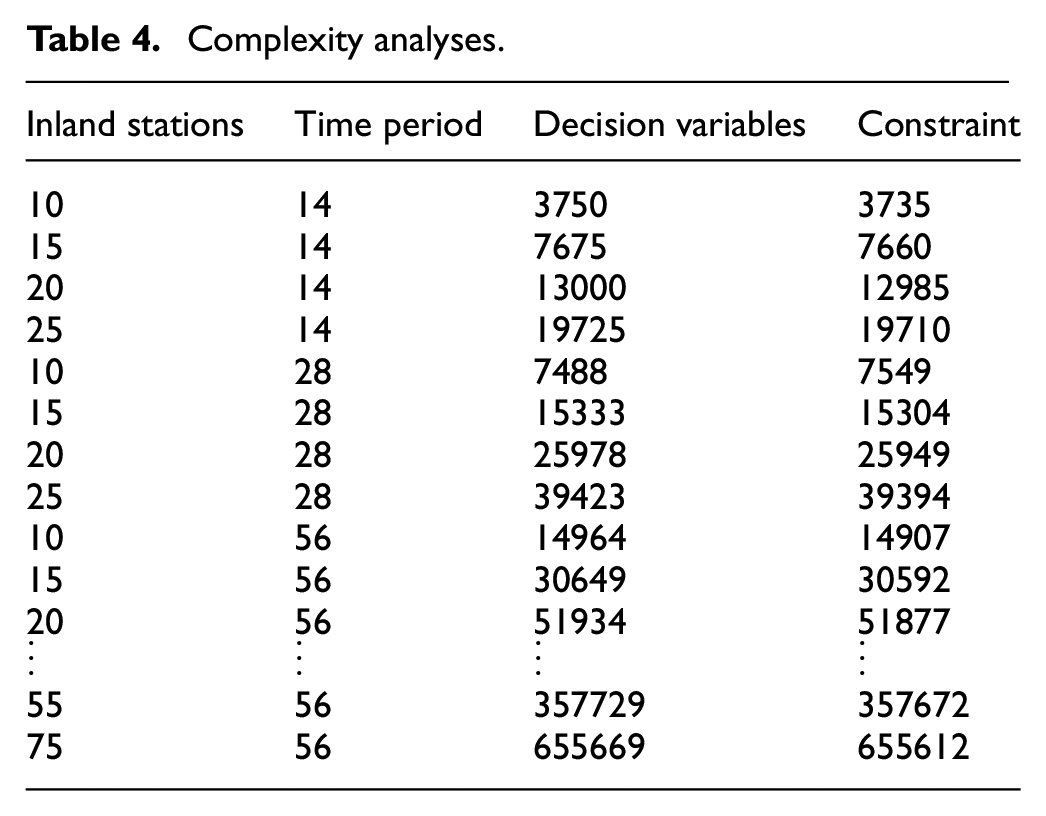
To provide a clear demonstration of this relationship, Table 4 presents several examples. In this paper, the number of port and nearby stations is fixed, so we only discussed the change of inland stations and time period. By varying the sizes of the aforementioned sets, the table illustrates how the decision variables and constraints change accordingly. As shown in Figure 5, the number of constraints exhibits an exponential growth trend with the increase in the number of container freight stations.
Complexity analyses.
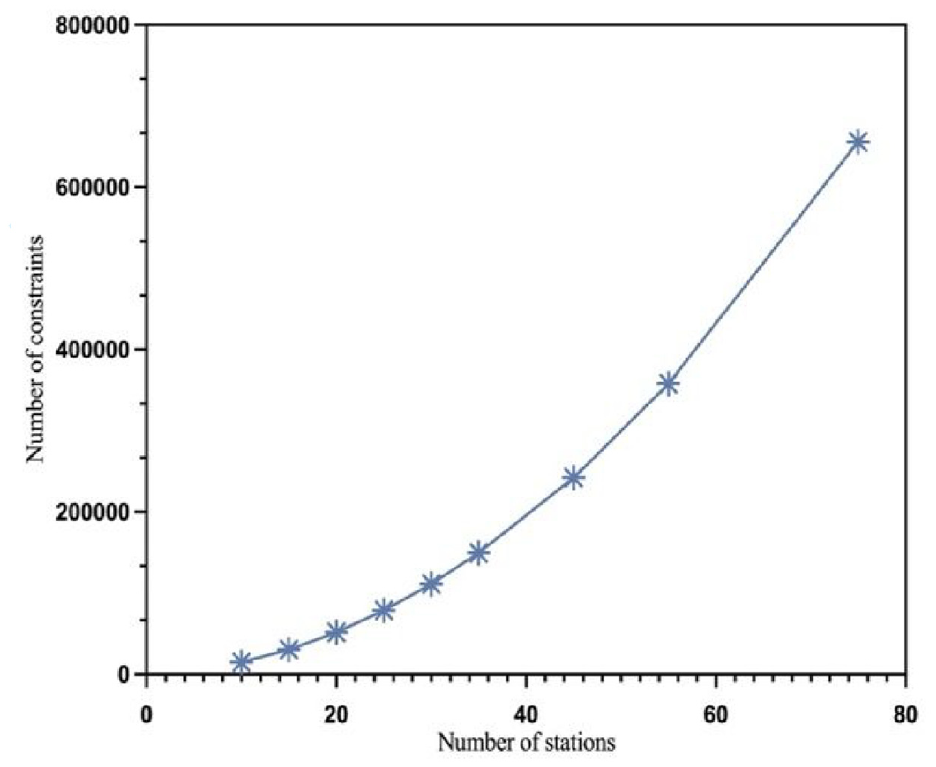
Computational complexity.
Computational study
To make the problems clear, a small example is shown in Section a small case study. In Section Real case study, the transportation network of Northeast China is selected as a real case to evaluate the performance of the proposed model. CPLEX 12.10 was used to solve the model.
A small case study
In this example, one port, two nearby stations (one is a railway container station, and the other is a road container station), and 10 inland stations (including four railway container stations and six road container stations) are considered (as shown in Figure 6). The planning horizon is 7 days. The unit cost is shown in Table A1 in Appendix, and the initial inventory of each node and the demand for empty containers in each period are shown in Table A2 in Appendix. The number of empty containers arriving at the port in each period and the number of empty containers returned by customers at each freight station node are shown in Table A3 in Appendix.
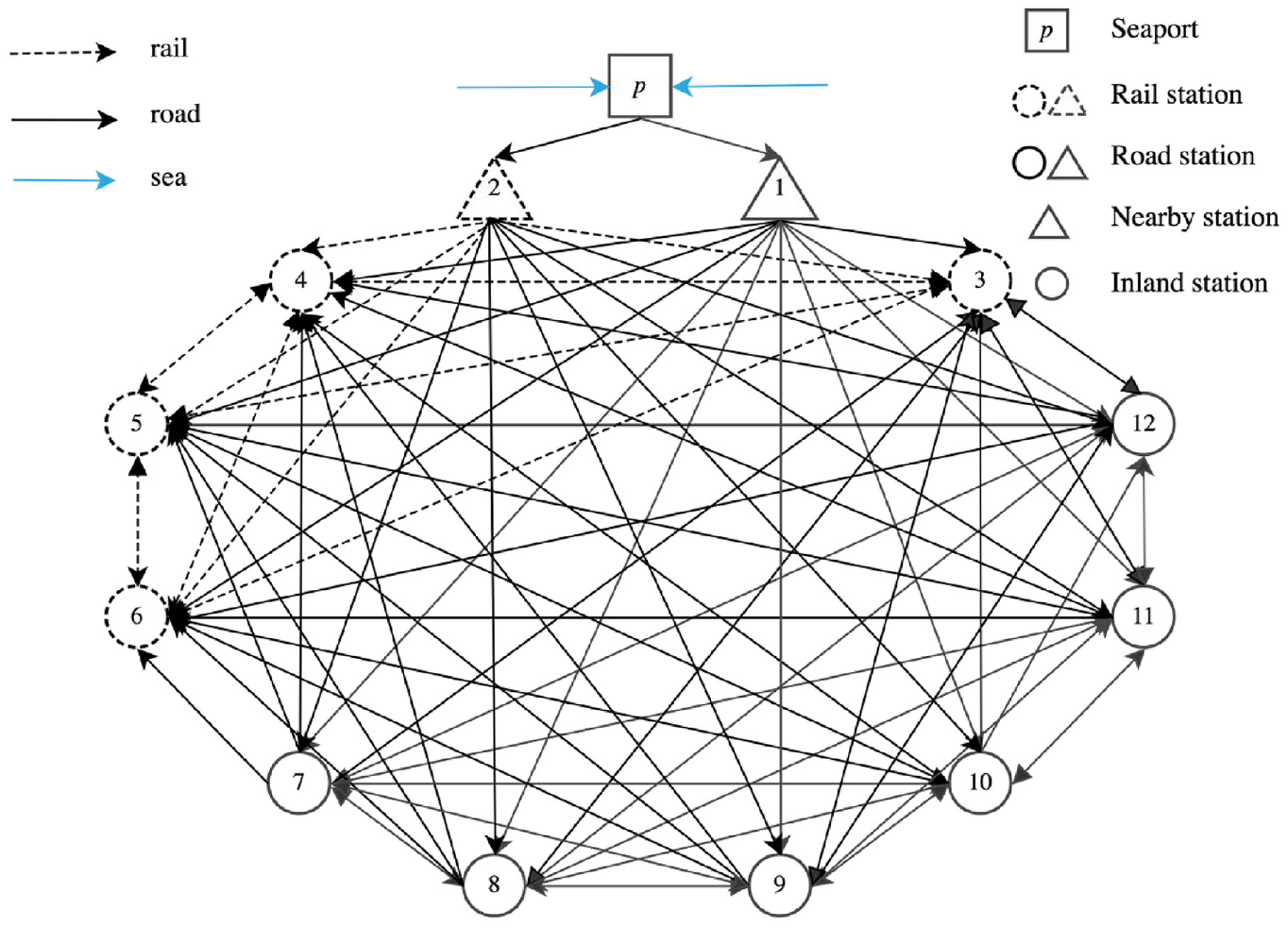
Presentation of network.
Numerical results
The specific volume of empty containers is shown in Tables A4–A6 in Appendix. The inventory level of each planning period is shown in Table A7 in Appendix. The calculation results of the example show that no empty containers need to be rented during the whole planning period. Figure 7 shows the routing and inventory level of empty containers in each planning period.
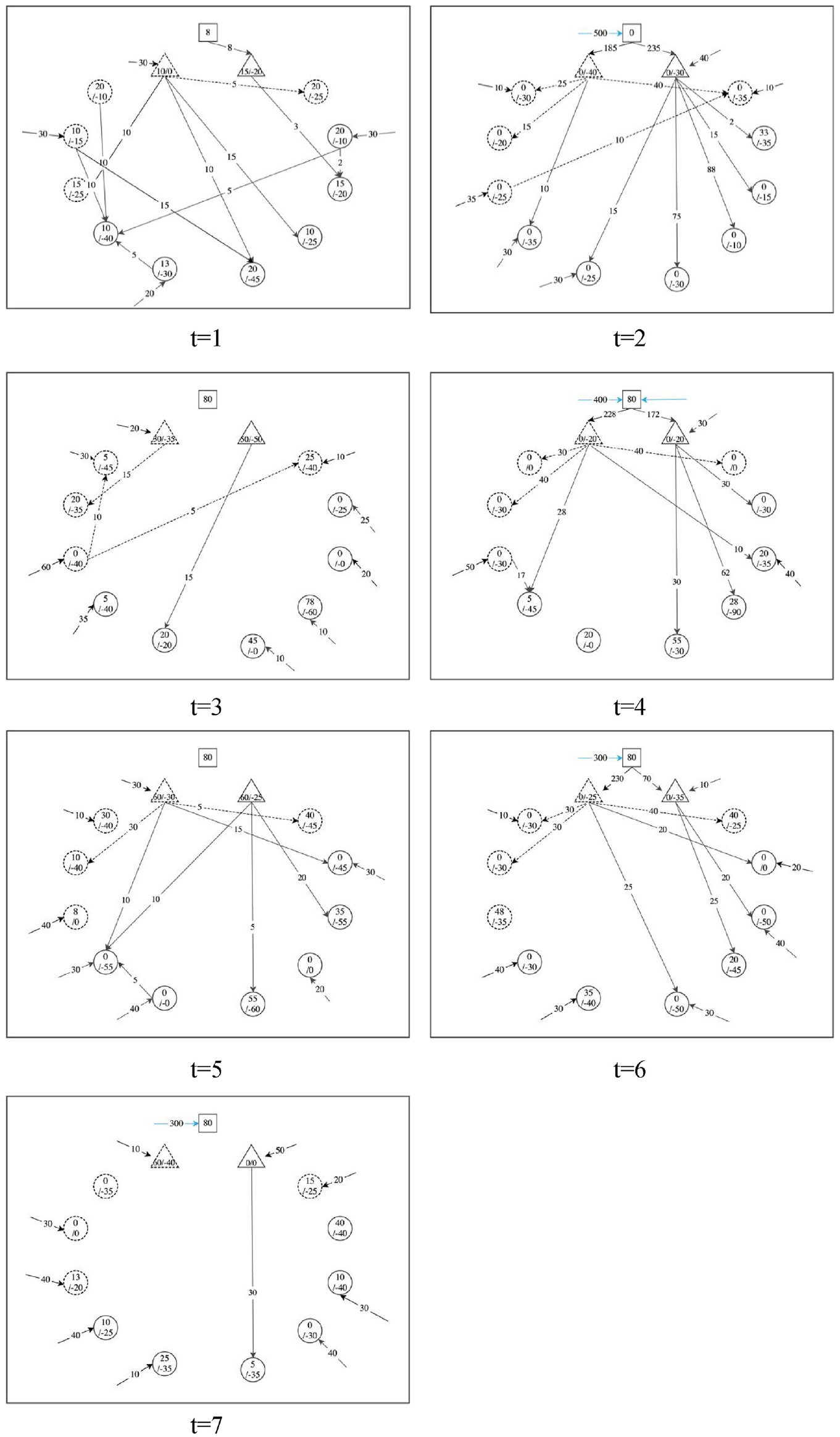
Display of calculation results.
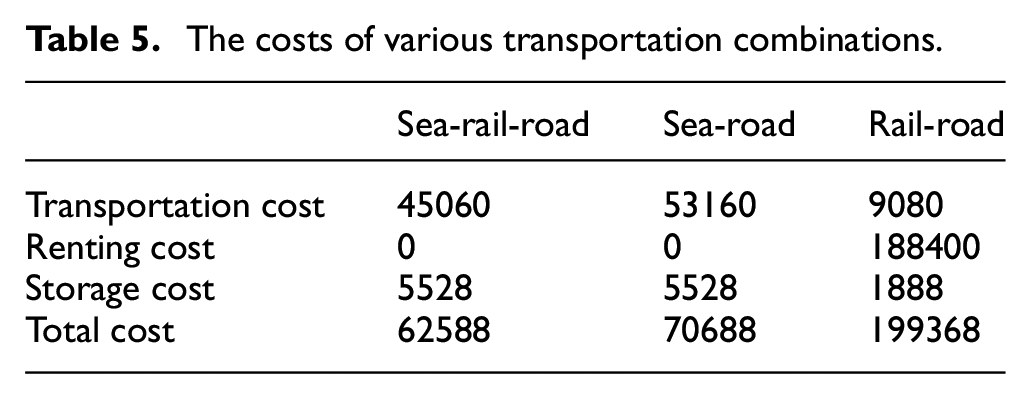
Table 5 shows the cost of empty container transportation under different transportation modes. It is obvious that the combination of sea-rail-road transportation can significantly minimize the total cost. Without considering rail transportation, the higher total cost is mainly caused by the transportation cost, which is because the road unit transportation cost is much higher than rail. If the logistic enterprises do not order empty containers from overseas, inland areas cannot get a large amount of maritime supply and can only choose to lease containers. The leasing cost accounts for 94% of the cost of empty container transportation, which will cause great economic losses to the operation of enterprises.
The costs of various transportation combinations.
Real case study
In this section, we choose Dalian Port and its northeast hinterland as a real case. The rail transportation network and the road transportation network is shown in Figures 8 and 9, respectively. Dalian Port is the most important transportation hub of the three northeast provinces (Liaoning, Jilin, and Heilongjiang). It is also located in the center of the Northeast Asian economic circle. Almost 90% of container transportation in Northeast China is transferred through Dalian. 23 Dalian Port has special railway lines in each port area. The longest Shenzhen-Dalian expressway connected with the national highway network in Northeast China. Therefore, containers arriving at Dalian port can be transported by rail or road to the hinterland.
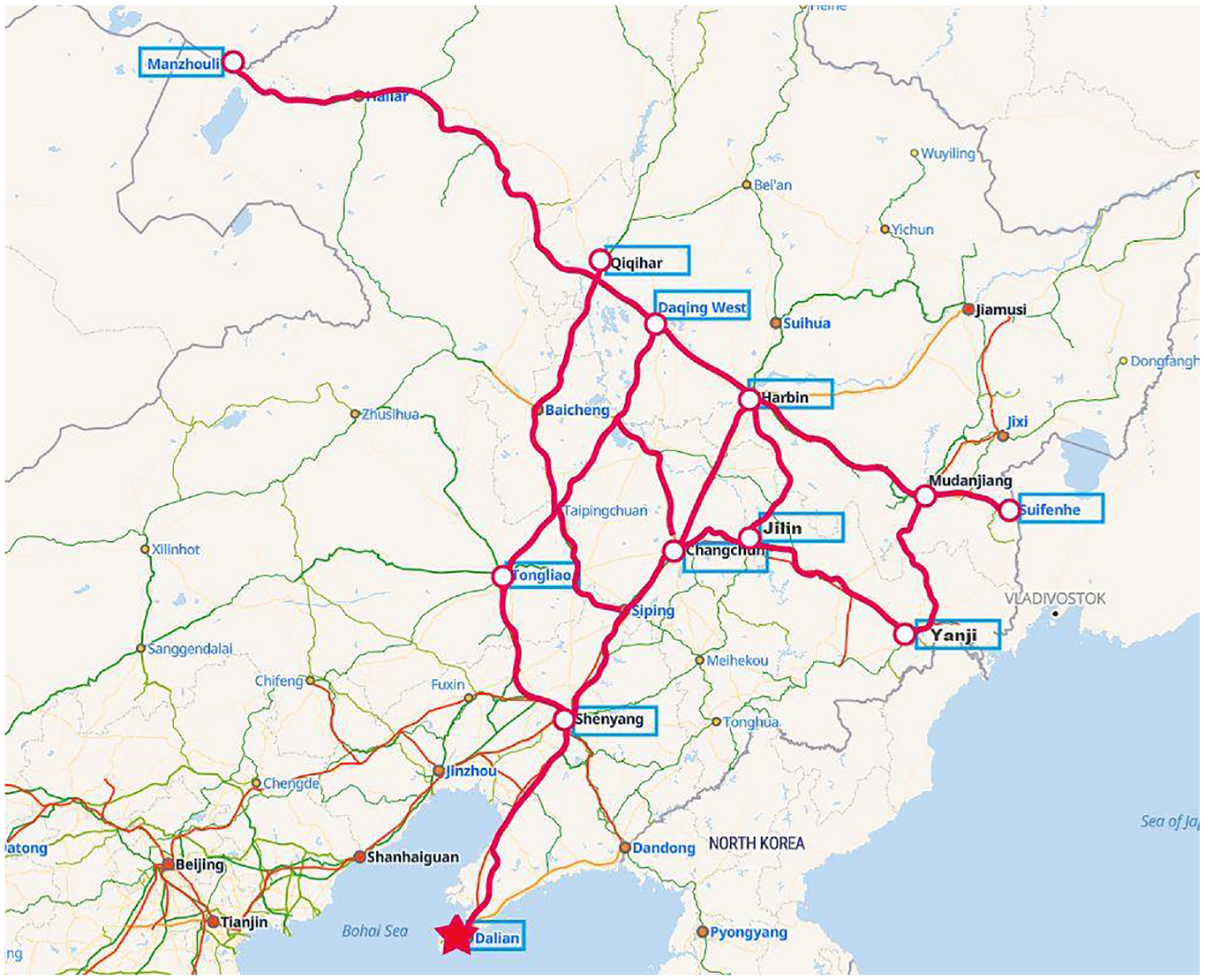
Rail transportation network of a transportation enterprise in Northeast China.
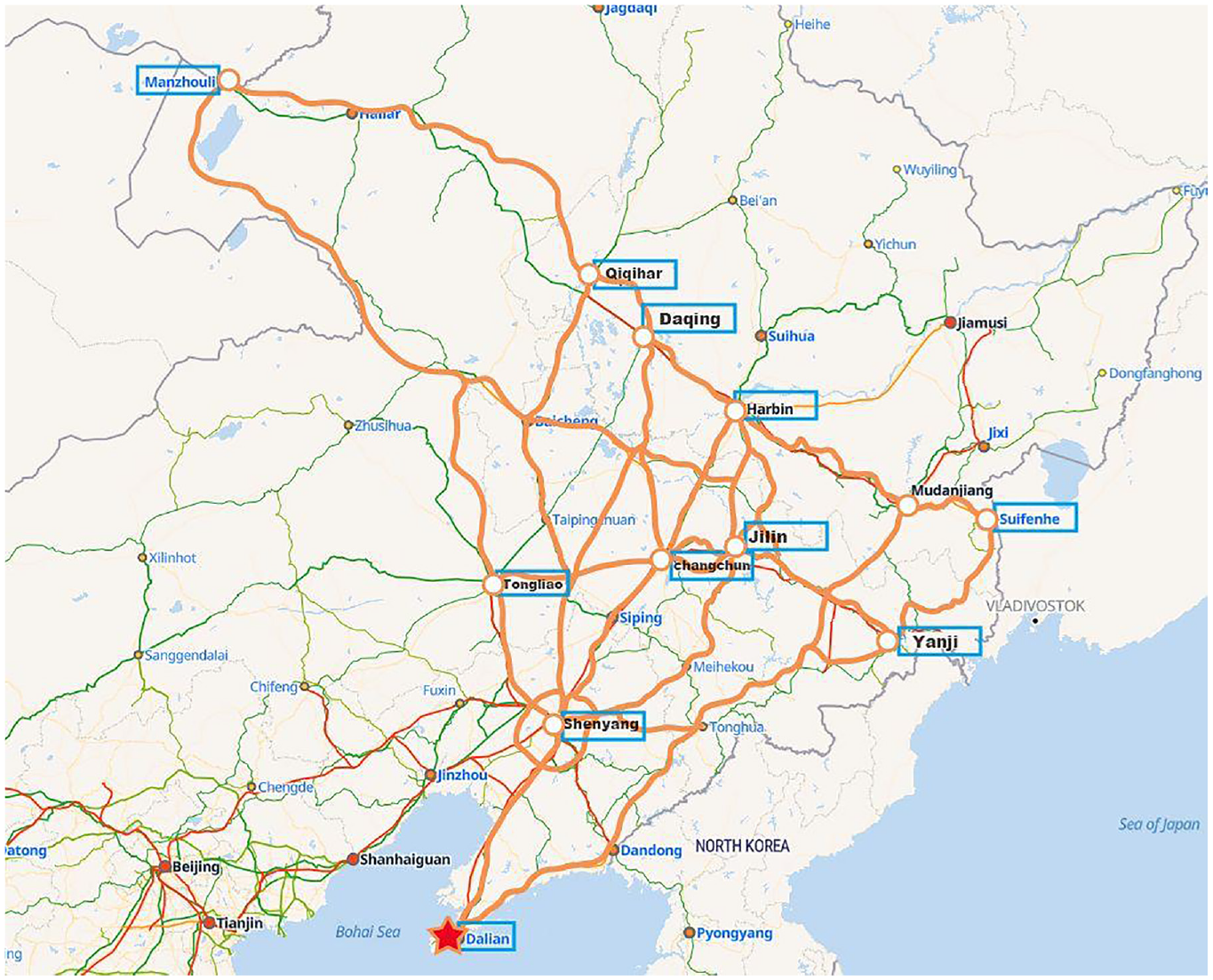
Motorway network of a transportation enterprise in Northeast China.
Data selection
We consider 1 port (Dalian), 10 inland cities, and 4 planning periods. We set a base period of 7 days because the container liners generally visit a port once a week. The 10 inland cities refer to Manzhouli, Qiqihar, Daqing, Harbin, Suifenhe, Jilin, Changchun, Tongliao, Shenyang, and Yanji. The logistics company has a depot with limited inventory capacity in each city. The available storage capacity at the inland station is randomly generated within
According to Sarmadi et al.,
27
the unit cost for transporting an empty container on arc


Where

Where C represents for unit transportation cost,
Numerical results and discussion
In this section, we analyze the influence of quantity change and related unit cost change on the total cost of container transportation.
Analysis of the change in empty container demand
Figure 10 illustrates the changes in cost as the demand for empty containers fluctuates. It is evident that the total cost initially decreases and subsequently increases. This is due to the fact that a reduction in demand leads to a decrease in the number of rented empty containers, resulting in a lower total cost. However, if the quantity of empty containers surpasses the demand in the region, the excessive inventory cost will lead to an increase in the total cost. In certain cases, when the number of empty containers surpasses the storage capacity of a single freight station, additional empty containers must be transported to other freight stations to alleviate the inventory pressure.
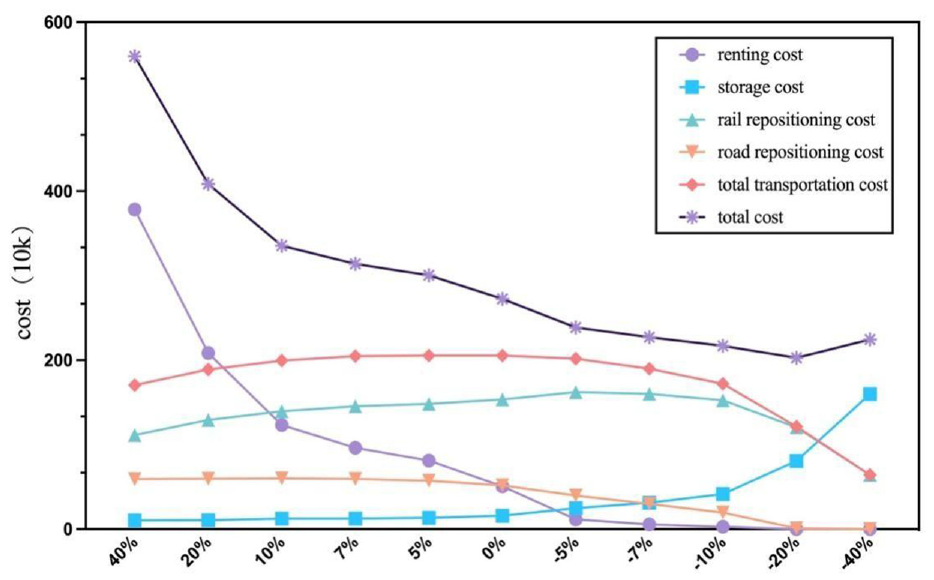
Costs for different demands.
Analysis of unit renting change
The changes in each cost after the decrease in unit renting cost are shown in Figure 11. Since the renting cost of empty containers is much higher than the transportation cost, logistic companies need to meet the demand for empty containers from other stations and avoid renting empty containers. When the leasing cost of empty containers drops by 80%, the unit renting cost is much cheaper than the transportation cost. So, leasing empty containers is more economical than transporting them. Because empty containers have not been relocated, a large number of empty containers are piled up and the cost of empty container inventory increases.
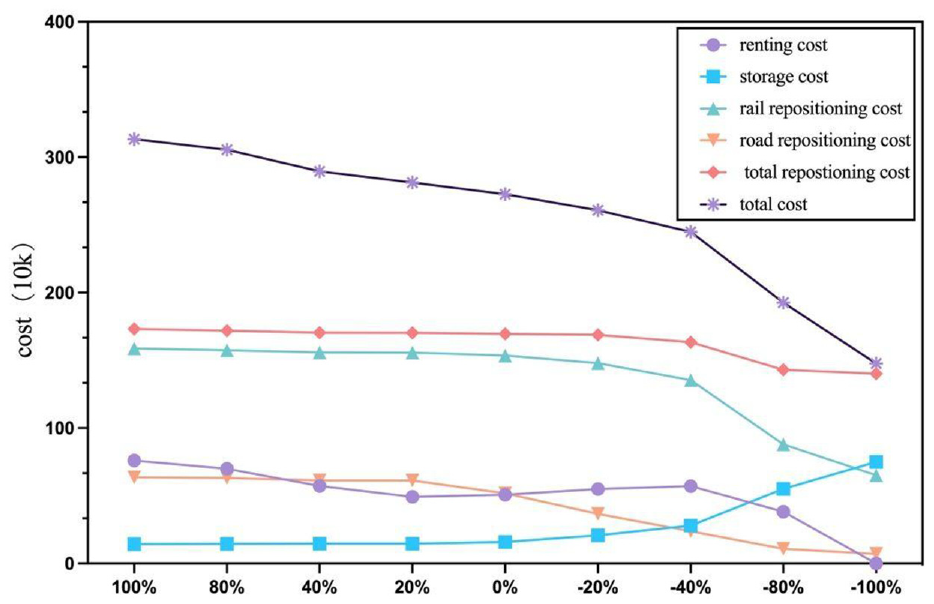
Costs under various unit renting costs.
Analysis of changes in unit transport cost
From Figures 12 and 13, we can see that unit transportation cost is a key parameter affecting the optimization of empty container repositioning. The total cost decreases as the unit transportation cost decreases. There is competition between rail transport and road transport. When one side is lower than the other side, it is bound to increase the volume of empty containers transferred by this mode of transport. Figure 12 shows that, with the decrease in rail cost, more and more containers are transported by rail instead of the road. Since the transportation capacity of rail is limited, the number of empty containers transported by road will not always fall but will remain at a certain level.
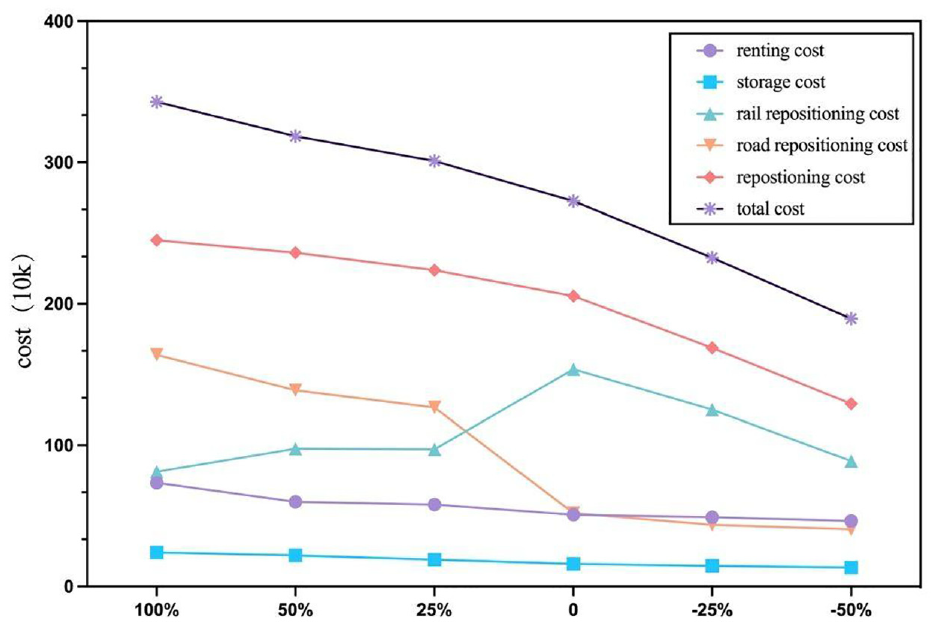
Costs under various unit rail cost.
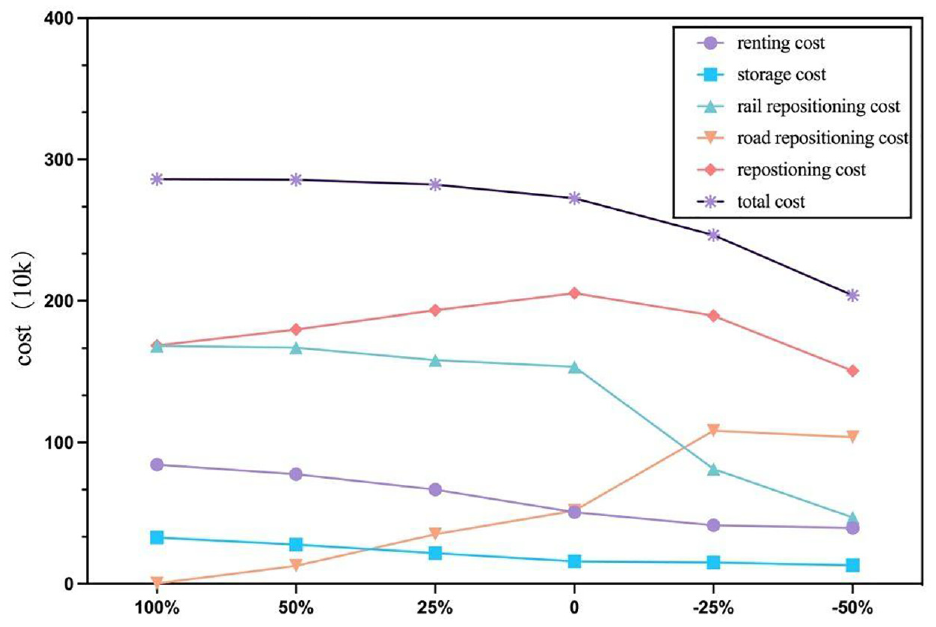
Costs under various unit road cost.
Analysis of changes in train capacity
Figure 14 represents different costs associated with renting, storage, rail repositioning, road repositioning, and the total cost at various instances of train capacity. It can be seen that rail transportation plays a crucial role in controlling the total cost of empty container repositioning. The total cost shows a general increase as the train capacity decreases. −100% indicating the absence of rail transportation, it leads to an increase in total cost. This increase occurs because more empty container repositioning is carried out through road transportation. Additionally, situations, where the distance is too far to accommodate road transportation, would result in a preference for renting containers, further contributing to the increase in total cost.
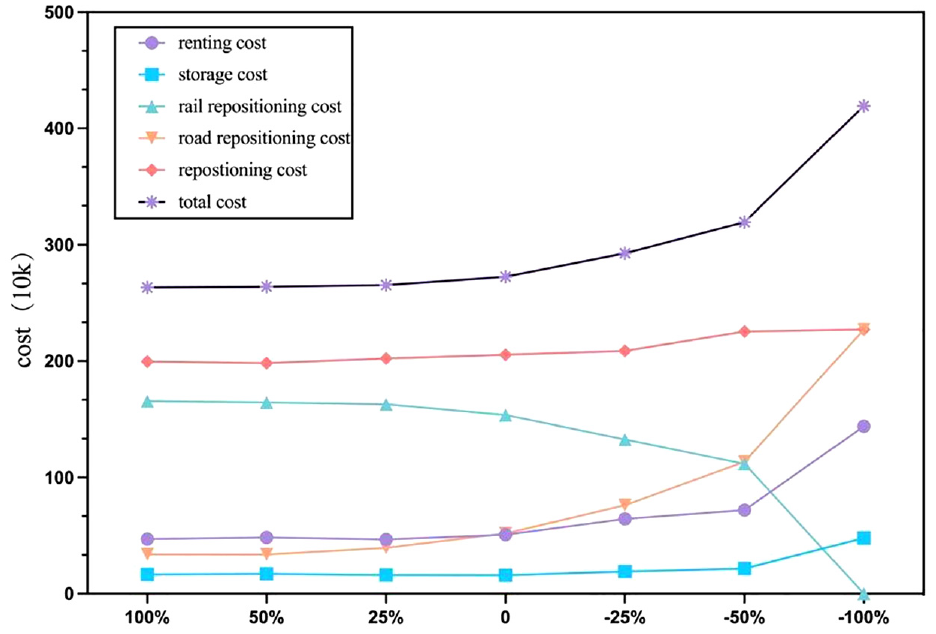
Costs under various train capacity.
Conclusions
Scientific and reasonable ECR can shorten the container turnover time and reduce the backlog of empty containers. This paper divides inland stations into road stations and railway stations and takes into account the combination of multimode transport. A multi-period linear programing model is established to provide a method for ECR problem. The example verification highlights the effectiveness of employing a combination of sea-rail-road modes for ECR, resulting in a significant reduction in the overall cost of empty container transportation. By utilizing sea transport to allocate a substantial number of empty containers from import-oriented regions to export-oriented regions, and subsequently transferring them to port hinterlands via rail and road, transportation costs can be effectively minimized. It is worth noting that shipping empty containers overseas is essential to avoid the high expenses associated with renting containers, as leasing costs alone can account for as much as 94% of the total cost. Therefore, integrating sea transportation in the ECR process becomes crucial in optimizing logistics operations and achieving cost savings.
Moreover, based on the research findings, we provide the following recommendations for empty container management, which can serve as valuable guidance for logistics companies:
(1) Empty container inventory management: Implement effective inventory management strategies to avoid situations of excessive or insufficient empty containers. Conduct regular inventory audits to understand the quantity and types of empty containers, enabling timely actions to replenish or reduce the inventory as needed.
(2) Transportation mode selection for empty containers: Take advantage of various transportation modes and consider using a combination of different modes for transportation. This approach can effectively reduce the costs associated with empty container repositioning.
In future research, it would be valuable to explore the challenges of empty container repositioning (ECR) under demand uncertainty. Additionally, the consideration of full containers in the problem formulation could be another potential extension for future studies.
Footnotes
Appendix
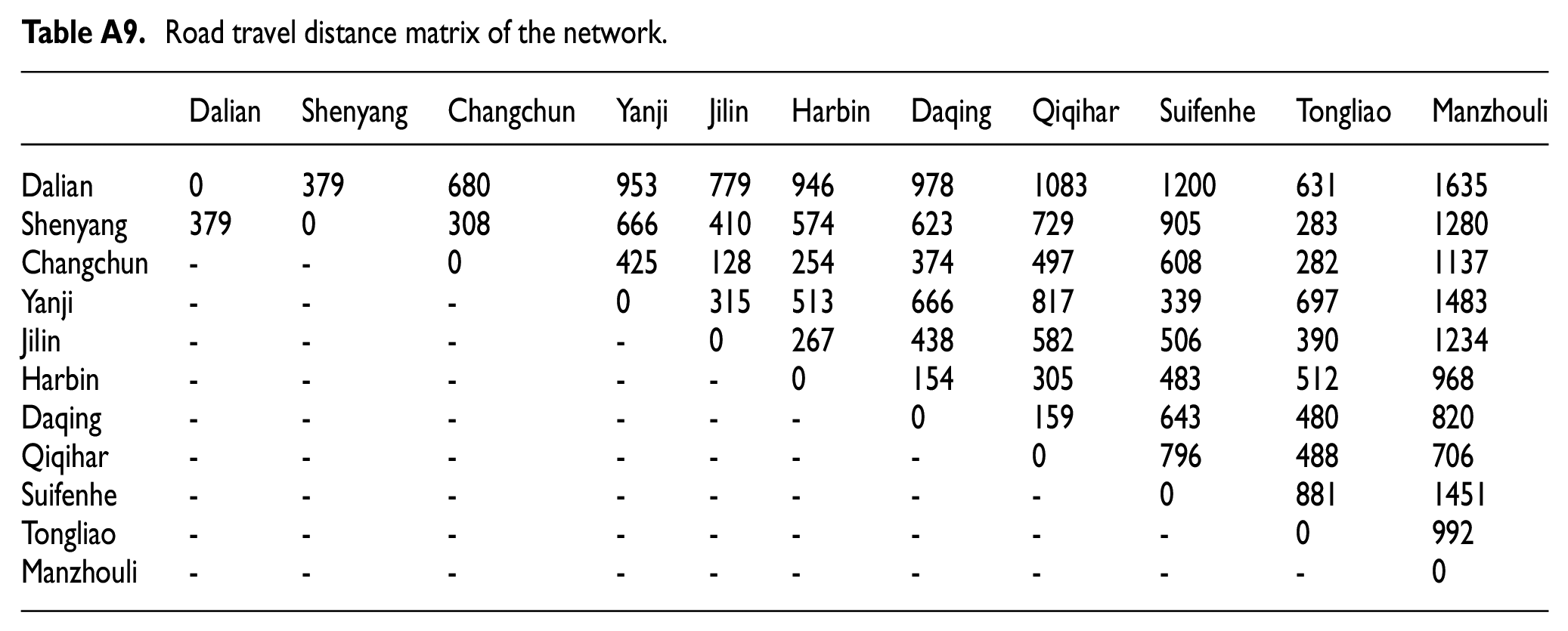
Road travel distance matrix of the network.
| Dalian | Shenyang | Changchun | Yanji | Jilin | Harbin | Daqing | Qiqihar | Suifenhe | Tongliao | Manzhouli | |
|---|---|---|---|---|---|---|---|---|---|---|---|
| Dalian | 0 | 379 | 680 | 953 | 779 | 946 | 978 | 1083 | 1200 | 631 | 1635 |
| Shenyang | 379 | 0 | 308 | 666 | 410 | 574 | 623 | 729 | 905 | 283 | 1280 |
| Changchun | - | - | 0 | 425 | 128 | 254 | 374 | 497 | 608 | 282 | 1137 |
| Yanji | - | - | - | 0 | 315 | 513 | 666 | 817 | 339 | 697 | 1483 |
| Jilin | - | - | - | - | 0 | 267 | 438 | 582 | 506 | 390 | 1234 |
| Harbin | - | - | - | - | - | 0 | 154 | 305 | 483 | 512 | 968 |
| Daqing | - | - | - | - | - | - | 0 | 159 | 643 | 480 | 820 |
| Qiqihar | - | - | - | - | - | - | - | 0 | 796 | 488 | 706 |
| Suifenhe | - | - | - | - | - | - | - | - | 0 | 881 | 1451 |
| Tongliao | - | - | - | - | - | - | - | - | - | 0 | 992 |
| Manzhouli | - | - | - | - | - | - | - | - | - | - | 0 |
Acknowledgements
The authors thank two referees for careful reading and valuable comments that led to improvements in the paper.
Declaration of conflicting interests
The author(s) declared no potential conflicts of interest with respect to the research, authorship, and/or publication of this article.
Funding
The author(s) disclosed receipt of the following financial support for the research, authorship, and/or publication of this article: This work was supported by the Major Program of Fundamental Research Funds for the Central Universities (Grant No.2023JBZY006) the Joint Funds of the National Natural Science Foundation of China (Grant No. U2034208).
