




Abstract
As the mine hoist monitors video images with poor light, low brightness, heavy dust, and low contrast, the monitoring video images are not conducive to monitoring. They cannot meet the needs of applications. Based on actual video surveillance data, this paper proposes a dark channel prior (DCP) method integrated with a guided image filter video image enhancement algorithm. Firstly, we analyzed the characteristics of the mine hoist system’s video images. Then, the DCP technique was used to enhance the video images. A guided image filter algorithm was introduced to ensure that the video has more clarity and visual impact. Comparing the suggested method to the other four algorithms, it performed better both subjectively and objectively than the algorithms mentioned above. Experiments demonstrate that the proposed technique can successfully improve the entire clarity and contrast of video images while avoiding the over-enhancement of bright areas close to the light source, meeting the practical application requirements of video surveillance.
Keywords
Introduction
The coal mine hoist is the key transportation equipment connecting the upper and lower mines. Its intelligent monitoring system guarantees the secure and productive production of coal mining enterprises. 1 However, because of the poor light, low brightness, and large amount of dust in the coal mine, as well as uneven lighting, 2 these special working environment factors cause problems such as unclear images, insufficient contrast, and inability to display detailed information 3 for the mine hoist monitoring system. This may affect the intelligent monitoring level of mine hoists and even the safety of coal mining enterprises. Therefore, research on image clarity in mine hoist monitoring systems has significant application value.
Recently, researchers have concentrated on low-light haze image enhancement algorithms, which mainly include image enhancement and image restoration methods. Typically, image enhancement methods do not take into account the cause of image degradation but instead just concentrate on enhancing the visual effect of the image by increasing contrast. Histogram equalization algorithms4,5 and Retinex theory 6 are primarily utilized in these low-light haze image enhancement algorithms. Methods based on Retinex theory, such as single-scale Retinex (SSR) and multi-scale Retinex (MSR). 7 The histogram equalization algorithm 4 tries to increase the image quality of the image obtained and can achieve better image contrast, but it can over- or under-enhance the image. Images could be divided into two components, according to Retinex theory 6 : reflectance and illumination. SSR image enhancement could improve image detail and color fidelity, but for low light conditions, it was not obvious and there was a halo defect. The multi-scale Retinex algorithm is a combination of multiple single-scale Retinex algorithms. It has better dynamic range compression and color fidelity. Still, when processing low-light images in coal mines, there is a lack of detail enhancement, and the image’s edge is likely to be exposed halo edge blur, time consumption, and some other problems. Although the multi-scale retinex with color restoration (MSRCR) algorithm can achieve better color and edge blur processing, it is likely to be exposed to over-enhancement 8 .
Image-based restoration methods typically analyze the causes of image degradation, create a degradation model, and compensate for information lost during the degradation process. The renowned method for single image dehazing with priors is the dark channel prior (DCP). DCP is used to solve atmospheric scattering model. DCP tends to produce halo artifacts at depth discontinuities and may fail if there is a bright component or air region in the scene. 9 In paper Albu et al., 10 it presents a shadow compensation method that enhances low-light areas while preserving the colors and details, without generating visual artifacts. There are also some studies for DCP method improvement.11,12 The paper Alharbi et al. 13 focuses on a single image dehazing algorithm based on the DCP method, studies the state-of-the-art in this area, and discusses its advantages and disadvantages. Experiments were conducted in order to share the advantages and drawbacks among those methodologies. Several single image dark channel dehazing algorithms have been utilized to deal with the problem of image hazing in a timely and effective manner. To estimate atmospheric light, which is a critical parameter in dehazing, these algorithm depends on the dark channel prior theory. In paper Fang et al., 14 an adaptive fusion mechanism was used to propose an optimized method for obtaining the location and illumination information of a fog image. However, these methods may not be suitable for monitoring video image enhancement, especially in the underground environment. The novelty of this study lies in proposing a method to enhance video surveillance images from mine hoist monitors affected by poor lighting, low brightness, heavy dust, and low contrast. The proposed method integrates the DCP technique and a guided image filter algorithm to improve the clarity and contrast of video images.
The rest of the paper is structured as follows. The second part presents the image characteristics of the coal mine hoist monitoring video. The improved DCP method and the proposed dark channel prior algorithm are described in thirdly part. Next, simulation results compared with image evaluation indicators by different algorithms, demonstrating the effectiveness of the designed combined image enhancement algorithm, are described in fourthly part. The final section presents the conclusions of the study.
The mine hoist monitoring images characteristics
As depicted in Figure 1, the coal mine hoist system mainly comprises a hoist drive, sheaves, ropes, skips, and tail rope. To improve the operative safety of the hoist system, many intelligent monitors are used to monitor the working conditions of head and tail ropes. To study the video monitor image enhancement algorithm in detail, we first analyzed the video monitor image features of the hoist drive and tail ropes.
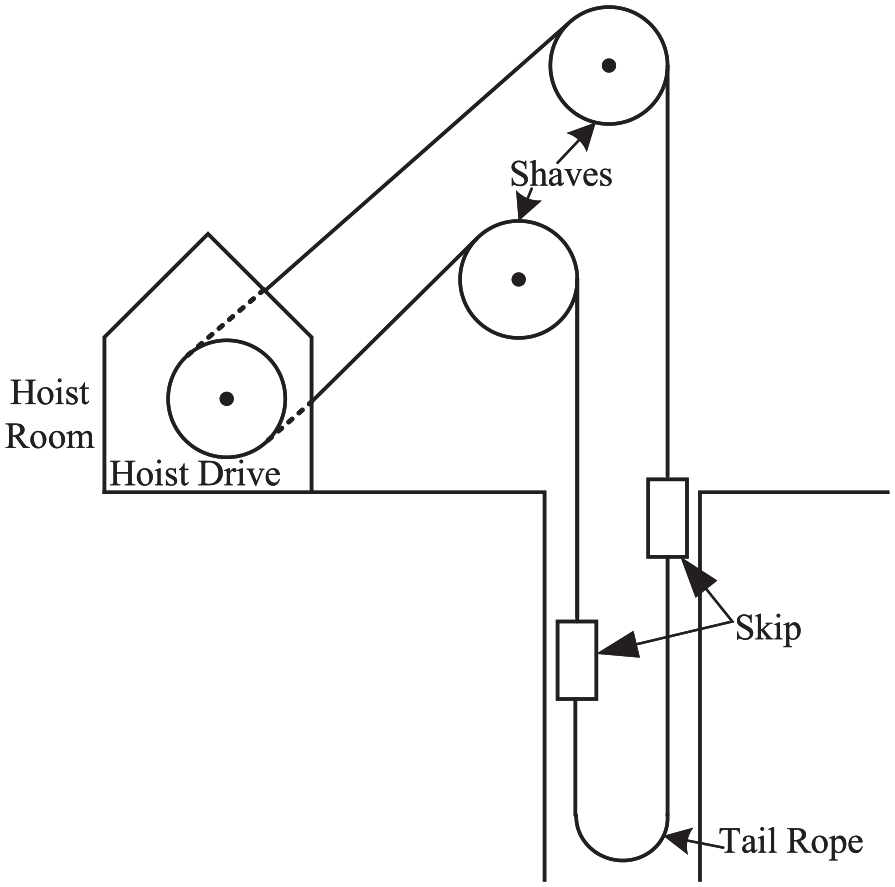
The main components of hoist system.
The monitoring images of the hoist drive and tail ropes are shown in Figures 2(a) and 3(a), respectively. Their histograms are illustrated in Figures 2(b) and 3(b), correspondingly. Along with the gray histograms, where the X-axis represents grayscale values and the Y-axis indicates the percentage of pixels. Because of poor lighting, the pixel values of these images are typically centered in the lower range. As shown in Figure 2(b), the dark primary color values ranged from
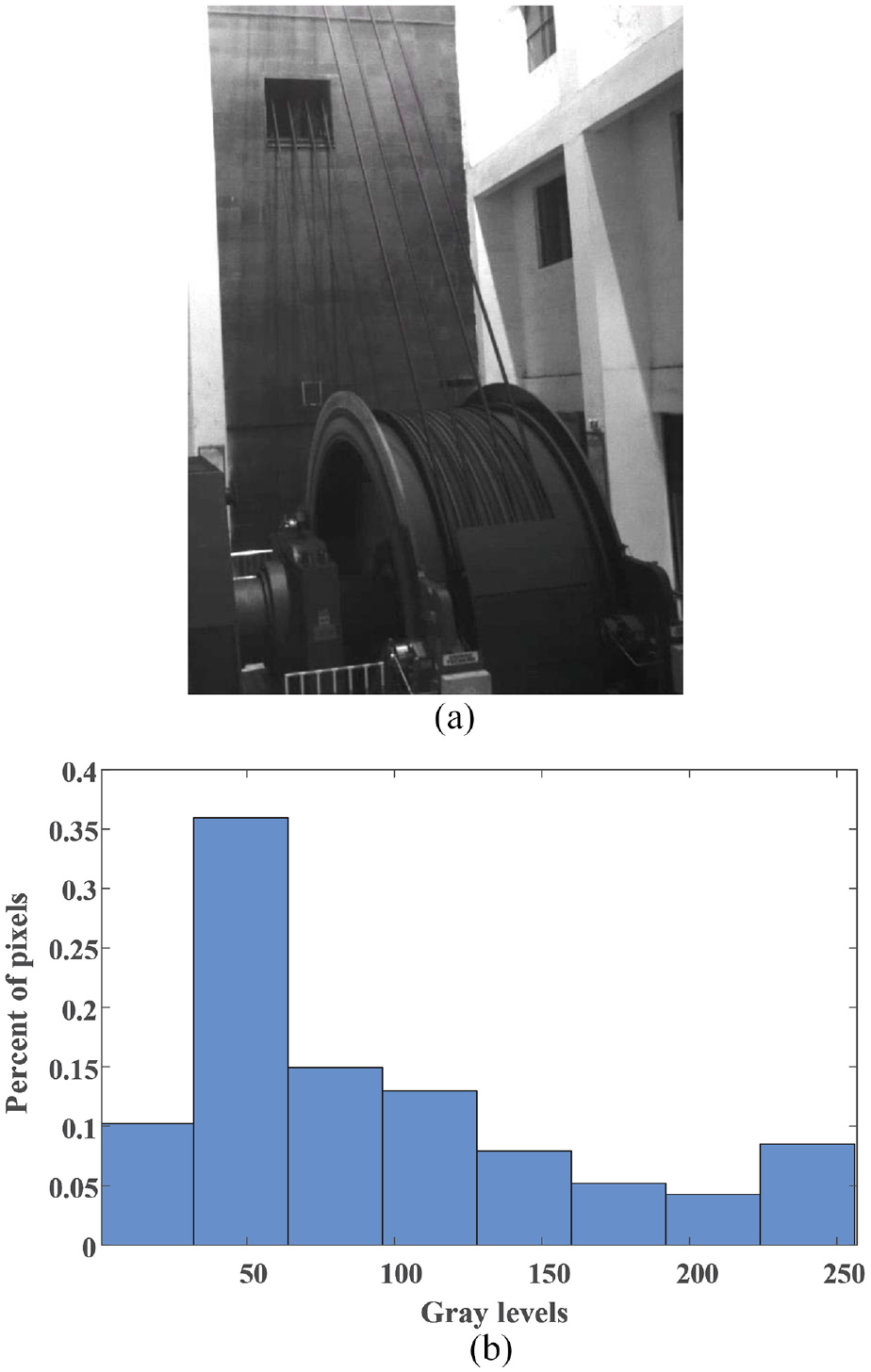
The monitor video image and histogram of the hoist drive: (a) original image and (b) the histogram.
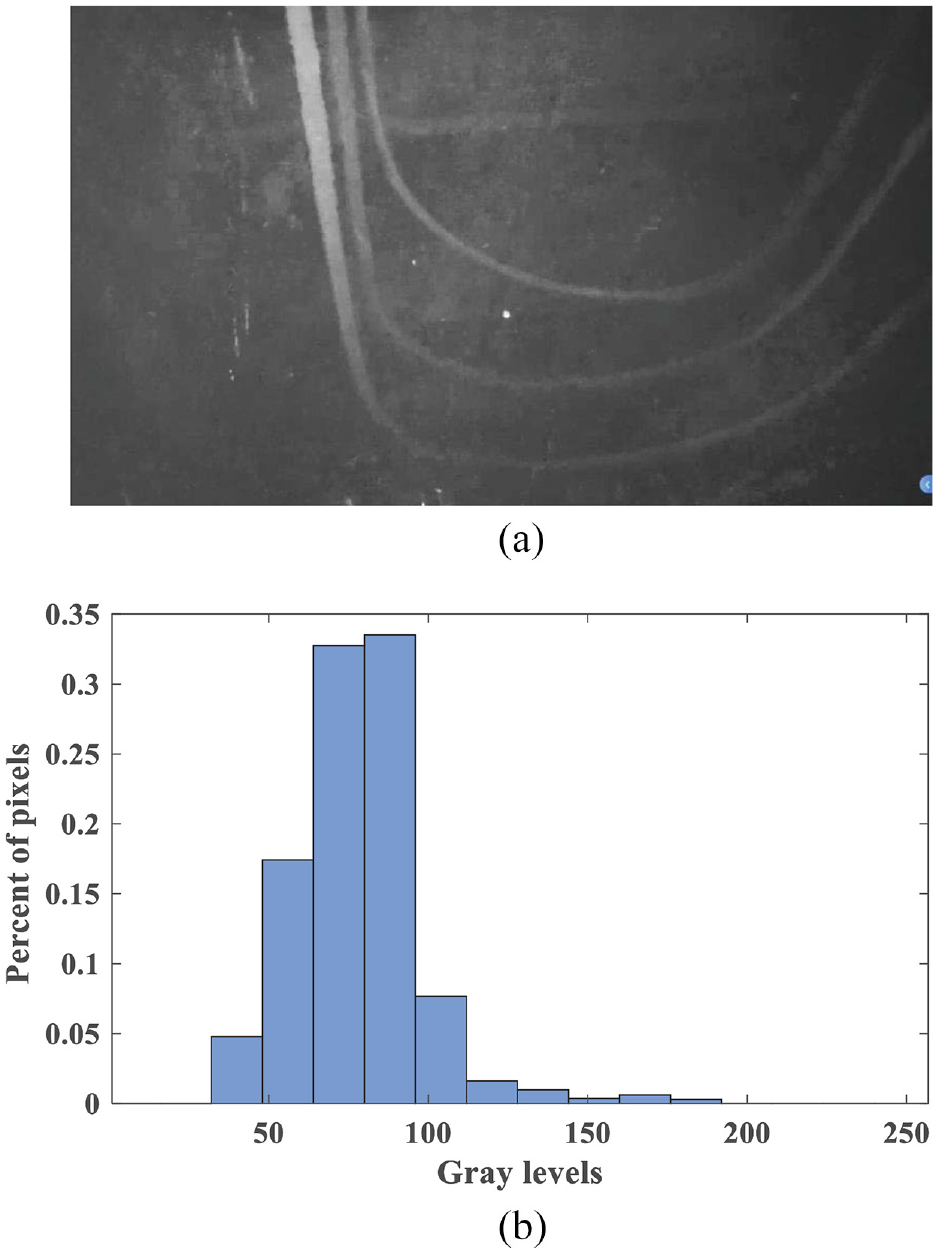
The monitor video image and histogram of the tail ropes: (a) original image and (b) the histogram.
The proposed image enhancement method
The atmospheric scattering model, the dark channel prior method, and the guided image filter-based DCP method are the three main components of the recommended image enhancement method. The atmospheric scattering model can be applied to determine the features of the original image. Because coal mine hoist monitoring video images primarily contain dark primary color values, the DCP method is used to enhance the images. Then, to improve the DCP and reduce artificial effects, a guided image filter method is proposed.
Atmospheric scattering model
The atmospheric scattering model, as depicted by equation (1), 16 is widely used in mine hoist monitoring video image enhancement.

where
The principal reason of image quality degradation is that the coal mine’s poor lighting, low brightness, and large amount of dust decrease the scene radiance. When the haze is uniform,

where
As described in equation (1),
Dark channel prior
The DCP-based enhancement technique uses a small local patch to locate the area of the hazy image with the lowest intensity. The DCP based hazy image can be calculated with the following formula.


A local patch centered on pixel
The dark channel of an arbitrary image

where
We will assume that

We also assume that transmission in a local patch
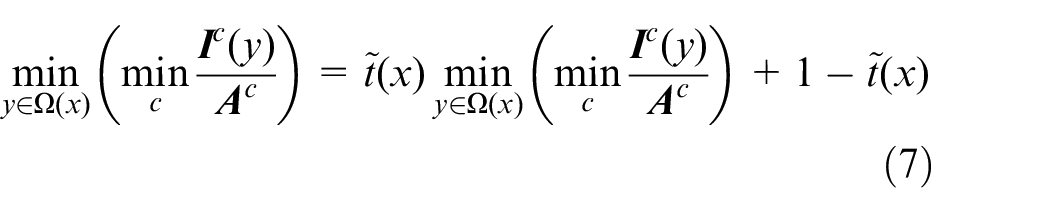
Since

In fact, the haze is still present when we view far landscapes. As a result, the constant

The image that has been recovered will be noisy in some areas if the transmission value is too low. Transmission

In the preceding derivation, we assumed that the value of atmospheric light
For the approach mentioned above to improve the coal mine hoist monitoring system’s video images, this study implements the haze removal technique along with refinement. The details are depicted in Figure 4.
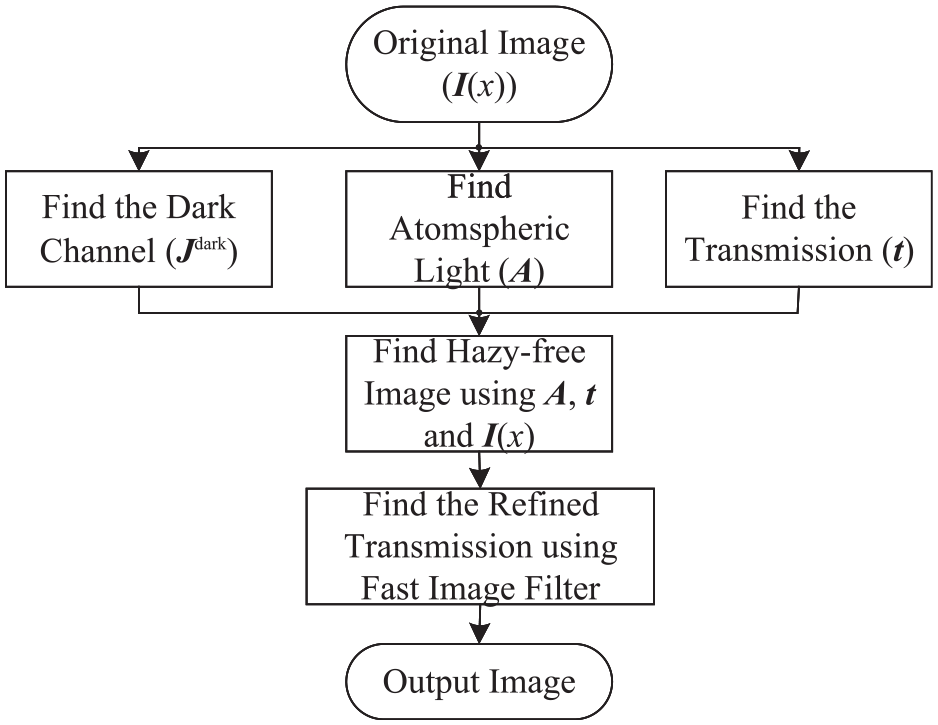
The DCP method based image improvement flow for the underground coal mine.
As demonstrated in Figure 4, the main processes for image enhancement are to find the dark channel
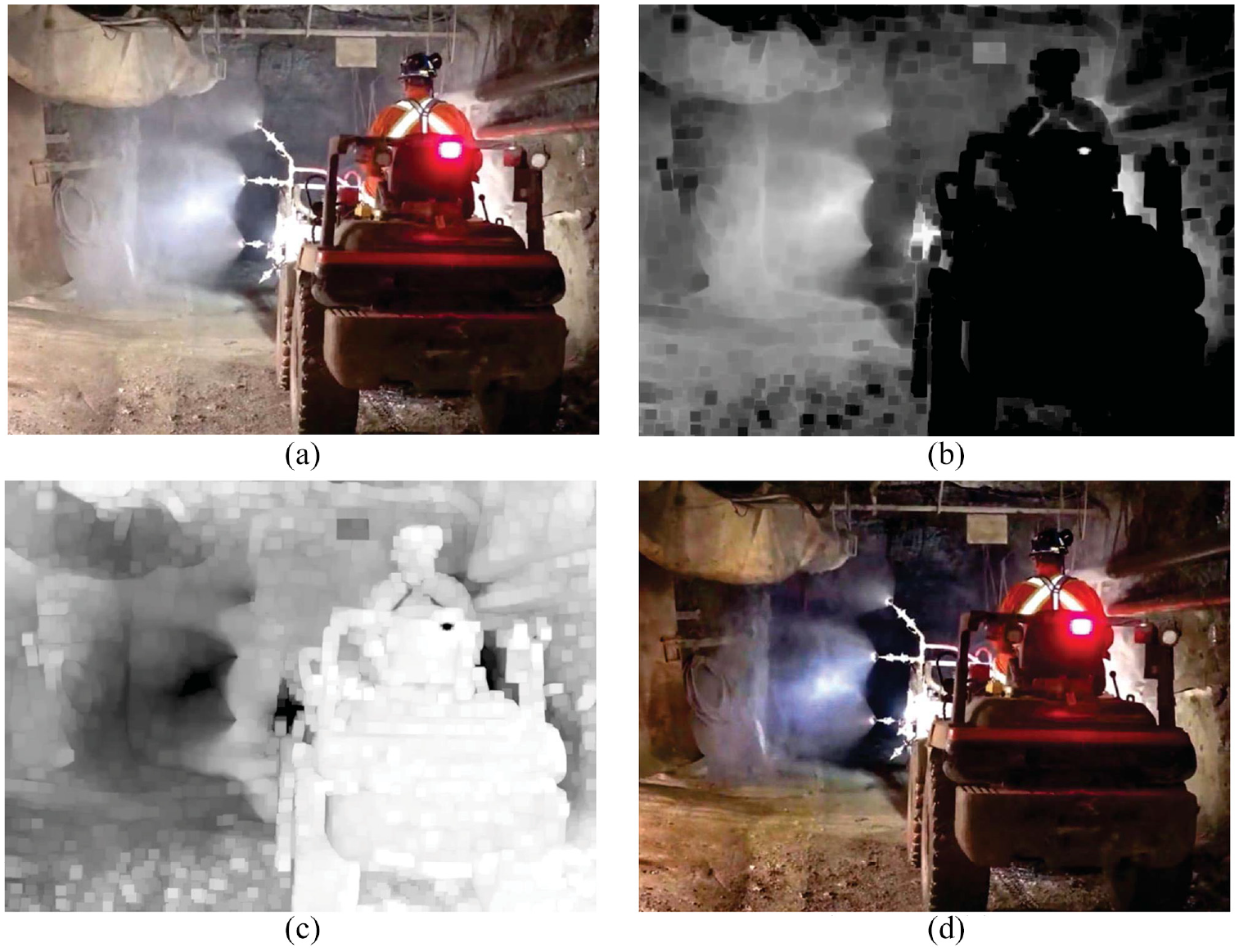
Detail process for the DCP method: (a) original image, (b) dark channel, (c) transmission estimate, and (d) output with DCP.
The improved DCP method
As described in Figure 5(d), the recovered images may have halo and block artifacts. The transmission estimation approach is to responsible for this.To improve the output image’s quality, we refined the transmission using the guided image filtering method (GIF).
With a guidance image

where
The GIF cost function is defined in accordance with the linear model (11) as following.

Therefore, the following provides the solution:


In this case, the value of the regularization parameter
Simulation and analysis
To illustrate the effects of image improvement, the recommended enhancement technique has been applied to several coal mine hoist images throughout this section. First, the effect of coal mine image processing based on the improved DCP algorithm was analyzed using both subjective and objective evaluations. Subsequently, four image improvement methods based on SSR, MSR, DCP, and a GIF combined DCP method for coal mine picture enhancement were compared and their processing effects were investigated. Finally, the GIF combined DCP method was applied to improve the quality processing of coal mine hoist monitoring videos’ images.
Simulation and analysis with improved DCP
As shown in Figure 4, we first simulated the traditional DCP method, DCP combined with GIF method enhancement, for the original image with a large amount of dust, as shown in Figure 6(a). Figure 6 depicts the detailed process and results.
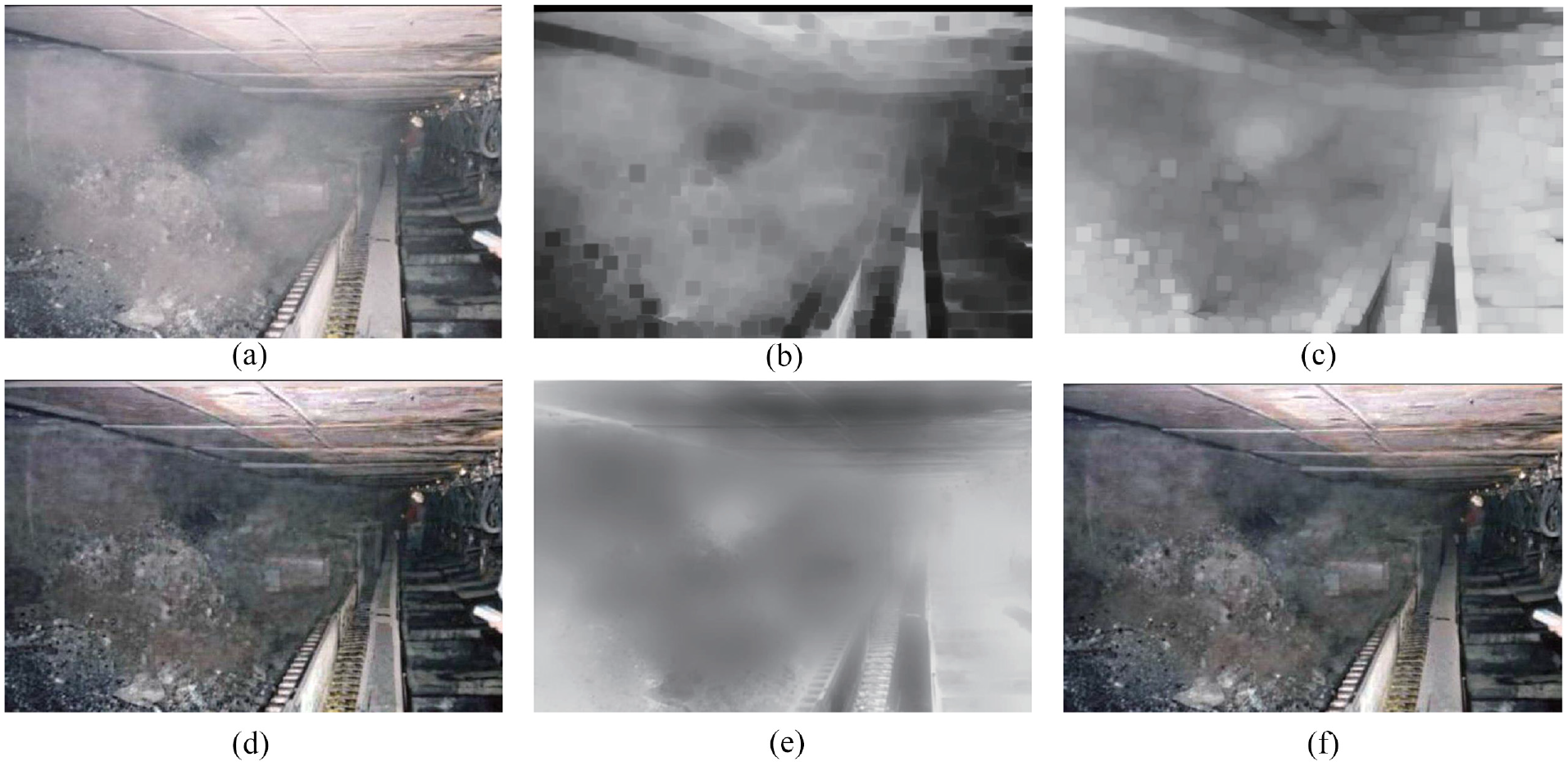
The detailed process for haze removal: (a) original image, (b) dark channel, (c) transmission estimate, (d) DCP, (e) transmission estimate with GIF, and (f) DCP with GIF.
To objectively evaluate the enhancement quality of the pictures. Image quality analysis with no-reference assessment is used, which mainly includes Entropy,21,22 natural image quality evaluator (NIQE), 23 and perception-based image-quality evaluator (PIQE). 22 Image quality analysis with the reference assessment value mean squared error (MSE) 15 has also been used. The MSE metric, as defined by equation (15), demonstrates the significant distinction between the enhanced and initial images.

where
Entropy quantifies the information content of the image. It specifies the amount of information contained in an image. The information entropy increases with the amount of information in the image and the effectiveness of the image display detail effect. Entropy of information can be defined as21,24:

where
NIQE compares an image to a standard model constructed from natural-scene images. A lower score indicated improved perceptual quality. The PIQE value is a non-reference image quality score which is inversely related to the picture quality. High values indicated low perceptual quality, whereas low scores reflected high quality of the image.
The using the Entropy, NIQE, PIQE, and MSE for the different overall evaluations of the results as shown in Figure 6 are presented in Table 1.
Quantitative metrics of DCP and its improved enhancement result.
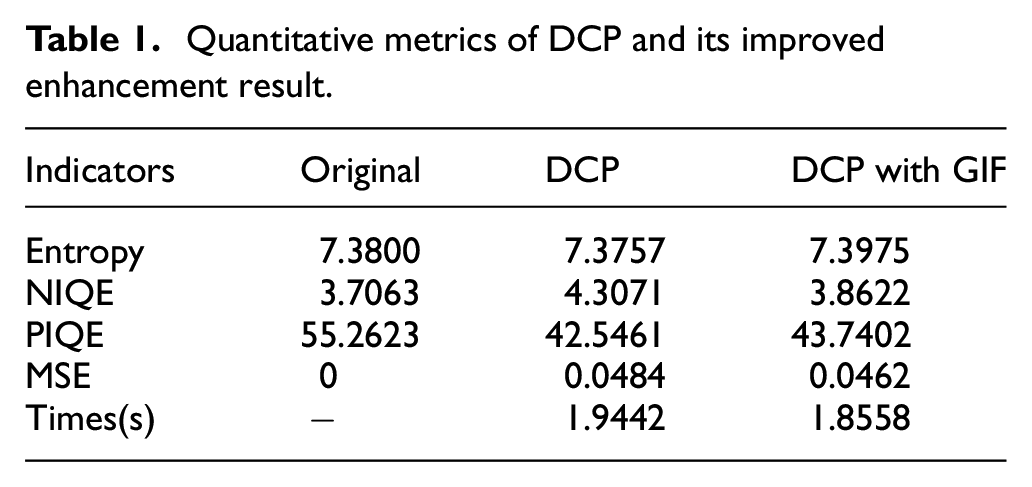
Table 1 shows that compared to the original image, both DCP and DCP combined with the GIF method work very well. There are some significant improvements in image information, clarity, and texture characteristics, which are exhibited through Entropy, NIQE, PIQE, MSE, and running times. For the information improvement of the initial image, the DCP combined with the GIF method showed better performance than the DCP. Because the entropy value for the DCP was 7.3757, which was smaller than that of the DCP combined with the GIF method, the optimal value was 0.0484. In addition, the NIQE, PIQE, and MSE indicator values for the DCP were 4.4071, 42.5461, and 0.0462, respectively. Compared with the DCP technique, the indicator values of the DCP combined with the GIF approach were 3.8622, 43.7402, and 5.4438, respectively. Furthermore, we performed a running time comparison based on MATLAB 2020a with an Intel(R) Core(TM) i7-8550U CPU 1.99 GHz with x64 windows. We found that the DCP combined with the GIF method ran faster at 1.8558 s and the DCP ran faster at 1.9442 s.
Simulation and comparison to other methods
To compare and demonstrate the effectiveness of DCP combined with the GIF algorithm, underground coal mine low-illumination image with dusty vision were used in further experiments. The images tested in the experiments were obtained from the web-searched low-illumination coal mine. Different image enhancement methods, that is, SSR, MSR, MSRCR, DCP, and DCP combined with GIF, were compared. The results as shown in Figures 7 and 9, and their objective quantitative metrics bar using different methods are depicted in Figures 8 and 10, respectively.
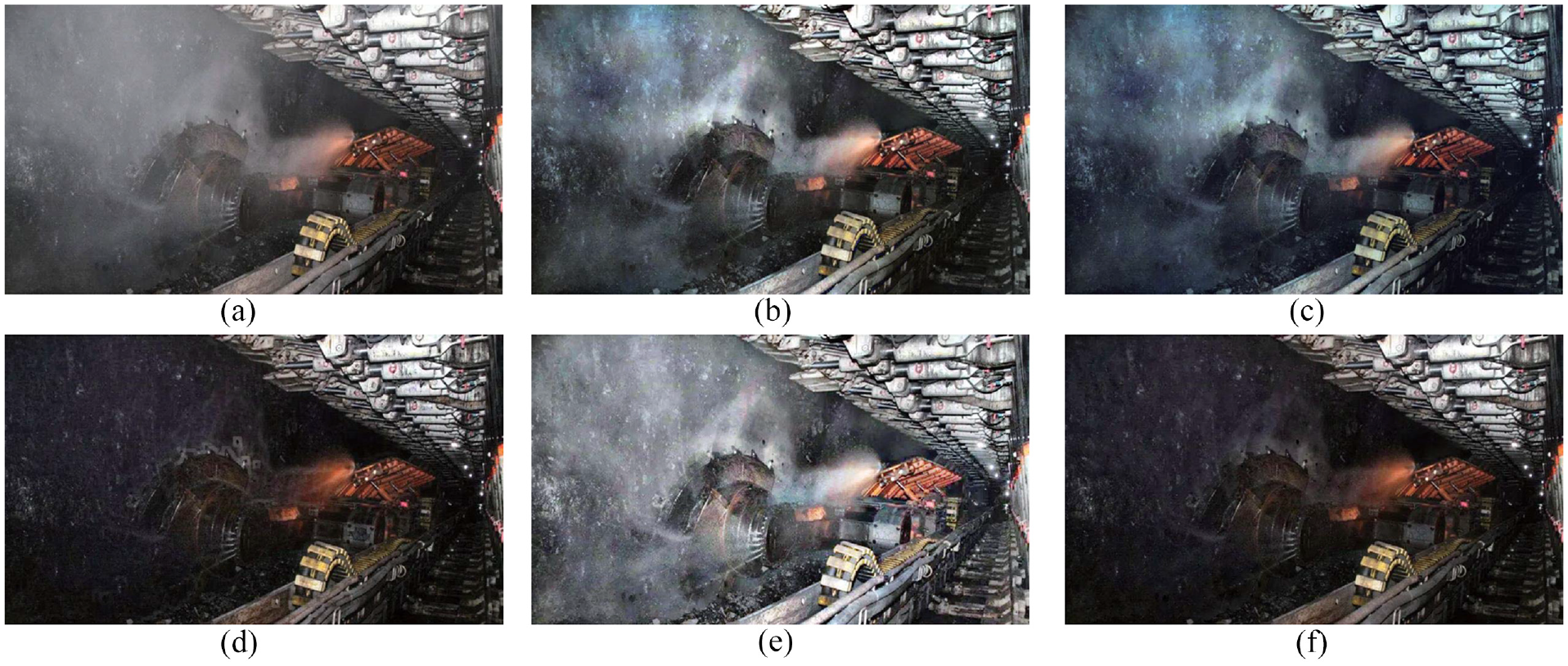
The low-illumination and foggy images of scenario 1 compare experimental results with different methods: (a) original image, (b) SSR, (c) MSR, (d) MSRCR, (e) DCP, and (f) DCP with GIF.
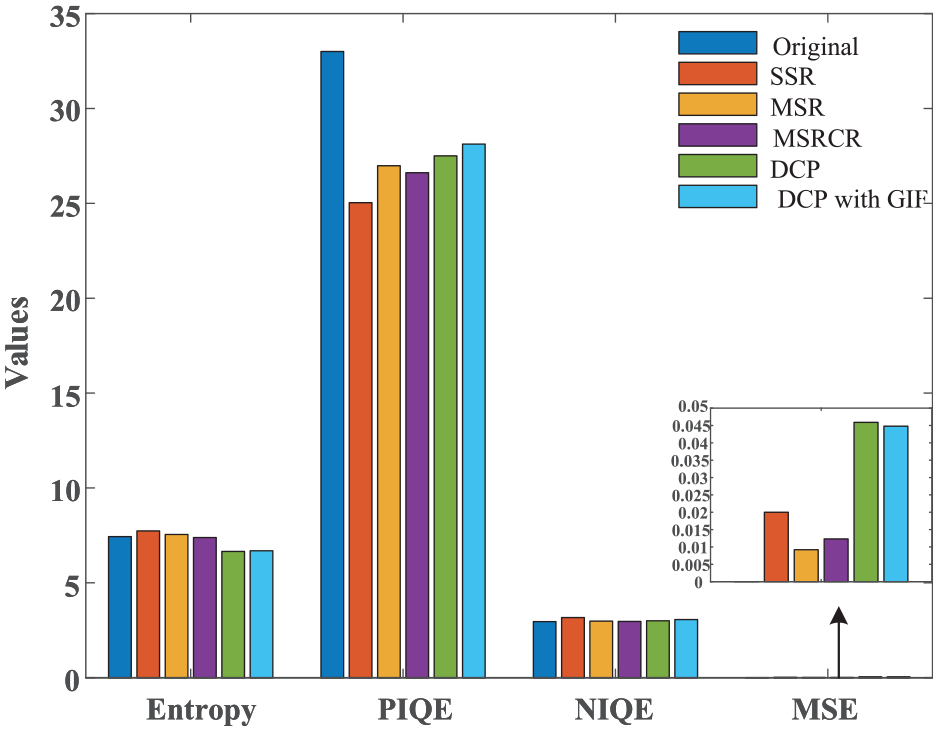
The quantitative metrics bar for Figure 7.
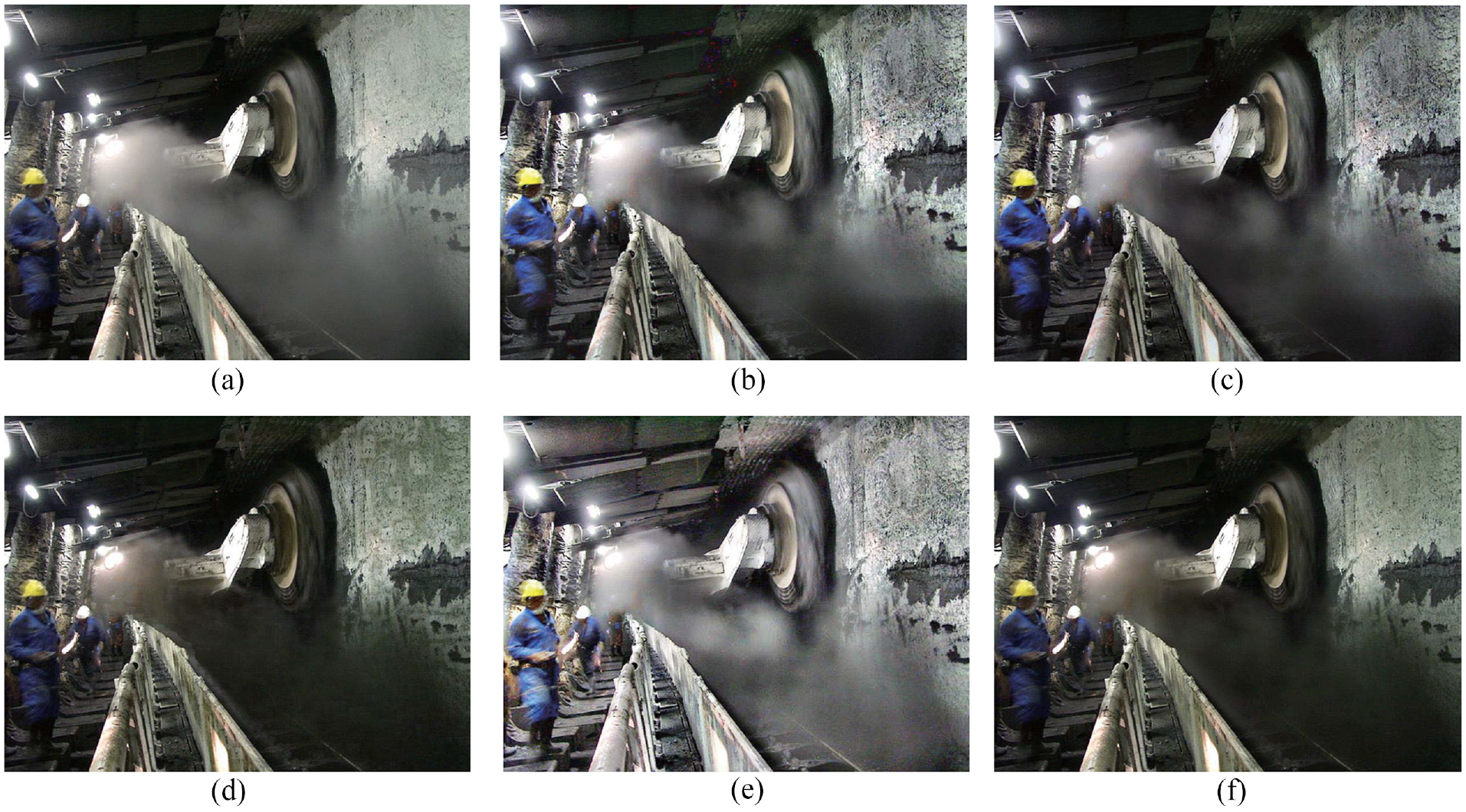
The low-illumination and foggy images of scenario 2 compare experimental results with different methods: (a) original image, (b) SSR, (c) MSR, (d) MSRCR, (e) DCP, and (f) DCP with GIF.
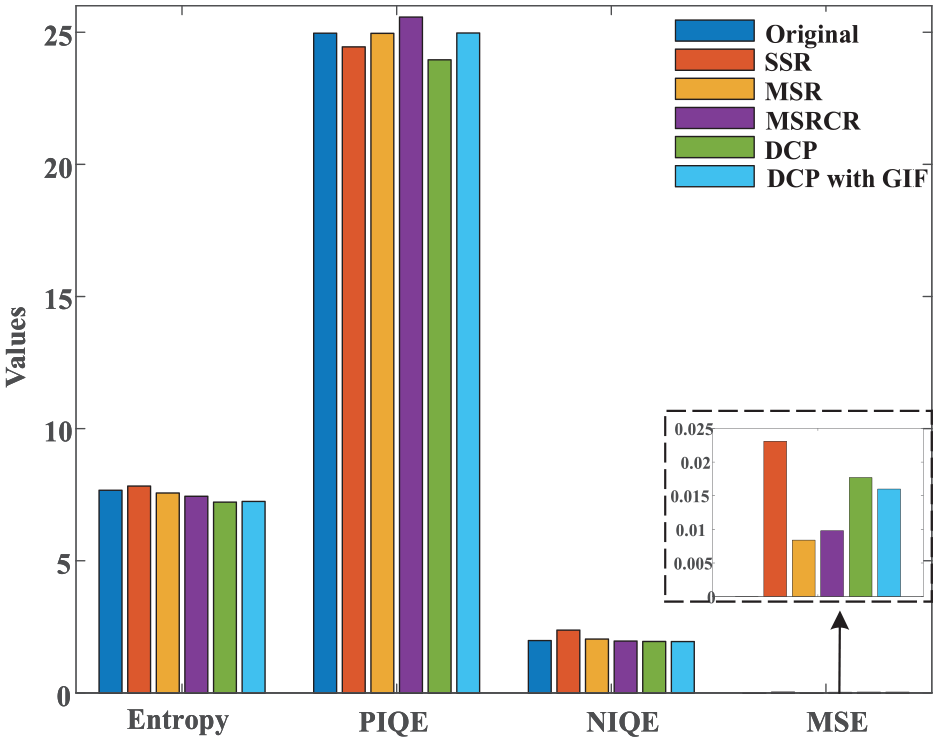
The quantitative metrics bar for Figure 9.
As shown in Figure 7, the original image (Figure 7(a)) was affected not only by low lighting but also by heavy mist, so the image’s details are not particularly impressive. The SSR and MSR-based image enhancement improved light intensity, as shown in Figure 7(b) and (c), however the enhancement resulting from the image amplifies the noise and halo artifacts that appear in the highlighted area shadow phenomenon. The DCP method-based image enhancement improved the light intensity, which can be seen in Figure 7(e), however the defogging effect was not observable. Once compared to the other three methods, the MSRCR and DCP combined GIF methods generated better dehazing results even as creating no halo effects. In Figure 8, the quantitative metrics bar for Figure 7 indicates that the MSRCR method achieved better parameters than the DCP combined GIF method. Once compared Figures 7(d) and (f), the MSRCR algorithm obtained good dehazing results, however the image had blurred edges and halo effects.
We performed a comparative analysis of Figure 9(a) to evaluate the effectiveness of various image enhancement algorithms, and the results are shown in Figure 9(b) to 9(f), with an objective comparison of the results in Figure 10. Figure 9 demonstrates that the DCP combined with the GIF image enhancement algorithm tends to produce the greatest defogging effect for image enhancement. It is superior to the MSRCR method because the objective quantitative metric bar in Figure 10 displays parameters PIQE and NIQE, which are as small as possible.
Coal mine hoist system monitor video image enhancement with improved DCP
As the DCP combined guided filter algorithm shows better image enhancement and defogging effects for low-light fogged images of coal mines. Then, the proposed algorithm was used to monitor video image enhancement by the coal mine hoist. The application and validated images for the tail rope and hoist drive rope at night and during the day were obtained using the mine hoist monitoring system. The simulation and quantitative metrics are shown in Figure 11 and Table 2, respectively.
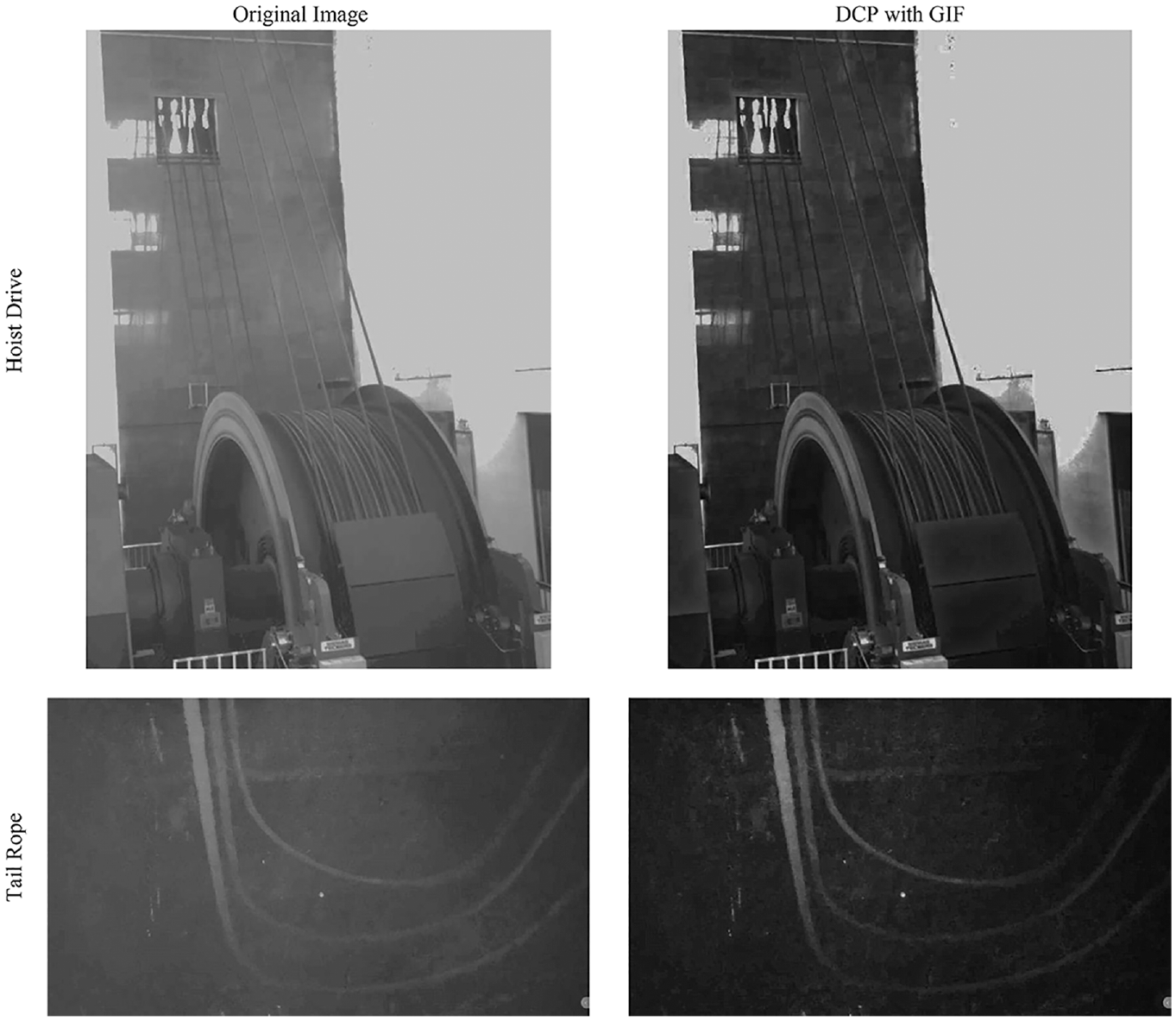
The coal mine hoist system monitor video image enhancement result.
Quantitative metrics of enhancement results.
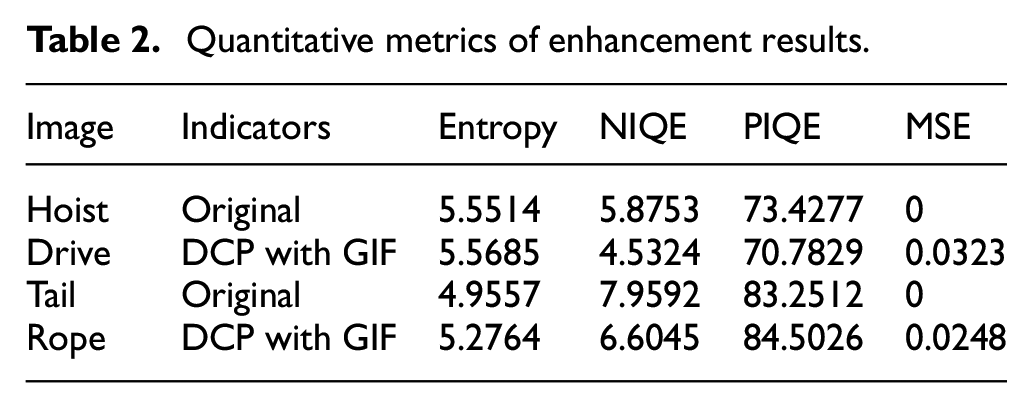
Figure 11 illustrates that, because of the uniform lighting of the tail rope, the DCP combined with the GIF image enhancement algorithm showed better performance than the hoist drive image obtained from the monitor videos. As indicated in Table 2, it is clear that the image defogging enhancement based on the DCP combined with the GIF algorithm improved the image information. In the case of tail rope’s parameter, for example, the parameter Entropy is reduced from 4.9557 to 5.2764, a 6.47% improvement. The NIQE value for the tail rope original monitor video’s image were 7.9592 and got better performance for the DCP combined with the GIF approach were 6.6045. The indicators include Entropy, NIQE, and MSE show better enhancement than the original image not only for the tail rope but also for hoist drive images obtained from the monitor videos.
Conclusion
In this study, an enhancement method for coal mine hoist monitoring video images with low visibility and dusty influence has been studied. To effectively enhance the image, the image characteristics of the coal mine hoist monitor videos were analyzed. As the coal mine hoist monitored videos, the images showed low illumination and dusty conditions. For image enhancement, a DCP combined with the GIF method has been proposed, and image processing by this method is much clearer and richer in edge information. The proposed technique performs better than some traditional approaches in terms of visibility and texture characteristics, as demonstrated by tested results with other image improvement methods. The proposed approach is applicable to video image monitoring of coal mine hoists. The proposed method, however, did not provide enough image information. As a result, our future work will concentrate on selecting a more powerful enhancement method.
Footnotes
Declaration of conflicting interests
The author(s) declared no potential conflicts of interest with respect to the research, authorship, and/or publication of this article.
Funding
The author(s) disclosed receipt of the following financial support for the research, authorship, and/or publication of this article: This work was supported in part by the National Natural Science Foundation of China under Grants 52271321 and 61873161, Shanghai Rising-Star Program under Grant 20QA1404200, and Natural Science Foundation of Shanghai under Grant 22ZR1426700.
