




Abstract
The temperature distribution of the bridge and its thermal effect has always been an important issue for researchers. To investigate the temperature distribution and thermal stress in the steel-concrete composite bridge deck, a 1:4 ratio temperature gradient effect experimental study was carried out in this paper. First, a set of experimental equipment for laboratory temperature gradient loading was designed based on the principle of temperature gradient caused by solar radiation, the temperature gradient obtained from the measurements were compared with the specifications and verified by the FE method. Next, the loading of the steel-concrete composite deck at different temperatures was performed. The thermal stress response and change trend of the simply supported and continuously constrained boundary conditions under different temperature loads were analyzed. The experimental results show that the vertical temperature of steel-concrete composite bridge deck is nonlinear, which is consistent with the temperature gradient trend of specifications. The vertical temperature gradient has a great influence on the steel-concrete composite bridge deck under different constraints, and the extreme stress of concrete slab and steel beam is almost linear with the temperature gradient. Finally, some suggestions for steel-concrete composite deck design were provided based on the research results.
Keywords
Introduction
Steel-concrete composite structures have been widely used in buildings and bridges thanks to their advantages of steel and concrete. Steel-concrete composite bridge decks are usually exposed to solar radiation and affected by constant change of environmental temperature, which results in uneven heat transfer from the outside to the inside, and then it is extremely sensitive to the temperature change. Recent investigations have shown that the temperature effect under extreme conditions even exceeds static and live loads.1,2 The study of temperature gradient effects is of great significance.
The damage and performance degradation of various bridge structures owing to time-varying temperature effects are very serious. Every year, many bridges have caused stress concentration, local damage, and severe deformation caused by the time-varying temperature difference, which led to the weakening of the structural function. 3 To understand the temperature change law of the bridge structures under the influence of solar radiation and the environment, researchers were conducted many long-term testing studies on long-span bridges which in service through solar radiation tests or based on the established Structural Health Monitoring (SHM) system.4–8 Hossain et al. 9 showed that the additional positive restraint moment caused by the initial thermal stress and thermal gradient could exceed the tensile strength of concrete and cause cracking. Song et al. 10 researched the influence of solar temperature gradient on the construction of concrete continuous box girder bridges by FE method and found that the maximum longitudinal and horizontal tensile stresses of the girders are 2.67 and 4.41 MPa, respectively. Recently, some researchers investigated the impact of meteorological parameters and demonstrated that solar radiation from the sun striking is the most important factor in determining the vertical temperature gradient of the concrete box girders and concrete-wrapped steel composite girders.11,12 It can be seen that the temperature gradient controlled by solar radiation has serious harm to the safety, applicability, and durability of the bridge structures under long-term service conditions.
Although the temperature gradient calculation parameters have been given in the current design specifications,13–15 the provided parameters may not be consistent well with actual projects. Specifically, many researchers found through actual measurement that the maximum value of the daily temperature effect is too general and far from the parameter value given in the specification. 16 The specification may underestimate the actual temperature gradient and its effect value.17,18 Peiretti et al. 19 conducted temperature measurements on the solid prestressed concrete bridge deck for 4 years and found that the maximum daily temperature change value of the bridge was 18°C, which proved that the 10°C specified in Eurocode 1 still needs a further supplement. Hagedorn et al. 20 performed experimental investigations on I-shaped concrete girders under solar radiation and addressed that the current design specifications do not accurately estimate the temperature gradient of the wide bottom flange girders. The above research mainly investigated the temperature distribution law or simulation method under solar radiation, but the actual environment is complicated and uncertain. The bridge locations of various project cases are different, and the temperature effect on the structure is not clear. Therefore, the thermal load effect of the temperature changes on the steel-concrete composite structure also needs to be further studied.
Previous research shows that it is difficult to obtain the temperature effect value of the bridge structure through actual measurement. Currently, the temperature effect research is mainly performed by the FE method,21–24 Zhang et al. 2 developed an FE modeling method for shadow recognition under sunlight for the prediction and analysis of temperature distribution of steel-concrete composite structures. Similarly, Zhu and Meng 25 proposed a three-dimensional shading algorithm based on the sun ray-tracing method to accurately predict the temperature field of the bridge and analyzed the temperature effect through a sub-model. Although researchers have conducted many studies on temperature monitoring and thermal effect, most of the structures are already in operation, and there are interferences from other uncertain factors. The effect value of the structure under thermal load is difficult to measure or the accuracy of the measured data is difficult to guarantee. Xia et al. 26 performed experimental research used single-section monitoring field data, and the results showed that temperature changes are the main reason for the deformation of long-span bridges, and emphasized that how to verify the accuracy of the calculated internal forces caused by temperature needs further study. However, the relative lag of experimental research methods has led to a limited understanding of the time-varying temperature-induced effects of large bridge structures. The inability to accurately consider the influence of temperature in the structural performance evaluation hinders further research on the performance evaluation of bridge multi-load coupling including temperature load. Therefore, the development of an effective test device to simulate the temperature field has become a prerequisite for experimental research on the temperature effect.
Based on the above discussion of the current problems, an experimental method for simulating the positive temperature gradient of steel-concrete composite bridge decks was proposed in this study, and the temperature gradient effect was analyzed in the laboratory by the scaled specimen with different constraints. The 3D FE model was combined to calculate the lateral and vertical temperature distribution of the structure section under the temperature loads, and the thermal stress response under different temperature gradients was investigated. The results of this study can provide references for the temperature effects research of steel-concrete composite bridge decks.
Experimental program
The experimental steel-concrete composite segment
The steel-concrete composite deck of a long-span steel truss stiffened girder bridge was selected as a reference for the experiment specimens,1,17 which is composed of concrete slab and I-beam with a length of 19,200 mm and a width of 6320 mm. And scaled down by a ratio of 1:4, the scaled specimens were based on the principle of geometric similarity. The geometry and construction materials of the scaled specimens were consistent with the original structures, which ensures that the stress similarity ratio is equal to 1 under external load. The concrete bridge slabs were made of C40 grade concrete, and the steel girders were made of Q345b.
The concrete slab was cast-in-situ used the supporting mold, and the two materials were connected into a whole through stud shear connectors. In this study, two cases were prepared according to different boundary conditions. Case 1 is a single-span simply supported beam with a total length of 4.8 m, and Case 2 is a three-span continuous beam with a segment length of 1.6 m, the constraints are set between the segments. The width of the scaled concrete slab was 1582 mm and the thickness is 60 mm. The steel-concrete composite bridge decks were constrained by the two boundary conditions, which were loaded by different temperature gradients. Figure 1 shows the elevation view of the structure specimens with different constraint systems.
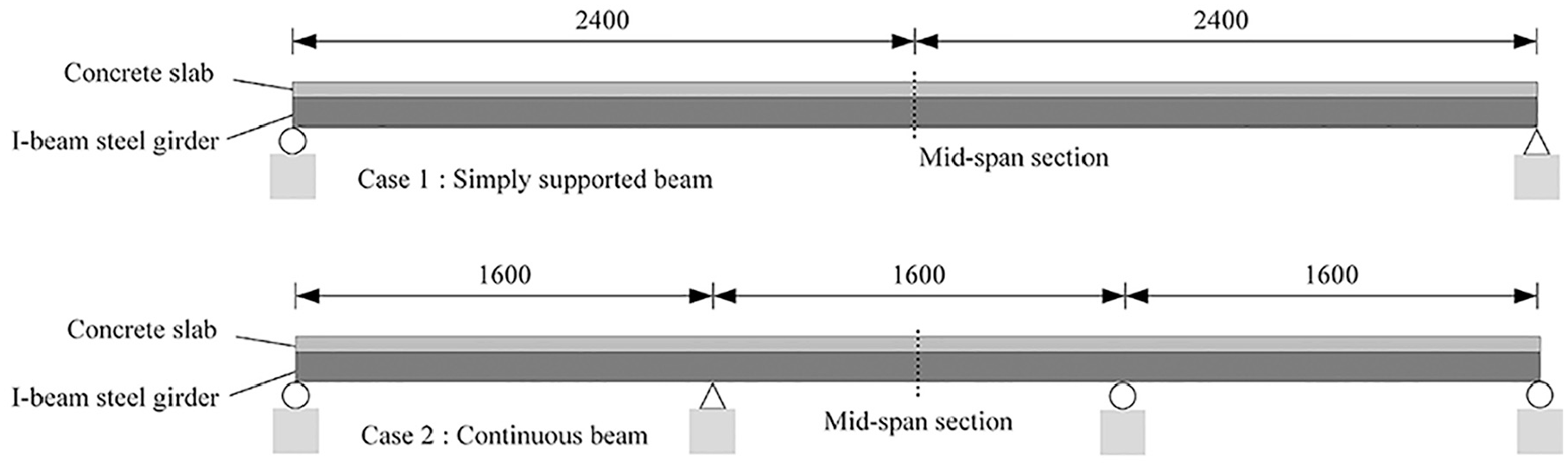
Elevation view of experimental specimens with different boundary constraints (mm).
Temperature load device
According to previous experiments and measurement data research,4–8 it can be found that the mechanism of the vertical positive temperature gradient model is the 1-dimensional heat conduction from the top to the bottom of the concrete slab caused by solar radiation. Thereby, the produced temperature distribution along the height of the section is not uniform, while temperature differences of the longitudinal and horizontal usually can be ignored. Based on the above principle, a set of temperature loading device for simulating vertical positive temperature gradient of steel-concrete composite bridge deck was designed, and the thermal stress response of the structures under loads of temperature gradient was measured by high precision sensors. The temperature loading device comprises a heating device and a temperature control system, as shown in Figure 2.
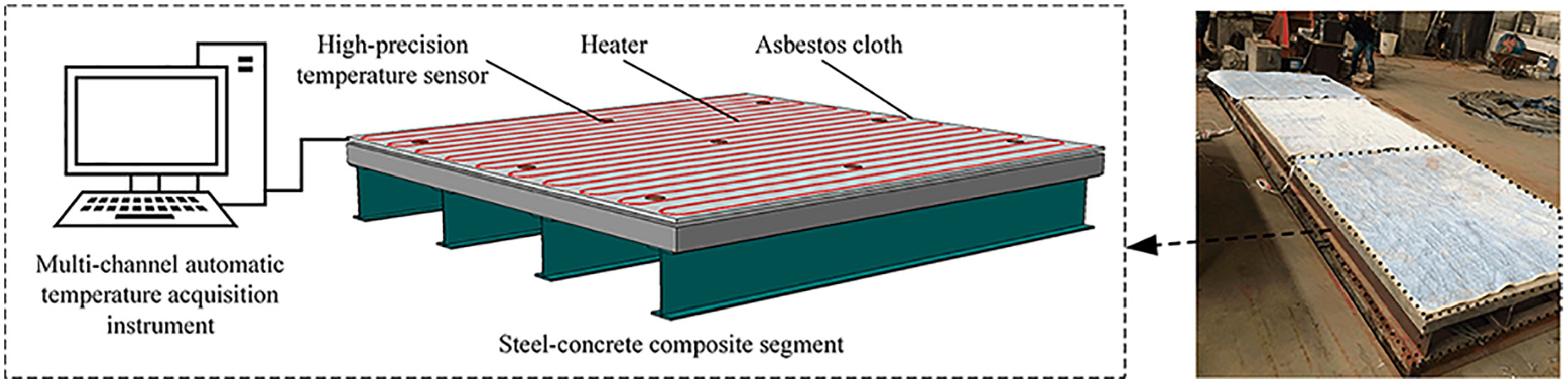
The temperature loading device.
The heating device was manufactured based on the electric heat principle. The power supply and the current regulator were connected by wires and connected to the current input port to form a closed loop with the heater, and the heater is fixed on the asbestos cloth at equal intervals to achieve uniform temperature distribution. In order to facilitate the multi-point and multi-section arrangement on various bridge structures, the asbestos net can be processed into the corresponding shape according to requirements. The top surface of the experimental specimen was directly covered by asbestos cloth and cotton blanket, which achieves a good temperature rise effect and also shortens the time required for temperature rise, thereby improved the installation efficiency and reduced energy consumption.
The temperature control system was used to accurately control the temperature load values and was mainly composed of a temperature acquisition device and a temperature controller. The high-precision temperature sensors were arranged between the adjacent heating piece, and the temperature values were recorded by a multi-channel temperature collector. The temperature of the asbestos cloth above the experimental specimens were controlled by adjusting the sliding rheostat to change the current in the loop, to achieve the simulation of the temperature field. The temperature adjustment range is 10°C–70°C, and the temperature accuracy could reach ±0.1°C.
On the side of the asbestos cloth, there is a plug-in board with a current input port and a data output port. The temperature sensors were connected to the data output port, and the data output port was connected to the multi-channel temperature acquisition recorder through the data acquisition transmission line. The multi-channel temperature acquisition recorder was equipped with a channel working indicator and USB data interface, and it could carry out a 24 h automatic real-time tracking collection of temperature with high accuracy, and the USB data interface setting was convenient for data extraction. The output power scale bar was provided with a current intensity regulating switch. The working indicator was visualized the working status of the current regulator, and the loop current was changed by sliding the current intensity adjustment switch to different scales, thereby adjusted the converted temperature.
Temperature and strain sensors arrangement
The measurement of experimental thermal effect value under temperature gradient includes the concrete strain and steel girders strain, the strain sensors were arranged by being embedded in the concrete slab and pasted on the surface of the steel girders. In the experimental specimens, six cross-sections were selected at the same interval for measurement. Specifically, the measurement points were arranged on the sections S1, S2 (1/6 L), S3 (2/6 L), S4 (3/6 L), S5 (4/6 L), S6 (5/6 L), and S7, where S1 and S7 offset by 10 cm from both ends of the beam respectively. The measurement points were arranged horizontally in three rows of the top and bottom of the concrete slab and steel girders, and vertically arranged on four columns along the centerline of the I-beam section, The TDS-530 strain gauge was selected for data acquisition and processing. Figure 3 shows the detailed layout of the strain sensors.
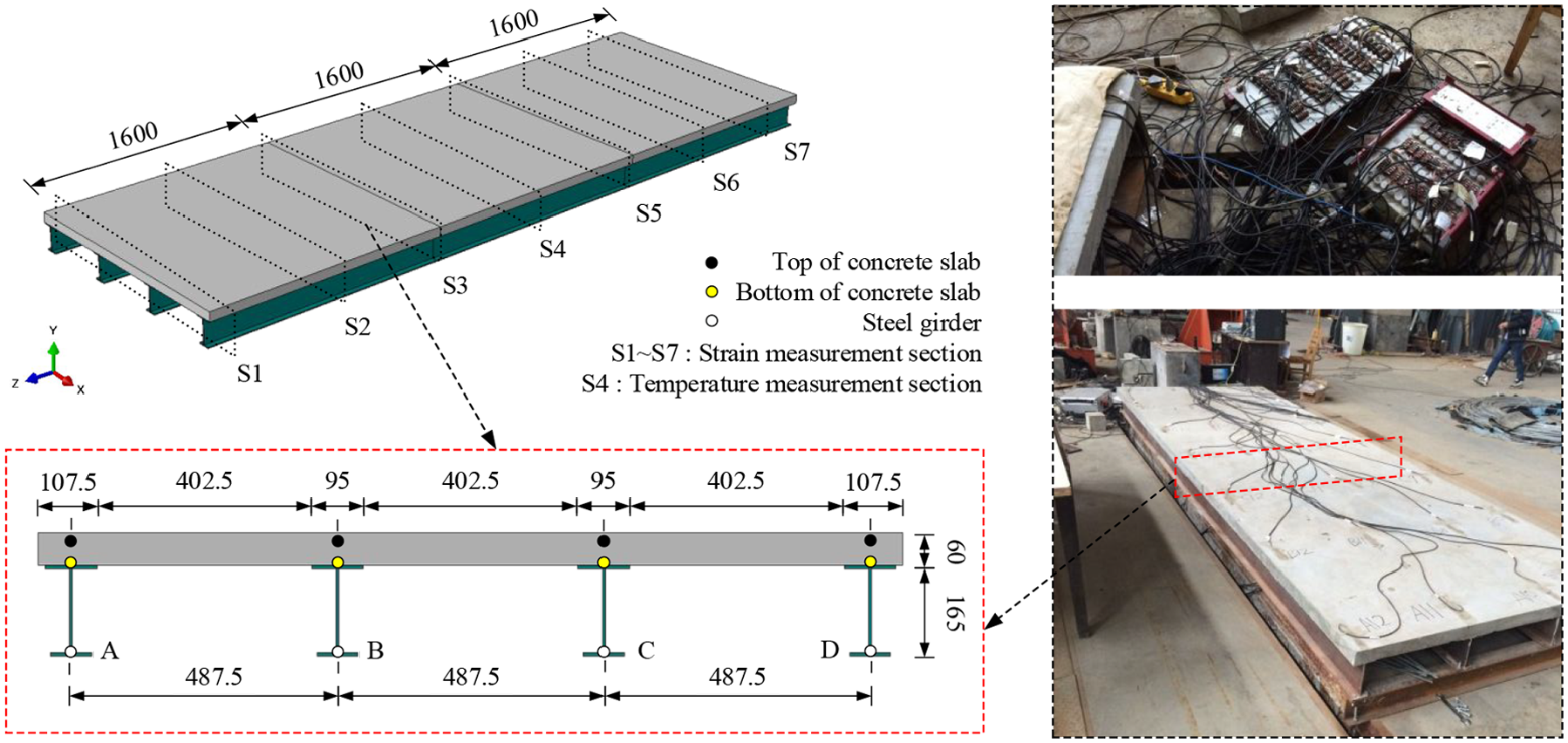
The geometry of the segment and the cross-sectional layout of the strain sensors (unit:mm).
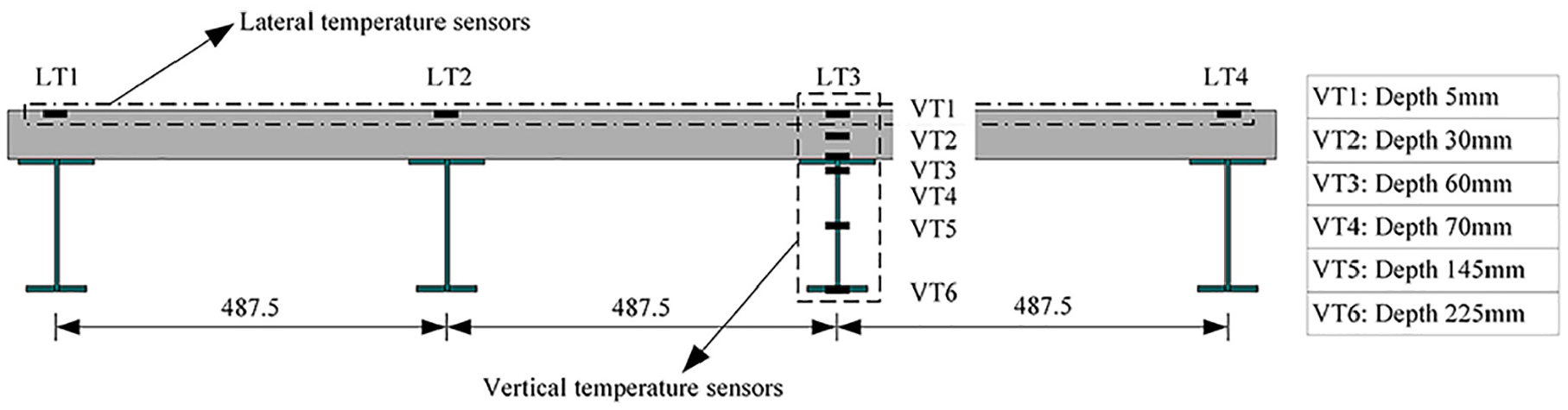
The layout of the cross-sectional temperature sensors (unit:mm).
The resistance temperature sensor JMT-36C was adopted for temperature measurement of the composite decks with the measurement accuracy is ±0.1°C. Because the temperature load of the experiment specimens under simple support and continuous restraint are symmetrical, the mid-span section S4 in Figure 3 was selected as the section for temperature measurement. The specific arrangement was the lateral temperature sensors distributed along the top surface of the concrete slab, and the vertical sensors arranged vertically along the center of steel girders, as shown in Figure 3.
Temperature loading conditions
The experiment was introduced to simulate the non-linear temperature load of the steel-concrete composite deck from heated by the solar radiation on the top surface, and the uneven temperature is caused by the gradual transfer of heat along the height direction. The temperature distribution and thermal stress response of the heating device loaded were measured in this study. A total of 10 loading conditions were carried out which were five simply supported constraints (Case 1) and five continuous constraints (Case 2) structures respectively, as shown in Table 1.
Temperature loading condition setting.
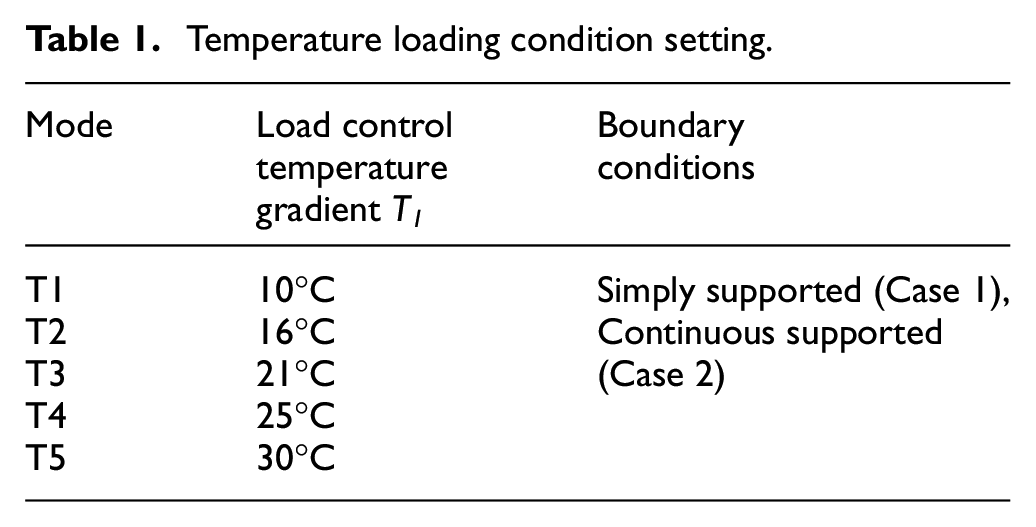
The load control temperature T1 which in Table 1 is the difference between the loading temperature and the initial temperature of the structure, which was the control standard for different temperature gradient loads. The experiment was carried out in winter to better realize the simulated loading of the temperature gradient with the initial temperature of 9°C. Firstly, the experiment specimens were statically preloaded to ensure the force status of structures and check the working status of each test instrument. The preload lasted for a week and was unloaded after the measurement stabilized. Finally, the temperature gradient load was applied after the test piece was placed for 2 days.
Finite element analysis of temperature field
Heat transfer boundary conditions
The temperature field in the steel-concrete composite structure is controlled by the Fourier heat conduction partial differential equation. 27 For the structure without an internal heat source, the heat conduction equation can be expressed as:

where T is the temperature function; p is the density; c is the specific heat capacity; k is the thermal conductivity; t is the time; x and y are the coordinates.
The determination of boundary conditions is very important. In actual engineering, the heat exchange between the bridge and the surrounding environment mainly includes three types: solar radiation, convective heat transfer, and radiative heat transfer. Among them, solar radiation consists of direct radiation (direct transmission to the structure surface), scattered radiation (reach the structure surface from various angles), and reflected radiation (the strength depends on the reflectivity of the ground). 25 In the indoor experiment of this research, the top surface of the concrete slabs was directly loaded by the heating device. The experimental purpose is to obtain the stress response of the steel-concrete composite deck by simulated the final nonlinear temperature distribution. Therefore, the thermal boundary of the FE model was mainly the direct heat transfer of the loading device and radiation heat transfer between the structures and the environment.
Establishment of FE model
The FE analysis software ABAQUS was used to analyze the heat conduction of the experimental specimens. A 3D FE model was established in this paper, both the concrete slab and the steel girders were simulated by the eight-node linear heat transfer hexahedral element (DC3D8) provided in the software. The elastic Young’s modulus of steel girders is 2.06×10⁵ MPa, and the Poisson’s ratio is 0.3. The elastic Young’s modulus of concrete slab is 3.25 × 10⁴ MPa, and the Poisson’s ratio is 0.2. The connection stiffness of the steel-concrete composite interface is mainly simulated in two ways: the “Tie” without considering the slip and the “Spring” with the slip being considered. Under the existing bridge specification system, many researchers assume that steel and concrete are completely bonded when calculating the temperature effect of composite decks, and no slippage occurs under the action of temperature, and the stud connectors were simplified in this paper. The “Tie” constraint was used to set the interface relationship between the top surface of the steel girders and the bottom surface of the concrete slab, for the temperature and heat flux at the interface were continuous and satisfied the requirements of thermal conduction type four boundary conditions.
The 3D FE model and meshing of the concrete slab and steel girders as shown in Figure 5, and Table 2 shows the thermal parameters used for the material definition for concrete and steel. The calculated temperature gradient of the structures was then used as the initial temperature field for the next thermal stress calculation, and the elements of the concrete slab and steel girders were changed to an eight-node linear hexahedral element C3D8R.
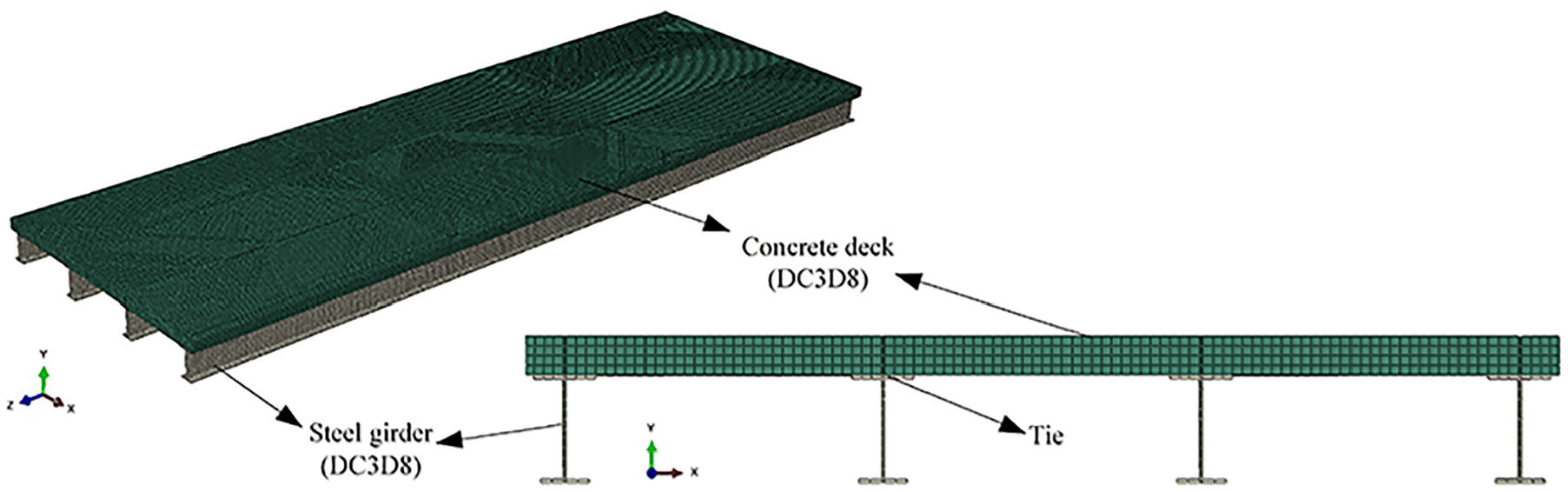
3D FE model of steel-concrete composite deck.
Material thermal parameters in the model.

Analysis of the test results
Vertical temperature gradient distribution
The temperature effect of the structure can be decomposed into four indicators, 2 namely, the effective temperature Te which uniformly distributed along the cross-section, the lateral temperature gradient Tx, the vertical temperature gradient Ty and the self-equilibrium temperature T(x,y) which reflected the confining stress of the cross-section caused by the nonlinear temperature field.
The temperature distribution of steel-concrete composite bridge deck is shown in Figure 6, the measurement results were in good agreement with the FE model analysis results, which were within 1°C. It can be assumed that the lateral temperature gradient Tx is constant in the cross-section in this experiment. The change of the vertical temperature gradient Ty with height is non-linear, the change is the fastest in the concrete slab, and it gradually slows down and finally almost remains unchanged in the steel girder.
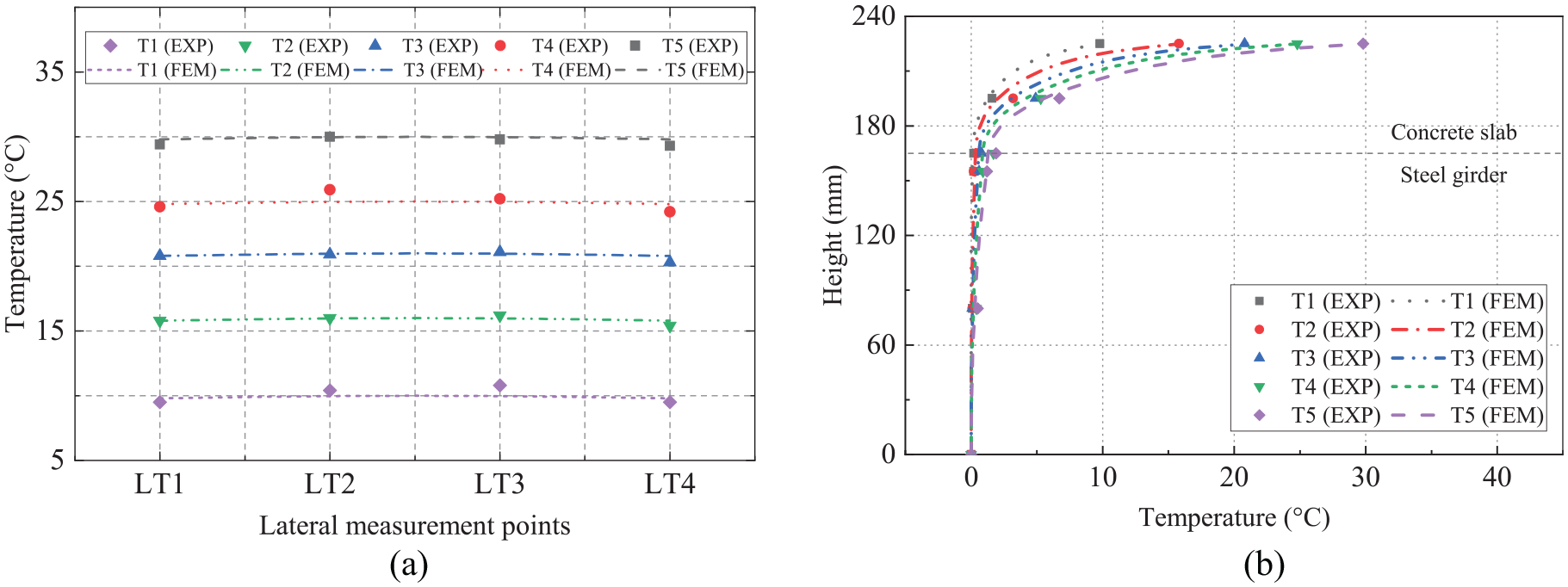
Temperature distribution: (a) lateral temperature gradient Tx and (b) vertical temperature gradient Ty.
Figure 7 shows that the temperature distribution of the mid-span section when the control temperature load T1 was 16°C with the initial temperature was 9°C obtained by FE model calculation. The contours show that the lateral temperature distribution of concrete slabs part is relatively uniform, while the vertical temperature gradient varies greatly in the composite deck.
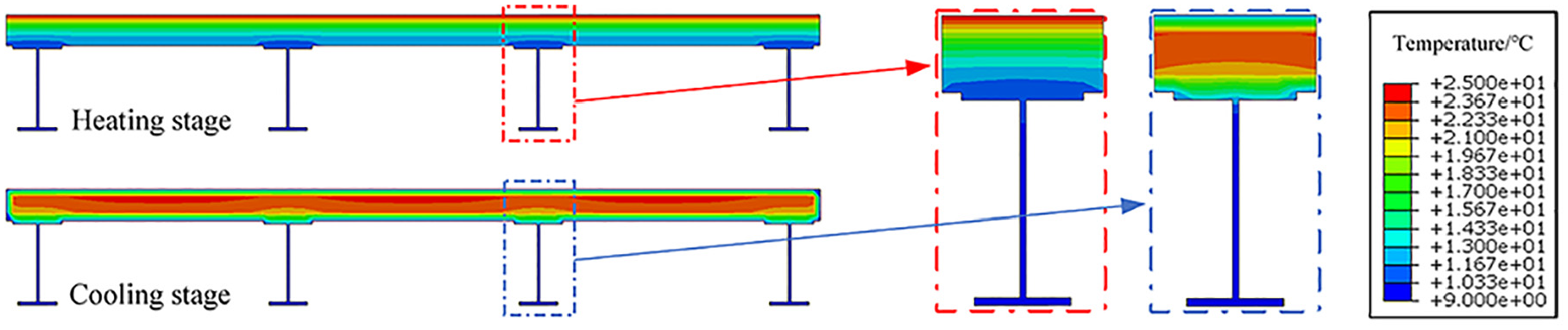
Vertical temperature distribution calculated by FE model.
Based on the above analysis, the measured value of vertical temperature gradient Ty can be expressed as consisting of a 5th parabolic curve and a straight line from top to bottom. Then, the Ty of the experimental composite decks before scaled can be expressed as equation (2). The comparison of the temperature results from experiment, equation (2) and FE simulation as shown in Figure 8.

where y is the depth from the top surface of the composite deck (unit: mm).
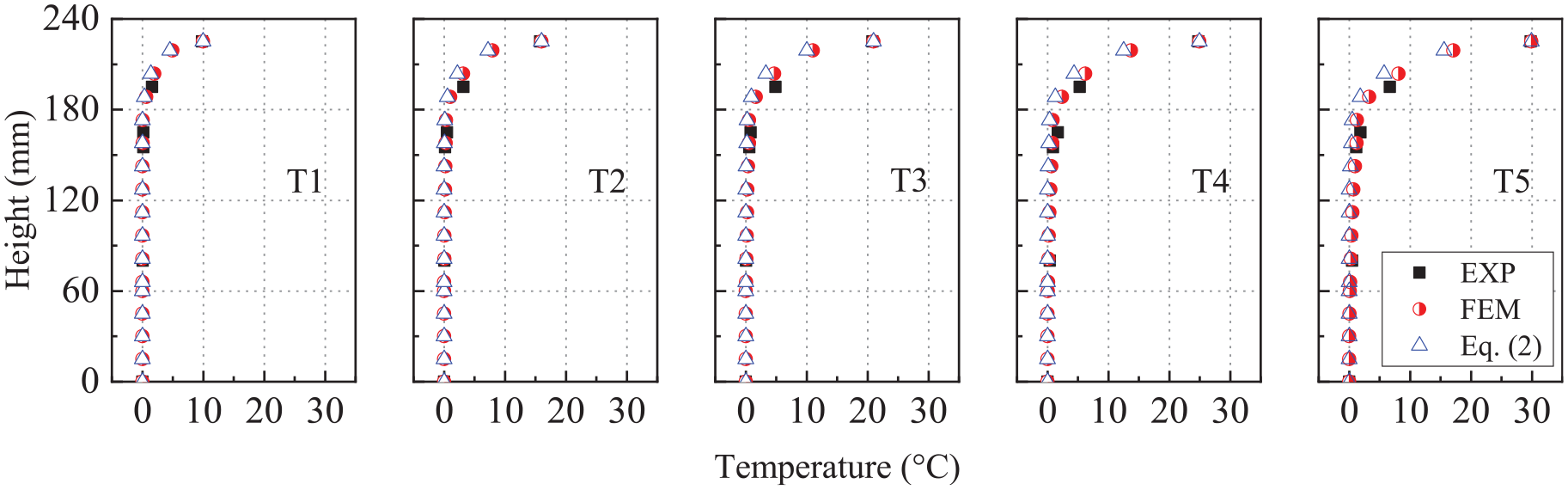
Comparison of vertical temperature gradient results.
The vertical temperature gradient curve of the bridge structures usually can be represented by multiple parabolas, exponential curves, and broken lines. These curved forms can reflect the effect of exposure to sunlight and the environment on the temperature rise of the bridge structure sections in most cases, the positive temperature gradient model of composite decks specified in China JTG D60-2015, 13 American AASHTO, 14 and the model of equation (2) proposed in this paper as Figure 9 shows.
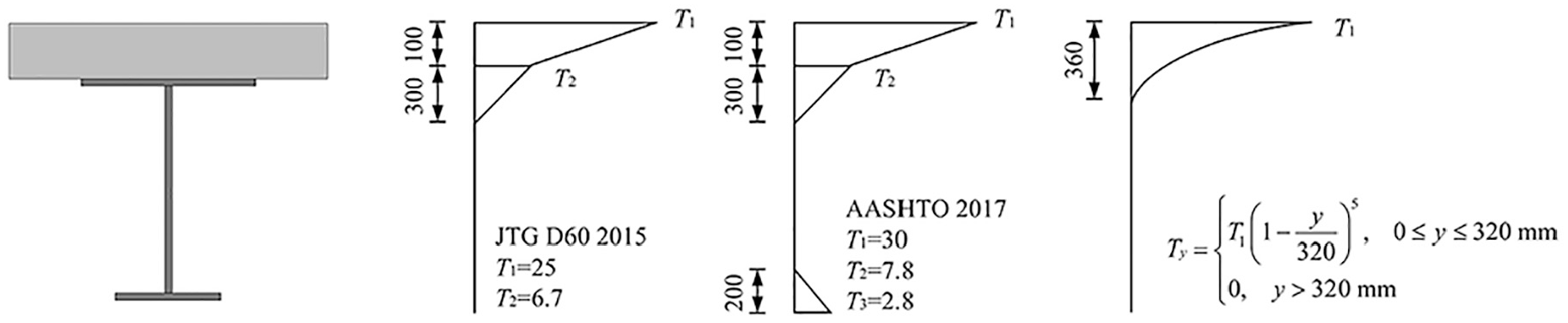
Simplified vertical temperature gradient models for steel-concrete composite deck.
Thermal stress distribution
Different from simply supported constraints, for the statically indeterminate continuous composite bridge decks, because the thermal deformation was constrained by the support, the restraining reaction force was produced, at the same time, composite structure produced the restraint stress and the self-equilibrium stress. The stress distribution trend under different temperature loads are similar, and the difference is mainly reflected in the magnitude of extreme stress of the structural components. For simplicity, Only the thermal stress response contours under the control temperature gradient load T1 is 16°C was presented as shown in Figures 10 to 12, and Figure 12 shows that the thermal stress of the steel girders calculated by defined initial temperature field in the FE model agrees well with the experimental data. These contours were obtained by interpolating the data values of each measurement point.
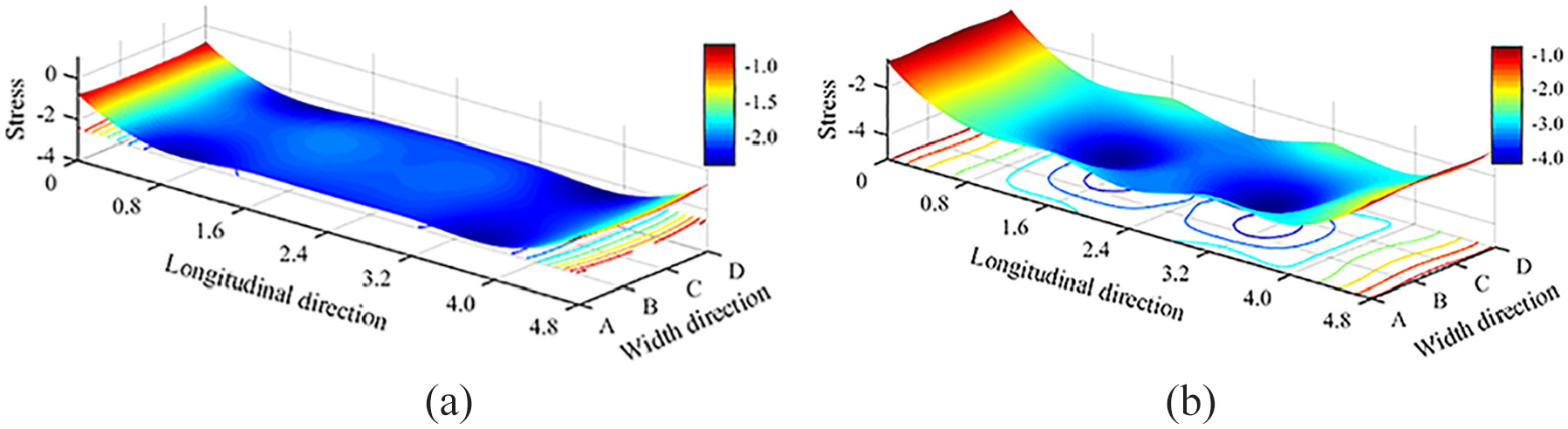
Thermal stress response of the top of concrete slab: (a) simply supported constraint (Case 1) and (b) continuous constraint (Case 2).
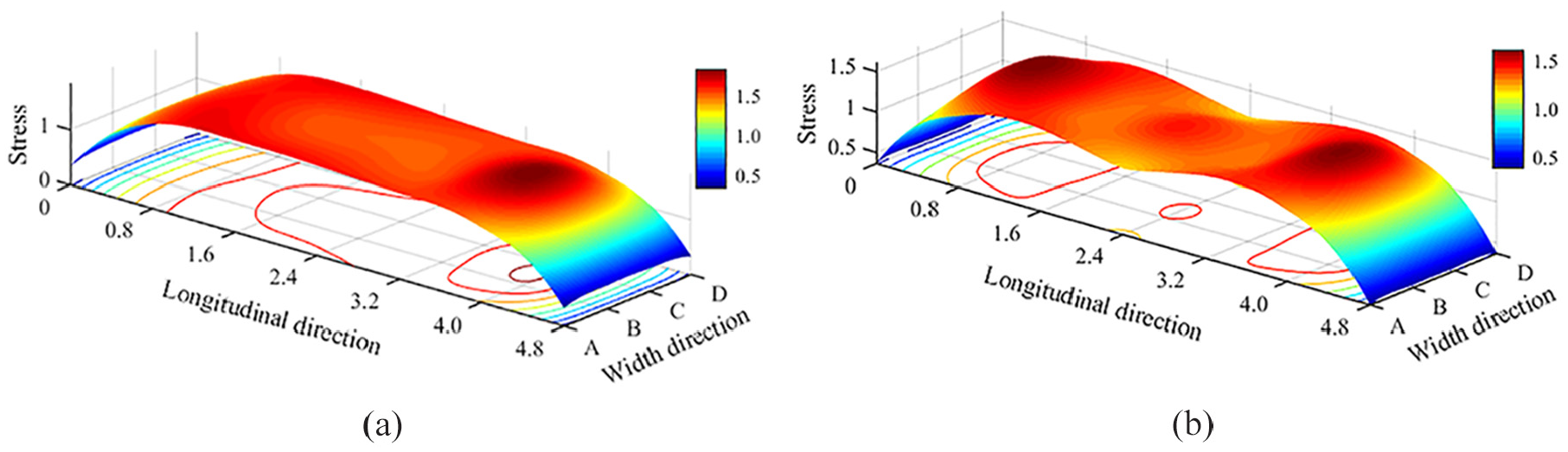
Thermal stress response of the bottom of concrete slab: (a) simply supported constraint (Case 1) and (b) continuous constraint (Case 2).
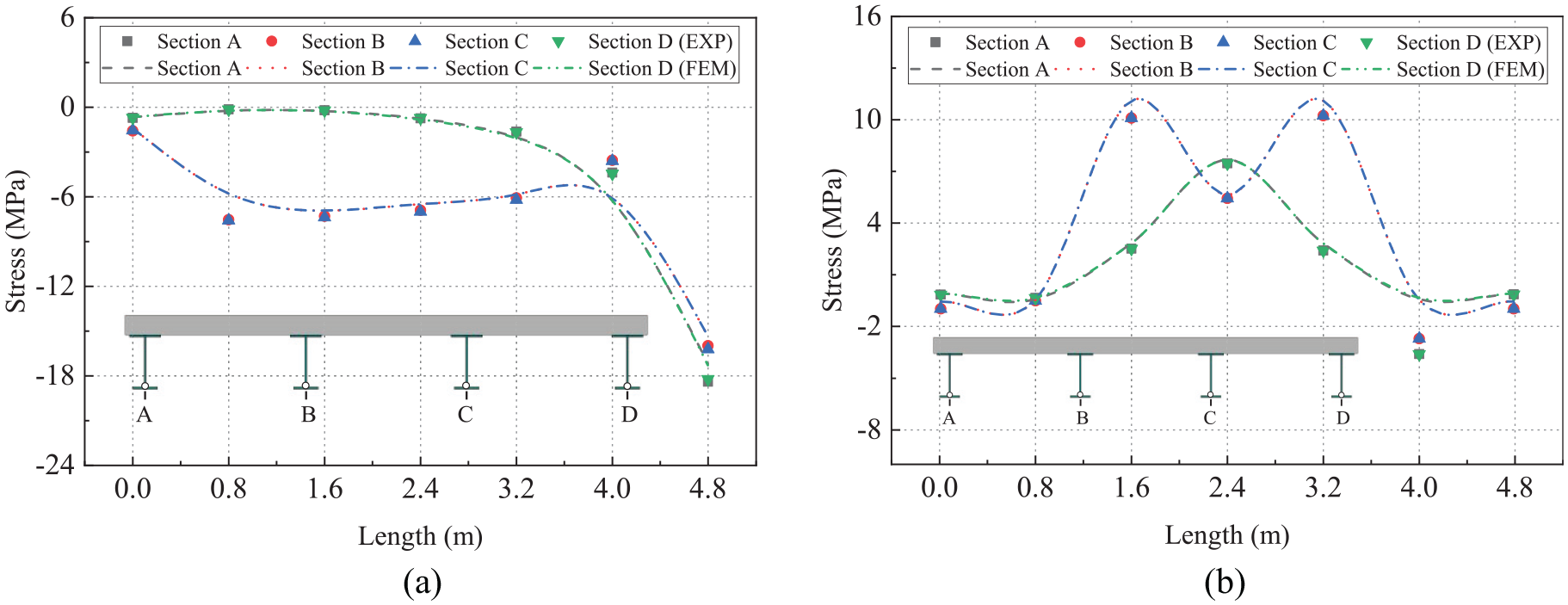
Thermal stress response of the steel girders: (a) simply supported constraint (Case 1) and (b) continuous constraint (Case 2).
The restraint stress in the continuous boundary caused partial compression of the concrete slab and tension of the steel girders. Therefore, the crack risk of concrete slab top surface of continuous composite bridge decks is low under the positive temperature gradient. The connection surface of steel and concrete is the key point in the design of composite bridge deck section. The stress distribution of composite deck under continuous constraint is more complicated, which is caused by the constraint reaction force caused by the constraint of the bearing. The slip could be occur between concrete and steel girders under temperature load, this effect is not obvious in the simpler temperature model. However, the combined structure under different boundary conditions is significantly affected by temperature, and on stress response calculating of the composite structure under complex temperature conditions, it is necessary to consider the slippage between the interfaces.
Stress extremes under different loading temperatures
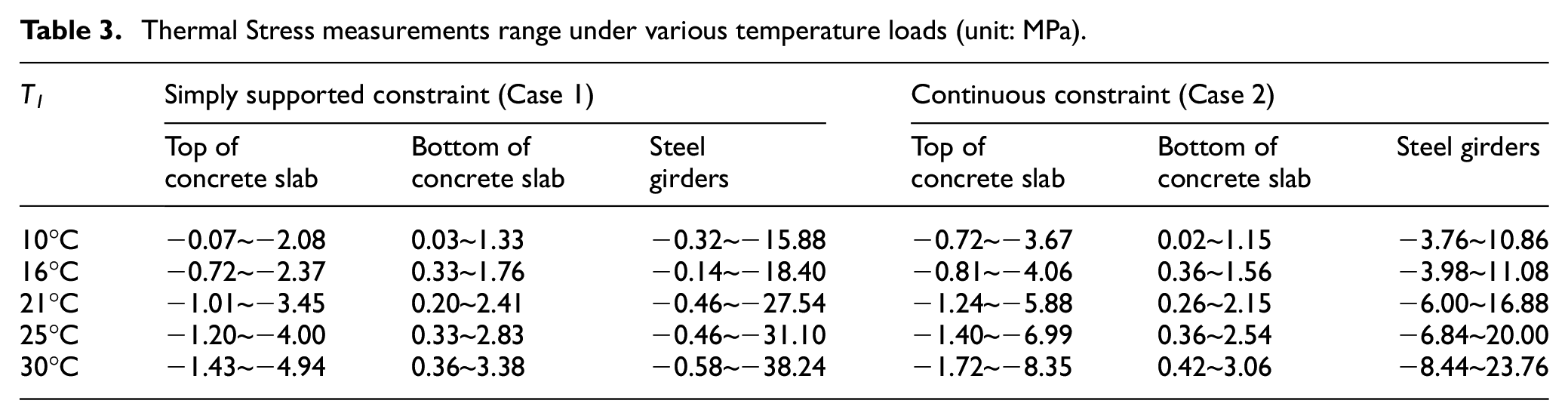
Table 3 shows the range of thermal stress measurement values of steel-concrete composite bridge decks under different temperature loading conditions. In the experiment of Case 1, the measured value of concrete stress varies from −4.49 to 3.38 MPa, and the measured result of I-beam stress varies from −0.58 to −38.24 MPa. In the experiment of Case 2, the measured value of concrete stress varies from −8.35 to 3.06 MPa, and the measured result of I-beam stress varies from −8.44 to 23.76 MPa.
Thermal Stress measurements range under various temperature loads (unit: MPa).
The experimental results and the FE model results were summarized, and the maximum and minimum stresses of concrete and I-beam under different temperature gradients along the length are shown in Figure 13. It can be found that the experimental measurement results were in good agreement with the FE model results according to the above comparison, and the relative error range of the two is 5.6%–17.5%. The minimum stress of the structure was less affected by the change of temperature gradient, while the maximum stress of concrete and I-beam changes greatly with the increase of temperature gradient, and it was almost a positive linear relationship. The tensile stress of concrete slab reached its maximum when the temperature gradient was 30°C.
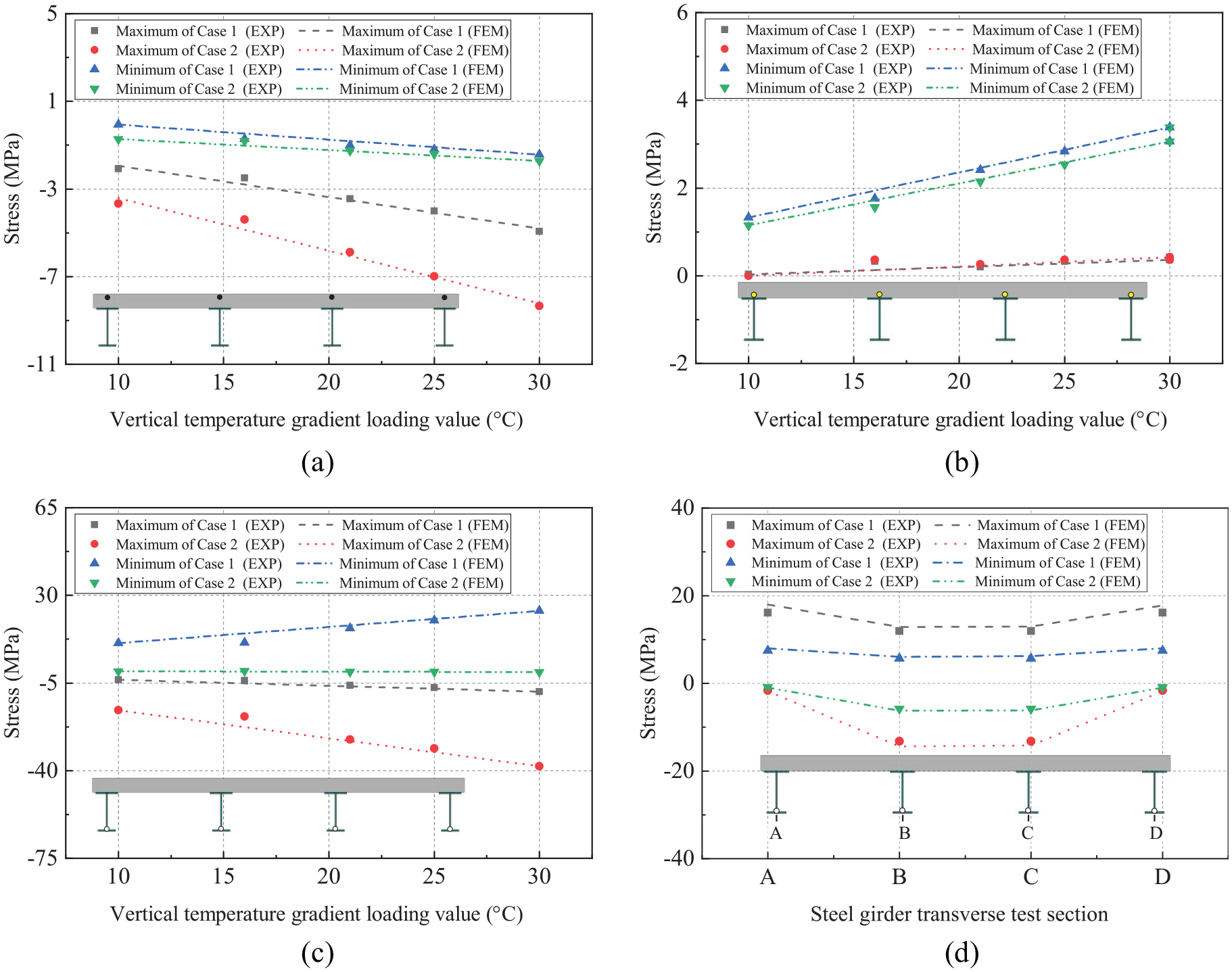
The extreme stress under temperature loads: (a) the top surface of concrete slab, (b) the bottom surface of concrete slab, (c) the steel girders and (d) mid-span section of steel girders.
Figure 13(d) shows the thermal stress measured value of the I-beam in the mid-span section of the experimental specimens. For the sake of simplicity, only the stress distribution at the maximum value (30°C) and minimum (10°C) of control temperature load T1 in this experiment was given. It can be seen that the thermal stress of the I-shaped steel girders under the simply supported beam was quite different between the middle and both sides of the mid-span section, and this difference also exists in the support section except for the beam ends of the continuous boundary. The difference in extreme stress between the middle side and both sides increases with the increase of the temperature gradient load, which is not conducive to the durability of the structures and should be considered in the design and calculation.
Conclusion
In this study, the temperature gradient effects of the steel-concrete composite bridge deck structure were investigated adopt the temperature gradient loading device which designed based on the mechanism of the temperature gradient under solar radiation. The temperature loading experiment in the laboratory was performed through the temperature control system to change the loading temperature under two boundary constraints, and the temperature distribution and thermal stress response under different temperature loading conditions were studied. The results showed the following conclusions:
The experimental method proposed in this paper can effectively simulate the positive temperature gradient of the steel-concrete composite structure under direct radiation. The experimental vertical temperature gradient is consistent with the distribution law of design specifications, and the experimental measurements are in good agreement with the FE model results, which can provide a reference and basis for related research.
The steel-concrete composite bridge decks have a small lateral temperature difference under the heating device loading on the top surface. The vertical temperature gradient changes obviously between the top and bottom surface of the concrete slab, and the temperature of the steel girders is almost constant. The vertical temperature gradient distribution curve can be represented by the 5th order parabola of the concrete slab and linear segment of steel girders.
The concrete slab and steel girders are significantly affected by the temperature gradient loads of the steel-concrete composite deck. The transverse thermal stress of the concrete slab has a small difference, while the extreme stress of the I-beams on both sides and the middle steel girders are quite different, which could be detrimental to the durability of the structures under the coupling of other complex loads.
The thermal stress is positively related to the maximum temperature gradient, especially for concrete slabs. In the operation of actual structures, under the combined action of static loads and live loads, the total force produced may cause stress failure of the steel-concrete composite decks, and the temperature gradient cannot be underestimated in the design calculation.
Footnotes
Declaration of conflicting interests
The author(s) declared no potential conflicts of interest with respect to the research, authorship, and/or publication of this article.
Funding
The author(s) disclosed receipt of the following financial support for the research, authorship, and/or publication of this article: The research described in this paper was financially supported by the National Natural Science Foundation of China (Grant No. 51878072), and the Graduate Student Research Innovation Project of Hunan Province (CSUST) (Grant No. CX20200844).
