




Abstract
γ photon pairs produced by positron annihilation can penetrate metals well; thus, they can be used for nondestructive detection of the inner state of metal pipelines. An experimental device is designed to simulate the working state of lube oil pipelines and inject nuclide into it. A symmetrical structure and a ratio algorithm are proposed considering the effects of various factors. Two sensors with good consistency are used to record the number of γ photon events in liquids with and without impurities. The ratio of the recorded events of reference and impurity sensors is taken as the test result of impurity content. The advantage of the method proposed in this paper is that it can eliminate the environmental error and inconsistency of the sensors by using ratio calculation and improve the measurement accuracy. Experimental results show that the proposed detection scheme and algorithm can well detect impurity content, including metal, in various pipelines. The detection accuracy of matched sensors can exceed 2%. Detected impurities are not limited to metal particles. Thus, the proposed method can be applied to in situ and online detection of impurities in oil piping systems equipped with engines.
Introduction
The lubricating oil system is important in aeroengines because the metal dust content in the system contains considerable inner working information of aeroengines. 1 The potential mechanical fault in aviation engines can be detected in advance through the detection of metal dust content in the lubricating oil, thereby providing a powerful guarantee for flight safety. Online detection 2 of lubricating oil dust and fault prediction should be able to work under harsh environments, such as temperature and vibration of aeroengines. 3 Nondestructive testing (NDT) requirements remain a great challenge to existing NDT technologies.
In many industrial applications, impurities in liquids need to be detected. However, detection means and technology for the detection of impurity contents in liquids under relatively harsh environment still need to be improved. 4 During aeroengine operation, faults caused by the wear of moving parts, such as front axle bearing, rear axle bearing, and scavenging oil pump, occasionally occur; the wear of key parts accounts for a large proportion. 5 The wear of components will produce metal impurities. When impurities enter the lubricating oil and accumulate to a certain extent, they will cause failures such as blockage of the pipeline, which will greatly affect the operating state of the engine. Thus, lubricating oil metal content detection is a part of aircraft engine state detection. When the assembled engine is tested on the test bed, impurities in the oil online must be detected. Oil pipes are made of metal because they need to withstand high temperatures and pressures, and detecting the condition inside metal pipes is very difficult. 6 Since the 1980s, the United States, the United Kingdom, Canada, and other countries have developed a metal debris analysis device for aircraft oil filter to address the metal fragments and abnormal wear failure of aircraft engines. 7 In the past 50 years, atomic emission spectrometry, X-ray fluorescence spectrometry, SEM-X-ray energy spectrum analysis, and other methods have been widely used. 8 However, the radiation generated by X-rays is excessively harmful to the human body and not suitable for long-term detection. In addition, the content of metal (iron, silver, and aluminum) in the lubricating oil can be obtained through the spectral analysis of lubricating oil by using the atomic emission spectrometry of rotating disk electrode. 9 However, this detection technology has several limitations, such as difficulty in achieving in situ or online measurement and in satisfying the requirements of failure judgment and wear degree prediction of abnormal engine wear. At present, online NDT of oil impurities inside pipelines remains a problem.
In 2019, Cody Wiggins of the University of Tennessee injected the nuclide 18F solution into a PVC pipe with an internal diameter of 73.7 mm through a variable speed pump and applied gamma photon nondestructive detection technology in the detection of turbulent characteristics. 10 The positron is the first antiparticle discovered by man. Non-destructive detection can be achieved using positron annihilation technology. 11 The application of positron annihilation technology has a history of more than 20 years, and it plays an increasingly important role in materials science, medicine, and biochemical testing, but its application in the field of NDT remains relatively small. Positron annihilation is a process in which positive and negative electrons meet and disappear together, thereby releasing γ photons. γ photons can pass through metal plates of a certain thickness and obtain the state information inside the materials because of their strong penetrating force; this characteristic can be used to detect liquid impurity content in metal pipelines. 12 This feature can be used to detect liquid impurity content in the metal pipe.
A two-tube and two-sensor device is designed to detect impurities in metal pipelines by using positron annihilation based on the reference compensation method. The experiment shows that positron annihilation can be used to detect the impurity content in pipelines. 12 The liquid inside the pipeline can work even at certain temperature, pressure, or vibration, and in situ or online testing can be realized because the testing circuit used in this method is relatively simple, and the NDT method is adopted outside the pipelines. 13
Principle analysis of positron annihilation technology
When several radioactive positron nuclides (such as 18F) collide with negative electrons in the environment, the two particles will annihilate themselves, producing a pair of gamma photons moving in opposite directions. Gamma photons have high energy and can penetrate high-density materials such as metals and composite materials. If the sensor can record the number of events of gamma photons emitted per unit time and volume (also called the activity of positrons), it can more accurately present the internal state of the measured object. Positron nuclide solution is injected into the pipeline and mixed thoroughly. If impurities exist inside the pipeline, the number of events of gamma photons that can be recorded by the sensor is smaller than that without impurities due to the volume occupied by impurities and the scattering effect of impurities on the gamma photons. This method can achieve the purpose of impurity content detection. Positron nuclide with a certain activity A is injected into the pipeline and mixed thoroughly. The effective volume V of a nuclide with activity A here refers to the γ photons emitted within this volume that can be accepted by the sensor, as shown in Figure 1.
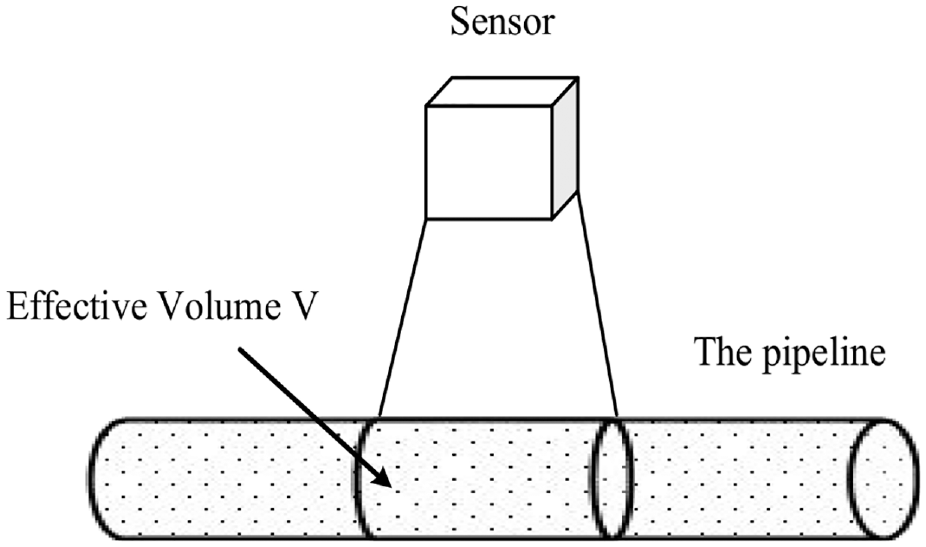
Principle of dual-tube measurement of effective bulk impurity mass.
The number of photons received from the sensitive area of the sensor within a certain time is

where k is a constant related to the detection efficiency and sensitive area of the sensor, A0 is the initial frequency of the nuclide, and λ is the decay constant.
When the nuclide liquid contains certain impurities, we have

where V2 represents the volume occupied by impurities. Considering the presence of V2 and given V1<V, the actual activity in the case of impurities is

and

A decrease in activity A of the nuclides in the effective volume will result in a decrease in the unit time count. This condition is the basic principle of using positron annihilation.
Design of measurement scheme for impurity content in pipelines using positron annihilation technology
The activity of radioactive positron nuclides (such as 18F) is affected not only by the content of impurities but also its own decay. Once the nuclide is produced in the accelerator, it will decay spontaneously with time, and its activity will decrease. This situation will make the detection very difficult. In practical applications, the three following problems need to be solved:
The mark of the liquid should be the mark of the working medium. For example, the lubricating oil in the pipeline should be marked, or a solvent soluble in lubricating oil should be used and nondestructive for testing.
Effective volume control should be applied.
Sensor data, including nuclide activity changes, the influence of environmental parameters, and detection efficiency and consistency of the sensor, should be processed for successful detection.
For these three problems, three solutions are proposed:
The liquid in the pipeline should be labeled with nuclide. Generally, gasoline that satisfies CnH2n+2 is compatible with engine lubricating oil and is easy to obtain. This experiment uses CnH2n+2.
The effective volume should be controlled. In this paper, the sensor is placed parallel to the test tube, and a lead block is placed above the sensor to isolate the effects of positrons emitted obliquely above. Moreover, the height of the liquid column is much greater than the height of the sensor to avoid errors caused by the difference in liquid column height.
The sensor data should be processed. In this paper, a comparison test of the experimental branch (containing impurities) and the reference branch (without impurities) is designed to reduce the effect of these comprehensive factors on detection. Using two matched sensors for detection, symmetrical structure and ratio measurement are proposed to reduce measurement errors.
Design of device for measuring impurity content
The schematic of the measurement device for impurities in the engine pipeline based on positron annihilation is shown in Figure 2. The apparatus included a detecting pipeline assembly and a γ photon detecting apparatus. The detection pipeline assembly consisted of an access pipeline, an experimental branch, a reference branch, and an outgoing pipeline. During the detection of the device, the radionuclide soluble in lubricating oil with a certain activity was completely mixed with engine lubricating oil and injected into the detection pipeline assembly. The number of γ photon response lines in the experimental branch of γ photon detection device was compared with that in the branch, and data processing was carried out to obtain the content of impurities in the pipeline. The reference branch in the device was designed as a reference for measurement. The experimental and reference branches should be made of the same materials, and the oil flowing through the branch should be free from impurities. Thus, a filter screen was added at the entrance of the reference branch road to block particles. The angle of filter screen allowed the flowing lubricating oil to remove the particles deposited near the filter for ensuring the smooth flow of lubricating oil without impurities through the branch road.
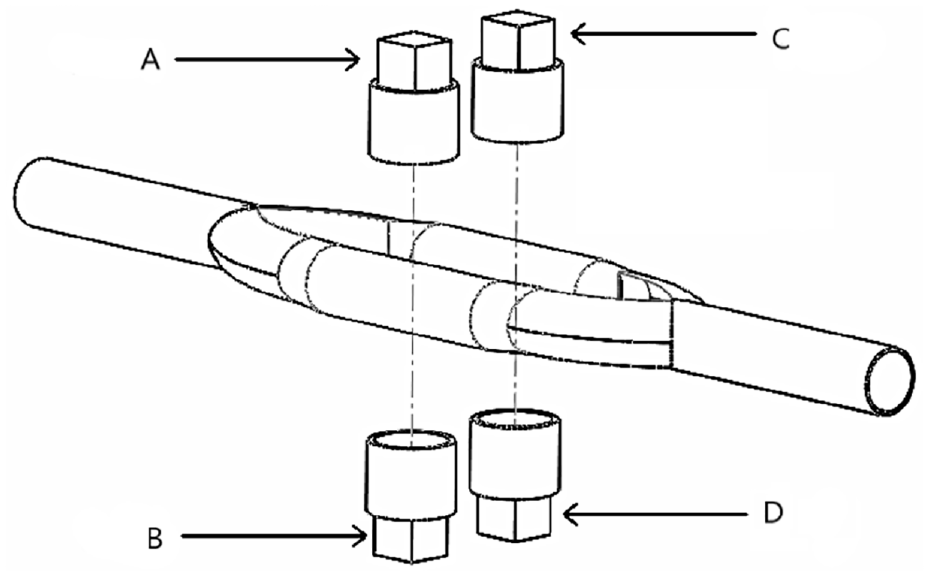
Principle of dual pipeline testing for miscellaneous mass in pipeline. A and B are two matched sensors that measure the experimental and reference branches, respectively. C and D are another pair of matched sensors that measure the experimental and reference branches, respectively. In actual measurement, any one pair of A and B, C and D is selected.
Two pairs of sensors were installed because this experiment originally planned to use the method of measuring the response line to detect the content of impurities. However, in actual operation, we found that only using a pair of sensors to detect the number of photon events can complete the detection of impurity content. Although the experimental scheme was modified, the original detection model can continue to be used because only a pair of sensors can be used for detection. The experimental device for measuring impurity content in the pipeline was designed in accordance with the above requirements to verify the feasibility of the proposed scheme, as shown in Figure 3.
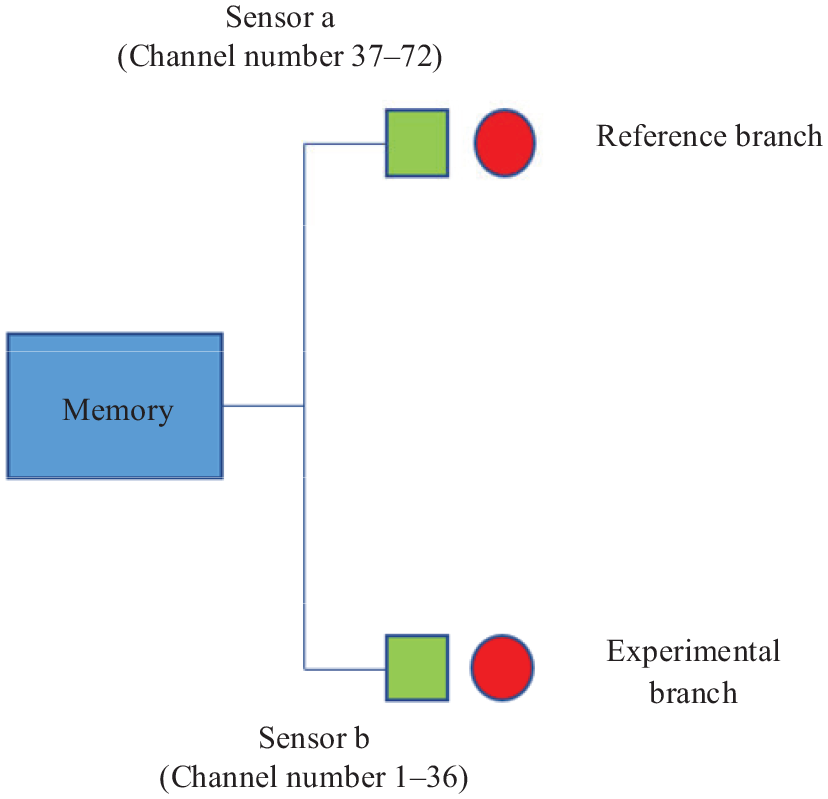
Principle diagram of impurity content detection.
Design of analysis method of detection result by ratio method
The ratio method of the sensor data of the two branches was used to eliminate the error because the nuclide activity of the experimental branch and the reference branch decreases with time to eliminate the influence of time and several environmental factors. The ratio-calibrated data were fitted to calibrate the impurity content corresponding to the ratio of different photon events and explore the relationship between sensor data and impurity content.
The principle of the ratio method is as follows.
In a unit time period, the total number of photons detected by the sensor based on equation (1) is
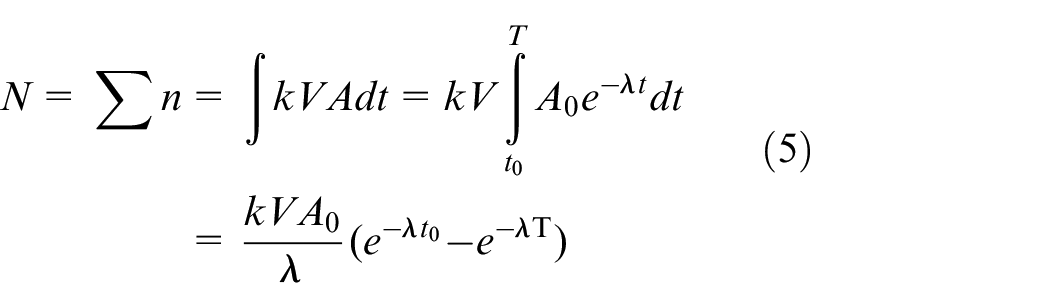
For reference pipelines without impurities, the number of photons detected per unit time is

For channels containing impurities, the number of photons detected per unit time is

The ratio of Nimp to Nref is

where Ni represents the number of γ photons recorded by the impurity ratio, Nref represents the number of γ photons recorded by the reference sensor, and Nimp represents the number of γ photons recorded by the impurity sensor.
If the two sensors detect the same volume, then Vimp≈ Vref; the consistency of sensors is shown in the consistency of kimp and kref. This parameter is affected by the density of materials, temperature, location of sensors, and other factors. Repeated debugging is required in the experiment. If kimp and kref are sufficiently close, then

Equation (9) indicates that, if Vimp≈ Vref and kimp≈ kref, then the ratio of the two sensors is a quantity that is only related to the activity ratio. Substituting equation (4) into equation (9) yields

Impurity content is defined as

Substituting equations (11) and (2) into equation (10) yields

Therefore, the ratio of Ni between the meter value of the detection sensor and the meter value of the reference sensor is only related to ρ of the impurity content under certain conditions. This method was used to measure the impurity content of the test device designed in this paper by using positron annihilation. Equation (12) has no direct relationship with activity change, detection pipeline, and environmental parameters. Therefore, the proposed scheme can effectively measure impurities in the pipeline.
On-site inspection of impurity content measurement
Nuclides are used to label the fluid in the tube. In general, substances that satisfy CnH2n+2 can be labeled. An aqueous solution is used for the liquid, that is, CnH2n+2. The impurities in the experiment were aluminum alloy particles with sizes of 0.1, 0.5, 1, and 2 mm. The sensor used in the experiment was Si-BDM 2550 E, which adopts an LYSO/SiPM probe compatible with a magnetic field, realizes direct digitization of flicker pulse formed after γ photon energy deposition, and can directly output the digital flicker pulse corresponding to the energy deposition event. The sensor was composed of 36 crystal bars, thereby forming a square matrix of 6 × 6. The outer diameter of the sensor was 22 mm × 22 mm × 35 mm. In the experiment, two test tubes were used to replace the symmetrical tube shown in Figure 2. The height of the cylinder part of the test tube was 160 mm, and the inner diameter was 24 mm. The two test tubes were used for comparison of the test data. The two sensors were placed parallel to the test tube during the experiment to ensure the same effective volume, and a lead block was placed above the sensor to isolate the positive electrons emitted from the slanted upper part. The height of the liquid column was considerably higher than that of the sensor to avoid errors caused by the different heights of the liquid column. Approximately 40 ml of nuclides was injected into each tube. The activity was 200 μCi, and the injected nuclide liquid was higher than the lead plate, as shown in Figure 4. Although the liquid column height of two sensors was not exactly the same in this manner, this condition would not lead to the deviation of sensor detection. Figure 4 shows a photo of the experiment site. A metal shell was placed on the test tube to detect the content of impurities to simulate the true internal state of the engine. In addition, Figure 5 shows the design idea of the experiment.
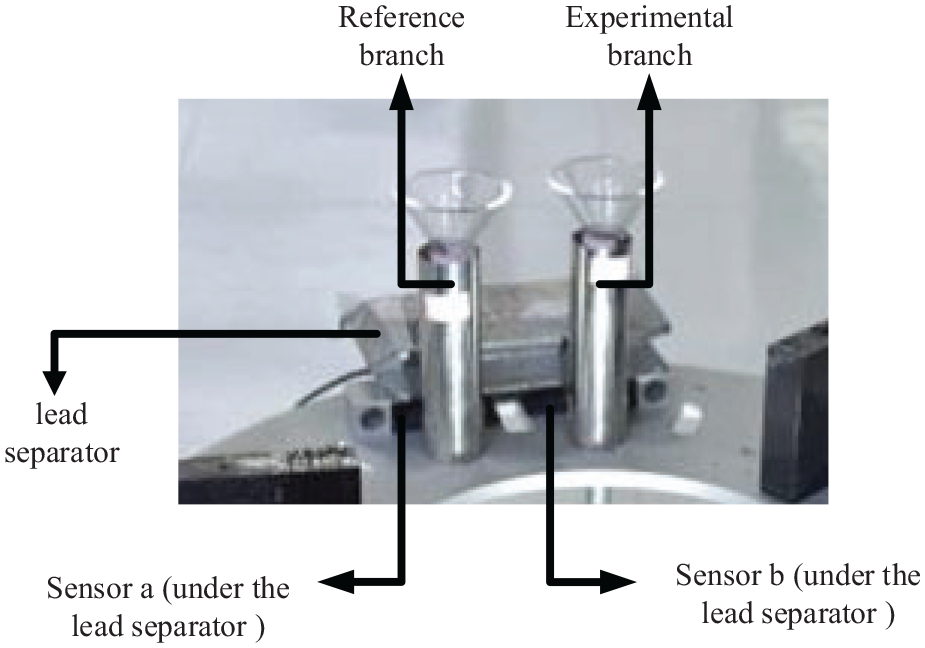
Test layout of impurity content. Inclusion: two pairs of sensors, liquid containing impurities, reference liquid, metal shell and lead separator.
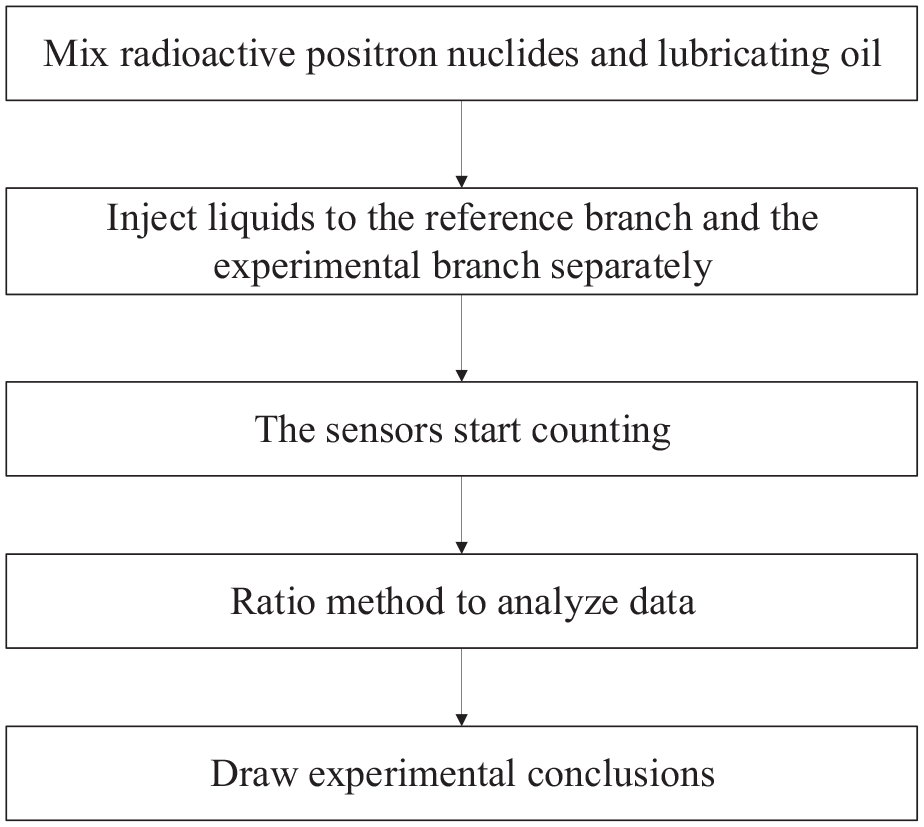
Design ideas for experiments.
Data processing
Analysis of measurement results
Figure 4 shows the experimental system designed for the proposed detection scheme. Numbers experiments were carried out. The experimental results show that the installation location of sensors, shielding between sensors, and the calculation method of sensor events influence the detection results. The uniform distribution of particles in the pipeline is also a problem to be considered in the experiment. The testing quality is enhanced through continuous improvement and accumulated testing experience. In the initial test program, we directly poured impurity particles into the test tube for testing, but later found that the error of this program is very large because impurity particles may partially float on the surface of the liquid and are not detected. In the subsequent experiments, we cleaned the particles with a hydrophobic agent and then added liquid to remove oil stains. No bubbles or surface tension of the liquid were generated on the surface of the particles, which improved the measurement accuracy. Nuclide activity ranged from 400 μCi to 1 mCi. During the experiment, two measuring cylinders were used to replace the double-tube structure shown in Figure 2, and nuclides with the same activity were added. The level of nuclide liquid was higher than the detection angle range of the sensor to ensure that the level of liquid would not affect the detection whether impurities were added. Volume can be obtained from the density and weight. The accurate weight of particulate matters can be easily obtained compared with the accurate volume. The volume in the experiment was adjusted by modifying the weight. A total of 400 mg of particles of the same size was added every time until 2000 mg was reached. Six groups of data in addition to a group of zero data were considered.
The two sensor channels with particle sizes of 2, 1, 0.5, and 0.1 mm were investigated with an energy window of 0–650 keV. Sensor a measured the reference branch, and sensor b measured the experimental branch. Table 1 shows the sensor measurement data for all impurity sizes.
Detection data.
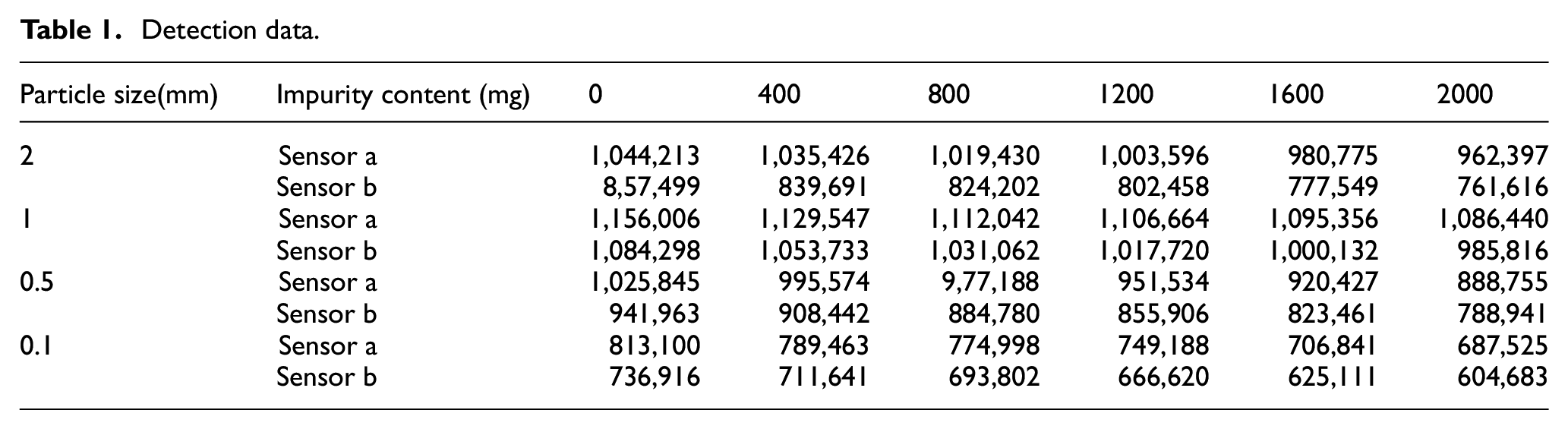
The channel count of the probe varies from 6 × 10⁵ to 1.2 × 10⁶ when the sampling time is 30 s. Figure 6 shows that the data changes of the two sensors are different when impurities exist. A large diameter of impurities indicates that the curve difference between the two probes is evident.
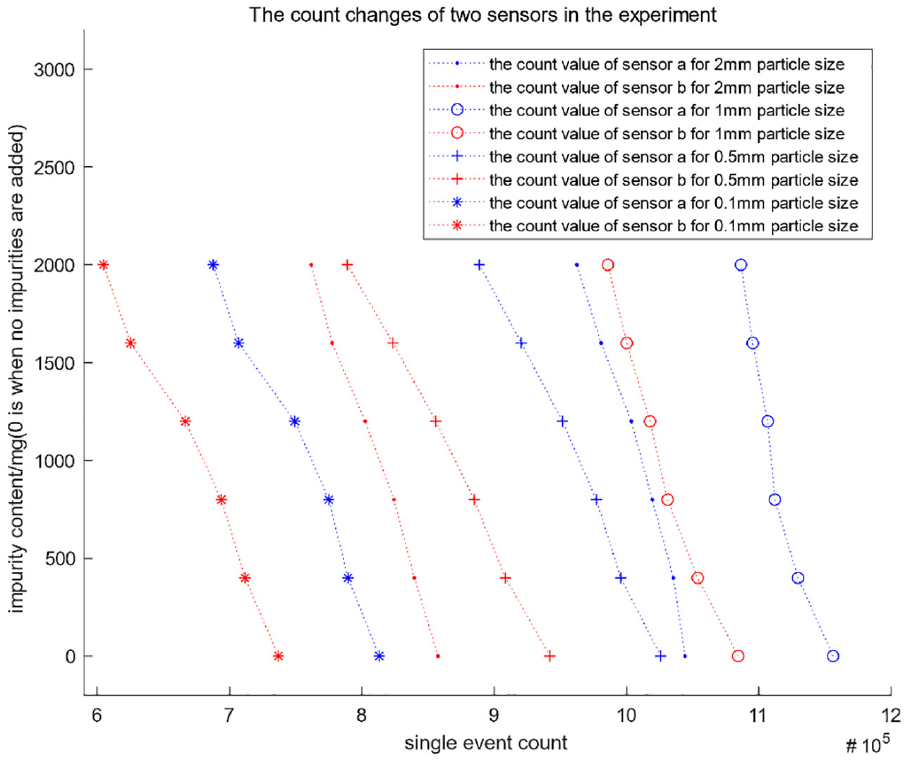
Count changes of two sensors in the particle experiment.
Analysis of measurement results by ratio method
The content of impurities in the liquid based on equation (12) can be expressed as

where Ni is the ratio of the measurement value of the experimental branch to that of the reference branch. This ratio can eliminate the influence caused by other non-probing factors. Thus, this paper focuses on the relationship between the ratio and impurities.
Table 2 shows that the ratio of particle sizes of 2, 1, 0.5, and 0.1 mm was investigated with an energy window of 0–650 keV. Ratio data is sensor b divided by sensor a.
Ratio data.
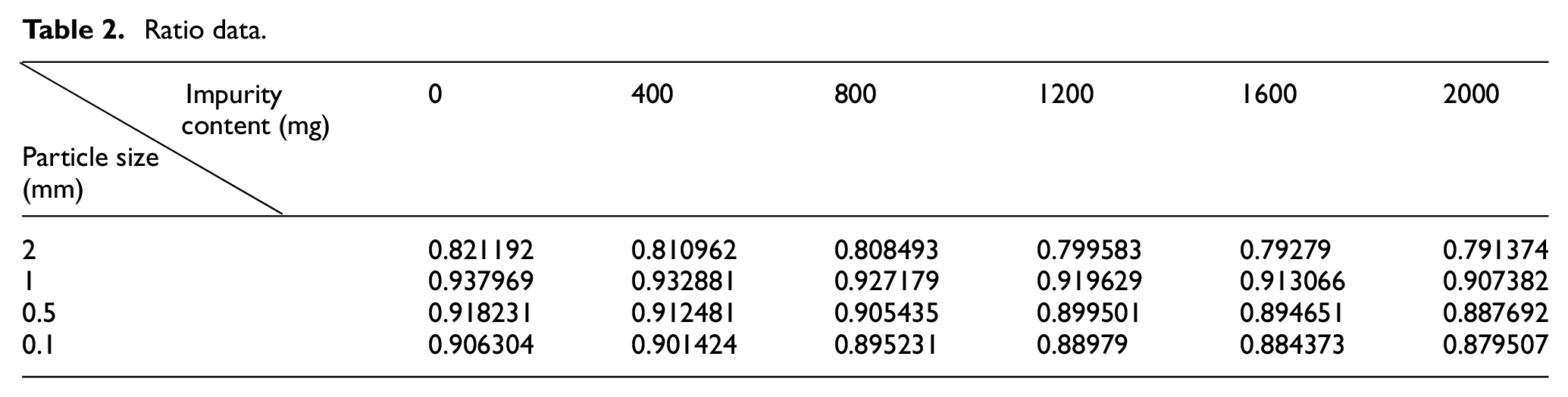
Figure 7 shows the relationship between the content of particles with a diameter of 0.1 mm and the ratio of recorded γ photon events. The abscissa represents the mass of the particle, and the ordinate is the ratio of γ photon events. The ratio of detection results of the two channels varies from 0.79 to 1.00 when the sampling time is 30 s. The data ratio of the two sensors decreases when impurities exist, and a large diameter of impurities implies that the linearity of the ratio curve is poor.
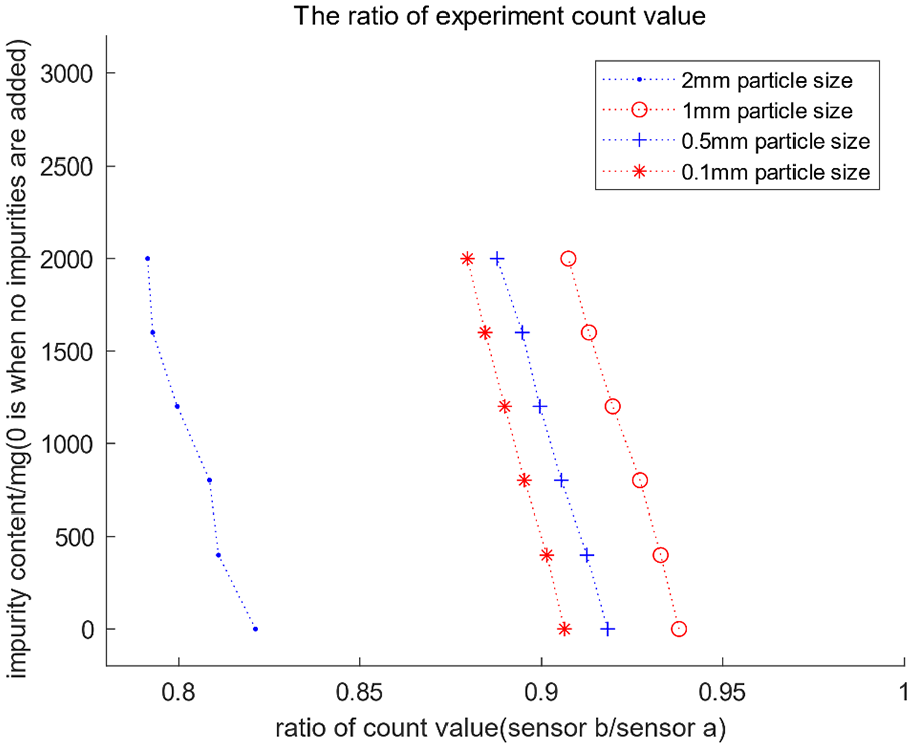
Experimental count ratio.
Result analysis
The least square method, which considers the randomness of positron data and the precision of curve fitting, is often used for curve fitting in industrial applications. The polynomials are expressed as follows:

where e is the sample error. Straight line fitting is adopted on the basis of the analysis of Figure 6. This method has simple relation and convenient operation when calibrating samples. Thus,

Based on the basic principle of the least square method, the two following formulas can be used to calculate β1 and β0:


where Mk stands for the impurity mass.
The error of each data point is

The relative error is

where er is the relative error with respect to weight per unit volume but is the same as the actual error of impurity content.
Table 3 shows that the fitting error of the ratio results with particle sizes of 2, 1, 0.5, and 0.1 mm was examined.
Detection error.
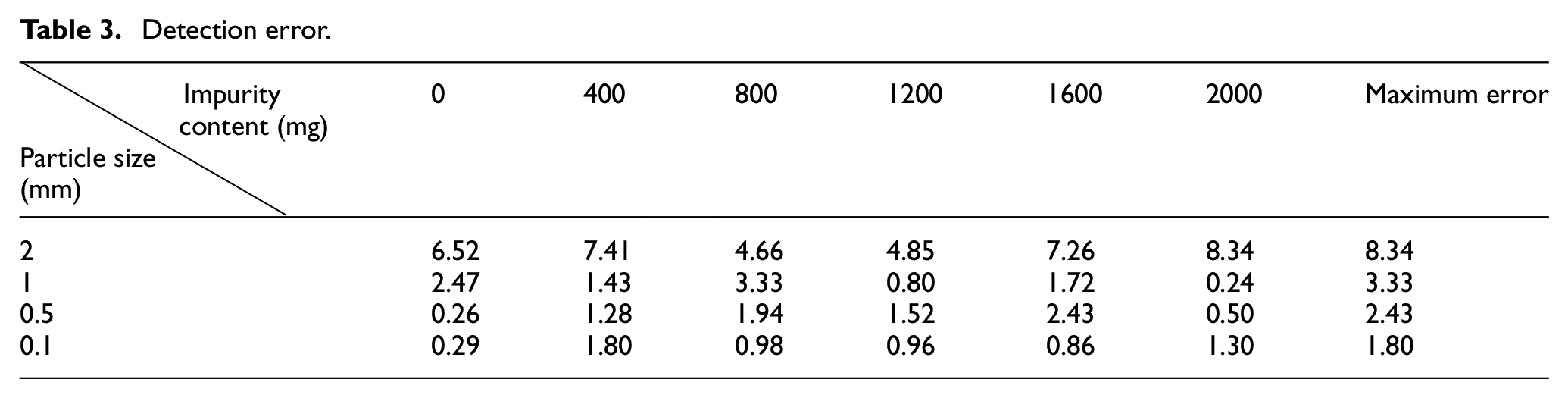
In Figure 8, multiple experiments show that the error of detection results by the ratio method is within 3% when the particles are relatively fine, such as 0.5 and 0.1 mm. The error can be controlled within 2% when the particles have a size of 0.1 mm. Therefore, the positron reference detection method has a good accuracy for the impurity detection of particles within 0.5 mm in most industrial applications.
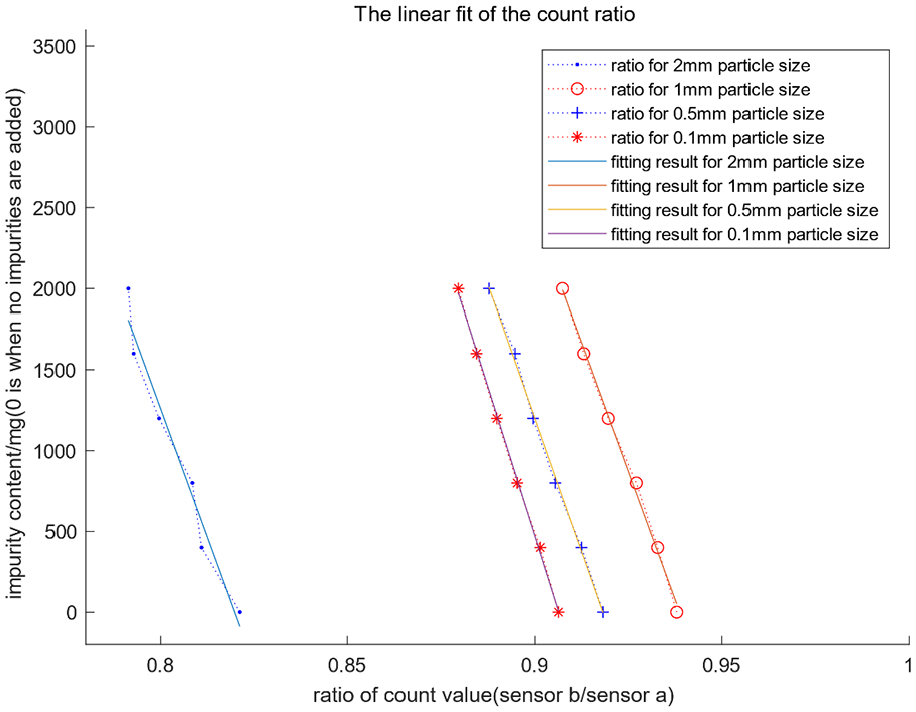
Count ratio fitting the straight line for 2 mm particles: M = −65878.395*Ni + 1.8529*10−5. For 1 mm particles: M = −63655.836*Ni + 1.6735*10−5. For 0.5 mm particles: M = −66001.2635*Ni + 1.6502*10−5. For 0.1 mm particles: M = −73459.505*Ni + 1.5019*10−5.
We also analyzed the uncertainty of measurement for the experimental data. According to the results of multiple tests at each impurity concentration, the Bessel formula was used to calculate the standard deviation. The experimental data with particle diameter of 0.1 mm were analyzed:


where n is the number of experiments, Ni is the value of the detection, s is the standard deviation, and U is the uncertainty. Table 4 shows a set of values with large variance when impurity content is 400 mg.
Detection data of 400 mg impurity particles (particle size: 0.1).

The standard deviation s = 7433 and uncertainty U = 2s = 14866 can be obtained. If the expansion coefficient is 2, the measurement uncertainty is 1.80% when the confidence level is 95.44%. The uncertainty index calculated by this method is close to the experimental measurement error. The slope of the fitting curve differs under different granularities. Therefore, the particle of the measured object should be sampled and calibrated first. Then, actual measurement should be conducted after obtaining the fitting line when this method is used in practice. The fitting curve also needs to be calibrated due to density and other factors for the measurement of impurities formed by particles of different materials. This point needs to be given close attention in the use of this method.
Discussion of the result
We have read several papers, and finding a method for detecting the content of impurities in metals is difficult. The methods currently used in the paper are mostly electrical capacitance tomography technology and electromagnetic analysis technology. Wenbo Ma of Tianjin University used a tomography technology based on capacitance-sensitive mechanism to display the physical distribution of multiple streams as images by detecting the changes in the capacitance of the array electrodes and reconstructing the image, constructing the image of each phase of the pipeline. 14 The distribution image can be used to measure the impurity content inside the pipeline. However, this method is only suitable for the detection of metal particles with a large particle size and cannot achieve accurate online detection of fine particles in the pipeline. Li Bin of the Civil Aviation University of China proposed a method for detecting impurities using the internal magnetic field of metals. 15 The fluctuating voltage of the sensor when the particles pass by is measured. When the millimeter particles pass by the sensor, the current source can be used as the excitation sensor system to output a more ideal useful signal to realize the measurement of impurities. However, this method places the sensor inside the pipeline for detection, and has a higher requirement on the state of the pipeline. When the liquid in the pipeline is in a state of high temperature and high pressure, the magnetic field is greatly disturbed, and this method fails. The method of using positrons for NDT proposed in this paper can address these shortcomings, and directly perform online detection of the impurity content inside the metal pipe outside the pipe.
In addition, the method proposed in this paper can detect the internal impurity content of aluminum tubes within 30 cm thickness or stainless steel tubes within 10 cm thickness.
Conclusion
The measurement of inner liquid impurities in pipelines, including metal pipelines, by γ photons generated using positron annihilation can be completed within 30 s, and the accuracy of impurity detection can reach 1.80%. These indices show that the proposed response line ratio algorithm and the use of reference sensor to compensate the detection results can effectively realize the nondestructive detection of liquid impurities in pipelines. The proposed algorithm has good practicability and convenient, fast processing and achieves a considerable accuracy. The advantages of the research method in this paper are clear: First, the environmental variables and the influence of pipeline materials are eliminated by adopting ratio calculation to realize the internal variable measurement of metal pipes. Second, the inconsistency of the sensors is replaced by the ratio method, and the measurement accuracy is improved. Finally, the method uses additional sensors to achieve online detection of fluid impurities.
The test objects can be ordinary liquid, oil, or corrosive liquid, which can work at a certain temperature or pressure. The liquid can be detected if it can be labeled, or if the nuclides can dissolve in it and have no effect on its properties. The composition of the pipeline may be metal, cement, and other composite materials. The detection environment in this paper has a strong adaptability and a high safety level. It has evident advantages in detecting internal or harsh conditions of metal objects such as high pressure, high temperature, low temperature, and corrosive liquids, and other methods are difficult to replace.
The results of this paper show that positron annihilation is suitable in the industry and has immense vitality because it can realize NDT, which cannot be realized by other methods. The experimental results in this paper are largely affected by the sensor error. Thus, a CZT crystal semiconductor sensor will be used to optimize the experimental process in the future work for reducing the maximum error to less than 1%. The proposed detection device can be designed in a small instrument box and constitute a portable instrument. Thus, the proposed method can be powerful for the in-situ and online detection of engine test bench and wear condition of several equipment. The mixing experiments of impurity particles of different sizes show that the slope of fitting line of impurity particles after mixing is the average of the slope of fitting line of all particles.
Footnotes
Declaration of conflicting interests
The author(s) declared no potential conflicts of interest with respect to the research, authorship, and/or publication of this article.
Funding
The author(s) disclosed receipt of the following financial support for the research, authorship, and/or publication of this article: This paper was been funded by the Natural Science Foundation of China (No. 62071229, 51875289 and 61873124), the Aeronautical Science Foundation of China (No. 20182952029 and 2016ZD52036), the Fundamental Research Funds for the Central Universities (No. NS2019017), the Graduate Student Innovation Projects (No. KYCX18_0269), and the Nondestructive Detection and Monitoring Technology for High Speed Transportation Facilities, Key Laboratory of Ministry of Industry and Information Technology.
