




Abstract
In this work, a double-cylinder viscometer is designed to measure dynamic viscosity over a pressure range from atmospheric pressure up to 150 MPa and a temperature range of 278.15–333.15 K. A high-pressure closed cavity is designed innovatively and the magnetic coupling is adopted to transfer the torque to reduce the friction; the inner cylinder with ruby bearing is designed to reduce the friction torque, thus the accuracy of the viscosity measurement is improved. The experiment of measuring the standard viscosity liquid (N10 and N35) under normal pressure and measuring the viscosity of methylbenzene under the pressure of 0.1–150 MPa were carried out, and considering all the experimental data, the uncertainty of the viscosity measurements is approximately ±3%.
Introduction
Viscosity is an important characteristic of liquid dynamics. Accurate oil viscosity data are crucial to hydraulic systems. A fluid with a high viscosity will resist flow and increase friction in a hydraulic system. In contrast, a fluid with a low viscosity will increase leakage in the system. 1 The energy loss coefficient of a variable pump will be inaccurate due to the uncertainty of viscosity, which will cause the system to be unable to operate in the optimal state.2,3 The viscosity of a liquid is closely related to temperature and pressure factors.4,5 In general, the viscosity of hydraulic oil will change with changes in temperature and pressure. In environments that deviate from normal temperature or pressure, such as in a deep sea environment, the viscosity of hydraulic oil will change, which will cause the system power to change. Accurate hydraulic oil viscosity data are important for system analysis and design.
Currently, the main methods for measuring liquid viscosity are the capillary flow method, vibrating wire method, oscillating disk method, oscillating quartz crystal method, falling body method, and rotating cylinder method. These measurements are relatively accurate under atmospheric conditions. Sagdeev et al. 6 designed a new viscometer based on falling-body principles, and the viscosity of polyethylene glycols and their mixtures over a temperature range of 293–473 K and at atmospheric pressure was measured. The expanded uncertainty of the viscosity was estimated to be 1.5%–2.0%. But the increase in environmental pressure presents a greater challenge for the accurate measurement of liquid viscosity. Researchers have tried various methods to measure the viscosity of liquids under high pressure. Yang et al. 7 designed a two-capillary viscometer and calibrated it using n-heptane, n-octane, and its binary mixture at a pressure of 3.1 MPa and a range of temperature of 303.2–513.2 K, resulting in a maximum absolute deviation of less than 1.91%. Assael and Wakeham 8 designed a vibrating wire viscometer, whose absolute viscosity measurement error was less than 3% and relative viscosity measurement error was not more than 0.5% over the temperature range 30–75 °C at pressures up to 300 MPa. However, this method requires a liquid with a known viscosity as a reference. Kashiwagi and Makita 9 used the torsionally vibrating crystal method to measure the viscosity of five n-alkanes under a pressure of 110 MPa and temperature range of 298–348 K, and an error of less than 2% was achieved.
It should be noted that dynamic viscosity data is widely used in the design and analysis of hydraulic system. The methods of measuring viscosity mentioned above require accurate liquid density data to obtain relatively accurate dynamic viscosity data. However, oil in the hydraulic system is mostly mixed oil, and its density data is inaccurate, which further increases the uncertainty of dynamic viscosity data. Rotating cylinder method can directly measure the shear stress from shear rate and directly obtain the dynamic viscosity, and in the process of measurement, the density is not needed. However, rotating cylinder method is sensitive to friction. The problem of friction at high pressures limits the application of rotating cylinder method at high pressures. In the 1950s, Reamer et al. 10 designed a rotating cylinder viscometer that can be used under a pressure of 5000 psi and temperature conditions of 0–500 F. The effects of the range of the instrument, the laminar flow, the purity of the measuring liquid, and the temperature on the experimental results were considered, resulting in a viscosity of less than 5% compared to previous measurements by researchers. However, they hang the inner cylinder in the outer cylinder which inevitably caused the inner cylinder to deviate from the rotation axis, thus producing frictional resistance. The method of measuring magnetoresistance would also bring frictional resistance to the inner cylinder, resulting in low accuracy of the system. De Lucena and Kaiser 11 designed a stepping-motor-driven rotating viscometer and studied the effect of the step size of the stepping motor on the measurement data. But at the same time they ignored the influence of friction resistance of the inner cylinder. The error of the viscosity was less than 8%.
This paper designs a double-cylinder viscometer based on the rotating cylinder method and innovatively uses magnetic coupling to transmit torque. A high-pressure closed cavity is designed for viscometer to measure the dynamic viscosity of liquid under high-pressure environment. On this basis, a magnetic coupling structure is used and the ruby bearing structure is designed, which greatly reduces the friction torque generated during rotation. The whole structure is made of high-strength aluminum, and the temperature is controlled by a precise temperature control flume to ensure that the liquid temperature in the viscometer changes very little. Through experimental testing, under the conditions of a temperature range of 278.15–323.15 K and pressure range of 0.1–150 MPa, the viscosity error is less than 2% compared to previous measurements by researchers. Combined with the uncertainty of each component and the uncertainty of the experimental results, it can be seen that the final measurement uncertainty of the double-cylinder viscometer is approximately ±3%. Finally, the viscosities of two kinds of hydraulic oil (Mobil VELOCITE Oil No. 5 and Nuto H10 hydraulic oil) under the conditions of a temperature range of 278.15–323.15 K and pressure range of 0.1–150 MPa are measured.
Working principle
The principle of the rotating cylinder viscometer is shown in Figure 1. The gap between the inner cylinder and the outer cylinder is filled with liquid to be measured. The relative rotation of the inner and the outer cylinder will form Couette flow in the gap and then the viscosity can be measured by measuring the resistance torque of the inner or outer cylinder.
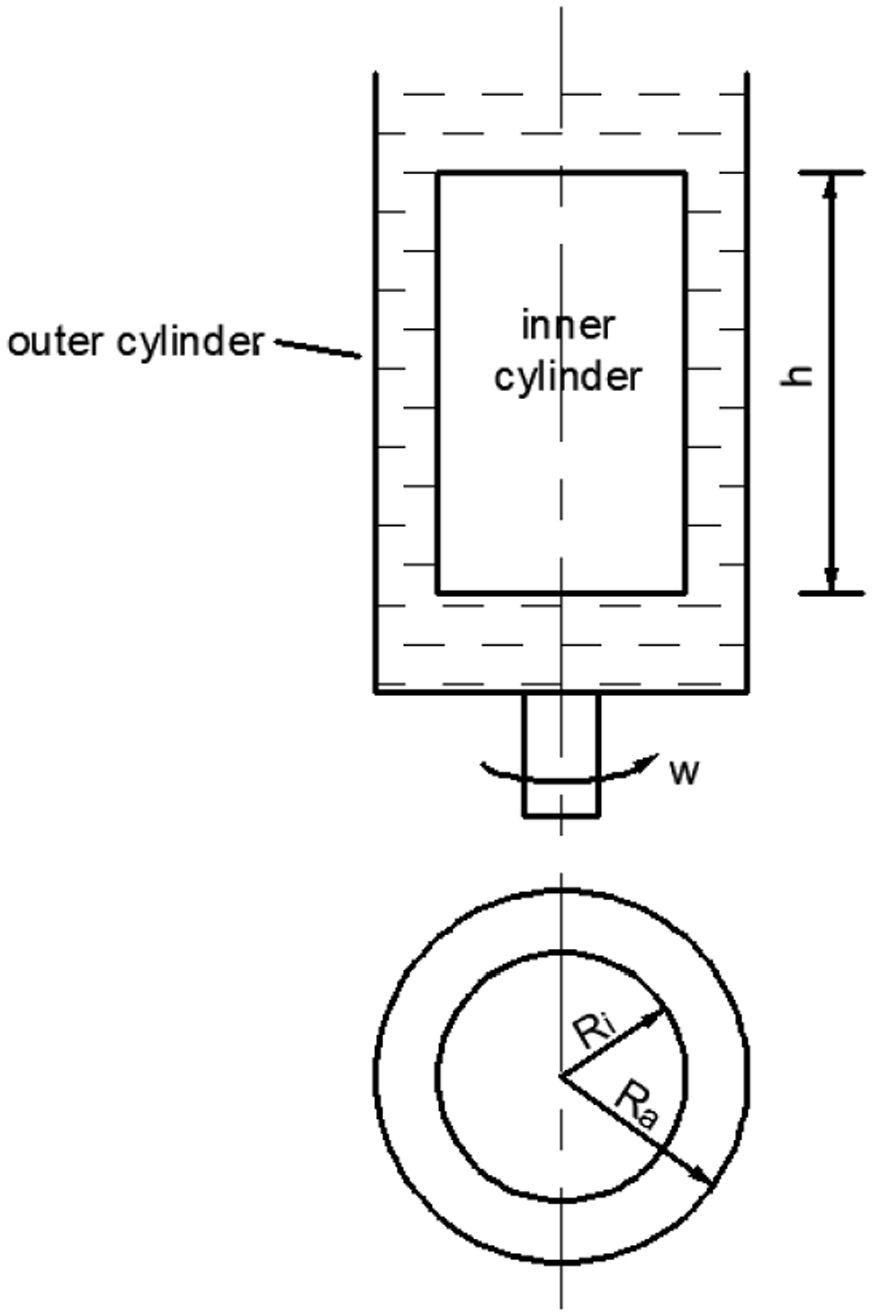
Schematic diagram of the rotating cylinder viscometer.
Judgment of the laminar flow state
When measuring viscosity, the fluid between the inner and outer cylinders should be in a laminar flow state instead of a turbulent flow state. The theoretical relationship between the Couette flow and the test device has been studied by many researchers.10,12,13 The flow state should be judged by the Reynolds number in the device. For coaxial cylinder structures, the Reynolds number at which the turbulence limit occurs is different when the outer cylinder rotates or the inner cylinder rotates. When the outer cylinder rotates, the flow tends to stabilize due to centripetal force. When the inner cylinder rotates, turbulence tends to occur due to centrifugal force. Therefore, it is desirable to rotate the outer cylinder rather than the inner cylinder, because the critical Reynolds number of the rotating outer cylinder is larger than that of the inner cylinder.
According to the research by Couette

where
When the outer cylinder is rotated,

where
To ensure that the flow between the two sleeves is laminar flow, the limiting Reynolds number should be guaranteed as

In practice, the Reynolds number can be calculated by equation (1). This is a conservative evaluation of the Reynolds number for the flow existing between the two sleeves.
Equations for viscosity
From Newton’s law, it follows that the shear at any point is related to the viscosity and the shear rate as

where


where
From equations (4)–(6), equation (7) can be integrated under the boundary conditions

where

The effect of shear heat
When measuring the fluid viscosity with the rotating cylinder viscometer, the temperature of the liquid will rise under the action of shear force. The shear heat tends to stay in the liquid in the gap, unlike the capillary viscometer, which will be taken away as the liquid flows out; therefore, the temperature rises more than the capillary viscometer. The shear heat will cause the viscosity to decrease and measurement errors will occur. In this paper, the fluid temperature distribution between the inner and outer cylinders is calculated to quantitatively analyze the viscosity changes caused by the temperature changes.
When the temperature of the inner and outer cylinders is constant, the maximum shear heat can be calculated by 14

where
When the temperature of the inner and outer cylinders is constant, the maximum temperature rise is smallest near the inner and outer cylinders and highest in the middle of the gap. The distribution trend is shown in Figure 2.
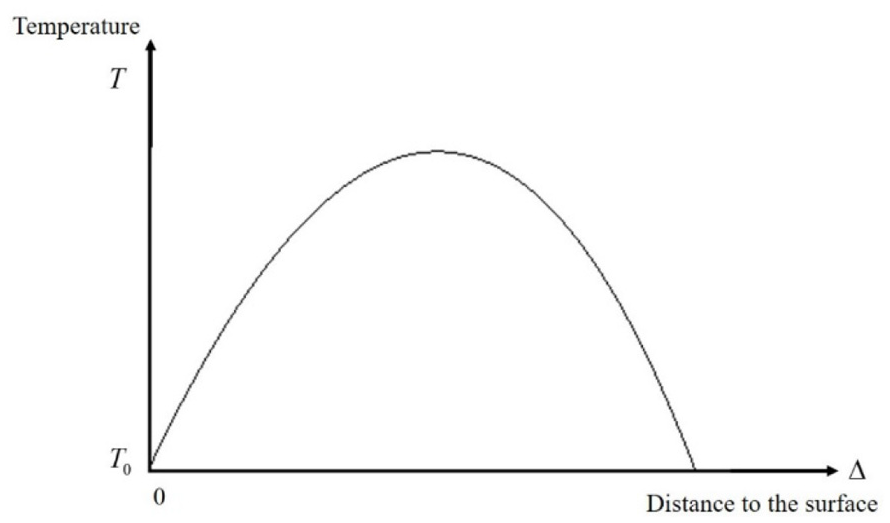
The distribution trend of the shear heat between the gaps.
Design of the double-cylinder viscometer
The structure of the double-cylinder viscometer is shown in Figure 3, which is mainly composed of lower cover 2, outer shell 3, upper cover 9, outer cylinder 7, inner cylinder 6, magnetic coupling 10 and 13, and torque sensor 12. It is suitable for measurements at pressures up to 160 MPa and for temperatures between 278.15 and 343.15 K. The measured viscosity range is between 0.5 and 500 mPa s.
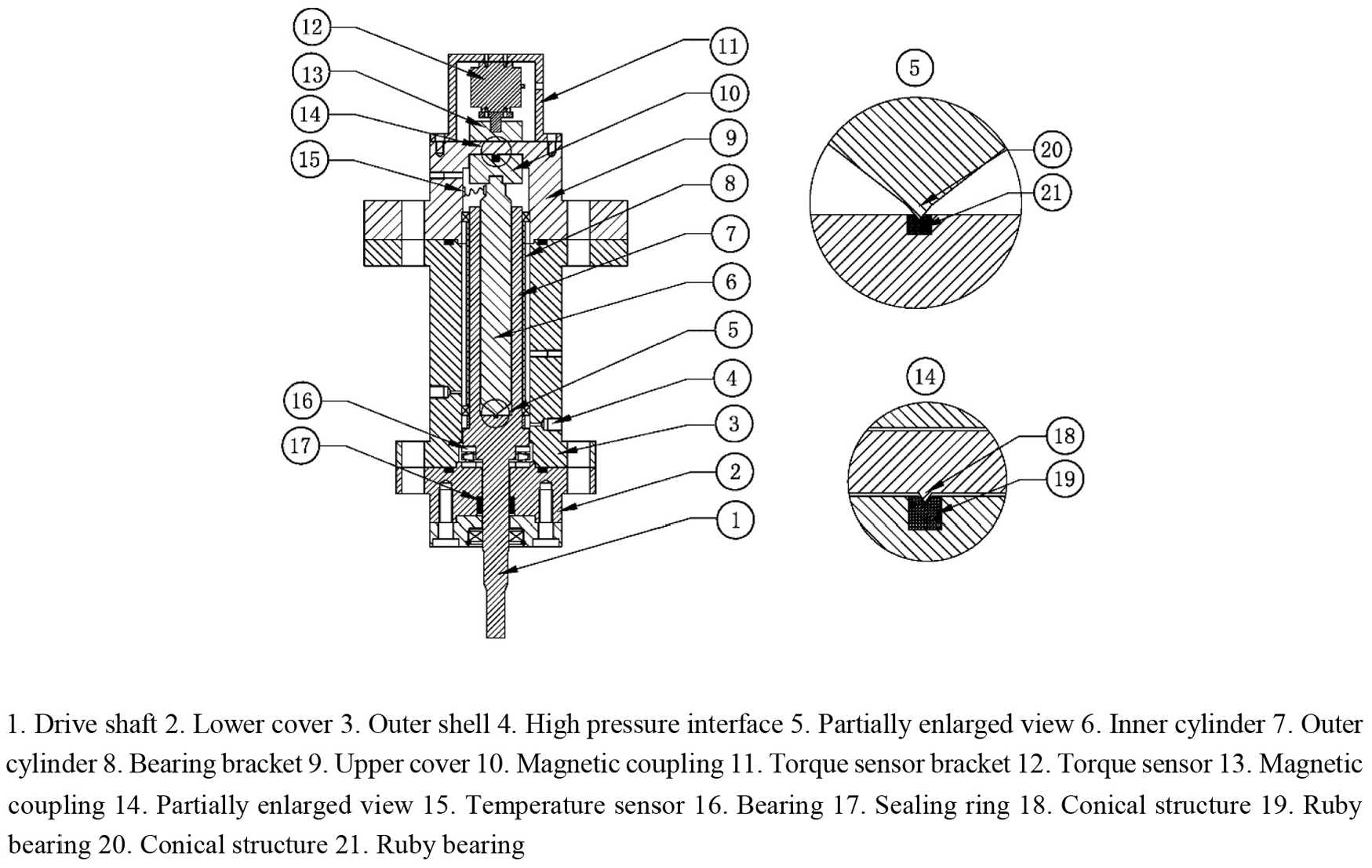
General assembly of the rotating cylinder viscometer.
The outer part of the instrument composed of lower cover 2, outer shell 3, and upper cover 9 made of nonconductive material forms a pressure shell and the shell is calculated to ensure that the maximum shape variable under a pressure of 160 MPa does not exceed 0.05% of the diameter of the shell. A thrust bearing 16 is installed at the lower part of the outer cylinder to resist the unbalanced axial force caused from high-pressure fluid flow and to maintain its flexibility in high-pressure fluid. High-pressure seal ring 17 with a maximum sealing pressure of 250 MPa is installed in the middle of drive shaft 1.
Inner cylinder 6 is fixedly connected with magnetic coupling 10, which is coaxially installed in the outer cylinder. Magnetic couplings 10 and 13 are arranged in pairs, which can transmit the torque avoiding friction resistance caused by contact.
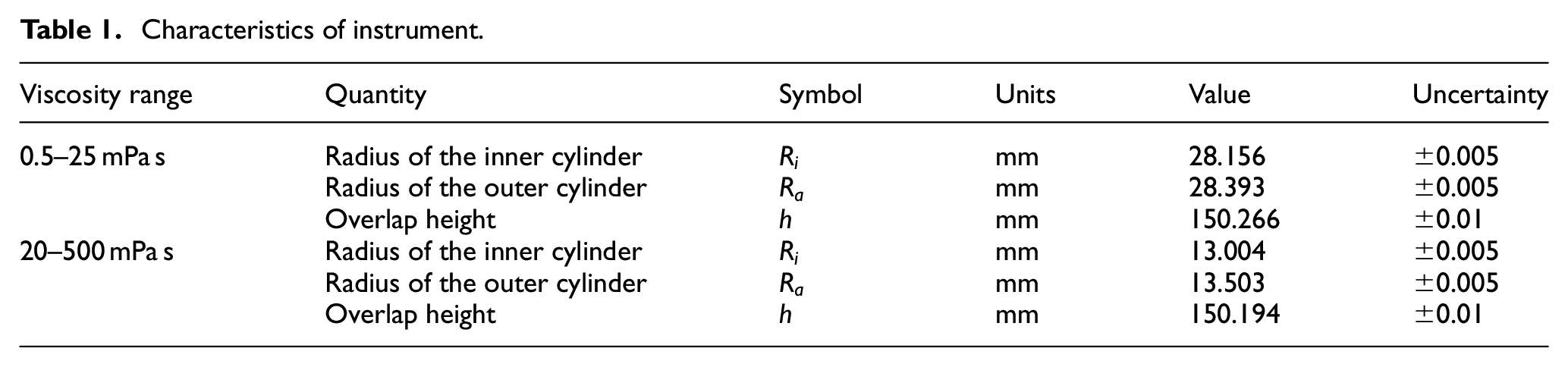
Considering that the measuring range of the low torque and high-precision torque sensor is small, to expand the measuring range of the viscometer, two groups of inner and outer cylinders of different sizes are designed for different viscosity ranges. One group of cylinders is used to measure lower viscosity liquid whose viscosity is in the range of 0.5–25 mPa s, the other group of cylinders is used to measure higher viscosity liquid whose viscosity is in the range of 20–500 mPa s, and the motor speed is 300 r/min during measurement. The specific characteristic size parameter values are shown in Table 1. Calculated by equations (1) and (3), when measured by these two groups of cylinders and the density of the liquid is less than 900 kg/m3, the liquid in the gap is in laminar flow.
Characteristics of instrument.
To ensure that the viscometer can measure at temperatures from 278.15 to 343.15 K, the viscosity measurement system for the double-cylinder viscometer is designed as shown in Figure 4. The double-cylinder viscometer and high-pressure converter 33 are installed in constant temperature tank 28. The outside of constant temperature tank 28 is made of insulation material to isolate the radiation, and the inner wall is equipped with heating/cooling copper pipe 27, which can heat or cool the water in the tank. An impeller is installed in the tank to promote water circulation and reduce the temperature gradient of the water in the tank. The sink is equipped with immersion temperature sensor 31 to monitor the water temperature, and the temperature control precision of the whole sink can be reached within
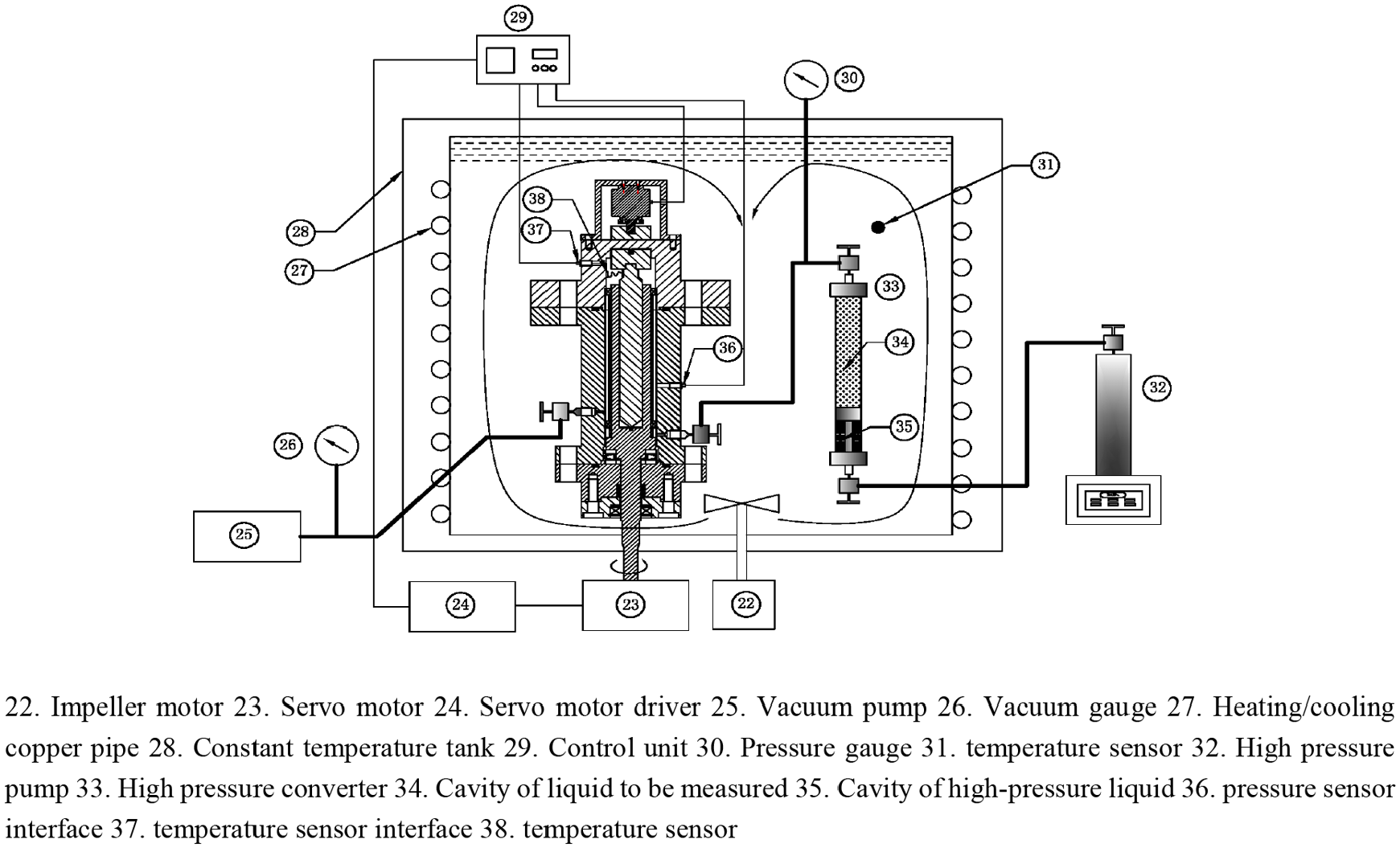
Schematic diagram of experimental system.
To ensure the system works properly, the measurement system uses vacuum pump 25 to vacuum the viscometer before measurement and vacuum gauge 26 is used to monitor the vacuum. High-pressure pump 32 can control the liquid pressure in the viscometer within the range of 0.1–160 MPa. The pressure gauge and pressure sensor 36 are used to monitor the pressure of the liquid during the measurement and they are all calibrated against a force balance dead-weight gauge with an uncertainty of ±0.05 MPa. The signals of the pressure sensors, temperature sensors, and torque sensor finally enter control unit 29.
Uncertainty analysis of viscometer structure
Uncertainty analysis caused by the torque sensor
Servo motor 24 drives outer cylinder 7 to rotate at a fixed rate, and a stable Couette flow between outer cylinder 7 and inner cylinder 6 is formed. Then, a viscous torque is produced on the outer surface of the inner cylinder by Couette flow. Torque sensor 12 fixed on the outside of upper cover 9 can accurately measure the viscous torque. The torque sensor model number is RTM 2200M (1-1) manufactured by American S. Himmelstein and Company, and its range of measurement is 0–0.071 N m with an accuracy of 0.05%. According to equation (8) and the geometric dimensions in Table 1, the measurement uncertainty caused by the torque sensor is
Uncertainty analysis caused by frictional resistance
The frictional resistance of inner cylinder 6 will cause error
Uncertainty analysis caused by temperature
The influence of the temperature change on the viscosity measurement mainly includes two aspects: one aspect is that the temperature will change the size of the structure and then affect the viscosity measurement results, and the other is that shear heat generated during rotation will affect the viscosity measurement results. To solve these two problems, the inner and outer cylinders of the viscometer are made of aluminum, the surface of which is chrome-plated and polished. The thermal expansion coefficient of the aluminum is
Aluminum has good thermal conductivity and can reduce the inner and outer cylinder temperature gradients. The temperature deviation of the inner and outer cylinders is measured to be less than 0.5 K during operation, which can be approximately considered as an isothermal surface. According to equation (9) and the geometric dimensions in Table 1, when the viscosity of the liquid is less than
Uncertainty analysis caused by the motor
The outer cylinder of the viscometer rotates in the single direction by servo motor 24. The servo motor model number is SGMGV-09 manufactured by the Japan YASKAWA company. The servo motor uses speed control mode, and the speed control range is 0–3000 r/min. The servo motor is fed back through the photoelectric encoder, and the uncertainty of the rotation speed is
Materials and experiment
To verify the accuracy of the double-cylinder viscometer, three liquids with known viscosities were measured with the viscosity. Then, two liquids with unknown viscosities were measured with the viscosity. Before each measurement, the viscometer was cleaned with ethanol and fully evaporated. Before adding the liquid that needs to be measured, the inside of the viscometer is first vacuumed with the vacuum pump and then the liquid is added into the viscometer to ensure that the viscometer is fully filled with the liquid.
First, two standard viscosity liquids, N10 and N35 (nominal viscosities of 10 and 32 mPa s at T = 313.15 K and P = 0.1 MPa) obtained from ZZBIO CO., LTD (Shang Hai, China), were considered in this study. According to ASTM D2162, under atmospheric pressure, the supplier measured the viscosity of the two liquids in a range of 283.15–323.15 K using a standard Ubbelohde viscometer. The uncertainty in the kinematic viscosity was ±0.5% relative to water. In this study, the author used the double-cylinder viscometer to measure the liquids under the same pressure and temperature conditions provided by the supplier and compared the results with the data from the supplier.
Then to verify the double-cylinder viscometer’s ability to measure the liquid viscosity at a high pressure, a sample of methylbenzene obtained from Sanying Chemical Reagent Co. LTD, which is reported to contain no more than 0.005 mole fraction of impurities, is analyzed. Under the conditions of a temperature range of 278.15–323.15 K and pressure range of 0.1–150 MPa, the viscosity of methylbenzene is accurately measured and compared with the results measured by previous researchers.
At the end, two synthetic oils, Mobil VELOCITE Oil No. 5 and Hydraulic Oil Nuto H10, are measured by the double-cylinder viscometer under the conditions of a temperature range of 278.15–323.15 K and pressure range of 0.1–150 MPa. Both synthetic oils are multicomponent synthetic oils, and their viscosity and density are affected by various parameters such as the batch and composition. Even the international standard only specifies a viscosity range for this oil. Therefore, this test only reflects the real situation for the viscosity of a test batch of oil and its law of change with temperature and pressure. These data are important for the design of hydraulic systems in special environments.
Results and discussion
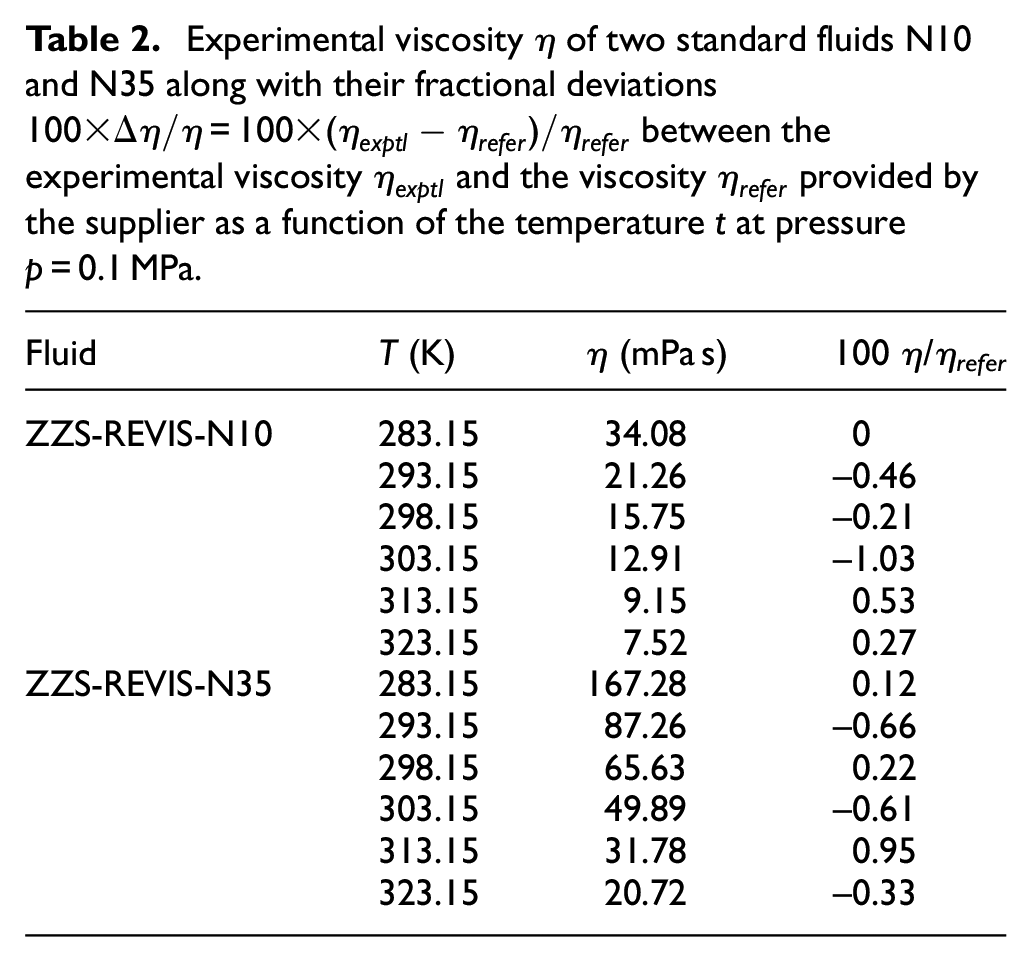
First, two standard viscosity liquids under atmospheric pressure and different temperatures were measured, and the results are listed in Table 2 along with the relative differences, as shown in Figure 5. The fractional deviation is calculated by the viscosity

Experimental viscosity η of two standard fluids N10 and N35 along with their fractional deviations
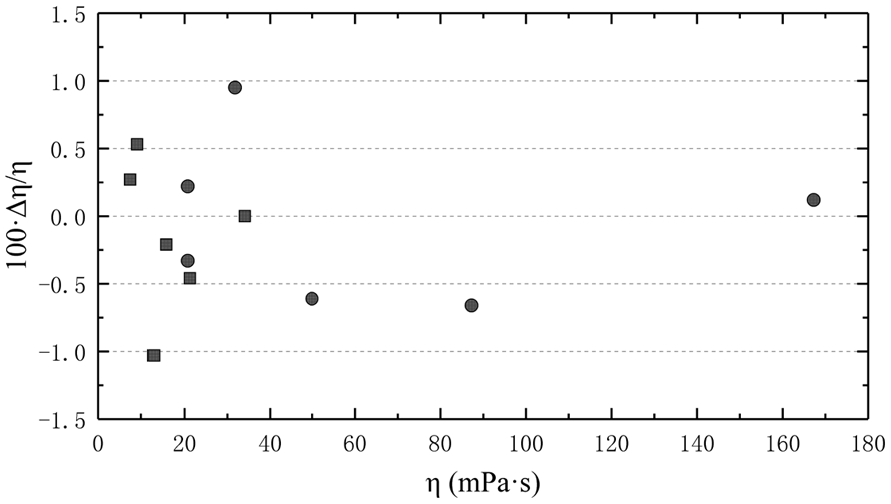
Fractional deviation
The results show that at a low viscosity, the fractional deviation of the measurement is large and the maximum fractional deviation can reach 1.0%, because the testing error of the torque sensor is large when the torque is small. With the increase in the liquid viscosity, the error decreases rapidly. Over the entire measurement range, the fractional deviation is less than 1.1%.
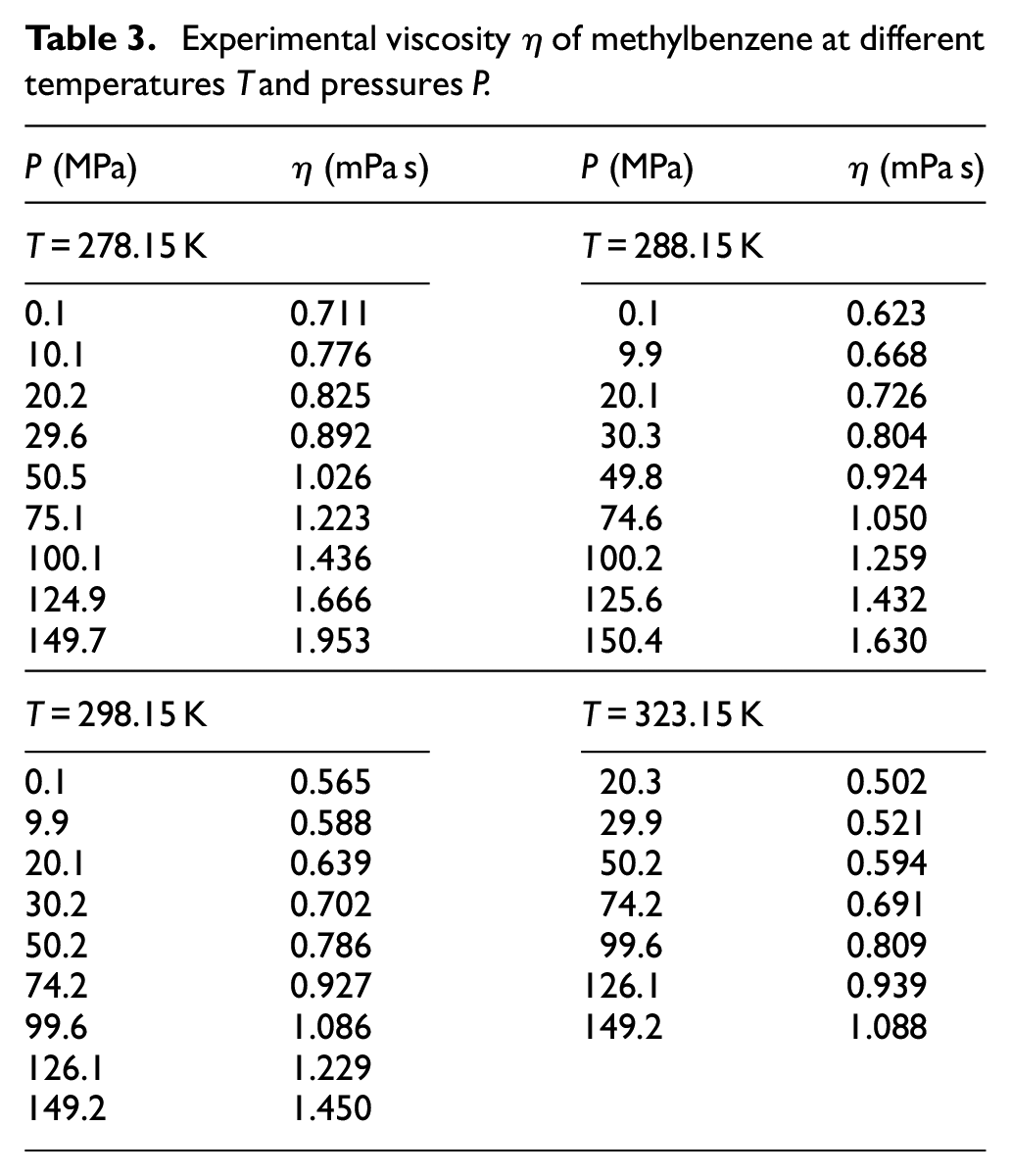
The viscosity of methylbenzene is tested at different temperatures and pressures. The test results are shown in Table 3 and Figures 6 and 7. To measure the accuracy of the viscometer, the experimental data are compared with the data of other researchers and the experimental results of Assael et al.
16
and Kandil et al.
17
are shown in Figures 6 and 7 with a solid line. The fractional deviation is calculated from the data measured by the double-cylinder viscometer and the data measured by Assael et al, as is shown in Figures 8 and 9. The result shows that the fractional deviation is less than
Experimental viscosity η of methylbenzene at different temperatures T and pressures P.
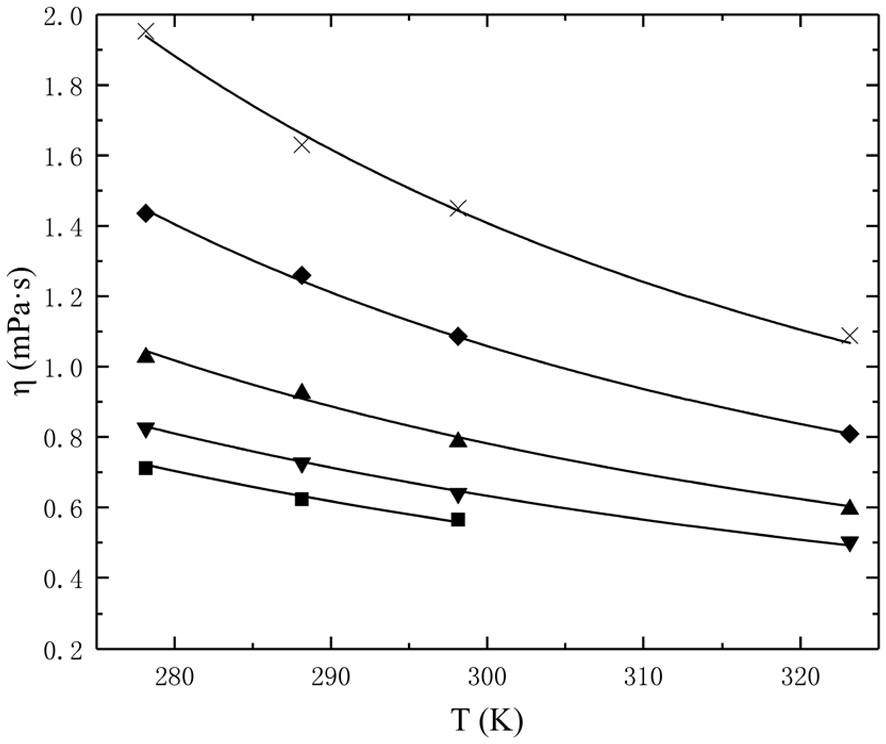
Experimental dynamic viscosity
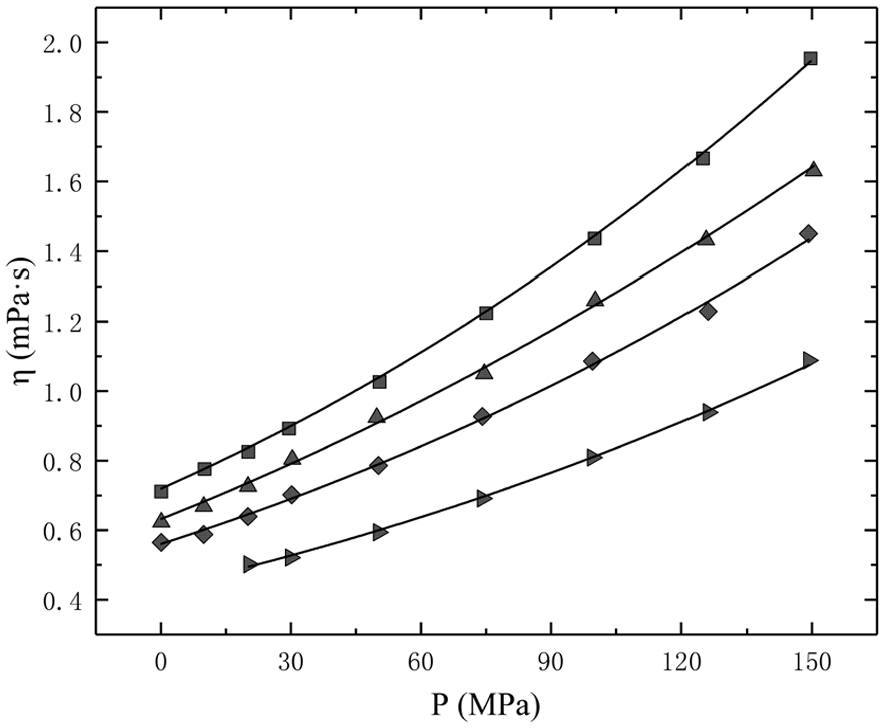
Experimental dynamic viscosity
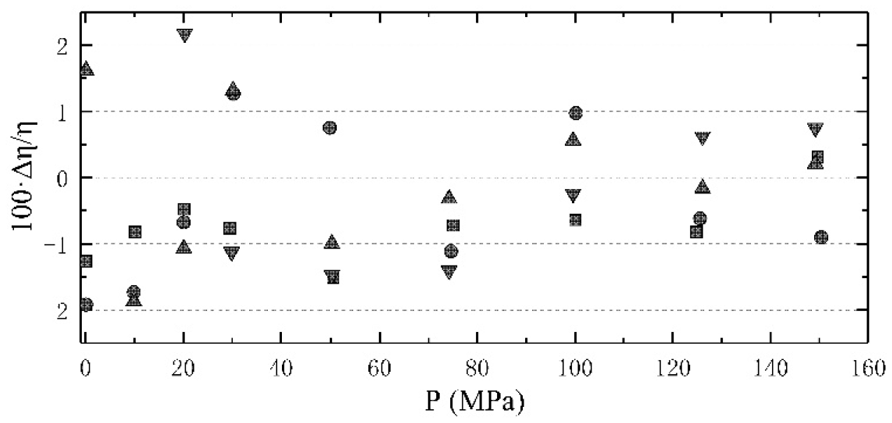
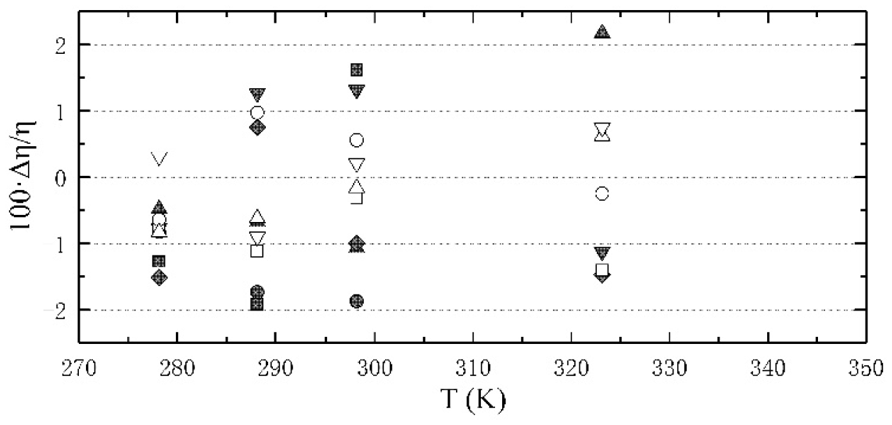
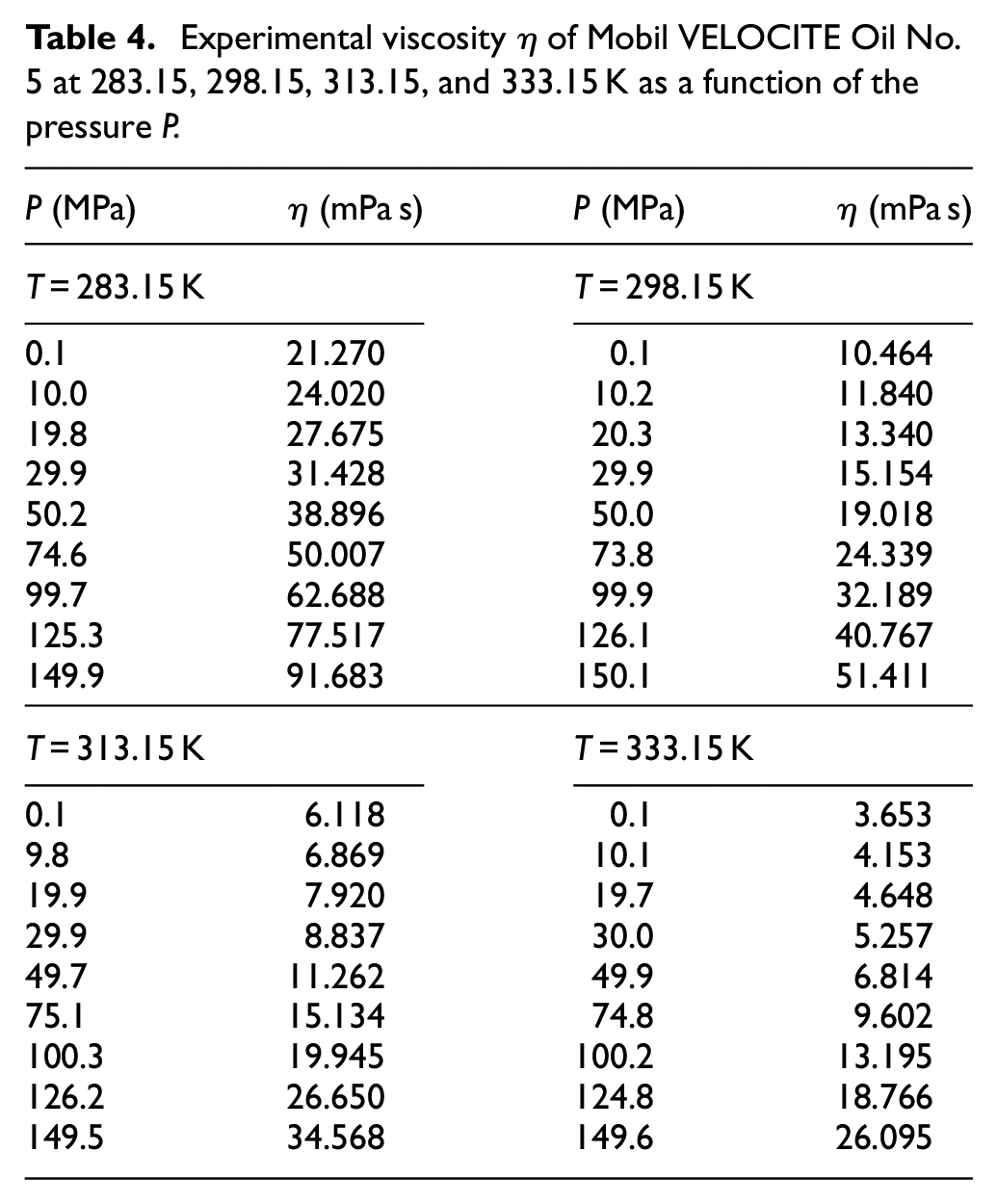
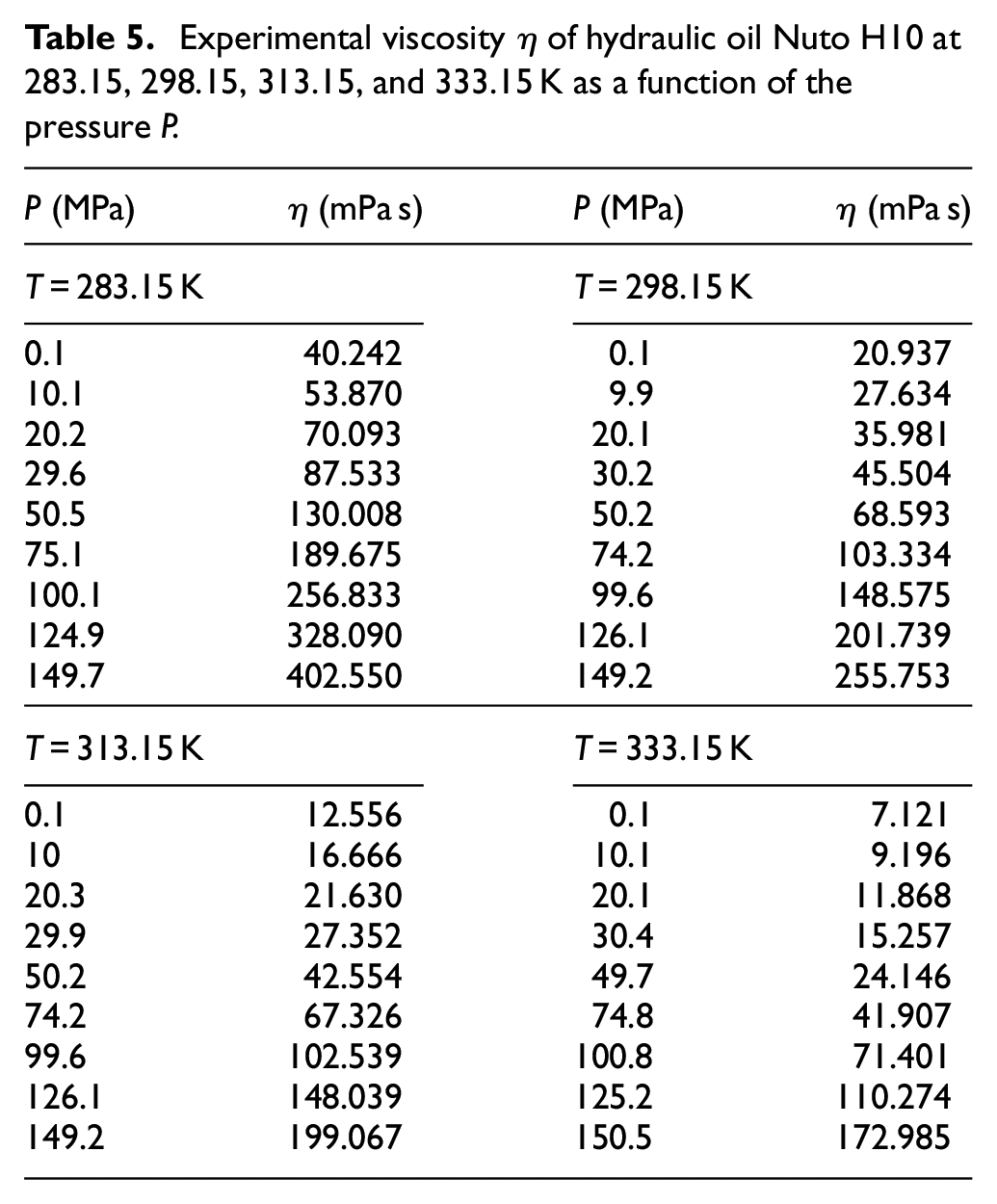
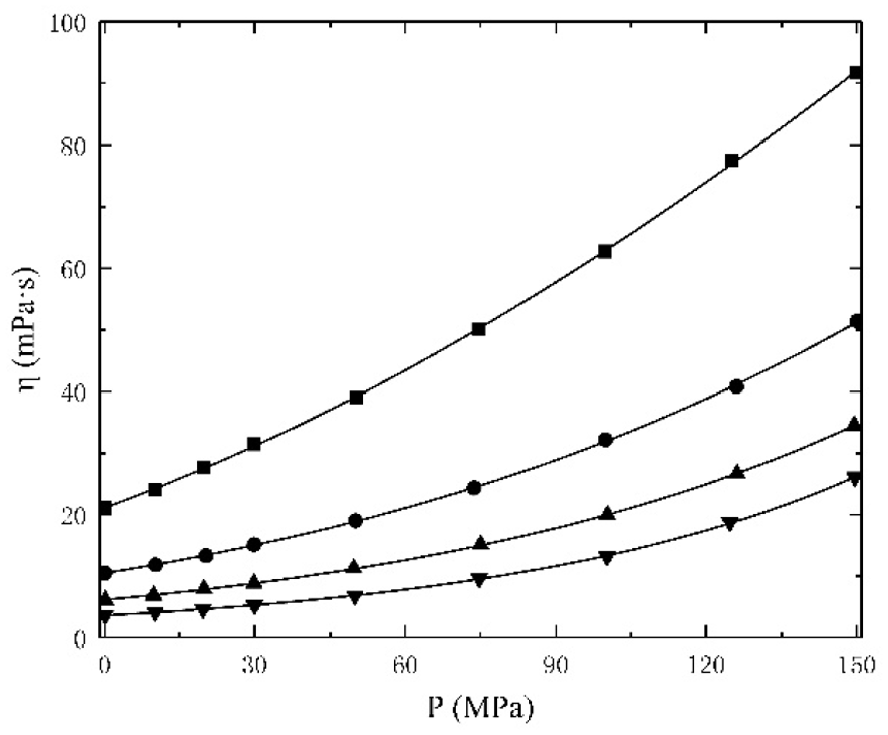
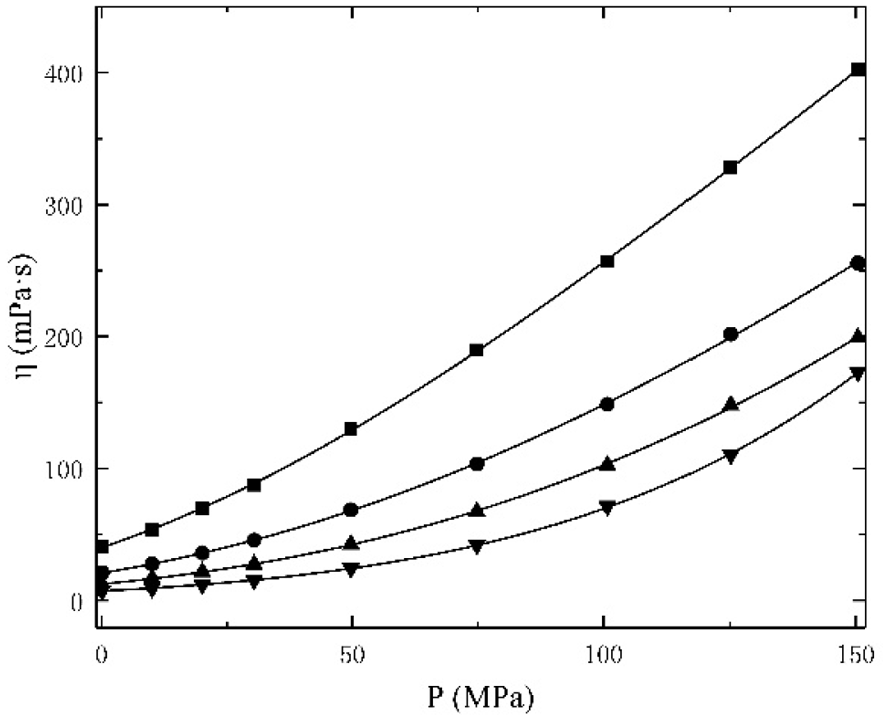
After determining the uncertainty of the overall measurement of the double-cylinder viscometer, the viscosity of two commonly used synthetic oils is measured. The two synthetic oils are Mobil VELOCITE Oil No. 5 and Nuto H10 hydraulic oil. The viscosities of the two oils under conditions of a temperature range of 278.15–323.15 K and pressure range of 0.1–150 MPa are shown in Tables 4 and 5, and the trends are shown in Figures 10 and 12. It can be seen from the results that the viscosity of oil decreases with increasing temperature and the viscosity increases exponentially with increasing pressure. The trend is consistent with that of methylbenzene.
Experimental viscosity
Experimental viscosity
Experimental dynamic viscosity
Many scholars have studied the relationship between the viscosity, temperature, and pressure of fluids. The most widely used relational equation is the modulus equation 18

where
Fractional deviation
Experimental dynamic viscosity
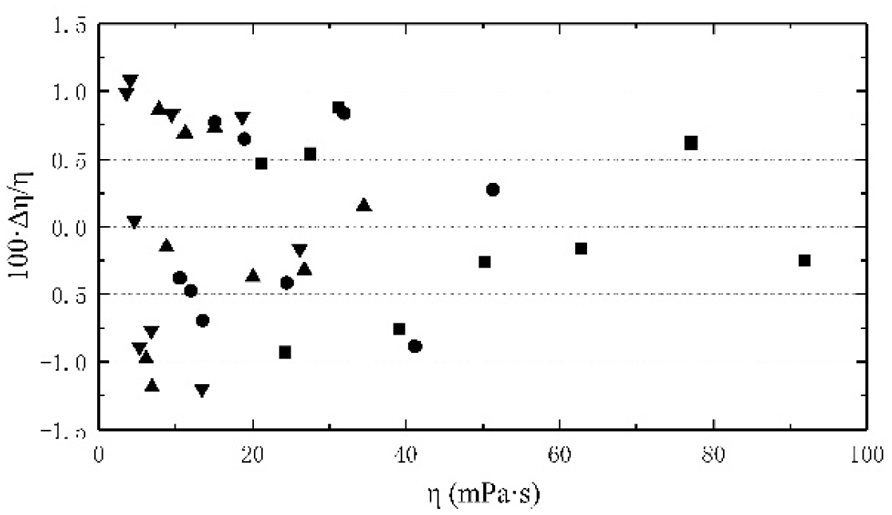
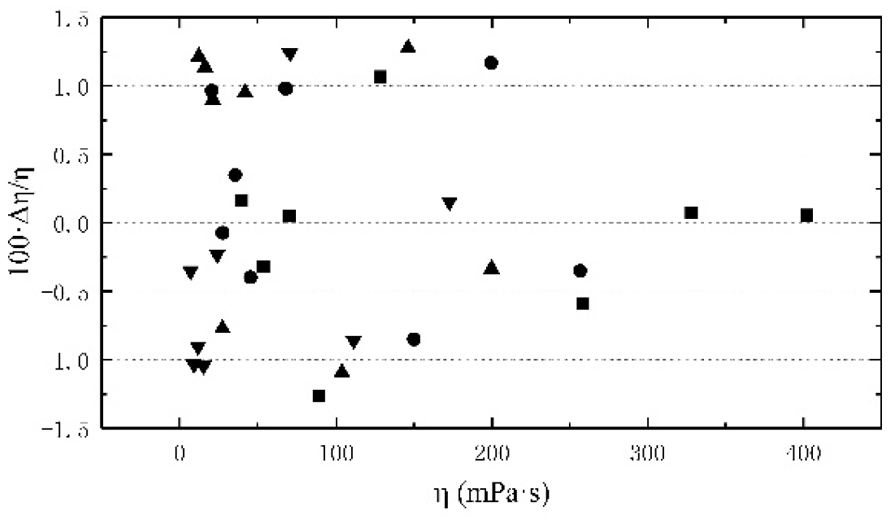
The fractional deviation of the measured data relative to the fitted data is shown in Figures 11 and 13, which can reflect the stability and accuracy of the measuring instrument to some extent. It can be seen from the figures that, affected by the testing accuracy of instruments, the measurement results have certain fluctuations relative to the fitting curve and the uncertainty is approximately
Fractional deviation
Conclusion
This paper introduces a kind of viscometer which can directly measure the dynamic viscosity of high-pressure fluid and the density of the fluid is not needed. The magnetic coupling is used to transfer torque and ruby bearing is used to reduce friction to improve the precision. This study also adopted a variety of ways to reduce the temperature error. Calibrated with the data of the standard viscosity fluid and the research of other scholars, this work shows that the measurement uncertainty of the double-cylinder viscometer is approximately ±3%.
Footnotes
Declaration of conflicting interests
The author(s) declared no potential conflicts of interest with respect to the research, authorship, and/or publication of this article.
Funding
The author(s) disclosed receipt of the following financial support for the research, authorship, and/or publication of this article: This research was funded in part by the National Natural Science Foundation of China under Grant 51809235, in part by the Key Research and Development Project of Zhejiang Province under Grants 2017C04005 and 2019C0 4017.
