




Abstract
The ongoing development of wireless sensor networks has been greatly restricted because of scarce spectrum resources, limited battery power, and ineffective topologic structures. Thus, how to construct a suitable topological structure and allocate the appropriate node channels has become an urgent problem. In this study, we built a game model that took into account the influence of channel allocation and topology structure on network performance. The game model considered the nodes in wireless sensor networks to be players and took transmitting power, node channels, and node rest energy into account to establish the income function. Then, the model certified that it has Nash equilibrium. Next, we propose an energy-optimized game algorithm joint topology and channel for wireless sensor network (CETGA) in accordance with the game model. The CETGA algorithm improved each node’s income by changing the transmitting power and node channel gradually, assuming that the network retained connectivity. Then, we demonstrated that the algorithm could converge to a Pareto optimal. Finally, we used MATLAB software to verify the simulation. The results show that the topology created by CETGA is with low interference and long lifetime. In addition, the nodes’ average residual energy is more balanced and the network robustness and real time are improved.
Introduction
Lots of tiny sensor nodes communicate with each other and constitute a multihop self-organizing network which is named wireless sensor network (WSN). 1 WSN is widely used, not only to measure various physical parameters, but also in many monitoring fields,2,3 such as agricultural surveying, 4 smart traffic monitoring, 5 environmental monitoring, 6 medical applications, 7 and many other fields. The topological structure of a WSN greatly influences the reduction of interference and energy consumption, the enhancement of network robustness in real time, and the prolonging of the network’s lifetime. 8 In addition, channel allocation (CA) provides the foundation for further reducing interference and increasing network capacity. 9 Therefore, an urgent problem for WSN has become how to design a proper topological control algorithm to improve network reliability and many other issues based on network connectivity.
Currently, the two types of WSNs, single channel and multichannel, influence its topology control.
In a single-channel WSN, power control is the main method and is likely to reduce transmitting power to prolong the network’s lifetime. Basing their design on the local minimum spanning tree, Li et al. 10 proposed a local minimum spanning tree algorithm to devise a connective topology. But the network’s robustness was poor because the structure was sparse. Zhou et al. 11 proposed a control algorithm for network topological connection optimization based on network efficiency and average connection degree to increase the network’s throughput. But the algorithm is not suitable for a WSN because the node energy is limited. Li et al. 12 provided a distributed topology control algorithm that considered the transmitting and receiving powers of nodes synthetically. The algorithm provided a method to extend the network life cycle by analyzing the effects of node communication distance, circuit loss, and node load on the network. Chen et al. 13 constructed a load balancing evaluation mode by researching the relationship between neighbor-residual energy, transmission power, and load. And then proposed a distributed topology control algorithm to show that the model can balance network load and energy consumption.
However, limited spectrum resources have greatly restricted WSN’s further application. Thus, the combination of multichannel technology and topology control is utilized to optimize the performance In Thomas et al., 14 the algorithm was divided into two parts: power control was used to construct the topology structure, and CA was used to optimize network performance. But the method was just a simple superposition of the two parts and did not take into account the internal relations between them, so the topology structure obtained did not result in the best performance. Li et al. 15 used dynamic adjustment of power and channel to increase antidisturbance ability of the network, which improved throughput and enhanced stability. The paper explored the combined optimization of power and channel, however the topology was dynamic. Because the consumption of node energy was large, that method is not suited for WSN, whose available energy is limited. Hao et al. 16 proposed a distributed topology control and CA algorithm to establish an optimized network. The network can possess the lower inference and many other attractive network performances such as the stronger robustness. But the physical interference model is used in their model, which is too complex to quickly finish the calculation when the node number is much large. By studying the relationship between k-connected logical topology and the maximum number of assigned channels, Bao et al. 17 presented the lower and upper bounds of the maximum allowable number of assigned channels for k-connected logical topology and a static channel assignment algorithm according to minimum spanning tree search. Derdouri et al. 18 studied multicast features in wireless mesh networks by taking advantage of shared links to reach simultaneously multiple users and then evaluate the performance of two algorithms, one named Node Joining the Multicast tree and the other named Node Disjoining the Multicast tree to improve the throughput, delay, and robustness.
Basing our work on the analysis above, we first established an energy-optimized game model joint topology and channel for a WSN. Then, we designed an energy-optimized game algorithm joint topology and channel Joint channel and energy topology game algorithm, (CETGA) based on the model. The unique features are as follows:
The CETGA takes node energy consumption and network interference into account to formulate the game model’s utility function. In addition, if a node’s residual energy decreases, the node is more likely to retain its transmitting power to increase the utility value.
In the CETGA, a node, whose residual energy is low, is more likely to choose the minimum power to reduce consumption itself. Meanwhile, the immediately adjacent nodes, whose residual energy is higher, must use more power to keep the network connected. Thus, the energy consumption is balanced.
In the CETGA, every node adaptively adjusts its channel when the power changes. Then, the network is settled finally.
Establishment and analysis of the model
In a WSN, sensor nodes consume energy when they communicate with each other. Because the energy of nodes is limited, most nodes are likely to be “selfish.” In other words, a sensor node is inclined to optimize its own income as much as possible instead of collaborating with other nodes to improve the performance of the entire network. The status of the WSN completely matches the application of game theory. Thus, how to determine the network structure of WSN could be attributed to the optimal solution for a combinatorial algorithm based on game theory.19–21 In section “The game model,” a CETGA for a WSN is established.
The game model
To establish a game model for a WSN, the definition of node interference, named the interference model, which is based on the neighbor node number, 22 is as follows.
Definition 1 (node interference)
The interference
According to Fudenberg and Tirole, 23 a game model comprises three factors: player set, policy set, and income function. Here, players are the decision-makers in the gaming process, while policy set is the collection of all policies. Income function is the income of each player when the policy changes.
In our model, we designated an energy-optimized game model joint topology and channel as
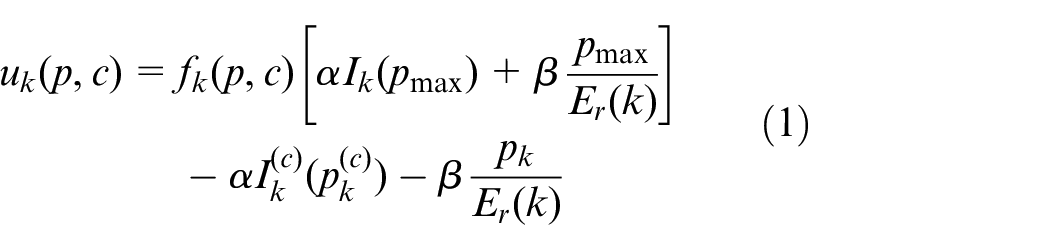
In equation (1),
The income function can reflect many aspects of network performance; the major aspects are as follows:
Network connectivity is the basic requirement of the topology construction for WSNs. Information can be transmitted effectively in the network only if the conductivity of the WSN is guaranteed. In equation (1),
For an energy-constrained WSN, the node’s energy supply is an important factor that affects the lifetime of the WSN. The lower the residual energy
Network interference is an important indicator for evaluating the performance of a WSN. The amount of network interference directly affects the quality and efficiency of communication. In equation (1),
Model analysis
Nash equilibrium (NE) is the solution of the game model and all players want to achieve this status. Its definition is given as follows.
Definition 2 (NE)
For

There are many ways to prove the existence of NE, and the ordinal potential game (OPG) is one of them.
Definition 3 (OPG)
When an ordinal potential function (OPF)

where
From Monderer and Shapley, 24 if a model is found to be an OPG, there must be at least one NE. Thus, Lemma 1 is given first.
Lemma 1
For any node
Proof
The change of k’s interference is
The interference created by

Theorem 1
The energy-optimized game model joint topology and channel
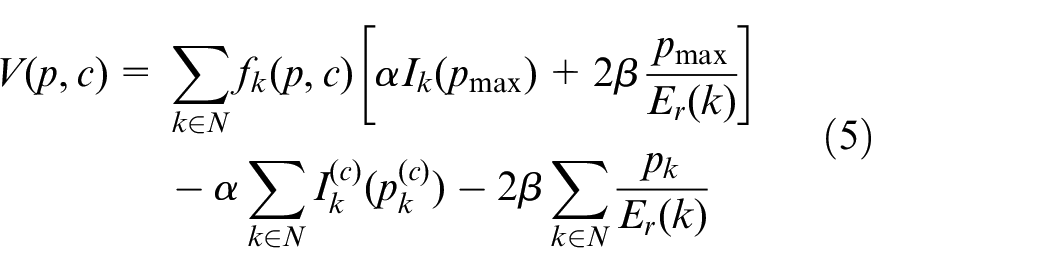
Proof
Assume that −k’s states stay the same, k’s income change is shown in equation (6) if
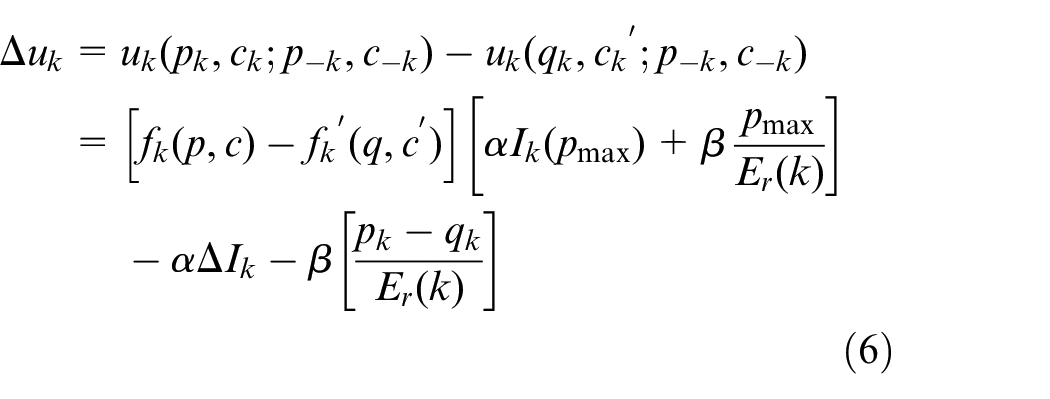
By this time, the change of
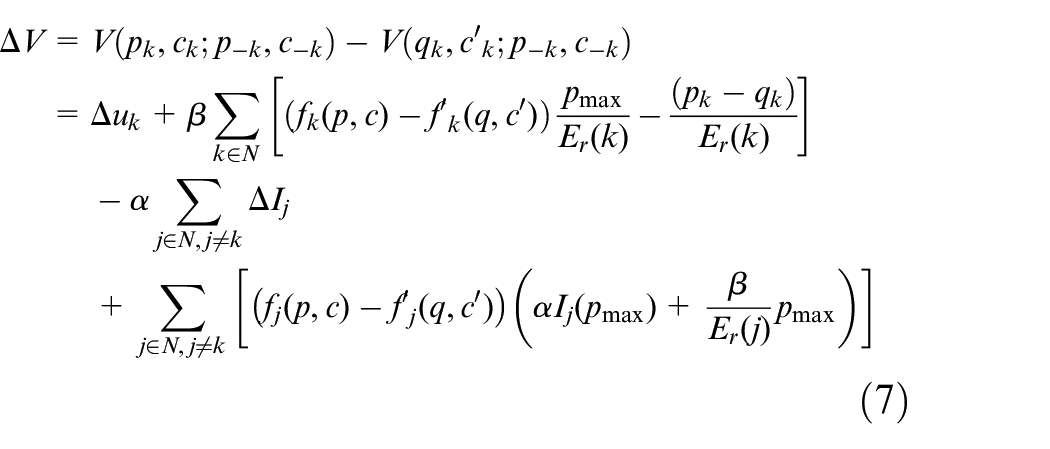
(1)
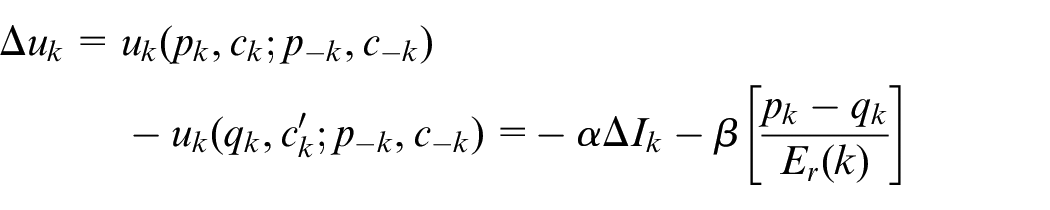
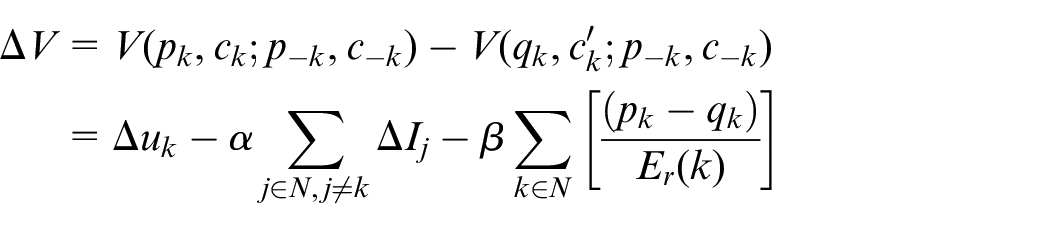
Because the power and channels of the nodes except k remain unchanged, the equation

Thus, we can conclude that
(2)
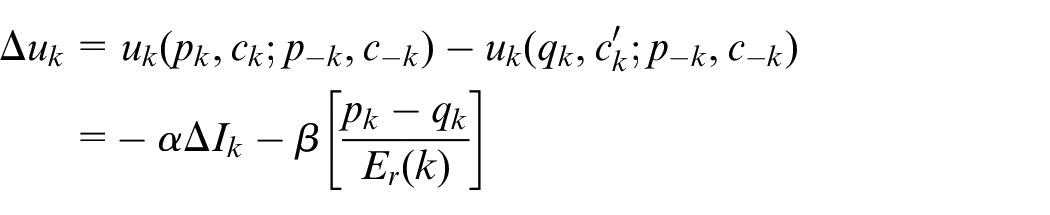
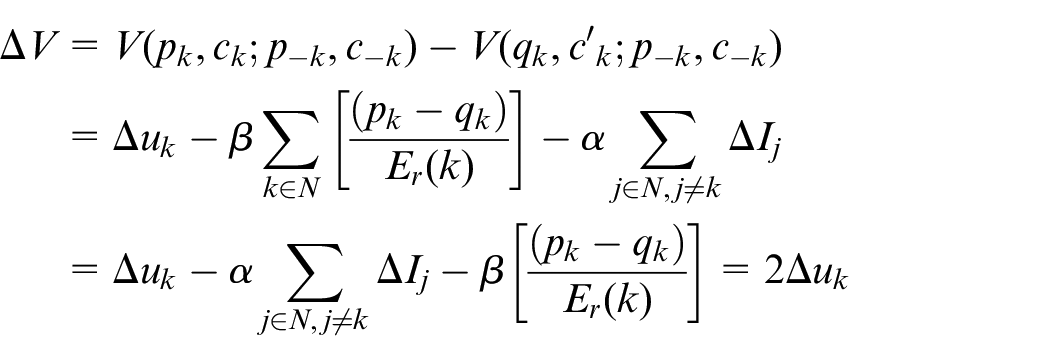
Thus, we can conclude that
(3)
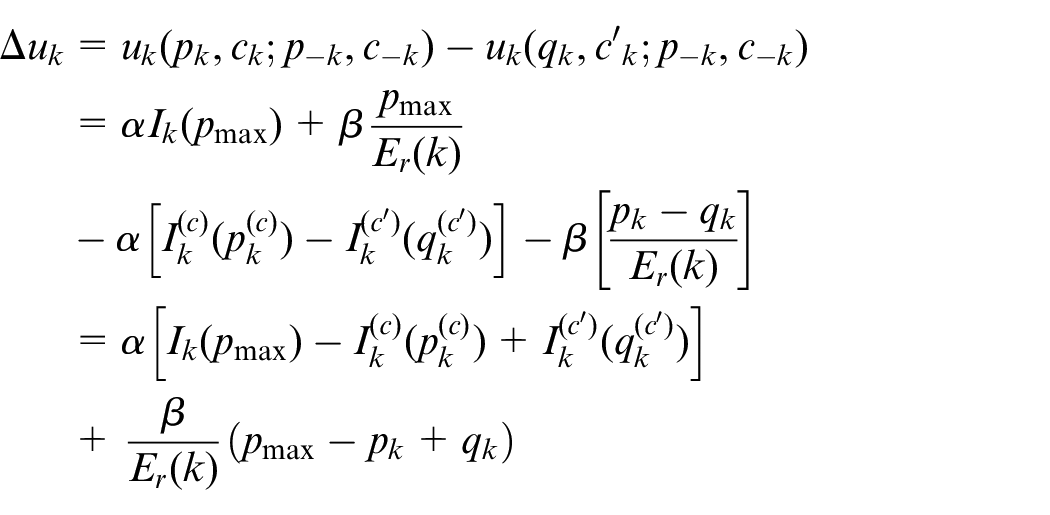
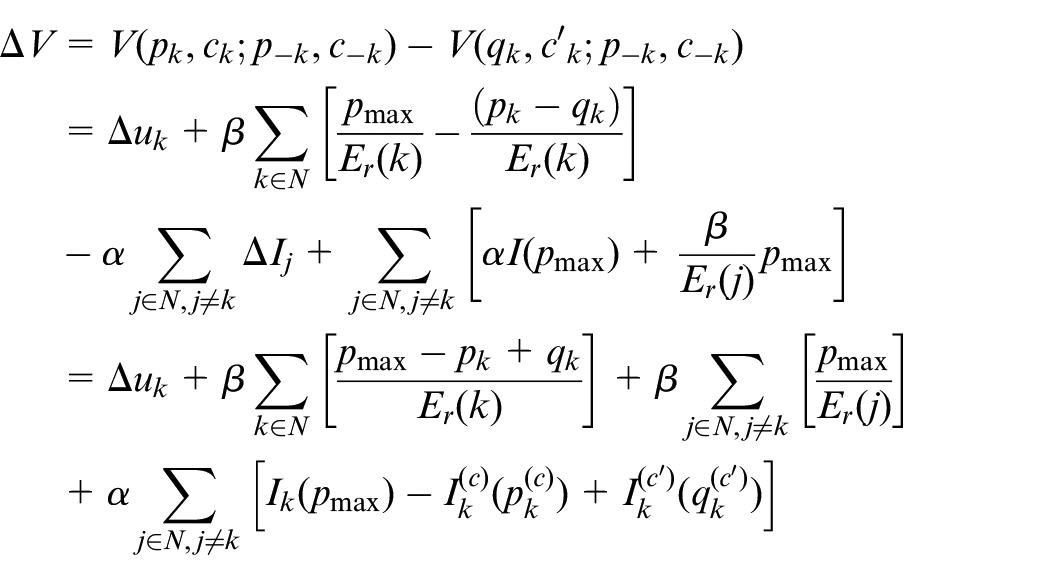
So we can conclude that
(4)
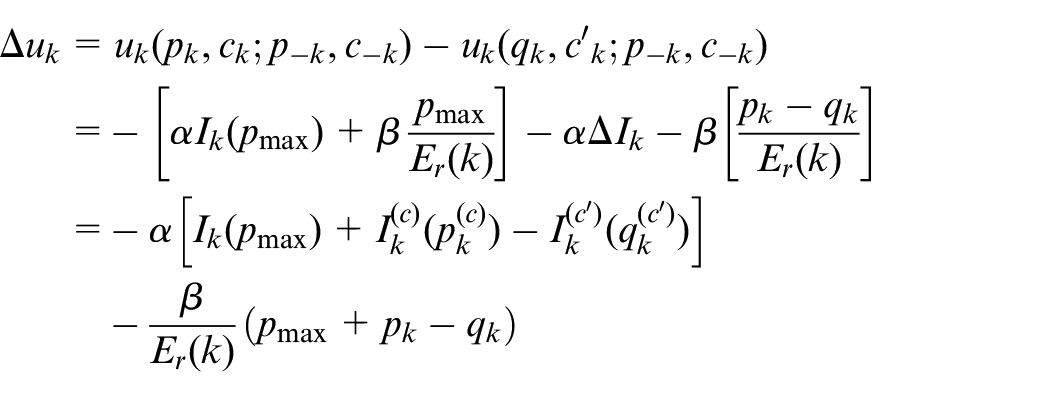
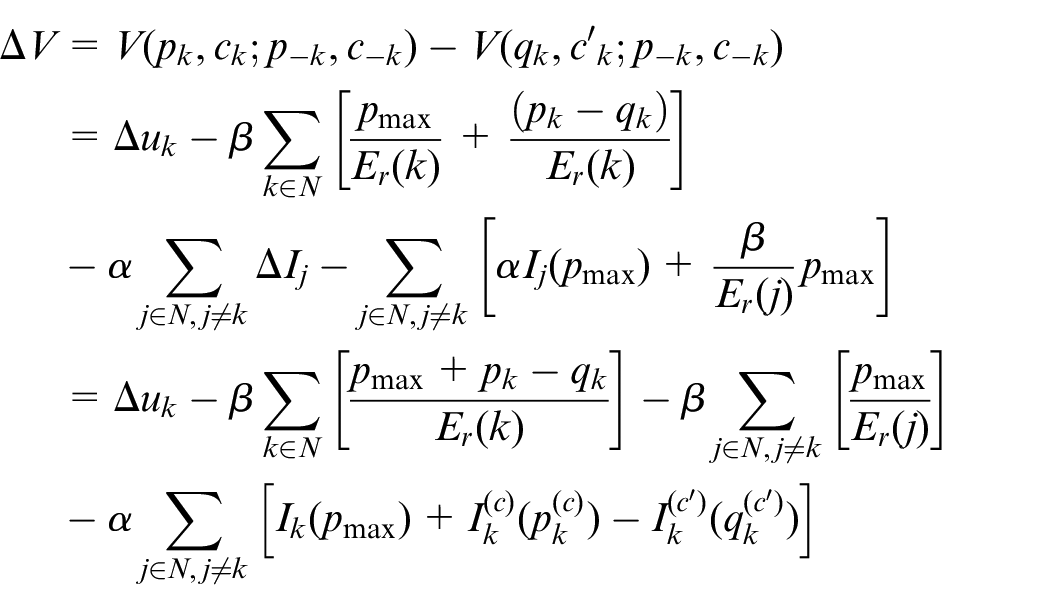
So we can conclude that
In conclusion,
Theorem 2
An NE must exist in CETGA
Proof
Since CETGA
In
CETGA
Considering the relation between topology and channel, a CETGA is established to solve the model and this algorithm considers not only the node residual energy but also the convergence.
CETGA algorithm
In CETGA, each node first gathers other nodes’ information in its achievable region, and then decides its policy. The process is as follows:
Let all nodes’ power be the maximum power and their channel the same channel
k’s current power is
Based on equation (1), any node k’s income value
Judge whether the network is connected: if it is, CETGA goes to (8); if not,
At present, k’s income is
If
The flow diagram of algorithm is shown as follows.
CETGA analysis
To energy-constrained WSNs, whether the algorithm can converge is a most important feature. Theorem 3 verifies the ability to converge.
Theorem 3
CETGA can converge to NE.
Proof
According to CETGA, every node in WSN reduces its power and chooses the best channel in each cycle. Thus, three possible situations should be discussed



Among the situations mentioned above, we can easily conclude that
In a game model, the states of NE can be divided into three situations: none, one, or numerous. From Theorem 1, CETGA can converge to NE. But there is no guarantee that CETGA can converge to optimal NE. To achieve the optimal solution, another important concept is required.
Definition 4 (pareto optimality, PO)
A policy vector
Theorem 4
CETGA can converge to PO.
Proof
Nodes in the network obtained by CETGA could be separated into two main categories: (1) nodes using minimum power are to maintain the network nonseparation and (2) nodes with non-minimum power are to guarantee network robustness and real time.
If k’s residual energy reduces,
If a node k’s residual energy is relatively large,
Overall, no one can increase its own income without decreasing that of others. Based on Definition 4, CETGA can converge to PO.
Simulation verification
The network performance is studied by MATLAB. Assuming that nodes’ residual energy in WSN is subject to Poisson distribution. Every node’s maximal transmission range is
Weight value determination
In equation (1),
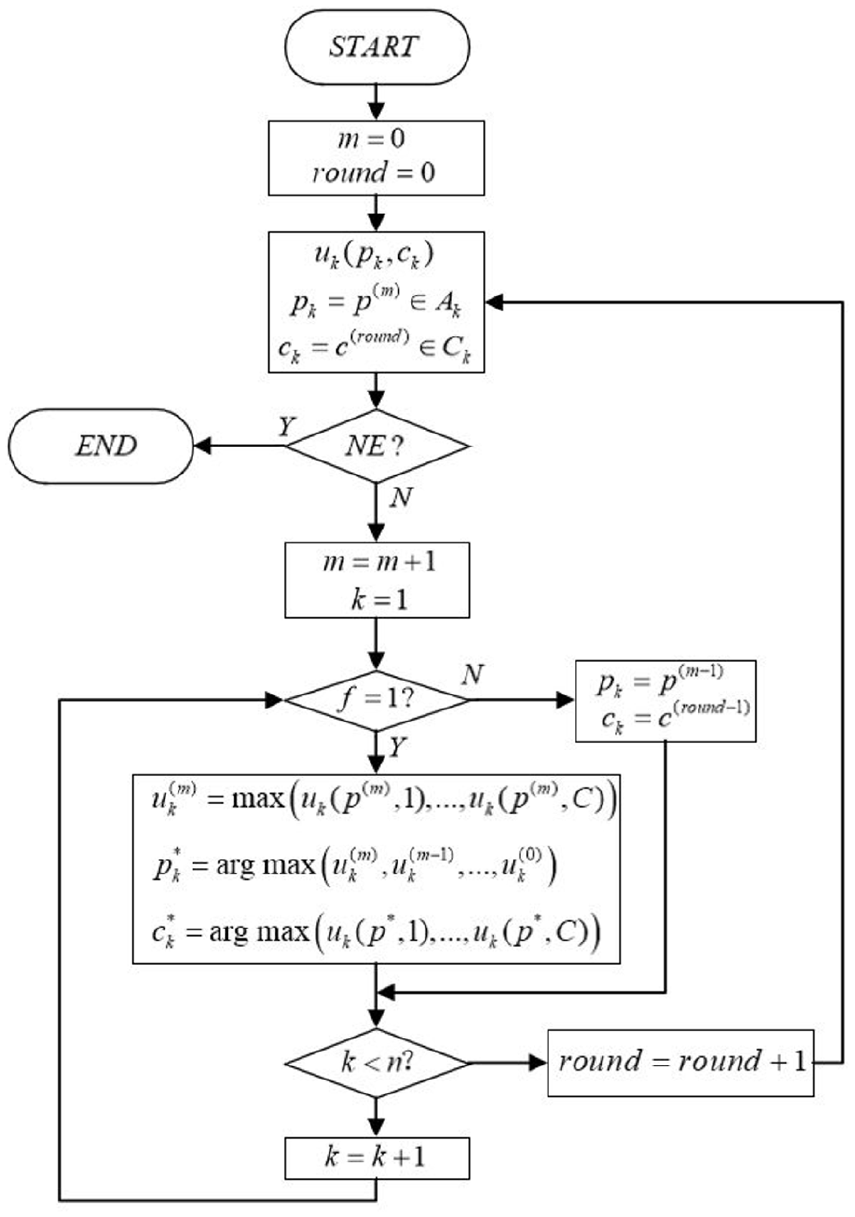
The flow diagram of algorithm.
From Figure 2, when
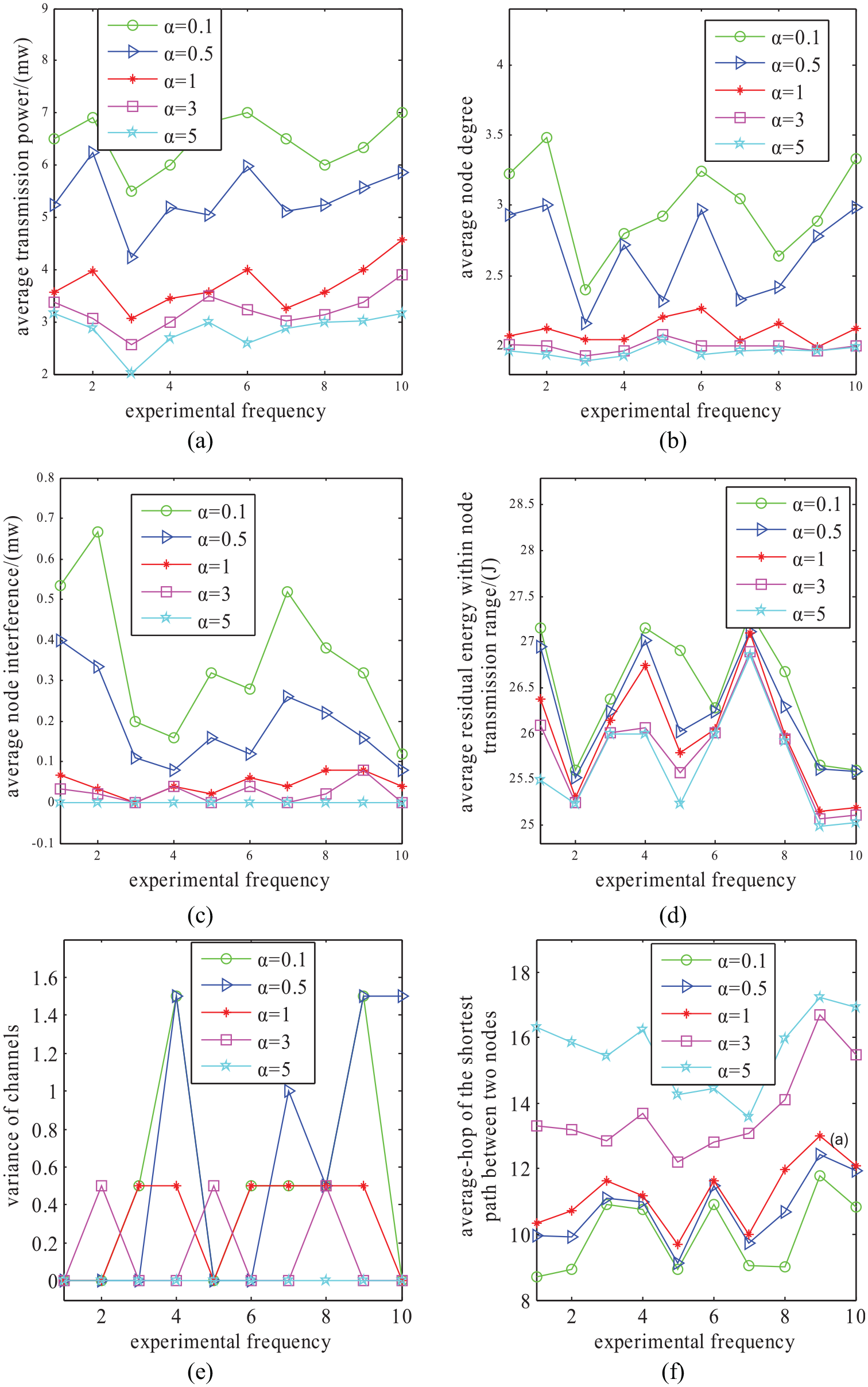
Performance influence of
When
In conclusion, decide that the weight value as
Network structure
Randomly selected 30 nodes to place in a
In Figure 3, the different colors indicate that the nodes used different orthogonal channels. In each node mark (x, y), x is the node number and y is the residual energy of the node x.
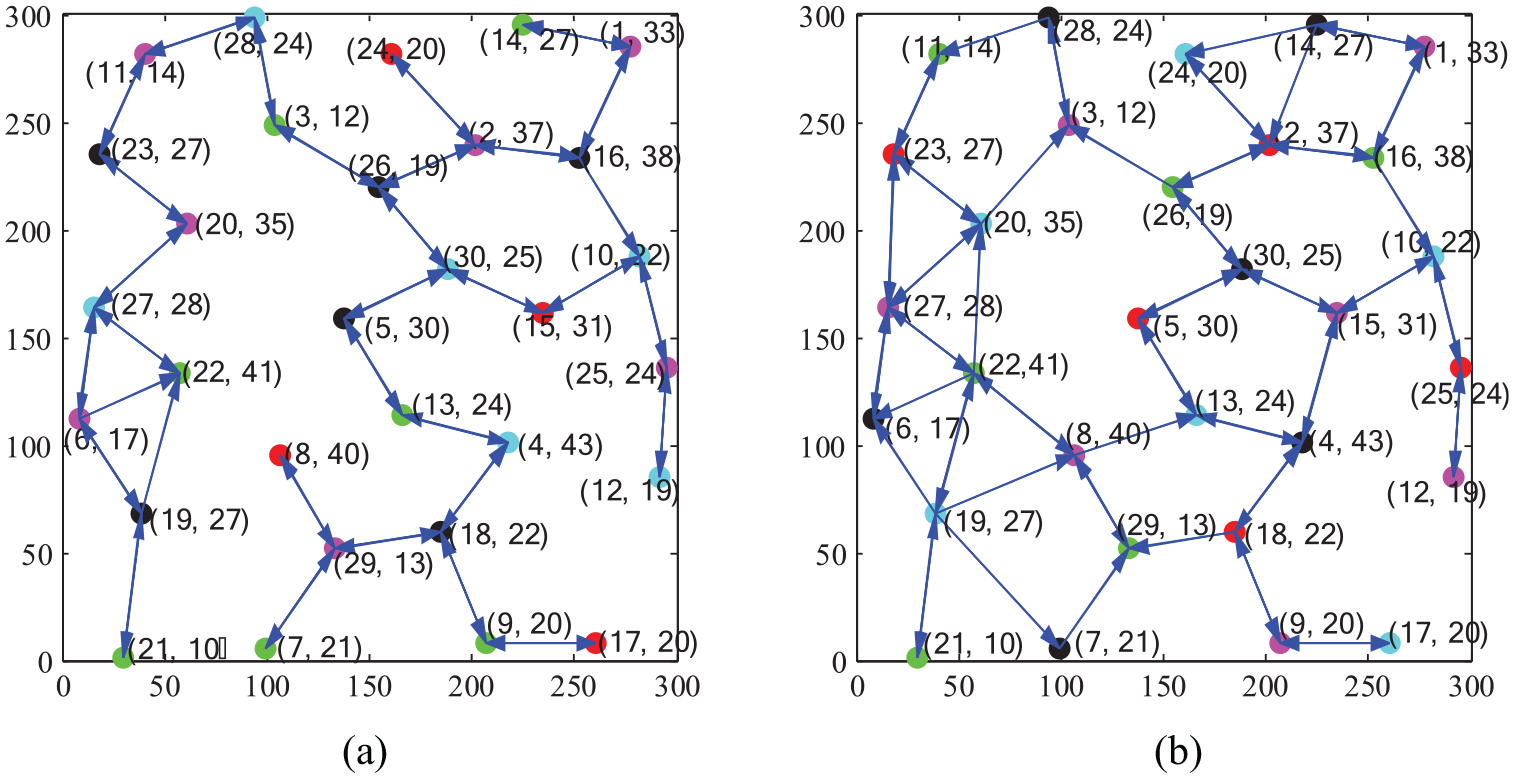
Network structure comparison: (a) DIA + CA and (b) CETGA.
In Figure 3(a), the topology of DIA + CA is relatively simple. One or more nodes in the WSN undertook too many forwarding tasks; for example, nodes 3, 5, and 11. Because the algorithm did not take node energy into consideration, some nodes with lower residual energy were placed into the forward position and died prematurely, which would reduce the network’s lifetime. In Figure 3(b), at the cost of improving node transmission power appropriately, some nodes added other transmission paths to reduce forward tasking and enhance the network’s robustness. In this way, the real-time performance was improved and the network’s lifetime was prolonged.
Topology performance
We raised 20–40 nodes in
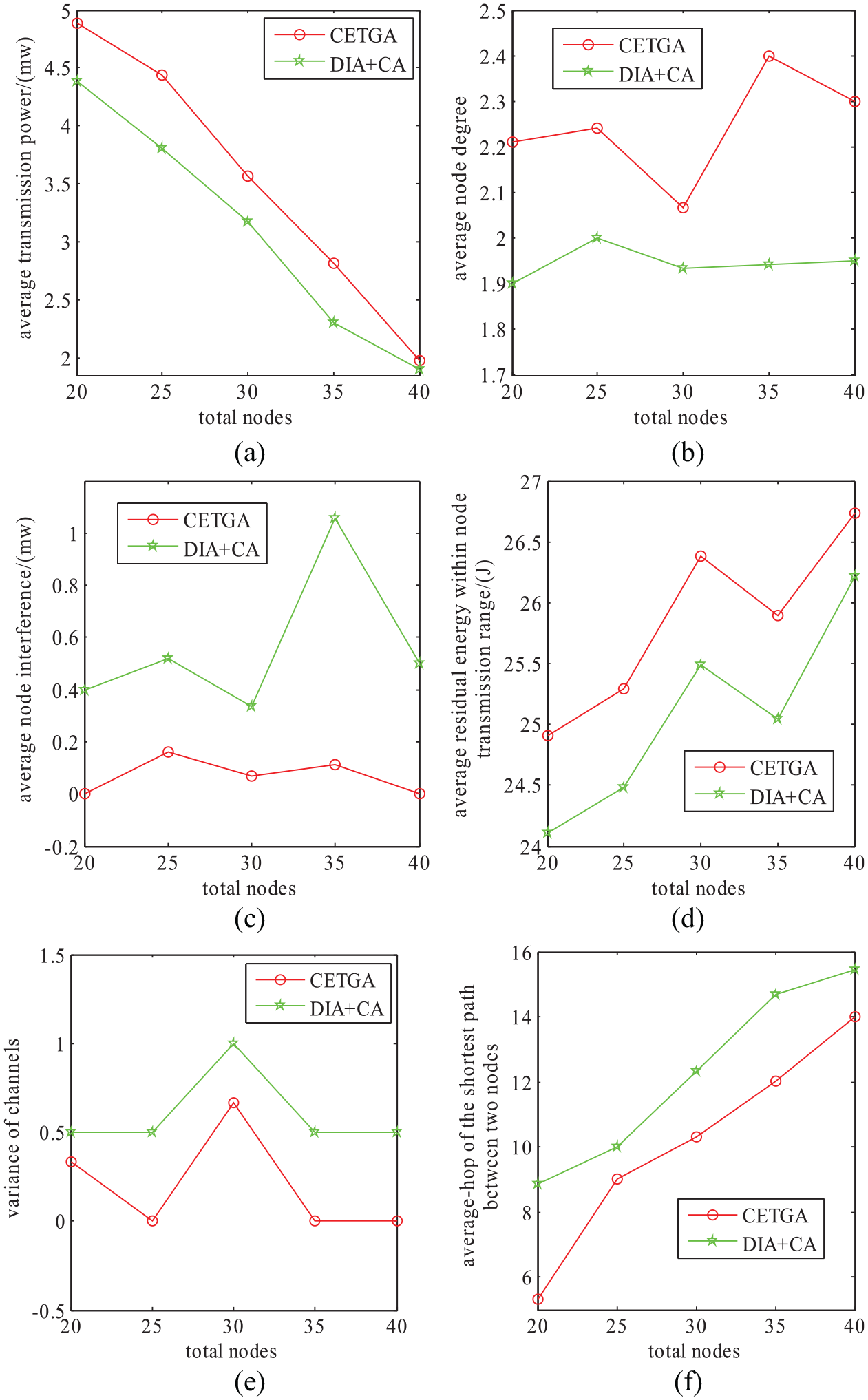
Comparison of performances with an increased number of nodes. The red line CETGA is the optimization algorithm that mentioned in this paper while the green one DIA+CA is the contrast algorithm. The comparison of performances between the two algorithm is shown in page 8, Topology performance.
The average transmission power is the mean value of nodes’s transmission power in the network, and the less the average transmission power is,the less energy consumption will be. Then the average node degree directly affects the robustness performance of the network. As shown in Figure 4(a) and (b), the topology obtained by the CETGA had a slightly higher power and node degree than those of DIA + CA. This clearly shows that the proposed algorithm can create a topology structure that can reduce node power and energy consumption as well as enhance robustness and real-time performance based on guaranteeing network connectivity.
The average node interference represents the degree of interaction between nodes in the transmission process and the average residual energy within the node transmission range directly affects the lifetime of the network. In Figure 4(c) and (d), the average node interference in the CETGA’s topology was less and the average residual energy within the node transmission range was greater than those of the DIA + CA. Thus, the CETGA can reduce inference and extend life of WSN.
The channel variance is the level of equalization using the channel. In Figure 4(e), the relatively small channel variance further illustrates the superiority of the proposed algorithm.
The average-hop of the shortest path between two nodes represents the real-time performance of network transmission. In Figure 4(f), the topology obtained by CETGA has better real-time performance. Moreover, the algorithm can reduce network energy consumption by reducing the number of forwarding tasks.
Conclusion
Basing our work on game theory, we studied the problem of topology and channel. We first built an energy-optimized game model joint topology and channel. We then designed a utility function considering node transmission power, node channels, and residual energy. The proposed model was determined to be an OPG with an NE.
Second, in accordance with the model we designed an energy-optimized game algorithm joint topology and channel (CETGA). The algorithm increased the node income by gradually reducing the node transmission power and adjusting the node channel. The algorithm could then be certified to converge to Pareto optimality in guaranteeing network connectivity.
Finally, MATLAB was used to make simulation. Simulation result verified that the topology obtained by the CETGA could result in a more balanced structure and better robustness and real-time performance. Moreover, the average node interference is relatively small, which can ensure the accuracy of the information transmission. In addition, the average residual energy of the nodes is higher, which can effectively prolong the lifetime of the network.
Footnotes
Declaration of conflicting interests
The author(s) declared no potential conflicts of interest with respect to the research, authorship, and/or publication of this article.
Funding
The author(s) disclosed receipt of the following financial support for the research, authorship, and/or publication of this article: This work was supported by the Major Program of the National Natural Science Foundation of China (No. 11790282), the Young Top-Notch Talents Program of Higher School in Hebei Province (No. BJ2019035), the Local science and technology development fund projects guided by the central government (No. 206Z1901G), the Preferred Program of Hebei Postdoctoral Research (No. B2019003017), National Natural Science Foundation of China (No. 11702179,51605315), and Natural Science Foundation of Hebei Province (No. E2018210052).

Data availability
The position of sensor nodes is scattered randomly. According to CETGA algorithm, the randomly distributed sensor nodes can constitute a network topology structure which has better performances.