




Abstract
The smart phase-swapping switches are used to rapidly change the phases of single-phase loads online in low-voltage distribution systems. They can reduce the three-phase imbalance indices. However, the effectiveness of phase-swapping operations is determined by not only the control strategy but also by the quantity and locations of smart phase-swapping switches. In this paper, a configuration method is proposed to determine the preferable quantity and locations of smart phase-swapping switches with considerations of economic benefits and operational requirements. Based on historical load information, the active and reactive powers of the loads are used to formulate the current imbalance index. The configuration problem is modeled as a multiobjective optimization that minimizes the current imbalance indices of all nodes and phase-swapping operations. The problem is solved by the particle swarm optimization algorithm to obtain the phase-swapping participation index of each single-phase load. The loads with high phase-swapping participation indices are preferably equipped with smart phase-swapping switches. The simulation results verify that the proposed method is effective and easy to be implemented in practical applications.
Keywords
Introduction
Three-phase four-wire wiring is widely applied in Chinese low-voltage distribution systems in which a large number of single-phase loads exist. Three-phase imbalance is increasingly serious because the loads usually located unevenly in the three phases. 1 Moreover, the single-phase generators such as some photovoltaics deteriorate the imbalance. 2
In distribution systems, three-phase imbalance produces negative- and zero-sequence currents, which causes extra power loss and may trip protective devices. Furthermore, it increases the risk of overloading and limits the loading capability of utility facilities. Numerous efforts have been made to mitigate three-phase imbalance, which can be roughly classified into three categories: feeder reconfiguration, power regulation, and phase-swapping. 3
Feeder reconfiguration has long been used to alter the topological structure of distribution feeders by changing the open/closed status of sectionalizing and tie switches in medium voltage networks. 4 The authors5–9 utilized the feeder reconfiguration technologies to reduce power loss and three-phase imbalance. However, feeder reconfiguration generally improves phase balancing at the system level, while the other categories such as power compensation and phase-swapping balance the loads at the feeder level.
Parallel power-electronic devices such as static var compensator (SVC) and distribution static compensator (DSTATCOM) are used to compensate the unbalanced loads.10–15 They are usually installed at the low-voltage sides of some distribution transformers and mitigate the local three-phase imbalance. However, SVC is unable to transfer active power among phases, which makes it less effective for balancing the loads than DSTATCOM. Meanwhile, the power consumption of DSTATCOM is high because of the high switching frequency, which brings more power loss at some circumstances.
Phase-swapping is a direct and effective way to balance the loads at the feeder level. The authors16–22 regulated the phases of loads to evenly allocate loads across three phases of distribution feeders. However, the traditional manual phase-swapping methods were unable to regulate the loads in real time. And manual operations inevitably caused power outages and increased labor costs. In recent years, the smart phase-swapping switches (SPSSs) have been applied to balance the loads of the feeders in some distribution areas.20,21 The SPSS is easily installed at a single-phase load and can automatically change the phase of the load within 20 ms. The online phase-swapping operations of SPSSs hardly interrupt power supply and have no influence on residential loads. 16 Besides, it is characterized by its small size, low power loss, and low price relative to aforementioned devices for load balancing.
However, the SPSSs are impossible to be installed at every load considering economic benefits in practical applications. The authors19,20 installed the switches at some nodes based on experience. It is obvious that the effectiveness of SPSSs is influenced by their configuration, that is, quantity and locations. But how to determine the quantity and locations of SPSSs is not solved theoretically so far. Therefore the study of their configuration problem is of both theoretical and applied interest. It is a long-term planning problem in consideration of the economic benefits and operational requirements involved. As mentioned in Ding and Loparo, 6 1 year is the most commonly used metric for distribution system planning, as this amount of time can be used to capture the effects of time-varying loads. Then, the optimization model for the configuration of SPSSs is established on the basis of the historical load information throughout a year.
The main contributions of this paper are as follows:
The optimization model for the configuration of SPSSs based on the historical load information is established, which provides a model for reducing the current imbalance indices of all nodes and phase-swapping operations.
A configuration method based on sequenced phase-swapping participation indices (PSPIs) is proposed to solve the appropriate quantity and locations of the SPSSs.
The proposed method is fast and easy to be implemented in practical applications.
This paper is organized as follows. The mathematical formulation of the configuration problem for SPSSs in the low-voltage distribution systems is described in section “Formulation of the multiobjective optimization for SPSS configuration.” In section “Proposed method based on sequenced PSPIs,” a configuration method based on sequenced PSPIs is proposed. Simulation results are given to show the effectiveness of the proposed method in section “Case studies.” Section “Conclusion” gives some concluding remarks.
Formulation of the multiobjective optimization for SPSS configuration
Control strategy for phase balancing
An automatic control system of SPSSs in a low-voltage distribution area is composed of an online terminal at the secondary side of a distribution transformer and SPSSs at some single-phase loads as shown in Figure 1.
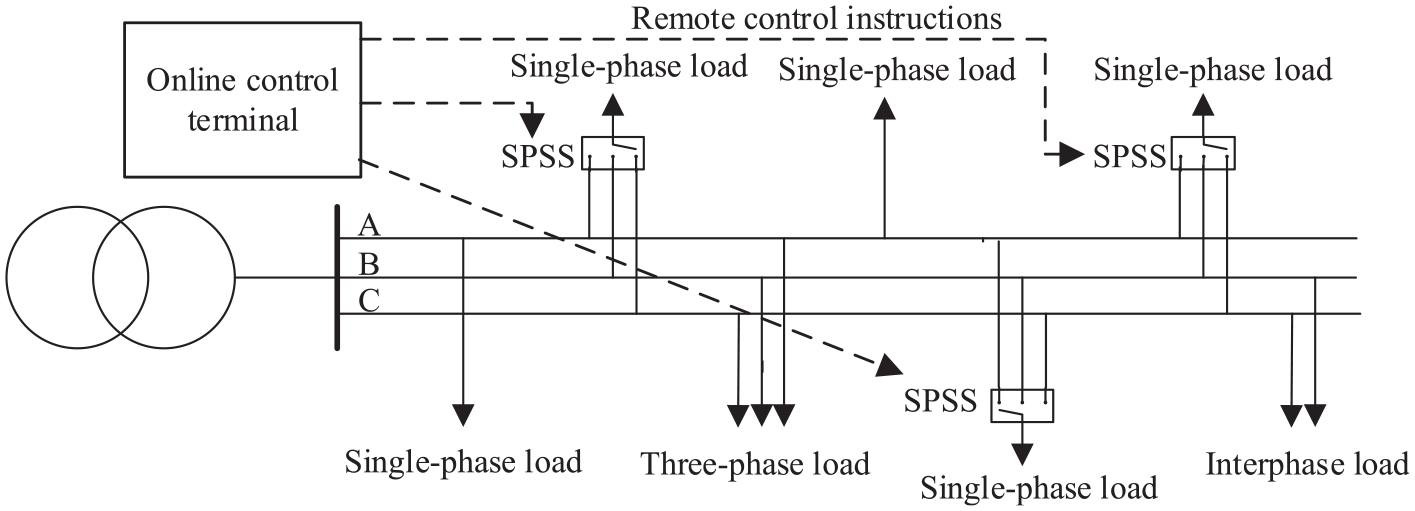
Schematic diagram of the configuration of SPSSs.
The SPSS is controllable as shown in Figure 2. The control strategy for SPSSs is briefly described as follows:
The online control terminal calculates the three-phase imbalance index of each node according to the load information at regular intervals. If some nodal imbalance index exceeds a limit, the terminal executes optimization and then sends the phase-swapping instructions to the corresponding SPSSs.
The SPSS receives remote phase-swapping instructions from the online control terminal. The switch inside the SPSS disconnects the single-phase load with original phase line at the zero-crossing point of contact current, and then connects the single-phase load with new phase line at the zero-crossing point of the contact voltage. The single-phase load is freely switched among
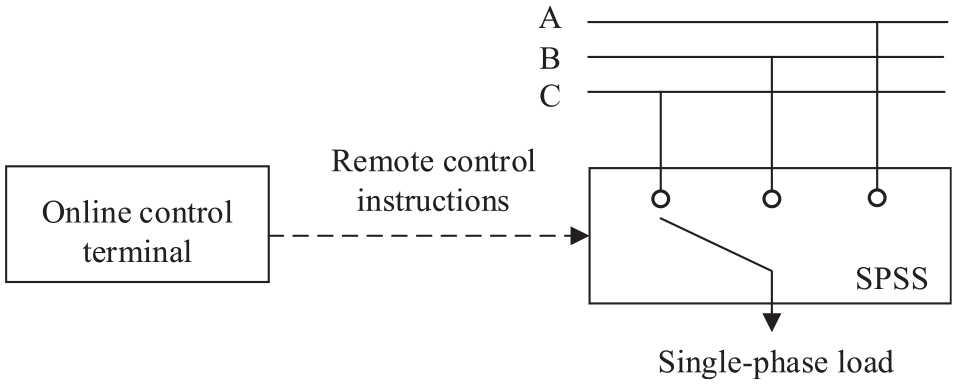
Schematic diagram of a SPSS.
It is obvious that the quantity and locations of the SPSSs inevitably influence the effectiveness of the phase-swapping operations. The target of this paper is to propose a fast and effective method to solve configuration problem of SPSSs.
Configuration principles for SPSSs
Minimization of total current imbalance indices of all nodes in a distribution system
According to IEEE 1159-2009,
23
the three-phase current imbalance index

where
It is proved in Appendix 1 that the nodal voltage imbalance index is much less than the current imbalance index in the three-phase low-voltage distribution systems. The nodal phase voltages are reasonably assumed to be symmetrical, that is,
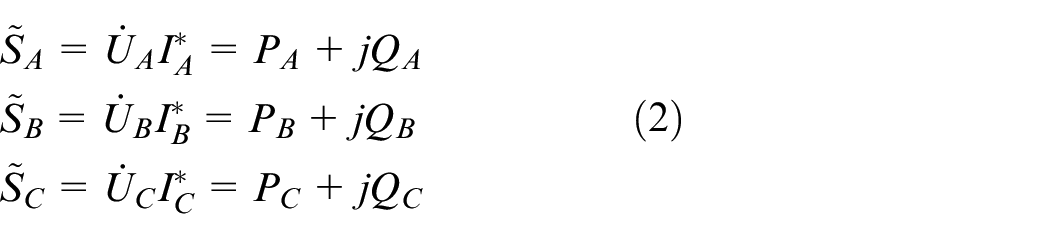
where

where
The positive- and negative-sequence currents are expressed as
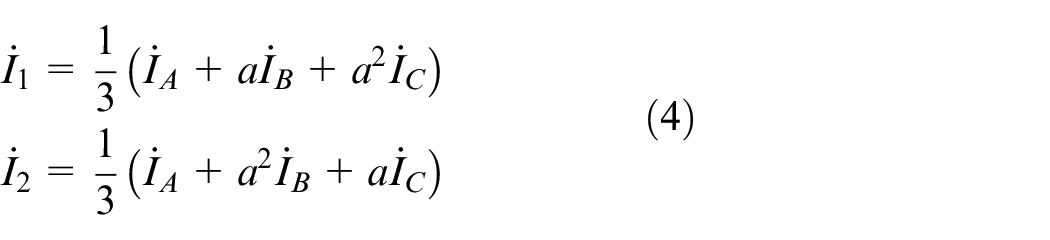
Substituting equation (3) into equation (4), we can obtain
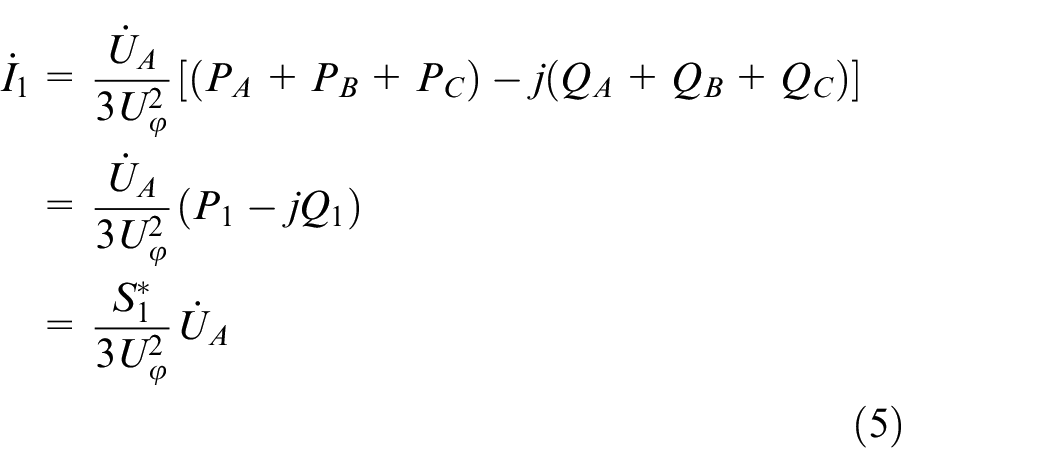
where
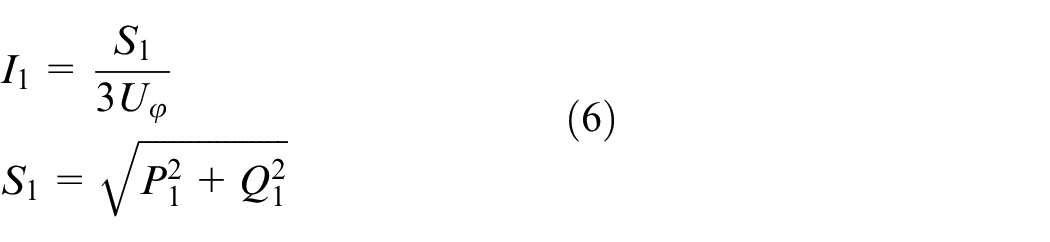
We can similarly obtain the negative-sequence current
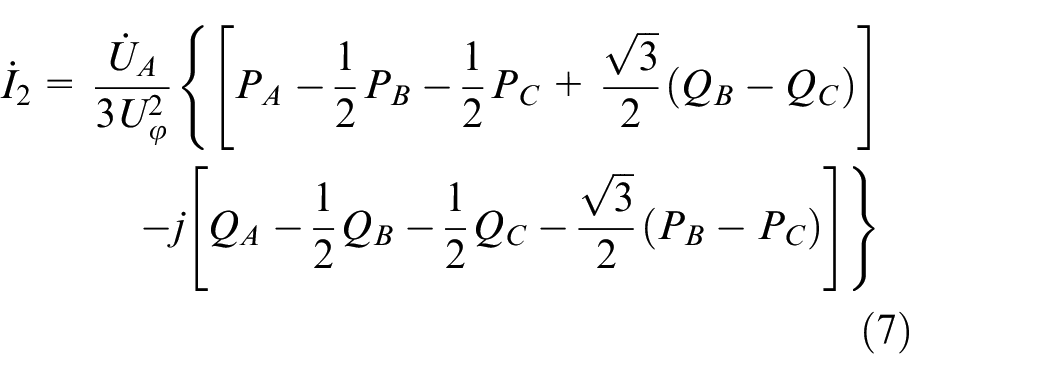
For simplification, three symbols
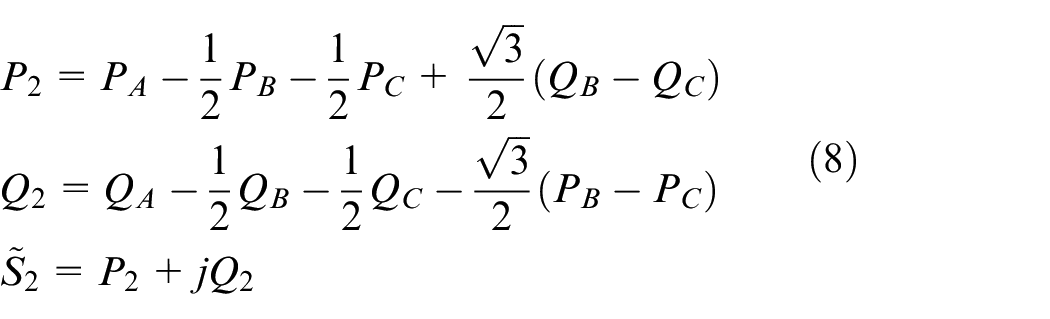
It can be derived from equations (7) and (8) that

Therefore
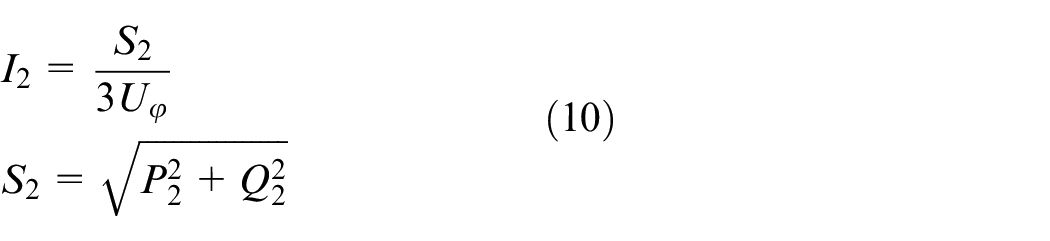
Substituting equations (6) and (10) into equation (1), then the nodal three-phase current imbalance index can be rewritten as

where nodal phase active powers
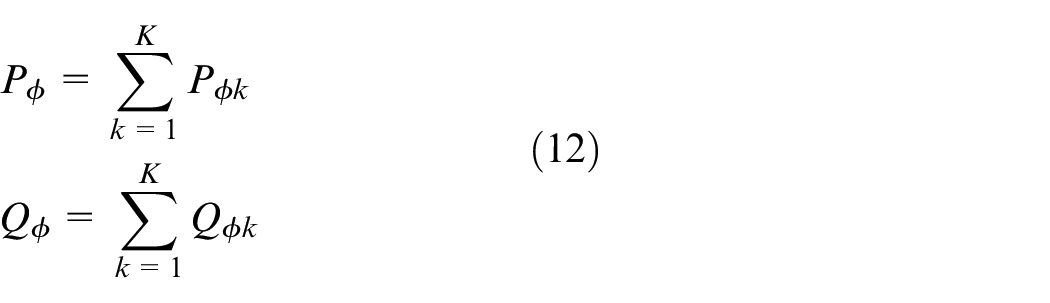
where

Let
Case 1: If
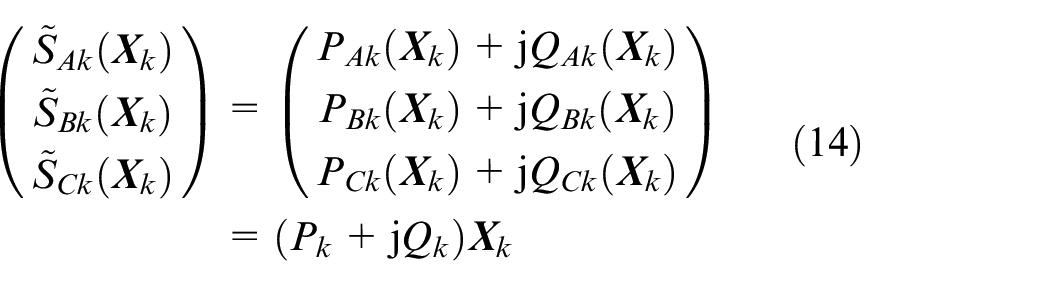
Case 2: If

Case 3: If
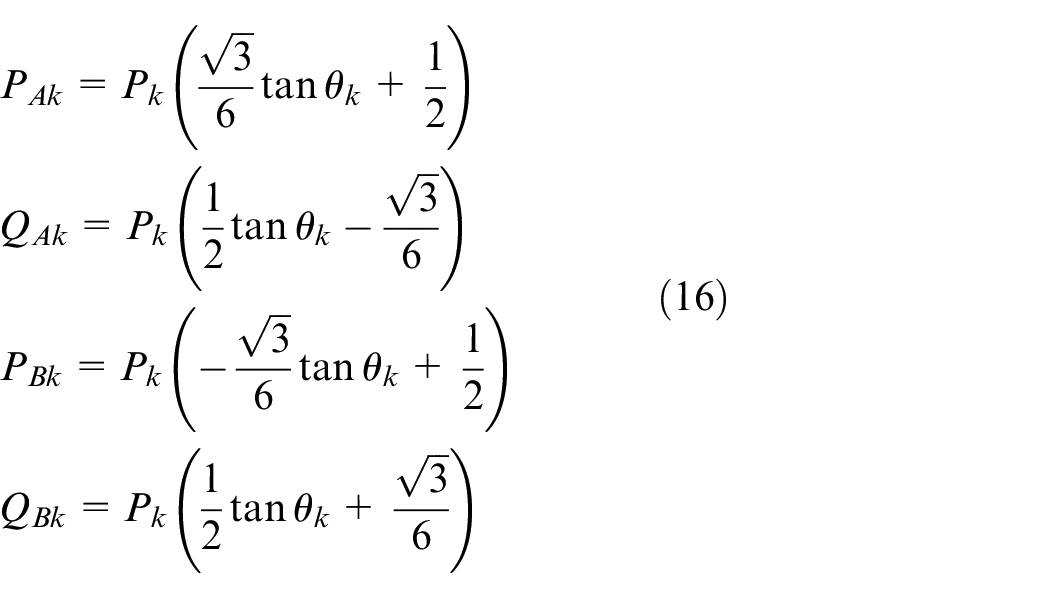
where
It can be seen from equations (12) to (16) that the nodal

where
Minimization of phase-swapping operations
The less a SPSS operates, the longer it serves. It is necessary to decrease phase-swapping operations to reduce the costs and load fluctuation. For the mth

Mathematical model
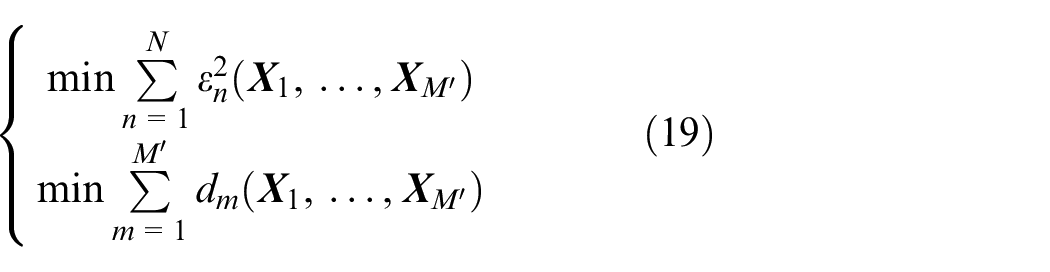
From the above control strategy and two principles, it can be concluded that the configuration of SPSSs should minimize the total square of three-phase imbalance index and the phase-swapping operations. The problem is modeled as the following multiobjective optimization
Proposed method based on sequenced PSPIs
The particle swarm optimization (PSO) algorithm, which has strong parallel search ability and universality12,19,24–26 is employed to solve the nonlinear discrete multiobjective optimization of equation (19). The two objective functions in equation (19) are first normalized in the manner divided by their maximal values as follows
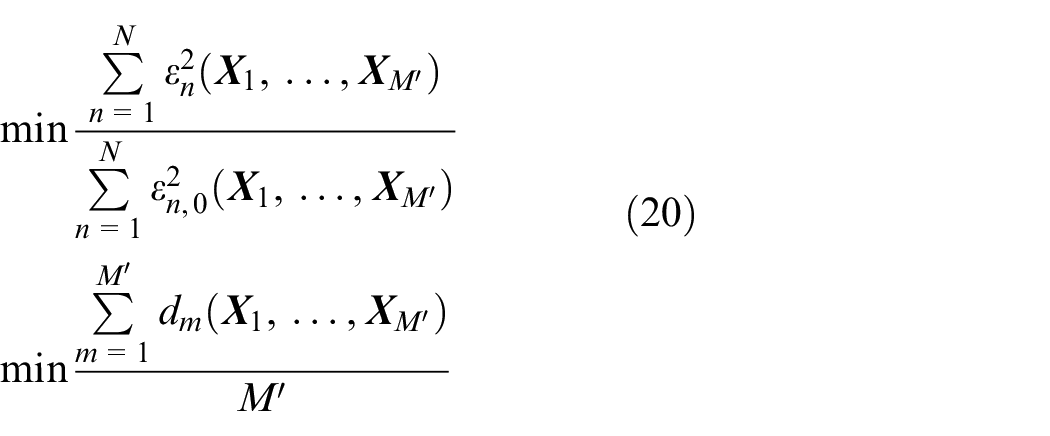
where
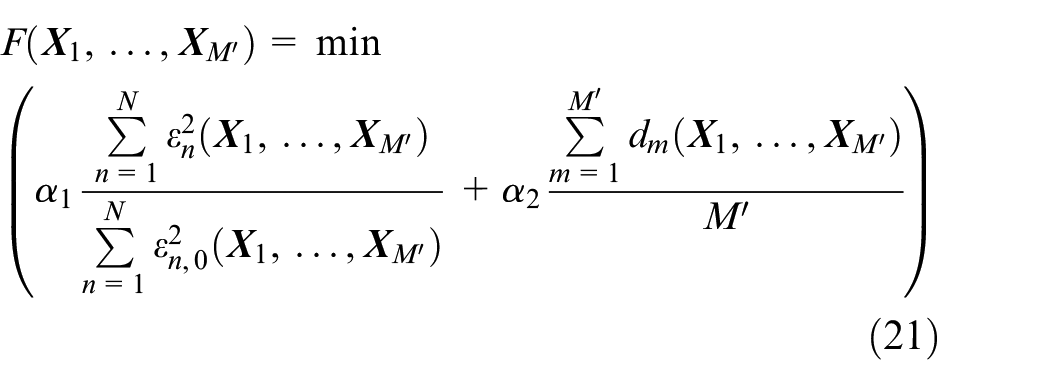
where
Because the loads are time-varying, the configuration of SPSSs is a long-term load-driven planning problem. This problem is solved based on 1-year historical load information including active and reactive powers, phase-states. The load information is sampled at
Step 1: Set the maximum of iteration
Step 2: Compute the fitness value as the initial local-best fitness
Step 3: Compute the fitness value of each particle. Update the local-best fitness
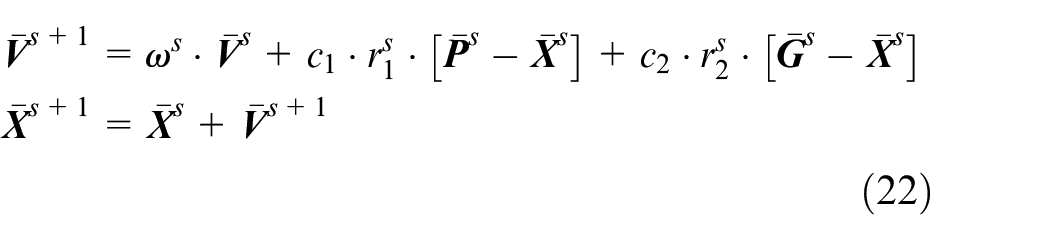
where
Step 4: Repeat Step 3 until
Step 5: Repeat Steps 2–4 until the optimal solution for the

where
Step 6: Install the SPSSs in sequence, and evaluate the effectiveness of various configurations of SPSSs as follows:
1. For
2. Calculate the average objective function value (AOFV) as follows

where
Case studies
The evaluation of the proposed method for SPSS configuration has been performed on an actual distribution area shown in Figure 3. The primary feeder is three-phase four-wire wiring. There are 12 nodes. The secondary side of the distribution transformer is number 1 and other nodes are numbered in order of feeder-lateral. There are 40 single-phase loads which are numbered in accordance with nodes as shown in the small boxes in Figure 3. In other words, the first number in the small box in Figure 3 indicates which node the load is located at, and the second number is sequenced from 1. The load information is sampled per 15 min and 35,040 groups of load information can be obtained throughout a year. The parameters of distribution lines and partial load data of the distribution system are listed in Appendix 3. The proposed method is coded in MATLAB and simulations are executed on a 2.3-GHz AMD Ryzen-7 3700U CPU with 8-GB main memory running under Windows environment. Set
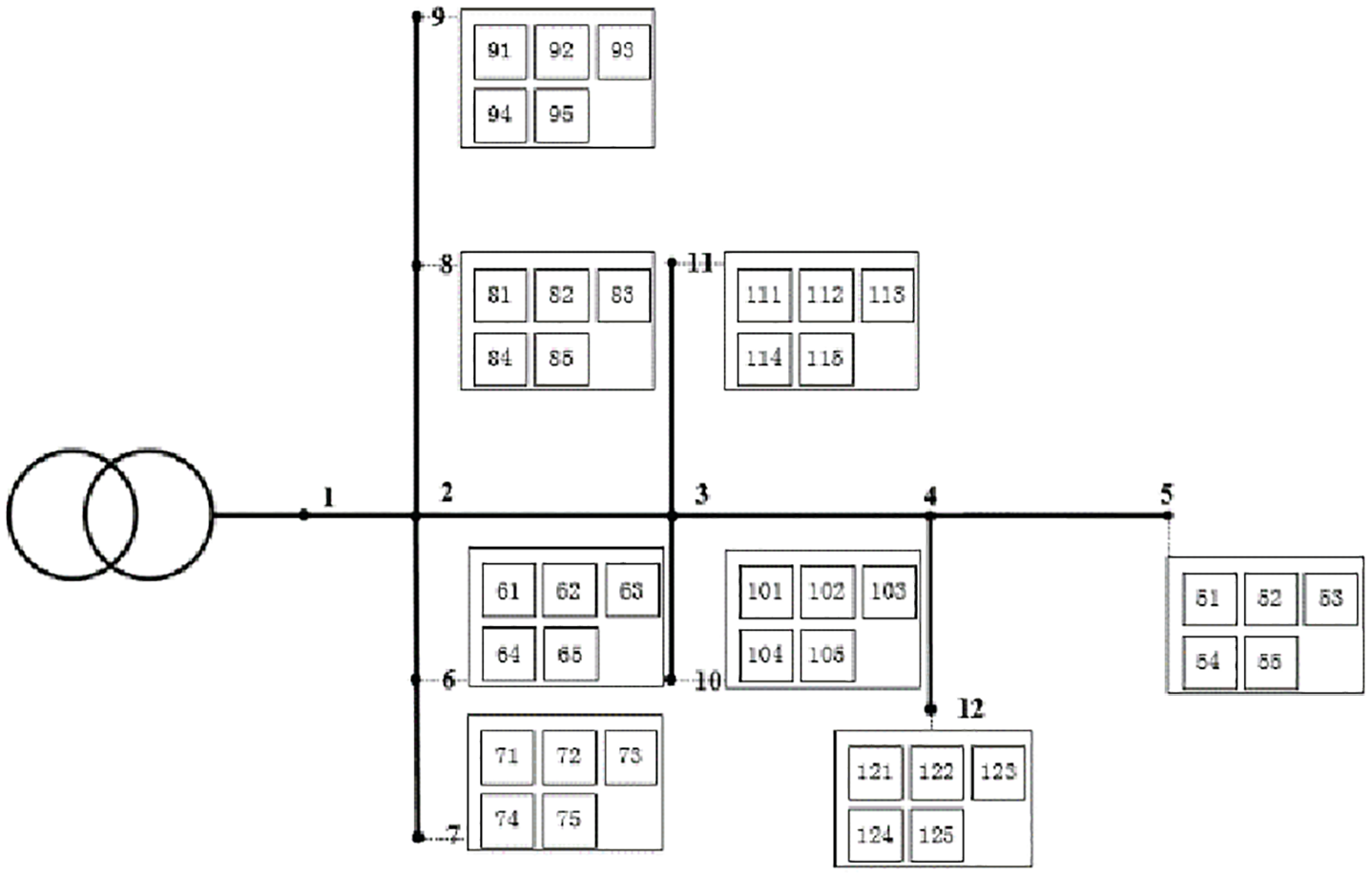
Topology of a low-voltage distribution area with 12 nodes.
The quantity of SPSSs is not generally more than half of the single-phase loads in the distribution area in consideration of economic benefit. For the system in Figure 3, the optimal locations of SPSSs determined by the proposed configuration method are listed in Table 1 as the quantity of SPSSs increases from 0 to 20. The AOFV is calculated according to equation (24) where
Optimal locations of SPSSs in the proposed method.
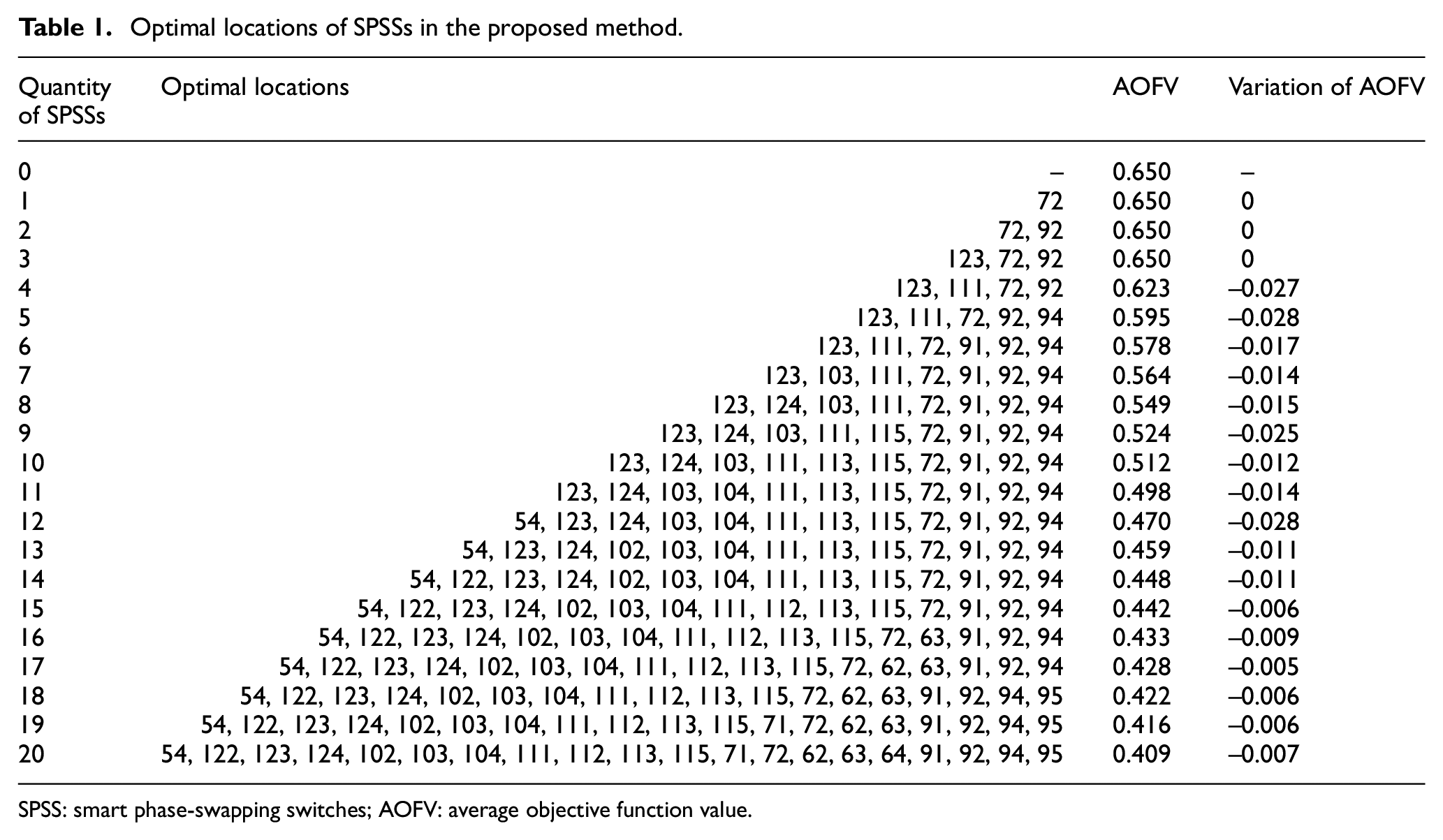
SPSS: smart phase-swapping switches; AOFV: average objective function value.
The average current imbalance index of all nodes, phase-swapping operations of SPSSs and active power loss of distribution lines are shown in Table 2. They are respectively calculated according to equations (25)–(27)



Average current imbalance index of all nodes, phase-swapping operations, and active power loss of distribution lines for different SPSS configurations.
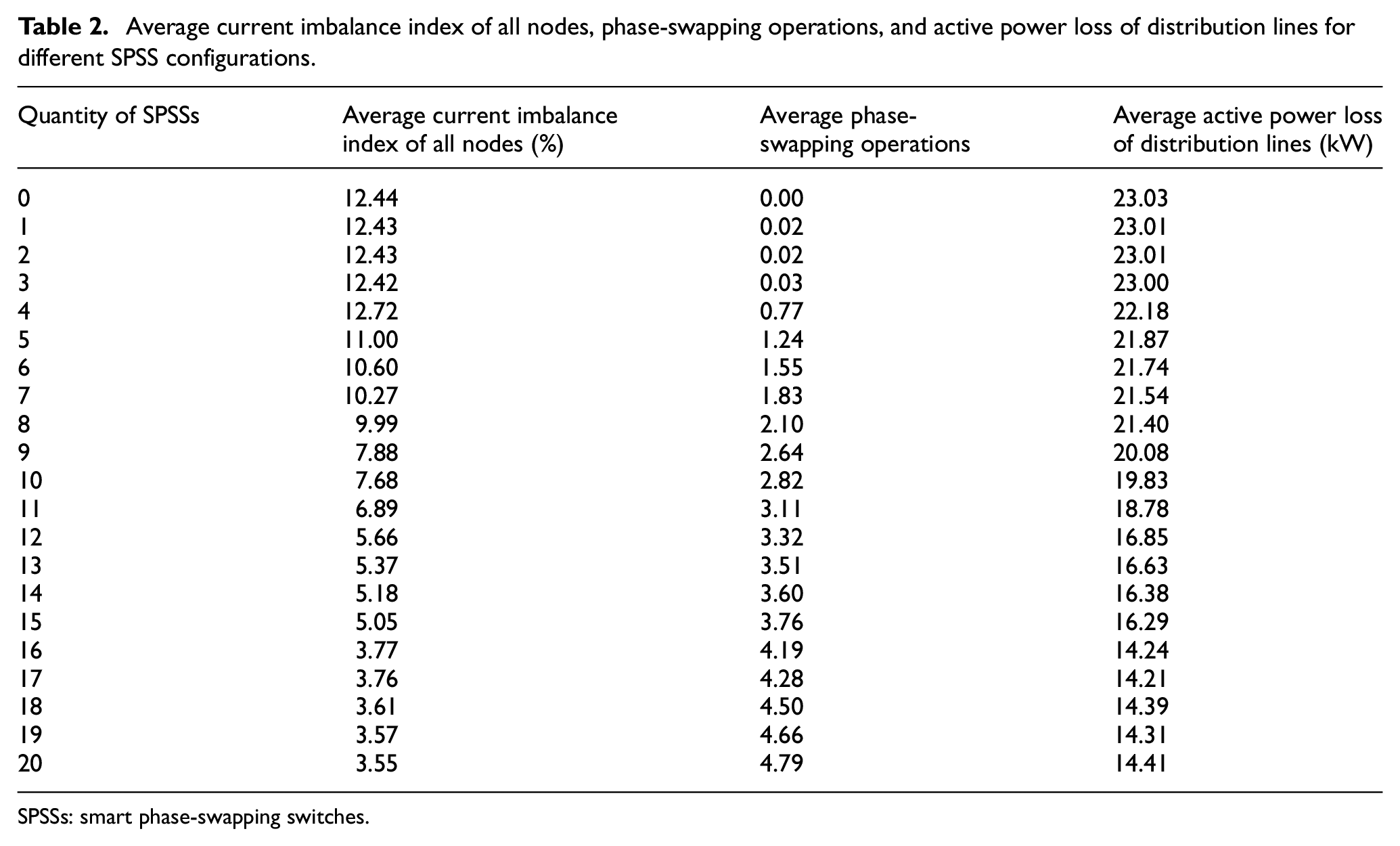
SPSSs: smart phase-swapping switches.
where
The AOFV and average current imbalance index of node 1 calculated according to equation (28) are plotted in Figure 4

where
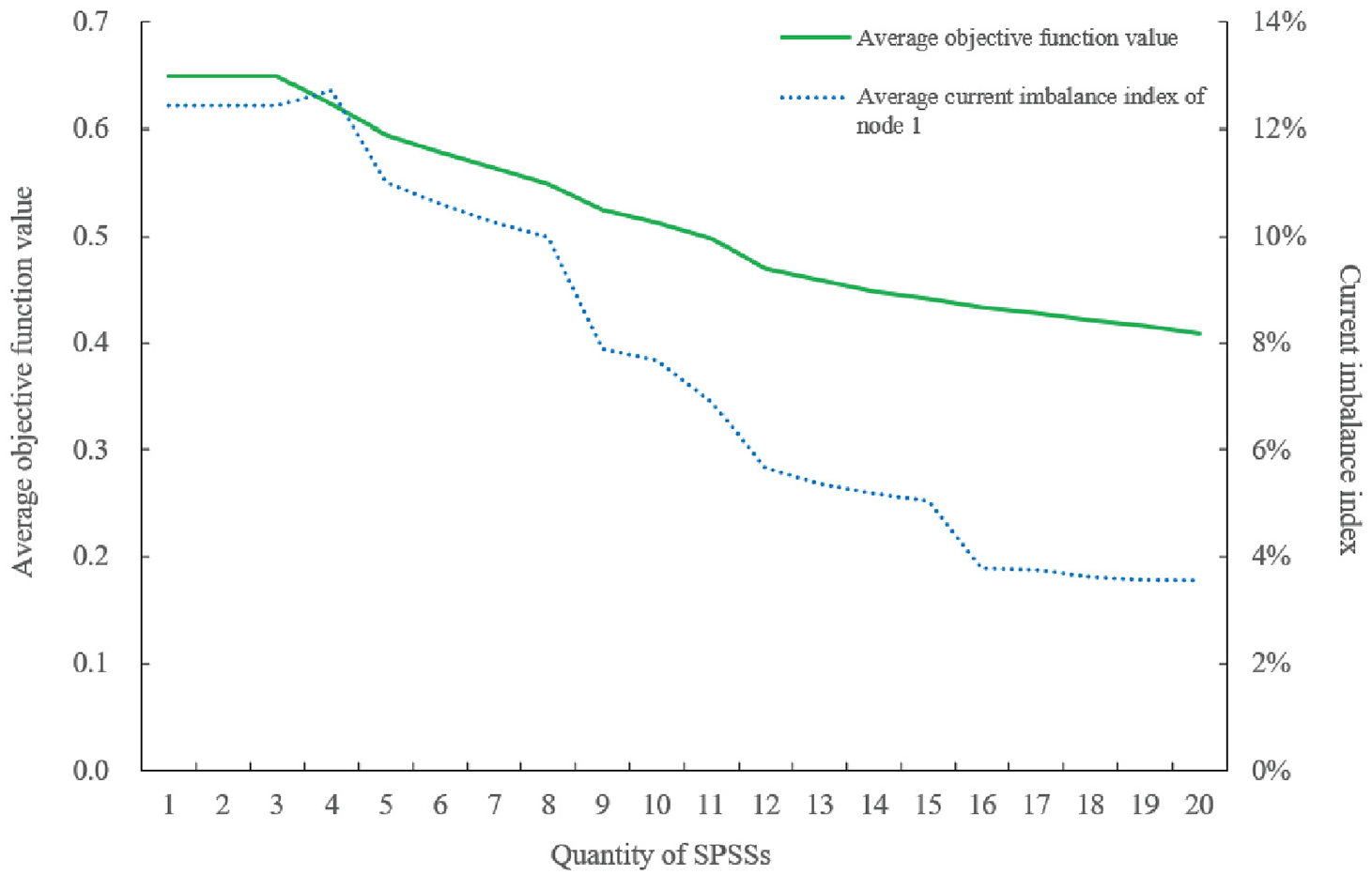
AOFV and average current imbalance index of node 1.
As shown in Tables 1 and 2, the AOFV, average current imbalance index of all nodes, and active power loss of distribution lines are significantly reduced as the quantity of SPSSs increases. It can be seen from Figure 4 that the average current imbalance index of node 1 slightly fluctuates while the AOFV goes down all along. Since the variation of AOFV in Table 1 becomes evidently smaller as the quantity of SPSSs is more than 12, it is preferable to equip 12 single-phase loads with SPSSs as shown in Table 1 in consideration of economic benefit. On this occasion, the average current imbalance index of all nodes is 5.66%, the average phase-swapping operations is 3.32, the average active power loss of distribution lines is 16.85 kW which is reduced by 26.8% relative to the original system without SPSSs. Therefore, the configuration of SPSSs considerably improves the power quality and economic benefit of the distribution area.
If the three-phase current imbalance index
Average consumed time for solving equation (21) with a group of load information.
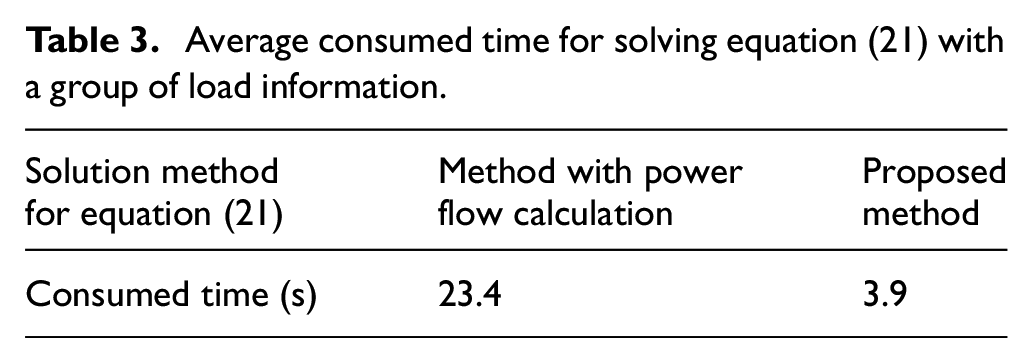
For 1-year planning problem of SPSS configuration, the procedure of solving equation (21) needs to be repeated for 35,040 times. Then the consumed time of the method with power flow calculation is excessive. Therefore, the proposed method is fast and easy to be implemented in practical applications.
Conclusion
The effectiveness of phase-swapping operations is determined by both the control strategy and the quantity and locations of SPSSs. Two principles for SPSS configuration are presented to obtain the quantity and locations of SPSSs. One is minimizing total current imbalance indices of all nodes in a distribution system, the other is minimizing the phase-swapping operations. The historical load information is used to formulate the nodal three-phase current imbalance index. Then the multiobjective optimization model is set up and solved by the PSO algorithm to obtain the PSPIs of single-phase loads. The sequenced PSPIs are proposed to determine the appropriate quantity and locations of SPSSs. The numerical studies indicate that the proposed method effectively decreases active power loss as well as current imbalance indices. Moreover, it is easy to be implemented in practical applications, which makes the method significant for improving the power quality and economic benefit of distribution systems. Since the three-phase imbalance is affected by the network topology and allocation of loads, 27 if a new load is added or the network topology is changed, the optimal configuration may change. However, the existing SPSSs can still be controlled online to balance the loads at the feeder level.
Footnotes
Appendix 1
According to GB/T 15543-2008, 28 the nodal voltage imbalance index in three-phase AC power systems is approximately computed as follows
where
where
Appendix 2
For an interphase load
It can be divided into two equivalent single-phase powers
The phase voltages are assumed symmetrical. It can be seen from Figure 5 that
So we obtain
At last we can derive
where
Appendix 3
Declaration of conflicting interests
The author(s) declared no potential conflicts of interest with respect to the research, authorship and/or publication of this article.
Funding
The author(s) disclosed receipt of the following financial support for the research, authorship and/or publication of this article: This work was supported by the National Natural Science Foundation of China under Grant No. 61803174.
