




Abstract
To solve the problem that the weak fault signal is difficult to extract under strong background noise, an asymmetric second-order stochastic resonance method is proposed. By adjusting the damping factor and the asymmetry, weak signals, noise, and potential wells are matched to each other to achieve the best stochastic resonance state so that weak fault characteristics can be effectively extracted in strong background noise. Under adiabatic approximation, the effects of damping coefficient, noise intensity, and asymmetry on the output signal-to-noise ratio are discussed based on the two-state model theory. Under the same parameters, the output signal-to-noise ratio of the asymmetric second-order stochastic resonance system is better than that of the underdamped second-order stochastic resonance system. The bearing fault and field engineering experimental results are provided to justify the comparative advantage of the proposed method over the underdamped second-order stochastic resonance method.
Introduction
Rolling bearings are an important part of a mechanical system and the most prone to failure. Many equipment, especially steel mills, are working in a very harsh environment, and early weak faults are easily overwhelmed by strong noise. This increases the difficulty to identify fault. The traditional methods also reduce the useful signal and affect the extraction of fault features while reducing noise.1–3
In the field of traditional noise reduction, many scholars have made outstanding contributions. They have proposed a number of methods to extract fault features. Common methods are singular value decomposition,4,5 wavelet transform,6,7 local mean decomposition,8,9 and so on.
Different from the traditional methods of extracting fault signals by noise reduction, stochastic resonance (SR) realizes the extraction of weak fault features by transferring noise energy to weak fault characteristic signals. Benzi et al. 10 proposed SR when studying meteorological problems. Later, it was gradually applied to many fields such as medicine, physics, and optics.11–13 In recent years, many scholars have made important contributions to the application and development of SR in the field of machinery. Tan et al. 14 used frequency shifting and rescaling detection techniques to overcome the limitations of the application of the SR method in practical engineering. Leng et al. 15 proposed a recalibration of the frequency SR method to achieve a large parameter signal SR. The above methods lay a foundation for the application of SR in the field of mechanical fault diagnosis. With the development of SR technology, some new potential function models have been proposed to improve the effect of SR, for example, tri-stable model,16,17 mono-stable model, 18 and multi-scale SR array model. 19 The above SR models basically adopt the traditional first-order overdamped SR model. It believes that the effect of damping is small so people ignore the damping effects of inertial production of the system. However, in the actual analysis, we found that the particle’s trajectory is the result of the combined action of noise and weak signals. 20 Therefore, system inertia should not be ignored. In fact, the underdamped second-order stochastic resonance (USSR) is more advantageous than the overdamped first-order SR to improve the signal-to-noise ratio (SNR). Alfonsi et al. 21 studied the influence of damping and scaling factors on the output response. Lu et al. 22 proposed a variable-step USSR method. The analysis results show that the variable-step USSR method has better effect than first-order overdamped SR. Through the above analysis, we find that the USSR is superior to the first-order overdamped SR in extracting weak fault features.
Most systems in nature are asymmetric, and the research on asymmetric SR systems has received more and more attention from scholars.23–27 Qiao et al. 28 pointed out that under the asymmetric potential function and the symmetric potential function, the output SNR varies greatly. Li et al. 29 optimized the shape of the asymmetric system to better detect the target frequency when subjected to a large amount of noise interference. The advantage of the asymmetric potential function is that it can form a richer potential function structure. Therefore, by adding an asymmetrical parameter to the second-order SR, the potential function can be independently adjusted. It provides a solution for solving the local adjustment problem of traditional methods and optimizes the structure of potential functions. The second-order underdamped model is more advantageous than the first-order overdamped model in improving SNR. Therefore, the asymmetric second-order stochastic resonance (ASSR) method can further improve the extraction efficiency of weak fault features.
ASSR model
To detect the weak faults effectively, the ASSR method is proposed. Compared to the first-order overdamping method, it is equivalent to two filtering operations. Considering the efficiency of particle transition, asymmetry parameters are added on the basis of second-order SR, and an ASSR method is proposed. The Langevin equation expression is as follows 30

where

where
Without loss of generality, we set a = 1 and b = 1. The potential function U(x) in equation (1) has two steady-state solutions and an unstable solution. Their expressions are as follows
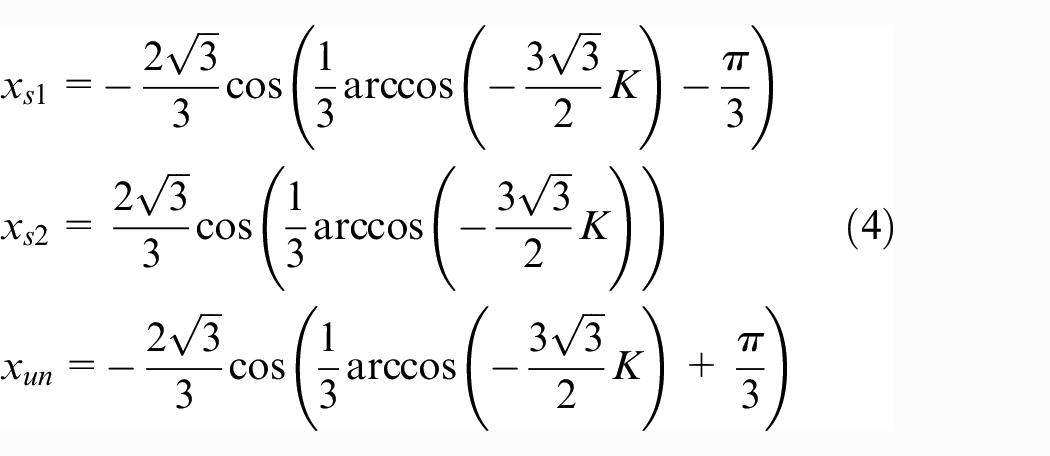
Figure 1 shows the relationship between U(x), the degree of asymmetry K, and the input signal x. In Figure 1, as the degree of asymmetry changes, the potential function curve changes continuously. Particles can transition back and forth between two potential wells.
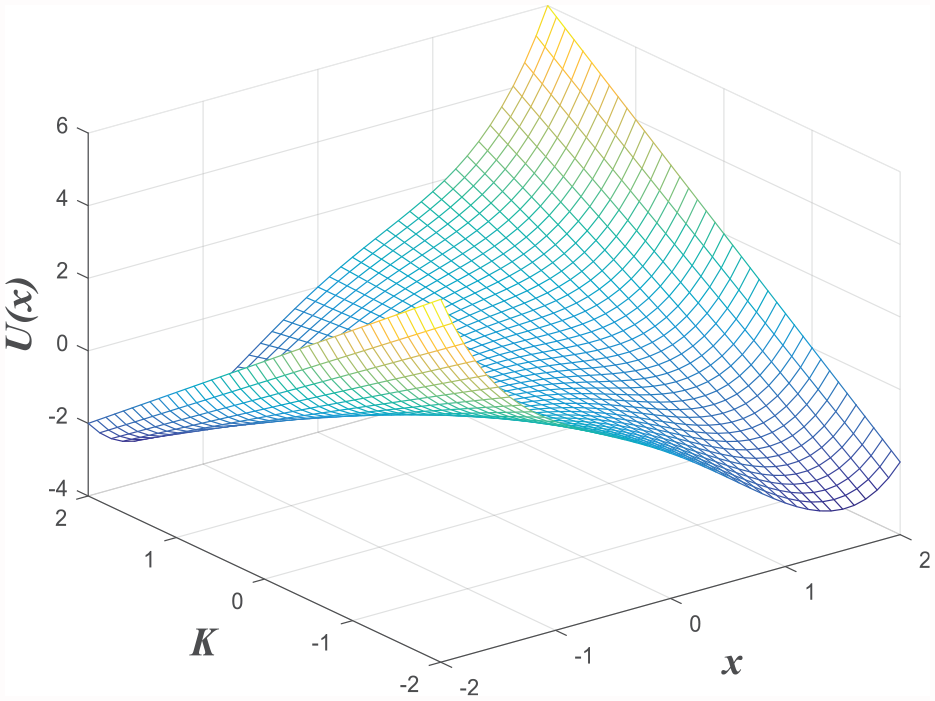
U(x) as a function of K and x.
SNR analysis
Let


Similarly, we can get the eigenvalue

The Fokker–Planck equation can derive the probability density
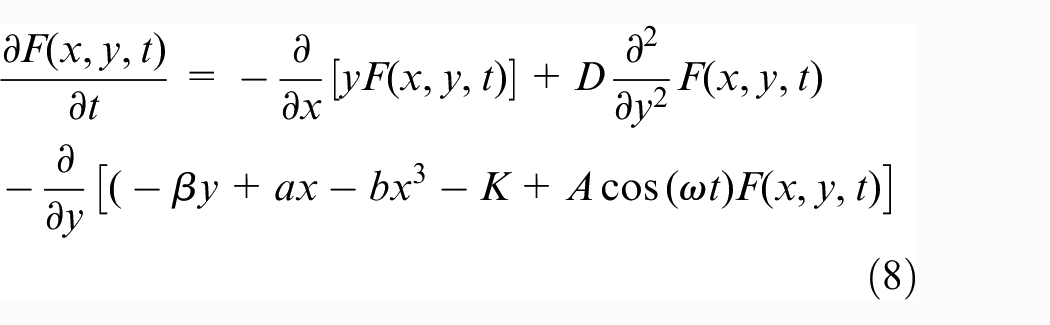
Under adiabatic approximation conditions, the probability density

where H represents the normalization constant. Furthermore, by small parameter expansion,
33
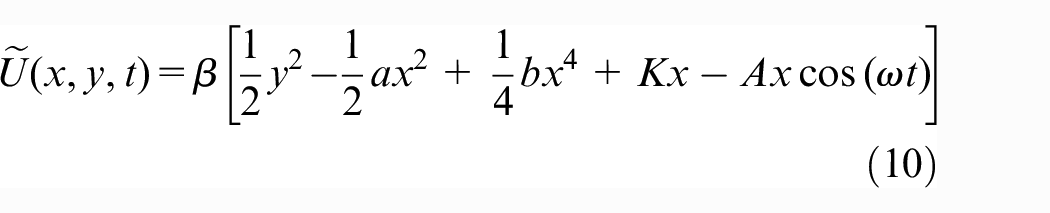
According to the bistable theory,
34
the transition rate
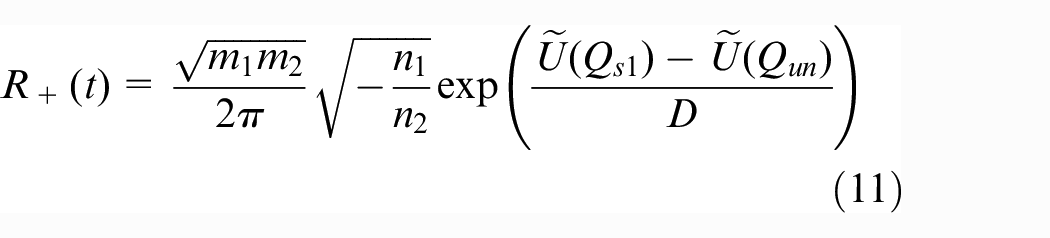
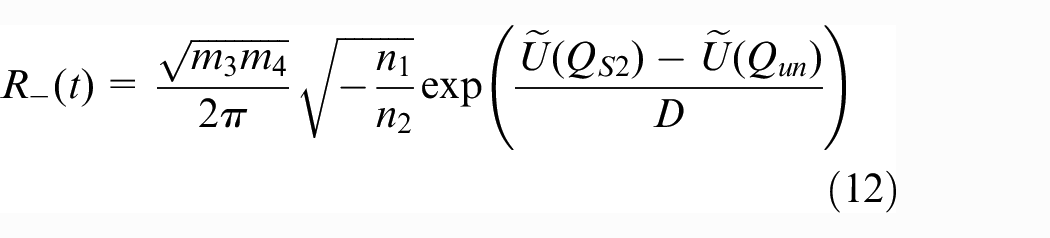
Through the two-state model theory, 35 we get


Under the adiabatic approximation condition, the output SNR of the system is obtained by the two-state model theory

where
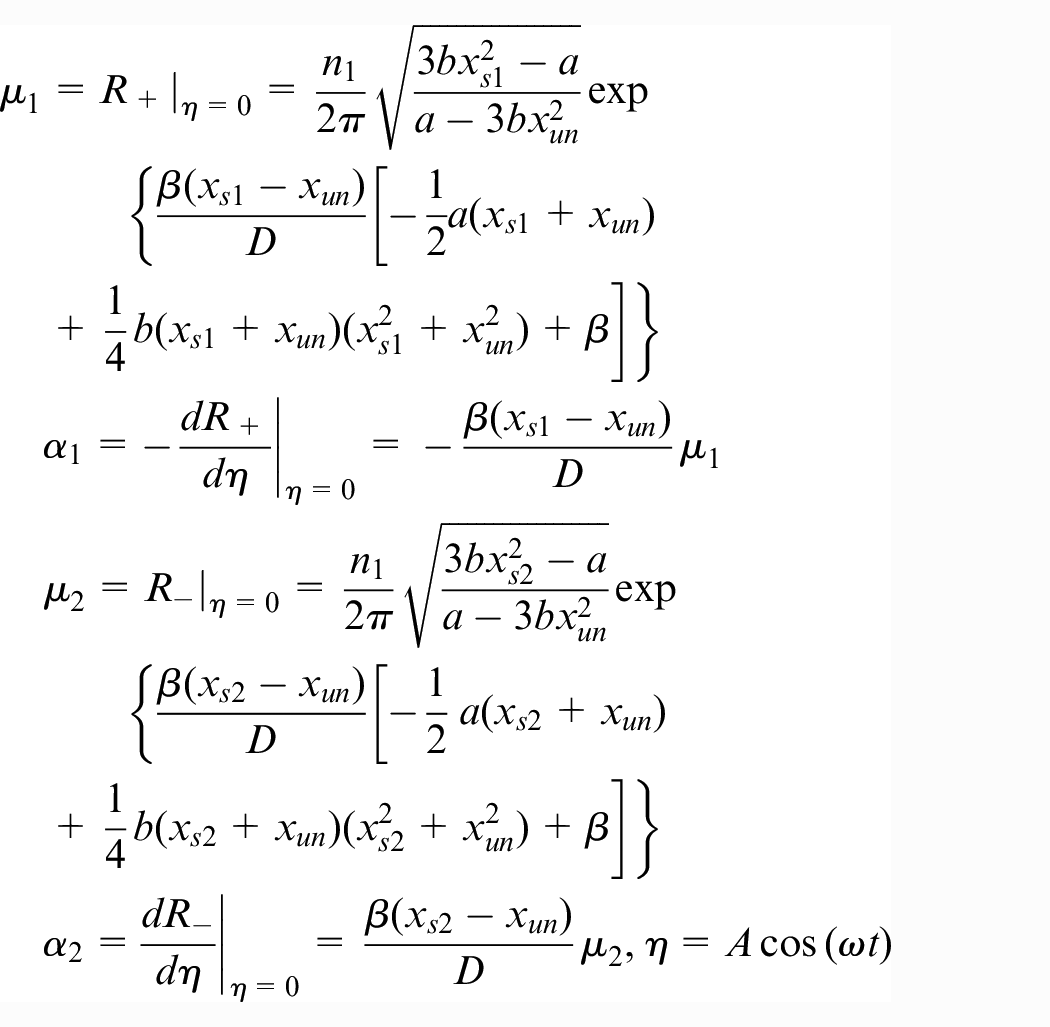
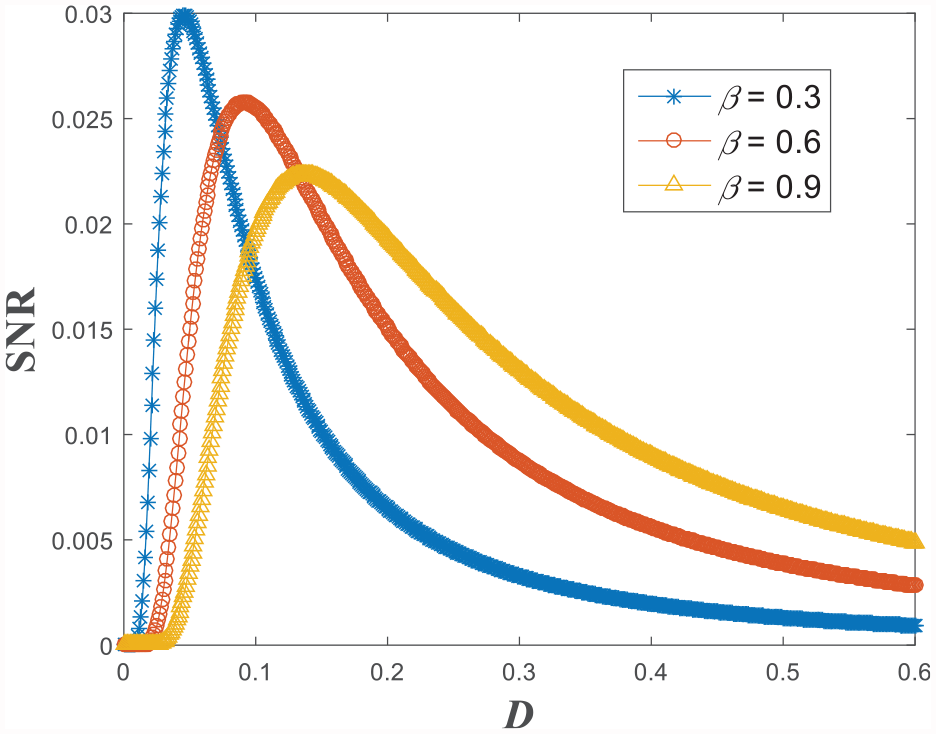
From the above analysis, we know that the noise intensity D, the degree of asymmetry K, and the damping factor
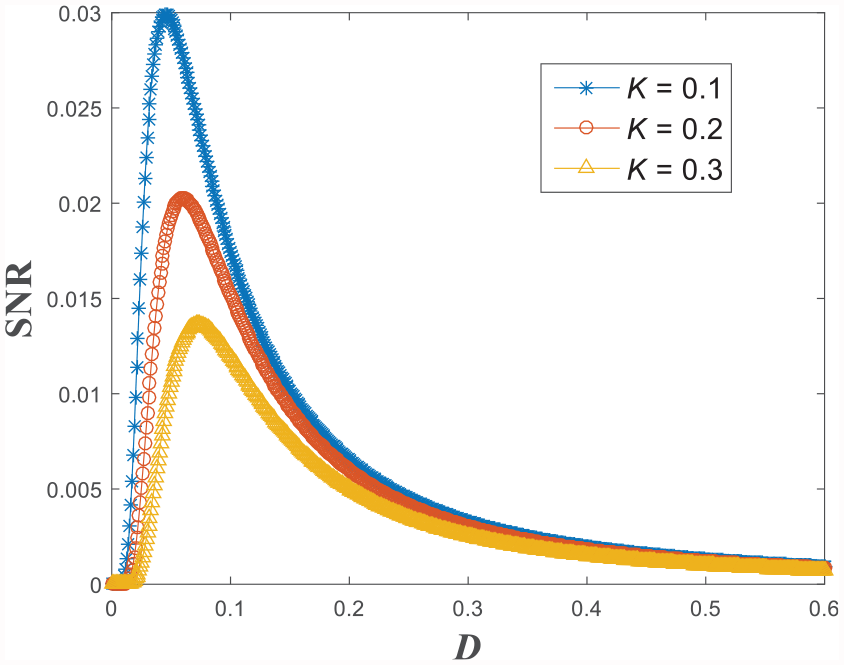
SNR versus D for A = 0.1 and
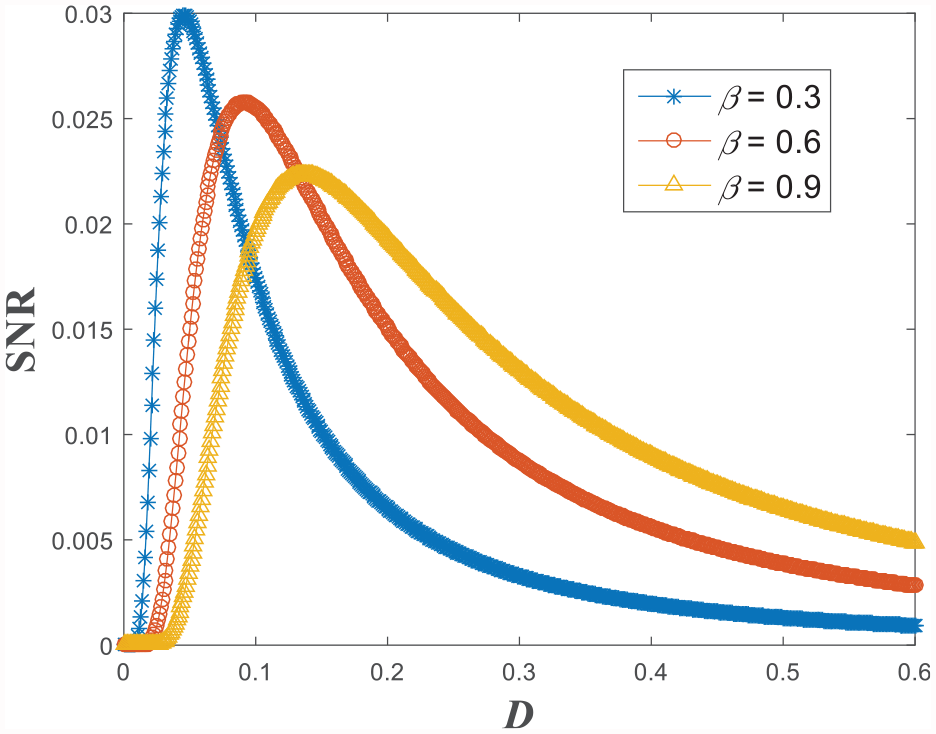
SNR versus D for A = 0.1 and K = 0.1 with different values of
It has been proved in the existing literature that the characteristics of underdamped SR are better than overdamped SR. To verify the advantages of the proposed method, the output SNRs obtained by the ASSR method and the USSR method
22
are compared. When the amplitude A = 0.1, the damping coefficient
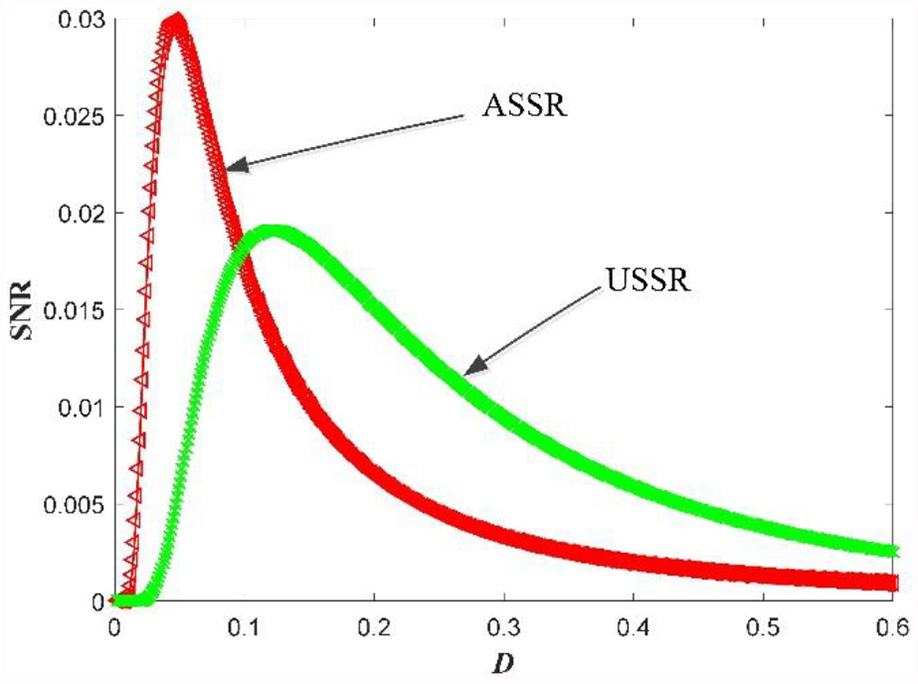
The output SNR of ASSR (a = 1, b = 1, K = 0.1,
ASSR method
When the particles are optimally matched by the combination of periodic signals, noise, and potential function models, the effect of SR is most pronounced. The particles oscillate back and forth between the two potential wells, making the system active. From the above analysis, we know that proper asymmetry of the potential well is beneficial to the generation of SR. When the degree of asymmetry exceeds a certain range, as the degree of asymmetry increases, the effect of SR deteriorates. As the damping factor increases, the effect of SR diminishes. According to the above analysis, we propose an ASSR model to extract weak faults. The main strategy is showed in Figure 5:
Signal preprocessing: the acquired signal is processed using a frequency-shifted and variable-scale processing. In this way, the envelope spectrum of the acquired signal is obtained.
Initialization parameters: set the degree of asymmetry K and the damping factor
System parameter optimization: the envelope of the original signal is inputted into the ASSR system, and the ant colony algorithm (ACA) is used to optimize the system parameters.
Output SNR calculation: the optimized parameters are inputted into the SR system, and the output SNR is calculated by the Runge–Kutta equation.
Weak fault feature extraction: the spectrum is obtained by Fourier transform, and the weak fault signal extraction under strong background noise is realized. So, the fault frequency of equipment is identified.
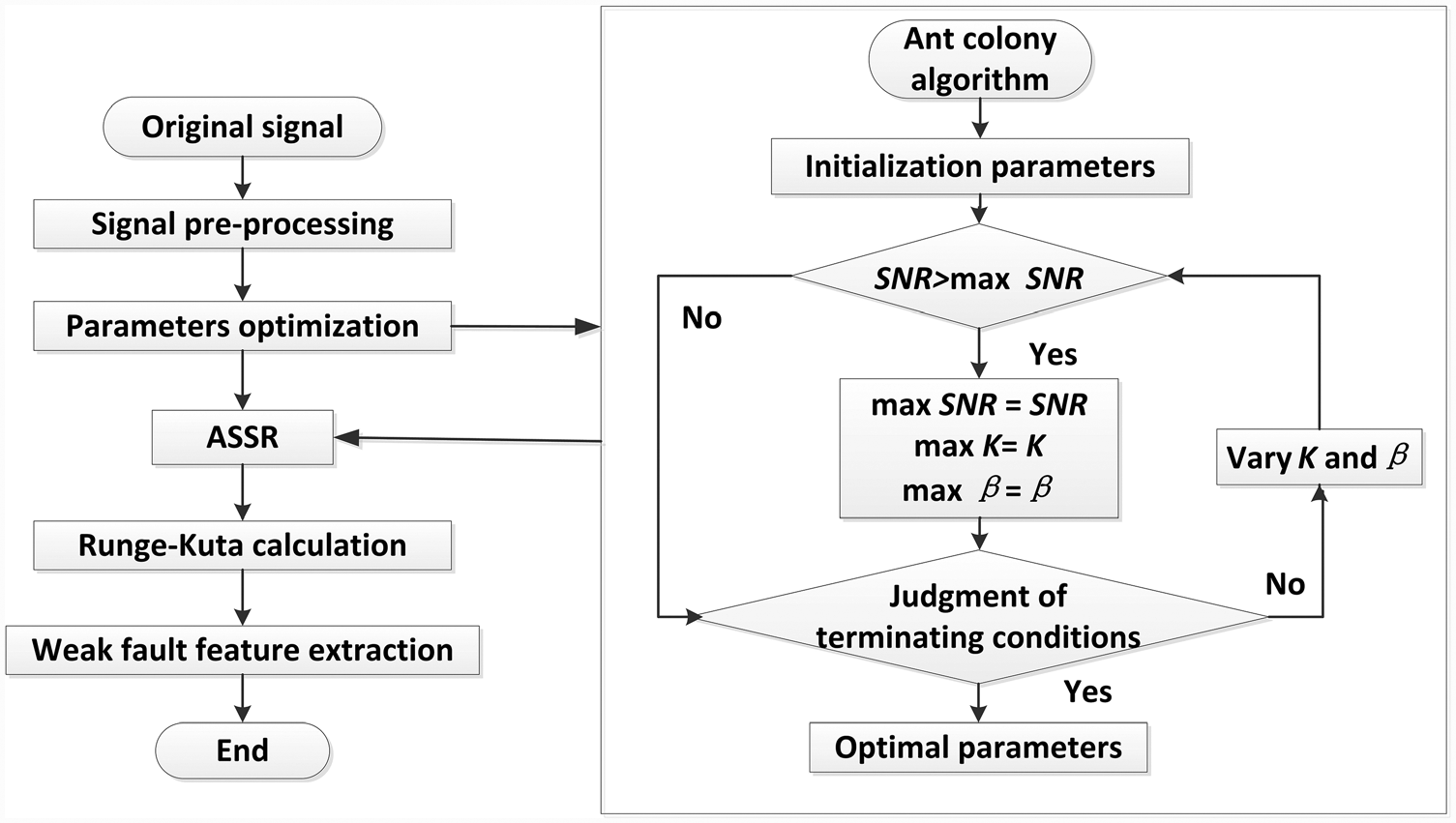
ASSR strategy.
Experiment verification
To verify the ASSR method, we carried out bearing test verification. The bearing inner ring is very prone to failure, so we detect the weak fault of it. The experimental equipment is shown in Figure 6. We use the Zonic Block/618 collector to acquire the signal. The basic parameters of the faulty bearing are as follows:
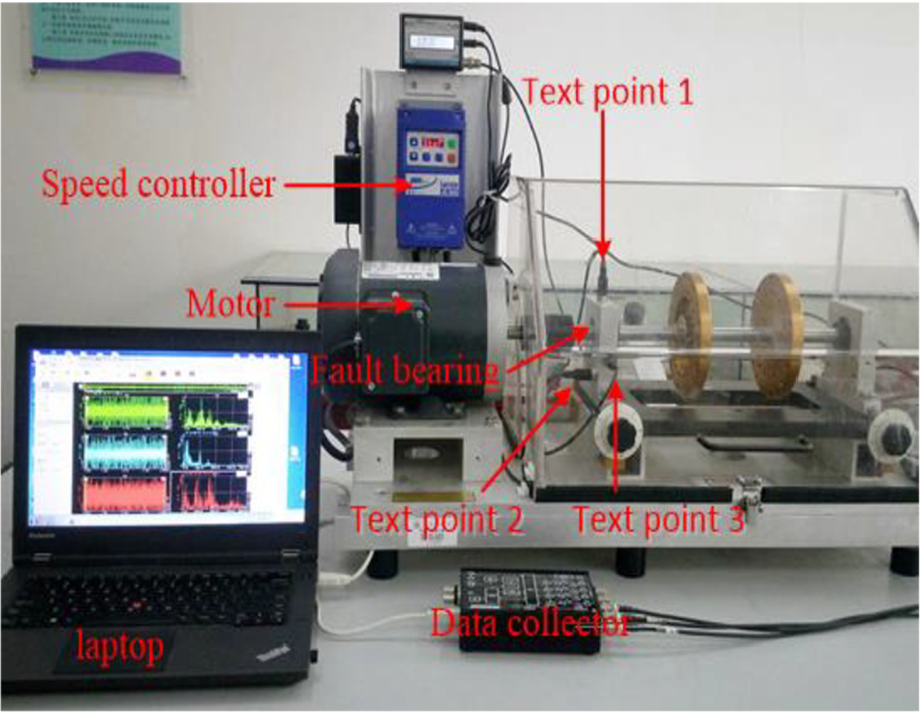
Bearing inspection platform.
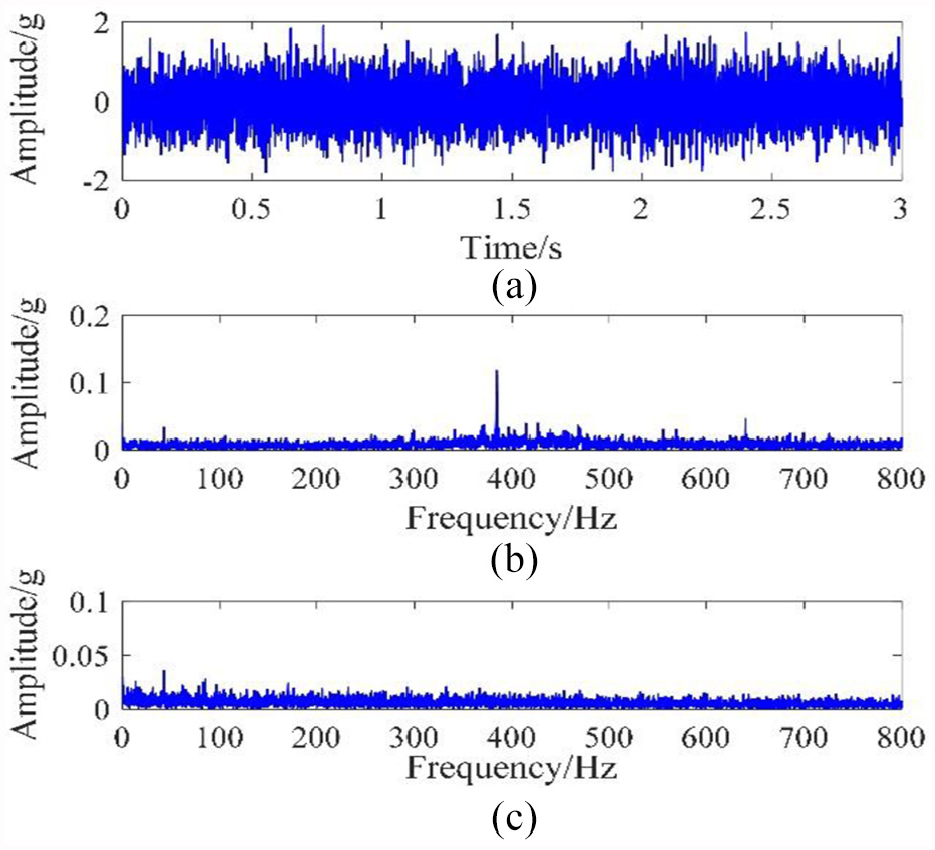
(a) Waveform of original signal, (b) spectrum, and (c) envelope spectrum.
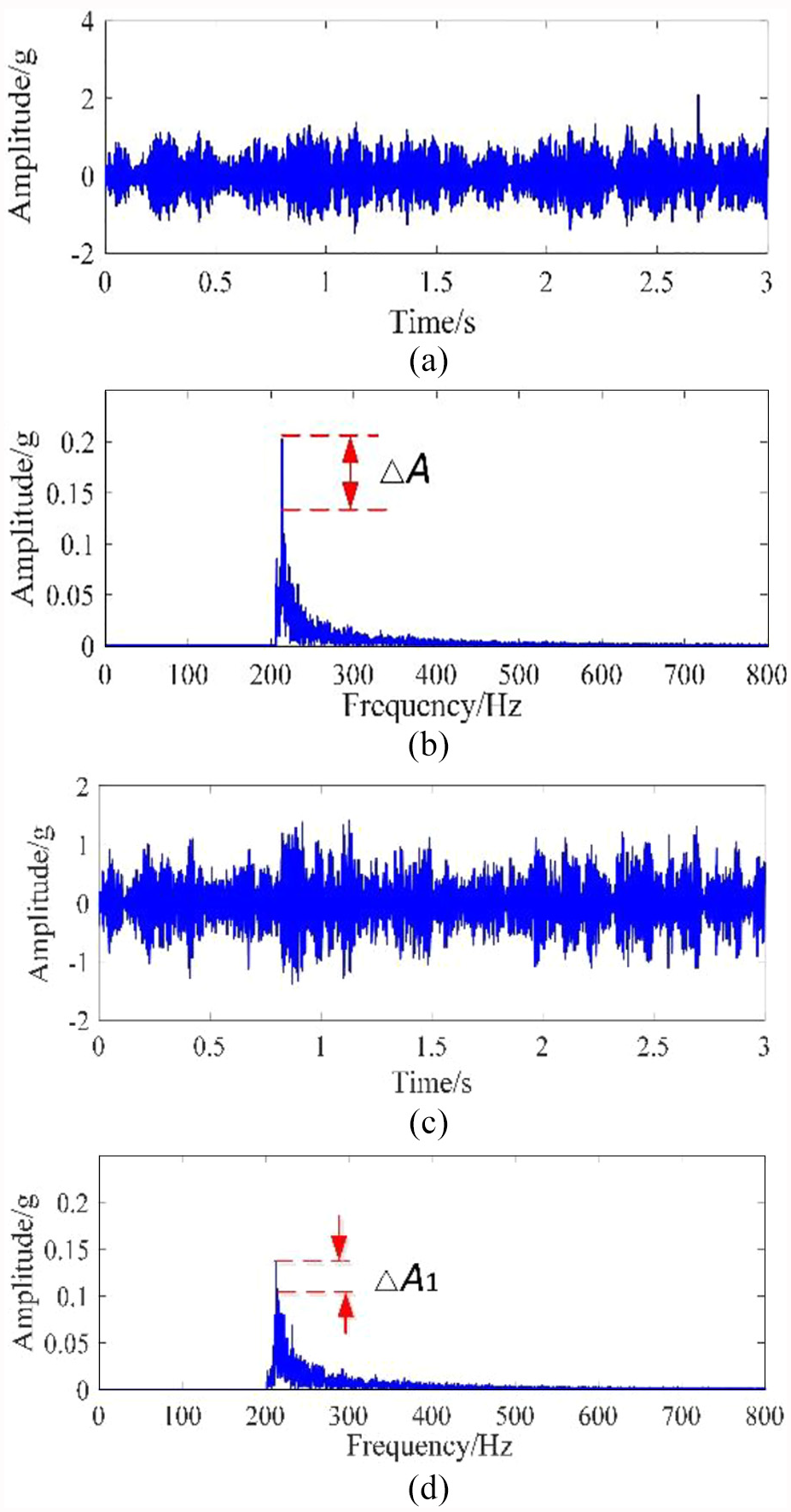
The results of ASSR method and USSR method: (a) ASSR waveform, (b) ASSR spectrum, (c) USSR waveform, and (d) USSR spectrum.
To verify the advanced nature of the ASSR model. The collected signal is processed by USSR method, and the system parameters a = 0.8922 and b = 0.0735 are obtained. Figure 8(d) shows that the spectral peak value A1max is 0.1359. The value of the second highest point is 0.1073. The difference value
Engineering experiment
During the routine inspection of the wire mill, we found abnormal vibration of the gearbox. In order to prevent major accidents, we installed an acceleration sensor on the rolling mill gearbox. The installation position is shown in Figure 9. The motor speed is 1300 r/min. The input shaft rotation frequency is 21.67 Hz. The sampling frequency is 2560 Hz. Table 1 shows the basic parameters of the gearbox.
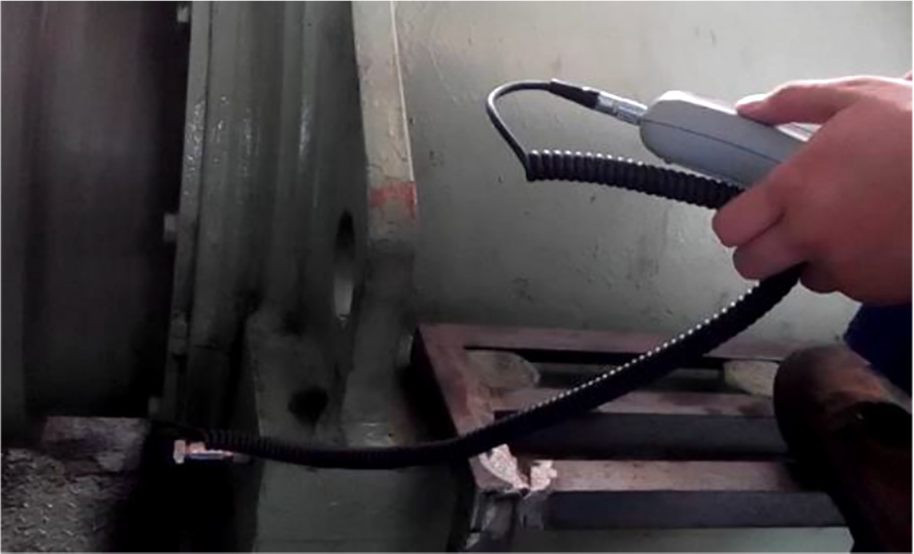
Test system and measuring point arrangement.
Parameters of gearbox.
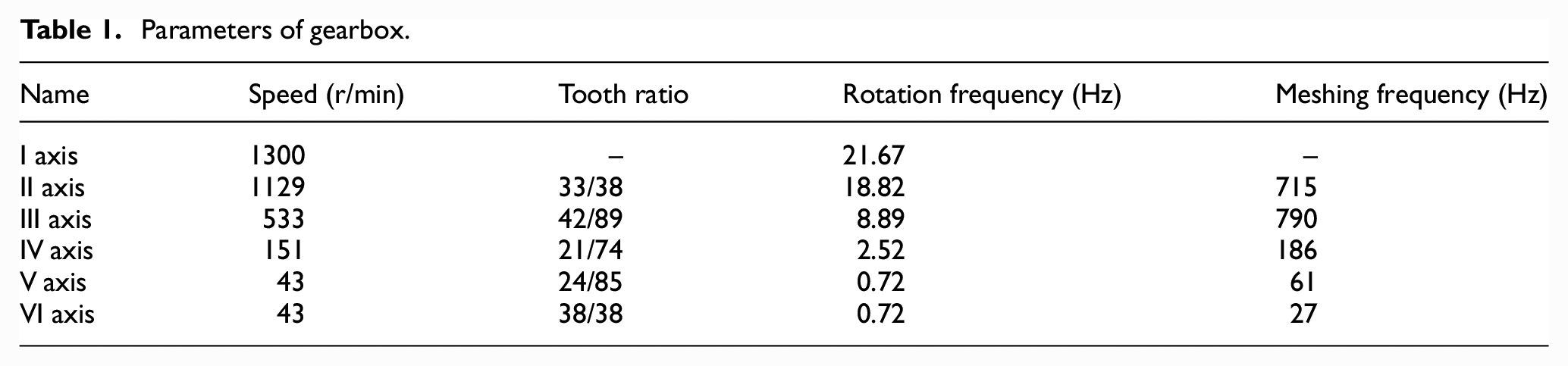
Figure 10(a) shows time-domain waveform of the original signal. In Figure 10(b), the energy density at 717.4 Hz is high and a sideband appears. Comparing the data in Table 1, it can be inferred that the II axis may have failed. However, the sidebands are not obvious and the interval cannot be determined. In Figure 10(c), due to noise interference, we are unable to accurately extract the fault characteristics. In this case, the fault location cannot be found accurately. We use the proposed method to analyze the data. Using the ACA, we obtain the optimal combination of asymmetry and damping factor as K = 0.6991 and
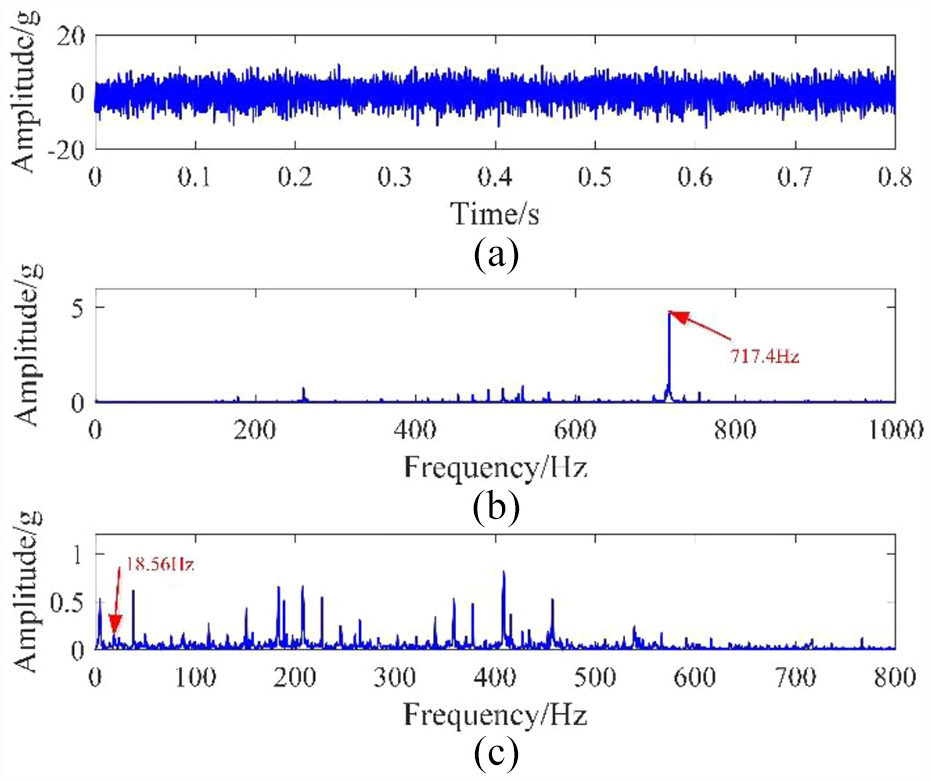
(a) Time-domain waveform of original signal,(b) spectrum, and (c) envelope spectrum.
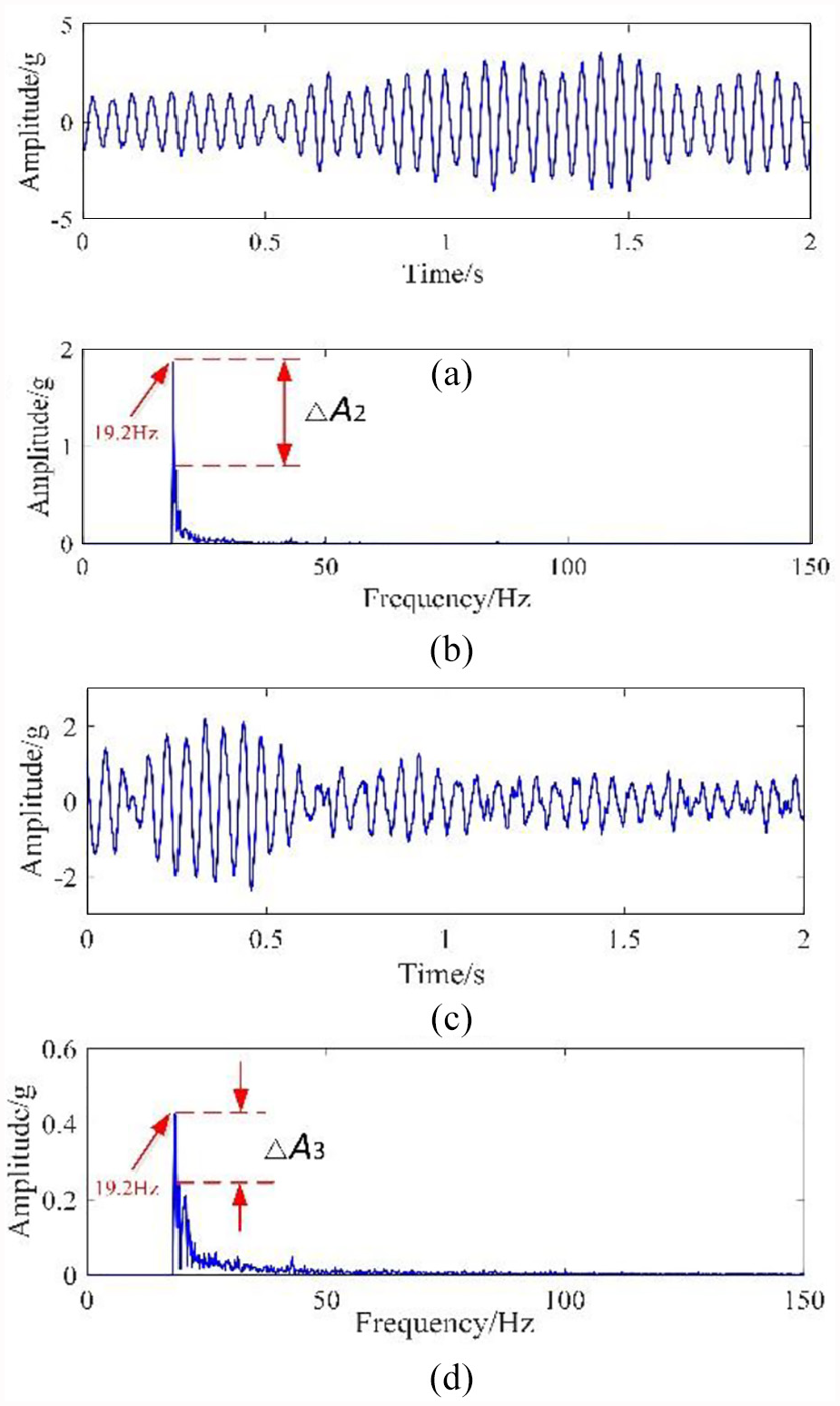
The results of ASSR method and USSR method:(a) ASSR waveform, (b) ASSR spectrum, (c) USSR waveform, and (d) USSR spectrum.
Using the USSR method, the best combination of system parameters is obtained: a = 0.2497 and b = 0.5739. As shown in Figure 11(d), the frequency of the fault characteristic is also 19.2 Hz. But the effect is not as obvious as the ASSR method. Figure 11(b) shows that the spectral peak value A3max is 0.4204. The value of the second highest point is 0.2374. The difference value
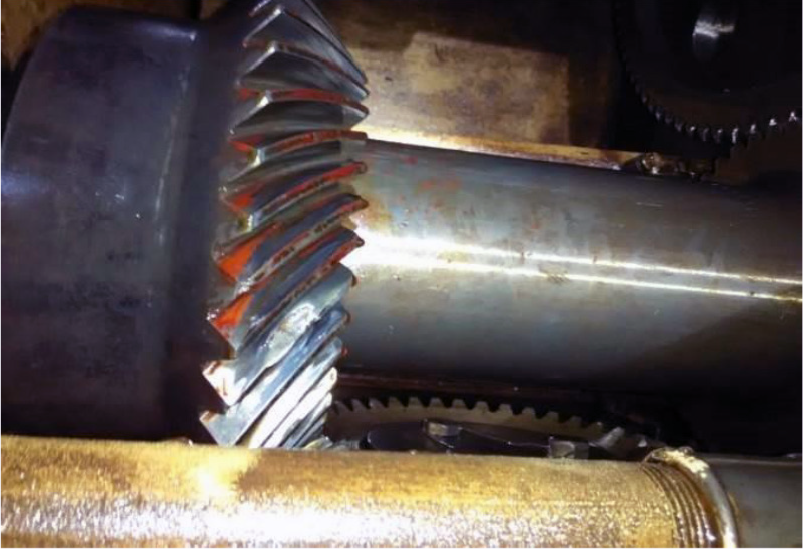
Failed gear.
Conclusion
Due to the shortcomings of the USSR method itself, it cannot have a rich form of potential function. We propose an asymmetric second-order SR potential function model, which can not only enrich the potential function structure but also improve the SNR through second-order SR. In this way, the extraction of weak fault features is completed more efficiently. The summary of this article is as follows:
The ASSR model can adjust the potential function structure by adjusting the inclination of the potential wall, which overcomes the disadvantages of coupling regulation. And, the asymmetric second-order underdamping is more advantageous in improving SNR than the second-order underdamping.
Through the analysis of the potential function model, the appropriate degree of asymmetry is beneficial to the occurrence of SR. When the asymmetry is too large, the particles do not have enough energy to jump between the wells, and the SR effect is weakened.
Through bearing and field engineering experiments, the ASSR method can extract faults from complex signals. It proves that the ASSR method has stronger anti-interference ability than the USSR method.
Footnotes
Declaration of conflicting interests
The author(s) declared no potential conflicts of interest with respect to the research, authorship, and/or publication of this article.
Funding
The author(s) received no financial support for the research, authorship, and/or publication of this article.
