




Abstract
Optimization technologies have drawn considerable interest in power system research. The success of an optimization process depends on the efficient selection of method and its parameters based on the problem to be solved. Firefly algorithm is a suitable method for power system operation scheduling. This paper presents a modified firefly algorithm to address unit commitment issues. Generally, two steps are involved in solving unit commitment problems. The first step determines the generating units to be operated, and the second step calculates the amount of demand-sharing among the units (obtained from the first step) to minimize the cost that corresponds to the load demand and constraints. In this work, the priority list method was used in the first step and the second step adopted the modified firefly algorithm. Ten generators were selected to test the proposed method, while the values of the cost function were regarded as criteria to gauge and compare the modified firefly algorithm with the classical firefly algorithm and particle swarm optimization algorithms. Results show that the proposed approach is more efficient than the other methods in terms of generator and error selections between load and generation.
Introduction
Changes in water level in sea coasts due to the tide, changes in wind power, and fluctuations in prices of other power resources are important reasons for selecting optimal economic units for specific power generation, which is dependent on the specific time of day or year. 1 Unit commitment (UC) is responsible for the selection of the generation units that can work economically.2,3 UC is also involved in calculating the power for each unit on the basis of the total power demand.1,2 The differences in features of generating units make UC a considerable problem.1,4 UC is a tool for economic power dispatch. 5 The nonlinearity and large scale of power systems compound the solution to UC because it involves two steps, that is, examining the unit to be operated and determining the power-sharing quantity of the demand in each unit. 6
By contrast, power system optimization is an active research area in the field of electrical engineering.7,8 An optimal table of the generating units corresponding to the load demand with minimal fuel and transition costs is an important task in power systems. 9
The intended outcome of an optimization process can be achieved only by complex or calculation methods; thus, researchers have focused on the optimal solution. 10 Both classical and intelligent methods have been suggested to solve this problem. 11 The ability of the intelligent methods to optimize multi-range local optimal points renders these algorithms a considerable choice in the field of engineering techniques.12,13
Many works have been conducted using intelligent algorithms to enhance the quality, reliability, stability, scheduling, and marketing of power systems.14,15
Pirhayati and Mazlumi 16 proposed the handling of UC problem using an intelligent binary particle swarm optimization (PSO) and evaluation definition methods with the lambda-iteration algorithm. Ladumor et al. 17 proposed a solution to a four-generating unit for single area commitment problems. Whale, the optimization algorithm was used to determine UC.
Yiran et al. 18 developed an improved PSO in optimizing UC problems. In this method, the on/off status of the units is first restricted to feasible schedules through the provision of a novel method related to a new time order. Maryam and Hamdi 19 proposed the handling of UC using a hierarchical combination algorithm which can minimize the operational cost and simulation time. Hourly production of the binary decision variables determines the state of the unit (on/off) with respect to the demand and spinning reserve requirements.
However, all the preview methods have a high error in the calculation of power demand and the determination of the on/off unit mostly is not acceptable by the operation control center; therefore, the cost maybe increased during the control action to follow the power demand.
The modified firefly algorithm (M-FA) was suggested and examined for multiple optimization functions, such as Sphere Griewank and Ackley functions. 20 In the same work, the M-FA was successfully applied in power system scheduling and forecasting. 20 The original FA was modified using the quaternion’s representation of individuals (QFAs) by Fister et al. 21 The position formula of the standard FA was modified to optimize the controller parameters of the Smith predictor structure. 22
In this paper, the combination of the priority list (PL) method and the M-FA is proposed to increase the economic gains in power generation units. PL selection depends on the minimum values of incremental fuel cost, whereas the M-FA refers to the process of sending random suggested solutions to estimate the optimal value of each unit power. Three intelligent methods (i.e. PSO, FA, and M-FA) are compared to determine the economic power of each unit. Another benchmark (i.e. the total error between demand and total generation) is added to compare the three algorithms. The results show the advantage of using the M-FA in UC problems.
Theoretical background
Objective function
Electricity should be provided at any moment in all parts of a power system. In addition to minimizing the total cost of power system generation, minimizing load demand, spinning reserve, and other constraints are the other objectives of UC. 23 The scheduled time horizon can be determined to satisfy these objectives as follows
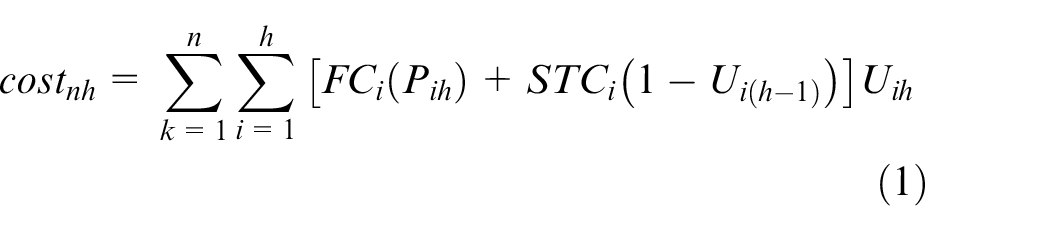
where h is the number of hours, n is the number of units, and

where

where
Power equality

where Dh is the power demand at the time (h)
Spinning reserve

Generation limit

where


where

where

FA
X-S Yang 25 developed FA in 2008 as an optimization algorithm inspired by the light flashing pattern of fireflies. 26 Fireflies attract one another through the intensity of the light they emit. FA is composed of three basic principles, as follows:
Fireflies are attracted to one another because they are unisexual.
The degree of attractiveness of a firefly is a function of the light it emits.
The brightness of the light emitted by each firefly decreases with the increase in its distance from other fireflies.
In the absence of a bright firefly, the swarm moves randomly. FA, as an evolutionary technique, can be used to determine the control parameters. In FA, each firefly is a potential solution that can be defined on the basis of its position. The current position of the ith firefly in a d-dimensional vector space is given by


The current positions of the less bright and brightest fireflies are represented by the first terms, namely,

where xi and xj represent the position vectors for fireflies i and j, respectively; and xi(n) represents the positional value for the nth dimension. The third term in equations (11) and (12) is used for randomness reduction, that is, a gradual reduction in the motion of the fireflies via α = α0δt, where α0 is within the range of [0, 1]. δ represents the randomness reduction parameter, where 0 < δ < 1 and t is the number of iterations.
Proposed method
In the first step of the proposed method, the on/off cases of the units are provided by the PL method, whereas the load partitioning between the units is achieved by the M-FA in the second step. The result of the PL method was inputted in the second step.
First step
PL is a simpler and faster method compared with other classical methods because it commits the generating units in ascending order, in terms of their average production costs. The lack of storage capacity or ability to optimize the solutions for large power systems is the main disadvantage of PL compared with other traditional methods. 23 The PL vector is obtained using equation (3)
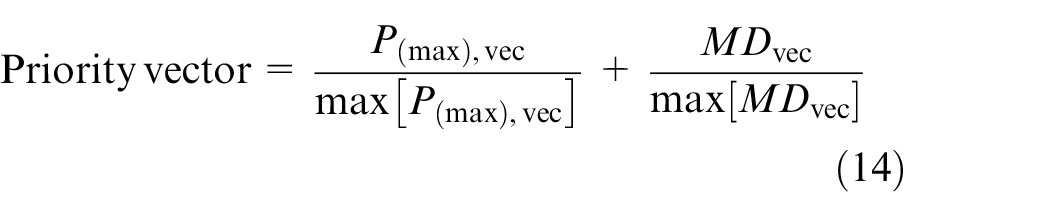
The PL method is used to denote the on/off status as an initial solution for UC without the ramp rate. The main condition of the first step is the regulation of the total capacity of the committed generating unit, the spinning reserve, and the total power required.
Second step
M-FA determines the economic power dispatch per unit. Many researchers advise the use of FA as an optimization tool in a wide range of power system applications. To reduce the local optimal trapping possibility and improve the FA search ability, a M-FA was used in this study. In the proposed method M-FA, randomization parameter was not kept fixed and was linearly decreased with iterations, where


where





where
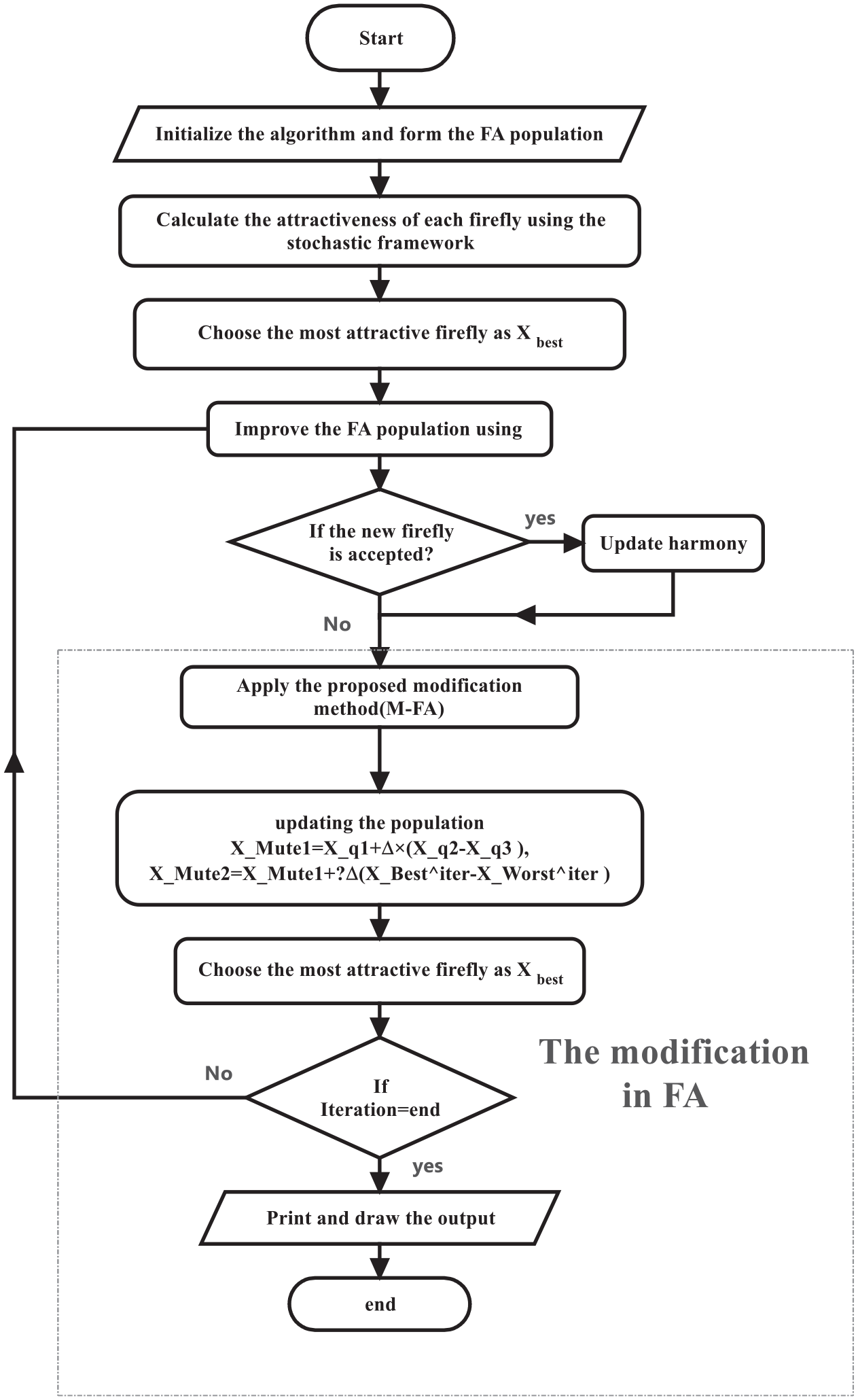
M-FA algorithm flowchart.
Case study
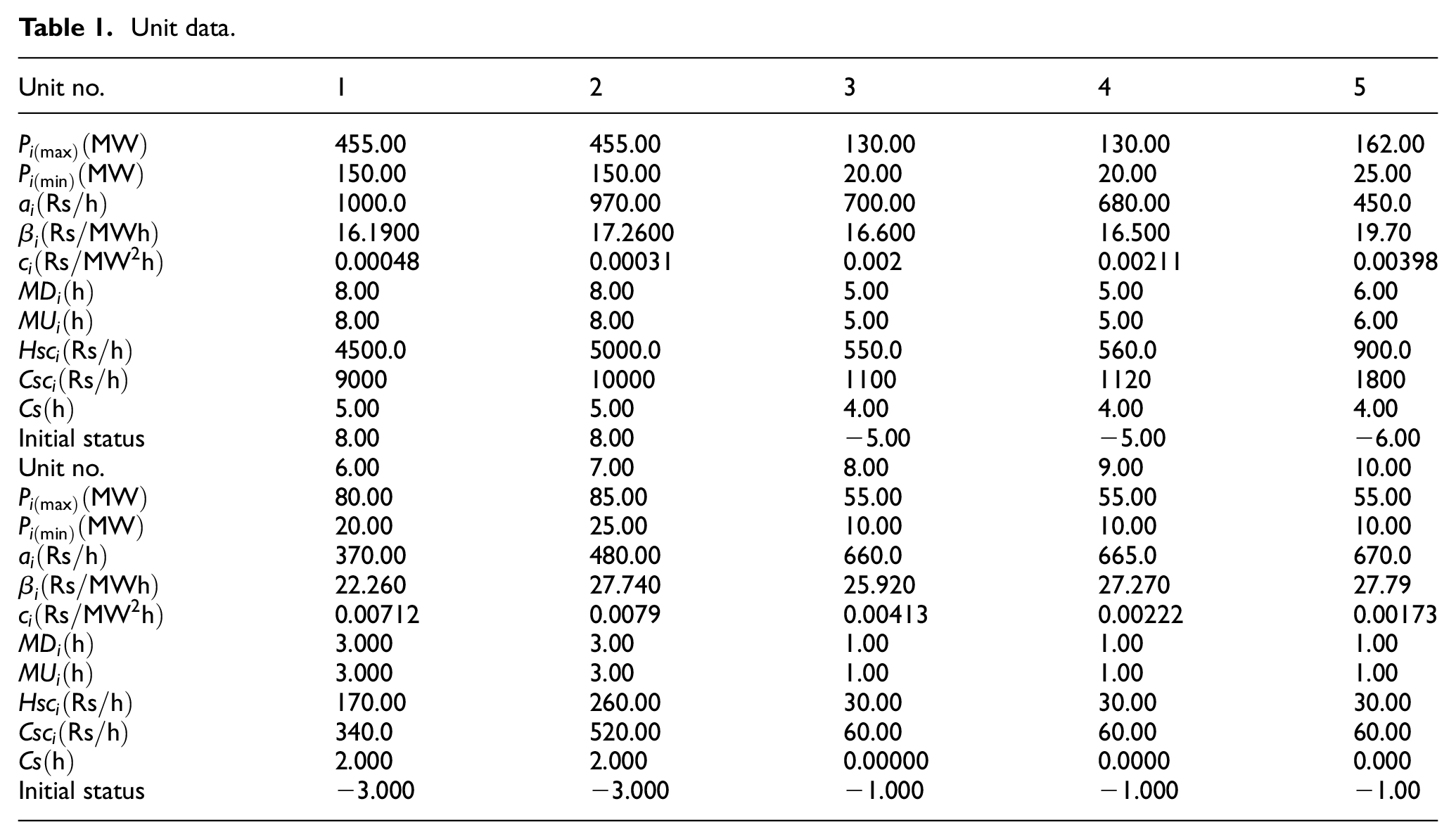
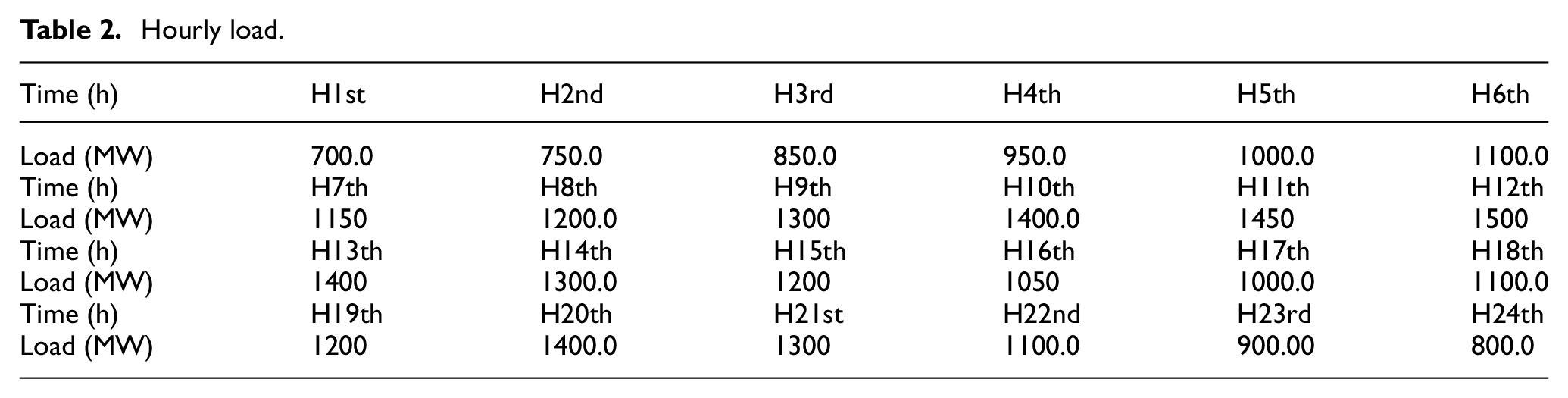
In this test case, 10 thermal units with an hourly supply demand of over 24 h9,27 were considered. Tables 1 and 2 show the unit information and hourly demand, respectively.
Unit data.
Hourly load.
Results
Three different intelligent methods are compared to evaluate the effect of modification on the original FA, especially on the second step of UC. The power system of the 10 units was simulated using MATLAB. Many issues are discussed for this comparison. The error between the actual data and calculated total generated power is considered. Figure 2 illustrates the differences in the daily load curve/hour among the three algorithms, and Figure 3 shows the error values for 20 iterations. The main FA parameters were set to the optimal settings (i.e. β0 = 0.275, γ = 1, and α = 0.30), and the number of fireflies was set to 25. For the PSO algorithm, bird step = 25, ω = 0.75, and acceleration constants c1 and c2 were both 1.85, as previously recommended.12,13
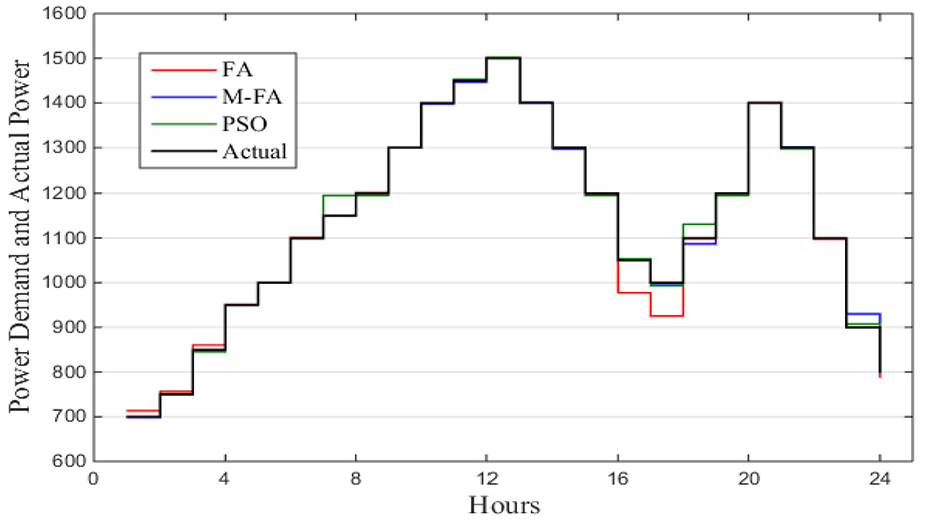
Differences between demand and actual power generation as calculated by each method.
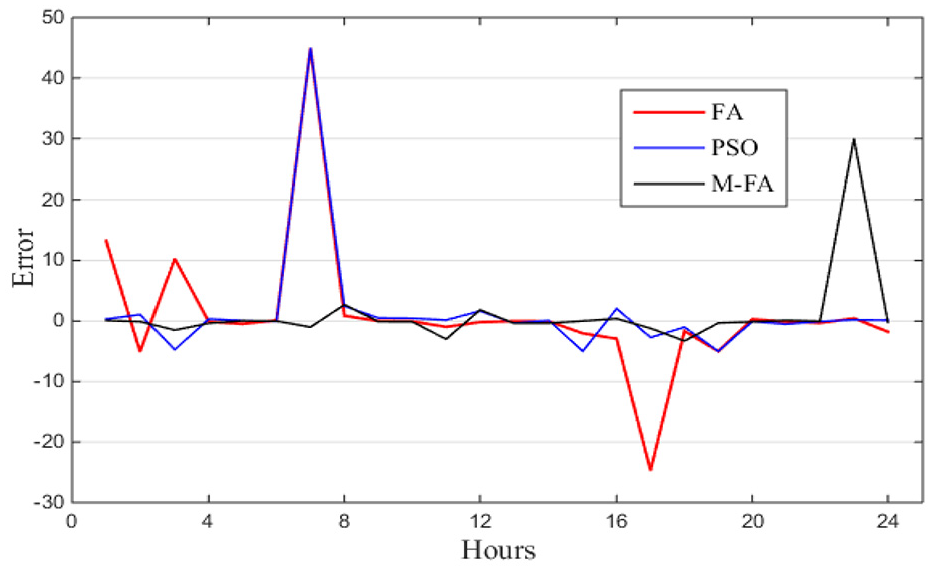
Error comparison for each method.
Figure 2 shows that the calculated power demand through the FA from 18th-h to the 20th-h does not match the actual power. The power demands calculated by the PSO for the interval of time between the 6th-h to the 8th-h and 18th-h to the 20th-h deviate from the actual power demand. Minimum deviation is obtained using the M-FA. A small mismatch value was only observed from 22:00 to 24:00 using the M-FA method in the calculation of power demand.
The total errors of M-FA, PSO, and FA were 47.25176, 74.05321, and 115.7395 MW, respectively. Table 3 provides the error details for each hour.
Estimated demand error.
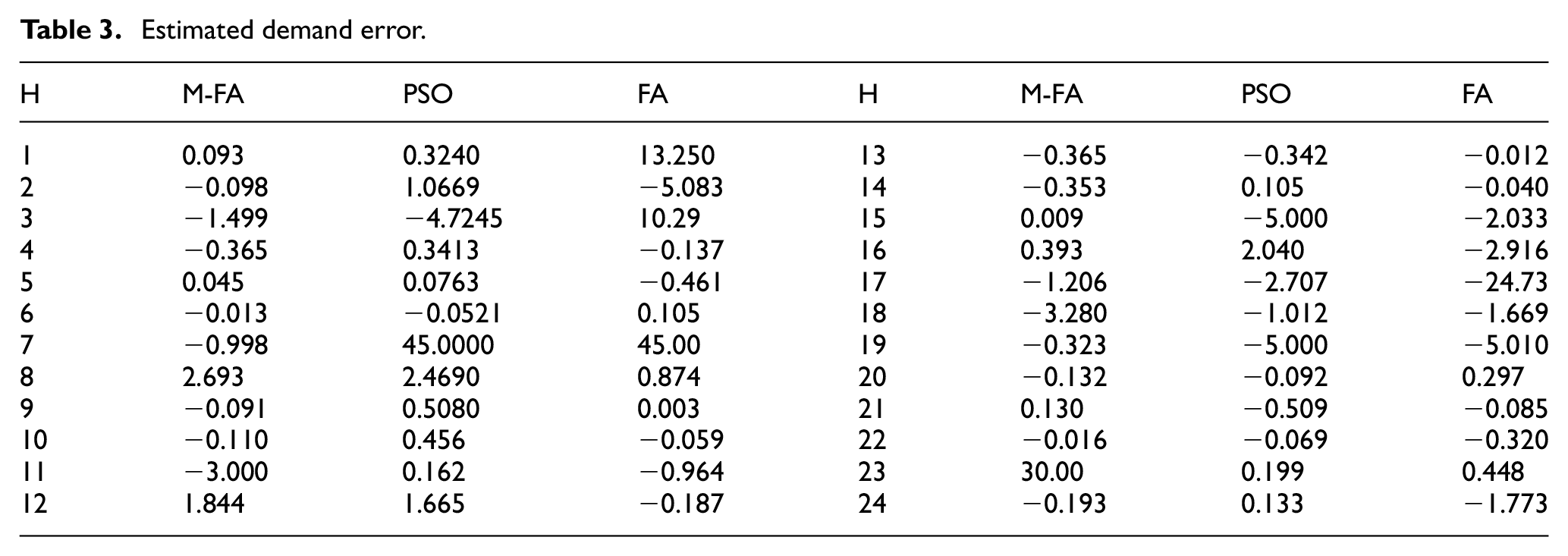
Table 3 shows that the maximum errors for PSO, FA, and M-FA are 45, 45, and 30 kW, respectively.
The optimal cost of the 24th-h is shown in Figure 4, which explains the local point behavior toward the optimal point for each optimization method.
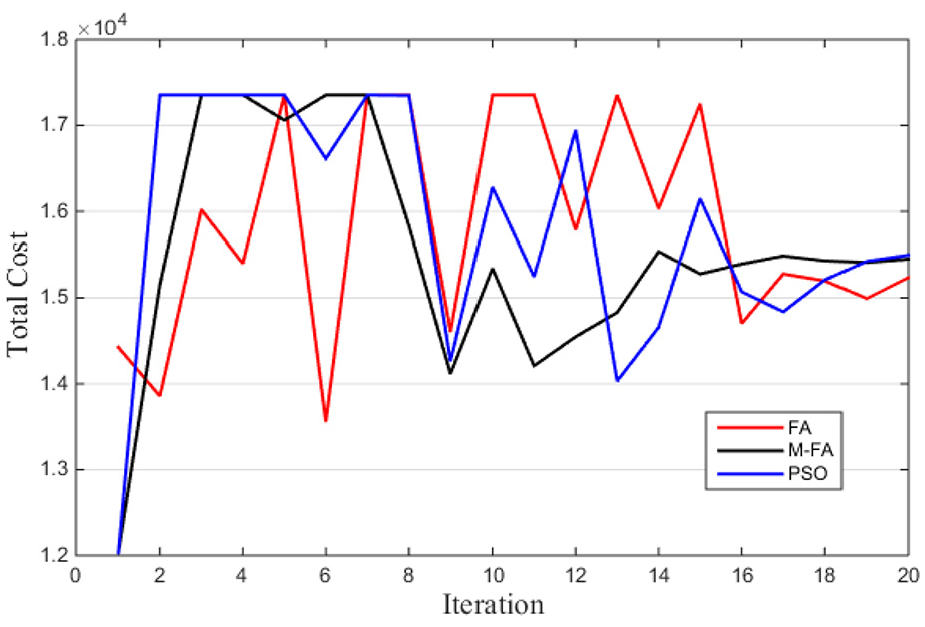
Total generation cost as obtained by each method.
The power generated by each unit was deduced by the three intelligent algorithms that represent the highly complex component of UC. Tables 4 and 5 show the generation units and total cost, respectively, which were calculated using the suggested method for 24 h.
Power matrix for 10 units system for 24 h using M-FA.
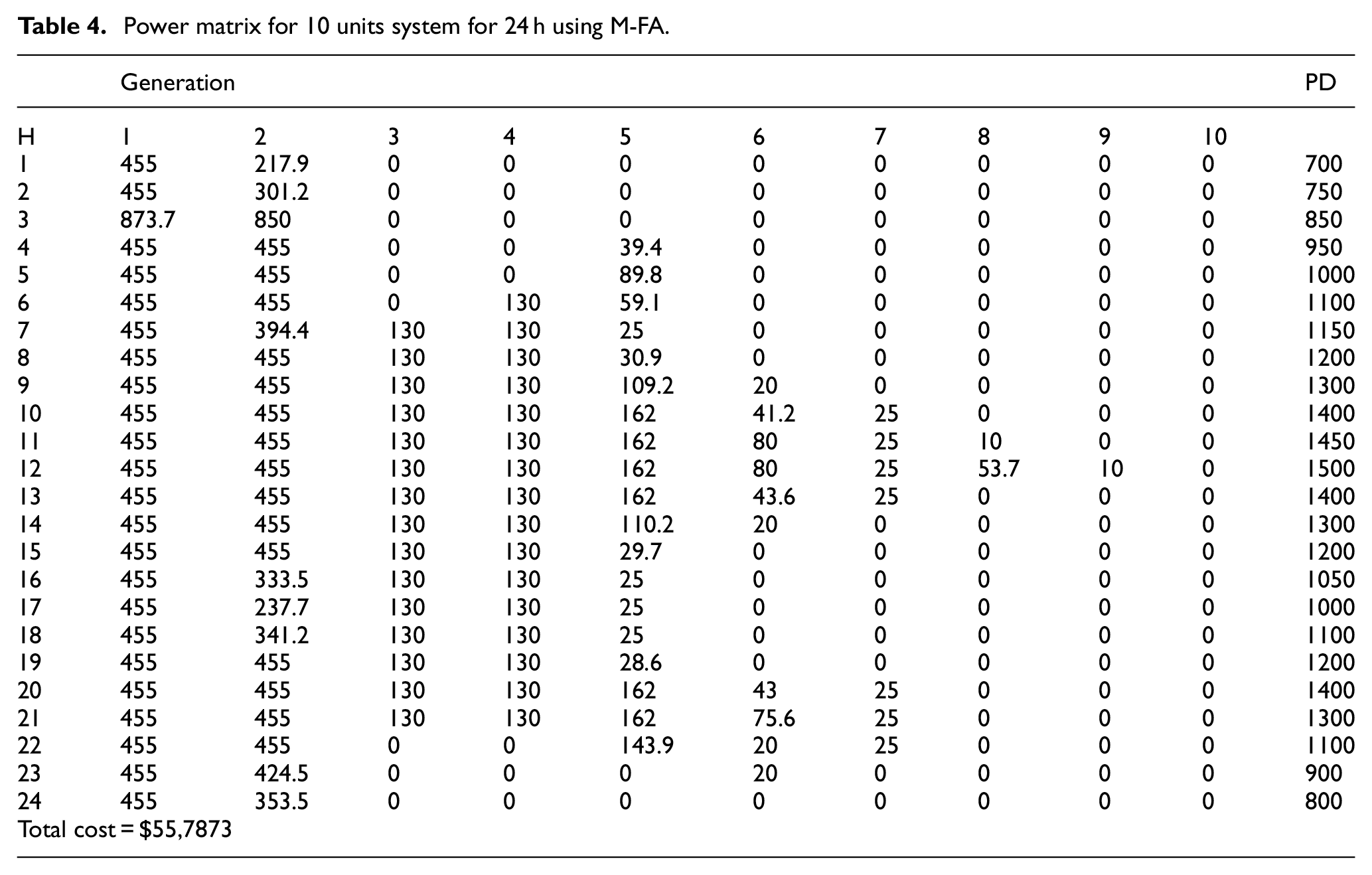
Generation cost for 10 units’ system for 24 h usingM-FA.
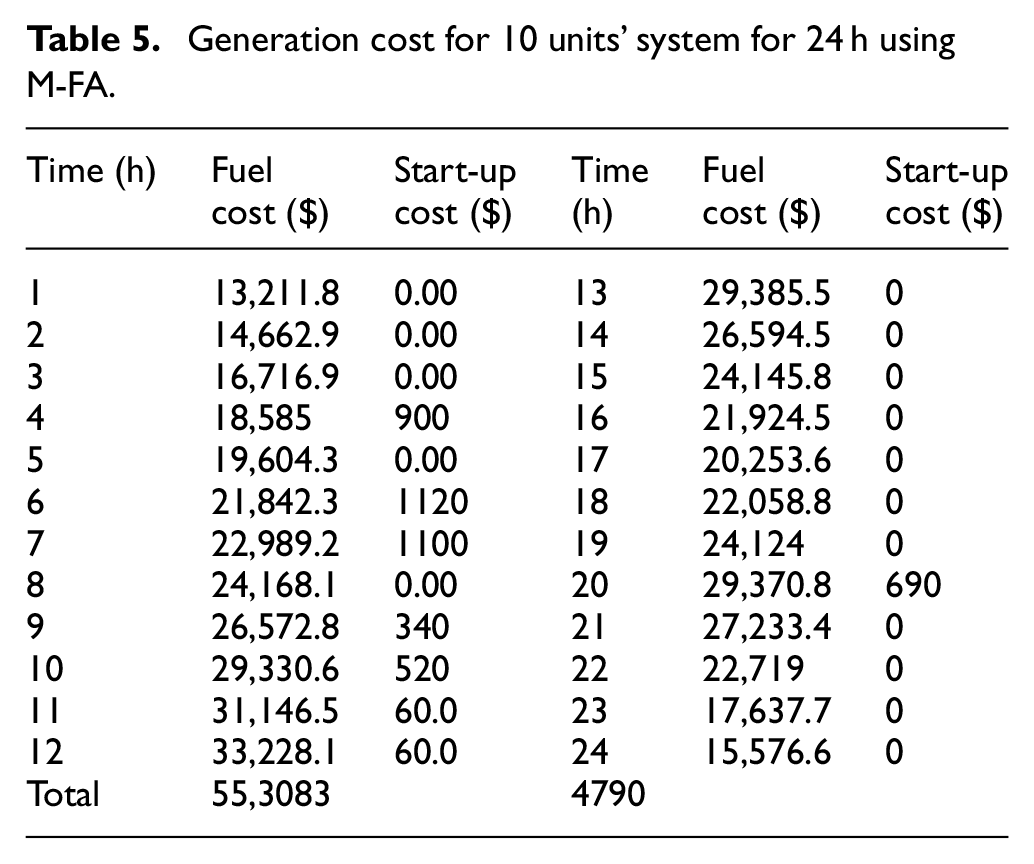
Table 4 indicates that units 8–10 have short operation times when the proposed method is used, but the operation cost of these units is very high. Units 1 and 2 operate for 24 h but have the lowest operation cost.
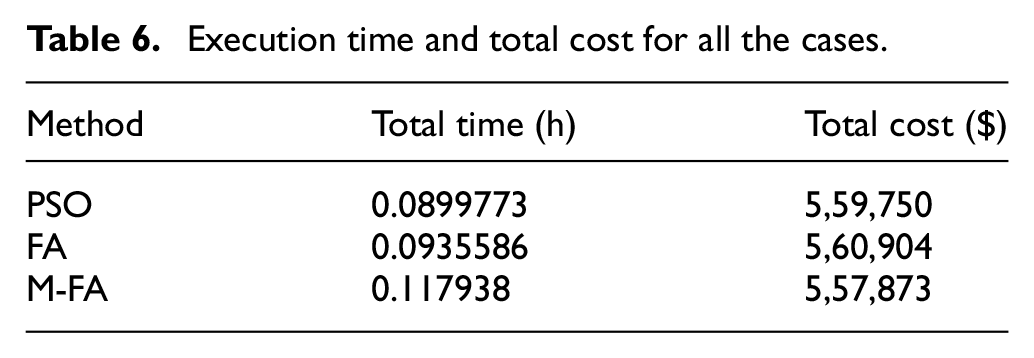
Table 6 shows that the total cost using M-FA was less than that using PSO by >0.5% after 20 iterations. This finding indicates that M-FA can achieve higher economic results compared with PSO and FA. The total cost for all methods after 70 iterations was $5,53,897, which was achieved after 45, 55, and 60 iterations for M-FA, PSO, and FA, respectively (Figure 5).
Execution time and total cost for all the cases.
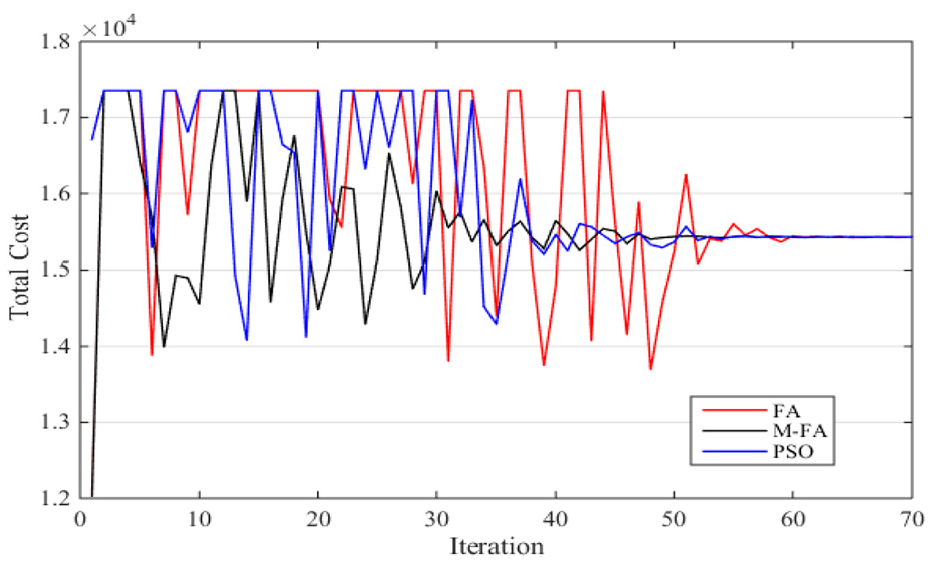
A total of 70 iterations of optimisation methods.
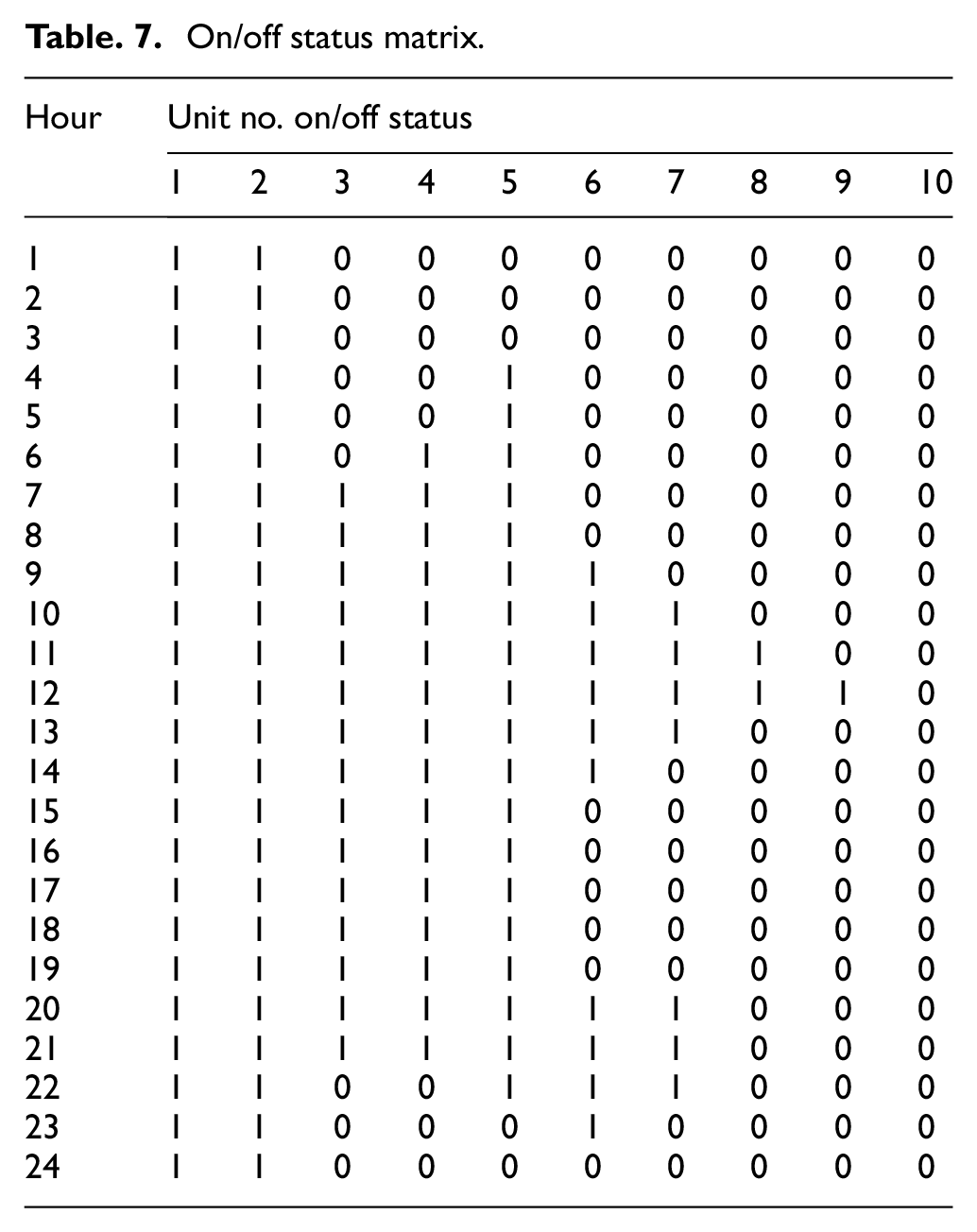
The selected units for all intelligent methods that supply the demand evolve using the classical PL method during the determination of the on/off units. Table 7 shows the first step solution to the UC problem.
On/off status matrix.
Conclusion
UC is a crucial term in control power strategy, which is responsible for the selection of generation units that can work economically. A rapid solution for unit selection was proposed using the PL method. Following this selection, three optimization algorithms (i.e. PSO, FA, and the proposed M-FA) were compared by determining the power of each unit. Ten units with deference operation cost characteristics have been simulated to supply multi-power level loads for 24 h using MATLAB. The results prove that the M-FA has high convergence characteristics in reducing error and commercial operation. The reliability of this method was evaluated by repeating the simulation run several times.
Footnotes
Declaration of conflicting interests
The author(s) declared no potential conflicts of interest with respect to the research, authorship, and/or publication of this article.
Funding
The author(s) received no financial support for the research, authorship, and/or publication of this article.
