




Abstract
When a localized defect is induced, the vibration signal of rolling bearing always consists periodic impulse component accompanying with other components such as harmonic interference and noise. However, the incipient impulse component is often submerged under harmonic interference and background noise. To address the aforementioned issue, an improved method based on resonance-based sparse signal decomposition with optimal quality factor (Q-factor) is proposed in this paper. In this method, the optimal Q-factor is obtained first by genetic algorithm aiming at maximizing kurtosis value of low-resonance component of vibration signal. Then, the vibration signal is decomposed based on resonance-based sparse signal decomposition with optimal Q-factor. Finally, the low-resonance component is analyzed by empirical model decomposition combination with energy operator demodulating; the fault frequency can be achieved evidently. Simulation and application examples show that the proposed method is effective on extracting periodic impulse component from multi-component mixture vibration signal.
Keywords
Introduction
In general, if rolling bearing occurs local defects, the corresponding vibration signal will present stochastic feature that contains multi-frequency components. Considering the rolling bearing is often under complex working condition, the corresponding vibration signal comprises not only periodic impulse component which presents fault information but also rotating harmonic component and noise, and the impulse component is generally weaker than interfering component. Therefore, the key of fault diagnosis on rolling bearing is how to effectively extract periodic impulse component among multi-component signal.
Based on tunable Q-factor wavelet transform (TQWT),1–3 Selesnick 4 proposes a novel signal decomposition method that is resonance-based sparse signal decomposition. Contrasted with traditional signal decomposition that uses linear frequency-based filter to achieve isolating vibration signal into multi-components, according to multi-component with different Q-factors, resonance-based sparse signal decomposition (RSSD) uses TQWT combination with morphological component analysis (MCA) 5 to decompose signal into high Q-factor sparse representation and low Q-factor sparse representation, respectively. Considering that the impact signal usually has a lowQ-factor value compared with the harmonic signal which possesses a higher Q-factor value, besides, when the rotating machinery appears fault, the corresponding vibration signal generally presents impulse characteristic. As a result, the RSSD can be introduced into the fault detection of machinery fault detection.
This decomposition method is first introduced by Yu6,7 on extraction of fault impact information of rotating machinery by selecting different Q-factor values. However, if the background noise and interference are stronger, because non-adaptively Q-factor selection leads the base function cannot effectively achieve optimal match with impact component, the impulse component cannot be efficiently separated consequently. Furthermore, the impact component contains rich fault information; the inaccurate separation of periodic impulse component will lead to misdetection. As a result, the key is how to adaptively obtain Q-factor based on vibration signal characteristics.
In order to address above problem, author utilizes kurtosis as evaluation index of low-resonance component to analyze the extraction effect of impact component. Al-Raheem et al.6,7 use kurtosis combination with Laplace-wavelet transform to optimize the shape parameters of wavelet; the time interval of adjacent impact and fault characteristic frequency can be identified by autocorrelation analysis and power spectrum analysis. Hence, this index has certain rationality.
Author uses the kurtosis to estimate the impact characteristic of low-resonance component, how to adopt an appropriate optimization algorithm to maximize the evaluation index is an inevitable problem. Considering that genetic algorithm that presents the advantages of wide application range and strong searching ability has been widely used.8,9 For example, Peter and Wang 10 and Su et al. 11 use genetic algorithm to optimize the shape parameters of Morlet wavelet transform by taking sparseness of wavelet transform coefficient with Shannon entropy as the optimization objective. Therefore, this paper makes use of this method to achieve above goal.
On the other hand, the fault characteristic frequency usually be contained in the envelope spectrum of impulse component; as the result, the envelope analysis is an effective fault diagnosis technique for rolling bearing fault signal. Compared with the Hilbert demodulated method, Teager energy operator not only has a faster and higher precision demodulation advantage,12,13 but also can be capable of increasing signal-to-noise ratio (SNR) of envelope spectrum and sharpening the spectral peaks.14,15 Therefore, envelop analysis based on Teager energy operator should be a better choice.
According to above-mentioned clue, for avoiding error caused by non-optimal Q-factor, based on RSSD, a new rolling bearing fault diagnosis algorithm is proposed by combining genetic algorithm and kurtosis evaluation index. This algorithm aiming at maximum kurtosis value of low-resonance component utilizes genetic algorithm to optimize Q-factor, then using RSSD with optimal Q-factor to decompose vibration signal for obtaining high-resonance component and low-resonance component. In view that the optimal low-resonance component will also be susceptible by the noise, in order to improve the SNR, the empirical model decomposition (EMD) is introduced to reprocess the optimal low-resonance component and the optimal IMF used Teager energy operator to achieve envelope analysis and determining fault type. Simulation signal and experimental signal verify the effectiveness of this new algorithm for rolling bearing fault diagnosis.
RSSD with optimal Q-factor
RSSD
RSSD can effectively separate the multi-component signal that the center frequency is approximately same and bandwidth coincides with each other, according to the difference of resonance property for each component.
This method primarily utilizes two-channel filter banks as shown in Figure 1 to achieve TQWT for vibration signal, obtaining base function library of high Q-factor transform and low Q-factor transform, respectively, and the corresponding transformation coefficients are computed using iterative algorithm. Finally, using MCA to set up objective function of signal sparse decomposition


Two-channel filter banks for analysis and synthesis.
Assuming a multi-component signal X = X1 + X2,

Q-factor optimization based on genetic algorithm
When adopting RSSD to analyze vibration signal, α and β symbolize the scaling parameter of corresponding low-pass filter banks and high-pass filter banks. Once the quality factor Q and redundancy parameters r are determined, the corresponding scaling parameters of two-channel analysis filter banks are computed as follows

The decomposition level L of TQWT can also be calculated sequentially by the following equation

As shown in equation (4), an unprincipled increase of parameter values Q not only leads to a sharp increase on the number of decomposition level L, but also generates singular phenomenon in sub-band signal of TQWT which is not conducive to obtain the optimal decomposition effect. Hence, how to select the appropriate quality factor parameter Q on account of vibration signal feature is the principle to obtain the ideal decomposition effect. In general, once the value of redundancy parameter r is greater than or equal to 3,16,17 TQWT can perform a favorable effect; the major is how to confirm the optimal Q-factor adaptively. Unfortunately, the value of Q-factor parameter on original RSSD is subjectively confirmed; the reliability of decomposition results is reduced consequently.
To reduce the decomposition error caused by randomness of Q-factor parameter, this paper takes advantage of genetic algorithm to optimize Q-factor. As impulse component contains fault information of rolling bearing, for effectively extracting impulse component among vibration signal, the proposed method in this paper takes kurtosis as the objective function, maximizes objective function through genetic algorithm, and finally realizes Q-factor optimization. The detailed procedure of optimization is shown in the following:
Initialization. Randomly initialize population, utilize binary pattern to make Q1 (high Q-factor) and Q2 (low Q-factor) coding and form chromosomes. The number of population and largest genetic algebra are 40 and 100, respectively.
Fitness estimation. Decode chromosomes and get quality factor Q and Q2, resonance sparse decomposition of vibration signal is performed to calculate kurtosis value of low-resonance component which acts as estimation value of individual fitness.
Genetic manipulation. Selection, crossover, and mutation. In each genetic process, 50% of the chromosomes with higher fitness values will be retained, and the rest will be selected by random traversal sampling to reproduce next generation. This method takes single-point crossover and the corresponding probability is 0.8; the probability of mutation is 0.5.
Iteration. After new individual appears, using new individual to update population via repeating above steps.
Termination. The maximum genetic algebra is defined as termination condition, when genetic algebra reaches termination condition, the optimization process is ended.
Fault diagnosis principle of rolling bearing
The calculation formulas of fault characteristic frequency for outer raceway and inner raceway respectively are shown in the following


In the above equations, fo symbolizes outer raceway fault characteristic frequency, fr symbolizes rotating frequency, fi symbolizes inner raceway fault characteristic frequency, Z represents number of balls, d represents ball diameter, D represents pitch diameter, and a symbolizes contact angle.
When local fault occurs, the corresponding vibration signal usually contains transient impact component, shaft rotating frequency, harmonic component, and background noise; nevertheless, how to accurately extract the impact component of fault vibration signal and identify the time interval between adjacent impact is the major to fault diagnosis of rolling bearing.
In order to test the effectiveness, the proposed method is utilized to decompose rolling bearing vibration signal for extracting the best impulse component. In conclusion, the fault diagnosis of rolling bearing based on RSSD with optimal Q-factor is as follows:
Optimal Q-factor of sparse decomposition. Using the genetic algorithm, Q1 and Q2 are presented as variables, and the maximum kurtosis value of low-resonance component is taken as the objective function; the optimal Q-factor is obtained ultimately.
Signal decomposition. Using the optimal Q-factor, the vibration signal is decomposed into high- and low-resonance component.
Demodulation analysis. EMD combination with Teager energy operator is applied on the low-resonance component and the optimal IMF is analyzed for identifying the rolling bearing fault characteristic frequency.
Finally, the fault diagnosis process based on RSSD with optimal Q-factor is shown in Figure 2.
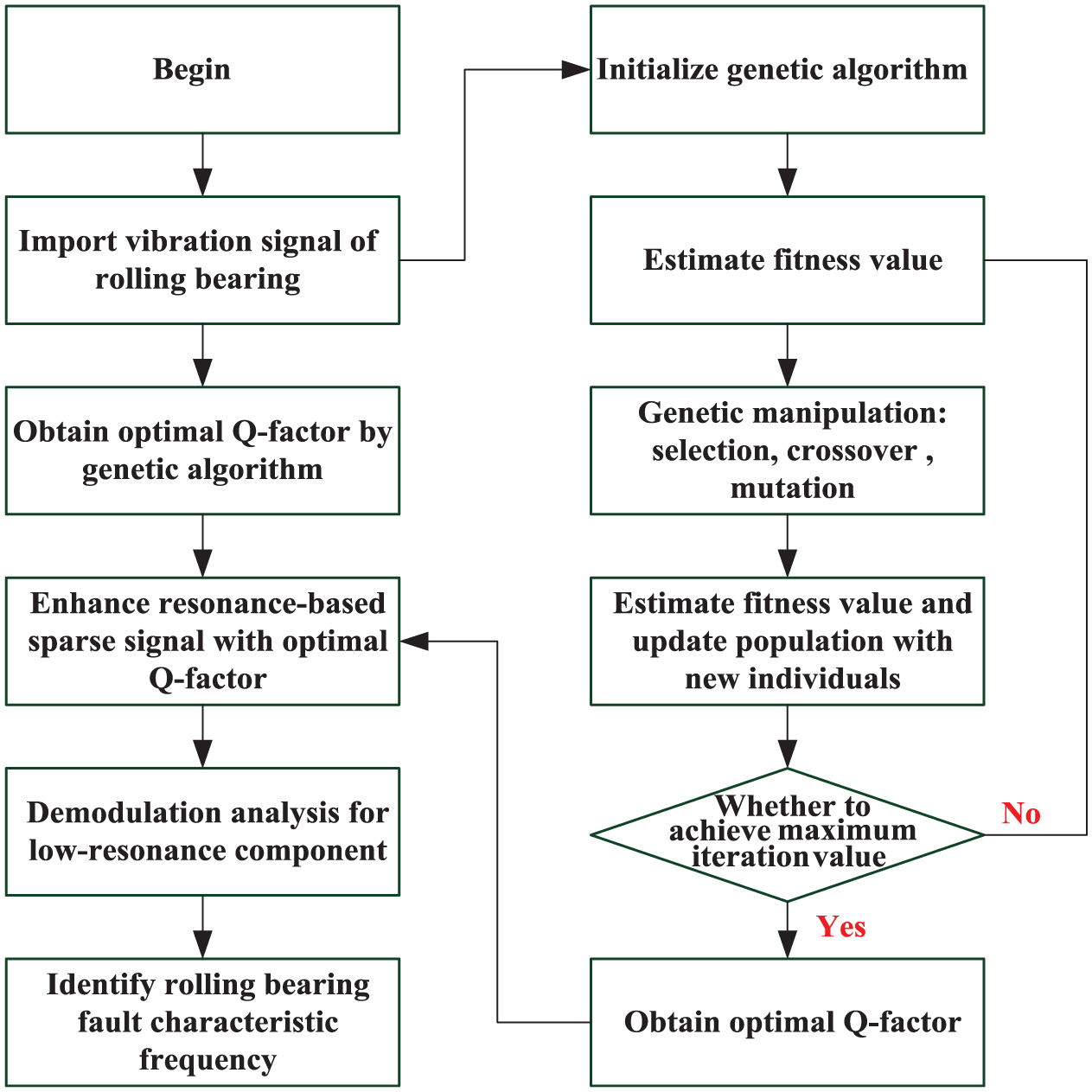
Flow chart of fault diagnosis of rolling bearing based on RSSD with optimal Q-factor.
Validating method
Simulation signal analysis
In order to verify theoretically effectiveness and superiority of proposed method, author sets the following simulating signal

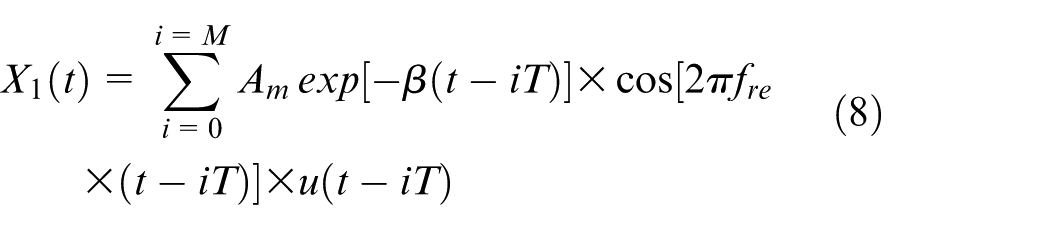
In above equation, M symbolizes number of impacts in the impulse component, Am represents amplitude of impulse, β represents attenuation coefficient, T represents time interval between adjacent shocks that infers fault characteristic frequency
On the other hand, in engineering practice, fault vibration signal of rolling bearing often contains many harmonic components and background noise, in order to simulate harmonic interference, author adds an AM-harmonic component

As for
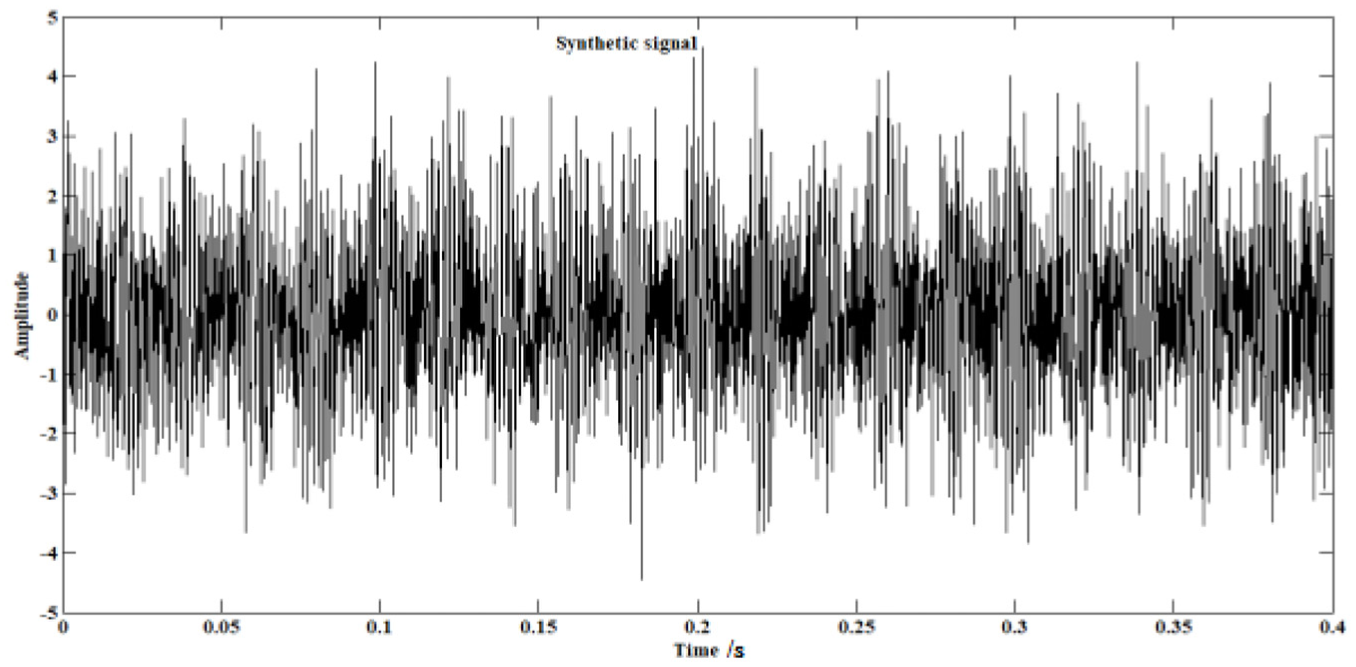
Synthetic signal.
Parameter value of synthetic signal.

Shock component of synthetic signal is extracted by the proposed method, the variation of maximum fitness value and average fitness value is shown in Figure 4, when number of iterations reaches 7, objective function converges to the optimal solution, the optimal high Q1 factor and low Q2 factor are 3.23 and 2.87 consequently. On the basis, the decomposition of synthetic signal is presented in Figure 5; it can be seen that high-resonance component corresponds to AM-harmonic component
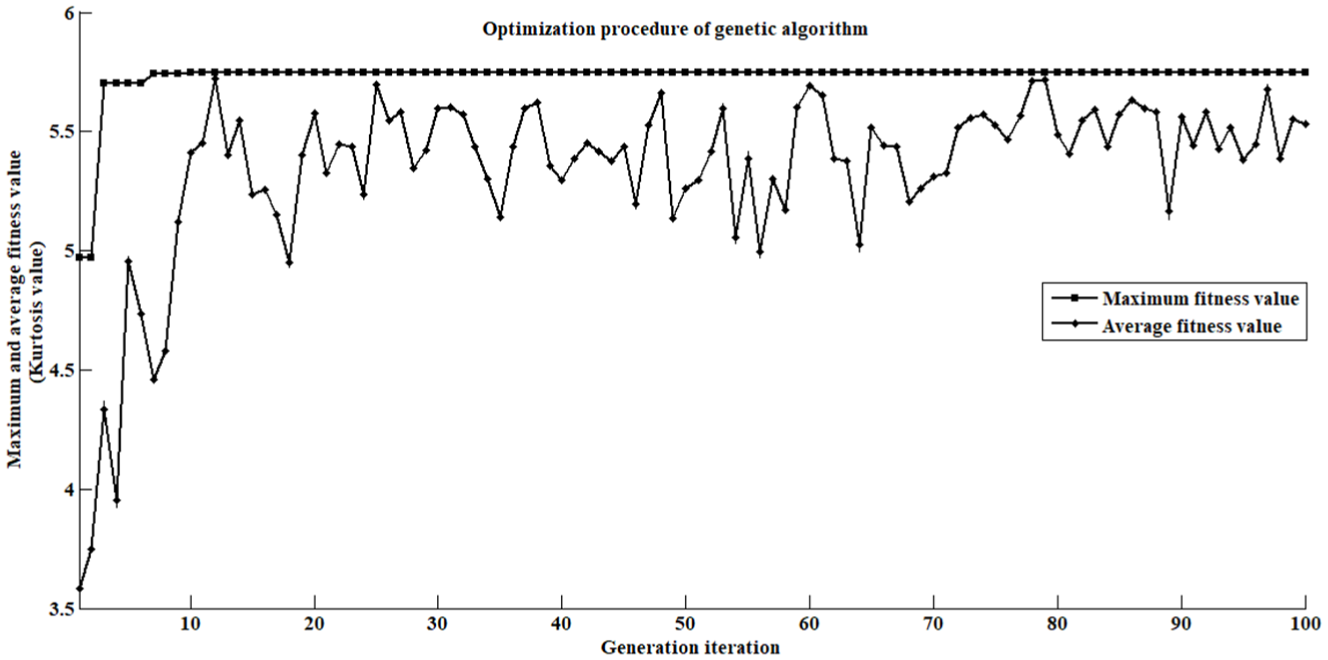
The change of maximum fitness value and average fitness value.
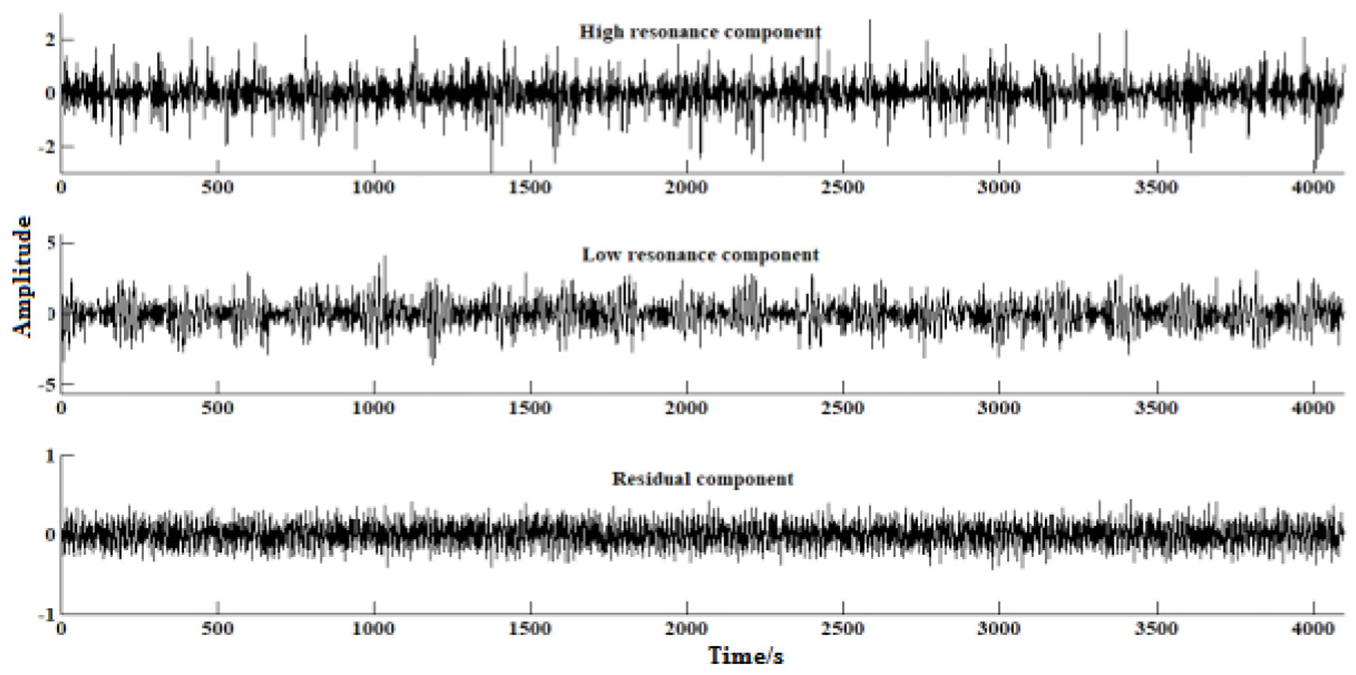
Decomposition result of synthetic signal based on optimal Q-factor.
The envelope demodulation spectrum of low-resonance component is presented in Figure 6; it can be clearly seen that spectral peak is mainly composed of fault characteristic frequency
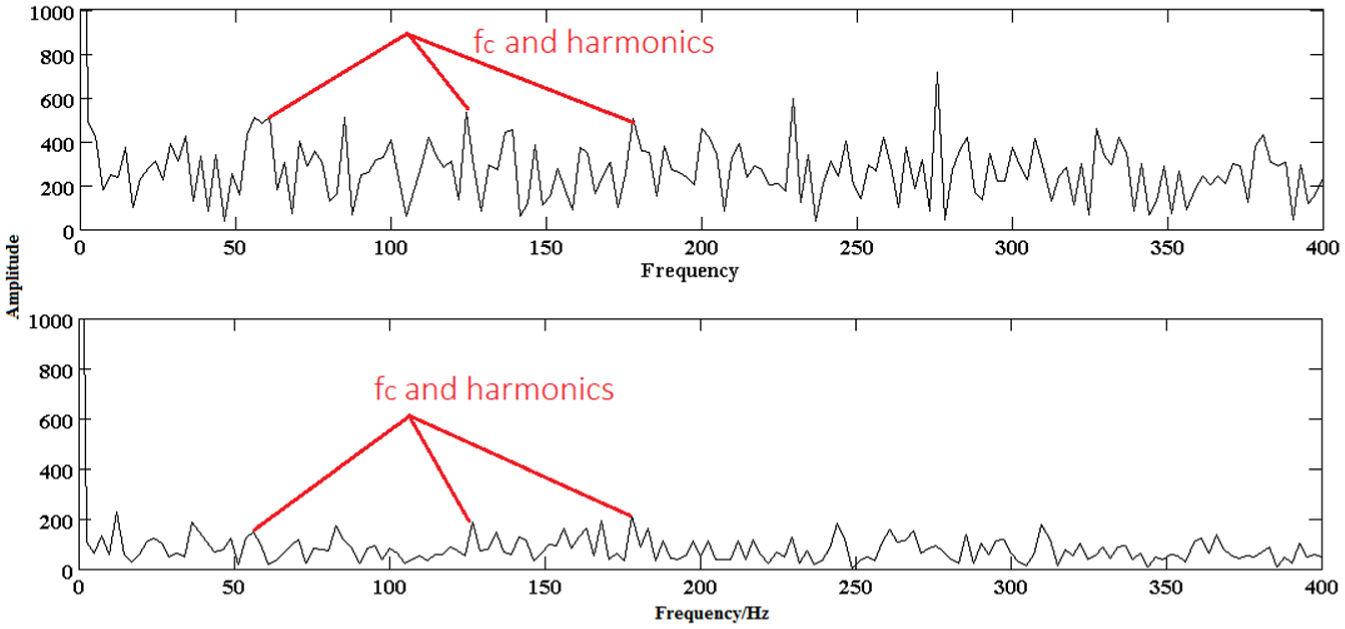
Envelope spectrum of IMFs of low-resonance component.
Analysis of anti-noise
Generally, an efficient signal decomposition algorithm must have good anti-noise performance. For performing anti-noise characteristic, adding stochastic noise with SNR of 0, −2, −4, −6, −8, −10, −12−dB, respectively, and the synthetic signal with different SNRs is decomposed and demodulated by proposed method. The parameters of optimal Q-factor are shown in Table 2 and envelope demodulation spectrum is presented in Figure 7.
Optimal Q-factor under different SNRs.

SNR: signal-to-noise ratio.
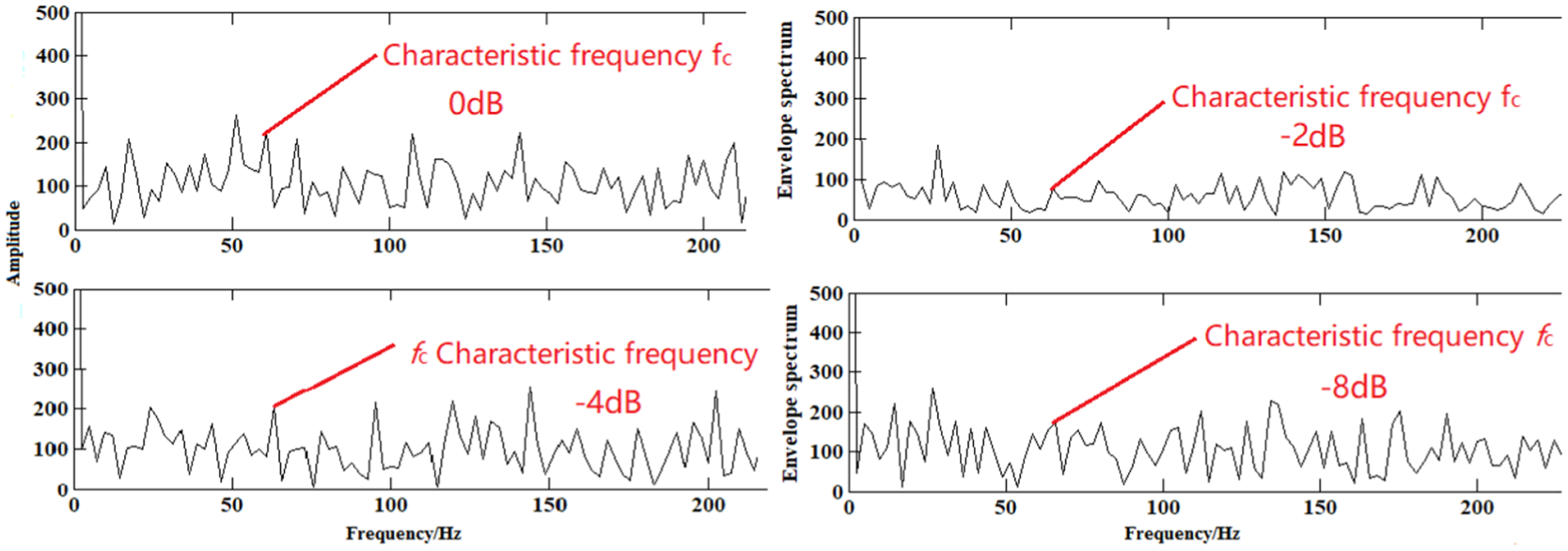
Envelope spectrum of based on RSSD with optimal Q-factor under different noise levels.
It can be inferred from Table 2 that when the SNR is ranged from 0 to −8 dB, the decomposition parameters can be well identified. On the other hand, from Figure 7, when the value of SNR is varied from 0 to −4 dB, the characteristic frequency
Besides, what is noteworthy is that the value of iteration of genetic algorithm has a significant impact on the vibration signal decomposition. In this paper, the value of iteration is 100, the hardware configuration is RAM 8.00 GB, CPU Intel Core i7-6500U, and it takes 3 h for the proposed method to run once. It can be seen from Figure 7 that although the characteristic frequency fc can be identified significantly, the amplitude of disturbance is also obvious. Consequently, how to improve the efficiency of optimal algorithm is a key issue.
In order to validate the superiority of the proposed method in this paper, author also presents the anti-noise performance of original RSSD without optimal algorithm on the same simulation signal, and the envelope spectrum is shown in Figure 8.
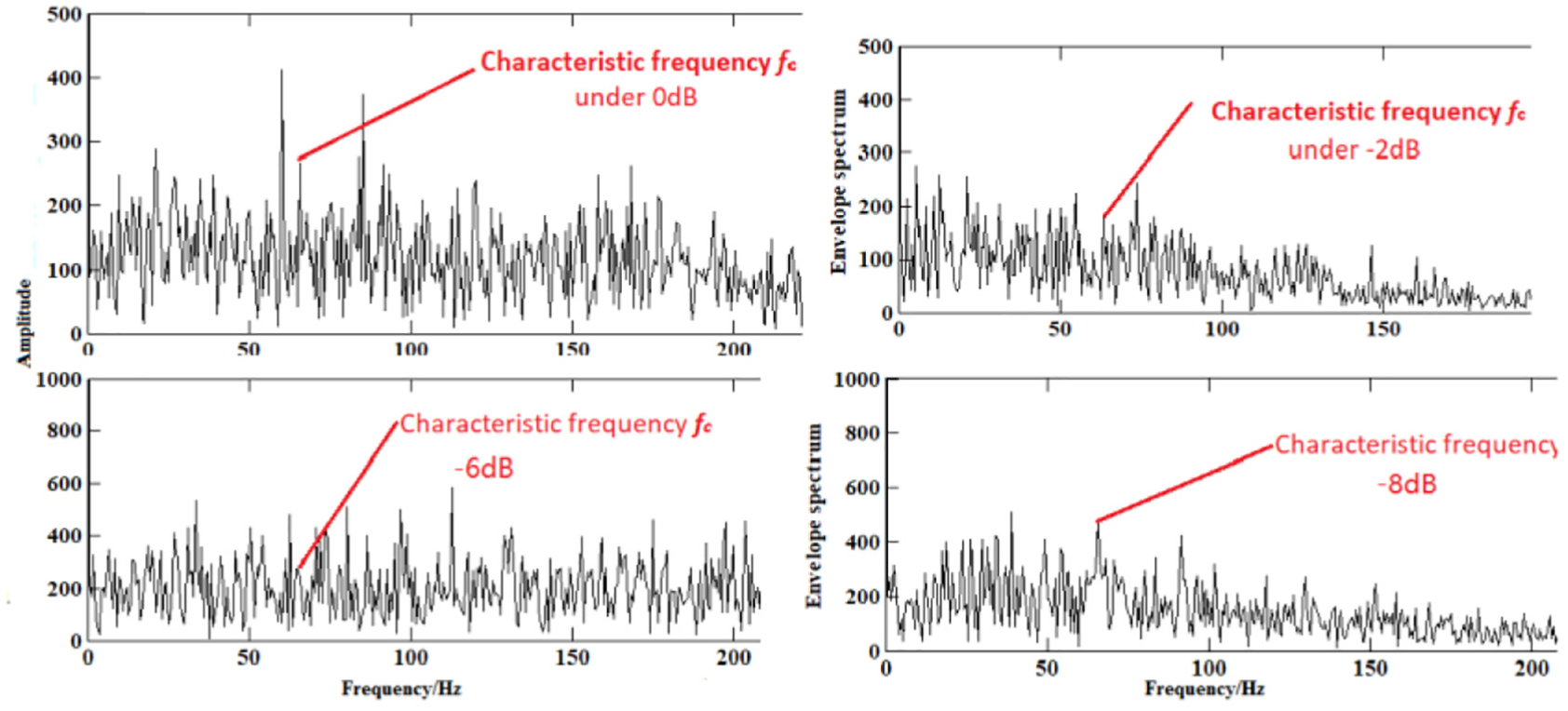
Envelope spectrum of based on original method under different noise levels.
It can be seen that compared with the proposed method, the original method can also distinguish characteristic frequency fc under different SNRs; however, the fault frequency is weaker among envelop spectrum and envelope spectrum presents numerous noise components. This phenomenon infers that the proposed method can effectively reduce noise and the genetic algorithm combination with kurtosis index can obviously extract periodic impact component.
Application
In order to verify the effectiveness of the proposed method on actual rolling bearing fault diagnosis, two deep groove ball bearings SKF-6205 type that are seeded with inner raceway and outer raceway respectively using electro-discharge machining are utilized in the experiment. The parameters of fault rolling bearing are shown in Table 3.
Parameters of rolling bearing for fault experiment.
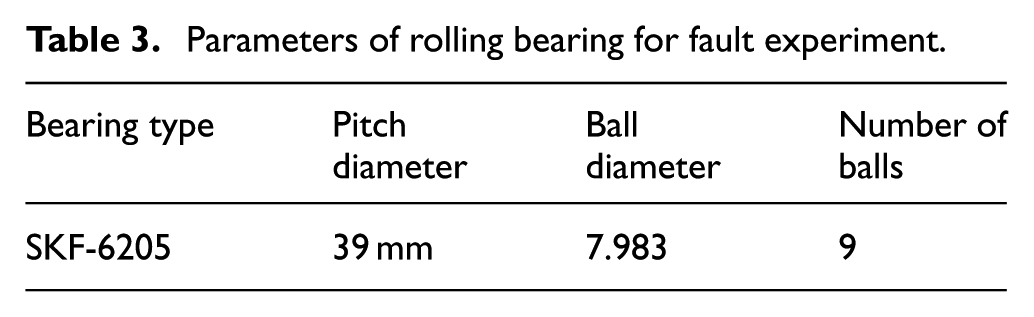
For simulating rolling bearing local defect, an inner raceway fault and outer raceway fault are machined whose fault diameter and fault depth are 6.4 and 3.4 mm, 4.3 and 3.6 mm, respectively. A vibration acceleration is mounted on rolling bearing pedestal and collect acceleration signal in the vertical direction. In the experiment of inner raceway fault, the rotating frequency is 29.95 Hz and the characteristic frequency fi is 162.36 Hz. On the other hand, in the experiment of outer raceway fault, the rotating frequency is 28.83 Hz and the characteristic frequency fo is 103.18 Hz, as for the sample frequency, it is 12,000 Hz. Finally, this experiment employs NI DAQ card combination with LabVIEW to sample vibration acceleration signal.
Rolling bearing inner raceway fault
As for inner raceway fault, the time-domain waveform of fault vibration signal is presented in Figure 9, it can be seen that the experimental signal has much noise. Hence, it is useful to reinforce shock characteristic, adopting the proposed method with optimal Q-factor Q1 = 1.47, Q2 = 1.00. Finally, the low-resonance component with optimal Q-factor is shown in Figure 10; it can be seen that the impact characteristic in low-resonance component has been remarkably enhanced.
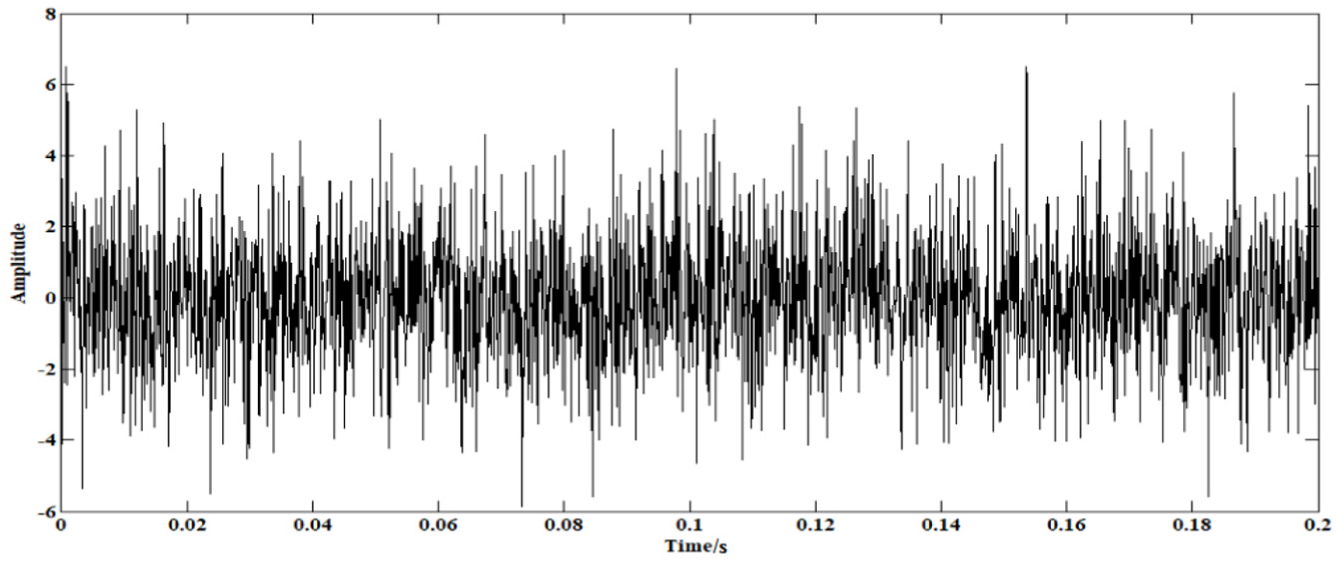
Time waveform of inner raceway fault signal.
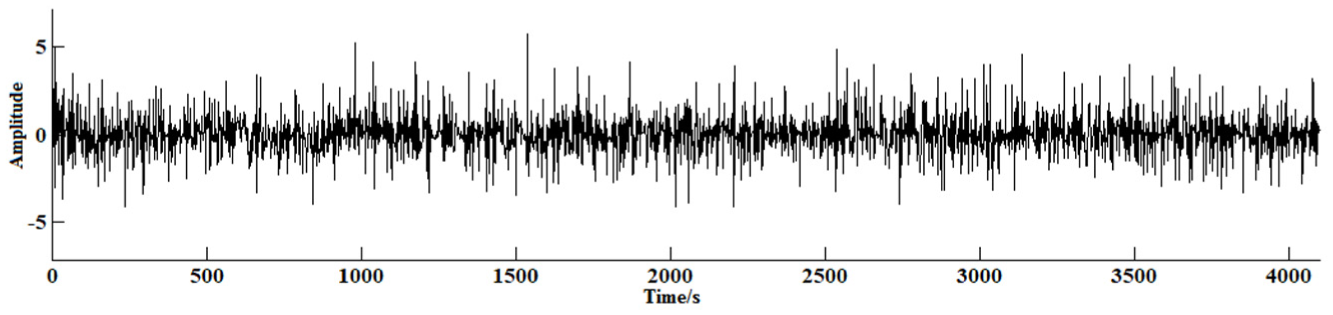
Low-resonance component of inner raceway fault signal with optimal Q-factor.
On the other hand, the optimal process based on genetic algorithm is shown in Figure 11; it can be seen that when the generation iteration reaches 20, the maximum fitness value achieves stability.
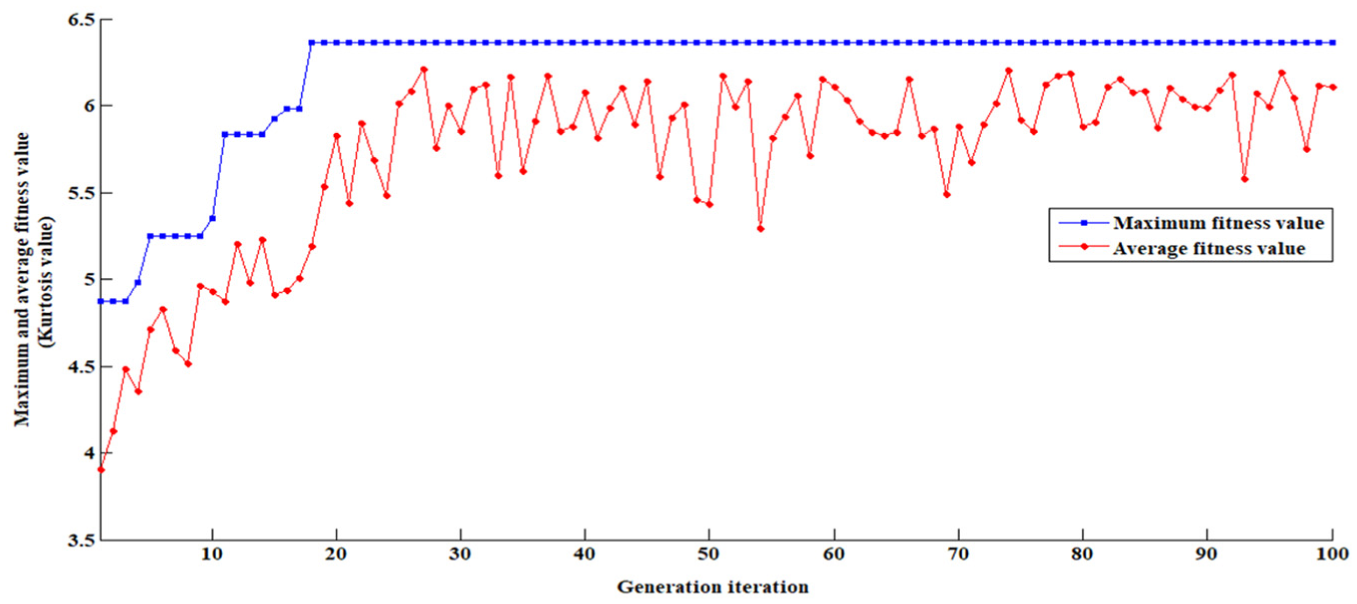
Optimal process of inner raceway fault signal.
As for low-resonance component, EMD is applied on it for getting optimal IMF based on the maximum kurtosis value and using Teager energy operator on optimal IMF to obtain envelope demodulation spectrum which is shown in Figure 12.
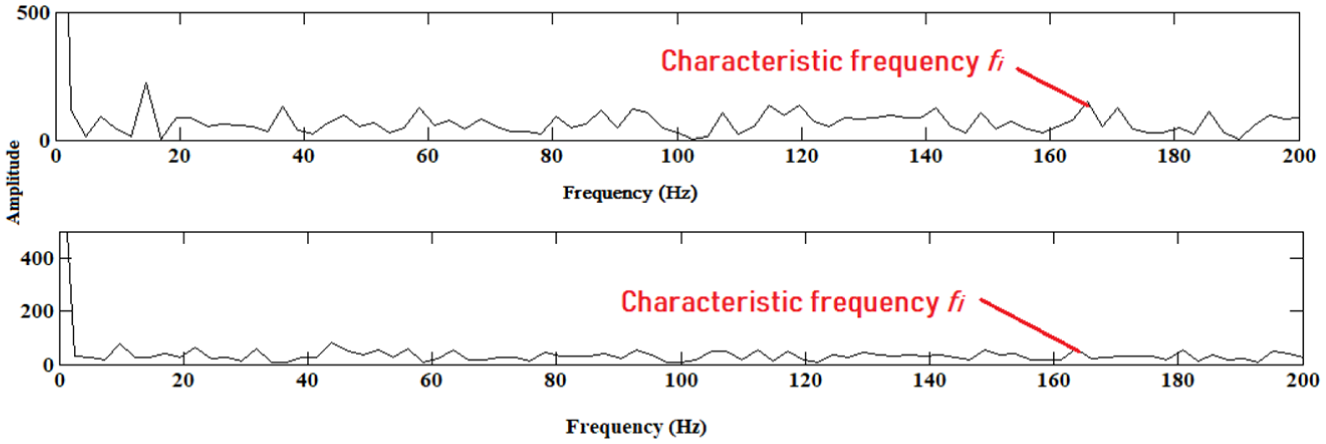
Envelope spectrum of optimal low-resonance component for inner raceway fault.
It appears inner fault characteristic frequency in Figure 12, this demodulation result accords with objective fact of inner raceway fault. For comparison with the proposed method, the original method integrated with EMD is also used for analyzing vibration signal, the envelope demodulation spectrum is also presented in Figure 13, it is prominent that the fault characteristic frequency is weaker and the spectrum presents noise component, the fault characteristic frequency is difficult to distinguish which infers that the proposed method has a better performance compared with original method.
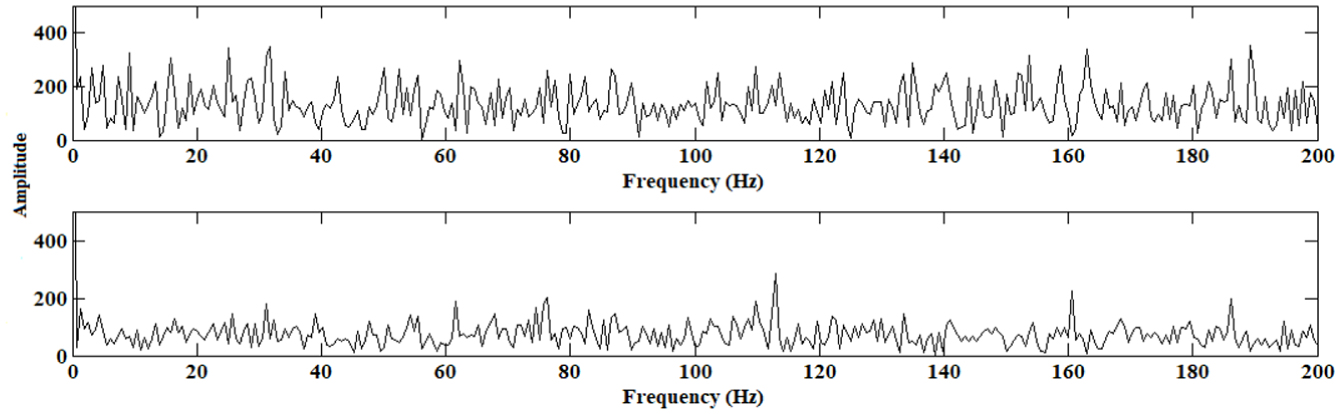
Envelope spectrum of low-resonance component with original method.
Rolling bearing outer raceway fault
The time-domain waveform of outer raceway fault signal is shown in Figure 14, the vibration signal appears obvious noise component and improvement of SNR is required consequently. Adopting the proposed method, author computes the optimal Q-factor Q1 = 1.21, Q2 = 1.00.
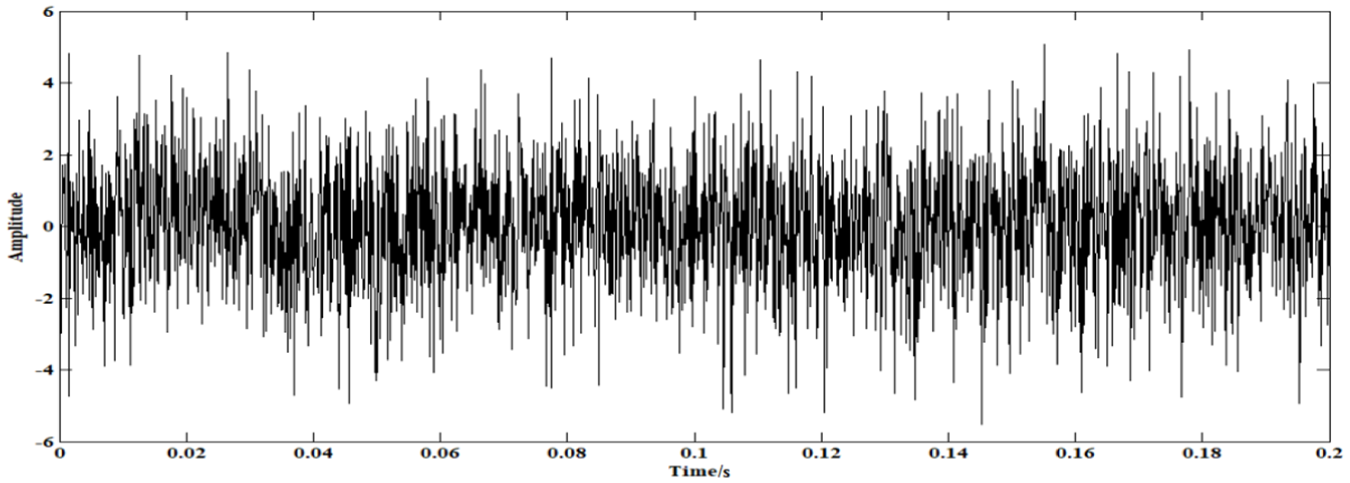
Time waveform of outer raceway fault signal.
The low-resonance component under optimal Q-factor is shown in Figure 15; compared with original vibration signal, the optimal low-resonance component presents significant impact characteristic.
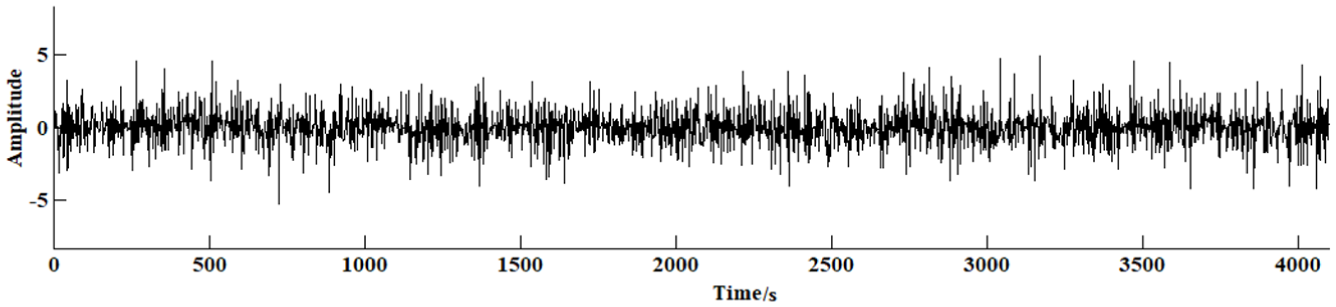
Low-resonance component of outer raceway fault signal with optimal Q-factor.
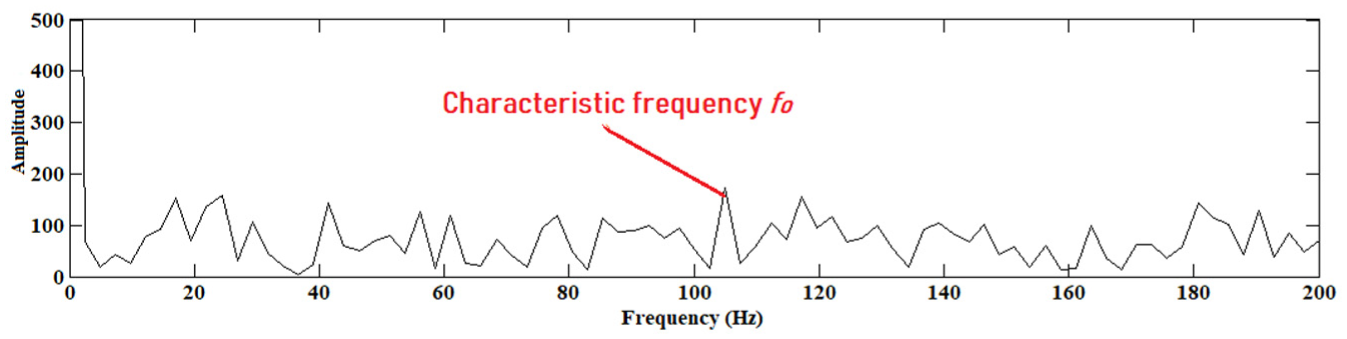
EMD is applied for low-resonance component to obtain the optimal IMF which utilizes Teager energy operator, and envelope demodulation spectrum is presented in Figure 16, it appears fault characteristic frequency fo and the fault characteristic frequency is significant compared with other components. This phenomenon infers that the proposed method in this paper can effectively contribute to rolling bearing outer raceway fault detection.
Envelope spectrum of optimal low-resonance component for outer raceway fault.
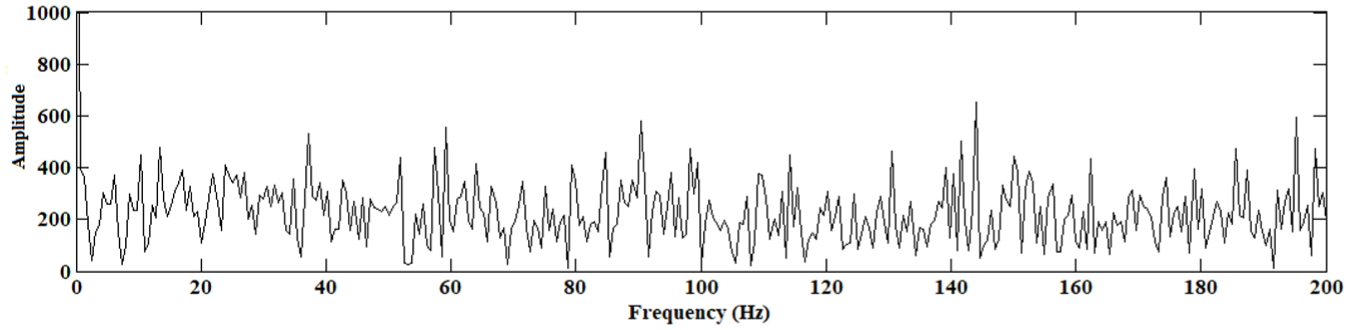
For comparison, the original RSSD combination with EMD is also employed to analyze outer raceway fault signal; the envelope demodulation spectrum of optimal IMF is shown in Figure 17. As shown, the envelope spectrum is very complex and the characteristic frequency fo is not obvious.
Envelope spectrum of low-resonance component with original method for outer raceway fault.
Conclusion
In this paper, the author proposes an improved method to achieve fault diagnosis of rolling bearing based on signal separation. Some conclusions can be inferred by this paper.
Compared with original method, the proposed method in this paper uses genetic algorithm to optimize Q-factor. In consideration that the fault information of rolling bearing mainly exists in shock component, and shock component generally corresponds to low-resonance component, this proposed method selects kurtosis parameter as optimized objective function. With the experimental verification, the proposed method can effectively reduce the blindness of decomposition parameter selection.
Compared with original method, the proposed method presents good anti-noise performance; this result infers that the proposed method can be further used for weak fault signal detection.
Although the proposed method in this paper can eliminate the adverse effect of decomposition result caused by the blindness of Q-factor parameter, while the convergence rate of the genetic algorithm is slow, so the time of signal decomposition is too long and the decomposition efficiency is too low. As a result, the key is how to address above shortcoming in the next step.
