




Abstract
The durability and endurance of the exploitation of railway bridges depend on the intensity and the manner of the static and dynamic loads affecting them. Heavy freight trains passing the bridges cause huge vertical and dual-axis vibrations, which are evidenced by the fatigue of the construction of the bridge. The scatter of the acceleration intensity of the railway bridge vibratory oscillation and their parameters are analysed while applying the theory of covariation functions. The results of the measurements of the intensity of the acceleration of vibratory oscillation in the points of support beams recorded in the timescale in the form of arrays (matrixes). Applied covariance function method provides measurement equipment and experimental simplicity of the analysis of the railway bridge vibration signals. The standard scores of mutual covariation functions of the array of the measurement results of the acceleration of digital vibratory oscillation and the standard scores of the auto-covariance functions of separate arrays are altering considering the interval of quantization in the timescale. Results gained by analysis prove the advantage of the rationed auto-covariational functions method while analysing the dynamic oscillation of bridges.
Keywords
Introduction
Building railway for trains via natural barriers, such as rivers and lakes, railway bridges are unavoidable. The sustainability and durability of the exploitation of railway bridges strongly depend on the intensity of railway traffic and the manner of vertical rail vehicle dual-axis loads, affecting them.1,2 It is necessary to constantly observe the condition of new modern bridges and older constructions, which are influenced by faster depreciation processes. Heavy freight trains passing the bridges cause huge vibration due to the interaction with railing, which are evidenced by the fatigue of the construction of a bridge.3,4 Therefore, exploiting railway infrastructure, it is important to indicate the parameters of vibration, affecting bridges, aiming to reliably forecast the durability of the lifetime of a bridge.
During the last two decades, a lot of research works were carried out on various vibration problems associated with railway bridges.5,6 They include the dynamic response of railway bridges and railway tracks at grade under the action of moving trains. A new element called ‘bridge-track-vehicle element’ was proposed by Cheng et al. 2 who investigated the interactions among a moving train, and its supporting railway track and bridge structures. The moving train was modelled as a series of two-degree-of-freedom mass–spring–damper systems at the rolling-stock wheel-set locations. The study demonstrated that the impact of track structure on the dynamic behaviour of bridge structure is irrelevant. Nevertheless, the bridge assembly effect on the dynamic behaviour of the track construction is rather substantial.
The applicability of passive tuned mass dampers (PTMDs) to suppress train-caused vibration on bridges was described by Wang et al. 7 According to the train load frequency analysis, the resonant phenomena occur as the modal frequencies of the bridges are multiple to impact frequency of the train weight. PTMD reduces vertical displacements, absolute accelerations of bridge and train accelerations during resonant velocities.
The vibration of railway bridges induced by moving vehicles was conventionally evaluated through time domain simulations, which are computationally expensive in probabilistic analyses that require Monte Carlo simulation. A frequency domain solution to the random vibration of railway bridges was derived by Jin et al. 8 The random wheel/rail interaction force was characterized by its power spectral density. As a frequency domain approach, the proposed method is naturally suitable for the random analysis of the vehicle-induced bridge vibration, and the method is highly efficient by involving the method of Fast Fourier Transform. Numerical examples displayed that the simply supported bridge may resonate in several natural modes due to the coincidence of leading frequencies of rolling-stock hunting (oscillation) forces to the natural frequencies of the bridge.
A framework to systematically investigate the high-speed train–track–bridge dynamic interactions, aiming to provide a method for analysing and assessing the running safety and the ride comfort of trains passing through bridges, was described by Zhai et al.9,10 A fundamental model was established for analysing the train–track–bridge dynamic interactions, in which the vehicle subsystem is coupled with the track subsystem through a spatially interacted wheel/rail model, and the track subsystem is coupled with the bridge subsystem by a track–bridge dynamic interaction model.
A linear wheel–rail interaction model for the rail vehicle–bridge coupling system was presented by Zhang et al. 11 The vehicle subsystem was modelled by the rigid-body dynamics method, the bridge subsystem by both the direct stiffness method and superposition method, and the wheel–rail interaction by the ‘corresponding assumption’ and simplified Kalker creep theory. Based on the above modelling for the wheel–rail interaction system, linear simultaneous equations were established and solved.
An original scheme for the dynamic analysis of the rail vehicle–bridge interaction (RVBI) between trains and curved-in-plan bridges is described by Dimitrakopoulos and Zeng. 12 Key features are the three-dimensional rail vehicle dynamics creation and the matrix statement of the equations, which condense the RVBI dynamics, making the scheme generic. The analysis brings forward the interaction along the radial and torsional sense of curved bridges, which are often neglected for straight bridges. Specifically, the study showed that the centrifugal and Coriolis forces generated due to the curved path possess the lateral dynamics of the rail vehicle–bridge system when the curvature and/or the velocity are high.
The dynamic characteristics of ground vibrations induced by moving vehicles including the mass rapid transit system, high-speed train railway and general railway on bridges, embankments and in tunnels using field experiments and theoretical solutions were investigated by Ju et al. 13 The results indicate that train-induced ground vibrations at the train load dominant frequencies are significantly large for both subsonic and supersonic train speeds, and the vibrations from carriage natural frequencies and engine frequencies are minor.
The models with nonlinear wheel–rail contact forces were considered for analysing the dynamic interaction between high-speed trains and bridges in order to study dynamic effects both in the bridge and in the vehicles resulting from the coupling. 14 Nonlinear contact models may be necessary for evaluating the stability and the safety of running traffic in situations such as rail vehicle overturn when the train is crossing a bridge under strong lateral winds or when an earthquake occurs. For examination of the coupled dynamic response of trains and bridges, models of multibody dynamics were used for vehicles and the finite element method for structures. Researchers compared four different interaction models: (1) a model where the rail vehicle wheelset is considered to be rigidly coupled to the track; (2) a staggered uncoupled method in which vehicle and structure are analysed separately; (3) a linear contact model in which lateral relative displacements between rails and train wheels are allowed, assuming bi-conical wheel and rail profiles and linear Kalker theory for tangential contact; and (4) a nonlinear model in which realistic wheel and rail profiles, Hertz’s nonlinear theory for normal contact and Kalker’s nonlinear theory for tangential contact are used.
With recurrent intensive train traffic affecting, the problems concerning fatigue occur in the metal girder railway bridges, especially at the stitches of welding. 15 The precise evaluation of the development of stress in critical points at the stitches of welding is crucial while designing the fatigue of stitches. The loads of vehicles are traditionally considered to be moving static loads irrespective of their dynamic impact. In this work, the methodology is introduced which allows to evaluate the dynamic impact of all the systems of a train and bridge on the occurring of fatiguing disturbance. In this methodology, a two-level modelling scheme is used, which connects the dynamic analysis of all the systems of a train and bridge and the detailed analysis of stress at stitches. Applying Miner’s Rule, the total wearisome disturbance at the critical points of the stitches of welding is indicated. The analysis of sensibility has been performed while choosing different configurations of the load of trains. It is identified that dynamic vibration has a negative impact on the fatigue of a bridge. The total disturbance in the places of analysis calculated is bigger than disturbance, applying only the method of static moving load.
It is necessary to perform permanent condition monitoring of new modern bridges and older structures exposed to accelerated deterioration. 16 The main tools used in bridge condition evaluation are based on the results of the experimental modal analysis of bridge structures. These researchers focused on the methodology of forced vibration tests performed by means of mechanical exciters. A comprehensive testing system called Modal Analysis of Bridge Structure (MANABRIS) developed at Wroclaw University of Technology, is presented. The results of a forced vibration test carried out on a typical railway bridge are compared with the results of a conventional modal test of the structure excited by trains.
The theoretical model applied by the authors is based on the conception of static coincidental function, assessing that the mistakes of the measurements of the parameters of vibratory oscillation are accidental and of equal accuracy, that is, the average of mistakes is
The covariational functions of the digital arrays of deformation signals or the standard scores of the auto-covariational function of a separate array are calculated while scattering the arrays of digital oscillation in the form of vectors. To process digital signals, Discrete Fourier Transform is applied in the studies of Kardoulas et al. 17 and Ekstrom M and McEwen, 18 and Wavelet or the Theory of Small Amplitude Waves in some of the studies.19–22 Polish researchers, Ekielski et al., 23 used Morlet wavelet transform for the determination of natural frequencies during dynamic processes. Wavelet-based noise reduction is described by Delouille et al. 24 as well. These researchers suggested the method of second-generation wavelets constructed with the lifting scheme. Starting from a simple initial transform, they proposed predictor operators based on a stabilized bivariate generalization of the Lagrange interpolating polynomial.
During this research, the parameters of the oscillation of the support beams of a railway bridge were analysed applying the theory of coincidental functions.
The main purpose of this research work is to substantiate the efficiency of the covariance analysis method for evaluating vibration signals generated by railway bridges of newly constructed line ‘Rail Baltica’ in Lithuania. When using the obtained patterns to determine this type of construction of vibration parameters, fewer measuring instruments are needed, that is, the experiment and measurement process becomes much simpler. The application of proposed methods should be relevant for determining one of the railway bridge state criteria when assessing the vibrational level induced by moving rolling stocks.
The covariational model of the parameters of oscillatory signals
The points of the measurement of the railway bridge were chosen on the support beams and in the middle points of the beams.
Group of researchers of Vilnius Gediminas Technical University (VGTU) applied the assumption to the theoretical model that the mistakes of the measurements of the digital signals of the strength of the acceleration of the outdoor oscillation of the device are accidental and possibly systematic.
In every vector of the arrays of the measurement of the strength of the acceleration of the outdoor oscillation of vibration field, the trend of the data of the measurement of that vector is eliminated. The interval of the time of electromagnetic scattering is used as one of the parameters.
Group of researchers of VGTU considered a coincidental function, made according to the arrays of data of the measurement of the strength of the outdoor acceleration of vibration field, to be stationary (in its broader sense), that is, its average is

where
The standard score of covariational function

where is the total number of discrete intervals.
Equation (2) can be applied in the form of the auto-covariational or mutual covariational function. When the function is auto-covariational, the arrays
The standard score of standardized covariational function equals

where
The equations are used to eliminate the trend of the columns of the digital arrays of i measurements

where
The vector of the averages of the columns of i array is calculated according to the following equation

The realization of the coincidental function of j array of the strength of outdoor oscillation of vibration field has the following expression

The standard score of the covariational matrix of i array of the outdoor oscillation of vibration field looks as follows

The standard score of the covariational matrix of two arrays of the strength of oscillation is written as

where the measurements of arrays
The standard scores of covariational matrixes


where
The accuracy of the correlation coefficients calculated is defined by standard deviation

where
The results of the experiment and analysis
The arrays of the corresponding data of vibration signals were received according to the measurement of the points of a railway bridge (Figure 1) and applying the equipment of oscillation assessment and processing of results ‘Brüel & Kjær’ and seismic accelerators (Figure 2).
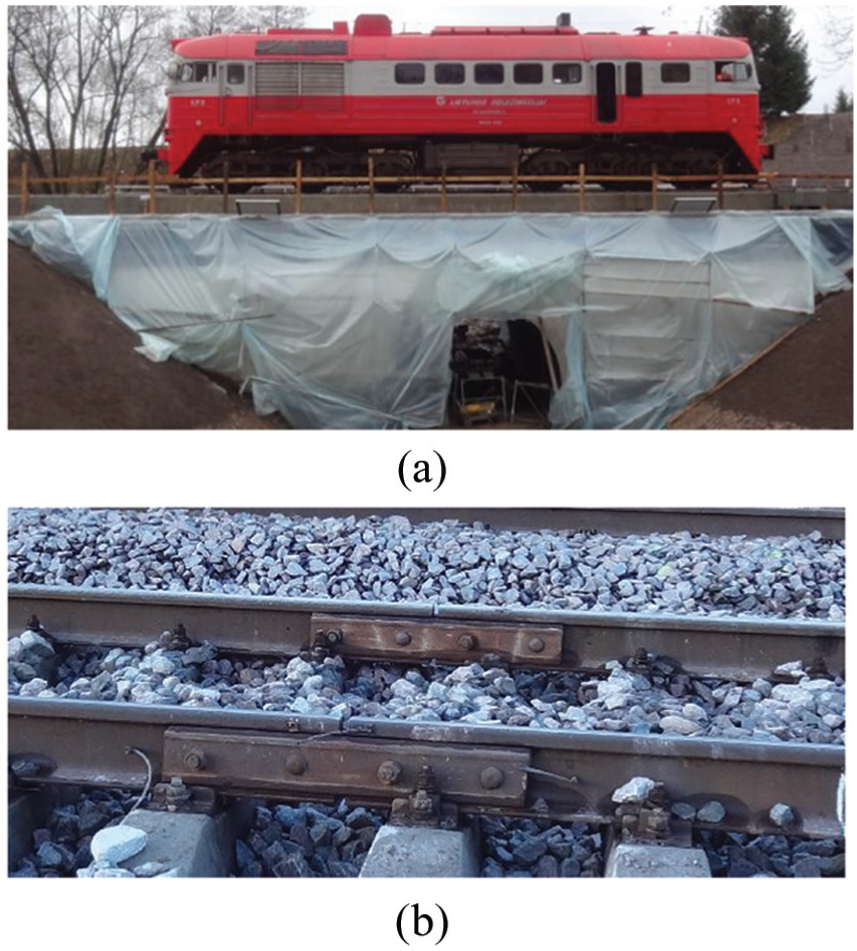
The view of the railway bridge.
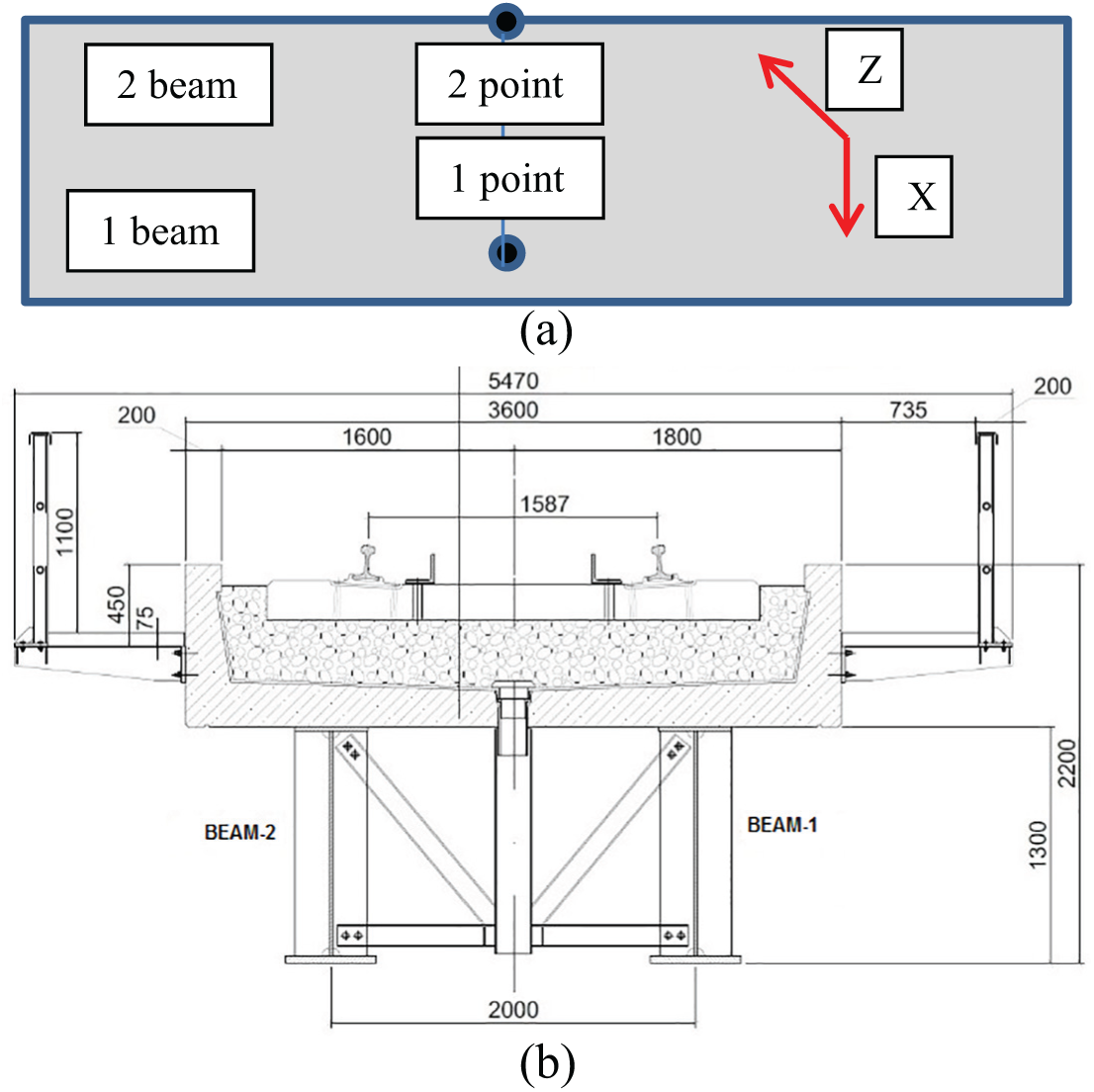
The position of the points of the bridge measurement: (a) scheme of the measurement and (b) cross-section of the bridge.
The track on the bridge is tangent (straight) and the rails are not welded. As typically, the track panel assembly rails are used on the bridges, that is, the track consists of rail chains, which are fixed (jointed) by fastenings and bolts.
The distances from sensors 1 and 2 are the same and equal approximately 0.95 m, that is, the sensors of point 1 and point 2 were fixed on the bottom (on inside wall) of the bridge reinforced concrete slab.
Measurements with the train going at the speed of 20 and 40 km/h were performed. The vertical accelerations of 2 points (Figure 2, Z direction) and the horizontal acceleration of 1 point (Figure 2, X direction) were measured; 1 and 2 points are the points of the middle of the bridge that are located correspondingly on 1 and 2 beams.
Data of bridge point vibration signal measurement using the following devices: mobile equipment for measurement results processing, collection and control ‘3660-D’ from ‘Brüel & Kjær’ with computer DELL (Figure 3(a)) and an accelerometer 8344 (Figure 3(b)).
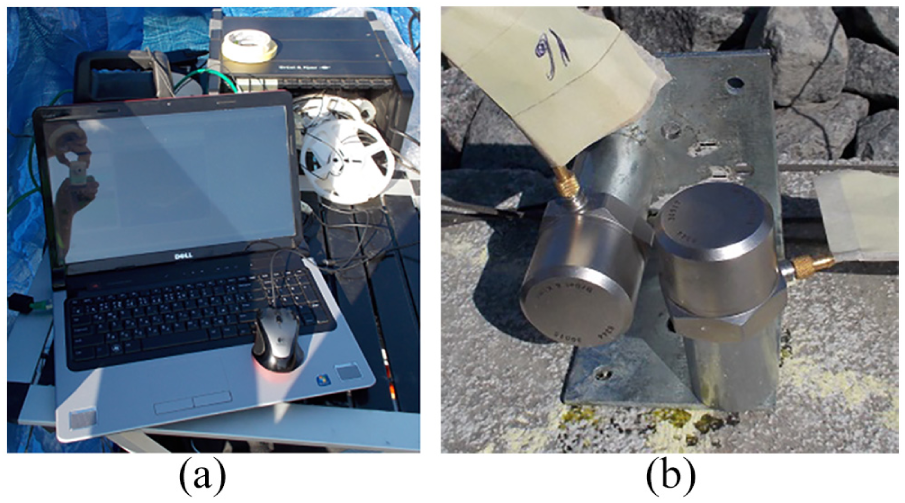
(a) The equipment of collecting and processing data, and (b) the sensors of the measurement of oscillation.
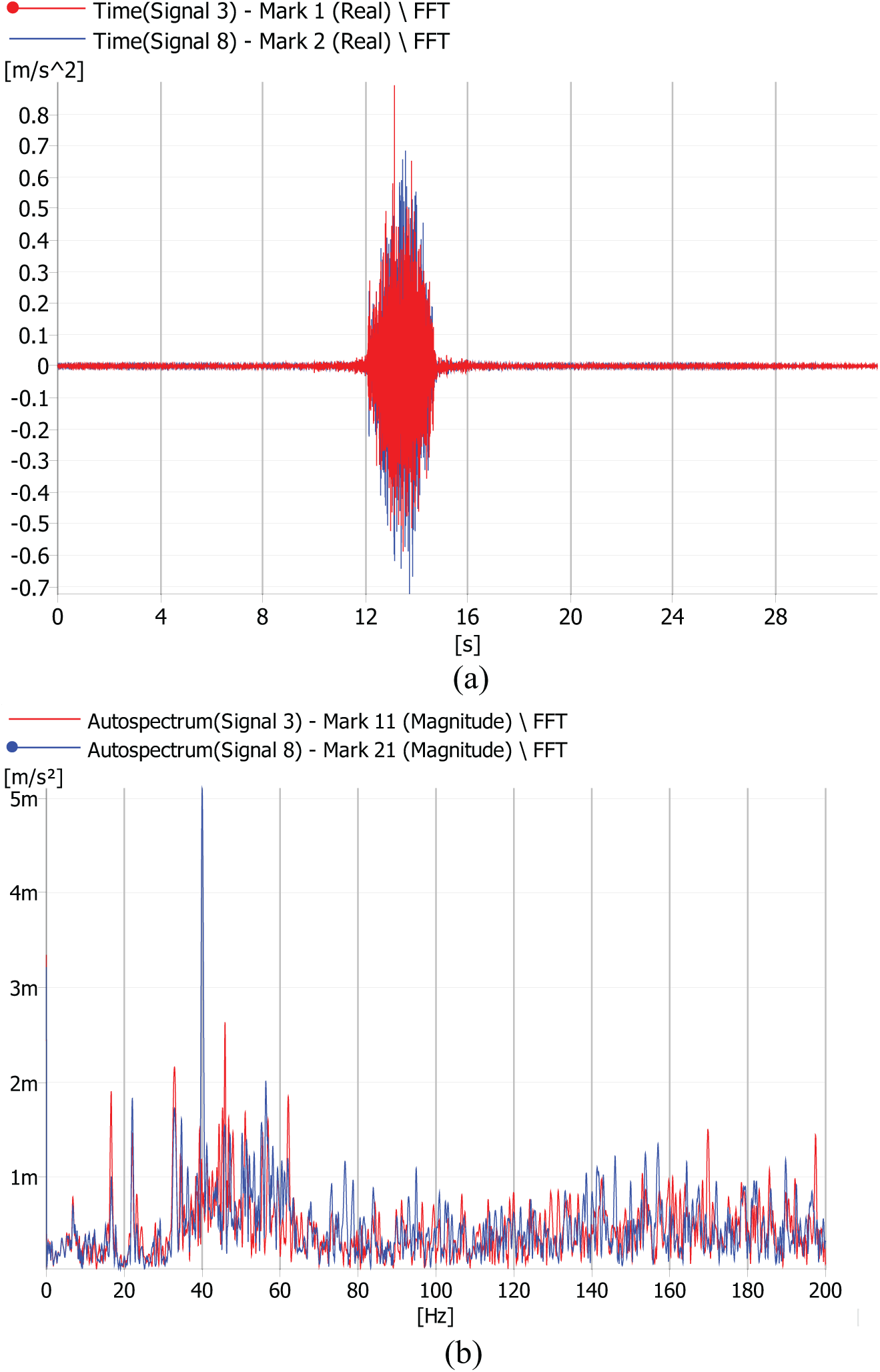
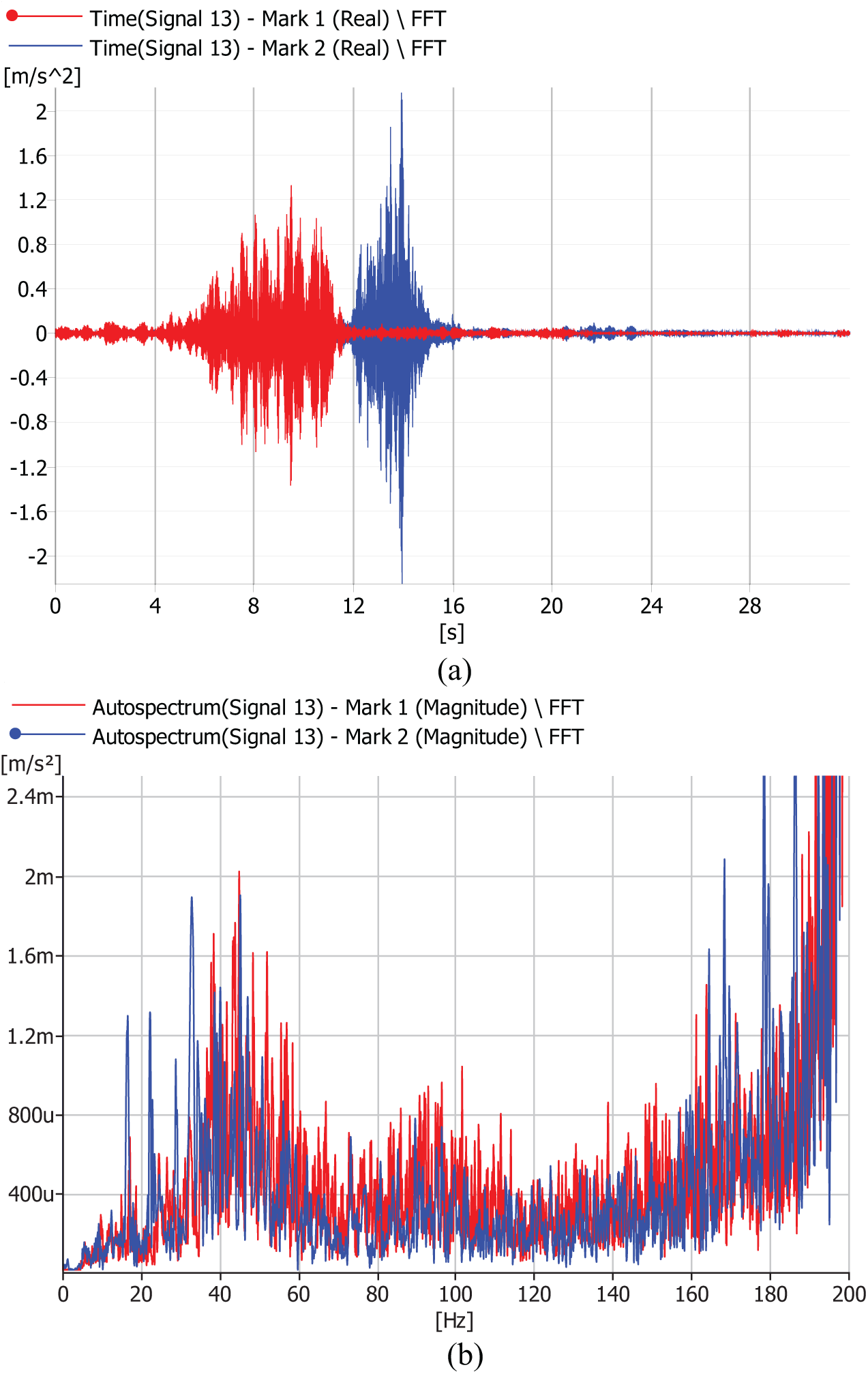
During the research, the values of the acceleration of the middle points of the bridge were analysed. The values of the acceleration of the vertical and horizontal position of the middle points of the beams of the bridge and the diagrams of their spectral density are provided in Figures 4–6. Correspondingly, the values of the vertical oscillation are provided in Figures 4 and 5 when the diesel locomotive of the series of M62M passed the bridge at the speed of 20 and 40 km/h. The values of horizontal oscillation are provided in Figure 6 when the diesel locomotive of the series of M62M passed the bridge at the speed of 20 and 40 km/h.
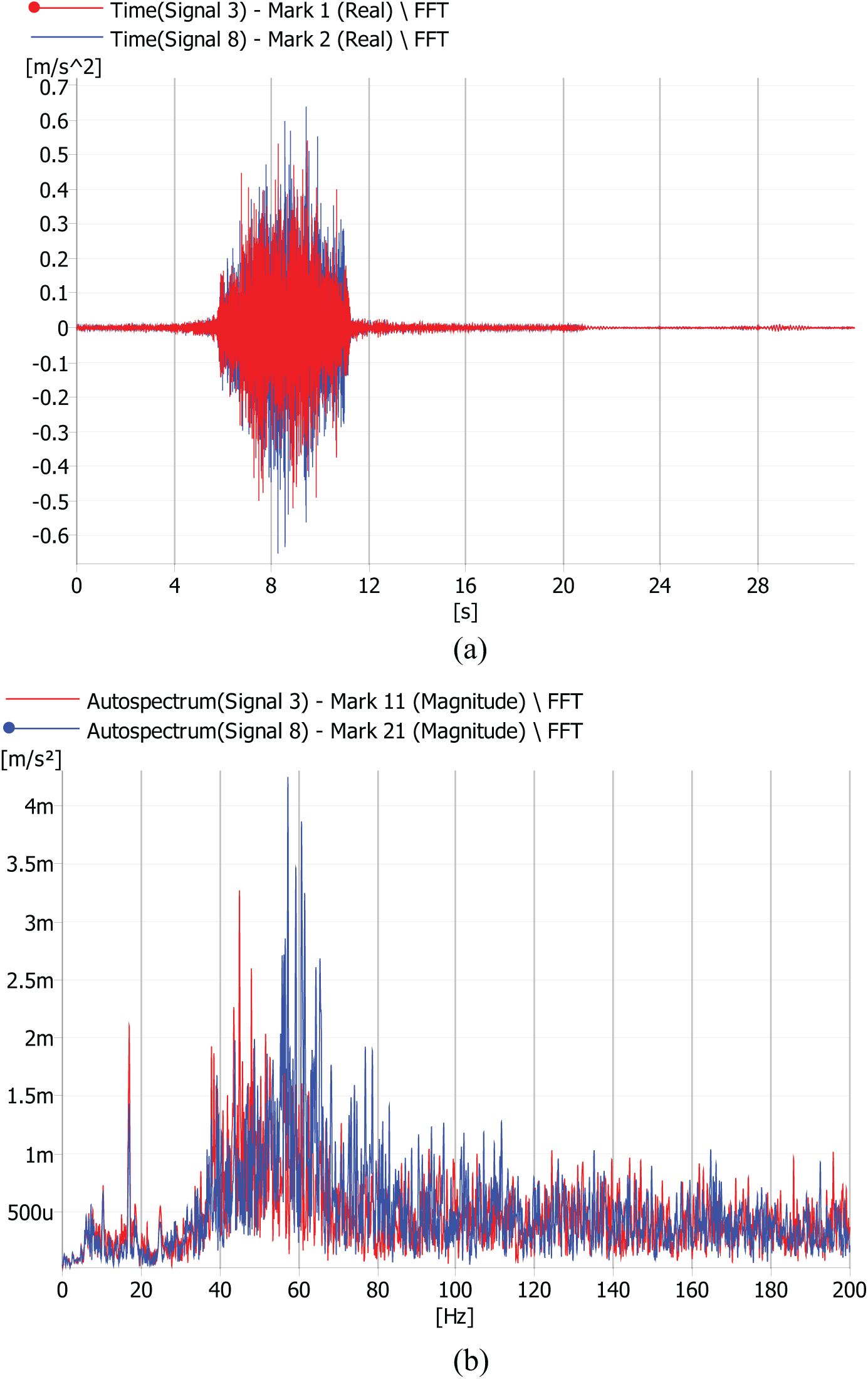
Vertical acceleration of (a) bridge points (1 in red and 2 in blue) and (b) spectral diagrams at locomotive speed 20 km/h.
Vertical acceleration of (a) bridge points (1 in red and 2 in blue) and (b) spectral diagrams at locomotive speed 40 km/h.
Horizontal accelerations (a) of bridge first point (Figure 2) and spectral diagrams (b) at locomotive speeds 20 (red) and 40 km/h (blue).
The vectors of vibration signals were measured at the points of the railway bridge, and the data of the results of six vectors were received (from a part of Figures 4–6, where time diagrams are shown). Signals were recorded in time intervals
In the procedures of calculation, the sequence (1, 2, 3, 4, 5, 6) was applied for the numeration of vectors according to the following scheme:
Beam 1, the vertical acceleration of oscillation when
Beam 1, the vertical acceleration of oscillation when
Beam 1, the horizontal acceleration of oscillation when
Beam 1, the vertical acceleration of oscillation when
Beam 2, the vertical acceleration of oscillation when
Beam 1, the horizontal acceleration of oscillation when
The arrays of data of measurement were processed according to the computer programmes created, applying the programme package of MATLAB 7 operator.
The values of the quantization interval of rationed covariational functions vary from 1 to n/2 values, where
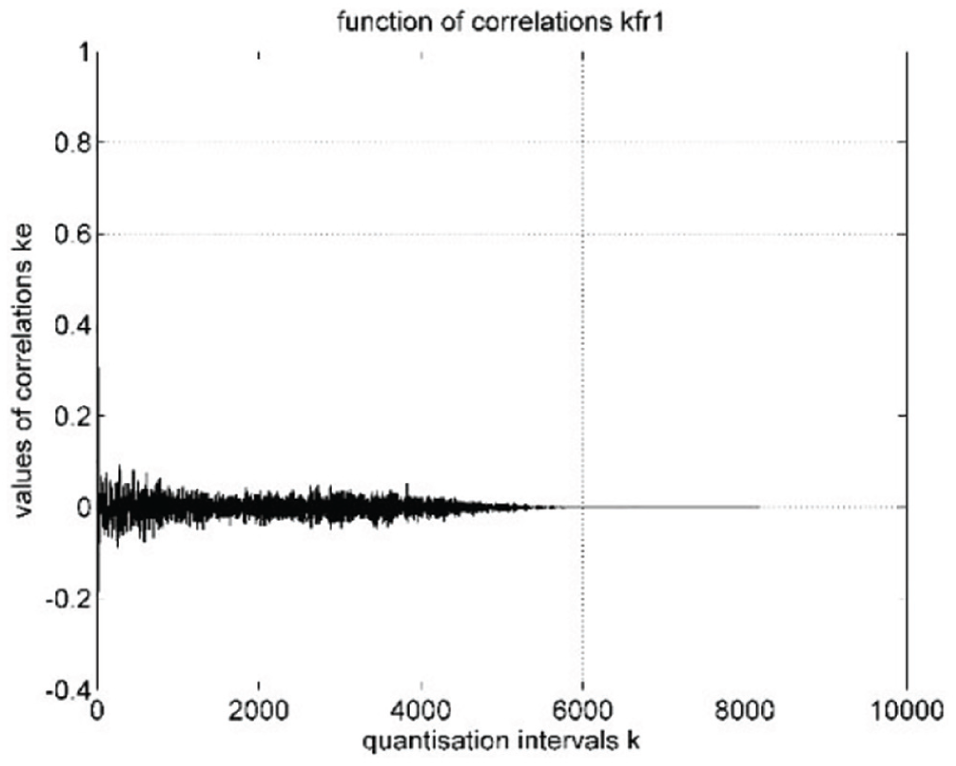
The rationed auto-covariational function of the acceleration of 1 vibro-signal vector.
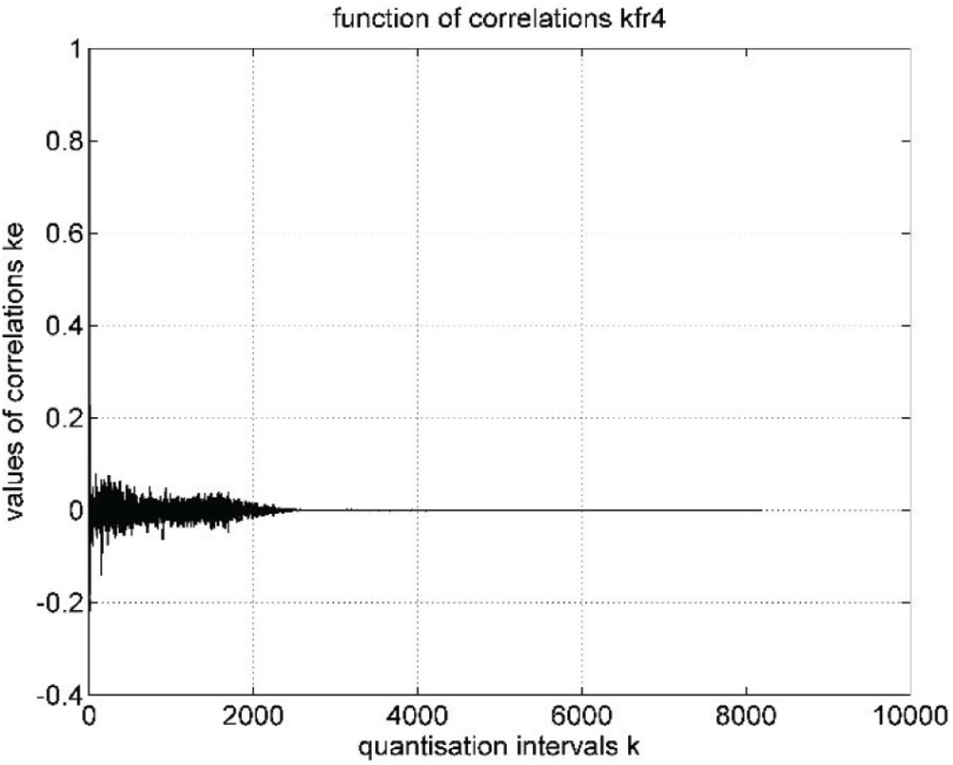
The rationed auto-covariational function of the acceleration of 4 vibro-signal vectors.
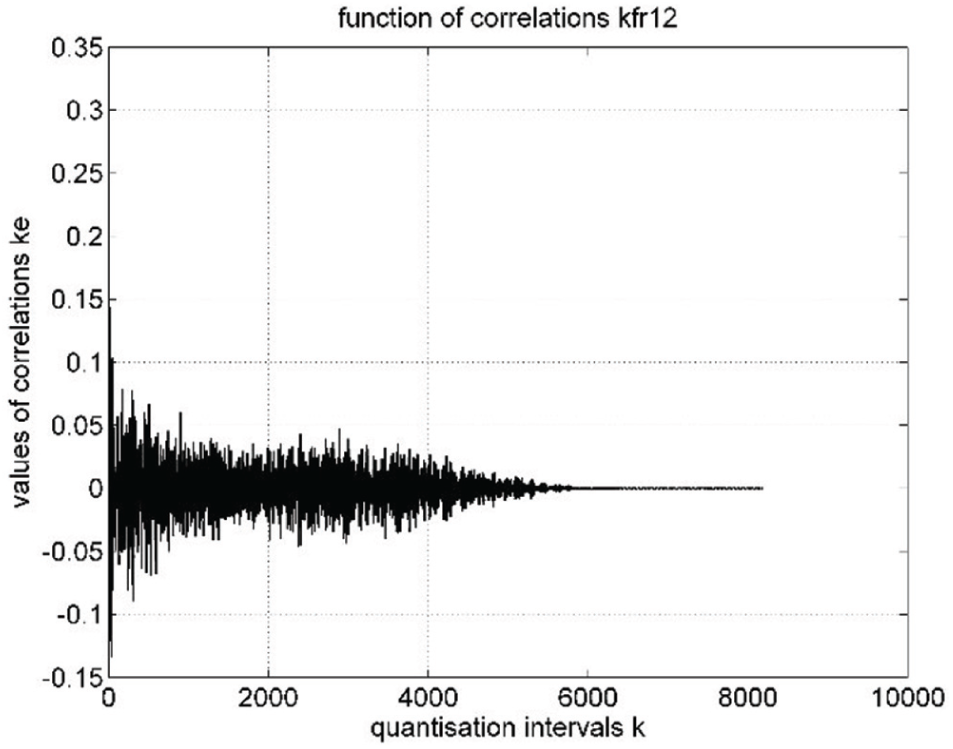
The rationed mutual covariational function of the accelerations of 1 and 2 vibro-signal vectors.
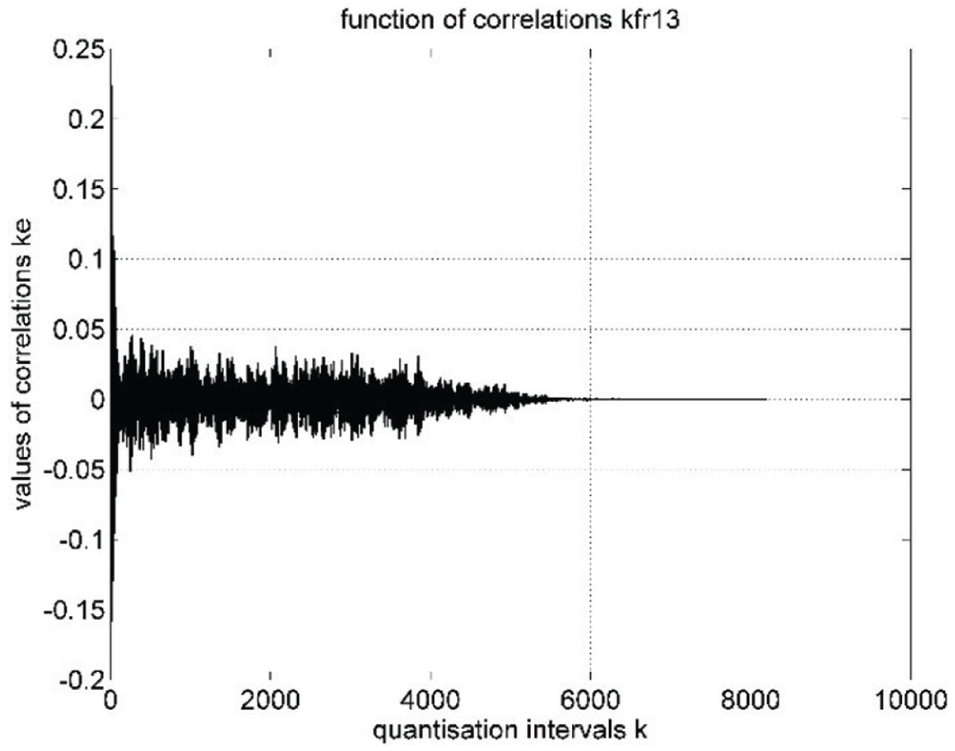
The rationed mutual covariational function of the accelerations of 1 and 3 vibro-signal vectors.
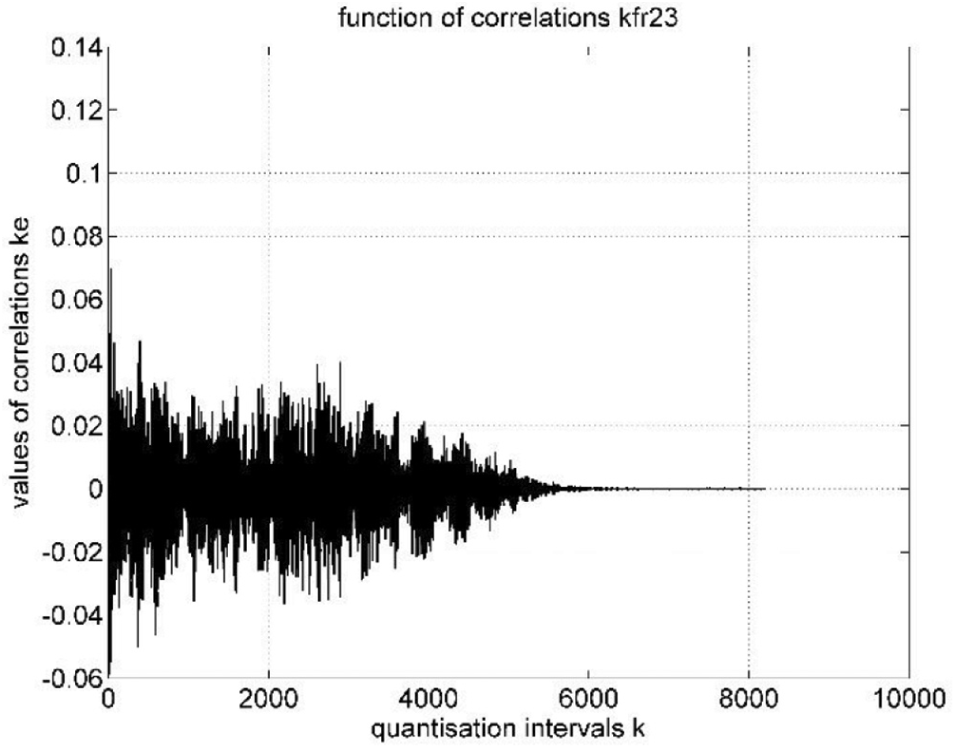
The rationed mutual covariational function of the accelerations of 2 and 3 vibro-signal vectors.
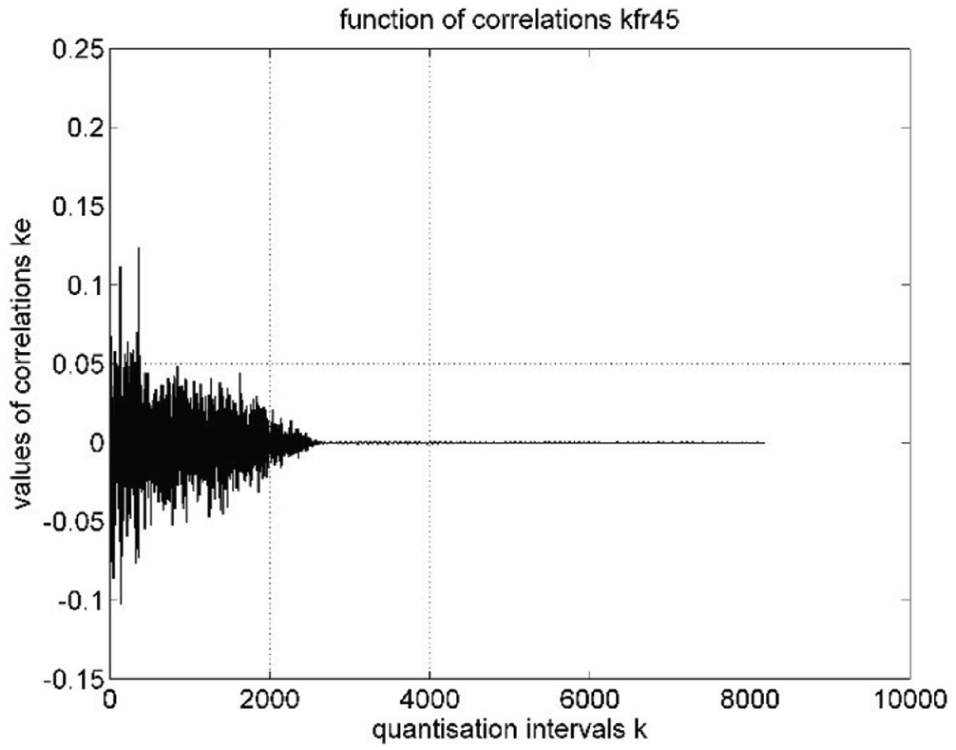
The rationed mutual covariational function of the accelerations of 4 and 5 vibro-signal vectors.
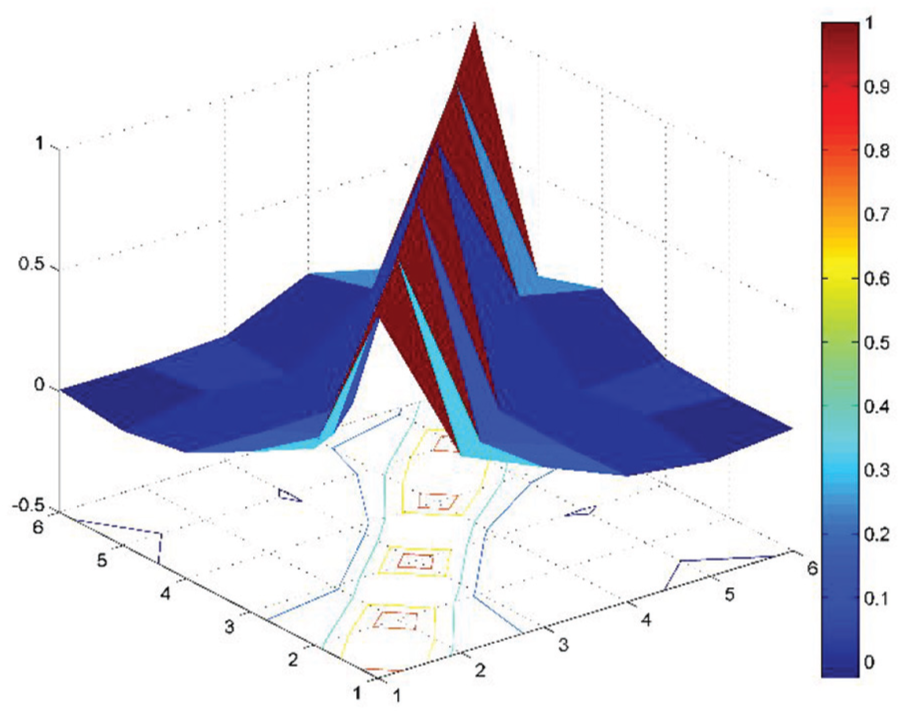
The graphic view of the generalized (spatial) correlation matrix of the array of the accelerations of 6 vibro-signal vectors.
Rationed auto-covariational functions gain the biggest value of correlation coefficient
The values of the mutual rationed covariational functions of six deformation oscillation are not big; they changed within the interval
Hence, under the speed twice as less, the mutual dependence of the dynamic accelerations of oscillation remains approximately twice as longer period.
Conclusion
The rationed auto-covariational functions of the dynamic oscillation of a railway bridge and mutual covariational functions enable to identify the change of correlation among data vectors according to the quantization interval of the time of signals. The autocorrelation of the vectors of the acceleration of oscillation and mutual correlation are practically not big and do not depend on the speed of train movement.
The values of the functions of the rationed auto-covariational vectors of vertical and horizontal accelerations and the values of mutual covariational functions ‘faded’ up to
Taking into account the above-mentioned interdependence of acceleration vectors, it is possible considerably to reduce the number of used sensors for the measurement of vibration and to reliably assess the vibrations in hardly accessible points of railway bridges.
Footnotes
Declaration of conflicting interests
The author(s) declared no potential conflicts of interest with respect to the research, authorship, and/or publication of this article.
Funding
The author(s) received no financial support for the research, authorship, and/or publication of this article.
