




Abstract
Does providing nontransferable months of parental leave earmarked for fathers, as mandated by the European Union to its member countries since 2019, increase their participation? To answer that question, the authors investigate the consequences of a 2015 French reform that designated up to 12 months of paid leave for fathers while simultaneously reducing the maximum paid leave for mothers by the same number of months. Although the benefits were low, parental leave could be taken on a part-time basis, which can be more attractive to fathers. Using administrative data and comparing parents of children born before and after the reform, the authors find that in response to a 25 percentage point (pp) decline in mothers’ participation rate triggered by the reform, fathers’ participation increased by less than 1 pp, primarily through part-time leave. The reform increased mothers’ labor earnings, but it had no significant impact on fathers’ earnings. Overall, the substitutability of parental leave between parents appears to be low and, as a result, earmarking alone does not substantially increase fathers’ participation.
In most Organisation for Economic Co-operation and Development (OECD) countries, parents can take paid parental leave, known as paid family leave in the United States, if they stop working to care for a young child. Because parental leaves are most often utilized by mothers, these policies increase the gender gap in participation and earnings following the birth of a child (Kleven et al. 2020). To promote a more equal division of child care, in 2019, the European Union mandated that all member countries offer nontransferable periods of parental leave earmarked for fathers (European Union 2019).
Earmarking parental leave is introduced to increase the incentives for fathers to take parental leave. As any period taken by the father no longer reduces the length of the parental leave of the mother, fathers should participate more when part of parental leave is earmarked for them (Boyer 2017; Koslowski et al. 2020). Having a period specifically reserved for fathers could reduce the potential stigma associated with fathers’ parental leave (Wayne and Cordeiro 2003). And yet, earmarking may not increase the participation of fathers if benefits are too low to compensate for fathers’ loss of income or if other barriers such as bureaucratic hurdles or negative responses from employers are present. Understanding whether earmarking increases fathers’ take-up rate is thus important to assess how much of fathers’ low participation in parental leave in some countries reflects the fact that no period of parental leave is flagged for them.
As in the reform studied here, some countries introduced earmarking while simultaneously reducing mothers’ maximum parental leave to provide additional incentives for fathers to substitute for them (Addati, Cassirer, and Gilchrist 2014). Whether such a reduction increases fathers’ incentives to participate is unclear. When the mother has low labor earnings, fathers might instead work more to compensate for the loss of paid benefits and the increase in child care costs. Knowing the conditions under which fathers could substitute for mothers on parental leave is thus essential for designing parental leave policies that aim to increase their participation in such programs.
To investigate these questions, we examine a 2015 reform in France that earmarked 6 to 12 nontransferable months of leave for fathers. Although the fathers’ pre-reform participation rate was low (approximately 2.4%), the government expected that many fathers would substitute for mothers and predicted a tenfold increase in the percentage of fathers taking parental leave, which would enable their participation rate to reach 25% (Collombet 2016).
One crucial advantage of the French reform is that it modified only the months of leave between parents, leaving other parameters unchanged, which allows us to isolate the causal effect of earmarking on parents’ participation. While the modification was introduced for all parents, the reform reduced the length of mothers’ leave only for parents of second or higher parity births, a group referred to as “second-time parents” for brevity in the rest of this text.
In contrast to first-time parents, who had to share 6 months of paid leave after birth before the reform, second-time parents were eligible for up to 36 months of paid leave to increase incentives to have a second child. The reform shortened their maximal parental leave period by 12 months, a binding decrease in the length of parental leave for approximately 25% of mothers in this group. Such differences in the effects of the reform between parents allow us to estimate separately the effects of earmarking on fathers in cases when the length of leave for mothers remained unchanged and in cases when it was reduced.
In addition to a relatively long duration, another important characteristic of the French parental leave allowance is that the paid benefits are low, corresponding to approximately one-third of the minimum wage for full-time leave. Parental leave can be taken on a part-time basis though, which can be particularly attractive for fathers as it reduces the financial cost of taking leave and allows them to stay connected with work. An interesting implication of the reform is that, in the absence of stigma or lack of information about the program, any eligible parent working part-time should ask for parental leave benefits, as she can receive at least 150 euros of benefits without changing her labor supply and, after the reform, without affecting the months of leave available for the other parent. To assess the potential presence of specific barriers to fathers’ participation, we compare the take-up rates of part-time parental leave between mothers and fathers who are part-time workers after the birth of their child.
We estimate the causal impact of the reform by following Lalive and Zweimüller (2009) and Schönberg and Ludsteck (2014), among others, using a difference-in-differences design. Using data from social security records, we compare the parental leave take-up rate of parents whose children were born in January 2015, just after the reform, with that of parents whose children were born in December 2014 and thus remained in the previous system. To account for the influence of calendar effects on outcomes, we use households with children born in December 2013 and January 2014, one year before the reform, as a control group.
The literature on the labor market consequences of parental leave for mothers is extensive, including for France (Piketty 1998, 2005; Joseph, Pailhé, Recotillet, and Solaz 2013). However, there have been few evaluations of recent reforms earmarking parental leave for fathers. Investigating the impact of these reforms is useful for understanding the determinants of fathers’ participation and the interactions between the parental leave take-up rates of mothers and fathers.
Related Literature on Earmarked Parental Leave
In 2018, one year before the 2019 directive that mandated earmarking, one-third of countries in the European Union had already designated a share of parental leave for fathers (Janta and Stewart 2018). Parental leave duration and compensation have varied widely among these countries, however, which could significantly impact fathers’ responses to earmarking.
Most recent research has focused on the “daddy months” policies implemented in Scandinavia and Germany since the 1990s and early 2000s. Unlike the program studied here, these daddy months policies were short, consisting of one or at most two months. They also offered high replacement rates of previous earnings, ranging from 67% in Germany up to a ceiling, 80% in Sweden, and even 100% in Norway. The daddy months were very popular, as they attracted 30% of fathers in Germany (Bünning 2015), 60% in Norway, and 70% in Sweden (Rege and Solli 2013). In Spain in 2007, the government introduced two weeks of fully compensated paternity leave, and that was taken by more than 55% of fathers (Farré and González 2019).
In the United States, over the past decade, six states and the District of Columbia adopted family leave policies similar to these parental leave policies (Rossin-Slater and Uniat 2019). In particular, California introduced in 2006 the possibility for each parent to take six weeks of paid leave with a 55% wage replacement rate up to a ceiling. Despite a duration and compensation level similar to those in Germany, only 2.9% of fathers in California took some family leave after the reform (Bartel et al. 2018).
In Europe, where fathers’ participation was more important, these reforms produced a more equal division of household tasks, as fathers taking paid parental leave became more involved in child care and housework, continuing on even after their parental leave (Tamm 2019). Given that leaves are not usually fully compensated, parental leave decreases household income; consequently, recent work reported increases in the risk of parental separation in low-income households in Sweden (Avdic and Karimi 2018) and Spain, where the fertility rate had also decreased (González and Zoabi 2021).
In contrast to the short and well-compensated “daddy month” model, reforms implemented in the 2010s in the United Kingdom, Portugal, France, and Italy specified much longer periods of paid leave for each parent, up to 12 months in France. Typical of countries with long entitlements, the paid benefits offered have been much lower. In Italy, for example, since 2015, 11 months have been earmarked for each parent at 30% of their previous pay (Addati et al. 2014).
Many countries, such as France, Spain, Belgium, the Netherlands, South Korea, and more than 14 others, allow parents to take part-time parental leave. Part-time leave mitigates the financial consequences of taking leave while allowing parents one or two days per week to spend time with their child (Bueno and Grau-Grau 2021). The availability of part-time parental leave might be crucial for fathers, especially in countries with low compensation levels (Boyer 2017).
Because of these important differences among countries, previous research that reported high participation rates of fathers in Scandinavian countries and Germany in response to the introduction of the short and well-compensated daddy month might have little relevance in other contexts. One key contribution of our study is thus to document fathers’ response to earmarking months of parental leave in the context of when a long period of parental leave is available, the benefits are low, but part-time parental leave is possible.
French Parental Leave Reform
Mothers can take paid parental leave after a maximum of 18 weeks of maternity leave, some of which are compulsory, and fathers after a maximum of 11 days of well-compensated paternity leave. Parental leave can be taken without being employed, but as detailed in Online Appendix A1, a minimum period of prior employment is required. These eligibility conditions are not restrictive for second-time mothers, as previous periods of parental leave are considered equivalent to work periods. In 2019, 63% and 95% of mothers of a first and second child, respectively, were eligible (Conseil de la famille 2019).
Table 1 summarizes the characteristics of the French parental leave system and how the reform modified the number of months available for each parent. The reform applied only to parents whose child was born after January 1, 2015, and parents whose child was born before this date remained in the previous system.
French Parental Leave Reform
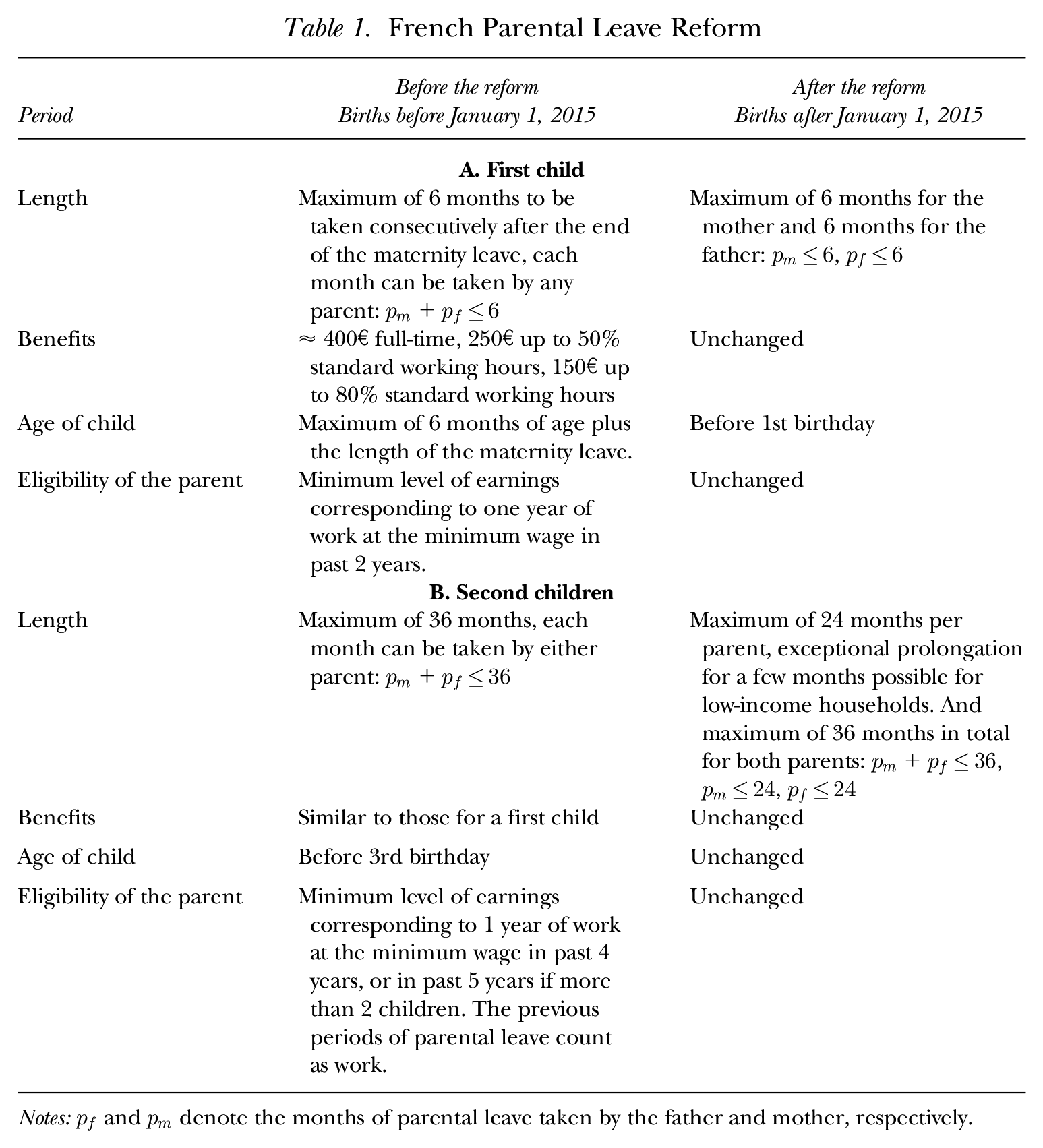
Notes:
First-Time Parents
As parental leave is taken monthly, let
Second-Time Parents
For second-time parents, the maximum combined length of parental leave before the reform was 36 months, such that
Other Parental Leave Characteristics
All other characteristics of the program remained unchanged. As in the United Kingdom and Belgium, the benefits are not proportional to past earnings and are similar for mothers and fathers. In 2015, both before and after the reform, parental leave benefits amounted to approximately 400 euros per month for full-time leave, 250 euros for those working less than 50% of a full-time job, and 150 euros for those working more than 50% but less than 80% of a full-time job. Compared with the 1,150 euros of the net minimum wage for full-time work, these benefits are low. However, when leave is taken on a part-time basis, the benefits are two times greater per hour. 1 The benefits are tax-free; they do not depend on the number of children and do not affect eligibility for other welfare programs except unemployment benefits, which are suspended during leave. Note that taking part-time leave does not require reducing labor supply even when the parent was already working part-time before the child’s birth.
The application process is simple: To claim the parental leave benefits, the parent must ask her employer to sign a one-page form certifying that she has stopped working or is working part-time. 2 This form can be downloaded from the social security website, which also explains the program in detail.
For employees with at least one year of seniority in the firm, the employer cannot deny parental leave, and parents taking parental leave benefit from job protection and cannot be fired. After parental leave, the law guarantees a return to work in a similar position.
Despite the low compensation levels, 45% of second-time mothers took at least a month of parental leave after her child’s birth, with more than a quarter taking the maximum length of 36 months before the reform. By contrast, only 2.4% of fathers took a month or more of parental leave.
Alternative to Parental Leave
For parents, the formal alternative to parental leave is subsidized child care through a day care center or certified childminder. The cost and supply of these alternatives did not change over the study period. Parents with a child younger than age three who are not on full-time parental leave can use either a day care center (20% of children) or a registered childminder (30%) (Le Bouteillec, Kandil, and Solaz 2014; Givord and Marbot 2015). During the year of their third anniversary, all children can attend free and non-rationed preschool (école maternelle). 3
Until the third anniversary, the cost for families does not change, and it amounts on average to approximately 10% of the family’s net household income (OECD 2022). However, as we detail in Online Appendix A1, obtaining space in a day care center is financially more attractive for low-income parents earning up to three times the minimum wage (approximately 82% of parents in our sample). 4 According to survey evidence, the scarcity of openings in day care centers and the higher childminder costs explain the large share of mothers on parental leave (Villaume and Legendre 2014).
Expected Effects of the Reform
For first-time parents, the reform should increase the participation of those who would have taken all 6 months of leave before the reform. Before the reform, this constraint was binding for approximately 12% of households. Among 98% of these households, the mothers took all 6 months of parental leave. As a result, if anything, fathers from these households should take more parental leave in response to the reform.
By contrast, the effects might be ambiguous for second-time parents, as the reform simultaneously reduced parental leave by 12 months. For many households, the reform produced a significant shock to child care arrangements, given that before the reform a parent took more than 24 months in more than 29% of households, and 97% of the time, it was the mother who provided care to the newborn.
In Online Appendix A2, we use a simple labor supply model to analyze the effects of earmarking parental leave while reducing the length of the mother’s leave. The model suggests that fathers’ responses depend on the difference between the mothers’ earnings in the labor market and the parental leave benefits. When the labor earnings of mothers are superior to the parental leave benefits and fathers’ earnings are low, fathers might replace the mother in parental leave, thus losing their wages but receiving the paid benefits. When the labor earnings of mothers are lower than the benefits, however, fathers might work more to compensate for the decline in household income.
The predicted effects of the reform are straightforward for fathers working part-time: They should take up to 12 months of paid parental leave, as after the reform taking paid leave no longer decreases the length of the mother’s leave. As discussed later, up to 7% of fathers work part-time in the population eligible for parental leave. Thus, if no additional costs are involved for parental leave participation, such as a stigma associated with gender roles or a lack of information about the program, we expect these fathers to take the benefits they are entitled to.
This discussion leads us to the following hypotheses, which will be tested empirically. For first-time parents, if the reform has any effect, it should increase fathers’ take-up rate. For second-time parents, the effects depend on whether mothers earn more in the labor market, net of the associated child care cost, than the paid benefits. Fathers might work more in response to the reform when the mother has low labor earnings. Finally, fathers working part-time should take parental leave after it has been earmarked, as it does not require them to change their labor supply, and after the reform it no longer affects the length of the mother’s parental leave.
A limitation of the standard labor supply model is that it ignores the role of gender identity norms that might discourage fathers from taking parental leave (Bertrand 2011; Ichino, Olsson, Petrongolo, and Skogman Thoursie 2019; Cortes and Pan 2020). Peer effects (Dahl, Løken, and Mogstad 2014), career concerns (Yamaguchi 2019), or an unfriendly work environment (Haas and Hwang 2016) might increase the cost for fathers to take parental leave. By earmarking a part of parental leave for fathers, the reform could decrease the stigma associated with taking parental leave for men.
Implementation of the Reform
The reform is unlikely to have influenced the fertility decisions of mothers who gave birth in December 2014 and January 2015, which are compared to estimate the effects of the reform. First, the legislative process was long and uncertain. 5 The law was first discussed in July 2013 and voted on by Parliament in July 2014. The government also had to specify after the vote, by decree, the new distribution of leave between parents. The decree was published only two days before the law’s entry into force, on December 30, 2014. Thus, parents could not precisely anticipate the consequences of the reform.
Salience of the Reform
When the law took effect in January 2015, the family benefit administration sent letters explaining the reform to parents as part of a large communication plan. The reform was also widely publicized in the press. The program’s name changed from Benefits of Free Choice of Activity to Shared Benefits of Child Rearing to emphasize that the new parental leave approach was designed to be shared between parents since a specific period was now earmarked for the father.
Data and Sample
This empirical analysis relies on social security data from the French family benefits administration, complemented with administrative data on working time from employer records. Further details are provided in Online Appendix A3.
Social Security Data
We use administrative data from the French family benefits social security organization, the Caisse Nationale des Allocation Familiales (CNAF). More than 98% of households affected by the reform are covered by our sample, registration is automatic, and the health costs of pregnancies are covered only if they are registered. 6
We exploit the monthly administrative files containing detailed information on family composition and the monthly benefits received. As the reform differs for single parents, we restrict our sample to families with two parents, whether married, in a civil union, or cohabiting.
For confidentiality, the exact date of birth is not reported. To identify whether a household is affected by the reform, we use the child’s year and month of birth. We select households with a child who was born in December 2014 or January 2015; that is, either one month before or after the reform. As discussed elsewhere in the article, we also include households that had a child born in December 2013 or January 2014 in our sample to control for any calendar effects unrelated to the reform.
While social security benefits are reported monthly, earnings and unemployment benefits are extracted from annual tax returns. Tax returns are reported with a two-year lag because family allowances in year t depend on the taxable income in the antepenultimate year t-2. Because of this two-year lag, the tax data start two years before the child’s birth and, thus, one year before the mother’s pregnancy. We have monthly information on family benefits until March 2022, but annual tax returns are available only until fiscal year 2020, the sixth year after birth for the first cohort affected by the reform.
Administrative Data on Labor Supply
As discussed earlier, if informational barriers or stigma do not interfere, parents working part-time should take the parental leave benefits they are entitled to after the reform. Estimating the take-up rate of parental leave benefits from part-time workers is thus interesting to assess the presence of potential barriers to the participation decision. A difficulty in estimating this take-up rate is that social security data do not report the number of hours or days worked corresponding to annual earnings. Instead, we rely on the French administrative panel Échantillon démographique permanent (EDP), which contains a 4% sample of the population. 7 The data include birth certificates that allow us to identify young parents affected by the reform and administrative information from employers on earnings and the number of hours worked. We exploit this information to estimate the share of part-time workers among eligible parents after the reform. A limitation is that we have information on labor force participation up to only 2018, which is only three years after the reform.
Empirical Approach
We follow Lalive and Zweimüller (2009) and Schönberg and Ludsteck (2014) by using a difference-in-differences approach. This empirical method compares the parents who had a child just before the reform with the parents who had a child just after the reform was put in place on January 1, 2015, and those parents in the year before the reform act as a control group to account for any systematic calendar effects unrelated to the reform. To ensure that the groups of parents are comparable, we exploit the smallest possible window by comparing parents who had a child one month before the reform, in December 2014, relative to one month after the reform, in January 2015. 8 As the discontinuity on the 1st of January also affects the year of entry to public preschool, we use parents who had a birth one year before the reform during the same months (i.e., December or January) to account for calendar effects. 9 Despite being restricted to a two-month window, our sample is large and includes approximately 108,000 households each year.
Our baseline estimates are obtained from the standard difference-in-differences model estimated with ordinary least squares (OLS) as follows:

where
To capture the dynamic effects of the reform on annual earnings or monthly participation rates, we also estimate with OLS an event-study version of the previous difference-in-differences model:

where
Finally, notice that our data are not a random sample and include almost the entire population of interest, as emphasized earlier. To interpret the estimated standard errors, we rely on the notion of “superpopulation,” in which the population from the sample is conceptualized as a random sample from a larger superpopulation (Imbens and Wooldridge 2009).
Validity of the Empirical Approach
Our ability to estimate a causal effect of the reform depends on the validity of the parallel-trend assumption. This assumption implies that absent the reform, the differences in outcomes between households with a child in December relative to January would have remained stable over time. The plausibility of this hypothesis can first be assessed in Figure 1, which compares the participation rate of parents on parental leave across cohorts up to two years before and after the reform. Clearly, the data do not reject the parallel trend hypothesis: The participation rates for births in January and December are statistically indistinguishable in the years before and after the reform, in contrast to the reform year.
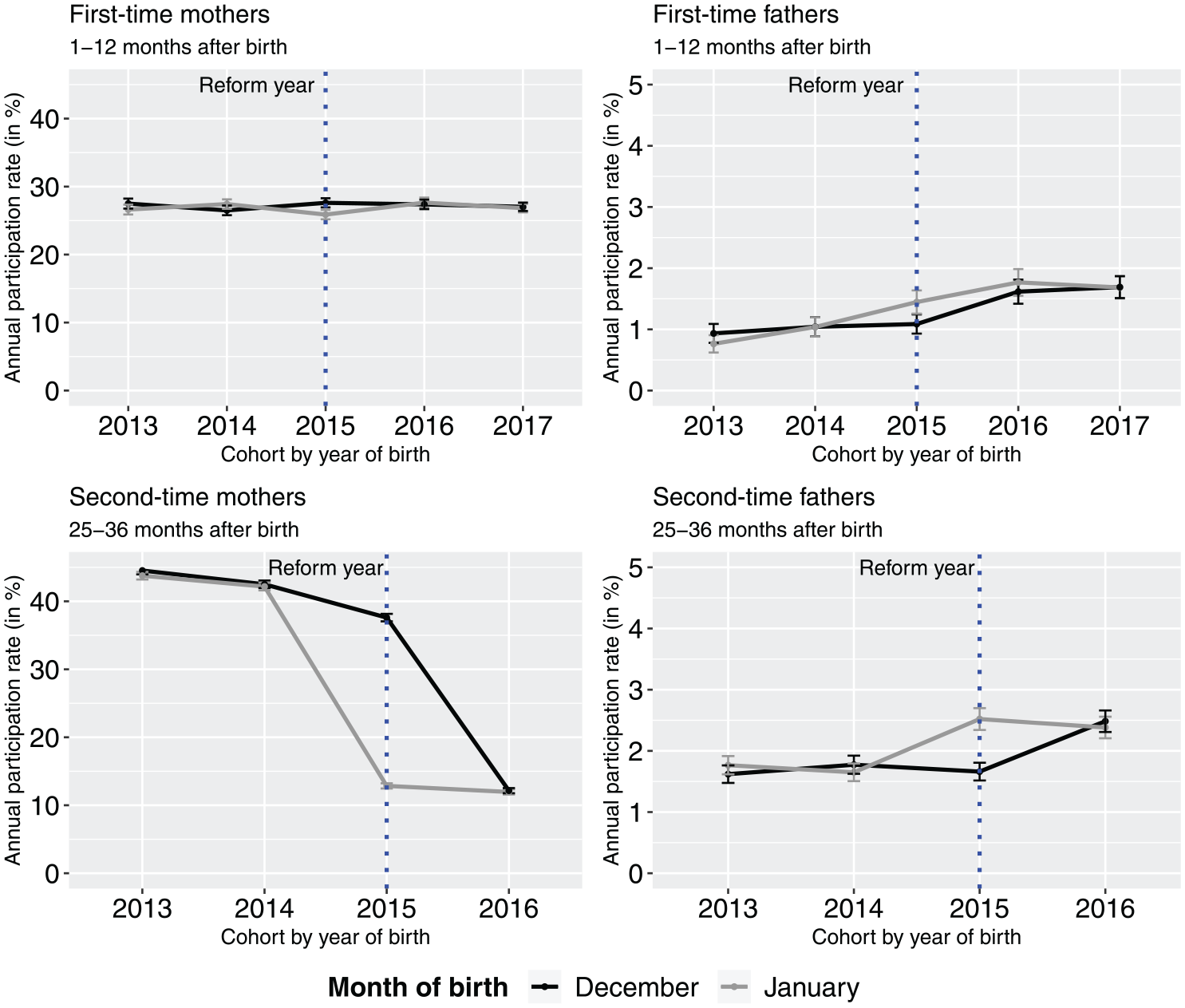
Cross-Cohort Comparisons for First- and Second-Time Parents
Smoothness of the Daily Birth Distribution
A concern of this study is that the reform might have influenced the birth timing of households, which could introduce nonrandom selection between households affected or not affected by the reform. These endogenous compositional changes might impair our ability to estimate a causal effect, as any difference in outcome associated with the reform might reflect its effects on the composition of households in addition to their behavior. Using daily birth aggregate data, we investigate in supplementary Online Appendix A4 whether discontinuities occur in the distribution of births around the threshold of the reform. We find little evidence in the data of a jump around the threshold and cannot reject the null hypothesis of no discontinuity. Our ability to detect manipulations of the date of birth is limited, however, as the daily birth data do not distinguish first births from higher-order births, and as discussed in Appendix A4, the incentive for manipulation goes in the opposite direction for first- and second-time parents.
Observable Differences between Births in December and January
In Table 2, we directly investigate whether the composition of households between births in December and January changed differentially in the reform year relative to the previous year. To rule out selection around the reform cutoff, we test for differential changes in observed characteristics at the year of the reform, assuming that the lack of such changes also implies that there was no selection on unobservable characteristics. In column (3), we report simple difference estimates that capture how the two groups around the cutoff differ in the reform year, while column (4) reports difference-in-differences estimates that test for any differential change in composition. Both the simple differences and difference-in-differences estimates reveal no significant differences in the composition of households across the indicated variables. We find no significant differences in the average age of the mother or the father, the average earnings before the child’s birth, the share of mothers with zero earnings before the child’s birth, or the number of children in the household. 12
Predetermined Characteristics of First- and Second-Time Parents in the Reform Year
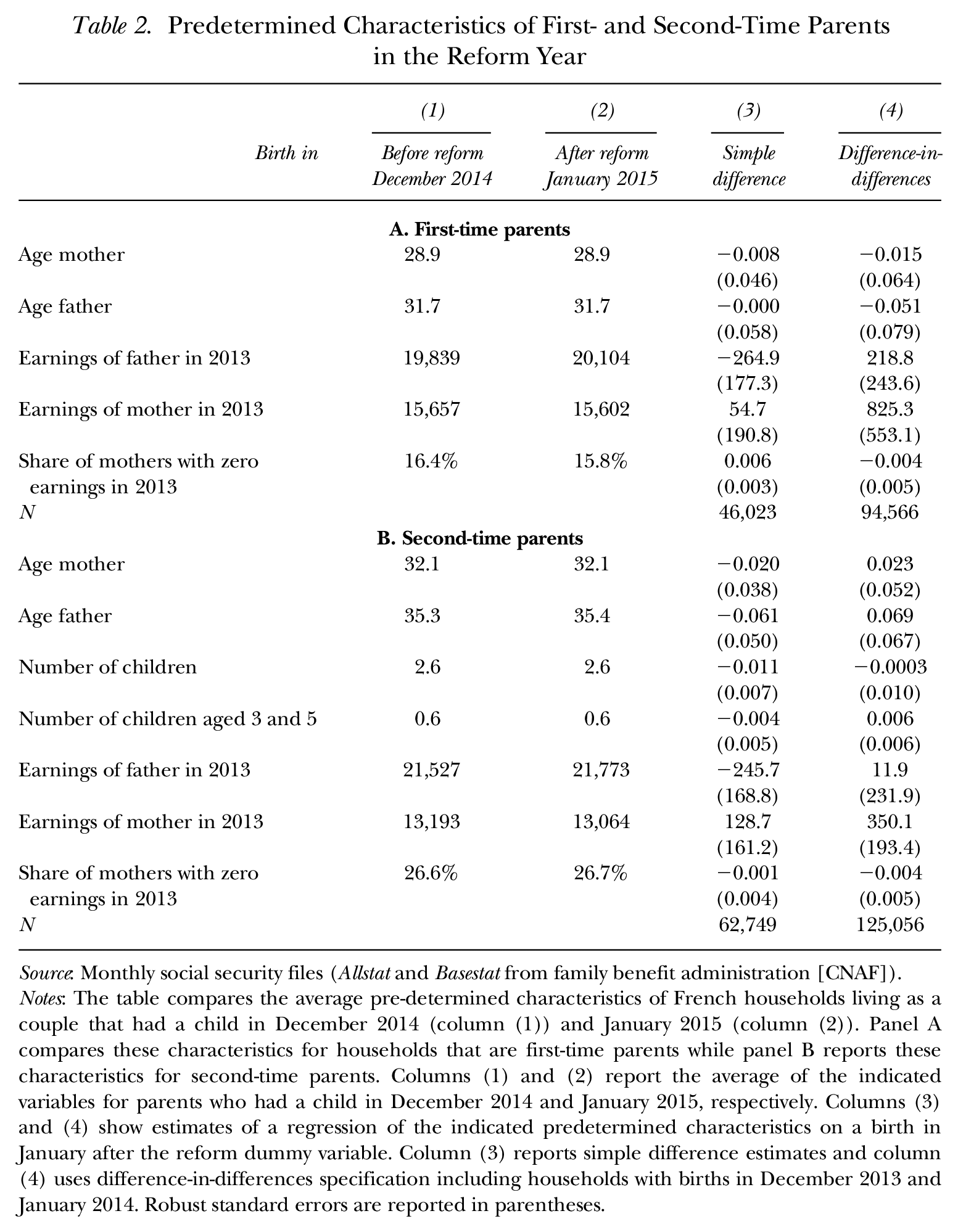
Source: Monthly social security files (Allstat and Basestat from family benefit administration [CNAF]).
Notes: The table compares the average pre-determined characteristics of French households living as a couple that had a child in December 2014 (column (1)) and January 2015 (column (2)). Panel A compares these characteristics for households that are first-time parents while panel B reports these characteristics for second-time parents. Columns (1) and (2) report the average of the indicated variables for parents who had a child in December 2014 and January 2015, respectively. Columns (3) and (4) show estimates of a regression of the indicated predetermined characteristics on a birth in January after the reform dummy variable. Column (3) reports simple difference estimates and column (4) uses difference-in-differences specification including households with births in December 2013 and January 2014. Robust standard errors are reported in parentheses.
Another issue is that our analysis focuses on couples with children who are affected by the reform. A selection bias might arise from this restriction if the reform influences the couples’ separation probability. Additionally, as having another child renews parents’ eligibility for paid parental leave, our estimates might be affected if there is an endogenous fertility response to the reform. However, as reported in Appendix Table A1, we find no effects of the reform on the probability of separation or fertility at the 3- and 5-year horizons.
These nonsignificant results might reflect the combination of offsetting effects if the risk of separation is simultaneously increased for some households and reduced for others. While we cannot rule out this possibility, such effects are likely to be small, as the estimates are rather precise. In practice, the 95% confidence intervals rule out an increase of more than 1% in the probability of separation.
Effects of the Reform on Parental Leave Take-Up Rate
First-Time Parents
For first-time parents, if any difference is observed, we expect fathers’ take-up rate to increase, as the reform earmarked 6 nontransferable months to each parent, whereas previously the parents could only share 6 months of parental leave. Consistent with this hypothesis, our estimates in Table 3, panel A, indicate that more fathers participated after the reform. Albeit, the estimated effects are small, as they suggest that the reform increased the probability of taking at least one month of leave by only 0.4 percentage points (pp). While small in absolute value, the effect is nevertheless large in relative terms. Compared to the low baseline rate of 1% before the reform, the participation rate of fathers increased by 40%, to 1.4%, after the reform, and the average number of months taken by fathers also increased, by 50%. Despite this, fathers’ participation rate remains extremely low relative to mothers’ 25% participation rate.
Regression Estimates of the Effect of the Reform on Paid Parental Leave Take-Up
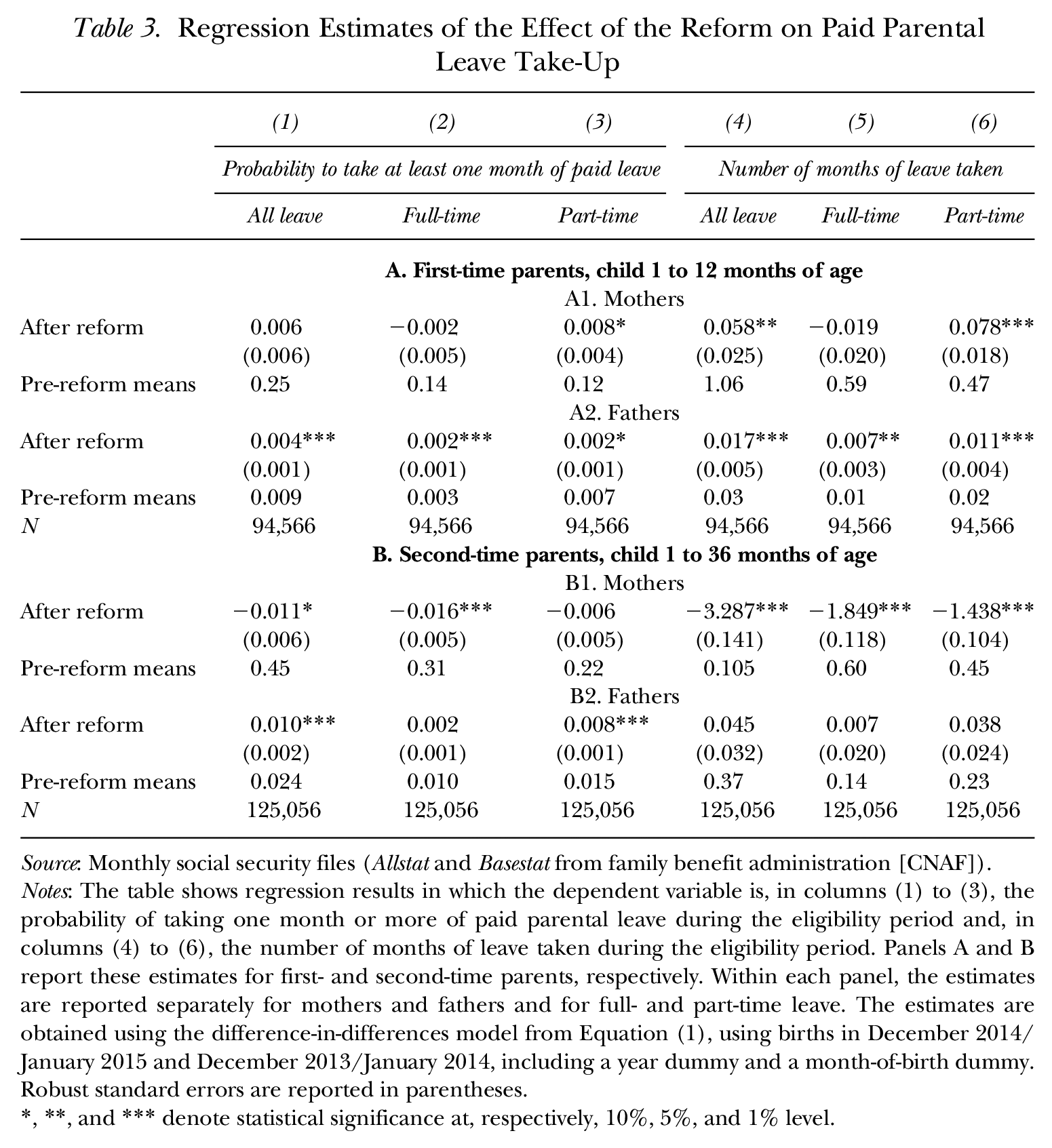
Source: Monthly social security files (Allstat and Basestat from family benefit administration [CNAF]).
Notes: The table shows regression results in which the dependent variable is, in columns (1) to (3), the probability of taking one month or more of paid parental leave during the eligibility period and, in columns (4) to (6), the number of months of leave taken during the eligibility period. Panels A and B report these estimates for first- and second-time parents, respectively. Within each panel, the estimates are reported separately for mothers and fathers and for full- and part-time leave. The estimates are obtained using the difference-in-differences model from Equation (1), using births in December 2014/January 2015 and December 2013/January 2014, including a year dummy and a month-of-birth dummy. Robust standard errors are reported in parentheses.
, **, and *** denote statistical significance at, respectively, 10%, 5%, and 1% level.
Figure 2 provides visual evidence of mothers’ and fathers’ monthly take-up rates of full- and part-time parental leave. For mothers, the reform increased the probability of taking parental leave in the 9th and 10th months after birth. This result reflects that after the reform, mothers do not have to take months of parental leave consecutively after maternity leave. 13 For fathers, a significant impact is observed only after the 6th month following birth, thus suggesting that the small effect of the reform is driven by fathers who took parental leave after the mother took 6 consecutive months of leave after birth.
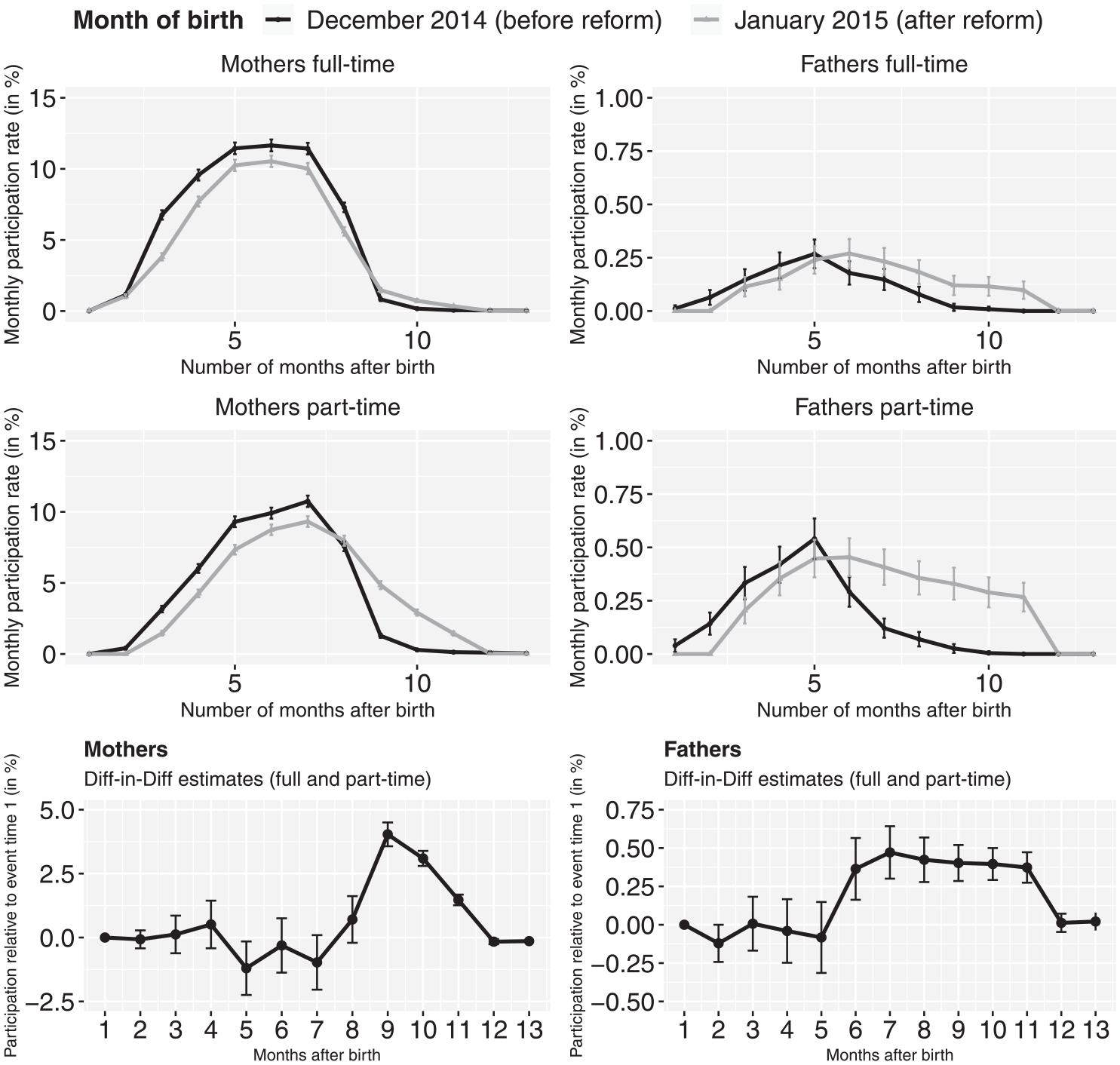
Monthly Parental Leave Participation Rates, First-Time Parents
Table 4 compares the percentage of eligible part-time workers in the population with the percentage who took parental leave. As discussed earlier, if participation costs or stigma are not an issue, any parent working part-time for at least one month during the eligibility period should take parental leave. In practice, however, the take-up rates are low: Even if 6% of first-time fathers worked part-time, only 1% of fathers took a month of part-time parental leave. Taken literally, these figures imply that 85% of fathers did not take the minimum 150 euros in monthly benefits of paid parental leave for which they were eligible. For mothers, these take-up rates are higher, close to 50%, consistent with earlier studies (Reinstadler 2000). While these results should be interpreted with caution, as they rely on aggregate statistics from two different sources, they point to a large non-take-up of parental leave from both parents that is remarkably larger for fathers.
Estimated Non-Take-Up of Paid Leave for Parents Working Part-Time after the Reform
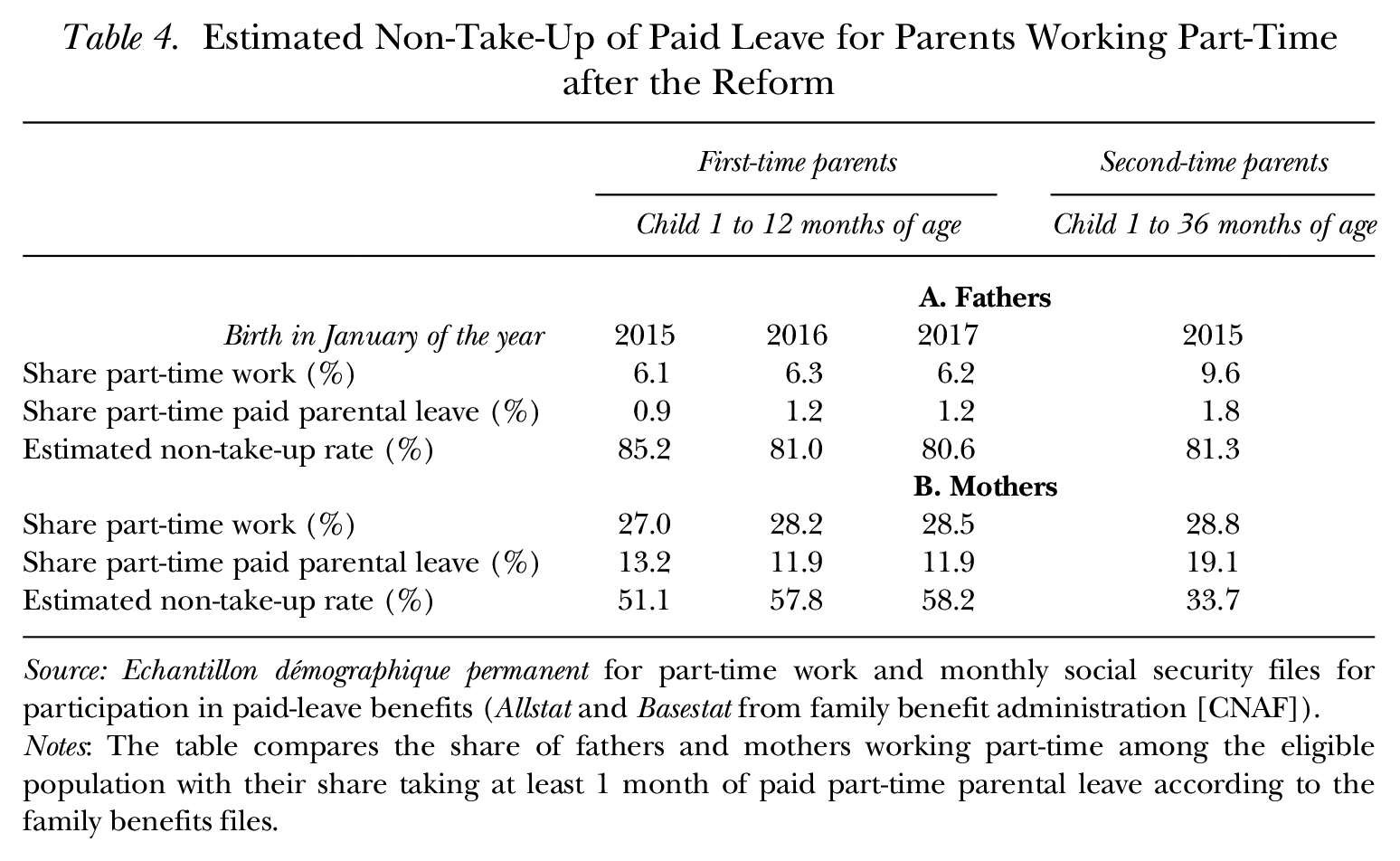
Source: Echantillon démographique permanent for part-time work and monthly social security files for participation in paid-leave benefits (Allstat and Basestat from family benefit administration [CNAF]).
Notes: The table compares the share of fathers and mothers working part-time among the eligible population with their share taking at least 1 month of paid part-time parental leave according to the family benefits files.
Second-Time Parents
The reform earmarked 12 months of parental leave for second-time parents while reducing the maximum length from 36 to 24 months after birth. As expected, event-study estimates in Figure 3 show that after the 24-month threshold, the reform is associated with a decline in participation of more than 25 pp for mothers after the 25th month. 14 This decline is progressive, reflecting that some mothers do not take the maximum of 24 consecutive months after birth, even if a large majority do.
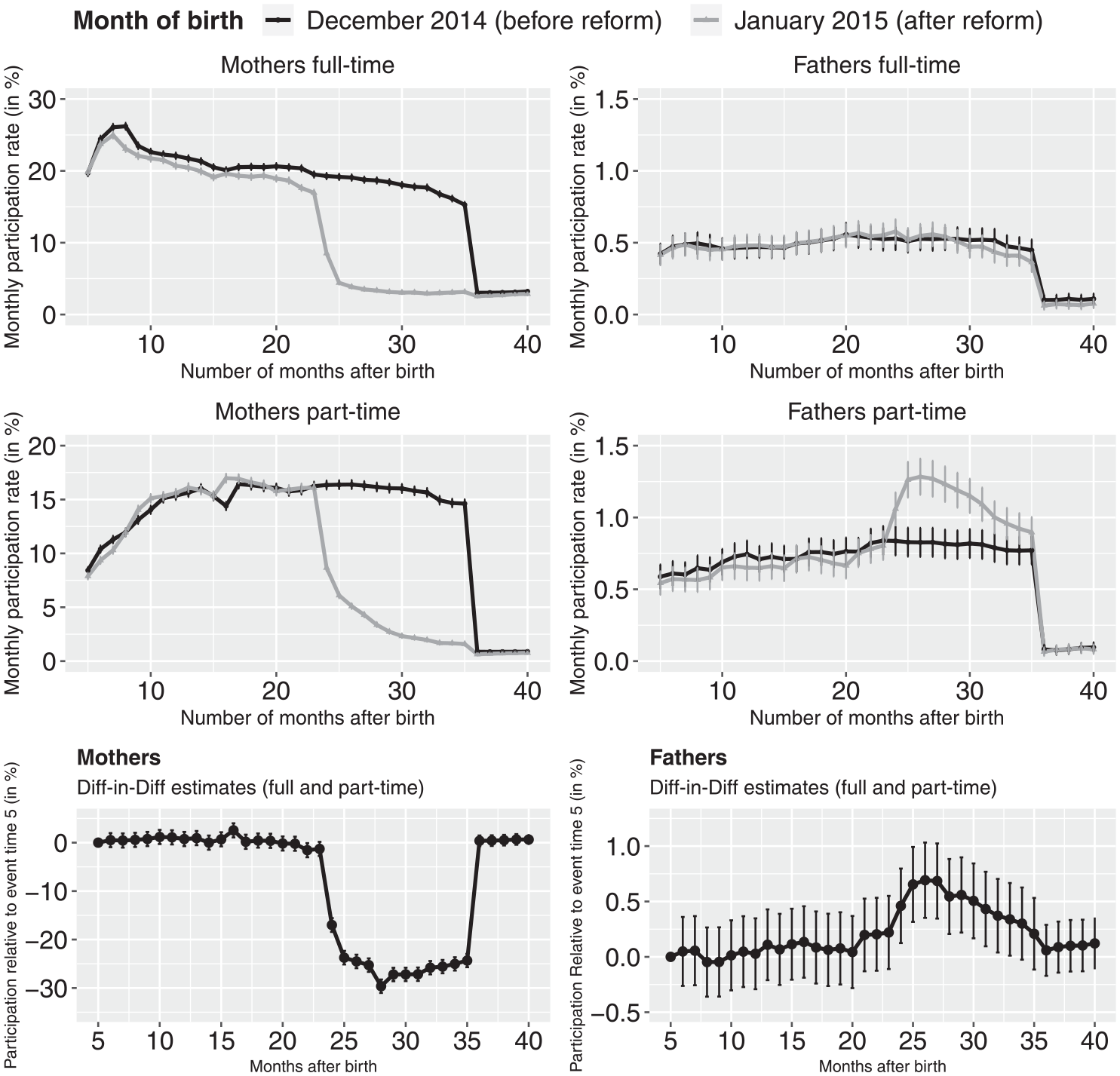
Monthly Parental Leave Participation Rates, Second-Time Parents
In response to such a large decline, the share of fathers taking part-time parental leave increased by only 0.8 pp after the 25th month, an increase entirely accounted for by part-time leave. As observed for first-time parents, while modest in absolute terms, the increase is nevertheless substantial in relative terms. For part-time parental leave, the share of fathers taking at least one month of leave increased by 50%, from 1.5 to 2.3 pp. Despite this increase, such rates remain low relative to the fact that 9.6% of second-time fathers work part-time in the population, as reported in Table 4. Taken literally, these estimates imply that 81% of the eligible fathers working part-time are not taking the paid leave benefits to which they are entitled. For mothers, the non-take-up rates are dramatically lower, as they are close to 33%.
Effects of the Reform on Labor Earnings and Household Income
To understand the labor supply response to the reform of fathers and mothers, we examine how the reform affected the household’s income and its components. As the income data are obtained from fiscal data, their frequency is annual and thus cannot be adjusted to the precise birth month. We define the 2015 calendar year as event year zero for births in both December 2014 and January 2015. By convention, the year zero is defined as the child’s first year, from birth to her first birthday.
We consider in Table 5 how the reform affected total household income over the eligibility period, that is, over the first year of the child for first-time parents and up to the third anniversary for second-time parents. For first-time parents, panel A indicates that despite the 0.4 pp increase in fathers’ participation, the reform had no significant negative effect on their average annual earnings. More generally, no statistically significant effects on any component of household income are observed for first-time parents.
Effects of the Reform on Household Income.
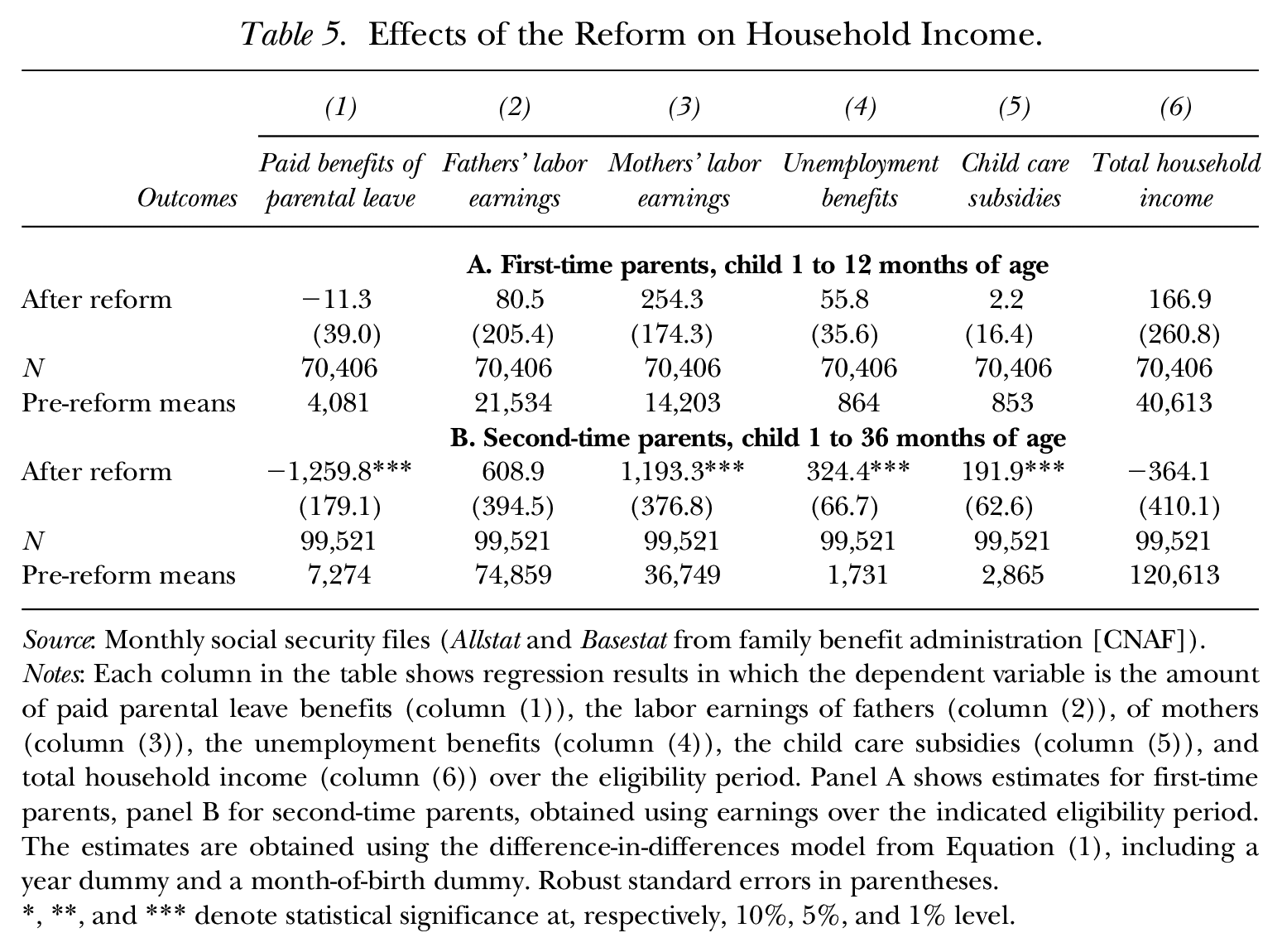
Source: Monthly social security files (Allstat and Basestat from family benefit administration [CNAF]).
Notes: Each column in the table shows regression results in which the dependent variable is the amount of paid parental leave benefits (column (1)), the labor earnings of fathers (column (2)), of mothers (column (3)), the unemployment benefits (column (4)), the child care subsidies (column (5)), and total household income (column (6)) over the eligibility period. Panel A shows estimates for first-time parents, panel B for second-time parents, obtained using earnings over the indicated eligibility period. The estimates are obtained using the difference-in-differences model from Equation (1), including a year dummy and a month-of-birth dummy. Robust standard errors in parentheses.
, **, and *** denote statistical significance at, respectively, 10%, 5%, and 1% level.
For second-time parents, panel B indicates that the reduction of 12 months in parental leave is associated, on average, with a 1,260-euro decline in paid benefits over the three-year eligibility period. In response, the average labor earnings of mothers increased by approximately the same amount, while the receipt of unemployment benefits also increased dramatically.
For fathers, despite the 1 pp increase in participation in parental leave, we observed no negative effects on earnings. By contrast, the coefficient is positive and large, and the point estimate is approximately half of the estimated effect, for mothers. However, the estimate is very imprecise, and the coefficient is statistically insignificant. Despite this, a large negative effect of the reform on fathers’ earnings can be ruled out.
In response to the lack of parental leave take-up from fathers and the decline in the length of parental leave of mothers, column (5) also reports an increase in the receipt of benefits associated with formal child care for second-time parents.
Longer-Run Consequences
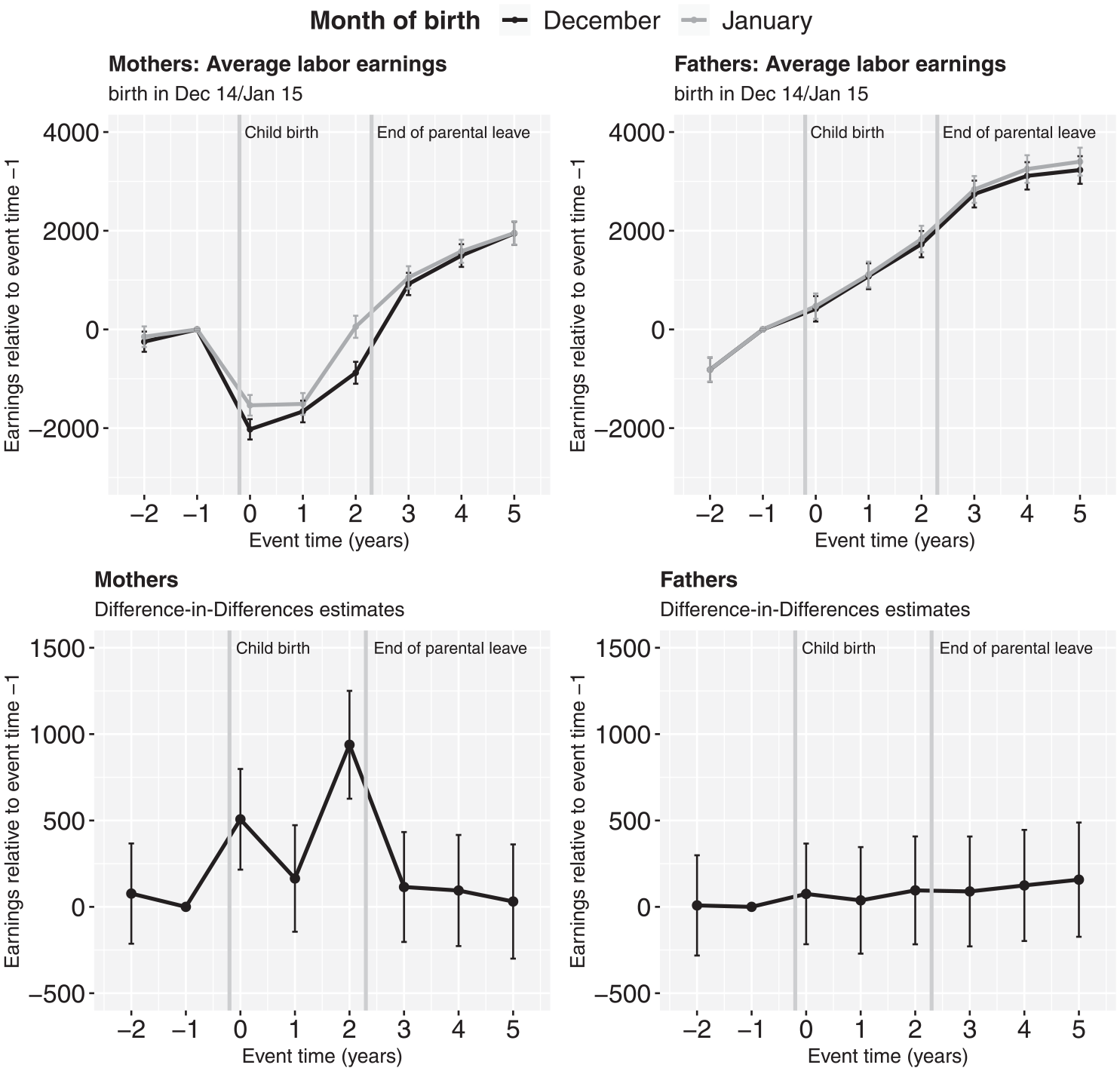
Figure 4 reports the evolution of annual labor earnings for second-time parents, normalized relative to the year before the child’s birth. The reform’s positive effects on mothers’ earnings are concentrated in the third year after birth (event year 2) and to a lesser extent in the first year after birth (event year 0). By contrast, the reform did not significantly affect earnings in any year after birth for fathers.
Annual Labor Earnings and Unemployment Benefits for Second-Time Parents
Figure 4 also reports the earnings up to three years after the eligibility period (event years 3 to 5), which allows us to capture any persistent effects of the reform on earnings. Of note, as early as the first year after the eligibility period (event year 3), we find no difference in average earnings between mothers affected or not affected by the reform, even though 25% of mothers took 12 additional months of paid leave before the reform. Such a surprising lack of difference in earnings is consistent with Kleven et al. (2020), who also found no persistent effect of parental leave on earnings. This outcome implies that for mothers, the earning costs of taking parental leave are temporary and concentrated during the parental leave period.
Heterogeneity by Pre-birth Earnings of Mothers
The imprecise effects of the reform on fathers’ earnings can be explained by the fact that their responses vary with the potential earnings of the mother in the labor market. As discussed earlier, in households where mothers have low potential earnings, fathers might not take more parental leave but instead might increase their labor supply to compensate for the loss of benefits and the additional cost of child care.
To investigate this hypothesis, we approximate mothers’ potential earnings using their earnings two years before the child’s birth. We divide the population into five groups by separating first mothers who had no earnings two years before the child’s birth, which is approximately 27% of mothers (see Table 2), and then separating mothers with strictly positive earnings into four groups using the quartiles of their pre-birth earnings distribution.
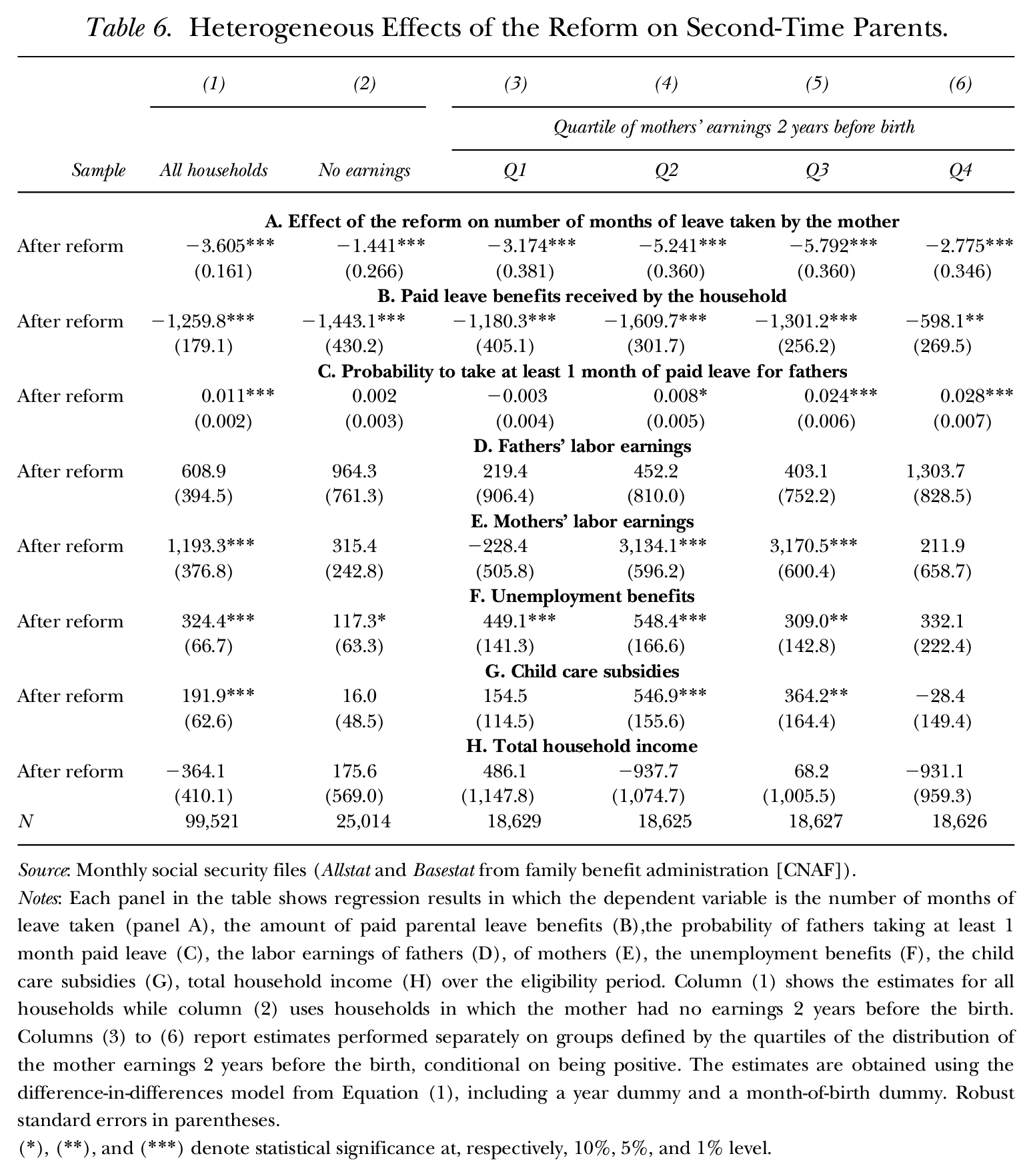
Table 6 documents important differences in the effects of the reform among these groups. For the average number of months of parental leave, panel A indicates that the reform primarily affected mothers from the distribution’s second and third quartiles. However, panel B shows that the decline in the amount of paid leave benefits is quite similar across groups except for the fourth quartile. Panel C shows that the positive effects of the reforms on fathers’ participation in parental leave are concentrated in households in which mothers have the highest potential earnings, that is, from the third and fourth quartiles of the distribution.
Heterogeneous Effects of the Reform on Second-Time Parents.
Source: Monthly social security files (Allstat and Basestat from family benefit administration [CNAF]).
Notes: Each panel in the table shows regression results in which the dependent variable is the number of months of leave taken (panel A), the amount of paid parental leave benefits (B),the probability of fathers taking at least 1 month paid leave (C), the labor earnings of fathers (D), of mothers (E), the unemployment benefits (F), the child care subsidies (G), total household income (H) over the eligibility period. Column (1) shows the estimates for all households while column (2) uses households in which the mother had no earnings 2 years before the birth. Columns (3) to (6) report estimates performed separately on groups defined by the quartiles of the distribution of the mother earnings 2 years before the birth, conditional on being positive. The estimates are obtained using the difference-in-differences model from Equation (1), including a year dummy and a month-of-birth dummy. Robust standard errors in parentheses.
(*), (**), and (***) denote statistical significance at, respectively, 10%, 5%, and 1% level.
Despite these large variations in the impact of the reforms on mothers, panel D shows no statistically significant effect of the reforms on fathers’ earnings in any of these groups. Across all groups, the estimated coefficients are all positive, but the estimates are imprecise. If anything, the coefficient is larger in households where the mother had no earnings before the child’s birth but also, somewhat surprisingly, in the fourth quartile. That the coefficients are large and positive rules out a strong negative effect of the reform on earnings in most groups.
For mothers, panel E shows a large and statistically significant increase in their labor earnings, mostly in the second and third quartiles. For those in other quartiles, the point estimates are 10 times lower and even negative in the first quartile. Consistent with this result, panel F reports a large increase in the receipt of unemployment benefits for mothers in the first quartile for whom we find no positive effect of the reform on labor earnings. In addition, panel G shows that the increase in child care subsidies associated with formal child care is also concentrated on mothers in the second and third quartiles, which are those in which labor earnings increase substantially.
For total income in panel H, even though the decline in paid benefits is substantial in some groups, we do not find any significant negative average effects of the reform, even in groups in which mothers have the lowest pre-birth earnings. Nevertheless, the sign of the coefficient varies among groups, and the estimates are imprecise.
What Explains the Low Take-Up Rates of Fathers?
Several mechanisms could explain the low take-up rates of fathers. To gain insights into these mechanisms, we first examine whether an initially imperfect knowledge of the reform might explain the low take-up. Next, we examine the role of gender norms by estimating differences in fathers’ take-up rates across subgroups of parents for whom the influence of gender norms might vary.
Did the Take-Up Rate of Fathers Increase Later?
A possible explanation for the low take-up rates of fathers is that they initially lacked information about the reform. Despite the communication campaign, many fathers might not have been immediately aware of the reform. 15 In addition, even though the application process is simple, as discussed earlier, fathers might not be familiar with the programs of the family benefits administration. In practice, our administrative data indicate that the mother is the household member responsible for correspondence with the family benefit administration in 77% of households.
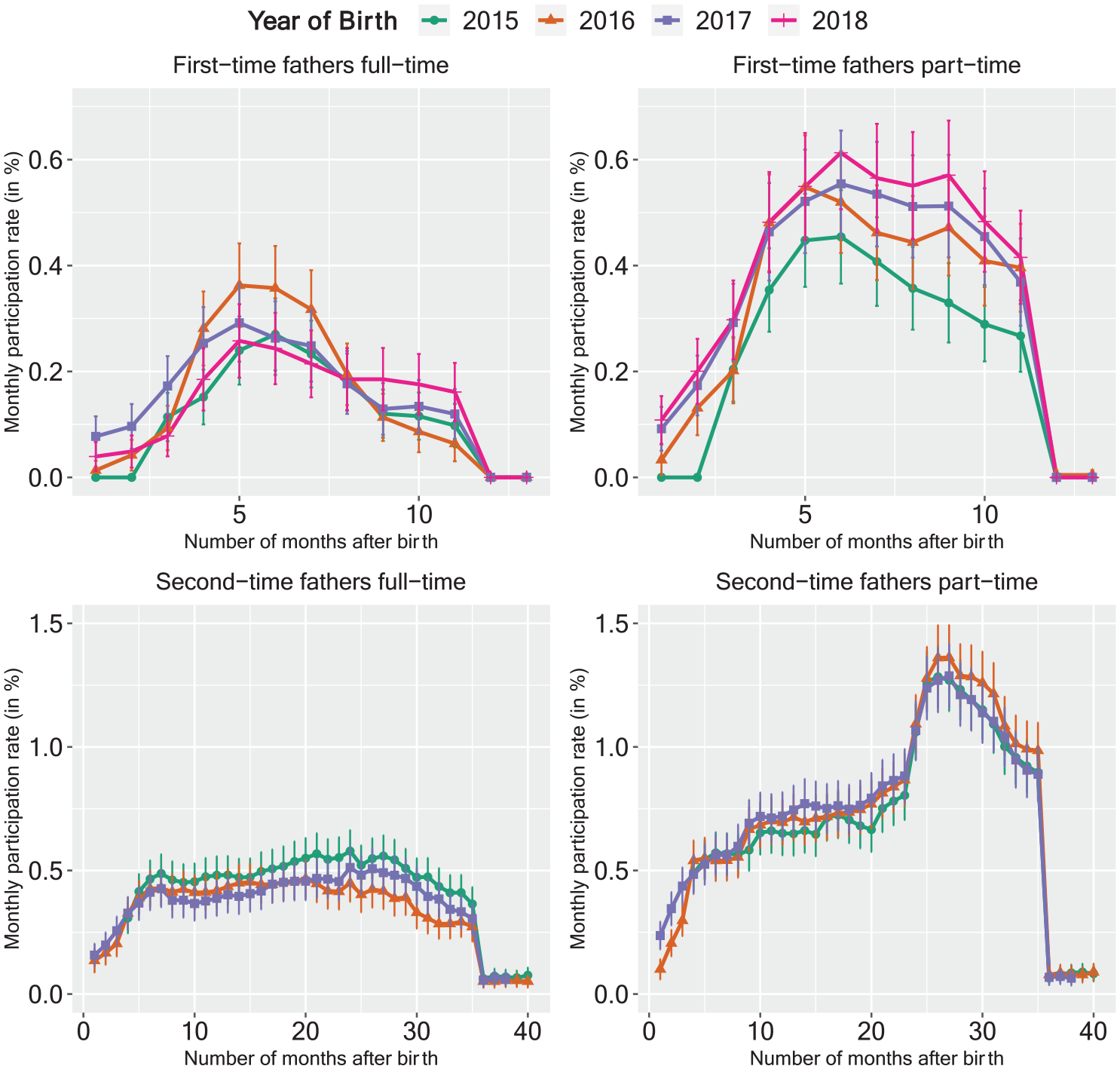
If the slow information diffusion explains the fathers’ lack of participation, then the share of fathers taking paid leave should increase over time, as knowledge of the reform spreads in the population. To assess this explanation, we report in Figure 5 the share of fathers taking parental leave for births occurring one and two years after the reform, in January 2016 and 2017.
Monthly Parental Leave Participation Rates for Fathers for Births in January in Years after the Reform
Overall, we find little evidence of fathers’ increased participation in more recent cohorts, particularly for second-time fathers. For first-time fathers, we find a 0.2 pp increase in participation between 2015 and 2016, but the differences are not statistically significant.
As the participation rates remained low, the percentage of eligible fathers working part-time remained dramatically larger than the percentage taking paid leave. We estimated in Table 4 that non-take-up rates tend to decline for first-time fathers, consistent with a diffusion of information about the reform over time. Nonetheless these non-take-up rates must be interpreted cautiously because they remain greater than 80% over time.
Differences in the Response across Groups of Fathers
As we find no significant correlations between the mothers’ past earnings and the fathers’ response to the reform, a possibility is that gender norms might be more important in influencing the participation of fathers. While we do not observe gender attitudes in our data, we investigate whether substantial response differences occur among fathers related to differences in their working status, location, or pre-birth earnings.
Effects of the Reform on Independent Workers
To receive paid parental leave, employees must ask their employer to fill out a one-page form for family social security that certifies they work part-time or have stopped working entirely. Qualitative studies suggest that fathers asking for parental leave might be stigmatized by their employer (Coltrane, Miller, DeHaan, and Stewart 2013; Kaufman 2018; Haas and Hwang 2019), and real or supposed employer resistance might be an important barrier to fathers taking leave. Relatedly, peer effects in the workplace might discourage fathers from taking leave (Dahl et al. 2014).
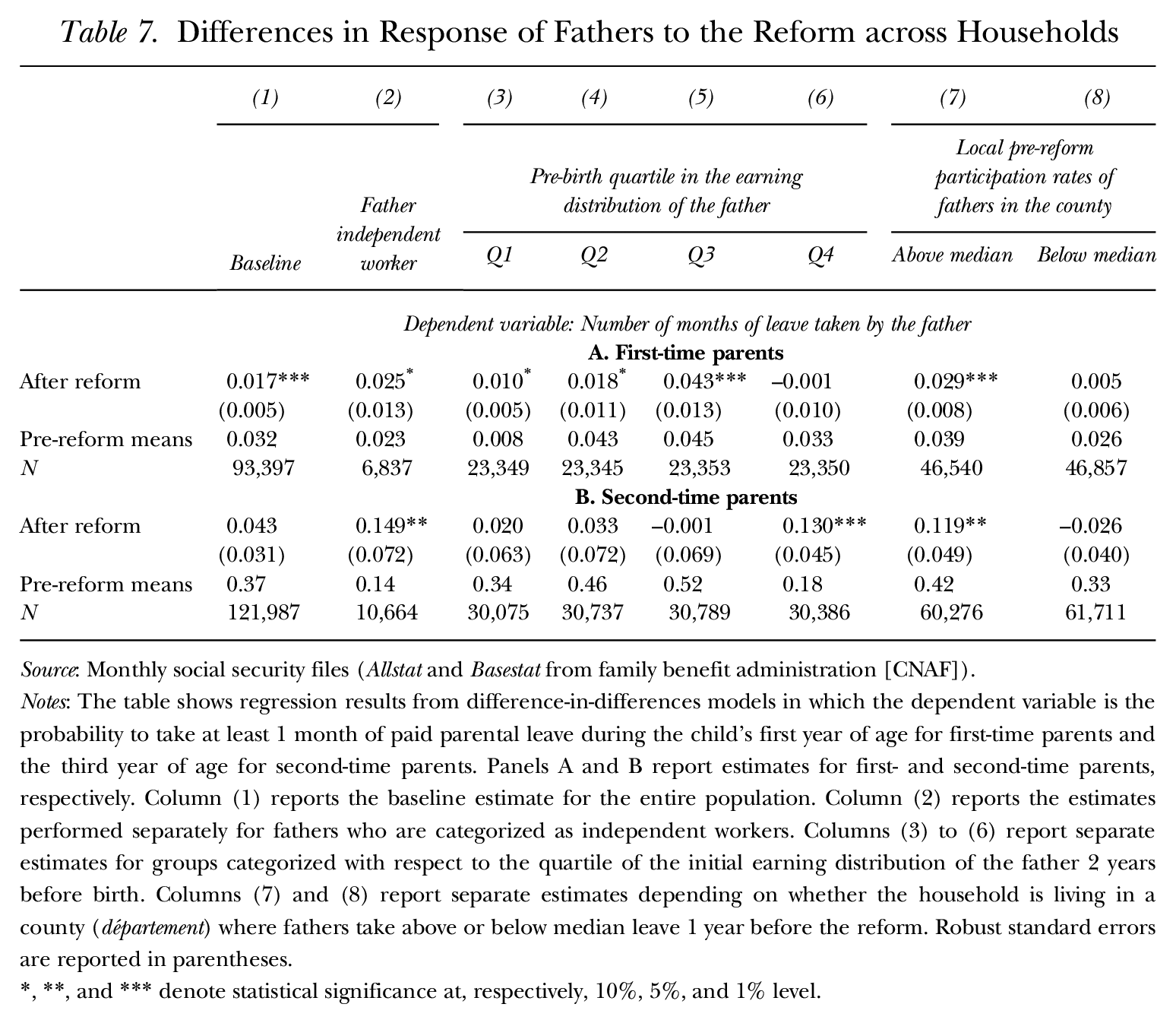
If employer stigma or peer effects are important factors in the decision, we should observe a higher response to the reform from self-employed workers who do not have an employer and declare to the social security administration that they have reduced their working hours to take paid parental leave. To investigate this hypothesis, we report separate estimates for self-employed workers in column (2) of Table 7. The estimates show that self-employed fathers are two to three times more likely to take leave after the reform, as the estimated coefficient is two to three times larger than the baseline rate in the population. These results must be interpreted with caution, however, as they might also reflect that it is easier for self-employed workers to falsely declare a reduction in work hours and receive undue benefits (Chetty et al. 2013). In addition, these results could reflect that independent workers are more familiar with dealing with administrative procedures.
Differences in Response of Fathers to the Reform across Households
Source: Monthly social security files (Allstat and Basestat from family benefit administration [CNAF]).
Notes: The table shows regression results from difference-in-differences models in which the dependent variable is the probability to take at least 1 month of paid parental leave during the child’s first year of age for first-time parents and the third year of age for second-time parents. Panels A and B report estimates for first- and second-time parents, respectively. Column (1) reports the baseline estimate for the entire population. Column (2) reports the estimates performed separately for fathers who are categorized as independent workers. Columns (3) to (6) report separate estimates for groups categorized with respect to the quartile of the initial earning distribution of the father 2 years before birth. Columns (7) and (8) report separate estimates depending on whether the household is living in a county (département) where fathers take above or below median leave 1 year before the reform. Robust standard errors are reported in parentheses.
, **, and *** denote statistical significance at, respectively, 10%, 5%, and 1% level.
Differences in Fathers’ Earnings
The simple model of labor supply discussed earlier predicts that, ceteris paribus, fathers with lower earnings are more likely to respond to the reform and take more leave, as the opportunity cost of paid leave is lower for them. And yet, if gender attitudes are a more important factor in the decision, the relationship between fathers’ earnings and participation in parental leave after the reform might not be straightforward. Men with higher economic status tend to have less conservative attitudes toward gender roles, which can compensate for the higher opportunity cost of taking parental leave for them (Papuchon 2017).
To test for differences in response to the reform relative to the pre-birth earnings of fathers, we report in columns (3) to (6) in Table 7 separate estimates depending on the quartile of the fathers’ annual labor earnings two years before the child’s birth. The results confirm that large differences in response occur across fathers that are associated with their labor earnings. Fathers with lower levels of pre-birth earnings are much less likely to take paid leave in response to the reform. For first-time parents, the response from fathers in the third quartile is four times the response from those in the first quartile. For second-time parents, we find a significant effect of the reform only on fathers in the fourth quartile but no effect on those in the other quartiles. We do not find any effects in the fourth quartile for first-time parents, in contrast to second-time parents. 16 Overall, the fact that fathers with higher earnings are more likely to take leave is consistent with an important role of gender values relative to earnings in the decision. Nonetheless, as stated previously, these results must be interpreted with caution, as they might also reflect that higher-earning fathers are more willing and able to deal with administrative procedures.
Local Differences in Response
Gender attitudes vary widely across regions in Europe, even within countries (Powers et al. 2003; Lalive and Stutzer 2010), and these local differences have important consequences on the labor market of women (Janssen, Tuor Sartore, and Backes-Gellner 2016). If local attitudes influence take-up rates, fathers should be more likely to take parental leave after the reform in regions where the share of fathers taking leave was larger before the reform. To investigate this hypothesis, we perform separate estimates depending on whether the share of fathers taking leave in the county of residency (département) one year before the reform is below or above the median. In accordance with the previous evidence that fathers with higher earnings have higher levels of participation, Online Appendix Table A2 shows that counties with higher father participation rates before the reform were characterized by higher pre-birth earnings for both fathers and mothers, particularly for second-time parents, and a lower share of mothers without earnings before the child’s birth.
Columns (7) and (8) in Table 7 report separate estimates relative to these groups. Consistent with the hypothesis that a higher local share of fathers taking leave is correlated with a more favorable local attitude toward fathers taking leave, we find that all the effects of the reform on fathers’ participation are driven by counties with an above-median share of fathers taking leave before the reform. In these counties, the estimated effects of the reform are twice as large as the baseline estimate. By contrast, in counties with below-median leave, we find little effect of the reform on the take-up rate of fathers.
Discussion
As fathers’ participation in parental leave remains low, many countries are reforming their parental leave programs in an attempt to increase their participation. Inspired by “daddy months” policies in Scandinavian countries, recent reforms earmarked fathers’ specific months of parental leave to increase their participation. As the levels of benefits offered tend to be much lower than those in Scandinavian countries, the impact of such reforms is uncertain in this context. To investigate this issue, this article studied a 2015 reform of French parental leave that earmarked 6 to 12 nontransferable months of leave for fathers compensated with a fixed and low level of benefits while simultaneously reducing the length of parental leave of many mothers.
Our investigation suggests that the substitutability of parental leave between parents also appears to be low and that earmarking alone does not substantially increase fathers’ participation. In response to a 25 pp decline in participation by mothers triggered by the reform, fathers’ participation increased by only 0.8 pp, primarily through part-time parental leave. While this result is statistically insignificant and imprecise, we also find a positive effect of the reform on fathers’ earnings, consistent with the theoretical prediction that reducing the mother’s parental leave might encourage some fathers to work more instead of taking parental leave. Overall, we cannot reject the hypothesis that the reform led some fathers to increase their labor supply instead of taking parental leave.
A limitation of our work is that we cannot disentangle the role of the low level of compensation from the role of gender norms in explaining the low participation of fathers. Recent survey evidence suggests that low levels of benefits and career concerns are fathers’ most important barriers to participation in France (Sponton 2022). That the level of benefits plays a substantial role in a father’s decision is consistent with the large participation rate of fathers in the short and well-compensated French paternity leave program, which offers 11 days of leave compensated at 80% of the wage. In contrast to the parental leave program studied here, which attracts less than 3% of fathers after the reform, more than 70% of fathers participate in the paternity leave program.
Other empirical evidence we uncover is consistent with the role of stigma in explaining the low take-up rates of fathers, compatible with traditional models of gender identity (Bertrand, Kamenica, and Pan 2015). We find evidence that most fathers working part-time do not participate in parental leave even though taking paid part-time leave would have increased their monthly income by approximately 200€. Their share does not decline much over time, thus suggesting that a lack of information about the program cannot be the sole explanation for their nonparticipation. Additionally, independent workers who did not suffer stigma from their employers, and fathers living in a region where other fathers were more likely to take leave before the reform, were twice as likely to take more parental leave after the reform. Fathers with higher incomes also were more likely to take more leave time, which is consistent with evidence that they are less influenced by traditional gender norms.
Supplemental Material
sj-pdf-1-ilr-10.1177_00197939231201570 – Supplemental material for Where Are the Fathers? Effects of Earmarking Parental Leave for Fathers in France
Supplemental material, sj-pdf-1-ilr-10.1177_00197939231201570 for Where Are the Fathers? Effects of Earmarking Parental Leave for Fathers in France by Hélène Périvier and Gregory Verdugo in ILR Review
Footnotes
Acknowledgements
We thank the Caisse Nationale des Allocation Familiales for giving us access to the data and helping us to understand the details of the reform, in particular Danielle Boyer, Benoît Ceroux, Stéphane Donné, and Florence Thibault.
This research was supported by a French state grant to the COMUE Université Paris-Saclay ANR-11-IDEX-0003-02.
For information regarding the data and/or computer programs used in this study, please address correspondence to
1
Hourly paid benefits for part-time leave while employed up to 80% of standard working hours corresponds to 5.3 euros per hour not worked against 2.8 euros per hour for full-time leave.
2
The family benefit administration (CNAF) website stipulates that one requirement for eligibility is simply that “You have stopped working or you are working part-time” (Vous avez cessé de travailler ou vous travaillez à temps partiel).
3
4
In a day care center, the subsidy decreases linearly with household income, while for a childminder, the subsidy is constant below an income threshold. As a result, according to official calculations from French social security, for income levels close to 1.6 times the minimum wage, the cost of a childminder could be as high as 15% of income versus 5% for collective child care ( : 118).
5
The reform was part of a law named “The Law for Real Equality between Women and Men” (in French, “loi pour l’égalité réelle entre les femmes et les hommes”), which was designed to reduce gender inequalities.
6
The sample does not include agricultural workers, who have a separate administration and who accounted for less than 1.7% of births in the year of the reform.
7
In an earlier version of the paper (), we used the French Labor Force Survey (LFS) to estimate the share of part-time workers among parents. The sample size of the LFS is four times smaller (1% sample) than the EDP; consequently, the estimates were imprecise. We find a larger share of part-time workers in the EDP relative to the LFS. This discrepancy reflects the fact that the LFS reports the labor force status only during the reference week of the survey. By contrast, the EDP exploits annual information from employers.
8
We also estimated difference-in-differences specifications using a larger window such as a quarter instead of a month. We obtained broadly similar results from these alternative estimates for the effects of the reform on participation.
9
As children can enroll in preschool in September of the year when they turn three, a child born in December 2014 was admitted in September 2017. By comparison, a child born only several days later but in January 2015 must wait until September 2018 to be admitted to preschool.
10
In our main estimates, we do not add any additional control variable for the predetermined observable characteristics of households. In practice, adding such variables has no effect on the results, consistent with evidence reported below that no statistically significant differences occur between the two groups.
11
Formally, this approach is equivalent to estimating separately for each period t, denoting years or months after birth, the model
12
We use earnings measured two years before the child’s birth, as they are not affected by slight differences in the timing of pregnancy between these two groups, given that mothers who gave birth in December 2014 became pregnant slightly earlier than those who gave birth in January 2015.
13
Maternal leave is extended in the case of premature birth, which explains why small rates of parental leave in the 9th month before the reform can be observed.
14
As highlighted earlier, the group of second-time parents includes parents of a third, fourth, or other additional children. As the length of compulsory maternity leave increases with the number of children, the first month of paid leave for the mother varies from the 3rd to the 6th month, which explains why we start the figure at the 5th month.
15
See Chetty, Friedman, and Saez (2013) for evidence that the knowledge of welfare reforms in the population spread over time.
16
The low take-up rate among fathers with low pre-birth earnings could also reflect that many are on a temporary contract and do not have proper job protection if they take parental leave. Unfortunately, the type of contract is not reported in the administrative data, and a separate analysis cannot be performed. In any case, these effects are likely to be small; according to our estimates from the Labor Force Survey, only 6% of fathers in our group are on a temporary contract.
References
Supplementary Material
Please find the following supplemental material available below.
For Open Access articles published under a Creative Commons License, all supplemental material carries the same license as the article it is associated with.
For non-Open Access articles published, all supplemental material carries a non-exclusive license, and permission requests for re-use of supplemental material or any part of supplemental material shall be sent directly to the copyright owner as specified in the copyright notice associated with the article.
