Abstract
The fact that labour in India, in the context of the COVID-19 pandemic, has been trapped in an unprecedented crisis, in living memory, is widely acknowledged. The employment and livelihoods of the overwhelming majority of workers have taken huge hits, and a massive uncertainly continues to loom over their immediate foreseeable future. This article focuses on how the world of work in India has been impacted by the pandemic, and it seeks to investigate the ongoing challenges. However, the massive vulnerability of workers in the country, which has been brutally exposed in the current crisis, did not emerge overnight and needs to be situated against the backdrop of the so-called economic reforms, in particular those during the preceding 6 years of the current dispensation at the centre and its (mis)management. This is done in the first substantive section of the article, although very briefly. The second substantive section takes stock of the current conditions of the world of work, exacerbated by the pandemic, as it continues to evolve. The challenges confronting India’s working people at the current juncture are enormous, to say the least, but the ruling dispensation, at best, appears to be indifferent to their lives. We close the article with some concluding remarks and immediate policy pointers.
Introduction
On 24 March 2020, at 8 p.m., the prime minister (PM) of India announced a nationwide lockdown, which was to be implemented after merely 4 hours. It was a sudden announcement, without any preparatory guidelines, or roadmap, addressing even elementary concerns of support for those whose livelihoods had been threatened; this accounted for more than 90% of the workforce in the country’s unorganised/informal segments, including daily wage workers, of which a significant share consisted of migrant workers. By all accounts, it was the world’s most draconian ‘shock and awe’ COVID-19 lockdown, where masses in general and an overwhelming majority of workers were left to their own fate. It was this ‘betrayal’ of the regime that resulted in the unprecedented, tragic and desperate mobility of hundreds of thousands of utterly vulnerable workers, whose jobs had suddenly disappeared and who had been abandoned by the state.
This was the context of a large-scale defiance of the lockdown by the migrant workers, starting barely 3 days after the announcement of the lockdown and widely captured by the media. The images of distress and exodus of workers, clutching their meagre belongings, often carrying children and elderly on their shoulders and backs and trudging hundreds and thousands of kilometres, determined to somehow reach their ‘home’, were reported both in the print and visual media for several weeks for the subsequent period. Possibly, these were the most dramatic spectacles of the vulnerability and precarity of workers (and their families), anywhere in the world, who had lost not only their jobs but also their hearth and temporary homes in their destination areas, with no hope of support and succour from their employers, the government or any other quarter; many died on the way, of hunger, exhaustion and accidents. These were ultimate images of livelihood and employment precarity in India since Independence, reminiscent, in many ways, of the trauma of forced mobility during the partition in 1947; ‘citizens’ had been turned into ‘outsiders’. It seemed as if, at least for a few weeks, the government at the centre was in denial mode, or in a state of paralysis, with respect to this massive mass of humanity.
However, it is important to note that the huge vulnerability of India’s working people, dramatically manifested in the plight of migrant workers, is very much a structural reality, which has worsened considerably during the last three decades or so, that is, since the adoption of the New Economic Policy (NEP), which is generally considered as the shift from a state-led paradigm of economic transformation to a market-driven regime, along a neoliberal trajectory, captured in John Williamson’s famous construct of the so-called Washington Consensus; the crux of the policy intent of neoliberalism has been: market knows and does the best for the economy; leave it to the market (Jha, 2019a). There is substantial literature on the Indian trajectory of neoliberalism and its outcomes, the details of which need not detain us here. From the point of view of workers, be it employment or livelihood generation, working conditions or income shares, or other significant indicators associated with the well-being of workers at large, the challenges have become ever more serious and sharper. And indeed, during the period since 2014, approximately coterminous with the period of National Democratic Alliance (NDA) II and III at the centre, as per all the available information from official sources, the world of work in India has been in a disastrous phase.
This article focuses on the huge difficulties that India’s workers have confronted during the COVID-19 pandemic, and it seeks to investigate the causes and policy responses during the current and ongoing crisis of employment and livelihoods. However, as is well known, the structural context of India’s labour domain has remained quite challenged throughout the period since Independence, but the overall vulnerabilities associated with the world of work have become even more pervasive and got accentuated during the neoliberal regime. Not only has the economic–structural context for working people become far more fragile, but following the adoption of the NEP, there have also been sustained and relentless assaults on their political and social rights, including those enshrined in the Constitution.
In short, the neoliberal restructuring has exacerbated problems of inadequate employment creation, weak labour institutions, pervasive informality, compression of wage share and rising inequalities, and in general the overall vulnerabilities in the world of work (Jha, 2008; Jha 2019b; Reddy, 2019; Sen 1996; Sundar, 2019). The next section of this article provides a brief sketch of some of these outcomes, to situate the challenges and difficulties associated with the pandemic. The subsequent substantive section takes stock of the crisis confronting an overwhelming majority of workers as they remain trapped in an unprecedented situation due to the pandemic and the negligence/inadequacy of the government responses. We close this article with very brief concluding remarks and some pointers regarding policies that may ease, at least in the short run, the difficulties and uncertainties faced by workers at the current juncture.
Pre-COVID-19 World of Work: A Snapshot
As noted in our brief introductory remarks, during the first four decades after Independence, India’s record with respect to occupational structural transformation, adequate and decent employment generation and problems of pervasive poverty for the masses were modest at best. Since the early 1990s, during the period of the so-called economic reforms, however, challenges of employment (Annexure I) and livelihoods deepened further, given a host of changes in the overall macroeconomic policy regime, both within the domestic economy and with respect to the rest of the world. These issues have been discussed and analysed at great length in the existing literature (Jha, 2019a; Patnaik, 2006; Patnaik & Chandrashekhar, 1995); for reasons of space, we do not get into a detailed discussion of the relevant arguments here. Very briefly, we flag here some of the important trends relating to the world of work.
The period since the 1990s consists of different sub-phases, depending on particular combinations of macroeconomic policies, external conditions and other important factors, but we stay away from a discussion of any fine-grained account here. Rather, while we focus on the increasing precariousness and vulnerabilities in India’s labour domain during the period of reforms, the last quinquennium or so before the COVID-19 pandemic is best viewed as a particularly difficult phase, almost unprecedented since Independence, not only with respect to the broad macroeconomic indicators such as the GDP, investment and consumption ratios, level of exports, credit flows, crisis within the banking sector and, of course, the overall employment trends, as we highlight below.
The transition to the NEP, in 1991, was fundamentally predicated on better resource use efficiency and consequently presumed improvement in a whole range of macroeconomic indicators, such as output, employment, inflation, external trade, et cetera. However, as regards most of the important macroeconomic indicators, the overall performance has been quite mixed. In particular, with respect to the GDP growth itself, going by the average annual growth rate for the three decades, from 1990–1991 to 2000–2001, from 2001–2002 to 2011–2012 and from 2012–2013 to 2019–2020, clearly, there is no discernible trend, although there was a noticeable uptick in the second decade noted above. More importantly, the structure of growth during the NEP underwent a significant change, with the performance of the commodity-producing sectors, that is, agriculture and manufacturing, in particular, coming under stress and the services sector being the lead performer.
Average Annual Growth Rate in Different Decades Across Different Sectors.
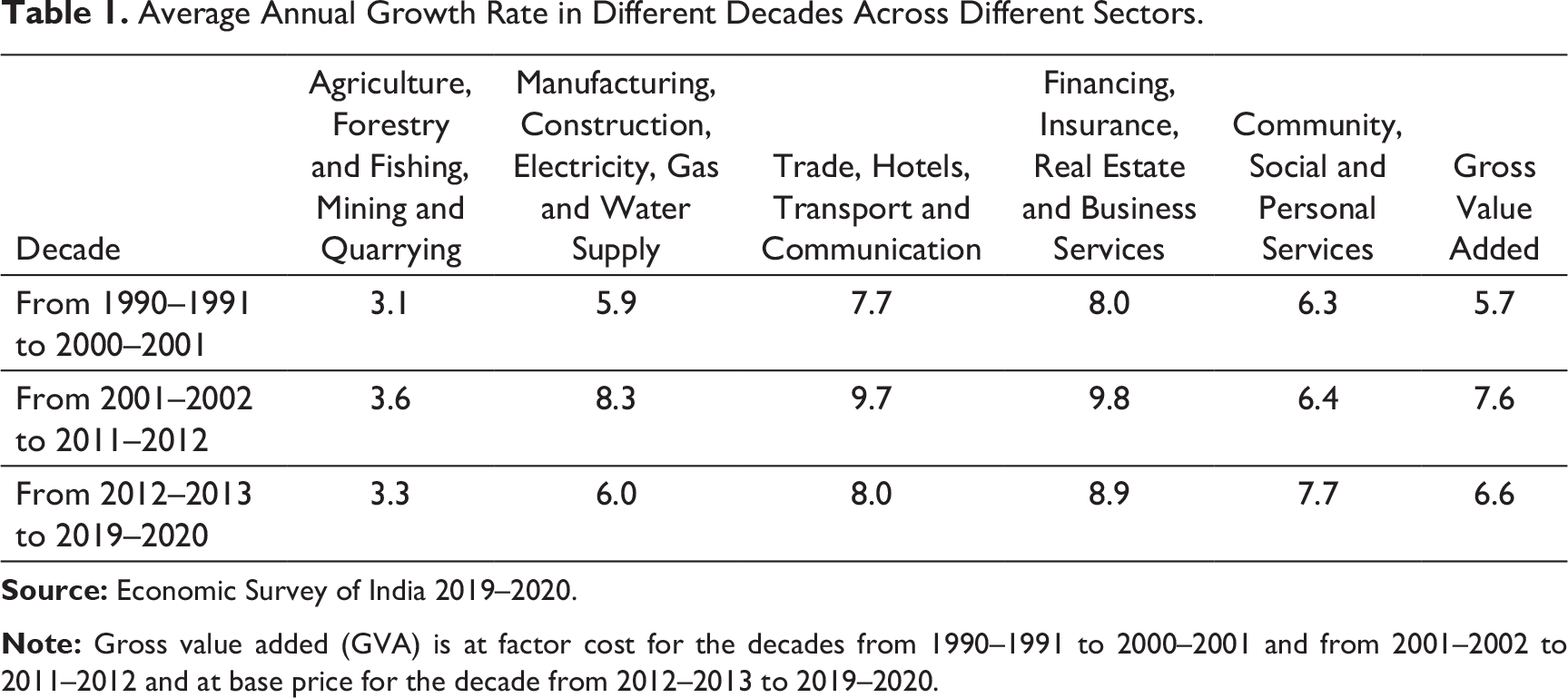
Average Annual Growth Rate in Different Decades Across Different Sectors.
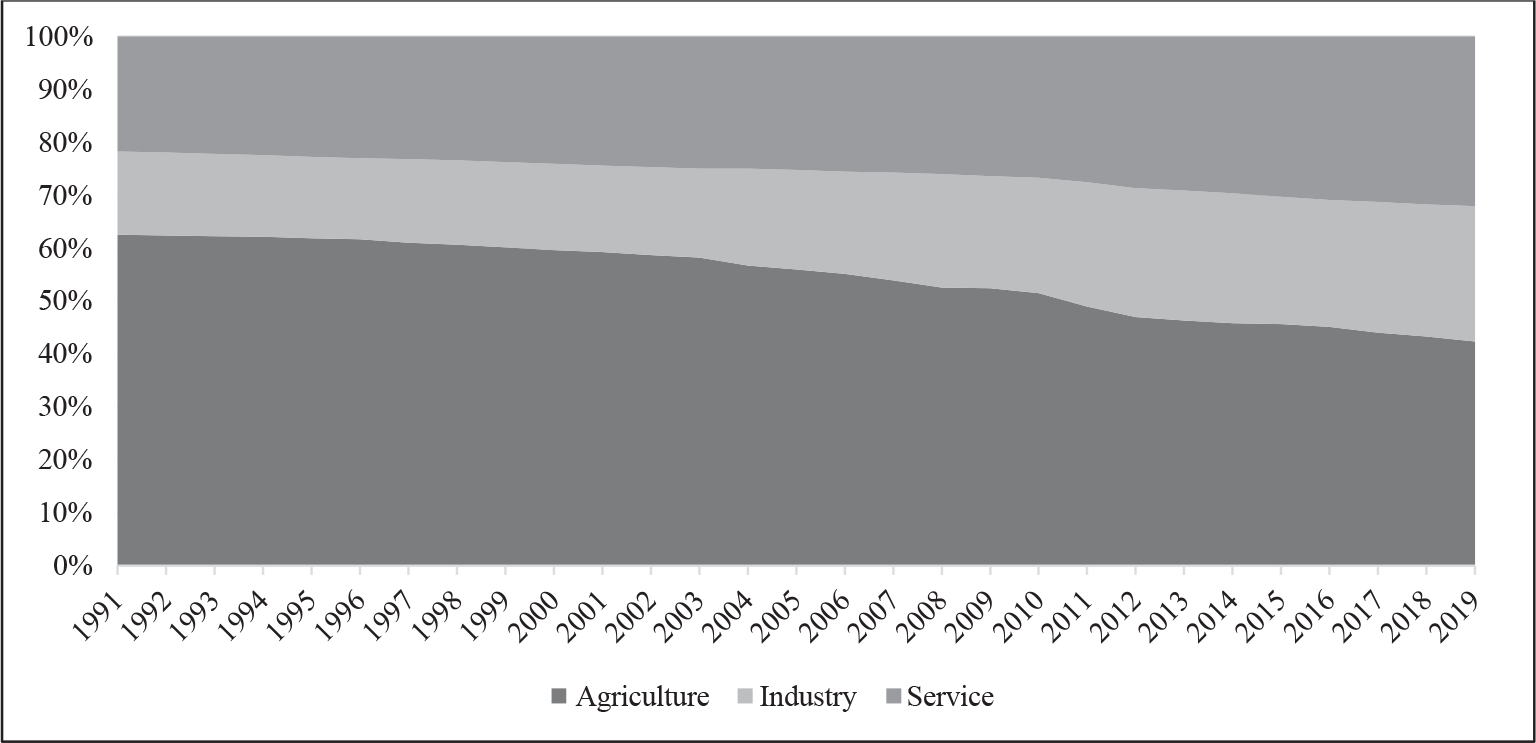
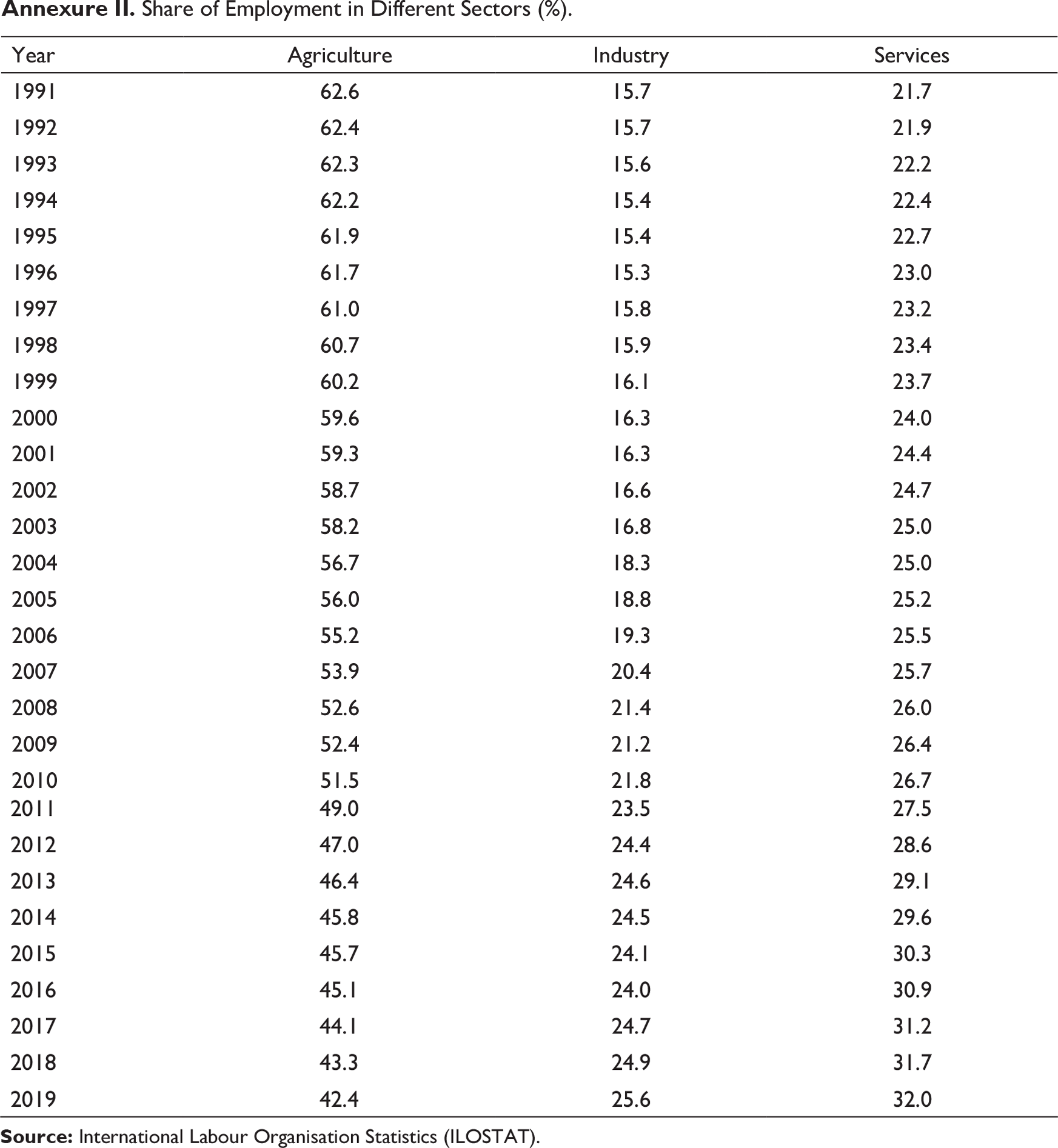
Figure 1 provides the share of employment for three broad sectors. The decline in the share of agriculture in total GDP is much sharper compared to its share in total employment; this obviously also implies that the increased share of industry and service sectors in total GDP has not translated into proportionate labour absorption. As is well documented, a major feature of the NEP period in the country has been a very significant agrarian distress due to the policies such as reduction in priority sector credit allocation, cut in subsidies, declining public investment in the primary sector, etc. (Jha, 2019a; Jha & Acharya, 2011; Jha et al. 2020). Similarly, the compression of public investments for the NEP period as a whole and other relevant macroeconomic policies have impacted employment expansion prospects in other sectors, both in rural and urban areas (Chandrasekhar & Ghosh, 2002; Jha, 2016, 2019b; Patnaik & Chandrasekhar, 1995).
As hinted earlier, it is not our objective in this article to get into an adequate consideration of the pace and structure of India’s GDP growth, or even a detailed discussion of employment trends and the linkages between growth and employment during the last three decades. However, it is worth emphasising here that the period since 2014–2015, that is, from the NDA-II regime onwards, has been among the most difficult and disappointing phases with respect to standard macroeconomic indicators, such as GDP, net exports, investment and consumption levels, performance of the banking sector, social sectors, et cetera.
In general, there was a progressive worsening all around even before the country was in the grips of the COVID-19 pandemic. For instance, the GDP growth rate was in a free fall, in real terms, continuously for eight quarters, from Q1 of 2018–2019 to Q4 of 2019–2020. As per the official estimates, the decline was from about 7% to 3% over this period; it is worth noting that several scholars have been of the view that the official GDP estimates since 2014–2015, because of the changed methodology, have been overstated, but we need not get into these issues here. Similarly, net export in real terms, investment ratios, credit growth, index of industrial production, consumption demand, et cetera—in short, all major correlates of economic performance—were almost flat or got into the negative terrain between 2014–2015 and 2019–2020, that is, just before the pandemic.
Possibly, among the most significant markers of a serious worsening in the Indian economy is the fact that the per capita real consumption expenditure in rural India, as per National Sample Survey Organisation (NSSO) estimates, declined by a whopping 9% between 2011–2012 and 2017–2018 (Jha et. al., 2020). As it happens, the decline in the average consumption expenditure was experienced by each decile of the population. Furthermore, all measures of poverty show substantial-to-drastic deterioration during this period (Subramanian, 2019). It is also worth noting that the rate of chronic unemployment in the country, over the same period, increased by almost three times and, for the latter year, was the highest ever in almost half a century. In short, although the period of neoliberal reforms in India since the early 1990s has different sub-phases, the years since the beginning of NDA-II appear to be an unprecedented phase of economic setbacks. As they constitute the immediate economic backdrop when the pandemic struck, it may be in order to note, in passing, a couple of important correlates of this context to locate the severity of the ongoing challenges.
Apart from a host of neoliberal policy measures, many of which were put on an even faster track by the NDA-II regime, the demonetisation of 2016 and the utterly misconceived and chaotically implemented goods and services tax (GST) of 2017 were the immediate ‘shock and awe’ interventions that contributed to dramatic disruptions in the Indian economy, resulting in the worsening of most of the macroeconomic indicators noted above. By now, there is near consensus among economists that these measures pushed the Indian economy into a tailspin since late 2016, which hit not only the expansion of GDP but, more importantly, almost every dimension of economic well-being, including poverty, inequality, vulnerability of livelihoods, et cetera during much of the NDA-II regime. In particular, for the overwhelming majority of workers, both in rural and urban India, and across most sectors, these measures were like a ‘bolt from the blue’, which assaulted their correlates of economic well-being in unprecedented ways. For instance, as per the estimates of All India Manufacturers Organisation (AIMO), demonetisation and GST’s immediate impact across micro, small and medium enterprises (MSMEs) was loss of employment, ranging from 23% to 38% across different segments. 1 Similarly, labour force participation and employment and earning indicators across rural and urban India, as per the NSSO and other major data sources, such as Labour Bureau, paint an overall significant worsening. We do not pursue these issues in any detailed manner in this article, as our focus is on the adverse impacts of the pandemic on labour. However, to contextualise the same, it is important to keep in view the backdrop of the last three decades, and in particular the period since 2014–2015, with respect to the world of work. For reasons of space, we flag only two relevant aspects, namely the overall labour absorption trends in the economy and some indicators of quality of employment.
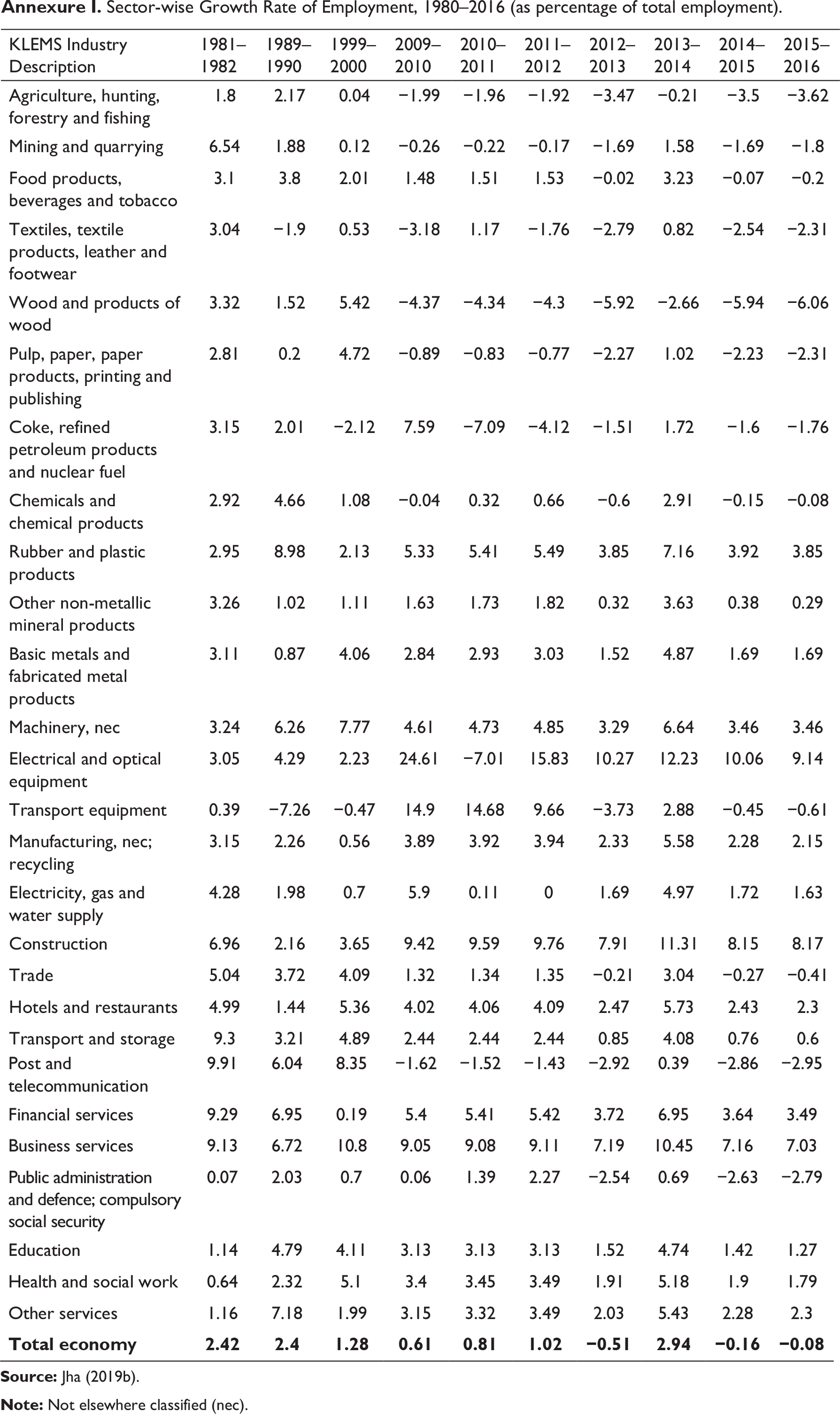
The neoliberal model of economic development has created huge challenges for labour absorption in the country, thus aggravating the pool of labour reserves (Jha, 2016; Patnaik, 2016; Patnaik & Patnaik, 2019). In spite of a relatively high GDP growth rate, in fact second only to China, on average, for four decades since the early 1980s, employment expansion has been negligible; it is indeed remarkable that employment elasticity has not only declined across almost all the sectors during the last 30 years but has also turned negative for many sectors (Annexure I). We have examined these trends in an earlier work (Jha, 2019a) and stay away from a fuller discussion of the relevant issues here. The point worth emphasising is that in the recent years, India seems to be making a transition from a ‘job-less’ to a ‘job-loss’ growth trajectory; whatever employment growth the country has witnessed, particularly since NDA-II, has been limited to the services sector, which has a majority of both vulnerable casual employment and self-employment. Thus, persistent and high levels of informalisation and lack of job creation (in the aggregate) are among the defining features of the contemporary labour scenario.
Distribution of Workers by Type of Employment and Sector.
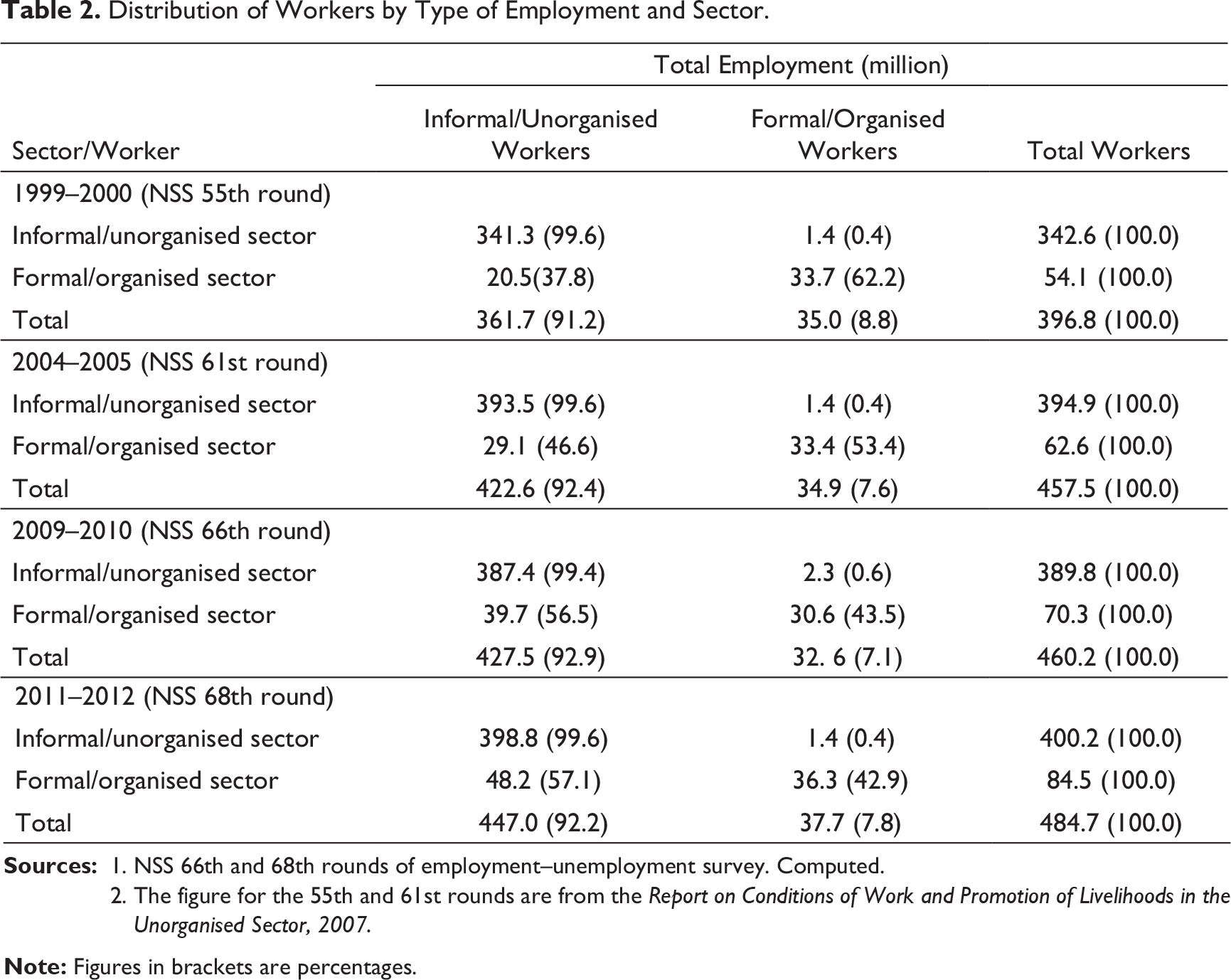
2. The figure for the 55th and 61st rounds are from the Report on Conditions of Work and Promotion of Livelihoods in the Unorganised Sector, 2007.
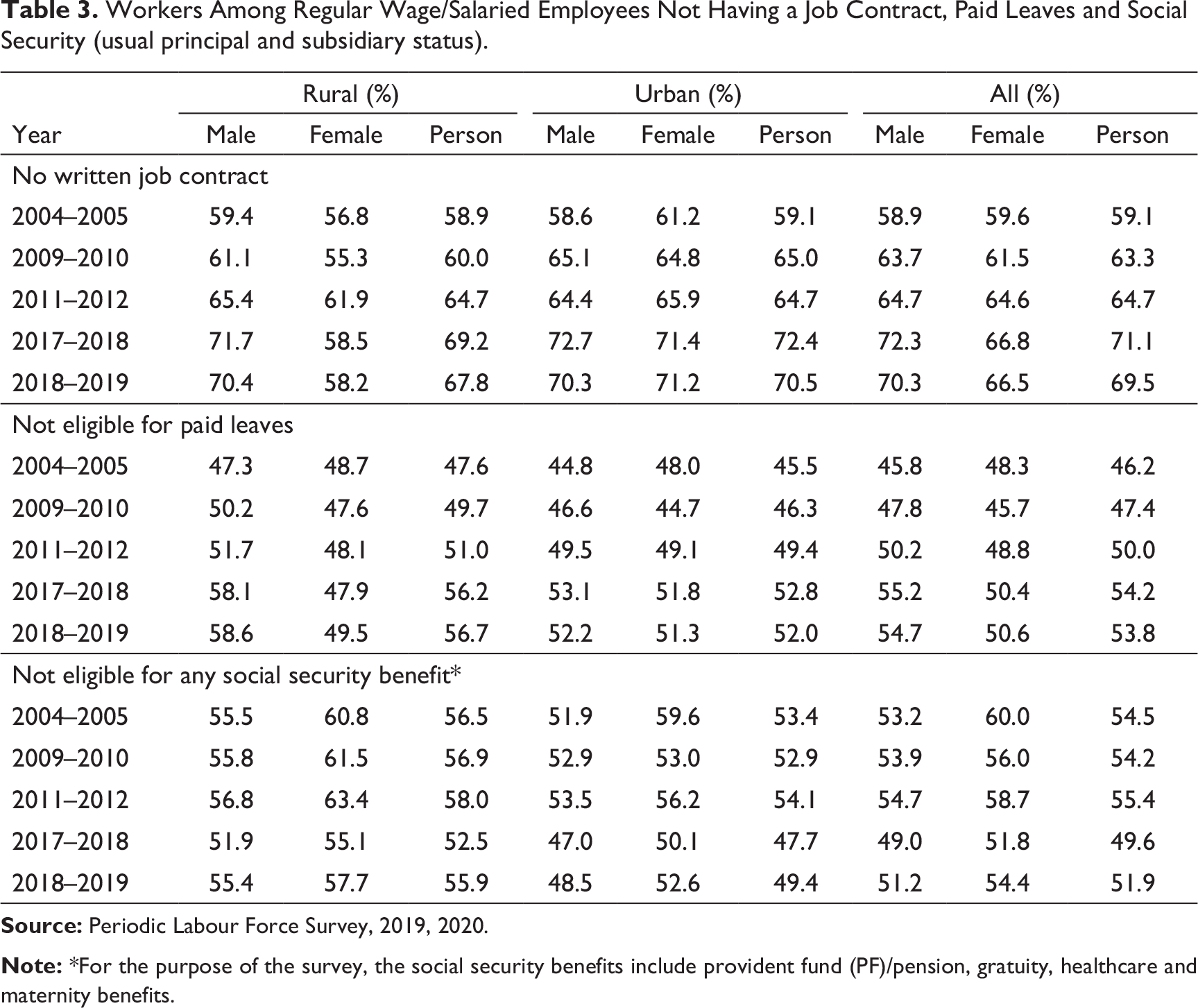
According to the National Commission for Enterprises in the Unorganised Sector (NCEUS), the main defining features of informal workers are lack of coverage by labour regulations, which facilitate access to various employment benefits and social protection provisions; such workers do not have the protection of national labour regulations. The statistical indicators for employment security, wage security and social security are provided in Table 3. It is evident that even for the regular-wage/salaried employees, there has been a substantial increase in vulnerability. The data in Table 3 suggest that among the regular-wage/salaried employees, 60% had no written job contracts in 2004–2005, and this number increased to 70% by 2018–2019. As regards provision of paid leaves, the incidence of employees not covered by it increased from 46% to 54% over the same period.
Access to social security is officially mapped with reference to any one of the following variables: provident fund, pension, gratuity, healthcare and maternity benefits, as per the PLFS. Going by such a conception, there was a small improvement on this count; in 2004–2005, 55% of employees with a regular salary had no social security, and the number improved to 52% in 2018–2019. However, as already indicated above, the formal sector constitutes a tiny minority of overall workers, and the situation in the informal sector continues to be persistently precarious, if not worsening, although there have been some attempts by governments at different tiers to address some of the challenges (Jha, 2019a). Nonetheless, the condition of the overwhelming majority of workers remains grim as per the relevant official indicators.
Workers Among Regular Wage/Salaried Employees Not Having a Job Contract, Paid Leaves and Social Security (usual principal and subsidiary status).
In general, as already noted above, the period of neoliberal reforms since the early 1990s, even though different political parties have been in power during this period, has been disastrous on the employment front on the whole: the difference between different regimes has been more in terms of degree, as there has been continuity in most important aspects of the macroeconomic framework which impact labour absorption. One obvious fallout of the adverse impacts on livelihoods and employment has been the significant increase in labour mobility, which is largely distress-induced. As is amply clear from the relevant literature, workers are moving not only from rural to urban but also from rural to rural and urban to rural areas, for reasons of survival and social reproduction. In fact, one of the hallmarks of the neoliberal era has been the increased fluidity among workers and their dependents (Census of India, 2001, 2011; GoI, 2017; NSSO different rounds; Srivastava et. al., 2020). In fact, the increased mobility across geographical boundaries, much of it in the nature of circular labour flows, has resulted in the blurring of distinctions among workers, such as rural versus urban, farm versus non-farm, et cetera. As Jan Breman put it pithily, large chunks of the migrants are ‘wage hunters and gatherers’, and their spatial mobility is characterised by occupational multiplicity and changing identities; a farm worker today is a non-agricultural worker tomorrow, and so on. Such a phenomenon is, first and foremost, an indicator of systemic vulnerability for large segments of workers in contemporary India.
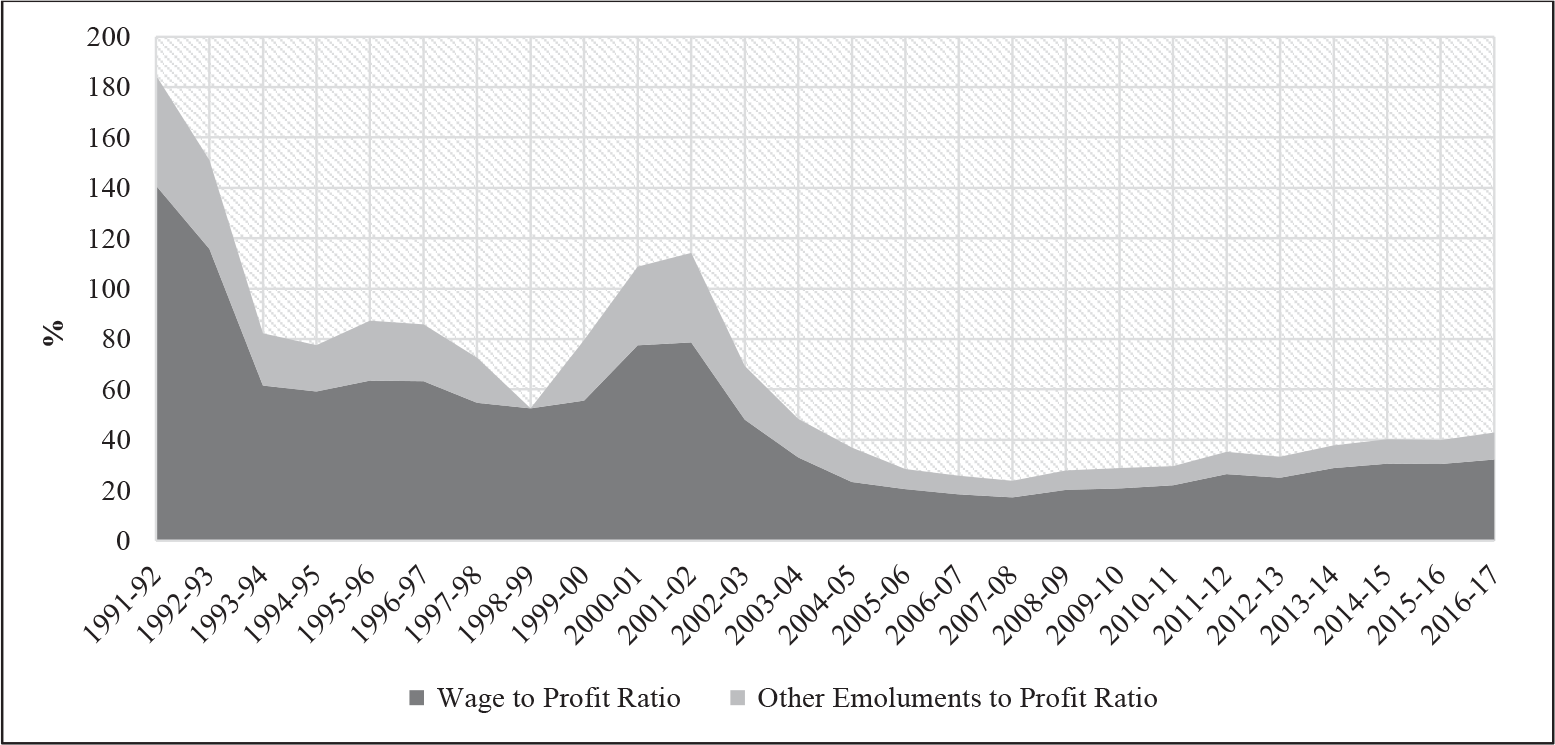
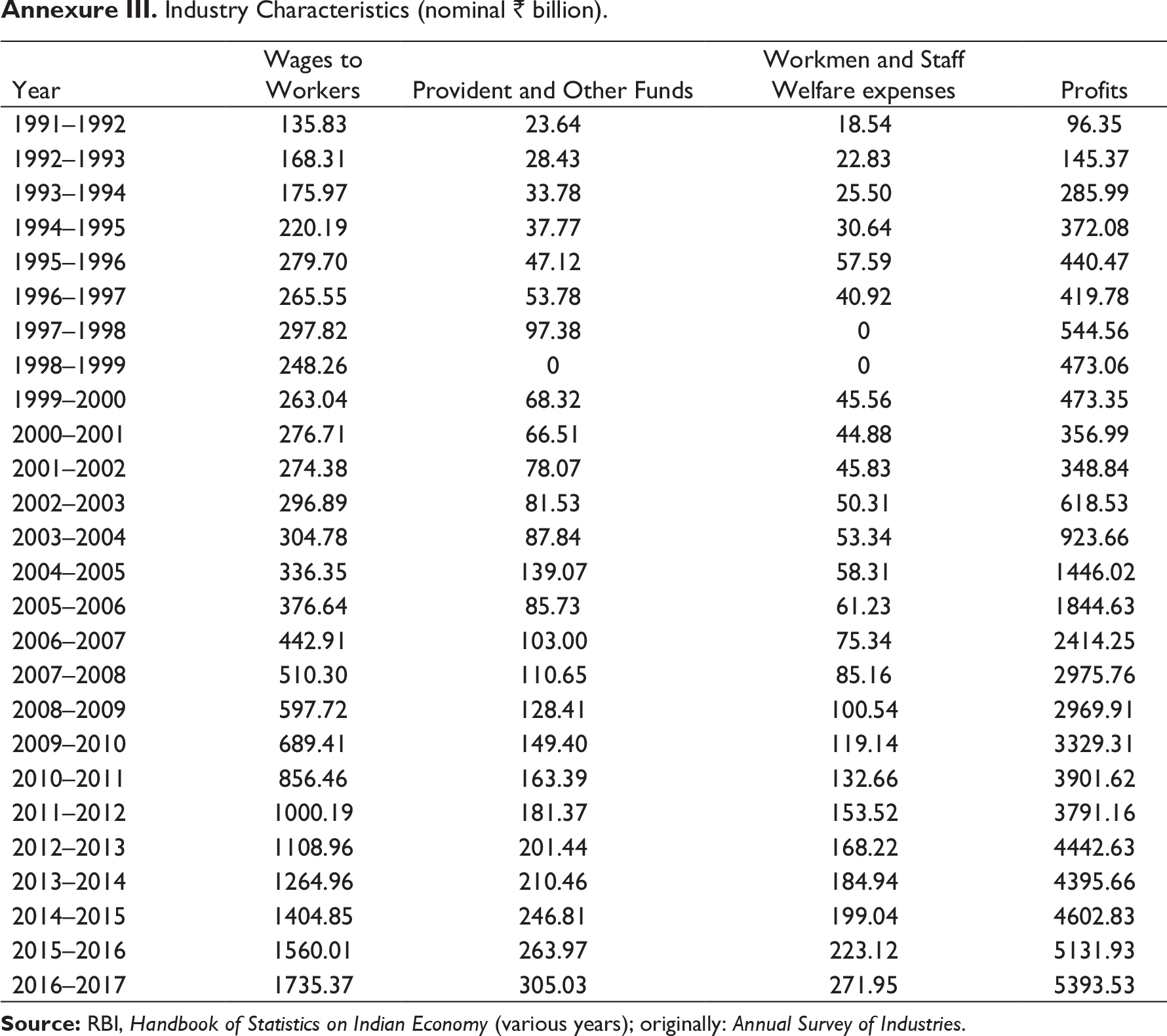
The distress and increasing vulnerability of workers has a mirror image in the form of the growing power of the capital, reflected in the compression of the share of wages, enabling capitalists to extract super profits. Even in the most ‘protected’ segments of the Indian economy, such as organised manufacturing, there has been a continuous squeeze in the share of wages, and the share of profit has been on the rise throughout the neoliberal period (Chandrasekhar & Ghosh; 2002; Jha, 2016).
Figure 2 presents, drawing on Annexure III, the distribution of wages, other emoluments for workers and profits as a ratio of the former to the latter. The other emoluments include workers’ welfare expenses and provident and other funds. In 1991–1992, the wage-to-profit ratio in the organised sector in India stood at 1.41, and by 2016–2017, this ratio decreased to 0.32. Similarly, the other emoluments to the profit ratio declined from 0.44 to 0.11 over the same period. Except for the 3 years from 1999–2000 to 2001–2002, there was a continuous decline in the above-mentioned ratios. As is well acknowledged, based on sound theories and historical experiences, distribution of income from wages to profits typically contributes to a worsening of effective demand and consequently exacerbates a vicious circle of livelihoods and employment. Coming on top of deflationary macroeconomic policies, which is central to the logic of neoliberal capitalism, any significant redistribution away from workers, generally, tends to hurt macroeconomic outcomes, and India’s performance during the last three decades is not an exception in this respect, as noted earlier. Furthermore, as already mentioned, the last quinquennium has been a period of unprecedented difficulties for the overwhelming majority of the masses in terms of livelihoods and employment. It was against such backdrop that the COVID-19 pandemic struck India.
As already noted in the previous section, the crisis in the world of work in India, to a great extent, is rooted in the neoliberal policy regime of the last three decades, in particular the extremely ill-conceived disruptions due to demonetisation and GST and the utter mismanagement subsequently. Numerous studies by industry and manufacturing associations and ground reports revealed significant job losses due to the shocks of demonetisation and complications of GST during 2017 and 2018, leading to large-scale retrenchment of workers (Jha, 2019b). In short, the world of work, which in any case has been fraught with multiple and increasing vulnerabilities almost throughout the neoliberal era, entered into an even more fragile phase during approximately the last quinquennium, that is, on the eve of the COVID-19 pandemic.
And as we know, soon after the incidence of COVID-19 cases started picking up, a most stringent and ill-conceived lockdown was imposed on the country, in the typical ‘shock and awe’ style of the current regime, at a notice of 4 hours. The most significant fallout of this measure was the disappearance of millions of jobs, and the particularly heart-wrenching aspect of it was the distress of migrant workers; by end of March 2020, the country and the world at large was witnessing the brutal and grotesque spectacle of precarity on India’s roads, railway tracks, et cetera as hundreds of thousands of workers were forced to trudge along to get back to their distant homes. Clearly, they had not only been ignored by the central government that imposed this disastrous intervention (i.e., the lockdown) but had also been effectively abandoned due to their complete lack of preparedness in dealing with their plight, unlike in most other countries that opted for the lockdown.
As per the recent PLFS estimates, of the approximately 470 million workers, 245 million were self-employed, 170 million were casual workers, and 107 million were regular workers, with median monthly earnings of ₹8,000, ₹5,000 and ₹10,000, respectively; such figures clearly indicate the fragile structure and overall vulnerability of the country’s workforce. The near closure of economic activity with a 4-hour notice created complete chaos and havoc for an overwhelming majority of the workers, who did not have any social security or requisite means to withstand the challenges associated with such a huge disruption and uncertainty in their economic lives. Of course, it is not easy to have precise estimates of the unprecedented shock to the world of labour, but it reasonable to assume that for the first few weeks, at least four-fifths of the country’s workforce must have been impacted in serious ways, given that economic activities in general were shut down almost entirely. It was only after the first phase of the 3-week lockdown that gradual opening up, in phases, was commenced.
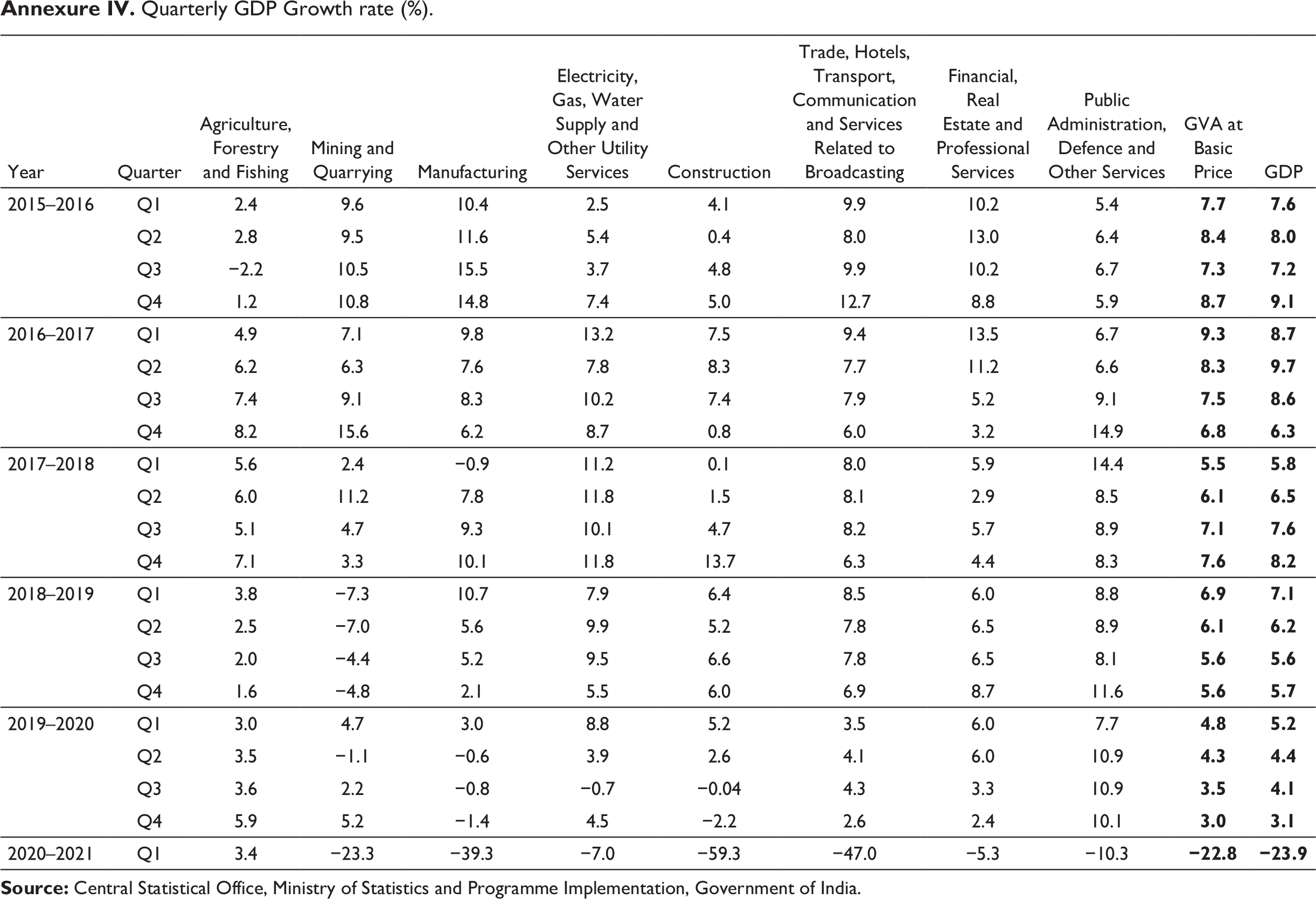
From early April 2020 onwards, a large number of field-based reports started generating estimates of the likely loss of work and their consequences; although the sample size of most of these reports are relatively small, they provide very powerful insights into the huge adversities confronted by those at the bottom of the pyramid, that is, the informal workers constituting more than 90% of the workforce. Before we briefly highlight some of the findings of these field-based studies, it may be noted that during the first couple of months after the lockdown, as per Centre for Monitoring Indian Economy (CMIE) estimates, more than 120 million jobs were lost, that is, close to one-fourth of the workers had been deprived of their employment. Furthermore, as we know from the official estimates now, the GDP growth in the first quarter of 2020 (April–June) has been put at −24%, and the projected performance of different sectors is provided in Annexure IV. As may be seen, the preliminary estimates suggest that the highest contraction is suffered by the construction sector, with a growth rate of −50.3%, followed by trade, hotel, transport and communication services with −47%. The growth rate of manufacturing and mining were −39.3% and −23.3%, respectively. The only sector for which positive growth has been projected is agriculture, at 3.4% (Annexure IV).
However, it is worth noting that according to studies based on field reports, even the performance of the agricultural sector may not be anywhere near the official projection. In most of the Indian states, farmers harvest wheat between mid-March and mid-April; this was the time when the government had implemented the first phase of the lockdown. Until April 15, the movement of the agricultural machines like combine harvesters was not allowed. The repair work of agricultural machines was also not possible because of the complete shutdown of economic activities in urban, as well as rural, parts of the country. The delay in agricultural operations was not only limited to harvest but also extended to the entire procurement, and when it started, the process was very slow (Rawal et al., 2020). It is quite possible that because of the large-scale disruption in backward and forward linkages, the agricultural sector as a whole was also hit hard.
In any case, we should also note that several researchers have suggested that the contraction in different sectors, and in the overall economy, may be much sharper than projected by the official estimates. Without getting into these details, it would seem from the official macro-estimates that the proportion of workers who lost their jobs due to the pandemic-induced economic shutdown may well be in the range of 30%–40% in the first quarter of this fiscal year. In our assessment, even the reports of high incidence of job losses are possibly significant underestimations if we go by numerous field-based studies. As per a recent assessment by the Indian Society of Labour Economics through its supplementary report, the extent of the damage on GDP, employment and other indicators are much more than indicated in the official estimates (Rodgers, 2020). As already noted, among the worst affected were casual daily-wage or self-employed workers (such as street vendors, lower end of small traders, etc.), including a large section of interstate, as well intrastate, migrants in the informal sector. As noted earlier, the number of migrants who were forced by the circumstances to reach their home has been estimated as approximately 25 million (Srivastava, 2020). The massive exodus under stringent lockdown conditions, when the state machinery was employed to contain it, claimed several lives; as per the response of the road transport ministry in the Parliament, 29,415 people died in road accidents during the period of the lockdown. 2 One may assume that a significant share of these unfortunate deaths consisted of desperate migrants attempting to reach their home.
The International Labour Organization (ILO) has been tracking the adversities inflicted on the world of work, through various indicators, for the last few months. One such estimate by ILO is of the labour hours lost because of the pandemic. Using the fourth quarter of 2019 as the baseline, ILO estimates suggest that in the first three quarters of 2020, there has been a loss of labour hours, in the world economy as a whole, by 5.6%, 17.3% and 12.1%, respectively; comparable figures for South Asia, which is obviously dominated by India due to its sheer weight in the size of the region’s population, were 3.1%, 27.3% and 18.2%, respectively. Translating the loss of labour hours into income loss for workers, the ILO estimate for South Asia put it at 16.2% for the first three quarters of 2020, which is among the highest across different regions among the world. We may also note that, as per the estimates of the Oxford Poverty and Human Development Initiative, which uses multidimensional poverty index consisting of ten indicators, India lifted 271 million persons out of poverty between 2006 and 2016; this was clearly an impressive achievement in reducing the incidence of absolute poverty. However, due to the COVID-19 pandemic, the same source projects that more than 260 million Indians are likely to fall back into poverty. There are several other basic indicators, such as hunger, malnutrition, et cetera, which seem to portray an extremely worrisome picture for the well-being of the working people, in the context of the COVID-19 pandemic and its terrible mishandling by the current political establishment.
As is well known, unfortunately, we do not have large-scale official data sources that cover most of the important variables relating to the world of work for the period of the pandemic. However, the reports from CMIE provide useful information relating to several aspects, such as job losses across different segments. As it happens, the methodology and coverage of CMIE is not comparable to those of the NSSO rounds on employment and unemployment surveys; hence, in the following, we flag a couple of findings from the CMIE data for the last few months. The first point to note is that CMIE reported a very sharp spike in unemployment rates across sectors, for a couple of months soon after the lockdown, and then a subsequent gradual recovery. However, it is clear from the high frequency unemployment rates available from this data source that even during the last couple of months, unemployment rates remained higher than the pre-COVID-19 levels. Further, CMIE also reports that the recovery since July has not been evenly spread across sectors; the picture that emerges is one of an increase in the share of informal employment at the expense of regular wage and salaried work. For instance, as per this data source, in March 2020, the estimated number of employed persons in India was 396 million, and this figure came down to 275 million by the end of April, before reporting a significant recovery by July 2020, to 385 million. However, the reported recovery of jobs was disproportionately higher in the farm sector, during March–July 2020, from 117 to 126 million workers, whereas the estimated number of daily wage workers had come down from 127 million in March to 120 million in July (Vyas, 2020a, 2020b).
Findings from the Field
We now turn to some of the important field-based studies that have focused on the plight of workers during the lockdown. The survey of 16,863 workers, immediately after the announcement of the lockdown, by Stranded Workers Action Network (SWAN, 2020) reports that 50% of the workers had ration only for 1 day, and 72% for a maximum of 2 days. Out of the total surveyed workers, 82% had not received quota ration from the government, and 68% of them had no access to cooked food. The study further finds that Karnataka, Haryana, Delhi and Maharashtra were among the worst-performing states concerning workers’ access to food. In Delhi, 47% of workers had no access to a cooked meal; the share was 51.5% in Haryana, 67% in Karnataka and 76% in Maharashtra. In Delhi and Maharashtra, close to 95% of workers had no access to the government ration.
Another study, of 8,870 stranded workers in the National Capital Region (NCR), conducted by the Centre for Indian Trade Union (CITU, 2020) in April, reports that 29% of the workers did not have rice, 51% had no wheat flour, 52% had no pulses, and 54% had no cooking oil with them. Further, the survey finds, 65% of the workers did not receive either dry or cooked food from the government. Out of the total respondents who had received food from the government, 70% reported that the quantity of food was significantly less than officially announced benchmark levels. Almost 500 people had neither a ration card nor an AADHAR card, and hence they were not eligible for the dry ration by the Government of Delhi. One-fourth of the total respondents did not have bank accounts.
Yet another study by Jan Sahas (2020), conducted in the first week of April, which surveyed 3,196 workers, reported that 42% of them had no ration left, even for a day, 33% had no money to buy any ration, 40% had ration in their stock for 2 weeks, and only 18% for a maximum of 4 weeks. The survey also found that construction workers were forced to drink water used for construction. Another field study, by Dalberg (2020), of 7,000 households during the first week of April 2020, found that on average they lost 61% of their income. Further, the study found that 43% of the households with Below Poverty Line (BPL)/Antyodaya cards had not received any free rations. Of the total respondents, 67% reported that they would run out of money and essential items in less than 2 weeks.
A survey of almost 4,000 households, by Azim Premji University (APU, 2020), records that half of the salaried workers witnessed a reduction or their wages were not paid. Nearly 75% of the respondents had money only to buy 1 week’s worth of essential items, at maximum. Most of the respondents informed that they had no Jan Dhan accounts, and they had hardly received any money transfer. A survey by Gramvaani (2020) during the second week of April finds that 88% of the respondents in Bihar, 63% in Jharkhand and 69% in Madhya Pradesh had not received rations from the government. In a survey of 1,726 domestic workers across 11 states of India, from 24 March to 4 May 2020, the All India Democratic Women’s Association (AIDWA, 2020) noted that 41% of the surveyed domestic workers had lost their whole income in March, and the proportion jumped to 61% in April. The AIDWA survey also noted that only 35% domestic workers in March and 27% in April had received full income.
From a large survey conducted by the Centre for Studying Developing Society (CSDS, 2020) in partnership with the news portal Gaon Connection, spread over 179 districts in 20 states and three union territories, canvassed through to face interviews with 25,000 respondents, we get an utterly dismal picture from rural India. The said survey was conducted between 30 May and 16 July, in which 78% rural Indians reported that for them work had come to a complete standstill. The problem of unemployment was reported to be ‘quite serious’ or ‘very serious’, as 60% and 64% of ‘skilled’ and ‘manual’ workers, respectively, had no employment. It was also reported that 68% of them were facing a monetary crisis. It is hardly surprising that a substantial segment of the respondents incurred indebtedness or were forced to sell their assets and belongings to get by. A large number of them obviously had to confront significant levels of food insecurity: in fact, one in every eight households reported ‘frequent lack of food for the entire day’. Among the respondents, there were ‘return migrants’ from rural to urban India as well; 22% of them reported walking back home, and 42% of them had taken more than 3 days to complete their journey. Almost one-third of the surveyed migrants were forced to undertake the return journey as they had run out of money and no support was in sight.
ActionAid India (2020a), in its survey of 11,520 respondents during the third week of May 2020, found loss of livelihood, reduction in the intensity of work and a massive decline in wages. This study noted that in the manufacturing sector, before the lockdown, around 57% workers had been working for more than 40 hours in a week, but during the lockdown, 68% workers had no work. Similarly, in the construction sector, 62% of the workers had worked more than 40 hours in a week, and in the lockdown period, 71% of the workers were completely unemployed. Out of the total respondents, only 35% had received a full wage, 48% had received no wage, and 17% had received only a partial wage during the lockdown period. The same institution (ActionAid India, 2020b) conducted another round of surveys during the last week of August and first week of September 2020. In the second round, the study noted that 48% of the respondents were unemployed and 42% were partially employed. The share of respondents who did not receive their wages during the period of lockdown had increased from 48% during the first round to 64% during the second round. The survey reported that 24% of the respondents had no income, whereas 73% had an income of less than ₹5,000 per month. There are a couple of positive findings, such as the share of respondents who received food grains through the public distribution system (PDS) increasing from 45% in the first round to 79% in the second round; this also had a positive impact on food sufficiency, that is, during the first round, 82% of the respondents had lacked food sufficiency, and the share declined to 68% during the second round.
It is also important to flag the well-acknowledged point here that India’s economic geography has powerful structural correlates of deprivation located in its social geography. The most important fault lines in this context include gender, caste, tribe, religion and other bases of discrimination in various walks of life, including in the world of work. Several field reports have drawn attention to the fact that the current crisis has impacted livelihoods and the employment of these groups disproportionately hard.
Concluding Observations
It clearly emerges from the relevant secondary literature and available field studies that the world of work has been hit very hard, unleashing unprecedented vulnerability and insecurity for millions of workers in the context of the pandemic, particularly due to the ill-conceived lockdown and overall policy framework to deal with it. There was almost an absence of preparedness, or any coherent framework of intervention, by the union government to deal with the obvious challenges that emerged in the immediate aftermath of the sudden lockdown, and it was largely left to the state governments to shoulder the responsibility of crisis management; as it happens, given their resource capacities, health infrastructure, et cetera, the adequacy of responses across states tended to be quite mixed. Slowly and gradually, there has been some coordination between the union government and state governments to address some of the pressing challenges, but on the whole, it would hardly be an exaggeration to hold the view that the much-needed basic package of support for the workers has been extremely inadequate till date.
In terms of financial measures to deal with the challenges of the pandemic, periodic announcements since 25 March by the union government and the country’s central bank have been forthcoming. In terms of scale, the biggest of these was the much-talked-about mega package of a ₹20 trillion stimulus, announced by the prime minister on 12 May, and from 13 May onwards, the finance minister started sharing the ‘details’ in five tranches over the next few days. This mega package, and subsequent periodic announcements as well, have been analysed and commented upon, at length, by a large number of economists. There is a near consensus that the official claim, that the ‘fiscal stimulus’ in the headline-grabbing announcement of ₹20 trillion amounted to approximately 10% of the GDP, was a massive exaggeration; in fact, the additional fiscal stimulus barely amounted to around 1% of the GDP, according to different estimates, and for citizens, at large, it seemed almost like a whodunit filled with suspense!
Essentially, the mega package had included money allocated through the budget for the current fiscal year (2020–2021) and through monetary policy directives via the banking system, apart from changing the notion of fiscal stimulus itself. As hinted, there is a substantive discussion on the relevant issues, and we need not pursue these any further here. The simple point is: provisioning of lines of credit through monetary policies, and collapsing fiscal policy with monetary policy in the name of extra fiscal stimulus, to be polite to the official claim, is misplaced optimism. The focus of the union government has been almost entirely on the supply side, to the near neglect of the demand side, which is what should have been prioritised. As pointed out by several economists, in the wake of the pandemic and the draconian lockdown, the way forward needed a massive injection of demand, in particular focusing on the most vulnerable sections of the economy. In the true spirit of federalism, it would have required taking the state governments on board and providing necessary resources to them, and through them, as well as via direct channels, the centre needed to undertake large transfers and direct spending in key areas. These could have included spending on physical and social infrastructure and strengthening/expansion of the guaranteed-employment programme. Unfortunately, till date, the centre has shied away from such a route. Indeed, adequate resources could have been mobilised for these tasks through a whole range of measures, such as rebalancing public expenditure priorities, additional borrowing, much-needed inheritance and wealth taxation measures, et cetera.
Of course, there has been limited attention paid to some of the vulnerable sections through the Pradhan Mantri Garib Kalyan Yojana (PMGKY), or additional support for 400 billion for MGNREGA, etc. However, these are too little, given the scale of the crisis. Cash transfers as part of the packages announced by the union government, for senior citizens, widows, women, et cetera, have been miserly at best; similarly, the free- supplementary-ration scheme is quite inadequate, especially given the stocks of rice and wheat with the government being way above the requisite norms.
As mentioned earlier, there was additional support for MGNREGA, which has been a lifeline for a significant section of workers in rural India, and much more so in the context of the pandemic; in fact, many urban migrants returning to their homes across the length and breadth of the country have been queuing up for MGNREGA jobs. Several states have already reached close to the upper bound of projected estimates of employment provisioning which were made at the beginning of the current fiscal year. According to the MGNREGA database of the Ministry of Rural Development, the per-person day expenditure under the scheme by the last week of August 2020–2021 was ₹244.82. Taking the same figure, if 100 days of guaranteed work is provided on each active job card (86.62 million), then there would be a need for ₹2.12063 trillion, and the currently allocated money is just 48% of the required amount. It may be noted that a large number of new applications have been forthcoming, which obviously would mean substantially larger allocation; as per the current estimates, the total number of applications for the job card is 9.02 million more than the number of cards issued.
It was proposed by a large number of economists and progressive democratic forces that provision of immediate cash transfers, to take care of sudden loss of livelihoods and incomes for an overwhelming majority of workers, ought to be implemented, as had been done in many other countries. It was suggested that an amount of ₹7,500 per month, to support every non-income-tax-paying household, could go a long way in meeting the minimal basic needs, in addition to adequate availability of subsidised food; however, no heed was paid to such suggestions. Even the official promise of additional food grains for about 80% of the population reached only a fraction, as per available reports, due to bureaucratic and political apathy. In addition to the above-noted suggestion for income support for the working people, several other ideas were advanced by the Left and progressive forces to strengthen employment programmes and MSMEs. Most of these have been ignored by the government till date. Further, the state governments, which have been shouldering most of the pandemic-related responsibilities, have been starved of adequate resources, given the architecture of fiscal federalism in the country. In passing, we may also note that when an overwhelming majority of citizens in the country are reeling under the current crisis, the Indian billionaires (like their counterparts in most other countries) seem to be having a great time, according to a report by the Swiss bank UBS. As per this source, between April and July 2020, the wealth of Indian billionaires jumped by 35%, whereas most macroeconomic indicators for the country as a whole, such as the GDP, employment, et cetera, tell us a dismal story of contraction and recession.
As we have already noted, the crisis inflicted on the world of work in the context of the COVID-19 pandemic needs to be located in the overall neoliberal macroeconomic policy regime that has been hegemonic during the last decades. Dramatic shift in the share of income distribution from wage to profit, increase in labour market flexibility, growth in the reserve army of labour, weakening of social security for labour, et cetera have been the hallmarks of such regime. Furthermore, disastrous interventions, such as demonetisation and the ill-conceived GST, inflicted huge costs on much of the economy, and on workers in general. In such a context, the sudden lockdown in the wake of the pandemic, with no blueprint for the immanent challenges, resulted in a complete catastrophic situation; the public policy failure towards an overwhelming majority of the workers has meant not only a humanitarian crisis but effectively also a humanitarian crime.
Sector-wise Growth Rate of Employment, 1980–2016 (as percentage of total employment).
Share of Employment in Different Sectors (%).
Industry Characteristics (nominal ₹ billion).
Quarterly GDP Growth rate (%).