




Abstract
Governments strive to allocate limited resources efficiently, particularly during crises, by implementing policies to reduce uncertainty and mitigate negative impacts. The purpose of this study is to analyze the effects of combined policy measures to inform future decisions. The COVID-19 pandemic, with its unprecedented global scope and diverse policy responses, offers a unique opportunity to examine the economic effects of varied government actions during unexpected events. Its worldwide impact and simultaneous adoption of a wide range of measures by multiple countries make it an extraordinary real-world laboratory for understanding the dynamics of crisis management. This study examines the impact of lockdowns, health interventions, and economic support measures on hotel occupancy, using monthly data from 38 countries (2020–2022). Findings show that structural interventions, such as health and economic support, have positive long-term effects, whereas lockdown measures negatively impact occupancy both in the short and long term.
Keywords
Introduction
Governments consistently strive to utilize limited resources efficiently by implementing various policies. Exogenous shocks—such as crises or sudden disruptions—often force governments to implement swift and complex policy interventions aimed at stabilizing the economy (Liang and Liu, 2025; Vardar et al., 2025). Policies serve as instruments through which governments aim to achieve specific objectives, requiring collaboration among diverse stakeholders in the policymaking process to design and implement effective solutions (Bali et al., 2021; Salamon, 2001). COVID-19 is an example of the above-mentioned type of shock and is considered in this study as an extraordinary laboratory experiment given its uniqueness, globality and the variety of policy responses adopted simultaneously worldwide. The pandemic in fact inflicted severe social and economic costs, prompting urgent and varied governmental responses amid a climate of heightened uncertainty. These responses included mobility-restricting lockdowns, health measures like vaccinations, and fiscal and monetary stimuli to buoy economic activity. Importantly, this event emphasized the heterogeneity of sectors’ reactions to the pandemic itself and to the different measures adopted by the governments.
In this context of extreme uncertainty, countries all over the world chose different combinations of policies, having only a very limited ability to predict the effects of their choices. Policy interventions have been categorized into two main groups, according to Lison et al. (2023). The first group is termed “pharmaceutical interventions”, encompassing measures such as testing policies, contact tracing, healthcare investments, as well as vaccination initiatives. These efforts are distinguished from “non-pharmaceutical interventions”, which include policies like lockdown-style measures that restrict people’s mobility, as well as economic support policies, such as income support and debt relief.
Figure 1 illustrates the diverse policy approaches adopted by five countries—the United Kingdom, the United States, France, Sweden, and Switzerland—in 2020 to combat the pandemic
1
. The policy mix adopted by the different countries is measured as the combination of three indexes, namely the Stringency, the Economic Support, and the Containment and Health indexes, calculated by the Oxford COVID-19 Government Response Tracker (OxCGRT) project. The value of each index varies between 0 and 100 and indicates the strictness of policies implemented. Governments enacted stringency measures—including school closures, event cancellations, mask mandates, and travel restrictions—supported by public health campaigns to reduce virus transmission. Government interventions in 2020, by country. Source: Oxford COVID-19 Government Response Tracker https://www.bsg.ox.ac.uk/research/research-projects/oxford-covid-19-government-response-tracker.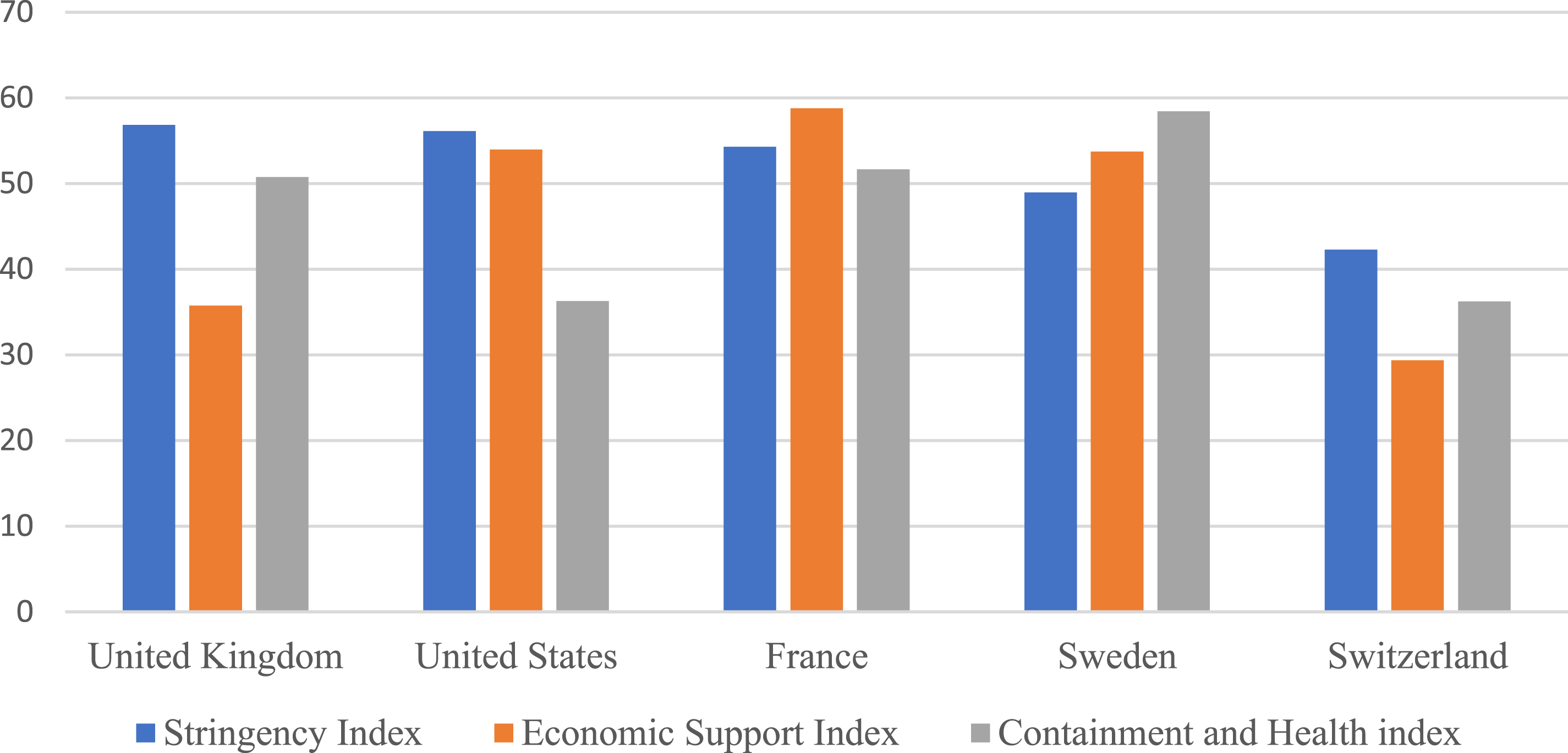
The stringency index (SI), which varies by country based on local outbreak severity, measures the intensity of these restrictions. The containment health index (HI) merges lockdown restrictions with health measures such as contact tracing, testing, and investments in vaccines and healthcare. An increase in this index suggests improved national safety, potentially boosting travel and hotel stays. Finally, the economic support index (EI) reflects government measures like income support and debt relief aimed at mitigating the pandemic’s economic impact. This index uses economic policy indicators to measure the intensity of the support, with higher values expected to correlate with faster economic recovery.
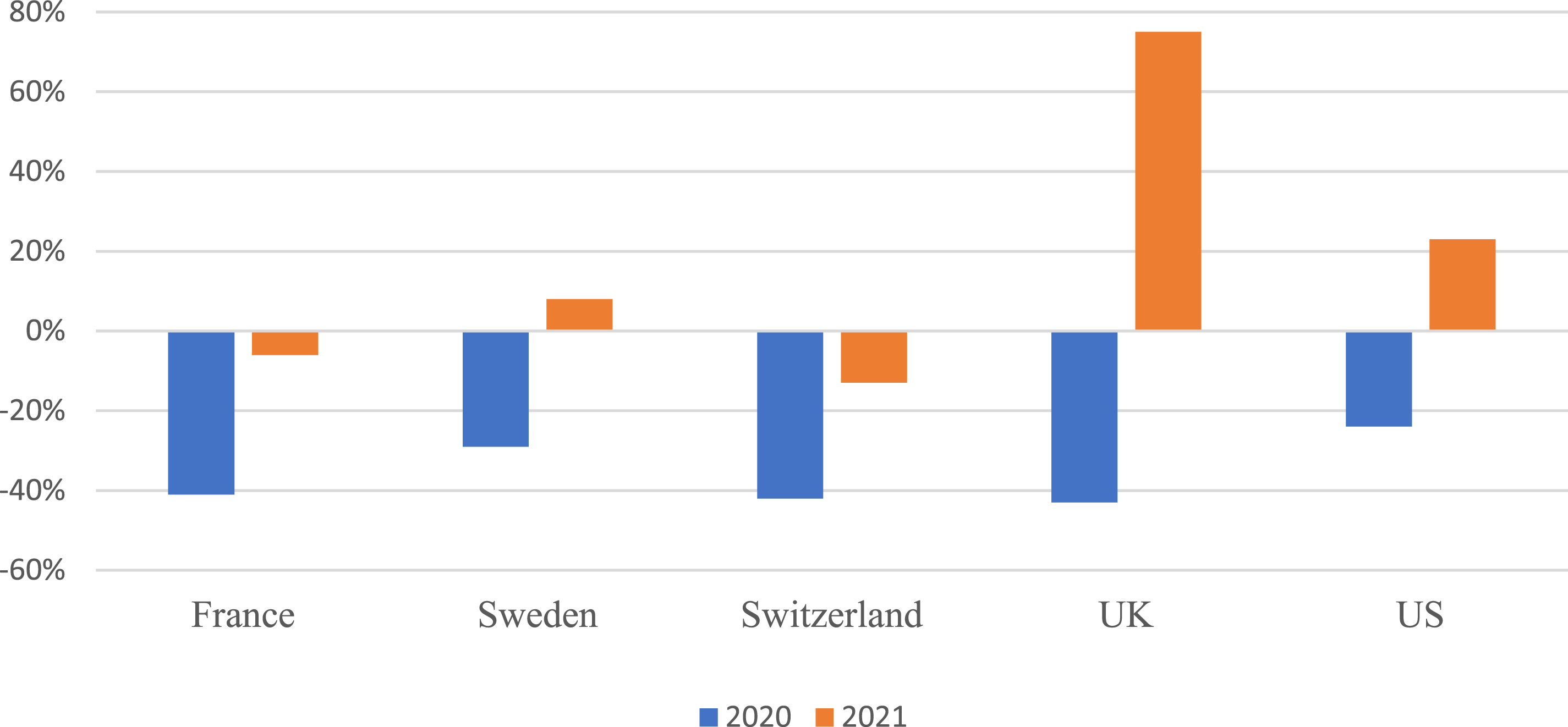
The stringency index (SI) and economic support index (EI) belong to the category of non-pharmaceutical interventions, while the containment and health index (HI) focuses on pharmaceutical interventions aimed at limiting the spread of the virus. As shown in Figure 1, the U.S. primarily implemented lockdown-style and economic support policies, France took a broad-based approach, and the UK focused on restricting mobility and health measures. In contrast, Switzerland intervened minimally, while Sweden emphasized health and economic support measures. These varied policies, which did not specifically target the tourism and hospitality industry, merit investigation to understand their impacts during economically uncertain times. Figure 2 depicts the change in value added by sector in 2020, and Figure 3 provides a detailed analysis of changes in the hospitality sector’s value added between 2020 and 2021. The data indicate that among the different sectors considered in Figure 2, travel and hospitality experienced the most significant economic downturns, during the pandemic. Disentangling the effects of various policies to assess their immediate and long-term effectiveness remains challenging
2
. Growth rates by country and by sector in 2020. Source: Individual countries’ statistical offices. Hospitality sector growth rates by country, in 2020–2021. Source: Individual countries’ statistical offices.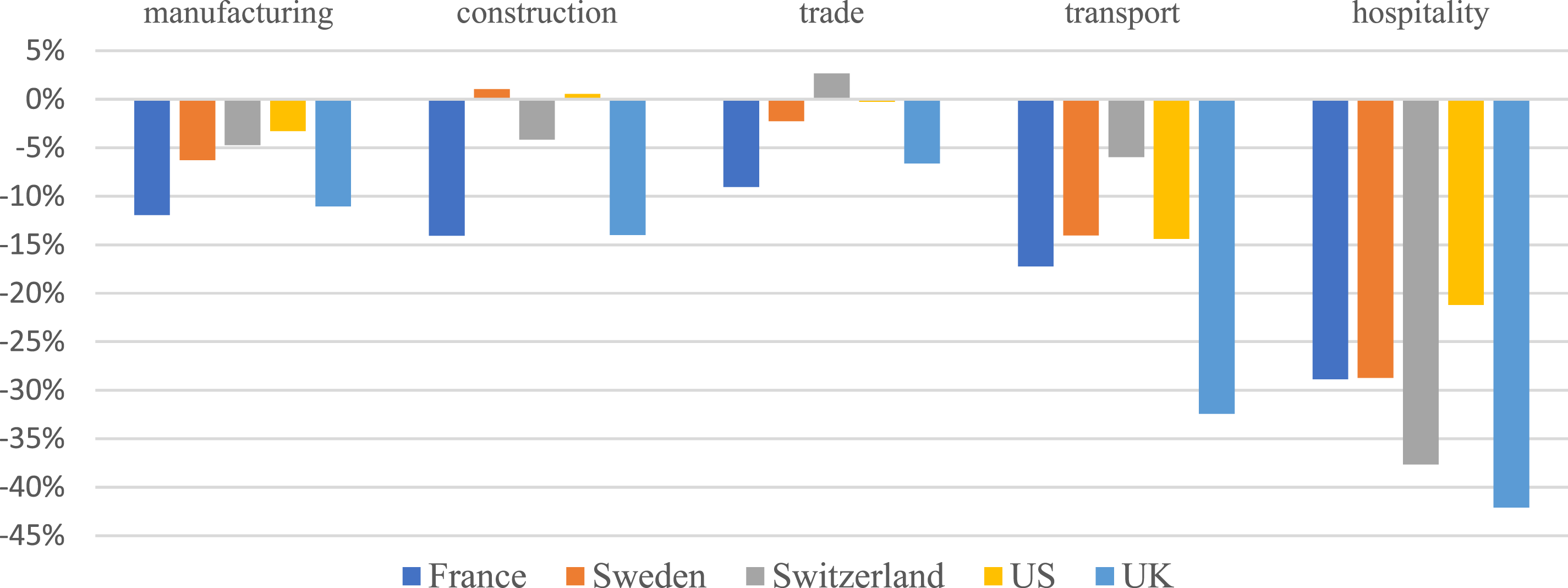
Numerous studies have already investigated the overall economic effects of the policies implemented. However, all these studies have analyzed the individual effects of these policies 3 . Additionally, there has been limited focus on the economic effects of the interventions implemented by various countries worldwide on the tourism and hotel sector. The purpose of this analysis is to fill these gaps and emphasize the importance of considering the interplay between the different categories of policies with a special emphasis on their immediate and longer-term effects. This study examines the impact of combined policy measures specifically on the hospitality industry and seeks to derive a broader understanding of their dynamics that can be applied to future crises.
Employing a panel dataset covering 38 countries from 2020 to 2022, this study investigates the time it took for these combined policies to yield positive effects on the occupancy rate of hotels and identify which policies and policy combinations have proven most effective.
The findings of this study offer a dual contribution to both academic literature and practical implications. Firstly, the contribution of this study consists in allowing researchers to understand how policy tools interact and operate over time, emphasizing that the final outcome of a policy mix is not necessarily the sum of individually considered policies. By analyzing the different policies as components of a complex system, our study highlights how the dynamic interaction among policies affects short-term and long-term outcomes. More precisely, our findings support the idea that crisis innovation policies that drive structural changes yield positive effects over time. On the contrary, cyclical policies tend to produce immediate ambiguous effects that dissipate in the long term. Secondly, for policymakers and scholars in the field, the study’s results provide a valuable roadmap for comprehending the specific measures and strategies capable of effectively mitigating the adverse impacts of crises on the hospitality sector. This research not only underscores the significance of government intervention but also illuminates the potential advantages associated with particular policy choices, thereby advancing the academic understanding of crisis management within tourism and hospitality. It presents vital insights into how governments can play a pivotal role in supporting the tourism and hospitality industry through well-designed policies during future crises. Thirdly, these findings extend their reach to benefit tourism and hospitality professionals by equipping them with the knowledge needed to develop well-informed expectations regarding the consequences of such policies and to craft strategic responses. This knowledge allows them to anticipate how various policy measures may influence their businesses, facilitating more effective preparedness and adaptability. Thus, this research empowers practitioners in the hospitality sector to adopt a proactive stance in response to crisis situations, thereby augmenting their capacity to navigate and recover from these challenges.
The remainder of the paper is organized as follows. The next part provides the literature review and outlines the research questions. This is followed by a description of the data and methodology. The subsequent section presents the results. Finally, the paper concludes with a discussion of the implications, limitations, and directions for future research.
Literature review and research questions
Policy instruments during disasters and other crises and the role of crisis innovation policy
The study of public policy, a dynamic and continuously evolving field, has been enriched by multiple approaches within political science. These approaches provide frameworks for understanding and categorizing policy instruments based on their characteristics. For instance, Dahl and Lindblom (1954) emphasized the degree to which policy instruments are mandatory, while Howlett (1991) focused on the extent to which they are voluntary. Rothwell and Zegveld (1981) categorized policy tools based on their sphere of influence, identifying them as supply-side, demand-side, or environmental interventions. These classifications contribute to a deeper understanding of how governments develop and deploy policies to respond effectively to both routine and extraordinary challenges.
Within the area of public policy, optimal control theory is instrumental in aiding decision-makers to formulate strategies that optimize specific objectives, such as economic performance, public health outcomes, or environmental sustainability (Weber, 2011). It achieves this by considering the constraints and dynamic relationships inherent in societal systems. By structuring problems through state variables, control variables, objective functions, and dynamic equations, optimal control theory provides policymakers with a systematic way to evaluate potential outcomes and select the most effective interventions. State variables represent the system’s current status, such as economic indicators, population health metrics, or environmental conditions. Control variables are the policy tools or actions that influence these states, such as tax rates, healthcare spending, or regulatory measures. The objective function quantifies the desired goal, whether it is maximizing economic growth, minimizing infection rates, or reducing pollution levels. Dynamic equations then describe how the state variables evolve over time in response to these controls and other factors, while constraints account for the limitations within which the system must operate.
Optimal control theory has been applied across various domains of public policy. The area of public health has also greatly benefited from this approach, particularly during the COVID-19 pandemic. The pandemic’s unprecedented challenges required policymakers to balance the trade-offs between public health measures and economic impacts. For instance, Caulkins et al. (2021) analyzed the optimal intensity and duration of lockdowns to effectively manage the spread of COVID-19, balancing public health goals with economic costs. The research underscored the importance of dynamically adapting policies as conditions evolved, such as the emergence of new variants or changes in public compliance. This dynamic approach ensured that interventions remained effective over time, demonstrating the flexibility and robustness of optimal control theory in managing complex and evolving crises. Similarly, Perkins and España (2020) utilized optimal control analysis to explore various social distancing strategies aimed at controlling COVID-19 transmission. Their research highlighted the trade-offs between the intensity and duration of interventions and their economic impacts, providing insights into how optimal control policies can inform public health decisions in the U.S. However, their studies primarily focused on lockdown measures and did not address other significant policies, such as economic stimulus programs. Additionally, their analysis was limited to a single country rather than comparing strategies across multiple nations.
On the other hand, in economics, the primary policy responses to crises are monetary and fiscal measures, which typically involve tools such as taxes, subsidies, and interest rates (e.g., Inchausti-Sintes and Pérez-Granja, 2022; Liang and Liu, 2025). Within the economic literature, dynamic stochastic general equilibrium models (DSGE) have been employed to evaluate the effectiveness of policies aimed at managing economic and financial crises (Kydland and Prescott, 1982; Long and Plosser, 1983). During the COVID-19 pandemic, government interventions expanded beyond traditional economic measures to include significant encroachments on individual liberties, such as lockdowns and health measures, like testing and vaccinations. This shift raises questions about the optimal design and effectiveness of these policies in disaster scenarios, which involve not just achieving goals but also reassuring the population (Du and Lu, 2023; Fossati and Trein, 2023). The impact of institutional environments and cultural backgrounds also plays a crucial role in policy choices (An and Tang, 2020; Yan et al., 2020).
As Gross and Sampat (2021) point out, COVID-19 revealed just how important innovation is when it comes to responding to a crisis. Traditionally, innovation has been considered an engine of economic growth during times of peace. On the contrary, crisis innovation policies are the response to sudden and unpredicted shocks that require urgent interventions through R&D and technology. One of the first examples of crisis innovation policies was the Manhattan Project during World War II, when the United States mobilized huge amounts of resources to meet wartime R&D needs. Moscona (2024) analyzes how crisis innovation policies in response to an environmental catastrophe in the 1930s, the American Dust Bowl, affected agricultural technology development in the following years. The outcome showed that the endogenous technological progress that is made in response to a disaster is immensely important. Kantor and Whalley (2023) quantify the long-term economic effects of the investments in R&D made by the U.S. in the 1960s to beat the Soviet Union in the race to the moon. These investments can also be considered to be the result of a crisis innovation policy, as the Americans scrambled after the launch of Sputnik, the first satellite launched into space, in 1957. In fact, just a year later NASA was born. Their findings suggest that U.S. policy produced long-term economic effects quantified as a social rate of return on public R&D that exceeded 20%.
Crisis innovation policies can be developed using different tools and approaches, depending on the specific needs of the crisis. During the 2008 financial crisis, innovation policies primarily focused on new regulations and requirements to enhance financial stability. In contrast, during the COVID-19 pandemic, these policies have been characterized by significant investments in vaccine development.
Effects of COVID-19 and containment policies on aggregate economic activity
Economics studies have primarily assessed the overall economic effects of policies implemented during the pandemic, focusing on the aggregate economic effects of different types of policies considered individually. Demirgüç-Kunt et al. (2021b) focused only on non-pharmaceutical interventions and found that in Europe and Asia they led to an average 10% drop in economic activity, using data on electricity, emissions, and mobility. Early implementation of these measures, however, correlated with better health and economic outcomes. Another study by the same authors (2021a) showed that in Europe and Central Asia, countries that reopened gradually experienced stronger economic recoveries than those that reopened quickly. Additionally, countries that waited until after the pandemic peaked to lift restrictions saw better economic results. Governance also influenced recovery, with higher trust-in-government linked to more robust economic rebounds after restrictions were eased. Deb et al. (2021) used high-frequency data from 52 countries to analyze the impact of fiscal policies on economic activity during COVID-19, finding that policy effectiveness varied with country-specific factors such as development level and public debt. Another study by Deb et al. (2022) on 46 countries revealed that increases in vaccine distribution positively affected the economy, evidenced by changes in emissions and mobility indices. However, the positive impacts were moderated by the strictness of containment measures and the severity of the outbreak. Similarly, Arias et al. (2023) used Belgian data to assess the effects of lockdown policies, finding a minor trade-off between health and economic outcomes; stricter interventions had significant health benefits with minimal economic costs.
The studies mentioned above provide insight into how different national policies affected their economies, yet they have limitations. They did not comprehensively examine the relative impacts of the combination of policies implemented and were focused only on specific countries or regions. Our study seeks to overcome these shortcomings by using a single model to analyze a wide range of policies and their effects across various nations, enabling a deeper understanding of policy impacts.
Effects of COVID-19 on tourism and hospitality and government strategies to facilitate recovery
The profound impact of COVID-19 on the tourism and hotel industries is well-documented. Milesi-Ferretti (2021) examines the pandemic’s impact on economic growth, particularly focusing on the relationship between tourism activities and GDP in a broad panel of countries. He highlights how countries dependent on tourism revenue experienced disproportionate economic shocks compared to those with significant expenditures on international travel. His study shows that the “travel shock” led to notable current account contractions in countries with large tourism sectors and establishes a strong correlation between the weight of tourism in a country’s GDP and economic decline. Additional factors influencing GDP contractions include a country’s development level, COVID-19 mortality rates, and the stringency of policy responses. Furthermore, numerous studies (e.g., Arabadzhyan et al., 2021; El-Said et al., 2023; Kaczmarek et al., 2021; Marco-Lajara et al., 2022) have emphasized how the effects of COVID-19 have not just affected short-term operational performance but also have led to long-term shifts in corporate culture and managerial practices. Nevertheless, research remains limited on the effectiveness of governmental policies designed to mitigate these impacts. Consistent with the above-mentioned findings, Khalid et al. (2021) discovered that the scale of economic stimulus packages introduced by governments globally is directly correlated with the size of the tourism sector. Furthermore, their results demonstrated a positive association between the size of the tourism sector and both fiscal and monetary policy responses to the pandemic. Litvin (2024) looks at the correlation between lockdown-style measures and occupancy rates for the 50 US states and finds a negative correlation between policies that limit people’s mobility and hotel performance. Li et al. (2023) use a System Dynamics (SD) model to evaluate COVID-19 policy responses in Cambodia. The model tests how various interventions (e.g., quarantine, travel bans) affect both virus transmission and tourism development over time. Among all scenarios, quarantine policy emerges as the most effective in balancing public health and economic objectives.
Koçak et al. (2023) examine the impact of COVID-19-related factors, such as case numbers, deaths, global fear, and government responses, on Turkey’s tourism industry. Like the present study, they compare the effects of various policy measures; however, their analysis is limited to Turkey and focuses on the financial market reactions of tourism firms, rather than on real economic outcomes. The results show that new cases, deaths, and fear indicators negatively affect the industry, while health measures and economic support improve performance. In contrast, strict containment policies have a negative effect. Several studies employ qualitative documentary research with thematic analysis.
Allaberganov et al. (2021) evaluate Uzbekistan’s efforts to revitalize tourism and hospitality. Nyawo (2020) examines support mechanisms for South African tour guides, while Wu et al. (2021) explore Taiwanese government support for tourism stakeholders, utilizing interviews and observational data. Okafor et al. (2022) find that the effectiveness of economic stimulus packages in reviving tourism depends on national resilience. Additionally, Collins-Kreiner and Ram (2021) assess six national COVID-19 exit strategies for tourism, noting minimal implementation of UNWTO recommendations. On the other hand, Wong and Lai (2022) study how residents’ negative emotions and perceptions of governmental actions in dealing with COVID-19 might impact their attitude toward this support. Likewise, Fong et al. (2021) examined the link between the public’s assessment of the Macao government’s epidemic measures and their views on tourism recovery prospects, as well as the psychological factors involved. Hüsser and Ohnmacht (2023) assessed the impact of eight COVID-19 protective measures on the travel intentions of Swiss tourists. Notably, vaccination passports, surgical masks, and quarantine emerged as the most prominent measures, with surgical masks exhibiting the highest acceptance for adoption during travel.
Economic literature has traditionally focused on quantitative assessments of the impacts of COVID-related policies on aggregate economic activity, while tourism studies have qualitatively evaluated support measures for the tourism sector. Although numerous tourism and hospitality studies have addressed government responses to the COVID-19 pandemic, they often concentrate more on public sentiment and support rather than directly assessing the economic effects on the hospitality industry. These studies also tend to have limited geographical applicability and focus narrowly on specific policy types (i.e., either pharmaceutical or non-pharmaceutical interventions). This approach has resulted in a fragmented understanding of the overall impact of these policies and lacks comprehensive insights needed for future policy development. Therefore, this study aims to take a broader approach by linking economic and tourism literature, employing a quantitative methodology to analyze the economic effects of policy measures on the hospitality sector. Because it examines both individual policies and their combined impact, this research seeks to provide a more holistic understanding of policy effectiveness during the COVID-19 crisis.
Despite extensive research on policy effectiveness in disasters and crises, there is a notable dearth of studies examining the joint effects of multiple policies implemented at the same time. The COVID-19 crisis can therefore be seen as a unique opportunity to compare the different policies that have been implemented simultaneously to attack the same phenomenon. As outlined in the introduction, one key area of interest is whether the economic effects of individual policy types align with those observed when multiple policies are implemented simultaneously. This raises important research questions: Does analyzing individual policies in isolation lead to biases or inconsistent results compared to the simultaneous analysis of multiple policy interventions implemented by the government?
Another critical question focuses on the temporal effects of different policy types. Do policies produce varying economic impacts in the short term and the long term? Specifically, do policies that fail to generate structural changes in the economy have a negative economic impact in the short run? For instance, policies that restrict individual behaviors without altering the underlying economic environment, such as those measured by the stringency index (SI), may adversely affect economic outcomes in the short term. When considering these policy types, we hypothesize that their immediate impact is negative due to their lack of transformative economic influence.
In contrast, we expect that crisis innovation policies, which drive long-term and structural economic changes, yield positive effects over time. This brings us to another important question: Do policies that provide economic support to firms (EI) and investments in research for new cures and vaccines (HI) generate significant positive impacts in the medium and long term? These inquiries aim to clarify the differential effects of policy interventions during the pandemic, providing insights into their short- and long-term implications for economic stability and recovery.
Data and methodology
Data and descriptive statistics
The sample used in this study is composed of monthly data for 38 countries over the period from January 2020 to March 2022. Appendix 1 exhibits the list of 38 countries. The occupancy rate (Occ in the table) is the dependent variable that is used to describe the economic activity of the hospitality sector. Data show that room prices (the nominal side of the economic performance) went back to pre-pandemic levels quite quickly. Nevertheless, we study occupancy to emphasize changes in quantities, thus focusing more on the real side of the hospitality economic performance. The independent variables are the three policy indexes that describe the types of government interventions made during the pandemic: the stringency index (SI), the containment health index (HI), and the economic support index (EI). In the descriptive statistics, we also include a fourth index, the government response index, which aggregates the three previous indexes. The three indexes take a value between 0 and 100, with higher values indicating a stronger intensity of the policy. We calculated the monthly averages for these indexes. Among the control variables, we have the average daily rate (ADR), the consumption of electricity, the level of business uncertainty, measured by the business confidence index (BCI), the degree of consumer confidence, measured by the consumer confidence index (CCI), and the number of new covid cases detected.
Performance indicators for the hospitality industry, such as the occupancy rate and ADR, have been sourced from Smith Travel Research, Inc. (STR). The indexes quantifying government interventions have been constructed using data from the Oxford COVID-19 Government Response Tracker, which also supplied information on new Covid cases. Measures of business and consumer confidence have been obtained from the OECD database. Lastly, data on electricity consumption has been extracted from the International Energy Agency database.
Descriptive statistics.
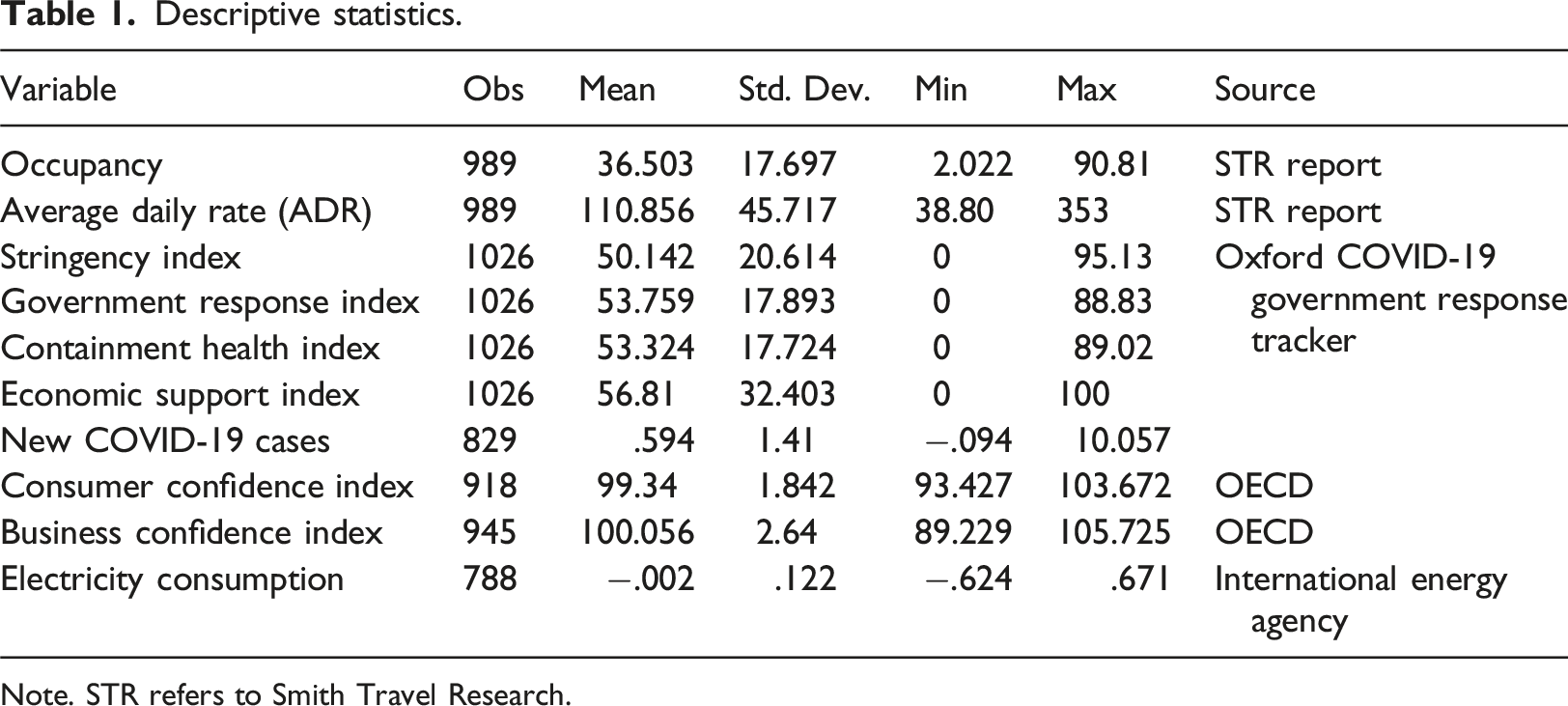
Note. STR refers to Smith Travel Research.
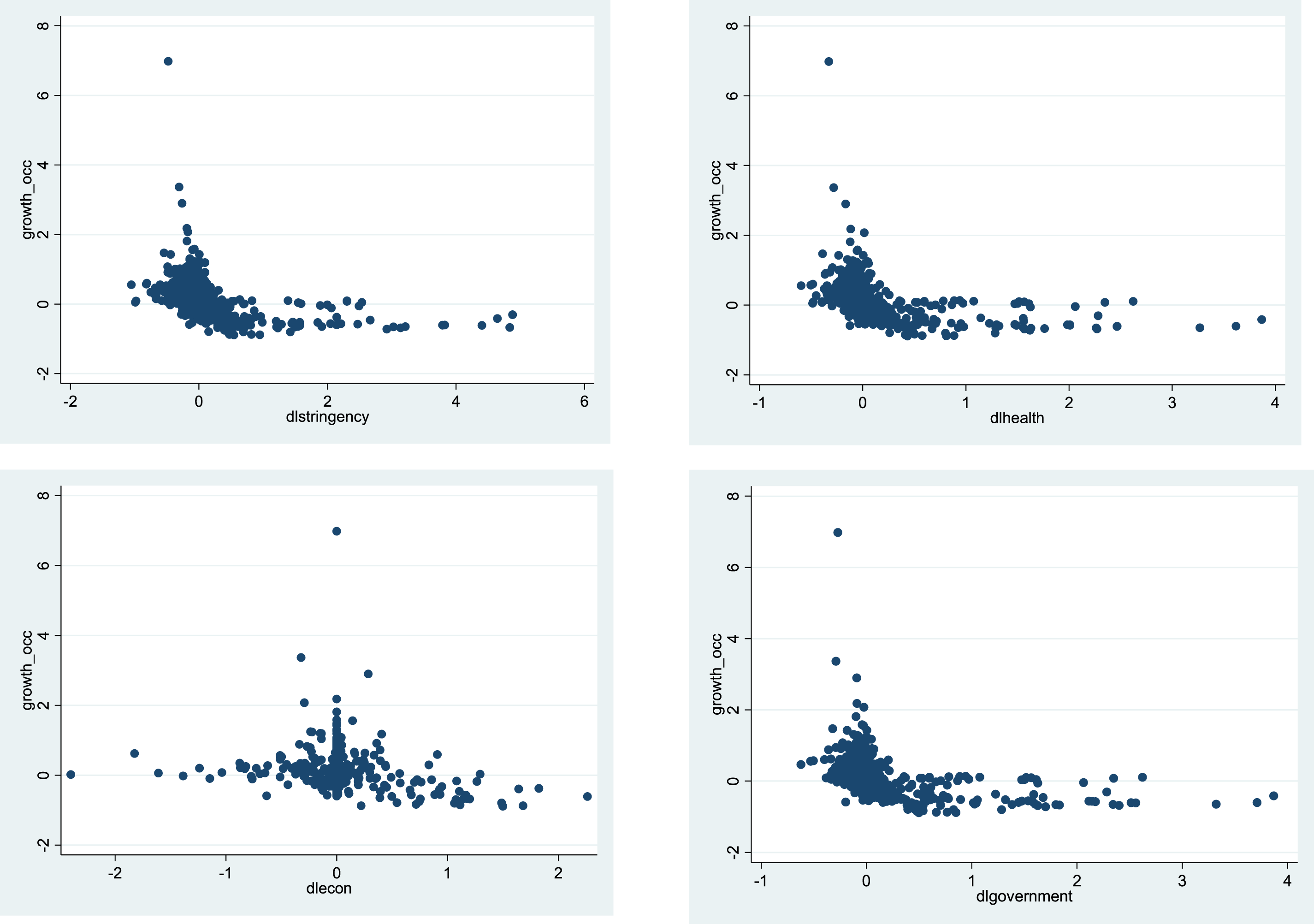
Source: Authors' caclulations. Correlation between occupancy growth rate and the growth rate of the indexes measuring government policies. The four graphs above show the relationship between the occupancy growth rate and the growth rates of the four policy interventions: Stringency index, health containment index, economic support index and government index. The growth rates of the four indexes can be interpreted as changes in the intensity of the intervention. A positive growth rate signals that the intervention is becoming stronger.
Model development
To measure the effects of policy instruments on the performance of the hospitality sector, we conduct two types of exercises. First, we analyze the effects on occupancy growth rate, considering one policy index at a time. To do so, we use pooled OLS regressions (one for each policy index) of the following form:
Additionally, we consider the effects on the growth of the occupancy rate of a portfolio of policies implemented at the same time, and, once again, we look at their effects over time. The specification takes the following form:
Among the control variables, we include the use of electricity. As observed in Cicala (2023) and in Demirgüç-Kunt et al. (2021b), electricity consumption closely mirrors economic activity, especially in the short run. The change in the consumption of electricity is used as a proxy for economic growth: economic activity should be positively correlated with the performance of the hospitality industry, given the well-known procyclical nature of the sector. A second explanatory variable is a change in the number of COVID-19 cases detected. This variable should negatively affect the occupancy rate as an increase in the number of cases implies that more people are confined to their homes when contaminated with the virus. Additionally, this variable can be considered a signal of danger to travelers thus reducing the attractiveness of the destination. As stated by Nowzohour and Stracca (2017), “Sentiment may be used to describe economic agents’ views of future economic developments that may influence the economy because they influence agents’ decisions today.” The economic sentiment can be described through two contrasting dimensions—confidence and uncertainty (Van der Wielen and Barrios, 2020).
This analysis explores the role of uncertainty through the business confidence index and the consumer confidence index, which reflect expectations about future economic conditions and influence current decisions. An increase in these indexes suggests greater confidence among investors and consumers, potentially boosting travel for business and leisure, thereby positively affecting occupancy rates. The consumer confidence index specifically measures consumer perceptions of the economic future, with optimism likely leading to increased spending and higher occupancy rates. Additionally, the Average Daily Rate (ADR) growth rate reflects changes in pricing, where typically, higher prices reduce demand and occupancy. However, factors like a preference for exclusivity or stricter health standards could create a positive correlation between higher ADR and occupancy rates.
Results
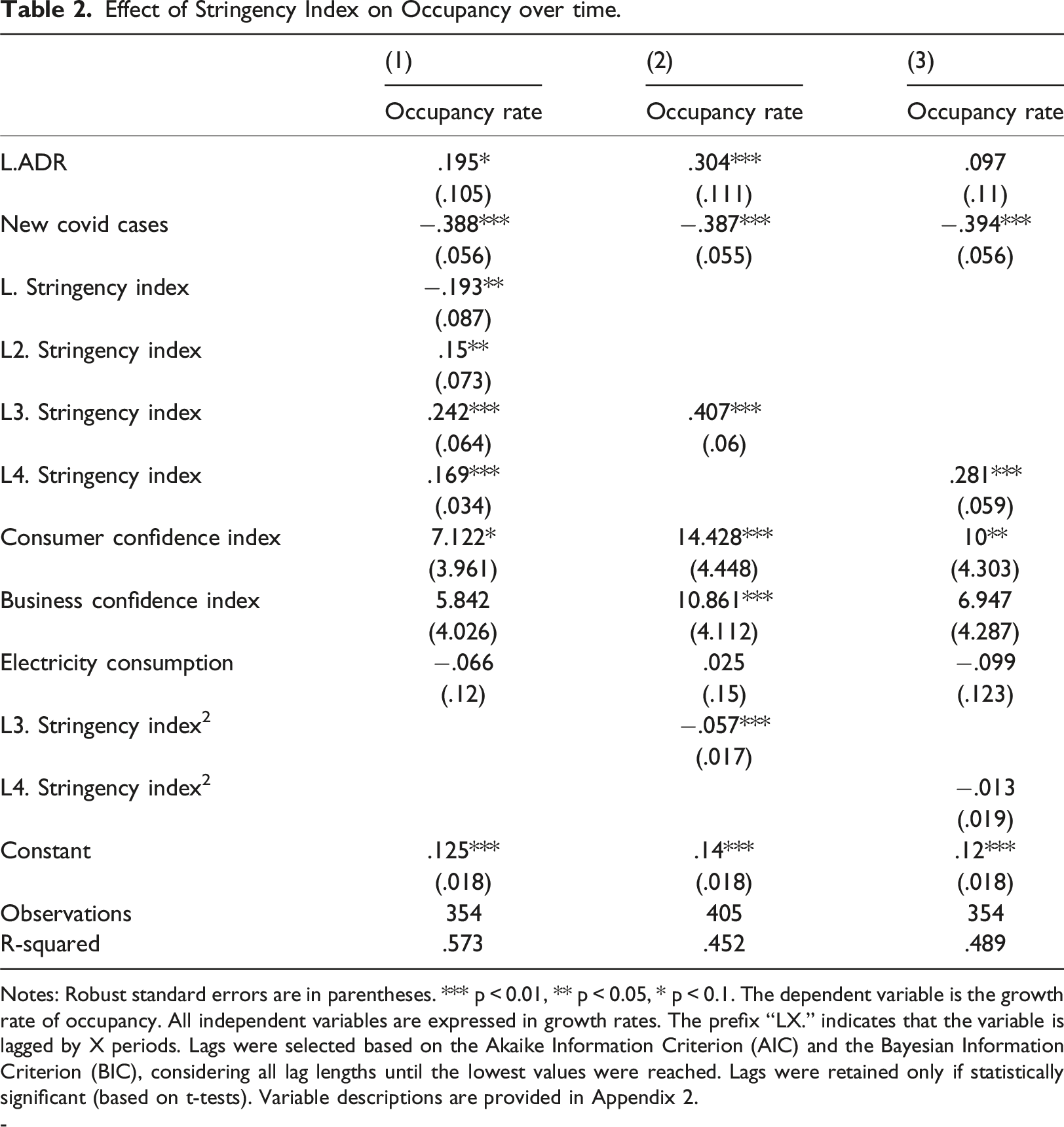
Effect of Stringency Index on Occupancy over time.
Notes: Robust standard errors are in parentheses. *** p < 0.01, ** p < 0.05, * p < 0.1. The dependent variable is the growth rate of occupancy. All independent variables are expressed in growth rates. The prefix “LX.” indicates that the variable is lagged by X periods. Lags were selected based on the Akaike Information Criterion (AIC) and the Bayesian Information Criterion (BIC), considering all lag lengths until the lowest values were reached. Lags were retained only if statistically significant (based on t-tests). Variable descriptions are provided in Appendix 2.
-
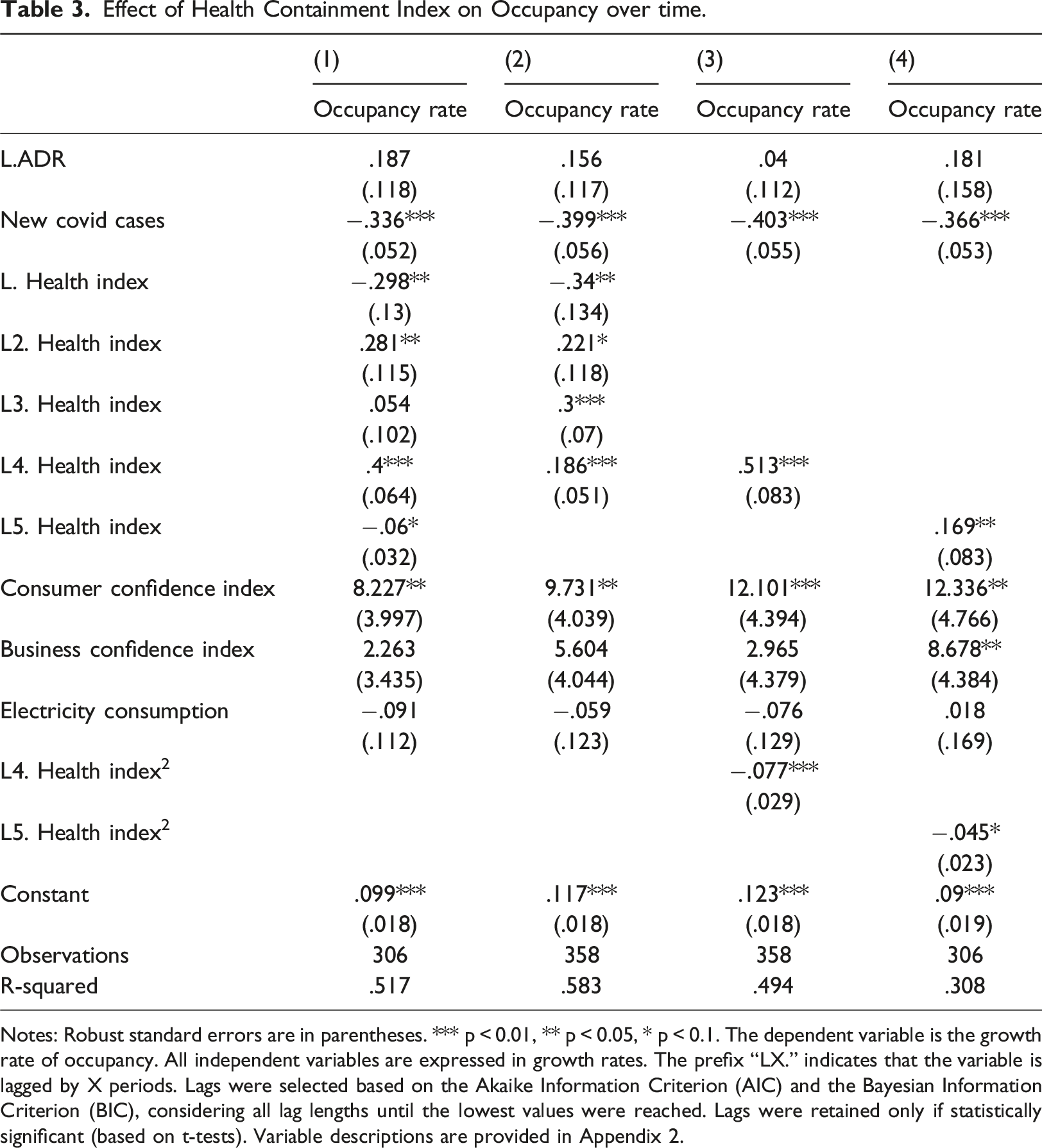
Effect of Health Containment Index on Occupancy over time.
Notes: Robust standard errors are in parentheses. *** p < 0.01, ** p < 0.05, * p < 0.1. The dependent variable is the growth rate of occupancy. All independent variables are expressed in growth rates. The prefix “LX.” indicates that the variable is lagged by X periods. Lags were selected based on the Akaike Information Criterion (AIC) and the Bayesian Information Criterion (BIC), considering all lag lengths until the lowest values were reached. Lags were retained only if statistically significant (based on t-tests). Variable descriptions are provided in Appendix 2.
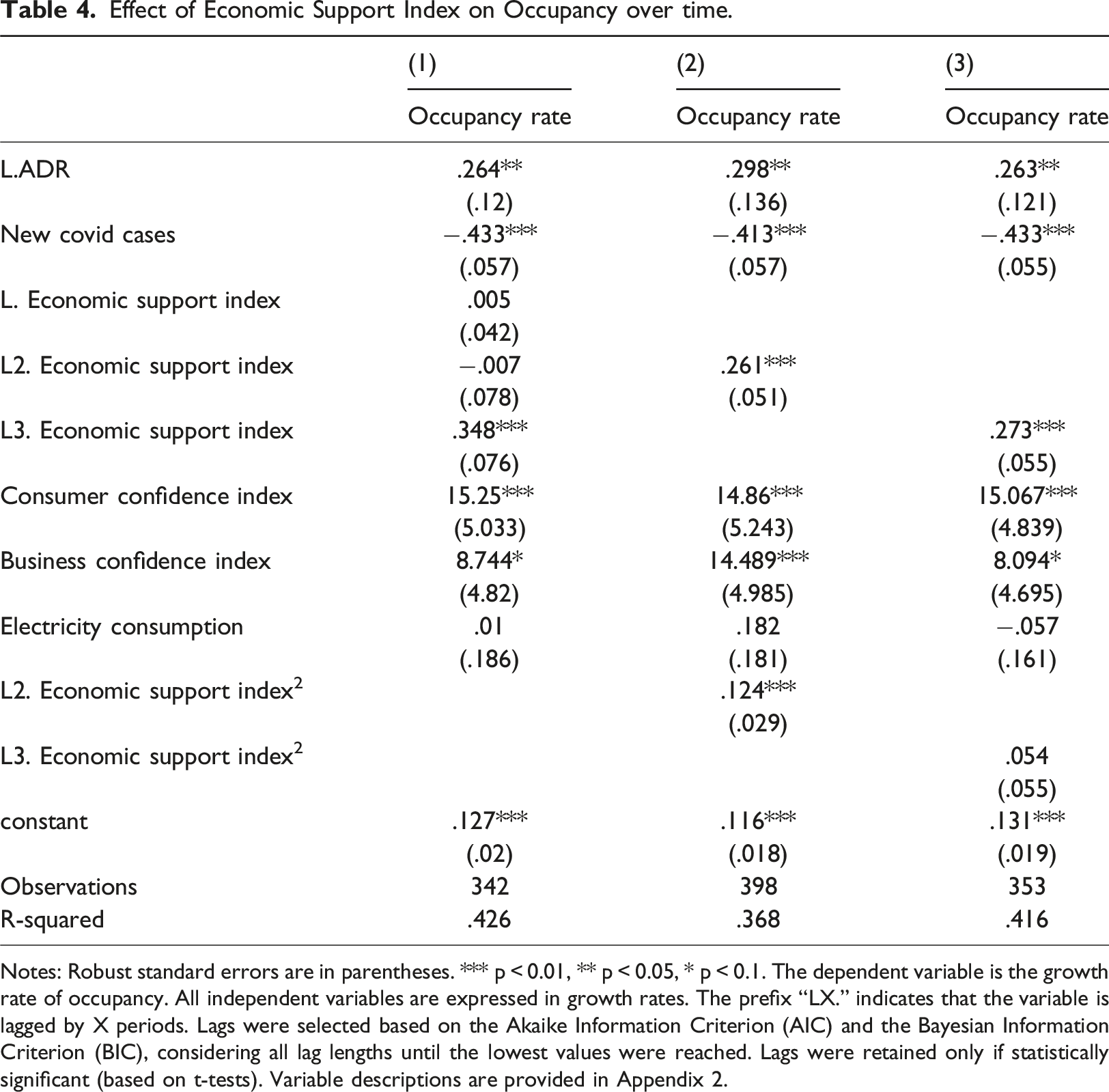
Effect of Economic Support Index on Occupancy over time.
Notes: Robust standard errors are in parentheses. *** p < 0.01, ** p < 0.05, * p < 0.1. The dependent variable is the growth rate of occupancy. All independent variables are expressed in growth rates. The prefix “LX.” indicates that the variable is lagged by X periods. Lags were selected based on the Akaike Information Criterion (AIC) and the Bayesian Information Criterion (BIC), considering all lag lengths until the lowest values were reached. Lags were retained only if statistically significant (based on t-tests). Variable descriptions are provided in Appendix 2.
In the second and third specifications in Table 2, a quadratic term is included: the square of the stringency index with three lags is significant and negative (or concave). This means that after three periods from the implementation, the effectiveness of lockdown-style policies is increasing but characterized by decreasing marginal returns: for low levels of stringency measures, an increase in the intensity of this policy intervention displays positive effects, but these positive effects marginally decrease as the intensity of the policy increases.
Table 3 shows how the health policy measures affect the occupancy rate growth. An increase in the intensity of health measures has a significant and negative impact effect on occupancy, but with time, the impact becomes positive (learning process) until the fifth lag, where it becomes negative and significant again but with a very low effect (coefficient close to 0). As with the stringency index, the health measure also has a quadratic concave impact: For low levels of health measures, increasing its strength produces positive effects, which are nevertheless marginally decreasing with the intensity of the policy. The change in electricity consumption does not significantly affect changes in occupancy.
The same results are obtained when the policy used is economic support (Table 4). Economic support policy takes three periods to produce positive and significant effects. Note that this is the only policy whose main objective is to stimulate the economy directly. Additionally, this policy is convex, meaning that it is characterized by increasing marginal returns: as the intensity of the policy increases, its marginal effects increase as well. Overall, we observe that the strongest effect comes from a decrease in business uncertainty (higher business confidence index) and an increase in consumer confidence with the highest coefficient for all the specifications.
Effect of policy mix on occupancy rate.
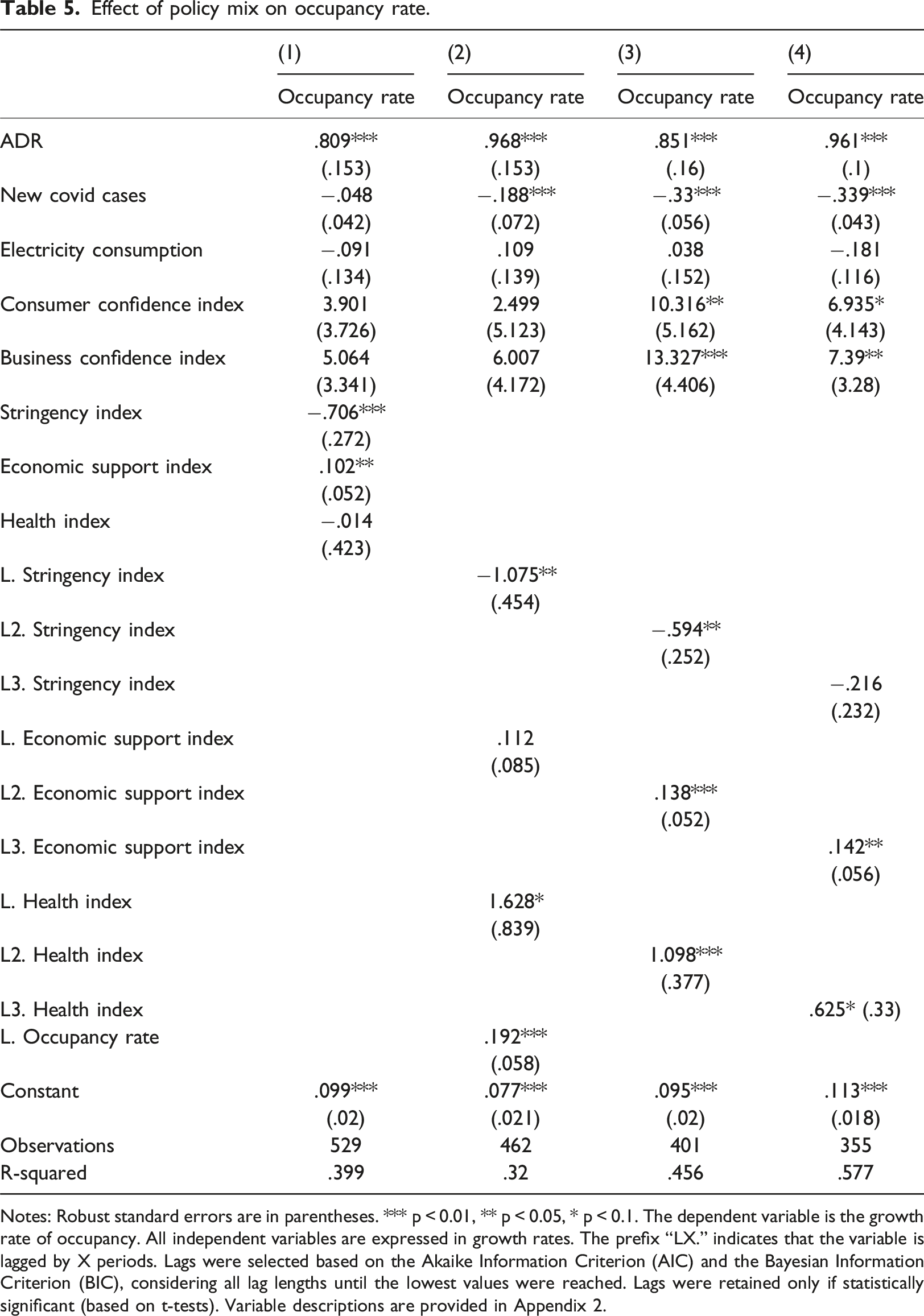
Notes: Robust standard errors are in parentheses. *** p < 0.01, ** p < 0.05, * p < 0.1. The dependent variable is the growth rate of occupancy. All independent variables are expressed in growth rates. The prefix “LX.” indicates that the variable is lagged by X periods. Lags were selected based on the Akaike Information Criterion (AIC) and the Bayesian Information Criterion (BIC), considering all lag lengths until the lowest values were reached. Lags were retained only if statistically significant (based on t-tests). Variable descriptions are provided in Appendix 2.
As far as the control variables are concerned, we observe a highly consistent behavior across specifications. Business confidence and consumer confidence tend to be strongly significant and positive, especially when controlling for the effects of policies after two and three lags. When the policies have been in place for some time, agents (consumers and managers) start to understand their functioning better, thus reducing the level of uncertainty in the system. This phenomenon can be attributed to the dynamics of how consumers and managers perceive and respond to government policies. Initially, when new policies are implemented, consumers and businesses experience uncertainty as they adapt to the changing landscape. Over time, as these policies persist and people become more familiar with their impact, both consumers and managers adjust their behaviors, leading to greater certainty and predictability.
ADR has a positive and significant impact on occupancy. Even if an increase in ADR should lead to a reduction in occupancy, the observed positive correlation might be due to some confounding effects associated with the higher willingness to pay for stricter cleaning and hygiene measures, social-distancing rules and other health-oriented initiatives. In periods of high contamination rates, guests prefer to go to hotels that charge higher prices, believing that there will be fewer guests and consequently less social contact and a lower risk of contamination (Bonfanti et al. (2021)). As a result, it is reasonable to observe a positive correlation between ADR and occupancy.
Covid cases, proxying the gravity of the pandemic, constantly have a negative effect on the occupancy rate. As a variable, electricity, used here as a proxy of overall economic activity, is either insignificant or weakly significant across the different specifications. The typical strong cyclicality of the hospitality sector seems to be weaker during COVID-19. Even when activity in other sectors increases, positive effects are not created in the hotel sector, probably because of government restrictions. Last but not least, we observe some inertia in the occupancy rate growth.
Discussion and conclusion
The COVID-19 pandemic imposed substantial social and economic costs on societies worldwide. In response, governments implemented urgent measures to curb the virus’s spread and stimulate economic recovery. These interventions encompassed restrictions on movement, fiscal and monetary policies, and various social welfare programs. This study investigates the impact of these diverse government policies on the hospitality sector, offering insights into broader crisis management strategies.
This research makes several significant contributions to the extant literature. It serves as an illustrative case that highlights the broader need for researchers and policymakers to adopt approaches that account for the interaction of multiple policies. The findings reveal that analyzing policy interventions simultaneously provides more accurate insights than evaluating them individually. Moreover, the analysis underscores the temporal dimension of policy effects. In the specific case of COVID-19, health measures, such as investments in vaccine development, seem to yield substantial long-term benefits. These results align with prior research, including Deb et al. (2022), that emphasized the sustained efficacy of health-focused policies, and Gross and Sampat (2021), who identified the positive impact of innovation during crises. In contrast, the findings suggest that lockdown-style policies have consistently negative effects when analyzed alongside other measures. This result partially supports Demirgüç-Kunt et al. (2021b) who noted that economic slowdowns are associated with non-pharmaceutical interventions; however, it diverges from Arias et al. (2023) who reported minimal economic costs for similar policies. This study finds that economic support measures consistently demonstrate positive impacts over time, reinforcing the critical role of fiscal interventions in crisis recovery. Interestingly, our findings align with those of Koçak et al. (2023), even though their analysis is focused on financial markets rather than real economic outcomes.
These insights contribute to the literature by emphasizing the importance of policy mixes in fostering structural changes and supporting innovation. The paper expands on prior studies that focused primarily on individual fiscal measures.
Although this study does not directly apply optimal control theory as a mathematical framework for identifying the best possible course of action in dynamic systems, its findings significantly contribute to this domain. By offering a foundation for future research, it facilitates the exploration of dynamic policy design to manage both exogenous and endogenous shocks, such as those experienced during the COVID-19 pandemic. This analysis calls on policymakers to consider ‘optimal control theory’ when responding to a crisis. Indeed, by including state variables, control variables, objective functions and dynamic equations governments can optimize policy outcomes within resource-constrained environments. Furthermore, it underscores the importance of analyzing policies as interconnected systems, thus capturing the complexities and interdependencies emphasized by optimal control theory.
Additionally, the study found that the role of consumer and business confidence is important in shaping the hospitality sector’s recovery. As uncertainty diminishes over time, the decisions of consumers and businesses significantly influence the industry’s performance. Indeed, it is crucial for governments to not only to implement effective policies but also to communicate their rationale and expected outcomes clearly to stakeholders. Transparent communication fosters understanding and confidence, which accelerates recovery and bolsters resilience in affected industries.
The study’s findings suggest actionable recommendations for practitioners in the global hospitality sector, aiding their preparation for and response to diverse policy measures. For example, in countries like the United States, where the focus during COVID-19 was mostly on lockdown-style policies and economic support, hotel managers should anticipate the potential negative effects of these policies and prioritize investment in flexible business models capable of swiftly adapting to changing restrictions. For example, investing in technology and infrastructure to support remote working and virtual experiences can enhance the sector’s resilience in the face of restrictions.
Additionally, given the empirically demonstrated positive impact of government economic support, policymakers should establish contingency plans that include financial support and resource allocation. Hotel managers in countries like the United Kingdom, where the role of health-oriented policies has been particularly important, should be ready to implement strict protocols for hygiene and safety in hospitality establishments to reassure customers and favor the empirically observed positive economic effects associated with those measures. In countries like Switzerland, where government intervention has been particularly minimal, establishments are subject to lighter restrictions but, at the same time, receive less support from the public sector. In this case, Swiss hotel managers should take advantage of the freedom in their country and focus on diversifying tourism offerings to attract local visitors given the lack of international tourists. The positive effects of health measures might encourage local activities to autonomously maintain health protocols and hygiene standards to reassure visitors and sustain consumer confidence in the sector.
Limitations and future studies
It is worth mentioning some limitations of this study, and potential interesting future research endeavors. Given the specification adopted in terms of growth rates, we did not focus on each country’s unique characteristics, which are constant over time. For instance, socio-cultural differences among countries could influence citizens’ attitudes towards government policies and their willingness to travel, thus potentially affecting the operational performance of the hotel industry. Therefore, in future research, it would be beneficial to consider factors that could lead to differences among countries, even when similar policies are implemented. By considering these country-specific characteristics and their evolving dynamics, future studies can provide a more nuanced understanding of how government interventions interact with unique socio-cultural contexts to impact the tourism and hospitality sector. This can lead to a more comprehensive and accurate assessment of the effects of government policies on the tourism and hotel industry.
STR regularly collects and analyzes hotel performance data worldwide, and many academic studies use this data to assess hotel performance. However, in comparison to data from the United States and major chain hotels, performance data for hotels outside the United States, especially independent budget hotels, is relatively less comprehensive. Therefore, future research could explore this topic using data from all hotels within a given country. Additionally, it would be interesting to examine how various COVID-related policies have different effects on different (size, class and location, e.g.) types of hotels.
In this study, we employed three policy indexes that describe various types of government interventions at the national level. However, within a single country, policy interventions can vary significantly at local or regional levels, such as in states or cities, as exemplified by the United States. Future research could conduct a comparative analysis of policy interventions across national, state and local levels. Such an analysis would enhance our understanding of the nuances and impacts of policies that are implemented differently across various jurisdictions.
While this study focused on analyzing how countries responded to the crisis brought about by the COVID-19 pandemic, there is potential for a broader perspective that considers national policies in handling a variety of disaster scenarios. In addition to studying responses to a health-related crisis like a pandemic, future research could investigate how governments react to other types of disasters, such as natural disasters, economic crises or geopolitical events. Such an approach would provide a more holistic understanding of how government policies influence a nation’s resilience and recovery in the face of diverse challenges and crises. It could also contribute valuable insights for policymakers and disaster management strategies beyond the scope of public health emergencies.
Future research could consider extending the scope to investigate how these government policies have exerted varying impacts across diverse industries. Different sectors, such as manufacturing, technology, healthcare, and retail, each possess unique characteristics, operational dynamics, and vulnerabilities. Understanding how these policies have played out in these different contexts could yield a more comprehensive understanding of their effects on the overall economy.
Moreover, considering the specific characteristics of each industry and how they interact with government policies could be a promising research area. Factors such as the reliance on physical infrastructure, the nature of the workforce, supply chain dependencies, and the extent of digitalization can significantly influence how a given industry experiences government policies and responds to them. Investigating these industry-specific dynamics could shed light on the reasons behind divergent outcomes and help tailor policy responses to better suit the particular needs of each sector.
In summary, while this study has contributed valuable insights into the hospitality industry’s experience with COVID-related government policies, there is a broader research landscape awaiting exploration. Future research can broaden its scope to understand the differential impacts on various industries and investigate the nuanced relationships between industry characteristics and policy effects, thus enriching our understanding of crisis management and economic resilience.
Supplemental Material
Supplemental Material - Exploring the impact of policy responses to COVID-19
Supplemental Material for Exploring the impact of policy responses to COVID-19 by Isabella Blengini, Augusto Hasman, and Cindy Yoonjoung Heo in Tourism Economics
Footnotes
Declaration of conflicting interests
The author(s) declared no potential conflicts of interest with respect to the research, authorship, and/or publication of this article.
Funding
This research is funded by the RCSO Economie & Management, project “Economic Effects of Covid-19 and Macroeconomic Policies for Recovery” (N° Sagex 104326; HES-SO) and by the Spanish Ministry of Science and Innovation, project PID2023-149802NB-I00 through MCIN/AEI/10.13039/501100011033.

Supplemental Material
Supplemental material for this article is available online.
Notes
Author biographies
References
Supplementary Material
Please find the following supplemental material available below.
For Open Access articles published under a Creative Commons License, all supplemental material carries the same license as the article it is associated with.
For non-Open Access articles published, all supplemental material carries a non-exclusive license, and permission requests for re-use of supplemental material or any part of supplemental material shall be sent directly to the copyright owner as specified in the copyright notice associated with the article.
