



Abstract
Through a collaborative ethnography told through narratives and a counter-map drawn from Mapuche ontology, we determine how corporate social responsibility (CSR) simultaneously fractures and strengthens the collective identity of an Indigenous community through the mechanism of community benefit sharing. This study reveals how a young Mapuche Indigenous leader, Simón, and his allies underwent the re-rooting and resurgence of their ancestral identity while resisting the construction of a hydropower project and the company’s CSR, as well as their neighbours who supported the project. This study also discusses the emergence of repoliticized spirituality because of the collective identity work dynamics. We propose that this form of spirituality is particularly salient within groups whose ancestors endured colonization. This phenomenon unfolds through a sequence of mechanisms, including collectively reaching breaking points catalysed by external threats (e.g. large-scale projects) that prompt group self-reflection regarding their identity and history. Subsequently, Indigenous communities mobilize to safeguard their ancestral ontologies and spirituality. This, we assert, is a political act. We conclude by reflecting on the social responsibilities of businesses when interacting with Indigenous communities and territories. Managers and policymakers need to comprehend the potential impact of CSR initiatives on the intricate fabric of Indigenous identities.
Keywords
Introduction
At the time of writing in 2023, 1540 conflicts worldwide related to environmental justice involve Indigenous peoples, according to the Environmental Justice Atlas (Temper et al., 2015). The most common means of resolving (Indigenous) community conflicts in the energy and extractive sector are through corporate social responsibility (CSR) strategies, such as dialogue consultations (Ramirez, 2021), partnerships and community benefit agreements (Anaya, 2013; Delannon et al., 2016; O’Faircheallaigh, 2013). Such arrangements position communities as partners of a project who would receive financial payments/royalties and share profits with the project’s operations. In this context, meaningful dialogue and participation are considered to be the best practices and solutions for defusing conflicts and achieving sustainable development with a social licence to operate (SLO) or gain shared value (Bruijn and Whiteman, 2010; Calvano, 2008; Eweje, 2007; Gifford and Kestler, 2008; Idemudia, 2007; Kemp et al., 2011, 2006; Kolk and Lenfant, 2010; Maher, 2022; Muthuri et al., 2012; Newenham-Kahindi, 2011; O’Faircheallaigh, 2013, 2015).
Simultaneously, numerous scholars have conducted empirical analyses of the interplay between marginalized actors and CSR, revealing the intricate dynamics of contestation and accommodation (Chowdhury, 2021; Ehrnström-Fuentes, 2016; Kraemer et al., 2013; McCarthy, 2017; McCarthy et al., 2021; Noronha et al., 2020; Bruijn and Whiteman, 2010). Far from providing examples of successful collaborations, these studies postulated the activation of dynamics and practices that strengthen Indigenous identity with the arrival of new megaprojects with CSR initiatives (e.g. Bruijn and Whiteman, 2010) and highlighted the incompatibility of Indigenous spirituality with CSR (Ehrnström-Fuentes, 2016). These dynamics lead to internal conflict and the fragmentation of the social fabric of the community (Banerjee et al., 2021; Kraemer et al, 2013; Maher, 2019). Therefore, scholars should endeavour to elucidate ontological struggles over land and CSR by examining changes in human–non-human relations owing to corporate presence (Ehrnström-Fuentes and Böhm, 2022). Meanwhile, others have concluded that clarifying CSR’s deconstruction, evasion, subversion and resistance to different geopolitical contextual perspectives is necessary (Kourula, 2022).
Except for Bruijn and Whiteman (2010), most studies on identity in the management and organization studies literature have been undertaken in organizational workplaces (primarily in the Global North). Therefore, this study aims to examine the impact of CSR on Indigenous identity work dynamics during land- and water-based conflicts.
For a theoretical basis, we draw from decolonial concepts overlapping with identity work, including resurgence and re-rooting (Nirmal and Rocheleau, 2019), the political dimension of spirituality (Guerrero Arias, 2011) and concepts from the Mapuche ontology (see Appendix A for a glossary of Mapuche terms we discuss). Notably, when referring to spirituality, we refer to that of Indigenous peoples living in a relational manner with land, water, humans, non-humans and other non-living beings. This notion should not be confused with spirituality in the workplace or as a new-age subculture that is not connected to place in the physical sense. Indigenous spirituality is frequently cited as a motive for resistance to megaprojects (Bruijn and Whiteman, 2010; Kraemer et al., 2013; Maher, 2019). However, to the best of our knowledge, the role of ancestral spirituality within these conflicts is typically relegated to a peripheral focus within existing empirical studies and remains relatively unexplored. This conceptual void constitutes the nexus of this investigation.
To be epistemically respectful of Indigenous and decolonial contexts, we used the collaborative autoethnography approach (Abdelnour and Abu Moghli, 2021; Chang et al., 2013; Smith, 2012) for the purposes of this study. Specifically, the collaboration was between Simón, a young Mapuche leader (selected by his community at the young age of 18 to spearhead the resistance against a hydropower project), and a non-white male academic (who has been acquainted with Simón and other community members since January 2015). The collaboration took place in Simón’s territory. Notably, Mapuche people prefer to speak of territory instead of land, because territory encompasses all forms of interconnected life and relationships occurring within a certain space. Moreover, extensive conversations and reflections were conducted with Nano, a Chilean Indigenous rights colleague of Simón who introduced both authors to one another, and a female ally of Simón from the community who prefers to remain anonymous. Nano helped the researchers reach a consensus on the decolonial perspective. Notably, we attribute most of the article to Simón’s words. Additionally, in line with the ethics on decolonial research, we ensure that this article would be beneficial to Indigenous peoples in general and to Simón’s community and the Mapuche people in particular.
To avoid a navel-gazing type of autoethnographic storytelling (Fernando et al., 2020), we adapted an analytic autoethnography style (Anderson, 2006) that identifies and expands on the concept of (re)politicized spirituality. The main contribution of the study to the literature on CSR in the contexts of resistance and collective identity is the concept of (re)politicized spirituality, which emerges owing to collective identity work in Indigenous groups. In Simón’s words: The proposed hydroelectric project brought many social ills to our territory. However, one of the positive outcomes was the awakening of the spirituality and desire of my family to embrace our Mapuche culture and way of knowing. My family had been converted under the evangelical church. However, the threat of this project made them question this religion (because it encouraged the community to support the company and its CSR initiatives . . .). I cannot complain about the leadership style of the company, because the latest owners have been respectful, polite, accommodating and affable. Their project is also ecologically sound with impressive engineering solutions. In fact, it would have been an underground hydroelectric project, but it would have affected the spiritual harmony in our territory. This aspect can never be negotiated, and this is a concept that these progressive liberal ‘hipster’ leaders can never understand. Don’t get me wrong: we do understand the importance of climate change and clean renewable energy solutions. In principle, we are not against this initiative. The only point is that a few aspects are non-negotiable, such as our Mapuche spirituality.
Our theoretical contention is that repoliticized spirituality naturally emanates as an outcome of concerted efforts towards identity formation within colonized settings in which Indigenous identities had been historically uprooted.
These Indigenous identities are anchored in the varieties of human and non-human relations (living and non-living) transpiring in spaces occupied by their ancestors. We propose that groups undergo the following mechanisms and phases when repoliticizing spirituality: first, breaking points, typically in the form of threats (e.g. the proposed siting of large projects), catalyse the initial process of repoliticizing spirituality for individuals or groups. These threats invite collective reflections within communities, posing questions about their collective history and the injustices suffered by their ancestors. Clarity regarding these questions guides the group on the importance of defending ancestral relational ontologies, that is, spirituality. At the practical level, the group further repoliticizes its spirituality as it ponders discourses and actions in response that are coherent with its (Indigenous) spirituality.
In this case, Simón’s group decided to cease all dialogue with the company and their neighbours who supported the project and its CSR initiatives. Over time, this results in a cohesive, resignified collective identity. The repoliticized spirituality in our case differs from western forms of environmentalism, which we argue is infused within colonial thinking and dynamics. We illustrate an example of repoliticized spirituality through a (counter) map anchored in Mapuche ontology devised by Simón with the input of various Mapuche thinkers and leaders (Figure 1).
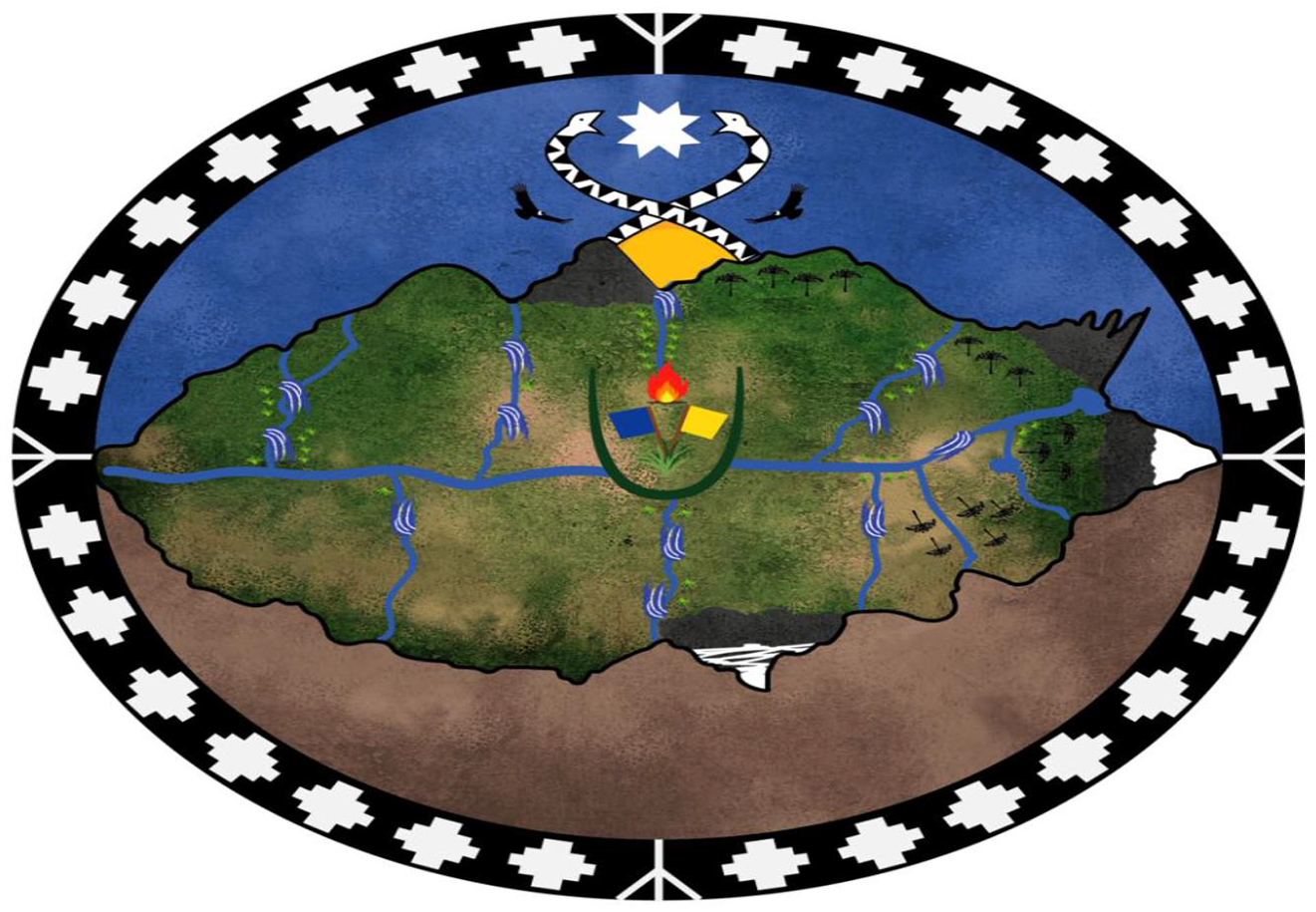
Map of Lof Txankura designed in line with Mapuche ontology.
Moreover, we provide avenues for future research in addition to recommendations for all types of organizations intending to operate and undertake CSR in Indigenous territories.
Our second major contribution to the CSR literature, relates to recommendations regarding the social responsibilities of businesses to listen and learn from Indigenous peoples, such as by behaving with genuine humility. By doing so, representatives from western organizations can recognize and appreciate different realities from a relational ontology rooted in territory and life from pluriversal perspectives, which may lead to a two-eyed seeing approach. This scenario brings together Indigenous and western knowledge systems to address complex issues and promote a balanced, holistic understanding of the world (Bartlett et al., 2012). Notably, dialogue with companies interested in developing extractive projects would not be welcomed in any form, at least in the case of Mapuche communities because such activities would alter the intricate and delicate balance of human and non-human relations within the territory.
One means of achieving a two-eyed seeing approach may be collective (counter-)map making (in line with Kelly, 2021 and Simón’s map illustrated in Figure 1) for educational purposes, which Indigenous groups lead and facilitate for (non-extractive) businesses, conservation philanthropists and policymakers to convey their understanding of their territory within the ambit of diverse existing relationships between humans and non-humans.
As a third contribution and recommendation, we urge managers to assess and take responsibility for the potential impact of their proposed projects on the social fabric and cohesion of Indigenous, marginalized or rural communities. We posit that companies should be held legally responsible for any damages resulting from their attempts to obtain a SLO to the collective harmony and well-being of communities. The following section presents a literature review of decolonial thinking, identity work and collaborative autoethnography.
(De)coloniality and Indigenous identity work
The concept of colonialism is crucial to discuss the identity formation of Indigenous peoples in Latin America. Coloniality outlasts colonialism because it perpetuates the social relations of power (exploitation and domination) in so-called postcolonial states and manifests through people’s self-image and aspirations (Maldonado-Torres, 2007; Quijano, 2000). European colonizers categorized their colonial subjects according to skin tone, creating a continuum from light and superiority to dark and inferiority (Carranza, 2018). European colonizers initially questioned whether or not the Indians even had souls (Quijano, 2000).
This logic of racialization justified the violent dispossession of the lands of Indigenous peoples that continued through modernity (Hernandez-Carranza et al., 2021). It is considered that the ‘European epistemological and ontological framework rooted in ideas of newness, rationality, secularism and the glorification of epistemic and economic linear progression [. . .] fueled the imperial conquest’ (Hernandez-Carranza et al., 2021: 1520). Such relational ontologies break the dualism and divisions between nature and culture, individual and community, and us and them that are core to modern ontology or modernity: ‘the cultural, political, and ecological consequences of taking relationality seriously are significant; relationality refers to a different way of imagining life (socio-natural worlds)’ (Escobar, 2010: 4). Thus, modernity depoliticizes Indigenous ways of perceiving and living (Ehrnström-Fuentes and Böhm, 2022; Evans et al., 2013).
Influenced by the Christian Bible, modernity holds a core belief that nature must be used and transformed for the betterment and advance of mankind, justifying extractive industries such as mining, oil, forestry and hydropower. In this sense, despite its good intentions, CSR can be interpreted as a continuation of colonialism, modernity and colonialism, which obscures ‘other’ non-modern (Indigenous) ontologies (Ehrnström-Fuentes and Böhm, 2022). During participatory instances within CSR, companies handpick groups, especially those regarded as non-radical and non-disruptive, to engage in dialogue (Blaser, 2010).
However, Indigenous groups have demonstrated agency in recent decades by defending their territories from the imposition of extractive projects (more than 2200 of such environmental conflicts exist in rural populations according to the Environmental Justice Atlas as of January 2023). In essence, an incommensurability exists between understanding and the values assigned to the economy, ecology and culture of modern (extractives projects) and Indigenous groups, with the latter defending ecology, cultural identity and their livelihood (Escobar, 2008).
Fanon (1961: 44) stated that land is the ‘most essential value for colonized people as it “will bring them bread and, above all, dignity”’. A popular and recurring strategy used by colonizers was educating and co-opting select natives who could then become elites within the native community and transmit the colonizers’ language, thoughts and ideas. A core logic, built on the idea of individualism propagated to the colonies, was individualism, which promoted a breakdown in communal life as it is only through community that colonized subjects can achieve decolonialism (Fanon, 1961).
Decolonialism is a useful concept for understanding how Indigenous peoples confront colonialism and modernity. Mignolo and Walsh (2018: 17) describe decoloniality as ‘a form of struggle and survival, an epistemic and existence-based response and practice – most especially by colonized and racialized subjects – against the colonial matrix of power in all of its dimensions, and for the possibilities of an otherwise’.
Decoloniality is understood as the process of recognizing other histories, trajectories and ways of being in the world, especially those differing from the rational logic of contemporary capitalism as a cultural expression (Achinte, 2013). Decolonialism contributes to a more humanizing existence than that offered by colonialism and restores dignity to those relegated as inferior or non-human by modern, colonial hegemonic projects.
Decoloniality is relational and can be understood as an everyday practice, process and project of planting, nurturing and spreading the idea of a potential alternative form of existing (otherwise known as r-existence) within the margins, cracks, borders and spaces between the structures supporting modern/colonial/capitalist hegemony (Mignolo and Walsh, 2018).
In management and organization studies, the concept of identity work can be used to discuss the resurgence or strengthening of identity in decolonial settings. Identity work broadly refers to the manner in which individuals discursively intend to manage multiple intersecting identities and, specific to this study, remediate identity threats (Fernando et al., 2020; Sveningsson and Alvesson, 2003). Identity work escalates and becomes increasingly intense at the points of (potential) conflict in which ‘strains, tensions and surprises are prevalent’ (Brown, 2015: 25). According to Sveningsson and Alvesson (2003), identity work answers the questions of ‘who am/are I/we?’ and ‘what do I/we stand for?’
When successful, identity work can lead to a coherent and less fragmented identity (Sveningsson and Alvesson, 2003). Whether identities are fixed, fluid or malleable remains an ongoing debate. However, when competing demands exist, people attempt to reduce contradictions and inconsistencies in their identity (Brown, 2015). Although identity work occurs in the present, it is ‘connected strongly to past remembered and future projected selves’ (Brown, 2015: 24).
Studies on management and organization clarified the temporality and processes of identity work, primarily derived from an individual–self unit of analysis and in the work context within western organizations (Creed et al., 2010; Fernando et al., 2020; Lemmergaard and Muhr, 2012; Kreiner et al., 2006; Watson, 2008) rather than ancestral heritage and (de)colonial processes in land-based settings.
Land and nature frequently play a fundamental role in the collective identity of Indigenous peoples, many of whom regard themselves as ‘relatives of the land’ (Whiteman and Mamen, 2002). Thus, Indigenous identity is a complex, multifaceted topic (Weaver, 2001). According to Weaver (2001: 247), ‘Indigenous identity is connected to a sense of peoplehood inseparably linked to sacred traditions, traditional homelands, and a shared history as Indigenous people’, which is practised via traditional land uses such as hunting or agriculture (Bruijn and Whiteman, 2010; Escobar, 1995).
Indigenous group identity becomes increasingly cohesive during periods in which members perceive a threat to their shared culture (Bruijn and Whiteman, 2010) or territory (Ehrnström-Fuentes, 2022). Upon the launch of extractive projects in their territories, Indigenous communities undergo the processes of identity work and successfully prevent the siting of these projects.
Attachments to place and territory play a key role in determining which actors participate in struggles against extractive projects (Ehrnström-Fuentes, 2022). Thus, this study draws on Escobar’s (2015: 98) understanding of Indigenous relational ontologies with human and non-human relations as ‘intangible and nonintangible cultural heritage, humans, nonhumans and supernatural or spiritual are integral parts of these worlds in their multiple interrelationships in relational ontologies’. In contrast to western ontologies, ‘within Indigenous worldviews, there is no separation between people and the land. Place shapes Indigenous people’s lives and everyone else’s too. The land is home. The land is in us. The land is us’ (Baskin, 2016: 52–53).
The concept of resurgence is related to identity work and positioned in the decolonial literature as a pathway for practising decolonial de-growth (Nirmal and Rocheleau, 2019). The key to identity resurgence is the process of re-rooting, involving the ‘strengthening of existing roots, reestablishing rootedness in lost and recovered places, or establishing new roots of uprooted, displaced or new cultures in new spaces’ (Nirmal and Rocheleau, 2019: 472). Re-rooting practices help ontologically and materially connect people to land, water, people and other entities that, in turn, create territories and worlds. In these territories: . . . [the] landscape is actively produced and sustained through shared, intentional socioecological praxis. Rather than taking territory, this is ultimately about reweaving worlds and restoring relations broken or threatened by capitalist/colonial interventions. While disentangling ties from neoliberal capitalism, people reconnect, on new terms, within and between communities, in place and across distance. (Nirmal and Rocheleau, 2019: 473)
Visual community participatory methodologies, such as map making, comprise a potential avenue and tool for decolonizing in Indigenous territories (McCarthy and Muthuri, 2018). Map making is especially pertinent to a Mapuche community (Kelly, 2021). Collaborative map making can serve as a form of decolonial learning by revealing the spatial patterns of dispossession and aiding in self-determination processes (Iconoclasistas, 2013; Kelly, 2021).
As a political dimension of the organization of Indigenous peoples, the suppression of spirituality by colonization was continued by contemporary coloniality. As in the vignette presented earlier, for Indigenous peoples, spirituality is interwoven with politics and leadership. Therefore, we contend that Indigenous peoples need to repoliticize spirituality and social movements, that are mainly focused on structural changes also need to embrace the re-politicization of spirituality. Spirituality is thus the key missing component for achieving genuine change in society towards interculturality and buen vivir (good life; Guerrero Arias, 2011). This study aims to tell the story of decolonial identity formation or resurgence through re-rooting occurring within CSR and community cohesion dynamics. To avoid epistemic blindness (Banerjee, 2018) and overcome ‘epistemic coloniality’ (Escobar, 2020; Ibarra-Colado, 2006), we present in the following section a non-exhaustive overview of Mapuche ontology and cosmovision, focusing particularly on community organizing and territory.
Mapuche thought, and cosmovision
In Mapudungun/Mapuzungun (the Mapuche language), Mapuche means people from the earth/land. Mapuche thought and knowledge are referred to as Kimün in Mapudungun/Mapuzungun. Kimün comprises Mapuche scientific knowledge underpinning being, life, death, life in the afterworld, biology, botany, chemistry, mathematics, physics, cosmology and philosophy. A central tenant of Mapuche philosophy is that life never ends; it takes the form of a circle, transforms and is permanently cyclical. Kimün is acquired through Inarrumen, the observation of nature (Huaiquinao, 2003).
In Mapuche ontology, spirituality is closely related to newen, which signifies energy or strength. All nature is considered newen – for example, rivers, mountains, volcanoes, animals and birds (Huaiquinao, 2003) – denoting the sanctity of nature in Mapuche ontology. Ngens are spiritual deities of nature whose purpose is to preserve life and avoid overexploitation to achieve balance and the continuation of natural phenomena. This goal is achieved through reciprocity between humans and the ngen, and the almighty supreme being deals out punishment to those who fail to respect harmony and the preservation of ecology (Grebe, 1993).
Ngen-ko, the spirit guardian of ‘water in motion’, states that for water to have life, it should be in constant flow, because the waters govern rainfall that, in turn, fertilizes the land. Moreover, water requires wild vegetation around it; if this aspect is not present, the ngen will leave the water. To gain access to an element protected by a ngen (such as water or the forest), a Mapuche person must enter a respectful dialogue with the ngen, ask permission for a reasonable amount of that resource, and justify their need for it (Foerster González, 1993; Grebe, 1993).
The Mapuche view and understanding of the world is based on their self-view as an integral part of nature and the spirit world (ixofil/itrofill mongen); that is, they are neither separate from nor superior to it. In this sense, the Mapuche belief system is relational to humans and non-humans.
Mapuche philosopher Jorge Weke posited that ‘itro’ is a composition of many lives simultaneously sharing the same space (i.e. multiversity). The term ‘fill’ denotes that all living beings have their own lives but interact with one another and are interdependent (i.e. pluriversality). Therefore, millions of tiny lives maintain all life, comprising one large life. In Mapuche, kimün, the visual perception of the itro fill mogen is circular and horizontal at the same time. Additionally, Küme Mognen, akin to buen vivir, proposes a life in equilibrium among society, nature and spirituality. Küme Mognen is a right of all lives (Endémico, 2017). For the Mapuche culture, the whole is not a simple sum of its parts but a complex network of relationships (Huiliñir-Curío, 2018).
In Mapuche logic and law, known as Az Mapu, the world is ordered differently from that of the West. In the West, the north is the key reference for ordering spatial geometry. For the Mapuche, the most important direction is puel (the east) because the sun rises from the east and provides energy and life. In this sense, the Mapuche view the Andes Mountain chain and Argentina as their north. The Mapuche economy was initially based on a gatherer and protective economy of the environment and habitat, wildlife, horticulture and hunting only for food (Consejo Nacional de las Culturas y las Artes, 2012). Evidently, this notion changed over time, especially with the military annexation of Mapuche lands into Chilean territory in the 19th century. The following quote illustrates the relational perspective of the Mapuche with non-human beings: We know what the animals say and what their needs are – deer, birds, and other animals. Chileans have been on Earth for a short time and know very little about plants and animals. We live here for thousands of years and the animals taught us and passed on their knowledge from family to family. (Consejo Nacional de las Culturas y las Artes, 2012: 19)
Once Wallmapu (a Mapuche territory in Mapudungun) was annexed into Chile in the 1860s, the Chilean state dispossessed the Mapuche of most of the land and set aside reservations that covered 5% of the total land mass in Wallmapu to the Mapuche, a pledge that many considered ungenerous and remains unfulfilled today. This historic debt helps explain the reasons for the regular violent attacks in Wallmapu against the forestry industry and large-scale settler–colonial farmers, including those against planned hydropower projects. Simón comments on the uniqueness of the Mapuche ontology in territorial contexts (land-, water- and nature-based conflicts) as follows: The Mapuche worldview is much more wholesome; it incorporates politics, spiritual beliefs, cultural beliefs and ideologies, all of which helps to form resistance in certain spaces where socio-environmental conflicts in many territories have led to the awakening of a spiritual and Indigenous identity. This is why it is so important to have a clear identity and discourse for cultural and social elements to avoid falling into the typical pitfalls of the ‘environmental discourse’ and ‘cheap activism’. By cheap activism, I refer to activists who support our cause of protecting the environment from projects but do not recognize our spirituality. I see this contradiction as a colonial form of environmental activism, because these activists do not believe that we, the Mapuche, are capable of protecting and conserving elements of nature such as rivers or parks. They should know that our cosmovision is not only a form of poetry; it has existed for millennia! I become extremely annoyed with these hippie activists because they dismiss our faith, which is wrong. Instead, we search for a deeper sense of attachment to the territory from a Mapuche sentiment. However, this must be accompanied by a political formation and maturity in the territories and by leaders . . . it’s complex!
Methodology of decolonial collaborative autoethnography
Referring to qualitative research, Denzin and Lincoln (2008: 5) stated that, ‘sadly, qualitative research in many, if not all, of its forms (observation, participation, interviewing, ethnography) serves as a metaphor for colonial knowledge, for power, and for truth’. When Indigenous peoples become researchers instead of subjects, the research activity is transformed. Specifically, when Indigenous peoples lead research and writing efforts, questions are ‘framed differently, priorities are ranked differently, problems are defined differently, [and] people participate on different terms’ (Smith, 2012: 193). Thus, co-authoring with Indigenous authors entails the redistribution of power between researchers and participants. These collaborative texts can be approached through interactive interviews, community autoethnography or co-constructed narratives written by two or more authors (Ellis and Adams, 2014; Denshire, 2014; Ellis et al., 2011). Autoethnography offers the possibility of interrogating dominant theoretical positions and hegemonic paradigms and pursuing social justice ambitions (Denzin, 2003; Holman Jones et al., 2016).
Ideally, autoethnography should urge others to take ethical action (Denzin, 2013). From a normative standpoint, politically reflexive and autoethnographical research should enable marginalized people to express ideas, philosophies and traditions in their language (Abdelnour and Abu Moghli, 2021; Smith, 2012) and be conducted with the ‘explicit goal of supporting the liberatory ambitions and struggles of peoples devastated by colonization’ (Abdelnour and Abu Moghli, 2021: 17). Moreover, ‘emancipatory, or critical, autoethnography enables the analysis of experiences that relate to a struggle with discursive forces of authority, resistance and conflict’ (Zawadzki and Jensen, 2020: 402). To align with cross-cultural principles, such research should explicitly express the knowledge that can be gained by the community and the several likely positive research outcomes (Smith, 2012).
Indigenous autoethnography demands from us that we consider epistemological perspectives equally and to draw together self (auto), ethno (nation) and graphy (writing). Consequently, it asks researchers to consider ‘their own level of connectedness to space, place, time, and culture as a way of (re)claiming, (re)storing, (re)writing, and (re)patriating our own lived realities as indigenous peoples’ (Whitinui, 2014: 467). Researching from an Indigenous paradigm is about contesting individualistic quests of knowledge creation and embracing relational shared knowledges with the cosmos and the earth, which form part of an Indigenous and connected research accountability (Wilson, 2001). For a more counterhegemonic discourse that aims to resist ‘epistemic blindness’ (Banerjee, 2018), colonial or Eurocentric ways of knowing, ‘Indigenous peoples want greater access to methods/approaches of inquiry that are more closely aligned to their ways of knowing, doing, and being. For example, oral life histories’ (Whitinui, 2014: 469).
Chang et al. (2013) in Lapadat (2017: 598) proposed collaborative autoethnography as an all-encompassing term for autoethnographic research undertaken by two or more researchers in which collaborating researchers interact dialogically to analyse and interpret the autobiographic data.
Collaborative autoethnography lends itself to more rigour than autoethnography, because two or more researchers contribute to the generation, analysis and writing of data, resulting in the contribution of multidimensional perspectives (Chang et al., 2013). Aiming to avoid academic extractivism from (Indigenous or marginalized) communities, 1 we use collaborative autoethnography to conduct an empirical analysis of the cases. This is because one of the authors is Mapuche and from the community in question. The aim of the study is to combine an autoethnographic reflexive line of inquiry (one that considers the collective and relational perspective; Chang, 2016; Ellis et al., 2011) with standard qualitative fieldwork (comprising five visits with interviews and participant observation by the non-Chilean author) to avoid epistemic insensitivity and co-create culturally sensitive knowledge with the participants. We posit that using this method is possible because one of the authors is Mapuche and from Lof Trankura (the main cases covered) and the other author (non-Mapuche) has undertaken fieldwork in several Mapuche communities, including those in Lof Trankura.
Autoethnographic data are presented as a conversational dialogue while granting protagonism to the Indigenous author, Simón. He is a youth leader from the Lof Trankura territory, who plays a leading role in its defence against the Añihuerraqui hydropower project (and its CSR). We posit that this approach enables the minimization of academic methodological extractivism. Moreover, we held conversations with Nano, who has dedicated his professional life to the defence of Mapuche rights, especially in the context of hydropower conflicts (such as that of Simón’s community). We invited Nano and a Mapuche woman from the community to be co-authors; however, both of them insisted that they will collaborate with us without taking authorship. The authors also presented this article to an anonymous interviewee from the community in August 2023 for validation. She agreed with the overall storytelling of the conflict and with the theorization of the ‘repoliticization of spirituality’. We have included her observations in the Findings section. As such, we are immensely grateful to these contributors for their valuable insights during the rounds of collective reflection and dialogue. We argue that this aspect enabled an engagement in reflexivity from contextualized and Indigenous territorial perspectives.
Following Kempster and Stewart (2010), we conducted four cycles of narrative writing and several video and audio conversations on the dynamics and impact of Mapuche resistance to hydropower projects and CSR until the academic author felt that ‘the narrative was, in a theoretical sampling sense, saturated and further iterations would undermine issues of reliability and validity’ (Kempster and Stewart, 2010: 211). Meanwhile, novel insights into the interactional dynamics among hydropower projects with CSR, Mapuche resistance and decolonial resurgence/identity work emerged for Simón and the other interviewees. This repetitive process of exploring, discussing, creating and agreeing on a narrative made the authors highly reflexive.
In terms of the analysis, we employed a hybrid model of the evocative and analytic styles of Anderson (2006). As such, we included reflective autoethnographic vignettes, on which we reflected from the lens of decolonial resurgence/identity work. In this sense, we aimed to present ourselves as co-authors who present and reflect on the vignettes in an interlocutory role to ‘retain autoethnography’s first-person standpoint qualitative richness, and provide an analysis that reconstructs the autoethnographer’s experiences so that conceptual insights can be derived’ (Fernando et al., 2020: 770). Following Anderson (2006), we elucidate who we are as authors and the backstory of our relationship.
We arranged the storytelling of our collaborative autoethnography in multiple vignettes in line with the context in which the hydropower project and CSR conflict disrupted community cohesion while fuelling identity work, which is culturally aligned to the Mapuche ontology, for Simón. Based on this process, we discuss the emergence of the concept of the repoliticization of spirituality and its importance.
Our story – who we are
This process of collaborative autoethnography began in January 2015, when a mutual activist friend in Temuco in southern Chile introduced Nano to the academic author. The author was embarking on a research project aimed at examining multiple hydropower siting conflicts, especially those in Mapuche communities at the time. We travelled by car to Lof Trankura, Currarehue, where Simón and his father greeted us. The three of us spent the whole day together. Notably, we participated in one of the first Indigenous consultation meetings conducted by environmental service authorities in Chile regarding the proposed siting of the Añihuerraqui hydropower project. Both authors raised concerns about the potential negative impacts of the project. The academic author remained overnight in Lof Trankura and interviewed the anonymous woman, a community leader and a local government official, the following day.
Simón, his group and Nano collaborated professionally until 2018 in legally mobilizing against the hydropower project. Between 2015 and 2017, both authors and Nano met at three United Nations (UN) conferences on Indigenous peoples and businesses. Additionally, the academic author met separately with Simón and Nano in different arenas between 2015 and 2019, such as university seminars, social occasions, UN conferences and research interviews. On each occasion, we discussed the reasons for the (un)successful Indigenous Mapuche resistance to hydropower projects as well as the social impact of CSR. These initial conversations among the three of us, from different professions, disciplines, ethnicities and ontologies, laid the foundations for the core ideas and arguments for this collaborative autoethnography. In November 2022, the three authors met in person to further discuss the case. The academic author spent the afternoon in Simón’s community and house. This meeting included sitting by the river (which Simón and his group were defending from the hydropower company) and smoking Mapuche tobacco in an ancestral pipe while discussing the local struggle to defend the river and territory. In November 2022, the academic author presented at and participated in a human rights course for environmental defenders in Temuco along with a Mapuche woman from the community, whom he subsequently interviewed for one hour.
Based on the five sessions of conversation for this study, we present a selection of extensive vignettes to convey Simón’s depth of self-reflection, which the other authors analysed from the theoretical perspective of identity work. The conversations were held in Spanish (with the use of multiple terms in Mapudungun), which the academic author translated into English. Spanish is the main language spoken in the community, although Simón’s parents and their generation speak advanced levels of Mapudungun. The author observed this phenomenon in many Mapuche communities. School teachers highly discouraged speaking Mapudungun during the military dictatorship of the 1970s and 1980s.
Academic author
The academic author has been conducting fieldwork and qualitative research regarding CSR, extractive projects and Indigenous peoples since 2009, especially in Mapuche communities since 2015. As a non-white scholar and second-generation citizen from a northern European nation, his personal interests lie in the subjects of (neo)colonialism, racism and (in)justice. Living intermittently in Latin America since 2000, he was easily drawn to environmental injustice and anti-colonial struggles in the region.
Simón (Indigenous Mapuche author)
Simón is a werkén (community leader, advisor and spokesperson in Mapudungun) in his community. He is in his late 20s and has a degree in geography. He is from a politically active family (left-wing politics). Currently, he is devoted to the struggle for collective Mapuche rights in Wallmapu (southern Chile) and collaborates with an organization for Indigenous people’s rights named Observatorio Ciudadano (along with Nano). In the words of Simón: Ever since I was a boy, I felt much love for nature; I’ve known this river since my first memories. I know where it starts from. I used to walk there alone as a child . . . so I’ve been closely connected to my territory. It’s something that was born in me naturally. I am from here. I feel I have a relation with that river, other rivers, the mountain. This feeling isn’t a consequence of resistance. It comes from before – it’s part of my identity . . . The Lonkos (Mapuche chiefs) told me that I have an important future ahead of me and that my path is a spiritual one. I was chosen by my community to be the werkén at the young age of 18. This meant I led our group’s struggle against the hydropower project while starting university. I was also invited at the age of 18 or 19 (as the first young person) ever to hold the Nguillatun [sacred collective ceremony] ceremony.
Nano: Indigenous rights contributor
Nano is a Chilean lawyer who specializes in Indigenous peoples’ rights and lives near Temuco in Wallmapu (southern Chile). He has devoted the last 12 years to defending the rights of Mapuche communities, especially the right to oppose the siting of hydropower projects in their territory. Nano was instrumental in the legal opposition of the Añihuerraqui.
Case context
We analysed the conflict regarding the siting of the Añihuerraqui hydroelectric project in southern Chile, which is located in the Mapuche community of Lof Trankura, 6 km away from the village of Currarehue and only 4 km from the Argentine border (see Appendix B for photographic images of the community). The project, called Añihuerraqui (an investment of US$22 m to produce 9 MW of electricity), was initiated by the Spanish owners of GTD Negocios S.A. and is currently owned by a Chilean family business called Cristalerías Chile, which emphasizes its sustainability commitments and credentials. Initially, Chilean environmental authorities approved the project in 2015. The Juanita Curipichun de Caren and Camilo Coñoequir communities agreed to participate in the project in exchange for mitigation measures, financial compensation as project partners (1.5% of the net annual income) and CSR-related benefits. In contrast, the Camilo Coñoequir Lloftunecul and Folilco Juan Curipichun communities rejected the Añihuerraqui project. As elaborated by Simón: The former two communities have lower levels of attachment to Mapuche culture and spirituality than the latter communities because they converted to Evangelical Christianity, which forbids them from observing Mapuche culture and customs. These westernized Christian Mapuches lead a more materialistic lifestyle than other Mapuches, similar to most Chileans. The opposition from our communities was based on the company conducting negotiations at an individual level, which violated the Mapuche collective governance structures of the community. For us, no amount of mitigation or compensatory measures could right these wrongs. The project would disrupt the natural spiritual harmony between human and non-human relations (which we refer to as itrofill mongen).
For the Mapuche worldview, which views territory as interrelated, indivisible and holistic, the Añihuerraqui project would negatively impact spirituality, quality of life, culture and identity as conceived by the inhabitants (Huiliñir-Curío, 2018).
The story
Organization of community resistance to the hydropower project
After a lengthy process of meetings, I was chosen to be the werkén (second in charge to the Lonko or the chief; the werkén is a spokesperson or messenger) of our community at the age of 18 years around the time of the start of the conflict with the hydropower project. Ancestral Mapuche leadership and organization structures are very hierarchical; decisions are generally taken by just one of two people and this is accepted by the group. It’s not like an assembly. However, at meetings, everyone can voice their opinions. In that sense, it was agreed that I would be the visible face of the conflict. The other members of our group collaborated in the resistance by participating in meetings, protests, communicating through social media and especially by taking part in protests inside our community. They also helped spiritually and culturally. We also formed lots of alliances with other collectives and protest movements. In terms of finances, we received very little help from NGOs [non-governmental organizations]. Regarding communications, we also had researcher visits who were able to give additional visibility to our struggle. (Simón)
The anonymous interviewee reminded us of the importance of the Lonko’s daughter, who played an important role in a few meetings by insisting that Simón’s group request aid from the state. Despite scepticism from Simón and his allies, she was able to convince them. Thus, they obtained funding for anthropological and judicial studies that were fundamental in their successful defence of the territory. Nonetheless, the threat of this megaproject and its CSR resulted in community fissures and violence.
Community fractures: How the hydropower project pitted neighbours against one another
During the fieldwork and subsequent interviews with community members, the academic author noted the following, which was narrated in a manner that maintained the narrators’ anonymity: I heard how before the hydropower project the community was more cohesive, and how they exchanged and bartered goods such as chickens, lambs and eggs. Relations were torn once the project arrived. One person claimed the company had studied them so well . . . how it had gone to the municipality to map the community. The company also placed all those in favour of its project to the city townhall as a show of support during the voting. The then-Mayor, who was evangelical, was probably influential in convincing the evangelical Christian Mapuches to support the project as a ‘gift from God’.
With regards to the Mapuche neighbours who were Evangelical Christians, Simón states: I have quite a strong view on the subject. For me, those people who do not respect or follow the norms of our people’s culture, such as the of our territory, automatically lose the right to make decisions over our territory. There are people, including in my own family, who are more permissive. They say let’s change and see how it works out, and if we don’t like it, we can always change and go back to our old ways. I do not share this vision. I had experiences where people accepted changes and then never returned; once they became colonized, they did not return.
Moreover, intra-community conflict as a result of a megaproject can lead to tensions within family life and to one’s own mental health.
Strains on family life owing to harm to physical and mental health
The academic author recalls hearing about several disturbing episodes of violence between those who favoured and opposing the project within the Mapuche community, including fist fights and even one project proponent pointing a gun at Simón’s group. Regarding the impact on family life and mental health, during fieldwork, he observed the following: The conflict harmed the physical and mental health of those who resisted the project. Several community members in Simón’s group talked about the difficulties that they or their family members suffered with sleep, stress and mental health, which strained their family life. The resistance also created added housework for Simón’s mother, who needed to cook and clean for regular visitors to meetings. Community members told of the tragic case of a Mapuche ally who was a staunch defender of the territory and all spiritual aspects. He became ill in the stomach and needed to obtain treatment in Argentina but returned in a coffin. He was a Wentuchefe, meaning he prepared medicine for Machi (the healer). He could identify more than 100 important medicinal herbs near the riverbed. This helped Simón’s group demonstrate the importance of the river in that it served the community in more ways than simply providing water. People appear to be convinced that the conflict made him ill because he was closely attached to the territory.
Regarding the strategy for mobilization and addressing neighbours who favour collaborating with the company, Simón reveals: So, the strategy for us who are defending the territory in Currarehue was based on strategies of alliances with other groups who have a level of consciousness about what it means to be Mapuche and territoriality. That’s where Walung appeared, a Mapuche market we created in our territory. Other Mapuche communities in a similar situation to ours joined forces with us and simultaneously, we stopped all dialogue with the company and with those who were inconspicuously acting on behalf of the company, the ‘Mapuches’ whose mission was to convince everyone else to accept the project. Nobody from our group was ever convinced by this group. We avoided all conflict and reprisals with them because we didn’t regard them as legitimate as they did not respect the values of our territory.
We now present the five major phases of identity work that occurred in the community, leading to the repoliticization of spirituality.
Phase I: Triggering identity work dynamics by reviving and defending spirituality as a political act
Nano dwelled on the company’s attempts to site the project in the Lof Trankura community, which ignited a revitalization of Indigenous identity: A while ago, a Mapuche historian friend told me that ‘the only way Mapuches unite is through fighting against the Winka [white man/Chilean]’ . . . the Mapuche strengthen their collectiveness when they have an external conflict! 00187267241248582’s [name anonymized] family strengthened and ‘resignified’ their Mapuche identity as a result of the hydropower conflict. Before, they were more socialist than Mapuche; now they’re more Mapuche than socialist. Thus, in the territory, they lived through this resignification, including in your own family – right Simón? You had family members who were Evangelicals, but the conflict brought them closer to their Mapuche spirituality through meeting with Lonkos. This extractives project came to the territory hoping to install a new form of development but the first response from the community was to strengthen their collective identity by opposing the project! In all these hydropower project conflicts, we see a similar pattern: the companies arrive, the communities unite and oppose the projects, they are delayed, and the companies end up leaving and the community’s spiritual [Mapuche] identity is revitalized!
Meanwhile, Simón said the following: The dam project brought many negative social consequences for our territory, but one of the positives was that it brought us closer. It’s true, I had a family member who converted under the evangelical church. However, the dam project opened their eyes, and they have since renounced that religion and returned to our ancestral Mapuche roots. The conflict made these family members reflect and question their affiliation with a foreign religion. Resignifying the territory for us denotes rebuilding the Mapuche complex that has been forgotten and silenced by Mapuche communities and the Chilean society at large, which is also a political act. The Mapuche space is much more than the nguillatunes and our cemeteries. Repoliticizing spirituality entails coming to defend this: it has a spiritual and political connotation because by placing a new Rehue (totem) or palihue (Mapuche sports field), some Mapuches will say that ‘these never existed here before!’ However, we respond ‘maybe not for your generation, but for those before yours they did’; therefore, if there was a space for ceremonies, then the entire Mapuche complex also needs to exist. This is a political act.
Phase II: Collective introspection and soul searching for spirituality
Around 25 to 30 years ago, Mapuches were participating in spiritual acts as part of their customs because they felt obliged to do so, but it was done so without ‘feeling’ . . . When the hydropower projects started to enter our communities, my generation started to question ourselves; why were we struggling? Was it because we were against the neoliberal Chilean system? Or that we did not like extractivism?
2
Or we did not like capitalism? Or because we belong to a left-wing political party? . . . My cousin answered, ‘it’s because we’re Mapuche’; we then asked, ‘what does it mean to be a Mapuche?’ This comes from our ‘kimün’ [Mapuche knowledge and education]. Once we feel our identity as Mapuche, we go to the river, we do Nguillatunes, we speak Mapudungun, and when the condor flies, it is unexplainable. It’s our cosmovision. This is of great importance to us, and for our defence of territory; this is what kimün teaches us. So, we question ourselves about taking a role within the community, but based on our spirituality. A large part of our resistance has been based on this. First, to understand what is happening in our space and the context of extractivism, and because we have a connection with this space, which guides us and acts as a compass for us to live and progress . . . I don’t know if all Indigenous communities are like us Mapuches, but we are fully attached to our territory and space . . . If you lose that sense, you lose identity and love, and yes, love. It’s respect, the values for your territory when you lose your identity. You’re in a limbo, and you seek refuge in other practices, and, in Chile, that is covered by Chilean culture . . . In my view, if you lose your identity as a Mapuche or Indigenous, you are highly susceptible to go against your people and your values because you are ‘rootless’, which is the result of dispossession undertaken not only by the state but also by the evangelical church . . . We are nothing without spirituality. It’s what guides us in ceremonies. It underpins our belief in the living energy [newen] of nature, and this is what our struggle strives for. That’s why we don’t fight for ideologies such as anti-capitalism, socialism or revolution. We fight because we feel that Mother Nature needs to be defended and that us as Mapuches have a key role in this struggle. We have been told by Lonkos and Machis that our role is to defend nature because we are part of her, and this love of nature cannot be corrupted or violated. So, when we speak of repoliticizing spirituality, that’s what we refer to in how we strengthen our spirituality. I strengthen my discourse and convictions, knowing that by speaking with the mountains and the rivers, I have more strength and clarity and more love in my defence of this land. (Simón, emphases added by authors)
In the case of the resignification of the Indigenous identity, the aspect of spirituality should not be overlooked or underestimated. Spirituality as a political dimension of the organization of Indigenous peoples was suppressed by colonization, which contemporary coloniality continued (Guerrero Arias, 2011). Spirituality, as laid out in the above vignette, is interwoven with politics and leadership for Indigenous peoples. Simón is putting into practice the politicization of spirituality by resignifying his territory as ‘an insurgent instrument to fight against the perversity of power; spirituality is an expression of what we have called “symbolic insurgency”’ (Guerrero Arias, 2011: 27).
Indigenous spiritual leadership (anchored in the Mapuche philosophy of itrofill mongen, which views the world as holistic with interconnected relations) provided Simón and his allies the strength and clarity to make important decisions in the process of identity work and resistance against the hydropower project, which was very sustainable and attractive from the western perspective. However, from a position of Mapuche spirituality, the project would never be acceptable owing to its inevitable impacts to spirituality, destabilizing non-human and non-living lives (including the spirits of the deceased).
Phase III: Saying ‘no’ to CSR and negotiations
Our strategy was to cease all dialogue with pro-company people, and we discussed and debated this a lot. I remember discussing this point a lot with 00187267241248582 [name anonymized]. We talked around 2014–2015 about how the environmental impact assessment was trying to push us towards having dialogue with the company and other community groups around a table. We were honest [chuckles] and we said ‘No!’ We can’t do that because our people are tired and exhausted and they would want to reach an agreement of some sort, not only in terms of money; that was our main fear. Unless the company wanted to sit down with us and tell us they were leaving our territory and returning the ‘rights to water’ to us, we had no reason to sit down and dialogue with them. That’s why we decided it was best to cut all relations with the company and groups in favour of working with the company. This conviction came from our cultural and identity empowerment. We had to understand why we were defending our space. Were we doing so to defend the natural resource or because it’s a Mapuche territory/Lof? Once you are clear about this, you have much more strength and temperance to take decisions against what’s taking place. That process of maturity is what we call ‘spiritual and cultural leadership’, and this isn’t what I’d call ‘romanticizing’. It was simply just about understanding your position as a Mapuche subject in a space that was historically dispossessed from your family and ancestors and is a space that gives you life. So, this allowed us to have a clear and strong resistance and that’s something the company never managed to grasp. It always responded by improving its project through engineering solutions. I’ve always explained it by saying if I were an engineer in Santiago and I looked at the Añihuerraqui file, I’d say ‘it is spectacular!’ in terms of engineering, because it’s the only hydroelectric project that would be built underground in Chile, it wouldn’t be built on top of a territory in a brutal way, it wouldn’t cut down trees, it would have noise barriers, and the company took decisions that would cost it a lot of money. But the project did not repair the core socio-spiritual impacts. In fact, this helps us understand the debate that Chile as a country is going through right now. The Mapuche conception of seeing the world is completely different, no company or state can provide solutions to that because it’s another philosophy or spirituality which goes beyond just our human rights. When we spoke to the CEO [chief executive officer] Matías Concha he didn’t get this. He was never able to get his head around this point. He always spoke from a viewpoint of those who were in favour of the project from the community . . . We could see that since the new CEO came into the company, it shifted from a traditional well-known divide-and-rule CSR strategy to one of dialogue and working as partners. We, nonetheless, cannot accept this, because we consider it as incompatible with our spirituality. One of our main lessons learned from this ordeal regarding environmentally friendly companies is that businesspeople still do not understand the concept of community territoriality, and this is what eventually leads to the downfall of their projects. We told him that by insisting with the Añihuerraqui project, he would jeopardize the relatively good reputation and acceptance enjoyed by the company with regard to CSR and community relations elsewhere in the country. We explained to him that the groups who signed agreements with the company were not Mapuche in a cultural or spiritual sense. Despite being ethnically Mapuche, these groups have completely detached themselves from their cultural and spiritual Mapuche roots. Instead, they follow modern materialistic western lifestyles, practices and the evangelical Christian church. (Simón)
Phase IV: Fortifying social cohesion by resignifying identity
The one thing Añihuerraqui could never harm or buy was our convictions, instead, we got stronger as each day passed, we travelled around, we learned, we saw, we understood more, we got stronger. When the human rights students would come over to visit us, we learned that we were not alone and that these energy project conflicts are taking place all over the world. That drove us to fight even more. We could never have been defeated, we were like a crescendo and this sentiment remains true up until today. Our community was delicate and socially weak back in 2015; but that weakness was reversed and strengthened due to the conflict [chuckles] . . . today I just can’t imagine anyone from our group selling out or changing sides. We’re so strong in our convictions; we may have some political and ideological differences about how to reach an objective, but in practice, nobody negotiates their principles and values – that gives us peace of mind. It’s true that a hydroelectric project can cause serious social harm to community cohesion. But a part of that community can also resignify their identity; with that, they can successfully oppose the project . . . This is the common denominator for why there is so much resistance against megaprojects here in the Andes Mountain region of southern Chile [Wallmapu]. (Simón)
Simón highlights the occurrence of identity work since the beginning of the conflict and tension and helped elucidate who he and his community were and what they represent, resulting in a coherent and less fragmented identity (Sveningsson and Alvesson, 2003). In essence, Indigenous spirituality needs to be repoliticized to defend Indigenous ontologies related to ecology and culture, as Simón elaborates in the final phase of collective mapping.
Phase V: Mapping repoliticized spirituality
I started to question the methodology of how cartography and geography approached map making. I felt the need to portray a map that represents the Mapuche vision of territory as understood in Lof Trankura, which represents our cosmovision visually and spiritually. So, my many conversations and dialogues with the Lonkos and other Indigenous leaders helped me understand how territory is configured from a Mapuche vision, the importance of mountains and rivers, why they have the Nguillatun in that space, and the flags, etc. After those discussions, I was able to design a map, which anyone from Trankura would be able to understand but not anyone else from another territory, not even other Mapuches. That’s why every territory and Mapuche group is different . . . it’s of utmost importance to understand that our identity is rooted in our space. It’s what differentiates us from other peoples. So, the map was designed as a visual reconstruction of spiritual and cosmological aspects; it is what makes a territory become a Lof. (Simón)
We contend that through the process of repoliticizing spirituality, Simón portrays spirituality as ‘the highest form of political consciousness’ (Guerrero Arias, 2011: 21). Spirituality, as part of the re-rooting and identity work/formation of Simón and the community, exceeds stereotypical notions about spirituality that it is merely about reaching inner peace or a form of mysticism (Guerrero Arias, 2011). Simón refused to use institutional channels, such as creating a ‘legal community’ as per Chilean law or negating dialogue with the company and neighbours in favour of the hydropower project, and was guided by his spirituality with the objective of defending his ancestral territory and identity. Learning from past mistakes, which featured a continuation of coloniality, was crucial in determining why it was prudent to avoid dialogue with others who favoured the siting of the project in the territory.
Discussion and conclusion
Through collaborative autoethnography our study aimed to examine the impact of CSR on identity work dynamics as a form of Indigenous community cohesion in the context of a land- and water-based conflict. In essence, we provide insights regarding the resurgence of a decolonial collective identity in the context of contested CSR and the megaproject. Although prior studies referred to the spirituality of Indigenous peoples as an important aspect in the defence of territory, we conceptualize the role of spirituality in collective identity formation within the context of resistance to the hydropower project and its CSR initiatives. This case exposes the clash and frictions between coloniality/modernity and decoloniality. The group following the evangelical Christian church favoured individual negotiations and partnerships with the hydropower company; meanwhile, the threat of the hydropower project and its CSR initiatives facilitated a process of identity work of re-rooting into Mapuche ontology in Simón’s group, which was inextricably linked to the collective defence of place and territory, which is, in essence, a political act.
We posit that (re)politicized spirituality is an outcome of decolonial identity work and formation processes that flourish in Indigenous groups. We assert that spirituality can be repoliticized in Indigenous groups that were previously colonized by modern western beliefs, culture and power. As such, these groups were estranged and uprooted from their Indigenous way of being, seeing, knowing and relating to the (human and non-human) world. When these groups face a breaking point, such as a threat to their collectiveness or at personal/individual levels, it provokes an introspection of who they are and their identity, which entails acknowledging their past collective history and the injustices they faced at the hands of colonial powers. In turn, this identity coherence (rooted in spirituality) offers clarity and guidance to the group in terms of defending their collective spirituality. Repoliticizing spirituality frequently involves a defence of place and space, where for the majority of Indigenous peoples, the multiple interrelations between and with all lifeforms are respected.
This re-rooting and resurgence of Indigenous identity is the reason underlying the resistance of an Indigenous people to the threat to their identity, as opposed to political or ideological grounds. Subsequently, spirituality is further established as the Indigenous group struggles with important practical questions to defend their collective identity and space, such as how to create discourse and political action aligned with their (Indigenous) spirituality. We posit that the group can enact its repoliticized spirituality once these questions are collectively answered. In this manner, (re)politicizing spirituality can attain ‘the highest form of political consciousness’ (Guerrero Arias, 2011: 21). We assert that the map devised by Simón (Figure 1) illustrates a form of repoliticized spirituality because it departs from the canon of western cartography. Instead, the map captures the Mapuche cosmovision of how territory and spirituality is seen, understood and valued. Across centuries, hegemonic actors denied Indigenous youth the possibility of re-rooting their identities in their ancestral ontologies. However, as Simón mentions, it is not about returning to precolonial times; instead, it is about living in Indigenous ways in the present.
We extend the literature regarding the siting of extractive projects and CSR results in identity work (Bruijn and Whiteman, 2010) by proposing that (re)politicized spirituality is an outcome of identity work processes involving Indigenous peoples, including those with non-western ontologies that occur outside of the formal workplace, which is the current focus of research on identity work.
For Simón and his allies, identity work was directly linked to the lives of their ancestors and, thus, to their ‘past remembered and future projected selves’ (Brown, 2015: 24) as an Indigenous territory. Repoliticized spirituality helps groups carve out a coherent and less fragmented identity (Bruijn and Whiteman, 2010; Sveningsson and Alvesson, 2003). As previously reported, the arrival of the company and its CSR initiatives initiated the process of resurgence and re-rooting (Nirmal and Rocheleau, 2019) among Simón’s family members, who questioned and turned their backs on the coloniality exercised by the evangelical Christian church to return to their ancestral Mapuche spirituality. Along with his allies, Simón’s group enacted their desired decolonial identity through several initiatives, including the proposal to manage the adjacent national park through Mapuche values and spirituality, the creation of the Walung bartering market, the Mapuche Territorial Parliament of Kurarewe and the local Mapuche community organized and guided by Mapuche values and knowledge (in which he was the werkén, spokesperson or adviser).
Our study calls for scholars of CSR in (de)colonial settings to highlight and theorize the role played by collective Indigenous spirituality. Much of the literature to date that addressed Indigenous peoples, CSR and conflict primarily attributed the success of Indigenous movements to their links to civil society groups with transnational advocacy (Kraemer et al., 2013); the use of national judiciary and legal channels (Maher et al., 2021); or direct mobilization and protests (Bebbington et al., 2008; Maher, 2019). We assert that repoliticized spirituality includes the abovementioned factors; in addition, it turns to ancestral spirituality for guidance on organizing resistance, as was the case for Simón’s group.
In this sense, we call for a repoliticization of spirituality in studies on collective identity work, social movements and CSR, because the extant literature has been generally silent on this ontological aspect. This call for increased attention to spirituality becomes increasingly pressing given the increasing interest given by scholars and policymakers to topics that question the duality of nature and culture (Escobar, 2010), such as the rights of nature, ecology, nature, interculturality and buen vivir (good life) of Indigenous peoples.
We extend this plea to practitioners and policymakers, especially those operating within the sphere of climate change and renewable/clean energy, to respect the spirituality of the cosmovision of Indigenous peoples. As reported, Indigenous spirituality and its relational ontology with non-humans and non-living beings that transit territories exceed the capacity of western concepts of business responsibility and ethics such as human rights; environmental, social and governance investments; and CSR, which are based on the dualisms between nature and culture and between individuals and communities (Escobar, 2010).
As the final and practical contribution of the study, based on the concept of the repoliticization of spirituality, we make calls for businesses to endeavour to understand and respect relational ontologies by listening to Indigenous peoples. However, we add an important note of caution: in instances of extractive projects that would negatively affect the relational aspects of an Indigenous territory (in terms of relations with land, water, biodiversity and human and non-human relations), any such dialogue would be futile.
We contend that in non-extractive projects, which are more respectful of relational ontologies (as in the case of ecotourism or conservation), intercultural dialogue may play a valuable role in advancing a company’s social responsibilities. It may even lead to a scenario of two-eyed seeing, which, as argued by an Indigenous elder: . . . is the gift of multiple perspective treasured by many aboriginal peoples and . . . refers to learning to see from one eye with the strengths of Indigenous knowledges and ways of knowing, and from the other eye with the strengths of western knowledges and ways of knowing, and to using both these eyes together, for the benefit of all. (Bartlett et al., 2012: 340)
Furthermore, we posit that using collective or counter-map making (similar to the map designed by Simón; Figure 1) between business representatives and Indigenous communities may be a valuable tool for facilitating genuine dialogue. Indigenous peoples could use this tool to educate and enlighten businesspeople and conservation philanthropists on decolonial knowledge and ways of relating to land and territory. Counter-map making is ‘defined by Indigenous peoples (among others) as appropriation of state cartographic techniques to support their territorial claims’ (Kelly, 2021: 274). When led and facilitated by Indigenous peoples, we argue that such joint activities could help businesspeople/philanthropists and policymakers appreciate why their projects are often deemed unfeasible on spiritual grounds. However, we insist that these dialogue spaces should not be used to convince (Indigenous) communities to accept unwanted extractive projects that are harmful to the spiritual equilibrium within the community.
Collective autoethnography
By employing a collaborative autoethnographic approach with an Indigenous activist and academic author, where we were able to redistribute power between researchers and Indigenous peoples. We hope that we made strides towards combating ‘epistemic coloniality’ (Escobar, 2020; Ibarra-Colado, 2006) through decolonizing qualitative research and thus contributing to epistemic justice in studies on management and organization (Abdalla and Faria, 2017; Abdelnour and Abu Moghli, 2021; Alcadipani et al., 2012; Chowdhury, 2023; Denzin and Lincoln, 2008; Jammulamadaka et al., 2021; Muzanenhamo and Chowdhury, 2023; Smith, 2012). Through collective conversations and interactions in Spanish (which the academic author translated to English), the Indigenous co-author (and Nano) expressed their ideas in their own languages (Abdelnour and Abu Moghli, 2021; Smith, 2012). We are confident that the narrative we emphasized benefits ‘the liberatory ambitions and struggles of peoples devastated by colonization’ (Abdelnour and Abu Moghli, 2021: 17). This aspect was emphasized by one of Simón’s allies (who preferred to remain anonymous), who affirmed that this publication can be used to document their decade-long struggle and be disseminated throughout other Chilean communities faced with similar circumstances. Thus, we assert that this article can be beneficial to Indigenous communities (Abdelnour and Abu Moghli, 2021; Smith, 2012) as follows: I think the way we approached and wrote our article aligns well with the Mapuche ways of knowing and knowledge generation. For us, it is about the collective. First, we listen in a collective space, observe and agree on ways forward. This process is similar to how the three of us tackled this article. I believe the article, once translated into Spanish, can be distributed to Mapuche homes, and be used as an effective tool for reflection, which is important for us. (Simón)
An article published in a reputable peer-reviewed academic journal, such as this one, will serve as a valuable input for supporting and legitimizing Simón and his allies in their quest to take over the management of the nearby national reserve from the state. At present, the group is negotiating with state authorities to transfer the administration of this reserve over to them. Simón’s group intends to follow the principles of Mapuche ancestral spirituality to guide park management. This national reserve project underscores how Simón’s group is not exclusively opposed to all external projects and initiatives. Instead, they strive for development aligned with their local Mapuche spirituality and conservation values. We assert that such partnerships between academics and (Indigenous) communities that produce beneficial outcomes for the developmental aims of communities can and should become more commonplace.
Future research directions
We encourage researchers on CSR and identity work to consider the dynamics, workings and potential role of (re)politicized spirituality in the lived experience of workers from diverse backgrounds in intra- and inter-organizational contexts. Additional research avenues may include an examination of the features of identity and place that are most salient within the processes of (re)politicizing spirituality. Scholars may ask how the dynamics of (re)politicized spirituality play out in different contexts and settings, how (re)politicized spirituality processes are thwarted and to what extent (re)politicized spirituality can realistically achieve decolonial outcomes. Furthermore, they can investigate the types of collaborations that can help foster the (re)politicizing of spirituality, and how, if at all, western institutional actors, such as business and the state, can respect and even support the (re)politicization of spirituality. Addressing such questions will help us deepen our understanding of the possibilities and limitations related to the (re)politicization of spirituality in a society governed by modernity.
Epilogue
As an epilogue, we deem it fitting to offer words of advice from Simón to managers and policymakers about conducting socially responsible business with Indigenous peoples: I would say to the businesspeople that they must respect and acknowledge equality between western scientific and Indigenous ways of knowing and knowledge. They should not impose a hierarchy of knowledge systems, as they and the state have always done to us whenever they wanted dialogue. Without asymmetry of knowledge and ways of knowing, there will never be an understanding or dialogue. Instead, conflict will persist.
We end the article with an important reminder of the responsibilities of businesses to respect community cohesion through the words of an anonymous community member and ally of Simón: Nobody takes responsibility for the pain these companies cause us. The company comes in and destroys the social fabric and then it leaves. Yet, we stay divided and in conflict with one another for years after. We won and lost at the same time. We thwarted the company’s plans to install a hydropower project but we also spent all our money, jeopardized our health and we lost precious time from our loved ones. This shouldn’t be allowed.
Footnotes
Appendices
Acknowledgements
Agradecemos enormemente a la familia de Simón, Silverio Loncopán e Isidora Coñuequir, del Lof Txankura. También agradecemos mucho a Nano Silva por su participación en la versión inicial de este artículo y al Observatorio Ciudadano. Agradecemos mucho a Alfredo Seguel también. Dedicamos esta publicación a todas las personas que luchan por la espiritualidad Mapuche desde Lof Txankura y todo Wallmapu.
We are indebted to Simón’s family, Silverio Loncopán and Isidora Coñuequir, from Lof Txankura. We are also very grateful to Nano Silva for his participation in earlier versions of the article and to the Observatorio Ciudadano. We thank Alfredo Seguel as well. Overall, we would like to dedicate this article to all those who fight for Mapuche spirituality from Lof Txankura and all Wallmapu
This publication would not have been possible without the excellent guidance and editorial skills provided by our editor Jean-Pascal Gond. Thanks so much to you and to our anonymous reviewers who continually pushed us and offered plenty of encouragement for us to improve our article
Funding
The authors received no financial support for the research, authorship and/or publication of this article.
