




Abstract
Using data from the 2011 population census and the Hong Kong Panel Study of Social Dynamics, this paper examines the academic performance and non-cognitive skills of the children of Chinese migrants in Hong Kong aged 14 and below. Our analyses show that the poorer academic performance of Chinese migrants’ children results mainly from disadvantageous family background and parenting practices. Children of cross-border and migrant families do not differ from children of natives in Chinese, mathematics, or English, once parental education and parent–child communication about school life are controlled for. Children from migrant families have significantly higher levels of non-cognitive ability than children of natives. Our analyses also show that parental education is positively associated with Chinese and English performances; parents talking with children about school life significantly improves children’s performance in Chinese, mathematics, and English; and parental migrant status and parenting practices have positive effects on non-cognitive skills.
Keywords
Introduction
The developmental outcomes of immigrants’ children are related to the socioeconomic integration of immigrant families within a society. Previous literature on immigrants’ children has paid close attention to educational performance (e.g. Chen and Stevenson, 1995; Portes and Zhou, 1993; Stevenson and Stigler, 1992). However, empirical findings are inconclusive regarding the educational performance of immigrants’ children relative to children of local residents. Children of immigrants perform at least as well as children of locals in Australia, Canada, New Zealand, and the USA, but not in European countries (OECD, 2010). Furthermore, there is internal heterogeneity among immigrants’ children in educational performance. For example, visible minorities, such as children of Latin American immigrants, tend to do less well than children of Asian immigrants and children of natives in the USA and Canada (Heath and McMahon, 2005; OECD, 2010).
Disparities in educational achievements among immigrants’ children have been attributed to ethnicity and cultural traits in the country of origin (e.g. Buriel, 2012; Portes and Zhou, 1993), along with other factors at the family and community levels (Hall and Greenman, 2013; Kao, 1995; Warren, 1996). The strong academic performance of children from Asian immigrant families in North America, for example, is often explained as a result of the success-oriented culture of Asian families, who value education as an effective way to achieve and secure success (Stevenson and Stigler, 1992; Sue and Okazaki, 1990).
Such cultural explanations, however, can hardly separate the effect of cultural difference from structural constraints on immigrant families (Zhang, 2014). Further, cultural explanations cannot account for the educational performance of immigrants’ children in societies where the children of both immigrants and natives share a similar culture, lifestyle, and ethnic identity.
In this study, we contribute to the literature by examining the following two questions. First, given similar ethnicities and cultural values, do children of Chinese migrants in Hong Kong differ from children of locals in terms of academic performance? Chinese migrants from the Chinese mainland account for one-third of Hong Kong’s population, with the majority coming from the neighboring Guangdong Province (Zhang and Ye, 2018). Children whose parents are native to Guangdong, therefore, share most, if not all, of the local children’s ethnic traits and cultural values. Second, if the answer to the first question is affirmative, then what factors, other than cultural traits, can explain the differences between the two groups? For the second question, we are particularly interested in family background and parenting practices in accounting for the disparate academic outcomes among these two demographic groups (details will be discussed in the following section).
In addition to academic performance, non-cognitive skills are an important facet of child development outcomes, as they affect the social integration of immigrants’ children and their likelihood of achieving upward mobility. Non-cognitive skills are crucial prerequisites for learning and consequential for adult well-being, including socioeconomic status and health (Farkas, 2003; Heckman, 2007; Heckman et al., 2006; Komarraju et al., 2013). Immigrants and their children have generally been found to hold a positive attitude toward learning, especially in countries with a long tradition of low-educated migrants, such as Austria, Belgium, Germany, France, and the Netherlands, where there seems to be a tacit understanding that studying hard at school is necessary to achieve success in the future (Flisi et al., 2016).
Despite the importance of non-cognitive skills, little attention has been paid to this measure among Chinese migrants’ children in Hong Kong. Xu and Wu (2017) examined study motivations and future aspirations among children of Chinese migrants in Hong Kong. They found that migrant families with low socioeconomic status have exceptionally high expectations and great dedication to their children’s education. Yet the focus of Xu and Wu’s (2017) paper is the mediating effects of aspirations and motivations in the relationship between parental migrant status and academic success, rather than the determinants of aspirations and motivations. In this study, we fill this gap by further examining the non-cognitive skills of children of Chinese migrants in Hong Kong, and particularly the effects of family background and parenting practices.
Family background, parenting practices, and children of Chinese migrants in Hong Kong
Family background
Family background characteristics are strong and positive predictors of children’s future upward mobility (Blau and Duncan, 1967; Featherman and Hauser, 1978; Sewell and Hauser, 1975). Research on migration has shown that family socioeconomic status is one of the most vital factors in predicting how immigrants and their children adapt to a new society (Alba et al., 1999; Kao, 1995; Kao and Tienda, 1995; Mistry et al., 2008; Portes and MacLeod, 1996; Steinberg et al., 1984; Warren, 1996). In the USA, for example, much of the educational success of Asian immigrants’ children can be explained by their favorable family background (Kao, 1995), while the low educational achievement of Mexican immigrants’ children can mostly be attributed to family socioeconomic status (Warren, 1996). Furthermore, family background plays a significant role in children’s non-cognitive development (Fletcher and Wolfe, 2016; Khanam and Nghiem, 2016; Luo et al., 2017).
Chinese migrants’ children in Hong Kong are more likely to come from a disadvantaged family background and more likely to live in poverty when compared with children of natives (Chou, 2013; Zhang, 2014). Migrant parents tend to have fewer educational and occupational credentials and lower earnings than Hong Kong natives (Zhang and Wu, 2011). Yet, despite disadvantages in their family background, Chinese migrants’ children were found in previous studies to be more likely to complete a college education and to have higher scores in mathematics and science, with these advantages most pronounced among low socioeconomic status families (Xu and Wu, 2017; Zhang, 2014).
Studies on Chinese migrants in Hong Kong add to the migration literature by examining the relatively high performance of migrants’ children in a Chinese society. But the research also leaves two questions unanswered. First, the target subjects of the abovementioned studies are secondary school and college-aged children. What is the academic performance of Chinese migrants’ children at younger ages, and to what extent does family background affect younger children’s academic performance? Second, what non-cognitive skills have these children developed and to what extent does family background affect these skills? To address these questions, we examine the effects of family background on both academic performance and non-cognitive skills for children of Chinese migrants aged 14 and below.
Parenting practices
Parenting practices are an influential factor in determining child educational performance and non-cognitive skills (Bodovski, 2010; Cunha and Heckman, 2008; Hill and Tyson, 2009; Lareau, 2003). Higher levels of education-related parenting practices lead to higher academic achievements (Greenman et al., 2011; Park and Holloway, 2017), and the development of positive behavioral skills (Cunha and Heckman, 2008). As important aspects of Lareau’s (2003) concept of ‘concerted cultivation,’ parental involvement with a child’s schooling, such as parent–child discussions on school life, helps parents, and particularly middle-class parents, to transmit advantages to their children (Bodovski and Farkas, 2008; Cheadle, 2008; Lareau and Weininger, 2003; Roksa and Potter, 2011).
The influence of parenting practices on child outcomes has also been examined in the migration literature (Bodovski and Durham, 2010; Bornstein et al., 2003; Glick et al., 2012; Hofferth and Moon, 2016). For example, children of Mexican and Chinese immigrants in the USA were found to have lower levels of parental involvement at school and fewer extra-curricular activities and books at home than children of native-born whites. These gaps in parenting practices partially explain the disadvantages that the children of Mexican immigrants face, but once parenting practices were controlled for, the superior mathematics and science performances of Chinese immigrants’ children were evident (Bodovski and Durham, 2010). Parenting practices also have mediating effects between family socioeconomic status, migration timing, and child development (Bornstein et al., 2003; Glick et al., 2012).
In the context of Hong Kong, parenting practices, such as parent–child relationship, are strong predictors of youth development (Ngai, 2015; Ngai et al., 2013). However, whether and to what extent children of Chinese migrants differ from their local counterparts in education-oriented parenting practices has not received attention in the research. Further, if there are differences, to what extent do they affect the relative academic performance and non-cognitive skills of Chinese migrants’ children? This study addresses these questions by targeting children of Chinese migrants in Hong Kong aged 14 and below.
Data and variables
Data
We used data from two sources. The first was the Hong Kong Panel Study of Social Dynamics (HKPSSD), a city-wide representative household panel survey conducted by the Center for Applied Social and Economic Research (CASER) at the Hong Kong University of Science and Technology (Wu, 2016). The CASER researchers used a stratified replicated sampling design for the initial wave, implemented in 2011, and adopted the Frame of Quarters maintained by the Census and Statistics Department as the sampling frame. During the fieldwork and home visit phase, all eligible family members participated in a face-to-face interview for the adult questionnaire, and one adult in each household completed a household questionnaire. In households with children aged 14 or below, adults (mostly parents) from the same family would respond to the child questionnaire for the child. In this study, we used the HKPSSD 2013 wave 2 and 2014 refreshment sample for analysis, and restricted our sample to child data only. The second source was the 2011 population census, which provides information on the socioeconomic profiles of the neighborhood, specifically at the level of the District Council Constituency Areas (DCCA). We included neighborhood socioeconomic status as a control in this study, because previous studies have shown that neighborhood conditions have a significant influence on various outcomes for migrants and their children (Chou, 2012; Ho and Cheung, 2011; Holmes and Marcelli, 2012; Parrado and Flippen, 2010; Pong and Hao, 2007).
The two data sources were merged into a single dataset for analysis, with individual children as the unit of analysis. The original samples from HKPSSD contained 476 children. After we restricted the sample to entries containing data for all variables (identified below) and whose parents were born either in Hong Kong or on the Chinese mainland, 440 remained. Both the HKPSSD samples can be regarded as representative of the child population of Hong Kong after weights are used to adjust for the complex sampling designs. The wordings of the questions were identical across the two surveys. To enlarge the sample size, we pooled the two samples for all of our analyses. We constructed a new weight for the pooled sample after normalizing the original weights in each survey and used the new weight throughout the analyses.
Variables
The focus of this study is the academic performance and non-cognitive skills of the children of Chinese migrants. Academic performance was measured by parents’ ratings of children’s achievements in Chinese, mathematics, and English. In the HKPSSD surveys, the questions were phrased as ‘How would you describe your child’s academic performance in Chinese/mathematics/English in class?’ The response options included ‘very good,’ ‘good,’ ‘fair,’ ‘bad,’ or ‘very bad.’ The values of these variables were recoded to values ranging from 1 to 5 such that the higher the score, the better the children’s perceived performance. The measurement of non-cognitive capacity was derived from a set of five questions in the HKPSSD surveys asking the extent to which the respondent agreed that the child is optimistic, keen on making friends, popular among her/his peers, conscientious when studying, and independent. The response options varied from ‘extremely agree’ to ‘extremely disagree.’ We recoded the values of each measure so that a higher score indicates a higher level of non-cognitive capacity. The principal component analysis of these five items showed that they could be regrouped into one underlying variable. In light of this, we constructed a measure of non-cognitive skills by summing up the scores of the five items. This resulted in a variable with a minimum value of 5 and a maximum of 25. The higher the value, the higher the non-cognitive skillset the child is perceived to possess. 1
Our key independent variable is parental migrant status. According to the birth place of respondents and their parents, we define children of Chinese migrants as children born in Hong Kong with at least one parent who was born on the Chinese mainland, and children of Hong Kong natives as children with both parents born in Hong Kong. Children of migrants were further divided into two groups: those from a ‘cross-border family,’ with one parent born on the Chinese mainland and the other in Hong Kong, and those from a ‘migrant family,’ with both parents born on the Chinese mainland. The distinction between cross-border and migrant families takes into account the increasing trend of cross-border marriages involving a Hong Kong resident and a Chinese from the mainland (mostly a Hong Kong man and a Chinese mainland woman) (Weiss et al., 2018).
Parenting practices were measured by four items in the HKPSSD surveys referring to the frequency with which the respondent discussed with the child what happened at school, met with teachers to discuss the child’s studies and performance, forwent watching favorite TV programs to avoid disturbing the child’s studying, and urged the child to finish his or her homework. The questions were formatted on a five-point scale, with the higher the score the more frequently the respondent mentioned a topic.
Family background was measured by two variables: parental education and home ownership. Parental education was measured at four levels of completion: primary school or below, junior high school, senior high school, and college or above. Home ownership was a dichotomous variable, with tenantship as the reference category.
We controlled for several variables, including school features and neighborhood traits. The measures of school characteristics were English school and private school. English school indicated whether the chief language of instruction at the child’s school was English or not, while private school signaled whether the child attended a private school. Neighborhood traits were captured by the socioeconomic status (SES) index at the DCCA level. We constructed SES with information on the percentages of individuals aged 15 or above with a college education or above, individuals working as managers or professionals, households with an income over HK$ 30,000, and public housing at the said level. The index was scaled to range from 0 to 100. Finally, we controlled for the sex and age of the child.
Results
Descriptive statistics
Descriptive statistics on selected variables, by parental migrant status in Hong Kong.
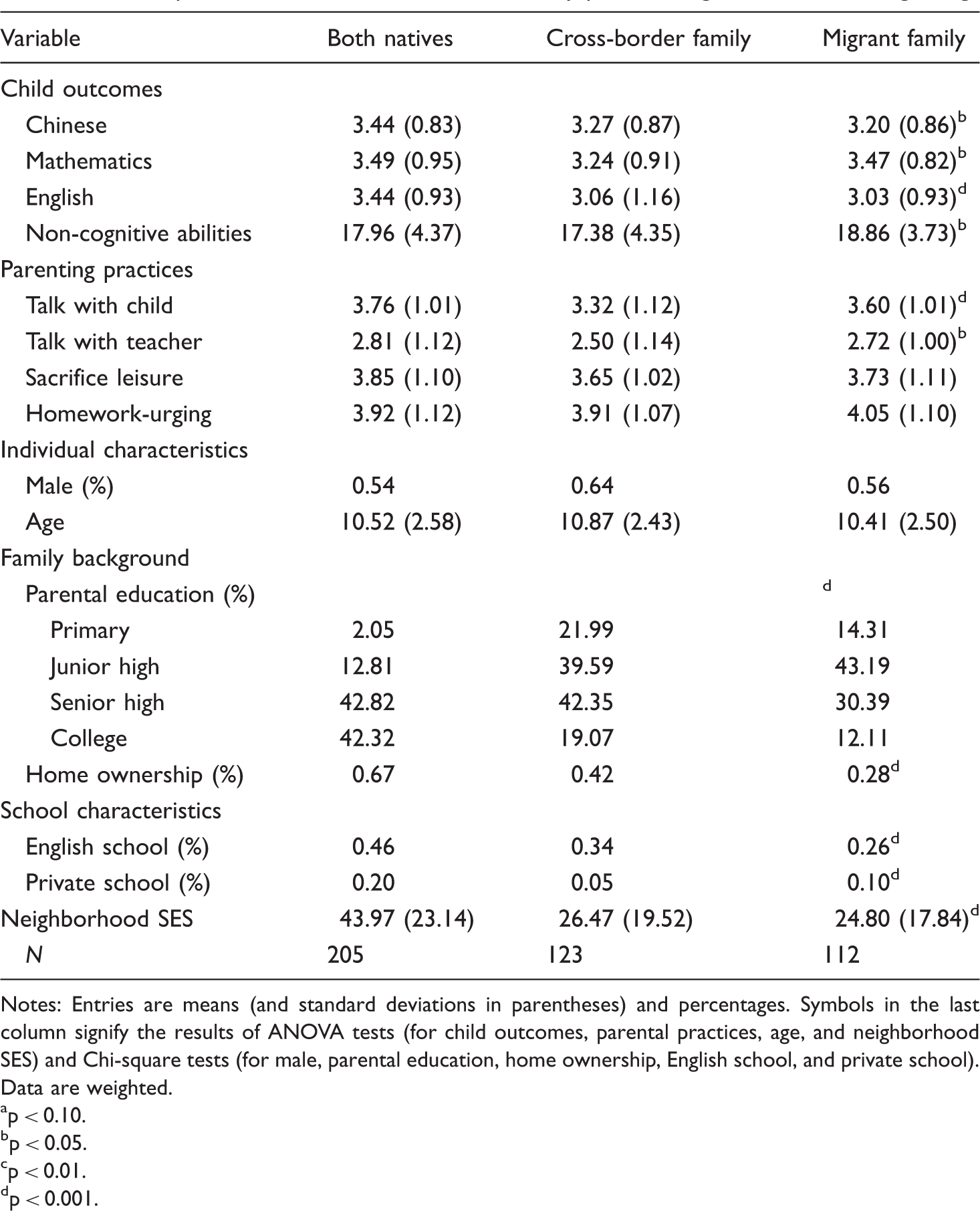
Notes: Entries are means (and standard deviations in parentheses) and percentages. Symbols in the last column signify the results of ANOVA tests (for child outcomes, parental practices, age, and neighborhood SES) and Chi-square tests (for male, parental education, home ownership, English school, and private school). Data are weighted.
p < 0.10.
p < 0.05.
p < 0.01.
p < 0.001.
As shown in Table 1, compared with children of natives, children of Chinese migrants exhibited significant disadvantages in terms of family background, with lower levels of parental education and smaller percentages of home ownership. Children from migrant families were particularly disadvantaged in terms of family background. Only 12% of them had parent(s) with a college education, while the corresponding percentages for children of natives and children of cross-border families were 42% and 19%, respectively. While 67% of children of natives and 42% of children from cross-border families were living in houses with ownership, only 28% of children from migrant families did so. Compared with children of natives, both groups of children with migrant parent(s) were less likely to be enrolled in ‘high quality’ schools (which usually, in the Hong Kong context, refers to English schools and private schools) and tended to live in low-SES neighborhoods. These patterns are familiar to researchers studying the socioeconomic and educational hurdles that most migrants face (Warren, 1996), particularly those from the Chinese mainland to Hong Kong (Chou, 2013; Zhang, 2014). Migrant and native parents interacted with their children and children’s teachers in similar ways, although parents from cross-border families were less likely to talk with the child and the teacher.
Regression models
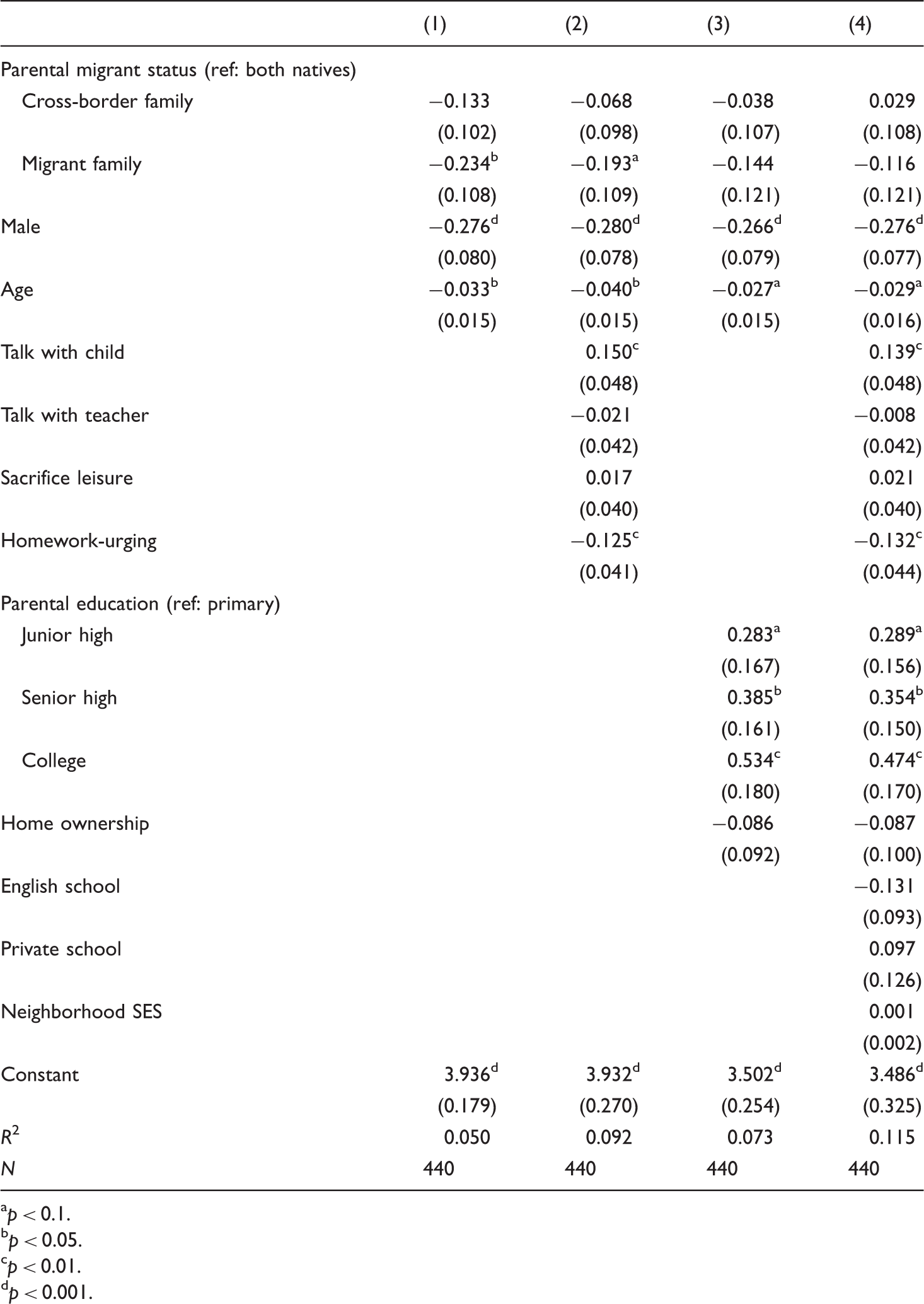
OLS regression models predicting children’s academic performance (Chinese) in Hong Kong.
p < 0.1.
p < 0.05.
p < 0.01.
p < 0.001.
Table 2 highlights the inter-group differences in students’ performance in Chinese. As the findings from Model 1 show, compared with their counterparts with two native parents, children from migrant families perform significantly worse, earning scores 0.23 points lower than their native counterparts on the five-point scale of academic achievement. Model 1 also shows a lower level of Chinese performance for children from cross-border families, but the difference is not statistically significant. Models 2 and 3 show that parenting practices and family background were significantly associated with children’s performance in Chinese. In particular, the frequency with which parents conversed with their children about school issues and the parents’ education levels were both positively related to academic achievement in Chinese. Urging children to finish their homework was negatively related to academic achievement, probably because parents of children with poorer academic performance were more likely to monitor their children’s homework. 2 Parenting practices partially explained the achievement gap between children from migrant families and children of natives, while parental education fully accounted for the difference.
The full model in Table 2 confirms that both talking with children about their school life and parental education levels were positively correlated with the child’s performance in Chinese, net of the effects of other variables. Furthermore, children from migrant families and those from cross-border families did not differ from children of natives in Chinese performance when we controlled for other variables, in particular, parental education and parenting practices. These findings lend support to previous studies that trace differences in academic achievement among migrant and native families to inter-group imbalances in socioeconomic status (Kao, 1995; Warren, 1996) and parental involvement (Bodovski and Durham, 2010).
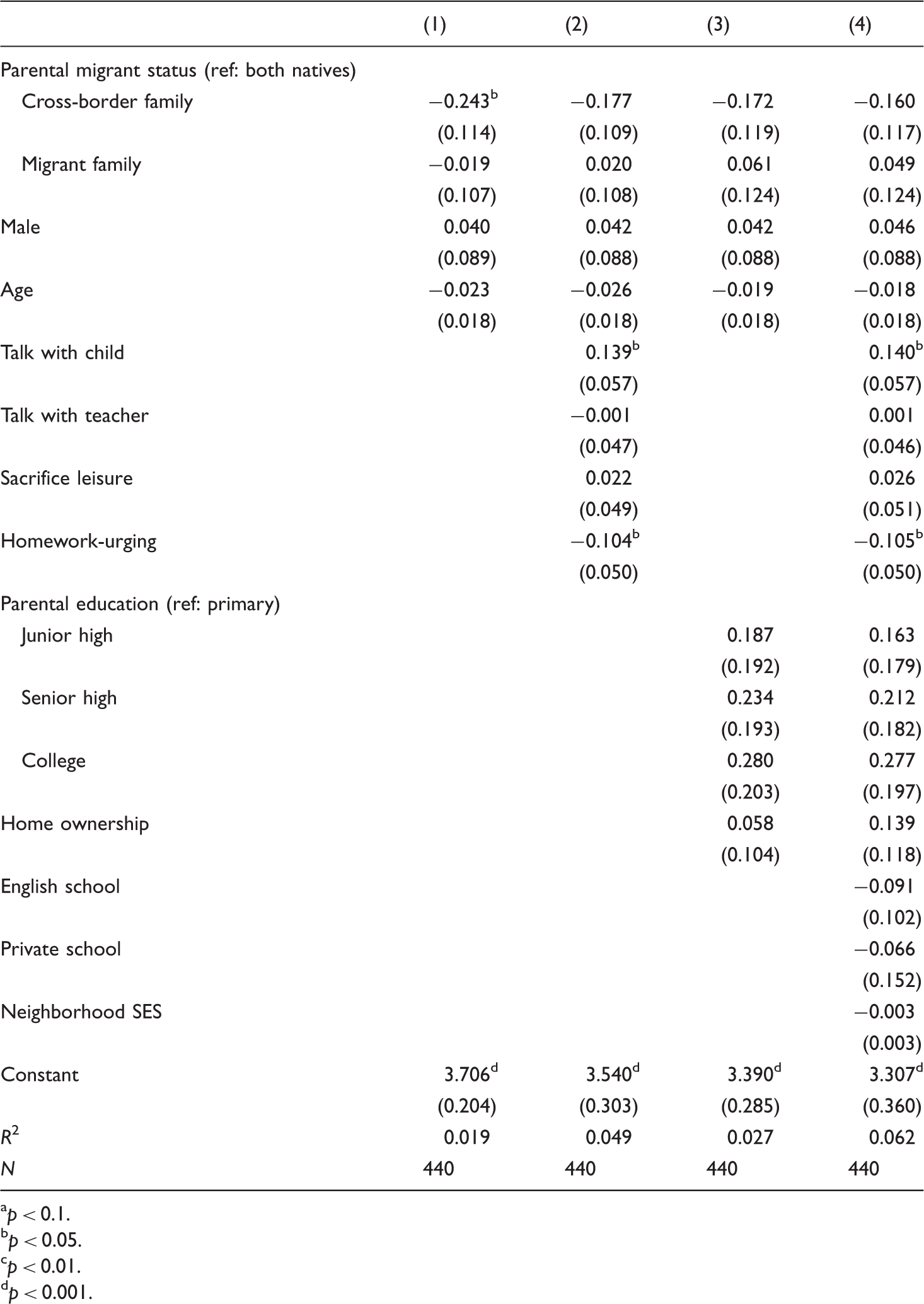
OLS regression models predicting children’s academic performance (mathematics) in Hong Kong.
p < 0.1.
p < 0.05.
p < 0.01.
p < 0.001.
The final model of Table 3 shows a significantly positive relationship between parents’ talking with children about school issues and children’s mathematics performance, net of the effects of other variables. Parent–child communication about school life stands out as the most vital factor in mediating the effect of parental migrant status on mathematics. There are no significant differences between children from cross-border or migrant families and children of natives after we controlled for parent–child communication about school life. The empirical results here reinforce the argument about the importance of parenting practices for children’s academic performance (Bodovski and Durham, 2010) and also support the mediating role of parental involvement in the relationship between migrant status and children’s academic achievements (Bornstein et al., 2003; Glick et al., 2012).
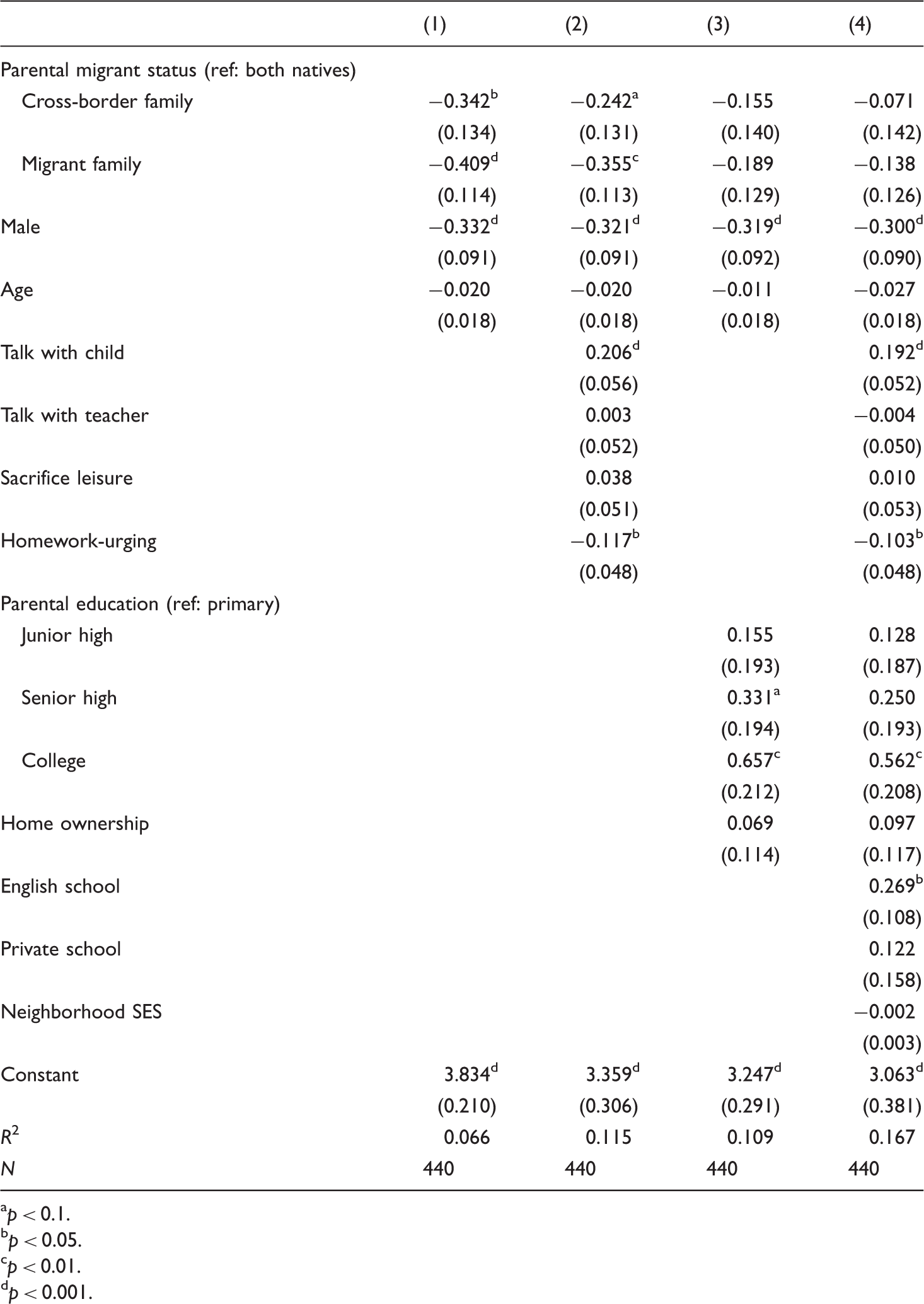
OLS regression models predicting children’s academic performance (English) in Hong Kong.
p < 0.1.
p < 0.05.
p < 0.01.
p < 0.001.
The above pattern generally held after controlling for all the variables in the full model of Table 4. Once differences in parenting practices and family background were controlled for, parental migrant status ceased to make any difference to children’s performance in English. This finding is consistent with academic outcomes for Chinese and mathematics and thus lends further support to arguments about the roles that family background (Kao, 1995; Warren, 1996) and parenting (Bodovski and Durham, 2010; Bornstein et al., 2003; Glick et al., 2012) play in children’s cognitive skill development.
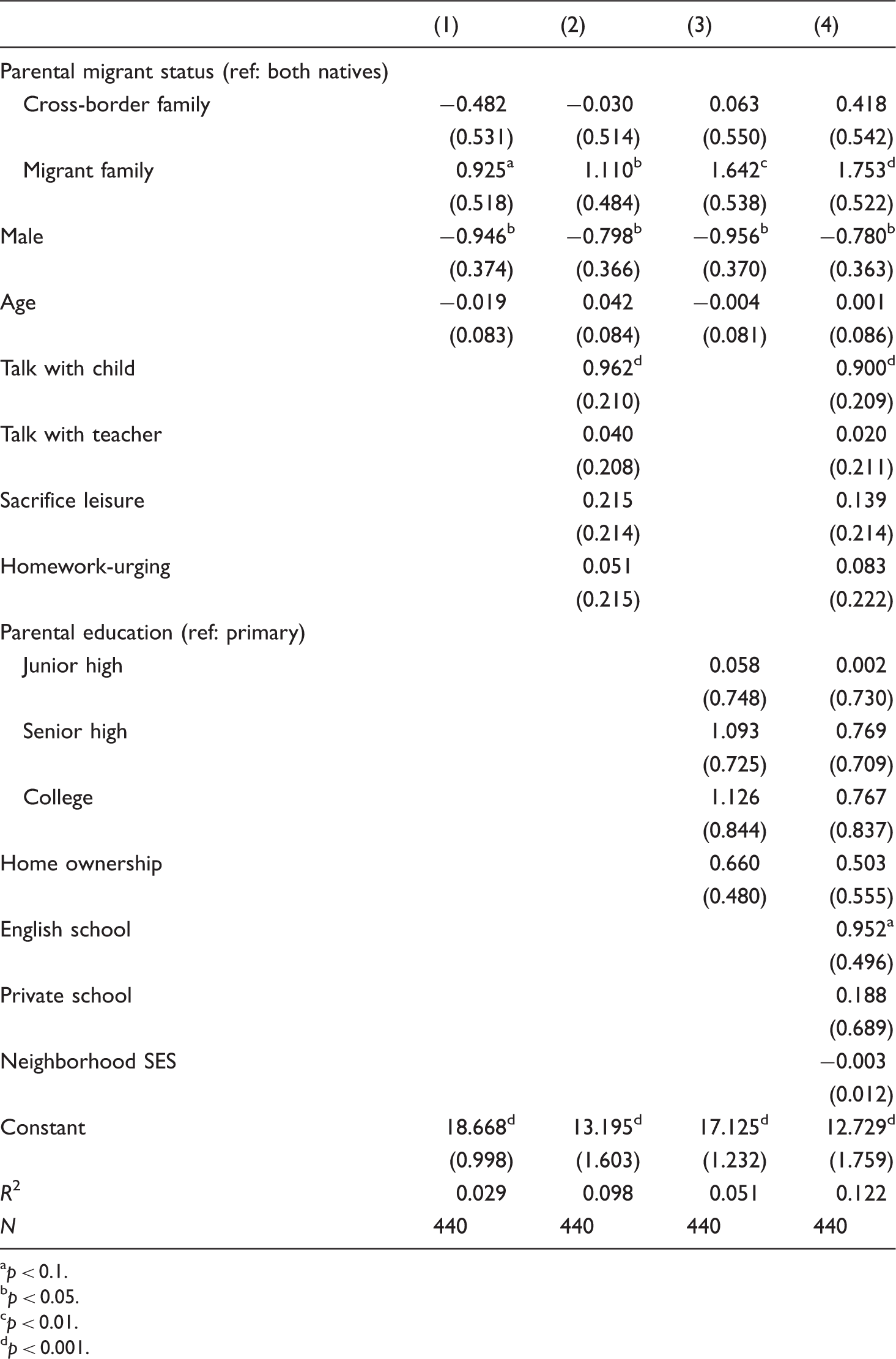
Table 5 presents the results for non-cognitive skillsets. In our baseline model, we observed that children from migrant families scored higher on the non-cognitive abilities scale than children of natives at a marginally significant level, and the difference between children from cross-border families and children of natives is not significant. However, as shown in Models 2–3, children from migrant families significantly outperformed children of natives, when either parenting practices or family background was taken into account.
In the full model of Table 5, where all variables were considered, children from migrant families outperformed children of natives to a greater extent than in any previous model. Conversing with children was positively related to children’s non-cognitive capacity. The outperformance of children from migrant families in terms of non-cognitive abilities broadly resonates with previous research on children from Asian immigrant families (e.g. Lee and Zhou, 2017). The results also fit comfortably with studies of the effects that family background (Fletcher and Wolfe, 2016; Khanam and Nghiem, 2016; Luo et al., 2017) and parental involvement (Bornstein et al., 2003; Glick et al., 2012; Ngai, 2015) have on child development, while revealing the mediating role of parenting practice in the relationship between parental migrant status and non-cognitive abilities in the Hong Kong context.
OLS regression models predicting children’s non-cognitive skills in Hong Kong.
p < 0.1.
p < 0.05.
p < 0.01.
p < 0.001.
Summary of empirical findings.
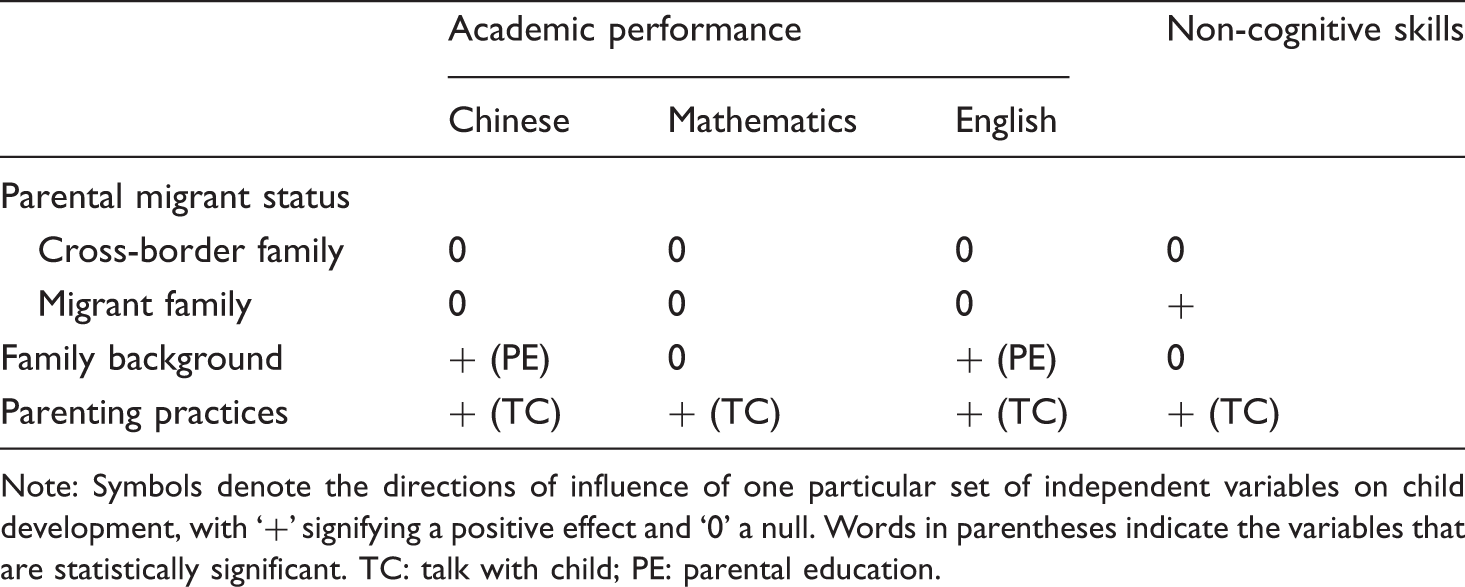
Note: Symbols denote the directions of influence of one particular set of independent variables on child development, with ‘+’ signifying a positive effect and ‘0’ a null. Words in parentheses indicate the variables that are statistically significant. TC: talk with child; PE: parental education.
Conclusions and discussion
Integrating immigrants’ children has become increasingly important in policy-making circles worldwide. The life chances of immigrant offspring are seen as the ‘benchmark’ for successful integration policy (OECD, 2010). As an immigrant city with one-third of its total population coming from the Chinese mainland, Hong Kong has devoted a great deal of attention to the integration of Chinese migrants and their children. Previous research has shown that a higher degree of similarity in ethnic origins between the native population and immigrants and success-oriented culture in the country of origin both lead to a more successful integration of immigrants and their children (e.g. Boyd, 2002; Boyd and Grieco, 1998; Buriel, 2012; Heath and Cheung, 2007; Portes and Zhou, 1993). Such cultural and ethnical explanations are not applicable to children of Chinese migrants in Hong Kong, where both native and migrant families share a similar culture and ethnic identity. What factors, other than ethnicity and cultural traits, explain differences in academic performance and non-cognitive skills, if any, between children of Chinese migrants and children of Hong Kong natives? In this study, we pay particular attention to the effects of family background and parenting practices. We further differentiated children from cross-border families (one parent born in Hong Kong and the other born on the Chinese mainland) from children from migrant families (both parents born on the Chinese mainland) in order to examine the internal variations among children of Chinese migrants.
We used a population-based survey ‘the Hong Kong Panel Study of Social Dynamics,’ and the 2011 population census, to examine the effect of parental migrant status on academic performance and non-cognitive skills among children aged 14 and younger in Hong Kong. The results showed that children from migrant families performed worse in Chinese, children from cross-border families performed worse in mathematics, and both groups performed worse in English, than children of natives in Hong Kong, but all these differences became statistically insignificant when we controlled for family background and parenting practices. Specifically, parental education and parent–child communication about school life are vital factors in mediating the effect of parental migrant status on children’s academic performance. Furthermore, children from migrant families had a significantly higher level of non-cognitive abilities than children of natives, net of the effect of others.
Our analyses also showed that family background and parenting practices are significant determinants of children’s academic performance. Specifically, parental education is positively associated with Chinese and English performance, while parents talking with children about school life significantly improves children’s performance in Chinese, mathematics, and English. As for the determinants of non-cognitive skills, parental migrant status and parenting practices have significantly positive effects.
The results in this study generally suggest that, although Chinese migrants themselves are disadvantaged in socioeconomic status compared with Hong Kong natives (Zhang and Wu, 2011), once family background and parenting practices are controlled for, their children do not differ significantly from children of natives in academic performance, and those with both parents coming from the Chinese mainland will even perform better in non-cognitive capacities. Our findings imply that government and social resources designed to improve family socioeconomic status and to support parent–child interaction will significantly enhance the developmental outcomes of Chinese migrants’ children in Hong Kong, which in turn will be beneficial to Hong Kong society in the long run, as these children will become an important source of labor supply in the near future.
Footnotes
Declaration of Conflicting Interests
The author(s) declared no potential conflicts of interest with respect to the research, authorship, and/or publication of this article.
Funding
The author(s) disclosed receipt of the following financial support for the research, authorship, and/or publication of this article: The work described in this paper was supported by the Research Grants Council of the Hong Kong Special Administrative Region, China (Early Career Scheme 21402914 [to Zhang] and General Research Fund 16600218 [to Xu]). Xu also acknowledges financial support from the Institute for Advanced Study, Hong Kong University of Science and Technology.