



Abstract
Objective:
Comics have been employed with a range of audiences to address health literacy, education, and behaviours. However, research on comics in oral health education and health promotion is scarce. This scoping review investigated the use of comics in oral health promotion and aimed to identify areas of use, target audiences, outcomes, and the quality of existing research.
Methods:
Four online databases, citation lists, and related webpages were searched to identify manuscripts published from 1999 to 2024, in any language. The methodological framework adopted involved identifying relevant studies, charting, collating and summarising data, and reporting the results. In addition, a quality assessment of the existing literature was undertaken.
Results:
Fifteen articles were included in the review. Based on the findings, four themes were generated: (1) Availability and accessibility of the comic resource, (2) Research methods used in the studies, (3) Comic topics and outcomes, and (4) Target audiences. Print comics were more commonly reported than digital ones and had been developed for both adults and children on a range of oral health topics. The comic design and format varied. Public access to the developed comics was limited. Most studies revealed positive effects on oral health knowledge from the use of comics. The quality of the reporting for the majority of the studies was, however, weak overall.
Conclusion:
The body of research on the utilisation of comic resources for oral health promotion is limited; however, several studies show promise of positive effects from comics delivered in a range of designs and formats as tools for oral health education and health promotion.
Introduction
Powerful and clear narratives influence healthy decision-making and behaviours (Ellis and Bochner, 1999), while images increase attention, comprehension, recall, and adherence (Houts et al., 2006). Comics, a combination of narratives and sequentially positioned images, embed unique visual and functional features (Aggleton, 2019), subject matter, and cultural characteristics (Cohn, 2013). Engaging with them can achieve community-building and pedagogical goals (Venkatesan and Peter, 2019), making comics effective visual communication media in various fields of healthcare.
Graphic Medicine is a field of study that employs comics in healthcare (Noe and Levin, 2020). While some may view comics as humorous child-centred media, evidence showed that adults with initial negative perceptions changed their views upon exposure to clinician-endorsed comic interventions (Ashwal and Thomas, 2018). Graphic Medicine is used for a variety of applications including narratives and memoirs, educational material and workshops, academic outputs, public health interventions (Williams, 2021), and patient care (Green and Myers, 2010).
Comic interventions used for health promotion have been directed towards diet, nutrition and physical activity, respiratory and cardiovascular health, and medical education (Noe and Levin, 2020). A range of health outcomes have been shown to improve following comic interventions including preventive health management self-efficacy related to premature labour (Kim, 2022); decrease in medication non-compliance (Leung et al., 2018); and increased likeliness to select healthy snacks (Leung et al., 2014). While much research is available using comics as health education and health promotion tools, little is known about their use with respect to oral health.
A scoping review was therefore conducted to address the research question, how have comic interventions been used as part of oral health education and promotion. Research utilising dental and oral health comics was examined to address the following objectives: the comic development process, its purpose, target audiences, the outcomes achieved, and the overall quality of the research (Tricco et al., 2018).
Methods
Arksey and O’Malley’s (2005) five-stage methodological framework for conducting scoping reviews was adopted. This iterative process involves identifying a research question and relevant studies via different sources. Studies addressing the research question are then systematically selected by multiple raters before charting the data. Finally, data are collated and summarised and the results are reported. This report aligns with the PRISMA extension for scoping reviews (PRISMA-ScR) (Tricco et al., 2018).
The scarcity of research on the use of oral health comics prompted the need to identify a broad range of literature. A comic was defined as a combination of narratives and images containing visual and functional features but not purely moving images or audio (Aggleton, 2019). Inclusion criteria for the scoping review were:
Empirical studies incorporating comic interventions;
All languages;
Peer-reviewed articles, grey literature, multimedia.
Exclusion criteria were as follows.
Published before 1999;
Interventions using pictograms, videos, games, memes, postcards, or labels;
Photonovels as they do not use hand-drawn images;
Studies that did not directly address oral health and dental health outcomes;
Interventions targeting dental students and professionals as these were considered part of dental education;
Clinically focused studies since the focus here was on health promotion.
Potentially relevant papers were identified from the PubMed, Scopus, Google Scholar, MEDLINE, and Global Health databases. Additional papers were identified by manually searching the reference lists of English language articles and other articles found through a preliminary search of the topic before the formal literature review.
The search was conducted with the support of a subject librarian at the University of Otago on 18 November 2024 and included three key areas of focus: “comics,” “dentistry OR oral health,” and “health literacy.” Details of the search strategy are available as online supplemental material. The results of the search were exported to a spreadsheet which included the studies identified from reference lists. Two additional studies were later identified through a database alert and a citation search on Scopus.
Two raters (V.K.Y., Z.A.N.) independently screened the data items and rated them as “Accept”/“Questionable”/“Reject” based on the presence of keywords, eligibility criteria, and relevance to the research question. Items rated “Questionable” data items were reviewed by a third rater (K.C.M.). Subsequently, all accepted items and any disagreements were jointly discussed to reach a consensus. Accepted items were reviewed with full text.
Studies not published in English were translated using Google Translate. The English translated PDFs and the originals were then reviewed by doctoral-level native speakers of the relevant languages to ensure accuracy.
Data were extracted from all sections of the articles, including any supplementary documentation. Descriptive information, characteristics of the comic intervention, and research methodology were recorded in a data chart, following discussion between two raters.
Critical appraisal, although not generally required for scoping reviews (Arksey and O’Malley, 2005), was undertaken to provide a perspective on the quality and standard of the research in each study. The Effective Public Health Practice Project (EPHPP) quality assessment tool designed to inform public health practice was utilised (McMaster University, 2010). This tool rates items under six dimensions that are summed to produce an overall rating. Data items were assessed by the first rater and verified by the second. The EPHPP tool only rates randomised or clinically controlled trials as “Strong” while other study designs as “Moderate” or “Weak,” leading to overall unfavourable scores (Thomas et al., 2004). Therefore, for quality overview purposes, individual component ratings are presented.
Results
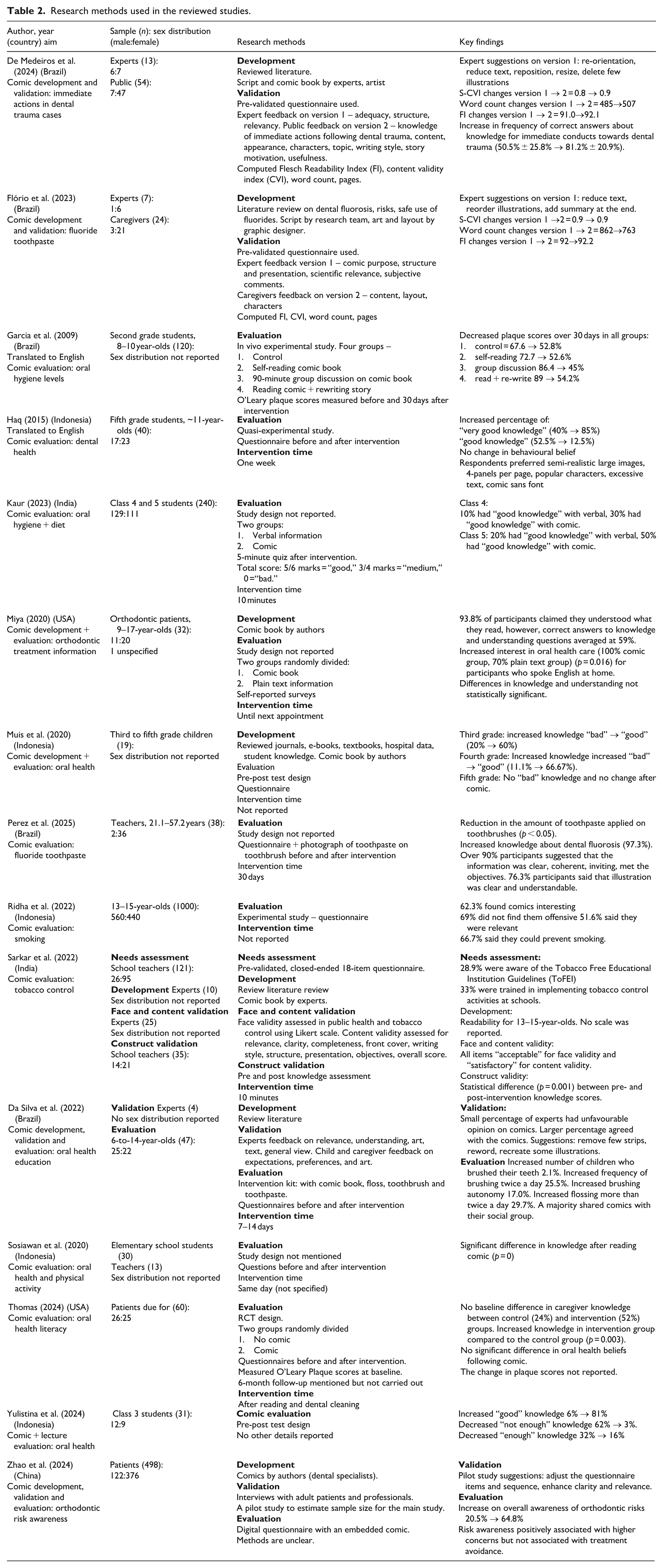
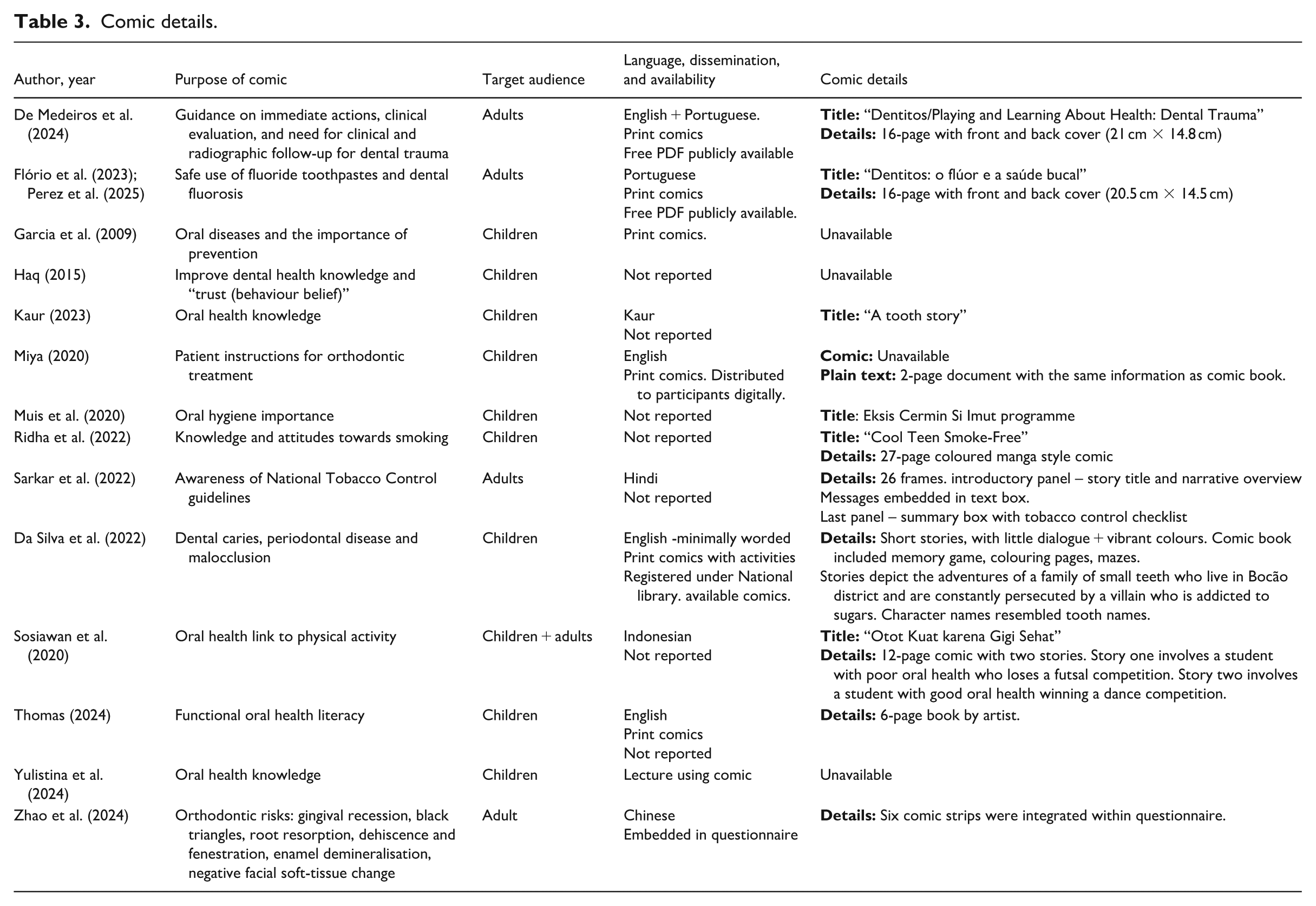
Database searches yielded an initial total of 59,887 results. Stepwise application of the inclusion/exclusion criteria removed the majority of articles as they were either not focused on comics or were duplicates (Figure 1). Fifteen remaining articles were included in the review (Figure 1), all of which reported primary research and were published after 2009. The quality of the included studies, and details of the research and developed comic interventions are presented in Tables 1 to 3.
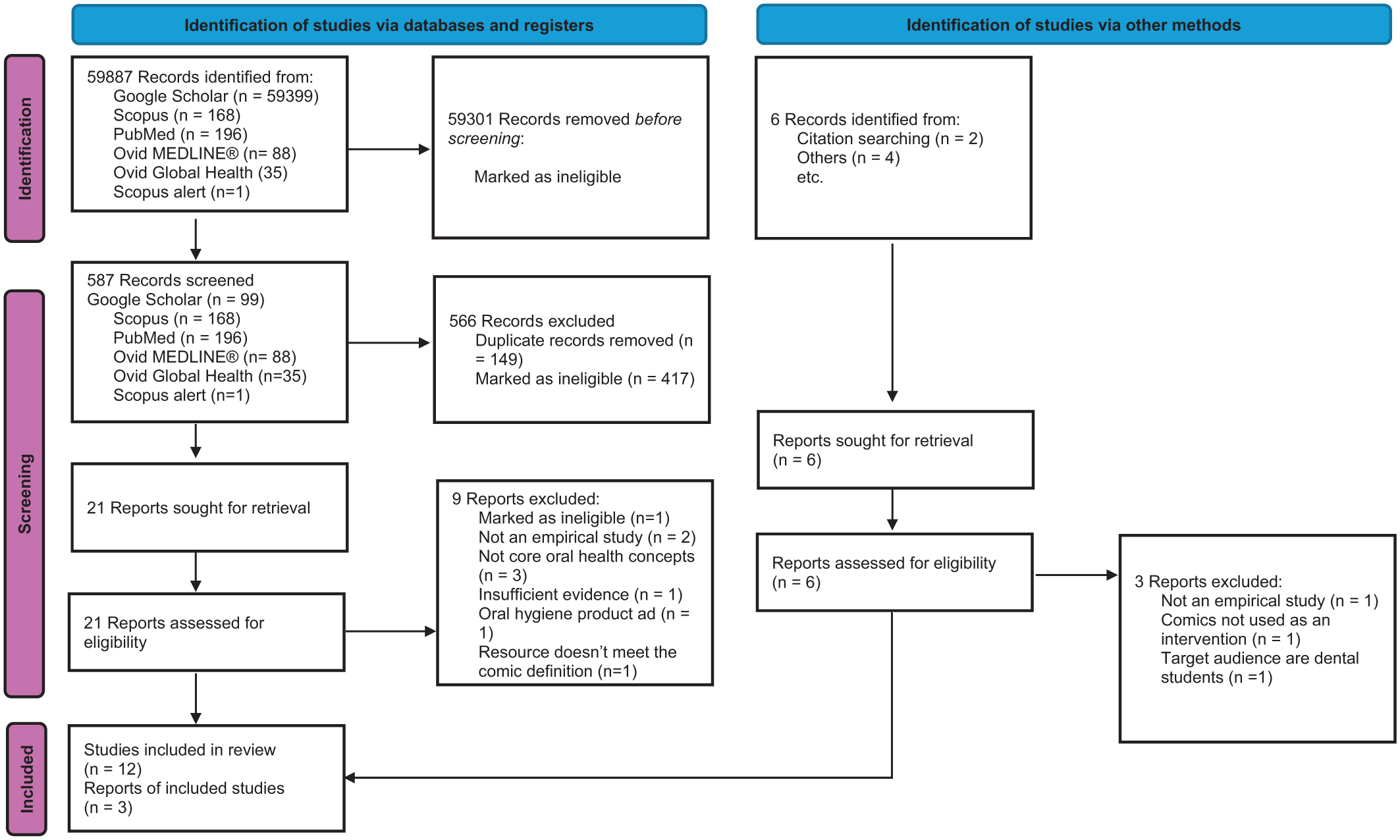
PRISMA 2020 flow diagram for systematic reviews which included searches of databases, registers, and other sources.
EPHPP quality assessment.
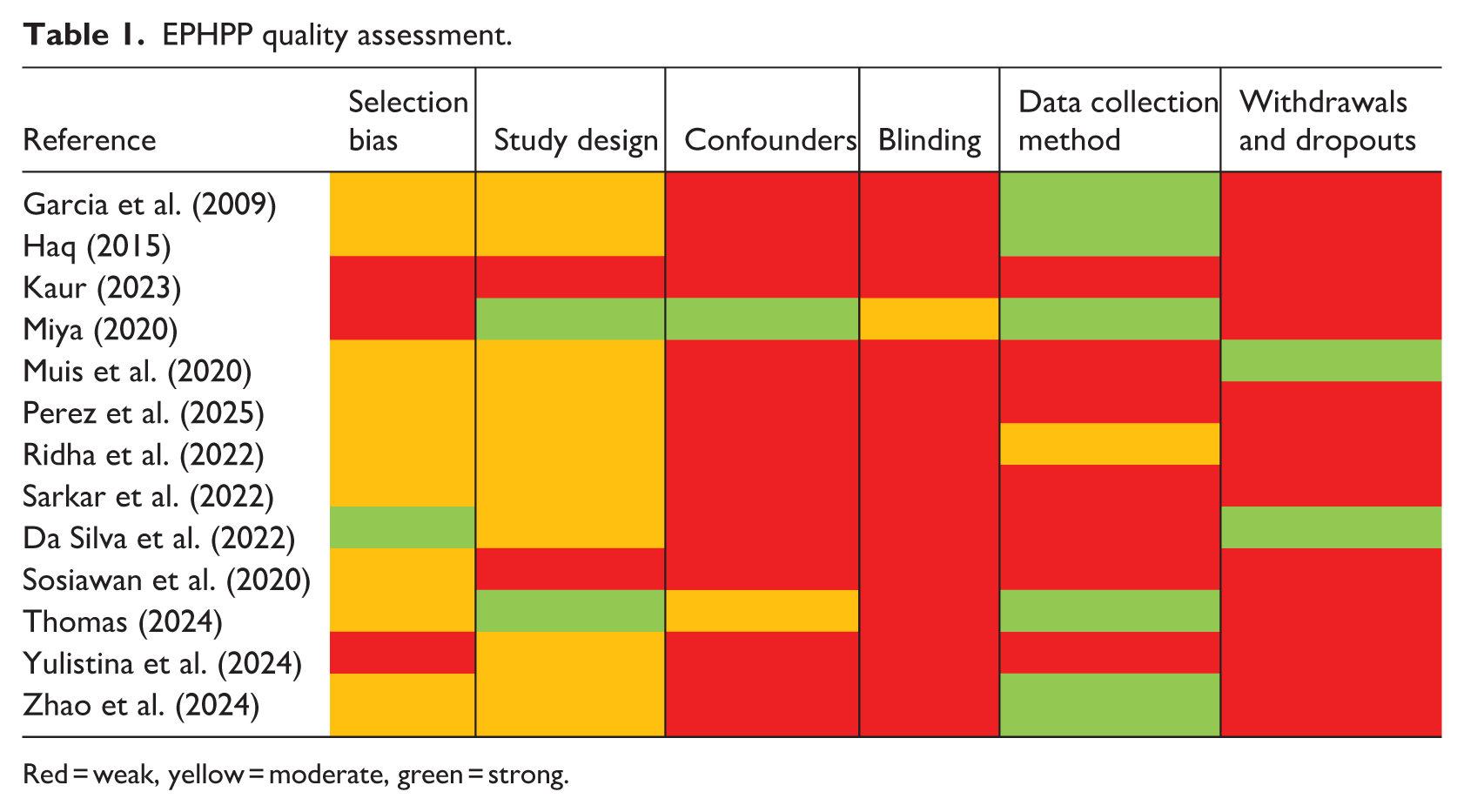
Red = weak, yellow = moderate, green = strong.
Research methods used in the reviewed studies.
Comic details.
Based on the review objectives, four themes were identified.
Theme 1: Public availability and access to comics
Sub-theme 1: Language
While most comics had been developed in national or regional languages, some did not report on the language used (Garcia et al., 2009; Haq, 2015; Kaur, 2023; Muis et al., 2020; Ridha et al., 2022). However, the comic’s language and text length did not appear to restrict readers’ understanding, as they were well understood by non-native speakers (Miya, 2020) and behavioural outcomes were positive with minimal text comics (Da Silva et al., 2022).
Some studies assessed the comic’s readability prior to implementation (De Medeiros et al., 2024; Flório et al., 2023). Of these, a number reported using validated tools (Flório et al., 2023; Miya, 2020) while others did not (Sarkar et al., 2022). Failure to assess the readability of public health resources could mean that they may be unsuitable for the intended audience. Moreover, the use of validated tools to assess readability provides confidence in the resource’s suitability and potential comparability across studies.
Sub-theme 2: Public access and format
Few studies sought to ensure public access to the comics through digital means: for example, in the form of Google Drive (De Medeiros et al., 2024) and/or webpage links (Flório et al., 2023; Perez et al., 2025). Some presented the comic (fully or partially) within the report (Da Silva et al., 2022; Kaur, 2023; Miya, 2020; Sarkar et al., 2022; Thomas, 2024; Zhao et al., 2024), a few reported details of the title and the story (Muis et al., 2020; Ridha et al., 2022; Sosiawan et al., 2020), and others did not provide access to the comic at all (Garcia et al., 2009; Haq, 2015; Yulistina et al., 2024). In the majority of cases, comic dissemination had mostly been through print. One atypical study sought to embed an educational comic within a questionnaire (Zhao et al., 2024). Six papers did not report on dissemination strategies.
Theme 2: Research methods
Studies reported on different aspects of comic development and evaluation. Only one study stated and followed standard reporting guidelines (Thomas, 2024). To identify key topics to be addressed in the comics, most researchers had undertaken initial literature reviews (Da Silva et al., 2022; De Medeiros et al., 2024; Flório et al., 2023; Muis et al., 2020; Sarkar et al., 2022), although a few had also conducted a needs assessment (Muis et al., 2020; Sarkar et al., 2022). This was then followed by script writing and illustrations either by the authors themselves (Miya, 2020; Muis et al., 2020; Zhao et al., 2024) or by professional artists (De Medeiros et al., 2024; Flório et al., 2023; Sarkar et al., 2022).
Studies of the face, construct, and content validity of comics assessed the following domains using subject experts or lay people: purpose, structure, presentation, scientific relevance, adequacy, understandability, clarity, risk communication facilitation, content, layout, characters, and appearance (Da Silva et al., 2022; De Medeiros et al., 2024; Flório et al., 2023; Sarkar et al., 2022; Zhao et al., 2024). Only two studies reported adapting a pre-validated tool for these measurements (De Medeiros et al., 2024; Flório et al., 2023).
Evaluation studies commonly focused on the pre-post-test study design. A few studies did not make reference to any study design (Table 2). It is also likely that the evaluation tools used in most studies had not been previously validated or were reliable.
Studies were predominantly quantitative in nature. Two validation studies also collected subjective feedback (Flório et al., 2023; Perez et al., 2025; Zhao et al., 2024). None had a clearly identified conceptual or theoretical foundation.
Theme 3: Comic topic and outcomes
Although oral hygiene was prioritised, each comic had a different purpose ranging from providing general information about oral health and hygiene to more specific information such as the use of fluoridated toothpastes (Flório et al., 2023; Perez et al., 2025).
The comics were designed differently (Table 3). Some contained multiple stories, whereas others had only one. They were between 1 (Sarkar et al., 2022) and 27 pages in length (Ridha et al., 2022). The use of unique art styles (such as manga) (Ridha et al., 2022) and the inclusion of activity pages (such as colouring activities, find the mistakes, mazes) to engage participants was explored (Da Silva et al., 2022). Character designs either resembled teeth (De Medeiros et al., 2024; Flório et al., 2023; Perez et al., 2025) or humans. A few comics were purely instructive (Miya, 2020), whereas others adopted a narrative structure (Da Silva et al., 2022; De Medeiros et al., 2024; Flório et al., 2023; Perez et al., 2025). Although comics were the major intervention, Da Silva et al. (2022) also provided an oral hygiene kit.
The interventions described in the studies were usually short term. While most studies administered questionnaires immediately after the intervention, the time period varied up to a maximum of 30 days (Garcia et al., 2009; Perez et al., 2025). Comics were claimed to significantly improve knowledge (De Medeiros et al., 2024), risk awareness (Thomas, 2024), and oral health behaviours (Da Silva et al., 2022), and reduced plaque (Garcia et al., 2009). In two other studies, no significant difference in oral health belief measures was found (Haq, 2015; Thomas, 2024). A study comparing comics to plain text resources noted that recall was higher with comics (Miya, 2020). It was generally agreed that comics were interesting to the readers and could be used in preventive strategies (Ridha et al., 2022).
One study compared English- and non-English-speaking readers’ responses. Although the comic was better understood by English speakers, marked interest in self-care was noted irrespective of the audience’s primary language (p = .016) (Miya, 2020). In Da Silva et al.’s (2022) study, young readers of minimally worded comics (76.6%) were reported to propagate the information to their social circles. Of these readers, 38.3% interacted with the comics despite being unable to read (Da Silva et al., 2022).
Theme 4: Target audience
Over half of the studies reported on comics developed for children (Garcia et al., 2009; Haq, 2015; Kaur, 2023; Miya, 2020; Muis et al., 2020; Ridha et al., 2022; Thomas, 2024; Yulistina et al., 2024). One third targeted only adults – school teachers (De Medeiros et al., 2024; Sarkar et al., 2022), individuals responsible for childcare (Perez et al., 2025), and patients (Zhao et al., 2024). The remaining comics appeared to have been developed for use by age groups. Comics were designed to include all genders; however, more women participated in most studies.
Discussion
This scoping review identified 15 articles that used comic interventions for oral health education and health promotion. Four themes were generated from the data to address the review objectives: (1) Public availability and access to comics, (2) Research methods used, (3) Comic topic and outcomes, and (4) Target audience. In addition, a quality assessment of evaluation studies was undertaken to understand the standard of research within the field.
Overall, the comics for oral health education and promotion we reviewed appeared thoughtfully developed; however, the majority of them were not publicly available following the research. The main objective of the comics was to promote oral hygiene, although other dental topics were also covered. Comics had been developed for all age groups and genders and showed positive outcomes with respect to knowledge, risk awareness, oral health behaviour, as well as interest in oral health. However, the results of the reviewed studies should be interpreted cautiously as the quality of both the research and reporting was often weak.
All the included studies were published after 2009 with the majority appearing after 2020. Only one study was excluded because it had been published earlier (in 1990) (Renaud, 1990). This trend appeared to be consistent with other literature suggesting an increase in Graphic Medicine research studies following the emergence of the field in 2007 (Noe and Levin, 2020) and an even more rapid development of the field following the COVID-19 pandemic (Febres-Cordero et al., 2025). However, the extent of comic research undertaken for oral health education and health promotion remains low.
An important goal of health promotion is to reach a target population through health education. To achieve this goal, interventions must be accessible and available to the wider population. A few of the studies included in this scoping review sought to ensure the digital availability of the comics developed. But many did not do so, or present even an excerpt, undermining their potential to serve as community resources. Lack of transparency and availability makes it difficult for other researchers to evaluate and potentially reproduce the comics (Noe and Levin, 2020). It is important for authors to publish the comics they develop for future long-term outcome evaluation, to support ongoing improvements to resource quality, and to benefit the wider community.
Comic development in the studies examined often began with a literature review and involved collaboration with professional artists. While interdisciplinary approaches can use visual stories as part of science communication (Roughley, 2023), many of the studies in the scoping review lacked community engagement. Community-based approaches to health education and promotion development can facilitate the development of holistic, culturally appropriate, and relevant resources (Logie et al., 2023) and provide an opportunity to engage with issues and topics that otherwise might remain hidden and otherwise un-discussed (Febres-Cordero et al., 2021).
Febres-Cordero et al.’s (2025) scoping review concluded that health-promoting comics have been extensively used internationally; however, their review did not focus on oral health. Our scoping review identified oral health education and promotion comics developed in five different countries. They were developed for individuals with diverse characteristics and backgrounds – further demonstrating that comic resources are not limited to young readers (Noe and Levin, 2020). An interesting finding from this review was that comics were well received irrespective of the language they were developed in, be this different to the readers’ primary language (Miya, 2020) or having minimum text (Da Silva et al., 2022).
Positive outcomes were noted with respect to oral health knowledge, understanding, retention, interest in self-care, and autonomy. Similar outcomes have been observed in studies using comics for more general health purposes (Kim, 2022; Leung et al., 2014, 2018). This review reinforces evidence suggesting that it is the combination of narratives and visuals within the subject matter that creates the greatest interest. The human-like attributes given to abstract biological processes (such as the progression of dental caries) in comics can allow knowledge transfer and facilitate comprehension (Alemany-Pagès et al., 2022). However, if the methodological quality of the research that led to the comic development is weak, the outcome may not be as promising as initially expected.
Strengths and limitations
To our knowledge, this is the first scoping review of the use of comics as an oral health–promoting intervention. The search contained no language restrictions and ensured that relevant papers were not missed (Arksey and O’Malley, 2005). Where access was available, the comics themselves were evaluated in addition to the research studies’ methodological aspects to understand the results better.
Due to many studies having questionable scientific rigour such as inconsistencies in research and evaluation methods, limited use of theoretical frameworks, and the use of non-valid and non-reliable measurement tools, comparability across studies was limited. While comics related to oral health have been published (e.g. by the Oral Health Improvement for People with Experience of Drugs [OHIPED] project (Comics Studies Creative Research Hub, 2024), The Smilestones (Poulter, n.d.), and The Side Eye: The high price of bad teeth (Morris, 2020)), very few have been evaluated or researched.
Unresearched comics were excluded from this review. The exclusion of non-empirical studies and animated comics further adds to the limitations of reporting diverse data. Therefore, the outcomes of the comic interventions presented in this review cannot be relied upon to guide future health education and promotion programmes.
Implications for future research
This study’s findings indicate scope for comic interventions in educating about, and promoting, oral health. Such an approach can be used with all age groups and multilingual audiences if developed in form that is readily understood and/or minimally worded. Given the importance of community participation in developing health education and health promotion resources (Ferbes-Cordero et al., 2021), future studies should involve community participation and ensure greater public availability of the resources after they have been developed. Robust research and good-quality reporting within clear theoretical frameworks are essential to identify best practices in planning and developing comic resources for oral health promotion and to build a stronger evidence base.
Conclusion
There is a lack of good-quality evidence on the use of comic resources to support oral health education and health promotion. However, a number of studies show promising outcomes and have resulted in a range of comic designs and formats. This scoping review encourages oral health promoters and researchers to design and evaluate interventions that could appeal to, and produce positive oral health–related outcomes, among different groups. These findings encourage future researchers to delve more deeply into the use of comics for dental and oral health promotion and emphasise the need for good-quality research.
Supplemental Material
sj-docx-1-hej-10.1177_00178969261437927 – Supplemental material for Comics as tools for oral health education and health promotion: A scoping review
Supplemental material, sj-docx-1-hej-10.1177_00178969261437927 for Comics as tools for oral health education and health promotion: A scoping review by Vaishnavi K Yeleswarapu, Zeina Al Naasan, Jonathan M Broadbent and Kate C Morgaine in Health Education Journal
Footnotes
Acknowledgements
We thank Lynne Knapp (librarian), and Carolina Loch and Farah Yasmine Ainun Nisa for their support in reviewing Google translated articles from Portuguese and Indonesian, respectively.

Funding
The authors received no financial support for the research, authorship, and/or publication of this article.
Declaration of conflicting interests
The authors declared no potential conflicts of interest with respect to the research, authorship, and/or publication of this article.
AI use
Google Translate was used in an assistive manner to translate two articles published in Portuguese and Indonesian into English. Native language speakers were used to verify these translations. No generative AI was used in developing the manuscript itself.
Supplemental material
Supplemental material for this article is available online.
References
Supplementary Material
Please find the following supplemental material available below.
For Open Access articles published under a Creative Commons License, all supplemental material carries the same license as the article it is associated with.
For non-Open Access articles published, all supplemental material carries a non-exclusive license, and permission requests for re-use of supplemental material or any part of supplemental material shall be sent directly to the copyright owner as specified in the copyright notice associated with the article.
