




Abstract
Objectives:
Although schools have an important role to play in preventing vape use, literature about teacher perceptions of vaping among students is limited. This study investigated teachers’ perceptions of student vaping in Australian secondary schools over a 12-month period.
Design:
Mixed methods design.
Setting:
Australian secondary schools.
Method:
We used quantitative survey data from secondary school teachers for three waves of the Generation Vape project from March–April 2022 to March–April 2023 (n = 1,364), and qualitative focus group data from March–April 2023 (n = 6 groups, n = 32 participants). Differences in survey data across time were tested using multinomial regression and linear regression, and common focus group data themes were identified.
Results:
Eighty-five percent of teachers were concerned or very concerned about vaping at school, with the proportion who were very concerned increasing from 43% to 55% over the 12 months. There was consistent and strong agreement that vape use is unsafe for young people and high agreement that vaping during adolescence can cause addiction. Focus group discussions provided context to survey findings: teachers’ awareness of and concern about vaping in schools, and the harms of vaping in students, which both then influenced school priorities for vaping management. Findings suggest inconsistent strategies to manage vaping in schools detract teachers from their core focus on teaching.
Conclusion:
Our study, the first to investigate teacher perceptions of vaping in Australian secondary schools across time, demonstrates increasing teacher concerns. As vaping is a community-wide problem, a coordinated response across government is required to support teachers in reducing student vape use at school.
Introduction
The rate of e-cigarette (or vape) use continues to increase internationally (Tehrani et al., 2022). Despite the Government prohibiting vape sales to people under 18 years of age, the prevalence of vaping initiation among Australian secondary school students (12–17 years) increased from 14% in 2017 to 30% in 2022–2023 (Scully et al., 2023). Adolescents are particularly vulnerable to the risk of nicotine addiction from vaping and at increased risk of tobacco smoking uptake after trying vaping (Banks et al., 2023; Egger et al., 2024). Although evidence of the long-term health harms of vaping is limited, there is conclusive evidence that vaping can cause lung injury, as well as headaches, dizziness and nausea (Banks et al., 2023).
Schools play an important role in health promotion, including in the prevention of vape use (World Health Organization, 2023). Existing studies, primarily from the USA, highlight that teachers are concerned about student vaping and recognise that additional support is needed to help schools respond (Cole et al., 2024; Dai et al., 2021; Fakeh Campbell et al., 2020; Patel et al., 2022; Schillo et al., 2020). While school policies are important to address vaping, challenges to their adoption include poor coordination of efforts and a lack of time, capacity, training, staff knowledge and funding (Dai et al., 2021; Liu et al., 2023; Patel et al., 2022; Schillo et al., 2020). Other prevention strategies in school settings include parental engagement, peer-led initiatives, educating students about the harms of vaping, educating staff on the highly changing vape market and using alternatives to school suspension and disciplinary action (Dai et al., 2021; Patel et al., 2022; Schillo et al., 2020).
Few published studies have investigated the perceptions and experiences of teachers with vaping in Australian schools (Jongenelis and Robinson, 2023; Lockett et al., 2024; Pettigrew et al., 2022; Thomson and Hillman, 2020). High levels of concern about student vape use and agreement that vapes are harmful to health have been reported (Jongenelis and Robinson, 2023; Pettigrew et al., 2022), with teachers most worried about the unknown effects of chemicals, addiction and the health effects of vaping (Pettigrew et al., 2022). These studies have identified the need for vaping policies in schools to prevent and reduce vaping among Australian school students (Jongenelis and Robinson, 2023; Lockett et al., 2024; Pettigrew et al., 2022).
The nature of vape use in Australia is evolving, with new products and increasing normalisation of vaping among young people (Yazidjoglou et al., 2024). Youth vaping in Australia was the focus of significant media attention, active political debate and policy reform leading up to this study (Australian Government Department of Health and Aged Care, 2023; Freeman and Grogan, 2023). It is therefore important to understand teacher perceptions of vaping, and how these have changed with time. No Australian study to date has explored teacher experiences at multiple time points either in longitudinal or in repeated cross-sectional analyses. Such data are valuable to plan, develop and implement effective prevention strategies for vape use in secondary schools.
This study investigated teacher perceptions of vaping in Australian secondary schools over a 12-month period using repeated cross-sectional data. We explored (a) the level of awareness and concern among Australian teachers about vaping and the harms of vaping among secondary school students; (b) whether awareness and concern among teachers changed over time and (c) teacher perceptions and experiences with vaping among students at their schools.
Methods
Generation Vape research project
Generation Vape explores awareness, perceptions, attitudes, knowledge and behaviours of vape use among Australian teenagers (14–17 years), their parents and secondary school teachers and young adults (18–24 years). Online cross-sectional surveys are conducted every 6 months. Interviews or focus groups are conducted annually. Wave 1 of data collection was conducted in the State of New South Wales (NSW) in July 2021 and expanded nationally for future waves (online surveys only). Study participants are mostly unique across waves, but with some repeat participants.
Ethics approval for the study was granted by The University of Sydney Human Research Ethics Committee (2021/442). All participants provided informed consent to participate in the study using an online questionnaire after receiving a participant information statement. Participants consented that the study results may be published and that any publications would not contain their name or any identifiable information.
Study design
We used a partially mixed methods concurrent design where quantitative (online survey) and qualitative (focus groups) data were collected concurrently with independent participant samples (Leech and Onwuegbuzie, 2009). Quantitative and qualitative datasets were analysed independently, and focus group data provided further insights to survey findings at the data synthesis stage.
Participants and recruitment
Secondary school teachers, principals and administrators (‘teachers’) were recruited separately for quantitative and qualitative data collection. Online survey participants were recruited from across Australia and focus group participants from NSW (Australia’s most populated state) using multiple online panels to allow broad reach and to reduce potential bias in a single panel.
Generation Vape was funded for qualitative research with NSW teachers, recruited by a professional research agency. Teachers from government and non-government (Independent, Catholic and private faith) schools, and from metropolitan and regional schools, ensured a mix of teacher experiences and perspectives (n = ~6 participants/group). Separate focus groups were offered for teachers and principals/administrators from either metropolitan non-government or government schools, and for teachers and school principals/administrators from all school types in rural locations. Teachers received a gift card as reimbursement for their time ($125 for teachers and $150 for school principals and administrators not redeemable for alcohol or tobacco purchases).
Data collection
This study used national survey data from Wave 2 (March–April 2022), Wave 3 (September–October 2022) and Wave 4 (March–April 2023). Data from Wave 1 (September–October 2021) (NSW only) were not included as they were not reflective of a national cohort of teachers. For each wave, the online cross-sectional survey, coordinated by an external quantitative research partner (Orima Research), was piloted and tested prior to being conducted live. Teachers were asked a series of questions relating to vaping. This study reports awareness or concern about vaping in schools (five response options: very concerned to not at all concerned) and agreement or disagreement with health harms of vaping statements (1 = strongly disagree to 5 = strongly agree).
Wave 4 focus group discussions were facilitated online by an external qualitative research partner (MMResearch) for approximately 90 minutes using a semi-structured discussion guide. The discussion guide was developed by the research team to explore the attitudes and experiences of teachers relating to vape use and behaviour and the acceptability of vaping among secondary school students (Online Supplementary File 1). Focus groups were audio-recorded and transcribed.
Analysis
Where a participant completed an online survey in multiple waves, only data from their initial survey were included. Survey data were weighted to align with population estimates across remoteness of school location (metropolitan vs non-metropolitan) and state, due to limited reliable population estimates for demographic characteristics of Australian secondary school teachers.
Descriptive statistics report frequencies and weighted percentages for participant demographic characteristics by wave. For multicategory questions, p-values were obtained using unweighted multinomial regression to perform an omnibus test for differences in proportions across waves (with wave treated as a categorical covariate) after adjustment for sex, age, Aboriginal or Torres Strait Islander status, remoteness of residence area, socioeconomic status of residence area (Australian Bureau of Statistics, 2016), and language spoken at home.
For Likert-type scale questions on teacher perceptions about harms of vaping in young people, the mean agreement score was weighted for state and remoteness of school location of the Australian population, and p-values obtained using unweighted linear regression to perform an omnibus test for differences in means across waves (with wave again treated as a categorical covariate). To ensure that our reported percentage and means were not unduly influenced by weighting adjustments, we also estimated unweighted prevalences and means in sensitivity analyses, which confirmed the stability of our findings.
Focus group data were cleaned and imported into NVIVO 13 qualitative analysis software (QSR International Pty Ltd., 2022). Study investigators BM, BF and SR developed an overarching coding framework and used an inductive approach to generate common themes from the data (Braun and Clarke, 2006; Gale et al., 2013). Discrepancies were resolved by discussion, and the coding frame modified accordingly. To provide context to the quantitative findings, the remaining analysis was conducted by BM to identify recurrent themes according to the central topic areas as determined by the survey questions: focusing on awareness and concern about vaping, the harms of vaping and prioritising vaping prevention in secondary schools. Additional common themes generated from the data were explored, and interpretations were further refined through discussions with BF and SR. All focus group data were included in the analysis.
Results
Participant characteristics
Across three survey waves (n = 1,364), 77% of the teacher participants were female, 89% held a university degree and 66% were from schools in metropolitan areas (Online Supplementary File 2). Overall, most survey participants were classroom teachers (82%), and the remainder were support staff (14%), administrators (3%) and school principals (1%).
Six focus groups were conducted in Wave 4, with 32 teachers comprising metropolitan non-government school principals and administrators (n = 4) and teachers (n = 6), metropolitan government school principals and administrators (n = 5) and teachers (n = 5) and rural principals and administrators (n = 6) and teachers (n = 6) from a mix of government and non-government schools.
Teachers’ perceptions of student vaping in schools
Survey findings report changes in teacher perceptions across waves. Focus group findings reflect that teacher awareness and concerns about vaping in schools and perceptions of the health harms of vaping were bidirectional, which influenced how schools prioritised vaping-prevention strategies (Figure 1).
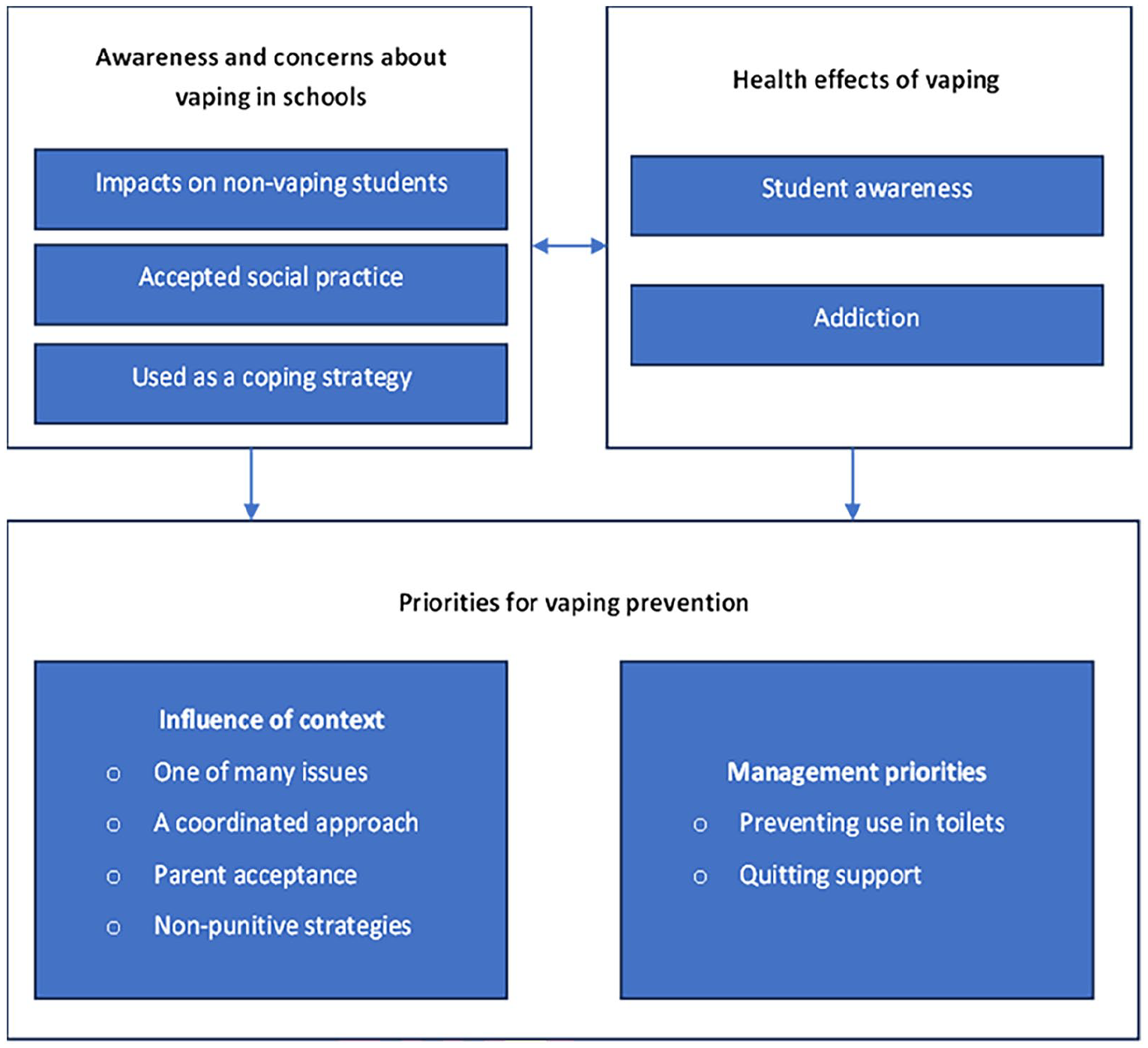
Schema for teacher perceptions and experiences of vaping in schools.
Awareness of student vape use and concern about vaping in schools
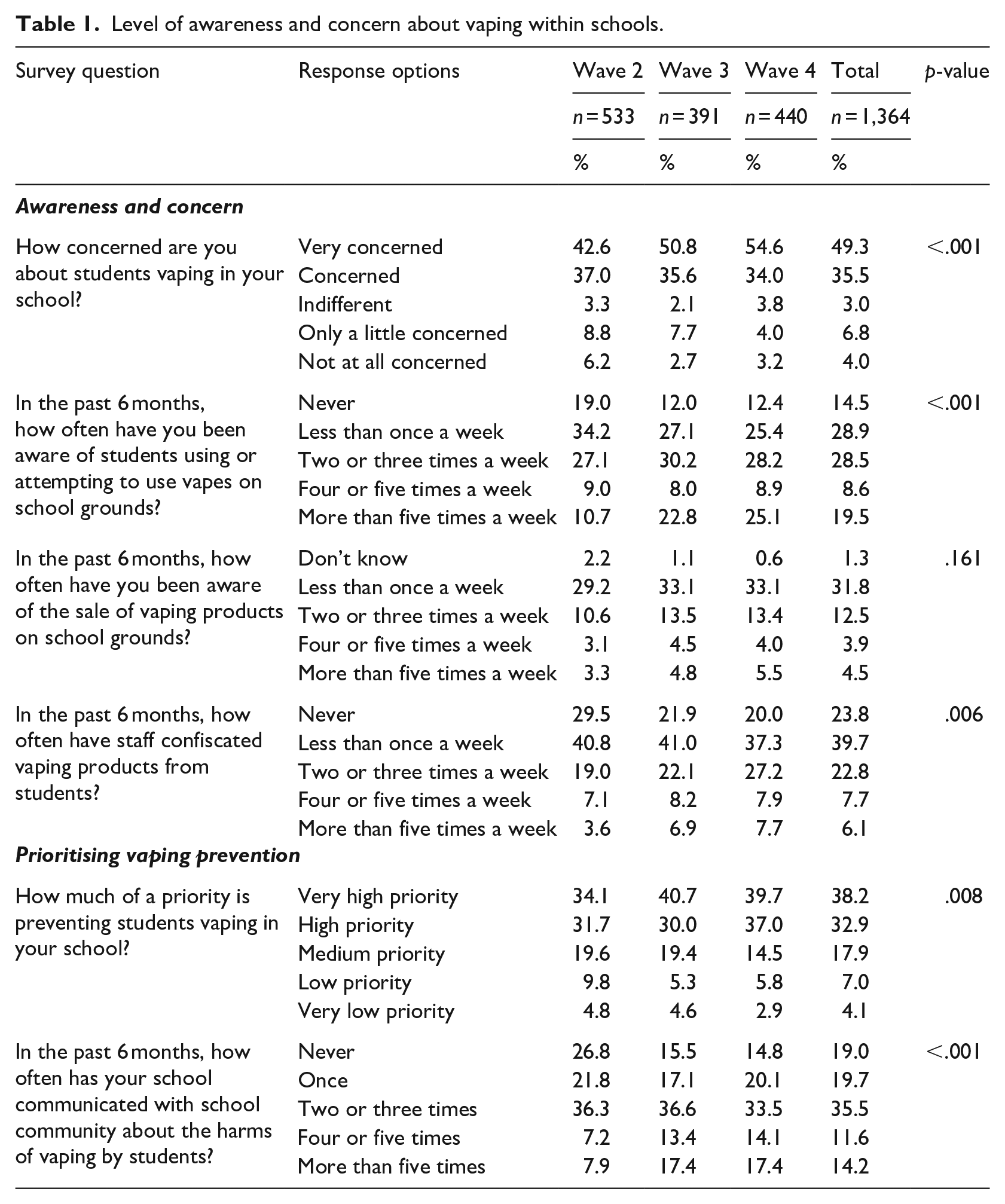
Concern about vaping at schools was high, with 88.6% of teachers in Wave 4 online surveys reporting being concerned or very concerned, an increase from 79.6% in Wave 2 to 86.4% in Wave 3 (Table 1). In Wave 4, 25.1% of teachers were aware of student vape use on school grounds ⩾5 times/week, an increase from 10.7% in Wave 2% to 22.8% in Wave 3. The proportion of teachers who reported confiscating vaping products from students 2–3 times/week increased from 19.0% in Wave 2 to 22.1% and 27.2% in Waves 3 and 4, respectively. Those who did so ⩾5 times/week also increased with each wave (from 3.6% to 6.9% to 7.7%). Teacher awareness of the sale of vaping products on school grounds remained relatively stable over time.
Level of awareness and concern about vaping within schools.
Focus group discussions confirmed increased teacher awareness of vaping in schools: ‘Before, when you smelt something fruity and delicious, you just thought it was something fruity and delicious, now you know it’s vapes’ (metropolitan non-government principal/administrator). Teachers discussed that vaping was widespread. For example, ‘I think it’s across the board – it doesn’t matter what socioeconomic level, gender or age’ (rural government teacher). Teachers across all schools expressed increasing concern about vaping: ‘I mean we’re very worried – it’s one of the big things that we’re really worried about. We’ve seen it escalate. It’s a huge problem’ (metropolitan non-government principal/administrator). Teachers expressed a range of concerns. The top three were the impact on non-vaping students, the established social acceptability of vaping and the use of vapes as a coping strategy by students.
Impact on non-vaping students
Teachers discussed the frustration of non-vaping students: ‘Some kids are really angry about it. They think it’s stupid, not healthy, but they’re not calling them out’ (metropolitan non-government principal/administrator).
Acknowledging school toilets as a common place for vaping, others reported the apprehension non-vaping students experience, with one teacher reporting that some students ‘don’t feel safe in the toilets – not just the vaping but the antisocial behaviour’ (rural non-government teacher).
The established social acceptability of vaping
Vaping as an accepted social practice seemed embedded in all discussions: ‘I don’t think it’s reduced, I think it’s been normalised’ (metropolitan non-government principal/administrator). One teacher mentioned that ‘it’s almost like now it’s a socially accepted practice – there’s kind of nothing wrong with vaping – they’re not trying to hide it’ (metropolitan non-government teacher). Others highlighted social reasons for vaping, including to feel connection or belonging with peers: ‘social factors are a big part of it and that worries me – as more people do it, it becomes more normalised and then that social pressure to do it because everyone else is’ (metropolitan government principal/administrator).
Vapes used as a coping strategy
Vaping as a stress-related coping strategy was mentioned by many teachers, indicating acceptance that some students vape to calm or relax themselves: . . . identifying vaping as – one of the coping behaviours that kids might have in times of stress (metropolitan government principal/administrator) and some [students] ‘explain that it takes some of the stress away’ (metropolitan non-government teacher). Conversely, others were sceptical, reporting that students may use mental health as an excuse to vape: ‘I’m using it to calm myself from a mental issue’ – as a ‘get out of jail free’ (metropolitan non-government principal/administrator).
Perceived harms of vaping in young people
There was overall strong agreement that vapes are unsafe for young people to use, with marginal non-linear changes in the level of agreement across time (p = .04, Table 2). There was also strong and consistent overall agreement that vaping can harm the developing brain (4.5/5, p = .267). Teacher agreement that vaping during adolescence can cause addiction (Wave 2: 4.58/5, Wave 3: 4.64/5, Wave 4.71/5) was high and strengthened over time (p < .001). Agreement with the statement that ‘it is unsafe to use vapes around others’ was also high (4.21 overall), although it significantly varied across waves (p < .001; Wave 2: 4.25/5, Wave 3: 4.11/5, Wave 4:28/5)
Agreement about the harms of vaping in young people.
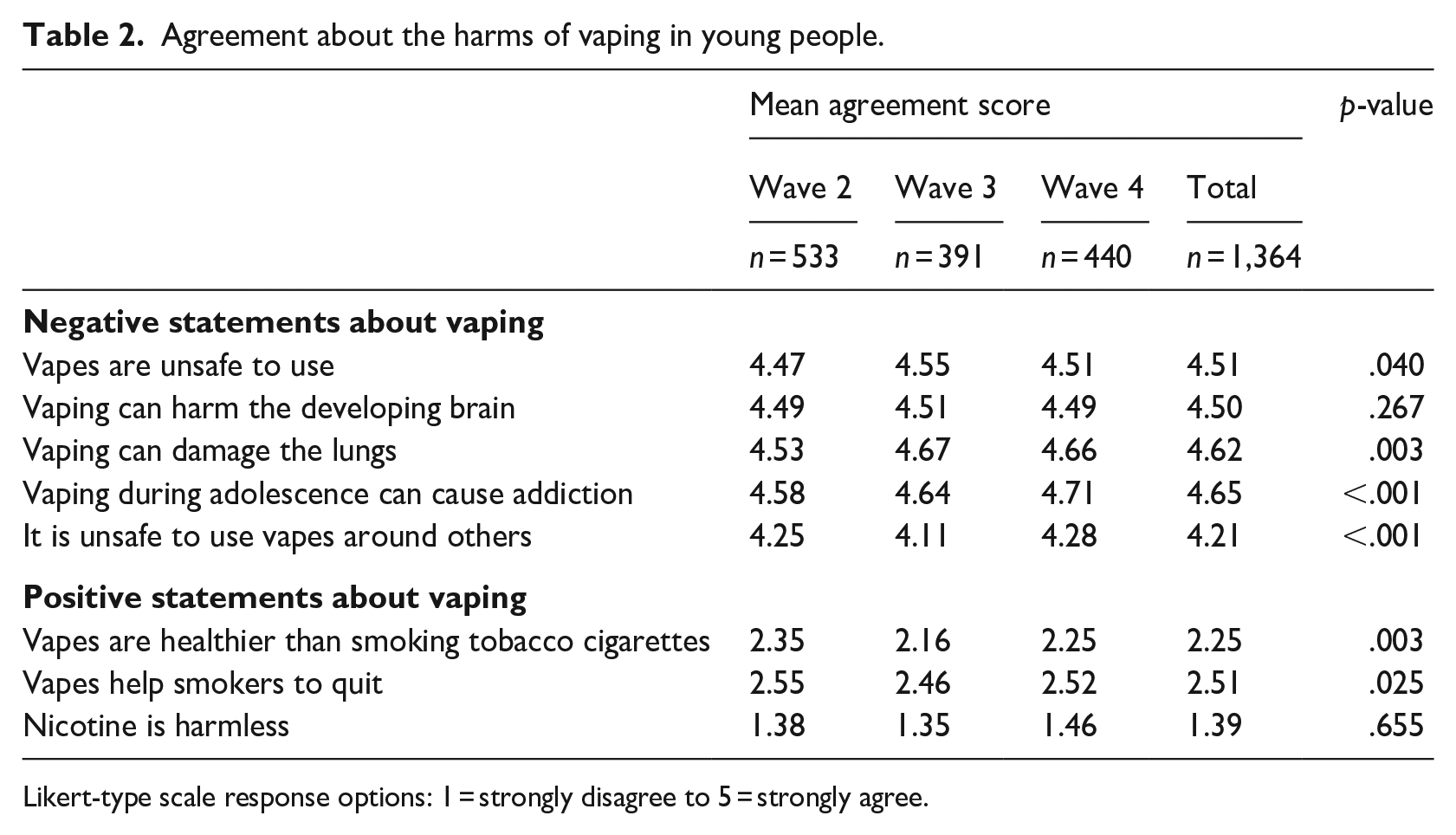
Likert-type scale response options: 1 = strongly disagree to 5 = strongly agree.
Teachers disagreed that vapes are healthier than smoking cigarettes (Wave 2: 2.35/5, Wave 3: 2.16/5, Wave 4: 2.25/5, p = .003) and that vapes help smokers to quit (Wave 2: 2.55/5, Wave 3: 2.46/5, Wave 4: 2.52/5, p = .025). There was very low agreement that nicotine is harmless with little change in the level of agreement across time.
Student awareness of health harms
Most teachers expressed awareness of increased information about the health effects of vaping.
‘The knowledge increased very quickly once people realised it was bad. You could say, “Is vaping healthy?” and they [students] would say, “No, it’s not”’ (metropolitan non-government principal/administrator). One teacher reported that when ‘talking to students about the health risks, they find it similar to energy or soft drink – they know they’re not supposed to have it, but they do it anyway’ (metropolitan government teacher). Another noted that some non-vaping students ‘looked down’ on students who vaped due to the health effects: Students want to make the right choices – so they look down on it [vaping] – ‘it’s not adding anything positive to my wellbeing’ and others [students] have heard stories about negative reactions – ‘why would you do something that can give you such a negative feeling?’ (metropolitan government principal/administrator).
Student addiction to vapes
Consistent with high and increasing agreement from survey findings that vaping can cause addiction, and that nicotine is not harmless, focus group discussions indicated that most teachers were aware of vaping addiction among their students. One teacher suggested that social acceptability of vaping among students lent itself to dependency on vaping: it starts as the social thing, the cool factor ‘I’m [a student] trying it out because it’s what everyone’s doing’. But I think there’s a point at which addiction kicks in–‘the things that stress me, depress me, make me anxious, this is now something that’s relieving and I’m stuck in the habit of it’ (metropolitan non-government principal/administrator).
Withdrawal symptoms among students addicted to vaping were observed by some teachers. One participating teacher who observed students at a school camp commented that: ‘within hours every kid with an addiction and no access – was sweating, aggravated’ (rural government teacher). Some expressed frustration with students leaving the classroom to ‘go to the toilet’ to vape, disrupting students learning. Others were more reflective, seeming to understand the process and signs of nicotine addiction: ‘I think addiction’s such a gradual thing that when a teenager becomes addicted it’s very hard for them to reach a point where they say, “I’m addicted”’ (metropolitan non-government teacher).
Prioritising vaping prevention: school management of the problem
Survey findings showed an increase in the proportion of teachers who responded that preventing vaping at school was a high or very high priority (Wave 2: 65.8%, Wave 3: 70.7%, Wave 4: 76.7%, Table 2). School communication with parents and carers about the harms of vaping by students increased, with 15.1%, 30.8% and 31.5% of teachers in Waves 2, 3 and 4 reporting that this occurred ⩾4 times in the past 6 months.
Focus group findings aligned with the view that vaping prevention was a school priority, with consensus from teachers that schools needed to ‘manage the problem’.
Certain elements of our school community denied [vape use] was as significant as what it was – no one can deny that anymore. We’re behind where we should be–in being proactive to address it (metropolitan government principal/administrator).
Teacher views about preventing or managing vaping were largely driven by a combination of concern about vaping and perceptions of the negative health effects (Figure 1), which were interrelated. Discussions about how schools managed the vaping problem centred on (a) contextual factors influencing a school’s approach to management strategies and (b) priority areas for their prevention efforts.
The influence of context
Vaping as one of many school priorities was raised in most focus groups. Teachers acknowledged that conflicting priorities of mental health challenges, violence, bullying and self-harm behaviours made vaping a lower priority: ‘We’re time poor and drained – I’ve got kids who self-harm and want to kill themselves – I don’t care if they’re vaping’ (metropolitan government teacher). Increasing expectations manifested in teachers feeling overstretched: ‘we become the mental health service, the addiction service, we’re just taking on so many roles’ (rural government principal/administrator).
Parental involvement was recognised by some teachers as important to manage vaping. A few identified that parental attitudes may have shifted from denial that their child vaped to one of accepting and acknowledging the pervasive nature of vaping among young people: ‘Parents are [more] aware – not naïve that their kid’s not doing it. There is more proactive follow-up by parents’ (metropolitan non-government principal/administrator). Conversely, others felt that some parents preferred established boundaries between school and home: while it needs to be a partnership – some [parents] want you to simply educate – ‘don’t tell me how to parent’. It’s educating not just around subject matter – this is a problem beyond school doors (rural non-government principal/administrator).
Some school principals/administrators expressed that they were still trying to find what might work best in managing vaping but identified an inconsistent and uncoordinated approach across schools as a barrier.
Everyone is to some extent, floundering around trying to find something that works rather than sharing ideas – to have a co-ordinated approach. Part of the problem is that schools are doing their best, but there’s no comprehensive plan to target the issue (metropolitan government principal/administrator).
Punitive measures such as suspension were commonly referred to but were largely seen as ineffective: ‘Policing only goes so far. If you don’t focus on education and supply, you’ll only brush the surface. They’ll find ways around it’ (metropolitan government principal/administrator). Addressing vaping as a health rather than a disciplinary issue was seen as an alternative strategy: ‘there’s a lot of communication around the negativity of vaping – we try to make kids informed of the choices they’re making’ (metropolitan government principal/administrator). This included adopting a holistic approach to support students: If they’re addicted, let’s forget the punitive suspension – let’s be solution focused and work with the families and the students themselves (metropolitan non-government principal/administrator).
Management priorities
Vaping in toilets and cessation support were consistently mentioned as priority areas. Strategies to reduce vaping in toilets received the most attention across all focus groups. Some schools (mostly non-government schools) had ‘installed vape detectors in the toilets, with CCTV cameras. We’re trying to get a message of zero tolerance’ (metropolitan non-government teacher). A few teachers disagreed that vape detectors were worthwhile considering costs and time invested to monitor alarms and cameras: ‘One of our close high schools spent $70,000 [on vape detectors]. The principal’s phone dings but when he gets there they’re gone. His day is consumed by trying to bust people’ (rural principal/administrator). Some schools (non-government and government) required teachers to record students leaving the classroom: ‘We’re making that public to parents – “Look, your daughter’s going to the toilet all the time”. “No, she’s not”. “Yeah, she’s going twice every lesson”’ (metropolitan non-government teacher).
Teachers mostly felt ill-equipped to provide cessation advice and were concerned about how to support students to stop vaping. One teacher said that their students were relaxed when speaking about addiction and cessation: ‘Like Miss, I know I won’t get addicted, it’s fine, I can stop whenever I want to’ (metropolitan government teacher). In contrast, some school principals reported parents requesting support for their children to quit vaping. Recommendations discussed included talking through strategies with their medical practitioner, speaking to a psychologist or using nicotine replacement therapy. Teacher discussions about cessation tended to focus on conversations with students: Kids try and go cold turkey and then they’re at that party two weeks later and it’s just so easy to, yeah. To get rid of the addiction it’s the accessibility (metropolitan non-government teacher).
Discussion
This study is the first to our knowledge to investigate teacher perceptions of vaping in Australian secondary schools across time, adding to developing research with Australian teachers. Our findings show high and increasing teacher concern about vaping, complemented by focus group findings that elaborated on teacher experiences and challenges. Teachers highlighted how vape use among students at secondary schools is a common and complex problem.
Teachers are concerned about vaping
Consistent with other Australian (Jongenelis and Robinson, 2023; Lockett et al., 2024; Pettigrew et al., 2022) and international research (Fakeh Campbell et al., 2020; Liu et al., 2023; Schillo et al., 2020), teachers in our study were worried about vaping at school. Ease of access to vapes was reflected in the persistence of vaping in secondary schools (Watts et al., 2022), with widespread teacher perceptions that students view vaping as acceptable among their peers and vape as a stress-related coping mechanism. While research with teachers about the reasons for vaping among secondary school students is limited, relaxation, coping with stress and anxiety, peer influence and social norms are reported as important motivations (Donaldson et al., 2022; Jha and Kraguljac, 2021; Yazidjoglou et al., 2024).
Teachers strongly agreed that ‘vaping during adolescence can cause addiction’, with agreement increasing with time. Previous research has reported that Australian teachers are concerned about vaping addiction among students (Jongenelis and Robinson, 2023; Pettigrew et al., 2022) and has identified that teachers view addiction as a reason for ongoing vape use among students (Dai et al., 2021). Most teachers in this study seemed aware of what they perceived as vaping or nicotine addiction in students, but few described dependent behaviour characteristics among students, including physical symptoms of ‘withdrawal’. The level of understanding of addiction among most teachers was unclear and warrants further investigation.
Prioritising vaping prevention in secondary schools
Heightened teacher concerns did not translate into comprehensive or consistent school vaping-management strategies. Most agreed that vaping prevention was a priority, but this was a complex issue to engage with in practice. When discussing vaping prevention, school principals/administrators tended to focus on high-level management strategies compared to classroom teachers who discussed day-to-day student-management issues. Although the need for Australian schools to adopt vaping-specific policies (e.g. consequences for vaping at school, confiscation protocols, etc.) has been identified, few Australian teachers, including in our study, report such school policies (Jongenelis and Robinson, 2023; Pettigrew et al., 2022). Overall, balancing student behavioural and mental health issues with their teaching role left many feeling overwhelmed. Australian teachers report higher-than-average work stress (Thomson and Hillman, 2020), and our findings imply that an integrated vaping management approach across schools may improve teacher support. While literature about the effectiveness of vaping-prevention school policies is embryonic, it suggests the importance of aligning vaping management with an educational focus (Langford et al., 2017), appropriate training (Patel et al., 2022) and enforcement (Schillo et al., 2020).
Teachers’ addiction and cessation concerns and mental health challenges associated with vaping possibly shaped their emerging views of vaping as a health rather than behavioural or disciplinary issue. These views may contribute to reports of using non-punitive approaches such as restorative and open student-teacher communication (Cole et al., 2024). Punitive measures such as suspension seem common but did not alleviate concerns or reduce vaping in schools.
Cessation support was seen as an action priority, with teachers reporting that some parents requested cessation support for their adolescents. Evidence-based cessation advice for teachers to provide to students is limited, but some school principals/administrators expressed feeling responsible for supporting students and parents. Better vaping-cessation provision in schools are needed, for example, staff-wide training, including supporting school nurses with specialist cessation support skills or clear referral pathways to healthcare professionals. For adolescents attempting to quit vaping, unassisted cessation and taking advice from a friend appear to be common methods (Jones et al., 2023), while exposure to vaping at school is a barrier (Kong et al., 2021). Strategies to support vaping cessation for students include changing social norms and reducing vaping access and appeal (Jongenelis et al., 2024; Kong et al., 2021).
Reducing or stopping vaping in toilets was also a priority for most teachers. Despite extensive discussion about vaping in school toilets, no consistent management strategy was identified. Teachers seemed divided on the utility of vape detectors when balanced against the financial cost, detector accuracy and reliability and the time spent monitoring them.
The broader community and policy context
While this study explored vaping from teacher perspectives, adolescent vaping is a public health concern, and the community-wide context cannot be ignored. At data collection, nicotine vapes were widely available through general retailers (Rose et al., 2023). From 1 July 2024, Australian legislative changes require that all vapes are only sold in pharmacies (Australian Government Department of Health and Aged Care, 2024). Adolescents under 18 years of age need a doctor/nurse practitioner prescription to purchase vapes for smoking cessation or managing nicotine dependence, with limitations on flavours, nicotine content and packaging. This legislation, implemented after our data collection, aims to reduce access to vapes by young people. These changes may reduce the burden on teachers in managing vaping, and ongoing monitoring is needed to understand the effects on teachers in secondary schools.
Vaping as a community-wide problem requires strong partnerships and a comprehensive management strategy (Jongenelis and Robinson, 2023; Lockett et al., 2024; Pettigrew et al., 2022; Thomas et al., 2024). Clearly communicating Australian vaping legislation to all teachers is critical to raise awareness and reduce feelings of responsibility for managing vaping felt by many teachers (Thomas et al., 2024). Examples of inter-sectoral collaborations to reduce vaping among young people include an NSW Vaping Roundtable bringing together school leaders, students and health experts to discuss ways to combat vaping in schools (NSW Department of Education, 2023, 2024a) and providing strong curriculum content and guidance to improve student as well as teacher awareness of harms and critical thinking skills to facilitate informed decisions about vaping (NSW Department of Education, 2024b; Our Futures, 2024). These initiatives provide the foundation for further efforts beyond the school setting to support teachers to combat vaping in schools.
Strengths and limitations
This study used national survey data across three time points which were contextualised using qualitative data at the last time point. Online panels were used for recruitment, which is standard practice in much quantitative and qualitative research but may have resulted in limited recruitment from certain members of the teaching community. Our study was cross-sectional in nature and may not be representative of the Australian population. Focus group data from teachers from a range of NSW schools allowed for diverse perspectives but may limit the generalisability of qualitative findings to other Australian states. The inherent bias with self-reported data should be considered when interpreting findings. While demographic data were collected from teachers who completed online surveys, less detailed data were collected from focus group participants.
Conclusion
Findings from this mixed methods study add to limited evidence of Australian teacher perceptions and experiences of vaping in schools. Student vaping is viewed by teachers as persistent, and its impact at school is of ongoing concern. The lack of consistent school vaping-management approaches may add to teacher workloads by removing them from their core roles as educators. Vaping is a community-wide problem, and a coordinated government response is required to support teachers in managing this problem to reduce vape use inside school gates. Future research should focus on how the legislative changes impact access to vapes among secondary school students and the effects of vaping in the school environment.
Supplemental Material
sj-docx-1-hej-10.1177_00178969251334068 – Supplemental material for ‘We’ve seen it escalate – it’s a huge problem’: A mixed methods study of teachers’ perceptions of vaping in secondary schools
Supplemental material, sj-docx-1-hej-10.1177_00178969251334068 for ‘We’ve seen it escalate – it’s a huge problem’: A mixed methods study of teachers’ perceptions of vaping in secondary schools by Bronwyn McGill, Shiho Rose, Christina Watts, Sam Egger, Alecia Brooks, Emily Jenkinson, Renee West, Anita Dessaix, Ciara Madigan and Becky Freeman in Health Education Journal
Supplemental Material
sj-docx-2-hej-10.1177_00178969251334068 – Supplemental material for ‘We’ve seen it escalate – it’s a huge problem’: A mixed methods study of teachers’ perceptions of vaping in secondary schools
Supplemental material, sj-docx-2-hej-10.1177_00178969251334068 for ‘We’ve seen it escalate – it’s a huge problem’: A mixed methods study of teachers’ perceptions of vaping in secondary schools by Bronwyn McGill, Shiho Rose, Christina Watts, Sam Egger, Alecia Brooks, Emily Jenkinson, Renee West, Anita Dessaix, Ciara Madigan and Becky Freeman in Health Education Journal
Footnotes
Acknowledgements
We acknowledge and thank the members of the Generation Vape Research Project Advisory Committee for their advice, support and guidance on the development and implementation of this research.
Data availability
Data from this study are not available to be shared due to ethical requirements.
Declaration of conflicting interests
The author(s) declared the following potential conflicts of interest with respect to the research, authorship, and/or publication of this article: Christina Watts reports providing consultancy services to the Australian Government Department of Health and Aged Care and Cancer Council Australia on a report recommending strategic communications on e-cigarettes and young people and receiving research funding grants from Australian Government Department of Health and Ageing, Cancer Council NSW, NSW Ministry of Health, Cancer Institute NSW and Minderoo Foundation. Alecia Brooks reports providing adviser/consultation to Minderoo Foundation on Tobacco Control and young people and the NSW Young people and e-cigarettes reference group; the Australian Government Department of Health and Aged Care and Cancer Council Australia on a report recommending strategic communications on e-cigarettes and young people. Anita Dessaix is the Director, Cancer Prevention & Advocacy for Cancer Council NSW and reports providing consultancy services to the Australian Government Department of Health and Aged Care, and Cancer Council Australia on a report recommending strategic communications on e-cigarettes and young people; Cancer Institute NSW for vaping messaging (unpaid); the NSW Chief Health Officer e-cigarette expert panel (unpaid). Becky Freeman reports a relationship with Cancer Council Australia for consulting or advisory services, Cancer Council NSW for consulting or advisory services and funding grants, the Public Health Association of Australia Inc for travel reimbursement, the NSW Ministry of Health for consulting or advisory services and funding grants, Cancer Institute NSW for consulting or advisory services and advisor for vaping messaging (unpaid), the World Health Organization for consulting or advisory services and travel reimbursement, the Australian National Health and Medical Research Council for consulting or advisory services and the NSW Chief Health Officer (unpaid). Becky is also an editorial board member of Health Education Journal but had no role in the review and decision-making with respect to this publication. The remaining authors have no conflicts of interest to declare.
Funding
The author(s) disclosed receipt of the following financial support for the research, authorship, and/or publication of this article: this work was conducted with funding from the Australian Government Department of Health and Aged Care, the NSW Ministry of Health, Cancer Institute NSW and the Minderoo Foundation. The content of this article is solely the responsibility of the authors and does not necessarily represent the views of the funders.

Supplemental material
Supplemental material for this article is available online.
References
Supplementary Material
Please find the following supplemental material available below.
For Open Access articles published under a Creative Commons License, all supplemental material carries the same license as the article it is associated with.
For non-Open Access articles published, all supplemental material carries a non-exclusive license, and permission requests for re-use of supplemental material or any part of supplemental material shall be sent directly to the copyright owner as specified in the copyright notice associated with the article.
