




Abstract
Objective:
According to the World Health Organisation’s estimates, food contamination is linked to 23 million cases of illness and 5,000 deaths per year in Europe. While changes in food production and distribution play an important role in managing contamination risk, foodborne illnesses can originate in food-handling practices at home. This study aimed to assess how a food safety education initiative in which students learned about food safety risks and minimising risk behaviour improved students’ knowledge about food safety.
Setting:
Three public schools, two in Hungary and one in Portugal.
Methods:
A study of 105 Hungarian and Portuguese students between 11 and 18 years of age were invited to prepare Personal Meaning Maps before and after the delivery of a food safety lesson delivered by a school science teacher. Knowledge and risk perceptions of food safety, before and after the delivery of the lesson, were assessed both quantitatively and qualitatively.
Results:
Food safety topics that were scored highest were those that already had strong scores in the diagnostic phase, such as those related to personal hygiene and use-by dates. However, the largest increases in mastery scores were in less-known-about topics such as cold chain and cross-contamination risks. Idea associations take place often by linking specific contents to already-known-about concepts.
Conclusion:
Findings show that students more readily engaged with practical concepts directly linked to their experience of food handling at home than to more abstract concepts of food safety and contamination.
Introduction
With 600 million diseases yearly, as estimated by the World Health Organisation (WHO) in 2010, foodborne illnesses impose a heavy burden on health with an impact that can reach 420,000 deaths and 33 million disability-adjusted life years every year (WHO, 2015). In 2010, in Europe alone, the number of people who fell ill after eating contaminated food was 23 million (WHO, 2017). A great variety of different pathogens can contaminate food and cause disease. The top five (Campylobacter, Salmonella, norovirus, Toxoplasma and Listeria) are responsible for 70% of food-related diseases in Europe. While sources of contamination are present throughout the food chain and can start thousands of kilometres from their health impacts, home-originated contaminations account for around 40% of outbreaks (European Food Safety Authority and European Centre for Disease Prevention and Control, 2021). Risk-reduction measures are therefore important throughout the supply chain, including in consumer practices at home, ranging from shopping to cooking and storing food.
Public campaigns targeting consumers often assume that food sourcing and preparation risks are due to a lack of knowledge that can be dealt with by providing consumers with more information. Initiatives that start from this premise can sometimes miss how food handling in a domestic context is shaped by cultural factors such as cooking repertoires, habits of family care, daily routines and restrictions of income, or material constraints on home space organisation. In addition, changing consumer practices so as to reduce food contamination risks is especially important in school-aged children, not only because many food-handling practices are formed in childhood (Young et al., 2019) but also because children are particularly vulnerable to foodborne diseases.
Education about food safety is one of the objectives of SafeConsume, a transdisciplinary project involving partners from 14 countries that sought to understand and reduce food-handling risks at home. In support of this objective, the project developed a set of resources to help educators teach about food safety, including an animation film, a set of class activities and support materials that were developed from the findings of research about domestic food practices. One of these resources, the Food Journey, followed food safety risks and solutions across all stages of food handling, from store to plate, signalling common actions that increased the risk of food contamination and offering possibilities for risk reduction through examples and practical advice. The Food Journey, which is the object of this study, includes materials to help teachers prepare the lesson according to their own background knowledge on the topic while giving them the possibility of choosing how to deliver the lesson. It is intended to be flexible enough to be used with students of different ages and differing levels of familiarity with food safety.
This study employed a methodological tool in the form of Personal Meaning Maps (PMMs) as a way to assess the learning effectiveness of the Food Journey lesson in two different countries, Hungary and Portugal, and also to understand how students learn about food safety in a classroom environment. In the context of this study, the role of prior knowledge and the construction of personal meanings are assumed to be important factors shaping the learning experience. We argue that PMMs, a tool originally developed for use in open learning environments, is also suitable for use in more formal settings. 1 COVID-19 restrictions, which impacted the implementation of both the Food Journey Lesson and its assessment during the 2020–2021 school year, provided an opportunity to test the suitability of PMM’s in a semi-formal context and assess the limitations and strengths of this approach.
A contextual model of learning
In most educational settings, assessing formal learning outcomes is a task of quantification, where individual performance is measured against some reference or benchmark. The tools of choice for this assessment such as multiple-choice tests imply a uniform conception of the learning process and presuppose a direct relationship between knowledge transmission and ability to choose the correct answer. In the field of science education, informal learning contexts such as visits to science museums in which students are invited to actively participate in learning and knowledge acquisition have provided opportunities for rethinking learning outcomes that can go beyond the constraints of a standardised assessment of learning (Turner, 2008). Such experiences, conceived as open learning environments, presuppose a different understanding of knowledge, often at odds with shared understandings of knowledge acquisition in the classroom. This separation has been framed as a paradigm split between a cognitive model, based on behaviourist stimulus-response ideas (Falk and Dierking, 2012), and a contextual learning model, the latter becoming a dominant approach in the public understanding of science since the 1990s (Turner, 2008).
Two theoretical approaches have been pointed out as key influences on this shift, both of which share a constructivist stance in the sense that they understand knowledge not simply as a process of internalising facts but as one in which subjects are inextricable from the objects they seek to know. A cognitive constructivist approach, drawing on Jean Piaget’s ideas about child development, argues that prior knowledge is a strong factor influencing learning (Alsop, 1999) and that reasoning presupposes the effective organisation of prior knowledge (Dhindsa et al., 2011). Social constructivist perspectives on science have also been involved in debates about science learning, arguing that the structure of the natural world cannot be understood as disconnected from human practices (Roth et al., 1996). In the field of science and technology studies (STS), these perspectives have drawn attention to the localised character of knowledge development in scientific work, its network characteristics and its dependence on other systems such as economics and politics (Gleason, 2017). STS has contributed to debates about the idea of the unity of science, challenging the idea of learning as an act of individual cognition and arguing that scientific literacy should be treated as an emergent feature of collective human and non-human action (Gleason, 2017).
As reference to constructivist views became common in the science museum literature, emphasising the contextual character of learning, so too did the idea of learning as involving personal constructions of meaning in which the visit experience was seen as building on previously acquired knowledge (Anderson et al., 2003). In what they termed their interactive experience model, Falk and Dierking (2012) argued that the museum experience involves an interaction between personal, sociocultural and physical contexts. By personal context, the authors mean that learning in an open environment is significantly influenced by past knowledge, interest and beliefs; the sociocultural context includes both the cultural embeddedness of the museum in society and the interactions that subjects have with others, visitors and otherwise and the physical context refers to large-scale properties such as space or climate, as well as smaller features such as exhibition objects (Falk and Storksdieck, 2005a). According to their model, no two visitors have the same experience in a science museum, and therefore, learning should not be assessed using a predetermined way, such as by the use of multiple-choice tests, but should be open to many different kinds of assessment (Bowker and Jasper, 2007).
Personal Meaning Maps
The work of Falk and Dierking (2012) encouraged a focus on the construction of personal meanings (Faria et al., 2019) through the use of PMMs. Although PMMs have been most extensively used in informal settings, mapping tools in general have not been entirely absent of classroom-based knowledge assessment at least since the 1980s (Edwards and Fraser, 1983), and the development of new scoring methods has allowed concept maps to be analysed not only qualitatively but also quantitatively. As shown by Llinás et al. (2020), mapping tools and scoring methods can be designed to mimic the results of standardised instruments while also retaining some of the benefits of qualitative approaches, such as signalling misconceptions. PMMs offer a means by which students can be encouraged to express a range of meanings and associations between meanings related to a learning experience. PMMs do not require that a specific correct answer is to be provided to show that learning has been successful (Faria et al., 2019) as they are used to assess how a learning experience changes an individual’s personal understanding.
PMMs have often been used to assess learning in science visits (Anderson et al., 2000; Bowker and Jasper, 2007; Falk and Storksdieck, 2005a; Lelliott, 2007), with a special focus on changes in meaning associations between pre- and post-visits. PMMs are flexible enough to be compatible both with an approach focused on learning outcomes, although still centred on individual change, and with an approach focused on associations of meanings. Falk and Dierking (2012) devised a method for analysing PMMs based on four dimensions, which is suitable for quantitative processing: extent measures growth of vocabulary quantity; breadth measures changes in concept categories; depth refers to how rich is the understanding of used concepts and mastery to the overall quality of the participant’s understanding. Other methods of PMM analysis highlight the type of associations between concepts and ideas. Bloom (1995) classified such associations and links as belonging to causal, spatial, temporal, requisite, classificatory and attributional types. Anderson et al. (2003) propose a set of categories that describe knowledge transformations between phases such as pre- and post-visit: the addition of new concepts, the emergence of existing concepts not revealed earlier, progressive differentiation, disassociation, recontextualisation, the merging of separate conceptions and personal theory development.
Individuals come to the learning process from a wide variety of sociocultural and personal backgrounds, and the standardised nature of questionnaires makes it harder for individuals to mobilise (and share) their own knowledge and experiences about the subject (Bowker and Jasper, 2007). Insofar as the key insights from a constructivist approach still stand in a classroom-based learning experience, we argue that there can be advantages to the use of PMMs as tools to measure the effectiveness of educational materials as well as to develop insights into learning that can be useful in the context of education about health hazards.
Methods
Study design
In this study, a PMM-based methodology was used to assess a learning experience among secondary school age students in Hungary and Portugal. The activities, including the PMMs and the intervention, were strongly impacted by the COVID-19 pandemic as the fieldwork took place from the end of October to the beginning of November 2020 in Portugal and during December 2020 in Hungary. Due to the public health measures enforced in each country, research teams were required to avoid close contact with students, and only one researcher was allowed contact with each group of students. In one of the classes in Hungary, the implementation was mixed: It started in class but due to the changed public health conditions, the activity had to be completed at home and sent to the students as part of online homework. One of the advantages of the PMM methodology is that it can provide the basis for a subsequent open-ended interview in which students are asked about their maps and explain the associations between concepts. In this study, this was not possible due to COVID-19-related restrictions in schools.
The method involved two phases of data collection. In the first, the diagnostic phase, participants were given a prompt (the term ‘food safety’) at the centre of a sheet of paper and asked to write down words or expressions they associate with it and to freely organise these into a conceptual map that reflected their own understanding of the subject. After this, the students took part in a learning experience about food safety, structured around the concept of a food journey (see Figure 1), a sequence from shopping to cooking and storing food in which the risks linked with foodborne illnesses are associated with daily practices. At each point along the way, actions are considered from the perspective of food risks and practical steps to reduce them. The teachers facilitated discussion about topics such as temperature control, use-by dates, cross-contamination between foodstuffs, personal and utensil hygiene and the thermal inactivation of contaminants. The lesson also includes an animation and an activity that requires students to describe home practices and identify food safety risks and solutions.
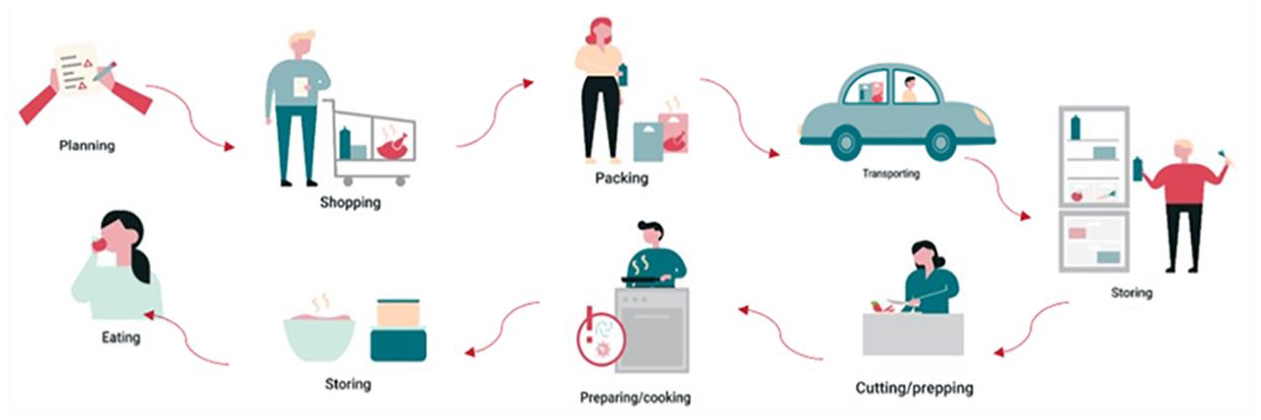
Steps in the food journey lesson.
In a second data-collection round, the evaluation phase, participants were invited to revisit the PMM they had drawn before and given the opportunity to add to or adjust their map in accordance to what they have learned from the intervention, mimicking the learning process, whereby individuals are active participants in knowledge construction, building on past understandings or background knowledge on the topic (Bloom, 1995; Reckwitz, 2002). To keep track of what was and had been written at each stage of the food journey, participants were asked to use pens with different colours. Given that the lesson and the activities used for the evaluation rely mostly on concepts that the students are already familiar with from everyday life and that all students involved were over 11 years old, the need to clarify concepts with the students was not expected to be an issue when interpreting the maps. This was confirmed during the analytical stage.
A total of 105 participants took part in the study. In Hungary, two classes took place in two different schools: School A with 30 students between 11 and 14 years of age and School B with 10 students aged from 15 to 18 years. In Portugal, three classes took place in the same school: one class with 25 students between 11 and 14 years of age, and two classes with students aged from 15 to 18 years, both with 20 students.
Data analysis
The objective of the quantitative analysis was to assess learning outcomes following the food safety lesson, so the analysis focused on the mastery and depth scores as previously explained (Falk and Storksdieck, 2005b). The PMMs’ content was coded into thematic categories using the ideas and concepts present in the map but also from topics of the food safety lesson. The resulting grid of 34 items was divided into eight conceptual categories: cross-contamination, cold chain, personal and food contamination, use-by dates, thermal deactivation, leftovers, egg-specific risks and illnesses/pathogens. Each item was scored on two levels of ‘completeness’: Items that expressed a basic or generic understanding of the concept were coded with 0.5 points, while items that showed a more complete understanding of the concept were awarded 1 point.
The qualitative analysis aimed to capture transformations in food safety understandings based on links between ideas and how concepts were developed. PMMs were analysed for the identification of patterns in word groupings, visual connections and types of changes between phases. This analysis focused on identifying and interpreting patterns in the data, rather than on counting or measuring specific elements. The results were categorised and compared to the categories proposed by Anderson et al. (2003).
Findings
Mastery and depth
Average scores for the pre-intervention stage were very similar in both countries although the score for the post-intervention phase was higher for Portuguese students. Differences between schools in both countries show how changing teaching conditions due to pandemic constraints may have impacted evaluation. In School B in Hungary, the training effect was smaller (Figure 2). While, in the other schools, evaluation of the learning experience was undertaken in the context of a school class, in Hungary, students in School B completed their evaluation at home and a few days later (due to the lockdown measures imposed). In the latter case, student engagement may have been weaker and subject to potential interference by family members that the research team and the teacher could not completely control.
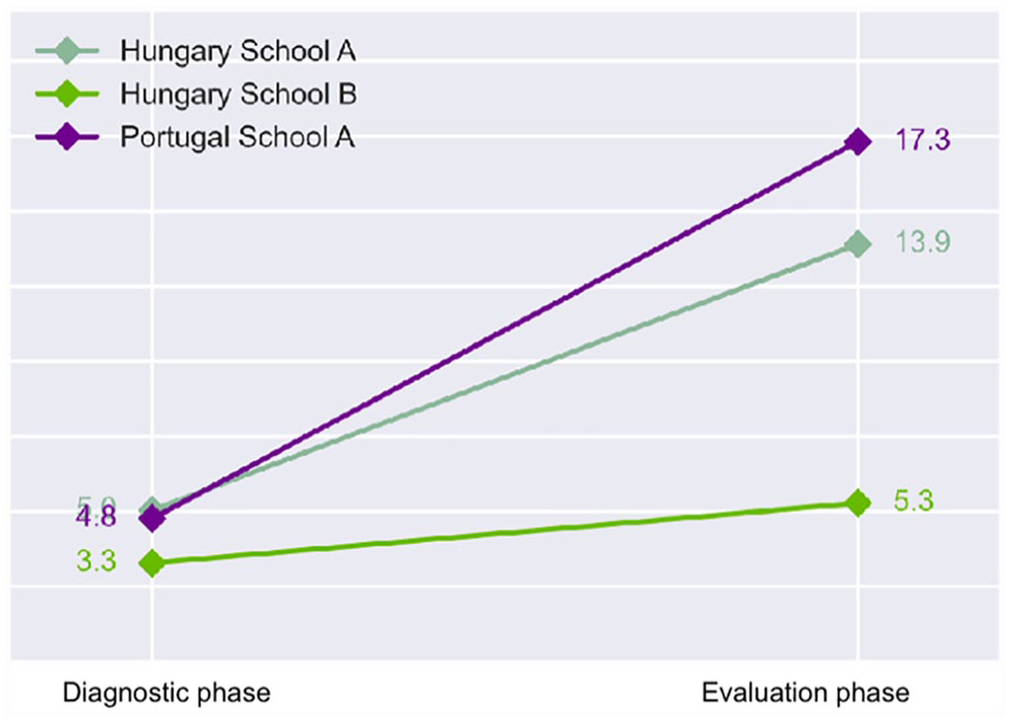
Mastery score changes.
Figure 3 shows the overall mastery score plus depth scores for each of the thematic groups identified in the PMMs. The groups with the higher average evaluation score were those related to personal and food contamination (e.g. washing hands, washing vegetables) and use-by dates (checking and avoiding the consumption of food items that are past their use-by date). However, these were also the groups for which the students had the most background knowledge (as measured by earlier diagnostic scores). Checking use-by dates has become ingrained into shopping practices, especially when dealing with potentially hazardous foodstuffs such as eggs (see Cardoso et al., 2021; Junqueira et al., 2022). The same can be said about hand- and food-washing practices, as lack of cleanliness has strong connotations with food contamination. People wash food for a diversity of reasons, not just to remove pathogens but also other contaminants that might potentially impact the food’s safety or quality such as the remnants of agro-industrial chemicals, dirt, slime or pieces of bone (Skuland et al., 2020). Similarly, handwashing is part of a shared cultural script that frames personal hygiene as a preventive measure against illnesses, which is meant to protect our own health and that of others and was reinforced during the COVID-19 pandemic, declared just 6 months before the data collection took place. These practices are also the ones with which students in this age range have direct experience. Thermal deactivation of pathogens by thoroughly cooking food, particularly meat, may be part of most adult’s food-handling scripts, but not so for young people in the age range 11 to 18 years who may have more limited experience cooking food but are likely familiar with simple food safety practices like washing food (e.g. fruit) or washing hands before eating.
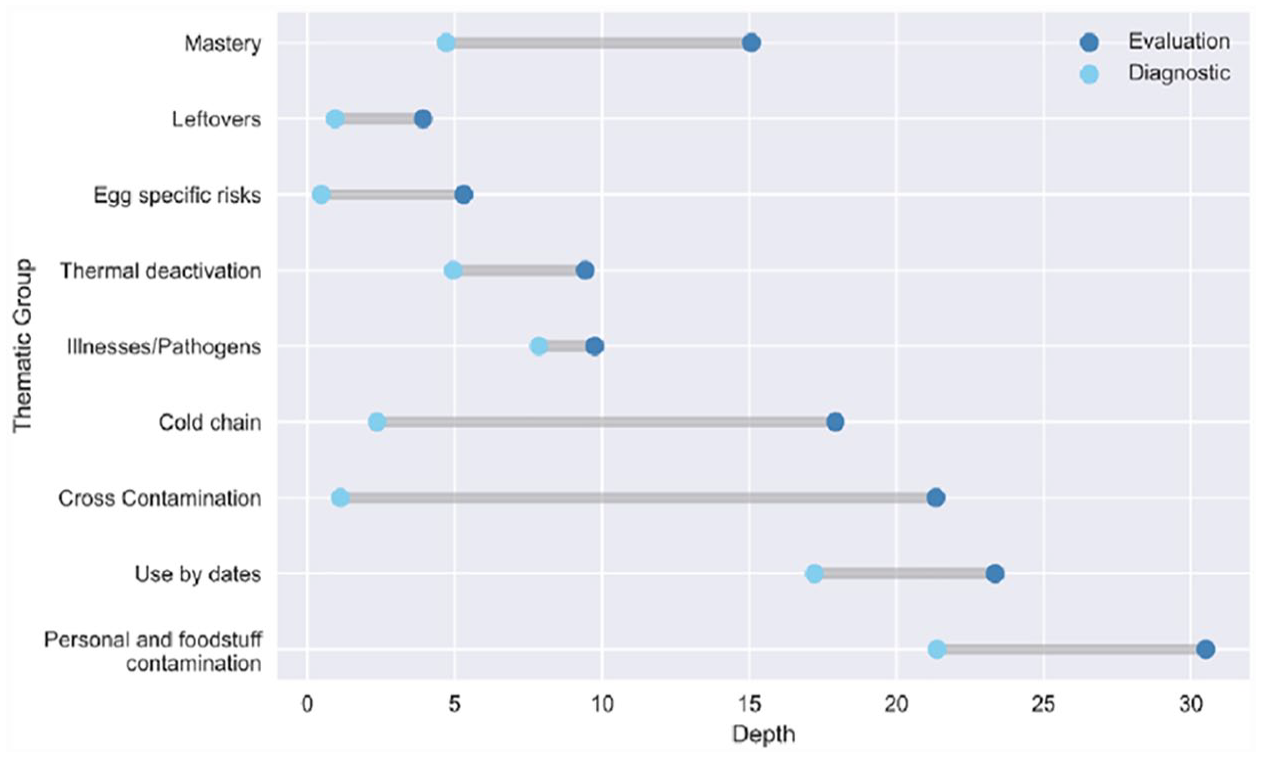
Overall mastery and depth scores for each of the thematic groups.
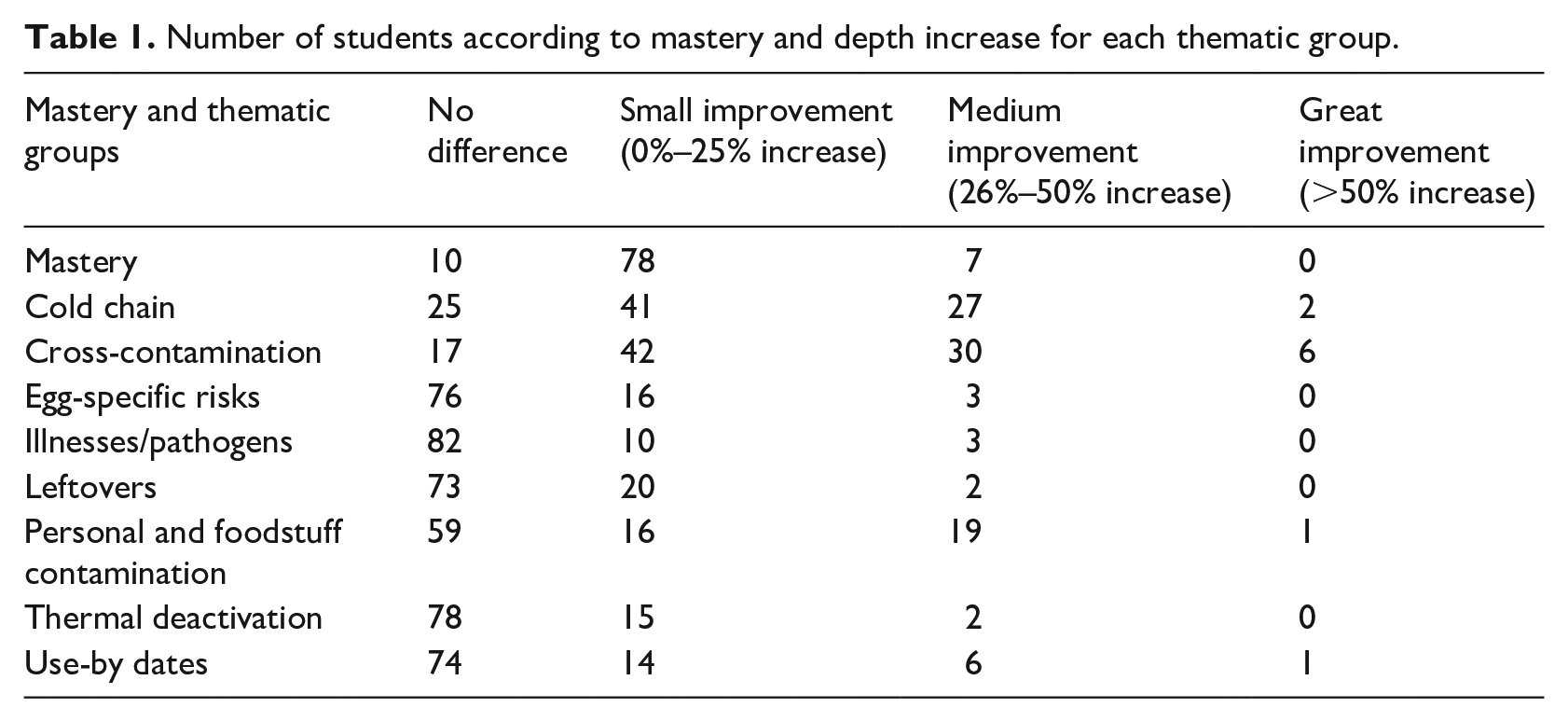
The largest increase in the depth score was observed in the cross-contamination and cold chain thematic groups, which were the main focus of the lesson. While cross-contamination and the cold chain are important concepts in organising food distribution and in professional cooking settings, many of the practices associated with them are unknown, more complex to understand or less compatible with established food-handling scripts for young people. For example, most people are aware that some foods should be kept cold but may not be confident about for how long they can be kept safely at room temperature nor all the needed steps to ensure an unbroken cold chain. Indeed, some of the practices involved may even be perceived as counter-intuitive – while rinsing vegetables or fruit is a recommended safety practice that helps remove pathogens from the food’s surface, washing meat, in particular chicken, can actually increase the risk of contamination by spreading pathogens to nearby food or surfaces (Kasza et al., 2022). On the whole, students started with very low knowledge of the practices associated with these two topics and improved significantly due to exposure during the food safety lesson. Table 1 shows the distribution of students based on the degree of increase in the number of concepts learned. Notably, the thematic groups of cross-contamination and cold chain contained the highest number of students who experienced a moderate to significant increase in new concepts learned. On the other hand, personal contamination, which started with a high level of knowledge, contained the highest number of students showing no increase in the number of concepts learned.
Number of students according to mastery and depth increase for each thematic group.
Although male and female students started with similar mastery scores, female students demonstrated a greater improvement in scores following the intervention, as can be seen in Figure 4. This gender bias was also evident in the depth scores for all food safety categories. While age had a smaller effect on mastery scores, it reinforced the gender differences. In fact, in the older age group (15–18 years), girls showed an even higher improvement in mastery scores than members of the younger group (11–14 years old). These results highlight the significant impact of gender role differences in learning about food safety. Young women are often socialised to prioritise household duties, including food preparation and safety, and may therefore pay closer attention to food safety information than boys. However, the findings also suggest that the intervention was not successful in addressing this gender bias. Without addressing young men’s difficulties in learning about food safety, interventions risk perpetuating gender inequalities.
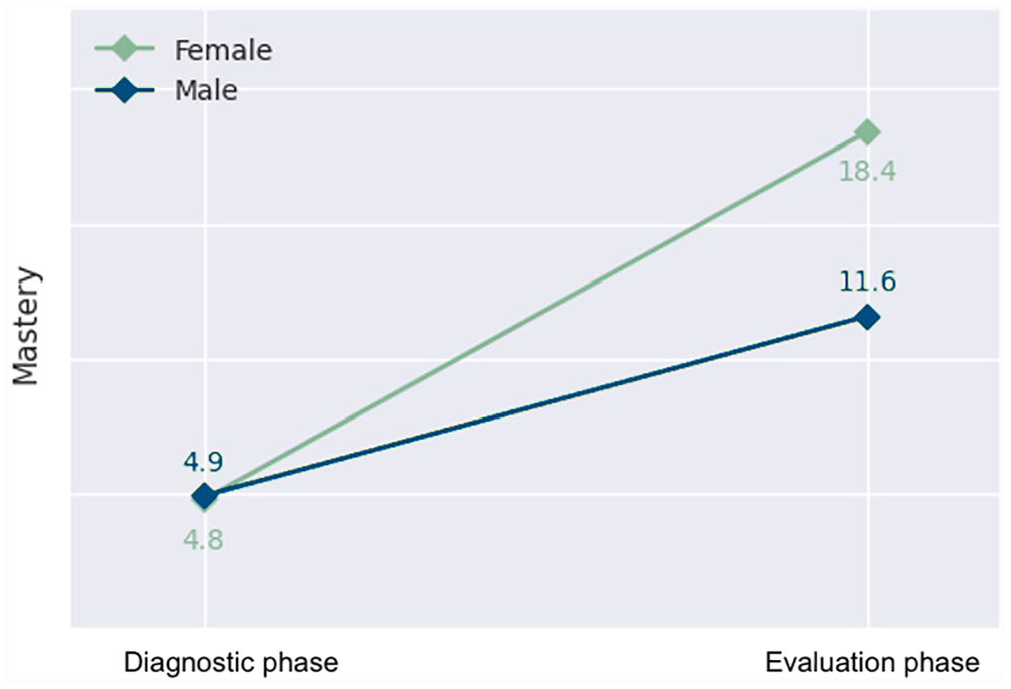
Overall mastery scores by gender.
Thematic groupings
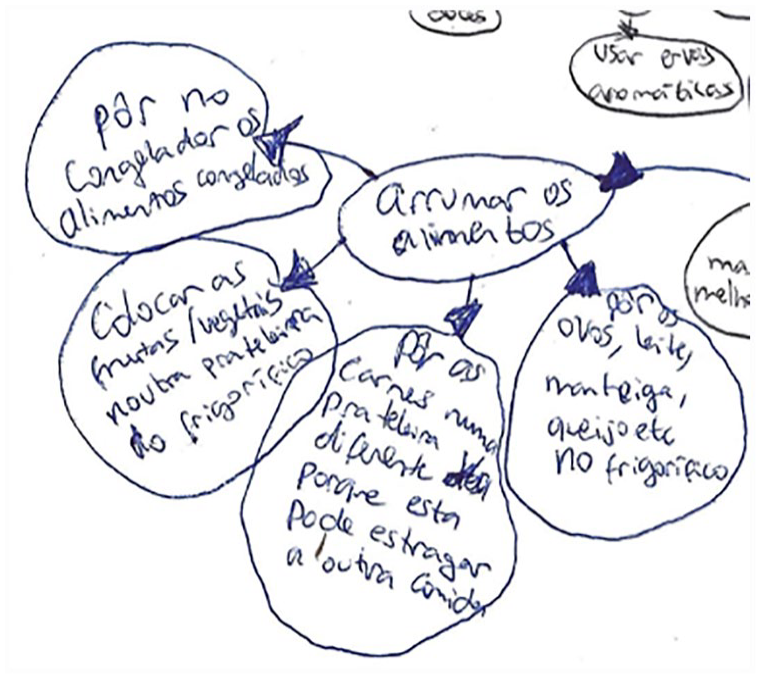
PMMs allow students to develop ideas by thinking about concepts related to the prompt but also by developing concepts and understandings derived from previous ones, sometimes via a discernible sequence of links, branches or word groupings (a typical PMM branching pattern can be seen in Figure 5). Instances of this type of ideas development were found both in the diagnostic and evaluation phases and sometimes linking both phases. The types of idea development found on the PMMs were categorised as continuation, causality or thematic, concept-materiality linkage, specification, expansion and crossing paths. Continuation refers to the practice of adding phrases to a part of the PMM to extend an already stated idea, for instance, as in the sentence ‘Eat in restaurants and cafés that appear to be less hygienic’ followed by ‘prepare and plan the places where we will eat before going there’, both written down in the diagnostic phase by the same participant. This category of idea development, which we have called continuation, can be used to express causality, as a participant did in the diagnostic phase by linking the phrases ‘use-by date’ and ‘not proper food safety’ to the words ‘food poisoning’, thereby showing the connection between food-handling practices and illnesses. Sentences and words can also be grouped thematically, sometimes expressing a relationship of causality or simply to highlight some common feature of a set of concepts. Thematic grouping refers to cases where words or phrases related to the same topic are written down in sequence in a group, as in Figures 6–8.
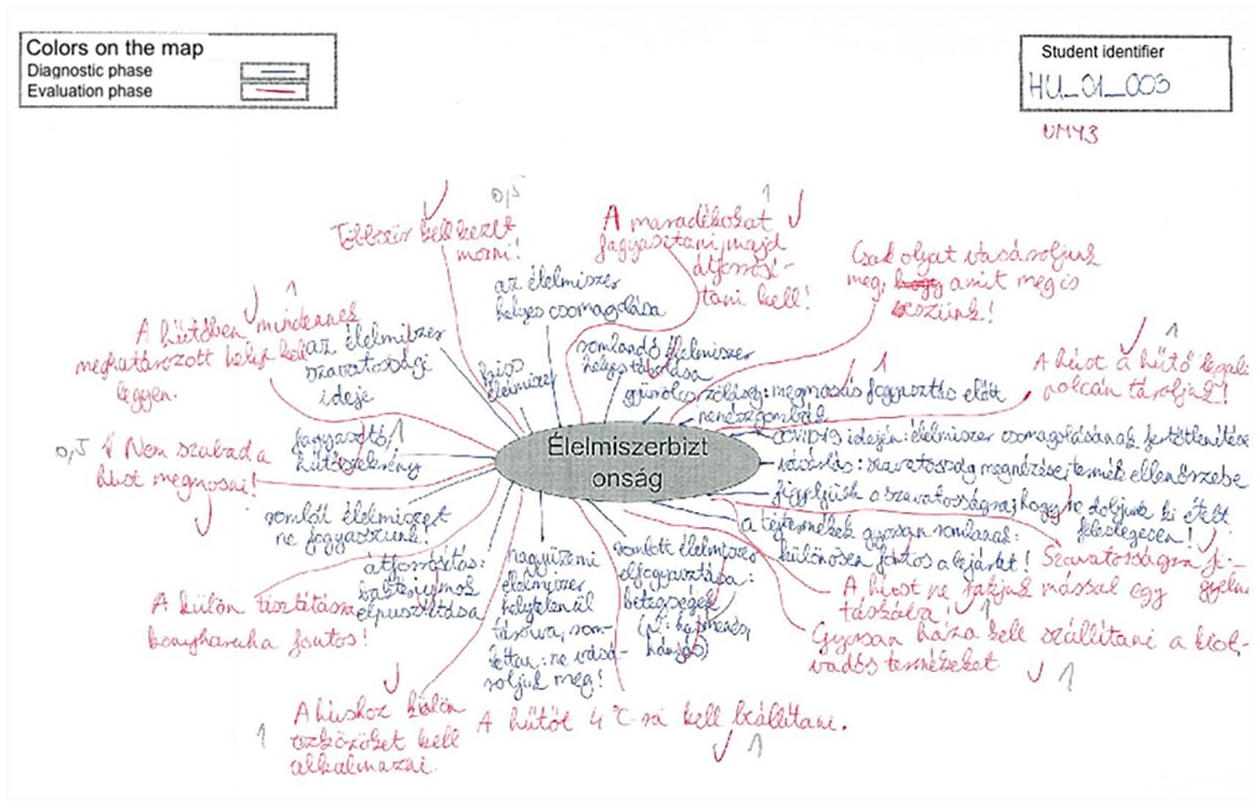
A Personal Meaning Map from a Hungarian student.
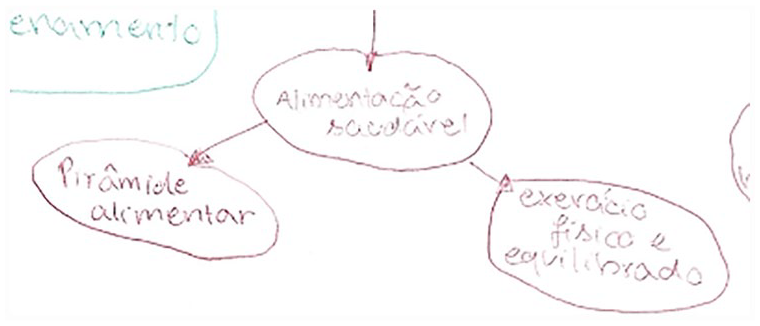
Thematic development. Student from Portugal.
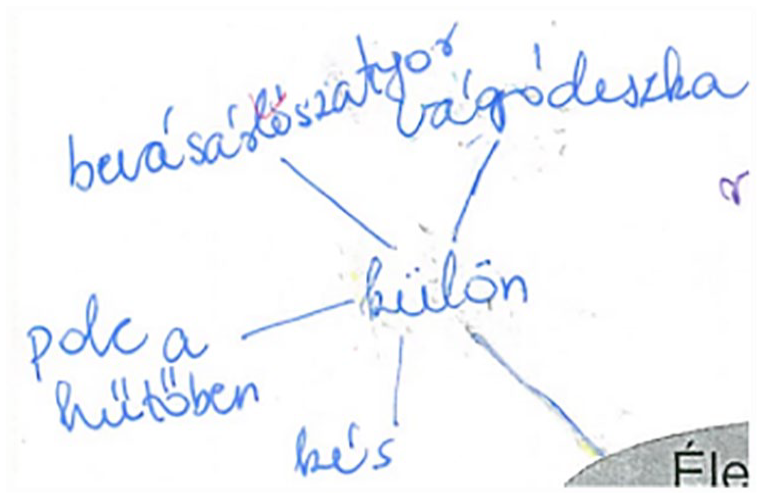
Thematic development – separation. Student from Hungary.
Thematic development – storage. Student from Portugal.
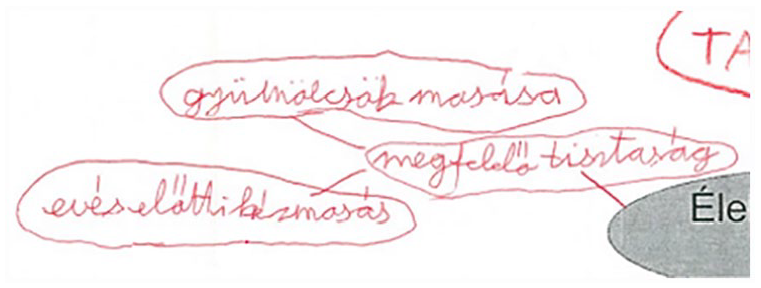
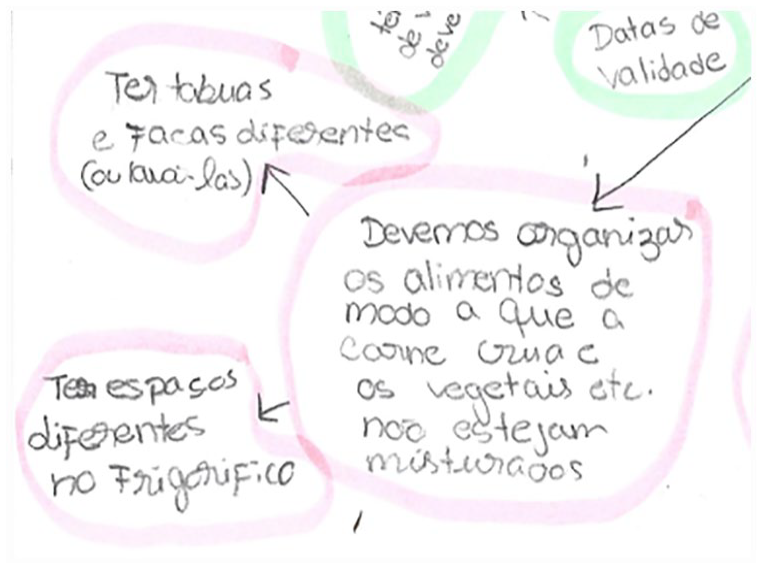
Thematic forms of organisation can sometimes assume the function of detailing attributes of an overarching concept such as in Figure 8 where ‘storing food’ is specified in relation to where certain foodstuffs should be kept. Linking elements by specification is common in branching forms where there are connections between a broader theme or category and lower-order more-specific items. These branching forms can start with a general abstract idea or principle that is specified as a set of activities or objects, such as starting with the idea of ‘proper cleaning’ and specifying ‘washing fruits’ and ‘handwashing before eating’ (Figure 10). This concept-material link is especially evident in Figure 11, where the principle of separation between raw meat and ready-to-eat vegetables is specified in relation to particular material objects that may facilitate this, such as fridge shelves and cutting boards. While specifications can be said to refer to instances of internal division within a concept, they are sometimes difficult to distinguish from what we might call expansions, usually in the form of singular connections, that are similar to the continuation category, but in which the second element expands upon the first.
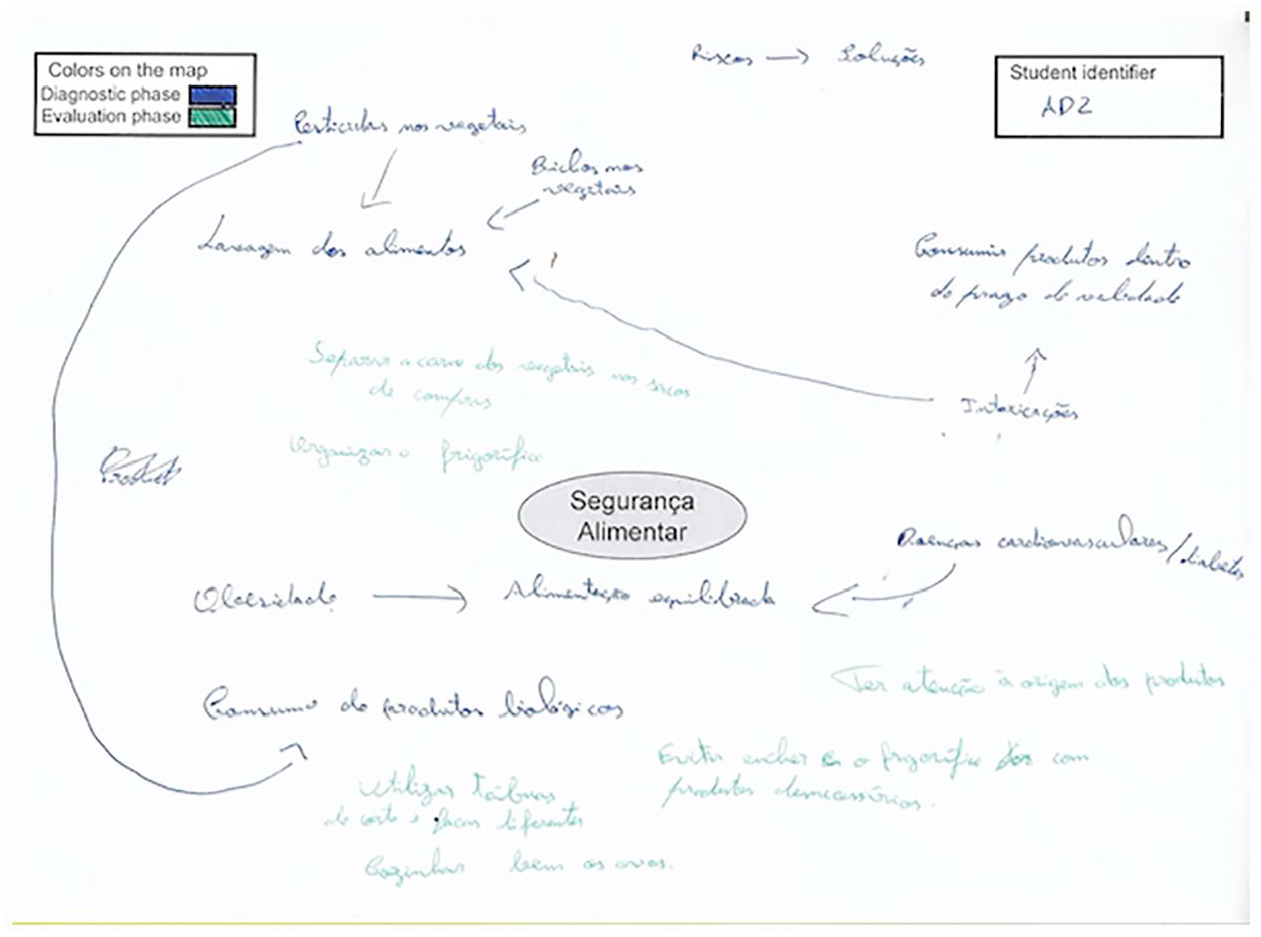
Visually representing connections between concepts can highlight unexpected associations. Figure 9 shows the single example found of what can be called the distant connection of concepts. Here, concepts related to microbiological contamination are entangled with concepts referring to chemical contamination.
Distant connections. Student from Portugal.
Specification – proper cleaning. Student from Hungary.
Concept – material link. Student from Portugal.
Additions and disassociations
Students are expected to be able to increase their vocabulary related to the topics they learned during the intervention. In the PMMs, this is primarily assessed by spotting the addition of words and phrases in the evaluation phase. Following the intervention, students revisited their maps and kept some of the ideas or crossed them out, eliminating whole sentences or making corrections by removing and replacing words in sentences. Additions, confirmations, corrections and eliminations are the simplest ways of assessing change in PMMs and were the focus of the mastery and depth scores. However, without the possibility of conducting interviews with the students after each phase, it was not possible to differentiate true additions from instances of emergence, the latter referring to cases when the student was already aware of a concept in the diagnostic phase but could only retrieve it from memory following the intervention (Anderson et al., 2003). On the other hand, instances of elimination and correction of concepts in the evaluation phase can be understood as part of a process of disassociation of meaning. Disassociation refers to the construction of knowledge by rebutting concepts or parts of concepts present in the diagnostic phase. We found that eliminations and corrections were used in different forms of disassociation. Eliminations were used strictly in relation to the clarification of the meaning of the term ‘food safety’ during the lesson. In the diagnostic phase, students, especially those in Portugal where the term food safety (segurança alimentar, in Portuguese) has ambiguous connotations as it can be used to describe both food security and food health risks, wrote down words related to eating disorders, healthy eating habits and food sustainability concerns. These types of words were absent from Hungarian maps since the term food safety has a more limited meaning in that language. For Portuguese students, crossing out these words (Figure 12) signalled a recontextualisation of the phrase ‘food safety’ from a wider meaning to its closer association with the topic of the lesson. Corrections, on the other hand, were used to build on previous knowledge and direct the meaning of a sentence closer to the lesson’s contents. A clear example of this is shown in Figure 13, where a student specifies that not all foodstuffs should be washed, which was related to a part of the lesson dealing with the risks posed by rinsing meat in the kitchen sink.
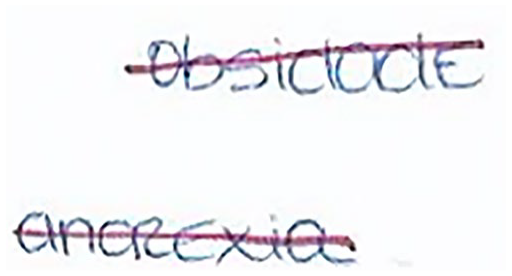
Elimination by crossing out. Student from Portugal.
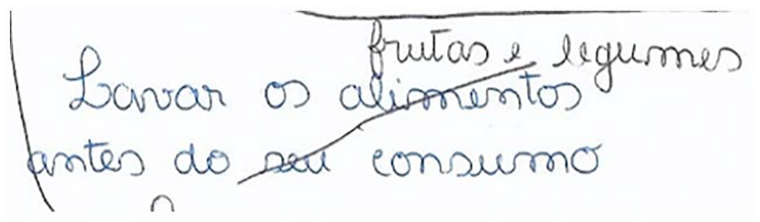
Disassociation by correction of meaning. Student from Portugal.
Prior knowledge
A feature of PMMs is that they allow connections to be made between prior knowledge and the concepts formed after a learning experience, and this offers some insight into how learning about food safety takes place. This is evident when, in the evaluation phase, students add new concepts or correct the meanings of words added in the diagnostic phase but is also visible in instances of progressive differentiation, where there is a gradual clarification of concept meanings. These are observed when students’ prior understanding of a topic expressed on the diagnostic phase is elaborated upon by links to specific tasks, objects or references on the evaluation phase. For instance, in the diagnostic phase, while a general concern with maintaining a certain temperature for food preservation can be expressed, this can be expanded upon in the evaluation phase, via reference to the need for a ‘proper fridge temperature’ – ‘4°C’. This specification can also start with the enunciation of a general principle, such as ‘cleanliness’ (Figure 14), which, after the lesson, is made more practical by reference to ‘frequent handwashing’ and having ‘separate kitchen cloth for drying hands and cleaning the surfaces’. In the example shown in Figure 15, the general concept of food storage is elaborated upon in relation to the specificities of storing meat where not only the risk of cross-contamination has to be managed but also the correct fridge temperature. Here, the construction of knowledge is shown to imply progressive differentiation of concepts but also the linking of concepts of different categories, or different themes.
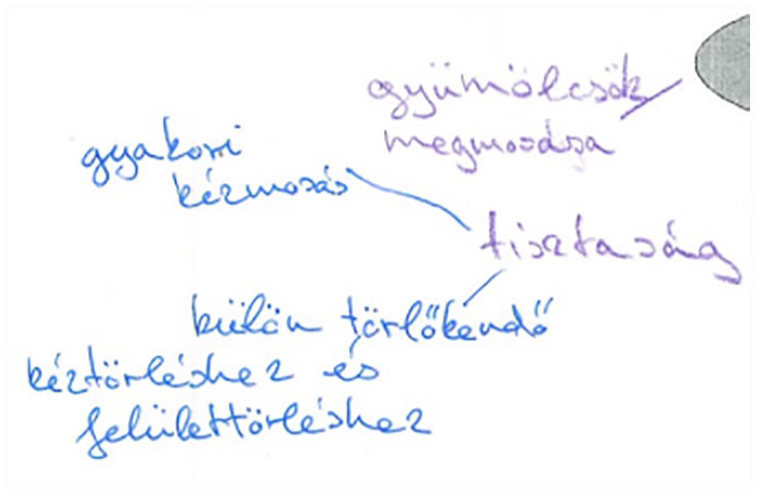
Specification of the principle of cleanliness. Student from Hungary.
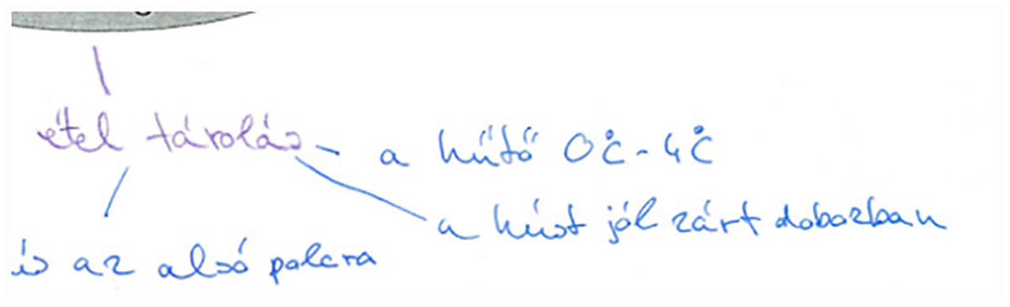
Specification – storage. Student from Hungary.
Besides the previously mentioned food health concepts added during the diagnostic phase, the PMMs also revealed other unexpected idea associations such as the mention of concepts related to environmental sustainability, for example, ‘pesticides in food’ or ‘eat organic’. Furthermore, students demonstrated highly personalised interpretations of microbiological risk. For instance, one map contained the phrase ‘sushi with wasabi’, which reflected the belief in the sterilising effects of wasabi. These examples show that prior knowledge about food safety can include ideas and conceptual links that are difficult to be anticipated by researchers.
Conclusion
In this study, we used a PMM methodology to assess learning outcomes following the delivery of a food safety lesson. As the study took place at a time when COVID-19 restrictions affecting schools were particularly strong, there were significant constraints on both the food safety lesson and the evaluation procedures. One important study limitation was the small number of schools willing to participate in the study, which unavoidably restricted diversity in student social backgrounds. Other limitations stem from time constraints and restrictions on interaction between the different parties involved in the study, including the research team. The design of the food safety lesson followed a pre-set thematic path, the Food Journey, but allowed enough freedom to enable students and teachers to spend more time on any one step along the way or any topic that incited more curiosity. It was thus not an open learning environment such as a visit to a museum nor structured in the same predefined way as most classroom environments are. The implementation of the PMMs was also greatly limited by the impossibility of conducting follow-up interviews with each student, which could have cleared up some difficulties of interpretation in some individual meaning maps. Importantly, follow-up interviews with students allow for a more extensive exploration of their ideas, building on the meaning maps as a starting point. By conducting these interviews at a later point in time, researchers can gain a better understanding of learning on a larger time scale. Despite these limitations, there are still major benefits to using PMM-based methodology.
An important goal of evaluating learning experiences, as required by the SafeConsume Project, was to make quantitative comparisons between the diagnostic and evaluation phases. To make this possible requires a time-consuming process of codification to identify and enumerate the main themes and categories in the PMMs. In this study, we reconciled the creation of categories that were part of the lesson itself with those that emerged from the maps. The quantitative analysis revealed not only how much students had improved in their understanding of topics that were essential to the lesson, such as ‘cold chain’ or ‘cross-contamination’, but also how their prior knowledge of personal hygiene contributed to a better understanding of food safety. Importantly, the quantitative findings underscore the importance of addressing gender differences in learning about food safety so that young men are not left behind in their learning experiences compared with young women.
PMMs are also suitable for a more qualitative analysis focused on the type of connections that students make between words and phrases on their maps. The approach used in this study, informed by the concept of knowledge transformations by Anderson et al. (2003), centred on how students’ ideas evolved between the diagnostic and evaluation phases of work. Our analysis showed that students already possessed some level of familiarity with the topic of food safety and, at times, were able to organise this knowledge thematically. It also showed that a Food Journey lesson can help students gain more specific knowledge about food safety topics they were already familiar with. At times, students in this study were able to disassociate concepts from the topic of food safety and recontextualise previous knowledge into new categories that emerged from the lesson, for instance, when concerns about food health were at times eliminated or incorporated in food safety categories.
As food safety stands at an intersection of scientific and practical knowledge, PMMs can provide an insight into how children and young people develop connections between both. PMMs proved especially useful in this study for identifying unexpected answers and heterogenous connections between ideas which would likely have been missed by the use of a standardised instrument. During the diagnostic phase of the work, some of the maps revealed a broader understanding of food safety than had initially been anticipated by the study. Students mentioned concepts related to health and nutrition or even to environmentally sustainable practices of food production and consumption. These broader understandings highlight that learning about food safety occurs within an environment of prior beliefs and practices that are shaped by everyday life experiences. Understanding this process can facilitate the development of effective, science-based interventions that have significant and long-lasting impacts, such as reducing the burden of foodborne illnesses for future generations.
Footnotes
Acknowledgements
We thank partners involved in the SafeConsume project for their support and comments during the project, in particular, the leading team of WP6 (UK Health Security Agency, formerly Public Health England). Many thanks also go to the students and educators who took part in the research, resource development and evaluation.
Funding
The author(s) disclosed receipt of the following financial support for the research, authorship and/or publication of this article: this research was supported by the SafeConsume Project funded by the European Union Horizon 2020 Grant Agreement No. 727580.
