




Abstract
Aim:
As more children become increasingly physically inactive, efforts to reverse this negative trend are growing. Research has indicated, however, that we know relatively little about the pedagogical processes built into programmes and interventions. This is especially true in respect of how children view the process of becoming more physically active. This article therefore explores developmental processes as they unfold in the context of alternative sports programmes through children’s voices.
Methods:
Theoretically, children’s development is approached from a bioecological perspective focusing on the interaction between the child and its environment. This article builds on material collected from 5 focus groups conducted with 16 children in total (aged 11–15 years) after participating in an alternative sports programme. The data were analysed abductively using a qualitative content analysis technique.
Findings:
Findings illustrate how children develop physically active behaviours internally, as they acquire certain skills and knowledge, as well as between children and a multisystemic environment. In this study, children experienced that exploring practical activities in authentic situations could contribute to better understanding of the relationship between themselves and physical activities in their local community.
Conclusion:
To enable development in interventions, paying attention to the extent to which exo- and mesosystems influence children’s relationships with the outside world is key. Participation may lead to an improved understanding of the surrounding world and the ability to further develop in an increasingly complex reciprocal process with the environment.
Introduction
Interventions aiming to promote children’s physical activity (PA) levels are increasing significantly as alarm about a generation of sedentary children continues to be sounded (Hu et al., 2021). Many interventions that aim to increase children’s PA use sport as a means and have increased participation in sports clubs as the end goal. Yet, because the results of various interventions of this type have proven to be relatively ineffective (De Meester et al., 2014; Hartwig et al., 2021), scholars have pointed to the fact that more needs to be known about the pedagogical processes used within these interventions (Ling et al., 2016; Skille, 2007).
Children’s development of certain PA behaviours has too often been viewed simply as a cause and effect moderated by a set of intervention components (Schaillée et al., 2019). However, since interventions are often aimed at children who are not active enough, with the aim of increasing their activity level, the ambition is, in fact, to create the conditions for a developmental process whereby children develop different abilities through interaction with a certain sociocultural context (Bronfenbrenner and Morris, 2006; Skille, 2007). In the developmental setting itself (sports programme, intervention environment), organisers and leaders create situations in which learning takes place via particular pedagogical processes, which possess physiological, psychological, sociocultural and environmental dimensions. Understanding these dimensions and the learning processes, they may or may not facilitate is essential to support children’s development.
Consequently, children’s engagement in such activities should be viewed holistically. Furthermore, the same pedagogical processes may be experienced differently depending on the children’s individual characteristics and competencies, making it important to consider both the child and his or her subjective experience of the environment (Bronfenbrenner and Morris, 2006). Thus, the aim of this article was to explore developmental processes as they unfold in the context of three different ‘alternative’ sports programmes through the children’s voices.
Theoretical framework
This study has used bioecological theory as a theoretical framework. From a bioecological perspective, learning is considered a specific domain within general human development. Development, in turn, may be defined as ‘the person’s developing conception of the ecological environment, and his relation to it, as well as the person’s growing capacity to discover, sustain, or alter its properties’ (Bronfenbrenner, 1979: 9). “Learning” is used in this article to draw attention to the holistic development (for instance, social, cognitive, motor, physical and knowledge) needed to become physically active in an everyday context.
Interaction with the environment is a necessity for all types of development. Both the individual and the environment are considered multisystemic structures. Individuals possess different demand, force and resource characteristics, making them complex systems which differentiate their interactions with their environments. The environment, in turn, comprises four interrelated systems: the micro-, meso-, exo- and macrosystems, which the child encounters both objectively and subjectively (Bronfenbrenner and Morris, 2006). These various systems interact with each other and with the individual. Some systems (micro) are located close to the individual while others (meso, exo and macro) are more distant.
Actual and perceived motor skills have proven to be important individual resources for regular PA among children (Hu et al., 2021; Utesch et al., 2018). Psychological abilities related to the development of motor skills include the ability to conceptualise one’s own experiences with the sociocultural context and the ability to act in ways that address one’s needs and aspirations (Bronfenbrenner and Morris, 2006). However, individual characteristics such as these do not fully determine a child’s developmental course; rather, one might imagine them as ‘putting a spin on a body in motion’ (Bronfenbrenner, 2005: 100). The direction this motion takes is, initially, formed by individual characteristics.
In addition, in order to be developmentally effective, processes need to occur regularly and be sufficiently intense to comprise a substantive part of a person’s everyday life. Over time, activities must become ‘increasingly more complex’ in order for children to explore, manipulate and reflect on the experience of the activity (Bronfenbrenner and Morris, 2006: 798). The strength of bioecological theory when applied to children’s PA is that it makes visible the relationship between the microsystem’s developmental processes and influencing factors in different contextual systems. This means, for example, that in the case of PA, bioecological theory helps focus on how the pedagogical process is shaped by various contextual factors such as local culture, the built environment and political interests.
Previous research
Since PA is essential for any type of sports participation, the development of various abilities related to the performance of PA is central to all sports programmes (Eime et al., 2015; Skille, 2005). The first challenge for sports programmes, however, is to involve members of the target group, that is, the children who are not already active in sports, in tasks they find meaningful and which stimulate development (Hartwig et al., 2021). As early as 2000, Skille (2005, 2007) examined the Sports City Programme in Norway (aimed at children aged 7–15 years) and concluded that the programme enjoyed some success in broadening sports as a developmental arena. Importantly, events such as ‘open hall’ 1 and other sports activities that deviated from the traditional arrangement of organised sports widened the range of the activities available to young people and promoted different understandings of what it means to engage in sport. Similarly, De Meester et al. (2014) investigated whether extracurricular sport could complement the work of community sports clubs in Belgium. They found that extracurricular sport reached two-thirds of the children (aged 9–13 years) not engaged in community sports activities, demonstrating the importance of a diversity of sporting contexts that offer a variety of learning situations relevant to children’s microsystems.
Involving children in activities is the first step. A second step, however, is to create conditions for learning that, in a psychological sense, bring children closer to a specific sports environment. Whether programmes succeed in creating such development has been studied by Eime and colleagues (Eime et al., 2015, 2018). They investigated modified sports programmes in Australia and their ability to provide learning contexts for children’s (aged 4–12 years) development towards participation in competitive youth sports. In modified sports programmes, sports are ‘modified to match the developmental capabilities of children by adapting games and activities through changes to the rules, equipment, and/or physical space’ (Eime et al., 2015: 2). Although these kinds of activities might seem successful in reaching a broader group of children, the majority of children never transitioned to sports clubs. The reason appeared to be the vague link (mesosystem) between sports programmes and clubs, that is, children were not provided with the practical knowledge (e.g. learning social codes) they needed to feel encouraged to join a club. In their examination of alternative sports activities in Australia, Ling et al. (2016) also showed the importance of creating conditions for learning and progression. In their study, children (aged 5–12 years) expressed how learning new skills and making progress were important in developing self-confidence. Research from the programme Girls on the Run in the USA showed similar results. Conditions highlighted by participants (aged 8–11 years) included individual-centred coaching focused on psychosocial assets (Weiss et al., 2019).
The development of such characteristics needs, however, to be understood as connected with the context. Nobre et al. (2019), for instance, have shown that development related to PA is also linked to factors in the exo- and macrosystems. In their study of motor learning among children in Brazil (mean age 8 years), learning was limited due to a lack of infrastructural and material resources and low-quality teaching in physical education. This situation, in turn, was affected by the relationship between the exosystem (local school management) and the macrosystem in the form of the legislation that did not provide funds to promote the relevant development processes.
This study
In this study, we used three cases of what we refer to as alternative sports programmes to illustrate how development may be experienced from the perspective of the developing child. Alternative sports programmes are interventions designed to complement conventional sports organisations using alternative organisational and activity features to bring together children and sports clubs (Högman, 2021).
Two of the three cases of alternative sports activities investigated here may be labelled afterschool sports. In these cases, all children in Grades 3 to 6 (aged 9–12) in four different schools were offered opportunities to sample a variety of sports over an 8- to 10-week schedule. On most occasions, sports clubs visited the children’s schools, but occasionally, the children went to the club’s own facilities instead for instance in the case of a downhill-skiing club, and a golf club. Sessions lasted 60 minutes on each occasion. The aim of these programmes was twofold: first, the organisers believed that more children would express an interest in joining a sports club if they had first been offered a chance to sample the sports, and second, the activities would contribute to the children being more physically active in afterschool care/afterschool centres, which could lead to schools fulfilling their curriculum goals.
The third case studied took the form of a regularly scheduled event in school holidays when several sports clubs gathered in a larger facility or outside area for 1 or 2 days. During these events, children of all ages had the opportunity to sample without cost, a variety of sports and meet different sports clubs’ representatives. Most children visited the events for 1 or 2 hours and chose how long they stayed at each activity. The events were arranged in the same district, offering various activities to the same children on several occasions. In each case, the sports were modified regarding the equipment used and the activities the children sampled.
Methods
Design and recruitment
This article is based on data from a follow-up study of a previously conducted focus group study including 15 focus groups with a total of 63 children who were offered to participate in alternative sports activities (Högman, 2021). The aim of the original study was to examine children’s experience of the conditions for being physically active daily. In the follow-up study reported here, conducted 2 years after the original focus group study, a stratified random sample of focus groups from the original sample was drawn. A total of six focus groups were selected. Gatekeepers (teachers) were contacted by phone and asked to distribute invitations to follow-up focus groups to children participating in the original study. The gatekeeper for one focus group did not respond to the request to participate in the follow-up study; consequently, five focus groups were organised in the follow-up study. One or two children were missing from the first round in all groups. In sum, 5 focus groups with 16 children (3–4 in each group, 12 girls) were conducted between December 2019 and January 2020. An overview of focus groups and their connection to the cases studied is provided in Figure 1. The children’s ages were between 11 and 15 during this follow-up study. In order to enhance the validity of focus groups, 2 pilot focus groups were conducted with children of the same age as the study participants before the project started.
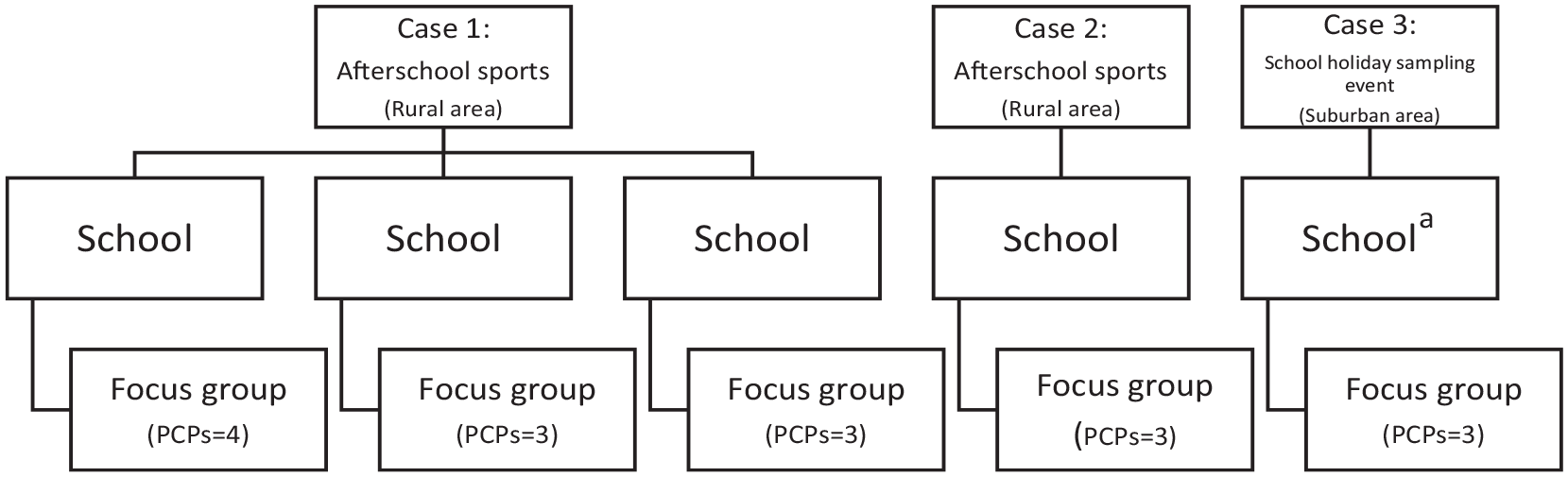
Overview of studied cases and focus groups.
Procedure
The study was conducted using a contextualist paradigm, meaning that the understandings developed should be seen as relative and relationally informed (Bronfenbrenner, 1979, 2005). From such a position, subjective experiences are considered important sources of understanding concerning phenomena such as PA behaviour (Högman, 2021). Focus groups are one way of creating subjective and socially constructed knowledge. In a focus group, several participants gather and discuss a common topic with the help of a moderator who, to a varying degree, directs and facilitates the conversation (Brinkmann and Kvale, 2015).
The focus groups had a semi-structured character. The first author served as moderator and the second author as an assistant taking notes and following up on important aspects of the conversation (Brinkmann and Kvale, 2015). Each group lasted between 24 and 45 minutes (average 33.2). An interview schedule with three discussion topics was used as a starting point to structure the groups. The three topics were engagement in PA today, experiences of participating in alternative sports activities, and reflections on learning and development in relation to PA.
Analysis
Data from each focus group were transcribed verbatim. The first author conducted a primary analysis. At the first step, transcripts were read through several times to get an overall understanding of the data. Next, the children’s retrospective reflections on their experiences participating in the activities were analysed abductively using a qualitative content analytic approach (Brinkmann and Kvale, 2015). The analysis fluctuated between latent and more manifest levels of the data. We noted both what was concretely stated (manifest) and used interpretation to try to understand the more underlying meanings (latent) (Brinkmann and Kvale, 2015).
Coding started inductively and resulted in 37 codes. An example of a code with manifest content was ‘exciting to try new sports’ and an example of a code that was created based on latent content was ‘exploring physical identity’. Six of the codes initially developed were excluded as they were assessed to fall outside the aims of the study. Bioecological theory was then used to identify similarities and differences between codes. Codes were subsequently combined where deemed appropriate based on data and theory. This way, five sub-themes were created, illustrating different aspects of the children’s developmental experience. At a last step, two overarching themes were created by jointly reflecting on how the five sub-themes were connected to the basic tenets of bioecological theory: namely, that the individual develops through an increasingly complex interaction with the environment.
Ethical approvals
In conducting this study, we have acknowledged the four basic ethical principles of research: information, consent, confidentiality and utilisation. Before written consent was obtained from participants and their legal guardians, they were informed about the purpose and procedures of the study. Participants were provided with the greatest possible confidentiality through the use of pseudonyms when children are quoted. Data were stored in such a way that unauthorised persons could not access it and was not used for anything other than the research stated in the research information. All work was conducted in line with the commitments of United Nations Convention on the Rights of the Child (UN, 1989). The study received ethical review by the regional ethical board in Uppsala, Sweden (ref: C2017/546).
Findings
The first theme, ‘exploring one’s own learning’, consists of two sub-themes and sheds light on those aspects of development more related to the individual child. The second theme, ‘exploring the moving self in relation to the context’, which consists of three sub-themes, captures the children’s growing capacity to relate their own development to the wider context.
Exploring one’s own learning
Exploration
The term ‘exploration’ emerged as a key concept from children’s descriptions of how they approached their participation in alternative sports activities. Their perception was that they had a chance to explore different sports by trying certain individual sequences. This sense of exploration was strengthened by the fact that participation was voluntary and the activities, in contrast to both mainstream sports and physical education classes, lacked articulated learning objectives or goals for development. Since the purpose of the activities was to try new sports, some instruction was necessary, according to the children, but this was not followed by pressure on the children to accomplish the various tasks. This approach made the children feel free to experiment and explore the different elements at their own pace.
Yes, I kind of think it’s a fun thing to . . . just try! It’s not that you test because you want to start, but it can be because you are just curious and see how . . .
And then, like, you may not know how a sport actually works. And then you might not think, ‘oh, to go on one, that team or that club’s practice and try’. (Rural area, 12-year-olds)
Emma’s and Alice’s reasoning shows how feelings of autonomy about approaching new learning domains may function. The interaction between their curiosity and the autonomy-promoting environment offers a constructive base for exploring their abilities. However, children seemed to agree that the alternative activities were appreciated first and foremost by those children who were already interested in sports. As they had acquired some fundamental motor abilities, they could easily assimilate the elements of new sports they tried through alternative sports activities. However, since they were already involved in one or more sports clubs and, therefore, time for additional leisure activities was limited, participation in the activities rarely led to them adopting a new sport.
Learning versus mastery
Children’s opinions about how much focus should be directed towards learning in the activities varied. Although to different extents, children with different levels of abilities appreciated challenging themselves and giving the new sports activities a try:
It feels like you learned . . . like for every new sport that there was . . ., you learned at least something. I think I was familiar with a few sports . . . but not many. So even though you know nothing about the sport, you still got to try it to learn. (Rural area, 11-year-olds)
For many children, trying a new sport was considered an exciting aspect of everyday life. Others were more oriented towards sports they had already mastered and expressed little interest in trying new ones. It was not clear to the children whether the primary aim of the activities was to facilitate learning or was more about being physically active from a short-term perspective. Several girls discussed this from a perspective children often use to consider things, that is, whether or not an activity brings them joy.
It’s always more fun to do something you’re at good at . . .
But it’s also fun to try new things.
It’s like . . . skiing. I ski a lot, and then it’s like that . . . I know the basics and then it becomes more that you can challenge yourself . . . more and more. But if it’s a sport you like. Like I have never tried before . . . then you should like learn . . . once again, but that can also be fun.
But it’s fun if you can just go out and shine [the kids giggle] rather than needing to learn something completely new. Like when we had skiing, those who could not ski before, they had to . . . like learn with an instructor. But those who already could were allowed to ride freely . . . (Rural area, 12-year-olds)
The above discussion illustrates how the children understood the relationship between, on the one hand, learning and, thereby, challenging themselves to learn new skills and, on the other, enjoying the feeling of being capable. From the children’s perspectives, these two sets of feelings can be contradictory when prioritising what activities to engage in within a limited period of time. When the children reflected upon what they had learned, they did not talk about any significant progress in motor or technical development. Rather, what they highlighted was a more conceptual, knowledge-based form of development. Among other things, they learned the basic rules associated with different sports, gained a better understanding of how to act in particular sports settings, and learned to handle the relevant equipment, for example, how to hold a floorball stick or tighten a pair of slalom boots. Children could also feel somewhat more competent about a particular sport just by trying it once or twice. From their perspective, there was a significant difference between, for instance, never having held a golf club and being allowed to try hitting a golf ball for an hour or two on one or two occasions. Furthermore, the conceptual development included increased practical knowledge about basic preconditions for engaging in organised sports and the relationship between these and the children’s own abilities.
Exploring the moving self in relation to the context
Exploration in front of others
Certain aspects of children’s learning are more directly related to the ecological system of the outside world. First and foremost, the children highlighted the importance of the social environment within the activities. Playing sports and engaging in PA made actions and performances visible to other children in real time. Thus, learning took place in a different environment to learning related to more theoretical knowledge. The design of the activity and the children’s microsystems were central to children’s propensity to participate in developmental processes.
What if students from the different schools came together . . . what would you think of that?
Well . . . I don’t know . . . I think it’s most fun to have like . . . your own school.
Because if you don’t know each other from school, then it can be a bit embarrassing or something. It would be strange if they came to us and had like this kind of activity with us.
Embarrassing?
I like being with them . . .
. . . that you already know?
Yes, and like we would be so many? I don’t like to be in a group where there will be many. I like being in a small group. (Rural area, 12-year-olds)
Social interaction within the microsystem is particularly important in alternative sports activities where children explore different paths to their abilities within the sports landscape. Trying a new sport involves a high risk of failure and can have major consequences for the child’s role in the microsystem. When trying new sports and exploring their skills, the children wanted to be in a socially safe environment where they were familiar with the other children present. Being part of a smaller group, they argued, created increased togetherness and greater feelings of trust, which were important components of the children’s relationships when they found themselves in what they perceived as unexplored terrain.
Taking steps towards organised sports
The alternative sports activities provided were part of a mesosystem forming an intended bridge connecting children to sports clubs. Many children argued that it was the opportunity to try a sport that was available in an organised form nearby that gave the alternative sports activities their meaning. Playing sports because doing so is fun in itself or for exercise was not considered meaningful. Instead, they considered other settings more appropriate for such purposes.
Would it be meaningful to you? Although you cannot join like a dodgeball club . . . but still have dodgeball at the sports school?
Well . . . it could be fun. But I would rather like to try something that you can start practising and think is fun.
Then maybe it couldn’t be called a sports school? Because it’s not exactly a sport, right? Sport is. . . more something like people . . . are involved in in their spare time . . . Dodgeball is more like a sports game.
Yeah . . . and we have had such games quite a few PE lessons now . . . I probably wouldn’t go because I would know that, like, ‘okay, I can do this at PE instead’. (Rural area, 12-year-olds)
To be meaningful, alternative sports activities needed to be experienced as something different compared to the other sports the children took part in their everyday lives. They had to include something new. In this sense, the children understood the activities as opportunities to try something they could subsequently become more engaged in if their interests were aroused. However, the children also stated that none of them had actually transitioned to a sports club they had come in contact with through the alternative activities. In the vast majority of cases, the children believed that other factors were more significant for their choices regarding leisure activities. Children described how many of them already had other activities and/or were not allowed to engage in a new sport.
How come you did not continue with any of these sports that you tried and enjoyed? Like downhill skiing or golf that you mentioned?
Because there were no more occasions for downhill skiing or golf either. My parents have, like, four other children to take care of . . . so . . . and like 100 animals too. We, like, never get time for anything like that. (Rural area, 11- and 12-year-olds)
Even if alternative activities succeed in arousing children’s interests, enabling factors were often lacking for a lasting commitment to sports to emerge. Many children depended on the enabling factors that the school and the alternative sports activities provided. Those missing could include transport to and from activities, the cost of fees and equipment, or an adult who could accompany the child to the activities.
Developing a sociocultural understanding of PA
Alternative sports activities could also have a wider significance linked to the environments children themselves were not a part of, that is, to their exosystems. In a conceptual sense, children expanded their knowledge of their community and the opportunities it could provide regarding sports and PA. The children emphasised, for example, the importance of being exposed to more sports than those they typically came into contact with. Several girls, for instance, sometimes felt that the suburb they lived in was like an isolated island where they could encounter only a couple of different sports:
Especially like . . . in the suburbs you see like . . . it’s football that counts. You become kind of trapped. You cannot look around. But there are like . . . take . . . like basketball. There is also handball. There is floorball; there is dance. Actually, there are so many sports. But everything is like limited to football.
You hang out in the yard, and you are not allowed to go outside the yard. The girls who are there can only see the boys play football, and that is the only thing there is. That’s how it was for me, like playing soccer with the guys. Girls who are, like, between 7 and 9 years need to see something else. They may realise they’re not made for football or that they are made for football, basketball, dance and so on. But they need to see that they have other possibilities. (Suburban area, 14- and 15-year-olds)
For girls who lived in a larger city, alternative sports activities could serve as a way to broaden their conception of themselves regarding the sports-related environment. This was partly about having the opportunity to choose between more alternatives and partly about developing a frame of reference for what sports and PA can be. The activities could enable further exploration of one’s own PA and also promote the discovery of new approaches to physical culture. In this way, the children developed their capacity to understand themselves as physically active persons, acting in relation to sociocultural norms:
The thing is . . . there are so many sports. We should start a dance group for both boys and girls. There are so many guys who can dance but think it’s a girl thing. But it isn’t! It’s for everyone. (Suburban area, 14- and 15-year-olds)
The way the children showed increased understanding of how sociocultural factors within the macrosystem affected their understanding of PA and sports is also relevant to their conceptual development. Above, Nadja points out that gender norms separate boys and girls as sporting and non-sporting subjects. Only certain forms of sports are considered suitable for boys and girls respectively. This further restricts the already limited range of opportunities. In addition, the girls’ space for action is further reduced by geographic segregation within the macrosystem that constitutes Swedish society. Alina described this in terms of the girls in the suburbs being ‘trapped’ and unable to ‘look around’. Despite their proximity, various sports activities remain inaccessible to children, partly because they do not come into contact with them. As a result, they do not get the opportunities to interact with the social practices associated with these activities. By providing new pathways along which children and sports can interact, alternative sports activities allow children to develop the capacity to explore new routes for themselves within the surrounding sports landscape.
Discussion
Throughout this study, children expressed how development is promoted when they engage in activities that align with their ecological environment, especially activities that improve individual physical and psychological abilities. However, the children’s experiences are diverse and depend on their individual characteristics, skills and resources. In this study, those children who were involved in sports and already possessed relevant abilities expressed curiosity about the alternative activities provided. In contrast, children with a weaker interest in sports were not so attracted. According to the children, engagement in these activities did not change these attitudes either, a finding which is consistent with previous research showing how few interventions change children’s PA behaviour (Hartwig et al., 2021; Hu et al., 2021). One explanation for this may be the lack of learning conditions stimulating development of individual capabilities such as social skills, motivation, physical ability and self-confidence in relation to sports (Utesch et al., 2018). Such an explanation is supported by bioecological theory, which holds that the amount of time children interact with a certain developmental environment, as well as the commitment the environment and the activity motivates from the child, are important factors in determining the extent to which development takes place (Bronfenbrenner and Morris, 2006).
However, there are other examples of how the children experienced alternative sports activities as providing them with the knowledge that stimulated development. This knowledge can be linked to a more conceptual development of the relationship between one’s PA and the possibilities and limitations associated with the surrounding context. Conceptual development is based on practical doing and the experiences created in engagement in activity (Bronfenbrenner, 2005; Vélez-Agosto et al., 2017). Children do not learn how to ski downhill by visiting the slope once. But by going to the slope, putting on boots, and meeting the club’s coach, they may develop an expanded conception of the sport’s existence, a sense that such activity is relatively accessible, and a feeling that they can, under special conditions, go skiing. They know this because they themselves have experienced it, and it is the practical experience that becomes real for them. In a sense, this also provides children with evidence that the particular sport is a cultural activity integrated into their community (Vélez-Agosto et al., 2017). Such a culturally relevant understanding paves the road for an improved ability to understand and take part in the surrounding world and to further develop competence and well-being in an increasingly complex reciprocal process with the environment (Bronfenbrenner and Morris, 2006; Högman, 2021).
Through practice-based experience, alternative sports activities can complement the type of learning children are expected to experience in physical education classes. In formal school education, children are also expected to be exposed to various forms of physical activities. However, in school, teaching mainly focuses on the movement, not on the performance of it within a sociocultural context (e.g. a sports club) (O’Connor et al., 2012). Hence, most sports are learned in an isolated way in the gym or outside area. Although the girls cited previously had participated in school physical education, they still felt trapped within a sports landscape where football was ‘the only thing that exists’. Consequently, alternative sports activities can serve as a bridge for developing children’s mesosystems in both a physical and phenomenological sense. In a physical sense, the children can act and choose to participate in new sports activities with material accessibility. In a phenomenological sense, they gain expanded knowledge about opportunities in their environment.
Strengths and limitations
Among this study’s strengths was the focus given to children’s own experiences, as opposed to the measurement of children’s performance through objective methods. An additional strength was the trust built up as the same children were interviewed for the second time, which provided rich information. A limitation was that we have not controlled for the group that went missing, which means that there may be a risk that children with more negative experiences were underrepresented in the sample. Furthermore, the findings derive from cross-sectional data, meaning that development over time could not be studied. Future studies might use repeated individual interviews to follow children’s development experiences longitudinally.
Conclusion
This study has highlighted how children’s development of physically active behaviours within alternative sport programmes occurs both internally and externally. Internally, it does so as children develop certain skills and knowledge. Externally, this occurs between children and the multisystemic environment, as children reflect on conditions for using the new resources they encounter in practice. Together, the findings add to existing knowledge regarding the central message that children always develop in context. From a public health perspective, alternative sports programmes designed to increase children’s PA will benefit from employing pedagogical resources, such as those developed in physical education in school, and ensuring that learning occurs within authentic, real-world settings.
Supplemental Material
sj-docx-1-hej-10.1177_00178969231163405 – Supplemental material for Children’s experiences of development in alternative sports programmes
Supplemental material, sj-docx-1-hej-10.1177_00178969231163405 for Children’s experiences of development in alternative sports programmes by Johan Högman and Christian Augustsson in Health Education Journal
Footnotes

References
Supplementary Material
Please find the following supplemental material available below.
For Open Access articles published under a Creative Commons License, all supplemental material carries the same license as the article it is associated with.
For non-Open Access articles published, all supplemental material carries a non-exclusive license, and permission requests for re-use of supplemental material or any part of supplemental material shall be sent directly to the copyright owner as specified in the copyright notice associated with the article.
