



Abstract
For decades, gifted education programs have identified students from upper-income families at notably higher rates than students from lower-income families. Most studies addressing socioeconomic inequalities in gifted education have focused on systemic and structural barriers to educational resources, such as poverty, peripheral areas, and language barriers. However, because most studies have relied exclusively on aggregate (school-level or national-level) data, the role of parental determinants in children’s assignment to gifted education programs has been overlooked. The current study examined whether and how family income is associated with parental perceptions of gifted education. We also examined parents’ trust in their child’s educational and psychological resilience as a possible mediating mechanism of this relationship. Participants were 251 parents of children in second through fourth grades who completed online questionnaires. Results showed that parents with a higher income were more likely to support the enrollment of gifted children into separate gifted programs than were parents with a lower income. The relationship between income and parental perceptions of gifted education programs was mediated by parents’ trust in their child’s educational and psychological resilience. Understanding the role of family income in shaping parental attitudes toward gifted programs may serve as a potential pathway to remove barriers and improve the access of students from different backgrounds to gifted education.
Students identified as gifted are often offered the opportunity to participate in specialized programs that promote, enhance, and extend their talents and abilities (M. Kim, 2016). The positive effects of gifted education programs on children’s development might be even more significant for students from underserved populations, in that they might compensate for regular classroom settings typified by lower expectations or weak academic rigor (Card & Giuliano, 2014, 2016). However, empirical research indicates that students from underserved populations, such as children from culturally and linguistically diverse groups (Long et al., 2023), children living in rural communities (Hodges & Gentry, 2021; Rasheed, 2020), and children from low socioeconomic backgrounds (Grissom et al., 2019) are less likely to be recognized as gifted.
To date, most studies addressing socioeconomic inequalities in gifted education have focused on systemic and structural barriers to educational resources, such as poverty, peripheral places of residence, language barriers, and inherent testing biases toward underrepresented groups (Gentry et al., 2014; Grissom & Redding, 2016; Stambaugh & Ford, 2015). However, because most studies have relied exclusively on aggregate (school-level or national-level) data, the role of parental determinants in children’s access to gifted education has been overlooked (Grissom & Redding, 2016; Johnson et al., 2024). Combining sociological research on parental involvement in reproducing social stratification patterns (Pinson et al., 2020; Ule et al., 2015), with psychological research on parents’ perceptions of their child’s abilities (McDonald et al., 2019; Räty & Kasanen, 2013), we examined whether and how family income was associated with parental perceptions of gifted education programs. We also examined parents’ trust in their children’s educational and psychological resilience as a possible mediating mechanism of this relationship. Understanding the role of family income in shaping parental attitudes toward gifted education programs may serve as a potential pathway to remove barriers and include students from different backgrounds in gifted education programs.
Gifted Education and Socioeconomic Background
Previous studies, mostly conducted in the United States (Nicholas et al., 2024), have consistently pointed to the underrepresentation of students from socioeconomically disadvantaged families in gifted education (Hamilton et al., 2018, 2020; Redding & Grissom, 2021). One possible explanation for the socioeconomic differences in access to gifted education is that students from underserved populations may have fewer opportunities to acquire the background academic knowledge and skills that are necessary to be recognized as gifted (Siegle et al., 2016; Warne et al., 2013). Some of these advantages and resources include participating in extracurricular activities, learning in smaller classes with more experienced teachers, and being exposed to a broad vocabulary at home (Plucker et al., 2015; Plucker & Peters, 2018). A recent cohort study of students in three U.S. states (Long et al., 2023) revealed that students who qualified for free/reduced-price lunch were between two to eight times less likely to be identified as gifted than were non-free/reduced-price lunch students, and that differences in student-level early academic achievements could explain 50%–100% of gifted identification disparities. However, using nationally representative data, Grissom et al. (2019) found that students from lower socioeconomic backgrounds were significantly less likely to be identified as gifted than their peers from higher socioeconomic households within the same school, even after controlling for students’ academic performance. Similar findings were observed by Siegle et al. (2016), who found socioeconomic differences in gifted identification after controlling for school and district demographics, percentages of students identified as gifted, and achievement in reading and math.
An alternative and complementary explanation for the socioeconomic gap in gifted education is that the processes by which students are assigned to gifted education programs, particularly the evaluation process, systematically overlook students from economically disadvantaged backgrounds (Ford, 2010; Grissom & Redding, 2016; Nicholson-Crotty et al., 2016). Several studies have suggested that teachers underestimate the abilities and competencies of students from lower socioeconomic backgrounds or other underserved groups and are therefore less likely to refer them to gifted education (Elhoweris, 2008; Siegle et al., 2010). For example, a large-scale national study of all elementary school students in Georgia (N = 705,074) showed that teachers nominated fewer students from underserved groups to take gifted screening tests. Sometimes, teachers tried to address such inequalities by referring students with questionable potential to the screening tests, thus resulting in even lower levels of gifted identification in these groups (McBee, 2006). Indeed, when a universal screening program was used in a large urban school district, significant increases were found in the number of students from underserved groups who met the IQ standards for being classified as gifted (Card & Giuliano, 2016). As will be discussed in the following sections, parents also play a key role in the unequal referral of students from economically disadvantaged groups to gifted programs (Grissom & Redding, 2016; McBee, 2010).
The Role of Parents in Gifted Education
Understanding parental educational choices and how they are shaped by sociocultural factors have been ongoing concerns in the sociology of education (Ballantine & Hammack, 2015). The growing emphasis on parental choice in policy (Berends et al., 2020; Bowe & Ball, 2017) has relied on the assumption that parents are rational consumers in the educational market. However, sociologists have challenged this assumption, suggesting that parental educational choices are shaped by class positions, race, ethnicity, and other group affiliations (Barg, 2019; Billingham & Hunt, 2016; Rollock et al., 2015).
Both qualitative (Lareau et al., 2016; Roda, 2015, 2017, 2024) and quantitative (Cabus & Ariës, 2017; Gaztambide-Fernández & Parekh, 2017) research has shown that parents from advantaged socioeconomic backgrounds have the cultural and social capital that allows them to improve their child’s access to gifted education. Studies have suggested that a middle-class background aids parents in facilitating relationships with teachers and school personnel, increases their child’s access to extracurricular and specialized programs, connects them to information about school processes, and provides them with an advantage over underserved families in influencing their children’s schooling outcomes (e.g., participated in school boards; Barg, 2019) are more likely to give their unqualified support to the school in any dispute concerning extracurricular activities or placement (Lilliedahl, 2021; Pinson et al., 2020). For example, Gaztambide-Fernández and Parekh (2017), who examined children’s participation rates in specialized arts programs in Toronto, found that these programs were homogeneous environments that included mostly children of educated parents with higher socioeconomic statuses. The authors concluded that instead of offering equal educational opportunities for all students, specialized arts programs reproduce the same patterns of educational inequality as does academic streaming. Roda (2017), who used semi-structured interviews and observations to examine New York City parents’ attitudes and practices toward gifted education, found that White parents felt pressured and obligated to secure the “best” education for their children and therefore paid for screening test preparation, hired tutors, and made sure their children would be retested if they failed the test. Black and Latino parents, on the other hand, believed that paying for screening test preparation was unfair because the test no longer reflects the child’s actual abilities. These parents also chose not to have their children retested if they received a low score.
Another factor that might contribute to socioeconomic differences in gifted education is parents’ unequal access to “insider knowledge.” Insider knowledge refers to crucial implicit information, or “unwritten rules,” about achieving success (Subotnik et al., 2018, 2022). Such knowledge about “how to play the game” is usually held by professionals but is not visible to the general public, thus hindering the progress of low-income and marginalized groups (Subotnik et al., 2023). Insider knowledge includes components such as hidden curricula, which refer to domain-specific values and norms (sometimes different from explicit norms); shadow curricula, which include supplementary educational programs (e.g., private tutoring, and after-school programs); and tacit knowledge, which refers to general practical knowledge that is acquired without direct teaching from others (Sternberg, 2019). For instance, students who apply to art schools should know that they cannot rely only on drawing skills but must also demonstrate more general conceptual creativity (Jarvin, 2019). Likewise, acceptance into medical school requires not only good scores but also evidence of social responsibility, volunteering, and community involvement (McWilliams et al., 2019).
Insider knowledge relevant to gifted education may include information about available programs inside and outside schools, knowing how to apply to available programs, familiarity with the screening test (e.g., understanding how to answer multiple choice questions, access to online preparation courses), being familiar with the different types of adaptations for children with learning difficulties or language barriers, and knowing how to apply for a retest. In terms of insider knowledge, it is possible to assume that children from marginalized and underserved groups have lower access to gifted education not only because they lack the background knowledge and academic skills to pass the screening test but also because their parents are less familiar with the implicit norms, practices, and resources that are necessary to be recognized as gifted and to participate in the gifted programs (Grinshtain & Miedijensky, 2024).
Parental Perceptions of Giftedness and Gifted Education
Although systemic and structural barriers to educational resources may contribute to disparities in access to gifted education programs, there is a growing recognition that parental determinants such as expectations, support, and encouragement may also be powerful predictors of the identification of giftedness and participation in gifted education programs (Roda, 2017; Waheed, 2014). One important source of parental influence on the child being identified as gifted is the parent’s perception of giftedness. For many parents, the label “gifted” implies a desirable social status and a source of pride. Supportive attitudes are often associated with recognizing the importance of achievement and creative productivity in promoting the individual and the collective (Baudson & Preckel, 2016; Lassig, 2009). For others, however, this label conveys more problematic connotations (Matthews et al., 2014). Some parents perceive giftedness as an abnormality that deviates from the proper developmental trajectory (Mudrak, 2011) or emphasize the social “misfit” of their child (Peebles et al., 2023). These views represent the ongoing debate about defining giftedness as a disorder (Elton, 2023).
Parents might also be concerned with the influence of the “gifted” label on their children’s development and mindset. Dweck (2000) argued that the label “gifted” encourages students to believe that intelligence is fixed rather than malleable. Therefore, students might become preoccupied with justifying the label and less concerned with seeking opportunities to improve their skills. A recent study on Belgian children showed that being labeled as “gifted” may overemphasize the immutability of innate ability, fueling fixed beliefs about intelligence (Boncquet et al., 2022). Labeling children as “gifted” also involves a fear of elitism or a fear that gifted education involves special privileges for “already advantaged” children (Elton, 2023; Siegle & McCoach, 2007). In a study of U.S. parents, Matthews et al. (2014) found that only one-fifth of the parents of gifted children felt free to use the label “gifted” when talking with other parents; these parents felt that they could celebrate their children’s giftedness with other parents and advocate for the needs of their gifted children. However, most parents felt uncomfortable with labeling their children as gifted; instead, these parents played down their children’s talents, highlighted their disability, or avoided the subject completely. Parents’ construction of giftedness may shape their decision-making regarding their children’s identification and participation in gifted education (Roda, 2015). Parents who recognize the academic and socio-emotional benefits of gifted education may have highly supportive attitudes toward gifted programs. In contrast, parents with concerns about academic stress, increased difficulty of content, and possible gaps in learning due to a need to miss regular classwork may be more reluctant about gifted program provisions (Rambo & McCoach, 2012; Vidergor & Azar Gordon, 2015).
To date, the relationship between socioeconomic background and parental perceptions of giftedness has been examined in only a few studies. However, there is evidence that parents from different backgrounds may have different perceptions and attitudes toward giftedness and gifted education (Ecker-Lyster et al., 2021; Roda, 2015, 2017, 2024). Roda (2015) showed that although economically advantaged White parents strove to assign their children to gifted programs, they also tried to minimize the differences between mainstream and gifted education so that their children would not feel superior or inferior. In one of the few studies addressing how parents from low socioeconomic backgrounds perceive gifted education, Koshy et al. (2017) found that parents in economically deprived urban areas of the UK felt that the gifted education program compensated for their own lack of understanding of the education system and that some particular components of the program, such as the integration of outside speakers and the teaching of critical thinking, were vital for their children’s progress. These parents also felt that being selected for gifted education was a source of pride, self-esteem, and motivation. The study concluded that to support parents of high-ability children from disadvantaged backgrounds, it is important to find out what support they feel they need and what barriers stand in the way of their children’s educational success.
Parents’ Trust in Their Child’s Resilience
Parents’ attitudes toward gifted education reflect not only their views of gifted programs but also their confidence in their child’s competencies and abilities (Jung & Lee, 2024). To support a child’s referral and participation in gifted programs, parents must believe that their child is intelligent and resilient enough to cope with the extra academic and socio-emotional pressures of gifted education. Parents who perceive their child as gifted will have positive attitudes toward educational provisions that support their child’s special needs. In contrast, parents who do not perceive their child as gifted will not have similarly supportive attitudes (Jung & Lee, 2024; Makel, 2009; Wirthwein et al., 2019).
Research suggests that parents’ perceptions of their child’s abilities and competencies are associated with sociocultural background (Räty et al., 2002, 2006). In a 9-year longitudinal investigation, Räty and Kasanen (2013) found that university-educated parents attributed more proficiency to their child in the cognitive-verbal notion of intelligence (mathematics and language) than vocationally-educated parents. Over time, university-educated parents also reported less of a decrease in perceived mathematical competence (of their child) than did vocationally-educated parents. Importantly, university-educated parents’ expectations for their child’s verbal-cognitive competencies were already higher at the preschool stage, and were better met during the compulsory school years, than were those of the vocationally-educated parents. A common explanation for these socioeconomic differences in parents’ trust in their child’s abilities is that parents from different backgrounds differ in their perception of intelligence. Educated parents share “the ideology of natural giftedness” with school teachers, positing that differences in academic performance are nature-given (Corbett & Corbett, 2018; Räty & Snellman, 1998). Parents holding an “ideology of natural giftedness” believe that only a few can be genuinely intelligent and that these few include their own child (Lareau, 1989). These perceptions of intelligence and giftedness are adopted by privileged groups to explain and maintain social hierarchies and boundaries (Lorenzi-Cioldi & Clémence, 2008; Roda, 2024).
Gifted Education in Israel
Among Middle Eastern countries, Israel has the longest-established provision of gifted education (David, 2018). Gifted education in Israel is part of the Department for Disability and Special Educational Needs in Israel’s Ministry of Education and includes special classes in regular schools, pull-out programs, and afternoon enrichment courses (Ministry of Education, 2020). The identification of gifted children in Israel consists of two phases, and both are administered by the Ministry of Education and depend upon parental consent. In the first stage, all children in second or third grade are offered the opportunity to participate in a gifted screening test. This opportunity is offered to all children, regardless of their academic achievements or teachers’ evaluations. The test screens for mathematical, logical, and verbal abilities and does not correlate with individually administered intelligence tests (David, 2014). Children who score in the upper 15%–20% of the students are invited to participate in the second screening test. Children who score in the upper 1%–3% of the students in the second test are identified as “gifted.” Those who score in the upper 4%–9% of the students are identified as “excellent.” Gifted children are offered the opportunity to study in special classes in regular schools or to participate in a gifted education program one day per week (replacing the school day). Children who are identified as “excellent” are invited to participate in an after-school enrichment program.
Despite this inclusive policy, Israeli gifted education is characterized by increasing levels of inequity. Recent data suggest that children from disadvantaged areas are 6–10 times less likely to be identified as gifted than children from socioeconomically advantaged areas (Odem, 2023). During the years 2020–2022, the number of gifted children (as identified by the Ministry of Education’s screening tests) who lived in lower socioeconomic settings (1–6 strata) decreased by 11.3%, whereas the number of gifted children who lived in higher socioeconomic settings (9–10 strata) increased by 95.4% (Bar-On & Connor-Atias, 2023). For example, in the largest Bedouin-Arab city, there were fewer than five children identified as gifted, compared to 43 children in a Jewish city with a similar number of inhabitants (Movement for Transparency of Information, 2023). Echoing findings from other countries (Hernández-Torrano, 2018; Townend et al., 2020), a study that focused on parents’ experiences of available and desired resources for gifted children in Israel showed that parents with low socioeconomic status, who are strongly represented in rural settings, reported significantly fewer educational and infrastructure resources such as funding, transportation, and didactic resources (especially a shortage of science and English teachers). Parents of gifted children in rural regions were also challenged by having limited knowledge regarding programs, benefits, and other useful information that could enhance their children’s development (Grinshtain & Miedijensky, 2024).
The Current Study
Previous studies on parents’ role in gifted education have typically been conducted among students who have already been labeled and are already participating in gifted education programs (Makel, 2009). Therefore, such studies have failed to account for parents’ involvement in the gifted identification process and how it may be shaped by socioeconomic background. Drawing on both sociological research on the impact of parental involvement in reproducing social stratification patterns (Pinson et al., 2020; Ule et al., 2015), and psychological research on the importance of parents’ perceptions of their child’s abilities and competencies (McDonald et al., 2019; Räty & Kasanen, 2013), we examined how family income was associated with parental perceptions of gifted education programs. In addition, we examined parents’ trust in their children’s educational and psychological resilience as a possible mediator of the link between family income and parental perceptions of gifted programs.
According to the American Psychological Association (APA; 2007) Task Force, socioeconomic status consists of multiple measurements such as household earnings, education qualifications, and access to other material resources. Measures of socioeconomic status differ from those of subjective social status (SSS). SSS refers to individuals’ perceptions of their social class relative to others (or their rank on the social hierarchy; APA, 2007), and, therefore, is often biased (Shaked et al., 2016). As Wegner and Zaber (2021) indicated, most Americans still classify themselves as middle class, although their proportion in the population is actually decreasing. In this study, we focused our investigation on the economic aspect of socioeconomic status—namely, household income. Self-reported income is widely used in social science research, particularly in family research (Mansfield et al., 2013; North et al., 2008), and is considered a vital and reliable measure of a person’s financial and labor market circumstances (Tamborini & Kim, 2013).
Hypotheses
Guided by the literature described earlier, we had three main hypotheses.
Hypothesis 1: Family income would be positively associated with parental positive attitudes toward separate gifted programs (i.e., gifted children attending separate, unique programs) and reversibly related to negative attitudes toward separate gifted programs.
Hypothesis 2: Family income would be positively associated with parental trust in the child’s resilience.
Hypothesis 3: Parents’ trust in their child’s resilience would mediate the relationship between family income and parental attitudes toward gifted education.
Methods
Participants
Participants were 251 Jewish parents (87% mothers) of children in second through fourth grades.
Recruitment strategies were primarily of three types. First, we used snowball nonprobability convenience sampling (Barnes et al., 2020; Leighton et al., 2021), by sharing posts on relevant Facebook pages that most closely aligned with the target population. For example, we shared posts on Facebook parent groups of several municipalities. Posts for this project included a link to the online survey, photographs to encourage interest, and text with information about the survey. No cost was involved in generating these posts. Second, each researcher shared the post in their personal social media sites and WhatsApp groups (including school and afterschool programs’ parent groups). Third, we used traditional snowball sampling (Chambers et al., 2020), by asking parents to forward the research opportunity to other parents in an effort to reach more potential participants. Participants accessed an anonymous online survey through a link. Consent to participate appeared through the link before any survey questions were presented. It also emphasized that the survey was anonymous, and no identifying data would be collected. No monetary compensation was offered to participants. Because the response rate was initially low (18 responses in the first month of data collection), we re-posted it several times. Most responses were collected between May and October 2021 (232 responses) and between September 2022 and January 2023 (169 responses). While it is impossible to know how many people have seen the invitation to participate, 465 people accessed the survey via Qualtrics link, with 251 usable responses. Response rate calculated as the number of completed surveys divided by the number of people who consented to participate was 54%.
Most parents (89%) were native Israelis, whereas the rest were immigrants. Forty-five percent of the parents were between 40 and 44 years of age, 33% were between 35 and 39 years, 13% were between 45 and 49 years, and 4% were over 50. Fewer than 5% of the participants were under the age of 34. Most parents (92%) held a post-secondary education, reflecting the high level of post-secondary education among the Jewish population in Israel. Such homogeneity in education level allowed us to isolate the effects of parental income on gifted education perceptions. Participants filled out an online questionnaire, using the Qualtrics platform. Only one of the child’s parents (mother or father) filled out the questionnaire. If parents had more than one child studying in second–fourth grade, they were asked to refer to their older child. The study protocol was approved by the ethics committee of the Ministry of Education and the review board of the authors’ institution. All participants signed informed consent.
Measures
Children’s and Parents’ Background Variables
For each child, the following variables were recorded: age, gender, place of birth, number of siblings, and place of residence. Parents’ background variables included age, gender, education level, marital status, and employment.
Family Income
To determine household income, we asked parents to identify which income bracket best represented their current total family income (Mansfield et al., 2013; North et al., 2008). The scale was designed in accordance with Israel’s Central Bureau of Statistics’ yearly report (Central Bureau of Statistics [CBS], 2023). According to CBS, the average gross household income in 2021 was 19,961 NIS (approximately $6,240), and the median was 14,827 NIS (approximately $4,633). Participants chose from five income brackets: (a) <12,000 NIS (which is considered below the national poverty line); (b) 12,000–20,000 NIS (below or at the national average); (c) 21,000–30,000 NIS; (d) 31,000–40,000 NIS; and (e) >40,000 (the top 10%).
Parents’ Attitudes Toward the Educational Placement of Gifted Students
This 25-item scale (Hosseinkhanzadeh et al., 2013), originally developed to capture teachers’ attitudes, addresses parents’ attitudes toward mainstream or separate educational programs for gifted children. Half of the items address positive attitudes toward gifted children utilizing separate programs (e.g., “Teaching gifted children in specialized gifted programs enriches their educational curriculum”). Half of the items address negative attitudes toward gifted children utilizing separate provisions (e.g., “Separating gifted students from their peers impedes their social development”). Answers were rated on a 5-point Likert-type scale ranging from 1 (completely disagree) to 5 (completely agree). Hosseinkhanzadeh et al. (2013) reported that the psychometric properties of the questionnaire with respect to test–retest reliability, internal consistency, face validity, and content validity were satisfactory (test–retest Cronbach’s alphas coefficients for teachers were .07 and .76, and for parents .79 and .93). In the current study, Cronbach’s alphas were .83 for items addressing positive attitudes toward separate gifted programs and .86 for items addressing negative attitudes toward separate gifted programs.
Parents’ Perceptions of Their Child’s Educational and Psychological Resilience
An adapted version of the child’s resilience questionnaire (Kärkkäinen et al., 2009; Räty & Kasanen, 2013) included 11 items measuring parents’ experiences and satisfaction with their child’s educational and psychological resilience. Educational resilience (four items) refers to parents’ trust in their child’s achievement and future success. For example, “My child is good in many school subjects.” Psychological resilience (seven items) refers to parents’ trust in their child’s persistence (e.g., determination, self-discipline, management in difficult situations, eagerness to learn) and confidence (self-reliance, placidity, and optimism). For example, “When my child is in a difficult situation, they can usually find their way out of it.” Items were rated on a 5-point Likert-type scale. Kärkkäinen et al. (2009) reported that the subscales showed adequate independence and reliabilities. Parents’ resilience ratings were related to their notions of the child’s abilities and success in school, providing support for the concurrent validity of the scale. In addition, parental perceptions of the child’s resilience, especially the educational resilience scale, were related to the definition of the child’s cognitive-verbal skills. In the study by Kärkkäinen et al. (2009), the dimension of educational resilience had a reliability coefficient of .82; confidence had a reliability coefficient of .75; and persistence had a reliability coefficient of .85. The reliability coefficient of the total scale was .90. In the current study, educational resilience had a reliability coefficient of .81; confidence had a reliability coefficient of .70; persistence .81; and psychological resilience (including both confidence and persistence items) .85. The reliability coefficient of all 11 items was 0.89.
Data Analysis
First, descriptive statistics were calculated for the study variables. Second, bivariate Pearson correlations between the study variables were calculated. Next, conditional process modeling was used to test the mediating effect of parents’ perception of their child’s resilience on the association between family income and parental attitudes toward separate gifted programs, using the PROCESS Macro Model 4 with a bootstrapping procedure (Hayes, 2013). This bootstrapping procedure allows the detection of direct and indirect effects even when the data deviate from normality assumptions (Preacher & Hayes, 2004). To calculate the required sample size, we conducted power analysis for mediation analysis using MedPower calculator (Kenny, 2017). Expected effect sizes, based on the relevant literature, ranged between 0.20 and 0.30 (Davis-Kean, 2005; Jung & Lee, 2024). Power calculations for multiple regression with mediation analysis (Kenny, 2017), with a power of 0.8, alpha of .05, and expected effect sizes of 0.20, 0.25, and 0.30, revealed that a minimum of 250, 156, and 105 participants were required, respectively. Little’s (1988) multivariate test of Missing Completely at Random (MCAR) showed that data were missing completely at random, χ2 (7) = 10.911, p = .143. Given that the percentage of missing data was lower than 10%, we used the expectation-maximization algorithm to impute missing data (Lou et al., 2017; Nelwamondo et al., 2007). We used an alpha level of .05 for all analyses. Data analyses were carried out on SPSS Windows 29.0.
Results
Table 1 presents descriptive statistics for the study variables. As seen in Table 1, skewness values were < 2, and kurtosis values were < 4. Therefore, considerable normality could be determined (H. Y. Kim, 2013). Table 2 presents the Pearson correlation matrix. Consistent with the first and second hypotheses, family income, parental perceptions of the child’s resilience, and parents’ positive attitudes toward separate gifted programs were positively related. Parental perceptions of the child’s resilience were not significantly correlated with parental negative attitudes toward separate gifted programs. Therefore, we examined the mediation model only for positive attitudes. Parents’ age, gender, and number of children were not significantly associated with the variables of interest. Figures 1 and 2 present the relationships between parents’ perceptions of their child’s resilience and family income and those between parents’ perceptions of their child’s resilience and parents’ positive attitudes toward separate gifted education, respectively.
Descriptive Statistics.
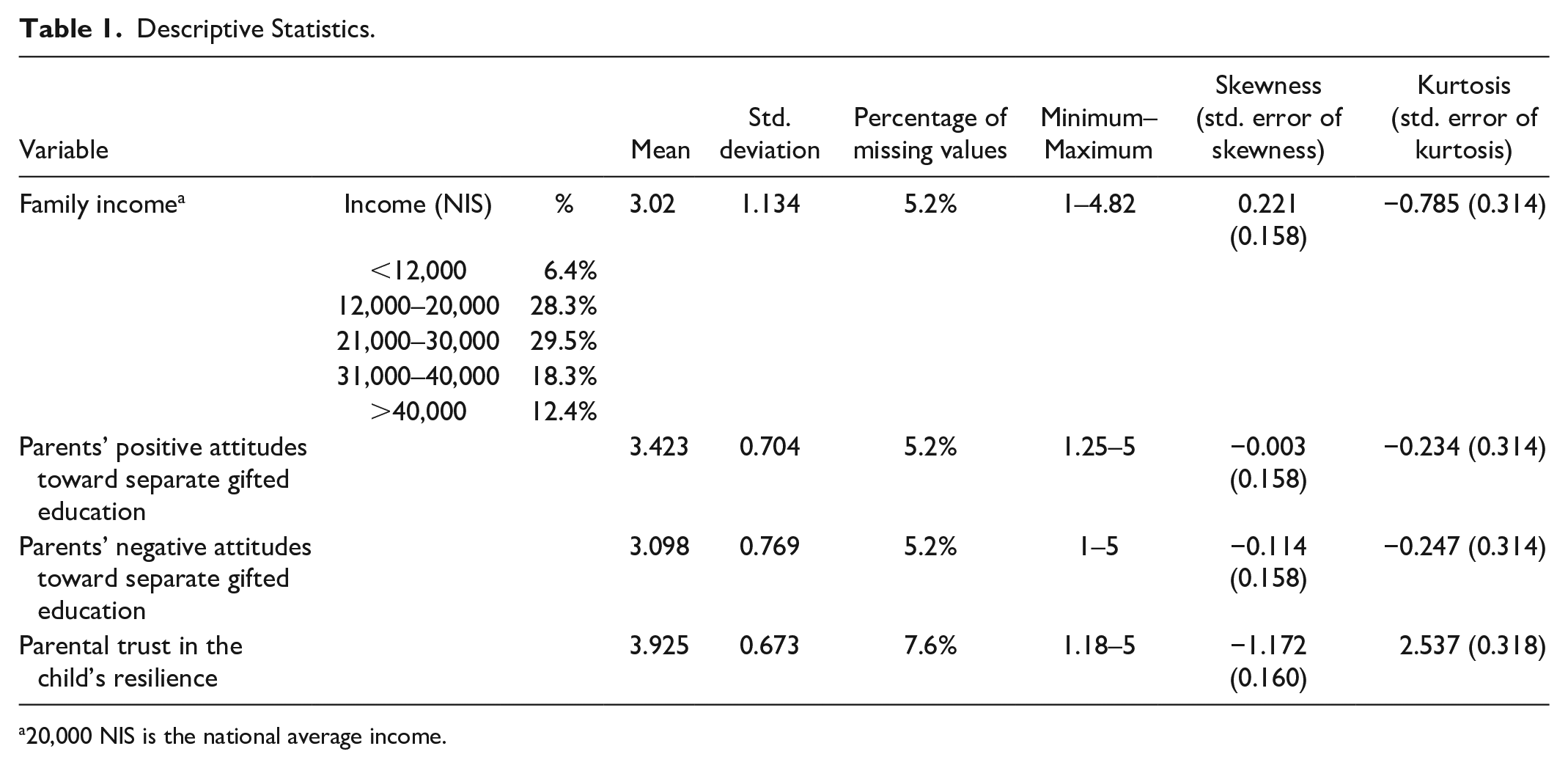
20,000 NIS is the national average income.
Pearson Correlations Between Study Variables.
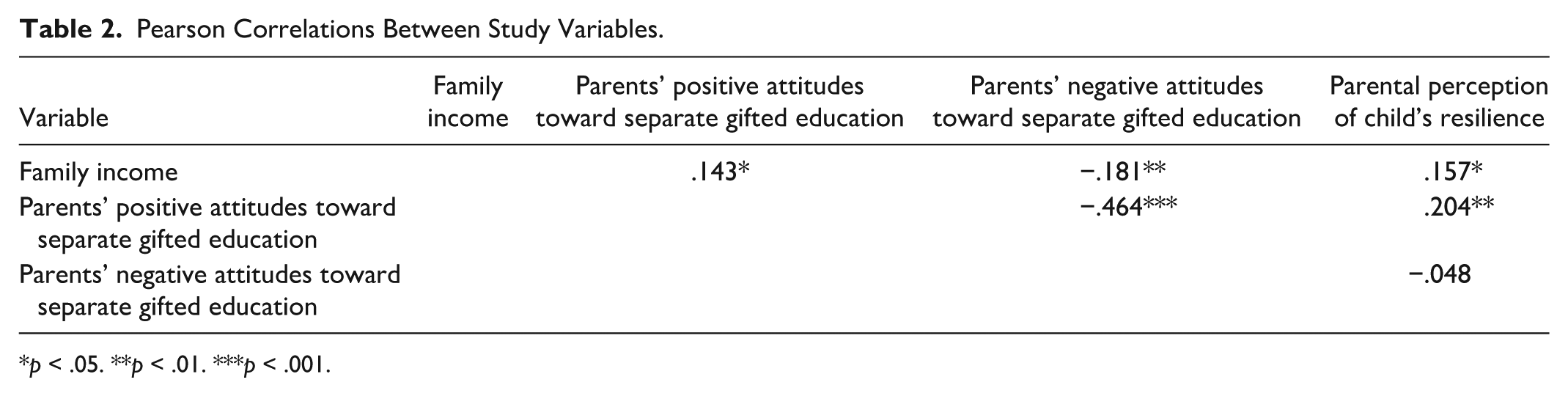
p < .05. **p < .01. ***p < .001.
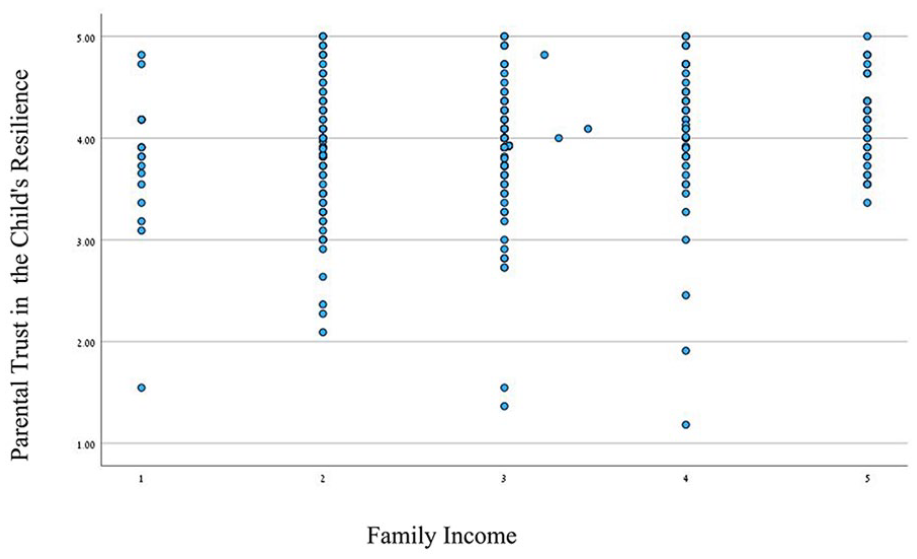
The Relationship Between Income and Parental Trust in the Child’s Resilience.
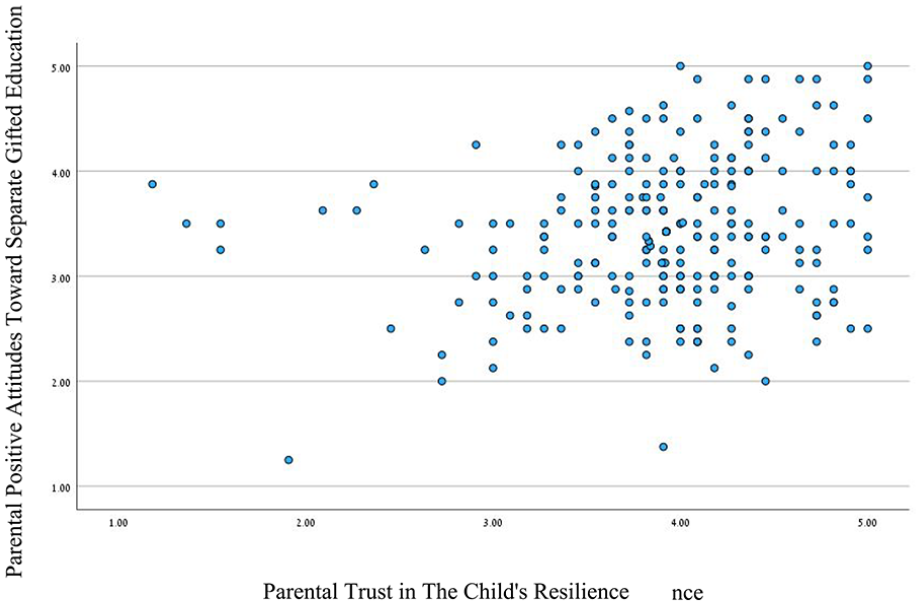
The Relationship Between Parental Trust in the Child’s Resilience and Parents’ Positive Attitudes Toward Separate Gifted Education.
Linear regression analysis examined the mediating effect of parents’ perceptions of their child’s resilience on the association between family income and parental positive attitudes toward separate gifted programs. Results showed that the regression model was significant F (2, 248) = 7.11, p = .001, explaining 5.42% of the variance in parental positive attitudes toward separate gifted programs. Income did not have a main effect on parental positive attitudes (B = .071, SE = .039, p = .069). However, parents’ perceptions of the child’s resilience had a main effect on parents’ positive attitudes toward separate gifted programs (B = .197, SE = .066, p < .01). Consistent with the third hypothesis, the indirect effect of parents’ perceptions of the child’s resilience on parental positive attitudes toward separate gifted programs was significant (B = .018, SE = .009, lower limit confidence interval [LLCI] = 0.003, upper limit confidence interval [ULCI] = 0.038), indicating its mediating role in the relationship between family income and positive parental attitudes toward gifted education. The results of the linear regression analysis are presented in Figure 3.
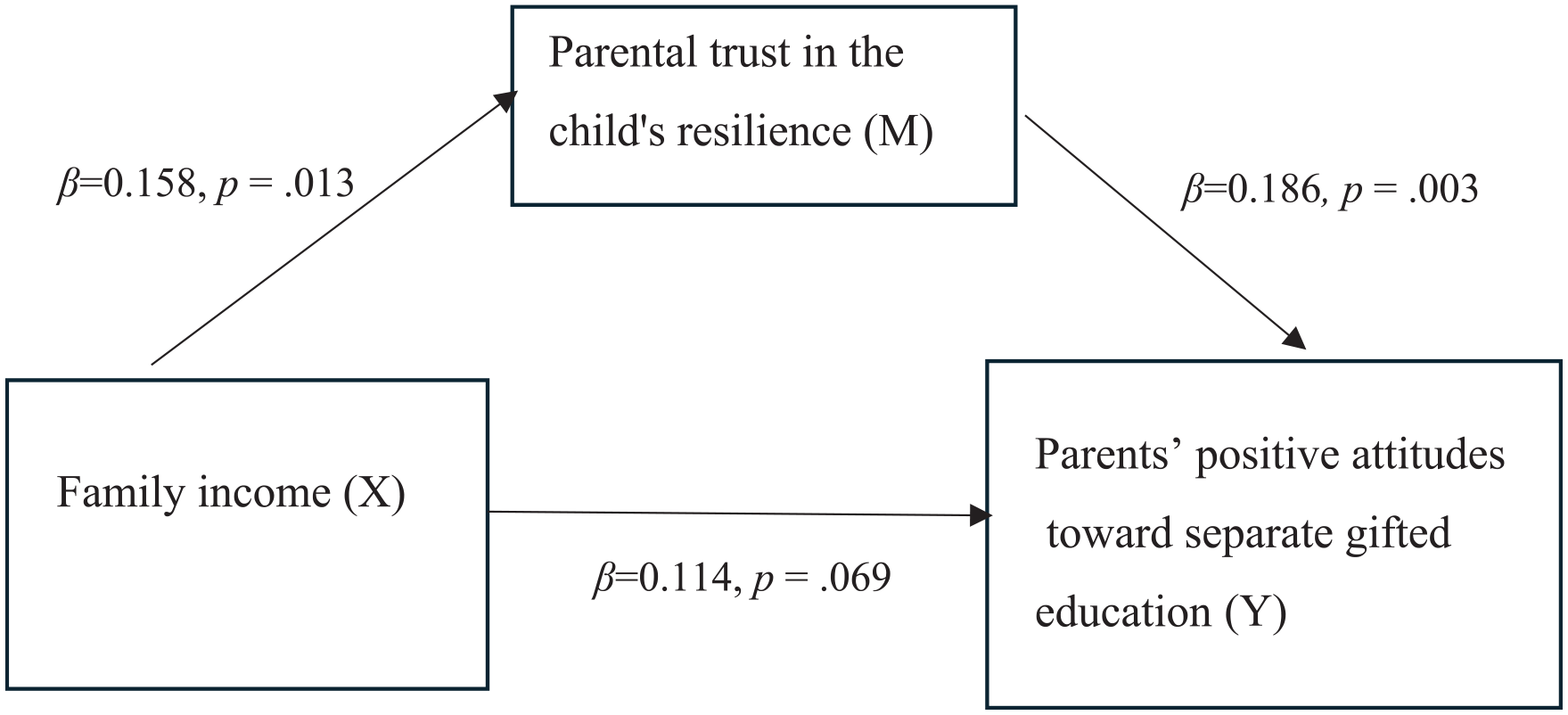
Results of Mediation Analysis.
Discussion
In the current study, we examined whether parents’ perceptions of gifted education were related to family income and whether this relationship could be explained by parents’ trust in the child’s educational and psychological resilience. Consistent with previous studies that focused on the relationship between income and access to gifted education (Grissom et al., 2019; Peters et al., 2019), our results showed that parents with higher incomes were more likely to support separate gifted programs. In contrast, lower-income parents were more likely to have negative perceptions of these programs. Moreover, we found that parents’ trust in their children’s educational and psychological resilience mediated the relationship between family income and parental support of separate gifted programs.
This study adds to the existing literature about socioeconomic differences in parents’ perceptions of giftedness and gifted education (Ecker-Lyster et al., 2021; Roda, 2017). Previous studies have suggested that middle-class parents intentionally create educational and social opportunities that will better prepare their children for future success (Chen et al., 2024; Lee & Bowen, 2006). Such active involvement in children’s education, which was conceptualized by Lareau (2002, 2015) as “concerted cultivation,” is critical to gifted education and includes the development of social networks that provide “insider knowledge” (Subotnik et al., 2022, 2023), the enrollment of children in after-school or advanced academic programs (Plucker & Peters, 2018), and the establishment of collaborative relationships with teachers and school personnel (Tan et al., 2019).
Parents from advantaged backgrounds perceive the identity of giftedness as a symbol of academic dominance and prestige that can be leveraged to access greater advantages and resources for their children (Parekh et al., 2018). Therefore, they may support separate gifted education within the public school system as a means of creating and maintaining racial, ethnic, and class boundaries. Roda’s (2024) work in a multiracial New York City elementary school revealed that parents from advantaged backgrounds strove to obtain high-status, segregated, gifted placements for their children to create sociocultural boundaries between “us and them,” attract other high-status parents to the school, and enhance their child’s educational opportunities. For example, parents argued that preserving the separate structure of gifted programs would attract parents from outside the school zone who could fundraise and enrich school resources. Furthermore, enrolling their child in a gifted program served as a cultural signal to others about the parents’ high status, their high involvement in school (i.e., volunteering, fundraising), and the child’s educational placement. However, parents from disadvantaged groups seem to have different views of gifted programs. Michael-Chadwell (2008) found that in contrast to White parents, who perceive high levels of intelligence and academic achievement as key indicators of giftedness, Black parents placed more emphasis on independence and social skills. Likewise, Roda (2017) showed that Hispanic and Black parents from low-socioeconomic backgrounds did not associate getting their child into gifted education programs as an indicator of parental success and did not view gifted education as a source of extra educational advantage for their child. Hispanic and Black parents did not necessarily want their children to be placed in gifted education programs because their child would likely be one of the few minority children in the program. Another interesting example of how perceptions of giftedness create and preserve sociocultural boundaries may be seen in a recent qualitative study that focused on the Bedouin-Arab minority in the south of Israel (an extremely disadvantaged population in terms of education; Abu-Saad, 2023). The study suggested that both Bedouin parents and school principals constructed giftedness as an inborn, stable, and rare condition. However, due to multiple financial, educational, and sociocultural barriers (e.g., lack of teachers, limited transportation, overloaded classes), parents and educators alike felt that gifted programs were almost entirely out of reach and gave up referring students to gifted screening tests (Argan, 2024).
In addition to different perceptions of gifted education, our findings suggest that parents with lower incomes may hold fewer positive attitudes toward separate gifted programs because they have less confidence and trust in their children’s abilities than do parents with higher incomes. Parents from socioeconomically advantaged backgrounds tend to attribute their own successful educational experience to their children, thus holding more positive, and even biased views of their child’s educational resilience than less affluent parents (Räty et al., 2002, 2006; Räty & Kasanen, 2013). In contrast, parents from socioeconomically disadvantaged backgrounds may have feelings of inadequacy that are associated with their own level of education, current barriers to home-school communication, and limited time and financial resources (Tan et al., 2019; Zhang et al., 2020). Although socioeconomic differences in parental trust in the child’s abilities often reflect parental behaviors and expectations rather than the child’s actual cognitive abilities (Ecker-Lyster et al., 2021), they have a great influence on the development of children’s self-perception and self-realization in the context of gifted education (Parr & Stevens, 2019).
Due to limited effect sizes, our results should be interpreted cautiously. Nevertheless, the current study may offer several theoretical contributions. First, our results may add to the existing literature about social inequalities in gifted education by focusing on the role of parents’ trust in their child’s competencies and abilities. Specifically, our results suggest that higher income might be related not only to stronger social and cultural capital but also to a more positive parental perception of the child’s abilities. Second, by integrating sociological and psychological perspectives on gifted education, the current study adds to our limited understanding of parents’ role in shaping gifted children’s educational trajectories (Johnson et al., 2024). Third, unlike previous studies that focused on parents of children who had already been identified as gifted (Matthews et al., 2014), the current study sheds light on parents’ role in the process of identifying gifted children and how this role is associated with contextual factors. Moreover, as our participants were mostly educated Jewish parents who mainly differed in their income level, the study highlights the importance of examining income as a potential predictor of parents’ beliefs in their children’s abilities. Finally, this study contributes to the inadequate research on gifted children in non-U.S. contexts (Nicholas et al., 2024), providing further evidence for inequalities in gifted education.
Limitations
The current study had several limitations. First, the cross-sectional design does not allow us to draw any conclusions about causal relationships between variables. Thus, inferences about the direction of the relationships were based on conceptual rather than empirical considerations. Another limitation was the exclusive reliance on self-reported data. This method involves problems of shared method variance, such that the associations obtained between parents’ perceptions of their child’s resilience and their perceptions of gifted programs may have become artificially inflated (Asiamah et al., 2019). As previous studies have shown, parental expectations of a child are related to the child’s views of their own competencies, which further influence their learning competencies (Parr & Stevens, 2019). Therefore, it is important to examine how parents’ perceptions of their children’s abilities are related to children’s self-perceptions and motivation to participate in gifted programs.
Our results are based on a relatively small sample size, limiting our ability to generalize our findings. We thus argue for the need to further examine the research questions among a larger, representative sample. In addition, our analysis is based on self-reported measures of family income. Although self-reported family income is considered a common economic measure of socioeconomic status (APA, 2007), it is not free from biases such as gender expectations, social desirability, and type of employment. For example, comparing self and proxy reports of earnings, Reynolds and Wenger (2012) found that when the target respondent was male, proxy respondents tended to overstate earnings, whereas when the target respondent was female, proxy respondents tended to understate earnings. Hurst et al. (2014) showed that self-employed individuals systematically under-reported their income in U.S. household surveys. To overcome such biases, assessing family income should also include more objective sources, such as tax returns (Robson et al., 2021). Moreover, family income may not fully explain a given family’s socioeconomic status; other factors, such as family size and parental education, should also be taken into account (Schleider et al., 2015).
Another limitation is that our sample included educated, Jewish parents; as such, we did not consider the varying effects of education, culture, and ethnicity on the gifted identification process. Results from Science, Technology, Engineering, and Mathematics (STEM) research in Israel have pointed to important ethnic differences in nominating students to high-achieving programs (Blank et al., 2022). For example, comparing Jewish and Arab high school students, Pinson et al. (2020) showed that in Arab, low-income groups, parents’ lower involvement enabled school personnel to be much more active in sorting and assigning students to different curricular programs, thereby overcoming parental biases.
We also did not take into account differences between diverse sociocultural groups within Israeli Jewish society, including ultra-Orthodox Jews, immigrants, and rural populations. Recent research in the United States showed that parents’ immigration statuses were associated with children’s gifted placement. Whereas non-Hispanic, White, and Asian children were overrepresented in gifted programs, Hispanic children were underrepresented (Pham & Altman, 2024). In the same vein, a policy discourse analysis revealed that the public-political discourse concerning Israeli children of Ethiopian origin focused almost entirely on the weaknesses and needs of this population, rather than on gifted education (Lifshitz & Katz, 2015). Future studies should investigate the effects of minority status, parent nativity, bilingualism, and multiculturalism on gifted education in different countries and contexts (Kalmijn, 2015). Such studies should also integrate qualitative research methods that would deepen our understanding of parental perceptions of giftedness and how these perceptions shape children’s referral and participation in gifted education.
Our results may also be limited by the fact that the sample included mostly mothers. Although fathers are underrepresented in gifted children research (Papadopoulos, 2021), studies have pointed to differences between mothers and fathers in parenting practices of gifted children (Pilarinos & Solomon, 2017; Rudasill et al., 2013) and interactions between parents’ gender and race/ethnicity in supporting gifted children (Grantham & Henfield, 2011). Thus, it is important to further examine the different roles of mothers and fathers in children’s referral and participation in gifted education. Additional research focused on how parents from different backgrounds understand giftedness, gifted children, and gifted programs can lead to improved advocacy efforts, the provision of more effective specialized training for teachers who work with gifted learners, and improved efforts to focus and prioritize future research in gifted education settings (Jolly & Matthews, 2012).
Footnotes

Ethical Considerations
Ethical approval for this study was obtained from the IRB of the School of Education, Ben Gurion University of the Negev (approval no. 1321) on May 10, 2021, and the Israeli Ministry of Education (approval no. 12821) on November 17, 2022.
Funding
The authors received no financial support for the research, authorship, and/or publication of this article.
Conflicting Interests
The authors declared no potential conflicts of interest with respect to the research, authorship, and/or publication of this article.
Open Science Disclosure Statement
The data analyzed in this study are available for purposes of reproducing the results upon request. The code or protocol—SPSS syntax—used to generate the findings reported in the article are available for purposes of reproducing the results or replicating the study upon request. There are no other newly created or unique materials.
Artificial Intelligence Use
The authors confirm that no generative AI tools were used in the development of this article.