




Abstract
Despite adolescent girls’ superior school achievement and high career aspirations, fewer women than men achieve career eminence. Understanding early influences on the development of gifted girls’ career-related values and aspirations may help to explain this discrepancy in career outcomes. This article reports findings from a qualitative, cross-sectional study of influences on career development for 18 girls in eighth, 10th, and 12th grades in selective entry high school programs in three Australian schools. Data from two rounds of interviews were analyzed thematically in relation to the career development theories of Gottfredson and Savickas. Findings highlighted the interrelated influence on career values, goals, and choices of (a) perceived personal traits, strengths, and interests, and (b) relationships and experiences grounded in home, school, and community contexts. Key findings are discussed for research and educational practice related to supporting career development in gifted girls.
Within contemporary talent development approaches to gifted education, the achievement of eminence or domain excellence is considered a core long-term goal for gifted individuals (e.g., Csikszentmihalyi et al., 1997; Dai & Chen, 2013; Gagné, 2003), and it follows that support for career development has been advocated as an important focus of gifted education programs (Jung, 2012). Eminent individuals are “those who make a significant contribution to improving or enhancing the human condition” (Subotnik et al., 2011, p. 13), with eminence often conceptualized in terms of the highest levels of individual leadership, creativity, and innovation in a field of endeavor. There are fewer eminent women than men in virtually every field of endeavor, including those in which women are traditionally overrepresented (Kerr & Gahm, 2018). Academically gifted adolescent girls may be considered a population with high potential to reach career eminence as adults. Therefore, understanding career aspirations and early influences on career-related goals and values may shed light on persistent gender disparities in career outcomes. This research examines the early career planning of academically gifted girls attending selective secondary school programs, in order to explore the potential roots of these discrepancies and suggest avenues for early career support.
Career Development and Giftedness
In keeping with its multifaceted nature, career development can be defined as “the total constellation of psychological, sociological, educational, physical, economic, and chance factors that combine to shape the career of an individual over the life span” (Sears, 1982, p. 89). Like career development, the realization of an individual’s giftedness involves a combination of the person, the context, and development over time (Dai, 2018). Arising from a talent development perspective, Subotnik et al.’s (2011) definition of giftedness highlights the developmental pathway from early potential, to recognized achievement, to eventual eminence, supported by deliberate cultivation of both cognitive and psychosocial resources. By these definitions, talent development and career development must both be understood from a lifespan perspective. While talent development and career development are not synonymous, the processes and opportunities for developing specific talents in domains of strength and interest may have a significant bearing on the extent to which an individual is able to realize their career aspirations. Career development is often considered relevant only in late adolescence or adulthood, however, there is evidence that career-related self-concepts and understandings begin to form as early as age four (Armstrong & Crombie, 2000; Creed et al., 2007; Gottfredson, 1981, 2002, 2005), particularly for gifted students (Smith & Wood, 2020).
For academically gifted young people, personal traits, strengths, challenges, and common experiences may point to specialized and earlier career guidance support needs in comparison to their typically developing peers (Callahan, 2017; Hebert, 2019; Muratori & Smith, 2015; Ozcan, 2017). For instance, unique career-related developmental characteristics such as advanced cognitive reasoning, intense interests, and high personal expectations for future career success may translate into additional support needs (e.g., Greene, 2003, 2006; Hollingworth, 1916, 1942; Jung, 2014; Terman & Oden, 1947; Vialle & Hedrick, 2012). Jung’s (2018) research into career decision-making by gifted students highlights that intellectual stimulation and interest in a career are strongly linked for this population and that career-related decisions may be influenced by a desire to fulfill individual potential, considerations of stability, and expectancy for success. Others suggest that heightened sensitivities common in gifted individuals can result in career choices related to social justice causes (Muratori & Smith, 2015; Ozcan, 2017). Seward and Gaesser (2018) argue that multipotentiality can translate into a more anxious and intense career development process for gifted adolescents in comparison to their peers because they have numerous career pathways in which they could flourish. Factors such as high expectations from self and others (Muratori & Smith, 2015), as well as timely access to career-relevant educational opportunities and information (Smith & Wood, 2020), also play important roles.
Sampson and Chanson (2008) argue that being gifted compared to developing typically can create polarized career development experiences depending on the personal traits of the gifted individual. For instance, gifted adolescents who exhibit advanced language abilities could harness these abilities to make career-related learning easier such as in contexts requiring high levels of written and oral communication. In contrast, gifted adolescents who face additional external pressures from parents or teachers may lack unconditional career-related acceptance needed to flourish in their career development. Gifted adolescents who lack field-specific mentors aligning with their areas of strengths and interests in their career decision-making processes may face barriers in obtaining specialized career-related guidance. There is some evidence that assistance with career counseling is frequently requested by gifted individuals and their families (Ishak & Bakar, 2010; Yoo & Moon, 2006).
Career Development Considerations for Gifted Girls
Adolescent girls may have different career-related values and conceptions of success compared with their male counterparts (Kerr & Gahm, 2018), and therefore may benefit from career guidance strategies that acknowledge these differences. Based on her influential research examining women’s moral choices, crisis management approaches, and rights views dating back to the 1980s, Gilligan (1982) argued that women’s reproductive abilities create gender-specific values and motivations that orient them toward compassion and care. She suggested that women tend to value life balance and relationships along with traditional measures of career success (Gilligan, 1982), and career-related decisions made in adolescent years can begin to reflect these values. In contrast, males tend to value high-profile career positions and salaries.
Research has indicated females with culturally traditional work-family ideologies are more likely to have lower career aspirations regardless of their own abilities (Davis & Pearce, 2007; Lirio et al., 2007). Researchers point out that girls are often raised in families, schools, and communities that have different career expectations of boys than of girls (Kerr, 1994; Kronborg, 2010; Reis, 1998; Rimm et al., 1999). Girls may be unaware of the impact these expectations have on their choices.
Gifted girls and boys tend to have equally high career aspirations in the middle school grades (Kerr & Sodano, 2003; Rakow, 2005), and girls on average have higher academic achievement throughout their schooling (Hodgetts & Lecouteur, 2010). However, some research indicates that adolescent girls tend to lower their career aspirations as they progress through secondary schooling, particularly if they aim for highly prestigious or non-traditional careers for women (e.g., Cassie & Chen, 2012; Lawson et al., 2018). These lowering career aspirations can partially be attributed to an increasing focus on future work/life balance and narrowing preferences over time (e.g., Patton & Creed, 2007). As some research asserts a weaker correlation between adolescent aspirations and adult career outcomes for females in comparison to males (Jung, 2013; Muratori & Smith, 2015), it cannot be assumed that academically successful gifted girls will also perform highly in career settings in later years. A range of factors may contribute to gender-based differences in eminence within career contexts. Common employment patterns and external career-related expectations for females can impact adolescent girls’ career decisions, with career-related social reproduction an issue for some adolescent girls to navigate (Guthrie, 2020; Seward & Gaesser, 2018; Wood et al., 2018).
Throughout history, eminent individuals have generally been white, male, urban, and upper class (Silverman & Miller, 2007); therefore, career theories and research studies have focused on these individuals (e.g., Andersen & Vandehey, 2012). While it can be debated that sex role stereotyping and “glass ceilings” have impeded female career eminence, these are only part of the picture (Kronborg, 2010). Factors such as a tendency to undertake multiple careers and the demands of various caregiving roles also contribute to differing career results for some females (Austen & Redmond, 2008; Majeed et al., 2015; Reis, 1998; Reis & Sullivan, 2009; Rimm et al., 1999; Savickas, 2005).
Research on the career development of gifted adolescent girls began to emerge in the late 1990s in the United States (Kerr, 1994; Kerr & Fisher, 1997; Reis, 1998; Rimm et al., 1999) and has included retrospective accounts by eminent women and explorations of highly contextualized personal and environmental influences on career trajectories and talent development. In terms of environmental influences, research highlights the importance of master teachers or key mentors who nurture girls’ intellectual talents, hold high expectations, and foster access to career-relevant experiences, as well as family support (Kerr & McKay, 2014; Kronborg, 2009, 2010; Miller & Cummings, 2009; Reis & Sullivan, 2009). Literature also indicates that cross-age mentoring is important for gifted adolescents’ development of effective leadership skills (e.g., Besnoy & McDaniel, 2016). While there remain differing views on the impact of selective schooling programs (Marsh et al., 2007; Marsh & Hau, 2003; Robertson, 2013), some research suggests that teacher–student relationships in these specialized programs can have a strong, career-related impact on students (Vogl & Preckel, 2014; Watters, 2010).
Researchers have called for specialized career supports to help gifted young females navigate the multifaceted and culturally embedded process, including support to understand the role gender and relationships can play in career trajectories (Kerr & McKay, 2014). Much of this advice is grounded in research involving eminent women reflecting on their personal experiences; however, understanding the nature of career development for gifted girls in the context of contemporary pressures and opportunities is also important. This study focused on exploring the career-related experiences of gifted adolescent girls in some of their most formative years of development. It did not include comparison groups of gifted males or adolescents outside of selective schooling programs. Rather, it was an in-depth exploration of early career development in a specific population of gifted girls. Despite the long-standing acknowledgment of gifted individuals’ specialized career considerations, there remains a need for further research on this issue, including the intersection between giftedness and gender and its implications for career development.
Research Questions
This research explored the perspectives of adolescent girls in academically selective secondary school programs on their career-related development. Specifically, the study addressed the following questions:
How do gifted adolescent girls in South Australian selective secondary school programs describe the factors influencing their career-related values, decision-making processes, and goals?
How do gifted adolescent girls describe any enablers, tensions, or inhibitors to the development of their career-related values, decision-making processes, and goals?
Theoretical Framework
The design of this study was grounded in Gottfredson’s (2002) theory of circumscription, compromise, and self-creation, and Savickas’ (2002) career construction theory. Together, these age- and stage-based developmental theories provide a holistic picture of career development across the lifespan, merging sociological and psychological perspectives. It was decided not to use grounded theory due to the strength of existing theories in career development and because the main purpose of this study was not theory construction.
Gottfredson’s (2002) career development theory is among those most cited in the literature on giftedness and career development, and links self-concept and identity categories such as gender and intelligence with young people’s career-related decisions. It primarily focuses on three- to 13-year-olds. Self-perceptions of intelligence play a key role in career-related decisions, which may be particularly pertinent for gifted adolescents. In contrast to other theories focused on matching individual traits with specific careers, Gottfredson (2002) proposes that career development is primarily a process of individuals finding an appropriate social niche and rejecting potential careers that do not provide that fit. Specifically, the theory proposes that “career choice is a developmental process beginning in childhood; occupational aspirations reflect people’s efforts to implement their self-concepts; and satisfaction with career choice depends on how well that choice fits the self-concept” (Gottfredson, 1996, p. 181). While some theories include gender as an influence on career-related decisions, Gottfredson places the construction of career-related sex roles at the heart of her theory.
Within Gottfredson’s theory, career choice is guided by a process of circumscription (i.e., “the process by which youngsters progressively eliminate unacceptable alternatives in order to carve out a social space [their zone of acceptable alternatives] from the full menu that a culture offers”; Gottfredson, 2002, pp. 92–93) and compromise (i.e., “the process by which youngsters begin to relinquish their most preferred alternatives for less compatible ones that they perceive as more accessible . . . in anticipation of external barriers [anticipatory compromise] or after they are encountered [experiential compromise]”; Gottfredson, 2002, p. 93). In addition to Gottfredson’s theoretical framework, this study was further guided by Savickas’ (2002) career development theory. This additional lens provided tools for understanding individual career narratives, considering the modern realities and contexts of work, and exploring girls’ experiences as they moved into late adolescence/early adulthood.
Savickas (2002) proposes a lifespan theory of career development that addresses three key themes in the context of an individual life narrative—social justice, well-being, and the changing nature of the world of work. Developmental stages include Self as Actor, Self as Agent, and Self as Author, while career development is driven by five sequential lifetime goals of growth, exploration, establishment, management, and disengagement, each of which incorporates major developmental tasks. In adolescence, gifted girls are likely to be operating in the Self as Actor or Self as Agent stages and focused on fulfilling the lifetime goals of growth and exploration. Savickas’ (2002) career construction theory is primarily focused on the ways individuals increasingly form their own interrelated career and life narrative stories within a changing world.
The career construction theory (Savickas, 2002) focuses on discovering the subjective lifetime stories of each individual. Savickas’ work also provides a basis for exploring the ways gifted adolescent girls balance planning for other important future life roles such as future family roles and hobbies along with their career pathways.
Merging elements of Gottfredson’s (2002) theory of circumscription, compromise, and self-creation and Savickas’ (2002) career construction theory to guide this research enabled a comprehensive exploration of career development in the target population across the full age range of participants from 13 to 19 years, including post-school decision-making and future planning relating to the balance between work, family, and personal interests within a changing vocational and societal landscape.
Method
This study employed a qualitative cross-sectional design to explore the central phenomenon of gifted girls’ career development within the context of a selective high school program for academically gifted students. The research was designed and conducted from an interpretivist stance, which assumes that social reality is shaped by experience and context and must be understood in ways that are grounded in participants’ own experiences and contexts (Ormston et al., 2014). In-depth interviews with three participant cohorts representing different age groups enabled examination of how influences on gifted girls’ career development may develop across the adolescent years.
Participants and Recruitment
Participants were 18 females (age range 13–19 years) attending three selective secondary school programs for academically gifted students in suburban public schools within South Australia. Consistent with the cross-sectional design, participants were recruited into three cohorts representing different high school grade ranges, with the final sample including six participants in 8th–9th grade, seven participants in 10th–11th grade, and five participants in 12th grade. Data about participants’ cultural background were not collected. The sample size of 18 can be considered relatively high in relation to the total population of about 200 students attending these selective high school programs and was adequate to authentically answer the research questions with appropriate depth and richness (Bryman, 2008; O’Reilly & Parker, 2012; Tracy, 2010).
Following ethical approval from the relevant university and education department bodies, information letters were sent to the principals of the three public schools offering the selective entry program for gifted students. After principal approval, female students in the target grades attended a school assembly during which the lead researcher provided information about the study and invited students to take written information home to their parents. Parent consent and student assent forms were returned to the researchers by mail.
School Program Context
The selective entry program from which participants were drawn condenses the first 3 years of secondary schooling into 2 years, with those in the selective program studying as a cohort within mainstream public secondary schools. While all three sites operate within a common program framework and offer the compacted course led by teachers trained in gifted education pedagogies, there was some variation in the school-based and extracurricular opportunities offered. All sites select students based on some combination of standardized achievement test performance, evidence of achievement in community and extra-curricular settings, prior school reports, and family interviews. All applicants complete the Higher Ability Selection Test (HAS-T) designed by the Australian Council for Educational Research (ACER) as a screening tool to assist schools in selecting students for gifted and talented programs. Based on their performance on the HAS-T, applicants may be invited for individual and family interviews, and data from additional sources such as those listed above are also considered. The sample can be considered representative of high academic achievers deemed capable of accelerated study. Findings were not compared across sites as this was not pertinent to the research questions.
Data Collection: Semi-Structured Interviews
Consistent with the interpretivist worldview, semi-structured interviews were the primary tool of data collection as this format enabled in-depth exploration of individuals’ own highly contextual experiences expressed in their own words (Ormston et al., 2014). Each participant was interviewed twice at her school, with approximately 12 months between interviews, which allowed for discussion of any changes in career-related plans. The 12th-grade cohort had graduated from secondary school by the time of the second interview. Each interview lasted between 40 and 60 minutes and was audio-recorded and later transcribed by the lead researcher.
The interview protocols (Appendix A) were guided by Gottfredson’s (2002) theory (focused on the career-related influences of gender, intelligence, circumscription, and compromise) and concepts in Savickas’ (2002) theory such as agency, life narratives, and vocational self-concept as well as the influence of emerging technologies and globalization on contemporary careers. The second interview also enabled the opportunity to revisit key topics emerging from the initial interview.
Data Analysis
Based on the theoretical framework, interview data were analyzed thematically, guided by Braun and Clarke’s (2006) six-step process. Emerging messages were initially explored in relation to the research questions with a focus on key concepts within the theoretical framework. The research design also allowed for additional concepts to emerge from the data, where these were not comprehensively addressed within the theories of either Gottfredson or Savickas.
Data analysis began with inductive approaches and then progressed toward deductive methods. The lead researcher made extensive field notes after each interview to reflect on emerging patterns, potential themes, and questions. The transcripts were analyzed manually after the first round of interviews, with a coding process that included open, attribute, axial, and selective coding as defined in Saldana (2016). Selective coding at this stage was guided by Gottfredson’s (2002) theoretical concepts including circumscription, compromise, gender, intelligence, and prestige. After the initial codes were generated, these were collapsed into themes that were considered tentative until after the second round of interviews and which helped to guide the development of the second interview protocol, which also incorporated key concepts from Savickas’s theory such as agency, beginning life narrative, and vocational self-concept. The NVivo software program was employed to assist with coding and testing themes in the final round of analysis which involved more rigorous examination of data from across interviews and cohorts in relation to the research questions and the blended theoretical framework. Thematic maps were drawn to form a thorough overview of data related to the blended theoretical framework and data that could not easily be accounted for within existing theory. After all the codes were complete, candidate themes were then formed and refined in relation to the thematic maps. This round of analysis brought to light relevant aspects of the blended theoretical framework as well as the main overarching participant messages. Significant findings in each of the three data sets were compared through a process of triangulation to ensure the findings were robust. Table 1 shows a sample of the way the codes were used to develop key themes. A point of saturation in the data analysis was reached, as no new significant patterns emerged (O’Reilly & Parker, 2012).
Participants’ Career Goals.
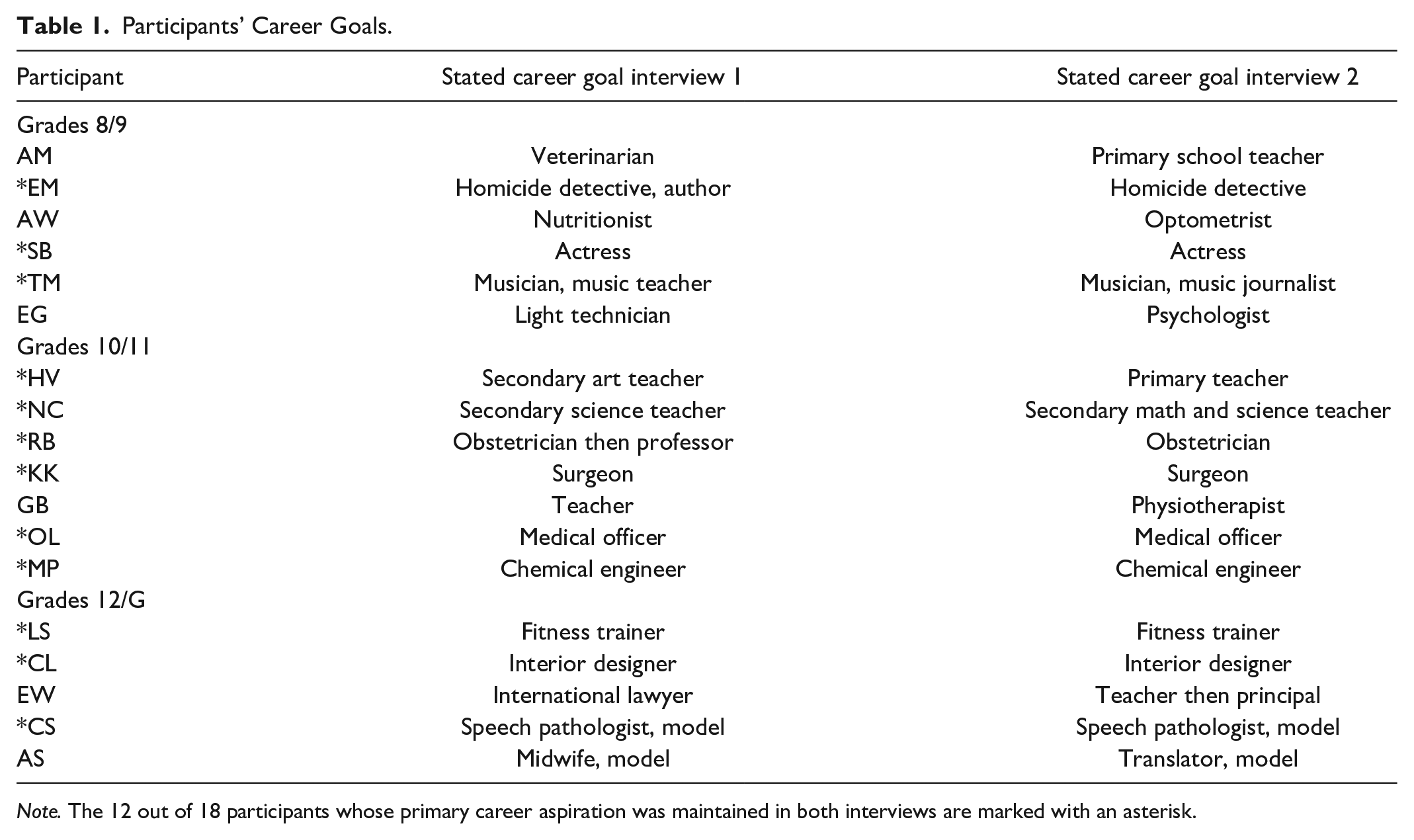
Note. The 12 out of 18 participants whose primary career aspiration was maintained in both interviews are marked with an asterisk.
Researcher as Instrument
The lead researcher for this study is a parent of two gifted children and a teacher in a gifted education program who identifies with a cultural feminist worldview. It is acknowledged that the researchers’ background experiences and subjectivities are integral to qualitative research and must be carefully navigated to ensure the credibility of the findings.
Trustworthiness
Throughout the data collection process, the lead researcher used a reflective journal after each interview for the purpose of managing subjectivities and noting emerging concepts of interest. Following the interviews, credibility was established through member checking, with participants provided an opportunity to review and confirm the interview transcripts. During data analysis, to ensure reliability the research team was involved in independently coding a subset of the transcripts and these were discussed among the team members to ensure consistency. Data were triangulated by comparing codes from each data set with each other.
Transferability
The transferability of findings is limited to adolescent gifted girls in similar selective gifted education programs in urban settings.
Results
The findings from the qualitative analysis reflect the career-related priorities, external influences, and internal drives of a sample of gifted adolescent girls in a formative period of career-related decision-making. Through analysis of interview data, six key themes emerged related to both personal and environmental influences on career development. In the following sections, direct quotes from the data include the citations 8/9, 10/11, or 12/G (12th grade and graduated) to indicate the grade levels of participants during the first and second interviews. Participants’ primary career goals reflected both traditional and non-traditional career aspirations for females (see Table 1).
Career-Related Values are the Foundation of Career Goals and Decision-Making
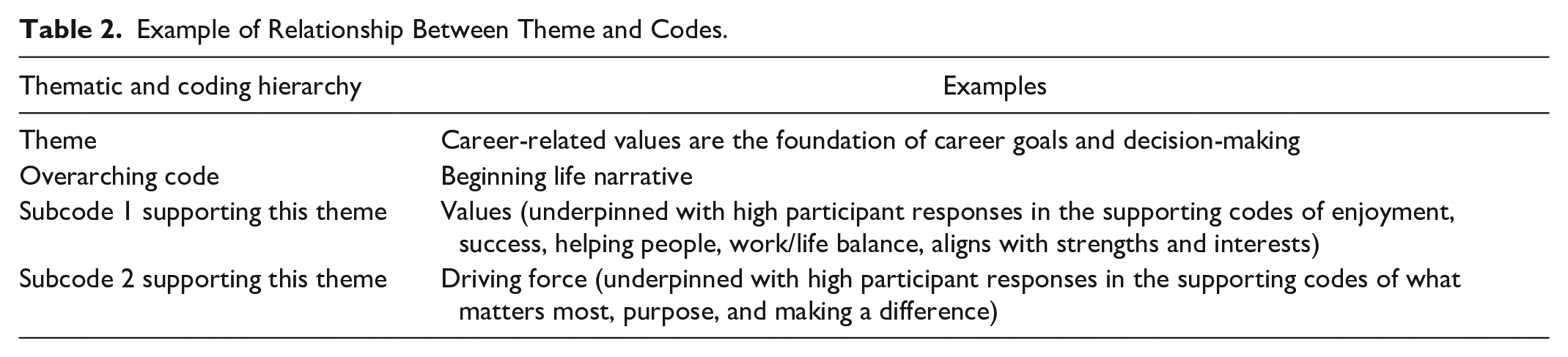
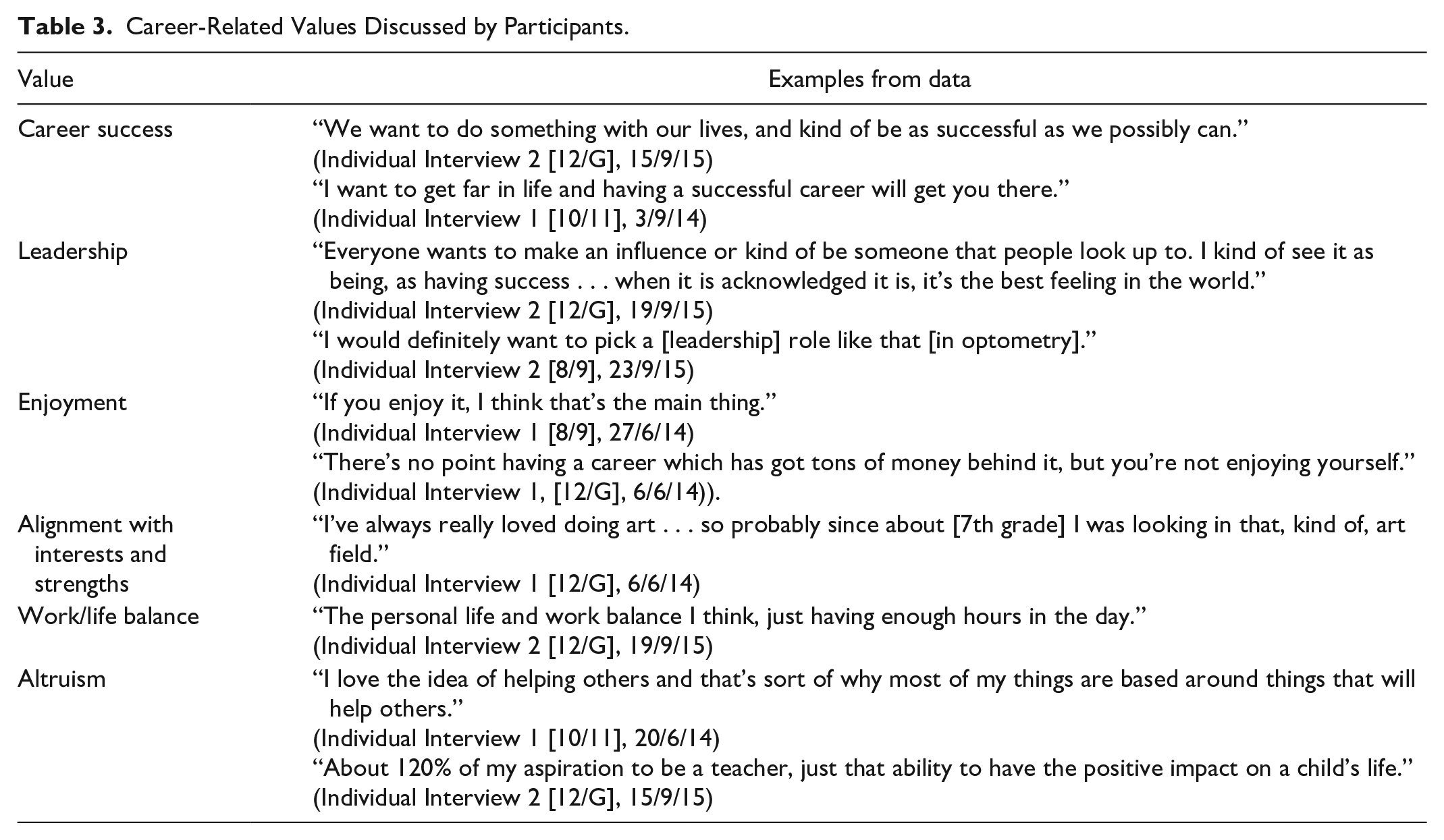
Participants reported career-related values tended to be stable between interviews 1 and 2. Examples are provided in Table 2 of the relationships between theme and codes. Six main career-related values were evident among these participants, and these are summarized in Table 3. In discussing their career aspirations, participants particularly focused on harnessing their own interests and strengths to make a difference in others’ lives. It became apparent that for these gifted girls, career-related values, decision-making processes, and goals are tightly interrelated. That is, career-related values such as success or altruism influence both decision-making processes and specific career goals. The career-related value of mental and physical well-being was reported as having a significant narrowing impact on participants’ preferred career pathways.
Example of Relationship Between Theme and Codes.
Career-Related Values Discussed by Participants.
Developing Career Goals Involves Both Broadening and Narrowing the Range of Possible Career Aspirations
In discussing their career-related decisions to date, participants described processes of both broadening and narrowing of their career preferences to crystallize their primary aspirations. There were examples of career-related values such as a strong preference for flexible work schedules helping to narrow or filter career options. For example, one participant explained the importance of “in my future having the flexibility to . . . put my family and my friends first” (Individual Interview 2 [12/G], 9/15/15). Exposure to role models, especially female mentors in domains of interest, appeared to help participants broaden the range of primary career options they might consider but also helped to cement career goals for some participants. Several referred to independent research projects on topics such as the history of women’s rights and women in the workplace as helping them consider a broader range of primary career aspirations. Career-related social reproduction of common employment patterns is an issue for some adolescent girls to navigate (Seward & Gaesser, 2018; Wood et al., 2018). Interestingly, multiple participants expressed a desire for more school-related experiences designed to broaden their understanding of career possibilities, as they felt they lacked information.
Some participants described specific experiences that helped them to narrow or crystallize career goals or interests. These often involved meaningful mentorship experiences (as both mentor and mentee) within a primary interest area. For example, one participant described her experience of mentoring younger students (“I’ve gone in at lunchtimes and mentored students who are having trouble with concepts”; Individual Interview 2 [10/11], 22/9/15) and this strengthened her interest in becoming a teacher. Another described her work experience within a small business as helping to crystallize her entrepreneurial aspirations; she explained how “seeing how much they put into their business kind of almost makes me want to be, okay, I want to have that kind of reputation” (Individual Interview 2 [12/G], 19/9/15).
All participants discussed some form of a narrowing process in which they eliminated potential careers they were not willing to pursue. These decisions appeared to stem primarily from a sense of their own interests and strengths. Certain occupations were ruled out due to lack of interest. For example, one participant explained that “There’s just a few that I just wouldn’t do like the lawyer I suppose . . . just doesn’t interest me at all” (Individual Interview 1 [8/9], 15/5/14), while another suggested that “I just don’t seem like the person to be fighting fires” (Individual Interview 1 [8/9], 15/5/14). A number of participants discussed ruling out science, technology, mathematics, and engineering career pathways due to external gendered stereotypes. Other reasons given for narrowing or eliminating career choices included undesirable risks, perceived competition, and gender stereotypes associated with particular careers.
Identity Influences Career Development
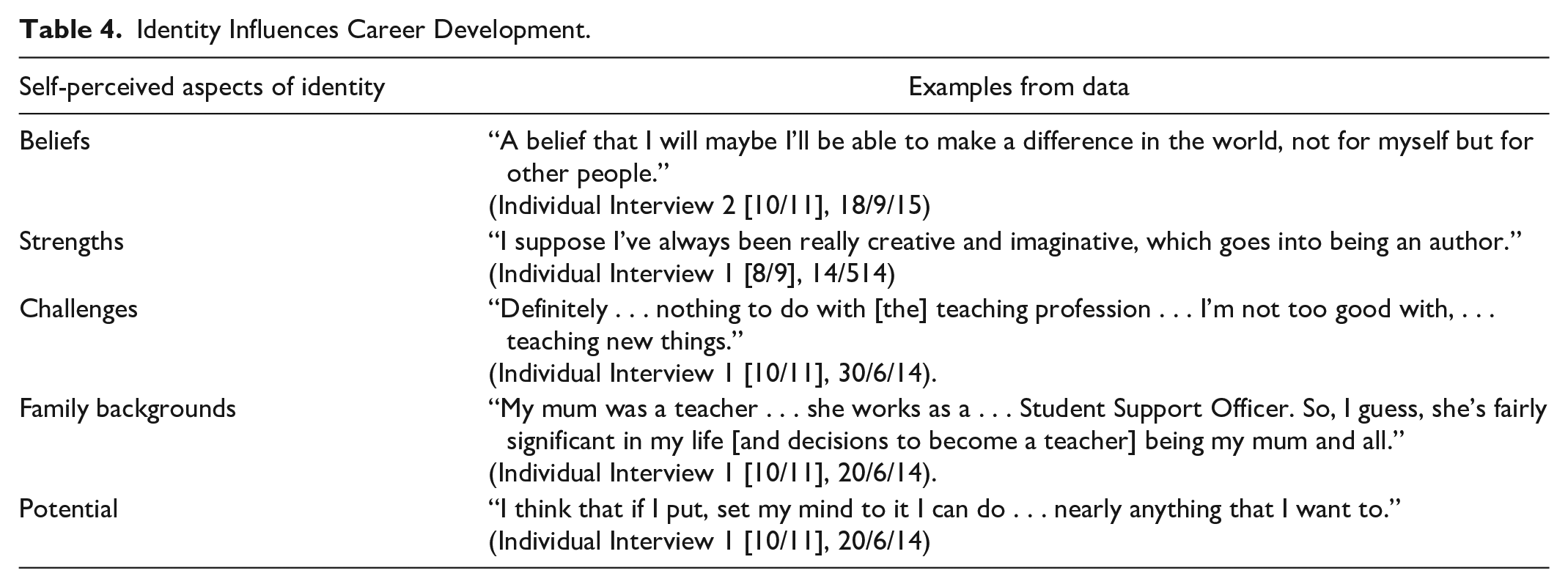
The findings suggest that participants’ development of career aspirations over time was heavily influenced by their developing sense of identity. The concept of identity in this research was aligned with Gottfredson’s (2002) concepts of identity categories as being self-perceptions of gender, race, socioeconomic status, and intelligence in relation to a sense of fit within a career development context. Specifically, participants in this study discussed their own identity development by referring to a combination of their self-perceptions of beliefs, strengths, challenges, family backgrounds, and potential in relation to their career trajectories, and examples from the data are shown in Table 4.
Identity Influences Career Development.
Interests and Personal Traits Influence Career Development
The driving life narrative for most participants was the perception that they were committed to and capable of making a difference in others’ lives through applying their own strengths and interests: “I love the idea of helping others and that’s sort of why most of my things are based around things that will help others” (Individual Interview 1 [10/11], 20/6/14); “About 120% of my aspiration to be a teacher, just that ability to have the positive impact on a child’s life” (Individual Interview 2 [12/G], 15/9/15). Many participants saw themselves as leaders and viewed future career-related leadership opportunities as both necessary and comfortable.
Addressing career-related barriers created tensions in participants’ career development, especially perceived internal barriers. For instance, personal traits such as introversion were seen as challenging (e.g., “I guess it can be a challenge . . . because a lot of gifted girls they’re not really used to sort of . . . interacting with other people sometimes”; Individual Interview 2 [12/G], 9/9/15). Some participants described mental health issues as their most significant career-related inhibitor. Although perfectionism was sometimes viewed as a personal challenge, it was usually viewed as a future career-related asset. The main external barrier participants discussed was high university entrance scores for desired courses. Multipotentiality was only described as a barrier by four of the 18 participants (e.g., “It’s taken me a long time to even vaguely decide on a career choice . . . I think I have a lot of options . . . I’m capable of doing a lot of things”; Individual Interview 2 [10/11], 15/9/15).
Family Contexts Enable Career Development
In this sample of girls in an accelerated academic program, nearly all participants reported that family was an enabling influence in their career-related development. Within family settings, participants most commonly reported their mothers as a significant influence (e.g., “The main person would be my mother”; Individual Interview 1 [10/11], 9/13/14; “My mum is the biggest [influence] at the moment”; Individual Interview 2 [8/9], 21/9/15), while fathers were also described as an enabling influence, albeit less frequently. Multiple participants described fathers as providing general guidance and practical support for their career development but explained that their father did not work in a field of interest to them (e.g., “Dad helps me a lot with my Maths homework and things, but I don’t think it’s his fault that I’m not interested in [a career in engineering]. I think it’s just me”; Individual Interview 1 [10/11], 22/8/14).
Older siblings and extended family members also emerged as an important enabling career-related influence, often through career-related mentoring. For example, one participant, planning to become a detective, saw her older brother as her main career-related information source:
I’ll talk to my brother about something at school and then he will tell me it could be related to . . . the job I want to do. Then he’ll sort of give me this information of what I’d actually have to know. (Individual Interview 1 [8/9], 14/5/14)
Mentoring younger siblings had a particularly enabling influence on participants considering future careers that required working with children.
The Selective Academic Program Was Perceived to Both Enable and Inhibit Career Development
No participant reported being involved in any differentiated career-related guidance programs or curriculum as a component of their selective academic program. Most participants referred to formal school career support offered to all students in specific year levels such as Personal Learning Plan classes, exposure to enrichment opportunities at universities, work experience placements, and Research Project classes as enabling their career development. Several patterns were evident when comparing the data across the three grade-level cohorts, and this may suggest a developmental trajectory worthy of further investigation. Grades 10/11, in comparison to Grades 8/9 and Grades 12/G, appeared to be the period of most intensive career-related experiences and decisions. This may have related to the career-related experiences provided for all students in those year levels (e.g., “This year at school especially has probably really put into concrete the fact that I want to do medicine, because in Year 10 we have a real focus on career pathways and things like that”; Individual Interview 1 [10/11], 3/9/15; “Interior design more specifically from [Grade] 9 or [Grade] 10 just because you get more exposed to it, and I think through doing the research project, I did mine based around that”; Individual Interview 1 [10/11], 6/6/14). Ninth and 10th grades are important decision-making years in the school system in relation to senior course choices, with most formal career supports provided during this time.
Participants generally described being a student in a selective gifted program as a potential asset in helping widen future career options, but this was seen as a mixed experience. Multiple participants described high internal and external career-related achievement pressure (e.g., “people expect me to do . . . quite big things”; Individual Interview 2 [12/G], 9/9/15). This included perceived pressure from parents and teachers and high internal expectations for future career achievement (e.g., “if you’re gifted you shouldn’t be wasting your talent on just flipping burgers . . . you should be something that you study on and just become something . . . useful to the society”; Individual Interview 1 [10/11], 18/8/14). Participants viewed the solidarity of being in a selective program with like-ability peers as an asset in their career development (e.g., “the opportunity to become friends with people who think the same way as I do, so have similar kind of career paths to me, or similar aspirations in life”; Individual Interview 1 [12/G], 13/6/14).
Special teacher–student relationships that included one-on-one time were described as enabling participants’ career development within this program. For example, one participant explained how an interaction with a preferred teacher prompted her to consider a career in medicine: “I’m pretty good at Maths, my teacher held me back and told me that I’d be a pretty good doctor” (Individual Interview 1 [10/11], 18/8/14). Another said of a teacher, “she thought I could do that kind of thing and always giving me information on how I could pursue that career” (Individual Interview 2 [10/11], 22/9/15). Students referred to “special” teachers from both mainstream and selective classes.
Most participants viewed school-organized work experience placements as helping rule out fields, rather than encouraging further interest in those fields (e.g., “there was work experience . . . that helped me rule out the kindy teacher sort of thing”; Individual Interview 1 [12/G], 27/6/14). However, many expressed concerns over a lack of appropriate work placement opportunities that were more appropriate to their own aspirations and interests in career fields that they considered more eminent than other fields such as architecture and medicine. Eminence is a value-laden term these authors use to reflect general social perceptions and not the worthiness of any particular profession.
Participants appreciated the formal career-related school supports provided but often found them to be insufficient, particularly earlier in their schooling (e.g., “I think the school not letting me know anything about career kind of . . . makes me difficult to think about other careers that I want to do”; Individual Interview 2 [10/11], 18/9/15). While participants reported valuing school-based career guidance provisions such as work experience placements, life mapping classes, and career days at universities, they commonly expressed disappointment about how few of these supports or opportunities were provided. Participants reported a lack of general information on a broad range of career fields and a perceived lack of specialized career-related supports. Many reported a desire for more work experience opportunities in their desired future fields (e.g., “I actually went to a chiropractor’s office because it’s very hard to get work experience with obstetrics”; Individual Interview 1 [10/11], 9/9/15). Others suggested that within the selective setting, more attention was given to academic success than career guidance and expressed concern about only being provided information on a handful of careers traditionally expected for high achievers. One participant explained, “I do believe a lot of the career options aren’t advertised enough, so basically all you ever hear are to become a doctor or to study law” (Individual Interview 2 [10/11], 10/9/15).
Participants did not generally discuss the career-related impact of the specialized academic program, including enrichment, extension, or differentiation opportunities. It is possible students took some of the career-related influences of their program for granted during the interviews, without a point of comparison with mainstream schooling.
Access to Mentoring and Workplace Opportunities Support Career Development
Life outside of family and school was a source of important influence for many of the participants as they formed their career-related values and goals. There were examples in the data where community-based experiences such as either school or self-initiated work placements, as well as self-initiated volunteer roles such as sports coaching or involvement in symphony orchestra mentoring programs, provided opportunities to test out career-related skills and interests. Participants reported these community-based roles provided valuable experiences and exposure to mentors and role models.
Community volunteer roles also provided opportunities to develop career-related skills and interests. One participant described the impact of her conductor from a youth orchestra by saying, “. . . he really inspired me . . . because of what he does” (Individual Interview 1 [8/9], 14/9/15). Others described the impact of opportunities to assume a mentoring role themselves, such as with younger children (e.g., “I definitely think that younger children have had an impact on what I want to do”; Individual Interview 2 [8/9], 21/9/15; “hands on experience of working with people who are younger”; Individual Interview 1 [10/11], 20/6/14).
Perception of Broader Social Trends Influenced the Development of Career Goals
Participants raised several key concerns related to the impact of broader societal trends. Some expressed particular concern with the potential impact of new technologies on their career trajectories and the skills that would be required for career success (e.g., “I think probably technology will greatly change . . . how I end up doing it”; Individual Interview 2 [8/9], 19/9/15).
Complexity in thinking about future career pathways in terms of gender roles (e.g., “I think just on the sub-conscious level I haven’t considered some opportunities that I could have”; Individual Interview 1 [10/11], 22/8/14), work/life balance (e.g., “I’d have to work really hard to maintain a balance because being able to be with my family and still have a balance would be a really important part of my life”; Individual Interview 1 [10/11], 3/9/14), and conceptions of success (e.g., “I’d have my own clients, I’d be quite high up, getting quite a high wage, be very good at my job and very comfortable in what I’m doing”; Individual Interview 1 [12/G], 13/6/14), were more pronounced with the two older cohorts. This may be a function of the additional time and exposure to career-relevant experiences for these groups. The older cohorts also demonstrated greater clarity about their personal interests and strengths, which they had applied to their choice of academic courses with specific careers and preferred future lifestyles in mind. While career goals and discussion of potential future careers were not as sophisticated for the youngest cohort, it was evident that this group had certainly begun to form ideas in this space and were already seeking more information and support.
Discussion
This research sought to explore factors influencing the career development of gifted adolescent girls. It is acknowledged that this was one study with a small sample in a specific program context, so the findings may not be representative of all gifted girls or transferable across settings or cohorts. Nevertheless, the findings reinforce key outcomes from previous studies and provide a contemporary snapshot of the career development process for a group of gifted adolescent girls.
Six core career-related values were described by participants in this study, including future career-related success, leadership, enjoyment, interest combined with strengths, well-being, and altruism. These core values could be interpreted as elements underpinning participants’ individual life themes (Savickas, 2012), thereby forming the foundation of their potential career trajectories. Although previous research indicates that leadership ability is a common characteristic of gifted individuals (e.g., Callahan, 2017; Hebert, 2019), findings from this study underscore the importance a drive for future leadership opportunities plays in the career-related decisions of gifted girls in adolescence. Previous studies (e.g., Gilligan, 1982; Ozcan, 2017; Sparfeldt, 2007; Vock et al., 2013) have focused primarily on career-related values, decision-making processes, or goals in isolation, but this research illustrates a close relationship between the three.
Savickas (2002) argues that each individual’s overarching life narrative is evident through life stages in development, goals, and tasks. In this study, the driving story of commitment to use their interests and strengths to impact others’ lives was already evident for many of these adolescents. Jung (2018) describes a desire to fulfill one’s individual potential as a key career-related driver among gifted adolescents. Participants in this study described how they viewed the fulfillment of their potential as a means of impacting others, often in altruistic or socially conscious ways. This is consistent with Savickas’s conception of an identity narrative as a driving force in career development. It also accords with the fifth stage in Gottfredson’s (1981) career development theory, which integrates a worldview of humanity only attained by a small fraction of adolescents. It could be argued that these results indicate advanced development due to participants’ focus on making meaning. The common overarching narrative of this population in this context suggests that gifted adolescent girls may have a sense of life calling, consistent with research on eminent women by Kronborg (2010) that highlighted a sense of compelling action when career-related abilities align with a sense of fit in a specific domain. This is useful for educators providing career support in schools, who may be able to draw upon a desire to lead social change that many participants in this study saw as central to their future career ambitions.
Most models of talent development and gifted education emphasize the critical need for students to work in areas of interest and strength in meaningful and targeted ways (Csikszentmihalyi et al., 1997; Gagné, 2003; Subotnik et al., 2011). In this study, participants described how domain-relevant opportunities helped to reinforce their career-related values, strengths, and interests, and assisted them to narrow and crystallize their chosen career aspirations. These included formal and less formal opportunities for domain-relevant engagement, sometimes as modest as meeting a role model for a short time in a workplace environment or having a particularly insightful career-related conversation. The process of narrowing one’s options is consistent with concepts in both Gottfredson and Savickas’ career development theories. Although the narrowing process played an important role, the young people in this study also expressed a strong desire for career-related experiences that helped them to broaden their potential interests and goals; although they sought to refine and narrow their career options according to their personal strengths and interests, they did not want to limit their choices. Despite consistent reference to multipotentiality in the gifted education literature, it did not emerge as a compelling factor for most girls in this study, who sought opportunities to explore their options but typically had a strong and confident sense of their goals. These authors suggest additional mentorship be provided for gifted adolescent girls struggling with multipotentiality when exploring broader career options.
These findings provide an important reminder that career development is a complex and iterative process rather than a linear one, and a range of factors and experiences will influence career development over time. The career-related developmental experiences of each young person are highly individual and nested in unique contextual experiences with family, school, and community. Consistent with previous research, key influences on career development for this cohort included the enabling role of supportive families (especially mothers, consistent with findings from Miller and Cummings [2009], and older siblings); opportunities to act as both a mentor and mentee in domains of interest; strong relationships and personalized time with “special” teachers (Vogl & Preckel, 2014; Watters, 2010); and community-based career experiences such as work placements and mentoring (e.g., Ozcan, 2017). While findings from this research study suggest that support for career development for this cohort should be multifaceted and ongoing, most participants felt that the formal career support provided by the school was lacking, with little explicit career-related curriculum content, inadequate exposure to a wide range of potential career options, and scant attention to social and emotional considerations in developing a career.
While the challenges for gifted women in negotiating a path to eminence are well documented, the cohort of adolescents in this study consistently presented with high confidence in their likely future career success and reported feeling well-positioned with the abilities needed to become leaders making a difference in people’s lives. In general, despite the continuing debate about the impact of specialized gifted programs (Marsh et al., 2007; Marsh & Hau, 2003; Robertson, 2013), the girls in this study felt that their placement enabled strong peer relationships that engendered a sense of career-related solidarity, provided access to supportive and encouraging teachers, and was an asset in terms of future access to and development within preferred careers. At the same time, some described the pressure associated with the high internal and external expectations that come from being labeled as gifted and enrolled in a specialized program, including expectations for career-related achievement. Although not studied within this research, some participants felt that these expectations were greater than they would be in a mainstream education setting. Thus, while these girls felt generally well-placed on their career pathways and evidenced high career-related self-efficacy (consistent with previous research, e.g., Perrone et al., 2010), they saw room for improvement in school-level supports in both the scope of career-related curriculum content and the level of support to help them navigate high expectations and other social and psychological challenges.
This study captured the voices of gifted girls within an environment most felt was supportive, as they were just beginning to formulate and solidify their intended career paths. It may be that as they enter a constantly changing career environment where gender discrepancies in career outcomes remain, they may face unanticipated (or underestimated) internal and external barriers that dent their confidence or call them to question or discard their primary career aspirations. Research that follows gifted girls through the post-education transition and throughout their careers would be valuable in understanding how this early sense of confidence and high aspirations develops over time in the context of “real world” experiences.
Recommendations for Practice: Supporting Career Development for Gifted Girls
The findings from this study suggest a range of implications for providing career support for gifted adolescent girls within the context of selective academic programs, although further research across a broader range of contexts is needed to confirm these suggestions. Recommendations for practice that emerge from this study include:
Limitations and Implications for Further Research
This study explored the career-related experiences of a cohort of adolescent girls within a selective, accelerated academic program at three schools in South Australia. The study design enabled in-depth investigation of the experiences of a specific population at key periods in their career development. However, it is acknowledged that the sample predominantly reflected students from relatively supportive families in suburban settings. Students from rural or regional, culturally diverse, or economically disadvantaged backgrounds were not well represented in the study sample, and this may limit the generalizability of findings to a broader population of gifted girls. Furthermore, it is acknowledged that this research was undertaken with a focus on the experiences of gifted girls within specialized program settings to enable depth of understanding; therefore, it is possible that comparisons may be limited with gifted girls in different educational settings or with gifted boys. Investigating the experiences of more representative samples of gifted girls in selective programs, and comparing these with groups in mainstream settings, as well as with gifted boys and with adolescents more generally, would be a worthwhile focus for future research.
The time constraints of the research did not allow for a longitudinal study, and it would be valuable for future studies to follow participants from early adolescence through high school, through the post-education transition into a career, and over time to gain a greater understanding of how career-related values, goals, and decisions develop across the lifespan in the context of multiple experiences as part of the broader life narrative. Future research could also focus on the impact of specific career supports provided within schools, such as those recommended as a result of these findings.
Anecdotally, while the first interview questions were intended to be only a data collection tool, there was some indication that they played a role in shaping or refining career goals for some participants. Approximately half of the participants stated in the second interview that participating in the first interview prompted them to consider their options more thoughtfully. This suggests that the process of sitting down with an interested adult and talking through career goals and values in some depth may be beneficial for some girls. This could be explored through further research.
Conclusion
While career development is considered a fundamental component of gifted education within a talent development paradigm (Jung, 2012; Subotnik et al., 2011), there has been relatively little research, beyond retrospective accounts, into the influences on career-related development in the formative adolescent years. Understanding these influences is particularly important in relation to gifted girls, who may have high potential to reach eminence in future career domains in which women have been traditionally underrepresented.
This research examined the early career planning of academically gifted girls attending selective secondary school programs and the findings suggest potential avenues for career support within gifted education. In particular, the findings highlight the importance of meaningful relationships—with family members, female professional role models, mentors, and supportive teachers—as girls begin to form career-related identities related to areas of interest and strength. Opportunities to form these relationships and engage in thoughtful career-related conversations are vital to these girls and should be considered a cornerstone of career guidance support. This group of girls placed high worth on the unconditional support of others such as parents, teachers, and peers as they developed their career aspirations. It is evident that career-relevant development is ongoing and multifaceted, which suggests that career guidance should likewise provide many and varied opportunities, both formal and informal, that are seamlessly integrated into programs over time rather than being standalone information sessions or decision processes. Fundamentally, career-related development for this group of girls was a values-driven process, which suggests opportunities to harness the desire to make a difference in others’ lives when supporting career development for this population.
The group of adolescent girls in this study expressed high confidence in their capacity to fulfill their career ambitions but still sought strong career support, both informational and social-psychological, to help them realize their ambitions. Only time will tell how prepared these driven, high-achieving young people are for the challenges they may face as they step into the complex realities of a constantly changing career landscape.
Supplemental Material
sj-docx-1-gcq-10.1177_00169862231201604 – Supplemental material for Influences on Career Development for Gifted Adolescent Girls in Selective Academic Programs in Australia
Supplemental material, sj-docx-1-gcq-10.1177_00169862231201604 for Influences on Career Development for Gifted Adolescent Girls in Selective Academic Programs in Australia by Rebecca D. Napier, Jane M. Jarvis, Julie Clark and R. John Halsey in Gifted Child Quarterly
Footnotes
Authors’ Note
This article is based on a dissertation completed by Napier (2020).
Declaration of Conflicting Interests
The author(s) declared no potential conflicts of interest with respect to the research, authorship, and/or publication of this article.
Funding
The author(s) received no financial support for the research, authorship, and/or publication of this article.
Open Science Disclosure Statement
The data analyzed in this study are not available for purposes of reproducing the results. The code or protocol used to generate the findings reported in the article is not available for purposes of reproducing the results or replicating the study. The newly created, unique materials used to conduct the research are not available for the purposes of reproducing the results or replicating the procedure.

This journal operates a double-anonymized peer-review process. Due to a technical error, this article was initially reviewed using the double-anonymized process and subsequent reviews were conducted through a single-anonymized peer review process. All authors and reviewers were made aware of the error and agreed to proceed with the peer-review process with the identity of the authors known to the reviewers. No reviewers reported conflicts of interest.
Author Biographies
References
Supplementary Material
Please find the following supplemental material available below.
For Open Access articles published under a Creative Commons License, all supplemental material carries the same license as the article it is associated with.
For non-Open Access articles published, all supplemental material carries a non-exclusive license, and permission requests for re-use of supplemental material or any part of supplemental material shall be sent directly to the copyright owner as specified in the copyright notice associated with the article.
