




Abstract
In a recent position statement, the National Association of Gifted Children argued the importance of providing equitable treatment of Lesbian, Gay, Bisexual, Transgender, Queer and other sexual and gender minority individuals (LGBTQ+) gifted youth to help them maximize their potential. However, there are very few empirical studies focusing on the intersection of giftedness and gender identities. Little is known regarding these students’ experience at, and outside of, school. Focusing on the individual process of gender identity development and self-acceptance, we interviewed nine LGBTQ+ postsecondary students in North America (aged between 19 and 29 years) who are graduates of an academically focused high school in Turkey. In particular, we studied their ways of thinking, stress coping strategies, and environmental factors that may have enabled their self-acceptance of LGBTQ+ identities. Findings of the study show that the mental health of LGBTQ+ is a function of individual factors (e.g., coping strategies), structural factors (e.g., a homophobic sociocultural environment), and the context. The findings also indicate the benefits of complexity and reflectiveness in thinking, metacognition and the ability to separate identity labels from identities, enabled by high school peer support, liberal curriculum and classroom discussions, and access to information during adolescence.
Despite efforts to create structural inclusion (Peters, 2003) and provide mental health resources (Zeeman et al., 2018), Lesbian, Gay, Bisexual, Transgender, Queer and other sexual and gender minority individuals (LGBTQ+) tend to suffer more mental health challenges than their heterosexual peers (Cochran et al., 2006; Eisenberg & Resnick, 2006; Göçmen & Yılmaz, 2017). In the past, researchers have found high rates of depressive symptoms, anxiety, and suicidality among individuals who identify as LGBTQ+ (e.g., Cochran et al., 2006; Eisenberg & Resnick, 2006; Gilman et al., 2001; R. J. Lewis et al., 2006; Sedillo, 2015). These challenges can be attributed to unique stressors, such as discrimination and stigmatization, that are directed at individuals perceived as LGBTQ+ (Ayhan Balik & Bilgin, 2019; Mereish et al., 2014; Mitchum & Moodie-Mills, 2014). In countries known to be relatively friendly to LGBTQ+, verbal harassment, physical aggression, cyber bullying, name-calling, and ostracism (Saewyc et al., 2011; Snapp et al., 2015; Ueno, 2010) still prevail, albeit in subtler forms, such as microaggressions (Hebl & Dovidio, 2005; Nadal et al., 2011) and exclusionary remarks (Hatzenbuehler & Pachankis, 2016). In countries where LGBTQ+ individuals are not recognized as equal citizens or protected by antidiscrimination legislation, LGBTQ+ individuals can face more diverse forms of discrimination that exacerbate mental health issues and even hate crimes leading to life threating conditions (Amnesty International, 2011; Bereket & Adam, 2006; Fishman, 2013; Human Rights Watch, 2008; “Straight but Narrow,” 2012; Office for Democratic Institutions and Human Rights, 2005; Yılmaz & Göçmen, 2016).
Sexual Minorities and Giftedness
In the past decade, issues regarding sexual and gender minorities have also emerged as a main topic in gifted education (Horn & Russell, 2017; Kosciw et al., 2016; National Association for Gifted Children, 2015). However, while the importance of these issues has been noted, they remain largely underinvestigated (Cohn, 2002; Kerr & Multon, 2015; Peterson, 2018). To date, empirical investigations into the gifted/LGBTQ+ phenomenon are scanty in the extant literature (viz., Hutcheson & Tieso, 2014; Peterson, 2000; Sedillo, 2013; Treat, 2006). The small number of existing empirical studies may be due to the difficulties in locating a population with dual exceptionalities (Sedillo, 2015) or to potential political or social repercussions given their marginalized gender minority status (Hutcheson & Tieso, 2014).
In the present study, giftedness is conceptualized as high academic performance/potential. Participants were selected by passing a threshold of IQ 130 as mandated by the government (see Sak, 2007, 2011, for a comprehensive overview of the Turkish conception of giftedness). While it has been argued that being gifted and LGBTQ+ can exacerbate the burden of being twice different (Cohn, 2002; Fredericks, 2009; Kerr & Huffman, 2018; Tolan, 1997), empirical studies have also shown that giftedness itself can serve as a buffer against harmful experiences and as a cognitive moderator that ameliorates or reframes the struggles inherent to being LGBTQ+ (Cross, 1997; Hutcheson & Tieso, 2014; Peterson, 2000). Along the same line, Kerr and Huffman (2018) argued that one advantage that gifted/LGBTQ+ adolescents hold is “their ability to read at high levels and to utilize books and online resources detailing information about what it means to be a sexual and/or gender minority” (pp. 125-126). This could perhaps explain why gay nongifted adolescents suffered the highest degree of suicidal ideation in comparison to gay gifted and straight gifted adolescents in Sedillo’s (2013) study.
Moreover, the interaction between giftedness and gender minority status can be further complicated by the context in which a gifted/LGBTQ+ individual is situated (Kerr & Huffman, 2018). For example, educational settings that provide opportunities for gifted students to get together and discuss advanced social issues allow them to feel understood, respected, and less isolated (Peterson, 2018). The existence of a role model in the context can also provide encouragement that nurtures confidence and self-concept (Peterson, 2000). Moreover, the availability and accessibility of information regarding LGBTQ+ (e.g., through social media and the Internet) could also help with clearing confusion and soliciting supports (Hutcheson & Tieso, 2014).
Since both giftedness and LGBTQ+ status are less visible (in comparison with some more visible traits, such as race or physical disabilities), students at the intersection of both categories can feel doubly alienated, and potentially suffer from more mental health issues, if their educational needs are unnoticed. This could cause further issues in talent development and self-actualization (Kerr & Huffman, 2018; Kerr & Multon, 2015). In contrast, a safe environment where LGBTQ+ individuals can develop an open attitude towards their own sexualities is also conducive to talent development and self-actualization (Hewlett & Sumberg, 2011; Hutcheson & Tieso, 2014; Keener, 2013).
Sexual Minorities and Mental Health
The stressors associated with LGBTQ+’s mental health issues reflect a core societal belief that heterosexual privilege should be normal and desirable (Hutcheson & Tieso, 2014; Kerr & Huffman, 2018). When this belief is indoctrinated into the LGBTQ+ mind, it can lead to self-loathing and self-belittling thoughts and behaviors (McDermott et al., 2008; Meyer & Dean, 1998), which may further result in psychopathological symptoms (Amadio, 2006; Gold & Marx, 2007). To explain the mental health outcomes among LGBTQ+, Meyer (2003) proposed a minority stress model that consists of two key tenets: First, LGBTQ+ individuals’ mental health is a function of both the environment (e.g., heterosexist norms) and personal components (e.g., beliefs about the self). Second, personal components interact with the environment, such as when the LGBTQ+ person attunes to a heterosexist norm and engages in the development of stress-coping strategies.
Sexual Minority Mental Health and Self
An implication of the minority stress model (Meyer, 2003) is that a strengthened sense of self can lead to better mental health. It has been argued that personal interpretations of environmental stressors, not the stressors per se, exert the most effect on a person’s mental health (e.g., Beck, 2011; Ellis, 1995; Greenberger & Padesky, 2015). As such, interventions aiming at improving LGBTQ+ individuals’ capabilities for managing environmental stressors have been shown effective. In their seminal work, Ross et al. (2007) found a significant reduction in depressive symptoms by helping LGBTQ+ participants understand that part of their daily experience of sadness and dysfunction could be attributed to an oppressive societal norm against LGBTQ+. As another example, Pachankis (2014) was able to reduce depression, excessive alcohol use, and risky sexual behaviors by having the participants reflect on the stressors they experienced as a minority. More evidence of the like is summarized in Chaudoir et al.’s (2017) systematic review. These examples illustrate that increased awareness and monitoring of the causes help mitigate the harmful effects of stressors for LGBTQ+ individuals.
Constructs which regard “self” as a protective factor that alleviates sexuality-related environmental stressors are available in the literature. In the context of client-centered therapy, Rogers (1957, 1959) proposed that the therapist’s Unconditional Positive Regard, or the unconditional acceptance and support of the client’s emotions, behaviors, and experiences, is both necessary and sufficient for therapeutic personality changes. This approach has been adapted to help LGBTQ+ youth develop resilience (Lemoire & Chen, 2005). Lemoire and Chen (2005) further pointed out that LGBTQ+ individuals especially struggle with heterosexism (“an ideological system that denies, denigrates, and stigmatizes any non-heterosexual form of behavior, identity, relationship, or community” [p. 148]), creating internalized homophobia that makes disclosing sexual orientation difficult for LGBTQ+ individuals, especially among youth (Garnets et al., 1990). Thus, a desirable goal for LGBTQ+ youth is to eventually develop an Unconditional Positive “Self”-regard, where validation develops internally.
Another construct that emphasizes the role of the self in protecting a person from environmental stressors is Unconditional Self-acceptance (Chamberlain & Haaga, 2001; Ellis, 1995). In the Rational-Emotive Behavior Therapy (REBT) model, Ellis (1995) suggested individuals abandon self-rating completely in favor of unconditional self-acceptance to avoid irrationality-derived dysfunctions. To achieve Unconditional Self-acceptance, REBT suggests, for example, enhancing psychoeducational literacy on the differences between functional and dysfunctional negative emotions. These techniques generally apply to LGBTQ+ communities. For example, Moody’s (2019) study aimed at preventing LGBTQ+ individuals from irrationally attributing stigmatization-based victimization to their lack of worth.
In sum, research and practices on LGBTQ+ mental health concur on the value of nourishing the self. With this in mind, researchers have also established a common understanding that building a friendlier environment for LGBTQ+ individuals can create important enabling conditions for good mental health.
Sexual Minority Mental Health and the Environment
Promoting structural inclusion in the public sphere for LGBTQ+ individuals is related to desired mental health outcomes (European Parliament Intergroup of LGBT Rights, 2010). Some means of inclusion include establishing Gay Straight Alliances (Heck et al., 2011; Hutcheson & Tieso, 2014; Poteat et al., 2013; Toomey et al., 2011), developing school-based support policies and initiatives (Black et al., 2012; Kosciw et al., 2013), displaying the rainbow flag (Wolowic et al., 2017), and legalizing same-sex marriage (Redman, 2018; Riggle et al., 2010). In a recent study, Logie et al. (2016) highlighted the multifold benefits that the welcoming attitude the city of Toronto held towards LGBTQ+ African and Caribbean refugees had on their self-acceptance.
In the more immediate environment, LGBTQ+ mental health effectively benefits from friendly actions initiated by peers, family members, and helping professionals (Hutcheson & Tieso, 2014; Sedillo, 2013; Snapp et al., 2015). Dessel (2010) found that dialogues between teachers and LGB students improved the overall friendliness of the class environment towards LGBTQ+ students. McConnell et al. (2015) ran a cluster analysis to show that LGBTQ+ individuals with high overall social support from their immediate environment were significantly less vulnerable to anxiety, suicidality, loneliness, hopelessness, and somatization as compared to those with low overall social support. Their study also indicated that social support from nonfamily members alone could be a critical contributor that protected LGBTQ+ youth from loneliness and hopelessness.
In Turkey, where the participants of the present study are originally from, prescribed gender roles, heterosexism, and a patriarchal culture prevail in society (Ayhan Balik & Bilgin, 2019; Bakacak & Ōktem, 2014; Kandiyoti, 2003). Despite the existence of LGBTQ+ activism and increasing exposure to LGBTQ+ matters via globalization and digital media, gender nonconformity is still considered taboo and invites physical and social hostility (Engin, 2015; Fishman, 2013; Gorkemli, 2012). In a less inclusive cultural context like this one, even though homosexuality is not legally prohibited, LGBTQ+ individuals still face explicit and implicit rejections and suffer from marginalization and discrimination (Göçmen & Yilmaz, 2017; Ozeren & Aydin, 2016). In a 2006 study, nearly 90% of the LGBTQ+ individuals surveyed reported that they experienced social violence due to their sexual orientation and 88% of people who were working had to hide their sexual orientation in the workplace (Lambdaistanbul Civil Society Initiative for Homosexuals, 2006). Similarly, in a global comparative survey study conducted by Kohut et al. (2013), an overwhelmingly negative public attitude (78%) toward LGBTQ+ individuals was observed. As a salient example, in 2010 homosexuality was publicly characterized by Selma Alyie Kavaf, then Turkish Minister of State responsible for Women and Family Affairs, as an illness that should be treated (Amnesty International, 2011). Expectedly, given the unfriendly governmental attitude toward gender nonconformity, the psychological status and well-being of LGBTQ+ individuals in Turkey remains an understudied topic (Ayhan Balik & Bilgin, 2019).
Research Questions
Driven by a strength-based, positive psychology framework (Levy & Plucker, 2003; Seligman & Csikszentmihalyi, 2000; Yates & Masten, 2004), in this study, we focused on discovering personal and environmental aspects associated with the growth of resilience and self-acceptance of the participants. Gifted individuals make an ideal group for a qualitative inquiry like this one, given their advanced ability in reasoning and articulation, and their strong capability to search, access, and create resources (Peterson, 2012). Meanwhile, we also are mindful of potential challenges and vulnerabilities associated with giftedness faced by these exceptional individuals (Peterson, 2018; Pfeiffer, 2001; Silverman, 1993).
We aimed at answering the following research questions: (1) What ways of thinking helped the participants develop their gender identities and achieve self-acceptance? (2) What coping strategies were employed by the participants to manage minority stress? (3) What environment factors and transitions facilitated the participants’ development of authentic gender identities and self-acceptance?
Method
In this study, we adopted a retrospective narrative inquiry design to construct a detailed account of (1) the participants’ realization, transitions, and transformations regarding their sexual identities and self-acceptance, and (2) the nexus of being gifted and LGBTQ+. The design of the study was informed by two narrative approaches: first, a life story approach (McAdams, 2011) that focuses on the stories/matters of an individual’s life course and the meanings being assigned to the stories by the individual; and second, the enhanced critical incident technique (Butterfield et al., 2009) that looks into critical events/people/time/contexts of an individual’s development.
Participants
Nine participants were included in this study through snowball sampling (Johnson, 2014; Merriam & Tisdell, 2015). All participants were part of a peer-support network formed by the LGBTQ+ alumni of a highly selective Turkish secondary program (Grades 9-12) for which 60 students are selected from a pool of normally 2000+ applicants each year. These 60 students are selected through a three-stage screening that consists of (1) a cognitive aptitude test (initial selection), (2) Wechsler Intelligence Scale for Children–Revised (secondary selection), and (3) observations through a 5-day summer camp (final selection).
The members of the peer-support network invited to participate in this study consisted of the LGBTQ+ alumni of the secondary program who pursued their postsecondary degrees abroad in North American universities (e.g., Stanford University, the United States, and McGill University, Canada). Therefore, it was a rather tight and small network ideal for snowball sampling. We gained access to the network through the acquaintance of one of the coauthors and the network organizer of the time. All of the participants held international student status at the time of the interviews. Among them, four were enrolled in undergraduate programs and five were enrolled in graduate programs.
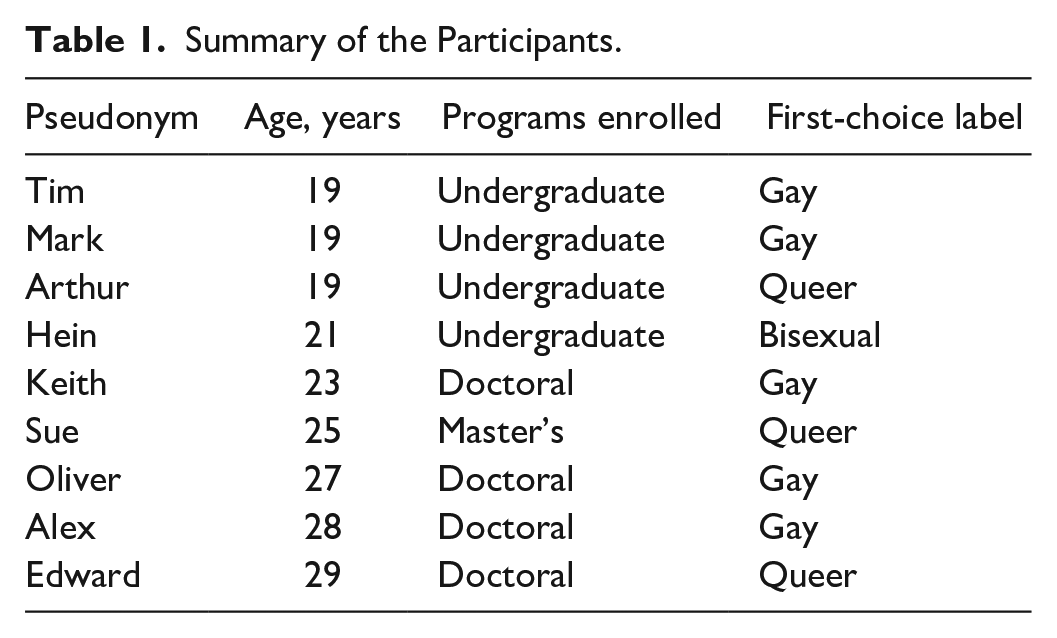
The ages of the participants ranged between 19 and 28 years during the time of the interview. Among them, four had a first-choice label of queer, four gay, and one bisexual (see Table 1 for a summary). While we strived to diversify the gender and sexual identities represented, we only encountered one with an assigned sex of female and there were no transgender persons. In addition to the consent solicited during the recruiting stage, we also sought their consent at the beginning of each interview and acknowledged their right to stop the interview at any time without cause.
Summary of the Participants.
Data Collection and Interview Procedure
Initial semistructured interview questions were created based on the expertise of the coauthors. After the first two interviews, four questions were deleted from the initial protocol to improve the flow of the interview (e.g., to avoid redundant questions). The final 24 questions asked about participants’ experiences as LGBTQ+ in their high school, as they transitioned to North America, and their implicit theories and personal insights on the Turkish culture (see Appendix 1, available in the online supplement). In order to assist the participants in formulating a more robust retrospective account of their experiences, the interview questions were sent to them a week prior to the interview so they had sufficient time to reflect on the questions (Weinger et al., 2003). During the interviews, the researchers maintained close attention to the participants’ reaction to the questions.
The interviews occurred in May and June of 2018, soon after the project was approved by the institutional review board. After receiving consent from a participant, we would then send the preliminary interview questionnaire for the participant to review prior to the interview. Each of the participants was interviewed on Skype by two of the coauthors and informed that the interview would be audio recorded and kept anonymous. After the interview, all of the participants were thanked for their willingness to be open and for their enthusiasm for making contributions to LGBTQ+ communities. The interviews ranged from 100 to 160 minutes and were transcribed verbatim for data analysis.
In addition to the verbatim transcripts, this study also included the following sources as data: (1) the observation by a second interviewer during each Skype interview, (2) discussion notes taken at meetings after each interview, (3) web-based knowledge regarding our participants’ learning contexts (e.g., the website and Wikipedia pages of their high school and universities), and (4) analytic memos written down during data analysis.
Data Analysis
Given the large amount of textual data generated, we adopted computer-assisted analysis for organizing, indexing, and categorizing data. Our analysis followed the procedures of a qualitative thematic analysis summarized in Braun and Clarke (2006). Web-based knowledge mentioned in the previous section was used to assist us in understanding the learning contexts of the participants and to help us triangulate the interview data (e.g., how they were selected for the gifted secondary program). The primary data were first coded using NVivo (QSR International, 2014) to identify key descriptive dimensions (Thomas, 2006) of the processes and environmental factors affecting self-acceptance. At this stage, the dimensions included only the apparent categories and not the underlying rationale. For example, we coded the size of the school, the presence/absence of peer support before, during, and after the high school years. Some information was simultaneously coded across multiple categories during this open coding stage (Lo, 2014a). Subsequently, we used Edraw Max (EdrawSoft, 2018), a visualization tool, to draw mind maps, flowcharts, and concept maps to facilitate the exploration of the possible relationships among themes (see, e.g., Figure 1).
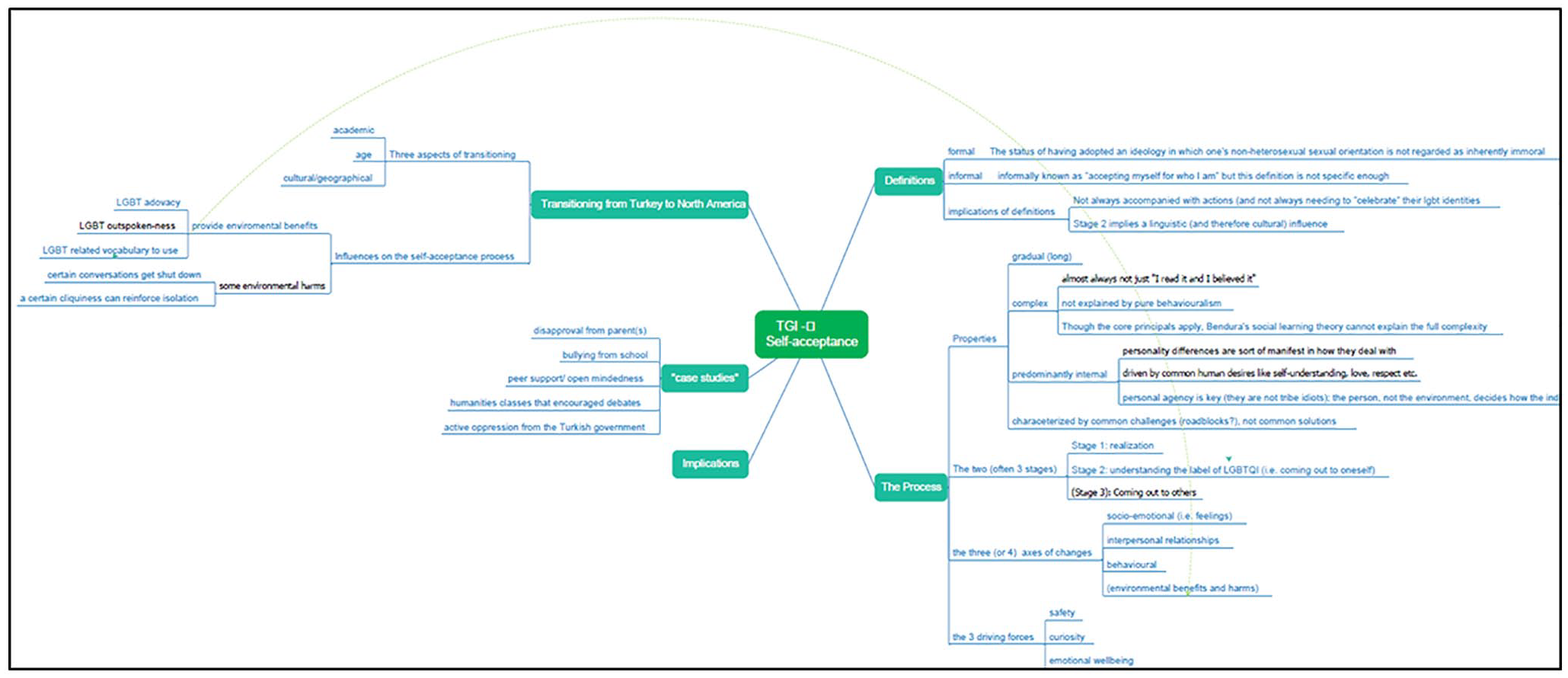
A developing mind-map using Edraw.
During the initial stage of data analysis, we developed a preliminary framework that helped us organize key data into three stages. The stages were as follows: (1) vague realization: when participants felt their sexual orientations were different from their heterosexual peers, (2) learning about identity labels: when they learned that the identity labels LGBTQ+ and the like existed, and later (3) self-acceptance: when they successfully integrated their newly recognized identity as LGBTQ+ to their existing self. In each stage, we also examined information pertaining to emotional (what they feel), behavioral (what they do), and interpersonal (their relationship with friends, family, etc.) development. While the framework was not adopted for organizing our final findings and discussion, it helped us gain a better metaunderstanding and organization of the data in hand that was conducive to theme extraction.
Methodological Rigor
In the following section, research expertise and methodological rigor are outlined to assist transparency and enhance credibility of the study (Nowell et al., 2017; Tobin & Begley, 2004).
Qualitative Expertise and Content Knowledge
Since researchers are the instrument in qualitative inquiry, it is crucial for a research team to illuminate their familiarity with qualitative methods and substantive areas of knowledge so their readers can discern where potential biases may arise (Lo, 2016; Patton, 1999; Tracy, 2010). The research team for this project consisted of an associate professor in gifted education who has published both methodological and empirical qualitative papers, a doctoral candidate who has a background in experimental psychology and is familiar with the LGBTQ+ literature, an assistant professor in history who is familiar with the socio-cultural context of Turkey, and an assistant professor in higher education and institutional research. In addition, all authors are familiar with the North American context and have cross-cultural experiences.
Member Check
Once the data were analyzed, a summary of results and findings was sent to the participants for a round of member checks (Maxwell, 2002). We looked for (1) dissonances between the themes and participants’ understanding, and (2) misinterpretations of data made by the research team. During the member checks, the participants were also asked to affirm and cross-validate the cultural context described in the summary and were encouraged to ask questions should they become apparent.
Transparency
Moravcsik (2014) argued that part of qualitative research credibility resides in efforts to make explicit how the conclusions are reached. Similarly, Lincoln and Guba (1985) suggested leaving an audit trail which could help readers judge the decision-making process that occurs during data analysis. In this study, we noted our key insights and questions through extensive memos and writing field notes after each interview was conducted. Peer-debriefing meetings (Creswell, 2007; Spall, 1998) among the research team were also conducted formatively (i.e., bi-weekly) during data analysis to identify overemphasized and underemphasized points and to balance perspectives.
Results
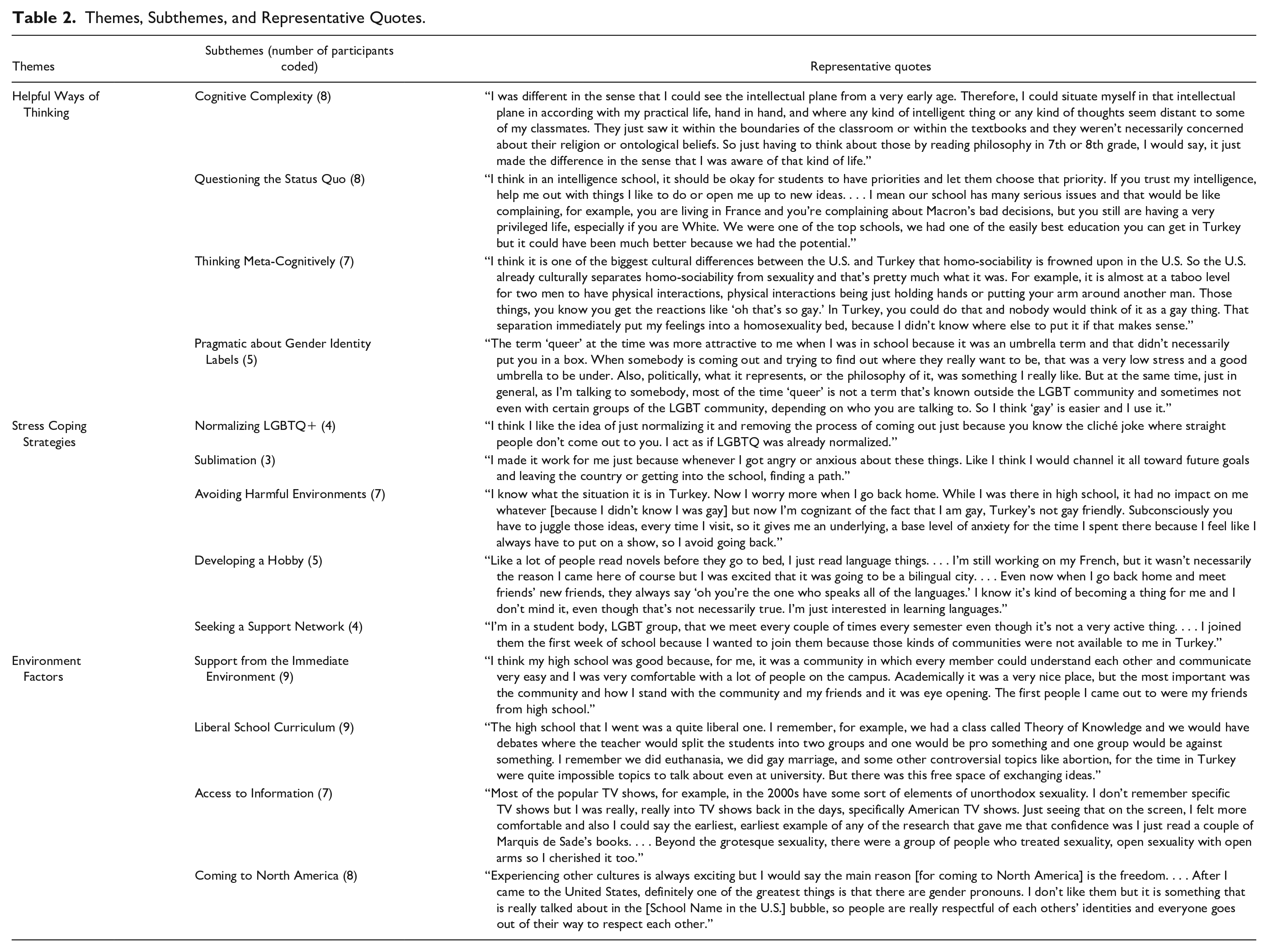
The following sections are organized in the order of the research questions (see Table 2 for a visual organization of the results). Specifically, we discuss helpful ways of thinking, stress coping, and environmental factors that might be conducive to gender identity development and self-acceptance. In addition, we discuss participants’ experiences in, and perception of, North America.
Themes, Subthemes, and Representative Quotes.
Ways of Thinking that Helped the Participants Develop Their Gender Identities and Achieve Self-Acceptance
Cognitive Complexity
The participants demonstrated great skills in abstract thinking and in their capability to develop personal theories that entertain intricate casual structure. For example, in explaining how Turkish queer males were treated differently from females, Sue described the prevailing heteronormative culture in Turkey, the desexualization of certain ways of being gay in the female eye, and the passing as a desexualized gay person. Additionally, Edward proposed gender expressions as performativity and as theories of mind, in his understanding of gender norms, to which Keith added components of language relativism, where differences in lexicons across languages could lead to different conceptualizations of LGBTQ+ identities. This type of cognitive complexity was further illustrated as all participants expressed their fondness for a Theory of Knowledge course that they took in high school wherein philosophical discussion and debates on critical societal issues were encouraged.
Based on our professional experiences, this level of cognitive complexity could be linked to participants’ self-acceptance in some ways. First, it is possible that after considering the complicated processes by which cultures and norms are shaped, they came to the conclusion that LGBTQ+ discriminations were somewhat arbitrary, as Edward stated. Second, by understanding how their own homophobia, which was “difficult not to have internalized growing up in Turkey” (as Sue pointed out), might have been constructed and indoctrinated, the participants’ cognitive complexity could make it easier to reconcile cognitive dissonance. Third, being better at representing complexity could put them in a stronger position to think of strategies to deal with the situation at hand.
Questioning the Status Quo
The ability to test, problematize, and navigate through various value systems helped the participants procure a grounded sense of self-acceptance. First, by thinking deeply about values, they made intentional efforts to distinguish between what is and what ought to be. They all have some disagreement with the status quo, but as Edward mentioned, they strived to make progressive changes toward a more inclusive society. In our observation, this perception helped them separate out the internalized homophobia (see also Szymanski, 2006) obtained through indoctrination in the more conservative environment in which they grew up. Second, participants’ ability to question the status quo provided a good evaluative tool when making critical life decisions. For example, Mark, Keith, and Oliver all reported finding meaning in their mission to contribute positively to the wider LGBTQ+ community through the pursuit of their respective careers as a social activist, artist, and neuroscientist. Mark was committed to art because he treated it as a medium of spiritual culture. Keith saw his personal achievements in science as a political statement for the LGBTQ+ community, because representation of LGBTQ+ in every discipline can serve to normalize it. Oliver was determined to stand against forms of injustice for all minority groups, because “None should be discriminated against based on immutable characteristics.” Oliver further mentioned: The world that we live in today is full of inequalities, problems, violence, and discrimination. It’s not the world I want to be part of or to live, so my goal is to do more for a world where people are treated humanely and respected and can live with dignity. . . . . After finishing my Bachelor’s degree, I want to do a PhD. I have two ideas in my mind. One is to study sexuality from a historical and anthropological perspective. For example, how it’s experienced in Turkey now, and how it was experienced before, and what transformations it’s going through in various parts of communities of Turkey. The second is that I also want to continue working on conflict resolution.
Thinking Meta-Cognitively
A remarkable level of meta-cognition permeated the interviews. We commonly observed that the participants were able to monitor personal and societal biases and reflect on the etiology and impacts of these biases. For example, Edward described that “my preconception about the world can influence how to deconstruct and understand identities,” whereas Alex stated that he would avoid working on academic topics related to his identity to avoid self-serving biases. Similarly, by understanding the role of values in influencing perceptions and thoughts, participants were aware that their (as in the case of Edward) or others’ (as in the case of Keith’s ex-partner) avoidance of holding hands with a same-sex partner in public came from internalized homophobic values. Sue also described her experience with reflecting on internalized homophobia and how she decided to “consciously undo it [internalized homophobia]” as one of her lifelong missions. In sum, the ability to monitor their own thoughts served as a protection from confusion and from overreaction to unwanted thoughts.
Being Pragmatic About Gender Identity Labels
The participants’ ability to manage their gender identity personally and publicly were evident in the interviews. Most of the participants preferred using identity labels (such as queer, gay, lesbian) mainly to represent concepts or experiences and to facilitate communication. In other words, they only used labels for the sake of communication. Alex mentioned that he had a eureka moment when he first learned that the label “gay” could describe his emotions for and attachments to a same-sex person. Recognizing the communicative purposes of identity labels, Sue describes herself as bisexual for those who are not likely to understand queerness, and uses queer, the more precise label, in front of others who have enough knowledge around gender issues. Both Keith and Edward pointed out specifically that using identity labels makes communications easier. At the same time, they also expressed the realization of potential harm that equating labels with oneself could do to the development of one’s self-identity. Edward stated that, “Equating who I am with ‘gay,’ comes at the cost of being reduced to a limiting combination of attributes and behavioral sets conforming to a preconceived gay category.”
By refusing to reduce their identity to a single identity label, their self-acceptance is directed toward the self, not toward a social image or any set of expectations associated with the category to which the identity label refers. This can also create a buffer between themselves and their identity labels, when discrimination against identified groups happens. Furthermore, by not giving up the communicative values of identity labels, they can still engage well with individuals unfamiliar with LGBTQ+ related terms, as in the aforementioned example of Sue. In fact, for some, like Mark, “it’s not always a big deal” if identity labels are used differently across audiences and contexts, as long as the conversations are meaningful. Mark further noted, “I am comfortable [with labels]. I know people sometimes are not. They think labels are limiting and rigid. I just think it is a way to describe something and someone and I use it on myself all the time.” Sue further clarified that the inaccurate understanding of LGBTQ+ identity labels by those outside of the LGBTQ+ community is a tolerable intermediary step toward normalization, that is, before LGBTQ+ persons can simply be referred to as persons without any adjectives implying atypicality.
Some Stress Coping Strategies Employed by the Participants
Normalizing LGBTQ+
One normalizing strategy described was faking it until making it, as elucidated by Tim, Sue, and Hein. They suppressed internalized homophobia and talked about LGBTQ+ issues in front of friends without making a fuss, behaving as if LGBTQ+ were already normalized. This strategy could work potentially in two ways to facilitate self-acceptance: one was by signaling to their friends that LGBTQ+ should be normal and thus creating inclusion; the second was that their acting normal reinforced a self-belief in normality. Another normalizing strategy described by participants was coming out as LGBTQ+, like Keith and Tim in high school. By coming out, the belief that LGBTQ+ identities are normal and acceptable was reinforced.
Sublimation
A second stress-coping strategy, exemplified by Oliver, Keith, and Sue, was to engage in leadership positions directly helping LGBTQ+ communities. Being committed to an altruistic goal of improving LGBTQ+ and minority rights in Turkey gave Oliver meaning and motivation. By directly engaging with societal norms, Oliver was not only affirming his belief that LGBTQ+ identities are normal and moral but also contributing to the destigmatization of LGBTQ+ individuals in Turkey. Behaving in accordance with one’s moral values is also arguably a form of pleasure that boosts resilience. By seeing the goal—the facilitation of inclusion and human rights in society—as quintessential, Oliver, Keith, and Sue were able to endure unusual amounts of pressure.
Avoiding Harmful Environments
Another commonly adopted stress coping strategy was to avoid harmful environments and direct more energy into other aspects of life, like self-actualization. This strategy, adopted by all of our participants, spoke to their intention of pursuing a postsecondary degree in a more accepting environment. They also attributed the further growth of their self-acceptance by exposing themselves to an LGBTQ+ friendly environment in Canada and the United States. As a case in point, Keith stated, I didn’t have a chance to talk about deeper issues in Turkish because there was a lack of [Turkish] vocabulary in LGBT matters. I did talk about being gay to people and something basic, but I did not have a chance to delve in deeper, like talking about homophobia and how it affected me. . . . After I moved to the States, I have consumed a lot of American or English media, which has helped me to develop a vocabulary to express and discuss something deeper and more sophisticated.
Developing a Hobby
Another stress coping strategy described was developing a hobby, such as acapella singing (Alex), music composition (Edward), journalism (Arthur), language learning (Keith), and professional swimming (Sue). A hobby serves as good distraction when discrimination becomes too difficult to bear. If the hobby involves a supportive community, it introduces extra support that can help mitigate LGBTQ+ issues as well. On another note, if the hobby involves honing a skill, the steps of success that pave the way to final mastery can booster self-esteem and train resilience.
Seeking a Support Network
As discussed earlier, talking to professionals, friends, families, reading about the LGBTQ+, and consolidating a support network helped the participants with self-acceptance. As an exception, Oliver personally experienced professionals who only prescribed a drug and dismissed him when he was facing mental health challenges during his studies in North America. This incident raises concerns about whether some North American postsecondary institutions are equipped with a sufficient support structure to respond to the mental health needs of LGBTQ+ members.
Environmental Factors That Facilitated the Construction of Their Authentic Gender Identities and Enabled Self-Acceptance
All participants had expressed encounters with hostile remarks (both implicit and explicit), against their sexuality and gender identities in Turkey. They also felt that it was a hostile environment generally for LGBTQ+ adolescents to grow up in and navigate during the confusing period of gender identity development. For example, Alex and Keith both expressed that they experienced derogatory language against LGBTQ+ on the street. Oliver added that minorities were suffering greatly “from active oppression of the current conservative government.” Tim, Edward, and Oliver were picked on in junior high school, whereas Keith’s music teacher implied during class that he could “learn to be normal again.” The religiosity, conservatism, and anti-LGBTQ+ attitude of Alex’s, Sue’s, and Oliver’s families burdened them emotionally. Nonetheless, all participants unanimously expressed deep care for their home country, which was part of their motivation to participate in this study so that they could give a voice to the community and provide encouragement to individuals who struggle in similar situations.
Support From the Immediate Environment
Despite the generally hostile environment in Turkey toward LGBTQ+ communities that was experienced, peer acceptance and open-mindedness was a shared experience among the participants in the selective high school.
“I was feeling that I could be accepted by my friends and my peers . . . even if I was gay,” Tim recalled, “so . . . that feeling of not being alienated made me able to tell that I’m gay to friends.” Echoing these notions, Hein mentioned that he could have “conversations with friends about sexuality in a very, very open and honest way” without being confronted about his sexuality. According to Mark, being around people who were comfortable in discussing gender, sexuality, and political issues gave him “an instant realization that it is okay that you are gay and you should be comfortable” even though these issues were typically suppressed in Turkey.
Another important aspect of their high school experience included having more autonomy than in most high schools in Turkey. Mark mentioned that their high school was very student-led and liberating, which gave students plenty of opportunities to explore intellectual and career possibilities. Sue added that her high school friends were “self-regulated, deep, critical-thinking, smart people” who would not distract her from her education and studies. The environment in which everyone “works very hard to hone their skills,” according to Alex, encouraged focus on self-actualization despite sexual orientation.
Liberal School Curriculum
Humanities classes, like the Theory of Knowledge, mentioned by all participants, and English, by Keith and Alex, were noted to be particularly helpful in the development of self-acceptance. These classes helped with self-acceptance by encouraging critical thinking and exposure to social and human rights issues. In addition, as Keith stated, there were neutral discussions among students during those classes on issues like same-sex marriage. It reassured him that “people can really dissociate it from actual people” and that this was how most LGBTQ+ people in their high school learned that their peers were mostly in support or indifferent regarding LGBT rights. As the comfort built up, most, like Hein and Arthur, decided to come out to close friends.
Access to Information
Given the nature of the high school in which they were enrolled, the students were required to maintain a high level of English language ability, which was made evident during the study interviews. Not only did the high school provide opportunities to go for foreign exchanges, the required proficiency in English also enabled access to research sexuality via online sources from the Western media, which were generally LGBTQ+ affirming. These experiences were eye-opening and reassuring for most, such as Hein, Tim, and Mark, and became an important information source that nurtured their self-acceptance.
Coming to North America
All of the participants expressed that they had developed a solid sense of self-acceptance regarding their sexuality prior to their arrival in North America. For example, Arthur’s decision to come to North America was concerned more with the potential career prospects for journalism on social justice issues. Arthur mentioned that he had read enough online resources and attended enough international seminars and summer camps in Europe during his high school years to come to a level of self-acceptance and to know that to be LGBTQ+ is nothing wrong. In other words, coming to North America was not a primary enabler of their self-acceptance; rather, the experience served as an enhancer and helped them further reflect on their self-acceptance. As Keith pointed out, “North America has extensive vocabulary to facilitate communications about LGBTQ+ related issues” and that he had to learn Turkish translations of LGBTQ+ words from his Turkish friends in LGBTQ+ support groups in Turkey to allow the Turkish self and the English-speaking self to interact. Sue mentioned that the liberal environment in North America was very protective of LGBTQ+ people in general. Tim further added, “the physical symbols, like the rainbow flag, makes it feel a lot more inclusive in North America.”
We also observed that the degree to which coming to North America was helpful for self-acceptance varied by cohort. The earlier graduates of the high school, like Alex and Edward, reported a near absence of availability of LGBTQ+ related information. Keith, in a later cohort than Alex and Edward, courageously came out in high school, and became a valuable role model for later attendees, like Tim, who reported that he really looked up to Keith.
While seeking self-acceptance was not identified as a primary reason for relocation, public acceptance, or the lack thereof, seemed to play a significant role. For example, Tim chose to pursue his postsecondary education in North America because it was “obviously safer,” which echoed Edward’s statement that “One could be threatened to death in Turkey for being explicitly gay.”
In sum, coming to North America was not considered a crucial factor for the development of self-acceptance by the participants. Given the more liberal environment and provocative curriculum in their high school and the capability to access information in English, they had developed a good sense of self-acceptance prior to the transition to North America. Nonetheless, all agreed that North America was generally a more favorable environment for LGBTQ+ individuals.
Discussion
Giftedness as an Asset and Coping Mechanism
These results are supportive of Peterson’s (2012, 2018) asset-burden paradox of giftedness framework where both advantages (e.g., the ability to pursue self-help literature, insightfulness) and disadvantages (e.g., hypersensitivity, intense feelings) accompanying high cognitive ability are accentuated. In this study, it was evident that the participants were able to utilize their advanced reasoning and verbal abilities to navigate through challenges and confusion associated with their gender identity development and self-acceptance. For example, their curiosity about the difference between them and their non-LGBTQ+ peers in early adolescence urged them to look for explanatory information through self-sought resources (e.g., books, the Internet) despite growing up in a relatively oppressive society (Kerr & Multon, 2015). The ability to verbalize feelings, emotions, conflicts, and dissonances also helped them cope with undesirable emotional consequences (Labouvie-Vief et al., 1989). Noticeably, the participants also demonstrated how their intellectual overexcitability (e.g., challenging the status quo) contributed to the development of positive disintegrations of “what is” set by society and “what ought to be” emerging through their understanding of humanity and civil rights (Bailey, 2011; Dabrowski, 1967).
The coping strategies found in this study are affirmative to the literature. For example, the pragmatic approach taken by the participants regarding managing their gender identity personally and publicly is akin to Cross’s (1997) study on how gifted students control how much information they would like to reveal in their attempts to manage social stigmatization. Using coming out as a way of normalizing LGBTQ+ was also found to be an important coping strategy in Peterson’s (2000) study. Sublimation of one’s own social problems (e.g., taking leadership positions to help LGBTQ+ communities) was also mentioned in Friedman-Nimz et al.’s (2006) and Hébert’s (2012) studies in which gifted students would take social actions and advocate for social justice to help themselves look beyond their own social problems. Developing a hobby was identified as a way of social coping for LGBTQ+ gifted students in Hutcheson and Tieso’s (2014) seminal work as well. Practicing music, for example, has been found to boost cognitive functions by allowing for “flow experiences” (Chirico et al., 2015; Csikszentmihalyi & Rich, 1997).
In sum, the participants’ capabilities to locate resources and create meaningful strategies to cope with their social problems are illustrative of Hutcheson and Tieso’s (2014) argument of gifts and talents as coping mechanisms, and reaffirm Peterson’s (2012, 2018) argument of giftedness as an asset. However, the findings regarding coping strategies and the capability to locate resources should not be interpreted as a common phenomenon among all LGBTQ+ gifted individuals, because the participants were drawn from a specific support group and the number of participants included in the study is limited.
Enabling Environmental Conditions for LGBTQ+ Self-Acceptance
Corresponding positively to the extant literature, the results demonstrate the importance of having a supportive immediate environment that enables the development of self-exploration, self-knowledge, and self-acceptance (Hewlett & Sumberg, 2011; Hutcheson & Tieso, 2014; Keener, 2013; Kerr & Multon, 2015; Lo, 2014b; Rakow, 2005). As McConnell et al. (2015) pointed out, having high social support from the immediate environment can increase mental health among LGBTQ+ individuals. In this study, the accepting school atmosphere generated by peers and some teachers was attributed by all participants as the most helpful factor in shaping their LGBTQ+ identities and fostering their self-acceptance. A safe environment is critical for gifted students during their adolescence because it is a place where they feel safe to be smart, to develop complexity in identities and value systems, and to develop a sophisticated knowledge base in order to meet their developmental potentials (Hébert et al, 2014; Hébert & Kelly, 2005).
These findings also indicate the benefits of having an affective curriculum that exposes students to critical sociocultural issues and encourages them to gather to debate such issues (Hébert, 2012; Jen et al., 2016; Peterson, 2000). This is helpful not only for creating an open and accepting classroom milieu (Hébert et al., 2014) but also for attuning to the intellectual potential (e.g., addressing complexity) of these cognitively highly capable students (Dixon et al., 2004; Lo & Feng, 2020). Kanevsky et al. (2021) also indicated that gifted students prefer learning with others when the learning tasks address complex issues where diverse perspectives are beneficial to the project assigned.
Furthermore, while we acknowledge the inclusive trends occurring in the field (Barab & Plucker, 2002; Lo & Porath, 2017), this study also provides interesting insights into some benefits of having a more centralized learning environment for gifted adolescents wherein peer support, possibilities for networking, intellectual debates, and discussion on liberal social issues are abundant (Adams-Byers et al., 2004; Hutcheson & Tieso, 2014). Therefore, despite the generally more hostile environment where they grew up, our participants unanimously appreciated the strong support from their peers and some teachers and the safe sanctuary fostered by the intellectual community at their high school (Fredericks, 2009; Gross, 2002, 2009; J. D. Lewis, 2008). This aspect of granting gifted students opportunities for developing higher order thinking skills and products through full-time or part-time congregated programming is well supported by many studies in the field (e.g., Kitsantas et al., 2017; Klimis & VanTassel-Baska, 2013; VanTassel-Baska, 2006; Vaughn et al., 1991).
From a macro perspective (Bronfenbrenner & Morris, 2006), easy access to LGBTQ+ related information, topics, and literature through the Internet was a particularly fruitful venue for our participants to gain self-knowledge and formulate self-acceptance (Kerr & Multon, 2015). Similarly, Lo’s (2014b) empirical study on labeling also addressed how mass media and easy access to information can facilitate the generation of self-knowledge among gifted individuals. This speaks to the advantage of their being able to seek information and read at a high level to learn more about topics that interest them (Song & Porath, 2006). Moreover, these students’ self-acceptance was also enhanced by the globalization of LGBTQ+ rights discourse (Yulius et al., 2018), such as the spreading phenomenon of the institutionalization of same-sex marriage (Green, 2019; Redman, 2018). Similar observation on the relation between self-acceptance and public acceptance was also noted in Lo’s (2014b) study. Comparing the two cohorts of participants (i.e., those who were pursuing their undergraduate degrees vs. those who were pursuing their graduate degrees at the time of this study), we noticed how the emerging globalization of the LGBTQ+ rights discourse helped the younger cohort feel comfortable with their sexuality at an earlier stage compared with the older cohort. This echoes Neisser’s (1997) notion on the contingency of self-acceptance and environmental cues. He noted that self-knowledge can be gained through looking outward to “see the self as embedded in its environment, ecologically and socially situated in relation to other objects and persons” (p. 19). In this study, the global phenomenon of greater LGBTQ+ acceptance, easy access to information through the Internet, and a high degree of resourcefulness created a virtuous circle for the participants to construct their self-knowledge and facilitate self-acceptance.
Research Implications
For policy makers and educators, student autonomy, critical thinking, and exposure to ample information related to gender and sexuality, structural inclusion, and antidiscrimination continue to be a priority. Because the teachers in our participants’ high school program played a critical role in helping them understand and shape their gender identities, it is therefore important for policy makers to consider ways in which Sexual Orientation/Gender Identity literacy can be included and enhanced in our current teacher training curricula (Horn & Russell, 2017; Ton et al., 2016).
For LGBTQ+ individuals who struggle with gender identity development, educators and counselors can empower them by enhancing their high-order thinking skills through discussions (Hébert & Kent, 2000), building their capacity to seek self-help literature (Lemoire & Chen, 2005), and postponing the subscription to a label so that they can treat discrimination more impersonally and build resilience. Moreover, introducing LGBTQ+ role models can also be a fruitful way of developing students’ positive self-regard and encouraging students’ self-actualization (Peterson, 2000).
For researchers, some strategies are worth further investigation. For example, sublimation is closely related to Dabrowski’s (1967) theory of positive disintegration where resilience, the capability to reframe struggles in positive light, and the development of wisdom and leadership are highlighted. We would encourage the adoption of in-depth descriptive case studies wherein critical incidents that shape an individual’s positive disintegration development can be highlighted and discussed.
Research Limitations
The current study has several limitations. First, the experiences presented by this selective group are not representative of the experiences generally reflected by LGBTQ+ individuals in Turkey (Bilgehan Ozturk, 2011; Yilmaz & Göçmen, 2016), which, according to Oliver, is characterized as denigrating with constant life threats. While our participants expressed that they received support from peers and some school teachers, the results of this study present contrasting results to other studies situated in the Turkish culture. For example, in Göçmen and Yilmaz’s (2017) survey study, the majority of the participants would choose not to come out to educational staff and their peers at school. In addition, the collective high school experiences expressed by the participants were also an outlier to the Turkish norm since this setting was one of the few specialized residential gifted schools in the nation where our participants had the luxury to be exposed to controversial social issues and experience intellectual debates. Of note, the participants in our study came from a relatively well-educated group, which does not correspond to the average level of education in Turkey (Ayhan Balik & Bilgin, 2019; Bakacak & Ōktem, 2014). Therefore, we encourage readers to interpret the results with these considerations in mind.
Second, this study also poses limitations on applicability to various LGBTQ+ subpopulations since the majority of the participants self-identified as gay or queer (8 out of 9) and only one of the participants is female. Further investigations drawing on a broader subject pool that would allow researchers to effect meaningful comparisons among the LGBTQ+ subpopulations are encouraged. Moreover, since our participants were a part of an LGBTQ+ network, their experience of social support and coming out may have been very different compared with other people in a similar cultural milieu but who do not have access to nongovernmental organizations or other social and peer-support networks, as these are scarce resources in Turkey (Bakacak & Ōktem, 2014).
Third, due to concerns regarding the protection of our participants’ privacy, we did not include other informants (e.g., their friends, family, and school teachers) who could have provided some useful triangulating information for us to address issues that may arise with retrospective data (Graebner et al., 2012). Future studies that adopt in-depth methods, such as case study and ethnographic approaches, are encouraged to render a fuller picture of the phenomenon.
Conclusion
This retrospective narrative study investigated the nexus of being gifted and LGBTQ+. Based on a strength-based, positive psychology framework, the analysis focused on the participants’ process of constructing their gender identities and on some personal and environment aspects that contributed to their resilience and self-acceptance. In sum, the participants revealed that they were able to utilize their personal strengths (i.e., advanced reasoning, big-picture thinking, resourcefulness) to mediate some of the conflicts and struggles associated with their status as sexual minorities. They also revealed how the liberal atmosphere in their high school (including the curriculum and some supportive teachers) and the opportunities to situate in an intellectual and idea-inducing environment (where most peers were willing to explore complex social and philosophical issues) helped them in embracing their authentic gender identities and achieving self-acceptance. Similarly, all of the participants were appreciative of the opportunity to study in a difference culture and able to reflect further on their gender identities vis-à-vis two cultural lenses.
While we acknowledge the privilege of being able to investigate the complexity of the LGBTQ+ phenomenon through the precious life stories shared by the participants, we also appreciate their eagerness to provide their insights, opinions, and coping strategies to help individuals who may be going through similar processes or situations. It is also our hope that this article will provoke thoughts and further actions with regard to promoting the civil rights and the well-being of LGBTQ+ individuals.
Supplemental Material
sj-docx-1-gcq-10.1177_00169862211029681 – Supplemental material for Giftedness, Gender Identities, and Self-Acceptance: A Retrospective Study on LGBTQ+ Postsecondary Students
Supplemental material, sj-docx-1-gcq-10.1177_00169862211029681 for Giftedness, Gender Identities, and Self-Acceptance: A Retrospective Study on LGBTQ+ Postsecondary Students by C. Owen Lo, Shun-Fu Hu, Hasan Sungur and Ching-Hui Lin in Gifted Child Quarterly
Footnotes
Declaration of Conflicting Interests
The author(s) declared no potential conflicts of interest with respect to the research, authorship, and/or publication of this article.
Funding
The author(s) received no financial support for the research, authorship, and/or publication of this article.
Open Science Disclosure Statement
The data analyzed in this study are not available for purposes of reproducing the results. The protocol used to generate the findings reported in the article is not available for purposes of reproducing the results or replicating the study. The newly created, unique materials used to conduct this research are not available for purposes of reproducing the results or replicating the procedure.

Supplemental Material
Supplemental material for this article is available online.
Author Biographies
References
Supplementary Material
Please find the following supplemental material available below.
For Open Access articles published under a Creative Commons License, all supplemental material carries the same license as the article it is associated with.
For non-Open Access articles published, all supplemental material carries a non-exclusive license, and permission requests for re-use of supplemental material or any part of supplemental material shall be sent directly to the copyright owner as specified in the copyright notice associated with the article.
