



Abstract
This study examines the relationship between globalisation and inclusive growth by considering the modulating role of institutional quality. To achieve our broad objective, we use data from 45 African economies over 1996–2018 to determine the panel cointegration and cointegrating regression association between inclusive growth, globalisation and institutional quality. To determine a suitable estimation technique for the empirical analysis, several pre-estimation tests were conducted. After confirming the existence of cointegration and slope heterogeneity, we adapted the long-run panel cointegrating methods—the fully modified ordinary least squares and dynamic ordinary least squares estimations. The results from both show that aggregate globalisation and its various dimensions have positive and significant effects on inclusive growth. Besides the direct positive impact on inclusive growth, globalisation has indirect positive and significant impact on inclusive growth through institutional quality. Finally, some policy implications are highlighted.
Introduction
This study is motivated by the following research questions: Does globalisation promote inclusive growth in Africa? Does institutional quality play any significant role in the globalisation–inclusive growth relationship? To determine the impact of globalisation on the global economy, several efforts have been made to appropriately provide an operative or working definition of globalisation. Therefore, according to the International Monetary Fund (2002), globalisation can be defined as the process through which there is an increasing flow of people, goods and services, ideas and capital from one country to another which results in the integration of the world economies and societies. Thus, it represents internationalisation of production of goods and services, division of labour, free migration of people and borderless competitive markets as well as the internationalisation of countries into a community called a globalised world (Cox, 1994). The successful evolution of globalisation has been attributed to several factors (Crafts, 2004). The most important of them is the development of technology, which has brought about information and communication technology (ICT) through research in science and technology. 1
Ensuring economic growth is a key preoccupation of many countries. Beyond this, there are also concerns about how the benefits of economic growth would reach all citizens. Put differently, many countries are interested in how economic growth would reduce both poverty and inequality. Thus, international organisations, particularly the United Nations, came up with different targets that are associated with economic development and named them the sustainable development goals (SDGs) designated to be achieved by 2030. The proponents of globalisation, especially economic globalisation, believe that it can help some countries, particularly developing countries, to achieve some of the SDGs, essentially in the aspect of poverty and inequality reduction as well as the provision of decent jobs. One of the channels through which this would be accomplished is free trade and global financialisation that would propel new investment, provide new, decent jobs, raise wages and productivity and spur economic growth (Gopinath & Parket, 2019). With the increase in economic activities and the provision of jobs, poverty and inequality would be reduced drastically (Urata & Doan, 2022). However, others have expressed dissatisfaction about the claimed advantages of globalisation. According to Stiglitz (2002), trade liberalisation, an offshoot of globalisation, is disastrous to the developing countries because the infant industries in many of those countries cannot compete efficiently with the highly subsidised industries in developed countries. Hence, the economic consequences of globalisation in developing countries are manifesting in terms of a myriad of inefficient industries, job loss and welfare deterioration (Hartungi, 2006; Stiglitz, 2002, p. 17; Ulaşan, 2015). In fact, Beri et al. (2022) argue that the effectiveness of globalisation hinges on several factors such as gross capital formation, population size and urban growth rate.
Several studies have been conducted to examine the nexus between globalisation and different indicators of economic development to unravel the extent to which globalisation has promoted or harmed economies. Consequently, most of these studies have considered the impact of globalisation on economic growth (Heimberger, 2021a), poverty (Anderson et al., 2018), inequality (Heimberger, 2020), government expenditure (Heimberger, 2021b), education (Triwiyanto & Prasojo, 2019) and employment (Das & Ray, 2020; Näätänen, 2015). Most of these studies are meta-analyses of the effects of globalisation and provide a comprehensive analysis of how globalisation has affected the aforementioned variables. The striking conclusion from these studies is that the effects of globalisation on the variables vary or are at best mixed (Das & Ray, 2020; Heimberger, 2021a, 2021b; Triwiyanto & Prasojo, 2019). There are several reasons for such a development. One of the reasons revolves around the measurement of globalisation, which is related to determining the best variable to capture globalisation. This becomes problematic because globalisation encompasses not only economic and financial issues but also social and political issues (Dreher et al., 2008). Another important factor is the use of different econometric approaches (Heimberger, 2020, 2021a, 2021b). The outcome(s) also depend(s) on whether the study is a country-specific study or a panel study (Anderson et al., 2018).
This study contributes to the existing studies in two ways. Firstly, the study examines the effect of globalisation on inclusive growth in African countries. Like other studies, we employ the KOF globalisation index data developed by Dreher (2006) and updated by Gygli et al. (2019) and Haelg (2020). As the globalisation index comprises economic, political and social indices, we not only apply the KOF aggregate globalisation index but also use the disaggregated data on globalisation (i.e., economic, political and social). Thus, we examine the effects of aggregated and disaggregated globalisation on inclusive growth in Africa. Also, we focus on inclusive growth because inclusive growth has become top on the agenda of many countries in Africa in recent times (UNCTAD, 2021). This emanates from the fact that despite the growth recorded in the region of Africa since the beginning of this millennium, inequality and employment continue to rise unabated. Thus, it is important to focus on inclusive growth that encompasses all segments of economic development that are associated with social welfare. Only a few studies have taken this approach (Duttagupta et al., 2018; Shahzad & Chaudhary, 2020). Duttagupta et al. (2018) developed a dynamic stochastic general equilibrium (DSGE) model to ascertain the effect of globalisation on inclusive growth in Ghana while Shahzad and Chaudhary (2020) explored the same subject matter for some selected Asian countries.
Second, we explore the moderating role of institutional quality in the globalisation–inclusive growth nexus. The role of institutions cannot be underestimated in the workability of the economy of any country be it a developed country or a developing one. This has been identified in the works of Douglas North and others such as Daron Acemoglu and James Robinson (North, 1989, 1991; Acemoglu et al., 2005). According to Douglas North, institutions are sets of rules, which could be formal or informal, that constrain human excessive behaviour and thereby structure interactions among the agents. North submitted that throughout the ages, institutions have been devised by human beings to ensure orderliness in society and reduce uncertainty in transactions or exchanges. Acemoglu et al. (2005) attributed the differences in economic growth and prosperity across the world to institutions. In fact, it is believed that institutions are the main determinant of economic growth in the long run (Acemoglu et al., 2012; Raifu et al., 2021). Hence, countries characterised by poor institutional quality may be prone to uncertainties surrounding globalisation. They may also be deprived of inclusive growth and the benefits associated with globalisation. The reverse is the case for countries with good institutional quality (Samadi, 2019). Given the importance of institutions, some studies have investigated how institutional quality affects globalisation and vice versa (Bergh et al., 2014; Islam, 2019; Samadi, 2019; Samadi & Owjimehr, 2021). There are a couple of studies that investigated how institutional factors or reforms both in advanced countries and developing countries can influence the relationship between globalisation and economic growth (Moshirian, 2008). The study by Osode et al. (2022) also examined the role of institutions in the globalisation and income inequality nexus. However, to the best of our knowledge, no study has examined the role of institutional quality in globalisation and inclusive growth nexus, especially in Africa. This is another contribution of this study to the existing studies. Besides, to have a comprehensive knowledge of how globalisation affects inclusive growth, this study employs different ways of capturing globalisation besides the aggregate globalisation index. In other words, we examine the effect of economic, political and social globalisation on inclusive growth and the moderating role of institutional quality in each of the globalisation measure–inclusive growth nexus. For robustness, different cointegrated regression estimation techniques were employed. We use the dynamic ordinary least squares (DOLS) technique, which not only estimates the long-run relationship between globalisation and inclusive growth but also considers endogeneity issues that may arise between them using the leads and lags of regressors (Raifu et al., 2022). In conjunction with this, the fully modified ordinary least squares (FMOLS) method is used to validate the DOLS results. This approach adds robustness to our study.
The rest of the study is presented as follows. The next section contains the theoretical review of existing studies. The third section presents information about data sources and methodology of our study. The empirical findings are presented in the fourth section and the fifth section concludes with some recommendations.
Theoretical and Empirical Literature Review
Theoretically, globalisation affects different socio-economic variables such as economic growth, employment, investment, poverty and inequality. However, because globalisation is a broad concept, it is difficult to pin down one cogent channel through which it affects the aforementioned socio-economic variables. The best way is to narrow down the concept to different segments of globalisation such as economic globalisation, political globalisation or sociocultural globalisation. For the sake of this study, we focus concisely on how economic globalisation affects the aforementioned socio-economic variables, especially those related to the distributional effects of globalisation. Economic globalisation refers to the movement of economic assets such as labour, capital and goods across international borders (Easterly et al., 2004; Goldberg & Pavcnik, 2007). The proponents of economic globalisation assert that globalisation would lead to an efficient reallocation of productive resources across borders which would, in turn, lead to an increase in a firm’s productivity and growth. This happens through the shifting of those productive resources, especially capital and labour from the low-productivity regions to the high-productivity regions. An increase in firm productivity through resource allocation would lead to worldwide economic growth and employment in different sectors (McCaig & Pavcnik, 2018). Apart from this, economic globalisation in the forms of trade and foreign direct investment (FDI) allows for the transfer of technology from developed countries to developing countries. With the aid of technological transfer, investment in the hosting countries of FDI is boosted and economic growth and employment are enhanced (Urata & Doan, 2022). Human capital development is achieved quickly through globalisation. Increased access to ICT brought about by globalisation in different countries has improved access to information that aids learning and acquisition of new skills (UNDP, 1999; Noumba et al., 2022). It has also been submitted that in a country where access to ICT facilities is available, school enrolment tends to increase (Oster & Steinberg, 2013). With the increase in school enrolment, a greater number of people would be added to the human capital stock of the country. Such highly skilled citizens would be gainfully employed which would in turn lead to an increase in their incomes and welfare (UNDP, 1999). However, the income of unskilled workers whose industries are rendered ineffective and inefficient may deteriorate due to shrinking opportunities of being employed in other industries. Thus, globalisation can result in a high rate of income inequality between highly skilled workers and unskilled workers (Bergh & Nilsson, 2010).
Furthermore, the proponents of the distributional effects of economic globalisation provide a model that shows how it affects income inequality. Specifically, they base their argument on the inequality reduction effect of globalisation on the Stolper–Samuelson theorem of 1941 (Stolper & Samuelson, 1941). As regards globalisation, the theory predicts that economic globalisation would lead to a decline in income disparities in countries with abundant labour resources embodied in the production of tradable goods (Heimberger, 2020). Thus, in developing countries such as African countries where most of the workers are unskilled and intensively used in the production of tradable goods, the theorem suggests that the workers would benefit through augmentation of wages or salaries, thereby reducing inequality (Goldberg & Pavcnik, 2007). The channel of transmission from globalisation to inclusive growth using the Stolper–Samuelson theorem is that globalisation (trade liberalisation) would bring about an increase in the prices of goods and services that are labour intensive in the production process which would lead to more production (and by extension economic growth). With the increase in production, more labour would be demanded which in turn would increase the real wage of the labour that is highly demanded. This would further lead to a reduction in income inequality in developing countries (Winters, 2014).
Empirically, several studies have been conducted to examine the effects of globalisation on various socio-economic variables. The first set of studies seeks to answer the question of whether or not globalisation would spur economic growth across the world, especially in developing countries (Gurgul & Lach, 2014; Meyer, 2020; Wani & Mir, 2021). Heimberger (2021a), in his meta-analysis of the growth effect of globalisation, submitted that the effect of globalisation on economic growth varies greatly; however, the overwhelming evidence is biased towards the positive effect of globalisation on economic growth. The positive effect of globalisation, however, depends on several factors such as the measure of globalisation (economic, political or social), the level of economic development of a country, the quality of institutions and the adopted estimation approaches (Ali & Ahmad, 2021; Heimberger, 2021a). Moreover, depending on the measure of globalisation, some studies documented a mixed effect of globalisation on economic growth (Samimi & Jenatabadi, 2014). Dreher (2006), using data from 123 countries, submitted that although economic globalisation may have a positive effect on economic growth, political globalisation does not. Beri et al. (2022), who investigated the effect on economic growth in 47 African countries from 2001 to 2018, did not find any significant effect of globalisation on economic growth in Africa. They attributed their findings to the low share of African countries in FDI, global trade and infrastructural deficits.
Some authors have, however, shifted their attention from the growth effect of globalisation to the distributional effect of economic globalisation. Specifically, these authors seek to know how globalisation affects poverty, inequality and unemployment (employment). With regard to the distributional effects of financial globalisation, Furceri et al. (2019) found that financial globalisation has limited output gains but increases income inequality at the aggregate macro and micro levels. In specific terms, applying the difference-in-difference estimation method to industry-level data for 24 advanced economies, they discovered that financial globalisation reduces the share of labour income, particularly in industries that are highly dependent on external financing, employ layoff strategies to adjust to shocks and have a higher elasticity of substitution between capital and labour. The submission by Furceri et al. was supported by Heimberger (2020) who conducted a meta-analysis on the distributional effects of globalisation. He submitted that globalisation has a positive effect on income inequality. He concluded that the effect of trade globalisation is relatively small, whereas that of financial globalisation is extremely high. This suggests that financial globalisation leads to greater income inequality across the world, be it in developed, developing or emerging market countries. With regard to the unemployment (employment) effect of globalisation, the evidence has not been consistent. The empirical outcomes depend on the measure of globalisation (Daly et al., 2017). Daly et al. (2017) found that only economic globalisation has an unemployment reduction effect in the long run while political and social globalisation only have a reducing effect on unemployment in the short run in Pakistan. Gözgör et al. (2019) explored the role of globalisation in public employment in developing countries. Their finding revealed that globalisation reduces public employment. Focusing on sub-Saharan African countries, Asongu et al. (2020) investigated the effect of globalisation on female labour participation from 1990 to 2013. Using panel-corrected standard errors and fixed effect regressions, they concluded that the effect of globalisation on female labour force participation depends on the measure of globalisation. Precisely, they discovered that the positive effect of overall globalisation is reduced by its political component and augmented by its economic and social components. Asongu and Nnanna (2021) examined the relationship between financial globalization and financial development in Africa. By adopting a generalised method of moment, they found positive relationship between financial globalization and financial development. Chishti (2004) argued that globalisation has worsen inequality distribution between developed and developing countries. Banerjee and Nag (2013) investigated the relationship between globalisation, child labour and development policies. Their results show that child labour is usually emphasized when developing countries try to attract FDI, and agricultural trade liberalisation is helpful to decrease incidence of child labour.
In recent times, a few studies have begun to examine how globalisation affects inclusive growth instead of growth. This is born out of the fact the agenda of many nations has shifted from economic growth alone to inclusive growth—growth that benefits all. Based on DSGE, Duttagupta et al. (2018) quantified the channels through which economic and financial liberalisation have affected inclusive growth in Ghana since the 1990s. They discovered that liberalisation had led to Ghana’s growth take-off and poverty alleviation albeit resulting in high income inequality. This suggests that liberalisation does not provide inclusiveness. This is corroborated, to some extent, by the study conducted by Shahzad and Chaudhary (2020) for some selected Asian countries. Specifically, Shahzad and Chaudhary (2020) concluded that some components of globalisation have negative effects on inclusive growth, particularly ethnic diversity and environmental distortions. However, Asongu and Nwachukwu (2017), who investigated the impact of globalisation on inclusive human capital development, submitted that the effects depend on many factors including income levels, legal systems, resource wealth, landlockedness, religious denomination and political stability in a country or a group of countries. While the studies by Asongu and Nwachukwu (2017) and other scholars in Africa had sought to understand the effect of globalisation on inclusive growth, none of them examined the moderating role of institutional quality on globalisation on inclusive growth. Thus, our study is significantly different from these studies by not only examining the moderating role of institutional quality in the overall globalisation and inclusive growth nexus but also examining the moderating role of institutional quality in its components and inclusive growth nexus. The studies that are close to our study focused on the moderating role of institutional quality in the globalisation and economic growth nexus but not on inclusive growth (see Bonnal & Yaya, 2015; Samimi & Jenatabadi, 2014). Apart from this, these two studies did not focus on Africa. Samimi and Jenatabadi (2014) focused on Organisation of Islamic Cooperation countries, whereas Bonnal and Yaya (2015) focused on 123 countries.
Data, Model Specification and Econometric Approach
Data
Our central goal in this study is to investigate the influence of globalisation on inclusive growth in Africa, while incorporating the moderating effects of institutional quality. Forty-five African economies are utilised in this study (for the list of countries, see Appendix). The annual data were used for analyses span from 1996 to 2018. These 45 African economies and the study period were chosen due to data availability limitations; our dataset starts from 1996 because the worldwide governance indicators (WGIs) are available only from 1996 and we stopped at 2018 because up-to-date globalisation data are not available beyond 2018. The dependent variable, GDP per person employed 2 is used as a proxy for inclusive growth and has been used by extant empirical works (Adeniyi et al., 2021; Oyinlola & Adedeji, 2019; Oyinlola et al., 2020; Raheem et al., 2018). The explanatory variables were chosen based on Adeniyi et al. (2021), Oyinlola et al. (2020) and Fowowe and Shuaibu (2014). These include the ratio of gross fixed capital formation to GDP as a proxy for capital stock, ratios of government expenditure on education to GDP and current health expenditure to GDP as proxies for human capital, and FDI net inflows. We observed some gaps in our variables, especially in the WGI data. To fill these missing values, we performed cubic spline interpolation. 3
Furthermore, to account for globalisation, we adopt the KOF globalisation index (KOFGI; Dreher, 2006). In addition to the aggregate measure of globalisation, this study also used other dimensions of globalisation, which are economic globalisation, social globalisation and political globalisation. The KOF globalisation measurement is more suitable than the traditional trade/financial openness for examining the link between globalisation and inclusive growth. Le and Ozturk (2020), Bataka (2019), Shahbaz et al. (2018) and de Barros Santiago (2017) provide incisive explanations on the merits of the KOF indicator.
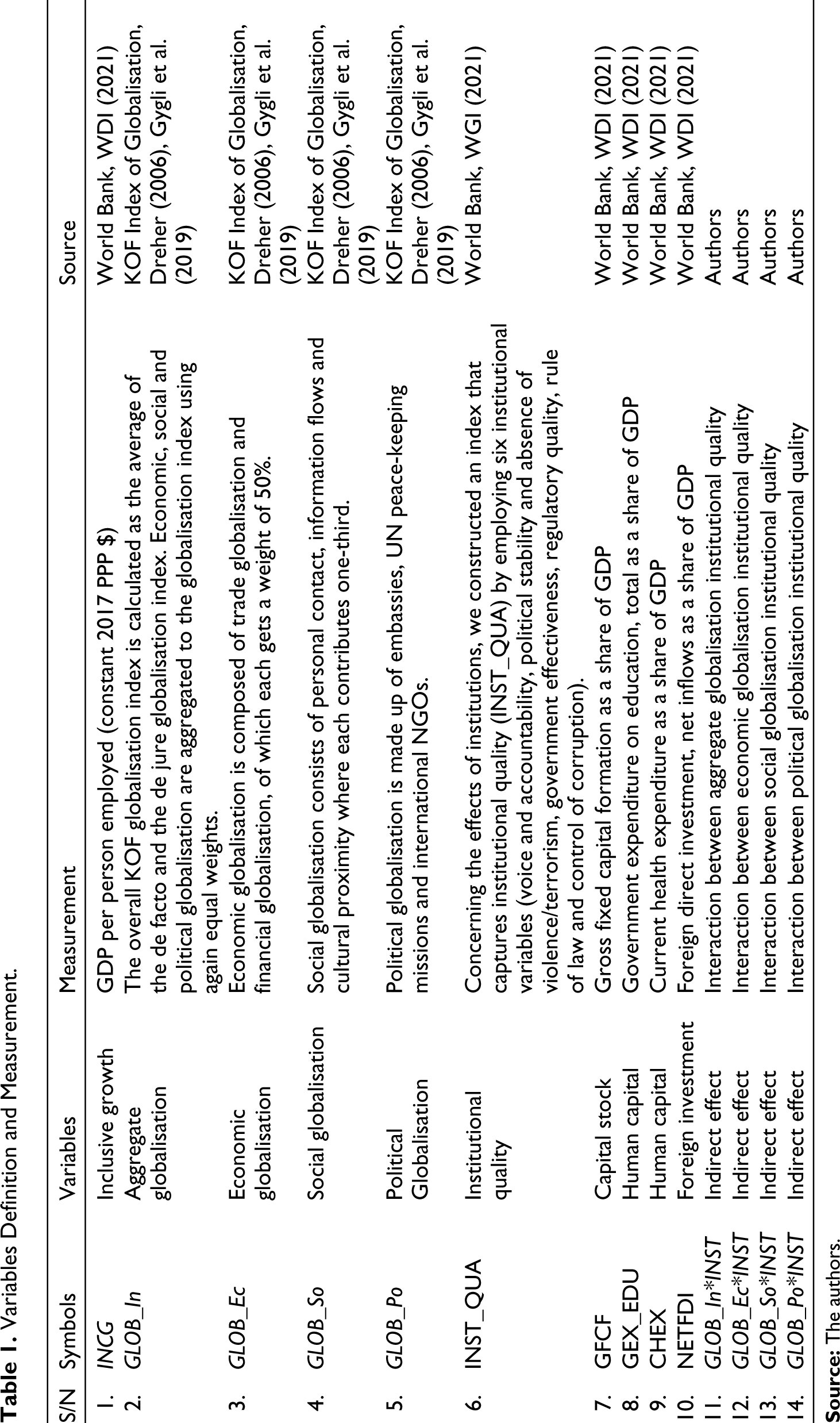
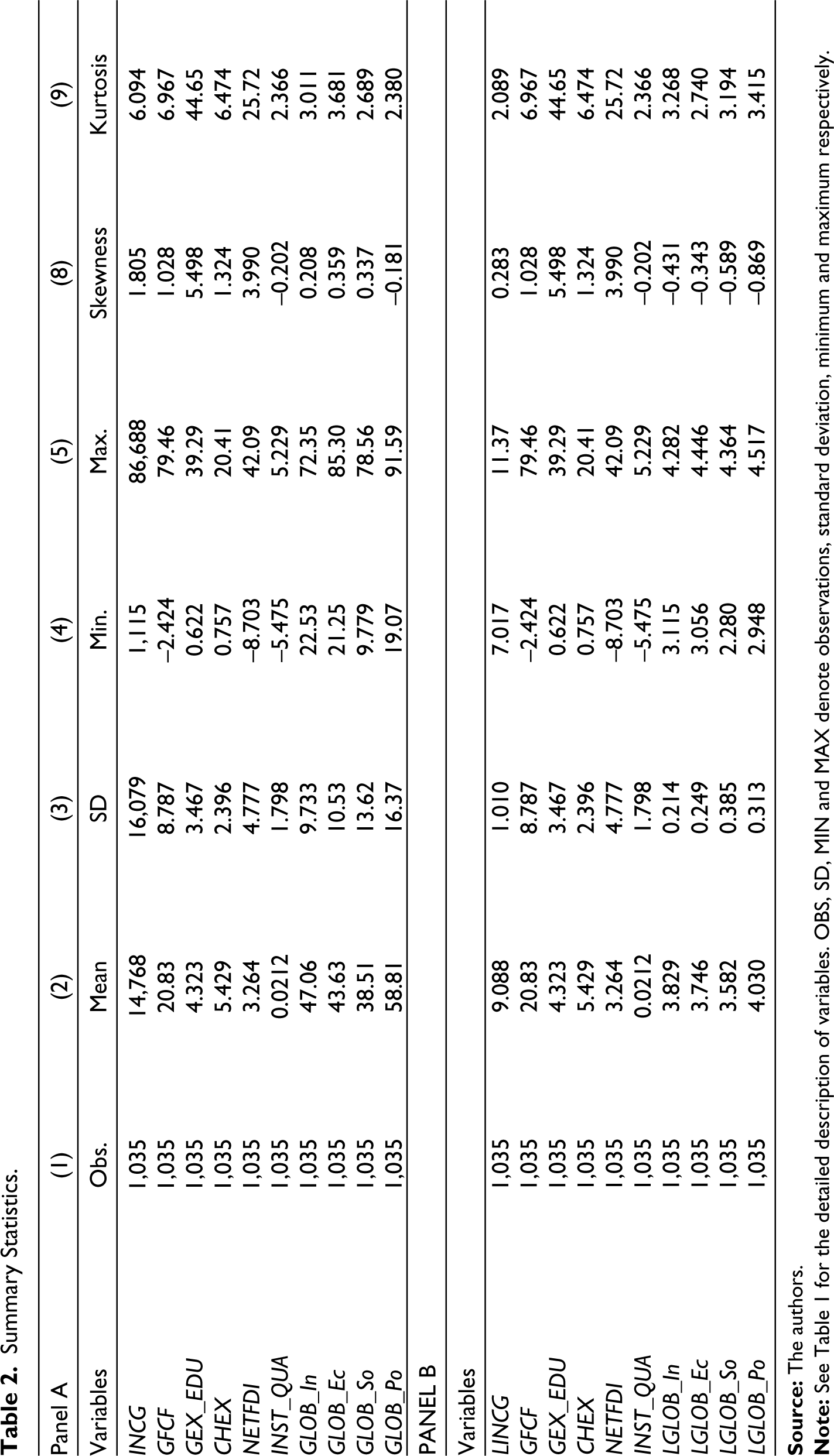
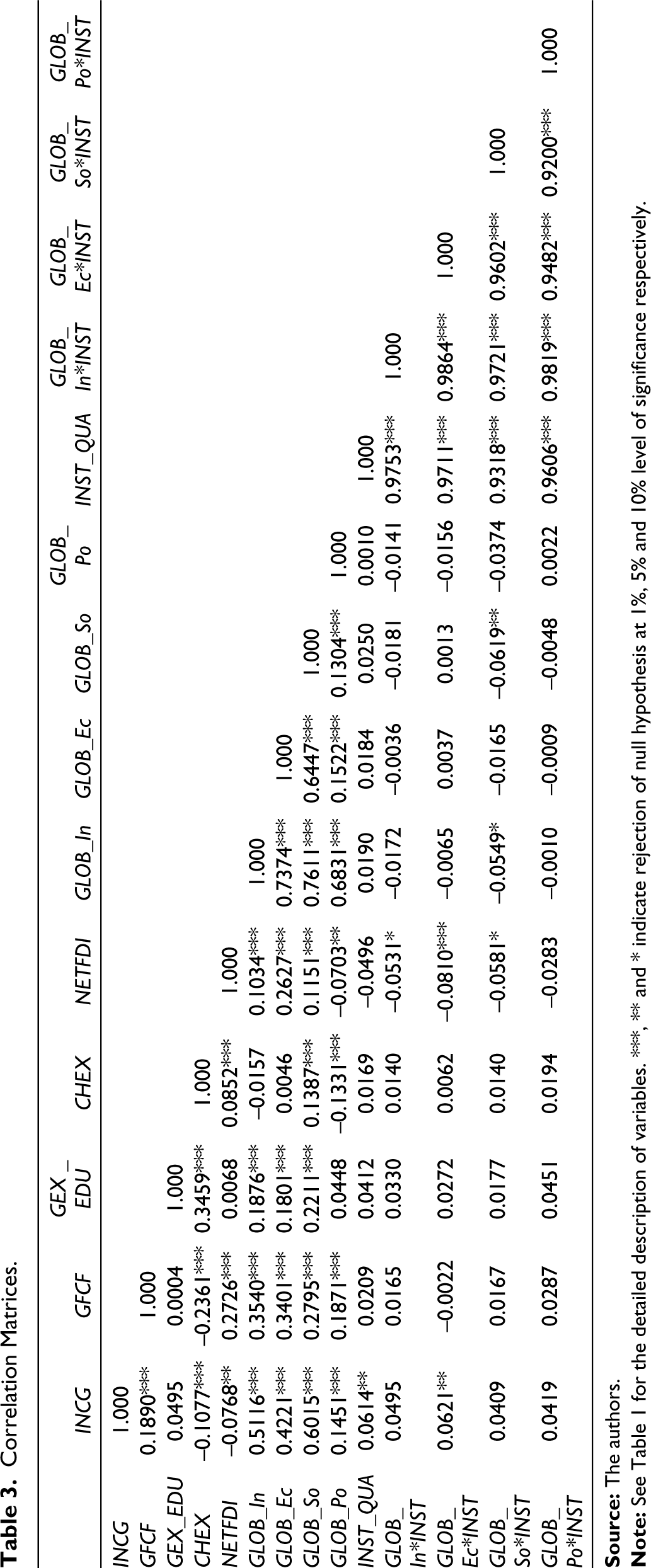
Concerning the effects of institutions, we constructed an index that captures institutional quality by employing six institutional variables (voice and accountability, political stability and absence of violence/terrorism, government effectiveness, regulatory quality, rule of law and control of corruption). Principal component analysis (PCA) 4 was used to construct the index (for details, see Beri & Nubong 2022). However, in contrast to the procedure followed in Beri and Nubong (2022), we constructed the institutional quality index for each of the sampled economies individually. The institutional quality variable enters the models both directly and indirectly as a moderating variable. All details of the variables including symbols, measurements and sources are displayed in Table 1. The summary statistics are presented in Table 2, and Table 3 displays the correlation matrix.
Variables Definition and Measurement.
Summary Statistics.
Correlation Matrices.
Some Stylised Facts: The State of Inclusive Growth, Globalisation and Institutions in Africa
Here we present some stylised facts on our key variables which are GDP per person employed (GDP per person employed, constant 2017 PPP $), which is a proxy for inclusive growth, globalisation index (economic, social and political) and institutional quality (voice and accountability, political stability and absence of violence/terrorism, government effectiveness, regulatory quality, rule of law and control of corruption). These six measures are used to construct the quality index for institutions for African countries.
Figures 1 to 3 are plotted using the average values of the abovementioned series (GDP per person employed, globalisation and institutions) calculated over the period between 1996 and 2018. Figure 1 displays the average constant GDP per person employed across the sampled African economies from 1996 to 2018. The overall average value of real GDP per person employed in Africa for the selected economies stood at $14,768.46 approximately. On the individual country level, Figure 1 shows that Gabon has the highest average GDP per person employed with $65,900.85, while Burundi has the lowest average GDP per person employed with $1,981.52. Countries with at least $10,000 on average include Libya ($59,848.32), South Africa ($42,440.54), Botswana ($41,340.75), Algeria ($41,097.01), Mauritius ($36,832.47), Egypt ($32,844.51), Eswatini ($30,775.93), Tunisia ($30,185.97), Namibia ($30,162.37), Morocco ($18,978.12), Angola ($16,795.01), Cabo Verde ($15,455.02), Sudan ($14,945.52), Nigeria ($13,736.96), Comoros ($12,183.32), Cote d’Ivoire ($12,120.53), Senegal ($10,499.60) and Sao Tome and Principe ($10,362.85). Other countries have less than $10,000 of GDP per person employed on average, and these economies include Congo Republic ($9,890.63), Ghana ($9,018.25), Kenya ($8,406.58), Gambia ($7,556.09), Zambia ($7,400.06), Cameroon ($7,247.48), Benin Republic ($6,811.69), Lesotho ($6,738.52), Zimbabwe ($6,385.54), Guinea ($5,834.92), Mali ($5,636.98), Uganda ($4,684.42), Guinea-Bissau ($4,579.82), Burkina Faso ($4,388.94), Sierra Leone ($4,083.20), Tanzania ($3,909.29), Madagascar ($3,321.71), Togo ($2,987.45), Rwanda ($2,752.44), Niger ($2,660.02), Central African Republic ($2,656.46), Ethiopia ($2,654.70), Congo Democratic Republic ($2,507.85), Malawi ($2,231.50) and Mozambique ($2,113.01). The goal of GDP per person employed is to stimulate sustained, inclusive and sustainable economic growth, full and productive employment and decent work for all. The target is to attain greater levels of economic productivity through diversification, technological advancement and innovation, by focusing on high-value addition and labour-intensive sectors.
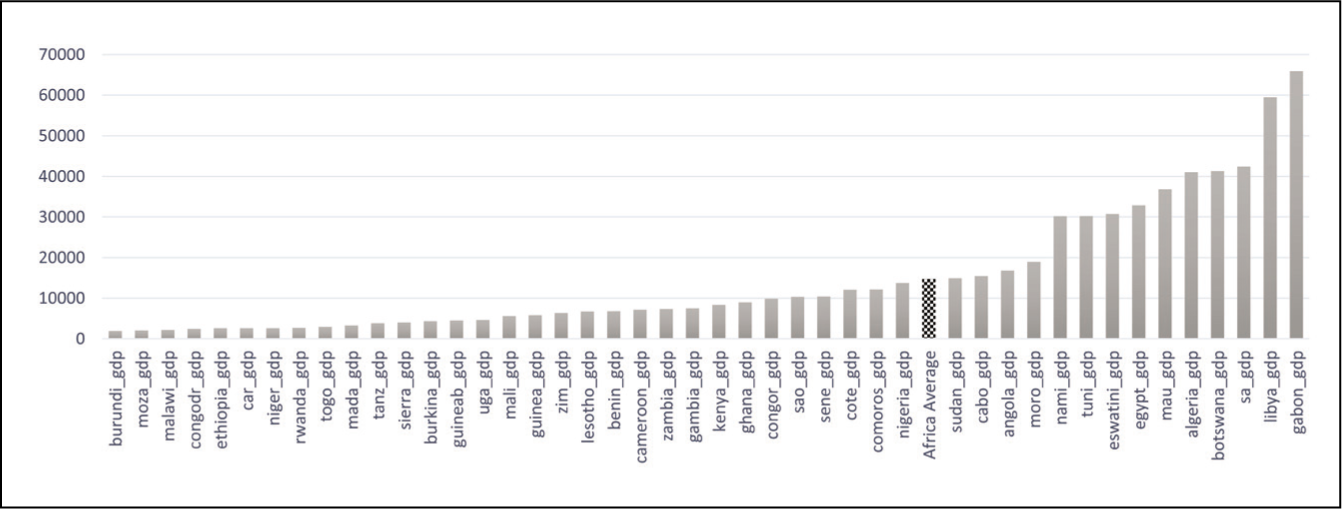
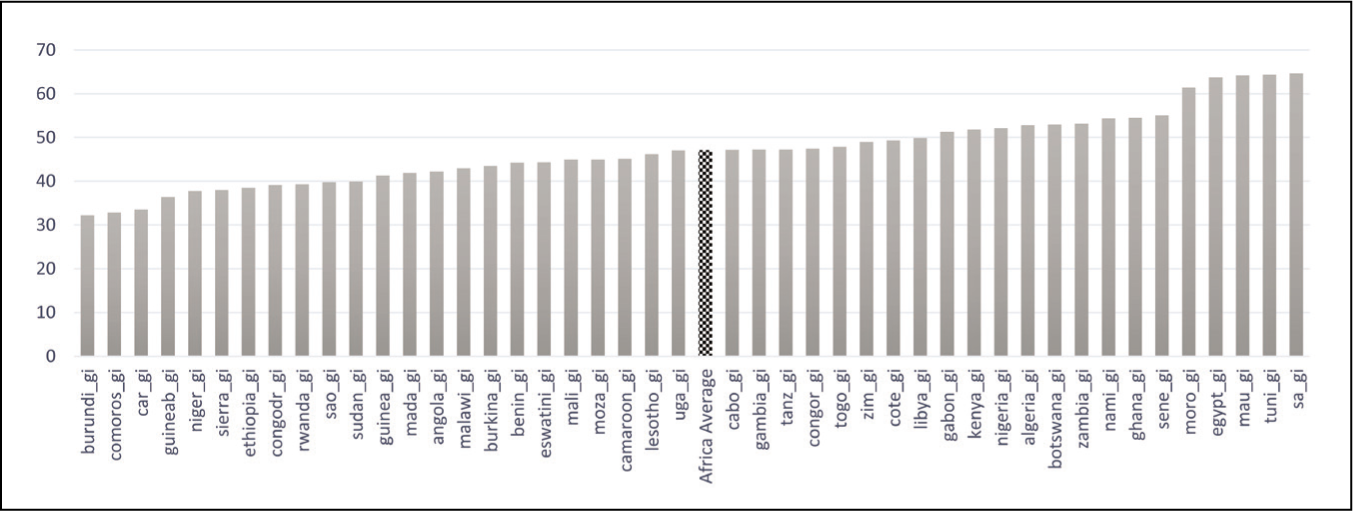
Figure 2 shows the average globalisation index in the sampled African economies over the period 1996–2018. The globalisation index, that is, the KOFGI has become the most extensively used and referenced globalisation index. The KOFGI is a composite index that measures globalisation on three dimensions—economic, social and political for more or less all countries globally. The measure of the KOFGI is in percentages and ranges from 1 to 100; where 1 indicates the least globalised and 100 indicates the most globalised (Haelg, 2020). Figure 2 reveals that overall, all the African economies within the sample have an average globalisation index of 47.06%, which is less than 50%. This indicates that African economies are not adequately internationalised with the rest of the world in terms of economic, social and political aspects. Africa’s participation in globalisation has remained a challenge due to poor or lack of appropriate government policies to maximise the potential benefits from globalisation and minimise the negativity risks of marginalisation and/or destabilisation. The poor participation of the continent in the global economy has kept it on the sidelines. For example, Africa’s share of worldwide commodities trading has stagnated at about 3%; this is equivalent to its share of global manufacturing output. Also, the economic gap between richer economies and Africa has been amplified in the contemporary era, with the percentage of incomes in Africa compared to developed countries deteriorating from 12% to 8% between early 1980s to 2019 (Gondwe, 2001; Okonjo-Iweala & Coulibaly, 2019). Further, as observed in Figure 2, South Africa, Tunisia and Mauritius are the most globalised African economies with around 64%, whereas Comoros and Burundi are the least globalised African economies among the sampled countries in Africa under the period of study. It can also be seen that out of the 45 African economies sampled, just a handful of 14 countries recorded average percentage of globalisation above 50%; these countries include South Africa (64.67), Tunisia (64.36), Mauritius (64.18), Egypt (63.76), Morocco (61.41), Senegal (55.11), Ghana (54.52), Namibia (54.39), Zambia (53.20), Botswana (52.99), Algeria (52.83), Nigeria (52.18), Kenya (51.87) and Gabon (51.32). Other economies are less globalised with less than 50% as indicated by their average globalisation indexes; they include Libya (49;85), Cote d’Ivoire (49.34), Zimbabwe (48.97), Togo (47.87), Congo Republic (47.42), Tanzania (47.22), Gambia (47.22), Cabo Verde (47.15), Uganda (47.02), Lesotho (46.17), Cameroon (45.10), Mozambique (44.96), Mali (44.95), Eswatini (44.32), Benin (44.22), Burkina Faso (43.50), Malawi (42.93), Angola (42.22), Madagascar (41.91) and Guinea (41.26). Furthermore, some economies have less than 40% on average of the globalisation index. These economies include Sudan (39.92), Sao Tome and Principe (39.75), Rwanda (39.29), Congo Democratic Republic (39.13), Ethiopia (38.47), Sierra Leone (37.95), Niger (37.76), Guinea-Bissau (36.39), Central African Republic (33.55), Comoros (32.83) and Burundi (32.18).
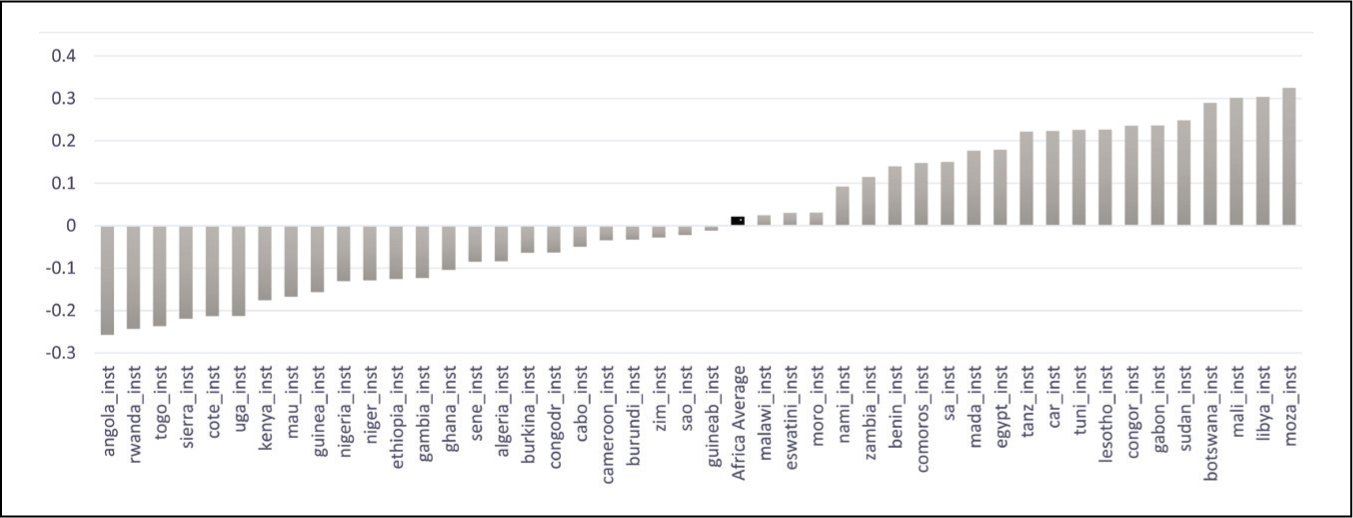
In Figure 3, we present the average institutional quality constructed from the six broad indicators of institution and governance variables—voice and accountability, political stability and absence of violence/terrorism, government effectiveness, regulatory quality, rule of law and control of corruption. All the broad governance dimensions range from –2.5 to +2.5 with –2.5 signifying the lowest level of quality of institution and +2.5 indicating the highest level of institutional quality (Kauffmann et al., 2010). Thus, countries achieving a value of 2.5 are categorised as countries with the strongest level of institutional quality whereas countries with a value of –2.5 can be categorised as countries with the weakest form of institutional quality. As observed from Figure 3, in African countries the level of institutional quality ranges from moderate to weak with overall average institutional quality standing at 0.02. Mozambique records the highest at 0.32 and Angola records the weakest at –0.26. From Figure 3, we can argue that African economies with a moderate level of institutional quality include Mozambique (0.32), Libya (0.31), Mali (0.30), Botswana (0.29), Sudan (0.25), Gabon (0.24), Congo Rep. (0.24), Lesotho (0.23), Tunisia (0.23), Central Africa Rep. (0.22), Tanzania (0.22), Egypt (0.18), Madagascar (0.18), South Africa (0.15), Comoros (0.15), Benin (0.14), Zambia (0.11), Namibia (0.09), Morocco (0.03), Eswatini (0.03) and Malawi (0.02). This indicates that these economies are using relevant policies and instruments to strengthen the quality of institutions. However, several African economies exhibit a weak level of institutional quality as displayed in Figure 3. These economies include Guinea-Bissau (–0.01), Sao Tome and Principe (–0.02), Zimbabwe (–0.03), Burundi (–0.03), Cameroon (–0.03), Cabo Verde (–0.05), Congo Democratic Republic (–0.06), Burkina Faso (–0.06), Algeria (–0.08), Senegal (–0.08), Ghana (–0.10), Gambia (–0.12), Ethiopia (–0.13), Niger (–0.13), Nigeria (–0.13), Guinea (–0.15), Mauritius (–0.17), Kenya (–0.18), Uganda (–0.21), Cote d’Ivoire (–0.21), Sierra Leone (–0.22), Togo (–0.24), Rwanda (–0.24) and Angola (–0.26). This shows that most countries in Africa do have the required quality of institutions that fosters economic development for the continent.
Model Specification
The standard functional form of the model is stated as follows:

where INCG, GLOB, INST K, H and FDI represent inclusive growth, globalisation (the variable for globalisation includes the aggregate globalisation index and its various dimensions—economic, social and political), institutional quality, fixed capital formation, human capital, and investment respectively. By taking the natural logarithm of Equation (1), we determine the log-linear relationship between the series. This helps in the interpretation of estimated coefficients in terms of percentages/elasticities, and the log-linear form of Equation (1) is specified as

In Equation (2), {0 is the constant term, {1 to {5 are the coefficients for the explanatory variables, and p it is the idiosyncratic error where i and t stand for country and time respectively.
Furthermore, we specify the models clearly by interchanging the series with the actual measures as follows:

In Equation (3), GLOB_In denotes the aggregate globalisation index with its various dimensions, which include economic globalisation, social globalisation and political globalisation respectively. See Table 1 for the definition of variables. The moderating role of institutional quality in inclusive growth—globalisation nexus was determined through the interaction between globalisation and institutional quality. This is specified in Equation (4):

where GLOB_In*INST_QUAit indicates the interactions between institutional quality and aggregate globalisation, economic globalisation, social globalisation and political globalisation respectively. The significance of the positive (negative) sign of the {3 coefficient in Equation (4) implies that globalisation and its various dimensions can assist in the attainment (deterioration) of inclusive growth through good institutional qualities.
Econometric Approach
According to Dogan and Seker (2016), when undertaking panel data econometric analysis for different economies, it is imperative to consider matters concerning cointegration, slope heterogeneity and cross-sectional dependence (CD) before choosing the most suitable methodology (see also Le & Ozturk, 2020). Le and Ozturk (2020) further summarised the steps involved in the process of estimating panel data, which include CD test, slope homogeneity tests, stationarity (unit root) tests, tests of cointegration, regression estimations, and causality test. In terms of panel unit root tests, ‘first-generation’ methods (LLC, IPS, Fisher, PP) are unsuitable given their assumption of cross-section independence (Dogan & Seker, 2016). However, with the presence of cross-sectional dependence and slope heterogeneity, the first-generation unit root tests are inconsistent and unsuitable; the ‘second-generation’ procedures are therefore recommended (Dogan & Seker, 2016; Le & Ozturk, 2020; Pesaran, 2004, 2007).
CD Test
Analyses of panel data may give rise to CD as a result of countries’ interrelations in common socio-economic network, geographical locations, environmental characteristics and other undetected elements (Chudik & Pesaran, 2013, 2015). Estimated results will become unreliable and inconsistent if issues on CD are neglected (Dong et al., 2018; Le & Ozturk, 2020; Phillips & Sul, 2003).
Breusch and Pagan’s (1980) LM test is mostly employed to examine the CD in panel data, which is stated thus:

where the cross-section and time dimensions are denoted by i = 1,2,…, N and t = 1,2,…, T whereas Xit is a k × 1 vector of explanatory variables.
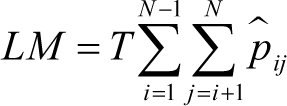
The LM test is specified in Equation (6) with H0: Cov(vit, vjt) = 0 and Ha: Cov(vit, vjt) ≠ 0 as the null and alternative hypotheses:
However, given the biasedness found in the LM test, Pesaran (2004) modified the Breusch–Pagan (1980) LM statistic, thus
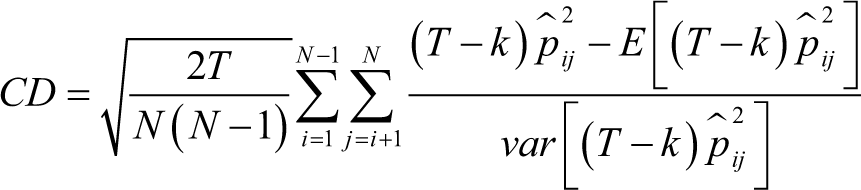
In Equation (7), pˆ ij denotes the pair-wise correlation coefficient derived from OLS in Equation (5) for all cross-sectional dimensions, i. Moreover, the panel and sample sizes are denoted by N and T .
Slope Homogeneity Test
In the presence of sizable CD, individual economies are likely to exhibit economic development progress that is common across members. Therefore, it is recommended to control for cross-sectional heterogeneity (Breitung, 2005). A procedure for examining the slope homogeneity issue that uses a pooled estimator to account for the variations in the expected coefficients of the individual regression was suggested by Swamy (1970).
5
Moreover, in the case of large panel data, the Swamy method was expanded by Pesaran and Yamagata (2008) to authenticate the slope homogeneity, and it is stated thus:

Where the pooled OLS regression coefficients for the cross-section dimension i = 1to N is given as 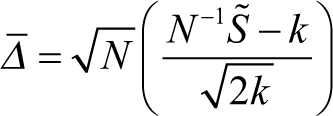
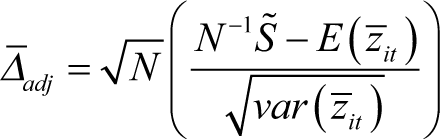
In Equation (10),
Panel Unit Root Test
As stated earlier, we employed the second-generation unit root test given that the traditional first-generation techniques are unsuitable and unreliable (Pesaran, 2007). Pesaran (2007) developed the CADF and CIPS which are suitable for this study. The CADF statistic is specified as follows:


Further, the CIPS which is calculated by taking the average of CADF was introduced by Pesaran (2007):

where the CADF in Equation (13) represents every cross-sectional i of the CADF statistic following the t ratios of di in Equation (11).
Panel Cointegration Test
The cointegration test helps in highlighting the long-term relationships in a series. We started by employing Pedroni (1999, 2004) and Kao (1999) cointegration tests. These tests rely on the two-step error-term based cointegration tests developed by Engle and Granger (1987). Seven Phillips–Perron type panel cointegration tests are suggested by Pedroni (1999, 2004) and are arranged into panel and group tests. These tests are applied using within-dimension and between- dimension techniques; the within-dimension consists of four tests such as (a) panel t – statistics, (b) panel v – statistics, (c) panel PP – statistics and (d) panel ADF – statistics. On the other hand, the between-dimension has three tests: (a) group t – statistics, (b) group PP – statistics and (c) group ADF – statistics. These seven tests are estimated using a long-term model shown below:
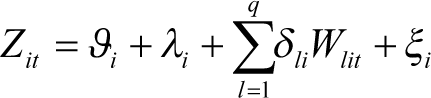
where the error term 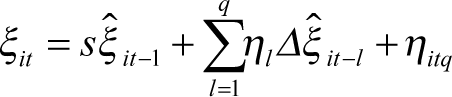
In Equation (15), Kao (1999) specified the computation of the ADF test statistics thus
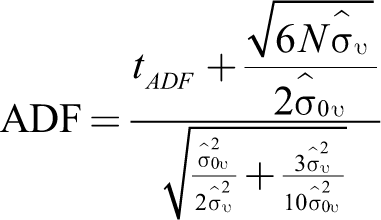
Where tADF in Equation (16) is the test statistics of rho, and


where the long-run variance of the error term is denoted by X. Similarly, the (H0) for the residual cointegration test of Kao (1999) is no cointegration among the variables.
Moreover, in the presence of cross-sectional dependence, the most suitable and consistent cointegration test to employ is that proposed by Westerlund (2007). The specification for the error correction form is expressed thus:

where the speed of adjustment is represented by fi fi.
Hence, to accomplish the goal of this study, we performed the panel unit root tests, panel cointegration and slope heterogeneity tests, and panel cointegrating regressions (FMOLS and DOLS). Phillips and Hansen (1990) developed the FMOLS which was further improved for panel data estimations by Pedroni (2001). DOLS was developed by Saikkonen (1991) and Stock and Watson (1993).
6
The respective specifications for FMOLS and DOLS are thus


In Equations (20) and (21), the dependent and independent variables are represented by Q and w respectively, whereas V is a vector of regressors (V = w – wˉ). The selection of long-run estimations of FMOLS and DOLS is appropriate because it provides consistent and reliable outcomes and the methods are more suitable in the presence of heterogeneity in the panel data (Hafeez et al., 2018; Iqbal et al., 2020). These models are preferable to the traditional ordinary least squares given that (a) the t-statistics obtained from the OLS estimates when the series are non-stationary are approximately normal and inconsistent. There is also biasedness in the convergence of OLS when we have infinite samples; (b) there are high chances of autocorrelation and heteroscedasticity occurring from OLS estimates given that omitted dynamics are accounted for by the error term, which invalidate inferences from the normal tables. Hence, the z-statistics are unreliable for the OLS estimates; and (c) another advantage is that these models deal with the issue of endogeneity (Iqbal et al., 2020; Kumeka & Adeniyi, 2022). Further, these techniques provide consistent and efficient estimation of the vector of cointegration and do not suffer from serial correlation and simultaneity biases. DOLS generates superior outcome compared to FMOLS and eliminate correlation among the independent variables (for details, see Hamit-Haggar, 2012; Kao & Chiang, 2000).
Empirical Results and Discussion
Cross-Sectional Dependence and Panel Unit Root Tests
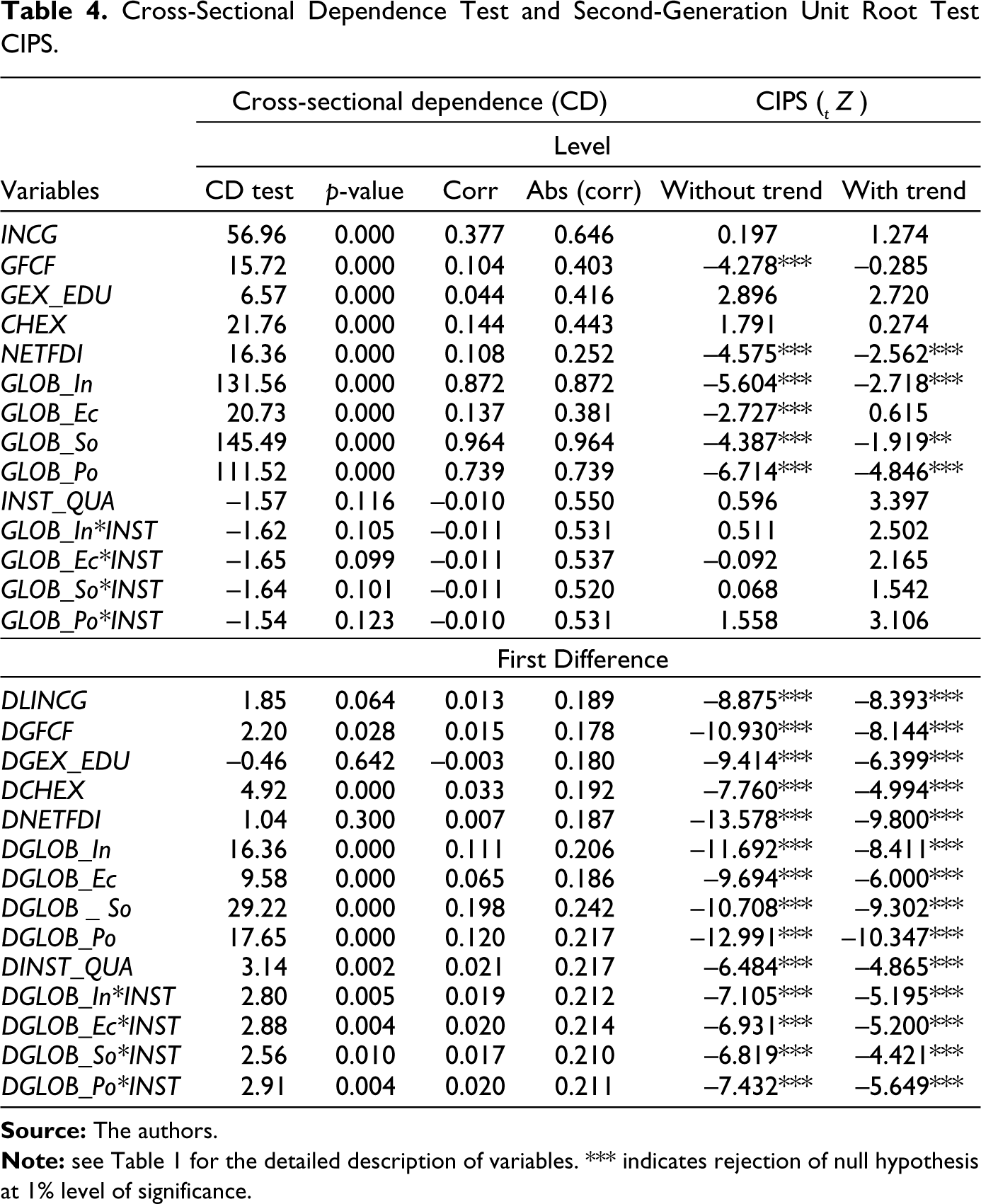
The results for the CD and CIPS tests are presented in Table 4. Pesaran (2004) suggested the relevance of CD tests and as evidenced in the table, the presence of CD is verified for all the variables either at the level form or at the first difference; given that the p-values are very near to zero leading to the rejection of the null hypothesis. Moreover, with the validation of the existence of CD, it is now apt to determine the series level of stationarity. From the Pesaran (2007) CIPS unit root results, the last two columns of Table 4 reveal that our variables are at the borderline between I(0) and I(1) order of integration. That is, at the level, FDI, aggregate globalization, social and political globalisation indices are stationary with or without trend, whereas all the variables are stationary at first difference. This means that our series has I(1) order of integration.
Cross-Sectional Dependence Test and Second-Generation Unit Root Test CIPS.
Slope Homogeneity Test Results
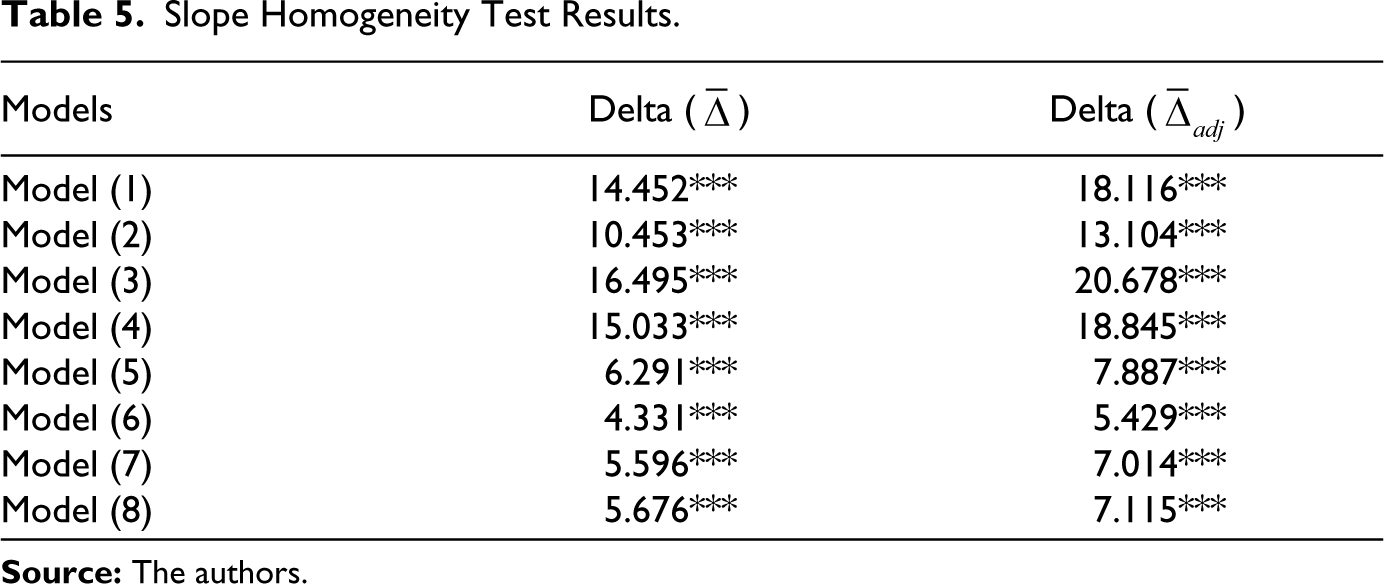
Following the recommendations in Pesaran and Yamagata (2008), this test is useful in determining whether the slope factors are heterogeneous. The outcome of the slope homogeneity test is displayed in Table 5, and it is shown that slope heterogeneity is present in our series in all the models, for both the standardised dispersion statistics and the bias-adjusted statistics.
Slope Homogeneity Test Results.
Panel Cointegration Test Results
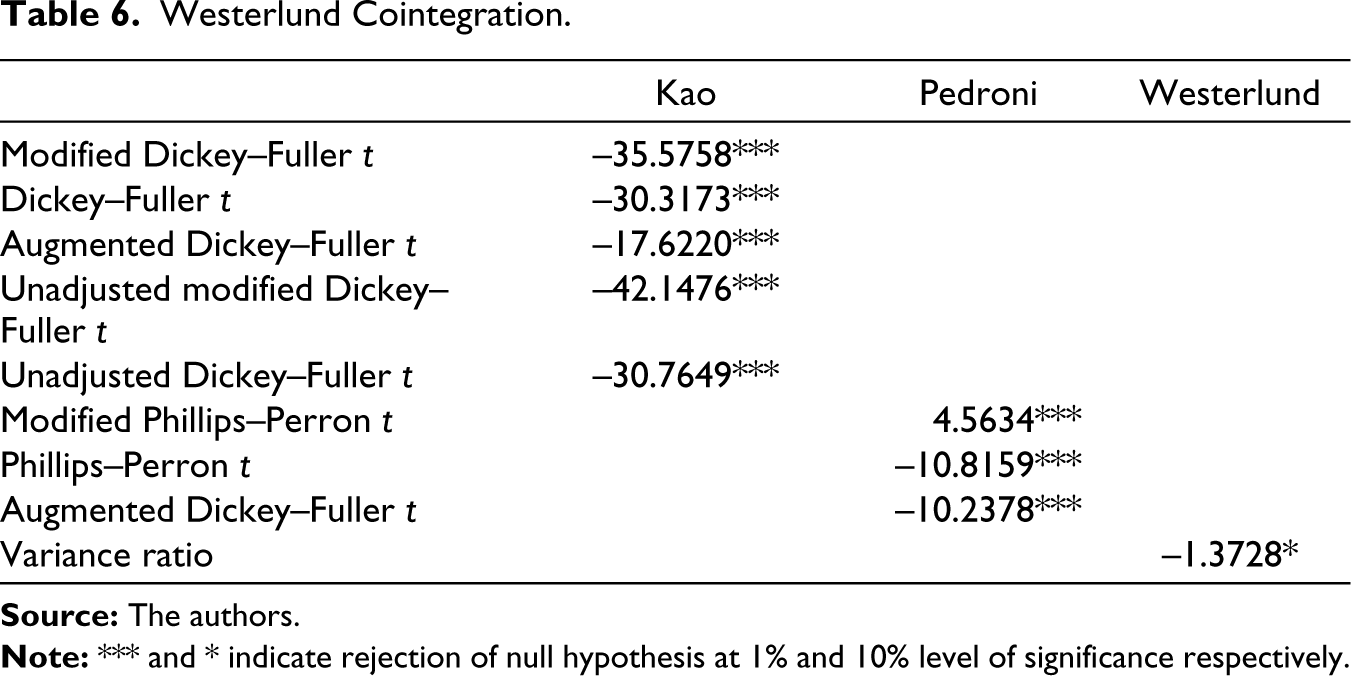
Herein, for the purpose of robustness, we employed the Kao (1999), Pedroni (2004) and Westerlund (2007) panel cointegration tests with the intention of determining whether non-spurious, long-term correlation is present in the series. As displayed in Table 6, we reject the null hypothesis of no cointegration in all three cointegration test approaches. These support the existence of a long-run relationship among the variables.
Westerlund Cointegration.
Panel Long-Term Estimation Results
FMOLS and DOLS Estimations
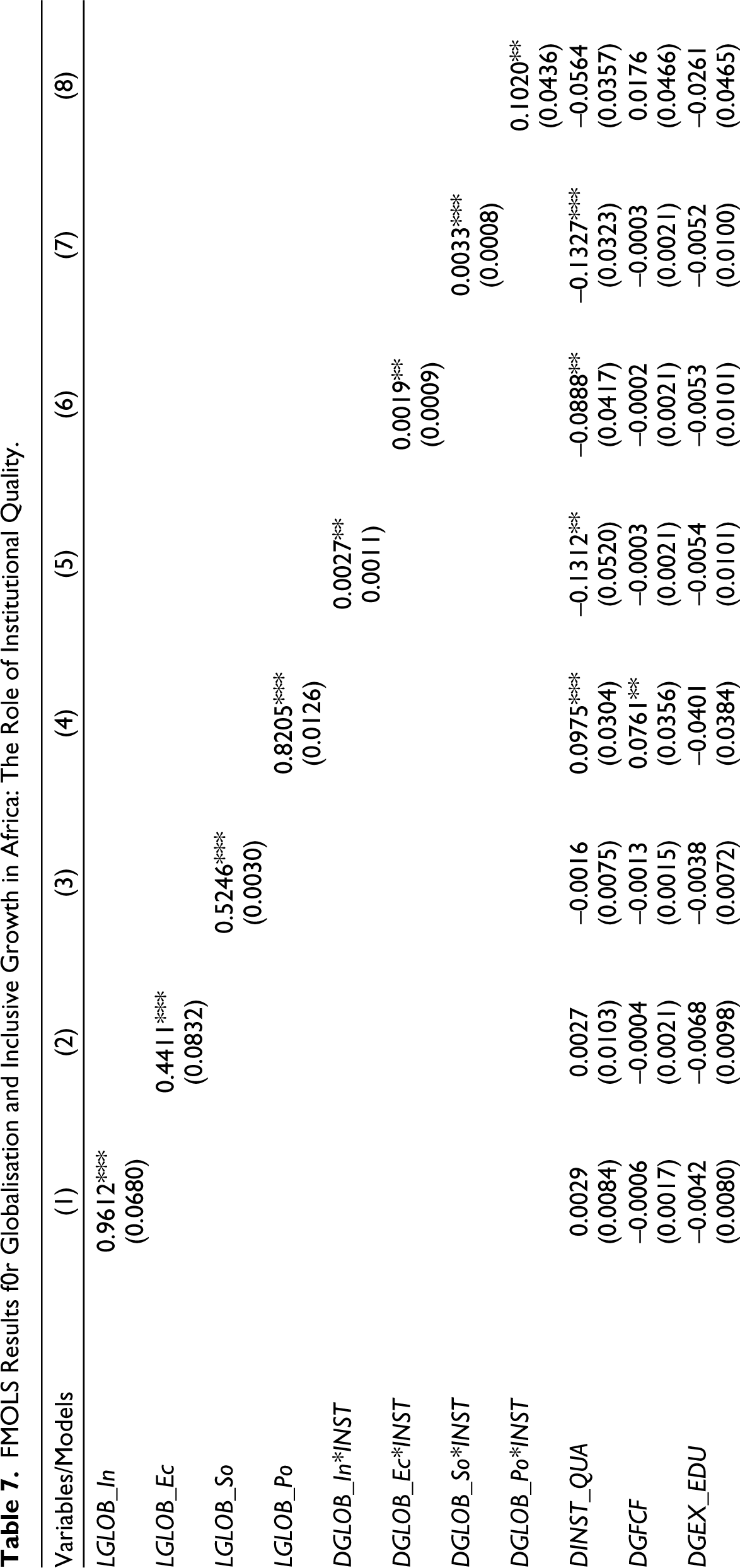
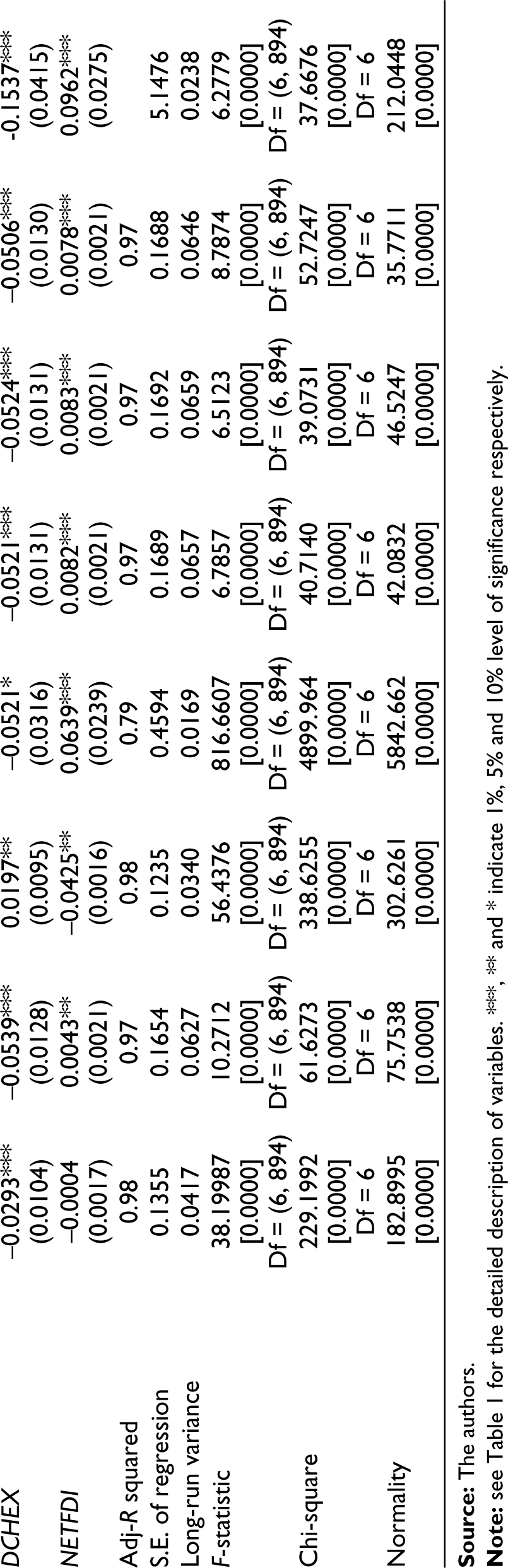
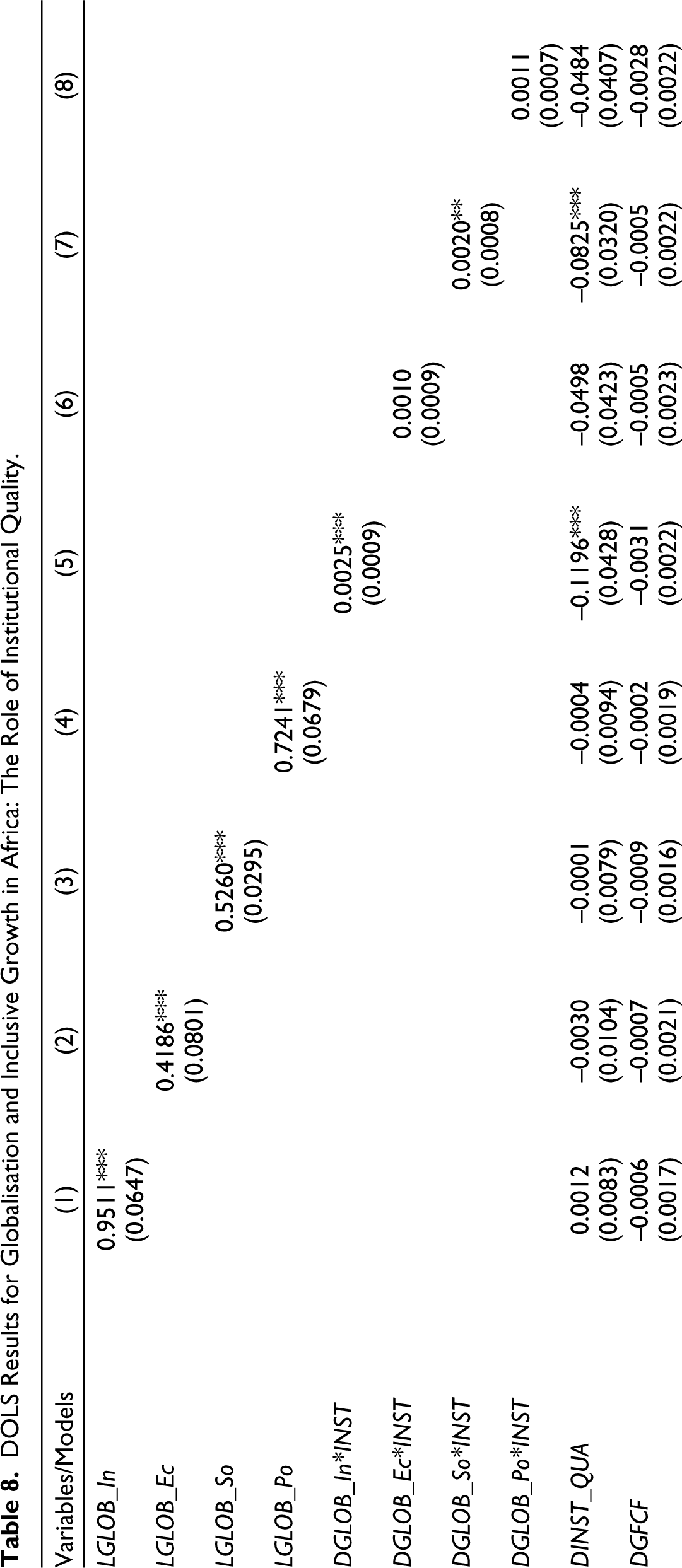
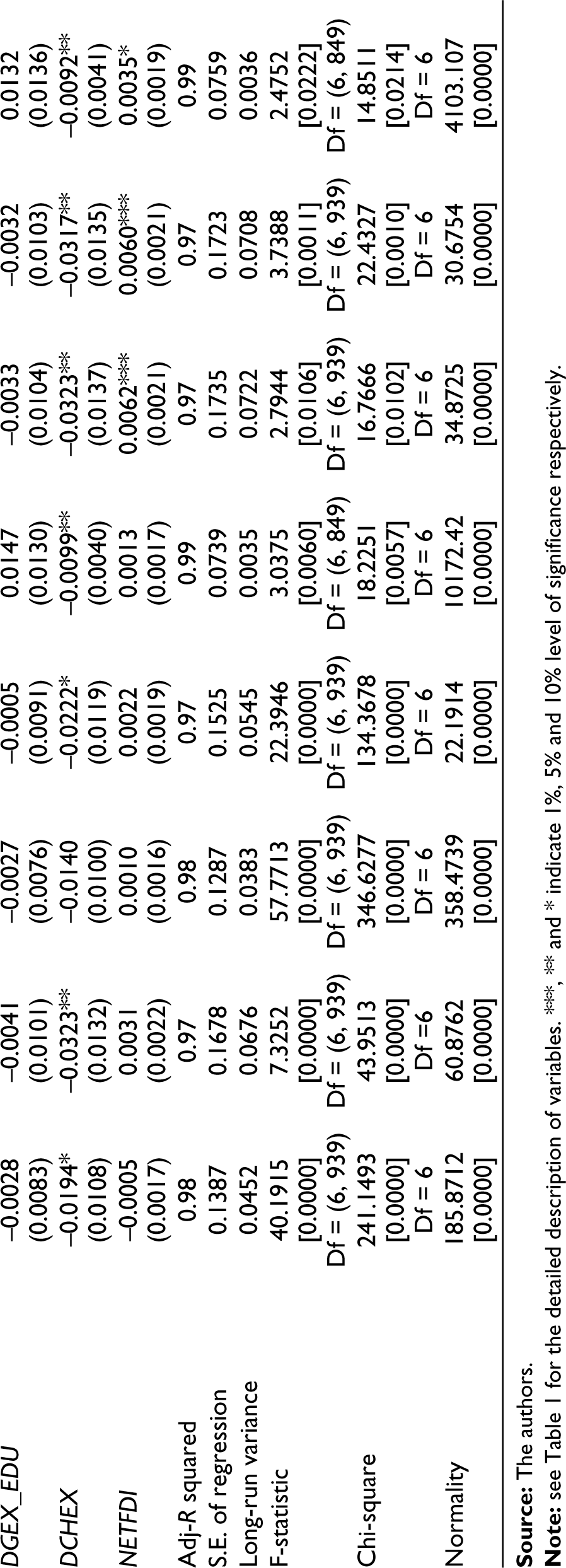
Following the establishment of long-run association between the variables, the next phase involves the estimation of the long-term factors. The parameters estimated in this study are for the percentages of inclusive growth in aggregate globalisation and its various dimensions (economic, social and political), institutional quality (constructed from six variables through PCA), human capital development (through government expenditure on education and health), physical capital (gross fixed capital formation) and foreign investment (FDI). It should be recalled that our goal here is to investigate the influence of globalisation on inclusive growth in Africa through the modulating role of institutional quality. To achieve this, we employed two methods of estimation, which are FMOLS and DOLS regressions. The results of these methods are displayed in Tables 7 and 8.
Looking at the FMOLS and DOLS results in Tables 7 and 8, it is clear that in column (1) for the aggregate globalisation index, the changes in globalisation have a positive and significant influence on inclusive growth, and therefore promote inclusive growth. Precisely, one percentage point increase in aggregate globalisation can possibly lead inclusive growth to increase by 0.96% (in the case of FMOLS) and 0.95% (in the case of DOLS). Next, we used the various dimensions of globalisation to determine how each affect inclusive growth and these are presented in columns (2), (3) and (4). Column (2) captures the economic globalisation index and similar to aggregate globalisation, we find that economic globalisation has a significant positive impact on inclusive growth. Specifically, a 1% rise in economic globalisation will cause an increase of about 0.44% and 0.42% based on the FMOLS and DOLS parameters, corresponding to an improvement in inclusive growth in Africa. In column (3), it is seen that social globalisation is positive and significantly related to inclusive growth in Africa. For the FMOLS estimators, one percentage increase in social globalisation improves the level of inclusive growth in Africa by around 0.52%, whereas for the DOLS estimators, one percentage increase in social globalisation will likely augment inclusive growth by about 0.53%. In addition, concerning the result for the third dimension of globalisation—political globalization, we also observed a positive and significant linkage between political globalisation and inclusive growth. Explicitly, one percentage increase in political globalisation will result in an increase of around 0.82% and 0.72% according to the FMOLS and DOLS estimators respectively. Considering the scale of the coefficients, one can generally conclude that these economies have higher chances in achieving inclusive growth if aggregate globalisation is promoted. In terms of the different dimensions of globalization, political globalisation presents a greater chance of attaining broad inclusive growth followed by social globalisation whereas economic growth globalisation has the least effect. Our results are consistent with the findings in prior studies such as Heimberger (2020), Daly et al. (2017), Duttagupta et al. (2018), Shahzad and Chaudhary (2020), de Barros Santiago (2017), Yameogo et al. (2021), Asongu et al. (2020), Bataka (2019), Gygli et al. (2019), Quinn et al. (2011), Le and Ozturk (2020), Asongu and Odhiambo (2020) and Zaidi et al. (2019). What the results portend is that globalisation and particularly economic globalisation can facilitate international exchanges (transfer) and interaction of resources, foreign trade, technological transfers and increment in manufacturing and productivity in Africa. Therefore, the increment in production/output implies that there are more resources available to the general population in Africa.
FMOLS Results f0r Globalisation and Inclusive Growth in Africa: The Role of Institutional Quality.
DOLS Results for Globalisation and Inclusive Growth in Africa: The Role of Institutional Quality.
Note: see Table 1 for the detailed description of variables. ***, ** and * indicate 1%, 5% and 10% level of significance respectively.
Table 7 further reveals that institutional quality has a positive effect on inclusive growth in model (1) and model (4), but it is insignificant for model (1) and statistically significant for model (4) at the 1% level of significance. The relationship is, however, negative and insignificant for model (2) and model (3). These are evident in both the FMOLS and DOLS estimated results. These indicate that the quality level of institutions in Africa does not have a significant influence on inclusive growth in Africa. Nonetheless, in the model with political globalisation, institutional quality tends to positively and significantly influence inclusive growth in Africa. Specifically, one percentage rise in institutional quality increases inclusive growth by 0.10%. This result signifies that institutional quality is significant for African economies but only when there is an improvement in their political openness and transparency. This outcome corroborates the works of Ali and Ahmad (2021), Bonnal and Yaya (2015), Egbetokun et al. (2018), Mavragani et al. (2016), Eregha and Mesagan (2016) and Li et al. (2015). Conversely, in the models with interactions (columns (5)–(6), we find that institutional quality has a negative and significant effect on inclusive growth in Africa. Specifically, one percentage point increase in institutional quality will deteriorate the level of inclusive growth by around 0.13%, 0.09%, 0.13% and 0.06% in models (5) to (8), respectively, according to the FMOLS estimators and about 0.12%, 0.05%, 0.08% and 0.05% in models (5) to (8), respectively, based on the DOLS estimators.
Furthermore, the moderating effects of institutional quality and globalisation on inclusive growth are displayed in columns (5) to (8). In column (5), we observed that the interaction between aggregate globalisation and institutional quality has a positive and significant impact on inclusive growth, and therefore improves growth inclusiveness. Specifically, one percentage increase in the quality of institutions through aggregate globalisation will boost a more inclusive growth as confirmed by the FMOLS and the DOLS estimators, other things being equal. Similarly, the results for the interactions between the various dimensions of globalisation (economic, social and political) and institutional quality also exert a positive and significant influence on inclusive growth in Africa as displayed in columns (6), (7) and (8). Particularly, as the sub-index interactions of globalisation increase by one percentage point, inclusive growth tends to increase by various magnitudes according to the FMOLS and the DOLS estimators. These results indicate that institutional qualities combined with globalisation and its various dimensions have potential to augment growth that has a broader impact on these economies (growth inclusivity), even though institutional quality alone tends to be insignificant or utterly reduces inclusive growth. In addition, because of the essential influence of aggregate globalisation and its sub-indices, institutions can serve as gateways to improving inclusive growth in Africa. The likely explanations for this is that regulatory institutional measures such as control of corruption, government effectiveness, political stability and absence of violence/terrorism, regulatory quality, rule of law and voice and accountability are necessary conditions to be implemented by policymakers in order to achieve broader growth that is beneficial to all in the African region. Globalisation, especially economic globalisation can boost international and intra-regional trade, attract foreign portfolio investment (FPI) and FDI, enhance technological advancement and expand industrial and manufacturing productivity. This confirms the findings in Ali and Ahmad (2021), Yameogo et al. (2021), Islam (2019), Asongu and Nwachukwu (2017), Bonnal and Yaya (2015) and Samimi and Jenatabadi (2014). For example, Islam (2019) argued that good institutions or good governance is a prerequisite for a country to benefit from globalisation.
Additionally, we presented and discussed the other theoretical variables that can impact inclusive growth. Our results show that capital stock proxied by gross fixed capital formation has a negative and insignificant effect on inclusive growth in six of the eight models as displayed in columns (1) to (8) for the FMOLS estimations, and all the models for the DOLS estimations. Similarly, although human capital proxied by government expenditure on education also exerts a negative and insignificant influence on inclusive growth in all the models and for both estimation approaches, current expenditure on health has a negative and significant impact on inclusive growth. What this portends is that while capital formation and human capital seem to deteriorate growth inclusiveness in Africa, the variable of choice determines whether it is significant or not. Finally, we further observed that FDI positively and significantly influences inclusive growth in Africa in six of the eight models of the FMOLS and DOLS estimates. This supports the argument that economic globalisation will boost foreign trade, attract FDI, and subsequently enhance inclusive growth. These results are in line with the recent study by Adeniyi et al. (2021), who concluded that FDI and government expenditure on education positively and substantially improve inclusive growth in Africa.
Conclusion
This study is governed by two key objectives: First, the study examined the effects of globalisation on inclusive growth in Africa, and second, it accounted for the moderating role of institutional quality in the globalisation–inclusive growth nexus. To achieve the broad goal of this research, the study employed data from 45 African economies from 1996 to 2018 to determine the panel cointegration and cointegrating regression association between inclusive growth, globalisation and institutional quality. Also, results of several pre-estimation tests were analysed including the cross-sectional dependence structure of the series, their slope heterogeneity, second-generation stationarity tests and panel cointegration tests, and since there is an appropriate condition for cointegration to implement panel cointegration regression analyses, methods adopted are the long-run panel estimations (FMOLS and DOLS).
After confirming the order of integration, the existence of CD, slope heterogeneity and cointegration of the variables, the results from the FMOLS and DOLS tests show that aggregate globalisation and all its various dimensions have a positive and significant influence on inclusive growth. This implies that aggregate globalisation, economic globalisation, social globalisation and political globalisation have the prospect of enhancing growth that is beneficial to the general economy in Africa. Moreover, our results reveal that institutional quality adversely influences inclusive growth although the effect is insignificant. The results further indicate that the interaction between globalisation and institutional quality positively improves inclusive growth in Africa. This implies that even though institutional quality alone does not have a significant influence on inclusive growth, the quality of institutions combined with the level of globalisation can positively promote inclusive growth.
Following these outcomes, we make some policy recommendations: First, promotion of globalisation—African economies need to intensify efforts towards the expansion of a progressively integrated universal economy characterised principally by inter- and intra-continental free movement of goods and services, free inflow and outflow of capital, and open access to technology and inexpensive international labour markets. Second, strengthening the capacity of institutions in Africa—although institutions are expected to play vital roles in the implementation of government policies, which will bring about development, this is not totally the case in Africa due to the lack of capacity of these institutions. Therefore, it is recommended that governments in Africa should enhance the capacity of institutions in order to enforce and ensure the implementation of their developmental policies.
Footnotes
Declaration of Conflicting Interests
The authors declared no potential conflicts of interest with respect to the research, authorship and/or publication of this article.
Funding
The authors received no financial support for the research, authorship and/or publication of this article.