




Abstract
Individualized Education Programs (IEPs) are used to document the needs of students with disabilities and outline provisions with which to support access and inclusion in educational settings. However, often the programs focus on students’ specific needs rather than giving agency to students or considering how wider ecosystems impacts students’ ownership of learning. This study adopted Bronfenbrenner's Systems Model (BSM) to support two Australian general secondary education students with low vision to identify factors which impacted access and participation in the process of codesigning their IEPs. Using Bronfenbrenner's Systems Model (BSM) both students were able to identify factors which impacted access and participation in their educational context. Additionally, the model was useful to gain information about their learning needs from pertinent stakeholders within their ecosystem. Results from the two case studies show positive benefits from using the Systems Model within the educational context to give voice to the individual student and to understand intersecting factors impacting students with disability in their education contexts. Information gained from the IEP co-design process, using the BSM, can be used to personalize the student's learning in educational contexts.
Keywords
Introduction
Within a socially-just society, the opportunity to access and participate in education is considered a legal right to appropriate instruction (Cole et al., 2023). The inclusion of students with disabilities in mainstream schools develops social awareness, acceptance, and a culture of inclusion modelled to the entire school community (Cologon, 2013). To document the needs of students with disabilities in many countries, including Australia, Individualized Education Programs (IEP) are used to collate information about the students’ disabilities and adjustments that can be made to access learning in their educational context (Batshaw et al., 2013). IEPs usually contain information about the students and their learning needs that are specific to the educational context, as well as personal information about the students’ interests. Adjustments that can be made to the curriculum content and teaching pedagogy are also included, which provide documented means to support students to access learning. Fu et al. (2020) articulated that the inclusion of IEPs for each child with a disability was intended to increase collaboration of parents, students, and other stakeholders to individualize support for students in their educational contexts. However, in practice, not all IEPs involve the students, their parents/caregivers, or other pertinent stakeholders (Rossetti et al., 2017).
While lack of consultation may be due to time factors and financial considerations (Widmark et al., 2011), or simply a lack of understanding of who should be responsible (Shani & Koss, 2015), without consultation, the resulting IEPs may not be aligned with individual student needs (Burke & Goldman, 2017). To ensure quality education for students with disabilities, it is critical to explore the design of IEPs to ensure these documents contain information which can afford an accurate influence on students with disabilities in educational contexts (Jachova et al., 2018). To date, little knowledge has been produced as to how systems models could be applied within the school context to determine the personalized learning needs of a student with disability.
As such, this study looked at the feasibility of using Bronfenbrenner's Systems model (BSM) to co-design an holistic, person-centered IEP. Specifically, the study was interested in the usefulness of the BSM to (a) identify different stakeholders within the students’ ecosystem (b) as a suitable framework to list elements that impact participation in learning. Therefore, this study aimed to answer the research question: Does co-designing IEP with students and pertinent stakeholders using Bronfenbrenner's Systems Model result in a holistic understanding of personal and contextual factors influencing participation in learning for students with disabilities?
Inclusive Education and IEPs
Historically, many students with disabilities were educated in special schools for students with disabilities (Schifter, 2015). In 1994, the United Nations Educational, Scientific and Cultural Organization (UNESCO) released the Salamanca Statement and accompanying framework for action to highlight the importance of supporting individual learning for students with special needs (UNESCO, 1994). Within the Australian education context, the statement changed the scope of school placement for students with disabilities from special schools to attend regular mainstream schools with their peers, to support inclusion in education (UNESCO, 1994). The right to inclusive education for students with disabilities in mainstream schools followed ratification of the United Nations (2006) Convention of the Rights of Persons with Disabilities by more than 70 countries. The intent was to make it mandatory for educational institutions to provide “education that ensures the right to education of people with disabilities at all levels, aiming to eliminate barriers that exclude or marginalise” (Opie, 2018, p. 76). This legislation led to the inclusion of students with disabilities in Australia into their local mainstream schools (Forlin et al., 2013).
In order to document what adjustments students with disabilities require to participate in learning, many countries use written IEPs to plan “the objectives and goals that a child receiving special education services is expected to achieve over the course of the school year” (Batshaw et al., 2013, p. 737). Some countries (such as the United States, Canada, and China) legally require IEPs, while others (such as Australia), only recommend them as best practice. IEPs include information about the student relevant to their disability, goals and objectives, and specific accommodations and services (Batshaw et al., 2013), which aim to ensure equitable access to learning in a school setting (Fanshawe et al., 2024). Jachova et al. (2018) called for the need for IEPs to be “individualised, person centred, inclusive, holistic, collaborative and accessible” (p. 88). Thus, IEPs identify educational needs resulting from the personal characteristics and the disability of the student, and an overview of adjustments required that to access the school system (Fu et al., 2020).
Currently, there is no consensus in the field about who is involved in the creation of IEPs in schools. Given that IEPs are the (often legal) document to support students with disabilities within the educational context, it is critical that students have a voice about the IEP content to “have input into their education, their school and the decisions that have an impact on their lives (Kahne et al., 2022, p. 392). In some countries, such as the United States, student involvement is regulated by law (e.g., Individuals with Disabilities Education Act). However, globally, in practice, the creation of IEPs is generally initiated by the student's case manager within the school (Cohen & Lavach, 2017). Sanderson and Goldman (2022) surveyed over 1000 parents to find that only a third of their children attended the IEP meeting and only a small number of those who attended actively participated in contributing information to the IEP. Sanderson et al. (2022) posited that lack of participation and attendance can be attributed to adults who may not believe students with disabilities can make decisions about their own education.
Similarly, parent involvement in IEPs has traditionally been limited to approving IEPs created by school staff. Bonnor et al. (2021) identified the importance of parents/carers in education as they hold specific knowledge of their child's abilities. However, rather than being actively involved in the IEP process, parents were given IEP goals and, as parents, held relational trust for the school processes and approved the goals the school had prepared. Including parents and carers in the IEP process can provide valuable insight into students’ cultural backgrounds and how these interplay with educational needs.
Collaboration with additional stakeholders involved with the student can provide opportunities to gather information. Jačhova et al. (2018) identified the importance of including specialist teachers and other support professionals who regularly interact with the student in the IEP development process. These stakeholders may have a wealth of experience about the student, and successful adjustment strategies to help students meet their educational goals (Widmark et al., 2011). A recent study by Freeman and Kirksey (2023) found that stakeholders working together to build an IEP can harness student strengths to create a more personalized program.
Creation of IEPs with consultation with students, parents, and additional stakeholders may result in better implementation of the IEP in practice. Development of an IEP plays an important role in supporting students with disabilities, through the collation and exchange of experience and knowledge of the individual student, as well as a providing clear roles for delivery of goals and objectives (Jačhova et al., 2018). Auer et al. (2023) undertook a literature review of problems associated with IEPs and identified that parents did not understand professional jargon when IEP goals were not developed collaboratively. Similarly, Auer and colleagues (2023) also found that classroom teachers who were not involved in the creation of the IEP document had difficulty understanding and implementing the goals and required adjustments. According to King et al. (2018), classroom teachers have a good knowledge of the content in their subject areas, which can help link personalized adjustments to curriculum access. Inclusion of additional stakeholders in the development of the IEPs could assist with implementation of the goals.
There is no consensus in field about why/how the burden of IEP creation has been placed on schools. Widmark et al. (2011) theorized that the lack of inclusion of various stakeholders is due to administrative and financial barriers within the school, indicating the cost and time pressure associated with creating IEPs. Shani and Koss (2015) suggested a lack of understanding by the school administration of the need for collaborative teams to support student learning. IEPs developed by a small group of school personnel are concerning if they are not considering the holistic ecosystem of the child. Therefore, it is important to consider information from all stakeholders to develop an IEP to assist students to have access to equitable education. As such, BSM is used as a theoretical framework in this study to identify key stakeholders to contribute to IEP development.
Theoretical Framework
Bronfenbrenner (1917–2005) devoted much of his life to designing systems models to help understand how child development was influenced by environmental factors (Bronfenbrenner, 1979). Bronfenbrenner (1979) referred to the environment as a nested ecosystem, which was “affected by relations between these settings, and by the larger contexts in which the settings are embedded” (1996, p. 2). These systems include:
the person (identification of elements which impact the developmental outcomes of participation in learning on the individual), and the context; microsystem (factors involved a child's immediate settings, such as home, school); mesosystem (the interactions between these settings, e.g., teacher–parent/carer); exosystem (external ecological environments which influence the child, even if people or objects within the system do not have direct contact with the individual); and macrosystem (laws and belief systems that might influence the other systems).
The underlying premise of the systems model was Bronfenbrenner's belief that children did not develop purely by themselves were impacted by multiple stakeholders and environments within each system, that interacted together.
In this research, the BSM is investigated as a tool to support the IEP process by gathering an holistic understanding of personal and contextual factors influencing participation in learning for students with disabilities. Since the inception of the model, Bronfenbrenner's creation of the BSM considered the interplay of the individual, as well as factors within their environments, as influencers on child development (Bronfenbrenner, 1996). Within schools, systems models have been used to identify factors in the ecosystem which influence the school climate (Rudasill et al., 2018), address school bullying and violence (McGuckin & Minton, 2014), and promote well-being (Bravo-Sanzana et al., 2020). Systems theories have been used in disability studies as a theoretical framework to examine the impact of a person's characteristics, specifically their disability and its impact on developmental outcomes. Pinder-Amaker (2014) used ESM to examine successful academic and mental health outcomes for tertiary students with autism. Algood et al. (2013) identified factors in the ecosystem which influenced parenting success for families of children with a disability. These studies were important in establishing the use of systems models and the interaction of stakeholders on the developmental outcomes for a person with a disability in education systems.
Specifically, in relation to blindness and low vision, Kamenopoulou (2012) applied Bronfenbrenner's framework as a systematic way to explore the social inclusion of students who were deaf and/or blind in mainstream schools. McLinden and McCracken (2016) used BSM to examine the role of vision support teachers, and what afforded their influence within schools. In a separate study, McLinden et al. (2016) employed BSM when examining the role of the specialist teacher to facilitate access to the curriculum for students who were blind or had low vision. Later, McLinden et al. (2020) used BSM to identify influences for students with blindness and low vision to empower agency in education. These studies were useful to understand that multiple factors within ecosystems influence students’ access to education (Panopoulos & Drossinou-Korea, 2020), and led to this study considering the use of BSM (as visualized in Figure 1) to co-design students’ IEPs, with input from the stakeholders in the ecosystem.
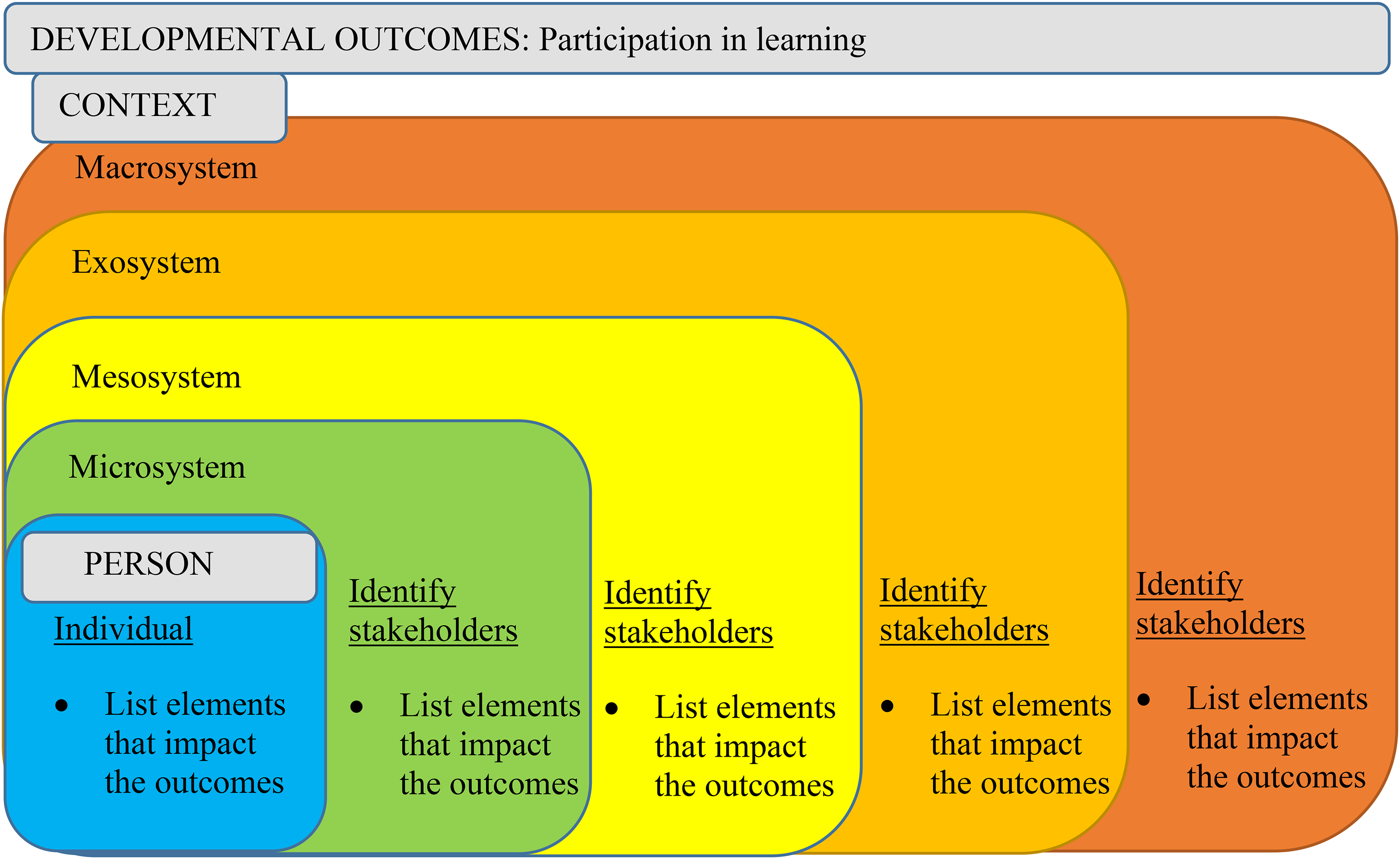
Elements Investigated in the Individualized Education Program, Using Bronfenbrenner's Systems Model.
Within the process of creating the IEPs, Bronfenbrenner's Systems Model was considered to be useful to identify stakeholders in the ecosystem. Specifically identified in the context of students with blindness and low vision were parents/carers and teachers (microsystem), visiting specialist vision teachers who communicated between home and school (mesosystem), school administration (ecosystem), and systems and processes (macrosystem). Stakeholders were then interviewed to identify elements which impacted the developmental outcomes of participation in learning for the student with blindness and low vision, as outlined in the methods below.
Method
Study Design
A qualitative case study approach was deemed the most suitable methodological approach to prioritize student voice in gathering information. Case studies have been commonly used in educational contexts to examine elements of a specific situation in relation to its applicability to other situations. According to Cohen et al. (2007), “case studies investigate and report the complex dynamic and unfolding interactions of events, human relationships and other factors in a unique instance” (p. 253). A case study approach, along with the BSM theoretical framework, enabled identification of the perspectives of participants and allowed for a greater understanding of the system than a single perspective (Creswell, 2013). Interviews were used to gather information about the student and suggested modifications that the student required to access information at the same level as their peers. The researcher did not preregister the research or analysis plan on an independent, institutional registry.
Participants
With approval from the University Human Research Ethics Committee (H18REA275, H20REA124) the two students central to this paper, with the pseudonyms of Chris and Jaime, were selected by purposeful sampling which “is widely used in qualitative research for the identification and selection of information-rich cases for the most effective use of limited resources” (Palinkas et al., 2015, p. 534). Gender-neutral pseudonyms and personal pronouns were selected to increase anonymity for the students throughout.
Students were initially recruited through blindness-specific organizations which sent invitations through email to potential participants. To be included in the study, students were required to be in secondary, mainstream education, diagnosed by a medical professional with blindness or low vision, and eligible for support within the school system. Additionally, the students also needed to have a current IEP and a parent and teacher willing to be interviewed about enablers to education for the individual student.
It was intended that selecting two students would enable the researcher to check the effectiveness of BSM in understanding individual contextual factors that influence participation in learning. For instance, while both students were Caucasian, in Year 11, and had low vision, Chris lived in a capital city and lost their vision aged 10, while Jamie resided in a rural area, and had had low vision since birth.
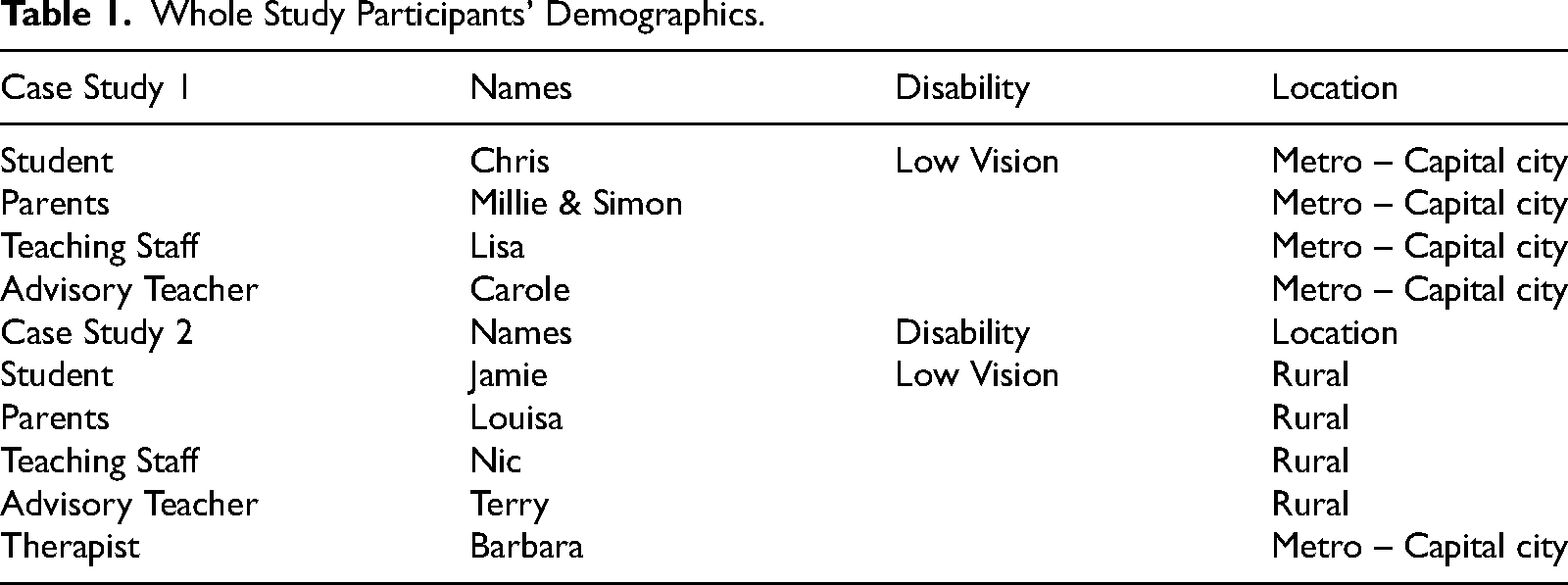
At the beginning of the study, students were shown the BSM (Figure 1) and were asked to identify stakeholders in each system who they believed influenced their learning. Chris identified their parents, Millie and Simon, along with their teacher and advisory teacher. The stakeholders considered in Jaime's case study were their mother, Louisa, a class teacher, an advisory teacher, and a therapist who supported assistive technology (as shown in Table 1).
Whole Study Participants’ Demographics.
Researcher
This research was conducted as part of the author's doctoral dissertation (Fanshawe, 2022). The researcher is an experienced special education teacher, academic, and parent of a child with an IEP; and has first-hand experience working with school teams and educators through IEP development. The researcher identifies as an English-speaking Caucasian.
Data Collection
Within this study, data were gathered from multiple stakeholders (N = 10) who represented different systems within the two students’ contexts. Participant information sheets were provided to all participants, outlining the process of data collection, sample interview questions, and the process to withdraw from the study. After reading the information, participants were asked to sign the consent forms. All students under 18 were required to have written parental consent to be involved in the research. Students and parents were interviewed together via Zoom, and interviews averaged approximately 30 min. Interviews were held with additional stakeholders individually by Zoom, which lasted for approximately 20 min per participant. All meetings were recorded and transcribed. The transcriptions were compared to the original recording by the researcher to check for accuracy and to highlight major themes.
Students were asked to share information about themselves, their eye condition, and any personal traits they believed were important for educators to know. Students were then asked open-ended questions to elicit responses about their learning needs such as: How do you best access curriculum materials? How do you feel best supported in the classroom? What are some things that make you feel included in the school environment? Clarifying questions were used when required to gather more precise data. In both interviews, parents also added additional information to the student's responses without being prompted.
Interviews with teachers, advisory staff, and the therapist ranged from 15 to 25 min. Questions in the interviews were asked to elicit information about the student (How does X learn best?), supports that enabled participation in learning for each student (What are things that support X to be included in the classroom and school environment?), and determine any barriers in the eco/mesosystems which could impact learning (What barriers do you have to providing support that are beyond your control?). The meetings were recorded and transcribed so that relevant elements that participants identified as impacting the outcomes could be highlighted for inclusion in the IEP. All recordings were deleted after the IEP was created, in line with ethical approval.
Analysis
The coding process was developed to ensure both rigorous analysis and centering of student and stakeholder voices. Using a deductive approach, data from interview transcriptions which was considered important for inclusion in the IEP was highlighted and inserted into the relevant system of the BSM, using the following coding principles:
Person: year level, school system, location, vision loss, academic, social and emotional information, assistive technology and self-advocacy skills; Microsystem: support from parents/carers, siblings, teachers, peers, consideration of classroom placement, additional time; Mesosystem: access to advisory teachers and therapists to support disability specific skills, communication between home and school; exosystem: support within the school, distribution of resources, teacher aide time, systems to support assistive technology; and macrosystem: inclusive policies within the school system, or state or national bodies that enable access to support and/or funding.
Based on Stake's (2005) Multiple Case Study Data Analysis approach, each case was coded and analyzed separately and then together, to look for cross-case assertions.
Once the IEP was completed with a list of elements which could impact outcomes, the draft IEP was shown to the students to ensure accuracy of meaning (Birt et al., 2016). When reviewing the draft IEP, Jamie deleted one commented made by their parent (“needs sibling to walk them to school”) but felt the (amended) document was an accurate reflection of their needs. After reading the IEP, Chris responded, “This is me.” The feedback from both students evidenced that the process of co-designing the IEP had produced a document that reflected their learning needs, and these are outlined in the following section of the manuscript.
Findings
Findings for the case study of Chris and Jaime are presented by factors listed by stakeholders, included in the IEP using BSM including the person's characteristics and context, proximal processes, and time.
Case Study 1: Chris
Person
Chris is in Year 11 and had central vision loss diagnosed at 10 years of age. They lived at home in the suburbs of a capital city with their parents, Millie and Simon, who were both educators, and a younger sibling. Chris said they purposely hid their learning needs in the classroom, so many teachers and students were not aware of their disability. Chris shared that it depended on how mentally strong they felt on a particular day, whether they were open to learning, “I go back and forth with acceptance and then depression, anger and denial. I’m never, never, fully okay with it.” Millie expressed that her child had “a lot of reluctance with school, with feeling self-conscious.” Simon reported that Chris preferred to complete the content at home with the assistance of Millie. High absences were also reported by Chris’ parents and teacher.
Internal characteristics which helped Chris cope with their disability were also identified by stakeholders. Chris’ teacher, Lisa, reported that Chris had developed skills to compensate for the vision loss both in the classroom and moving through the school, “I don't think [teachers] realise just how significant [their] vision impairment is because [they] have so many strategies [they] employ.” Since Chris acquired vision loss, they had spent time experimenting with technology to find what suited them. Chris preferred to use a Mac computer and iPhone to access the curriculum through magnification of digital files, as “most of my class access the content like this.” Chris reported being very confident in using the computer and touch typing, “I like to discover stuff myself. … I taught myself how to use it just by playing around and seeing what works and what I like.” According to Chris’ parents and advisory teacher, use of a screen reader would be beneficial, particularly in subjects with a lot of written content. A collation of personal characteristics from the interviews is recorded in Figure 2 for Chris.
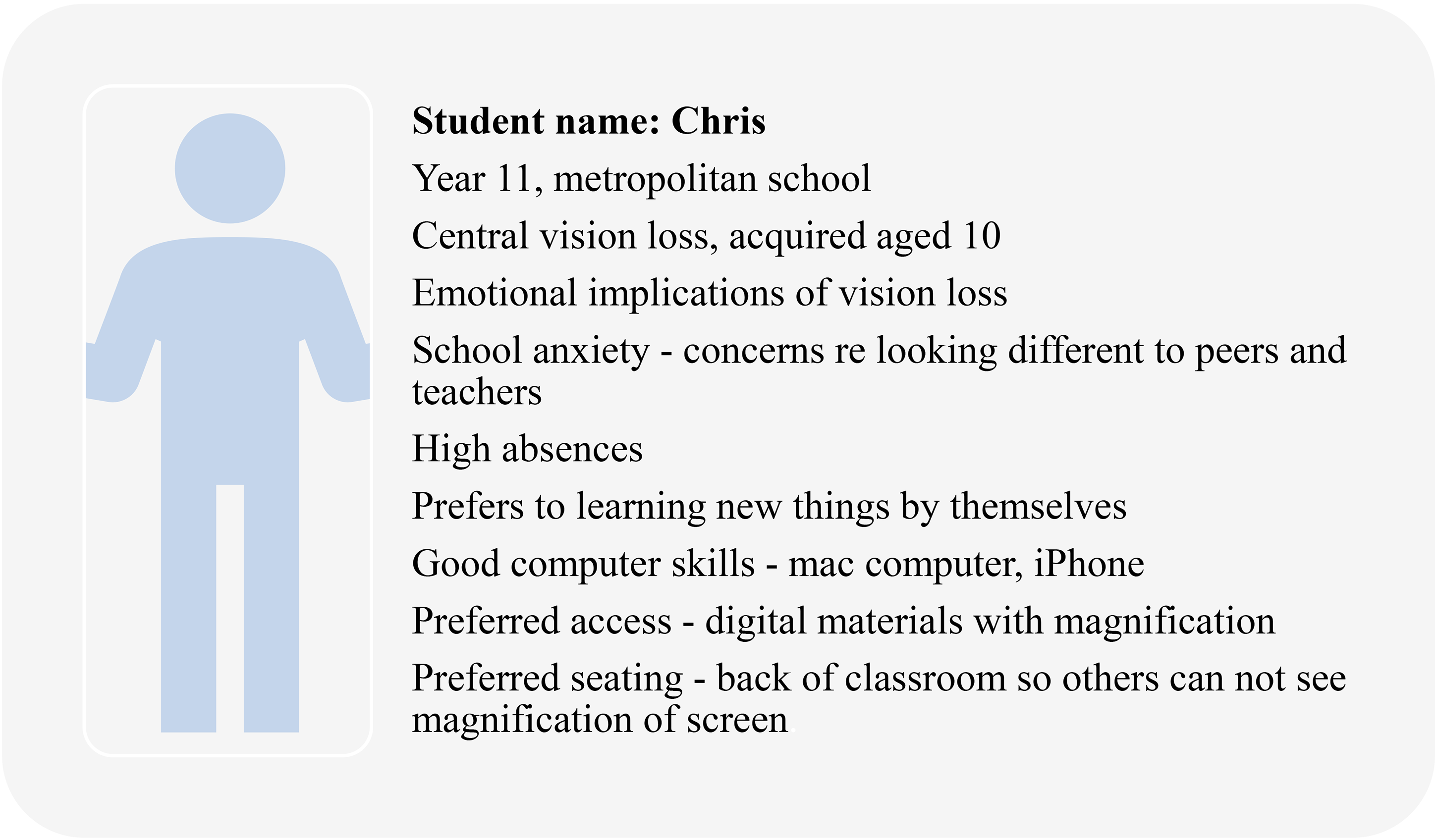
Case Study 1: Personal Characteristics – Chris.
Context
Support from the microsystem to access information was important for Chris, who reported receiving a lot of material which was not accessible. Chris’ mother Millie was identified as a support for learning by Chris, who needed her to help access written materials. Chris shared that they had a large amount of homework for their psychology subject, and their mother played a large role in their support: “I’d ask Mum to read this for me. Tell me what this is, because I can’t see it properly. Sometimes mum would read me big, long pages of stuff.” Millie also noted that her child received “a lot of material via email and [they are] kind of expected to troll through it sometimes because the teacher can’t adapt at all for their needs. … I need to support [them] a lot.” Simon confirmed that his wife had to provide additional support at home to support his child with blindness and low vision. Both parents reported that, as a result of inaccessibility, learning was more challenging for Chris, to which Simon reflected, “it's an interesting issue in the terms of autonomy.” Chris’ experience indicated that support in the home was an important element of the microsystem for success in learning; however, concerns were raised over autonomy of learning, when receiving such significant support.
In the classroom, adjustments included provision of material in a digital format, positioning of seating at the back of the classroom, and additional time provided to complete work. While Chris said they were “uncomfortable receiving modifications in the classroom,” provision of material on the school portal, or sent via email, meant that Chris could have access to the same materials as their peers, and could adjust documents electronically. Millie added “allowing Chris to work independently should be included as an adjustment for the student.” Additionally, Chris preferred to sit at the back of the class so their peers could not see their magnified screen. “I’m self-conscious of how much I have to zoom in. And I don’t really want people seeing that because people say stuff and I don’t need that in my day.” Chris expressed that extra time was provided to them, which was a reasonable adjustment. Chris explained that it took a lot longer than their peers to access the content through assistive technology, “I think one thing that's particularly tricky is that other students can skim back and read words, whereas I’d have to reread the whole paragraph again. So, you definitely need any time they’re going to give you.” Provision of digital materials to work independently, seating within the classroom, and extra time were important considerations for support within the classroom.
When considering the mesosystem, external trained supports were available in their metropolitan region, however Chris did not want to access them. Chris reported that having an advisory teacher made them feel different and they preferred to learn new skills independently. The advisory teacher, Carole, still provided advice for teaching Chris: “just get to know them and get to know how best to teach them.” Carole suggested that classroom teachers “modify the learning experiences, and then see what they’ve learned and then go from there like you would with all the sighted kids. Just this one doesn’t see or doesn’t see clearly.” While Carole was unable to support Chris directly, she still provided advice for the classroom teachers to prepare accessible materials for Chris in order to support learning.
Within the exosystem, allocation of financial resources within the school to support students with low vision was identified by Lisa as a factor that influenced access to learning. It was reported by Lisa and Millie that the school allocated teacher aide time to support Chris. As Chris did not want a teacher aide to sit beside them in class, the aide was utilized to prepare accessible digital materials. The school was also committed to ensuring access to assistive technology. Carole shared that, due to Chris’ desire to work independently, “I email Chris with the latest shortcuts or technology that may be useful. That allows [them] to explore the technology in their own time.” Carole did add that “one challenge I have at the moment … is to try and keep on top of that for my students, to keep a couple of steps ahead of in the technology.” The school being flexible in how resources were used to support Chris was identified as an element of success in learning.
Within the Macrosystem, Lisa reported that the administration was committed to inclusive learning. Chris attended a large public school, with systemic policies to support students with disabilities. In addition, the school had a support unit with specialist teachers and teacher aides, and professional learning was offered by the school to develop teachers’ knowledge of inclusion.
Development of the IEP
The draft IEP was developed, which identified elements of the person and context that impacted participation in learning for Chris (Figure 3).
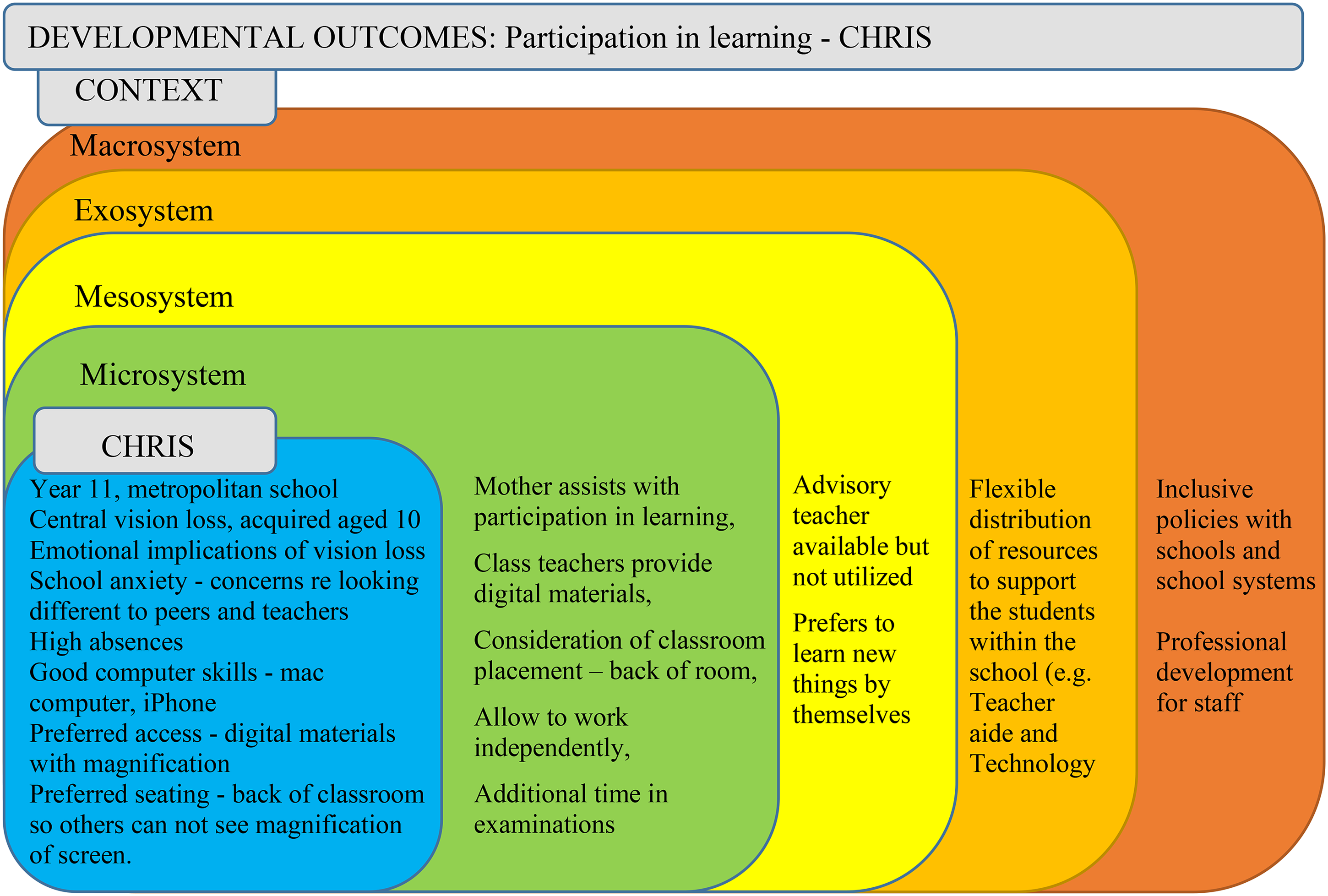
Case Study 1: Individualized Education Program – Chris.
Case Study 2: Jaime
Person
Jaime is in Year 11 and had chosen psychology and math as subjects in secondary, hoping to attend university to study. They lived at home with their mother, Louisa, and younger sibling in a rural town. Jaime used a cane for mobility. Louisa, who had two children with blindness and low vision related, “both are at the same school and have different experiences.” She reported “both my [children] are very different in their own learning and their needs in particular.” However, Louisa said English and physical education had not been accessible for her child; however, other teachers had instinctively made adjustments to enable access. She explained “the teacher just read everything he's put on the board. This is the first time … that someone's been inclusive, that she really hasn’t had to worry about any extra materials being sent to [them].” Jaime shared that something they had appreciated as an enabler to learning was when the advisory teacher worked with them on being confident communicating with friends and teachers. Louisa also mentioned that “Jamie stood up and did a presentation on themselves and what they need to the teachers at the beginning of the year.” Terry, the advisory teacher, discussed how it was important that students with low vision were “confident to interact with other people.” To do this, he suggested that students needed to develop social skills because the “interaction and independence that comes from socialising makes it a much easier for them to integrate in the class environment.” Louisa reported that she thought mainstream education in a rural school had been a very positive experience for Jaime, as it enabled them to make many friends who had been together in the school for 4 years. All three participants indicated that Jamie had a good social circle and was well liked by their peers.
Jaime informed us that they preferred to use magnification and screen readers instead of braille, except for braille music. Jaime described psychology as having a significant content of reading which they accessed through a laptop through the JAWS screen reader. Jaime stated that they used an iPad with an external keyboard or an Apple pen to input notes in class. They received extra time in exams and assignments, and all class teachers appeared to be quick to make modifications by reading out what they were writing on the board. Jaime said they felt “pretty confident” with technology and had been using technology for years, so they were used to it. A collation of personal characteristics from the interviews is recorded in Figure 4 for Jamie.
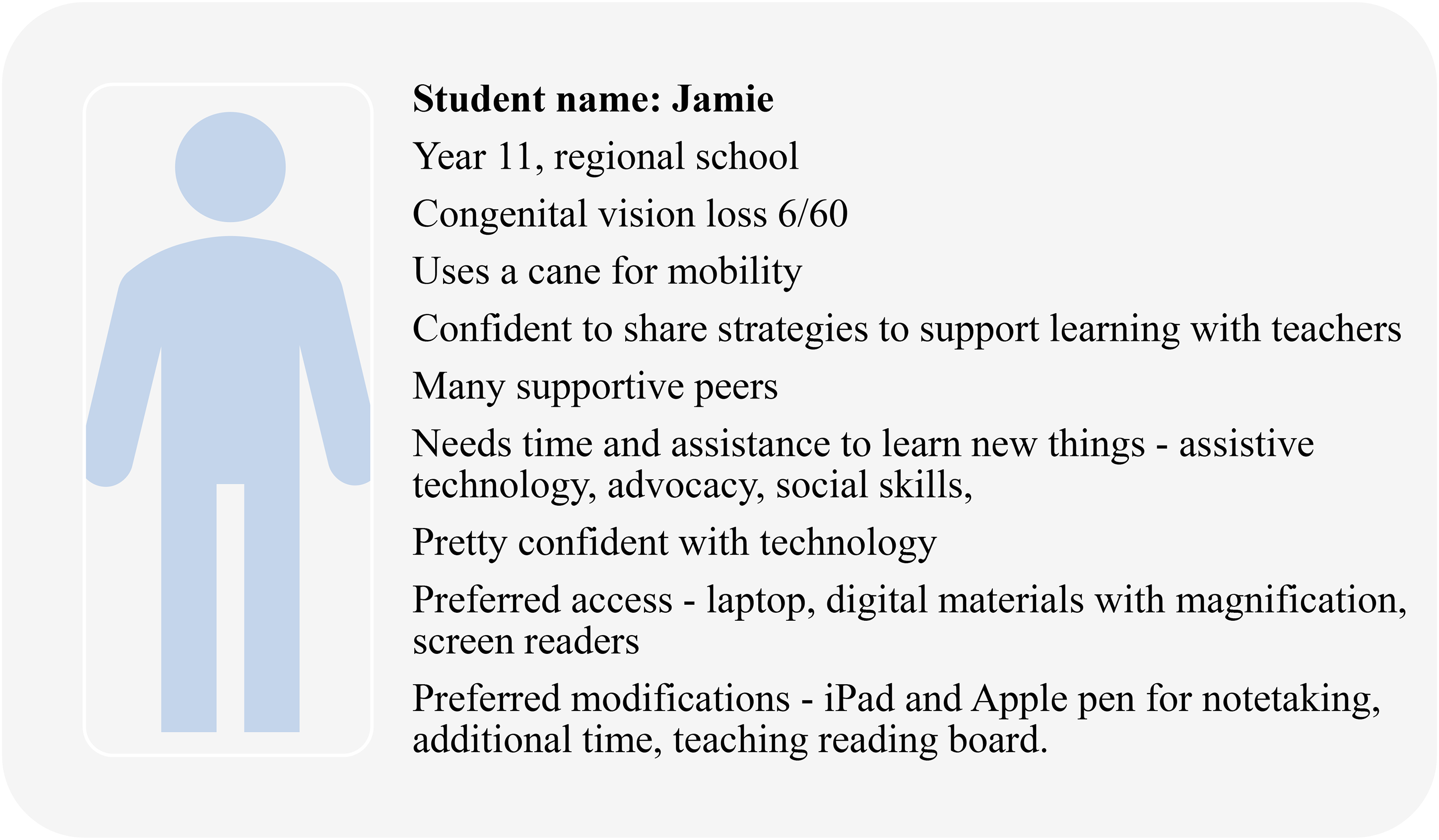
Case Study 2: Personal Characteristics – Jaime.
Context
Within the microsystem, Nic (teacher) said “the family's levels of awareness and knowledge in how they supported their adolescent to get ready for life beyond school” was an element of success for Jaime in their schooling. As Jaime had had low vision since birth, Louisa reported that she had tried to ensure that Jaime completed all their schoolwork independently. This advice had been given by advisory teacher, Terry, who communicated that a dependency on the teacher or parent, was not sustainable. He maintained that if “things aren’t done independently and are done for them [students], by the time it comes to tertiary, you have a scenario where they expect others to do things for them.” Therefore, Louisa had tried to create independence for Jaime within the home, both with homework and household chores.
Independence with study within schools was also an important goal for Louisa: “Students should be able to be given support, in the beginning, to become more independent in learning [assistive technology] skills and learning to be confident.” Louisa wanted Jamie to be able “troubleshoot and manage problems with technology” as a goal for Jamie's IEP. Jaime shared with teachers their preferred format for classroom materials and indicated that teachers would additionally ask if materials were suitable. According to Nic, the reduced time spent with students in secondary school posed a barrier to supporting students’ learning. He reported that “teachers don’t have the same level of relationship with the students as in primary school, because they see so many students.” However, despite Nic feeling that adjustments were not necessarily made, Jaime shared, “they’ll ask if I need anything extra reformatted. They will check with me if I can read the documents and what they need to do.” Jaime also noted the provision of additional supports within the school to assist with access to learning, “if the teacher actually made the digital copy that I can access, then they’ll send it to me. But if it's inaccessible, the team at my school has to reformat it for me to access.” The importance of independence and agency was identified by stakeholders as an important goal for Jaime; however, support was available when required.
Within the mesosystem, Jamie reported that they received regular access to a visiting teacher, and weekly lessons with an Assistive Technology specialist to learn the necessary skills to access learning. Access to external supports was beneficial for Jaime, who reported that the advisory teacher supported their classroom teachers in developing knowledge about blindness and low vision, and made modifications necessary to access the academic curriculum. Jaime shared that they also received individual support from the advisory teacher, who helped them to make their modifications and develop the confidence to advocate to their teachers for their preferred accessibility. Jaime had orientation and mobility training, which taught them skills to navigate the environment. They had also been working with an external therapist, who was based in a metro area, via Zoom with assistive technology lessons, to gain technology skills, since the age of 6. Jaime said “it takes a long time to learn new skills. But if you have got those skills already, and you’re really competent in them, then that is useful.” Jamie valued the advisory teacher and therapists and identified these supports as essential for success in schooling.
Within the exosystem, Barbara noted concerns for students living in regional and rural areas. She explained, “we are really short of staffing and resources in [rural areas] for advisory teachers, and it is the same for therapists.” She expressed concern that, due to staffing shortages, “we don’t really have high expectations even of appointing new or beginning advisory teachers.” She continued that this impacted service delivery for students in rural areas, because it was “rural schools who really need advisory teachers and therapists to support the development of knowledge for classroom teachers … the population [of classroom teachers] that is actually there in those remote schools or regional schools are transient too.” Despite Barbara's concerns, Jaime was able to access external supports both at school and online via videoconferencing.
Jaime's school had a catholic ethos and clear dedication to inclusion, which was an element for success in the macrosystem. Despite the commitment to equity in learning for students with disabilities, being in a rural and remote area meant that access to trained and experienced external advisory teachers/therapists within the support team was more limited. Barbara also expressed that there can be a “lack of good understanding at the ground level that required schools to access educators [advisory teachers] and also external agencies [therapists] as well.” Barbara shared that their role included providing expert advice in schools to support students with blindness and low vision to access learning, but also reported variability in how schools utilized their advice.
Development of the IEP
The draft IEP was developed, which identified elements of the person and context which impacted participation in learning for Jaimie (Figure 5).
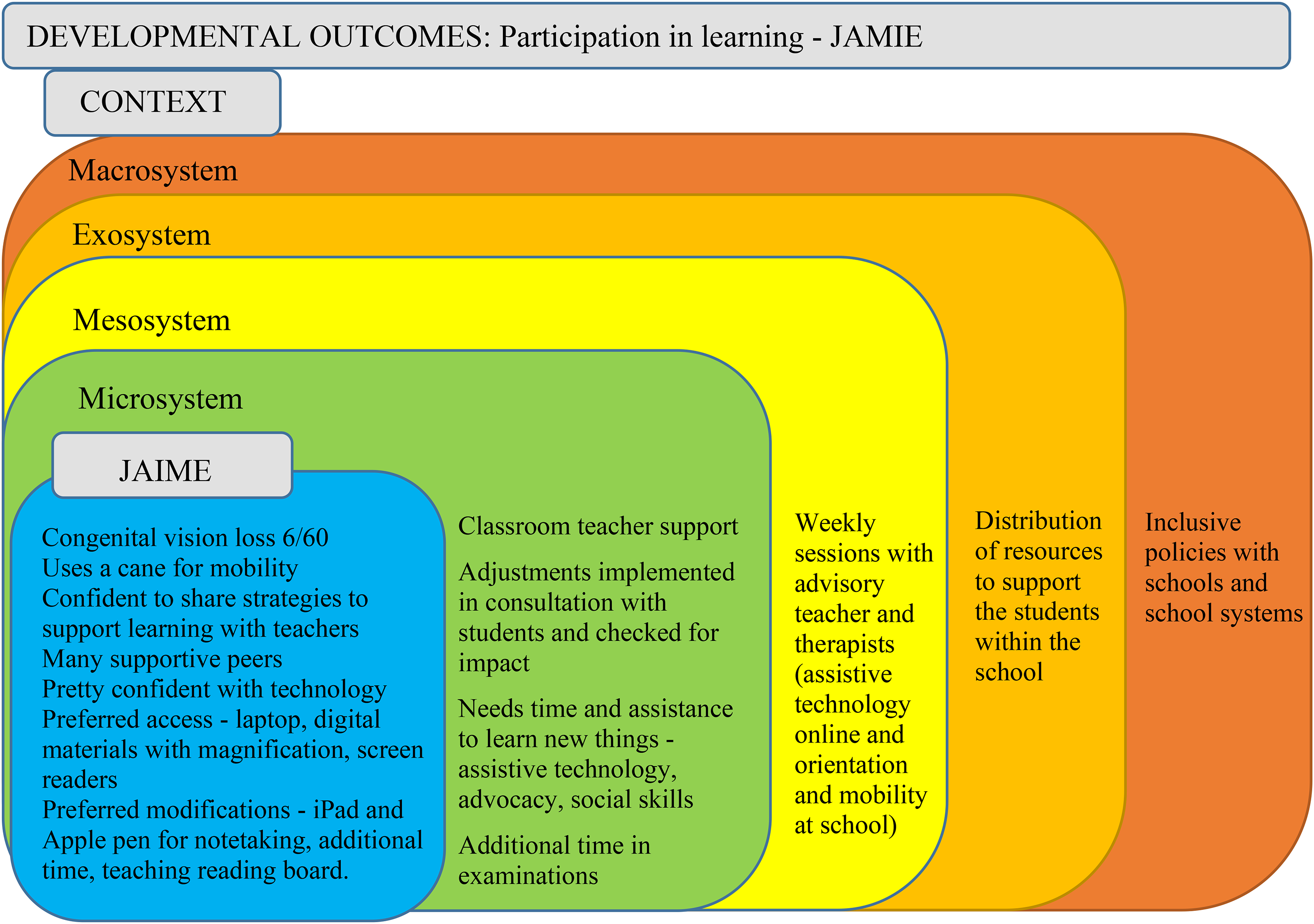
Case Study 2: Individualized Education Program – Jaime.
Discussion
Bronfenbrenner's System Model was carefully selected to examine the holistic ecosystem of the case studies of two students within their respective ecosystems, and to develop IEPs with respect to the personal needs of the students. This section discusses the findings of the two case studies in regard to the research question: Does co-designing IEPs with students and pertinent stakeholders using Bronfenbrenner's Systems Model result in a holistic understanding of personal and contextual factors influencing participation in learning for students with disabilities?
Use of the Bioecological Systems Model to Develop Individualized Education Program
BSM was used in this study to examine each element of the ecosystem and identify factors that impacted participation in learning for two students with a disability, specifically, low vision. Personalized information about the students was considered to be essential to be documented in the IEP to ensure modifications could be aligned to current student goals (Fu et al., 2020). It is acknowledged that many students with disability are able to achieve academic standards at the same level as their peers, if adjustments are made to curriculum and pedagogy to enable equitable access (Fanshawe et al., 2024). The process of using the RBM to collect personalized information about the student from multiple stakeholders was an important inclusion in the IEP to ensure access to education at the same level as their peers.
It has previously been identified that if students have agency in their learning they are more likely to independently participate in the educational context (Fanshawe et al., 2024). Empowering students’ participation using BSM in the IEP process enabled the student to have voice about how they liked to learn and what factors in their environment need to be supported to enable their inclusion within the school context. Both students were able to share valuable information about their preferred technology to access information. Chris shared information about using similar technology to their peers and preferring to sit at the back of the classroom so other students could not identify their disability. Jaime shared how they preferred to be able to talk to teachers about their adjustments and check in with Jamie to ensure all technology was working well and they were able to access curriculum materials. These findings indicate that the students had very different needs in relation to how their adjustments were made, and support Sanderson and colleagues' (2022) assertions about the importance of student voice to develop meaningful IEPs. The students being central in the process captured information from the students to co-design the IEP, and their role changed from no or token participation in the process to having agency in their learning (Kahne et al., 2022).
This study identified that a wide range of stakeholders were identified by the students who supported them within the school. Including the family in gathering information, rather than just to sign the IEP, was a significant benefit of using the BSM. As reported by Bonnor et al. (2021) the role of the parent in this case study was significant in the educational context. Chris’ mother, Millie, was identified as playing a large role in their senior secondary education and therefore played a central role in gathering information about Chris to support development of future goals. Classroom teachers, advisory teachers, and therapists were able to provide information to support the student. Indications of collaboration and communication were evident within the ecosystem of the two students, and identified personalized needs for the individual student. Chris and Jaime may seem very similar on an IEP; however, when using this model, it was identified how students like to receive support. Jaime was prepared to share with their teachers how they were best supported but, in contrast, Chris wanted to work independently as they did not want to look different to their peers. Even though Chris did not want classroom teachers and external supports to make adjustments known within the classroom, the act of providing digital work to afford Chris the opportunity to access the curriculum themselves, was an adjustment in itself.
Differences in geographical contexts were noted in this study, with Chris located in a metropolitan school and Jamie in a rural area. Barbara identified that there were difficulties in finding trained and qualified advisory teachers in rural areas to support students and assist classroom teachers. This aligned with the work of Hott et al. (2021) who identified personnel shortages, due to attracting and retaining staff in rural areas, which is concerning as geographical isolation could impede access to services. However, Jamie's experiences were different to this. Jamie, their mother, and their teachers all reported good access to technology and external supports in the rural area. This included Jamie accessing services that were unavailable in their local area, through Zoom. Findings for students with blindness and low vision during COVID-19 by Cain et al. (2025) found that students who had good knowledge and skills with technology, along with external supports of advisory teachers and therapists via Zoom, were able to access learning. It could be proposed that Jamie's technology skills and personal resources of confidence enabled them to access learning, despite geographical location.
Limitations and Future Implications
There are limitations that have been identified in this study. The first is related to the small sample size. As noted, these two students were chosen due to similar characteristics to examine the usefulness of the BSM to map personalized learning for these students to be used in a school. Despite their similar characteristics, the process showed how the students had different needs and different ways of learning. However, the small case study has not allowed me to determine the suitability of the model for differentiation by race, culture, and/or gender. The BSM offers the potential for others to examine the generalization of this research in their own contexts.
The second limitation was the time taken to interview each stakeholder. The length of each interview was substantial (20 min) which could be a practical barrier for schools in implementing this model. As financial and time constraints are one of the reasons Widmark et al. (2011) believe that schools do not involve stakeholders in co-designing the IEP, it is important to consider how this process could be streamlined—for example, by gathering these data during an initial IEP meeting, and then going forward to create the goals for the students. However, it is also proposed that the time invested in ensuring a person-centered approach will greatly benefit all stakeholders when implementing the IEP.
Third, decisions about funding internal and external supports are usually made by administrators in the school, and were not included in this study. However, their input into the co-design of the IEP would be useful, first for the school team to understand the needs of the students, and second for the support team to understand the constraints within the school to access resources to support the student.
Additionally, methodological limitations included the coding and data analysis being undertaken by one researcher, which introduced bias. In future studies, double coding with independent coders would improve the consistency and reliability of findings.
It is recommended that case managers could implement the use of BSM to create IEPs, to identify if BSM could be used in a similar way to examine the ecosystem of students on their caseload, in order to provide a more personalized approach to learning and forefront the student and their stakeholders in the co-design process. Further research using the BSM is suggested to guide holistic understanding of students with disabilities in mainstream schools, both within Australia and internationally, in order to gain a better understanding of the intersecting contextual factors that enable access to learning.
Conclusion
This study aimed to explore the used of BSM as a tool to co-design an IEP for students with disability, and to include pertinent stakeholders who could identify factors which impact participation in learning. The BSM was used to map the ecosystem for two students, Chris and Jaime. The study used semi-structured interviews to gather information from the students about their personal characteristics and also their environmental contexts, which enabled student voice and agency for their learning. The tool also enabled identification of other stakeholders in the ecosystem, who could contribute and collaborate to ensure participation in learning for each student. The tool allowed a deep look into students’ requirements from their own positionality and that of other stakeholders who directly, or indirectly, impact learning. For these two case studies, the BSM was able to be used to create a holistic understanding of personal and contextual factors influencing participation in learning for students with disabilities.
Footnotes
Declaration of Conflicting Interests
The author declared no potential conflicts of interest with respect to the research, authorship, and/or publication of this article.
Funding
The author received no financial support for the research, authorship, and/or publication of this article.
