



Abstract
Although climate change understanding and concern have grown in recent years among the U.S. public, Americans remain divided about climate action. This paradox reflects the barriers in translating concern to behavior and underscores a need to explore the cognitive mechanisms inhibiting climate action. To this end, we examined how individuals apply psychological techniques, namely denial of responsibility, denial of injury, denial of victim, condemning the condemner, and appealing to higher loyalties, to justify climate inaction and the influence of these techniques on norm activation and climate action support. Using a nationally representative U.S. sample (n = 1,004), we observed that neutralization techniques were negatively associated with norm activation and support for climate change policies. Our findings provide evidence of neutralization as a mechanism by which individuals justify climate inaction despite growing concern. These findings have implications for developing climate communications and interventions that may overcome psychological barriers to climate inaction.
Introduction
Concern for climate change has grown in the past decade among Americans. In 2010, only 37% of adults in the United States said climate change is “a very serious problem” (Pew Research Center, 2020). This concern grew to 45% in 2015 and 53% in 2020 and is mirrored in the increase in belief among American adults that “global climate change is a major threat to the country” across the same period (Tyson et al., 2023, Section 5). These trends demonstrate a growing acceptance (i.e., norm) of climate concern. At the same time, the American public has been—and remains—sharply divided across political party affiliation and other social identities (e.g., generation, racial/ethnic group) on the causes of climate change and specific actions to address it (Rouse & Ross, 2018; Tyson et al., 2023). This paradox highlights that there is a disconnect between climate change concern and action.
A psychological approach to climate action positions it as influenced by norms or accepted principles about how individuals should (or should not) behave and the consequences of the violation of these rules (Cialdini et al., 1991; Thøgersen, 2006). Behavior, therefore, is shaped by social norms—how others in a group behave and what behavior is considered acceptable (Cialdini et al., 1991; Cole et al., 2022; Nilsson et al., 2004; Steg et al., 2005)—and personal norms—internal self-expectations of behavior (Nilsson et al., 2004; Schwartz, 1977). When activated or triggered as motivation, personal norms strongly predict behavioral intention (Schwartz, 1977; Stern et al., 1999). Studies have found that when norms are internalized as personal norms, they can influence behavior above and beyond the influence of social norms (Bertoldo & Castro, 2016; Kácha & van der Linden, 2021). However, neutralizing these norms, by rationalizing their violation, impedes norm activation and results in behavior that is inconsistent with salient social and personal norms (Matza & Sykes, 1957; Schwartz, 1977).
While psychology has explored multiple barriers to climate action, from limited knowledge and lack of self-efficacy to ideological worldviews that are not supportive of the environment and beliefs that discredit experts (Gifford, 2011), relatively little attention has focused on norm neutralization and its associated consequences in support of climate action policy. We addressed this gap by exploring how norm-neutralizing techniques influence the activation of climate norms and their resulting impact on support for collective climate action, specifically support for public policies aimed at addressing climate change. By focusing on support for climate policies, we expanded the investigation of barriers to climate action from the perspective of individuals and households as consumers to citizens who can influence policies at various levels (Nielsen et al., 2021). Our findings improve the understanding of collective climate action as a result of norm neutralization. With this knowledge, we can develop behavioral interventions and communication that promote the translation of climate change concerns into collective action toward mitigating climate issues.
Literature Review
Norm Activation Model
The norm activation model (NAM) was initially proposed as a model of altruistic behavior (Schwartz, 1977). Altruism refers to actions that are intended to benefit others, regardless of material or social outcomes for the actor (Schwartz & Howard, 1984). Unlike the more general notion of prosocial behavior that focuses on the outcomes of action, the concept of altruism points to motivation or the intentions that underlie action. Altruistic behavior, therefore, is motivated by concern for the welfare of others or the desire to affirm one’s own moral values (Schwartz & Howard, 1981). The NAM has been consistently used over the past 50 years to explain a broad range of altruistic behaviors, including environmental actions (e.g., De Groot & Steg, 2009; Onwezen et al., 2013). The NAM proposes that personal norms about a specific behavior are activated when an individual is aware of the consequences of engaging (or not) in a behavior and ascribes personal responsibility for those consequences (De Groot & Steg, 2009; Schwartz, 1977).
Personal norms are an internalized moral obligation to act in a given way (Schwartz, 1977). Personal norms are direct antecedents of behavior and drive behavior through internal consequences—such as self-esteem, guilt, and pride—for conforming with or violating internalized obligations (Onwezen et al., 2013; Schwartz, 1977). Personal norms “arise or are learned from shared expectations in social interaction” (Schwartz, 1977, p. 231). As such, Thøgersen (2006) suggests that personal norms are, in part, an internalization of salient social norms. A meta-analysis of 46 empirical studies on determinants of pro-environmental behavior conducted by Bamberg and Möser (2007) found support for the social origins of personal moral norms.
Addressing pressing environmental issues like climate change requires selfless action, motivated by concern for the welfare of others, and larger-scale influence to create significant environmental change. Collective climate action can be considered an altruistic behavior fitting the predictive purpose of the NAM (Bouman et al., 2018; Stern, 1992). Empirical studies have applied the NAM to understand environmental issues and decision-making. For example, van der Werff and Steg (2015) found that a generalized behavioral NAM predicted specific energy-saving behaviors. Others have augmented the NAM with social-psychological variables to explain environmental behavior. Landon et al. (2017) used the NAM with community attachment to explore residential outdoor water use. Stern et al. (1999) combined the NAM, the New Environmental Paradigm, and personal values theory to create a chain of variables that predicted proenvironmental behaviors, known as the value-belief-norm theory. These studies support using and augmenting the NAM to understand environmental issues, norms, and intentions.
According to Schwartz’s (1977) original conceptualization of the NAM, “feelings of moral obligation may be neutralized prior to overt action” (p. 230), suggesting there are conditions where personal norms are not activated, and inaction is produced. For Schwartz, inaction occurred when individuals believed their actions were not relevant or appropriate to address the issue. Other scholars have suggested that additional conditions may degrade norm activation and produce inaction, such as when the action is too difficult or too costly. For example, He and Zhan (2018) found that the perceived cost and complexity moderated the effect of personal norms on intention to act. When the perceived cost and complexity of adopting an electric vehicle increased, the effect of personal norms on intent declined (He & Zhan, 2018). Cost and difficulty are two examples of variables that diminish personal norms’ effect on intention; we propose that psychological mechanisms that temporarily suspend normative influences, justify, and rationalize inaction are also prominent barriers to norm activation that have been overlooked in the current climate psychology literature.
Norm Neutralization
Neutralization theory suggests that individuals use psychological “techniques” to justify behavior that violates recognized norms (Matza & Sykes, 1957). Individuals recognize socially acceptable and normative behaviors and use psychological techniques to rationalize violating those norms to release themselves of the associated social or internal consequences of norm violation (Kaptein & Van Helvoort, 2019). Matza and Sykes (1957) note that where other models of delinquency suggest a post-action justification, neutralization techniques can be utilized before action to justify the act, aligning with the neutralization of norm activation proposed by Schwartz (1977).
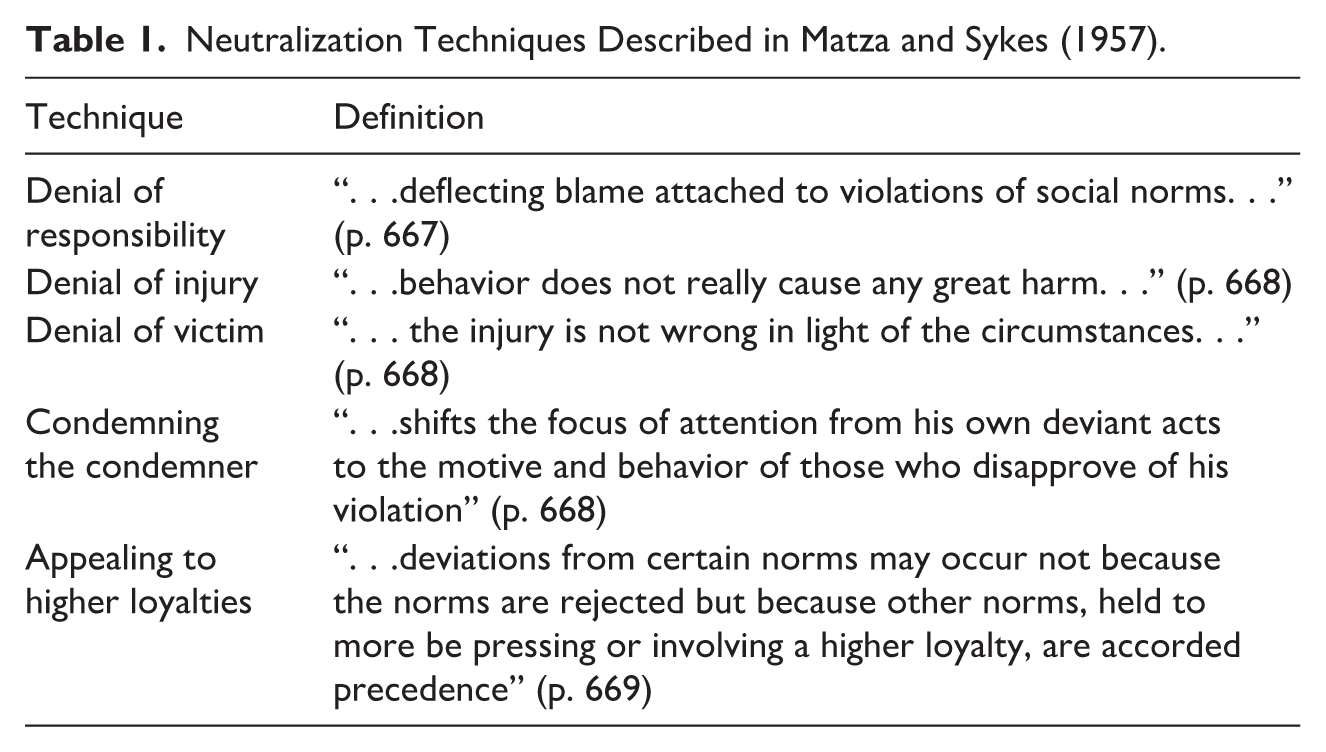
The goal of neutralization is to reduce the cognitive dissonance between personal behavior and recognized norms by denying personal responsibility for the potential detrimental impacts of one’s actions, distorting or disregarding the severity of the impacts, or devaluing those affected (Gifford, 2011; Maruna & Copes, 2005). In the context of climate change action, neutralization techniques can be used to deny the responsibility for and misconstrue the impacts of humans on the climate and climate change on society, in turn justifying climate inaction and misalignment between personal norms and social norms (Bhatia et al., 2021). Denying the existence of and responsibility for the consequences of climate change through adopting neutralizing beliefs may reduce engagement in addressing climate change. Matza and Sykes (1957) suggested five techniques by which individuals can neutralize normative influences and culpability of their actions and rationalize norm-violating behavior: denial of responsibility, denial of injury, denial of victim, condemning the condemner, and appealing to higher loyalties (Table 1). Although neutralization techniques are separate, McKie (2019) suggests, “. . .that techniques are not treated as mutually exclusive. . .” (p. 304). Instead, techniques are combined in practice to create multifaceted arguments to justify or rationalize inaction.
Neutralization Techniques Described in Matza and Sykes (1957).
Denial of Responsibility
When individuals perceive themselves as having a responsibility to engage (or not engage) in action, personal norms that support behavioral decision-making are activated (Schwartz, 1999). Denying responsibility reduces the culpability of an action (Matza & Sykes, 1957; Rogers & Buffalo, 1974). Individuals feel they cannot be judged on actions for which they are not responsible. Denial of responsibility shifts the responsibility for the action away from the actor (Matza & Sykes, 1957). In the context of climate change, one example of the denial of responsibility can be observed through the notion that changes in the climate are due to natural forces (Leviston & Walker, 2012). This can reduce the responsibility of individuals and humans broadly for the changing climate; thus, we are not culpable for any adverse consequences of climate change. While the climate does exhibit natural changes, the scale and pace of climate change since the Industrial Revolution have outpaced natural changes, suggesting other factors are responsible for changes, namely human emissions (Intergovernmental Panel on Climate Change [IPCC], 2022).
Denial of Injury
Neutralization theory proposes that individuals can justify engaging in an action by minimizing the harm or injury caused by the action (Siponen & Vance, 2010). Within the context of climate change, this is manifested in the climate change countermovement, where individuals deny the existence of harm or impact of climate change, proclaim the harms are overstated and exaggerated, or suggest that the science behind climate change is flawed and does not exist (McKie, 2019). Thompson and Harred (1992) furthered the notion of denial of injury by indicating that individuals can justify norm-violating actions by perceiving the violation as beneficial. Some climate skeptics suggest climate change will have overall benefits, such as enhanced crop production due to additional atmospheric carbon dioxide (Doll et al., 2017). Therefore, if climate change has benefits, there is no pressing need to address climate change, effectively justifying climate inaction. While some production areas are projected to receive net benefits, mainly in the northern latitudes (e.g., Shrestha et al., 2015), these benefits do not outweigh climate change’s overwhelming negative global impact (IPCC, 2022).
Denial of Victim
In the initial conceptualization of norm neutralization, victim denial occurs when impacted individuals are considered to be deserving of injury; “. . . a form of rightful retaliation or punishment” (Matza & Sykes, 1957, p. 668). However, this original conceptualization focuses on vengeance and is less applicable and uncommon within climate change countermovement (McKie, 2019). Instead, conceptualizing victim denial as a lack of victim awareness because the victim is unknown or abstract, as suggested by Maruna and Copes (2005), more closely aligns with climate change denial and is present in the climate change countermovement (McKie, 2019). Climate change is a psychologically distant concept for many due to the uncertainty, timing, and spatial distribution of future impacts (McDonald et al., 2015). While significant work has been conducted to elucidate the attribution of present and future impacts to climate change, impacts are inequitably distributed spatially and temporally on developing nationals, which contribute the least to climate change, and future generations, which may lead to greater psychological distance (Davidson, 2008; Hanstad & Prosterman, 2014). Although the impact on developing nations and future generations is becoming increasingly recognized in society (e.g., Abnett et al., 2024; Gelles & Baker, 2023), the psychological distance of climate change and the longitudinal and delayed impacts are touchstones for denying victimhood (McKie, 2019).
Condemning the Condemner
At its foundation, condemning the condemner shifts focus from an individual’s actions to the actions of another party (Matza & Sykes, 1957). For example, highlighting that other countries are emitting more greenhouse gases and, therefore, U.S. residents should refrain from buying into climate change policy aimed at lowering emissions. Implying that media, scientists, and politicians misrepresent research moves the focus of climate discourse from addressing climate change to defending science (McKie, 2019).
Appealing to Higher Loyalties
Given that individuals have multiple identities and group attachments (Garcia-Rios et al., 2019; Tajfel, 1974), they can reduce the effect of norm-violation by placing one of these identities or group attachments as more important than the norm-violation. For instance, the framing of climate change being detrimental to economic growth and development situates economic development and growth in competition to factors that might mitigate climate change. These considerations force individuals to choose between addressing climate change or supporting economic growth. Climate skeptics have largely embraced the economic growth argument. An example of appealing to higher loyalties was demonstrated by former U.S. President Trump when he indicated that “it depends on how much. It also depends on how much it will cost our companies” when discussing how to address climate change (New York Times, 2016). These statements appeal to economic and capitalist loyalties by pitting economic prosperity and consumerism against environmental issues.
Neutralization and Climate Change
Within the climate change context, scholars have examined a range of psychological mechanisms that explain disconnects between behavior and social or moral norms. Motivated reasoning, a prominent mechanism in climate psychology, functions by altering how individuals process and interpret information in ways that support preexisting beliefs (Kunda, 1990). Saunders (2017), for instance, found evidence of partisan-related motivated reasoning in interpreting climate change communications in a messaging experiment, where partisan frames outweigh trust in beliefs about climate change being a hoax. Other explanations focus on the moral self-regulation process. Moral disengagement, as described by Bandura (1990), involves reconstructing the issue, behavior, and impacts in a manner that undermines self-regulatory systems and allows individuals to act in ways that conflict with their values. In the context of climate change, a content analysis of online comments found that moral disengagement techniques, such as distortion of consequences, were prevalent in responses to newspaper articles about climate change (Woods et al., 2018). Though less applied in the climate context, frameworks like moral decoupling explain how individuals can maintain support for people or institutions despite acknowledging previous unethical actions by separating moral judgement from judgements of competence (Bhattacharjee et al., 2013).
Norm neutralization offers a related but distinct perspective that emphasizes how individuals can momentarily justify specific norm-violating actions while still recognizing the existence of the norm. Unlike moral disengagement, which often involves restructuring moral standards (Bandura, 1990), norm neutralization does not dismiss the norm but diminishes the normative influence in a given situation where the norm is salient or threatening through the application of neutralization techniques (Kaptein & Van Helvoort, 2019). This allows individuals to preserve their sense of moral integrity while acting, or not, as is the case with climate inaction, in ways that might otherwise create dissonance. Motivated reasoning, by contrast, suggests that individuals protect themselves from this dissonance through biased information interpretation (Kunda, 1990). Moral decoupling differs further in that it typically concerns evaluations of others’ actions (Bhattacharjee et al., 2013), whereas norm neutralization is self-applied to justify norm violations without fully rejecting them (Kaptein & Van Helvoort, 2019; Matza & Sykes, 1957). In this way, norm neutralization represents a targeted and situational mechanism for understanding how people reconcile social and moral norms with their own norm-violating behaviors. Recognizing this conceptual distinctiveness raises questions about how norm neutralization functions not only as a psychological mechanism, but also as a barrier to engagement in collective climate change.
Despite the conceptual relevance, the role of norm neutralization in shaping climate (in)action remains underexplored. Evidence has suggested that neutralization techniques are prominent in the national climate discourse. For example, McKie (2019) qualitatively documented the existence of the five neutralization techniques proposed by Matza and Sykes (1957) in the climate change countermovement at the organizational level. However, since addressing climate change will require collective buy-in and action, there is a need to understand how these techniques influence support for collective climate policy at the individual level. Research on neutralization theory advocates for going beyond describing techniques and exploring the implications of neutralization within the decision-making process (Maruna & Copes, 2005). Yet, there is still limited research on operationalizing norm neutralization acceptance for personal climate change norms at the individual level, leading to little research on implications for climate change decision-making.
Hypothesized Model
As this literature has illustrated, norm neutralization is a mechanism by which individuals can justify violations of social moral norms, which, when internalized, become personal norms (Cialdini & Jacobson, 2021; Matza & Sykes, 1957). Neutralization has been found to be prevalent in climate denial communications and climate change countermovement (McKie, 2019). We propose that norm neutralization may also be able to explain the lack of collective climate action by undermining personal norm activation through distorting or disregarding the severity of and denying culpability for climate impacts. We hypothesized that the more an individual accepted norm neutralization, the less likely they were to internalize a climate personal norm (H1), the less aware they were of the consequences of climate change (H2), and the less responsibility they would feel for addressing climate change (H3). In accordance with the NAM, we hypothesized that awareness of consequences would positively influence ascription of responsibility (H4) and these two constructs would be positively associated with personal climate norms (H5 and H6). Personal climate norms were hypothesized to positively influence support for four collective actions (H7a, H7b, H7c, H7d) and norm neutralization was hypothesized to negatively influence support for collective actions (H8a, H8b, H8c, H8d). Finally, we hypothesized that norm neutralization would exert a negative indirect effect on support for the four collective actions (H9a, H9b, H9c, H9d). All hypothesized direct effects are presented in Figure 1.
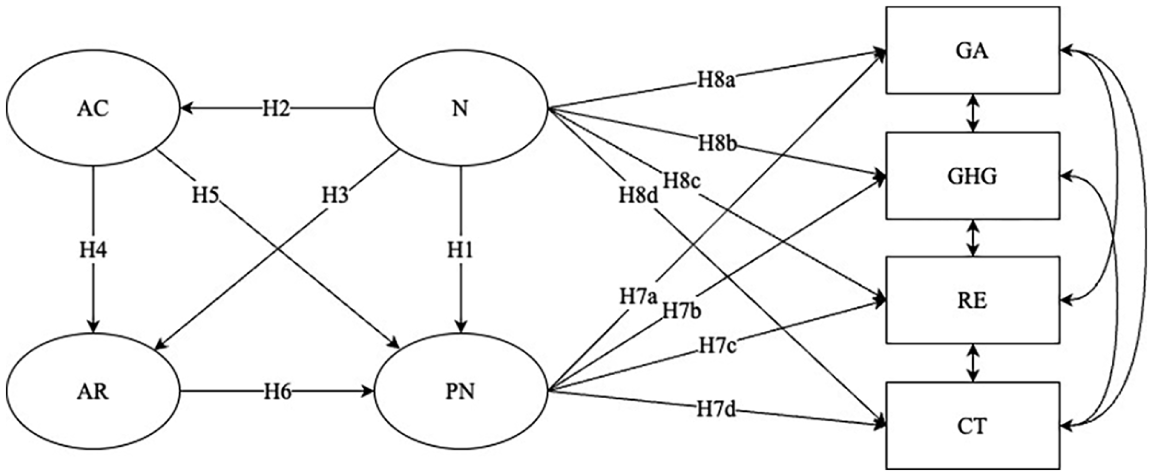
Hypothesized structural model.
Methods
Sample and Data Collection
Following IRB approval (IRB information masked for peer review), we collected data in July of 2023 through an online survey panel (n = 1,004) purchased through Cint, an international market research company specializing in research services. Cint recruits participants through a variety of methods to complete surveys for payment. Research suggests that collecting data through online panels provides quality data for social science survey research (Boas et al., 2020; Pew Research Center, 2016). Sample size was determined using a 95% confidence and 3% margin of error, and limited by resources. We obtained informed consent from respondents before completing the survey and screened out respondents who did not consent to the study. We included attention checks throughout the survey, and we removed respondents who failed attention checks from the final sample. We ensured that our sample was nationally representative through demographic quotas for age, sex, race, and ethnic group. The study sample has similar distributions of White, Black or African American, and Native Americans (Table 2). However, the Hispanic-Latino and Asian proportions of our sample are lower than the national distribution. Additionally, sex and age is slightly skewed in the sample in favor of greater proportions of females and older adults. Sample demographics are presented in Table 2 along with U.S. census data for comparison.
Study Sample Demographics Relative to United States National Demographics.
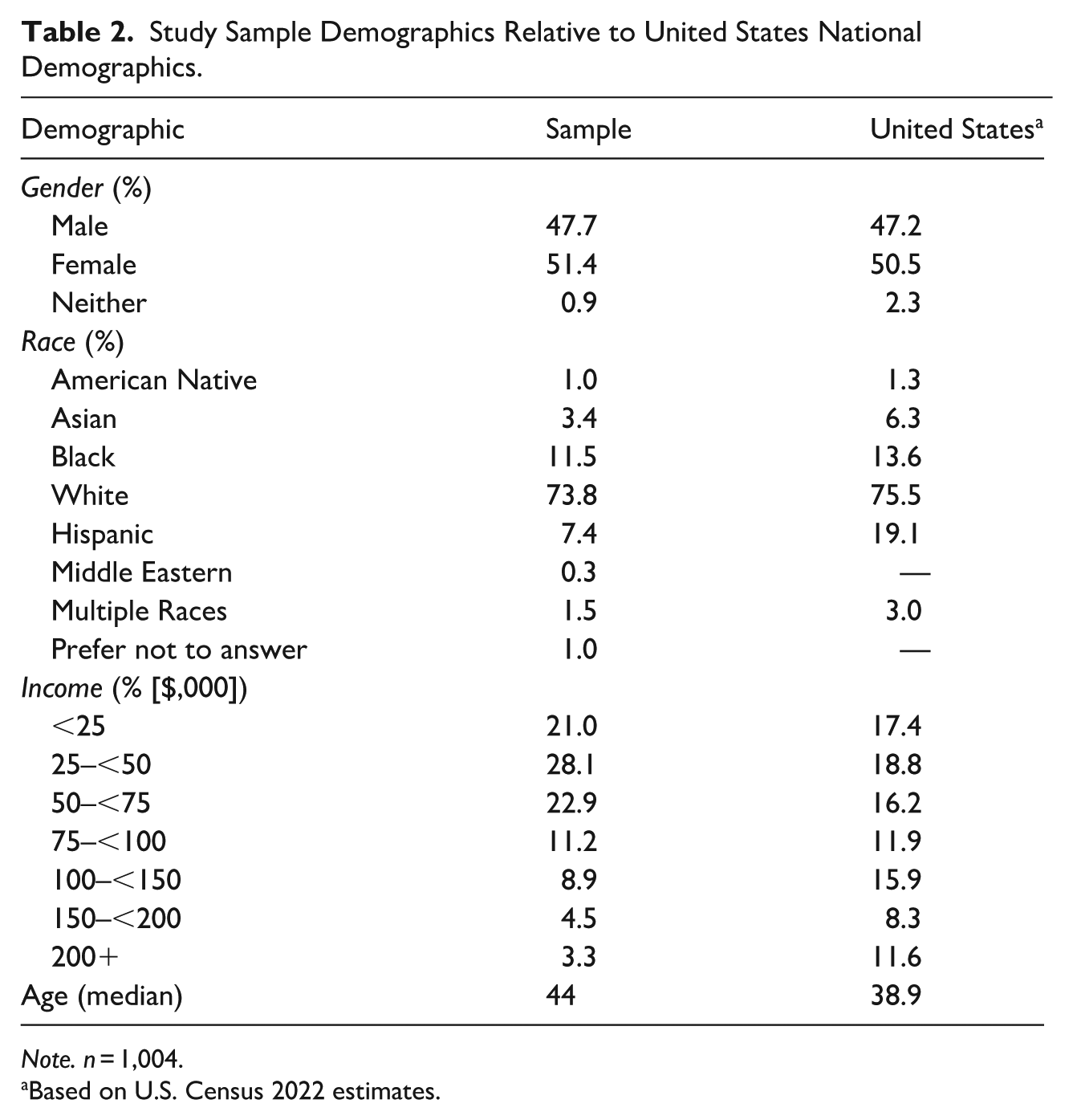
Note. n = 1,004.
Based on U.S. Census 2022 estimates.
Measures
We operationalized collective climate action as support for four governmental actions to address climate change: “governmental action to address climate change directly,” “greenhouse gas reduction policy,” “U.S. transition to renewable energy,” and “carbon tax.” We selected the hypothetical policies due to their prominence in the discourse surrounding climate action. A carbon tax policy was included because economists have argued that market-based mechanisms, such as a carbon tax or paying for carbon emissions, are effective in combating climate change-driving emissions for more than three decades (Avi-Yonah & Uhlmann, 2009; Oates, 1993). A greenhouse gas reduction policy was included because there is a scientific consensus on the impact of greenhouse gases on climate change, and reducing greenhouse gases is an important step in slowing climate change (IPCC, 2022). As renewable energy becomes more accessible and cost-efficient across the United States, transitioning the country to renewable energy has grown as a mechanism for combating climate change and is currently being implemented at the state level across the country (Fache et al., 2025). Finally, since addressing climate change requires coordinated collective efforts (Adger, 2003), governmental action to address climate change was included since governments, regardless of scale, represent a primary mechanism for implementing collective action (Ostrom, 2010). We operationalized support for these four governmental actions to address climate change on a scale of (1) strongly oppose to (5) strongly support. We included the four collective actions as observed response variables in the structural model (Figure 1).
We operationalized the NAM similarly to previous research by De Groot and Steg (2009). We operationalized awareness of consequences (AC) with four items that reflected awareness of climate change’s impact on humanity. We assessed ascription of responsibility (AR) with two items that reflected feelings of responsibility for climate change problems and personal norms (PN) with three items reflecting a moral obligation to address climate change. We measured all items on a 7-point scale, asking respondents to rate their agreement to statements from (1) strongly disagree to (7) strongly agree.
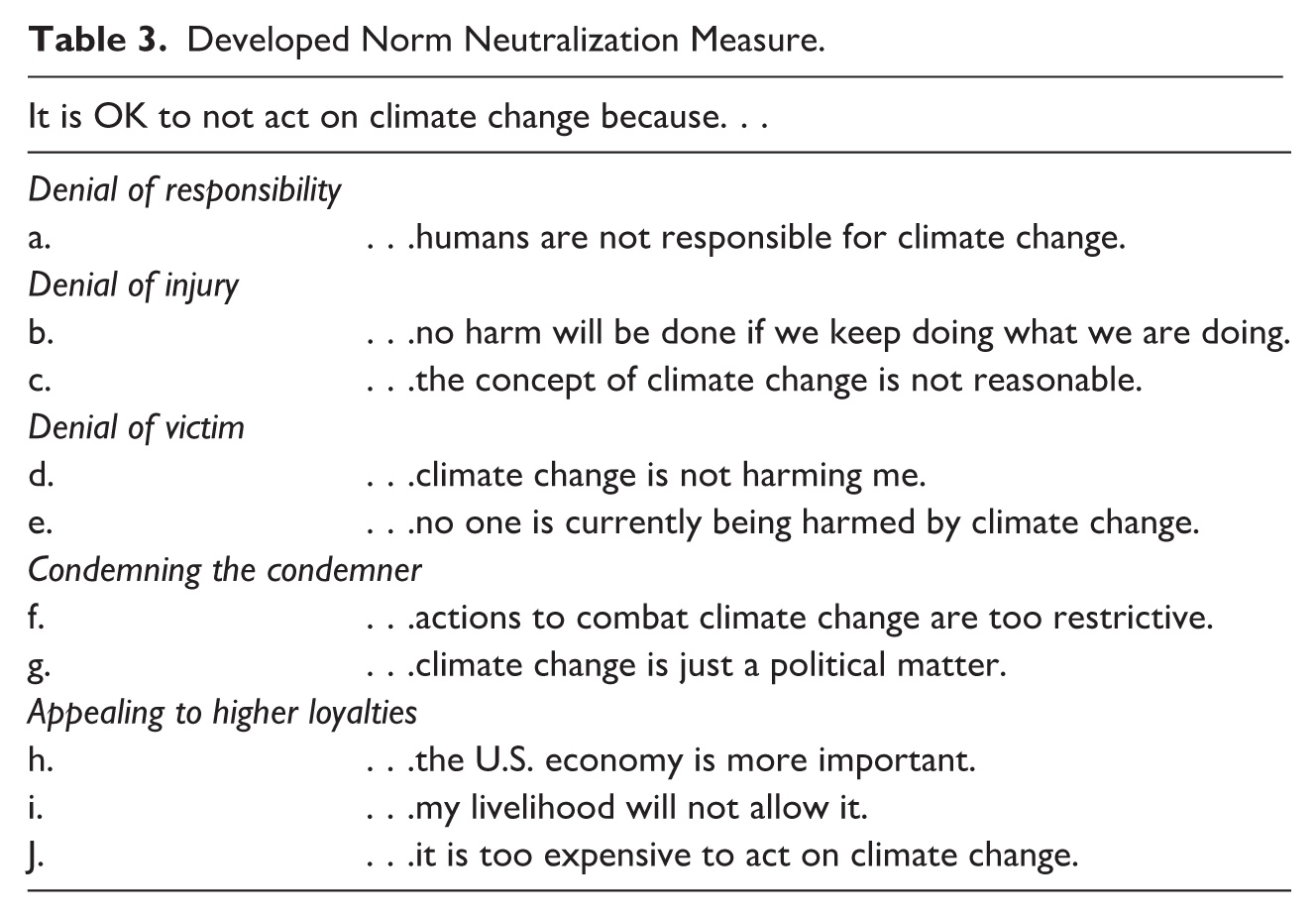
The suggested factor structure of norm neutralization is not consistent within the neutralization literature. While Matza and Sykes (1957) propose five separate norm-neutralization techniques that may influence norms uniquely, previous research has operationalized the techniques together into scales of norm-neutralization acceptance (Ball & Lilly, 1971). We conceptualize norm neutralization as a unidimensional construct following Huizinga et al. (1991) and Neumann & Mehlkop, 2023. Because norm neutralization is context- and behavior-specific, we used climate change-specific definitions of the five neutralization techniques McKie (2019) developed as the foundation for developing a climate change norm neutralization acceptance scale. With these definitions as a framework, we followed Austin’s (1977) approach to operationalizing norm neutralization by using a stem (i.e., “It’s OK to not act on climate change because. . .”) followed by statements that target each of the climate change-specific neutralization techniques. A total of 10 items were developed to target the acceptance of climate-specific beliefs guided by neutralization technique examples in the climate change counter movement identified by McKie (2019) on a 5-point scale from (1) completely disagree to (5) completely agree (Table 3). Higher scores indicate greater acceptance of climate change norm neutralization.
Developed Norm Neutralization Measure.
Analysis
We used structural equation modeling to test our hypothesized NAM in predicting support for four governmental actions to address climate change. We followed Anderson and Gerbing (1988) two-step procedure for latent variable modeling. First, we fit a measurement model to the data to examine the convergent and discriminant validity of constructs before testing hypothesized construct relationships. Second, we fit a structural model (Figure 1) to examine the hypothesized relationships among constructs. We evaluated model fit after each step using commonly utilized model-fit indices, including chi-square statistic (Bollen, 1989), comparative fit indices (CFI > 0.95, Hu & Bentler, 1999), and root-mean-square-error of approximation (RMSEA < 0.08, Browne & Cudeck, 1992). We bootstrapped standard errors for indirect effects using 5,000 iterations, allowing confidence interval to be estimated. We conducted all latent variable modeling in R Studio 2023.12.1 + 402 using the lavaan package (Rosseel, 2012).
Results
Measurement Model
Initial results for the hypothesized measurement model fit the data well (χ2 = 821.015, df = 146, p < .001; RMSEA = 0.070, 90% CI [0.066, 0.075]; CFI = 0.963). All scales displayed strong internal consistency with Cronbach’s α ranging from .805 to .956, and the average variance explained (AVE) for each factor was acceptable (Hair et al., 2010). However, latent factor correlations were abnormally high, raising questions about the measures’ discriminant validity (Table 4). Due to this discrepancy, we conducted additional analyses to establish construct validity and ensure the indicators are theoretically distinct (Brown, 2015).
Average Variance Explained (AVE), Latent Factor Correlation, Shared Variance (SV), and Discriminant Validity Decision Based on Comparisons Between AVE and SV (Fornell & Larcker, 1981).
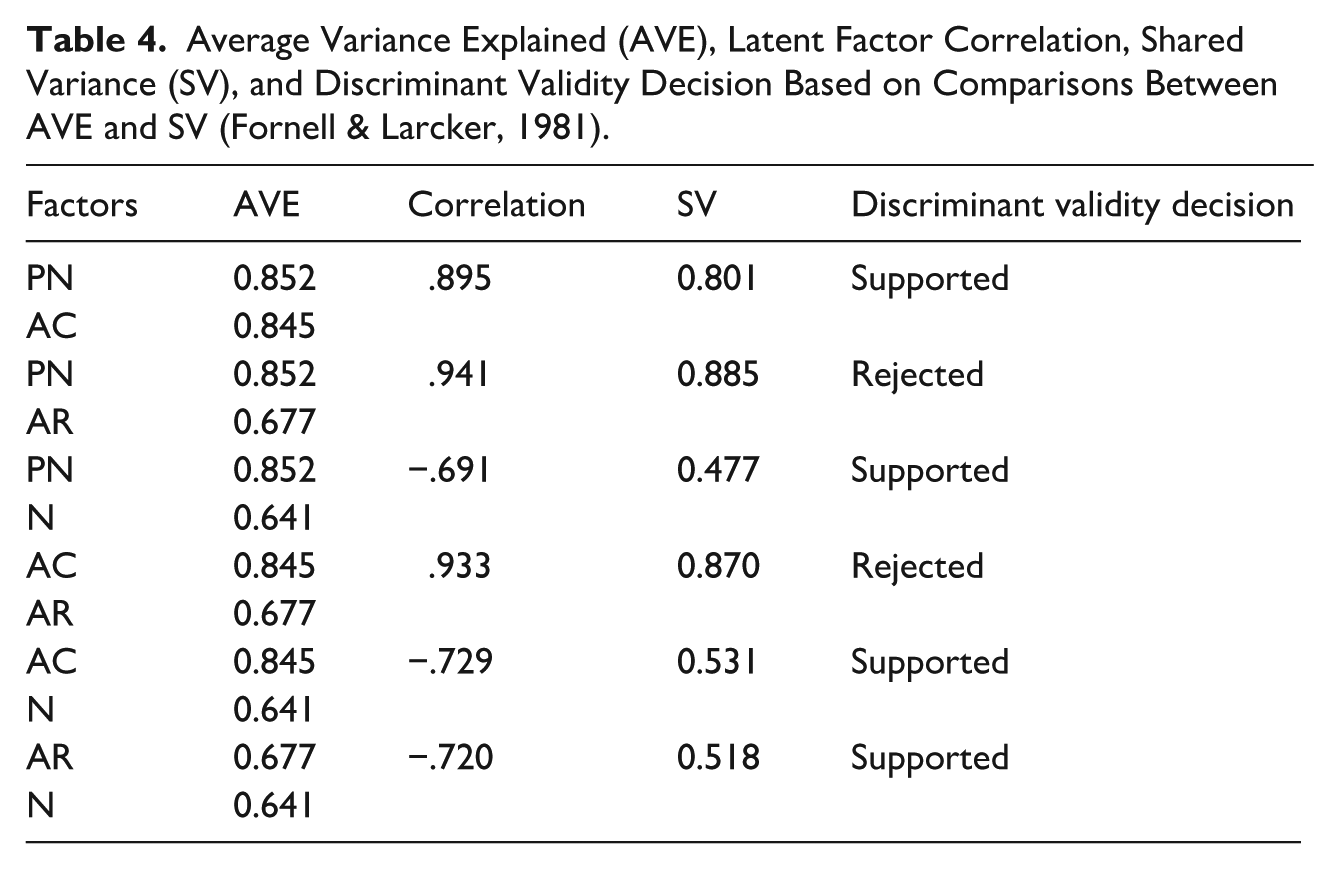
First, we reviewed the modification indices to identify possible cross-loading of items across latent constructs. These indices revealed that two AR indicators were cross-loading on PN, indicating multicollinearity issues with AR. Cross-loading was not evidenced across other indicators. We further examined discriminant validity by comparing the AVE of each factor to the shared variance between factors. Fornell and Larcker (1981) suggested that the AVE for each factor should be greater than the shared variance (SV) between factors or the squared factor correlation. Our results indicated that discriminant validity was an issue between AR-PN and AR-AC (Table 4). Since discriminant validity was problematic between AR and two other latent factors, we chose to remove AR items from the model. We then re-ran the CFA to test the reconceptualized measurement model without AR. Fit indices for the reduced model indicate adequate model fit (χ2 = 559.460, df = 116, p < .001; RMSEA = 0.064, 90% CI [0.058, 0.069]; CFI = 0.973; Table 5).
Factor Loadings and Reliability for Retained Items.
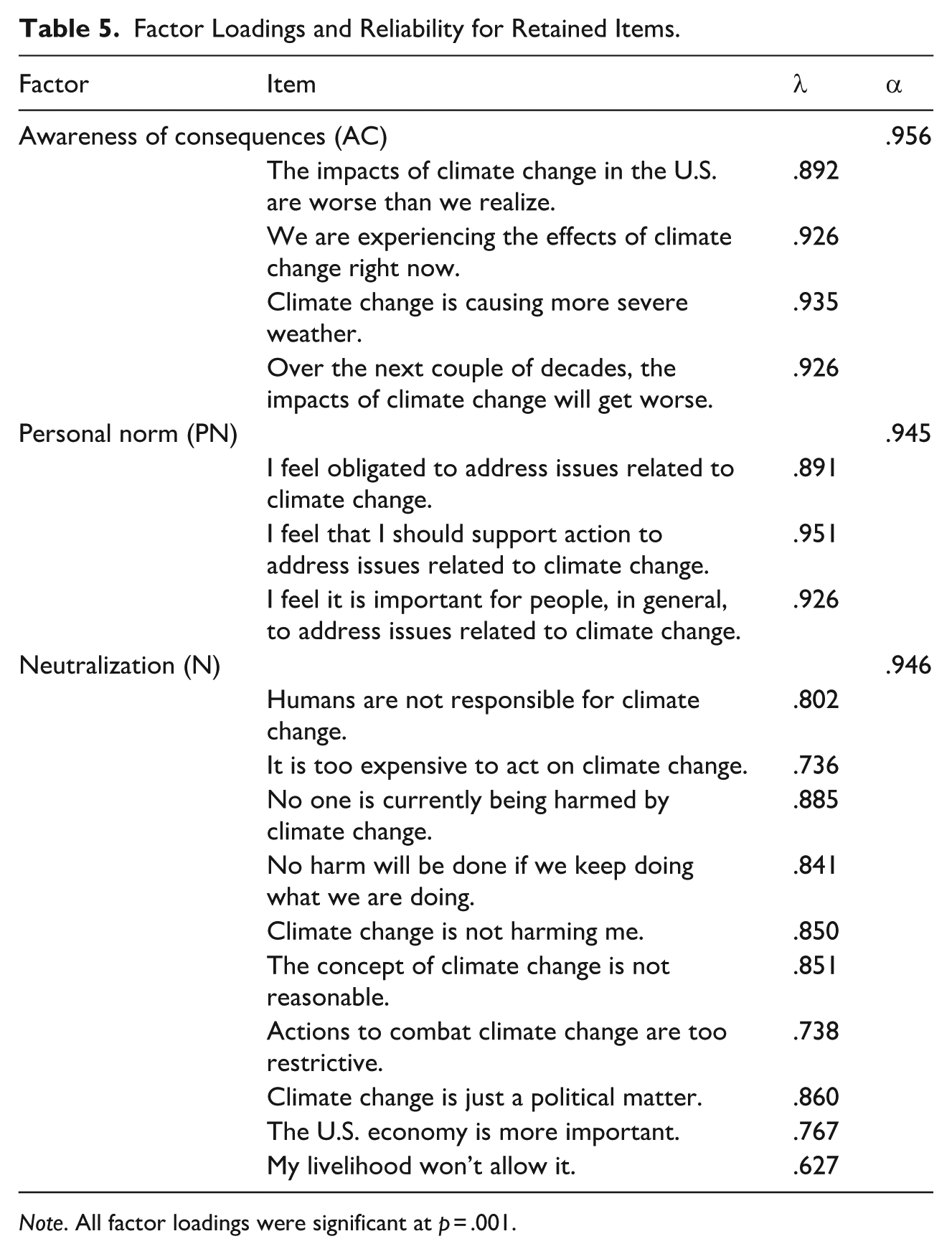
Note. All factor loadings were significant at p = .001.
Although AR is a core component of the NAM, prior research has questioned its contribution to activating personal norms and predicting behavioral intentions (Bamberg & Möser, 2007; De Groot & Steg, 2010). Findings suggest that AR may have limited predictive power and should be excluded when empirically justified (De Groot & Steg, 2010). In this case, empirical issues related to multicollinearity and poor discriminant validity, along with existing theoretical support, justify the removal of AR without substantially weakening the explanatory power of the NAM.
Structural Model
Following our testing of the measurement model, the hypothesized relationships depicted in Figure 2 were estimated using SEM. The model adequately fit the data (χ2 = 747.309, df = 176, p < .001; RMSEA = 0.059 90% CI [0.055, 0.063]; CFI = 0.971). The standardized direct effects are presented in Figure 2, and the unstandardized estimates, 95% confidence intervals, and standardized solution are provided in Table 6. The model explained between 49.9% and 61.6% of the variance in respondents’ support for collective government actions.
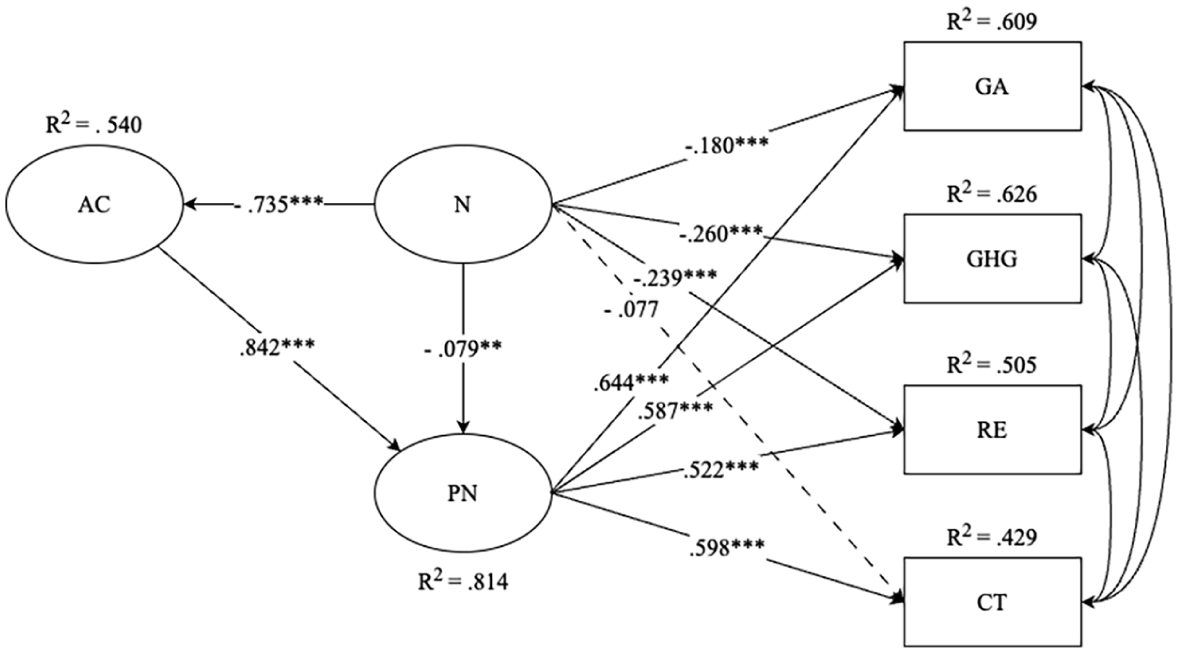
Standardized direct effects for the structural model.
Summary of Effects for the Structural Model of Collective Climate Action Support.
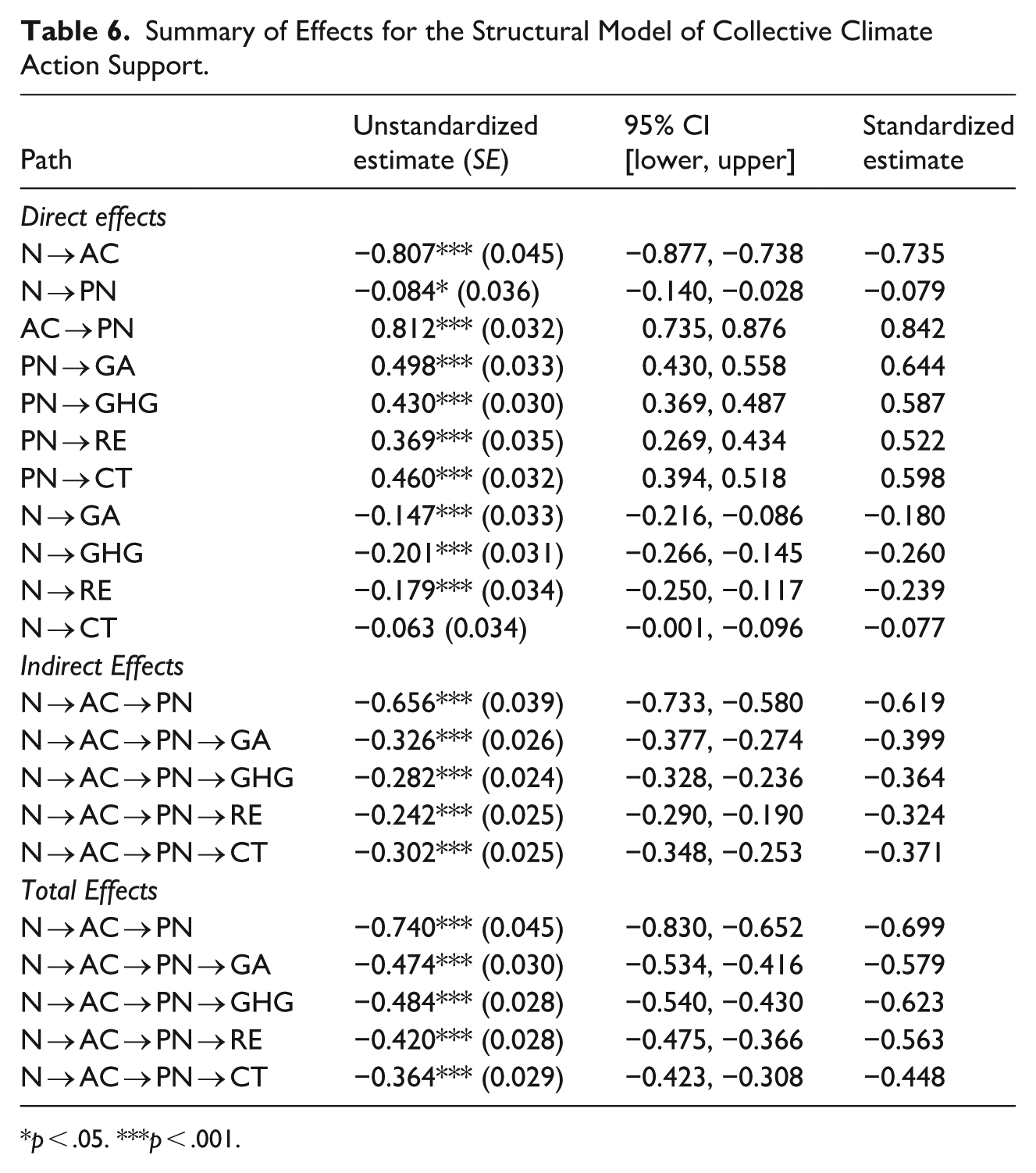
p < .05. ***p < .001.
As hypothesized, norm neutralization had a significant and negative direct effect on AC (β = −.735, p < .001). AC had a positive and significant effect on PN (β = .842, p < .001). PN positively predicted support for government action to directly address climate change (β = .644, p < .001), a greenhouse gas reduction policy (β = .587, p < .001), the U.S. transition to renewable energy (β = .522, p < .001), and a carbon tax (β = .598, p < .001). Since AR was not retained in the model, the construct’s hypothesized relationships in Figure 1 were not supported. There was a significant negative indirect effect of norm neutralization on PN through AC (β = −.619, p < .001). The direct effect of norm neutralization on PN was negative and statistically significant (β = −.079, p = .013), suggesting AC partially mediates the relationship between norm neutralization and PN. Norm neutralization had a negative total effect on PN through AC (β = −.699, p < .001). The direct effect of norm neutralization on all collective actions was significant and negative, except for carbon tax (β = −.077, p = .065). Norm neutralization had a significant negative indirect and total effect on all four collective action policies (Table 6). Support for these hypotheses suggests that as acceptance of norm neutralization increases, consequences awareness and personal norms are diminished. Further, personal climate norms are positively associated with support for a suite of climate policies.
Discussion
Our results supported the proposition that the more individuals accept climate norm-neutralizing beliefs, the less likely they are to feel obligated to act on climate change and the less support they have for climate action. Earlier research has examined neutralization techniques as directly impacting behavioral intentions (e.g., Zhang et al., 2018). However, there have been calls to focus on how neutralization impacts the decision-making process (Maruna & Copes, 2017). This research begins to address this call. Following the structure of the NAM, our findings suggest that neutralization explains inaction by disrupting the antecedents of norm activation and behavioral intention.
The Structure of the Norm Activation Model
The NAM has been used extensively in predicting pro-social and altruistic behavior for more than four decades. While the models’ use has been widespread, there are inconsistencies in the literature regarding the conceptual distinction between ascription of responsibility and personal norms. Although there are a considerable number of studies where the discriminant validity between these two constructs holds (e.g., De Groot & Steg, 2009, Onwezen et al., 2013), there is a growing number of studies where the discriminant validity is not supported. For example, Steg and De Groot (2010) tested the NAM across five studies and found strong correlations between AR and PN in study one and turned to outcome efficiency, defined as perceiving there are actions that can be taken to effectively address consequences, to replace AR in studies two through five. Hunecke et al. (2001) found that feelings of responsibility and obligation load onto a single factor representing personal norms in modeling travel decision-making through the NAM. Landon et al. (2016) found high collinearity between AR and PN in explaining angler pro-environmental behaviors. The discriminant validity of the constructs was not supported after additional testing, and the construct was removed from further models. Others, such as van der Werff and Steg (2015) and Park and Ha (2014), removed ascription of responsibility from the NAM a priori due to inconsistent empirical evidence about the role of responsibility in the NAM. Our results add to the growing empirical evidence questioning if existing operationalizations of AR capture the conceptual nuance between AR and PN.
Neutralization and the Norm Activation Model
Previous research has shown neutralization to be a pervasive component of the climate change countermovement, skepticism, and denial (McKie, 2019). While many psychological barriers exist in acting on pressing environmental issues (Gifford, 2011), neutralization may be a barrier that undermines personal norm activation, explaining the lack of climate action. The data presented here support this proposition and provide insight into how neutralization influences feelings of obligation to address climate change through the NAM.
Individuals can neutralize feelings of moral obligation before acting by defending the action as irrelevant or inappropriate, leading to inaction and justification of norm transgression (Matza & Sykes, 1957; Schwartz, 1977). Through this lens, denying climate change’s existence, impacts, and human causes also denies the relevance and appropriateness of climate action, functioning to neutralize feelings of moral obligation to act. However, neutralization techniques extend beyond denying the existence, impacts, and human causes of climate change. Our data demonstrated that individuals who accept norm-neutralizing beliefs about climate change, such as the economy being more important or it being too expensive to act on climate change, also have weaker feelings of moral obligation to address climate change. These findings align with NAM and neutralization theory’s predictions in that implementing neutralization techniques before action reduces norm activation. Additionally, results suggest that neutralization of personal norms can occur due to a broader range of beliefs than just relevance or appropriateness of action, as suggested by the NAM. Together, these support the ability of an augmented NAM to understand norm violation and climate inaction.
Our data also indicated that accepting norm-neutralizing beliefs hinders the activation of personal norms as proposed by the NAM. Research has consistently shown that personal norms to act prosocially are activated when an individual is aware of the consequences of (in)action (Hunecke et al., 2001; Landon et al., 2016). Examining the impact of neutralization on the antecedent of personal obligation can provide insight into why neutralization is associated with a lack of activation and inaction. Our data indicate that acceptance of norm-neutralizing beliefs is negatively associated with awareness of climate change consequences. The more individuals hold neutralizing beliefs, the less aware they are of climate change’s existence, human origins, and impacts on others. As awareness of the consequences of climate change is an antecedent of personal climate norm activation, a reduction in awareness is associated with lower personal climate norm activation, as hypothesized by the NAM.
Our findings suggested that neutralization indirectly impacts personal norm activation through awareness of the consequences. Logically, denying the existence, human causes, and impacts of climate change allows individuals to deny the consequences of climate change. If consequences do not exist, there is no personal obligation to address climate change. In other words, climate action is neither relevant nor appropriate if climate change does not exist, does not impact people, or is not human-caused. The data presented here suggest that this is true for beliefs beyond just the existence of climate change. For example, results suggest that when individuals agree that it is too expensive to address climate change, the economy is more important than addressing climate change, or that climate change is just a political matter, they also deny the consequences of climate change and inhibit norm activation.
Together, these findings supported the NAM in understanding climate personal norms. While a significant portion of the NAM literature examines the positive side of the NAM (e.g., De Groot & Steg, 2009; van der Werff & Steg, 2015), that is, greater awareness leads to greater personal norm activation. This research examines the NAM from the opposing side: less awareness leads to less personal norm activation. The data presented here suggested that acceptance of neutralization beliefs neutralizes personal norm activation by suppressing the precursors of norm activation. Lastly, results point to a broader range of beliefs in neutralizing personal norms beyond the denial of climate change.
Neutralization and Climate Action
Given that climate change is caused by long-term unsustainable behavior, addressing climate change requires accumulating coordinated collective climate action (IPCC, 2022). Although collective action encompasses a broad range of behaviors, governmental action is an essential collective action because of its broad impacts on climate drivers (Tosun & Schoenefeld, 2017). At the individual level, political activity can be considered one of the many collective action behaviors, and supporting policies to address climate change is central to climate collective action (Roser-Renouf et al., 2014).
Personal norms have been consistently identified as one driver of pro-social behavior, such as supporting climate action policy (Kácha & van der Linden, 2021; Thøgersen, 2006). Extant evidence suggests that personal norms may guide environmental behaviors above and beyond other normative factors. For example, Kácha and van der Linden (2021) found that activated moral norms were influential in committing to pro-environmental behaviors, even when social norm cues were salient. Still, this requires the activation of personal norms, and factors that influence personal norm activation then precede collective action intentions. As our data revealed, personal norm activation is strongly associated with support for policy action to address climate change, aligning with previous findings exploring the influence of personal norms on climate policy (Kácha & van der Linden, 2021; Steg et al., 2005; Stern et al., 1999). With the impact of neutralization on the NAM in mind, neutralization may reduce climate policy support by reducing the activation of personal climate norms. This suggests that beliefs about why we should not act on climate change (i.e., neutralization beliefs) may be a separate but equally important aspect of climate (in)action, denial, and skepticism.
Practical Implications
These findings may have implications for those designing behavioral interventions and communications to overcome climate skepticism. Our study revealed a novel mechanism by which support for climate action is diminished. A better understanding of this mechanism can help identify areas where interventions may be the most effective for overcoming neutralization (Kaptein & van Helvoort, 2019). By illustrating the influence of norm neutralization in climate change activism, our results suggested that strategies identified in past work may also have value at the individual level for promoting climate policy. For example, McKie (2019) suggests that using accessible scientific communication that counters the arguments of skeptics may help overcome some neutralization techniques, such as the denial of responsibility and denial of injury, related to climate change. Focusing on neutralization related to climate policy specifically, they also recommend focusing on benefits to humans and the environment when discussing mitigation through policy. Kaptein and van Helvoort (2019) further suggested that simply making individuals aware of neutralization techniques may create an awareness that allows self-correction. While our data offer may provide a foundation for exploring neutralization-informed interventions, future research is needed to develop, understand, and evaluate the efficacy of interventions in overcoming norm-neutralization strategies.
Future Directions and Limitations
While our study contributes to the literature on the NAM, neutralization theory, and climate inaction, two limitations exist. First, a possible limitation is in the conceptualization of personal norms. Neutralization theory is grounded on neutralizing social norms; here, we extend this to personal norms by conceptualizing personal norms as internalized social norms. However, norm neutralization may influence personal norms by limiting this internalization of social norms or the internal consequences for violations of social norms. Future research should examine these alternative roles of norm neutralization, specifically in forming personal norms from social norms. Second, while this study provided evidence for the reliability and validity of the developed norm neutralization acceptance measure in the context of climate policy support, the measure’s psychometric properties should be further replicated and validated in future studies. Future research should examine neutralization relative to other climate norms, including social climate norms and social norms derived from social group attachments, such as political ideology and partisanship. These may further explain how neutralization is strategically utilized to deny climate impacts and remove responsibility for action for some but not others. Lastly, future research should explore the origins of neutralization beliefs and how they are propagated through society.
Conclusion
While the scientific consensus about climate change is certain, and a growing number of Americans believe that we should act on climate change, a large portion of the United States remains skeptical about climate change. This has created a barrier to engaging in necessary collective climate action. Our research found that holding norm- neutralizing beliefs reduces the activation of climate norms that can guide collective action. Specifically, neutralizing beliefs directly and indirectly reduce norm activation through precursors of personal norm activation. This, in turn, hurts support for policies to address climate action. Our research provides a novel avenue for understanding climate skepticism and inaction, which should be explored further.
Footnotes

Ethical Considerations
This work was approved by Texas A&M University’s Institutional Review Board and all research and procedures were conducted in accordance with ethical approvals. Informed consent was obtained from all participants prior to their engagement in the research.
Funding
The authors disclosed receipt of the following financial support for the research, authorship, and/or publication of this article: This work was sponsored by the National Science Foundation’s Decision, Risk, and Management Sciences [Award #2214240, 2023].
Declaration of Conflicting Interests
The authors declared no potential conflicts of interest with respect to the research, authorship, and/or publication of this article.
Data Availability Statement
Data are available upon request.