



Abstract
Municipal urban tree planting programs play a critical role in enhancing environmental justice, yet the influence of residents’ neighborhood perceptions on program participation remains understudied. This study investigates the role of neighborhood satisfaction in tree planting decisions and long-term survival outcomes within the EquiTree program in the City of San Antonio, USA. Using survey data from 306 respondents and logistic regression models, we find that higher neighborhood satisfaction significantly increases both participation in San Antonio’s tree planting program and the likelihood of tree survival. While neighborhood and property tree canopy coverage influence initial participation, they do not significantly impact survival rates, suggesting that personal commitment and community sentiment play a stronger role in tree survival efforts. These findings underscore the importance of neighborhood environment and community-based engagement strategies, including resident education on tree care, to enhance participation and survival efforts.
Keywords
Introduction
The benefits of green infrastructure, particularly urban trees, have become essential for promoting environmental sustainability and climate adaptation. Urban tree planting initiatives have been a way to promote green infrastructure in urban areas and at the same time support the needs of communities with limited resources to adapt to extreme weather events. Local authorities have invested in tree planting efforts, including street trees and trees on private properties enabling the participation of residents in increasing urban tree canopy in their communities (Donovan & Mills, 2014; Riedman et al., 2022). However, trees planted on private properties account for only 15% of total tree planting efforts (Eisenman et al., 2021), highlighting a need to better encourage residential participation and understand the factors driving residential participation.
Urban tree planting programs have gained attention for their potential to improve quality of life and promote social equity in cities, along with their environmental benefits. These programs offer numerous environmental benefits, including air quality improvement, temperature regulation, and increased biodiversity (Priego González de Canales, 2008; Young, 2011). Trees also provide social and economic advantages, such as enhancing residents’ physical and psychological well-being, reducing crime rates, and increasing property values (Dwyer et al., 1991; Kovacs et al., 2022; S. Lee et al., 2023; Priego González de Canales, 2008). To maximize these benefits, effective planning is crucial, considering factors like tree species selection and potential conflicts with urban infrastructure (Egerer et al., 2024). Additionally, urban tree planting programs should consider distributional equity, community engagement, and long-term maintenance to ensure successful outcomes (Myers et al., 2023). While there is growing awareness of the importance of urban tree canopy and green infrastructure, more research is needed to fully integrate environmental justice principles into tree planting initiatives and ensure their success in improving quality of life for all (Myers et al., 2023).
Research shows tree planting can enhance the neighborhood environment and, eventually, improve the overall quality of life of a community. The social and physical characteristics of a neighborhood influence how residents perceive their surroundings, often reflecting a shared collective image of the community (Sampson, 2012). Studies have examined the effects of greenery on quality of life (Hipp et al., 2016; Sugiyama et al., 2009). On the contrary, higher neighborhood satisfaction may inspire residents to seek an improved environment, potentially motivating them to plant more trees (Coleman et al., 2023). In fact, residents’ attitudes, norms, and belief play a crucial role in shaping their behaviors (Ajzen, 1991, 2005), potentially influencing their decisions to plant and maintain trees.
There are several gaps in the literature on tree planting behaviors in urban communities. First, the role of neighborhood satisfaction in the success of tree planting programs (i.e., in tree planting decisions and survival status) has not been extensively studied. Higher satisfactory neighborhood conditions could potentially encourage residents to desire a better environment and potentially motivate them to plant more trees. Measuring how residents view their neighborhood and examining their tree planting behaviors would offer additional insights. Second, while prior research has examined factors influencing residents’ decisions to plant trees, less attention has been given to the factors influencing tree maintenance and survivorship after planting. Although increasing participation in tree planting programs is crucial, ensuring the long-term survival and growth of these trees is equally important for expanding the urban tree canopy (Moskell & Allred, 2013; Roman et al., 2014a). Some municipalities provide post-planting care, but relying solely on these programs is challenging. Gaining a deeper understanding of the key factors behind tree survival status is essential for the long-term success of tree planting initiatives.
This paper investigates the factors that promote residents’ participation in tree planting programs and the long-term survival of planted trees, with a particular focus on how they perceive their neighborhood environment, using San Antonio’s tree planting program as a case study. Accordingly, the primary research question of this study is: What is the role of neighborhood satisfaction in tree planting decisions and survival status? This paper will first set the stage by examining the existing research on key factors that influence residents’ participation in tree planting programs. From the literature review, we will provide our research methods on survey collection and quantitative analysis. Then, we will test our survey data on participation decisions and survival status. Finally, the paper provides a conclusion with policy recommendations.
Literature Review
Environmental Justice and Urban Tree Planting
This study is situated within the environmental justice framework to understand the social dynamics underlying participation in urban tree planting programs in socially vulnerable communities. Environmental justice centers on the fair distribution of environmental benefits and burdens, equitable participation in decision-making, and recognition of diverse community perspectives (Schlosberg, 2007). Traditionally rooted in resistance to environmental harm and health inequality in marginalized communities (Mohai et al., 2009), the environmental justice framework has evolved to include urban greening efforts, highlighting disparities in access to trees, parks, and green spaces across neighborhoods with varying socioeconomic statuses and histories of disinvestment (Foster et al., 2024; Jennings et al., 2012; Schwarz et al., 2015).
In many U.S. cities, historical redlining and racial segregation have led to stark differences in neighborhood environments, leaving marginalized communities with limited tree canopy and green space (Locke et al., 2021). While municipal tree planting initiatives are often presented as universally beneficial, research shows they can inadvertently reinforce inequity because residents with low socioeconomic status face barriers to participate in the initiatives (Donovan & Mills, 2014). To address this concern, some municipalities have launched tree planting initiatives, such as the City of San Antonio’s EquiTree program, that remove cost or barriers residents might have, ultimately promoting environmental equity (Wang, 2021). Applying an environmental justice lens helps contextualize these disparities and refocus attention on procedural justice—ensuring that low-income and historically marginalized residents have the opportunity and capacity to participate in urban tree planting initiatives (Verheij & Corrêa Nunes, 2021).
Engaging socially vulnerable communities in tree planting initiatives could be challenging because environmental behaviors are closely linked to broader perceptions of the neighborhood environment (Kuo et al., 1998). Moreover, when residents are involved in the tree planting process and feel their voices are heard, they are more likely to care for planted trees and keep their trees alive, not only for aesthetic or environmental benefits but also as a form of local investment and empowerment (Coleman et al., 2023; Myers et al., 2023). Within the framework of environmental justice, this research investigates the relationship between neighborhood satisfaction and tree planting participation and contributes to a growing recognition that urban tree planting is not just an ecological intervention but also a social justice initiative.
Tree Planting Programs, Residential Participation, and Tree Survivorship
Urban tree planting programs serve as a means to enhance environmental quality, improve urban aesthetics, and foster social cohesion. Understanding why residents (do not) participate in these programs is critical for their success. Empirical studies have provided valuable insights into participation patterns. Locke et al. (2015) conducted a survey of residents requesting street trees, finding that motivations included aesthetics, replacing trees, and environmental benefits. Social factors, such as learning about programs through neighbors, were also significant. Watkins et al. (2018) studied collaborative tree planting programs across cities like Detroit, Indianapolis, and Philadelphia. Their findings indicated that community-based programs increased participation. Sommer et al. (1994) examined how resident involvement in tree planting improved neighborhood satisfaction and social cohesion.
These surveys highlight the intersection of individual motivations and broader social outcomes, demonstrating the importance of tailored approaches to encourage diverse community participation. Below, we synthesize research findings on motivations, barriers, and demographic influences, and discuss their implications for a successful stewardship of urban tree planting programs.
Motivations for Participation
Survey research reveals that residents’ motivations are primarily environmental and aesthetic. For instance, a survey in New Haven, Connecticut, found that participants cited aesthetic improvement (30%), replacing removed trees (30%), and environmental benefits (17%) as primary motivators (Locke et al., 2015). Similarly, Sommer et al. (1994) found that aesthetic improvements and a sense of pride in their neighborhoods were key factors driving participation. Social and community benefits also play an essential role. Research shows that participation in tree planting fosters stronger community ties and collective efficacy, as residents often collaborate to maintain the trees. Watkins et al. (2018) demonstrated that such initiatives not only improve environmental quality but also increase residents’ civic engagement, such as participation in block parties and neighborhood cleanups.
Barriers to Participation
Barriers to participation include lack of awareness, concerns about maintenance, and financial constraints. Many residents are unaware of existing programs or their benefits (Locke et al., 2015). Maintenance concerns, such as watering and pruning responsibilities, deter participation, particularly among those with limited time or resources (Lohr et al., 1996). These barriers underscore the need for programs to offer support and communicate benefits effectively.
Demographic Influences
Demographics significantly affect participation rates. Locke et al. (2015) found that homeowners and long-term residents were more likely to engage due to a sense of permanence and investment in their community. Education and income levels also correlate positively with participation, as these factors often align with greater environmental awareness and the ability to manage tree maintenance responsibilities (Conway et al., 2011).
Existing research underscores the importance of addressing residents’ motivations and barriers while advocating for tailored program designs to meet diverse individual and community needs. Survey findings also suggest several strategies for enhancing participation, including increasing awareness through targeted outreach, addressing maintenance concerns with support programs, and fostering partnerships with local organizations. Community-based approaches, as evidenced by Watkins et al. (2018), are particularly effective in promoting collective action.
Tree Survivorship
While initial tree planting is crucial, the long-term success of these initiatives heavily depends on the survival of these trees through consistent post-planting maintenance, also known as tree stewardship. Moskell and Allred (2013) describe urban tree stewardship as a collective action of caring for and watering trees. Urban tree stewardship involves informal and formal networks of residents and community groups to care for neighborhood trees (Jack-Scott et al., 2013). These networks foster collective responsibility and civic engagement, which are essential for tree maintenance and survivorship. Trees in areas exhibiting active stewardship have higher survival rates than those without such stewardship (Boyce, 2010, 2011; Lu et al., 2010). While stewardship is an important aspect of keeping trees alive, tree survival rates also vary by species and planting location, necessitating longitudinal analysis to fully capture these dynamics (Roman et al., 2014b).
Taken together, this study builds on existing research by showing that neighborhood satisfaction is a socially and psychologically meaningful factor linked to both participation and tree survivorship. While previous studies have documented the logistical, institutional, and ecological barriers to tree survival, our work highlights the importance of resident sentiment and social context and offers a complementary perspective that adds behavioral nuance to the literature on tree planting and stewardship.
Neighborhood Satisfaction as a Factor in Participation and Tree Survivorship
Quality of life, as an important aspect for community wellbeing, is shaped by a combination of objective living conditions, individual perceptions, and personal values (Felce & Perry, 1995). While personal circumstances primarily determine quality of life, residing in a satisfying environment can also significantly contribute to quality of life and wellbeing (Dissart & Deller, 2000). In fact, neighborhood perceptions are shaped by various elements of socio-physical environment, through the lens of collective efficacy (Sampson, 2012; Sampson et al., 2002; Sampson & Raudenbush, 2004).
Residents’ perception of their neighborhoods has been assessed through neighborhood satisfaction ratings. Neighborhood satisfaction is shaped by both individual and neighborhood attributes (S. M. Lee et al., 2017; Lovejoy et al., 2010). Specifically, Campbell et al.’s (1976) model of satisfaction introduced the driving factors of neighborhood satisfaction in two aspects: (1) individual attributes including demographic characteristics and housing conditions, and (2) neighborhood attributes including access to amenities and infrastructure, overall safety, and the comfort provided by natural resources. These attributes collectively shape how residents perceive their living environment.
Extending this concept to tree planting efforts, neighborhood satisfaction may significantly influence residential participation and stewardship in tree planting initiatives. In fact, higher neighborhood satisfaction is positively linked to social cohesion and place attachment (R. J. Lee et al., 2024), potentially fostering participation in tree stewardship efforts. Notably, research indicates that residents actively involved in tree planting report higher satisfaction compared to those whose trees were planted by developers or city agencies (Sommer et al., 1994). Additionally, the presence of street-facing trees contributes to community livability, with satisfaction levels influenced by tree stocking levels and neighborhood characteristics (Sanders, 1984). Existing studies imply potential relationship between higher neighborhood satisfaction and active stewardship, while active stewardship enhances tree survival rates. However, the relationship between neighborhood satisfaction and tree planting participation and tree survivorship has not been directly investigated.
Only recently, Coleman et al.’s (2023) study on Massachusetts’ tree planting program investigated the importance of collective efficacy and residential satisfaction in motivating resident participation. The study examined three aspects of neighborhood satisfaction—social, safety, and amenities—and their relationship with residents’ input in tree planting programs, such as subscribing to newsletters, volunteering, and existing knowledge. The findings indicate that satisfaction with the quality of outdoor amenities is positively associated with residents’ existing knowledge of the tree planting program. However, no significant relationships were found in social or safety satisfaction with neighborhood satisfaction. Further research on neighborhood satisfaction and actual participation experience could provide deeper insights.
Model Framework: Factors Influencing Participation and Tree Survival Status in Urban Tree Planting Programs
This paper examines neighborhood satisfaction as a factor that shapes participation and long-term engagement in urban tree planting programs. In addition to neighborhood satisfaction, household, property, and neighborhood characteristics are known to influence participation and tree survival efforts. The following section outlines five key factors tested in this study that drive these decisions.
Property and Neighborhood Tree Canopy
Tree canopy at both the property and neighborhood levels can influence participation patterns. Homeowners with substantial property canopy may be less inclined to request additional trees, while neighborhoods with low canopy coverage often have higher demand, particularly in underserved communities (Riedman et al., 2022). Equitable distribution of urban tree canopy remains a challenge, with research revealing that tree planting projects are less common in high-canopy, high-income areas and communities of color (Watkins et al., 2018). Socioeconomic and ecological factors, such as limited planting sites in environmental justice communities, further complicate these inequities.
Property Size
Larger properties offer more planting opportunities and are associated with higher participation rates (Donovan & Mills, 2014). Smaller properties and multi-family dwellings often face space limitations that reduce participation, particularly in high-density urban areas (Coleman et al., 2023). Urban trees provide significant environmental benefits, including local cooling, stormwater absorption, and health improvements, though their large-scale impact on greenhouse gas emissions and air pollution remains limited (Pataki et al., 2021).
Household Income
Household income significantly impacts participation in free urban tree planting programs. Higher-income households may have less incentive to participate due to already well-landscaped properties, while lower-income households often see these programs as opportunities to enhance property aesthetics and environmental quality without financial burden (Riedman et al., 2022). However, financial constraints can also hinder participation if maintenance costs are perceived as burdensome (Donovan & Mills, 2014). Addressing these disparities requires a focus on environmental justice and ensuring equitable access to urban forest benefits (Greene et al., 2011).
Homeownership
Homeownership status is a crucial determinant of tree planting participation. Homeowners, who have greater control over property modifications and long-term investment in landscaping, are more likely to engage in tree planting compared to renters (Greene et al., 2011; Myers et al., 2023). Renters often lack the authority to make planting decisions, though municipal incentives for landlords could help bridge this gap (Carmichael, 2019).
Distance to Downtown
Proximity to downtown areas affects participation in urban tree planting programs. Residents closer to city centers may face space limitations and infrastructure conflicts, reducing planting opportunities (Coleman et al., 2023). In contrast, suburban and peri-urban areas with more available space often show higher participation rates (Riedman et al., 2022).
Methods
Study Area
San Antonio, Texas, is the 7th largest city in the U.S. with a population of approximately 1,500,000 (U.S. Census Bureau, 2020). With a long history of Mexican American settlement, the city’s demographic composition includes 64% Hispanic/Latino residents, a statistic that underscores the enduring influence of its vibrant cultural heritage (U.S. Census Bureau, 2020). Concurrently, San Antonio has not been immune to historical patterns of segregation and discrimination, as evidenced by redlining practices initiated in the 1930s (Rothstein, 2017). One key indicator of these disparities is the urban tree canopy, which remains notably deficient in lower-income inner-city communities. According to American Forests (2025), San Antonio’s average tree equity score is 79, with many downtown Mexican American communities scoring below 60 (see Figure 1). This finding highlights the pressing need for targeted environmental interventions in these neighborhoods. In response to concerns regarding tree equity, the City of San Antonio’s Department of Parks and Recreation launched the EquiTree program, which aims to improve tree equity by providing free trees and complimentary planting services in socially vulnerable communities. This initiative includes the distribution of door hangers that residents can return via mail to request a tree for their property. Having been successfully implemented over several years, the program is set to evolve into the CommuniTree program in 2025, with the goal of increasing community awareness and engagement.
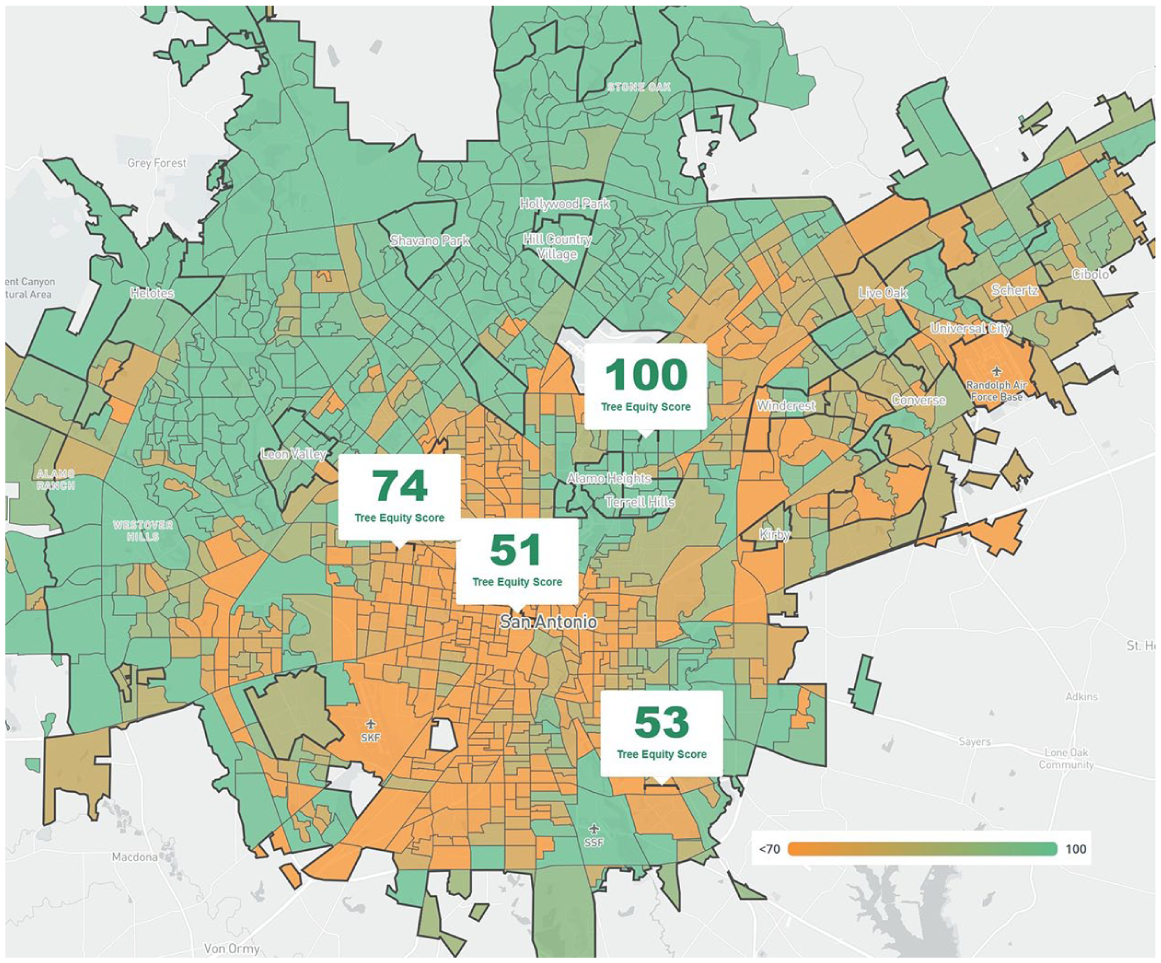
Tree equity scores in San Antonio, Texas. Adapted from American Forests (2025).
Survey Design
In this study, we examine the influence of neighborhood satisfaction on tree planting decisions and subsequent tree survival outcomes. To address the research question, we employed a rigorously designed survey administered in areas where the City of San Antonio distributed EquiTree door hangers between 2018 and 2020. We used a stratified cluster sampling method to ensure representation across different program years and neighborhood contexts. Strata were defined based on the year the door hangers were distributed, and clusters were individual neighborhoods targeted by the city’s outreach. From the 13 total neighborhoods canvased during this period (see Figure 2), we randomly selected ten neighborhoods (three from 2018, three from 2019, and four from 2020), which includes oversampled 2020 neighborhoods as the survey coverage area that year was larger than in previous years.
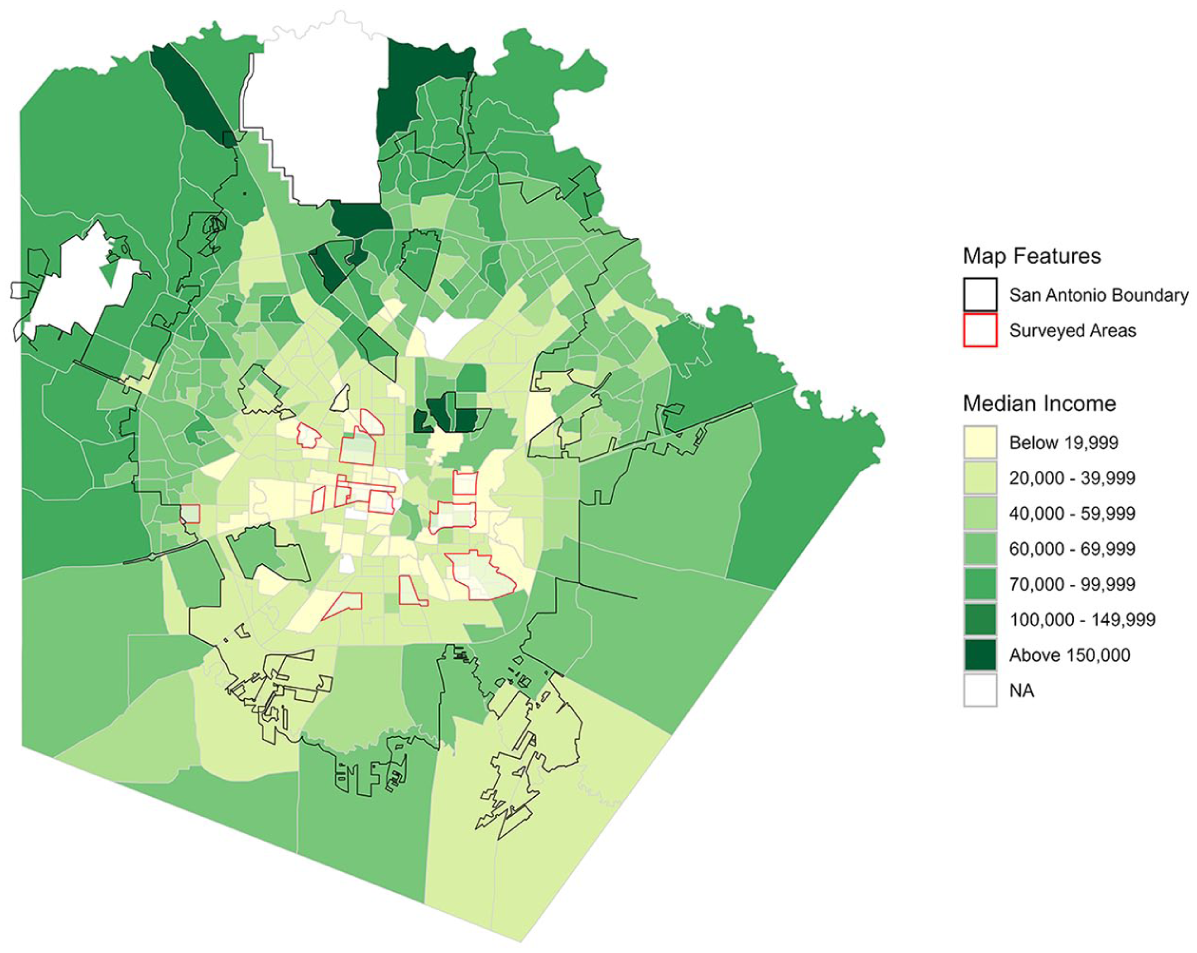
Survey areas and income distribution in San Antonio, Texas.
Data collection utilized a multimodal approach that combined door-to-door interviews with a postcard recruitment strategy featuring QR codes, thereby enhancing both the representativeness and reliability of the sample (Dillman et al., 2014). All ten selected neighborhoods received postcards, and six were randomly chosen for in-person surveying to enhance response rates and sample diversity. These included Prospect Hill, Avenida Guadalupe, Woodlawn Lake, Los Angeles Heights, Harlandale, and Las Palmas. This stratified cluster design is a cost-effective yet representative sampling strategy that accounted for variation in outreach timing, neighborhood location, and levels of resident engagement. Three trained surveyors, all of whom had completed the CITI Program for Human Subjects Research Training, facilitated the in-person data collection from April to July 2024. To ensure inclusivity and minimize language barriers, the survey was hosted on the Qualtrics platform and made available in both English and Spanish, with all surveyors fluent in both languages.
The study’s protocol was reviewed and granted an Institutional Review Board (IRB) exemption under protocol FY23-24-168 in February 2024, confirming that the research did not meet the criteria for regulated research. The survey instrument incorporated questions regarding respondents’ participation in the EquiTree program, specifically, whether they had a free tree planted on their property. For participants who affirmed involvement, a follow-up item assessed the status of the tree, categorizing it as alive, in need of attention, dead, or of unknown status. Additionally, respondents rated their neighborhood on a 10-point Likert scale, irrespective of program participation, and provided demographic information, including income and homeownership status. Overall, 306 surveys were returned, with 175 completed by individuals who had participated in the EquiTree program.
This robust survey design, which is characterized by its multimodal data collection, bilingual accessibility, and systematic inclusion of key demographic and program participation variables, provides a solid empirical foundation for exploring the relationship between neighborhood satisfaction on tree planting decisions and subsequent tree survival outcomes.
Measuring Variables
For the primary variables of interest, we used the survey data on tree planting decisions and survival status assessed through two key outcomes from the survey. Two dependent variables were identified. First, program participation, as a binary variable (1 = participated), indicates whether a household engaged in the tree planting program (i.e., EquiTree program). Second, tree survival status, also as a binary measure (1 = alive), captures whether a planted tree has survived (including “unsure” or “needs attention”), reflecting the effectiveness of post-planting care. Responses indicating “dead” are categorized as 0 (=dead) to capture the successful tree survival status. Neighborhood satisfaction is measured on a 10-point scale, where higher values reflect greater satisfaction in one’s neighborhood environment. This variable serves as a predictor of both participation in tree planting and tree survival status. For the modeling, this variable is assumed to be a continuous variable.
Additionally, we included several factors influencing tree planting and survival status. Due to the limited number of observations, however, we had to restrict the number of explanatory variables to preserve degrees of freedom and ensure the statistical power of the regression estimates. Overall, individual property characteristics, socioeconomic characteristics of the household, and neighborhood characteristics were considered. To measure property characteristics, existing property tree canopy was measured as percentages of land area covered by tree canopy using 2017 Texas A&M Urban Tree Canopy dataset. Additionally, the property size in acres were measured from the Bexar County Appraisal District GIS dataset. For socioeconomic characteristics, survey data on homeownership and income levels were collected. For socioeconomic characteristics, among 306 responses, 101 respondents did not report their income. In these cases, we used estimates from the American Community Survey (2018–2022, 5-year estimates) to approximate household income. While this approach may not precisely capture individual household income, since the survey respondents only reported income ranges rather than exact values (where 1 = less than $19,999, 2 = $20,000 to $39,999, 3 = $40,000 to $59,000, 4 = $60,000 to $69,999, 5 = $70,000 to $99,999, 6 = $100,000 to $149,999, and 7 = above $150,000), we carefully assume this is the best approach for minimal bias. Finally, to measure the neighborhood characteristics, two variables were considered. First, neighborhood level tree canopy coverage was measured using the tree canopy at the Census block group. Second, the distance to downtown was measured to capture the locational characteristics.
Analytical Approach
Using the survey data and additional secondary data such as the American Community Survey and one-meter resolution tree canopy data, we employed a series of logistic regression models to examine if neighborhood satisfaction can predict tree planting decisions and tree care status. Among the 306 responses, incomplete surveys were excluded, resulting in a final sample size of 269. To investigate the role of neighborhood satisfaction, Model 1 examined the effects of neighborhood satisfaction on tree planting decisions (N = 269). Model 2 examined the effects of neighborhood satisfaction on tree survival status for the respondents who participated in the program (N = 161). By incorporating additional explanatory variables into both models, we also intended to provide insight into how individuals, property, and neighborhood-level factors shape urban tree planting decisions and survival status. Thus, each model included a bivariate logistic regression to measure the direct relationship between neighborhood satisfaction and the dependent variable and a multivariate logistic regression with other explanatory variables. In total, four logistic regressions were performed (Model 1: M1-1 and M1-2. Model 2: M2-1 and M2-2)
Results
Survey Outcomes
From the survey, we collected 131 responses (43%) from non-participants and 175 responses (57%) from participants in the EquiTree program (see Figure 3). Among the participants, 110 (63%) reported that their trees were alive, while the remaining respondents indicated that their trees needed attention (2%), were dead (29%) or in unknown status (6%).
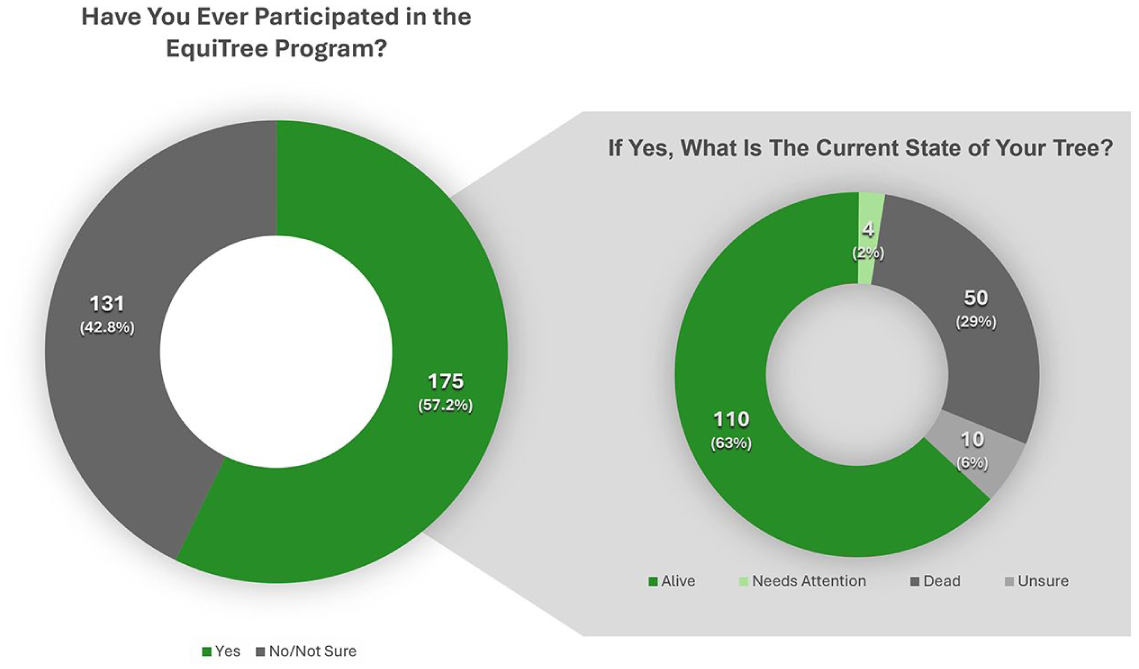
Participation in the tree planting program and tree survival status.
For the neighborhood satisfaction question, households that participated in the EquiTree program and have alive trees tend to rate their neighborhoods more favorably. Specifically, the average neighborhood satisfaction rating was 8.3 for participants and 7.5 for non-participants. Among participants, those with alive trees reported a higher average rating of 8.4, while those with dead trees rated their neighborhood at 7.9 on average. This distinction suggests that participation in the program, particularly when trees remain alive, is potentially associated with higher neighborhood satisfaction. Figure 4 illustrates these results.
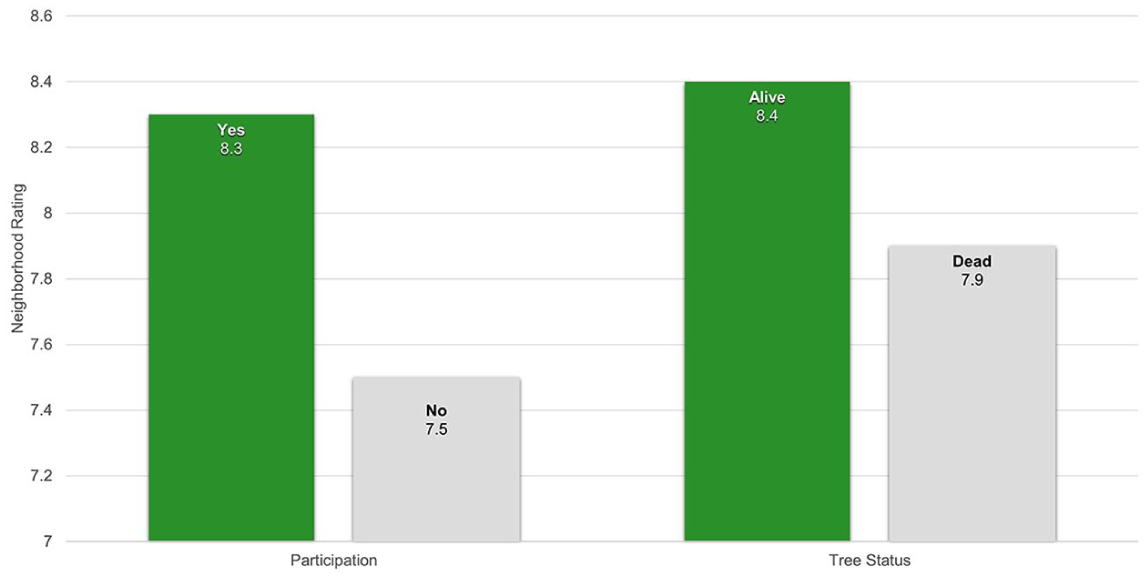
Neighborhood satisfaction rating by participation and tree status.
Summary Statistics
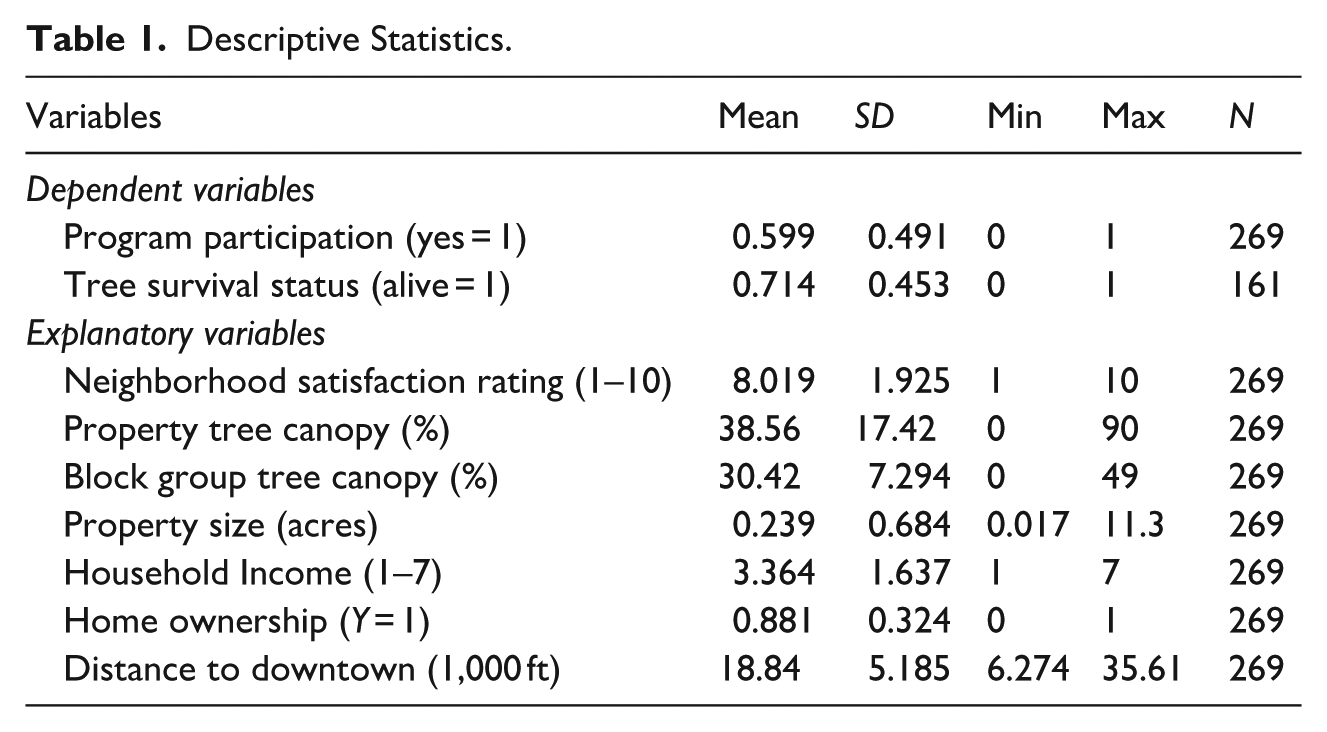
Table 1 presents the descriptive statistics of the variables included in the model. Table 2 displays Pearson’s correlation results between variables, with significant correlations highlighted in light blue. A noticeable pattern is that the average neighborhood satisfaction score among respondents is 8.02, and it is significantly correlated with program participation (r = .154, p < .05). No significant correlations were found between satisfaction scores and other explanatory variables.
Descriptive Statistics.
Pearson’s Correlations Coefficients.
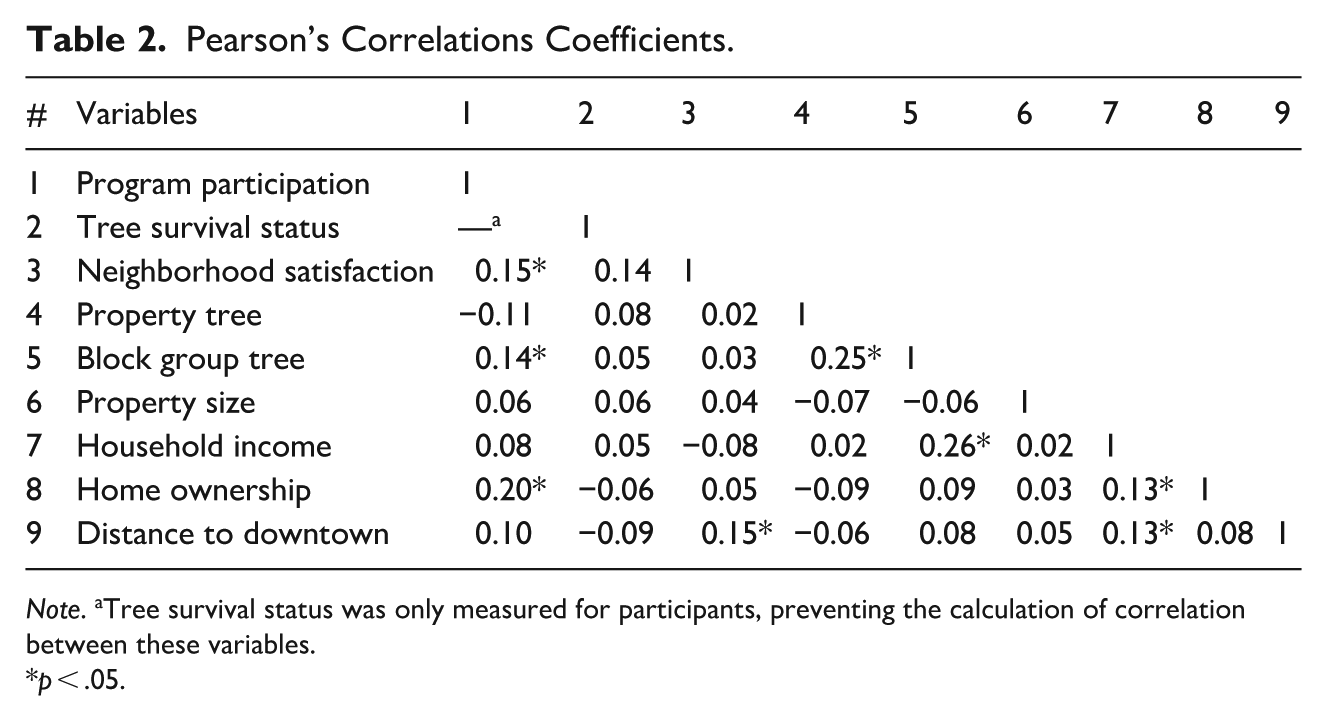
Note. aTree survival status was only measured for participants, preventing the calculation of correlation between these variables.
p < .05.
Model 1: Neighborhood Satisfaction Predicting Tree Planting Decision
Table 3 illustrates the results of Model 1 that predicts tree planting decisions. Neighborhood satisfaction turned out to be a significant indicator of tree planting with or without other explanatory variables. Specifically, a one-unit increase in neighborhood satisfaction raised the odds of reporting participation in the tree planting program by 17.8% to 18.1%. This potentially indicates a significant role of community perception in tree planting decisions. At the property level, a one-percent increase in tree canopy coverage decreased the odds of reporting participation by 2.1%, suggesting that residents with more existing trees may feel less inclined to plant additional ones. Conversely, at the neighborhood level, a one-percent increase in block group tree canopy coverage increased the odds of reporting participation by 4.5%, indicating that greener surroundings may encourage further planting efforts. Homeownership was significantly associated with participation reports, with homeowners being 172.2% more likely to engage compared to renters, due to long-term investment in property value and community aesthetics.
Neighborhood Satisfaction Predicting Tree Planting Decisions (Model 1).
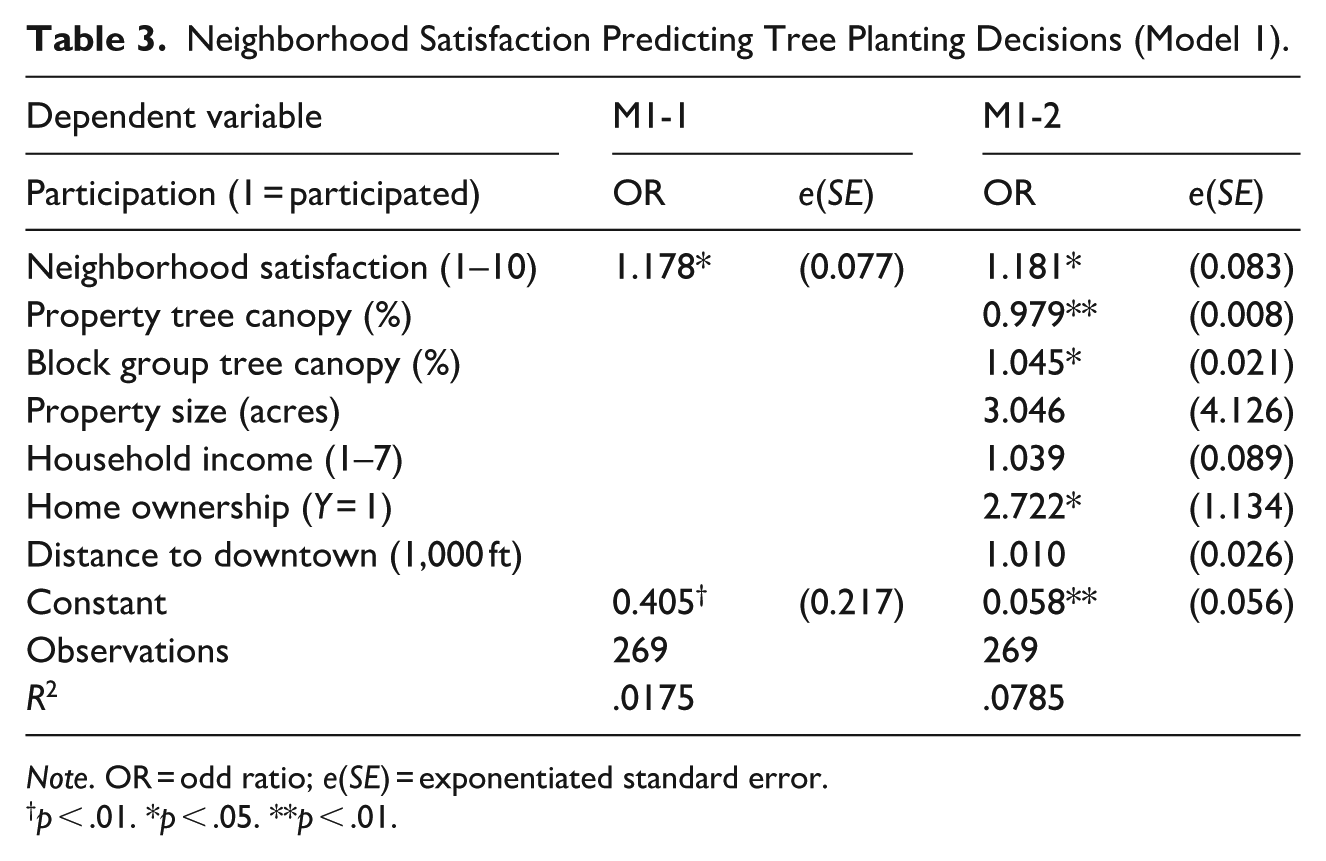
Note. OR = odd ratio; e(SE) = exponentiated standard error.
p < .01. *p < .05. **p < .01.
Model 2: Neighborhood Satisfaction Predicting Tree Survival Status
When predicting for tree survival status (Table 4), neighborhood satisfaction was marginally significant in bivariate regression model but became significant (p < .5) when other explanatory variables were included. Specifically, a one-unit increase in neighborhood satisfaction raised the odds of reporting alive trees by 22.4%, suggesting that residents who feel more positively about their community are more likely to invest in tree care. However, unlike the tree planting decisions (Model 1), existing tree canopy—both at the property and neighborhood (block group) levels—did not significantly predict tree survival status, which could indicate that tree survival is influenced more by individual commitment than the surrounding greenery. While larger property size increased the odds of tree survival, the high standard error suggests uncertainty in this effect. Similarly, income showed a slight positive association, while homeownership unexpectedly decreased the likelihood of survival, though neither effect was statistically significant. Distance from downtown was weakly associated with lower survival odds. Overall, the findings emphasize the role of neighborhood satisfaction over environmental factors in ensuring trees remain alive and cared for.
Neighborhood Satisfaction Predicting Tree Survival Status (Model 2).
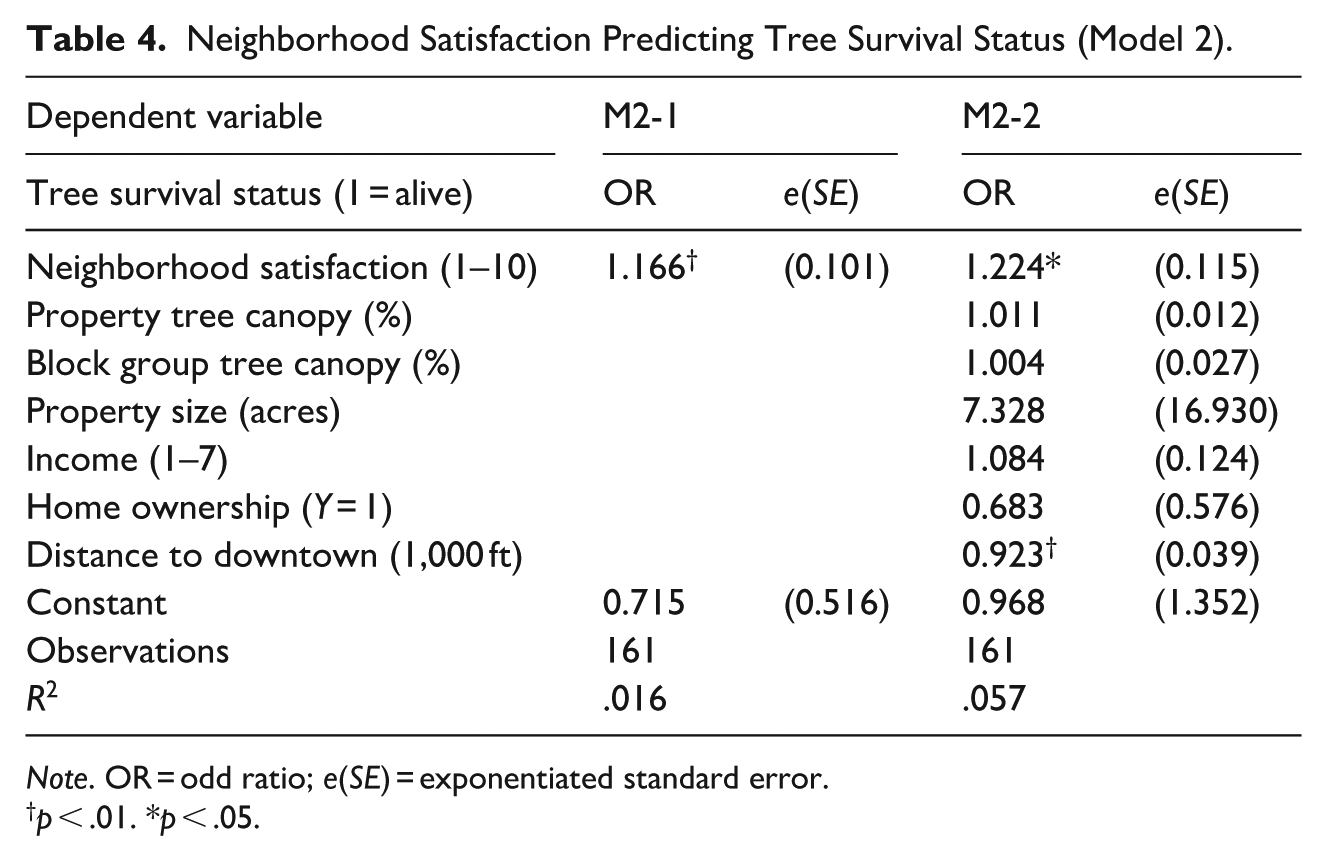
Note. OR = odd ratio; e(SE) = exponentiated standard error.
p < .01. *p < .05.
Discussion and Conclusion
This study examined the relationship between neighborhood satisfaction, participation in an urban tree planting program, and the likelihood of tree survivorship. Our findings reveal that neighborhood satisfaction is a significant predictor of both tree planting participation and tree survival status. Specifically, we found that higher levels of neighborhood satisfaction increased the odds of reporting tree planting participation by 17.8%–18.1% and the likelihood of tree survivorship by 22.4%. These results expand previous research suggesting that residents who perceive their neighborhoods as well-maintained and socially cohesive are more likely to be informed about tree planting initiatives (Coleman et al., 2023). This also supports prior findings that positive perceptions of the local environment encourage civic engagement and stewardship behaviors (Sampson, 2012). This study is also significant as we examined the factors influencing post-planting tree survival status, an aspect that has not been previously compared with the tree planting participation factors. The ultimate success of a tree planting initiative is indeed through tree survival over time, which should not be neglected. It is notable that this study is subject to omitted variable bias, as the modeling process was constrained by limited degrees of freedom, forcing us to limit the number of variables included, and by the lack of detailed information on tree species and planting locations, both of which are known to affect tree survivorship. Predicting tree survival is complex and requires constant monitoring (Roman and Scatena, 2011). Additionally, this study is cross-sectional, and the modeling results should not be interpreted as evidence of a causal relationship.
Interestingly, while existing property tree canopy coverage was negatively associated with tree planting participation—suggesting that residents with already well-landscaped properties may feel less need for additional trees—neighborhood-level tree canopy coverage had the opposite effect, increasing the likelihood of participation. This finding aligns with Nguyen et al. (2017), who noted that collective urban greening efforts can create a positive feedback loop, where greener communities encourage further participation in tree planting initiatives. However, neither property nor neighborhood tree canopy was a significant predictor of tree survivorship, indicating that the survival of planted trees is more dependent on individual motivation and commitment than on pre-existing environmental conditions.
Contrary to previous studies highlighting the role of socioeconomic factors in tree planting behaviors (Donovan & Mills, 2014; Riedman et al., 2022), we did not find income to be a significant predictor of either tree planting participation or survival status. While this could be due to the nature of the EquiTree program that already targeted lower income areas of the city, this suggests that free tree planting programs, such as EquiTree, may help mitigate financial barriers to participation, making tree planting more accessible across income levels. Similarly, while prior research has identified homeownership as a strong driver of participation (Conway et al., 2011; Greene et al., 2011), our study found no significant relationship between homeownership and tree survivorship. This may indicate that renters who participate in such programs are equally invested in tree care, challenging assumptions about long-term stewardship being exclusive to homeowners.
Centering Local Capacity in Environmental Justice
This study demonstrates how neighborhood satisfaction, a measure of livability and community wellbeing, shapes both participation in and maintenance of publicly funded tree planting efforts. Prior studies have emphasized demographic or procedural barriers to participation (Donovan & Mills, 2014; Locke et al., 2015), but our findings shift the focus toward the affective and relational dimensions of engagement, particularly in underserved areas. This study also responds to recent calls for justice in outcomes, not just procedures (Myers et al., 2023). The 71.4% tree survival rate we report in Table 1 invites further discussion on strategies to enhance tree survival. Our work complements Roman et al. (2014a) by showing that while institutional support for maintenance is critical, resident satisfaction with their environment can be a key behavioral driver of survivorship. Our results also support Boyce’s (2010) observation that tree mortality disproportionately affects lower-resourced neighborhoods and suggest that neighborhood satisfaction may mediate that relationship—not merely as an outcome of greening but as a precursor to effective stewardship. From an environmental justice perspective, this study deepens our understanding of how inequities in urban greening are not limited to disparities in access to trees or the lack of resources but extends to disparities in capacity and support for long-term tree care.
From a theoretical perspective, we suggest that the environmental justice framework more proactively include what Schlosberg (2007) describes as recognitional justice—the need to understand and value the lived experiences of residents in marginalized communities. The finding that homeownership was not significantly associated with tree maintenance, for instance, challenges assumptions often built into urban greening initiatives about who is most likely to care for public trees. Instead, residents’ perceptions of their neighborhood regardless of tenure may serve as a more contextual indicator of stewardship potential. Recognizing these existing capacities is essential for designing justice-centered interventions that go beyond distributional or procedural justice metrics.
This approach not only advances theoretical understanding but also provides practical guidance for planners and policymakers seeking to build lasting environmental resilience through community-based action. By empowering collective efforts, we tap into the same sense of collective efficacy that drove participation and survival outcomes in our study, ensuring that stewardship potential is distributed across all demographic groups rather than concentrated among property owners or higher-income residents. Bridging stewardship gaps would promote equitable access to urban greening initiatives and reinforce the link between community wellbeing and environmental justice.
Policy Implications for Successful Tree Planting Initiatives
The findings of this study have important policy implications. First, this study suggests that cities should invest not only in trees but in the social infrastructure that supports them as neighborhood environment can play a crucial role in shaping behaviors related to tree planting and survival status. Stronger social cohesion and place attachment can increase neighborhood satisfaction and encourage participation in tree planting efforts. However, even with low place attachment, residents may still report high neighborhood satisfaction. The success of a tree planting program is interconnected with broader neighborhood conditions, which can either motivate or discourage residents from engaging in such efforts. Second, a community-engaged approach may be a key factor in the success of a tree planting program. Specifically, engaging neighborhood associations and community leaders can be an effective strategy for increasing participation, as neighborhood satisfaction strongly influences engagement. Programs should consider leveraging local volunteers and community organizations to promote tree planting initiatives and provide long-term support for maintenance. Finally, increasing awareness and education on proper tree care is essential. For the EquiTree program, despite the absence of post-planting support for participants, over 71.4% of the planted trees remained alive. Enhancing outreach efforts—such as distributing maintenance guides or offering follow-up support—could further improve tree survival rates.
Future research should explore additional factors influencing tree maintenance, such as social norms, perceived benefits, and psychological motivations. Given the limitations of self-reported survey data, qualitative approaches like focus groups or in-depth interviews could provide deeper insights into residents’ decision-making processes. Additionally, longitudinal studies tracking tree survival over time could offer a more comprehensive understanding of the long-term impact of urban tree planting programs.
In conclusion, our study underscores the vital role of neighborhood satisfaction in fostering community participation in urban tree planting programs. These programs offer localized environmental and social benefits, enhancing neighborhood satisfaction, fostering community engagement, and contributing to climate adaptation strategies. Ensuring equitable access to these benefits requires thoughtful planning, community involvement, and a commitment to environmental justice. By prioritizing community engagement and addressing maintenance challenges, cities can create more urban tree canopies, enhancing environmental and social wellbeing for all residents.
Footnotes
Acknowledgements
The authors thank the editor and reviewers for their valuable input on the manuscript. Additionally, the authors acknowledge the contributions of University of Texas at San Antonio students Samuel Rueda, Brianna Suarez, and Joanna Garcia, who helped with data collection.
Declaration of Conflicting Interests
The author(s) declared no potential conflicts of interest with respect to the research, authorship, and/or publication of this article.
Funding
The author(s) disclosed receipt of the following financial support for the research, authorship, and/or publication of this article: Financial support was provided by the City of San Antonio Parks and Recreation Department for the CoSA EquiTree Assessment Project (Work Order #14). The views expressed in this paper are the authors alone and do not represent those of the City of San Antonio.
