



Abstract
This study reports the effectiveness of a theory-driven Internet based intervention aiming at reducing participants’ (N = 415) clothing purchases. An information-only intervention and a combination of information, goal setting, goal feedback, commitment, and self-regulatory strategies was applied in four different experimental conditions, including a passive control group. At a 1-month post-test, only participants in the combined intervention groups significantly reduced their clothing purchases compared to the control and information only group, on average by 58.59% for a condition with individual goal setting and by 46.82% for a condition with collective goal setting as compared to a 1-month pre-intervention period. At a 3-month follow up, consumers across all groups reduced their clothing purchases. We explore changes in mechanisms of action and their role for changes in clothing purchases. Specific goal setting, but not a general goal to reduce clothing consumption, and goal conflict were linked to changes in purchase behavior.
Introduction
In past decades, CO2 emissions, one of the major contributors to global climate change, and other environmental footprints, have been steadily increasing (Lamb et al., 2022). Likewise, pressure on other important processes regulating the Earth System, such as land-system change, biochemical flows and biosphere integrity, have been mounting through for example, land and water degradation (Richardson et al., 2023; Rockström et al., 2009). Private households and individuals have played a crucial role in these developments because of their consumption (Dubois et al., 2019; Ivanova et al., 2020; Kilian et al., 2023). While technological advancements, policy and system changes are necessary, individual behavior change is equally important for climate mitigation and adaptation strategies (Creutzig, Roy, et al., 2022; Dietz et al., 2009; Nielsen et al., 2024; Steg, 2023; Wolske & Stern, 2018). Thus, developing effective interventions to motivate more sustainable consumption patterns is of utmost importance.
Clothing has been one environmentally and socially relevant area of consumption. A high water and land footprint, as well as a considerable carbon footprint in the production phase, have characterized the clothing industry. Equally, pesticides and other chemicals used during, for example, cotton production or coloring of garments, have polluted ecosystems in production countries (Holmquist et al., 2016; Sohn et al., 2021; Roos et al., 2017). Social issues, such as long working hours, unsafe working conditions, child labor, payment well below the minimum wage and denial of labor right, have been prevalent in the clothing industry (Dickson et al., 2009; Manshoven et al., 2019; Peake & Kenner, 2020). At the same time, clothing has been a prime example for over-consumption on the individual level (Coscieme et al., 2022; McDonagh & Prothero, 2015).
Most sustainable consumption patterns in clothing consumption, as in other consumption areas, can be broadly divided into two categories: first, the adoption of new and more efficient or otherwise environmentally friendly technologies and products (efficiency and consistency), and second, the reduction of the overall levels of consumption to avoid rebound effects (sufficiency) (Berkhout et al., 2000; Creutzig, Niamir, et al., 2022; Wiedmann et al., 2020). Previous research regarding sustainable clothing consumption mostly focused on the former (e.g., Bai et al., 2024; Geiger & Keller, 2018; Iran & Geiger, 2018; Rausch & Kopplin, 2021; Vladimirova et al., 2022), but more recent research also analyzed (Duong, 2023; Huang & Jiang, 2024; Kropfeld, 2023; Persson & Klintman, 2022) and tried to change (Frick et al., 2021) the latter. Frick et al. (2021) showed that online social media communication interventions increased sufficiency behavior, whereby in their field intervention both experimental and control condition reduced clothing consumption, making it difficult to interpret which mechanism was underlying the behavior change. Furthermore, previous research identified that CO2 emissions are more strongly driven by the number of items purchased than by (self-reported) environmentally friendly clothing consumption (Nielsen et al., 2022). In our study, we therefore focus on changing sufficiency behavior, that is, reducing the number of items purchased, and scrutinize the underlying mechanisms for this behavior.
Interventions aiming at behavior change need to be informed by knowledge about the behaviors’ determinants, also called mechanisms of action (Carey et al., 2019), and designed with reference to these (Hagger et al., 2020; Steg & Vlek, 2009; van Valkengoed et al., 2022). Mechanisms of action are “the processes through which a behavior change technique affects behavior” (Michie et al., 2018, p. 502). For the identification of relevant mechanisms of action, a theory-driven approach is essential (Abrahamse & Matthies, 2013, but see also Hagger & Weed, 2019 for counterarguments). Generally, previous intervention studies have not always (1) explicitly based the intervention material on theory, (2) clearly named targeted mechanisms of action and related behavior change strategies, or (3) tested the theoretically proposed relationships between mechanisms of action and outcomes (Hagger et al., 2020; Michie et al, 2018; Prestwich et al., 2014, Schenk et al., 2024; Sumner et al., 2018). In the current study, we attempt to cover all of these three aspects.
The aim of the present study is threefold. First, we test the effectiveness of an intervention that encouraged participants to reduce the number of clothing items they purchased. We deploy different behavior change strategies (namely information provision, specific goal setting, feedback, commitment, and self-regulatory strategies), and we test whether strategies above and beyond information provision are needed to change clothing purchase behavior. We further assess the impact of the intervention on theory-derived mechanisms of action. Second, we test whether changes in theory-derived mechanisms of action relate to changes in clothing purchase behavior. Third, in pursuit of fostering sustainable consumption patterns, it is important to recognize that the achievement of success extends beyond the individual and must encompass behavioral changes at the group level. Consequently, we examine the additional effects of an intervention strategy that advocates for collective action. To reach these aims, we compare clothing purchase behavior and mechanisms of action in a controlled pre/post-test experimental design with follow-up. We employ a path model and regression analysis specifically for our third aim of examining the relationships between changes in mechanisms of action and outcomes.
Mechanisms of Action and Intervention Strategies
In our previous research we identified the most important mechanisms of action for forming a general goal to reduce clothing purchases, based on the comprehensive action determination model (CADM; Klöckner & Blöbaum, 2010), namely awareness of need, outcome efficacy, personal norms, attitudes, and social norms, (Joanes et al., 2020). Furthermore, we found perceived behavior control to be directly linked to reduced clothing purchases.
While general goals are important for behavior, doubts have been raised about the strength of the relationship between goals and actual behavior (Bamberg & Möser, 2007; Carrington et al., 2014; Joanes et al., 2020; Gollwitzer & Sheeran, 2006; Loy et al., 2016; Sheeran & Webb, 2016). Motivation by itself seems necessary, but not sufficient for action. Based on the Rubicon Model of Action Phases (Achtziger & Gollwitzer, 2018; Gollwitzer, 1990), we hence assume that performing a behavior comprises two distinct phases—a motivational phase to form a general goal, and a volitional phase of goal striving. Individuals change their behavior by moving through both phases, and within each phase, different mechanisms of action and therefore different behavior change strategies are relevant to move towards action. Drawing from self-regulation theory, we suggest that a specific goal, high goal motivation and low goal conflict are important mechanisms of action in the volitional phase, as they support individuals to translate their general goals into action (Inzlicht et al., 2021; Werner & Milyavskaya, 2019). An overview over and definition for all mechanisms of action are provided in Table 1.
Mechanisms of Action and Definitions.

Figure 1 depicts an overview of mechanisms of action targeted in the motivational and the volitional phase, as well as the behavior change strategies employed within three distinct intervention blocks. In the following, we briefly describe applied strategies and their rational. Supplemental Section S1.1 presents each intervention block, respective strategies, and previous literature in detail. Table S1.1 provides an overview of strategies and related mechanisms of action by day and group.
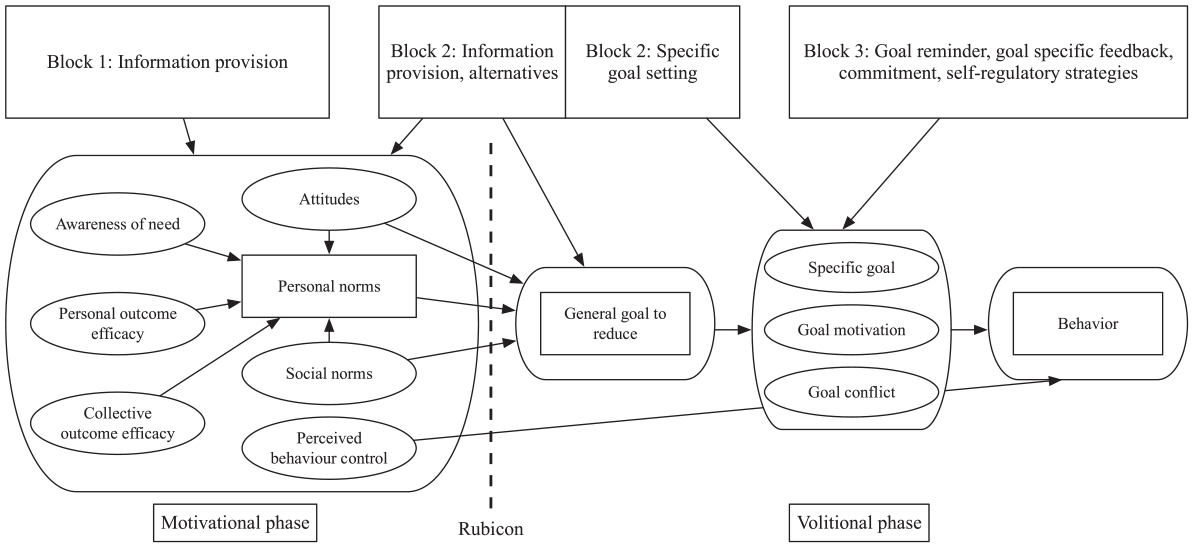
Theoretical model underlying the intervention.
For the motivational phase, we provided information targeting awareness of need about environmental and social problems linked to clothing production and consumption, and outcome efficacy via efficacy messages (e.g., “You can make a difference by buying less clothing”). We previously found both linked to personal norms to reduce clothing purchases, which themselves strongly linked to intentions, that is, the general goal to reduce clothing purchases (Joanes et al., 2020). 1 This is in line with other previous research, which identified personal norms as crucial in an environmental behavior context (De Groot & Steg, 2009; Fornara et al., 2016; Gossen et al., 2023; He & Zhan, 2018; Helferich et al., 2023; Heidbreder et al., 2023; Van der Werff & Steg, 2015; Visschers et al., 2020). Hence, through the information material, which addressed awareness of need and outcome efficacy, we aimed at increasing personal norms and ultimately the general goal to reduce clothing purchases. We further introduced behavioral alternatives to purchasing new items of clothing and invited reflection on which ones are suitable for the individual, aiming at increasing perceived behavior control. The intervention material did not directly target attitudes and social norms.
For the volitional phase, we employed intervention strategies above and beyond information provision, first goal setting. Self-regulation refers to a set of activities related to reaching desired end states, that is, goals (Carver & Scheier, 1998), and setting oneself a specific goal has been identified as a first important step of self-regulation (Hennessy et al., 2020; Latham & Locke, 1991). We further provided participants with feedback for their specific goal in terms of emission and water saving potential (see e.g., Chatzigeorgiou & Andreou, 2021), and asked them to commit to their goal in order to increase goal motivation (see e.g., Cooper et al., 2024). Next, planning how to implement one’s goal and how to shield it from disruptions and temptations have been further necessary steps of goal striving (Mann et al., 2013; Nielsen & Hofmann, 2021). To facilitate both processes and to reduce goal conflict, we provided participants with self-regulatory strategies as proposed by Nielsen (2017) (e.g., avoiding temptations such as clothing retailer newsletters).
In summary, in order to move individuals from one phase to the next, we developed three distinct intervention blocks targeting the different phases and their respective mechanisms of action: The first block employed the strategy of information provision and aimed at the formation of a general goal to reduce clothing purchases, that is, “crossing the Rubicon.” The second block first provided further information and an exercise to reflect on alternatives to purchasing new clothing to strengthen perceived behavior control. This marked the end of the motivational phase and the beginning of the volitional phase. In the volitional phase, individuals contemplated and planned strategies on how to best reach the formed goal. The second and third block therefore contained strategies for implementing the general goal to reduce purchases, namely specific goal setting, goal-specific feedback and commitment, in order to increase goal motivation and self-regulatory strategies to reduce goal conflict.
Collective Action
Furthermore, we added a collective perspective to our intervention content through collective efficacy messages and specific group feedback on the saving potential of the group’s behavior (Bamberg et al., 2018). Staying within planetary boundaries, like many other goals, is only possible through shared efforts, and the role of collective action for climate change has been previously acknowledged (Barth et al., 2021; Fritsche et al., 2018; Reese, 2023). According to the social identity model of collective action (SIMCA) (van Zomeren et al., 2008), identification with a group is one major factor for encouraging collective action. Identification with a group can lead to collective efficacy beliefs, that is, individuals’ beliefs in their shared ability to reach common goals (Ucar et al., 2023), which in turn can have an influence on collective action (Masson & Fritsche, 2021). Collective efficacy was found to positively influence group functioning and investment of group members with the group and its goals (Bandura, 2000). It has been linked to activism and policy support intentions for reduced household plastic waste (Heidbreder et al., 2023) and support of solar panels (Johnson & Reimer, 2023). Furthermore, it was found to either be even more relevant than self-efficacy in collectivist cultures (Chen, 2015) or influential only if it led to a simultaneous increase in self-efficacy (Jugert et al., 2016). Moreover, group feedback can be an indicator of what other people are doing and, therefore, might influence social norms (Abrahamse & Steg, 2013). It has the potential to convey a group norm and therefore induce behavior change through peer pressure to behave according to that norm. Previously, we found that perceived social norms are relevant for reducing clothing purchases (Joanes, et al., 2020, 2020). We therefore test in our study the effects of a collective perspective on identification with the group of other study participants and the proposed model variables. We expect a difference particularly for collective outcome efficacy, perceived social norms, the general goal to reduce clothing purchases and clothing purchases.
Hypotheses
We conducted a controlled experimental study that comprised a passive control group and three intervention groups. One intervention group received only information (information only group). The other two intervention groups received the same information along with additional intervention content, which included specific goal setting, feedback, commitment, and self-regulatory strategies. One of these groups received strategies framed in an individual context (e.g., “You can have an impact”), while the other group received strategies framed in a collective context (e.g., “Together, we can have an impact’) (individual and collective GFC groups, respectively). Regarding the effects of the intervention, we hypothesize that:
(H1) clothing purchases decrease in the intervention groups that receive further strategies above and beyond information provision (individual and collective GFC groups) but not in the control group and the information only group;
(H2) the general goal to reduce clothing purchases, related mechanisms of action (awareness of need, outcome efficacy (personal and collective), personal norms, attitudes, social norms) and perceived behavior control increase in all intervention groups but not in the control group;
(H3) outcome efficacy (personal and collective), social norms and the general goal to reduce increase and clothing purchases decrease more in the collective GFC group compared to the individual GFC group.
To reveal mechanisms underlying the intervention effects, we further explore how changes in theory-derived mechanisms of action relate to changes in clothing purchases, the general goal to reduce clothing purchases and personal norms.
Method
Design and Participants
In a multiple treatment pre-/post-test control group design with follow-up (4 × 3 design) we tested the effects of different behavior change strategies on clothing purchases and various mechanisms of action for four groups at three timepoints.
Participants aged 18 to 65 with a substantial level of clothing purchases were recruited in the United Kingdom through a pre-screen questionnaire on the research platform Prolific. Participants were eligible if they purchased a minimum of three to four items in the past 3 months. Out of the 877 individuals who completed the pre-screen survey, 736 met the criteria and qualified for the intervention study. Of these, 579 participants finished the intake survey and were equally and at random assigned to each of the group conditions. Participants were blinded to their experimental group assignment until after the experiment concluded. Common for longitudinal studies, some participants dropped out of the study at different time points. In addition, some participants could not be uniquely identified across all measurement points and were not included for further analysis. A total of 415 participants completed the study including the 1-month post-test period measurements (113 participants in the control group, 107 participants in the information only group, 98 participants in the individual GFC group, and 97 participants in the collective GFC group), resulting in a pre-post-test attrition rate of 28.32%. A total of 346 participants answered the follow-up measurement (99 participants in the control group, 91 participants in the information only group, 74 participants in the individual GFC group, and 82 participants in the collective GFC group), resulting in a pre-test follow-up attrition rate of 40.24%. Participants received monetary compensation for each part they answered, along with a bonus payment for completing all seven parts, totaling a compensation payment of £12.00/$15.52.
The initial sample size was determined by the needs for larger sample sizes for the path model (Sim et al., 2022) and expected dropout through the study. A post-hoc sensitivity analysis was calculated using G*Power Version 3.1.9.6 (Faul et al., 2009). At an α-error probability of .006 and power of 0.95 we estimated sensitivity to effect-sizes as low as f = 0.11 in mixed ANOVA with our final sample of 415 participants.
The final sample at T2 was not representative for the British population. Women were overrepresented with 61%. The mean age was 37.7 years (SD = 12.1) and median personal monthly net income was £1,101–1,300/$1,424–1,681.
Materials
Intervention
The intervention consisted of three intervention blocks. On each of them participants were provided with material depending on their membership in one of the intervention groups (see Figure 2 for an overview of the timeline of the intervention and Table S1.1 for a detailed description of the intervention material of each intervention block by day and group). The information-only group received content aimed at increasing awareness of the need and outcome efficacy, fostering personal norms, and encouraging the general goal of reducing clothing purchases. This group also completed an exercise to reflect on alternatives to purchasing new clothing items, which aimed to enhance perceived behavioral control. The intention was to move participants from the motivational phase to the volitional phase and help them form a general goal to reduce their clothing purchases.
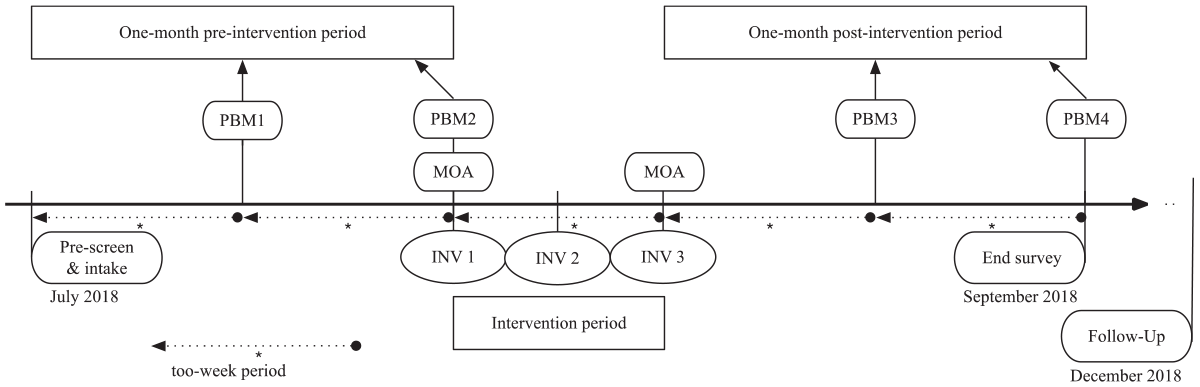
Intervention timeline and measurement points.
The individual and collective GFC groups received the same material as the information-only group, with additional components. Specifically, these groups (A) were encouraged to set a specific goal for reducing their clothing purchases during the 1-month period following the last intervention session. The individual GFC group set personal goals, while participants in the collective GFC group set a goal for themselves in order to contribute to the group goal. Furthermore, (B) both groups received feedback on the CO2 and water-saving potential of their specific goals. They were also asked to commit to their goals to enhance goal motivation. Lastly, (C) they were provided with self-regulation strategies, such as avoiding situations where they would typically buy clothing or unsubscribing from clothing retailer newsletters (see Supplemental Section S1.2 for details on the self-regulation strategies). These strategies were related to action and coping planning, supporting participants in case of goal conflict and ensuring that their goals were translated into behavior.
The control group participants answered the same questions regarding clothing purchases and mechanisms of action as participants in all other groups, but they were not presented with any intervention material. In order to distract them from the items involving environmental associations, they were asked additional, clothing-related items which were not linked to environmental aspects (e.g., regarding clothing brand loyalty). This was also to ensure that they reflected on the topic of clothing and clothing consumption to a comparative extent as the other groups. Simply thinking about a consumer good might be a potential source for prompting purchase behavior (Klöckner & Ofstad, 2017; Ottersen et al., 2022). Therefore, we aimed to engage all participants in equal amounts of thinking about clothing. Control group participants were instructed that they will see repeated measures regarding their clothing purchase behavior (“count twice” what you bought) in the upcoming study period and that this is part of the research.
Questionnaire
Table S1.2 details full item wording, reliability measures (McDonald’s omega, ranging from ω = .79–.98 apart from identification with participants in this study (ω = .61)) and exact timepoints for each measure. Questions were identical for each variable between the different timepoints. Where relevant, change scores were calculated as arithmetic difference between T2 and T1 questionnaire scores. Participants were asked further questions not reported here as this study was part of a bigger research project.
Clothing Purchases
Clothing purchases were assessed as number of clothing items purchased in the last 2 weeks—twice before the intervention and twice directly after the intervention. For each (before and after) the two 2-week intervals were added up to purchases in 1 month before (pre) and after (post) intervention. At follow-up, participants indicated their purchases once for the past month.
General Goal to Reduce Clothing Purchases
The general goal to reduce clothing consumption was measured through the importance of the goal “to reduce my clothing consumption” ranging from 1 (not very important) to 7 (very important), also including the option to indicate “I don’t have this goal” (0). The general goal was measured at the intake, 4 weeks after the intervention at the end survey and at follow-up.
Theory-Derived Mechanisms of Action
Five items measured personal norms to reduce one’s personal clothing consumption (e.g., I feel morally obliged to reduce my personal clothing consumption). Attitudes towards reducing one’s personal clothing consumption were measured using a 7-point semantic differential scale with four polar adjectives for the sentence “In general, I think reducing my personal clothing consumption is . . .,” for example, unimportant—important. Social norms around reducing clothing consumption were measured with two items each for descriptive (e.g., “People who are important to me reduce their personal clothing consumption”) and injunctive norms (e.g., “People who are important to me expect me to reduce my personal clothing consumption”). Perceived behavior control was measured with three items (e.g., “If I want to, I will be able to reduce my personal clothing consumption in the next 3 months”). Awareness of need (e.g., “Clothing production uses vast amounts of energy and water/operates under unsafe working conditions”) and outcome efficacy (personal, i.e., “Through my personal clothing consumption, I can. . .” and collective, that is, “Collectively, through our clothing consumption decisions, we as consumers can. . .”) were measured each with six items that referred to the same issues of environmental and social concern for all three mechanisms.
The above items were developed and tested in our previous research (Joanes, 2019; Joanes et al., 2020), and participants answered on a seven-point Likert scale ranging from “strongly disagree” to “strongly agree”. The specific goal to reduce clothing purchases was measured with a single item asking to either set a specific goal of not buying any new item or a set number of items less, or to set a goal of buying less but without specifying a number. Answer categories ranged from 1 “I set myself the goal of buying NO new item of clothing at all” to 4 “I do not want to reduce my clothing consumption and do not want to set myself a goal. Please explain your reasons shortly in the following.” Goal motivation was measured with three items (e.g., “I am motivated to fulfill my personal goal”) and goal conflict was measured with one item (“I expect to experience conflicts between my personal goal and other goals I have”).
Identification with Participants in this Study
Participants’ identification with the group of other Prolific members taking part in this study was assessed with 14 items following Leach et al.’s (2008) multi-component model of in-group identification, which includes the dimensions solidarity, satisfaction, centrality, individual self-stereotyping and in-group homogeneity. Participants rated their agreement to items such as “I feel a bond with other participants in this study” on a 7-point Likert scale. The items were presented together with the third purchase behavior measurement (PBM3).
Rating of Intervention
Participants rated the intervention material (i.e., the information videos, written information provided and the exercise to reflect alternatives to purchasing clothing) on a 7-point semantic differential scale with seven polar adjectives (e.g., bad—good, uninformative—informative) after the material was presented at intervention day 2. They rated the overall study on a 7-point semantic differential scale with six polar adjectives (e.g., irrelevant for me—relevant for me, difficult to follow—easy to follow) during the end survey.
Procedure
The intervention and data collection took place online between July and September 2018 (1-month pre-intervention, 2-weeks intervention, 1-month post intervention) with a 3-month follow up in December 2018. Participants independently engaged with the questionnaires and intervention material in pre-defined time periods on their own devices. We provided questionnaires to participants via the Qualtrics survey platform and made the intervention material available on websites created using the website building and hosting platform Squarespace.
Data collection took place during two measurement periods: a 1-month pre-intervention period (T1) and a 1-month post-intervention period (T2). Within each period, multiple measurements were conducted with different questionnaires at different time points. Additionally, there was a single follow-up questionnaire measurement (T3) after 3 months. A timeline and overview of all study parts and measurement time points is shown in Figure 2. Within each measurement period and at follow-up, clothing purchase behavior, the general goal to reduce clothing purchases and further mechanisms of action 2 were measured. Measurements were equal for all participants apart from measurements relating to specific goal setting, goal motivation, and goal conflict. Specific goal setting was only asked for participants in the individual and collective GFC group on intervention day 2. Goal motivation and goal conflict were only asked for those who have indicated a specific goal on intervention day 3.
The 1-month pre-intervention measurement period (T1) included the intake, two short purchase behavior measurements (PBM1 and PBM2) and a mechanisms of action survey at the beginning of intervention day 1. On PBM1 and PBM2 participants reported on the number of clothing items they had purchased in the past 2 weeks, which together formed the purchases 1-month pre-intervention. PBM2 was conducted just before the intervention material of intervention day 1 was presented. The 1-month post-intervention measurement period (T2) included a mechanisms of action survey at the end of intervention day 3 and short behavior measurements for the number of items purchased (PBM3 and PBM4), which were combined into clothing purchase 1-month post-intervention, and an end survey. At follow-up 3 months after the end survey (T3), clothing purchase in the past month (PBM5, measured once for the past month), the general goal to reduce clothing consumption and all mechanisms of action were measured.
We presented intervention material at the beginning (intervention day 1), in the middle (day 2) and at the end (day 3) of a 2-week period, hence there was 1 week between each intervention block. Both provision of intervention material and data collection linked to intervention blocks was realized via a website called different for each group; “count.twiceresearch.org” for the control group, “think.twiceresearch.org” for the information condition, “ithink.twiceresearch.org” for the individual condition and “wethink.twiceresearch.org” for the group condition. Across all groups and intervention days, the websites contained modern and appealing videos, graphics and texts matching the groups intervention strategies (e.g., depicting multiple people that formed a goal to reduce their clothing consumption for the collective GFC group, see examples in Figure S1.1).
Analysis Strategy
First, a 4 × 3 mixed ANOVA with group as between-subject factors and time (T1, T2, and T3) as within-subject factor was carried out for clothing purchases, the general goal to reduce clothing purchases and the six further theory-derived mechanisms of action that were measured at multiple time points. Analysis were conducted using IBM SPSS for Mac (Version 29.0.1.1). Of interest was the group x time interaction in order to assess the impact of different intervention strategies, which, if significant, was followed up with pre-defined contrasts in line with each hypothesis. Hence, we compared different combinations of the intervention groups (depending on the hypothesis tested) from pre-intervention (T1) to post-intervention (T2) and from pre-intervention (T1) to follow-up (T3). We applied a Bonferroni correction for multiple comparisons based on nine ANOVAs (α = .006). In case of violation of the assumption of sphericity, we adjusted the degrees of freedom using the Huynh-Feldt estimates of sphericity.
Second, we tested a path model with Mplus (Version 8) to explore the links between changes in theory-derived mechanisms of action, the general goal to reduce clothing purchases and clothing purchase behavior for the whole sample. The path model was estimated with maximum likelihood estimation and bootstrapping (N = 1,000) in order to obtain robust standard errors and 95% confidence intervals for each estimate.
Thirdly, we applied multiple regression analyses using IBM SPSS for Mac (Version 29.0.1.1) to assess the additional links between specific goal setting, goal motivation and goal conflict and changes in clothing purchases. 3 We conducted two multiple regression analyses to maximize use of sample size. The first assessed the relationship between specific goal setting and changes in purchase behavior and included all participants from the individual and collective GFC group. The second assessed the relationship between goal motivation, goal conflict and changes in purchase behavior and included only participants who had set a specific goal, since only those reported on their goal motivation and goal conflict. Age, gender, income, and number of clothing items purchased at T1 were included as control variables for the path model and the multiple regression analyses.
Results
Initial Checks, Descriptive Results and Intervention Rating
Supplemental Section 2 shows descriptive statistics for all variables at T1, T2, and T3, bivariate correlations and baseline group comparisons. The groups did not differ significantly before the intervention (T1) on either outcome variables, mechanisms of action or age, gender, and income. We therefore assume that the randomized allocation to intervention groups was successful (see Table S2.3).
Participants rated the intervention material (information videos, written information, exercise to reflect alternatives to purchasing clothing) well (M = 5.28–5.81, range 1–7), and there were no significant differences between the intervention groups. Overall study rating was good across all groups (M = 5.60–6.06, range 1–7). A one-way ANOVA revealed that there was a statistically significant difference between at least two groups (F(3, 404) = 4.28, p = .005). Tukey’s HSD test for multiple comparisons found that the mean value of overall study rating was significantly higher for the individual GFC group than the control group (p = .003, 95% CI [−0.80, −0.12]). There was no statistically significant difference between the other groups. Equally, there were no statistical group differences for the identification with the group of other study participants.
Changes in Clothing Purchases and Mechanisms of Action: Hypotheses 1 and 2
The first two hypotheses proposed that clothing purchases only decreases for the individual and collective GFC group who have received further strategies above and beyond information provision (H1) and that all other mechanisms of action increase for the three intervention groups but not for the control group (H2). A square root transformation of the purchase variable was required because of the right skewedness of the data. Table 2 presents results of hypothesis conform contrasts from a mixed ANOVA for clothing purchases and all mechanisms of action. Detailed results of each mixed ANOVA including means and pairwise comparison for each group and time point, are printed in Supplemental Section 3.
Mixed ANOVA Results Based on Hypothesis Conform Contrasts.

Note. Comparisons are effects from separate contrasts within a mixed ANOVA. Contrasts are the following: 1. Control and information only versus individual GFC group and collective GFC group. 2. Control versus information only and individual GFC group and collective GFC group. 3. Individual GFC group versus collective GFC group. Full mixed ANOVA results are reported in the online Supplemental Section 3.
Time × group interaction not significant at p ≤ .006.
From T1 to T2, results confirmed H1 and partially H2 (see Table 2). For H1, clothing purchases decreased significantly for the individual GFC group (MT1 = 3.96, MT2 = 1.64) and collective GFC group (MT1 = 3.46, MT2 = 1.86), but not for the control and information only group (see Figure 3a). In line with H2, the general goal to reduce (see Figure 3b), personal norms, awareness of need, personal outcome efficacy and perceived behavior control increased significantly comparing the three intervention groups to the control group. The group × time interaction for attitudes and social norms was not significant, and we therefore did not analyze contrasts. Collective outcome efficacy significantly differed between the groups across all three time points (group × time interaction, F (5.85, 639.43) = 3.71, p = .001, partial η2 = .03, ε = .98). However, the contrast between the control group and the other three intervention groups was not significant.
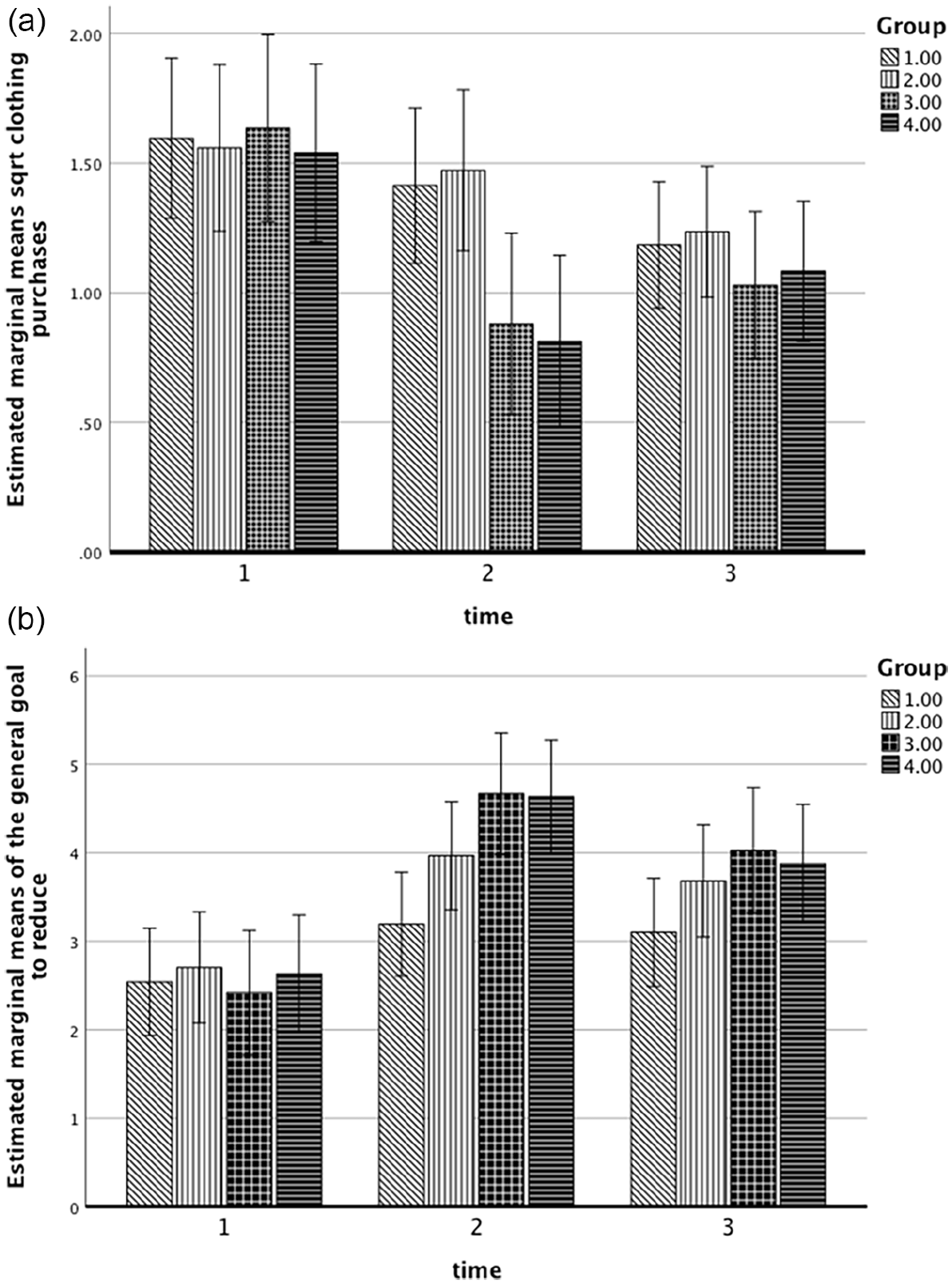
(a) Estimated marginal means of sqrt clothing purchases and (b) Estimated marginal means of the general goal to reduce clothing purchases.
Assessing the stability of these changes by comparing T1 to T3 showed slightly different results. While clothing purchases on average across the whole sample were lower at T3 compared to T1 (MT1 = 3.63, MT3 = 2.02, t(341) = 6.68, p < .001, Cohen’s d = .36), the contrast comparing clothing purchases of the control and information only group with the individual and collective GFC group was not significant. Accordingly, between T1 and T3, the control group, the individual and the collective GFC group significantly decreased clothing purchases, while the information only group did not. Furthermore, at T3 there was no significant difference in clothing purchases between the groups (see pairwise comparisons Table S3.2b). The changes in the general goal to reduce, personal norms, awareness of need, personal outcome efficacy, and perceived behavior control were stable, as they increased significantly comparing the three intervention groups to the control group. Additionally, collective outcome efficacy increased significantly from T1 to T3 comparing the three intervention groups to the control group.
Effects of Collective Perspective on Clothing Purchases, the General Goal to Reduce and Mechanisms of Action: Hypothesis 3
Additionally, we conducted contrasts as hypothesized comparing the individual GFC group with the collective GFC group from T1 to T2 and from T1 to T3 for clothing purchases, the general goal to reduce clothing purchases, personal outcome efficacy and collective outcome efficacy (see Table 2). We did not contrast social norms since there was no significant interaction effect nor main effect of group in the ANOVA of this mechanism of action. For neither variable the contrasts indicated any significant differences. Hence, the group condition had no impact on either clothing purchases nor any mechanism of action as hypothesized.
Exploring the Role of Mechanisms of Change for Clothing Purchases, the General Goal to Reduce Clothing Purchases and Personal Norms
A path model across all groups was estimated to test the proposed relationships between changes in theory-derived mechanisms of action and changes in the general goal to reduce clothing purchases and clothing purchases between T1 and T2. The path model and standardized regression coefficients are depicted in Figure 4. The fit of the structural model was adequate, with χ2(19, 399) = 27.80, χ2/df = 1.46, p = .087, CFI = 0.98, TLI = 0.97, RMSEA = 0.03 (90% CI [0.00, 0.06]), SRMR = 0.02 (Iacobucci, 2010) . For all model parameters, (un)standardized path coefficients and bootstrapped 95% confidence intervals are presented in Table S4.1. The standardized path coefficients showed no significant relationship between the change in the general goal to reduce and the change in clothing purchases, not confirming this mechanism of action. The only direct mechanism of action for changes in the general goal to reduce was a change in personal norms (β = .32, 95% CI [0.22, 0.43]). Changes in personal norms were related to changes in attitudes (β = .24, 95% CI [0.16, 0.33]), social norms (β = .33, 95% CI [0.25, 0.41]), awareness of need (β = .15, 95% CI [0.06, 0.24]), personal outcome efficacy (β = .17, 95% CI [0.08, 0.27]) and collective outcome efficacy (β = .10, 95% CI [0.01, 0.20]). The general goal to reduce was indirectly affected by changes in attitudes (βindirect = .08, 95% CI [0.05, 0.13]; βtotal = .10, 95% CI [−0.02, 0.20]) and social norms (βindirect = .11, 95% CI [0.07, 0.17]; βtotal = .14, 95% CI [0.04, 0.23]) through personal norms. Explained variance for the change in clothing purchases was R2 = .42 mainly due to purchase at T1, for the change in the general goal to reduce R2 = .12 and for changes in personal norms R2 = .39. All direct, indirect and total effects are reported in Table S4.2.
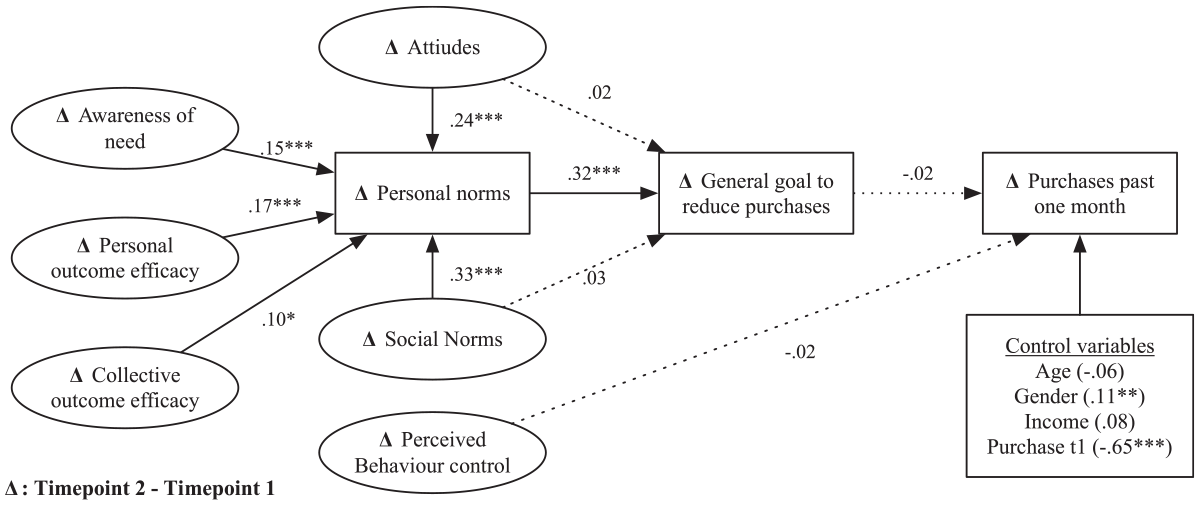
Path model testing mechanisms of action for changes in the general goal to reduce purchases and clothing purchases.
Two additional multiple regression analyses were run with participants of the two GFC groups only to discern the role of having a specific goal (instead of a general goal), goal motivation and goal conflict as mechanisms of action for clothing purchases in more detail. Unstandardized regression coefficients and 95% confidence intervals for both regression analyses are depicted in Table 3. Detailed regression results are reported in Table 4.3. The first regression including age, gender, income, purchases at 1 month pre-intervention (T1) and a specific reduction goal as predictors was overall statistically significant (adjusted R2 = .73, F(5, 180) = 98.85, p = <.001). Results showed that purchases pre-intervention (β = −.87 p = <.001) and having a specific reduction goal (β = .44, p = .03) significantly relate to differences in clothing purchases between T2 and T1.
Multiple Regression Testing Further Mechanisms of Action for Changes in Clothing Purchases.

Note. Dependent variable: difference in number of items purchased between 1 month pre- and 1-month post-intervention. Unstandardized regression coefficients and 95% confidence intervals in brackets. Specific reduction goal coded from 1 = specific goal to buy no new item to 4 = no goal.
≤.05, **≤.01, ***≤.001.
The second regression including age, gender, income, purchases at 1 month pre-intervention (T1), goal motivation and goal conflict as predictors was overall statistically significant (R2 = .79, F(6, 135) = 86.64, p ≤ .001). Purchases pre-intervention (β = −.84 p ≤ .001) and goal conflict (β = .31 p = .01) significantly related to differences in clothing purchases between T2 and T1.
Discussion
The present study examined the effects of a cost-effective and easy to administer online intervention on the reduction of clothing purchases, a behavior that is part of the sufficiency strategy for sustainability. The intervention comprised several strategies. First, we provided information about environmental and social impacts of clothing production, alternatives to buying new clothing items and outcome efficacy information (e.g., “you can make a difference”) to target the development of a general goal to reduce clothing consumption. Second, we applied further strategies to help translate this goal into action, namely specific goal setting, goal-specific feedback, goal commitment, and self-regulatory strategies.
Regarding the first aim of the current study, the results showed that the combined intervention with further strategies was able to reduce the number of items participants purchased in the course of a month directly after the intervention, and during a month at a follow-up three months later. Importantly, as proposed by our theoretical framework, providing information alone was not enough to change behavior. While all intervention groups increased their general goal to reduce purchases compared to the control group, only the intervention groups that received further strategies above and beyond information provision actually changed their purchase behavior. They set themselves a specific goal of how many items less they would like to buy, received automatized but personalized feedback about the savings potential of their goal in terms of kg CO2 and liter water, and committed to their goal. Additionally, they reflected self-regulatory strategies for when they experience goal conflict or in order to avoid such conflict in the first place (e.g., avoid passing clothing stores on the way home from work). The need for additional strategies above and beyond information is in line with previous research (Bergquist et al., 2023), for example, on reduced meat consumption and food waste (Bianchi et al., 2018; Loy et al., 2016; Visschers et al., 2020) or for health behaviors (Eibich & Goldzahl, 2020; McDermott et al., 2016).
Likewise, in line with previous research (e.g., Visschers et al., 2020), the information provided as a first intervention block changed proposed mechanisms of action, namely, the general goal to reduce clothing purchases, personal norms, awareness of need, personal outcome efficacy and perceived behavior control. As proposed, these changes were observable comparing all intervention groups to the control group, indicating that information provision was sufficient in producing these changes. Furthermore, the results show that the mechanisms of action explicitly targeted with the information material (awareness of need and both personal and collective outcome efficacy) as well as theoretically linked personal norms changed significantly in all intervention groups as compared to the control group. However, social norms and attitudes tendentially increased over time, but not in interaction with group assignation. Both are neither explicitly targeted with the intervention material nor theoretically linked to the explicitly targeted mechanisms of action (awareness of need and outcome efficacy). The results therefore on the one hand strengthen the support for the theoretical rational of the intervention. On the other hand, they might point towards a general effect that study participation had on social norms and attitudes for all participants independent of group (e.g., through simply consciously counting the items purchased or answering the survey questions).
With regard to the second aim of the current study, a path analysis across the whole sample showed, in line with our theoretical framework, that changes in the explicitly targeted mechanisms of action (awareness of need and outcome efficacy) were linked to a change in personal norms. Such a change in personal norms was related to a change in the general goal to reduce clothing purchases, which is in line with previous literature regarding sufficiency behaviors (De Groot et al., 2021; Gossen et al., 2023; Heidbreder et al., 2023). The proposed direct links between changes in social norms and attitudes with changes in the general goal to reduce clothing purchases, however, could not be confirmed. They were instead indirectly related to the general goal to reduce personal clothing purchases via their relationship with personal norms. Together, these results point towards important mechanisms of action for changes in the general goal to reduce clothing purchases. At the same time, the relationship between changes in the general goal to reduce clothing purchases and the actual reduction of clothing purchases was not significant in our study. This is in line with previous research regarding the intention-behavior gap (Feil et al., 2023, Webb & Sheeran, 2006). Instead, we found support for further proposed mechanisms of action, namely specific goal setting and lower goal conflict, which were targeted with intervention strategies above and beyond information provision.
In summary, information seems to suffice to change general goals or intention, but not to change actual behavior. To produce behavior change, additional strategies, such as specific goal setting, goal-specific feedback, goal commitment, and self-regulatory strategies, are necessary.
The results highlight two key points for intervention research: first, the importance of using strategies beyond just providing information, and second, the need to measure actual behavior rather than just behavioral goals or intentions to evaluate intervention success, as the latter two are not always connected. We can only speculate on the necessity of information provision for behavior change. It is possible that the additional strategies alone could have changed clothing purchases. Alternatively, according to stage models like the Rubicon Model of Action Phases (Achtziger & Gollwitzer, 2018; Gollwitzer, 1990), both types of strategies may be necessary to prompt action. For instance, participants in both CFG groups set specific goals to reduce clothing purchases, which might not have happened without first understanding the importance of such a goal through information. Our current research design does not allow us to test either assumption, and future research should consider testing strategies like specific goal setting without prior information provision.
Based on the third aim of the current study, we also examined the difference between individual and collective outcome efficacy messages and goals regarding their potential to change relevant outcomes. The results showed no additional benefit from the collective approach for either clothing purchases or the mechanisms of action. One possible explanation is the nature of the group setting used. Participants in the collective GFC group did not identify with the group more than participants in other study groups, suggesting the group intervention was too subtle and the Prolific participant group not relevant enough. Similarly, Frick et al. (2021) found no impact on behavior when targeting social norms by manipulating likes in an online setting. In both our study and Frick et al.’s, participants did not communicate with each other, unlike in previous successful group studies (Hamann et al., 2021; Staats et al., 2004).
One result needs to be discussed more in detail: later on, at the 3-month follow up, there were no significant differences in the number of items bought between any of the intervention groups and the control group. We could observe that all four groups reduced their clothing purchases at the follow-up point compared to the pre-test period. For the two intervention groups that reduced their clothing purchases already considerably in the 1-month period directly after the intervention it was likely that they had little room for further reductions. In line we could see the number of items they bought in the past month at the follow-up did not differ from the number of items they bought in the 1-month post-test period directly after the intervention. That is, they had kept their lower level of reduction from directly after the intervention. Unexpected, however, was the reduction of items purchased by the control group. They significantly reduced their clothing purchases at follow-up compared to before the intervention, leading to no significant differences at follow-up between the groups. Results for the information only group showed a similar tendency, however not statistically significant.
At this point, we can only speculate what caused the change in behavior across these two groups. While intervention effects are clear comparing the pre- and post-test period, taking the results of the follow up we cannot exclude that participation in the study in itself had effects on clothing purchases, no matter if intervention content was received or not. The control group was, in line with all intervention groups, regularly counting the number of items bought during the whole intervention period. Furthermore, they answered all model related items (e.g., items asking about awareness of need or personal norms with regard to reducing consumption). One possible explanation is a “mere measurement effect,” where answering survey items prompted processes in the control group similar to the intervention material’s impact on the other groups. However, our study’s results challenge this explanation. First, the effect was not observed from the pre-test to the post-test period but only at follow-up. Second, there were no changes in mechanisms of action for the control group between measurement points. Another related explanation is that by counting the number of items purchased, control group participants reflected on their consumption, realizing it exceeded their needs and thus reducing their purchases without changes in mechanisms of action. A previous online field intervention also found a similar reduction in clothing consumption for both experimental and control groups (Frick et al., 2021). Both explanations highlight a methodological challenge in obtaining relevant information from the control group without influencing them through the measurement process (Freene et al., 2020; French et al., 2021; König et al., 2022).
Two further different potential explanations resort to macro structural reasons. Firstly, there has been specific weather events that might have limited or enhanced person’s perceived need for clothes. December 2018 was much warmer than average, potentially slowing sales in winter clothes. June and July prior the intervention, however, have been characterized by a heat wave (McCarthy et al., 2019; Met Office, 2018). Qualitative response from selected participants indicated that they had purchased summer clothing due to that reason. This potentially could explain why participants bought more before the intervention and significantly less at the 3-month follow up. Secondly, during the time of study, the United Kingdom has found itself in political turbulent times due to Brexit, particularly in the 3 months prior to the follow up. As a result, consumer confidence was reported to have decreased especially since summer 2018 (Gfk, 2018). Together, both point towards potentially strong impacts on individuals’ clothing purchases in the socio–cultural and biophysical context and hence outside the realm of this intervention (Schill et al., 2019).
While this study provides valuable insights for possible behavior change strategies, its limitations and future research ideas need to be discussed. It needs to be noted that our study is based on self-reports of purchase behavior, which might not reflect actual behavior. Recall or social desirability biases might have impacted participant’s answers, and future studies could explore options to measure actual purchases more directly. One major limitation of this study is the fact that at the follow-up all participants had reduced their clothing purchases. Comparing T1 with T2 we can assume that the intervention has worked, but comparing T1 with T3 we cannot rule out that further factors above and beyond our intervention had an impact on clothing purchases. The simple counting and reflecting on number of items purchased might have motivated the control group to reduce consumption, and future studies need to design a different control group and measurement approach to rule out this possibility. Furthermore, as we combined multiple behavior change strategies, we cannot single out which strategy has motivated the individual and collective GFC group to change their behavior or changed mechanisms of action. While we assume that a combination of all strategies as used here is the most promising avenue for behavior change, for practitioners, however, who might not be able to deploy the whole strategy mix, more detailed information is needed. Future research should provide a more nuanced understanding of which exact strategies are most successful for which context. Lastly, our group condition did not show the expected results. Future studies could, for example, try to use natural occurring group settings such as neighborhoods or schools, to test for additional effects through group settings.
In summary, our results show that clothing purchases can be reduced with a cost-effective intervention combining information provision with further strategies. It is up to future research to single out relevant mechanisms of action of these additional strategies on purchase behavior, as well as to assess the applicability of our intervention material in different contexts and with different populations.
Supplemental Material
sj-docx-1-eab-10.1177_00139165251315563 – Supplemental material for Think Twice—An Intervention Strategy to Reduce Personal Clothing Consumption
Supplemental material, sj-docx-1-eab-10.1177_00139165251315563 for Think Twice—An Intervention Strategy to Reduce Personal Clothing Consumption by Tina Joanes, Sonja M. Geiger and Wencke Gwozdz in Environment and Behavior
Footnotes
Acknowledgements
We would like to acknowledge Paula Marie Bürger’s valuable support for preparing the supplemental material.
Declaration of Conflicting Interests
The author(s) declared no potential conflicts of interest with respect to the research, authorship, and/or publication of this article.
Funding
The author(s) disclosed receipt of the following financial support for the research, authorship, and/or publication of this article: This work was supported by the Trash-2-Cash project (grant agreement No. 646226) funded by the European Community under the Horizon2020 program and the Mistra Future Fashion Project Phase II funded by the Swedish Mistra Foundation. The funding sources do not hold any competing interest.
Ethics Declaration
The current research effort complied with the APA Ethical Principles of Psychologists and Code of Conduct (APA, 2017) and the Declaration of Helsinki. All participants were 18 or older. No identifying data were collected. We requested informed consent and debriefed participants following the study.

Supplemental Material
Supplemental material for this article is available online.
Notes
Author Biographies
References
Supplementary Material
Please find the following supplemental material available below.
For Open Access articles published under a Creative Commons License, all supplemental material carries the same license as the article it is associated with.
For non-Open Access articles published, all supplemental material carries a non-exclusive license, and permission requests for re-use of supplemental material or any part of supplemental material shall be sent directly to the copyright owner as specified in the copyright notice associated with the article.
