



Abstract
This systematic review assesses the methodological quality of manuscripts focusing on scales that explicitly measure nature connectedness. A literature search in six electronic databases was conducted using a search strategy based on PICO guidelines. Only peer-reviewed primary research available in English language, published between 2000 and 2021, meeting the scope of this review were included. Data from 35 studies were narratively analyzed. Their methodological quality was assessed using the COSMIN Risk of Bias checklist. Only five studies were rated as high/adequate quality. Based on the findings we make the following recommendations: (a) the need for the development of a more universal nature connectedness construct, (b) the requirement to increase the methodological quality of the scales, (c) the need to identify which the scales measure trait or state, (d) the need to increase the validate scales cross-culturally, and (e) the need to develop scales that can be employed with non-adult samples.
Introduction
Both access to natural areas and engagement with nature can help to alleviate some of the societal challenges that we are facing (Barboza et al., 2021; Murphy et al., 2022; Nieuwenhuijsen et al., 2022). Global challenges in mental health (World Health Organization (WHO), 2021) are exacerbated by issues such as urbanization (WHO, 2021) which exposes city dwellers to numerous stressors. Nature has the capacity to ameliorate stressors as demonstrated with both specific nature-based interventions (Gritzka et al., 2020) and more generally, by accessing nature (White et al., 2021). A recent health impact assessment (Barboza et al., 2021) estimated that up to 43,000 lives could be saved annually in European cities if the WHO guidelines for nature access were met (i.e., 0.5 hectares within 5 min. walk of residence). The imperative to provide access to greenspace for urban citizens is highlighted by the Sustainable Development Goal 11, which is a United Nations initiative, focusing on the development of sustainable cities and communities, and the specific target 11.7 according to which “universal access to safe, inclusive and accessible, green and public spaces, particularly for women and children, older persons and persons with disabilities” (United Nations, 2022c, para.11.7) should be provided (United Nations, 2022a, 2022b, 2022c). Greenspace access is considered important for urban health and mental health, but what are the key psychological factors underlying this association.
The impact of nature experience on cognitive functioning, emotional well-being, and other dimensions of mental health has been highlighted in a recent conceptual review. This paper states that stakeholders should use a tool to anticipate the impact on mental health of the decisions they make at the environmental level. Furthermore, it strongly mentions that accessibility to nature must be increased in order to reduce health inequalities (Bratman et al., 2019). However one topic that was overlooked in that review was the concept of nature connectedness which, although it has no single definition today (Tam, 2013a), has shown a strong association with mental health and well-being (Murphy et al., 2022; W. P. Schultz, 2002; Sheffield & Lumber, 2020). Previously, nature connectedness was positively associated with positive well-being (Capaldi et al., 2014) with greater benefits for those with higher levels of nature connectedness. In addition, it has also been shown that fostering a deep sense of nature connectedness holds significant potential in encouraging individuals to engage in behaviors to protect the environment, which is important given that pressing environmental issues such as climate change are caused by human activities (Mackay & Schmitt, 2019; Oreskes, 2004). More recently, White et al. (2021), in a Pan-European study, reported that nature connectedness was also positively associated with positive well-being, negatively associated with mental distress and was, in addition to green space visits, associated with a lower likelihood of using medication to alleviate depression. Hence, it is vital to ensure further research to explore the importance of fostering the relationship between humans and nature as a pathway to well-being, mental health and pro-environmental behavior.
Up to now, various high-quality reviews have revealed that being connected to nature enables people to have a better mental health, be happier, have a greater eudaimonic well-being and in general flourish in their life (Arola et al., 2023; Capaldi et al., 2014; Pritchard et al., 2020; Yao et al., 2021). Furthermore, another systematic review found that nature connectedness is directly related to life satisfaction and quality of life (Houlden et al., 2018). More recently, a scoping review that aimed to identify and synthesize “existing measures of land, nature, and/or environmental connectedness, relatedness, and attitudes,” with a primary focus on indigenous communities, concluded that nature connectedness is not only vital for human well-being but also strongly connected to other factors, such as health, education, research, and politics. In the educational domain, for example, it highlights the relevance of including environmental education in schools, which play a decisive role in promoting nature connectedness education and fostering a connection with ancestral lands. At the policy level, for example, it highlights the significance of supporting the connection to the land, which has predominantly positive impacts on indigenous groups who have been remarkably disconnected from their lands (Keaulana et al., 2021).
It is important to point out from the aforementioned systematic reviews that all included studies used different scales based on different definitions of nature connectedness (Cervinka et al., 2012; Howell et al., 2013; Kashima et al., 2014). This disagreement in the nature connectedness construct has led to an arbitrary, confusing and disorganized growth of measurement scales (Tam, 2013a). The difficulty for researchers and clinicians is that it becomes challenging to clearly understand the measurement of the construct as an array of different instruments are employed. Such instruments include, for instance, a scale measuring nature connectedness and pro-environmental behavior (i.e., New Environmental Paradigm Scale (Dunlap & Van Liere, 1978)), or nature connectedness and empathy toward nature (i.e., Dispositional Empathy with Nature Scale (Tam, 2013b)). This lack of clarity in measurement potentially leads to confusion among stakeholders, who wish to use valid and reliable tools to measure this specific construct (Restall & Conrad, 2015; Tam, 2013a). Therefore, this systematic review aims to provide an overview, and assess the methodological quality of research validating explicit instruments that measure the nature connectedness construct in children, adolescents and/or adults with or without special needs.
Methods
The methodological procedure of this systematic review is described in greater detail in the related protocol, which, unlike this review, provides a comprehensive account of the data management and screening process utilized (Schönbach et al., 2022). This article was drafted using the “Preferred reporting items for systematic review and meta-analysis protocols (PRISMA-P) 2015 statement” (Page et al., 2021).
To conduct this systematic review, it was necessary to reach a consensus on defining the construct that encompassed both: key data from the synonymous constructs of nature connectedness that have previously been developed (see Table 1) and key information from the literature on the subject. This operational definition was developed from the extant literature and a more comprehensive definition should be developed in further research.
Definitions of the Nature Connectedness Construct from the Extant Literature.
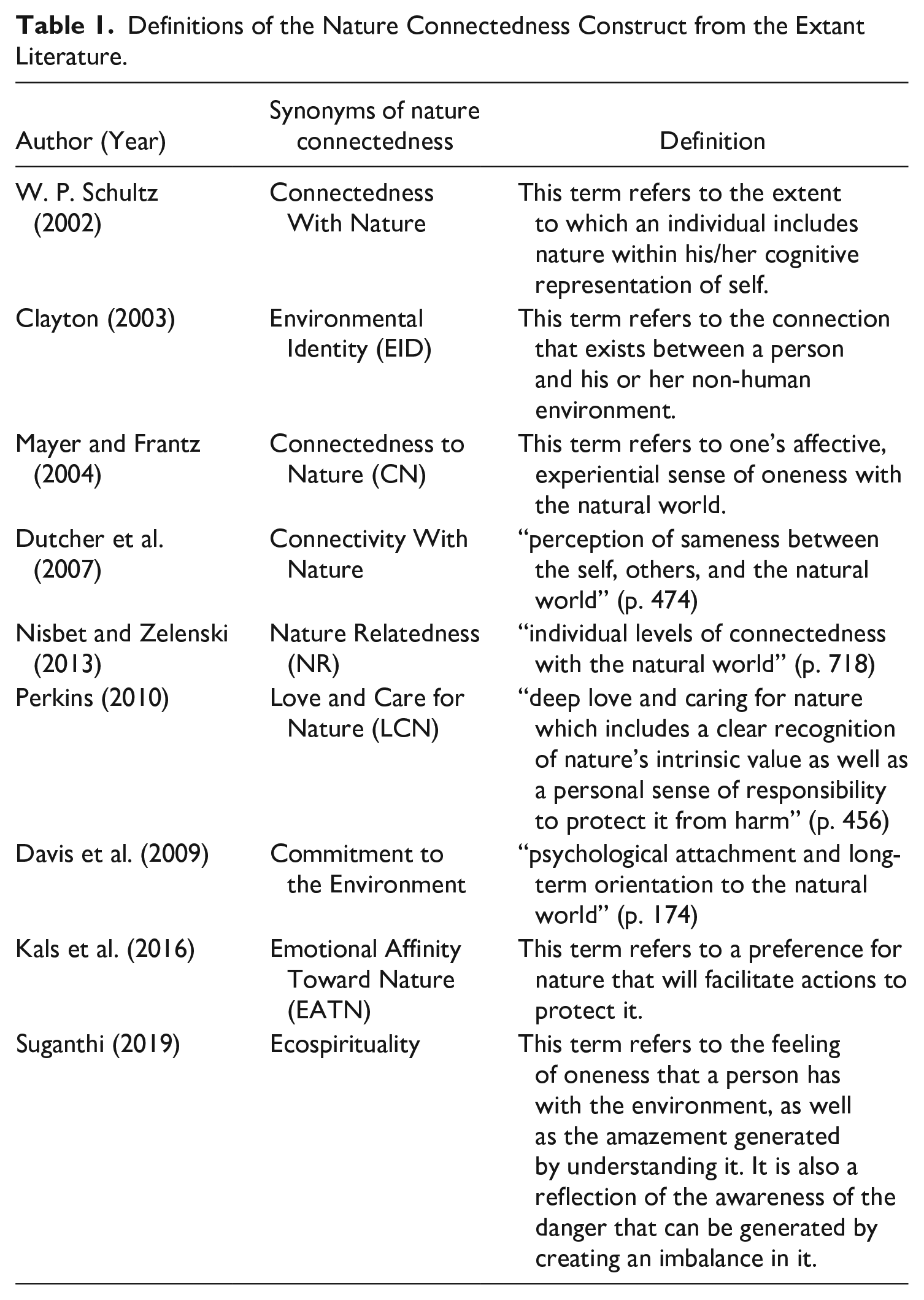
Based on the above, we developed the following preliminary definition for the purpose of conducting this review: People have a basic need of belonging (Baumeister & Leary, 1995), which can be satisfied by being subjectively (Pritchard et al., 2020) and positively (Barrable et al., 2021) connected to nature. Being connected to nature includes being close to (Wilson, 1984) or one with (Mayer & Frantz, 2004) the natural world.
Eligibility Criteria
The eligibility criteria for this systematic review is detailed in Table 2 below.
Eligibility Criteria.
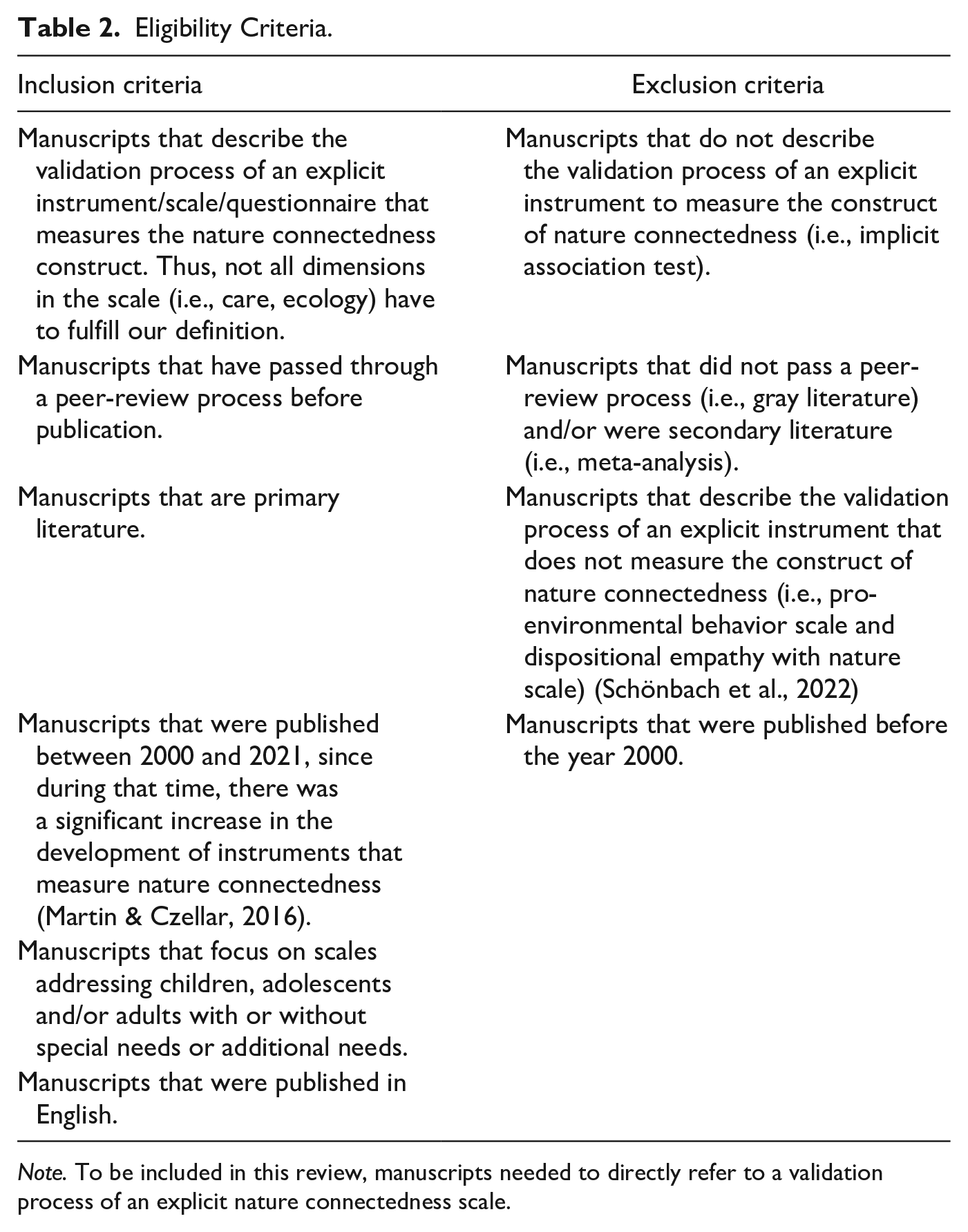
Note. To be included in this review, manuscripts needed to directly refer to a validation process of an explicit nature connectedness scale.
Search Strategy and Databases
For this systematic review, an exhaustive search strategy based on the categories of “PICO” (i.e., population, interest, context) (Murdoch University, 2021) was generated by and XT-O, with the assistance of two librarians (Schönbach et al., 2022). DMIS and XT-O previously piloted the search strategy before being entered into the following databases used for the search: PsycINFO: EBSCO, PSYNDEX: EBSCO, PubMed: NCBI, PsycARTICLES: EBSCO, Scopus: ELSEVIER, and Web of Science: Clarivate Analytics. These databases were selected because they are multidisciplinary and include topics in environmental psychology.
The search formula employed in the systematic review is outlined below: (child* OR infan* OR adolescen* OR preadolescen* OR juven* OR teen* OR young* OR youth* OR kid* OR pediatric* OR pediatric* OR boy* OR girl* OR preschool* OR schoolchild* OR schoolboy* OR schoolgirl* OR student* OR pupil* OR woman OR women OR man OR men OR adult* OR grown-up* OR elderly OR human* OR people OR person* OR individual*) and (questionnaire* OR survey* OR questionar* OR instrument* OR tool* OR scale* OR dimension* OR item* OR element* OR component* OR construct OR concept OR measur* OR evaluat* OR assess* OR rate* OR rating OR report* OR descri*) and (“commitment to nature” OR “commitment with nature” OR “connect* to nature” OR “connect* with nature” OR “relat* to nature” OR “relat* with nature” OR “emotional affinity toward* nature” OR “emotional affinity with nature” OR “inclusion of nature in self” OR “inclusion of nature in the self” OR “nature commitment” OR “nature connect*” OR “nature relat*” OR “human-nature connect*” OR “human-nature relat*” OR “self-nature connect*” OR “self-nature relat*” OR “being one with nature” OR “interconnection with nature” OR “interconnection to nature”). The terms used in the search formula mentioned above were based on existing literature (Capaldi et al., 2014; Häyrinen & Pynnönen, 2020; Pritchard et al., 2020).
Study Selection
The identified papers were imported into EndNote (Version X9), where duplicates were removed manually. Any disagreement between both reviewers was resolved by discussion. The study selection process is shown in Figure 1. Authors of relevant papers were contacted a maximum of two times to request the full text if it could not be found.
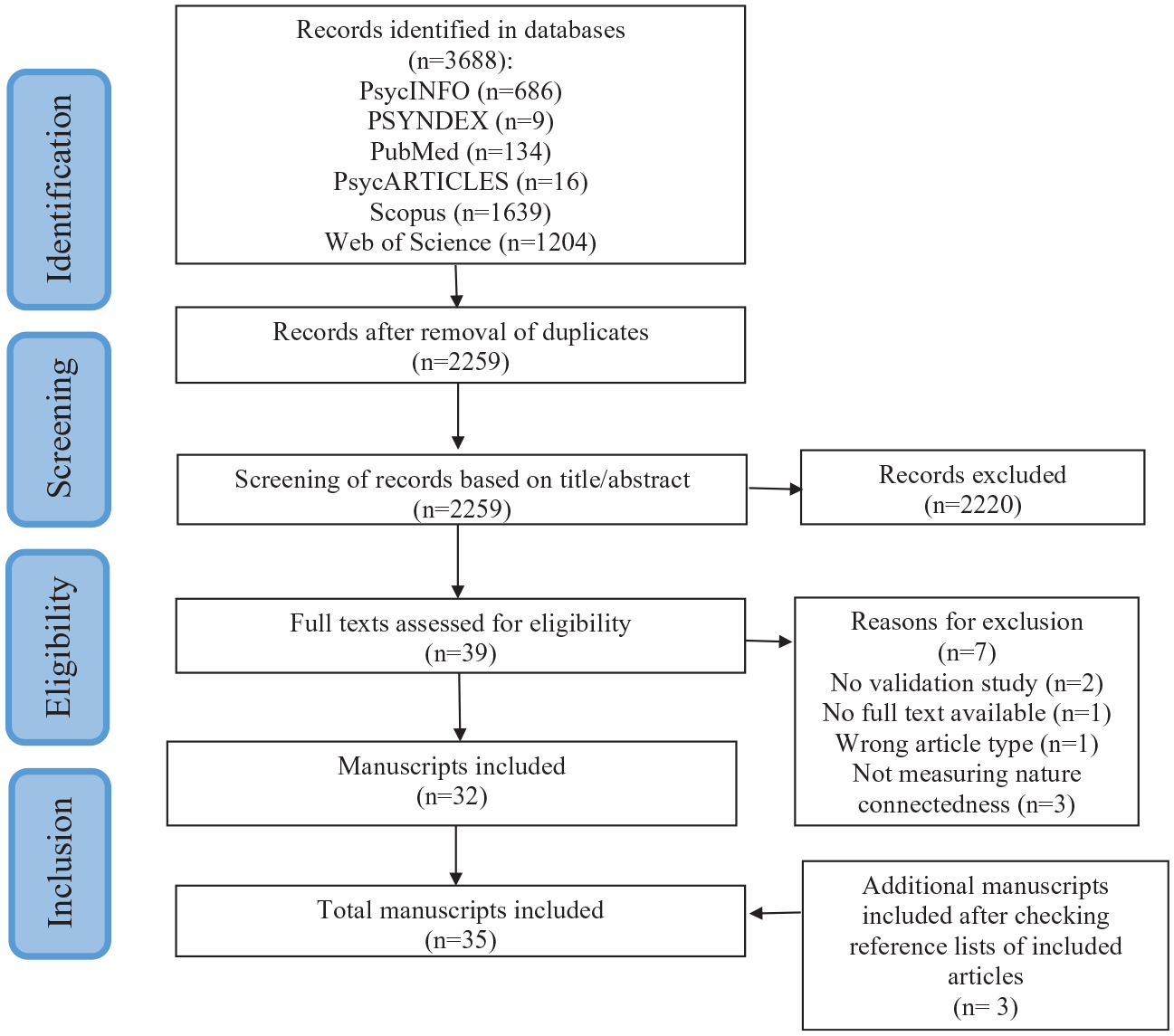
Flow diagram of the study selection process.
Data Extraction
Data extraction was performed by two independent extractors XT-O and SM. Any disagreement between both extractors was resolved by discussion. In case of a continued disagreement, the opinion of a third independent data extractor was needed and DMIS was consulted. As a consensus was always reached as a result of this procedure, no inter-rater agreement between extractors could be computed. The data of the same measuring instruments were extracted separately from each paper, if they analyzed a different type of validity and/or reliability. In the case two publications analyzed the same psychometric properties, data extraction from one was omitted. Data were extracted using a spreadsheet that [a] and [b] previously piloted as independent data extractors based on three randomly chosen articles. If data intended to be extracted was missing or uncertain, authors of included papers were contacted no more than two times. The following information was extracted based on the adapted Qualitative Assessment of Physical Activity Questionnaires (QAPAQ) checklist (Terwee et al., 2010):
(a) General details (i.e., author(s), publication year)
(b) Participants (i.e., recruitment rate, sample size, age)
(c) Measuring instrument (i.e., name of measuring instrument, construct and dimensions intended to be measured)
(d) Study design
(e) Statistical analysis
(f) Results (i.e., validity types, reliability)
Methodological Quality Assessment
The quality assessment of this systematic review was based on the comprehensive COnsensus-based Standards for selecting health Measurement INstruments (COSMIN) Risk of Bias checklist (Mokkink et al., 2018). The COSMIN checklist was previously piloted by all three independent reviewers based on three randomly chosen papers. Subsequently, three separate reviewers XT-O and AM/MP assessed the methodological quality from each study. In case of disagreement in the rating given to each item belonging to the evaluated components an independent reviewer RJ was also consulted. We assessed content validity, structural validity, internal consistency, cross-cultural validity/measurement invariance, reliability, measurement error, criterion validity, and hypotheses testing for construct validity components, as they are aligned with the aim of this review. The components PROM development and responsiveness were not assessed. The rating of the checklist is “very good,” “adequate,” “doubtful,” “inadequate,” or “not applicable.” The hypothesis testing for construct validity is comprised by convergent and discriminant validity. To assess convergent validity, we utilized all nature connectedness scales presented in studies, which include scales that were included in the content validity assessment (i.e., Nature Relatedness Scale, Nature Connectedness Scale, Environmental Identity Scale, Inclusion of Nature in Self). Additionally, based on the expert statistical discussion and on its recommendation, we decided not to use the checklist item asking about “any other major flaws in the design or statistical methods” as this item increases the degree of subjectivity of the tool, which depends entirely on the examiner’s criteria. Thus, including this item in the checklist could bias the final rating of the components and the final rating of the entire quality assessment. This is particularly pertinent as the criterion that will be used to rate the scale is the “lowest/worst score counts,” commonly used to evaluate the COSMIN checklist (Hidding et al., 2017, 2018). Separate quality assessments for each instrument validated were performed for both the component-based and overall rating. If the information intended to be assessed uncertain, authors of included papers were contacted on two further occasions to elicit the information.
Therefore, the consultants were not blinded to the general information of the investigations (i.e., author(s)). The rating scale was based on the COSMIN Methodology for Systematic Reviews of Patient Reported Outcome Measures (PROMS) (Prinsen et al., 2018). In addition, one of the tool’s representatives was consulted about evaluating the content and construct validity sections, which are composed of subsections 5 and 2, respectively. Each subsection was rated and indicated as “not reported” when authors had not considered the topic during their scale evaluation.
Data Synthesis
Data extracted from each of the studies included in this systematic review and the results of the methodological quality assessment of each instrument reported, was summarized narratively. Both the methodological quality ratings of individual components and the resulting overall quality rating based on COSMIN, were reported separately in figures and tables under consideration of the stage of life of the studied sample (i.e., children ≤12 years, adolescents ≥13 years, adults ≥18 years).
Results
A total of 3,688 records were found (Figure 1). After removing 1,429 duplicates, 2,259 records were screened based on title and abstract. Subsequently, 39 full texts were assessed for eligibility. Finally, 35 manuscripts were included in the systematic review, which included three manuscripts identified after screening the reference lists of included articles.
General Information of Included Manuscripts
Within the 35 manuscripts, a total of 70 studies, 75 different samples, 34 different scales and 48 scales were found (see Table 3). An increasing interest in scale validation was detected in 2011 to 2013 and 2017 to 2021. Fourteen manuscripts originated from Europe (i.e., the UK, Germany, Switzerland, Greece, Austria, France, and Sweden); Spain was the most frequent country of study (n = 5). Nine manuscripts originated from North America, of which seven were from the USA and two from Canada. South America was the origin of three manuscripts in Brazil, Peru and Chile. Eight manuscripts originated from Asia, of which five were conducted in China. Three manuscripts originated from Australia. The most common study design used was cross-sectional (n = 35); one study also included a longitudinal study (See Figure 2).
General Information About Characteristics of Included Manuscripts, Sorted by Age Group.

Note. NR = not reported.
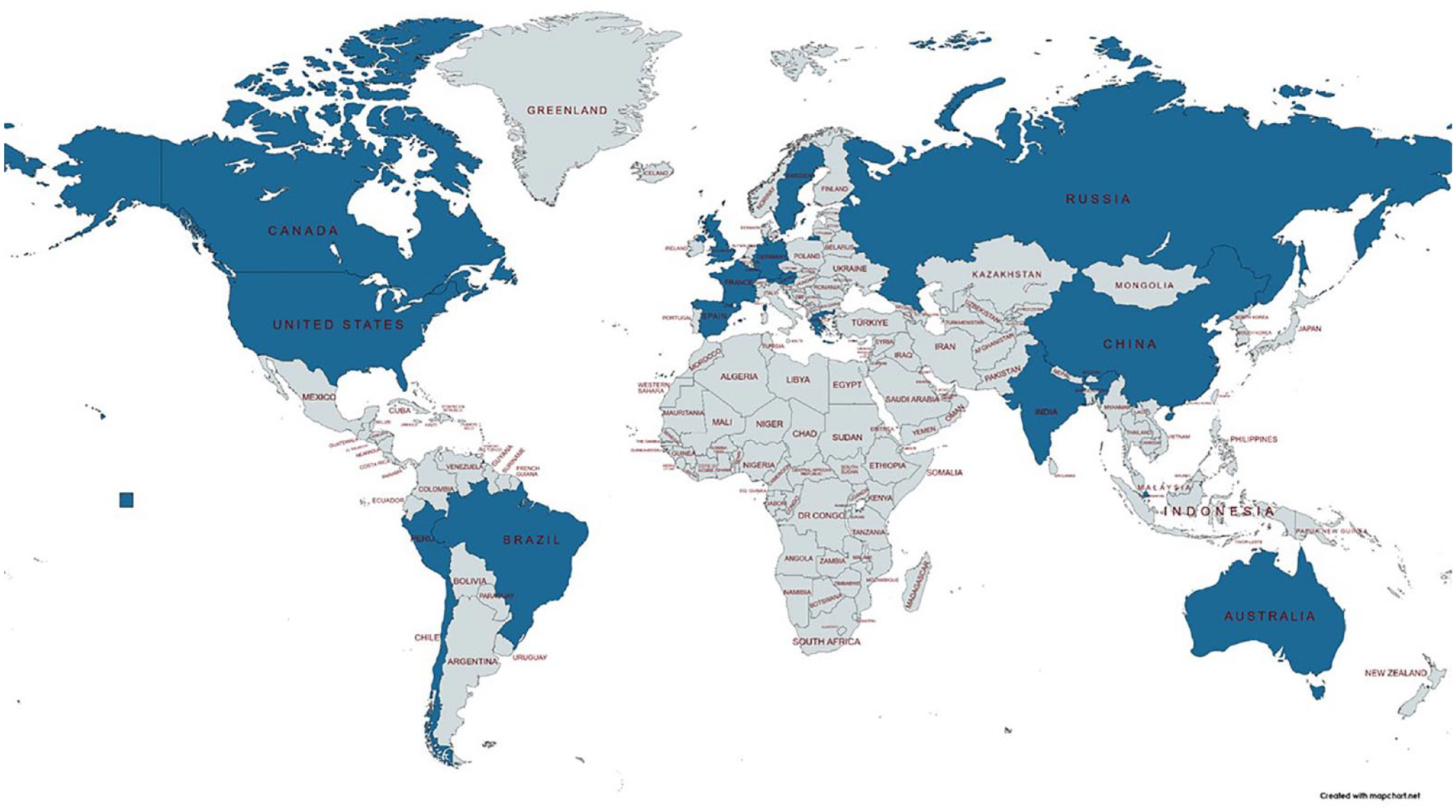
Countries that have validated nature connectedness scales.
Throughout 35 manuscripts, the following dimensions were measured: affective, such as the emotion that generates or supports nature connectedness (77%); cognitive, such as beliefs, knowledge, attitudes, values, identity, and awareness that are related to nature connectedness (69%); behavior, such as the commitment that a person has with nature (49%); experiential, such as the direct exposure and experience (14%); and philosophical, such as spirituality (11%). Concerning dimensionality, 48% of the scales were reported as unidimensional, 6% as bidimensional, 25% as multidimensional, and 21% did not report their dimensionality.
Depending on the authors’ perspective, nature connectedness can be classified as a consistent personality trait or a temporary state. The vast majority of included manuscripts (86%) did not report if they treated nature connectedness as a state or trait. Eight percent of the manuscripts that only validated one scale treated nature connectedness as a trait (Mayer & Frantz, 2004; Nisbet et al., 2008; Perrin & Benassi, 2009). One manuscript, including two different scales, treated nature connectedness as a state in one scale. Still, it remained unclear how it was classified in the second scale (Mundaca et al., 2021). Another study was treated nature connectedness as a trait in one scale, but it was unclear how the authors classified the concept in the second scale (Chew, 2019).
Regarding the provision of instructions, only eight manuscripts reported clearly how to fill out their scale. Concerning the type and amount of items, one scale presented a diagram where participants had to select the option that better described their connection with nature (Tam, 2013a) and in all other scales, several items, ranging from 1 to 40, were provided. The average number of items per scale was 13.4 (SD = 7.4). The response type mostly used was a Likert Scale (n =41), ranging from 9 to 9 point, and only two scales used dichotomous response categories (i.e., Yes/No) (Brügger et al., 2011; Dutcher et al., 2007) or diagrams (n = 5) (Dutcher et al., 2007; Kleespies et al., 2021; Martin & Czellar, 2016; P. W. Schultz et al., 2004; Tam, 2013a).
One manuscript assessed a proxy report to assess nature connectedness in children between 2 and 5 years old (Sobko et al., 2018). Thirty-four manuscripts assessed self-report scales and the participants’ age range was between 13.6 (±1.2) and 52 (±14.18) years. Most scales were developed for adults 54%, followed by adolescents and adults 26%, children, adolescents and adults 11%, children 6%, and children and adults 3%. The study samples were mainly students (n = 22). Only one study validated the scale among children and adolescents with special/additional needs (Kleespies et al., 2021). In one manuscript, the targeted and studied populations did not match (Cheung et al., 2020). Of those studies providing a detailed breakdown of manuscript participants, between 112 and 30,753 volunteers were invited to participate in the included manuscripts, and between 60 and 3,090 completed the study. Of all the samples studied, 48% treated gender as a binary variable. However, several studies did not report the gender of participants (n = 17). Only one study considered a third gender as the category “other” (Sobko et al., 2018). Most studies validated the scales in urban and/or rural contexts (n = 44), a term used when there was a lack of clarity/specificity within the studies as to the type of environment in which the validation studies were carried out. Only two studies explicitly conducted their research in natural contexts (Clayton et al., 2021; Perkins, 2010), a term used when the participants of the manuscripts were in direct contact with nature (e.g., walking in the forest, gardening, practising exercise outdoors). The rationale of the dimensions and constructs of 38 scales was based on theoretical frameworks, and 10 did not report their theoretical underpinnings.
In descending order, the following types of validity were mentioned in included manuscripts (see Table 4): construct (n = 22), predictive (n = 5), criterion and content (n = 3, respectively), concurrent, face and external (n = 2, respectively), cross-cultural, incremental, ecological, criteria, intercultural, structural, and known-group (n = 1, respectively). However, the type of validity was not specifically reported in nine studies. About 14% of the manuscripts reported test-retest reliability, while 86% reported internal consistency reliability.
Explicitly Reported Validity and Reliability of Scales Sorted by Stage of Life.
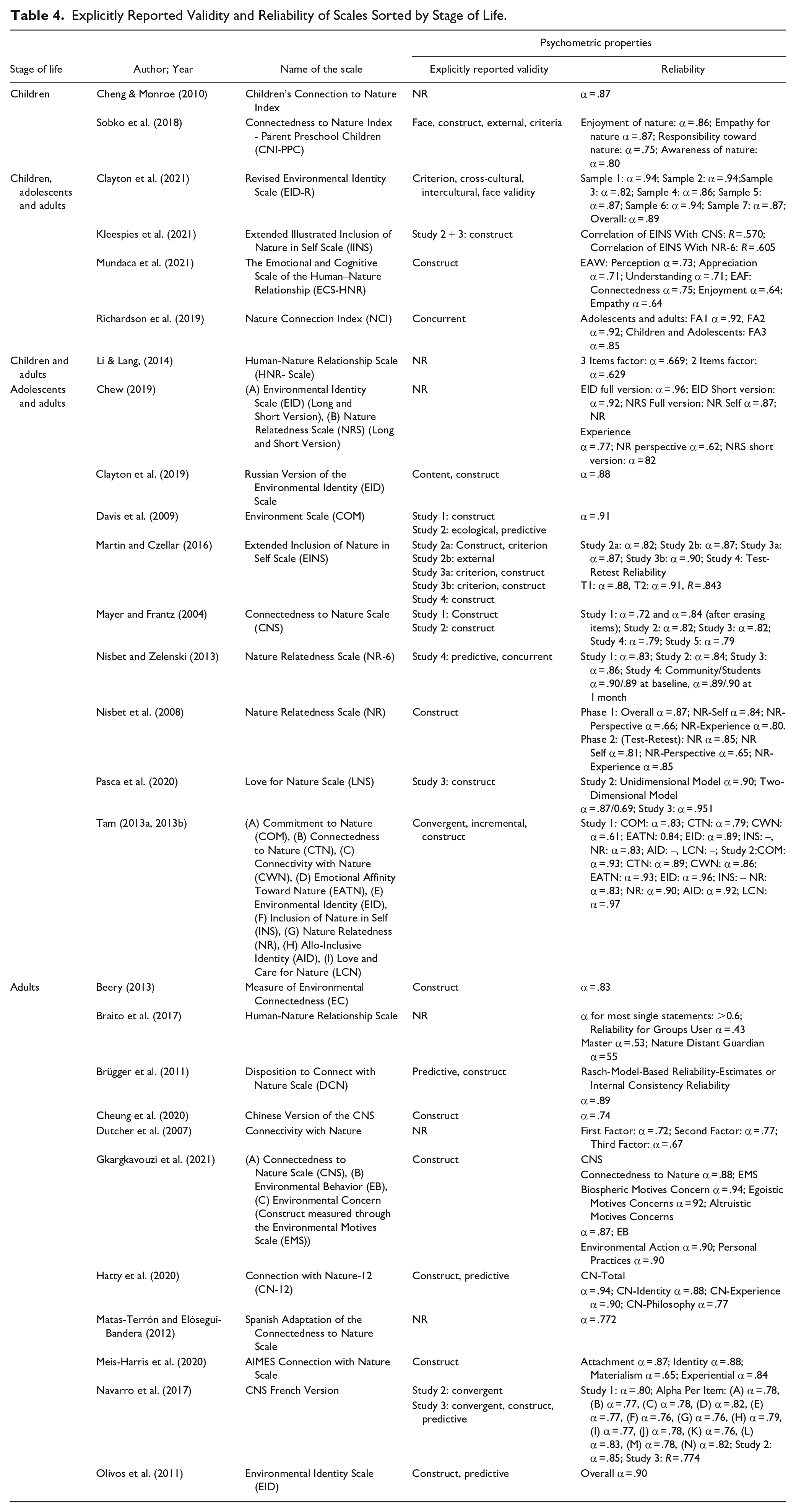
Notes. NR = not reported.
Quality Assessment (QA)
The QA revealed that five manuscripts had a high/adequate quality (see Table 5) (Matas-Terrón & Elósegui-Bandera, 2012; Olivos et al., 2011; Pasca et al., 2020; Perrin & Benassi, 2009; Rosa et al., 2020), nine had a moderate/sufficient quality (Beery, 2013; Brügger et al., 2011; Clayton et al., 2019; Dutcher et al., 2007; Gkargkavouzi et al., 2021; Martin & Czellar, 2016; Mundaca et al., 2021; Navarro et al., 2017; Nisbet & Zelenski, 2013), 10 had doubtful/low quality (Cheng & Monroe, 2010; Cheung et al., 2020; Chew, 2019; Meis-Harris et al., 2020; Nisbet et al., 2008; Pasca et al., 2018; Perkins, 2010; Richardson et al., 2019; P. W. Schultz et al., 2004; Suganthi, 2019), and 11 had inadequate/very low quality (Braito et al., 2017; Clayton et al., 2021; Davis et al., 2009; Hatty et al., 2020; Kleespies et al., 2021; Li & Lang, 2014; Mayer & Frantz, 2004; Olivos et al., 2011; Pasca et al., 2017; Sobko et al., 2018; Tam, 2013a).
Sectional and Global Quality Rating of Each Included Manuscript.
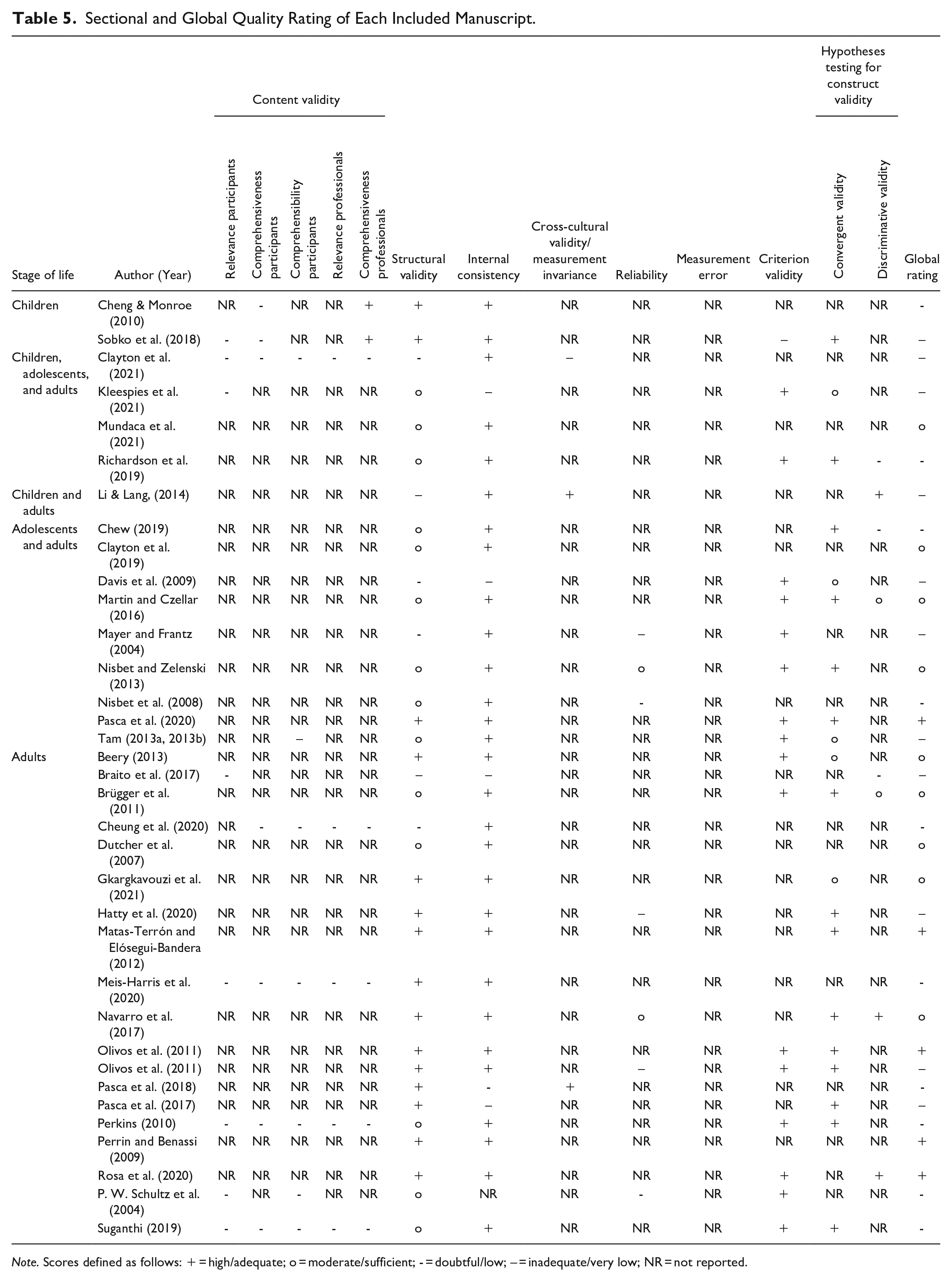
Note. Scores defined as follows: + = high/adequate; o = moderate/sufficient; - = doubtful/low; – = inadequate/very low; NR = not reported.
None of the manuscripts performed all sections indicated in COSMIN. Internal consistency was the best-evaluated psychometric property, with 29 manuscripts rated in the high/adequate category. Content validity was the property that was most often rated as doubtful/low. Structural validity was the property most frequently rated as moderate/sufficient. The psychometric property that was most often calculated was structural validity (n = 35), while measurement error was never calculated (n = 35) . Regarding the validities that determine the extent to which the instrument is designed to measure the construct to be evaluated accurately, it emerged that only 13 manuscripts from the hypothesis testing for construct validity were classified within the high/adequate range, while 12 studies did not calculate the construct validity. On the one hand, 57% of the manuscripts calculated their correlation with one or more scales that also measured nature connectedness (e.g., the Nature Connectedness Scale or the Environmental Identity Scale). The remaining 43% did not calculate their correlation with a scale measuring only nature connectedness. On the other hand, 23% of the manuscripts calculated their correlation with scales that did not measure connectedness with nature (e.g., New Ecological Paradigm, Positive and Negative Affect Scale, Pro-Environmental Behavior). The remaining 77% did not calculate their correlation with a non-nature connectedness scale. In addition, 25 manuscripts did not calculate content validity. The rating of the remaining studies (n = 10) ranged between low and very low (see Figure 3). The rationale of the dimensions and constructs of 36 scales was based on a theoretical foundation. In comparison, 12 studies did not report the rationale for the included constructions and dimensions.
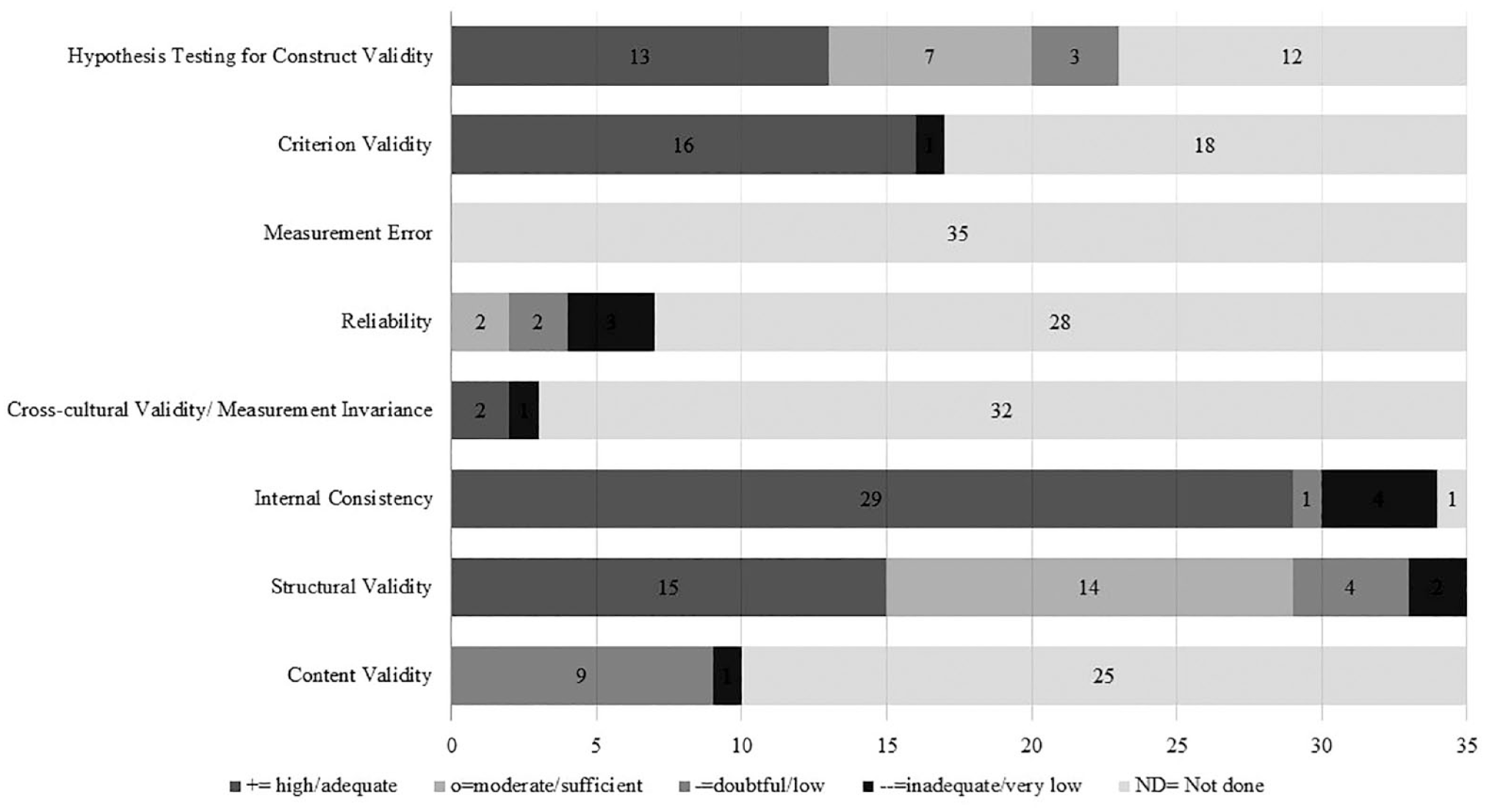
Quality rating per sections across included manuscripts.
Discussion
This systematic review aims to: (1) provide an overview and (2) evaluate the methodological quality of the existing research that validates explicit instruments measuring the construct of nature connectedness in children, adolescents and/or adults with or without special needs. Several findings were obtained from the completion of the current systematic review. For instance, the low representation of developing countries in the validation of nature connectedness measurement scales, the lack of measurement scales that take vulnerable populations into account, the unclear measurement of state or trait nature connectedness, and the scarcity of high-quality research in the validation of nature connectedness construct measurement scales. Each of these findings will be explored below.
General Information of Included Manuscripts
The absence of a concise definition of the construct of nature connectedness was notable. This is consistent with previous research, which has also stated a multiplicity of nature connectedness terms (Tam, 2013a). Furthermore, it is important to mention that the lack of consensus in the operational definitions of the construct is problematic both conceptually and methodologically. For the purpose of this systematic review, the following definition was employed: People have a basic need of belonging (Baumeister & Leary, 1995), which can be satisfied by being subjectively (Pritchard et al., 2020) and positively (Barrable et al., 2021) connected to nature. Being connected to nature includes being close to (Wilson, 1984) or one with (Mayer & Frantz, 2004) the natural world.
This definition was designed to be broad in order to encompass a wide range of concepts. This approach not only reflects the existing literature but also allows for inclusivity in the literature search. However, it is important to argue some terms, psychologically, being one with nature (Mayer & Frantz, 2004) or being close to nature (Wilson, 1984) refers to the phenomena observed within various theoretical approaches that explain the benefits of this relationship for both humans and nature. Examples of such theoretical approaches include the biophilia hypothesis, attention restoration theory, and stress reduction theory (Kaplan, 1995; Ulrich et al., 1991; Wilson, 1984). In addition, the literature has shown a debate in which, on one hand, it argues that nature connectedness is capable of fulfilling belongingness needs (Baumeister & Leary, 1995; L. M. W. Li et al., 2021), while other authors suggest that it is an outcome of having a cognitive connection (Perrin & Benassi, 2009) or an affective connection (Perkins, 2010) with nature, rather than being a defining aspect itself.
Likewise, the authors identified many differing scales that correlate with one another to varying degrees consistent with previous findings (Restall & Conrad, 2015). For instance, W. P. Schultz (2002) characterizes nature connectedness as a cognitive experience, while Clayton (2003) defines it as the bond with nature and, Mayer and Frantz (2004) describe it as a more affective and experiential construct. These attempts of definitions reflect the strong disagreement in the literature. Therefore, despite the debates and divergences present in the literature, and in order to meet the requirements of this systematic review, the aforementioned preliminary definition was formulated.
According to the Human Development Report 2020 (United Nations, 2020), only one scale was developed in a medium human development country (Suganthi, 2019) and none of the studies included were conducted in a low human development country. This low representation of developing countries might be a bias in the measurement of the nature connectedness construct (Häyrinen & Pynnönen, 2020) because the time spent in nature and specific cultural factors have been shown to impact the nature connectedness of people and these elements differ considerably between Low, Medium, High, and Very High Human Development Countries (Dornhoff et al., 2019). Likewise, not all studies of scales performed a cross-cultural validation, which is a process needed to use them in other countries. This limits the measurement of nature connectedness in different nations, the integration of this topic in developing countries and, thus, the globalization of the nature connectedness construct (Scopelliti et al., 2016; Tam & Milfont, 2020).
In addition, it is important to note that the location where the scales were developed relates closely to the level of nature connectedness observed in men and women. This can be seen in previous research showing that nature connectedness in men and women may vary depending on the country (Clayton et al., 2021; Dornhoff et al., 2019). Therefore, the consideration of gender when generating nature connectedness measurement instruments is of particular pertinence as women are more likely to suffer mental health diseases (i.e., depression) (WHO, 2022). Some research findings suggest that women may have a greater propensity to connect with nature than men (Haluza et al., 2014), which is an important factor to consider when developing mental health prevention programs for women, given the links between nature connectedness and positive mental health outcomes previously discussed. Furthermore, most of the scales were approached from a binary context (i.e., male/female), another aspect that limits equality (Human Rights Watch, 2022) and, therefore, places restraints upon the capacity for generalization of the scales.
Regarding the population, it was found that just two manuscripts out of 35 used children as the sole study population (Cheng & Monroe, 2010; Sobko et al., 2018), while five combined them with other populations (i.e., adolescents and/or adults) (Clayton et al., 2021; Kleespies et al., 2021; Li & Lang, 2014; Mundaca et al., 2021; Richardson et al., 2019). This not only shows that the measurement of the nature connectedness construct is based upon the opinions and responses of an adult population but also makes evident the lack of developmental research on nature connectedness that has been conducted to date. This is in line with Whitburn et al. (2020), stating that most of the research assessing the nature connectedness and Pro-Environmental Behavior constructs is based on the adult population. Furthermore, among the 35 studies, only one paper addressed a population of children with special needs (Kleespies et al., 2021). This paucity of research not only on children but also on adults with special or additional needs perpetuates the health inequity that this population experience and mantains the exclusion in which they are immersed (United Nations Children’s Fund, 2023; WHO, 2023).
In addition, it is important to highlight the significant lack of intergenerational research on nature connectedness. None of the scales found measure nature connectedness specifically in older adults. This has led the research with this population to use unspecific measurement scales to assess levels of nature connectedness in older adults. For instance, Freeman et al. (2019) and Nisbet et al. (2020), conducted a mix-method study and a cross-sectional study respectively where they investigated how nature connectedness impacts age, how it changes over time, and how it impacts well-being. However, neither of them used a scale within their methodology that was specifically intended for an older population. This approach has a knock-on effect in limiting the validity of the study results.
Moreover, the findings demonstrate the lack of consensus in the assessment of the trait or state of the nature connectedness construct (e.g., Mayer & Frantz, 2004; Mundaca et al., 2021). The finding that 83% of the manuscripts do not specify if nature connectedness is considered to be a trait construct, which means that it is neither modifiable nor malleable, or a state construct, which means that it is temporary and malleable, provides important insights (Schmitt & Blum, 2020). For instance, several studies have reported changes in nature connectedness using tools that did not report measuring trait (Choe et al., 2020; Coughlan et al., 2022; McEwan et al., 2021). This is an important gap that should be addressed in further research.
Sixty-nine percent of the studies validated their scales in urban and/or rural environments. This is critical because 55% of the world’s population lives in urban environments (United Nations, 2018). It is important to promote and measure nature connectedness in environments that are related to the current conditions in which the majority of the population lives. This is in line with several research studies that demonstrate the relevance of conducting research, interventions, programs, and public policies to foster contact with nature in urban conditions (Barboza et al., 2021; Nieuwenhuijsen et al., 2022).
Quality Assessment (QA)
The major difficulty in assessing criterion validity was the lack of a consensus in measuring nature connectedness. For this reason, the two most commonly used scales “Inclusion of Nature in Self” and the “Connectedness to Nature Scale” (Mayer & Frantz, 2004; P. W. Schultz et al., 2004) were employed as the comparator instruments to calculate a correlation between the studied instruments.
Relatedly, due to the lack of a previously established instrument to measure convergent and discriminant validity, it was necessary to select scales to measure these two values. For convergent validity, all the scales included in the review were selected. For discriminant validity, all scales that were not included in the review, as they did not assess nature connectedness, were selected (i.e., the New Environmental Paradigm Scale, which intends to assess the level of agreement with a world view that promotes ecological values and attitudes, and the Positive and Negative Affect Scale, which assesses mood and emotion). This is in line with existing research, which states that the convergent validity of the nature connectedness construct has not been strongly studied (Tam, 2013a).
The relationship between humans and nature is intrinsically impacted by culture (Dornhoff et al., 2019). To mitigate the challenges that the world and society are facing, it is necessary to understand the environment in general but also at a more region-specific level. This highlights the need for additional research regarding the manner in which the human-nature relationship changes from region to region. Therefore, it is important to generate instruments with sufficient psychometric properties to measure the nature connectedness construct across different regions and cultures. When the quality assessment was carried out, it was found that only 25% of the manuscripts that needed to calculate cross-cultural validity did so (Clayton et al., 2021; Li & Lang, 2014; Pasca et al., 2018). The need for cross-cultural research has recently been raised in the sub-discipline of environmental psychology (Tam & Milfont, 2020) and more broadly in psychology. This requirement also emerged in the findings of the current review (Henrich et al., 2010).
Regarding reliability, it was determined that 80% of studies did not calculate any type of reliability, making it impossible to draw firm conclusions on this psychometric property.
Strengths and Limitations
The present systematic review has several strengths but is ultimately limited by the quality of the extant literature as none of the evaluated studies reported all criteria investigated in the quality assessment. For reasons of objectivity, two independent researchers identified relevant scales from the literature, four independent researchers extracted data, and five independent researchers assessed the quality of included scales. In addition, the data extraction spreadsheet was piloted prior to use. A very comprehensive analysis of the studies was also carried out using the COSMIN procedure. Furthermore, both the QA, as well as the interpretation of results were performed separately to enhance the procedure and evaluation transparent.
Our research could be influenced by the absence of a universal definition of nature connectedness, requiring us to formulate our own concept based on existing literature. Consequently, we excluded scales that encompassed dimensions associated with empathy or pro-environmental behavior. Limiting our analysis to articles published in English may have impacted our search via selection bias.
Conclusion
Overall, our findings indicate challenges in the methodological quality of most manuscripts conducted to date. We conclude that the methodological rigor of current scales purporting to assess the concept is insufficient, limiting their wider application. Of 35 manuscripts, only five were reported as having a high/adequate quality rating. Based on this finding, there is a need for more high-quality manuscripts explicitly measuring nature connectedness. Future studies to develop and validate explicit nature connectedness scales should: (a) Conduct research in a broader scope of continents/countries. (b) Longitudinal study designs are needed to examine test-retest-reliability to identify nature connectedness as a trait or state. (c) Researchers should strive to achieve consensus on the construct of nature connectedness (d) Ensure that the dimensions are adequately reflected in sub-scales. (e) Clear instructions on how to use scales are required to standardize their application. (f) Scales for children and adolescents are currently lacking, and efforts should be made to address this gap in the literature. (g) More heterogeneous samples should be investigated to ensure generalizability of scales (i.e., recruit not only students) and a more inclusive culture in participant recruitment should also be established for this reason (i.e., consideration of people with special or additional needs, with different socioeconomic background, and with diverse gender identity). (h) When reporting studies, it is recommended that a concise checklist be used to ensure that all relevant information is provided (e.g., gender ratio, location as either urban or rural, and theoretical foundation). (i) Scales should be validated systematically in order to consider different types of validity (e.g., cross-cultural or content validity) and reliability (e.g., measurement error). (j) Scales should clearly indicate whether they assess the state or trait dimension of the concept.
Footnotes
Acknowledgements
We want to thank Hedwig Bäcker and Birgid Schlindwein, librarians from the University Library - Technical University of Munich (TUM), for their assistance in developing the search strategy. Thanks also to Lina Lässer, Bachelor’s student at TUM, for helping in the development and piloting of the search strategy as well as screening process. We would also like to thank Selina Moser, Master’s student at TUM, for her committed help in the data extraction. Finally, we would like to thank the consortium members of GoGreenRoutes for their support in this review.
Contribution of Effort
XT-O developed and piloted the strategy of the literature search, extracted data and assessed the quality of all included studies, analyzed data, and drafted the manuscript. AM, MP, and RJ were independent quality assessors. DMIS supervised XT-O. YD was involved in planning the review and had an advisory function in the quality assessment. TM and JB obtained the project’s funding. DM proofread the manuscript. AM, MP, RJ, DMIS, YD, TM, DM, SS, DS, MJ, and JB critically reviewed the manuscript. All authors agreed with the final version to be published.
Declaration of Conflicting Interests
The author(s) declared no potential conflicts of interest with respect to the research, authorship, and/or publication of this article.
Funding
The author(s) disclosed receipt of the following financial support for the research, authorship, and/or publication of this article: This research was supported by Horizon 2020 Innovation funding for the GoGreenRoutes project under grant agreement number 869764.
Ethics Approval and Consent to Participate
Not applicable.
