



Abstract
The study draws upon theory and research on behavior settings to understand how the built environment shapes selected aspects of behavior in a protracted refugee camp located in an urban area in Jordan. Over 3 years, the research used a multi-method analysis of behavior settings within a residential space and an assessment of modifications to the home using a pre-post research design. The findings showed that the settings can carry new meanings although the occupants greatly restrict their behaviors to conform to the settings they occupy. The findings also indicated the importance of the psychological dimension, which was undervalued in previous applications of the theory. The methodology used demonstrated that localized problems can be addressed by analyzing the features of the relevant behavior setting to reveal the underlying source of the problem. This will help identify solutions that promote behavioral changes to ameliorate displacement and improve the built environment.
Keywords
Introduction
Refugee camps are under-researched and insufficiently understood behavior settings (Williams, 1990). During their long existence, they have become part of the larger community of their host countries with a new appearance that more resembles permanent housing and combines residential environments with social spaces as essential camp elements. However, a camp’s spatial environment is not only a physical container of social life, but also the inherited form of human behavior (Alawamleh, 2020).
The majority of refugees around the world live in a semi-permanent state of high uncertainty, in communities known as protracted refugee camps. Globally, displacement has reached unprecedented levels, such that 1 in 110 people is now displaced (IOM, 2020). However, the response to their existence has not changed significantly since the Second World War (Kleinschmidt, 2015).
New policies regarding refugee camps have tried to develop space alternatives to avoid violating the occupants’ rights and freedoms (Al-Nassir, 2016). It is important to focus on the space and its consequences because design represents power (Flyvbjerg & Richardson, 2002), and it can produce inequalities, and can be abused to impose control over refugees (Dalal et al., 2018), thereby changing their behavior. According to Lefebvre (1991), attempts to create such alternatives have to “change space arrangements,” which directly affects refugees’ general adaptation and development (Grbac, 2013). This involves the social production of space, which itself depends on the existing behavior patterns, cultural rules, and social relationships that give meaning to space (Abourahme, 2015). Allan Wicker, a significant contributor to behavior settings theory, argues that changes in settings can help rectify problems in the lives of refugee camp occupants.
The present study addressed the following two research questions:
How do protracted refugee camps, as behavior settings, shape the behavior of their occupants spatially?
How are the occupants’ patterns of behavior affected by changing space arrangements, objects, and materials?
Given that a refugee camp contains numerous behavior settings, this study intensively examined a sample residential setting. A field study was conducted to observe the physical environment of the Gaza refugee camp in Jordan, in terms of the refugees’ behavior patterns in their residential environments. This was followed by an intervention in the essential components of the behavior setting to evaluate its effect on the space and the occupants’ behavior.
This study aimed to contribute to developing policies and regulations by governments and NGOs regarding refugees and fill a theoretical gap regarding behavior settings in two respects. First, it is the first study of refugee camps in relation to this theory. Second, it focuses on the residential environments of the camp’s occupants. This is important because the original work of Barker and Wright (1955) that developed behavior settings methods and surveys included no family settings in private residences.
The paper has four parts. First, it reviews the existing literature on behavior settings before presenting background information on refugee camps. Second, it presents the research methodology and instruments. Third, the results are summarized and discussed in relation to expanding behavior settings theory and psychology. The concluding section evaluates the accomplishment of the field study and its interventions as a potential tool for behavior change. It also suggests directions for further research to improve the conditions of displaced people.
Behavior Settings: The Perception of Refugee Camps
In our daily activities, we move between behavior settings using specific objects and following a program of activities bounded by rules within temporal-spatial coordinates. Human behavior is thus shaped by its setting rather than by personal characteristics (Curtis, 2015), so the primary concern of designers and planners of any space should be the occupants’ existing patterns of behavior. Specifically, designers should be aware of the relationship between space and its users (Lang, 1987).
Behavior settings theory was originally developed by Barker (1968) while the behavior settings survey was introduced by Barker and Wright (1955), and later developed by Barker and Schoggen (1973). The survey was used in limited cases in the built environment and design fields as a research tool to examine the relationship between behavior and the physical environment (e.g., Bechtel, 1977; Cotterell, 1998). More recently, Wicker (2011) applied the theory to the design and improvement of small-scale environments through specific localized interventions.
The key findings of these researchers were that the setting of any space greatly restricts the behavior of its occupants whereas the characteristics of the individual occupants have no influence on their behavior. Wicker (2002), an important contributor to the theory, believed that people can change the unsatisfying aspects of their lives by changing the settings they occupy. Behavior in a space can be predicted with 90% accuracy by analyzing the features of the behavior setting to understand the individual’s role within it (Curtis, 2015). This means that the behavior settings survey can be used as a behavioral change instrument.
The main components of any behavior setting are patterns of behavior. The existing pattern of behavior, called the role in sociology, is a discrete behavioral entity with specific temporal-spatial coordinates involving an ordered sequence of events called the setting program. In a behavior setting, roles comprise both human and nonhuman components. They are sustainable, replaceable, and interchangeable components as long as each essential task is covered. A behavior setting achieves its best performance when it provides a balance between the number of occupants and the number of roles required within the setting program (Weiss & Hoegl, 2016). Regarding the minimum and maximum number of roles and their effective performance, behavior settings are categorized as understaffed, optimally staffed, or overstaffed (Wicker, 1984), according to the effect on behavior. Understaffing means there are too few participants to fill the essential roles in a setting program whereas optimal staffing means there are sufficient participants for effective performance of the setting program. Overstaffing means there are more participants than the program requires.
Behavior settings are bounded by implicit rules. Three specialized mechanisms allow the essential activities of the setting to be carried out smoothly and consistently to satisfy the participants and reduce threats to the existence of the setting or any of its components: sensing mechanisms, executive mechanisms, and maintenance mechanisms. These concepts were first introduced and documented in a survey field station by Barker and Wright (1955) before being re-interpreted by Barker (1968) and Wicker (1984).
Sensing mechanisms are the initial and consistent receptors of information about the setting (Kandel et al., 2013). The information received is then examined by the executive mechanism, defined as human cognitive processes to select and monitor behaviors and resolve competition between tasks (Nestler et al., 2015). If a mismatch with the behavior setting or a possible threat to any of its essential components is detected, the maintenance mechanism either changes, corrects, or modifies the source of the problem (Deviation-Countering Mechanism), or removes the person or object from the setting (Vetoing Mechanism).
These maintenance mechanisms can also be applied by the occupants to themselves by simply leaving the setting if they cannot cope with its attributes. This usually happens in understaffed behavior settings, particularly in specific areas, such as those of camp-based or urban refugee populations (Loescher & Milner, 2006). In these settings, the inhabitants swing between feeling, on the one hand, that they are important for the existence of their settings (i.e., there would be no refugee camp without refugees) and therefore responsible for their survival duties, and feeling insecure about the sustainability of their setting and the temporality of their situation on the other hand.
Research has shown that refugee camps are only manageable if properly designed (Grbac, 2013). According to Foucault (2007), such camps are planned on a disciplinary basis: “A town is built where previously there was nothing. In the case of towns constructed in the form of the camp, we can say that the town is not thought of on the basis of the larger territory, but on the basis of a smaller, geometrical figure, which is a kind of architectural module, namely the square or rectangle, which is in turn subdivided into other squares or rectangles” (Foucault, 2007, p. 31). That is, despite the similarities with urban contexts, planning a refugee camp is different in that the design approaches are carried out without experienced professionals (D’Ettorre, 2016).
Regarding the overall physical layout of a camp, the UNHCR’s Handbook of Emergencies (UNHCR, 2007) suggests adopting a decentralized community-based approach that concentrates on the family, community, or other social groups. However, many camps use a linear system, or grid layout, comprising square or rectangular zones separated by parallel streets, because it is simple in design, and easy and quick to construct. Such an approach does not promote interactions within the community and creates difficulties in locating community-based services. According to the handbook, each person should have at least 30 m2, including living space, fundamental services, and pathways.
The following sections discuss residential behavior settings in a specific refugee camp environment in terms of its design layout and its effects on the occupants’ behavior.
Palestinian Refugee Camps
Most refugees spend long periods in exile in low and middle-income countries, restricted to camps or other challenging conditions in urban centers (Loescher & Milner, 2006). Governments still see refugee camps as temporary places although they are actually future cities. In the Middle East, for instance, refugee camps were established as if they were simply storage facilities for people whereas the refugees were building cities (Kleinschmidt, 2015).
The Palestinian refugee camps were mostly established between 1948 and 1973 as a result of the Arab-Israeli wars (Anera, 2019). There are currently 58 official refugee camps in the Middle East: 10 in Jordan, 12 in Lebanon, 9 in Syria, 19 in the West Bank, and 8 in the Gaza Strip (UNRWA, 2020).
Jordan, the site of this research project, has long been affected by immigration and has the world’s highest ratio of refugees to the indigenous population (Chatelard, 2010). Of the 2 million registered Palestine refugees currently living in Jordan, all have been given Jordanian nationality except for a group consisting mainly of those displaced from the Gaza Strip in 1967. This group is accommodated in Jerash, in northern Jordan, in what is now known as the Gaza refugee camp. The Jordanian government decided not to grant Gazans Jordanian citizenship to preserve their right of return (Hammad, 2018). The camp, originally designed to accommodate 11,500 refugees, now hosts over 40,000 on a plot that has not grown since its establishment (Anera, 2019). The camp currently faces many challenges and is considered the poorest of the ten Palestine refugee camps in Jordan (Fafo, 2013).
Methods
The research was carried out in the residential environment of Gaza refugee camp in northern Jordan over 3 years. The 58 participants in this study were divided into two groups: the research team and the refugees who participated in different stages of the research. The research team consisted of five groups: the design team of architects, engineers, graphic designers, and sociologists; the documentation and site analysis team; the media and crowdfunding team; and the local committee.
The research team gathered 38 volunteers from various backgrounds. In the first stage of the project, the team conducted a general physical reading of the camp on both urban and architectural scales, and produced analytical drawings and plans. The following stages involved conducting an analytical and behavioral assessment of pre-post renovations while the authors used shadowing.
The refugee group participated in two research activities: first, a randomly selected group of 16 refugees participated in focus group sessions; second, a family of four members was selected for the in-depth study and spatial interventions. The family’s eldest son, who was the family’s main source of income, unfortunately, died during the research period in a car accident. The father, whose health was unstable, had irregular employment on construction sites. The mother was a homemaker and a volunteer manager of an educational center in the camp for women and children. The middle son had finished school and had sought a job for the past 3 years, and the youngest son was a ninth-grade student (Table 1).
General Profile of The (In-Depth) Study Participants.
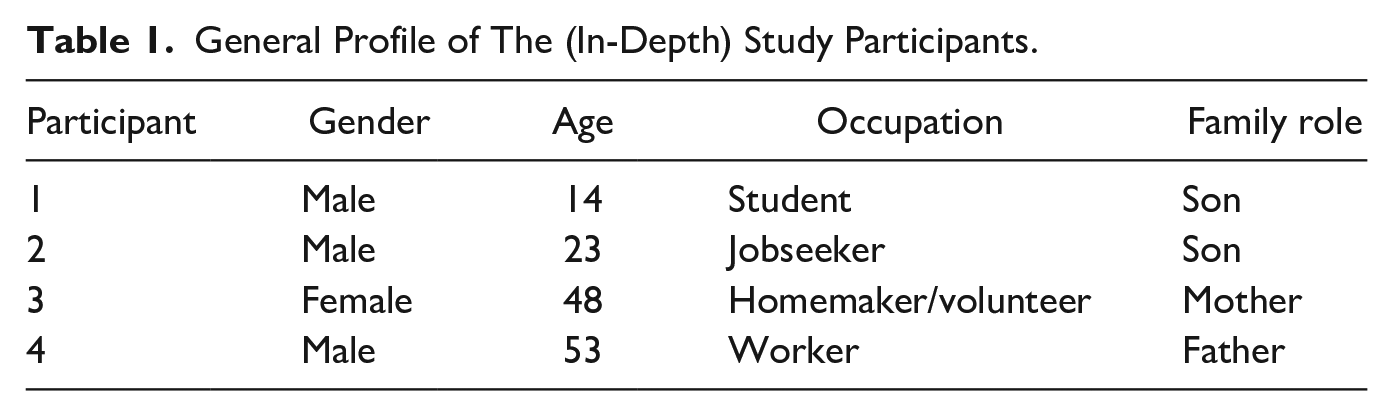
Each participant in this family was given the opportunity to investigate their lives, behaviors, and needs, through more focused in-depth surveys and observations whereas the focus group participants engaged in a wider group discussion using open-ended responses to convey their thoughts and suggested solutions.
A human-centered design and participatory approach was used throughout the research. The research objectives, tools, and methods were transparently discussed and designed together with the local committee and research participants. Ethical considerations were a key concern for both refugee participants and researchers. The participants were treated with respect, dignity, and their comfort was prioritized in all data collection procedures. In addition, their privacy was ensured by maintaining confidentiality of their data and identities. More specifically, personal identifiers were replaced with serial numbers and codes were used throughout the analysis to ensure their anonymity. All participants were aware of the project’s objectives and parameters prior to the study and were regularly debriefed during the study. They gave their informed consent for participation and inclusion of their data in the study. The study was ethically approved by the ethics committee of Izmir University of Economics. To ensure the legality of the fieldwork, a nonprofit organization was registered under the name of SAIB, Society for Aid, Improvement, and Bridging. The field visits, official communications, and research activities were carried out under the organization’s legal supervision.
Instruments
The study had three stages: analysis of the behavior setting using three methods; an architectural intervention within the setting; and repetition of stage 1 after 3 years to enable comparative spatial and behavioral analyses before and after the intervention.
The first method for analyzing the behavior setting was a general physical reading of the environment on urban and architectural scales. The following data were collected to adequately understand the context: measurements, quantitative summaries, text reports, visual information in the form of sketches, diagrams, maps, photos, videos, and individual encounters, particularly in places where people congregated. Ten neighborhoods with nearly 50 houses were observed using a structured observation tool. After analyzing the data, a single-family house was selected for in-depth study regarding its overall condition, location, number of residents, and their profiles.
The second method, inspired by the behavior settings survey, included in-depth interviews, shadowing, and focus group techniques. The survey was adapted by the authors from two previous surveys (Barker, 1968; Wicker, 1984). A structured data collection tool was developed to analyze the behavior setting in the selected family’s house. This aimed to elicit the normal, prototypical order of events in the everyday life of each participant, focusing on their role and practices related to behaviors and space in a residential environment. Other essential information was collected, such as time of occurrence, physical features (objects), and interactions with other roles or occupants. The last item in the survey aimed to detect threats to the existence of the setting or any of its components. The sources of these threats were identified by analyzing the routine-oriented scripting of the previous items and discussing them with the respondents.
The respondents were asked to describe their previous day’s activity from waking to the moment they went to bed, beginning with the question “What is the first thing you do when waking up?” followed by “What do you normally do next?” As participants spoke, the researcher wrote keywords to represent the described activities and laid prefabricated paper picture cards in front of the participant on a surface in a row from left to right (Figure 1). With this overview in hand, the participants were asked to describe their home routine in more detail. To gain more information about each activity of particular interest, the participants were asked about who participated apart from the respondent. They were asked about what they did, who visited the house and when, who they met and where, what they used and why. At the end of the interview, the respondents were shown their daily routine activities (Figure 2), and asked to name and explain the best activity during the day, the worst, the most boring, and the most fun. They were also asked if they were able to change one thing about their routine, what would it be, and why.
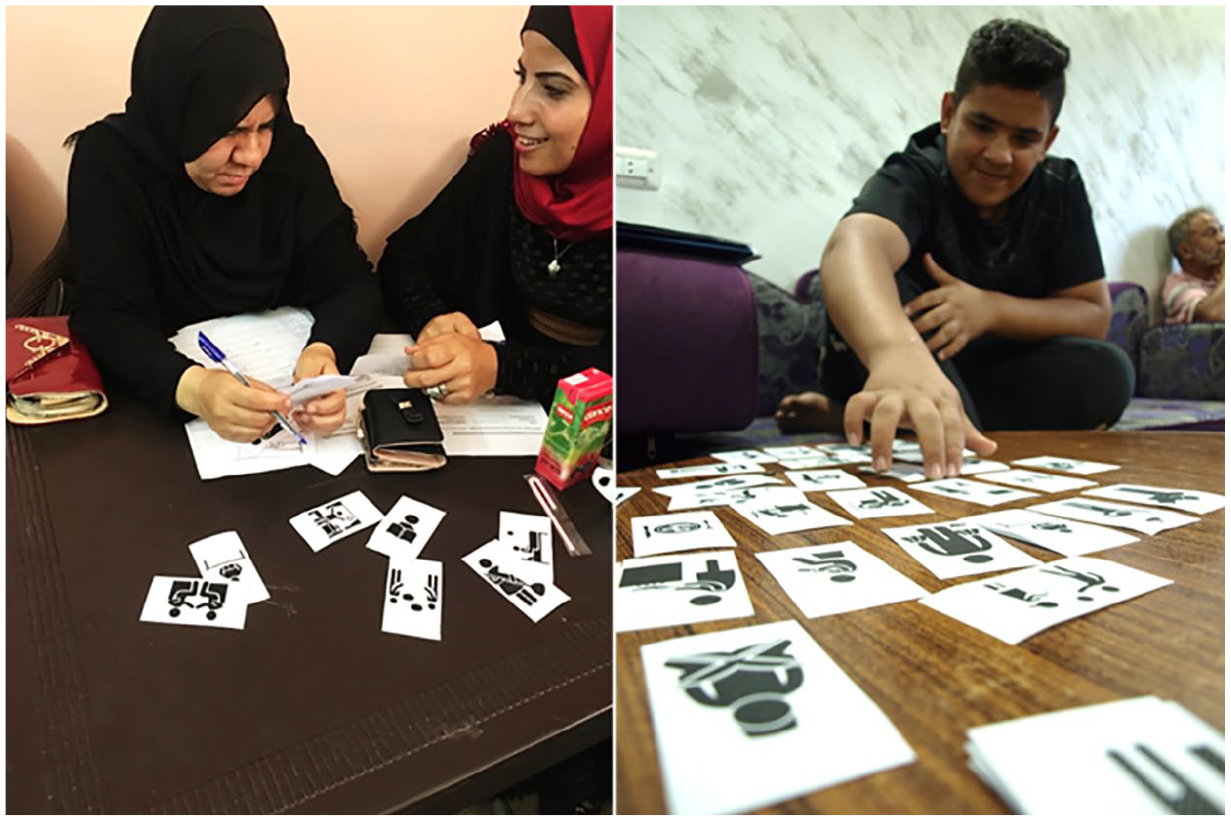
Participants using activity cards to describe and order their daily activities.
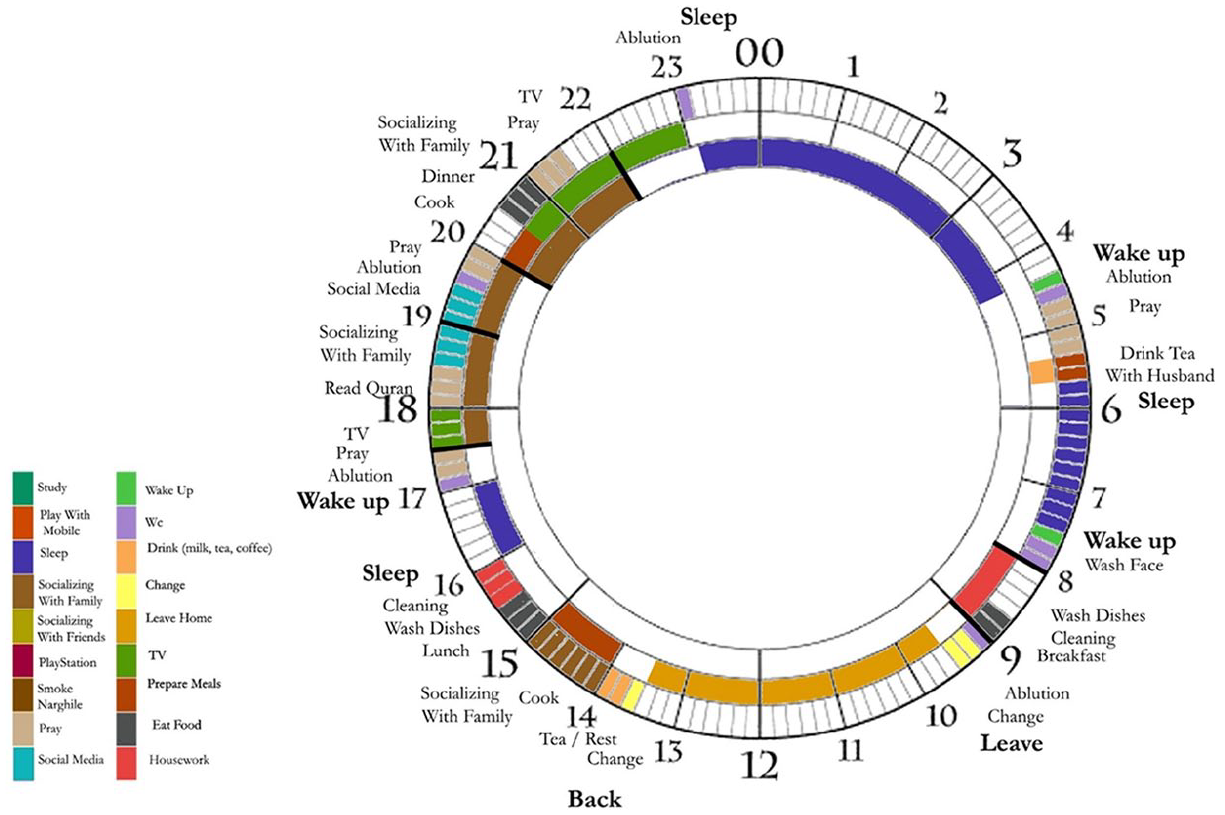
Sample record of the standing pattern of behavior showing activities and time of occurrence for one of the participants.
Before this, participants were observed directly using shadowing technique in their residential environment to learn about their behavior setting by experiencing it. To do so, it was necessary to live with the family for both short and extended periods over the 3 years of fieldwork. During these periods, everyday involvement in routine activities of each family member in the research setting was undertaken. Records of their activities were added to the spoken reactions, thoughts, feelings, and speculations to fill gaps in the interview data.
A focus group session was held with refugees with various backgrounds and ages to gain a general understanding of the residential behavior setting from the community’s viewpoint. The session involved an open discussion about the problems noted in the earlier survey that threatened their residential environment.
The third method in the first stage was behavioral mapping. This allows researchers to determine how participants use a designed space by tracking their movement within a specific space and time. This method emerged in the late 1960s to study how physical environment features affect people’s behavior, including activity level and type (Cosco et al., 2010). Color-coded dots were to locate the recorded behaviors on the map of the family’s house (Figure 3). Although most data were collected from the interviews, shadowing data helped to create a more complete picture.
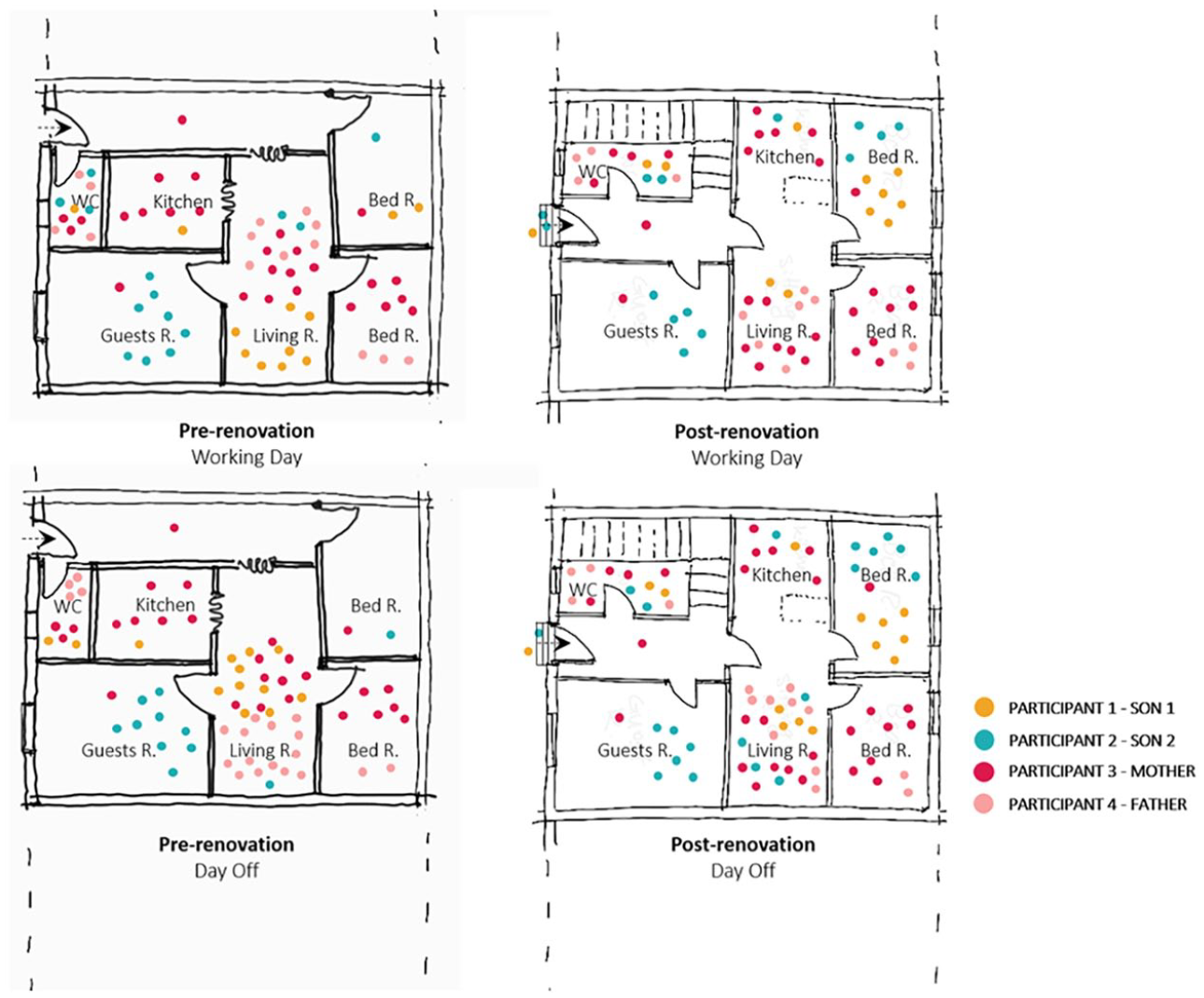
Behavioral mapping of the family pre-post renovation.
The second stage of the study was the architectural intervention. This involved creating a change as an intervention in the components of the behavior setting. Given the poor physical conditions of the camp’s houses, the chosen change was architectural renovation to resolve some of the inhabitants’ main challenges. In terms of Behavior Settings theory, this architectural intervention changed the “objects” and “space” components of the behavior setting.
Based on the behavior setting survey, the interventions aimed to identify problems threatening the setting’s existence and work with the local committee to design and implement solutions for the space. The process focused on solving problems regarding the house’s structure, ventilation, deteriorating and leaking roofs, plumbing system issues, cracked exterior walls, and damaged windows (Figure 4). Changes to the interior space were entirely designed and made by the occupants themselves with minor supervision from the research team (Figure 5).
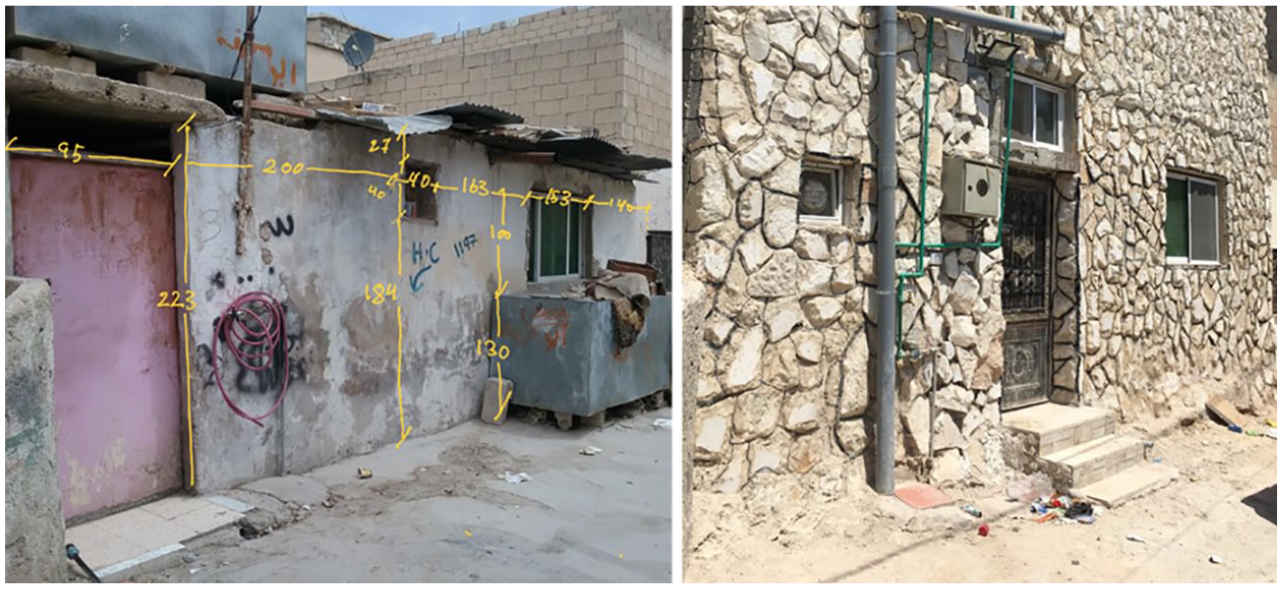
Exterior shot for the house pre-renovation (left), post-renovation (right).
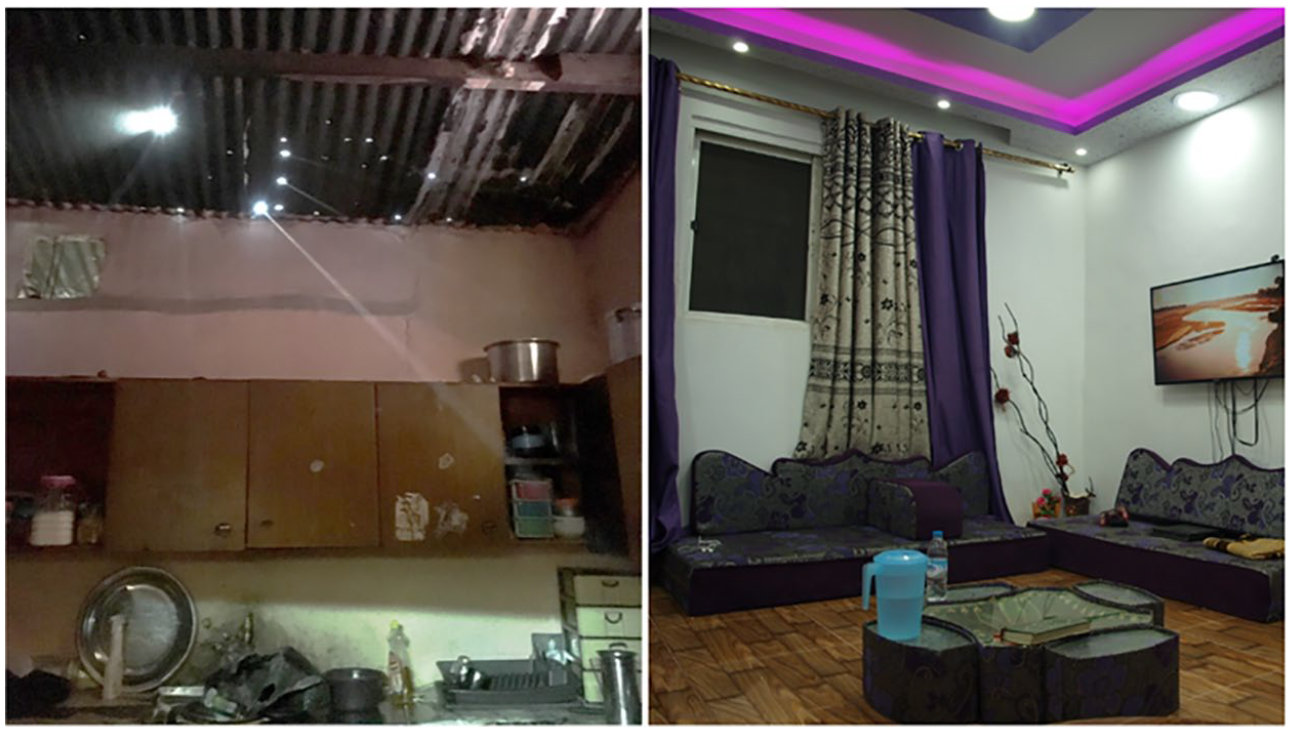
Interior shot for the house pre-renovation (left), post-renovation (right).
The third stage concluded the study by repeating the survey and behavioral mapping in the same residential behavior setting. The comparative analyses focused on identifying how the intervention had affected each participant’s routine behavior patterns.
Findings
Matching Foucault’s (2007) description of planning camps on a disciplinary basis, Gaza refugee camps has a modular grid layout with square or rectangular areas separated by parallel streets. This design has harmed community layout and interaction and created difficulties in identifying suitable places to locate community services. Consequently, refugees have to walk long distances for essential services concentrated in the camp’s northwestern edge (Figure 6).
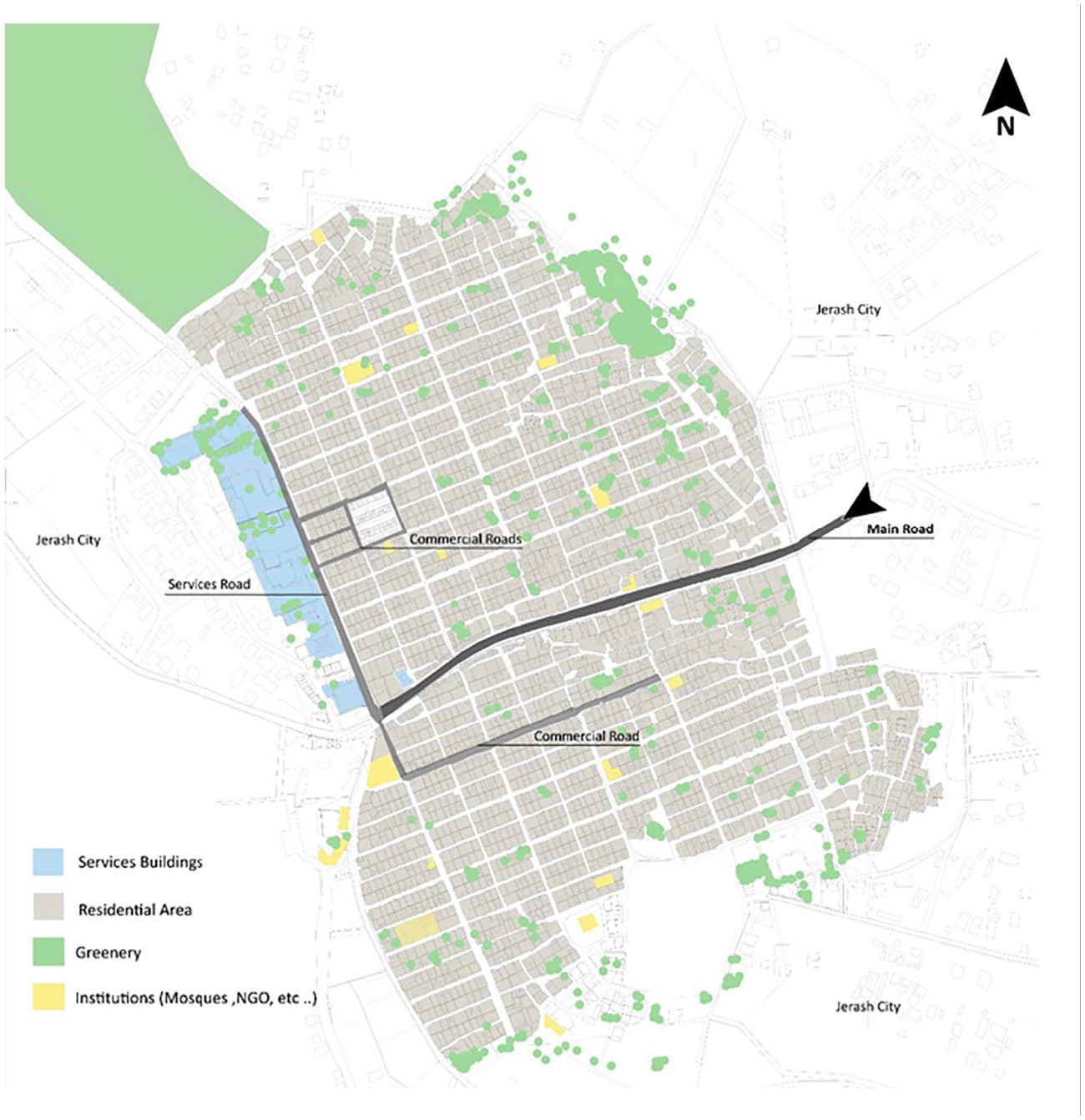
Land use map of Gaza refugee camp in Jordan. Adapted by the work of the GRCR team of SAIB.
The camp is divided in two by its main two-way road. UNRWA and the Jordanian Department of Palestinian Affairs call the southern part Zone A and the northern part Zone B. Commercial properties are distributed along the main road while about 20 transverse streets, mostly lined with houses, intersect with the main street. Most streets are narrow, making it difficult for vehicles to move.
After about 1 km from the camp entrance, the main street reaches a significant T junction, with services and governmental buildings distributed on one side and housing units on the other. Two other streets, considered the camp’s commercial hub, are located centrally on each side. These streets penetrated the center of the residential areas to create the “Hisbeh” or main market strip, lined with shops and carts selling goods.
Although no walls or other barriers separate the camp from its surroundings, it is clearly distinguishable by its spatial layout, uniform building heights, and street widths. The camp is surrounded by Jerash neighborhood on three sides and the urban landscape to the northwest.
When interviewed, many refugees agree that people in Zone B have a slightly different culture than Zone A due to their different cultural fabrics before being displaced from their homes in Palestine. Zone A inhabitants used to be shepherds, some of whom even now maintain small spaces for their sheep and chickens. Zone B inhabitants are more interested in agriculture as they were farmers in the past.
The spatial analyses showed that 90% of the camp’s area is covered by private and public structures. The density of the built-up area is very high, with very few empty plots for public spaces. The analyses indicated that, 75% of the camp’s land is used for residential areas, while the remaining 25% is divided between all other activities. The semi-public institutions, informal functional spaces, and UNRWA’s open spaces combined account for less than 13% of land use. According to observations, public activities occur in every available place, whether the main street or paths and alleys connecting different plots. The camp has few open areas as only 3% of the land is covered with green space (Figure 6).
Given that the camp has 40,000 inhabitants in its 750,000 m2 area, it is 150,000 m2 smaller than the absolute minimum area of 30 m2 per person set by UNHCR (2007) standards for planning refugee camps.
Commercial land is predominantly used for basic services, commerce, and non-intensive retail operations. Women have the largest share in the camp’s economic life through simple home-based businesses producing handmade products and goods. Most men are prevented from taking permanent jobs because they lack social security numbers. Despite their financial responsibilities, women still shoulder a larger share of housework than men.
The Residential Environment Characteristics
Due to its modular design, the residential area is divided into blocks. Each housing unit is accessible from the grid, which guarantees control and accountability for managing the camp. However, this layout limits privacy since all houses face the streets. It also reduces the sense of community and discourages shared activities. Only one facade of the rectangular houses faces the outside. The opposite facade has just a 90-cm ventilation gap to the house behind. The other two facades are attached to neighboring housing units.
Each residential block is located between two street intersections to form a neighborhood. The sample neighborhood has 9 housing units with 35 inhabitants, which is an average number in the camp. This neighborhood also contains the “madafeh” which serves as a public guest room, where mainly men congregate with the neighborhood’s chief “mokhtar” on special or religious occasions, or to resolve disputes.
Most of the residences in the camp are one-story housing units, although a very few residents have recently started to add illegal stories to cope with the increasing population. The exterior and interior walls are mainly cement bricks while the roofs, as in most of the camp, are metal corrugated zinc and asbestos sheets laid over steel and wooden bars. While roofs are nearly new, most have holes, severe corrosion, or loose sheets that allow rainwater and heat into the house: “The room temperature forces me to wake up early even at weekends. Once the sun rises, the room temperature gets too high and the space becomes uncomfortably hot” (Participant 1 – Son 1). Bricks and car tires are placed on the rooftops to stabilize the lightweight roofing material in windy weather. Water tanks are therefore placed in front of the houses rather than on the roof, creating more obstacles in the narrow streets, along with the stairs, which hinders the movement of vehicles through the camp (Figure 7). The houses lack adequate natural ventilation and daylight, which creates passive ventilation problems such as high humidity and moisture. This causes mold growth and encourages dust mites in the furniture and interior spaces.
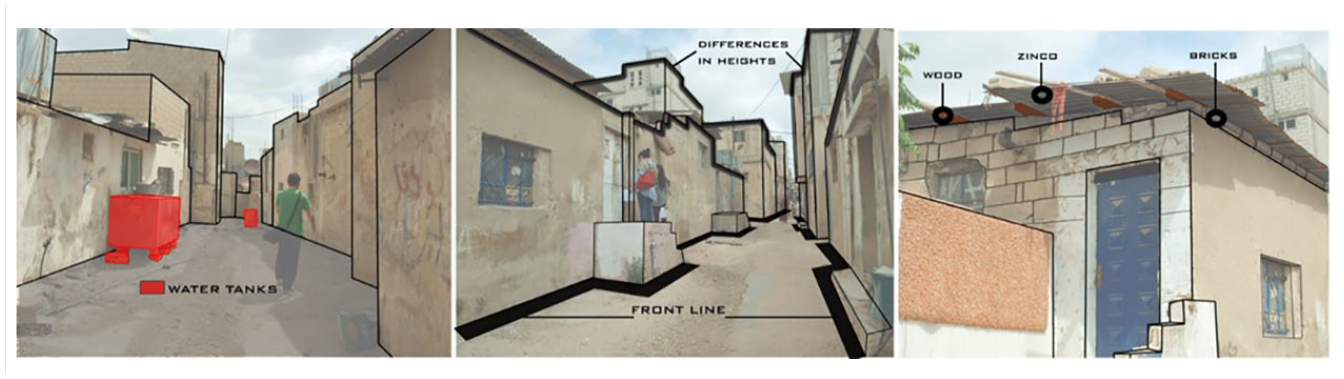
Visuals showing the residential area of Gaza refugee camp. Prepared by the GRCR team of SAIB.
Pre/Post-Renovation Analysis of the Individuals, Family, and Community Level of Ecology
Gaza refugee camp is overcrowded. Poverty, cultural practices involving large families, misconceptions about family planning, and poor planning of the space have also created various challenges in the residential environments. The households have inadequate residential spaces, often shared with the extended family, forcing genders to share bedrooms: “I feel there are fewer people outside the home than inside” (Focus group participant). Because of the absence of outdoor public spaces, the majority of the focus group participants favored activities immediately outside their houses, mainly in the alleys or on doorsteps.
For a comprehensive discussion of the in-depth part of the research study, the data were analyzed at three levels: individuals, family, and community level of ecology. The terms “Pre-renovation” and “Post-renovation” refer to the house before and after the architectural intervention, respectively.
Comparing the weekend programs of the pre/post-renovation period, the family members recorded an average of 5 hours extra sleep. They also recorded an average of only 3 hours spent outside the house, post-renovation, in comparison with 8 hours pre-renovation. This behavioral change is related to differences in the materials and spatial boundaries of the house after the renovation, which considered personal space and privacy for each family member: “I can play my video games and listen to music without disturbing anyone” (Participant 1 – Son 1). The new physical components of the behavior setting included an insulated reinforced concrete roof to replace the metal corrugated roof sheets. This reduced the effect of external weather on the interior temperature. Thus, the experience of the space and the behavior of the inhabitants was enhanced on many levels.
The new rooftop with a staircase in front of the house provides a pleasant outdoor space for the family to sit and socialize with friends: “For the first time, I have a scenic view over the neighborhood” (Participant 1 – Son 1).
Regarding the influence on behavior patterns of objects in a behavior setting, one new object, the mobile phone, has dramatically affected both the mother’s and the son’s program. The son, for example, interacted less with other family members as mobile games replaced some previous activities, such as studying and helping to prepare lunch.
The 23-year old son (Participant 2) used to share the bedroom with his two siblings but moved to the guestroom after the unfortunate loss of his brother: “I used to sleep in the same room together with my two brothers. But when my eldest brother passed away, I could not sleep in that room anymore” (Participant 2 - Son 2). In behavior setting terms, the absence of an essential role had a psychological and spatial effect on other roles in the same setting, which eventually affected behavior patterns. However, the participant was happy to return to the bedroom after post-renovation changes in the spatial and physical components (objects) of his room. These replaced the space’s old memory with a new identity and contributed to a behavioral change. These changes were mainly associated with the interior design: furniture layout, ventilation, natural lighting, and spatial qualities, such as thermal and sound insulation.
The loss of the oldest son in the car accident came as very sad news to all involved in the research work. His mother described him as full of energy and hope for a better future. The research team shared their deepest sympathies and condolences and offered their support to the grieving family. The family later acknowledged the role of the project outcomes and the research team in helping them to cope with their grief and to reconcile themselves to their tragic loss.
Participant 3, the mother, described the emotional strain, pre-renovation, of the almost impossible task of keeping such a house clean and tidy: “There was no way to make this house clean. As much as I put effort and time cleaning and tidying it up, it would still look messy and dirty” (Participant 3 – Mother). Her fatigue during the day was psychological rather than physical: “Regardless of the time I rest, I constantly feel tired” (Participant 3 – Mother). The mother had worked hard to improve the house’s appearance, to the extent that she created a stretched ceiling by sewing fabrics leftovers together to cover the damaged parts. Her attempts to meet both caring and household demands, however, were undermined by the physical conditions of the setting, which prevented her from being the mother she wanted to be: “Pre-renovation, I used to feel demotivated to work at home. Dirty dishes were piled up for days in the sink” (Participant 3 – Mother). She valued time away from home and family demands, doing her part-time voluntary job at the community center during the day: “My voluntary job is my refuge space” (Participant 3 – Mother).
While the family’s behavior patterns resulted from group interaction, it was primarily evoked by one role: the mother. Pre-renovation, she recorded the highest rate of interaction in the setting, with nearly 50% of her daytime routine associated with other roles in the family. Unlike the other family members, she recorded an appearance in all the spaces of the house because she alone took responsibility for all the housework. In contrast, slight modifications in the new post-renovation space, such as the open kitchen and living room, encouraged the male family members to assist in cleaning and preparing meals while avoiding the shame, due to cultural pressure, of being in a space usually only occupied by females. At weekends, the family comes together multiple times throughout the day for the main meals. In middle eastern culture, the family lunch is viewed as a symbol of an interconnected family. This fundamental group activity showed that certain behaviors and roles are the foundations for the sustainability of the entire behavior setting. Indeed, all the family members reported that the Friday lunch was their favorite activity of the week.
Despite these changes in the house, it is remarkable that the mother’s daily routine regarding the tasks she took upon herself did not change. However, the time spent doing them shrank, thereby allowing some room for pleasure in volunteering for community service activities. She was not surprised by these results: “At this age, my daily program is fixed since it is focused on my family and repetitive essential responsibilities” (Participant 3 – Mother). The mother’s attitude toward the changes was more psychological than behavioral. During the post-renovation observations and interviews, she expressed her satisfaction with the house. The household demands had decreased, so her position had improved accordingly.
In contrast to the rest of the family, there were no post-renovation changes in the father’s daily routines or pattern of movements inside the house. However, his working days and free time changed. Due to the absence of an essential role in the setting, his son, the father had to work more frequently than before to cover the family’s expenses.
While his indoor activities were mostly confined to socializing with family members, his daily program was associated with multiple outdoor events, primarily to pray five times a day at the neighborhood mosque. The mosque’s relative proximity to the house enabled interaction between two different behavior settings. This interaction affected the routine behavior pattern of the house’s inhabitants: “My schedule is bonded with five prayer times during the day” (Participant 4 – Father).
As for most of the camp’s inhabitants, winter used to be difficult for the family. However, significant activities associated with this season, long embedded in the behavior patterns, completely disappeared after the architectural intervention. Some examples of the behavioral records that disappeared include the following:
Distributing cooking pots throughout the house to catch leaking rainwater.
Collecting second-hand books at the end of each school year to burn as fuel on cold days.
Spreading plastic sheets over the corrugated metal rooftop to decrease rainwater leakage into the house—a particularly undesirable activity for male family members.
Raising all furniture on cement bricks to prevent mold caused by rainwater pool on the floor.
The observations and interviews showed that the construction period had strengthened relationships within the family and with their neighbors: “The fact that the family worked together in designing and rebuilding the house has brought the family together. We had several discussions before deciding on anything. My friends and neighbors also stepped up and offered their help for free” (Participant 2 – Son 2). Accordingly, the number of visitors increased remarkably post-renovation: “I always felt embarrassed to invite people to my house pre-renovation. I used to avoid friends’ gatherings at home so that I won’t have to host the next one at mine” (Participant 3 – Mother).
The use of behavior settings theory as the primary methodology to collect and analyze data produced more accurate results revealed facts that might have been hidden or misreported using other methods. For instance, every behavior setting survey in the neighborhood noted frequent problems with smells and mosquitoes from garbage accumulation, despite cleaning and tidying activities: “I am very irritated by the bad smell while having our meals in the kitchen. Especially in summer, those smells in addition to mosquitoes really disturb our normal activities such as sleeping or eating” (Focus group participant). Later, an interview with the camp management highlighted the seriousness of the camp’s inadequate waste management system. This problem was a consequence of overpopulation and planning issues in many residential areas that prevented access to waste-collecting vehicles. That is, the camp’s waste problem relates to planning and management issues rather than the inhabitants’ behaviors. The participants suggested various solutions that could be implemented with the cooperation of the camp’s management: “I suggest distributing waste bins in every street.” “I believe those bins need to be designed in a manner that considers durability and sizes concerning the width of the streets” (Focus group participants).
Discussion
This research was conducted to understand how the built environment shapes behavior in protracted refugee camps. The primary inspiration for the study was behavior setting theory.
The 3-year research program was carried out in Gaza refugee camp in Jordan in three stages: architectural analysis; behavior patterns analysis; intervention to evaluate the effect on behavior patterns of improving the physical environment.
Community Environment
According to Wicker (1984, 2012), people abandon inadequate settings if they cannot obtain satisfying outcomes. Likewise, a setting can reject its occupants and create vacancies for more appropriate ones if their behaviors are not compatible. This aligns with Lefebvre’s (1991) perspective of inequality and space. However, in protracted refugee situations, where no substitutes are available, people were forced to remain in unsatisfying settings while the settings have to retain occupants with incompatible behaviors.
Barker and Wright (1955), Barker (1968), and Wicker (1984) argue that regulation systems in behavior settings rely on three main mechanisms to sustain the setting (Sensing Mechanisms, Executive Mechanisms, and Maintenance Mechanisms). However, these may not all apply in every behavior setting. Refugee camps, for example, have regulation systems organized by outside authorities so the theory’s mechanisms are interrupted after the executive mechanism phase. That is, the following phase, (maintenance mechanism), requires fixing the problem or removing its source from the setting. However, this is not usually an option due to the specific circumstances in refugee camps. Alternatively, the outside authorities can also be viewed as part of a larger behavior setting that includes the regulation extensions of a network of other smaller settings.
According to its administrators, Gaza refugee camp is overstaffed with inhabitants as the maximum resources available cannot cover the basic needs of the refugees. According to the occupants, the camp is understaffed as the minimum needed positions that the management of the camp should provide are not available.
Studying the camp at a macro level revealed several inadequacies of the behavior setting. In particular, the programs of its occupants are under excessive control and disciplinary power by outside authorities. For example, rules prevent them from making changes to their neighborhoods, building more than two-story houses, or using concrete roofing materials in some areas. In addition, the absence of permanent residency due to their political status, has also restricted the occupants’ education, healthcare, and a natural flow of daily life activities.
Corresponding to Barker’s (1968) and Wicker’s (1984) definitions of the conditions that generate inadequate settings, the camp’s behavior settings contain too many occupants for its essential features. The “temporary” mentality in establishing a protracted refugee camp meant that its behavior settings occupy a space designed for a different purpose. The need for spaces for social infrastructure and communal services has been disregarded, adversely affecting indoor behaviors in the residential environments.
The present study confirmed the previous findings of Barker and Wright (1955), Barker (1960, 1968), Barker and Schoggen (1973), and Wicker (1968, 1984, 2002) while contributing additional evidence to support the view that the components of the behavior settings are strongly interdependent. That is changes in any of the essential features of a behavior setting or any intervention in existing behavior patterns certainly influence the structure of the whole setting, redefining its components, or generating new sub-settings with interdependent relations between the old and the new behavior settings.
Residential Environment
During the fieldwork, it was observed that spaces in the residential environment tended to be redefined to serve multifunctional purposes. When one of the roles in the behavior setting was eliminated (e.g., the loss of the participant family member due to the car accident), the spatial boundaries of other roles changed, which affected the behavior setting at various levels. The occupants were observed developing new definitions of their territories while practicing various disconnected activities in the same space, such as using living and guest rooms, for some family members, as their bedrooms, dining, and for hosting visitors.
The physical component of the behavior setting “Objects,” had the strongest influence on behaviors. This sheds light on the relationship between the built environment and behaviors. Post-renovation changes in the physical components, for instance, encouraged new activities that created different experiences and feelings related to space, even replacing negative thoughts, behaviors, and memories with more favorable ones.
The results also indicated a psychological dimension to behavior settings theory, which is inadequately considered in the original work of Barker and Wright (1955), Schoggen (1973, 1983), and Bechtel (1977, 2000). This inadequacy was clearly demonstrated in the ecological analyses of individuals. These included the sons’ lack of privacy, which is a psychological need in the setting, the grieving over the loss of a family member and the memory of the space associated with it, and the mother’s emotional strain and psychological fatigue.
The psychological dimension also appears in the family and the community, for instance through the pre-renovation embarrassment about inviting visitors and how that changed post-renovation. In addition, the family developed a better level of socialization with themselves and the neighborhood due to new elements in the setting, such as the new rooftop and the stairs in front of the house.
Overall, the findings confirmed the effectiveness of using the behavior settings survey to examine directly observable behaviors that are closely linked with the physical environment. Although people often could not articulate their unmet needs, their actual behaviors provided invaluable clues. The survey contributed to monitoring and tracking people’s lives and ensuring that the essential components of the setting were identified, which appears consistent with the propositions of Bechtel (1977, 2000). These contributions along with the behavior settings survey provide a way to detect problems and identify needs that threaten the existence of an essential component of the behavior setting, which can, in turn, affect the occupants’ behavior patterns.
Recording unpleasant situations, such as the constant presence of smells and mosquitoes in the residential areas, revealed the problem of garbage accumulation between residential units. Such problems could not be observed through regular site analyses. Meanwhile, understanding the refugees’ attitudes about keeping their houses clean revealed that the source of the problem was the authorities’ planning and management rather than the refugees’ behavior. In the analysis of such a problem, overlooking occupants’ behavior would have led to false conclusions and the misdirection of efforts and resources.
Moreover, and in line with the UNRWA’s (2007) recommendations, the data indicate that users are in the best position to assess the spaces they occupy. Allowing them to participate in planning processes can improve many design proposals. It increases the sense of responsibility and ownership, which will eventually encourage the occupants to maintain the changes and accept them as part of their environment. When the participating refugees were given the opportunity to engage in several stages of the field study, such as renovating the house, they constructively suggested feasible solutions and practical methods for implementing them. Their contributions were more appropriate to the camp’s culture and environment than the design proposals and inputs of the team of architects, engineers, and sociologists. Additionally, working with local committees, who served as interpreters, cultural guides, and intermediaries between the professionals and the camp’s society, helped build credibility and ensure mutual understanding. Through the shadowing periods and observations in the home, it was possible to become embedded in the participants’ lives.
Conclusion
The main conclusion that can be drawn from this research is that people are an integral part of a behavior setting. Therefore, they tend to react in different ways to changes to its coherently connected components. The findings demonstrate a strong effect of any natural or intentional interventions in the setting. These can be used to form a structured methodology for changing, preventing, stabilizing, or redirecting behaviors within certain spatial-temporal boundaries, or redefining spaces and perceptions associated with them. The data collected through this methodology can also be used for improving an existing space or recognizing the specific needs, characteristics, or predicaments of its occupants.
It was very appropriate to base this research on behavior settings theory, which makes strong connections between its components of roles, rules, space, and objects, and people’s behavior patterns in a specific environment. The results indicate that so many of the challenges of refugees in protracted camps can be attributed to the behavioral, psychological, and social consequences of changes to physical boundaries. Examples of such challenges are changes in the roles, responsibilities, and status of family members, changes in rules and regulations, and issues with identity and sense of belonging.
Looking at the results from using a multi-method behavior setting analysis as a research methodology, in a typical interview, people may give answers that they think will please the interviewer. Thus, the credibility of the given data could be questionable. Therefore, employing methods that can measure the participants’ behaviors can fill in the gaps of the interview data, or even replace other data collection methods.
One apparent condition for using the method is that the researchers, particularly those who conduct shadowing, are acceptable to the community and are sensitive about the personal boundaries and cultural norms and fabrics of the studied area. Therefore, the relationship between the research team and members of the community should be based on trust and acceptance while problems encountered during the fieldwork should be openly discussed.
The present study is a practical illustration of Wicker’s (2011) hypothetical future movement in environment and behavior, and his extension of behavior settings theory to the design and improvement of small-scale environments. He argued that such work should take place in real-life settings in which researchers have direct, intimate, and long-term contact with participants. This creates a limitation in that this study was a multi-method case study of a single, protracted refugee camp that is embedded in a larger urban area. Therefore, the findings may not generalize to refugee camps in different locations, with different populations and circumstances.
Conducting further studies on government policies and the roles of NGOs regarding asylum and migration could help improve the status of refugees and the conditions of refugee camps worldwide. Such studies would contribute to establishing new regulations and guidelines for the initiation, planning, and execution phases of emergency settlements.
While a few ecological psychologists are working on the psychological consequences of behavior settings, much more research on behavior settings theory is required. Future studies could also expand the research by increasing the sample size to focus on the relationships and connections between residential environments and public spaces as the outdoor environment may influence the activities and programs of indoor spaces and their occupants. Investing more efforts in studying refugees’ behavior settings can improve the living standards and overall conditions of those who have suffered displacement, regardless of location.
Footnotes
Acknowledgements
The authors would like to thank the participants of this study, the GRCR team of SAIB NGO (Society for Aid, Improvement, & Bridging), Izmir University of Economics, Leeds Beckett University, Simon Mumford, and Jerry Spring for editing.
Declaration of Conflicting Interests
The author(s) declared no potential conflicts of interest with respect to the research, authorship, and/or publication of this article.
Funding
The author(s) received no financial support for the research, authorship, and/or publication of this article.
