



Abstract
Global change calls for more active approaches to forest risk management. To avoid unforeseen backlashes, it is necessary to examine the general public’s acceptance of the risk management strategies. By drawing on different theoretical approaches (threat and prevention, performance evaluations, and forest cognitions), the present study examines predictors of acceptability in the general public in three counties in Sweden (N = 1,026). As expected, appraisals of threat mediated the effect of threat awareness on belief in risk prevention, and when examining performance evaluations, trust in responsible actors influenced acceptability via procedural satisfaction. However, the threat and prevention approach and the performance evaluation approach only explained low levels of the variance in acceptability of the examined strategies. Nevertheless, stronger ecological forest values, and favoring broadleaved forests, were found to be important to the acceptability of proactively implementing a more diverse forest to meet the expected challenges associated with global climate change.
Keywords
Introduction
Forests provide a multitude of ecosystem services and are used for many purposes, including production (e.g., timber) and recreation. However, both biotic disturbances, such as pest and disease outbreaks, and abiotic disturbances, such as fire and storm, lead to forest damages (Keenan, 2015; Lindner et al., 2010; Trumbore, Brando, & Hartmann, 2015). Although forests have always been subject to damages, interest in forest risk management has increased during recent years (Food and Agriculture Organization of the United Nations, 2012; Landmann, Held, Schuck, & Van Brusselen, 2015; Lindner et al., 2014). Potential reasons for this transition are twofold: (a) forests are more prone to disturbances; (b) there is more intense focus on climate change adaptation in the management of forests. Management of threats can be reactive in response to forest threats already occurring, or proactive with the aim to reduce the risk of damage beforehand, and may involve specific strategies (or actions) such as the use of pesticides, biological control, sanitation cutting, selective cutting, prescribed burning or thinning. As a consequence of the anticipated increase in threats associated with global climate change, an interest in adopting more general proactive strategies—such as planting more broadleaves and fewer coniferous trees, more mixed forests, and changing the rotation length and thinning schedule—has also emerged (Bouriaud et al., 2015; Fuhrer et al., 2006). These more general strategies have an impact on the level of biodiversity, forest appearance, and possibilities to use the forest for production, although the changes may be gradual and consequences not entirely apparent until much later.
Considering the public’s opinion is an integral part of sustainable forest management (Kozak, Spetic, Harshaw, Maness, & Sheppard, 2008; United Nations, 1992). A large discrepancy between forest management practices and public opinion regarding management has the potential to lead to opposition and serves as a source for future conflicts (Ribe, Ford, & Williams, 2013). Public resistance may however be avoided if the opinions of the public are taken into account before rather than after the implementation of management strategies. Furthermore, education of the public is often promoted to ensure smooth implementation of risk management (Bertolino & Genovesi, 2003; Bremner & Park, 2007; Klapwijk et al., 2016; Raftoyannis et al., 2014). To reach the public with educational measures, it is important to understand not only the public’s opinion on forest risk management but also what determines acceptability to the public. In previous research, the focus has largely been on evaluating acceptance in areas where damages have occurred (McFarlane, Stumpf-Allen, & Watson, 2006; Vaske, Absher, & Bright, 2007), and little is known about the public’s views when damages are not imminent. Connected to this, and particularly relevant to global climate change impacts, is the question of whether the public would accept proactive implementation of more general strategies that work to slowly change not only the likelihood of damage but also the characteristics of the forest.
In the present study, we examined the acceptability of proactive and reactive forest risk management in the general public in Sweden. Acceptability was assessed in terms of (an) attitude, that is, a positive or negative evaluation of the strategy. Not only cognitive processes, including the formation of beliefs (i.e., thoughts or ideas about the strategy), but also processes drawing on emotional and behavioral experiences may be important for attitudes according to the tripartite model of attitudes (Eagly & Chaiken, 1993). In previous studies of the public’s acceptance of managing forest threats, the emphasis has largely been on insects and fires (Czaja & Cottrell, 2014; Flint, McFarlane, & Müller, 2009; Fuller, Marzano, Peace, Quine, & Dandy, 2016; Kooistra & Hall, 2014; McFarlane et al., 2006; McFarlane & Watson, 2008; McGee, 2007; Toman, Shindler, McCaffrey, & Bennett, 2014; Vaske et al., 2007; Verbrügge, Van den Born, & Lenders, 2013) but recently also on risks associated with climate change (Hajjar & Kozak, 2015). These studies have suggested that the public generally accepts risk management (i.e., prefer some kind of intervention over doing nothing), although the acceptability rate is higher for moderate than for more extensive strategies.
Although different underlying motives for acceptability have been examined, the set of predictors has often been limited to one or a few sociocognitive variables, and a theoretically guided inclusion of predictors—including variables with potentially indirect as well as direct effects—is lacking. The view of why the public accept, or oppose, forest risk management is thus rather fragmented. The present study attempts to address this shortcoming by comparing three different approaches to acceptability of forest risk management: (a) threat and prevention, (b) performance evaluations, and (c) forest cognitions (see Figure 1).
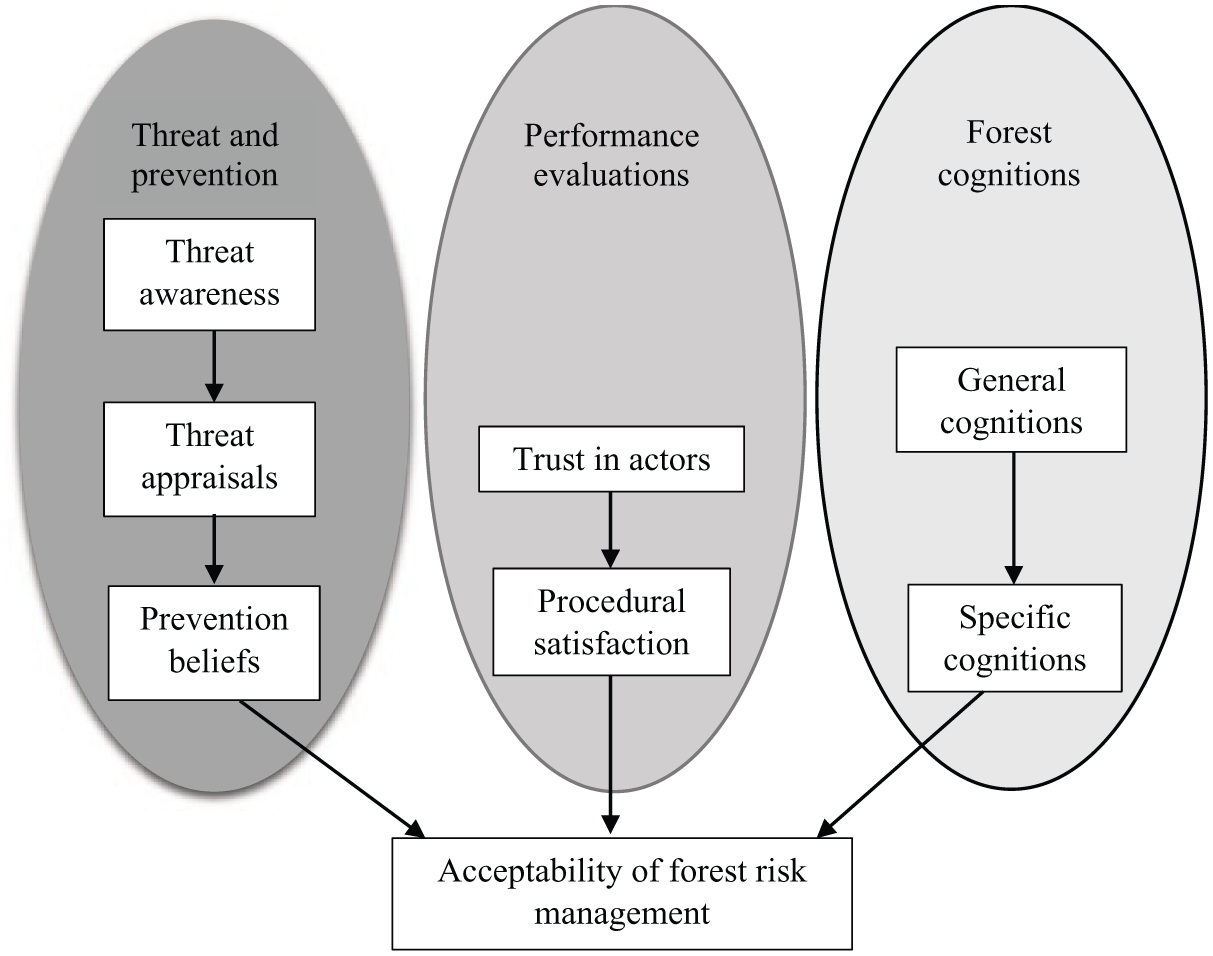
Three approaches to acceptability of forest risk management: Threat and prevention, performance evaluations, and forest cognitions.
Threat and Prevention
The threat and prevention approach draws on models in risk research, including the protection action decision model (Lindell & Perry, 2012), environmental stress research (Reser & Swim, 2011), and the protection motivation theory (applied to climate change adaptation by Grothmann & Patt, 2005). According to this approach, attitudes toward forest risk management (i.e., a threat response) are determined by threat experience, threat appraisals, and appraisals of coping/management. A threat may be experienced directly or indirectly (e.g., through the media) resulting in a shallow or more in-depth awareness, familiarity, or knowledge of the threat (Fuller et al., 2016; McFarlane et al., 2006; McFarlane & Watson, 2008). In contrast, problem awareness, or threat appraisals, consists of cognitive evaluations of not only the perceived likelihood of being affected by the threat and the perceived consequences but also of emotions evoked by the threat such as anxiety, fear, and worry (Slovic, Finucane, Peters, & MacGregor, 2004). Some studies have found awareness and acceptability of risk management to be related (Sharp, Larson, & Green, 2011). However, risk research rather suggests that appraisals of the threat are more closely linked to responses than awareness is (Reser & Swim, 2011). In line with this reasoning, studies have found a significant relationship between threat appraisals and acceptability (Hajjar & Kozak, 2015; Kooistra & Hall, 2014; McFarlane & Watson, 2008; Qin & Flint, 2010; van der val, Fischer, Selge, & Larson, 2015), although there are exceptions (McGee, 2007; Toman et al., 2014). In further support of this reasoning, studies have failed to find a direct effect of awareness (or knowledge) on management attitudes when appraisals of the threat have been controlled for (McFarlane et al., 2006; McFarlane & Watson, 2008).
In addition to threat appraisals, evaluations of coping (e.g., evaluation of the strategy and the individual’s resources and abilities) are generally considered important for triggering an individual’s threat response (Lindell & Perry, 2012). Furthermore, a relationship between environmental threat appraisals and beliefs in a personal responsibility to act has been found in environmental research (Stern, 2000). However, when the public evaluates strategies to be implemented by forest owners or managers, personal resources and responsibility is less relevant for the majority. Instead, normative beliefs about whether measures should be taken and the perceived responsibilities of involved actors are important to consider in relation to acceptability (Bright, Newman, & Carroll, 2007; Ford, Williams, Smith, & Bishop, 2014).
Performance Evaluations
The second approach examined in the present study highlights performance evaluations of the actors responsible for natural resource management and the processes involved (Valkeapää & Karppinen, 2013; Vaske et al., 2007). Hence, in contrast to the threat and prevention approach, which may be characterized as more normative as it emphasizes beliefs about what is right and appropriate (Kaina, 2008), evaluative dimensions are at the core of this approach. Evaluations of actors have often been examined in terms of social trust, entailing a willingness to rely on responsible actors (Siegrist, Cvetkovich, & Roth, 2000). Although there are exceptions (Kooistra & Hall, 2014), a series of studies have found that higher trust is linked to a higher acceptance of forest management and forest risk management (Ford et al., 2014; Qin & Flint, 2010; Toman et al., 2014; Vaske et al., 2007; Wyatt, Rousseau, Nadeau, Thiffault, & Guay, 2011). More broadly, evaluations of, for example, decision-making processes, laws, and relations between actors have been highlighted as important to the legitimacy of forest governance (Valkeapää & Karppinen, 2013). Hence, how the public evaluates the performance of actors, decision processes, and so on, is likely relevant to acceptability when other actors are responsible for management decisions.
Forest Cognitions
The third approach departs from the assumption that the public’s evaluations may be related to concerns other than threat and prevention or performance evaluations (Eriksen & Gill, 2012; Scolobig, De Marchi, & Borga, 2012). In support of this reasoning, a review of studies of disputes associated with invasive species revealed that differences in value systems, and not threat appraisals, were important generators of conflict (Estévez, Anderson, Pizarro, & Burgman, 2014). According to a cognitive hierarchy model (Fulton, Manfredo, & Lipscomb, 1996; McFarlane & Boxall, 2003), cognitions about a topic can be arranged hierarchically and the more general cognitions, including basic values and beliefs, constitute the foundation for more specific beliefs and attitudes. Basic values have been described as preferred end states or specific modes of conduct (e.g., freedom). Basic values are considered few in number and transcend situations. In contrast, general or basic beliefs are thoughts about a broad topic, for example the environment or forests. In line with a cognitive hierarchy model, environmental values and forest values (or general forest beliefs) that reflect the reasons why humans value forests have been found to be important to specific attitudes toward the management of forests and natural risks (McFarlane & Boxall, 2003; Ribe et al., 2013; Verbrügge et al., 2013; Williams, 2014). For example, stronger environmental values were linked to slightly higher acceptance of inaction during outbreaks of mountain pine beetles in national parks in Canada (McFarlane et al., 2006). The cognitive hierarchy model furthermore stipulates that more specific beliefs, reflecting cognitions or thoughts about the strategy, directly influence attitudes and behaviors. For example, believing in the positive consequences of management (e.g., positive effects on the environment) has been found to be important to the public’s acceptance of management (Ford et al., 2014; Hemström, Mahapatra, & Gustavsson, 2014; Toman et al., 2014). Hence, forest values are potentially important bases for acceptability, and depending on the strategy, different specific beliefs may play a role.
Aim of Study
The aim of the present study was to compare different approaches to acceptability of forest risk management in the public in Sweden. The approaches were tested empirically in relation to acceptability of different types of forest risk management, including general proactive strategies aiming to reduce the risk of damage caused by, for example, storm, insects, and fungi (expected to increase as a result of climate change) and reactive strategies intended to minimize damage caused by outbreaks of native and new pests and pathogens. Hypotheses depicting different sets of predictors of acceptability were formulated by drawing on the three designated approaches.
In line with the first approach, relations between threat awareness, threat appraisals, and prevention beliefs were examined. Although research on natural resource management has revealed significant links between awareness and acceptability (Bremner & Park, 2007), theory suggests that being aware of a threat is not directly related to evaluations of specific risk management (Reser & Swim, 2011). Despite the practical value of knowing how awareness and appraisals play a role in the acceptability of management, empirical evidence is lacking. We furthermore considered it important to make a distinction between belief in prevention and attitudes toward specific prevention strategies, as people may favor risk management, but at the same time oppose certain strategies (Broomell, Budescu, & Por, 2015). Hence, the following hypotheses were examined (see Figure 2):
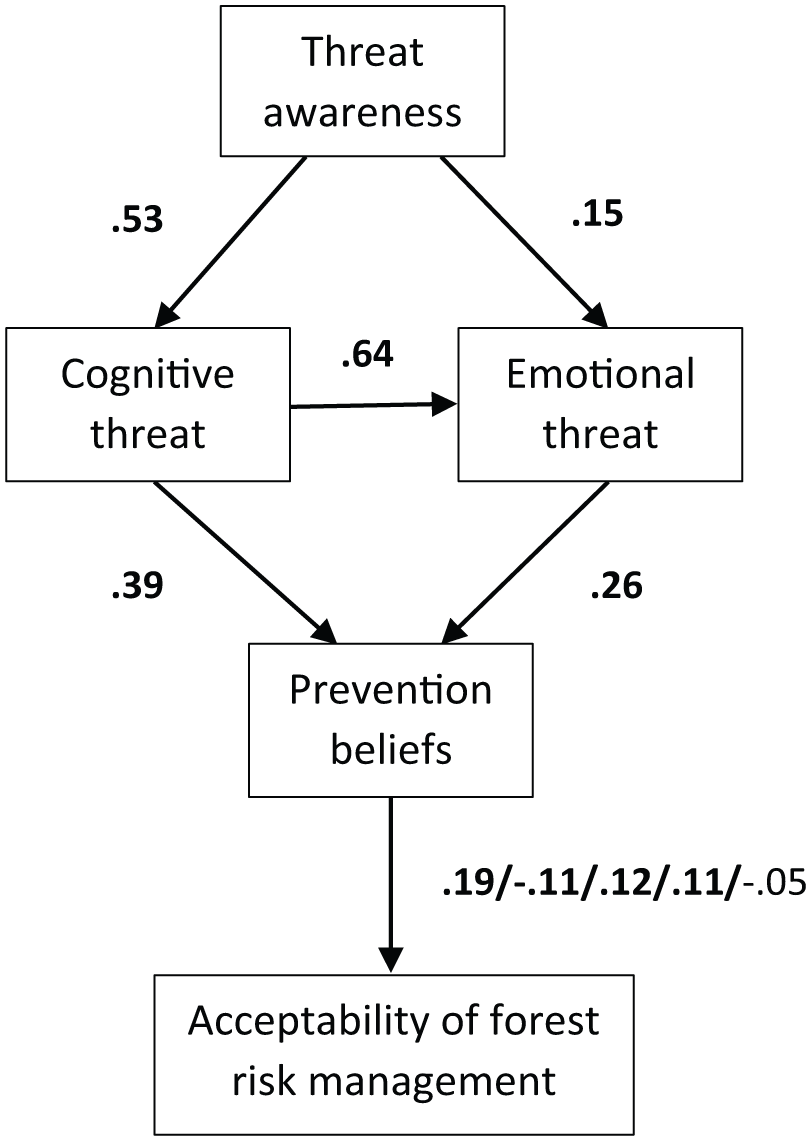
A threat and prevention model to explain acceptability of forest risk management (diverse forest, do nothing, remove infected trees, remove trees from large area, use pesticides).
By drawing on the second approach commonly used in psychological research on natural resource management (Vaske et al., 2007), we furthermore examined how the performance evaluations of responsible actors and the process influence forest risk management attitudes. Forests are largely privately owned in the Swedish context, and it is thus relevant to consider trust in both individual private forest owners and forest companies, but also in the responsible national agency, that is, the Swedish Forest Agency (the SFA), in relation to forest risk management attitudes. Drawing on previous research (Valkeapää & Karppinen, 2013), it would seem likely that higher trust in actors is linked to higher satisfaction with the processes in which the different actors are involved, and procedural satisfaction should in turn be linked to attitudes. We thus proposed the following hypothesis (see Figure 3):
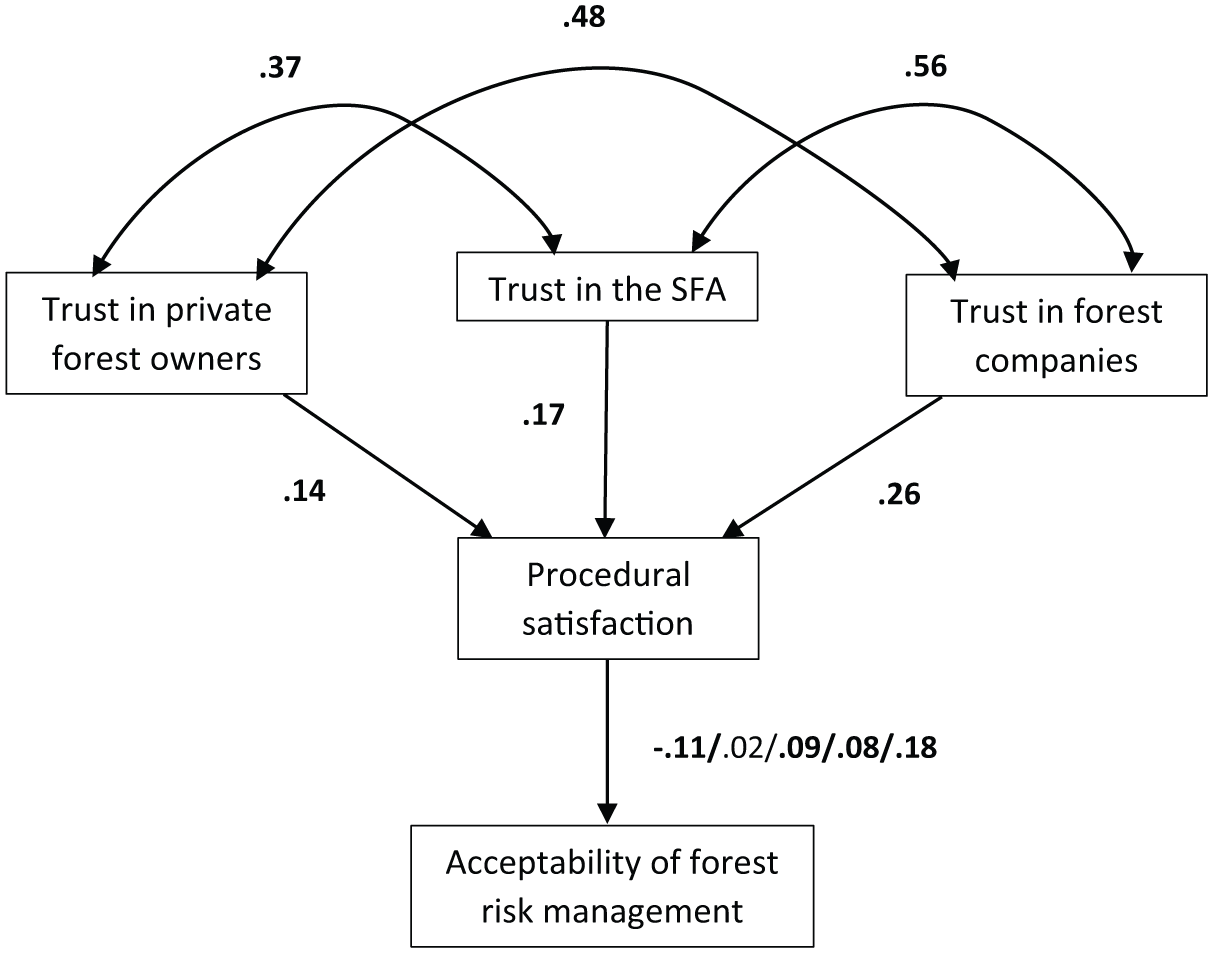
A performance evaluation model to explain acceptability of forest risk management (diverse forest, do nothing, remove infected trees, remove trees from large area, use pesticides).
Forest values have been found to be relevant to the acceptability of forest risk management, as suggested by the third approach outlined in this study (Fuller et al., 2016). Because a change in tree species composition is an important climate change adaptation strategy (Bouriaud et al., 2015), we decided to explore the potential role of general and specific forest cognitions by focusing specifically on these strategies. By drawing on a cognitive hierarchy model (Fulton et al., 1996), we considered forest values and beliefs about tree species to be important to acceptability. We proposed two paths to acceptability because production is largely based on coniferous trees in Sweden (SFA, 2014): First, production values influence acceptability through beliefs about coniferous forest (i.e., the extent to which this forest type is favored), and second, ecological and recreation values influence acceptability through beliefs about broadleaved forest. We thus proposed the following hypothesis (see Figure 4, dashed lines are part of the modified model):
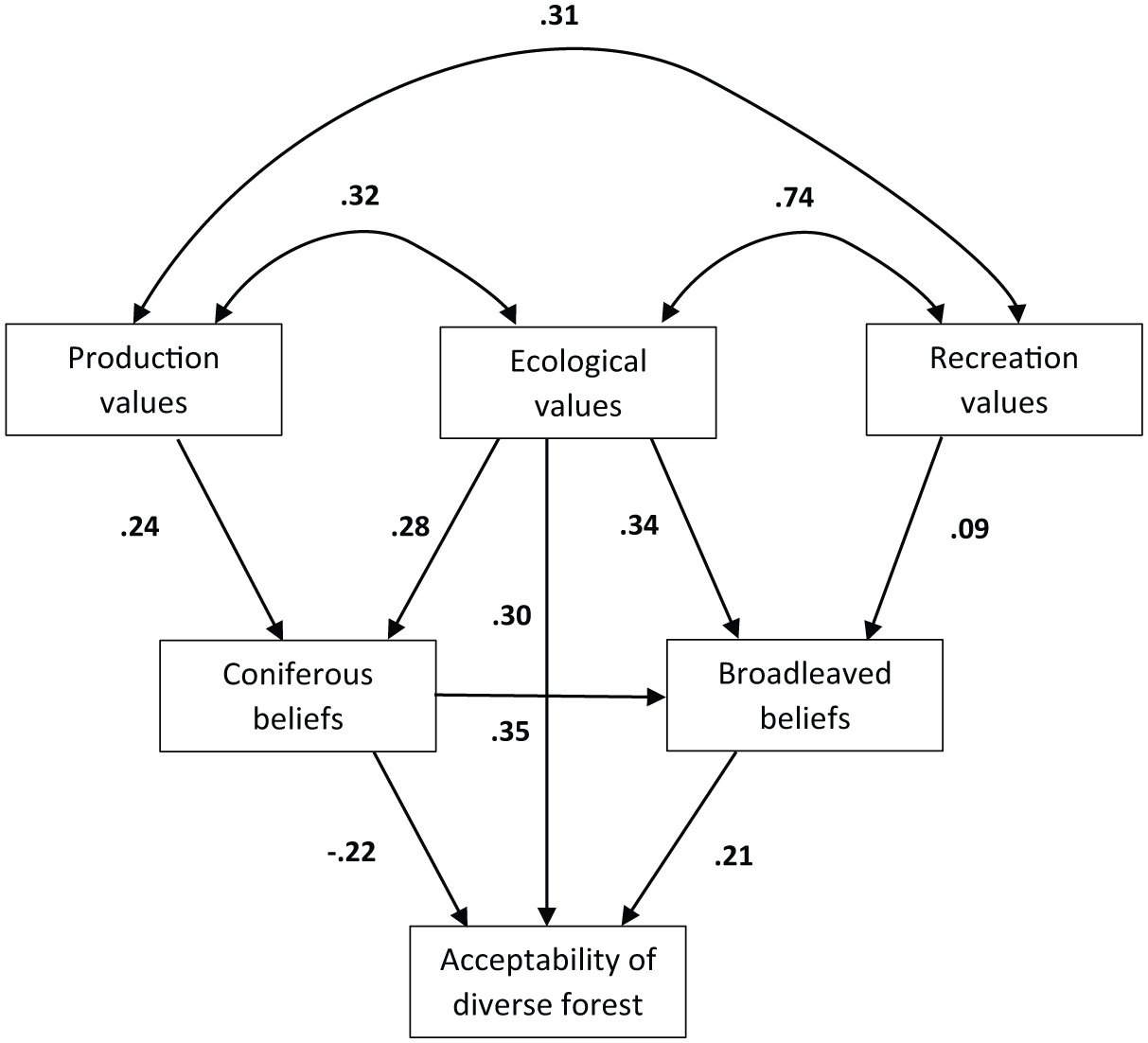
A forest cognition model to explain acceptability of diverse forest as a risk management tool.
Method
Study context
In Sweden, 70% of the land area is covered by forest, and a large amount of the forest is privately owned (50% is owned by individual private forest owners, 14% by state-owned companies, and 25% by privately owned companies; SFA, 2014). Both production and environmental goals are emphasized in the forest policy ( Swedish Gov. Bill, 2008), and public access is generally considered to be one of the world’s most generous (Swedish Environmental Protection Agency, 2016). Forests in Sweden suffer damage from insects, fungi, grazing animals, storm winds, and heavy wet snow. In addition, global warming is expected to not only lead to increased forest growth but also to increased risk of damage caused by fungi, insects, spring frost, and wind (Statens Offentliga Utredningar [SOU; Swedish Government Official Reports], 2007).
Participants
A randomly selected sample of residents (3000), 20 to 75 years, in three counties in Sweden—Skåne, Västernorrland, and Norrbotten —received a questionnaire in the autumn of 2015. The response rate was 34% (N = 1,026). These counties were selected because they vary in the amount and type of forest cover, and the forests have to some extent been affected by different damages in recent years. Skåne, in the far south of Sweden, has a larger share of broadleaved forest, whereas Västernorrland, in the middle, and Norrbotten, in the north, have a large share of coniferous forest (share of coniferous forest in Skåne: 56%, Västernorrland: 82%, Norrbotten: 81%).
Measures
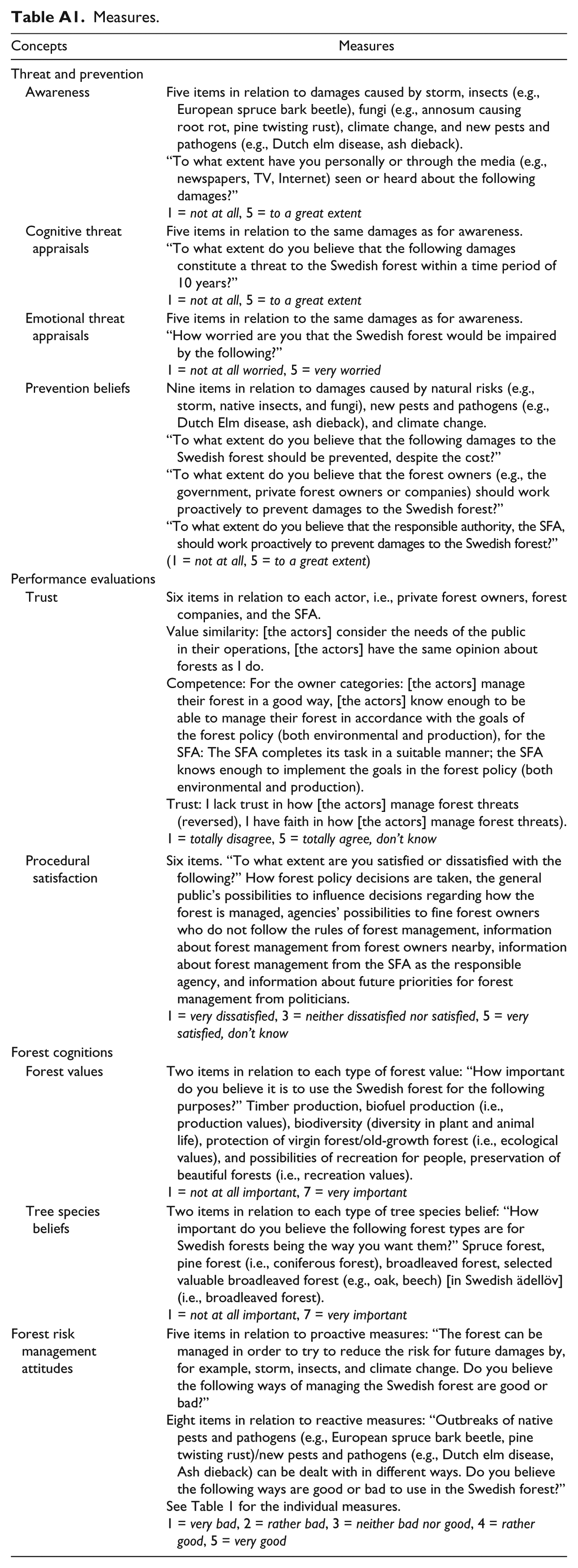
The questionnaire was prepared by drawing on theory and previous research. In addition, a forest damage expert at the SFA guided the selection of risk management strategies. The questionnaire was nine pages long, although only questions relevant to the analyses conducted in the present study are described here. A detailed description of the measures can be found in the appendix (response scales are also shown in Table 2).
To assess awareness of forest threats, the respondents evaluated to what extent they have had personal, or experiences through the media, of five different forest threats: storm, insects, fungi, climate change, and new pests and pathogens (five items, α = .71). The same forest threats were evaluated as part of the measures of cognitive and emotional threat appraisals. Cognitive threat appraisals were assessed in terms of to what extent the respondents believed that the five forest threats constituted a threat to the Swedish forest within a time period of 10 years (five items, α = .80), and emotional threat appraisals reflected the extent to which the respondents were worried that the Swedish forest would be impaired by the five threats (five items, α = .85; Eriksson, 2016). Prevention beliefs were, in turn, assessed by letting the respondents evaluate to what extent they believed that damages caused by natural risks, new pests and pathogens, and climate change should be prevented, and whether it was the responsibility of the owners and the SFA to work proactively to prevent damages to the Swedish forest (nine items, α = .89; Bright et al., 2007).
Measures of trust in private forest owners, forest companies, and the SFA, respectively, were created by combining items assessing value similarity (two items for each actor; sample item: “Private forest owners consider the needs of the public in their operations”), competence (two items for each actor; sample item: “Private forest owners manage their forest in a good way”), and trust (two items for each actor; sample item: “I have faith in how private forest owners manage forest threats”; private forest owners α = .71, forest companies α = .79, the SFA α = .82; Vaske et al., 2007). The measure of procedural satisfaction reflected to what extent they were satisfied with various dimensions of forest decision-making processes and governance, including how forest policy decisions are taken, possibilities for the public to influence forest management decisions, the agencies’ possibility to fine forest owners not following the rules of forest management and information dissemination (six items, α = .86).
Measures of forest cognitions included three types of forest values, each assessed by means of two items. The respondents evaluated how important they believed it is to use the Swedish forest for production (timber and biofuel; α = .72), ecology (biodiversity and protection of virgin/old-growth forest; α = .76), and recreation (recreation for people, preservation of beautiful forests; α = .61; Eriksson, 2012). In addition, how important the respondents believed that different forest types are for the Swedish forest was assessed by means of four items. More specifically, beliefs about coniferous forest (Norway Spruce and Scots pine; α = .87) and broadleaved forest (broadleaved forest, selected valuable broadleaved forest, for example, oak, beech; α = .73) were measured.
Finally, attitudes toward risk management strategies were examined as indicators of acceptability (Schuitema, Steg, & Forward, 2010). The respondents evaluated to what extent they believed that five proactive measures and eight reactive measures were bad or good (see Table 1 for the individual measures).
Attitudes Toward Forest Risk Management Strategies, Including Results From the Exploratory Factor Analysis.
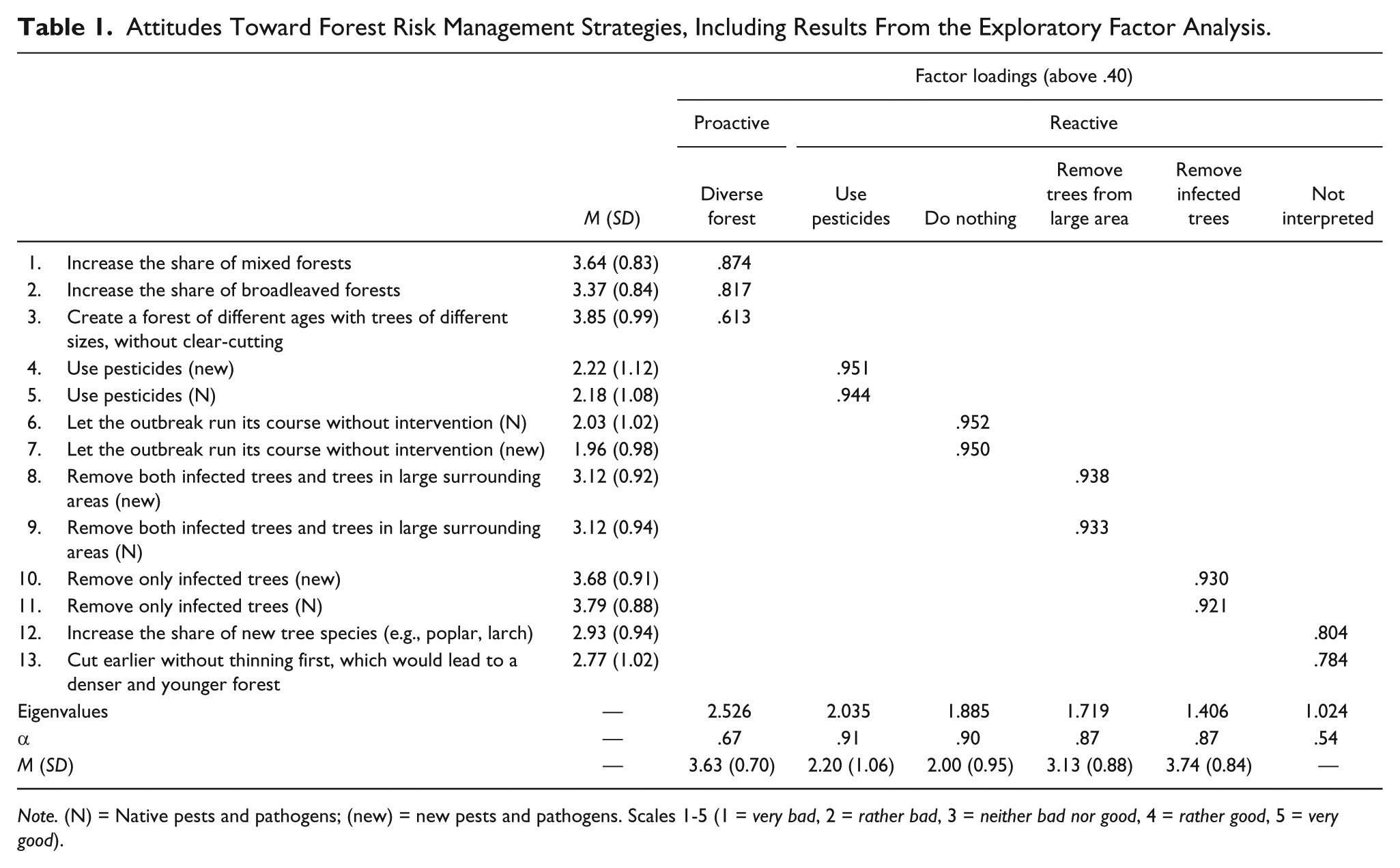
Note. (N) = Native pests and pathogens; (new) = new pests and pathogens. Scales 1-5 (1 = very bad, 2 = rather bad, 3 = neither bad nor good, 4 = rather good, 5 = very good).
Procedure
The study was conducted by Statistics Sweden through a postal questionnaire, including two reminders. SPSS Statistics 22 was used for analyzing the data, except the path analyses for which AMOS 22 was used. First, an exploratory factor analysis (with varimax rotation) was conducted on attitudes toward the forest risk management strategies to create component attitude measures (i.e., the dependent variables). To explore whether it is appropriate to consider the predictor variables as three separate approaches to acceptability, a confirmatory factor analysis (with three factors and varimax rotation) was furthermore conducted on the 13 predictor variables. To test the present hypotheses, three path analyses were examined (H1 and H2 using the same model, and H3 and H4 in separate models). Maximum-likelihood estimation method was used to estimate the parameters. Because chi-square is sensitive to sample size (leading to the rejection of nearly all models tested in large samples; Hooper, Coughlan, & Mullen, 2008), we evaluated the models by also considering the root mean square error of approximation (RMSEA), with a value of .05 or lower to be indicative of a good fit (Browne & Cudeck, 1993). We used the p value of close fit (PCLOSE) to evaluate whether the RMSEA value significantly differs from .05. In addition, we used the relative goodness-of-fit index Bentler’s comparative fit index (CFI), and in line with Hu and Bentler (1999), we deemed a value of .95 or higher to be a fairly good fit. Finally, we compared the importance of the three approaches by including predictor variables from all three approaches simultaneously in regression analyses, thus providing insights into their significance in relation to different types of forest risk management attitudes.
Results
The Sample
About half of the respondents were women (48.2%), and the mean age was 53.4 years (SD = 14.7). Overall, compared with the population in the counties, the respondents were somewhat older and people with a Swedish citizenship slightly overrepresented. Furthermore, the samples contained a slightly larger share of people with a university degree compared with the population (differences between samples and population ranged from 0.8%-3.8% in the different counties). As expected based on the stratified selection, a smaller share of the samples lived in urban areas (>10,000; in total 54.1%) compared with the share in the Swedish population (85%), and a fairly large share of the respondents had someone in their household who owned forest land (on average 17.5%). The samples’ representativeness is further discussed in the “Discussion” section.
Acceptability of Forest Risk Management Strategies
The factor analysis of the risk management strategies resulted in six factors with eigenvalues above 1 and no cross-loadings above .4 (explained variance was 81%; see Table 1). Whereas five of the factors could be meaningfully interpreted and displayed reasonably high reliability, the items grouped into Factor 6 (new tree species and cut earlier without thinning first) seemed to have little in common and displayed low reliability. The five factors were labeled: diverse forest, use pesticides, do nothing, remove infected trees, and remove trees in large areas. Striving toward a diverse forest and the more moderate reactive strategies were accepted by the public. Although Factor 6 was excluded from subsequent analyses, it is worth pointing out the less positive view of these strategies compared with the other proactive strategies. Least accepted were doing nothing and using pesticides in response to pest and pathogen outbreaks.
Different Approaches to Acceptability
The results from the confirmatory factor analysis of predictors were generally in line with expectations revealing three factors with eigenvalues above 1, corresponding to the three different approaches to acceptability (with an explained variance of 59%; see Table 2). Only production values displayed cross-loadings with a value above .4 on the performance evaluation factor.
Results From the Factor Analysis of Predictors.
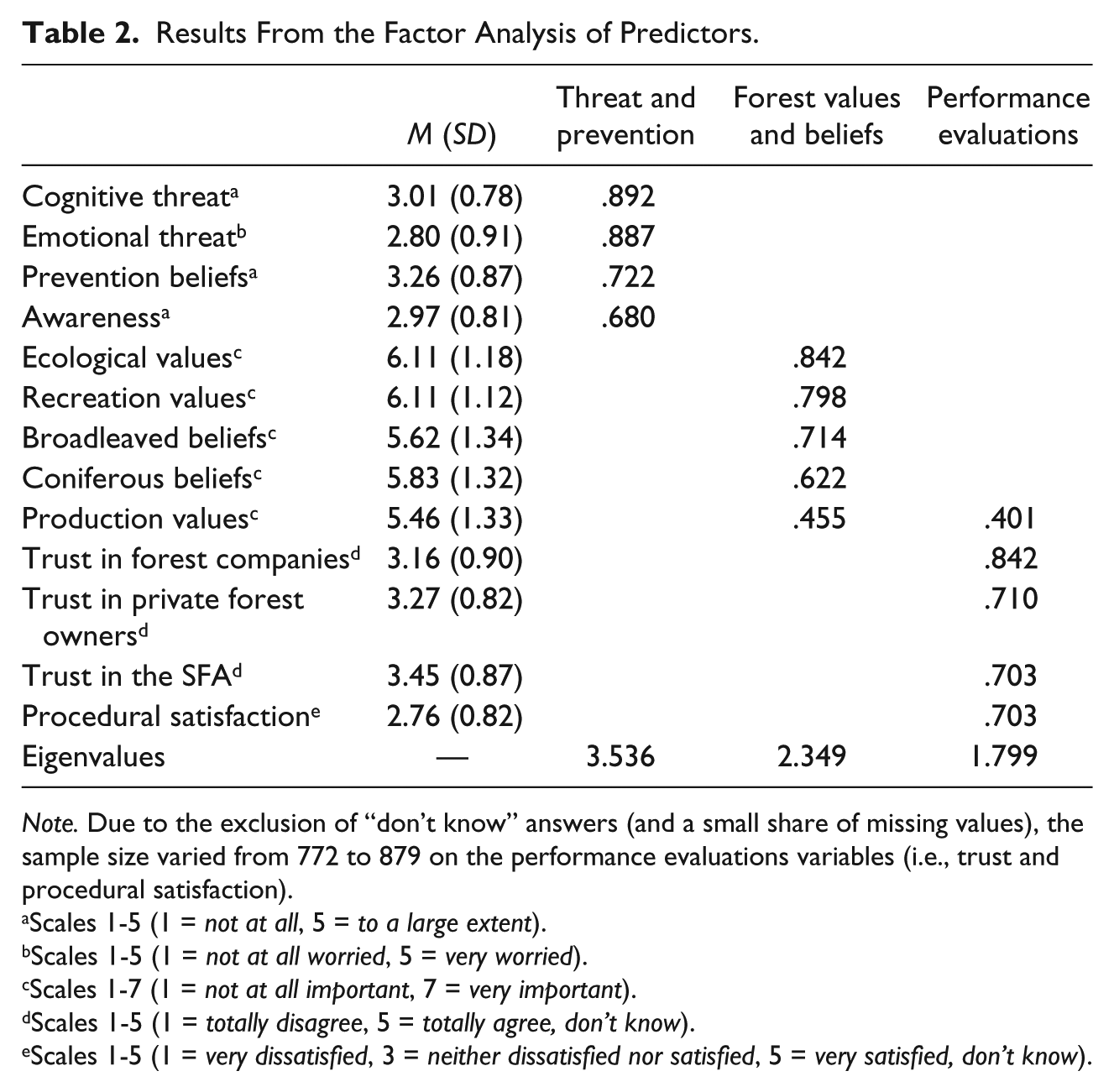
Note. Due to the exclusion of “don’t know” answers (and a small share of missing values), the sample size varied from 772 to 879 on the performance evaluations variables (i.e., trust and procedural satisfaction).
Scales 1-5 (1 = not at all, 5 = to a large extent).
Scales 1-5 (1 = not at all worried, 5 = very worried).
Scales 1-7 (1 = not at all important, 7 = very important).
Scales 1-5 (1 = totally disagree, 5 = totally agree, don’t know).
Scales 1-5 (1 = very dissatisfied, 3 = neither dissatisfied nor satisfied, 5 = very satisfied, don’t know).
H1 and H2
To evaluate H1 and H2, five path analyses were conducted using the five attitude component measures as dependent variables (see Figure 2). We found strong support for the overall fit of the model, indicating that, in line with H1, threat appraisals mediated between threat awareness and prevention beliefs, and corresponding to H2, prevention beliefs were in turn important for specific attitudes; diverse forest: χ2 = 5.297, p = .258, CFI = .999, RMSEA = .018 (PCLOSE = .918); do nothing: χ2 = 3.099, p = .541, CFI = 1.000, RMSEA = .000 (PCLOSE = .928); remove infected trees: χ2 = 5.381, p = .250, CFI = .999, RMSEA = .018 (PCLOSE = .926); remove trees from large areas: χ2 = 5.570, p = .234, CFI = .999, RMSEA = .020 (PCLOSE = .919); and use pesticides: χ2 = 1.924, p = .750, CFI = 1.000, RMSEA = .000 (PCLOSE = .994). Although threat appraisals explained 36% of the variance in prevention beliefs, the level of explained variance in attitudes toward the specific risk management strategies was very low, ranging from 0% to 3%. Hence, threat awareness and threat appraisals were important for beliefs about prevention, but prevention considerations played only a minor role in evaluating specific risk management strategies.
H3
The test of the performance evaluations as predictors of acceptability are displayed in Figure 3. Even though the RMSEA value indicates a mediocre or poor fit in relation to the model of diverse forest, the CFI indicates a good fit; χ2 = 29.084, p = .000, CFI = .963, RMSEA = .092 (PCLOSE = .009). 1 The fit was furthermore good in relation to acceptability of the other strategies; do nothing: χ2 = 10.946, p = .012, CFI = .988, RMSEA = .051 (PCLOSE = .421); remove infected trees: χ2 = 15.897, p = .001, CFI = .981, RMSEA = .065 (PCLOSE = .181); remove trees from large areas: χ2 = 3.144, p = .370, CFI = 1.000, RMSEA = .007 (PCLOSE = .929); and use pesticides: χ2 = 17.849, p = .000, CFI = .979, RMSEA = .069 (PCLOSE = .123). This model was able to explain 22% of the variance in procedural satisfaction, but the level of explained variance in attitudes was low, at the highest 3% in relation to the acceptability of using pesticides.
H4
H4 was examined in relation to acceptability of diverse forest management (see Figure 4). Even though the explained variance was higher compared with the previously examined models (adjusted R2 = .10), the fit of the model was poor; χ2 = 162.264, p = .000, CFI = .909, RMSEA = .159 (PCLOSE = .000). Because more general cognitions can have not only indirect but also direct effects on attitudes (Stern, 2000), we examined whether additional direct paths from forest values to attitudes were needed for a reasonable fit. To make use of modification indices, we replaced missing values (using an expectation-maximization [EM] algorithm) and subsequently tested the model on a random selection of half of the sample (n = 513) to verify the results on the other half of the sample (n = 513). Modification indices suggested a path from ecological values to beliefs about coniferous forests. Although fit was improved, the RMSEA value (.126 [PCLOSE = .000]) in particular indicated a need for additional paths. Hence, based on information from the modification indices, a path between ecological values and attitudes was added. The fit was now good; χ2 = 5.233, CFI = .999, RMSEA = .025 (PCLOSE = .744), and could be verified in the independent sample as well; χ2 = 9.014, CFI = .994, RMSEA = .049 (PCLOSE = .439). The fit of this modified model in the sample with missing values was furthermore good; χ2 = 12.083, p = .017, CFI = .995, RMSEA = .044 (PCLOSE = .572), and the explained variance increased considerably to 16%. 2
Comparing approaches
To avoid multicollinearity, only the variables with direct effects on attitudes were examined in the regression analyses (Tolerance: .478-.954, variance inflation factor [VIF]: 1.048-2.093; see Table 3). Results revealed that attitude toward creating a more diverse forest could be explained by all three sets of predictors. In addition to belief in risk prevention, ecological values and beliefs about broadleaved forests were positively linked to attitude, whereas procedural satisfaction and coniferous forest beliefs were negatively associated with attitude. Procedural satisfaction was furthermore positively linked to attitude toward removing infected trees and using pesticides.
Predictors of Attitudes Toward Forest Risk Management Strategies, Comparing Approaches.
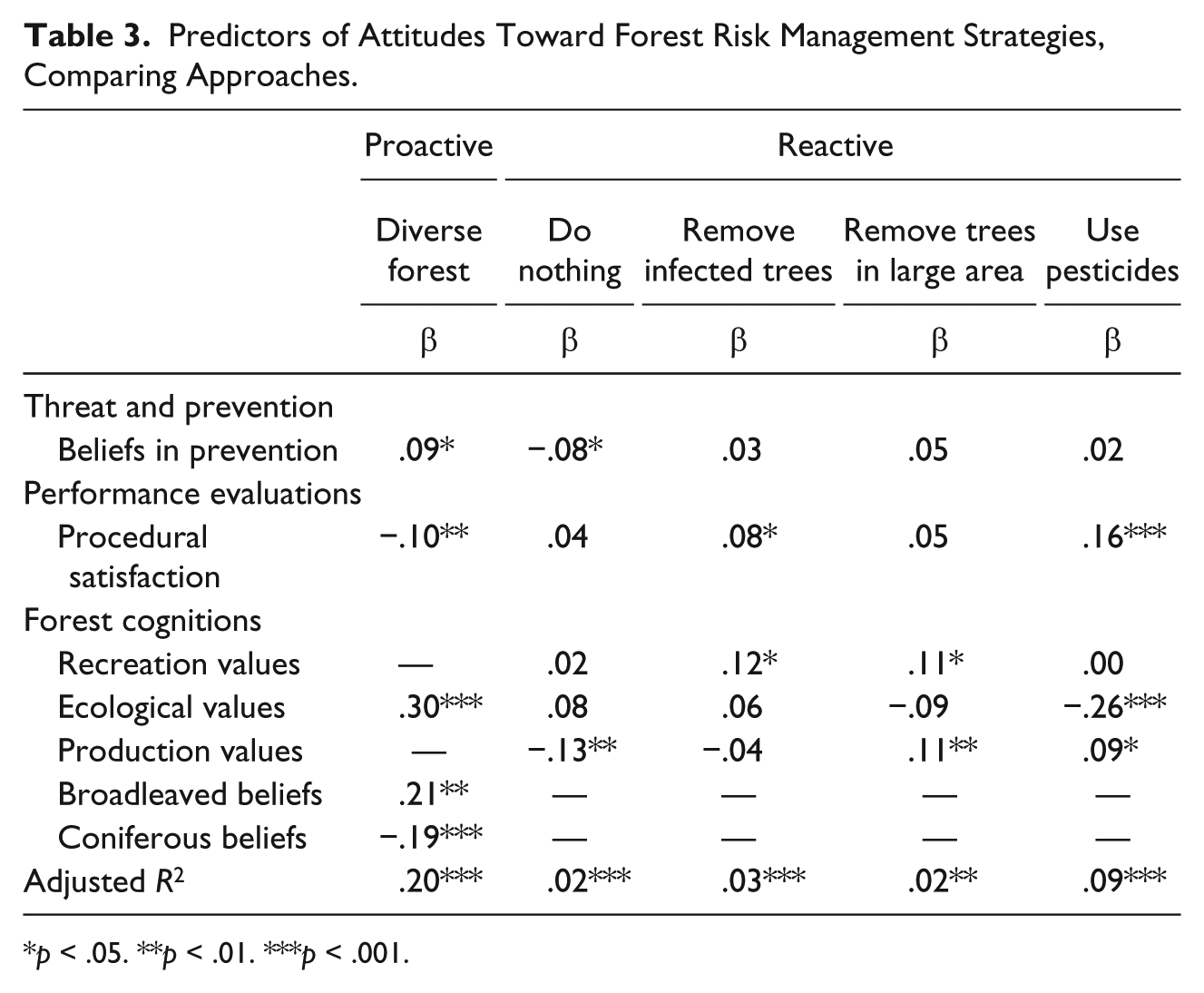
p < .05. **p < .01. ***p < .001.
Stronger recreation values resulted in higher acceptability of both removing infected trees and removing trees from a large area, and stronger production values resulted in more positive attitudes toward removing trees from a large surrounding area and using pesticides but a negative attitude toward doing nothing. Stronger ecological values were furthermore associated with a more negative view of using pesticides. The explained variance was 20% in relation to attitude toward diverse forest and 9% with regard to attitude toward using pesticides but could only explain a small percentage of the variance in attitudes toward the other strategies.
Discussion
Because forest risk management can potentially change forests’ characteristics to a great extent, it is imperative to learn more about the public acceptance of this type of risk management. By comparing theoretical approaches and assessing predictors using path analysis (rather than bivariate correlations or more exploratory regression analyses), the present study examined relationships between concepts in the three approaches more stringently compared with previous studies. The study is furthermore able to evaluate the usefulness of the approaches in relation to the acceptability of both proactive and reactive forest risk management.
The results revealed that being aware of a threat is indirectly linked to the acceptability of specific strategies. In line with H1, being aware of a threat is not enough to emphasize prevention; rather there is a need to associate the threat with adverse consequences and evoked negative emotions. Furthermore, as suggested by H2, threat appraisals are only indirectly linked to forest risk management attitudes, via belief in risk prevention. By illustrating these conceptual distinctions in relation to acceptability of forest risk management, the present study refutes the simple expectation that increased awareness or knowledge will lead to public acceptance of management strategies (Stankey & Shindler, 2006). Whereas in previous research trust has been associated with acceptability (Vaske et al., 2007), in the present study procedural satisfaction was revealed to be a potential mediator between trust and acceptability in line with H3. It was, however, noteworthy that more positive performance evaluations were linked to higher acceptance of the reactive strategies but to lower acceptance of proactively creating a more diverse forest. Because trust may be characterized by familiarity (Parkins, 2010), higher trust and procedural satisfaction may reflect a close connection with the forest sector. As almost one fifth (17.5%) of the sample in this study belonged to a forest owning household, this interpretation is feasible. In addition, reactive strategies may be considered more in line with traditional forest risk management (Keskitalo, Klenk, Bullock, Smith, & Bazely, 2011), and a more positive view of responsible actors and processes would then not necessarily increase the acceptability of new modes of proactive risk management.
The low level of explained variance in acceptability of specific strategies when examining the threat and prevention approach, and the performance evaluations, indicates that opinions regarding how damages should be avoided are based to a greater extent on other concerns. H4 was partially supported in this study as forest values, more specifically ecological forest values, were not only indirectly but also directly related to acceptability. In relation to strategies that create a diverse forest, it was evident that whereas stronger production values, and favoring coniferous forests, resulted in decreased acceptability, stronger ecological and recreation values, as well as more positive beliefs associated with broadleaved forests, increased acceptability. Although stronger ecological values were linked to positive beliefs about coniferous forests (in the same way as production values), the results again seem to reflect a divide between tradition and new management ideas. Forest production, traditionally based on coniferous trees, has long played a prominent role in Sweden (Bush, 2010), and, for example, other tree species and alternatives to clear felling have until recently not been part of mainstream forest management (SFA, 2009, 2014). Forest values were furthermore relevant to the acceptability of the reactive strategies, highlighting that what people want the forest to be used for plays a role in the type of forest risk management people prefer.
The present study thus suggests that a cognitive hierarchy model (Fulton et al., 1996) can be drawn upon when attempting to understand the acceptability of risk management strategies, highlighting the importance of general cognitions (e.g., basic values and forest values or general forest beliefs). The threat and prevention approach (Reser & Swim, 2011) is furthermore useful when attempting to identify forest-specific beliefs relevant to acceptability. Notably, whereas both threat and coping appraisals have been found to be important for individuals’ coping also in a forest context (Eriksson, 2016), the present study suggests that for acceptability of risk management, forest-specific beliefs associated with the strategy and not the threat may have stronger direct effects. The distinction between acceptability and coping relates to the distinction between attitude and behavior in attitude theory; often interrelated but not equivalent concepts (Eagly & Chaiken, 1993). In some risk management contexts, the performance evaluations may furthermore be important for acceptability. It is noteworthy that, in contrast to the other examined approaches in this study emphasizing the role of the individual’s value and belief system, performance evaluations consist of how interactions with external actors are perceived and interpreted. Because the quality of relations between responsible actors and the public is likely to vary across settings and over time, how performance evaluations and acceptability are linked conceptually thus needs to be further elaborated on in future research. Although people generally believe that the forest is important for various reasons (and should thus be willing to protect it), large parts of the public are often not highly involved in forest management. For the public, forest threats may be perceived to be uncertain as well as distant in time and space (Liberman & Trope, 2008; Spence, Poortinga, & Pidgeon, 2012). This psychological distance may help explain why people are likely to base their opinions on salient features such as whether the strategy is in line with what they value and other relevant beliefs rather than on threat appraisals.
In line with previous studies from different countries (Fuller et al., 2016; Hajjar & Kozak, 2015; McFarlane et al., 2006), the present study suggests that the general public is most likely to accept more moderate strategies but not the use of pesticides. The rather surprising finding that public acceptance is equally high for strategies that combat new compared with native pests and pathogens could be a result of the neutral wording in the questionnaire (“new” rather than “non-native”), or more likely of the fact that threat appraisals are less important for evaluating management strategies. Whereas previous studies have noted that reactive strategies should be well targeted if they are to be accepted (Fuller et al., 2016), the present study indicates that general proactive strategies may be accepted as well, at least when the forests’ characteristics are changed in line with the type of forest people prefer (e.g., toward diversity rather than denser growth; Gundersen & Frivold, 2008; Ribe, 1989). Notably, though, because the general public typically emphasizes ecological forest values, they may also accept certain strategies that create high-biodiversity forests (Eriksson, Nordlund, Olsson, & Westin, 2012).
When interpreting the results, it is important to note that because of the stratified selection, the sample is more rural than the population of Sweden as a whole, and the share of respondents from forest owning households is likely overrepresented. In addition, the sample deviated slightly from the population in the examined counties (e.g., being older and with a slightly higher educational level). However, the impact of these sample–population deviations on the main results should be moderate because sociodemographic variables are likely to have only a minor impact on acceptability (McFarlane et al., 2006; Toman et al., 2014). Furthermore, the present study focused on relations between concepts rather than descriptive statistics. Notably, though, despite the fact that the models were theoretically justified, the data were correlational and causality cannot be determined. The measurement of variables was based on previous research to the degree possible, and the internal reliability of the measures was reasonably high. However, recreation values displayed a rather low level of reliability and were also highly correlated with ecological values. Although it would perhaps be possible to combine ecological and recreation values (Haugen, 2016), their different impact on acceptability suggests otherwise.
Implications for Forest Risk Management
Implementation of more moderate forest risk management strategies, especially those that are in line with the values and beliefs of the general public, is likely to be accepted. However, in situations calling for more pervasive or controversial forest risk management, the potential resistance of the public cannot be ignored. In some instances, adjustment of the risk management strategy may increase acceptability (e.g., consider implementing risk management in a smaller area). In addition, communication with the public is very important. When developing communication schemes, it is imperative to take into consideration that it is not enough that the public is aware of a threat for them to accept different management strategies. The present study furthermore suggests that risk communication should focus not only on the problems associated with the threat in relation to what people value in the forest but also on how the proposed strategies influence these values. Close ties with the responsible actors, reflected in high trust and satisfaction with processes, may lead to higher public acceptance of more pervasive traditional management strategies. However, unless actors in the forest sector endorse and become more closely associated with novel approaches to risk management, increased trust will likely not lead to higher acceptance of this type of management. The actors within the forest sector thus need to consider how they want others (including the general public) to perceive them, and to proactively and continuously strive toward a trustful relationship characterized by critical trust rather than familiarity (Parkins, 2010).
Footnotes
Appendix
Measures.
| Concepts | Measures | |||
|---|---|---|---|---|
| Threat and prevention | ||||
| Awareness | Five items in relation to damages caused by storm, insects (e.g., European spruce bark beetle), fungi (e.g., annosum causing root rot, pine twisting rust), climate change, and new pests and pathogens (e.g., Dutch elm disease, ash dieback). “To what extent have you personally or through the media (e.g., newspapers, TV, Internet) seen or heard about the following damages?” 1 = not at all, 5 = to a great extent |
|||
| Cognitive threat appraisals | Five items in relation to the same damages as for awareness. “To what extent do you believe that the following damages constitute a threat to the Swedish forest within a time period of 10 years?” 1 = not at all, 5 = to a great extent |
|||
| Emotional threat appraisals | Five items in relation to the same damages as for awareness. “How worried are you that the Swedish forest would be impaired by the following?” 1 = not at all worried, 5 = very worried |
|||
| Prevention beliefs | Nine items in relation to damages caused by natural risks (e.g., storm, native insects, and fungi), new pests and pathogens (e.g., Dutch Elm disease, ash dieback), and climate change. “To what extent do you believe that the following damages to the Swedish forest should be prevented, despite the cost?” “To what extent do you believe that the forest owners (e.g., the government, private forest owners or companies) should work proactively to prevent damages to the Swedish forest?” “To what extent do you believe that the responsible authority, the SFA, should work proactively to prevent damages to the Swedish forest?” (1 = not at all, 5 = to a great extent) |
|||
| Performance evaluations | ||||
| Trust | Six items in relation to each actor, i.e., private forest owners, forest companies, and the SFA. Value similarity: [the actors] consider the needs of the public in their operations, [the actors] have the same opinion about forests as I do. Competence: For the owner categories: [the actors] manage their forest in a good way, [the actors] know enough to be able to manage their forest in accordance with the goals of the forest policy (both environmental and production), for the SFA: The SFA completes its task in a suitable manner; the SFA knows enough to implement the goals in the forest policy (both environmental and production). Trust: I lack trust in how [the actors] manage forest threats (reversed), I have faith in how [the actors] manage forest threats). 1 = totally disagree, 5 = totally agree, don’t know |
|||
| Procedural satisfaction | Six items. “To what extent are you satisfied or dissatisfied with the following?” How forest policy decisions are taken, the general public’s possibilities to influence decisions regarding how the forest is managed, agencies’ possibilities to fine forest owners who do not follow the rules of forest management, information about forest management from forest owners nearby, information about forest management from the SFA as the responsible agency, and information about future priorities for forest management from politicians. 1 = very dissatisfied, 3 = neither dissatisfied nor satisfied, 5 = very satisfied, don’t know |
|||
| Forest cognitions | ||||
| Forest values | Two items in relation to each type of forest value: “How important do you believe it is to use the Swedish forest for the following purposes?” Timber production, biofuel production (i.e., production values), biodiversity (diversity in plant and animal life), protection of virgin forest/old-growth forest (i.e., ecological values), and possibilities of recreation for people, preservation of beautiful forests (i.e., recreation values). 1 = not at all important, 7 = very important |
|||
| Tree species beliefs | Two items in relation to each type of tree species belief: “How important do you believe the following forest types are for Swedish forests being the way you want them?” Spruce forest, pine forest (i.e., coniferous forest), broadleaved forest, selected valuable broadleaved forest (e.g., oak, beech) [in Swedish ädellöv] (i.e., broadleaved forest). 1 = not at all important, 7 = very important |
|||
| Forest risk management attitudes | Five items in relation to proactive measures: “The forest can be managed in order to try to reduce the risk for future damages by, for example, storm, insects, and climate change. Do you believe the following ways of managing the Swedish forest are good or bad?” Eight items in relation to reactive measures: “Outbreaks of native pests and pathogens (e.g., European spruce bark beetle, pine twisting rust)/new pests and pathogens (e.g., Dutch elm disease, Ash dieback) can be dealt with in different ways. Do you believe the following ways are good or bad to use in the Swedish forest?” See Table 1 for the individual measures. 1 = very bad, 2 = rather bad, 3 = neither bad nor good, 4 = rather good, 5 = very good |
|||
Declaration of Conflicting Interests
The author(s) declared no potential conflicts of interest with respect to the research, authorship, and/or publication of this article.
Funding
The author(s) disclosed receipt of the following financial support for the research, authorship, and/or publication of this article: This work was supported by the Swedish Research Council Formas (Reg. No. 2012-370). C.B. and M.J.K. were supported by the research program “Future Forests” funded by The Swedish Foundation for Strategic Environmental Research (Mistra) and by a research grant from the Swedish Research Council Formas (Reg. No. 2013-535).