



Abstract
Effective management and development of human capital among educational staff are paramount to encourage teacher retention and satisfaction and to achieve successful educational outcomes, especially in the wake of the recent global health crisis. Nonetheless, the extant scholarly discourse concerning the development of human capital within educational milieus remains scarce, particularly with respect to the leadership inherent to the roles of principals. To address this scholarly lacuna, our qualitative study investigated the perceptions and practices of principals for managing human capital within school contexts. Drawing on data collected from 60 secondary principals in Israel, employing maximal differentiation sampling, our research identified three cardinal dimensions that encapsulate principals’ conceptualizations of human capital development: the essence of their leadership role, the domains needing development, and the parties responsible for such development. Noteworthy among our findings are the importance of integrating social-emotional dimensions into human capital development initiatives and the shared accountability for human capital development among principals, mid-level school leadership, and staff. By illuminating these dynamics, our study offers theoretical and practical implications for principals seeking to optimize human capital development strategies, especially given the shortage of highly qualified teachers seeking employment or retaining positions in today's schools.
Keywords
Introduction
A proficient education system hinges on its teachers’ expertise and competencies – its core human capital (Daly et al., 2021; Gumede & Govender, 2022; Yamak & Chaaban, 2022). The quality of teaching practice (and student learning) directly correlates with the educational staff's skills and professionalism, highlighting the necessity of investing in staff development (Belay et al., 2021; Bruce, 2023). Moreover, the sweeping workforce disruptions brought about by the COVID-19 pandemic (Linzer et al., 2022) have worsened an already critical shortage of qualified teachers and led to a marked decline in enrollment in teacher preparation programs (Are, 2024; Berkovich, 2023). This crisis is further intensified by a growing number of active educators considering leaving the profession, thereby disrupting student learning and raising serious concerns about the long-term sustainability of educational quality (Hargreaves, 2019). Addressing these challenges, particularly those related to attrition and turnover among early-career teachers, requires concerted efforts to cultivate the retention of a high-quality teaching workforce (Best, 2010; Zavelevsky et al., 2022).
Although researchers have emphasized teachers’ human capital as a primary resource for school success (Daly et al., 2021; Yamak & Chaaban, 2022), the existing body of literature exploring how human capital develops within school contexts is especially sparse, particularly regarding the relevant leadership of principals. Viewing the school as an organizational entity, principals must play a central role in managing the human capital of their staff. As highlighted by Shell (2023), principals have a responsibility to foster capacity building, increase job satisfaction, and facilitate skill development among their staff to foster dedication and retention. Further, in the aftermath of the recent global pandemic health crisis, human capital development may require a stronger leadership focus on teachers’ personal well-being and coping (Zavelevsky et al., 2022). Yet, current research remains scant on managerial roles in human capital development within school settings (Shell, 2023) and it appears that insufficient emphasis is placed on cultivating the social-emotional strengths of the educational staff.
While studies have emphasized the role of the principal in improving school outcomes, principals seem to influence their students mostly indirectly through the creation of structures that enable teachers to learn from each other and together routinely (e.g., Qadach et al., 2020). Thus, research in educational leadership seeks to explore the means by which principals can impact student learning, primarily by focusing on how leadership fosters teachers’ professional learning (Hallinger, 2011; Sun & Leithwood, 2017). Hence, principals have been predominantly regarded as instructional leaders – who mainly focus on developing and improving the learning and teaching processes, rather than as managers of human capital who focus on strategies to strengthen and sustain school's human resources (Tuytens et al., 2023). The significance of principals’ role as human capital developers within school communities remains inadequately explored (Shell, 2023). Also, research is especially scarce regarding the specific contributions of principals as human capital managers, given the multifaceted nature of their duties (Mulvaney, 2018; Sofiah et al., 2023).
In light of the profound impact of educational staff's human capital on student success, these research gaps underscore the urgent necessity for more empirical inquiry into the nuanced intricacies of the principal's role as a developer of human capital in school settings. Therefore, the present study aimed to investigate the perceptions and practices of principals as managers and developers of human capital in their educational staff.
Human Capital Development in Educational Staff
Human capital, typically construed as the amalgam of personal and professional knowledge and competencies, embodies an indispensable reservoir of expertise that evolves over time (Belay et al., 2021; Daly et al., 2021; Tuytens et al., 2023). The concept of teachers’ human capital was initially delineated by Hargreaves and Fullan (2012) as a constituent element of professional capital within educational staff, comprising teachers’ knowledge and skills necessary for their roles (Hargreaves & Fullan, 2012 in Bruce, 2023). Belay et al. (2021) underscored that teachers’ skills are honed through continuous inservice professional development opportunities both within and outside the school environment. Some scholars define human capital in education as the knowledge, skills, and abilities that teachers possess related to their subject disciplines and pedagogical practices (Wang et al., 2022; Yamak & Chaaban, 2022). Others view human capital as the sufficiency of these resources, evaluating whether teachers and principals possess adequate knowledge, skills, and motivation to effectively perform their roles (Hollweck & Doucet, 2020; Yamak & Chaaban, 2022). Additionally, some researchers emphasize the method of acquiring knowledge and skills, positing that the essence of human capital in education lies in enhancing teachers’ productivity through formal education and experiential learning (Buyruk, 2020; Sirak et al., 2022). Human capital also encompasses subject-specific teaching knowledge, understanding of students and their learning styles, and the demonstration of emotional and social abilities to support students from diverse backgrounds (Belay et al., 2021; Yamak & Chaaban, 2022) or students grappling with crises. Following the global COVID-19 crisis, educators may require additional human capital skills such as establishing increased collaborations with parents and community members in the education process (Zavelevsky et al., 2022).
Building on the conceptualization of human capital as a composite of teachers’ knowledge, skills, and capacities (Zerrad & Schechter, 2025a), human capital development (HCD) offers a distinct and strategic approach to enhancing these assets (Armstrong, 2024). Unlike traditional models of teacher development, HCD is grounded in an economic perspective that views education and training as institutional investments aimed at enhancing individual and organizational productivity (Oltulular, 2025). At its core, human capital theory holds that developing personal capital through education and training ultimately yields broader returns in organizational performance (Solarin et al., 2024).
This approach involves providing staff with opportunities to enhance their personal and organizational skills through training, professional development initiatives, career advancement paths, coaching, monitoring, and performance management (Belay et al., 2021; Tran & Smith, 2020). The knowledge embedded within educational staff includes both explicit knowledge, acquired through formal professional development, and tacit knowledge, which arises from personal experiences and everyday classroom practice (Daly et al., 2021; Darling-Hammond et al., 2017). These efforts aim to help individuals, teams, and institutions maximize their potential (Kurowicka, 2019; Murphy & Douglas-McNab, 2019). Accordingly, educational systems strategically invest in enhancing the human capital of their staff through professional development opportunities, thereby enriching their experience and ultimately strengthening student achievement (Daly et al., 2021; Wang et al., 2022). Strengthening and prioritizing programs for the management and development of human capital within educational institutions can foster a culture of learning and continuous improvement (Gumede & Govender, 2022).
The Principal as Developer of Human Capital
The principal is entrusted with the management and development of teachers’ human capital (Gumede & Govender, 2022; Kimball, 2011; Wang et al., 2022). As part of this role, principals’ purview extends beyond conventional human resource management functions such as recruitment and retention, encompassing endeavors aimed at elucidating the value and significance of the educational staff in its entirety (Shell, 2023; Zerrad & Schechter, 2025c). Therefore, it is important for principals to be aware of the range of responsibilities that this role contains (Gumede & Govender, 2022).
Recruiting teachers constitutes the principal's foremost responsibility in fostering human capital (Saks, 2017; Shell, 2023). Generally, this entails a systematic and strategic planning process aimed at enhancing the quality of education by anticipating the future requirements of the school (Klassen et al., 2021; Yulianti & Munir, 2020). Teacher recruitment is perceived as a bilateral procedure, involving the alignment of individuals’ skills and aspirations with the role's responsibilities and opportunities (Runhaar, 2017). The principal is tasked with identifying and recruiting individuals with potential for guiding the organization towards its objectives while demonstrating a willingness to grow and progress professionally (Saks, 2017).
The principal's responsibility in the role of managing and developing human capital extends also to the retention of educational staff (Best, 2010; Zavelevsky et al., 2022). Staff retention pertains to schools’ and educational systems’ capacity to keep educational staff in their positions over an extended period (Aulia & Haerani, 2022). The principal can foster the human capital of the educational staff by cultivating a positive learning environment (Almager et al., 2021; Belay et al., 2021). A positive school climate is established through leadership and collaborative decision-making that promotes learning and professional growth (Belay et al., 2021). Shared responsibility serves as the primary driver of teacher satisfaction and retention (Shell, 2023). Furthermore, the positive learning environment created by the principal serves as a foundation for the development of the team's human capital through a commitment to learning and growth (Belay et al., 2021).
Teachers’ willingness to learn and develop cannot be actualized unless ample opportunities are provided for their professional growth, which are regarded as a central responsibility of the principal (Gumede & Govender, 2022; Kimball, 2011). Offering avenues for professional development to teachers involves fostering their acquisition of the skills and knowledge necessary to progress in the educational field (Shell, 2023), such as participation in workshops, conferences, and courses, as well as engaging in collaborative learning and reflective activities (Kowalsky & LaMagna, 2020). The active engagement of educational staff within professional educational settings serves as a catalyst for refining and augmenting teaching competencies, thereby enriching human capital (Wang, 2022). A principal who epitomizes the role of a “learning leader,” characterized by professional curiosity and a continual pursuit of learning opportunities over their own career, demonstrates enhanced efficacy in developing the human capital of the educational staff (Shell, 2023).
The existing literature underscores the human capital development strategic approach to human capital development among educational staff, emphasizing the optimization of each educator's potential through targeted professional development initiatives (Murphy & Douglas-McNab, 2019; Tran & Smith, 2020). This approach prioritizes enhancing educators’ professional knowledge, abilities, and skills, with principals playing a principal role in recruitment, nurturing talent, and ensuring teacher satisfaction through recognition and involvement in their professional growth (Best, 2010; Gumede & Govender, 2022; Saks, 2017; Wang et al., 2022). To illustrate, Murphy and Douglas-McNab (2019) outline the principal's role in crafting a strategic plan for human capital development in school through general guidelines, such as: crafting transparent job descriptions to align expectations and encourage employee engagement in defining roles; recruiting innovative and motivated educators with a systemic and strategic outlook, demonstrating adaptability to change; re-evaluating processes and work methods collaboratively with staff to enhance efficiency and effectiveness; redesigning compensation and benefit systems to ensure equity and fairness across similar positions; offering benefits and salary incentives as needed to attract and retain talent; and fostering leadership development to empower individuals to take on leadership roles.
However, the body of literature on human capital development in school contexts, particularly regarding the leadership roles of principals, remains limited, revealing a gap in understanding the specific responsibilities of principals in this domain (Shell, 2023). While existing research provides valuable insights into certain dimensions of human capital development, such as professional development and talent retention, there is a need for a more examination that explores additional dimensions and perspectives not explicitly mentioned in the literature. In light of uncertainty and periods of crises, such as the recent global health crisis, the development of human capital may require a leadership perspective focusing on the well-being of teachers. It appears that insufficient attention is given to the way emotional and social well-being of teachers are related to professional development. This need is further underscored by the very large departure of teachers in the initial stages of their careers, highlighting the necessity for a supportive and nurturing environment that addresses both professional and emotional needs to enhance retention and satisfaction (Zavelevsky et al., 2022).
Method
Participants
The research was conducted utilizing qualitative methodology, which offers the potential to harness research participants as a profound source of intuitive, inductive, and informed knowledge (Denzin & Lincoln, 2018) regarding the elucidation of the principal's role as a developer of the educational staff's human capital. To enhance the depth and richness of our data, we employed maximal differentiation sampling, also referred to as heterogeneous sampling (Creswell, 2014). In our study, maximal differentiation sampling was applied to various attributes pertaining to principals, including gender, years of teaching experience, overall years of leadership, educational sector affiliation (Jewish/Arab, religious/secular), and geographical districts. Thus, our study encompassed 60 diverse principals drawn from a variety of high schools selected from all geographical school districts across Israel. Among the 35 female and 25 male participants, most (n = 43) held a master's degree, while others held a PhD and a bachelor's degrees. The sample ranged from 1 to 30 years of experience as principals, averaging 11 years. The schools they administered represented varied sectors, including state (secular) schools, religious schools, and Arab sector schools. Schools’ enrollment ranged from 120 to 2400 students, averaging 746 students.
Our decision to concentrate on secondary schools was rooted in the unique challenges inherent in managing human capital at this educational tier (Shell, 2023). Unlike elementary schools, where principals typically adopt a more instructional role, with limited administrative involvement, secondary principals face multifaceted responsibilities beyond instruction. Secondary principals are more significantly engaged in budgeting, human resource management, district-level initiatives, and fundraising than their elementary school counterparts (Mulvaney, 2018). Their greater visibility and engagement with external bodies expose secondary principals to heightened scrutiny and pressure, underscoring the need for nuanced understanding of their roles in effectively managing human capital.
Data Collection
We collected data via semi-structured interviews, aiming to elicit principals’ personal perspectives (Rossman & Rallis, 2012). These interviews conducted during the second semester of the 2023 school year typically lasted approximately one hour each and were recorded and transcribed verbatim. A bilingual expert translated the transcripts from Hebrew to English. Participants were provided with information about the study's objectives and were assured of confidentiality and the option to withdraw from the study at any time. To maintain anonymity, all interviewees were assigned numerical identifiers. During the interviews, we posed identical questions to the principals to maintain uniformity. To gain deeper understanding of the intricacies involved in their role concerning the development of the human capital of their educational staff, the interviews centered around three primary inquiries: (1) How do you conceptualize the development of human capital within schools? (2) In your day-to-day activities, how do you perceive your responsibilities as a developer of human capital among the educational staff? (3) In what specific areas do you believe the development of the human capital of the educational staff should be concentrated? Please elaborate on your perspective, providing illustrative examples where possible.
Data Analysis
Data collection and analysis occurred concurrently as an ongoing process throughout the inquiry, involving a three-stage analytical approach: condensing, coding, and categorizing. Upon gathering the data, it became evident that not all material could directly contribute to the study's objectives, necessitating data sorting (Miles et al., 2014). In the initial condensing stage, we identified segments of data pertinent to the principal's role, the focal point of the investigation. Subsequently, during the coding stage, each relevant data segment (utterance) was systematically coded according to the specific aspect of the principal's role it conveyed. Unlike the preceding stage, coding was driven by the data itself rather than predetermined theoretical constructs, with inductive codes developed through direct examination of participants’ articulated perspectives (Rossman & Rallis, 2012). Following the extraction of essential meanings from utterances, similar utterances were grouped together to discern overarching themes and formulate categories during the categorizing phase. This iterative process involved revisiting and refining categories to reconcile any incongruent or disconfirming data with emerging analytical insights (Richards & Morse, 2013). This approach facilitated the identification of interrelations between categories and the subsequent testing of these categories against the entire dataset. Besides, the analysis proceeded in two distinct phases: initially, each principal's perspectives were analyzed individually, followed by an analysis aimed at identifying common themes and elucidating discrepancies between viewpoints (Cohen et al., 2011; Merriam, 2009). The generation of themes was an inductive endeavor, grounded in the diverse perspectives expressed by participants (Rossman & Rallis, 2012).
Results
Analysis of the qualitative data revealed three central dimensions emerging from principals’ perceptions about human capital development: (a) the essence of principals’ role, (b) the relevant domains needing development, and (c) the parties responsible for human capital development. These three dimensions were interrelated within the context of principals’ perceptions about their role in managing and developing the human capital of their educational staff.
The Essence of the Principal's Role as “Human Capital Developer” of Educational Staff
When examining the nature of the principal's role in human capital development, the aim is to elucidate how these leaders actively cultivate the talents, abilities, and skills of their educational staff. The findings reveal a role that surpasses the mere provision of development opportunities. Principals are characterized as fostering motivation within their staffs, and promoting collective or individual advancement that transcends narrowly defined objectives. Nonetheless, they consistently frame their role as instrumental to the broader pursuit of school effectiveness, viewing human capital development not as a series of isolated activities but as part of a deliberate and strategic process. In this sense, a majority of the interviewees (70%) – 42 out of 60 – pinpointed their own leadership role as imperative for human capital development in their schools. Their perceptions clustered around three interrelated functions: promoting advancement, facilitating development through guidance and support, and serving as a personal model for growth. These roles often intersected, creating a complementary picture of the principal as an enabler of teacher personal development.
Among these functions, the act of promoting advancement emerged as the most prominent, reflecting principals’ perception of their role as an endeavor aimed at propelling the entire educational staff toward ongoing growth and shared progression. Interviewees framed human capital development as a means to promote advancement, both of individual teachers and, by extension, students. Advancement was viewed not simply as skill acquisition, but as a dynamic process of internal growth and professional movement. Interviewee 23 expressed this link directly, explaining that student progress depends on teachers’ personal and professional evolution:
… a teacher who is moving toward development, progress, learning, and such internal change, then it allows such internal change among the students. And at the extreme – when that movement doesn't exist within the teachers, then in my view, there is no chance that it will exist within the students.
While principals emphasized advancement as a collective process linking teacher and student growth, other interviewees emphasized a more individualized, potential-focused approach. These principals conceptualized development not as a uniform trajectory, but as a differentiated and personalized process, rooted in the recognition of each educator's distinct talents, aspirations, and growth needs. From this standpoint, the role entailed closely observing staff members, discerning latent capacities, and providing targeted, context-sensitive opportunities. This individualized approach was endorsed as the basis for providing tailored opportunities for development, ensuring that each member of the educational staff can thrive to their fullest potential. Interviewee 11 described this as a cycle of observation, testing, and encouragement tailored to specific talents, such as recognizing a teacher's aptitude for leadership and creating structured opportunities to explore that role:
First of all, it's about identifying the potential of each person around me … identifying their ability to do additional things within the organization … For example, if I see that one of the teachers could potentially serve in a certain role in the future … I might say, ‘Oh, she could be a social coordinator,’ and start letting her try out small tasks … to see if she really can, if she has good interpersonal skills, good organizational abilities. And then when I suggest it to people … I'll say, ‘Look, when you did this role … you succeeded very well, and it speaks volumes about you …’
For several of these interviewees, the development of human capital extended beyond institutional performance metrics to encompass the holistic well-being of teachers, positioning personal and organizational aspirations as mutually reinforcing rather than competing aims. They further underscored that they saw the full potential of the educational staff not only within the boundaries of the school environment but also expanding into the personal domain, transcending organizational and systemic boundaries. According to this perception, effective development of the school's human capital needs to revolve around harmonizing the needs of the system with those of the teachers. This alignment, they argued, is crucial for ensuring the educational staff's satisfaction and fulfillment and, ultimately, to maximize their contribution to the educational arena.
This perspective is exemplified by Interviewee 8, who underscored the value of nurturing educators’ passions and skills beyond the immediate confines of the school's formal objectives. By encouraging a teacher's engagement in a management role perceived as tangential or even counterproductive, this principal highlights how broadening a teacher's expertise can invigorate their professional energy and ultimately align with school goals in unexpected and fruitful ways:
One of the teachers lives in a small communal collective, and I really pushed him to develop and learn some sort of management role because I saw that he was really passionate about communal living … Even though at first glance you might think, wait, this could harm me. But in the end, it pays off. When a person has an additional area of expertise, they bring energy to what already exists … Ultimately, they find the interface that can also benefit them in their work.
Complementing this individualized approach, another critical dimension that emerged from the principals’ narratives centers on facilitation through structured support. Interviewees described their role as providing guidance, opportunities, and resources, akin to enabling conditions, while ultimately placing responsibility for growth on the teachers themselves. Interviewee 58 encapsulated this dynamic with the metaphor of a fitness trainer, illustrating the balance between enabling conditions and personal accountability, that although the trainer equips the trainees with knowledge and tools, the physical work must come from the trainees themselves:
I would say it's like a fitness trainer and his trainees. A fitness trainer can provide knowledge, tools, and opportunities to get in shape, but he cannot replace his trainees and work out for them … I think the idea of human capital development is similar. As principal, I am required to provide teachers with all the opportunities, tools, and fertile ground for development, but the actual growth is their personal responsibility … I cannot do this for them.
In addition to supporting and guiding staff, another finding regarding the principal's role as human capital developer of educational staff was evident among interviewees who described the principal as a role model for development. These interviewees emphasized their personal example, as those who develop their own human capital by attending workshops, studying and learning, and so forth, so that their educational staff can observe and follow in their willingness to grow and change. According to these interviewees, the main infrastructure for the principal's modeling of the human capital developer role was directly related to the influence of figures who were a model or anti-model for them in their management approach. Among the role models mentioned were figures such as teachers, counselors, principals, and supervisors. The principals described how they should continue the modeling from which they drew inspiration and act as human capital developers for their educational staff, such as expressed by Interviewee 51:
I generally view it as modeling; I think it's very important that the team also sees you evolving. The moment they see that you're developing, then they also take care of development.
Similarly, Interviewee 28 attributed his current role fulfillment to inspiration from a principal in his past. This reflection emphasizes the cyclical and relational nature of human capital development, where principals both draw from and contribute to a legacy of growth and empowerment within their educational communities.
I have a figure from the past who was my principal, and honestly, thanks to him, I am where I am now. He was someone who knew how to identify people's potential and push them forward, in terms of personal development as a source of empowerment.
Thus, from the perspective of the majority of the interviewees, it seems that their core role as human capital developers focuses specifically on promoting advancement in the educational staff (83%), on guiding to facilitating that progress (28%), and on being a personal model for teachers’ development and growth (31%). These findings reflect a dominant view among principals that human capital development is driven by collective progress rather than by the pursuit of individual achievement (Kiran et al., 2022; Murphy & Douglas-McNab, 2019; Tran & Smith, 2020). This perspective also aligns with the understanding that principals who embody the qualities of a “learning leader” are more effective in fostering the development of their staff (Shell, 2023).
The Human Capital Domains Needing Development for Educational Staff
A central aspect of principals’ role as human capital developers lies in identifying and nurturing the key domains in which their educational staff require growth and support. Out of the 60 interviewees, 88% (n = 53) indicated specific domains of development in which they focus their role as human capital developers. It should be noted that emphasis was placed on the targets of their development efforts, rather than on specific tools used for teacher development. Among the interviewees, three primary orientations emerged: emphasis on teachers’ personal well-being and needs, emphasis on professional development, and an integrative approach addressing both.
Interviewees mentioned developing teachers’ well-being and personal needs as important foci in their own human capital role perception. According to these interviewees, promoting staff's well-being leads to an empowered and supported educational staff, which in turn will support the school's outcomes. Components of teacher development identified by the interviewees included: belonging, trust, autonomy, positive learning climate, and personal relationships. For example, Interviewee 6 addressed teacher well-being as key to recruiting and retaining an educational staff at the school. He highlighted three essential elements that teachers need to experience to truly succeed: feeling seen, feeling believed in, and having the autonomy to act. He explained:
… personality, personal relationships, and a lot of autonomy. If we want a teacher to succeed, he needs to feel (a) that he's seen, (b) that he's believed, and (c) that he's given the freedom to act. Those are the three things. The perfect mix to bring people here who will also stay.
Similarly, Interviewee 13 expanded on this idea by framing the reciprocal nature of care and support within the educational staff. He used the metaphor of “a hand that presses a hand” to illustrate how giving support to teachers fosters a natural desire to give back in return. He reflected:
It should be something that is very central … around the issue of how we perceive what is good for people. What makes them feel a sense of belonging? … Because where people feel good … , where they feel seen, where they feel appreciated – they will feel it and they will want to give more.
This emphasis on belonging was echoed by interviewees who identified developing teachers’ personal well-being as a priority. These principals underlined the critical role that fostering a strong sense of belonging within the school plays in supporting and retaining educators. They viewed belonging not only as an emotional anchor that strengthens teachers’ connection to their workplace but also as a crucial protective factor that helps prevent burnout and ultimately contributing to a more stable and engaged educational community (Kachchhap & Horo, 2021).
Interviewee 18 elaborated that there is no single rewarding factor that can sustain the educational staff to remain in the face of schools’ dynamic and intensive educational process, other than ensuring that teachers feel seen and instilling in them a sense of belonging:
So, I think from the beginning you need to make them feel included, from the beginning you need to support them … and say, ‘I trust you, I'm with you’ …
Trust was highlighted by 28% (n = 6) of the 21 interviewees who mentioned their role in developing teachers’ well-being and needs. These principals suggested that expressing trust in teachers leads to their tendency to generate their own ideas and autonomously streamline their work. As a result of their bottom-up generation of ideas, teachers’ efforts will be more aligned with the needs of the students, and they will directly engage with the students on the ground, as described by Interviewee 34:
I have an important role in creating trust, a relationship system of respect, understanding … Ideas and actions come from below, from the field itself, so there is more cooperation, and it really creates projects and actions that develop teachers and of course, the entire environment – students, the community, and more. Leading from above encounters a lot of resistance, and in the end, if the teacher does not want to, they will find a way not to do it.
Principals indicated that they perceive their role as targeting both professional development – addressing the needs of the system – and personal development related to educators’ well-being and needs. This integrative stance reflected a broader conception of development, one that simultaneously attends to teachers’ skill growth and emotional well-being. For example, Interviewee 42, exemplified this approach by intertwining professional development with a strong emphasis on emotional support, highlighting how educational staffs can be empowered to guide their own growth while receiving personal encouragement through trust, cohesion, appreciation, and autonomy: To ensure there is a sparkle in their eyes … they need autonomy, and the feeling that they are managing what they do … In addition, it is very important to provide opportunities for development, to give teachers the right to learn, and my role is to provide them with a comfortable place for learning … To let them decide what is important to them in terms of professional development. In addition, it is important to create a place that does not constantly question the teacher, but rather believes in them and allows them to develop … I had two advisors at the school. One of their roles is also to support the teachers … This emotional support was very important.
In contrast to this holistic perspective, other interviewees positioned their role solely as a platform for professional development. A third of the interviewees used language focusing on their commitment to monitoring the educational staff in order to maximize the school's human capital. It seemed that an exclusive focus on professional development, devoid of consideration for teachers’ well-being domain of development, was sometimes reflected in supervision and control over educators. For example, Interviewee 31 indicated that the principal's responsibility for developing human capital was only related to the pedagogical field and involved close surveillance of the educational staff:
In fact, I actually require the teachers to undergo professional development, and I also follow their training. I have the ability to monitor this matter, and I receive reports. And from time to time, I also conduct school mapping to see where someone is stuck in terms of training.
In summary, it appears that the majority of interviewees (40%) underscored the importance of prioritizing the well-being and needs of educational staff as important human capital in their schools. A significant proportion of principals (43%) additionally highlighted the significance of integrating professional development with such personal growth and well-being. Only a minority of interviewees (17%) exclusively pinpointed the professional development domain. This pattern diverges from the dominant emphasis in the literature on professional learning as the principal means of enhancing teachers’ human capital (e.g., Daly et al., 2021; Darling-Hammond et al., 2017; Wang et al., 2022). Rather than viewing development exclusively through the lens of skill acquisition, principals framed social-emotional well-being as foundational to motivation, instructional efficacy, and retention.
Parties Responsible for Developing Educational Staff's Human Capital
A critical dimension of principals’ roles as human capital developers involves determining who holds responsibility for cultivating and sustaining the growth of their educational staff. Among the interviewees, 60% (n = 36) addressed the question of who holds responsibility for human capital development within schools. Their responses coalesced into three distinct patterns: exclusive principal responsibility, shared responsibility with the management team, and shared responsibility with teachers.
Principals clarified their belief that they themselves shoulder full responsibility for developing human capital within their educational staff, aligning this commitment with their role as principals. These interviewees firmly asserted that the development of teachers’ human capital is directly connected to their school's achievement of successful educational outcomes, which constitutes the primary goal of the school. Consequently, they emphasized the paramount importance for principals themselves to undertake the role of nurturing and promoting their school's human capital, as stated by Interviewee 20:
So first and foremost, the responsibility for human capital lies solely on me. I am responsible for its development, promotion, training, and ensuring that they [the teachers] see that they are appreciated and recognized. Essentially, I work in human capital development.
The question of who holds responsibility for developing teachers’ human capital is deeply connected to how principals perceive and enact their leadership roles. According to interviewees, principals who see themselves as solely responsible for human capital development tend to approach their role with a hands-on, proactive mindset, emphasizing direct involvement in promoting and nurturing their staff. This perspective underscores the belief that effective leadership requires the principal's personal investment in teacher growth to achieve the school's educational goals.
In contrast, other interviewees adopt a more distributed understanding of responsibility, sharing the task with management teams. This broader view reflects a more collaborative approach (Nadeem, 2024) to human capital development, where leadership and accountability are shared to foster collective ownership of growth. These interviewees emphasized that the principal bears primary responsibility for developing human capital; yet, the extended management team (vice principals, department heads, counselors, educational directors, etc.) bears secondary responsibility. Recognizing that the principal may not be directly involved in the day-to-day development of teachers, the distribution of authority within the management team allows for each unit to take responsibility for its area. In this way, specific areas of responsibility are allocated to each member of the management team. For example, the pedagogical coordinator can be responsible for professional development and counselors may focus on emotional well-being, as expressed by Interviewee 12:
Primary responsibility lies with the principal. For instance, there are pedagogical aspects and professional development that fall under the pedagogical coordinator's responsibility, and there are aspects that belong to the counselor, and there are rights and conditions that are under the vice principal's purview. There's a kind of task distribution within the context of human capital development, bounded by secondary responsibility.
Principals stated that this task distribution with the management team may be complex and not always effective. For instance, Interviewee 50 provided an example of how his pedagogical team was not fulfilling its responsibility for human capital development according to his expectations, leading to conflicts in decision-making between the principal and management team: The pedagogical team [is responsible] … They work on it, not always to my satisfaction … When I and the head of the middle school are very much on it, there are a lot of arguments, it's not easy.
However, an alternative perspective emerged challenging the perception that responsibility lies solely with senior or junior management, expressed by of those interviewees who discussed the parties responsible for human capital development. According to this viewpoint, the task of developing the human capital of the educational staff is shared between the principals and the teachers themselves. These interviewees suggested that if a teacher lacks interest or motivation to seek development, the principal alone cannot develop the teacher's human capital. Importantly, this shared responsibility model does not absolve principals of their leadership duties; rather, it reframes their role as one of guidance and encouragement, emphasizing collaboration rather than control. In this context, the principal's responsibility is perceived as a guide, facilitator, and connector between the educational staff and available development opportunities. Simultaneously, the teachers’ responsibility is seen as becoming actively engaged in the opportunities provided by the principal to enhance their development, as described by Interviewee 23:
I said from the beginning that the responsibility lies with the teacher, because I truly believe that without the teacher feeling that it's their responsibility, you can't teach forcefully, you can't promote forcefully. There needs to be willingness, readiness, and responsibility, and only then can help be offered.
Further, it should be noted that even among the interviewees who stated that they believe the responsibility for developing human capital rests on them (see above), hidden perceptions emerged regarding the principal's expectations of the educational staff taking responsibility for development. These principals acknowledge that while they may lead and coordinate development efforts, the ultimate success of these initiatives depends significantly on the teachers’ own commitment to growth. It underscores the reality that effective human capital development is not a one-way process dictated solely by leadership, but a collaborative effort requiring initiative, motivation, and participation from the entire educational staff. For example, Interviewee 58 mentioned that she takes responsibility for teachers’ human capital development, while she clarified that she also expects the teachers to advance themselves:
I see the development of human capital in the school as part of my overall responsibility as a principal. To lead a successful school, where students achieve high standards, requires a professional educational staff committed to their own ongoing learning and development. The educational staff, including the teachers, know that I expect them to grow and progress, and as part of that, to participate in various training programs and workshops. Many of them actively engage in these opportunities.
To summarize, based on the interviews, three main sub-categories emerged regarding which parties should be considered responsible for developing the educational staff's human capital: principal's responsibility (42%), shared responsibility between the principal and management team (33%), and shared responsibility between the principal and the educational staff (25%). These findings challenge the dominant narrative in the literature, which often positions the principal as the sole driver of teacher development, instead supporting a distributed-collaborative leadership approach (Hickey et al., 2022). Recognizing teachers’ active participation in their professional growth aligns with research linking shared responsibility to increased motivation, job satisfaction, and staff retention (Katitas et al., 2025; Runhaar, 2017).
Discussion
The study aimed to deepen understanding of principals’ roles as managers and developers of human capital in the secondary educational context. Our qualitative study yielded several novel findings regarding the nature of the principal's role in developing the human capital of the school's educational staff, as well as the human capital domains needing development and the parties responsible for those development efforts.
As for the essence of the principal's role as a “human capital developer,” our findings challenge the prevailing notion of human capital development solely as a mechanism aimed at realizing the personal potential of the team (Kiran et al., 2022; Murphy & Douglas-McNab, 2019; Tran & Smith, 2020). Instead, a majority of our interviewees perceived development as a vehicle for fostering team progress, rather than solely for individuals’ actualization of their potential. This finding underscores the prevailing trend among principals to view human capital development through the lens of collective advancement rather than individual attainment. Worth mentioning, the analogy raised in our findings between an educational staff under the principal's purview and a classroom of students under the teacher's guidance serves as a poignant illustration of this collective advancement paradigm. Indeed, interviewees regarded the principal as an exemplar of human capital development for the educational staff, embodying a modeling role fundamental to human capital growth within educational institutions. Through their exemplary conduct, principals were seen as instrumental in developing the human capital of the team, thus inspiring and guiding team members towards continuous enhancement and progression. This finding is consistent with the notion that a principal who epitomizes the role of a “learning leader” demonstrates enhanced efficacy in developing the human capital of their educational staff (Shell, 2023).
Furthermore, in discussing the human capital domains needing development for educational staff, a substantial portion of our interviewed principals revealed their high prioritization of teachers’ social-emotional development as the most important human capital domain needing development, even more than teachers’ professional advancement. This finding differed from the predominant emphasis on enhancing knowledge and skills through professional development, as documented in existing research literature (Daly et al., 2021; Wang et al., 2022). Interviewees predicated their perspective on the notion that the personal well-being of educational staff significantly influences their motivation levels and instructional efficacy, thus warranting focused attention on these development initiatives.
Consistent with the emphasis on social-emotional development identified in our results, teacher well-being, a core principle of strategic human resource management, from which human capital development evolved, has been consistently linked to improved performance and motivation (Vekeman et al., 2024). For instance, a study of 56 primary schools in Belgium found that human resources practices centered on teacher well-being had a stronger impact on retention intentions than those focused solely on institutional goals (Vekeman et al., 2018). Similarly, research conducted in 23 school districts in the southeastern United States showed that responsive human resources practices reduced teacher turnover by 1%, mitigated shortages, and improved student achievement in math and English by 9.1% above average (Tran & Buckman, 2021). These findings reinforce the importance of integrating social-emotional development into human capital development as a strategy to support teacher well-being and, in turn, enhance motivation and performance.
At the same time, this prioritization of social-emotional dimensions reveals a deeper tension between principals’ articulated values and the economic logic (Oltulular, 2025) at the core of human capital development. While the human capital development framework conceptualizes teacher development as an investment in skills and productivity aligned with organizational objectives (Zerrad & Schechter, 2025a), principals in this study framed relational elements, such as trust, belonging, and emotional support, as equally essential to school success. Notably, even these affective commitments were frequently justified in instrumental terms, underscoring their perceived utility for improving teaching performance and sustaining school functioning (Ahakwa, 2024). This convergence of affective and utilitarian logics signals the emergence of a hybrid discourse, one that attempts to reconcile the imperatives of care with the demands of performance. As such, these findings invite further inquiry into whether, and to what extent, social-emotional priorities can be systematically integrated within the human capital development paradigm.
Further, regarding the parties responsible for developing educational staff's human capital, while the existing literature pinpointed the principal as holding primary responsibility for developing teachers’ human capital (Gumede & Govender, 2022; Kimball, 2011; Wang et al., 2022), the current study revealed additional layers of shared responsibility among school stakeholders. Interviewees indicated that this duty should be shared by the management team members, who serve as extensions of the principal in various domains. Other interviewees upheld that responsibility is shared between the principal and the educational staff, particularly those who do not hold management positions. The latter perspective emphasizes the importance of teachers’ own active involvement in their personal capital development journey (Zerrad & Schechter, 2025b), which resonates with the literature that identified the significance of shared responsibility as a driver of staff satisfaction and retention (Klassen et al., 2021; Zavelevsky et al., 2022). In this context of shared responsibility, the role of the principal is described as that of a facilitator and coach who creates opportunities for development and growth and provides the educational staff with access to them, coinciding with similar perspectives formulated in the literature (Shell, 2023; Wang et al., 2022 ).
Conceptual Contributions
Overall, as depicted in Figure 1, our findings enrich existing theoretical frameworks by incorporating additional dimensions into human capital development perspectives. These supplementary dimensions for leadership in human capital development hold the potential to offer further theoretical insights, shaping strategic planning for unlocking human capital in schools. Worth mentioning, our examination elucidates that responsibility to develop human capital extends beyond the principal's official position (Gumede & Govender, 2022; Kimball, 2011), encompassing shared responsibility with actively engaged educational staff. The emphasis on shared responsibility that emerged from our study also aligns with Runhaar's (2017) model, which posits that involving teachers in technical and administrative decision-making fosters organizational commitment and professional growth. This perception of shared responsibility may influence strategic thinking and positioning of staff members in roles of responsibility.
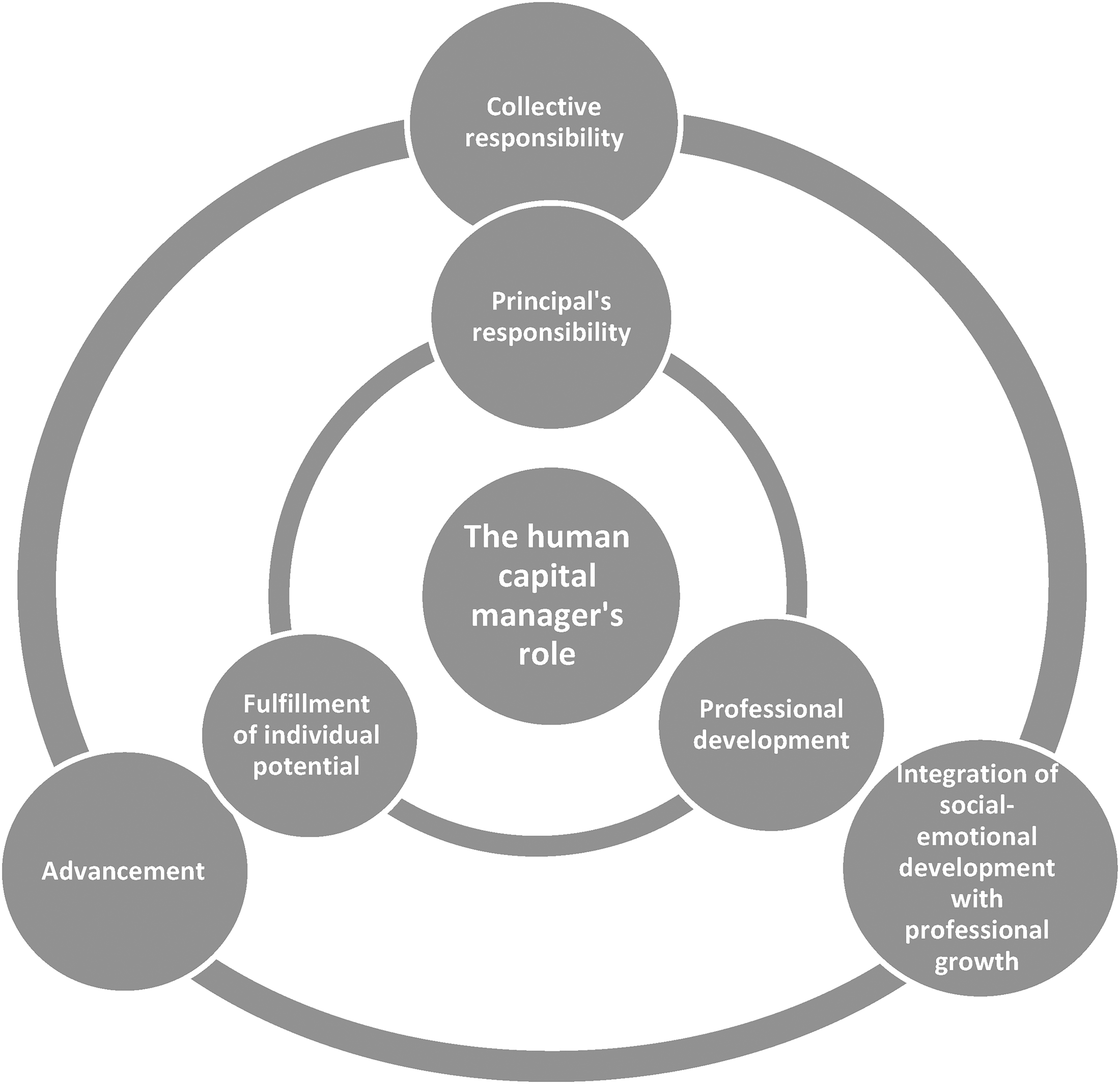
Expanding insights: Human capital development perspectives.
Furthermore, the study accentuates a novel perspective that attributes strong importance to the integration of teachers’ social-emotional development as a central component alongside, and often exceeding, traditional professional growth pathways for fostering team development (Daly et al., 2021; Wang et al., 2022). By emphasizing elements such as belonging, trust, and interpersonal relationships, our research may reveal insights into the breadth of human capital development, acknowledging their role in educators’ motivation and well-being. This is particularly relevant in light of the COVID-19 global health crisis, which has exacerbated stress levels among educational staff. Novice teachers, in particular, face immense challenges and are at a higher risk of leaving the profession without adequate support and focus on their social-emotional needs from principals (Zavelevsky et al., 2022). This integration of social-emotional development is essential not only for retention but also for creating a resilient and cohesive educational workforce.
Simultaneously, our findings challenge the assumption that human capital development primarily centers on realizing each teacher's individual potential (Kiran et al., 2022; Murphy & Douglas-McNab, 2019; Tran & Smith, 2020). Rather, the majority of principals in our study conceptualized human capital development as a strategy for advancing collective staff development. While teacher growth is often framed in individualistic terms, in practice it is frequently enacted through collaborative structures, such as team meetings, staff workshops, and shared learning environments that embed personal advancement within communal processes. Recognizing that united efforts can effectively stimulate individual progress (Liou & Canrinus, 2020; Vangrieken et al., 2017), and contribute to long-term staff satisfaction and retention (Katitas et al., 2025; Runhaar, 2017), this framework invites deeper reflection on how leadership can reconceptualize human capital development not as a solitary pursuit but as an interdependent, team-based endeavor (Nadeem, 2024). Accordingly, schools can adopt human capital development as a strategic approach to improving teacher satisfaction, engagement, and performance ( Zerrad & Schechter, 2025c ).
In conclusion, this study deepens understanding of principals’ roles as human capital developers by highlighting the collective, socioemotional, and shared dimensions of staff's human capital development in secondary schools. It challenges individualistic and economically driven perspectives (Kiran et al., 2022; Murphy & Douglas-McNab, 2019; Tran & Smith, 2020) by revealing that principals often view human capital development as a team advancement-oriented effort, supported by modeling (Shell, 2023), emotional support (Berkovich & Eyal, 2020), and shared accountability (Runhaar, 2017). The prioritization of social-emotional well-being alongside professional learning reflects a hybrid discourse that integrates care with performance imperatives. Moreover, the recognition of shared responsibility among leadership teams and educational staff expands prevailing frameworks that position principals as the sole agents of teacher human capital development (Gumede & Govender, 2022; Wang et al., 2022). It follows that a model of the principal's role as a human capital developer incorporates a strategic vision of advancement and motivation that positions the principal as a central, but not isolated player in a broader culture of professional and, above all, social-emotional growth. These insights form the basis for several key recommendations to the field of educational leadership and human capital development.
Recommendations for Practice and Policy
To enrich the practical implications of this research, it is worth translating its findings into specific, actionable recommendations for both principals and policymakers. Drawing from the insights gleaned from this study, we propose that principals prioritize strategies for managing and developing human capital that center on the personal well-being of the educational staff (Berkovich & Eyal, 2020; Runhaar, 2017), thus fostering a sense of personal responsibility for self-initiated growth and development. This may involve integrating social-emotional development into professional learning settings, for example, by initiating ongoing mentoring relationships and facilitating reflective dialogue sessions. Such an approach positions human capital development not only as a mechanism for enhancing instructional capacity but also as a means of advancing teacher satisfaction by affirming their contributions and actively involving them in shaping their professional trajectories (Albrecht et al., 2015).
Furthermore, the study highlights the importance of fostering shared responsibility for human capital development and suggests that principals can create distributed leadership structures (Hickey et al., 2022) and collaborative cultures that empower teachers to co-construct their own learning trajectories (Vangrieken et al., 2017). In addition, given that it appears that human capital development in schools is conducted more at the collective rather than the individual level, it is suggested that principals seek opportunities to ascertain the specific needs of educators within the institution and address them to the extent of their ability (Kurowicka, 2019; Murphy & Douglas-McNab, 2019).
At the policy level, support mechanisms can be recalibrated to align with the expanded leadership responsibilities associated with human capital development. Policymakers can invest in the development of principals’ human capital to equip them for this evolving role, through both social-emotional support (Wang, 2025) and targeted leadership training and professional learning opportunities (Tingle et al., 2019). Moreover, collaborative practices, including mentoring, peer mentoring, and interdisciplinary professional learning communities that contribute to sustained capacity building within schools (Christensen & Jerrim, 2025; Wang et al., 2022), can be actively incentivized, adequately resourced, and institutionally valued.
Limitations and Future Research
Several limitations should be acknowledged. Firstly, the study's reliance on qualitative methods may limit the generalizability of findings to broader populations. Future research could employ quantitative approaches to validate and extend the findings of this study across larger samples. Additionally, the study's focus on secondary principals within a specific context may limit the transferability of findings to other educational settings or levels. Future research could explore similar themes among principals in primary schools or across diverse cultural contexts. Further, the study primarily relied on self-reported data from interviewees. Utilizing multiple sources of data, such as observations or document analysis, could provide a more inclusive understanding of the phenomena. Future research initiatives exploring the dynamics of human capital development within educational environments, from various stakeholders’ perspectives, including superintendents and staff, could yield valuable insights for informing both practice and policy.
Further investigation into the interconnections among principals, educational staffs, and management teams in shaping human capital development presents an avenue for deeper inquiry. Similarly, examining the mechanisms of advancement within the educational system through the lens of human capital development may offer invaluable insights into fostering career progression and organizational advancement strategies. Additionally, integrating social-emotional development into professional growth initiatives could be assessed in the long-term for their efficacy in fostering sustained improvements in team performance and well-being.
Footnotes
Declaration of Conflicting Interests
The authors declared no potential conflicts of interest with respect to the research, authorship, and/or publication of this article.
Funding
The authors received no financial support for the research, authorship, and/or publication of this article.
