




Abstract
Keywords
Introduction
The problem of school leader turnover has become a substantial challenge for the education systems of OECD countries. With an annual turnover rate of ∼ 20%–30% (Thelin, 2020), Swedish school leaders are characterized by their relatively short tenure, with a median duration of just three years at their current workplace (OECD, 2019). One consequence of such a high turnover rate is an overrepresentation of novice school leaders in the education system and a series of related impacts. High school leader turnover rate has recently drawn significant attention within academic research (Snodgrass Rangel, 2018; Yan, 2023).
As school leaders who leave their schools tend to move to less challenging working conditions (Gates et al., 2006), novice school leaders are disproportionately represented at challenging schools (Béteille et al., 2012; Loeb et al., 2010). These schools may provide novice school leaders with demanding work conditions, unclear organizational structures, and negative public images (Weindling & Dimmock, 2006). To turn such schools around and create a positive and effective school culture requires leadership continuity (Fullan, 2001; Mascall & Leithwood, 2010). With broken continuity, however, schools that lose even a novice school leader tend to underperform (Burkhauser et al., 2012) with negative impacts on student and teacher achievements, as well as organizational development (Grissom et al., 2021). Mitigating novice school leader turnover thus seems to be an important task for the education community.
The position of a novice school leader is widely considered demanding and complex, both from a leadership perspective (Prado Tuma & Spillane, 2019) and a personal one (DeMatthews, Carrola, et al., 2021). Previous research has demonstrated that novice school leaders can feel overwhelmed by their responsibilities and find the role hard to manage (Walker & Qian, 2006). Despite the critical importance of the process of becoming a novice school leader, including developing skills and socializing into the role (Spillane & Lee, 2014), limited attention has been given to what factors that are associated with novice school leaders leaving their positions (Kılınç & Gümüş, 2021).
In order to prolong the tenure of novice school leaders, it is imperative for scholars to examine how the working conditions and organizational context influence school leaders’ intention to resign (Håkansson et al., 2021; Yan, 2020). Thus, the association between working conditions and turnover intention may vary depending on whether a school leader is working in preschool or high school, 1 or in public- or private school. 2 Investigating the turnover intention of school leaders and its underlying associated factors can provide valuable insights for policy makers in their efforts to reduce school leaders’ motivation to leave their positions and enhance leadership stability and succession (Sun & Ni, 2016; Tran, 2017). As a turnover decision is the outcome of a series of factors that interact in a complex manner over time (Lee & Mowday, 1987), it is critical to examine various aspects of the turnover process to gain a comprehensive understanding of the mechanisms behind the phenomena. A significant amount of previous research on school leader turnover has focused on turnover that has already occurred, thus overlooking its antecedents.
In response to the existing research gap concerning novice school leaders, this study delves into the psycho-social factors contributing to their turnover by scrutinizing the relationship between workplace conditions and their intentions to leave. In addition, the study examines how this potential association may alter depending on school level and school actor. Utilizing a robust theoretical framework, this research aims to dissect the precursors of workplace stress, with the objective of providing insights that are beneficial to both practitioners and researchers. Ultimately, this study endeavors to enrich the field by elucidating the dynamics that influence the tenure and professional persistence of early career school leaders.
Working Conditions
The role of a school leader is multi-faceted and encompasses the responsibility of engaging in advanced communication, fostering employee cohesion, and making strategic decisions that benefit the organization (Yukl, 1989). Despite the ongoing investigation into school leaders’ working conditions and the potential factors that may contribute to turnover (Yan, 2020), there is a lack of a well-established framework for studying working conditions from a school leader's perspective (Fuller et al., 2015). Several prior studies have approached the question of turnover intention from different angles (Richer et al., 2002), with the job demand-resources model being a common theoretical approach (Bakker et al., 2004; Bakker & Demerouti, 2007; Bothma & Roodt, 2013). The model posits that an individual needs to experience a balance between job demands and resources, such as autonomy and support, to achieve well-being at work, and it has been shown to be effective in exploring such relationships (Lesener et al., 2019). An imbalance between these three components could potentially result in elevated stress levels and theoretically increase the risk of turnover.
The role of a school leader has become increasingly complex over time, with a growing number of responsibilities and heightened societal expectations (Crow, 2006; Jerdborg, 2022). Research has shown that educators experience a stress level twice as high as those in other industries (Phillips & Sen, 2011), and that younger, less experienced school leaders may be more vulnerable to the negative impacts of such conditions (Mitani, 2019). Interpersonal emotional demands from parents, teachers, and other stakeholders have been linked to burnout in school leaders (Maxwell & Riley, 2017), as has a lack of resources and compensatory rewards (Riley, 2014, 2017). A recent longitudinal study of Swedish school leaders found that nearly 25% were in danger of burnout associated with their demanding working conditions (Persson et al., 2021b). Heavy responsibilities can lead to stress and potentially be associated with turnover. High workload has thus been identified as one of the top five reasons that school leaders leave the occupation (Fuller et al., 2015). However, recovery, or the individual's return to their pre-stress state after facing demands, has been shown to moderate the relation between demands and turnover intention (Sonnentag et al., 2017).
The emergence of the COVID-19 pandemic has further amplified the complexities of the novice school leader's role (Sahlin et al., 2023). As schools faced the challenges of heightened communication needs, teacher support, and ever-changing public health guidelines (Huck & Zhang, 2021), the demands and responsibilities of school leaders grew significantly (Parveen et al., 2022). Even though Sweden employed a more liberal policy regarding covid-19 restrictions, the school system included, the crisis required the school leader to become adept at crisis management, often without prior experience or adequate training in such areas.
However, even though the pandemic situation was unique and overwhelming in many aspects, it underscored the importance of traditional leadership skills (Ahlström et al., 2020), and may thus have influenced the working environment in an intensifying, rather than disruptive, manner.
During a pandemic situation or not, in order to effectively fulfill their societal obligation, it is imperative for school leaders to operate in working conditions that allow them adequate time and autonomy to allocate resources, establish organizational structures, and manage their staff (Törnsén, 2010). School leaders who experience limited autonomy in their work have been observed to have an increased risk of job departure (Tekleselassie & Villarreal, 2011). High levels of autonomy have been reported as a factor that extends job retention among school leaders (Farley-Ripple et al., 2012). However, the relationship between autonomy and turnover is complex. Yan (2020) discovered that while high decision-making autonomy was associated with low turnover in some school leader assignments, it was the reverse in relation to others. In addition, Burkhauser et al. (2012) discovered that novice school leaders whose schools had achieved academic advancement were less likely to depart to another institution and, conversely, novice school leaders who failed to meet the adequate yearly progress requirements were more likely to leave. The authors propose that it may not be the challenging context and inadequate performance itself that drives the school leader from the institution, but rather the exacerbated demands and reduced autonomy due to heightened scrutiny from stakeholders, authorities, and the public. Thus, the turnover of novice school leaders pertains to their perceived level of both demands and autonomy in combination.
The extent of autonomy that school leaders possess is influenced by the support and relationship they receive from their superiors (Farley-Ripple et al., 2012). How superintendents handle the pressures placed on school leaders may significantly impact their work experiences. School leaders who do not feel supported thus experience more stress (Beausaert et al., 2016). A lack of trust between school leaders and superintendents creates challenges in attracting individuals to serve as school leaders (Cooley & Shen, 2000). Additionally, frustration due to high workloads intensifies in contexts where support and trust are low (Ewington et al., 2008). Novice school leaders, due to their perceptions of ultimate responsibility, may be reticent to seek support, despite their high need for it (Liljenberg & Andersson, 2020; Spillane et al., 2015). High support has been shown to be a key protective factor for promoting positive work experiences among school leaders (Persson et al., 2021b).
Public- and Private Actors
According to data from the National Agency for Education (2020), there is a notable trend in the turnover rates of school leaders between private and public schools in Sweden. In the context of compulsory schools, where approximately 20% are privately operated, there appears to be a lower turnover rate among school leaders compared to their counterparts in public schools. For high schools, which have a higher representation of private establishments at around 35%, public school leaders typically have longer tenures at one- and three-year intervals. However, they tend to leave at a marginally higher rate after five years. Between the years 2014 and 2015, roughly one-third of public school leaders exited their roles, which was more than three times the rate observed among leaders from private schools. This disparity could be partly attributed to school reorganizations, which are more prevalent in the public sector and can obscure true turnover rates. Such reorganizations may lead to the departure of school leaders for reasons other than job dissatisfaction or better opportunities, therefore creating a ‘statistical blur’ that complicates the interpretation of turnover data. Given this context, it remains challenging to draw definitive conclusions about the frequency and underlying reasons for the departure of public school leaders as compared to their private school counterparts.
Previous studies have explored the differences in working conditions of school leaders between private and public schools (Ni et al., 2015; Sun & Ni, 2016). In contrast to the turnover statistics from Sweden, international research has shown that school leaders employed by private schools have a higher rate of turnover and are more likely to leave their profession altogether, while those in public schools tend to leverage their experience for advancement within the education system (Ni et al., 2015). Newly established private schools have been shown to have higher teacher turnover and a greater proportion of uncertified and inexperienced teachers (Stuit & Smith, 2012). Such conditions may result in school leaders in private schools having to work longer hours with increased workloads (Ni et al., 2015).
Although all school leaders are obligated to abide by national laws and local regulations, research has indicated that school leaders affiliated with private entities have a greater sense of autonomy that may contribute to lower turnover (Gawlik, 2008). Additionally, studies have demonstrated that school leaders in privately operated schools have more influence over personnel decisions and are equipped with greater decision-making power in general (Sun & Ni, 2016). This suggests that there is something inherent to the structure of private schools that allows for school leaders to experience more autonomy in their decision making compared to public school leaders. School leaders in private schools have shown to be less likely to be promoted to positions in central administration (Yan, 2020). While there have been few studies that have explored the differences between private and public-operated schools with respect to school leader tenure and its underlying mechanisms (Ni et al., 2015), no study has investigated whether the desire to leave the school differs among school leaders affiliated with private schools as opposed to those affiliated with public schools, and if so, how such differences can be explained.
School Levels
The results of studies that examine the variation in school leader turnover across different school levels are somewhat inconsistent (Snodgrass Rangel, 2018). One study showed that school leaders in middle schools are less likely to remain in their positions when compared to compulsory school leaders, but at the same time, they are less likely to leave the education sector than compulsory school leaders (Baker et al., 2010). Furthermore, compared to school leaders in middle schools, high schools, and combined schools, elementary school leaders have demonstrated to be less likely to be promoted to central administration roles (Yan, 2020). School leaders in middle schools were more likely to transfer to another school compared to elementary school leaders.
Statistics from the academic year of 2014–2015 (National Agency for Education, 2020) indicate that turnover rates among school leaders in Swedish compulsory schools and high schools are relatively comparable. Results from a 2020–2021 five-year follow-up study revealed that 70% of school leaders from the 2014–2015 academic year remained at their school after one year, 40% after 3 years, and 26% after 5 years for both compulsory school and high school. These results indicate that while turnover rates can be considered high, there are no significant disparities between the two school levels.
The situation for school leaders within the adult education sector is notably more fluid and unpredictable. Adult education programs in Sweden are frequently managed by private organizations, which are awarded contracts through a competitive procurement process, often resulting in time-bound agreements. These factors introduce a level of uncertainty and transience not encountered in the other educational levels. Consequently, school leaders overseeing adult education face a unique set of operational challenges, including the potential for more frequent contract renewals or terminations, which can directly impact work security and longevity. Depending on what branch of the adult education organization, the turnover rate has been found to be between 57% and 90% over a three-year period (The Swedish Schools Inspectorate, 2019). Some of the adult education school leaders are thus exposed to a higher risk of turnover and some to a lower risk.
In a Swedish research study school leaders reported their stress levels and psychosocial working conditions in a baseline and one-year follow-up (Persson et al., 2021a). No substantial differences among school leaders affiliated with preschool, compulsory school, high school, or adult education could be detected. Further investigation into turnover intention among school leaders and comparisons between school levels could provide insights into the impact of organizational factors on turnover though.
The Swedish Context
In the 1970s, the Nordic education system, with Sweden at the forefront, was considered a model for school development by Western countries (Oftedal Telhaug et al., 2006). During the early 1990s, a decentralized private school reform was implemented. The state became responsible for legislation and municipalities accountable for school management (Arensmeier, 2022). This reform paved the way for private organizations to establish new schools in a highly market-oriented education system (Imsen et al., 2017). Today, both public and private actors provide education in Sweden, with public schools operated by municipality administration and private schools operated by organizations approved by the Swedish School Inspectorate Authority. Both public and private actors receive tax funding, and tuition fees are not permitted.
Since the implementation of the free school choice reform in Sweden, the proportion of schools owned by private actors has risen considerably. Currently, official statistics from the National Agency for Education say that approximately 30% of preschools, 20% of compulsory schools, and 35% of high schools are managed by private actors. The unregulated system of adult education makes it difficult to determine the number of independent actors operating in the field. Nonetheless, it is estimated that around 50% of adult education students are enrolled in programs run by private actors.
Swedish school leaders are expected to serve as the pedagogical leaders of the school system. This requires an intimate understanding of the school's daily operations and its teaching-learning environment so that they may influence teachers’ practices, embody democratic principles, and initiate educational changes (Merchant et al., 2012). Alongside this, the power of the state has increased through legislative changes, strict inspections, and control. Systematic quality assurance has become a key focus area for school improvement, leading to a variety of activities for school leaders to embrace. Overall, the situation for Swedish school leaders, as outlined by Ärlestig and Johansson (2020), involves a challenging balancing act between policy directives, quality assurance, and improving education outcomes. While this balancing act may be particularly pronounced in the Swedish educational system, it is indicative of a broader international pattern. Such challenges are not unique to Sweden but are indeed a universal phenomenon within the field of educational leadership (Hoy & Miskel, 2012), suggesting that the experiences of Swedish school leaders may offer insights applicable also to a global context.
The high turnover rate of Swedish school leaders has been recognized as a significant issue by the National Agency for Education and the Swedish School Inspection Authority (Thelin, 2020). When compared with their counterparts in other Nordic countries, Swedish school leaders tend to have shorter tenures. Typically, Nordic school leaders remain in their positions for four to six years, in contrast to the five-year average across the OECD. Moreover, data from the Teaching and Learning International Survey (TALIS) indicates that Swedish school leaders generally have less cumulative experience in educational positions prior to the school leader role, further differentiating them from the average tenure and experience of school leaders in the OECD (OECD, 2019).
In the urban context of Sweden's cities and municipalities, the educational landscape is markedly stratified with private schools typically established in more affluent areas, attracting students from families with greater resources (Bunar & Ambrose, 2016). This selective attraction can result in private schools having a student body with a concentration of individuals primed for academic success. In contrast, public schools may end up serving a broader and more diverse student population. This divergence may create disparate working conditions for school leaders: those in private schools navigate the high expectations and intensive workloads that come with a more advantaged student base, while their public school counterparts often face the complex task of fostering educational quality and equity in a setting with a wider array of student needs and challenges. The free school choice reform in Sweden has amplified these demographic shifts (Böhlmark et al., 2016), placing multifaceted demands on school leaders as they work to ensure all students receive a high standard of education within a competitive market.
Moreover, in the public sector of Sweden, school leaders find their roles increasingly aligned with the broader experiences of first-line managers, facing similar challenges and turnover concerns (Cregård et al., 2017). The introduction of New Public Management has notably reshaped the Swedish education system, expanding the scope of school leaders’ responsibilities. They now shoulder responsibilities that include strategic planning, budget management, and personnel oversight (Björk et al., 2013), in addition to upholding transparency in reporting (Wällstedt & Almqvist, 2017). While these expanded duties have broadened the scope of their roles, they also add complexity to the work environment, which in turn may affect turnover rates (Cregård & Corin, 2019).
The National Principal Training Program, in conjunction with the education system, has a proven track record in preparing novice Swedish school leaders for their roles (Norberg, 2019). Enrollment in this in-service training program is mandatory for principals, with a deadline of no later than one year after taking on the role. The obligation concerns all school leaders including preschool, compulsory school, high school, and adult education. Each of the school levels have their own specific curriculum and legislation. Thus, the circumstances that the school leaders work under may differ considerably. Participation in the program is not compulsory for assistant principals. As of 2022, the three-year program has approximately 3,500 school leaders enrolled. The program equips novice school leaders with knowledge of legislation and administration, school leadership and management, organization, and quality (Norberg, 2019). Such training programs have the potential to effectively prepare novice school leaders for their responsibilities and may have a positive impact on school leader retention rates (Jacob et al., 2015).
Method
Participants
The sample population of the study consisted of all the novice school leaders enrolled in the 2021 cohort of the Swedish Principal Training Program (N = 3,389), which is an in-service training program. Therefore, all participants were actively serving as either principals or assistant principals at the time of the study. The study was approved by the Regional Ethical Review Board (DNR 2021/02710) and the contact information of the participants was obtained from the National Agency for Education. The survey was administered in three waves from October to December 2021, coinciding with the ongoing COVID-19 pandemic, which may have influenced the context and conditions under which novice school leaders operated. Due to invalid contact information, the total number of school leaders invited to participate was reduced to 3,096, and 2008 of them completed the survey after providing informed consent. After cleaning the data from surveys that only contained missing answers, 64.5% of the participants (n = 1,998) were used for analysis. To put the scope of this sample in perspective, while it encompasses a majority of the study's target population of novice school leaders, it also reflects a noteworthy proportion of the broader cohort of 5,600 principals and 6,842 assistant principals across all Sweden's educational levels. Table 1 provides a summary of the participant characteristics.
Background Information of Participants (n = 1,998).
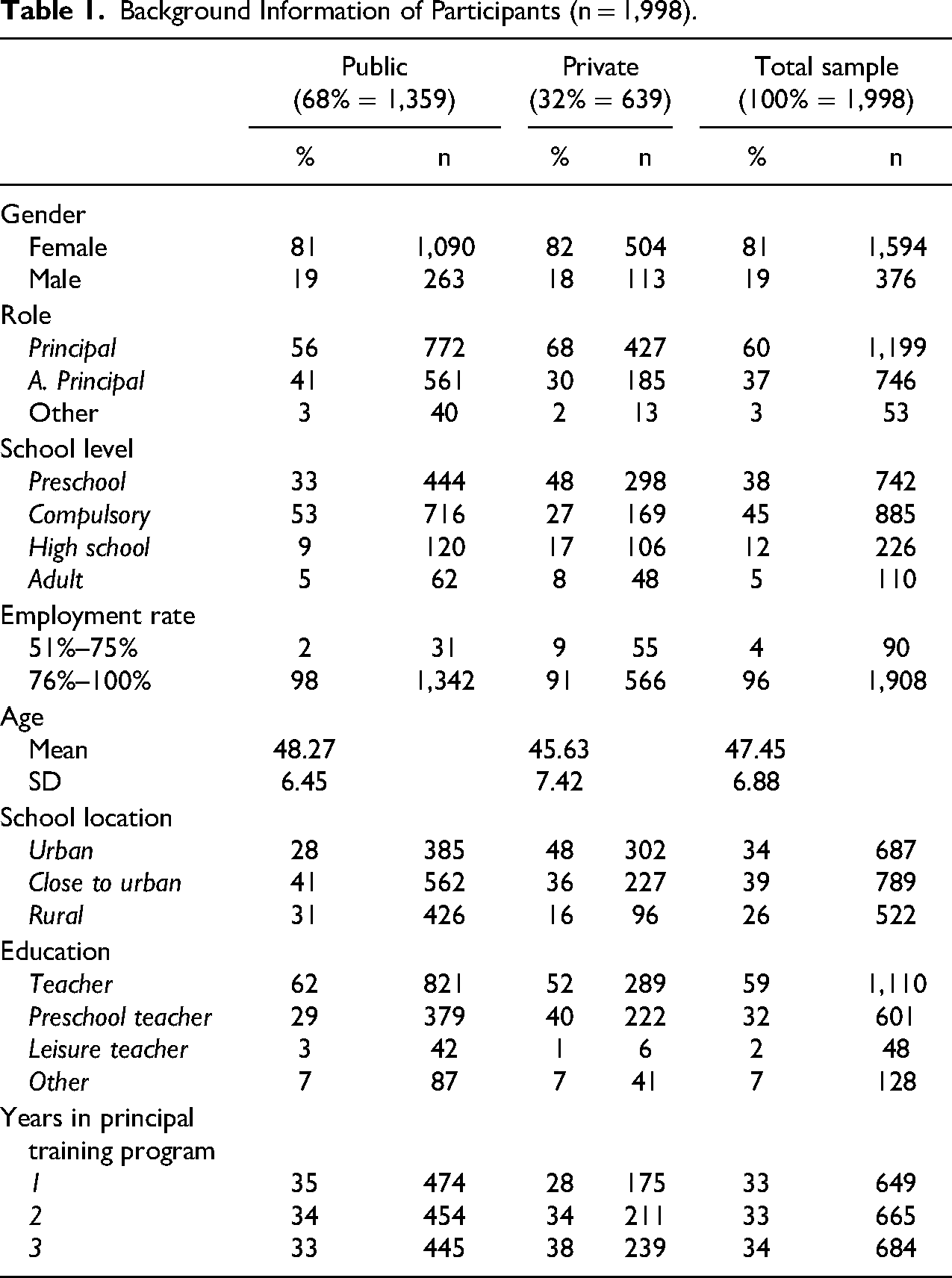
The sample consisted of 80.9% female and 19.1% male participants, which aligns with the gender distribution among school leaders in Sweden. 68% of the participants were affiliated with publicly operated schools and the remaining 32% with privately operated schools. Precisely, 60% of the participants held the role of principal, and the remaining 40% served as assistant principals (including 3% that held some other school leader role equivalent to assistant principal). The majority of the participants (83%) were affiliated with preschool and compulsory schools, while high school and adult education accounted for 17% of the sample. 96% of the participants worked full-time in their role as school leaders. The mean age of the sample was 47.45 years (SD = 6.88). The majority of the participants were educated as teachers (59%) or preschool teachers (32.5%), with a small percentage (2.6%) having education as a teacher in leisure time centers. The “other” category (6.9%) included school leaders with diverse educational backgrounds other than primarily pedagogical (e.g., military, communication, and art). Additionally, the participants were relatively well distributed across urban (34.3%), close to urban (39.4%), and rural (26.3%) geographical areas, as well as among year one (34.3%), year two (33.3%), and year three (32.4%) in the Principal Training Program.
To assess the potential for nonresponse bias, the demographics of the overall population of novice school leaders in the Swedish Principal Training Program were closely examined. The cohort is composed of 82% female and 18% male leaders, with 67% serving in public schools and 33% in private institutions. Role distribution is as follows: 60% principals, 37% assistant principals, and 3% in other comparable leadership positions. Educational levels are represented by 37% from preschools, 45% from compulsory schools, 12% from high schools, and 6% from adult education, with an average age of 47.79 years. The demographic congruence between this profile and the survey respondents suggests a minimal nonresponse bias, thereby confirming the representativeness of the study's findings to the wider population of novice school leaders in Sweden.
Instruments
In the study, three standardized instruments were utilized to assess the central constructs under examination. All of the instruments are presented below. Participants were asked to rate their responses to various statements using a 7-point Likert scale. The reliability of each construct was evaluated using acceptable alpha values (Tavakol & Dennick, 2011), with the results ranging from .705 to .937.
Dependent Variable
The dependent variable, turnover intention, was measured using the Turnover Intention Scale (Bothma & Roodt, 2013). This scale is unidimensional, consisting of six items, each rated on a 7-point Likert scale. For instance, one of the items asks: “How often have you considered leaving your job?” The reliability of the instrument, its alpha value, was .86 for this study.
Independent Variables
The National Agency for Education provided participant contact information, including affiliation to public or private schools and school level. To assess school leaders’ perceptions of support from their superintendent, demand, and autonomy, subscales from the Copenhagen Psychosocial Questionnaire (COPSOQ, Kristensen et al., 2005) were extracted and adapted to fit the context of the study. For instance, one of the items measuring support from the superintendent was, “If necessary, do you feel that your superintendent is responsive to problems related to your work?” This scale had an alpha value of .93. To examine demands, items assessing both quantitative and emotional aspects of demands were included. One of the items was, “Do you experience emotionally stressful situations due to your work?” The alpha value for this scale was .84. To measure autonomy, one of the items was “Do you have the opportunity to influence important decisions related to your work?,” with a scale alpha value of .77.
In addition to the demand, autonomy, and support variables, two variables measuring the experience of provided organizational prerequisites and organizational ambiguity were included in the study. To measure the experience of organizational prerequisites a subscale from COPSOQ were utilized. One of the items was, “To what extent do you believe that your superintendent provides you with the necessary conditions based on your students’ background?” The alpha value for this aspect was .85. To assess the level of organizational ambiguity, a specific subscale from the Gothenburg Manager Stress Inventory (GMSI, Håkansson et al., 2021) was utilized. The scale were designed to gauge the perceived degree of difficulty in understanding the decision-making processes within the organization. For instance, one item posed the question: “To what extent does it occur that you find it difficult to get an overview of the decision-making processes in the organization?” The reliability of the scale was established with an alpha value of .71.
Covariates and Control Variables
For the purpose of this study, salary satisfaction, health, age, gender, and recovery were employed as control variables. To assess salary satisfaction, a subscale from the Copenhagen Psychosocial Questionnaire (COPSOQ, Kristensen et al., 2005) was utilized. The participants were asked to respond to items using a seven-point Likert scale, such as “I have a reasonable salary in relation to the burden and responsibility of my duties.” The reliability of the scale was determined to be .90 (alpha value). To assess health, a single item was employed, asking participants to rate their general health satisfaction. Participants’ gender and age were collected from publicly available records at the National Agency for Education, a process which was made known to participants, and corroborated by their survey responses. Finally, to measure recovery, a subscale from a survey on public health in Sweden (Statistics Sweden, 2021) was utilized, with an example item being “I feel rested and recovered after a weekend.” The reliability of the scale was determined to be .83 (alpha value).
Analysis
For enhanced interpretability of the coefficients in the regression models and improved clarity in the descriptive tables, the collected data from all Likert scales were transformed, originally ranging from 1 to 7, into scales of 0 to 10. The relationship between turnover intention and varying levels of demand, autonomy, and support was explored through the lens of the Job Demand-Resource model (Bakker & Demerouti, 2007; Karasek, 1979). To operationalize this investigation, an already tested statistical procedure (Stengård et al., 2022) was employed, categorizing each of these three variables into high and low values. The median value of each of the three variables served as the cut-point (demand = 5.83, autonomy = 5.83, and support = 8.33), resulting in the formation of two evenly populated groups of participants per variable. The eight different combinations where then tested in their relationship to turnover intention.
The data was treated and analyzed in two steps. In the first step, the data were described descriptively, examining the entire sample as a single group and then dividing it based on school level and actor. Additionally, ANOVAs were conducted to investigate differences in the study variables between school leaders affiliated with different school levels and actors.
In the second step, the data was examined more thoroughly with linear regression analyses. A collinearity analysis was conducted to ensure that the independent- and control variables were not highly correlated with each other. The collinearity diagnostics showed that no variables exhibited strong collinearity. Tolerance values ranged from 0.543 to 0.980, which is well above the commonly accepted threshold value of 0.1. Variance Inflation Factor (VIF) values ranged from 1.020 to 1.843, which is far below the commonly accepted threshold value of 5–10.
The following data analysis employed a two-stage regression approach. In the initial stage, the entire sample was incorporated using several models with independent variables, control variables, and turnover intention, while treating the actor as an independent dummy variable (private actor = 0, public actor = 1). Then, the actor was shifted from the independent variables and used, in parallel with the school level, to categorize the sample in the second stage of regression. This subsequent stage resulted in separate analyses by school level and actor.
Results
Descriptive Statistics and Differences Between Actors and School Levels
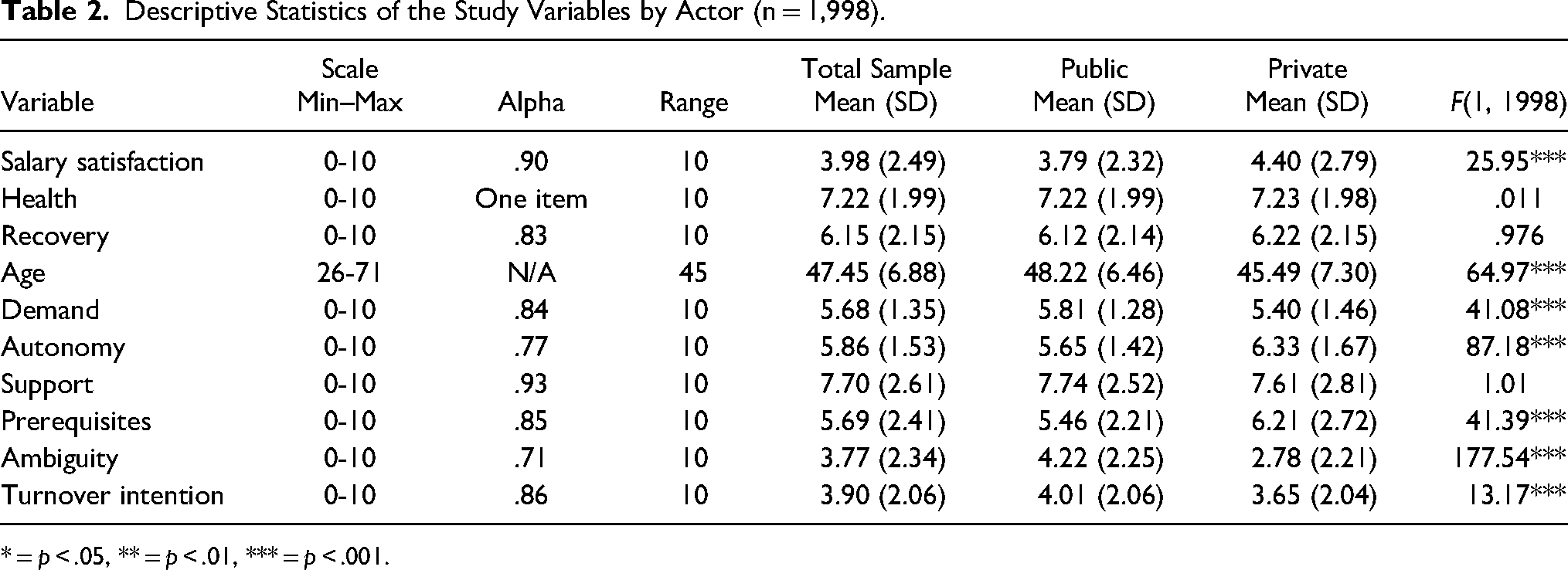
The means and standard deviations of the independent variables are presented in Table 2. The first column depicts the results for the entire sample, followed by the categorization of the sample based on the type of actor: public and private. The last column presents the F statistic from a one-way ANOVA, which compares the variable results between school leaders in public and private schools. The results indicate that school leaders in private schools are significantly more satisfied with their salaries (p < .001) compared to those in public schools. Additionally, the mean age of school leaders in public schools (just over 48 years) is significantly higher (p < .001) than that of school leaders in private schools (45.49 years). The results also reveal that public school leaders experience significantly higher demands (p < .001) and significantly lower autonomy (p < .001) than private school leaders. However, no significant differences were found in terms of support from superiors. Public school leaders reported significantly lower levels of organizational prerequisites (p < .001) and higher levels of organizational ambiguity (p < .001) than private school leaders. Finally, public school leaders demonstrated significantly higher turnover intention (p < .001) compared to private school leaders. No significant differences were detected in health and recovery between school leaders in public and private schools.
Descriptive Statistics of the Study Variables by Actor (n = 1,998).
* = p < .05, ** = p < .01, *** = p < .001.
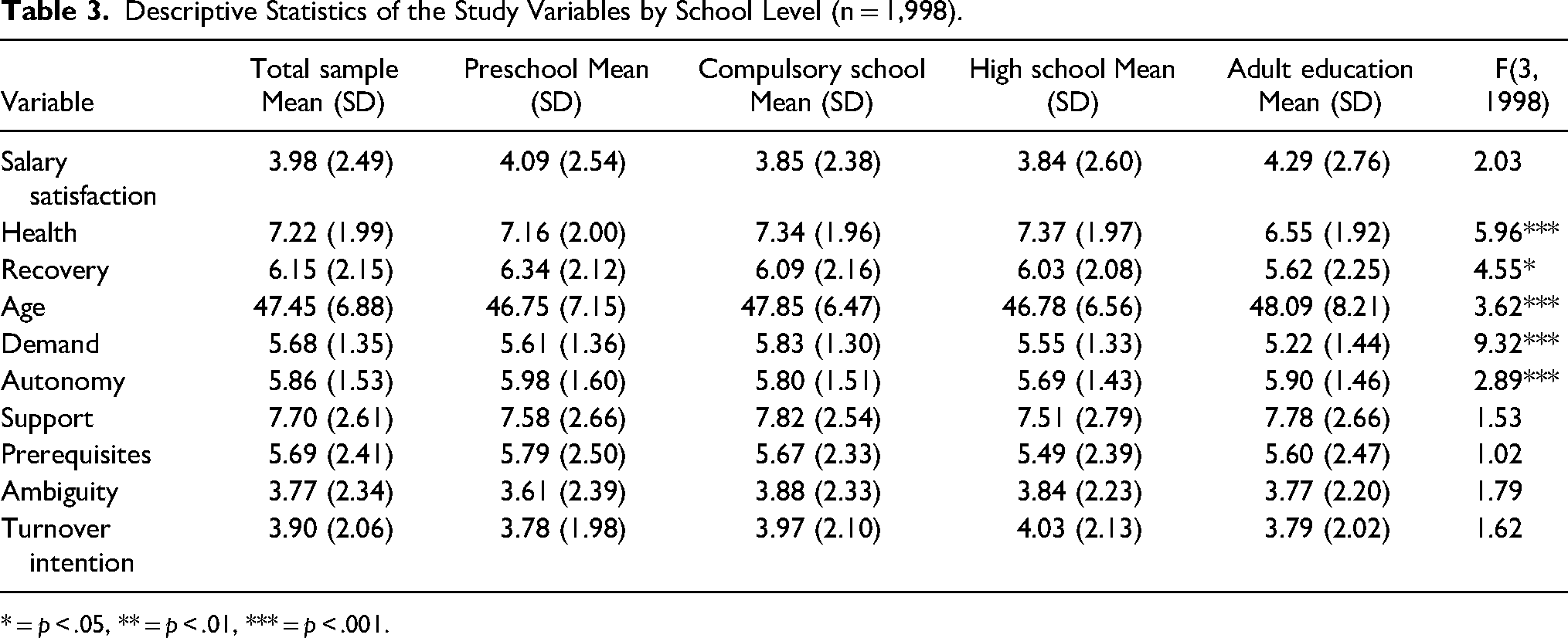
In Table 3 means and standard deviations for the independent variables are presented by school level. The results show that there were no significant differences in salary satisfaction, support from the superintendent, organizational prerequisites or organizational ambiguity, or turnover intention among the various school levels. However, differences were found in the variables of health, recovery, age, demand, and autonomy, as presented in Table 3. Bonferroni post hoc tests showed that school leaders in adult education rated their health significantly lower compared to those in preschool, compulsory school, and high school (p < .001). However, there were no significant differences in health between the leaders of preschool, compulsory school, and high schools. School leaders in preschool reported significantly higher recovery compared to those in adult education (p < .05). No significant differences were found in recovery among the other school levels. The school leaders in preschool were significantly older than those in compulsory school (p < .05). There were no significant differences in age between the school leaders in other school levels. In terms of demands, compulsory school leaders reported significantly higher demands compared to those in preschool, high school, and adult education (p < .05 or p < .001). Preschool leaders also reported significantly higher demands compared to those in adult education (p < .05). No significant differences were found in demands between high school and adult education school leaders or between school leaders of preschool and high school. Although the model of autonomy showed significant differences, no significant results below p < .05 were found in the post hoc test.
Descriptive Statistics of the Study Variables by School Level (n = 1,998).
* = p < .05, ** = p < .01, *** = p < .001.
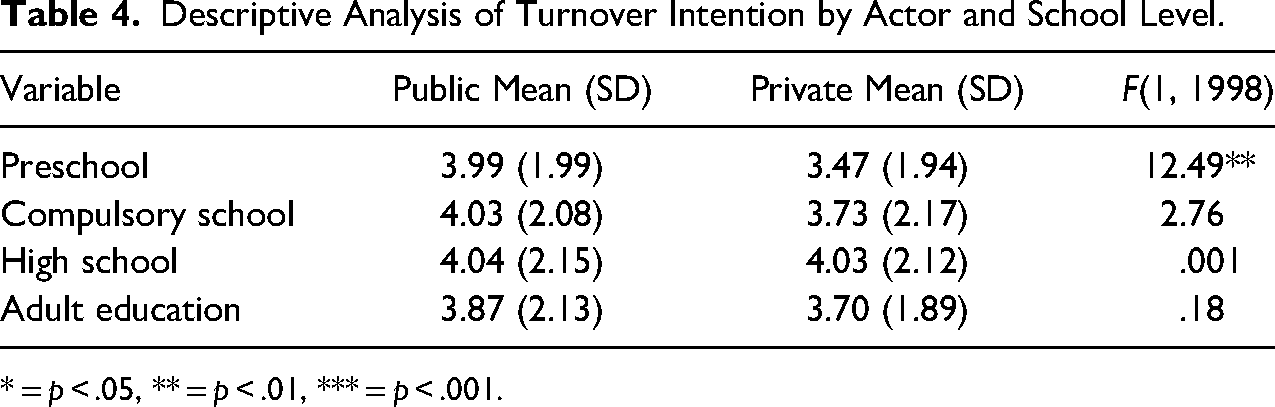
Table 4 shows mean values and standard deviations of school leaders turnover intention categorized by both school level and actor. The analysis detected school leaders affiliated with publicly operated preschools to have significantly higher turnover intention than private preschool leaders (p < .001). The difference for compulsory school leaders did not reach significance (p = .097).
Descriptive Analysis of Turnover Intention by Actor and School Level.
* = p < .05, ** = p < .01, *** = p < .001.
Table 5 shows the combinations of the variables demand, autonomy, and support. These combinations have been utilized to create eight distinct groups, each representing a unique blend of high and low values of these three variables. The results of the ANOVA showed that there were significant differences in turnover intention between the eight groups F(7, 1957) = 107.73, p < .001. However, the Bonferroni post hoc test showed that all of the eight groups did not differ from each other. Four distinct groups emerged, each with unique characteristics and an association with turnover intention. The group associated with the highest turnover intention was made up of school leaders who reported high demands, low autonomy, and low support. This combination of variables had the strongest association with turnover intention and differed significantly from all other groups (p < .001). The group with the lowest turnover intention was comprised of school leaders who reported low demands, high autonomy, and high support. This combination of variables had a weaker relation to turnover intention than all other groups (p < .001).
Descriptive Statistics for Turnover Intention Divided by High and Low Values of Demand, Autonomy and Support.
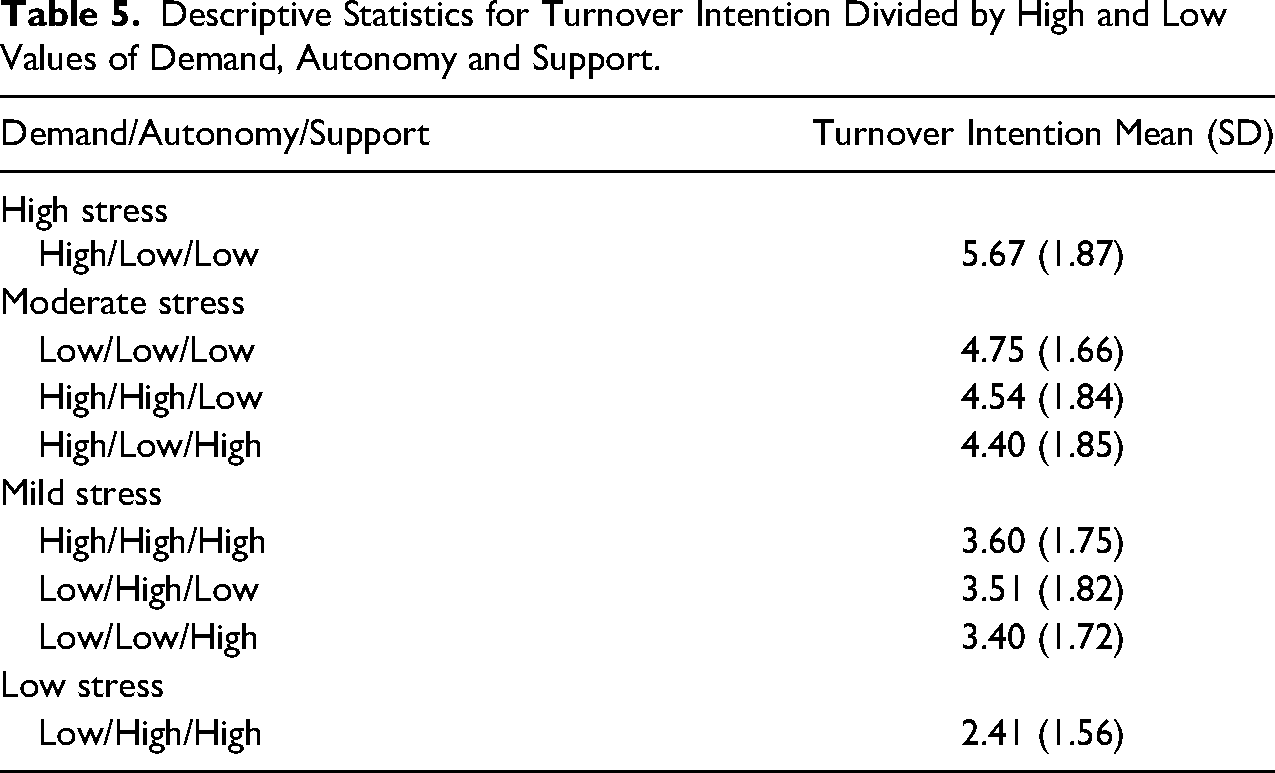
The group associated with the second highest turnover intention comprised school leaders reporting one attribute of either low demands, high autonomy, or high support. The remaining two variables were either high demands, low autonomy, or low support. Although the combinations within this group did not significantly vary in turnover intention from each other, their turnover intention significantly differed from all other groups (p < .001). Meanwhile, the group associated with the second-lowest turnover intention was made up of groups with two attributes of either low demands, high autonomy, or high support, and one attribute of either high demands, low autonomy, or low support. The turnover intention of these groups did not differ significantly from each other but did significantly differ from all other groups (p < .001).
The four distinctive groups were then transformed into dummy variables and included in further regression analyses. The group with the lowest turnover intention (named low stress) was used as the reference group (= 0). The group with the highest turnover intention was named “high stress,” the group with the second highest turnover intention was named “moderate stress,” and the group with the second lowest turnover intention was named “mild stress.”
Analysis of Total Sample
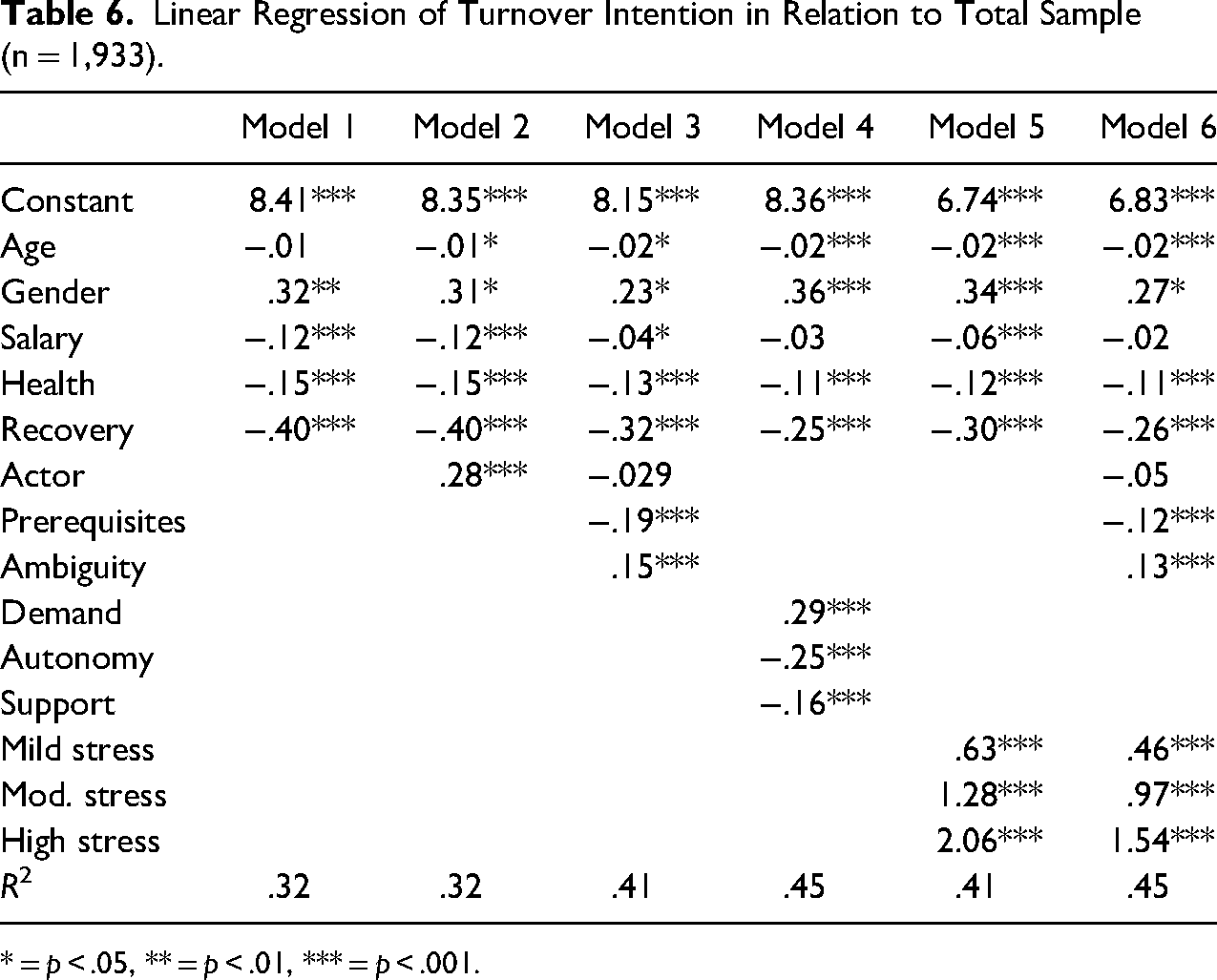
In Table 6, a linear regression is presented using turnover intention as the dependent variable. The control variables on their own account for 32% of the variation in turnover intention, as seen in Model 1. Gender remains a relatively stable predictor across all models, and health is consistently found to be a strong predictor.
Linear Regression of Turnover Intention in Relation to Total Sample (n = 1,933).
* = p < .05, ** = p < .01, *** = p < .001.
Model 2 shows the results after adding the dummy variable of school actor (private actor = 0, public actor = 1). The results indicate that school leaders affiliated with publicly operated schools have a higher turnover intention. However, after controlling for organizational prerequisites and organizational ambiguity, the effect of the actor disappears, as demonstrated in Model 3. This suggests that the difference in turnover intention between public and private actors can be attributed to differences in experience with organizational prerequisites and organizational ambiguity.
In Model 4, demand, autonomy, and support have a similar impact on turnover intention. These three variables are found to have a significant impact on turnover intention (p < .05). When adding dummy variables to represent the different combinations of demand, autonomy, and support (low stress = 0), it was observed that compared to the reference group the mild stress group increases turnover intention by a factor of .63. Belonging to the reference group as opposed to the high-stress group increases turnover intention by a factor of 2.06.
In the final Model 6, which takes into account all the variables, 45.4% of the variation in turnover intention could be explained. Factors like actor and salary do not appear to have a significant impact on turnover intention. Even after controlling for factors like actor, organizational prerequisites, and organizational ambiguity, the different levels of stress remain significant predictors of turnover intention, although their effect decreases.
Analysis of Study Variables by Public- and Private Actors
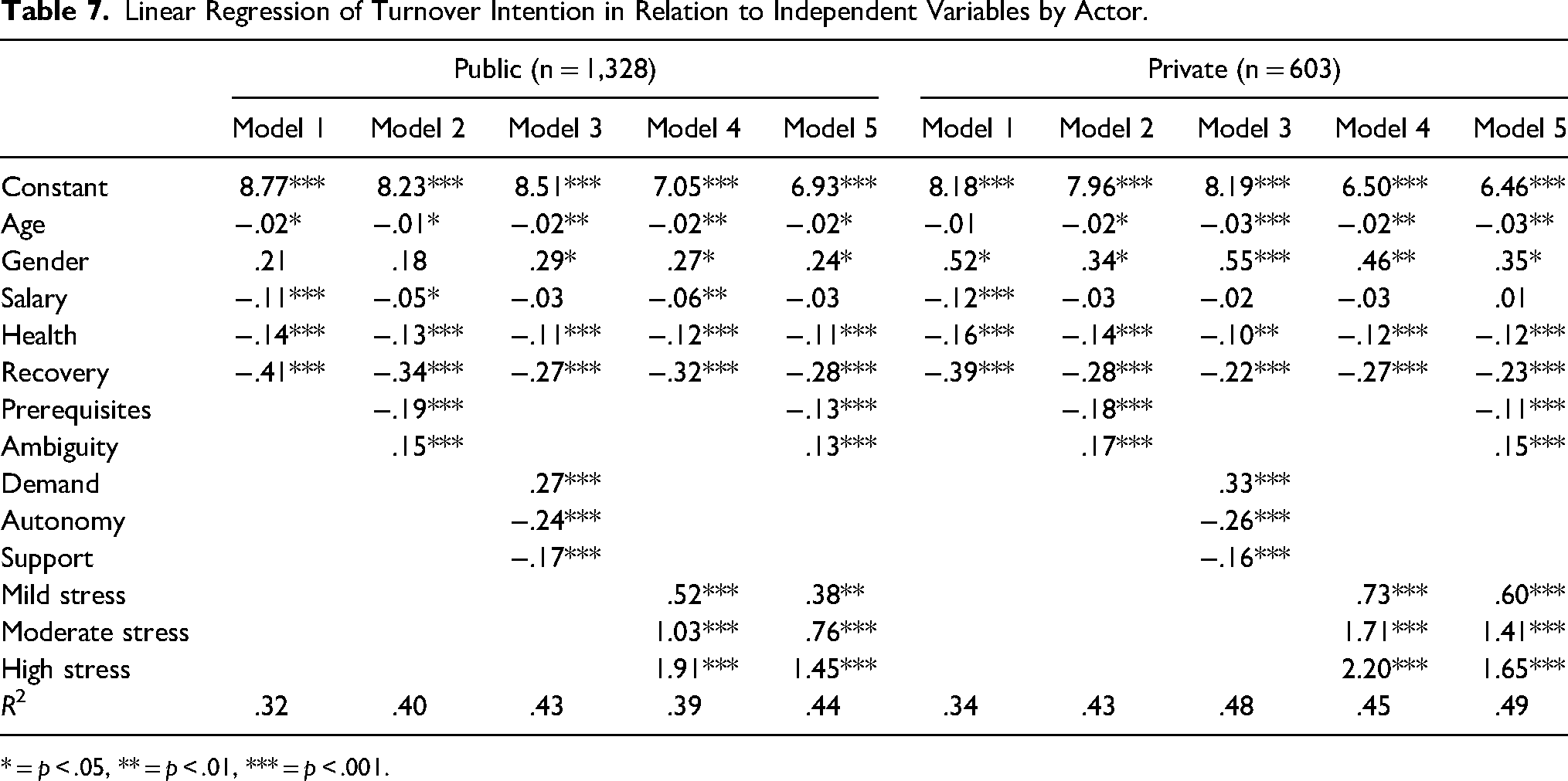
Table 7 presents the regression models for public and private school leaders separately. The first model in both the private and public regression has a similar effect on explaining the variation. Gender seems to be a stronger predictor of turnover intention among private school leaders compared to public school leaders. Both organizational prerequisites and organizational ambiguity have a similar impact on explaining the variation in turnover for both private and public-school leaders. The groups created from high and low combinations of demands, autonomy, and support (mild stress, moderate stress, and high stress) are strongly associated with turnover intention. The relationship between the stress groups and turnover intention increases from low stress to high stress, and this pattern is the same for both private and public-school leaders. However, the effect of the stress groups on turnover intention is stronger among private school leaders. Also, after controlling for organizational prerequisites and organizational ambiguity, the relationship between stress groups and turnover intention remains strong and significant in both Models 4 and 5 for both private and public-school leaders.
Linear Regression of Turnover Intention in Relation to Independent Variables by Actor.
* = p < .05, ** = p < .01, *** = p < .001.
Analysis of Study Variables by School Level
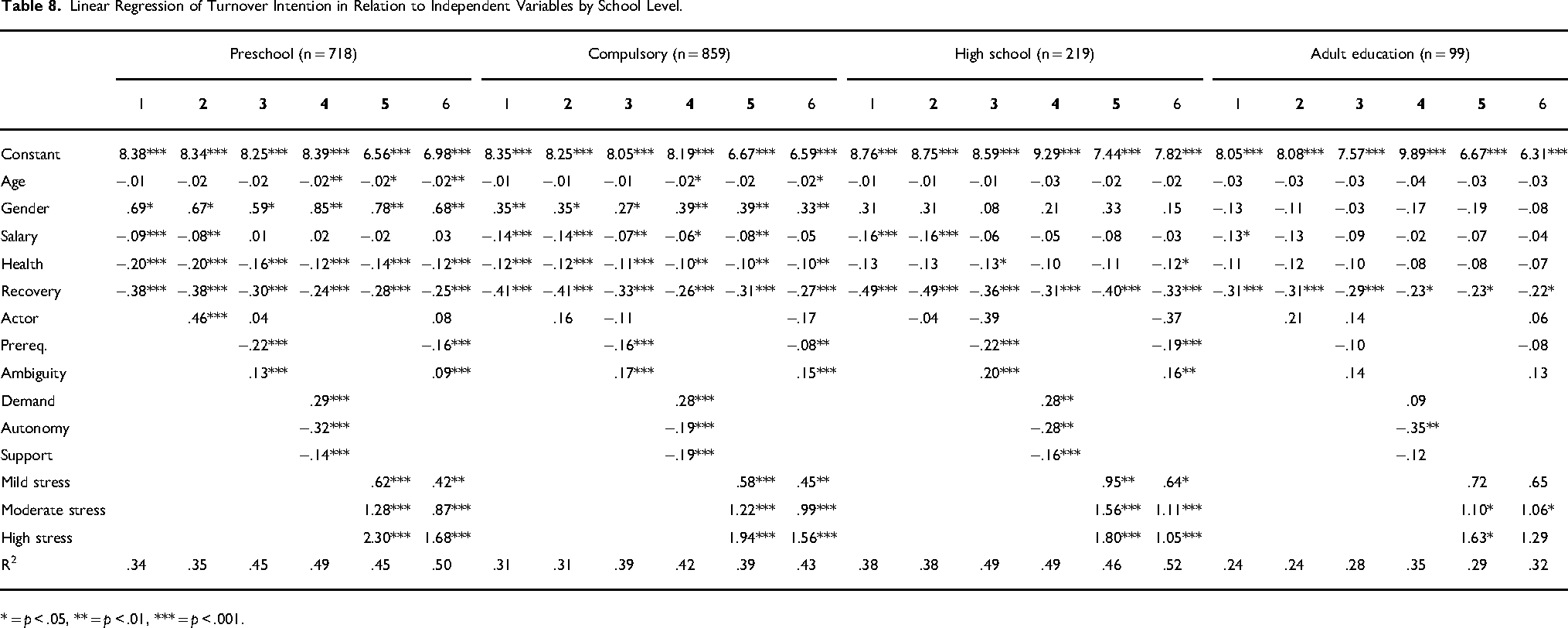
The results of the study's regression models by school level are presented in Table 8. For preschool education, factors such as gender, health, and recovery have a significant impact on turnover intention. The actor also initially appears to have a significant association with turnover intention, but this relationship weakens as organizational prerequisites and organizational ambiguity are taken into consideration. The stress groups (mild stress, moderate stress, and high stress) are strongly linked to turnover intention, and this pattern remains consistent even after controlling for organizational prerequisites and organizational ambiguity.
Linear Regression of Turnover Intention in Relation to Independent Variables by School Level.
* = p < .05, ** = p < .01, *** = p < .001.
In the case of compulsory school, the same pattern is observed where gender, health, and recovery are related to turnover intention. Actor does not reach significance, but its relationship with turnover intention changes from positive to negative as organizational prerequisites and organizational ambiguity are added to the model. Similarly, a strong association between the stress groups and turnover intention is observed, where low stress in comparison to high stress is related to increased turnover intention.
For high school, gender and health are not significant, but recovery is. Actor is not significant, but its relationship with turnover intention changes from positive to negative, implying that belonging to public actors as in comparison to private actors leads to increased turnover intention. The relationship between actor and turnover intention remains negative but not significant, even after controlling for organizational prerequisites and organizational ambiguity. The stress groups show the same pattern as the other school levels, with a strong association between low stress to high stress and increased turnover intention.
A different pattern is observed in adult education. Only recovery has a significant and consistent impact on turnover intention. Neither actor nor organizational prerequisites or organizational ambiguity have any significant effect on turnover intention. The stress groups in adult education exhibit a slightly weaker relation to turnover intention.
When considering all the variables in relation to school level, adult education stands out in several ways. The general health of adult education school leaders does not seem to be linked to their turnover intention as it is for the other school levels. Additionally, the organizational factors prerequisites and organizational ambiguity are not associated with their turnover intention as they are for the other school levels. Furthermore, the sense of demands and support does not seem to be as strongly related to their turnover intention as their sense of autonomy is.
Discussion
Summary of Results
The study aimed to investigate novice school leaders’ turnover intention in relation to psycho-social working conditions and organizational aspects. While initial results indicated that the type of actor (public or private) the school leader is affiliated with mattered, controlling for organizational variables such as prerequisites and ambiguity eliminated these differences. The findings revealed significant differences in turnover intention among school leaders based on the combination of demand, autonomy, and support levels. Low demands, high autonomy, and high support were associated with the lowest turnover intention, while high demands, low autonomy, and low support were linked to the highest turnover intention. The different stress groups could significantly explain turnover intention, even when controlling for other variables. This pattern was consistent across actor and school levels, indicating that school leaders independent of actor and school levels experience similar trends in turnover intention depending on their working conditions.
Working Conditions
The findings of this study highlight the importance of examining the working conditions of school leaders and their influence on their turnover intentions. In line with and as a complement to previous research (Yan, 2020), this investigation discovered that the three aspects of the working conditions—demands, autonomy, and support—play a crucial role in affecting the turnover intention of novice school leaders. This highlights the need for organizations to focus on providing supportive working conditions that balance the demands of the job with sufficient autonomy and support to promote job satisfaction and reduce turnover intention among novice school leaders.
According to the demand resource model, individuals need to experience not too low, but optimal levels of demands in order to maintain healthy stress levels (Johnson & Hall, 1988; Karasek, 1979). The role of a school leader is perceived to be part of a high-demand context where even if the school leader reports low demands, they may still experience moderate or high demands in comparison to other occupations (Phillips & Sen, 2011). In the current study, the variable “demands” was constructed of a combination of quantitative and emotional demands. Quantitative demands, such as time pressure and the number of assignments that need to be completed, can lead to emotional stress, including frustration and vulnerability (Wang et al., 2022). Thus, it is beneficial to consider both types of demands when investigating the working conditions of school leaders. Emotional demands have been identified as contributing factors to negative well-being in school leaders, while quantitative demands have been addressed as one of the main reasons school leaders leave the occupation (Fuller et al., 2015). The results of the study indicate that demands play an important role in the working conditions of novice school leaders and, as a result, are strongly associated with their turnover intention.
The results of the current study regarding the relationship between autonomy and turnover intention in school leaders add to the existing literature on this topic. Previous research has found that low levels of autonomy are associated with an increased risk of turnover (Tekleselassie & Villarreal, 2011) and conversely, high levels of autonomy are associated with increased retention (Farley-Ripple et al., 2012). The current study supports these findings by demonstrating that autonomy is as highly associated with turnover intention as demands and support. In some cases, autonomy was found to be even more important in its association with turnover intention, as it was the only variable that showed significance across all four school levels. The significance of autonomy in relation to turnover intention among novice school leaders highlights the importance of creating a trustful working condition that provides adequate autonomy for school leaders. A lack of autonomy can contribute to negative feelings such as frustration and stress, which can then lead to increased turnover intention. As such, ensuring that school leaders have a high level of autonomy in their workplace is crucial for maintaining job satisfaction and reducing turnover rates.
However, within the shifting paradigms of the Swedish public sector, the nuances of autonomy should be emphasized. Today's school leaders, amid broader systemic reforms, report varied experiences of autonomy across different leadership domains. Although they enjoy considerable autonomy in certain school domains, they also feel controlled, particularly in educational and administrative contexts (Nordholm et al., 2022). Prior research has shown that school leader autonomy may be positively related to student performance (Fuchs & Wößmann, 2008). However, with budgeting and administration identified as pivotal leadership tasks for Swedish school leaders, the relationship between autonomy, job satisfaction, and student performance becomes complex (Nordholm et al., 2023). Autonomy can simultaneously be a source of stress in unfamiliar domains and a contributor to job satisfaction in areas of expertise (Cribb & Gewirtz, 2007; Wermke et al., 2022). This dichotomy suggests that a deeper understanding of autonomy is essential for comprehending its impact on turnover intentions and for enhancing the construct validity in research about school leadership (Wermke et al., 2023).
The findings of the current study further strengthen the importance of providing support to novice school leaders. In high-pressure work conditions, novice school leaders may feel overwhelmed and experience stress, which can lead to a higher turnover intention. The level of support seems to play a moderating role between demands, autonomy, and turnover intention. In addition, our results show that support can have a positive impact on reducing the turnover intention of novice school leaders and thus increasing their well-being and job satisfaction. This highlights the crucial role that support plays in maintaining a healthy balance between professional and personal life (DeMatthews, Reyes, et al., 2021) and reducing the risk of turnover among novice school leaders. The results of this study contribute to the growing body of research that emphasizes the importance of providing adequate support to novice school leaders and the potential positive outcomes that can result from doing so (Liljenberg & Andersson, 2020; Persson et al., 2021b; Spillane et al., 2015).
In considering the working conditions during the pandemic, the role of school leaders undoubtedly became more complex, as indicated by Parveen et al. (2022). The Swedish approach to Covid-19, which involved keeping schools open while other nations opted for lockdowns, did not spare school leaders from the significant pressures of crisis management. The decision necessitated that school leaders navigate a unique set of in-school restrictions and protocols to mitigate the spread of Covid-19 (Sahlin et al., 2023). Consequently, the interplay between demand, autonomy, and support found in this study offers unique insights into the dynamics of these stress-related variables during a crisis period like a pandemic.
The results of the current study have demonstrated the importance of examining the interplay of demands, autonomy, and support in relation to novice school leaders’ turnover intention. These three factors, when considered together, provide a comprehensive understanding of the working conditions and their impact on turnover intention. It is thus crucial to understand that both autonomy and support can moderate the influence of demands on novice school leaders’ turnover intention. The findings suggest that increasing autonomy and support can offset the negative effects of high demands, making it easier for novice school leaders to cope with their working conditions. Additionally, the results indicate that each of the three factors can be interchangeable, meaning that if it is difficult to improve the level of autonomy for novice school leaders, in most cases increasing support can be just as effective in reducing their motivation to leave the school. This confirms prior research in that demands, autonomy, and support all have an important influence on work–life balance and well-being (Arvidsson et al., 2021; Håkansson et al., 2021).
Public- and Private Actors
Official statistics from Sweden (National Agency for Education, 2016) show that school leaders from private actors stay longer at their schools than school leaders from public actors. The results from the current study can add to our knowledge that private school leaders do have significantly lower turnover intention. The results further suggest that the gap depends on how the school leader perceives their prerequisites and their ambiguity of the organization they are affiliated to. Thus, school leaders affiliated with publicly operated schools seem to experience more deficiencies in their organizations. International research has pointed towards that school leaders of private schools have a higher turnover rate than public school leaders (Ni et al., 2015). Results of this study indicate that which school leaders that want to leave their job, from an organizational point of view, depends on what actor that can provide sufficient prerequisites and reduce ambiguity in the organization. This implies that it is not the public or private organization per se that fuels turnover intention and turnover but their inner structure and how it is personalized for the needs of the specific school leader (Jerdborg, 2023). Additionally, the results suggest that having clear and well-defined prerequisites and reducing ambiguity can have a positive impact on reducing turnover intention and promoting job satisfaction. Furthermore, it is crucial for organizations to provide a supportive and empowering environment for their leaders.
Autonomy has been theorized to be a factor that is more associated with private school leaders (Sun & Ni, 2016) and to inhibit turnover (Gawlik, 2008). Consequently, private school leaders could theoretically, due to being equipped with higher autonomy, be exposed to less turnover intention. Even if this study could find differences between private and public-school leaders in regards to their perceived autonomy of their work situation, where private school leaders experienced significantly higher autonomy over their work situation, the level of autonomy did have the same relation to turnover intention regardless of private or public affiliation.
School Levels
The results of this study suggest that there is no substantial difference in turnover between school leaders of different school levels, which aligns with official statistics and prior research findings (National Agency for Education, 2016; Persson et al., 2021a). Despite the lack of compiled measures of turnover for school leaders in preschool and adult education, this study's results suggest that there are no particular differences in turnover intention between the different levels of the Swedish school system. However, it is important to note that the school leaders of adult education did stand out in the results of this study, as they have a unique working situation. The focus of adult education on flexibility and individuality (Mufic & Fejes, 2022) requires adult education school leaders to have a more external and entrepreneurial outlook, rather than an internal focus on teachers and students (Fejes et al., 2016). This difference in circumstances highlights the need for further investigation into the factors that contribute to the high turnover of school leaders in adult education (The Swedish Schools Inspectorate, 2019), and, moreover, to further investigate differences between school levels in relation to psycho-social working conditions.
Implications
This study's findings emphasize the significance of creating supportive environments that balance job demands and autonomy, highlighting a crucial area of focus for administrators responsible for novice school leaders’ working conditions and professional development. In line with previous studies (Farley-Ripple et al., 2012; Tekleselassie & Villarreal, 2011), our results underscore the role of increased autonomy in bolstering job satisfaction and retention among novice school leaders. Furthermore, the study affirms both quantitative and emotional job demands as key contributors to turnover intention (Fuller et al., 2015; Wang et al., 2022), underlining the need for strategies to help novice school leaders manage these demands. The study recognizes the essential function of support as a moderating factor between demands, autonomy, and turnover intention. Therefore, school boards and superintendents could implement well-designed support systems, such as mentorship and professional development programs (Liljenberg & Andersson, 2020; Persson et al., 2021b; Spillane et al., 2015), to mitigate turnover intention and improve working conditions for novice school leaders.
Addressing differences between public and private schools, the study suggests improving organizational clarity and prerequisites can lower turnover intentions in public schools. These findings stress that organizational structure and adaptability, rather than just public or private affiliation, play a crucial role in influencing turnover intention (Ni et al., 2015). Overall, these insights aid the development of interventions aimed at improving working conditions and reducing turnover among novice school leaders. Further research is needed to explore the unique needs of leaders at different school levels, informing tailored strategies to reduce turnover intention.
Strengths, Limitations, and Future Research
The results of this research contribute to a deeper understanding of the psycho-social factors that influence novice school leaders’ intentions to leave their positions, enhancing the discourse on the early career socialization process. The study illuminates the significant impact of initial work conditions and experiences on the career paths and retention of these leaders. By showcasing the varied effects of stressors in different educational environments the need for differentiated support strategies during the crucial early stages of a school leader's career, is highlighted. This nuanced approach is critical for establishing the right conditions for novice leaders to thrive.
Incorporating the context of the COVID-19 pandemic, which coincided with the timing of our study in December 2021, adds a critical layer to our findings. The pandemic exerted a profound influence on the educational sector and exacerbated existing challenges. This study, therefore, captures the complexities that novice school leaders faced during this global crisis, reflecting the urgency for adaptive support mechanisms that acknowledge the heightened pressures. This research provides a timely snapshot of the factors affecting school leader turnover intentions in an era of considerable upheaval, offering a unique contribution to the field.
The study's robust design bridges the gap between theory and practice, offering both a sophisticated framework for understanding turnover dynamics and practical, context-sensitive guidance for educational policymakers and administrators. These dual contributions are vital for devising personalized retention strategies that can lead to broad improvements in educational quality and organizational stability worldwide. Through this work, we contribute to the essential body of knowledge that can inform policies and practices designed to sustain and support school leaders during and beyond the challenges presented by the COVID-19 pandemic.
The strength of this study hinges on the representation of the sample, encompassing 65% of all novice school leaders participating in the Swedish Principal Training Program. This high response rate facilitates the generation of scientific conclusions that hold considerable relevance and validity within the novice school leader context. The comprehensive survey, which covers key areas of psychosocial working conditions, offers an in-depth view of the professional landscape and experiences of these novice school leaders. The findings of the study are particularly valuable for policymakers, given the clear indications of how variations in demand, autonomy, and support levels can affect turnover intentions. The strong representation of the total population of novice school leaders in Sweden also lends credibility to the findings and enhances the potential for the study to inform effective interventions and shape future policies.
While this study contributes to understanding turnover among novice school leaders, a few limitations should be noted. Firstly, the cross-sectional nature of the study design limits the possibility to theorize about causality between the variables investigated. Even though this study used central concepts to investigate working conditions, as called for by previous studies (Yan, 2020), longitudinal research is needed to explore the temporal relationships between working conditions and turnover. In addition, future research would benefit from incorporating the findings of this study with qualitative methodologies to delve into the subjective experiences of school leaders regarding turnover intentions and decisions. This integration would complement the existing qualitative research about school leader turnover (e.g., Farley-Ripple et al., 2012; Oberman, 1996), and provide a more comprehensive picture of the challenges and satisfactions inherent in school leadership roles (Allen et al., 2014).
Secondly, our sample only included Swedish novice school leaders, which may limit the generalizability of our findings to other contexts. Future research should consider similar investigations in different national contexts, to confirm if the observed patterns hold universally. Thirdly, despite no substantial difference in turnover or stress among school leaders of different school levels, the study did find that leaders in adult education stand out, implying their unique situation. Adopting a broader critical perspective, the findings could potentially signal the existence of distinct, incommensurable aspects of working conditions across different school levels. These unique differences call for careful consideration in future research. Finally, the study did not delve into individual factors such as personality traits, social workplace dynamics, or leadership styles, which could potentially influence turnover intention. Future research could explore such leadership factors, broadening our understanding of what drives turnover intention among novice school leaders.
Footnotes
Declaration of Conflicting Interests
The author declared no potential conflicts of interest with respect to the research, authorship, and/or publication of this article.
Funding
The author received no financial support for the research, authorship, and/or publication of this article.
