



Abstract
Motivational interviewing (MI), a therapy strategy used to guide students to help students better understand how to develop their social emotional learning (SEL) skills to make positive choices that resolve social conflict, bodes promising for helping youth to cultivate the social and emotional skills needed to address bullying, peer drama, and other issues affecting their mental, physical, and emotional health. Bulldog Solution, Inc., a Chicago-based organization, utilized MI research-informed approach to increase students’ social conflict management and leadership skills through self-awareness and self-discovery, as a mechanism for preventing bullying and supporting the social and emotional growth of young people. This study presents emerging themes resulting from a 9-week, motivational interview and SEL-based program titled, “Peace Over Drama,” implemented with middle school students (sixth–seventh–eighth grade) with disabilities and/or at risk for disability-identification (n = 17) in one Chicago middle school on the south side. Implications for school-based prevention models and scaling of similar SEL and MI programing are discussed.
By definition, bullying is unwanted aggressive behavior(s) among school-age children that has a high likelihood of causing physical or psychological harm or injury (Gladden et al., 2014). Bullying is categorized as repeated behavior, involves a real or perceived imbalance of power favoring an aggressor, and leaves victims feeling demeaned, intimidated, or humiliated as a result of this aggression (Gladden et al., 2014). Empirical evidence has revealed that youth involved in bullying (i.e., victims, bullies, and bully-victims) often experience detrimental psychosocial outcomes such as depression, social anxiety, and low self-esteem, which could contribute to academic challenges (Cook et al., 2010). Prevalence rates suggest that about 29% of 6th-graders, 24% of 7th graders, and one in every four 8th graders reported being bullied at school (Musu et al., 2019). The likelihood of experiencing bullying was higher for middle school students than for high school students (Musu et al., 2019). Student-reported perceptions of bullying might be higher; a survey by Hicks et al. (2018) revealed that 37% of middle school students reported being bullied face-to-face or online, but only 31% of students reported incidences of bullying to a trusted adult. A study focused on the transition to middle school found that “changes in student involvement with peer victimization are better understood as a contextual rather than a typical developmental process, whereas bullying perpetration may be better understood as developmental” (Hicks et al., 2018, p. 237). As such, both contextual and developmental aspects of the middle school bullying dynamic are important to consider, especially when it comes to students with disabilities.
Students with both apparent (i.e., physical) disabilities and non-apparent (i.e., learning disabilities and emotional or behavioral disturbances) are bullied more than students without disabilities (Carter & Spencer, 2006; C. McLaughlin et al., 2010). Bullying and peer aggression is also a persistent problem for students receiving special education services (Blake et al., 2016; Rose et al., 2011). In a systematic review, Sentenac et al. (2012) found that when it comes to peer victimization, children with psychiatric diagnoses and learning disabilities face greater amounts of victimization. Another study found that students with behavioral disorders (e.g., emotional behavioral disorder, ADHD) and observable disabilities are victimized more than those with non-observable disabilities such as specific learning disabilities (Swearer et al., 2012). Specifically, Rose et al. (2009) middle school students with disabilities who were enrolled in self-contained special education class environments reported higher self-reported bullying than those in inclusive settings or part-time special education settings (21% vs. 16%, respectively). Additionally, students with disabilities who are bullied have reported higher levels of psychological distress and physical and emotional harm when compared to their peers without disabilities (Hartley et al., 2015). C. McLaughlin et al. (2010) suggests that the overrepresentation of students with disabilities within the bullying dynamic might be attributed to discrepancies in social and emotional skills. The prevalence discrepancy is compounded by a recent longitudinal study by Rose and Gage (2016) that revealed students with disabilities are victimized and engage in higher levels of perpetration when compared with their peers without disabilities over time, and the prevalence gap remains consistent from third through 12th grade. Rose and Gage (2016) argued that students with disabilities are not developing, or being taught, the appropriate response skills necessary to avoid bullying involvement, which perpetuates the consistent discrepancy between youth with and without disabilities.
Social and emotional development refers to the skills necessary to foster secure attachment with adults, maintain healthy relationships, regulate one’s behavior and emotions, and develop a healthy concept of personal identity (Center on the Social Emotional Foundations for Early Learning, 2008). Positive social and emotional development provides a critical foundation for lifelong development and learning (Elias et al., 1997; Zins et al., 2007). In early childhood, social and emotional well-being predicts favorable social, behavioral, and academic adjustment into middle childhood and adolescence (de la Barrera et al., 2019; Huston & Ripke, 2006). It helps students navigate new environments, facilitates the development of supportive relationships with peers and adults, and supports their ability to participate in learning activities (Zins & Elias, 2007; Zins et al., 2007). Students with emotional or behavioral challenges are likely to receive less adult support for development and learning and to be more isolated from peers (National Center for Learning Disabilities, 2017).
Recently revised, the Collaborative for Academic, Social, and Emotional Learning (CASEL, 2020) defines SEL as: “the process through which children and adults understand and manage emotions, set and achieve positive goals, feel and show empathy for others, establish and maintain positive relationships, and make responsible decisions.” The SEL framework includes five interrelated skill areas: self-awareness, social awareness, self-management and organization, responsible decision making, and relationship skills with the overarching goal of developing healthy identities, managing emotions, and achieving personal and collective goals (CASEL, 2020). Research shows that higher amounts of social-emotional learning yield stronger academic outcomes and positive psychological health.
Specifically, confident students who are capable of developing friendships, resolving conflicts, and managing emotions are better equipped for later academic success (Parlakian, 2003; Shonkoff & Phillips, 2000). We also know that professionals (i.e., teachers, counselors, administrators, and staff) play a critical role in developing these skills with students and families (Hemmeter et al., 2008). From a social-cognitive perspective, as children are better able to control their feelings, thoughts, and actions, especially under emotional demands, academic learning is optimized. Further, exercises and opportunities to practice these skills and competencies differ in their level of cognitive-emotional complexity to ensure developmentally appropriate interventions that are sustainable. This is especially important for students with disabilities, as two of the most notable predictors of bullying involvement for this subset of school-aged students are social and communication skill deficits (Rose et al., 2011).
Despite the number of programs in use, there is underwhelming evidence and little consensus as to the effectiveness of bullying prevention programs in the U.S., especially for students with or at risk for disability identification (National Academies of Sciences, Engineering, and Medicine, 2016). A 2015 randomized control trial of the social-emotional learning-based bullying prevention program—Second Step: Student Success Through Prevention (SS-SSTP) Middle School Program to fight bullying—utilized direct instruction in the five areas of the SEL framework, specifically targeting bullying over time for students with disabilities (Espelage et al., 2015). This investigation revealed a significant reduction in bullying perpetration among students with disabilities. Prior research has made progress towards illustrating the role of social-emotional learning within the context of bullying prevention and students with disabilities, however, interventions that utilize social-emotional learning to drive bullying prevention from a developmental perspective might be warranted.
There are many factors (socioeconomic status, school culture, intrapersonal relationships, family, etc.) that play an important role in individuals with disabilities developing these constructs (Bronfenbrenner, 1979; Rose et al., 2013, 2015). The factors we are primarily interested in researching are social-emotional learning skills related to Bulldog Solution Inc., motivational interviewing (MI) program. The program’s goals are to help students identify and understand their emotions, think of more pro-social choices, and utilize positive coping skills to address conflict or bullying. Facilitators of the program help students identify patterns, emotions, triggers, and thoughts and utilize motivational interviewing, a therapy strategy to guide students to make more positive choices that resolve social conflict (referred to as drama), and bullying.
Motivational Interviewing
Motivational interviewing (MI) is a counseling style that helps motivate participants to engage in positive behavior change. Motivational interviewing was originally used to help patients change habits related to addiction (Miller & Rollnick, 1991). MI is most notably known for its goal-directed focus and ability to change behaviors, but there are misconceptions that overpromise and overestimate what MI can do. To clarify MI as an approach, Miller and Rollnick (2009) explain that MI is not an easy approach to learn and not “a way of tricking people to do what you want them to do” (p. 131). Working to develop a useful theory of motivational interviewing towards a goal of behavioral change, Miller and Rose (2009) describe it as: “A resulting causal chain model links therapist training, therapist and client responses during treatment sessions, and post-treatment outcomes” (p. 527). This process is person-centered and utilizes the following principles: express empathy, develop discrepancy, avoid arguments, roll with resistance, and support self-efficacy (Miller & Rollnick, 1991).
In practice, MI has since been applied to promote positive behavior change in a wide variety of contexts, including interventions to promote behavior change that improves health outcomes. These include interventions to promote physical activity and weight loss in overweight adolescents (Pollak et al., 2016; Vallabhan et al., 2018). Moreover, studies show MI-based interventions may help adolescents with a variety of chronic illnesses to adhere to their treatments and reduce symptom severity (Schaefer & Kavookjian, 2017). Additionally, MI has been used in evidence-based interventions to address drug and alcohol abuse among adolescent girls, in addition to American Indian/Alaska Native youth (Dickerson et al., 2016; Mason et al., 2011). Other studies have also recommended MI as a useful practice for behavioral interventions for individuals with intellectual disability and Hispanic adolescents (Clair et al., 2013; Frielink & Embregts, 2013).
MI interventions have also been effectively implemented to create positive behavior change in K-12 settings. One program that combined MI with cognitive-behavioral therapy was linked to improved academic motivation, behavioral regulation, math grades, and decreased levels of depression and anxiety (Terry et al., 2013). Other MI programs have also reported higher math grades, class participation, and an increase in positive academic behaviors (Strait et al., 2012). Another study showed that MI can be used by school counselors as a tool to help increase academic motivation in middle schoolers (Hadraba, 2011). Furthermore, MI-based interventions may reduce instances of bullying and peer victimization in adolescents (Cunningham et al., 2012; Pennell et al., 2020). One study also found that an MI-based vocational intervention may improve self-efficacy and self-determination skills as well as improve student feelings about their future (Sheftel et al., 2014).
This particular study looks at the role of MI as an intervention to develop SEL and leadership skills among students with disabilities and at-risk for disability identification. As such, in order to address the issue of bullying of students with disabilities and those at-risk for disability and increase their social emotional learning skills, the intervention of the motivational interview program was implemented. The goal was to see a change in students’ abilities to deal with challenging situations in a way that demonstrated awareness of their emotions and positive actions as opposed to engagement in bullying.
Program Overview
Bulldog Solution, Inc. is a Chicago-based organization dedicated to empowering students and teachers through social emotional learning (SEL) programing and consulting. Developing programs that focus on social skills, group management, bullying/cyberbullying, and other key social emotional learning standards, Bulldog Solution, Inc. utilizes a research-informed approach to increase students’ self-esteem, self-management, and social skills as a mechanism for preventing bullying and supporting the social and emotional growth of young people. Bulldog Solution, Inc., which provides pro bono services to under resourced schools, specifically in regard to bullying prevention and social emotional learning support, was founded by Author 5, referred to hereafter as the “Lead Psychologist.” Under-resourced schools are usually characterized as having insufficient resources and tend to serve large numbers of disadvantaged and/or low-income students and having designation of Title I school. Title I designation means the school is receiving federal funds provides financial assistance to local educational agencies and schools with high numbers or high percentages of children from low-income families to help ensure that all children meet challenging state academic standards (Every Student Succeeds Act, 2015). In the context of this study, the Lead Psychologist, as well as her team of four additional trained facilitators implemented a 9-week motivational interviewing program entitled “Peace Over Drama,” that involved developing SEL skills with students through motivational interviews.
The overarching goals of “Peace Over Drama” were to explore the students’ strengths, resources, and support systems, and identify potential threats and challenges they might face throughout the academic school year. The program uses strengths-based and experiential approaches (activities and positive psychology strategies) with the motivational interviewing model to increase SEL skills. In doing so, “Peace Over Drama” seeks to promote positive behaviors through open-ended questions, empathy, coping skills, and resilience building through processing the emotions, behaviors, and thoughts.
Program Design
In the initial design phase, the Lead Psychologist deconstructed the SEL competency model provided by the Illinois State Board of Education (ISBE, n.d.) to better understand how each skill can be identified and further developed. The perceived challenge with the SEL competency model was the appropriate responsive behaviors for each competency did not match the current cognitive or emotional development of the students participating in the SEL programs provided by Bulldog Solution Inc. The Lead Psychologist identified a gap between the competency model and the student’s social-emotional skills from prior school programs and assessments. With further research into interviewing and self-awareness, the Lead Psychologist wanted to explore how MI could positively impact the development of SEL skills with middle school students with disabilities. The 9-week MI intervention was designed as weekly one-on-one student meetings (approximately 30-minute sessions) with a trained facilitator to develop SEL skills. Students were selected based on academic performance, absenteeism, behavioral misconduct, and emotional stability. The principal, teachers, and social worker selected students with the highest rate of absenteeism, lowest academic performance, most behavioral misconducts, and least emotional awareness. Students were asked to participate in an SEL program “Peace Over Drama.” Students completed a pretest to assess their SEL skills prior to the intervention. The program was voluntary, and students could leave the program at any point. The “Peace over Drama” leadership program was customized to adapt the four phases of Rollnick and Miller’s (2002) Motivational Interviewing Preparing People for Change Model. The Lead Psychologist further developed a model to fit the current school’s culture, student needs, and address the SEL skills to fit the intervention timeline. The blueprint of the program focused on developing self-awareness, social-awareness, self-esteem, and self-worth to promote positive change in behaviors, thoughts, and emotions. The facilitators recorded all their sessions to assess the student’s development, identify patterns, and evaluate their MI skills. Sessions were curated to build upon each session with detailed agendas. Agendas had goals, key insights from prior sessions, MI questions, positive affirmation, recognition statements, focal issues, and coping skills or strategies to practice throughout the session. The facilitators developed and practiced active listening through the intervention to promote clear communication skills, support, and connection. Facilitators would recap, paraphrase, and reflect emotions throughout their dialogue with the students. Due to each student’s level of situational uncertainty (unstable homes, disruptive classrooms, and social conflict), facilitators would start each session with general questions to gain a sense of the student’s emotional well-being and mindset. The facilitators would explore how they were feeling, what social conflicts might have been occurring, or any difficulties that might have come up throughout the week. By brain dumping the negative emotions and experiences in the beginning of the sessions, students could better focus and participate in the session.
The following SEL intervention was designed with Rollnick and Miller’s (2002) Motivational Interviewing Preparing People for Change Model. In Phase I: Engaging Sessions (weeks 1–3), facilitators focused on getting to know the students, establishing a psychologically safe environment, building trust through showing concern, care, and engaging with students through open-ended questions. The goals were to focus on the students: (1) self-awareness and self-identity and (2) build rapport to establish a trustworthy relationship between the facilitator and the student. Questions were developed to learn more about their strengths, experiences, personality, interest, and social environment/family support system. By developing trust and empathy, the facilitators could gain access to common emotions and behavioral patterns that were exuded throughout the day. The initial meetings focused on developing rapport and connection. Facilitators used various experiential tools to gather more information around student’s social and emotional skills. Students had different cognitive and social abilities, so by presenting tools, worksheets, and visuals, the students had an opportunity to process information or learn new skills by different learning modes. Facilitators used interviewing worksheets to gather data about the students’ past experiences, interests, goals, hopes, and dreams. The emotion cards (pictures of faces showing different emotions) helped students identify common feelings and learn new emotions. The cards helped the students see how someone expressed an emotion through the images. They also had an opportunity to share about their experiences with the emotion. Using storytelling prompts, the facilitators were able to learn more about the students self and social perceptions. Facilitators worked throughout the session to express empathy and compassion through active listening and reflecting back the student’s stories. The goal was to create a safe place for students to explore their emotions, thoughts, and behaviors without judgment or negative outcomes.
In Phase II: Focusing and Evoking Sessions (weeks 4–6), the facilitators looked into identifying the focal issue, setting goals, and providing coping skills to help the students identify corrective responses and positive outcomes. Facilitators would present recommendations, strategies and coping skills that would match the student’s strengths and skills set. Using the SWOT 2.0 worksheet students could identify their strengths, one weakness, opportunities, and threats. The worksheet was divided into four quadrants as a tool to help students organize their self-perception and visualize a snapshot of themselves. They were able to identify their positive attributes and goals for the future. The worksheet only required one weakness, so students could be more self-aware of what held them back from feeling worthy, accomplished, or esteemed. The threats section was created to identify the external factors that created fear-based emotions.
Another resource utilized in these sessions was the Stress and Coping Skill Worksheet. Students could mix and match stressed with coping skills to see what would be the best match for them to utilize in different social settings. The worksheets were great activities to help students communicate their feelings and process their experiences. They were able to learn new strategies and talk through how to apply them in their social setting. The facilitators would model positive affirmation and open opportunities for the student to share positive traits. Moreover, by using a series of reflective thinking questions, the facilitator looked into understanding how the student viewed behavioral misconducts. The facilitator asked about the details of the situation to help the student envision the story and play it back. From then on, the facilitator would ask questions about their feelings to seek a more profound empathy and understanding level. When the facilitator would identify that the student expressed their emotions, they would follow up with empathy-driven questions such as, “How might you have felt if someone threw a pencil at you?” and “How would you react if someone pushed you?” The goal was to explore the student’s experiences and have them to understand other people’s perspectives.
In Phase III: Action Planning Sessions (weeks 7–9), focused on using positive terminology surrounding accomplishments, goal attainment, positive affirmation, and program achievement. It worked to validate corrective responses students had chosen to use for conflict and behavioral management. The student would list coping skills that could work for them, and through experiencing the skills and processing with the facilitator, they identified the coping skills that were most beneficial for them. The main focus for this final phase was for the students to see that positive change is possible through managing their emotions, thoughts, and behaviors. Throughout the process, each student had a unique trajectory through the motivational interviewing process. The facilitator worked to meet the students at their emotional and cognitive ability.
Facilitator Training and Supervision
The facilitators, all psychology graduate students, received extensive facilitation training led by the Lead Psychologist, which consisted of a full-day workshop to learn the motivational interviewing process, completing the Motivational Interviewing Preparing People for Change, Miller and Rollnick book. Additionally, facilitators read a series of books to more deeply understand how to facilitate motivational interviewing sessions and to build upon their pre-existing facilitation skills. Each week they would report the theory learned and discuss practical application during group supervision. Prior to any session, the facilitators had to listen to their recordings, take notes, create agendas, and complete their 1-hour supervision meeting with the Lead Psychologist. These sessions allowed facilitators to better tailor the intervention to fit individual student’s needs (e.g., common emotions, thoughts, and behavioral patterns, coping strategies, triggers, and negative behaviors). Supervision meetings utilized the start-stop-continue model, which is associated with greater feedback depth (Hoon et al., 2014).
Methods
Research Design
The research design applied to the secondary analysis of the resulting transcripts was narrative inquiry. “Narrative inquiry offers a lens, a framework to the study of storied lives….[and] is a framework that helps researchers explore, discover, understand and construct stories based on the participants recounting their experiences. Narrative inquiry offers a way to frame how stories are being reported and what is being selected as stories to be told and remembered.” (Bhattacharya, 2017, p. 93). In this particular study, the purpose was to more deeply understand the stories and the ways in which people are making meaning of their lives, and in this case the application of the content delivered from the program to their lives over a period of time. Though, Authors 1 to 4 were not involved with the design of the Peace Over Drama program upfront, they were given the collection of audio files spanning weekly interviews with students over a 9-week period of time. Therefore, this design was applied a posteriori.
School Setting
The overall school was primarily made up of Latino students (62.8%) and Black students (33.9%), with some Asian (1.1%), White (1.4%), and students of other racial identities (.8%). Additionally, 86.6% of students were classified as low income; 32.5% of students were categorized as diverse learners, which included students with disabilities, English Language Learners (ELL), migrant students, and homeless students. Approximately 30% of students had limited English language ability. The school was located on the south side of Chicago in a high poverty area, where there was a higher level of reported gang activity. Most families associated with the school lived in proximity to each other.
Student Selection and Matching Process
Students from sixth, seventh, and eighth grade (ages ranging from 12 to 15 years old) were selected using a combined assessment of grades, attendance, and behavioral misconduct. At-risk behaviors were identified by evaluating behavioral misconduct and reviewing student files for anger issues, emotional outbursts, difficulty fitting in, disruptions in class, low self-esteem, and physical altercations with others. In addition to the students identified as at-risk, students with a documented disability (e.g., Individualized Education Plans (IEP) and/or 504 plans) were included for participation. The list of students generated with support from school administrators and then narrowed to 20 students based on the capacity of Bulldog Solution Inc. to implement. In the initial meeting, the lead psychologist explained the goals for the program, the structure, and the outline of the sessions. Bulldog Solution Inc. received consent from the school, parents, and the students.
The Lead Psychologist conducted a needs assessment, interviewing each student individually to better learn their personality and find out which facilitator would be best suited to work with that student. The students were paired with facilitators by matching their needs assessment results with the facilitator’s personality, strengths, abilities, and skillset from internal personnel data to Bulldog Solution Inc. It is important to note that while students were aware that they had been selected to participate in the Bulldog Solution Inc. “Peace Over Drama” program, they did not know facilitators ahead of time or have established relationships with them. Letters to parents were sent home to inform them of the program and expectations. A few parents pulled their children from the program, resulting in 17 participants for this study.
Student Demographics
Of these 17 students, 47.1% (n = 8) had a documented disability; 52.9% (n = 9) did not have a documented disability but were identified as at-risk for disability identification based on school-level disability screener information. Additionally, 29.4% of students were Latino, 64.7% of students were Black, and 5.8% of students identified as bi-racial. Nine participants self-identified as male and eight participants self-identified as female.
Procedures
Selected students (n = 17) participated in the 9-week social-emotional learning leadership program entitled “Peace Over Drama.” A total of 103 interview sessions were recorded; the average length of time of each interview was 30 minutes. Due to absences and other conflicts, not every student participated in all weekly interviews, the range of interviews per student was four to nine and the average was seven interviews. Interviews occurred in an empty classroom that allowed facilitators and students to speak privately, without distractions. As aforementioned, the program was based on motivational interviewing models and experiential theories to increase students’ social-emotional skills.
Data Analysis
The lead author obtained Institutional Review Board (IRB) approval to conduct a secondary analysis of the audio files. The research team transcribed the audio files and used the resulting transcripts for the basis of analysis. These analyses were completed based on weekly interviews with 17 middle school students. Pseudonyms were created and assigned by the researchers. Specifically, a thematic content analysis was completed across the resulting transcripts. Initial pilot coding was conducted with three students’ transcripts to assess the depth of information and to generate structural codes as defined by Saldaña (2015). During this initial pilot coding, we also developed emergent research questions. The emergent research questions crafted to guide further analyses were: (1) What leadership strategies are students with disabilities and at risk for disability identification using? (2) What social emotional learning strategies are students with disabilities and at risk for disability identification using in particular to address situations related to bullying and/or victimization? And (3) In what ways did students with disabilities and/or at risk for disability grow their skills over time through the motivational interviewing intervention?
Sixteen structural codes were identified that were used across the remaining students’ transcripts. Data were compiled and analyzed using MAXQDA software version 2018 (VERBI Software, 2018). Nine independent coders worked on initial transcripts independently and then came together to compare themes and refine the process of identifying structural codes used for the remaining transcripts. Due to the volume of data, three senior coders worked with smaller work teams to ensure multiple coders were looking at each transcript and contributed to the validity and reliability of the process. Examples of final structural codes, or codes that we went into the remaining transcripts looking for, included: Leadership Strategies, Peer Trust, Teacher Trust, Drama Responsibility, Victim Peer, and Bully Family. From there, more focused in vivo coding and interpretation of the coded segments occurred through an iterative process of team memoing and bracketing led by the lead researcher and team leads from the smaller coding teams. This paper highlights results from leadership strategies and drama management codes.
Coding Framework
To provide an overview of leadership strategies presented in the data, two sub-codes were developed: leadership motivation and leadership strategy, however, all codes in this category spoke to references of leadership characteristics as they were identified by students or facilitators within the context of the interview. For example, the leadership motivation sub-code consisted of any time a student described their motivation for taking on a leadership role or serving as a role model position, while the leadership strategies sub-code denotes times when students described specific strategies they utilized in order to act as a leader or role model. Similarly, social conflict management strategies were generated via four sub-codes: drama defined, drama strategies, drama attribution, and drama responsibility. Any time a student described an instance they considered to be “drama” or a type of conflict involving drama or the strategies they personally used for avoiding or de-escalating drama, the sub-codes drama defined and drama strategies were utilized, respectively. To further inform drama management strategies, drama attribution and drama responsibility sub-codes were utilized to capture any time a student attributed blame for “drama” or conflict and anytime a student discussed their role or responsibility in the instance of drama, respectively. Additional themes pertaining to the experience of motivational interviewing, the progression of changing behavior or beliefs over time, as well as the influence of bullying to the student experience are noted.
Results
Unique to this data are the multiple time points of data from each student allowing for an understanding of growth and application of the social-emotional learning strategies in the students’ lives. More specifically, analysis identified themes pertaining to leadership strategies, social conflict management strategies, changes in student thinking and progress over time, and student experience of the motivational interviewing process. Experiences within the bullying dynamic—victim or bully—as well as positive and negative student-teacher relationships, and family relationships are noted within these broader themes. Each student had anywhere from 4 to 9 weeks or sessions producing transcripts for analysis.
Students developed relationships with the program facilitators and seemed to view these sessions or talks with them favorably. One student with a disability, Matthew, reflected on the influence sessions had on his ability to manage his emotions during times of conflict. Matthew shared, “I get better at that, because one time when we were walking up the stairs, I told Miss D that the talks that we’re having is making me calmer, and helping me more when I’m not in a good position with somebody.” This example is just one of many denoting a personal change or impact from the experience. But the impact of these sessions extended to include the development of leadership strategies and drama management strategies, as well as other changes over time, throughout the progression of motivational interviewing.
Leadership Characteristics and Strategies
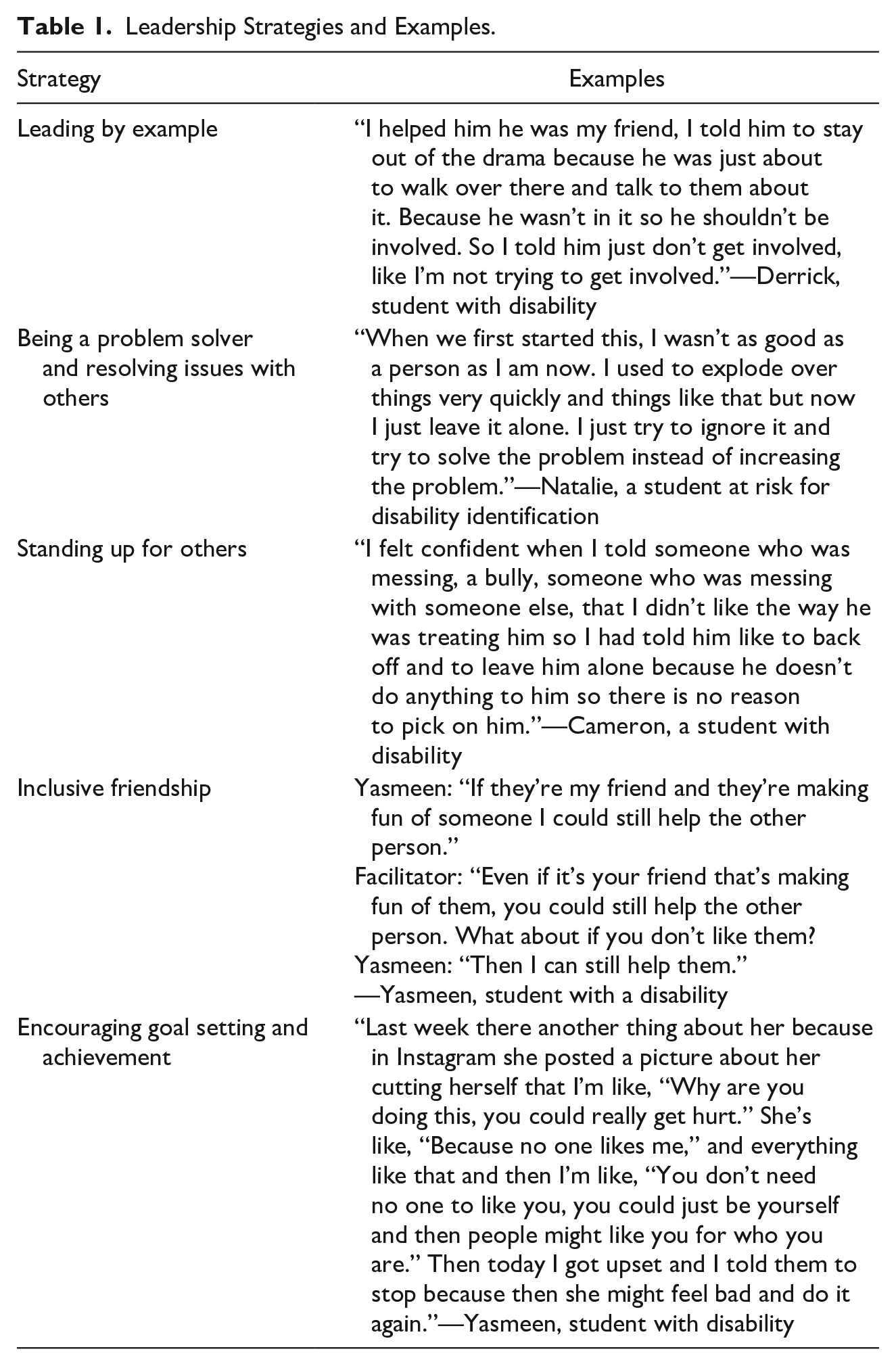
Five key themes within the context of leadership and leadership strategies were identified (Table 1). They include: leading by example; problem solving; standing up for others; inclusive friendship; and encouraging goal setting and achievement. Leading by example was defined by the authors as serving as a role model or example for others. Being a problem solver and resolving issues with others was defined by the authors as solving problems and being there for others when they needed it. Inclusive friendship was defined by the authors as being friendly and including others/being friends with others regardless of one’s background. When discussing leadership strategies in general, students notably wanted to “lead by example,” which sometimes included steering friends in the right direction or ignoring bad behavior in order to continue serving as a positive role model. This is exemplified in Anna’s (a student at risk for disability identification) admission to her facilitator:
Leadership Strategies and Examples.
I think it’s really great that you’re trying to steer your friends in the right direction. I think that’s pretty cool of you to do. I’m glad to hear that you too are still maintaining your boundaries with Ranisha, with people that are bringing you down.
One time, she even came to me. This was the time when I was here for Ranisha. She came up to me, she said, “You need to stop hanging around with Ranisha. She bad influence. I don’t want to get in trouble with you.”
This also tended to include ignoring what they perceived as bad behavior of other students in order to set a positive example through their own behavior. For Carlos, a student who identified that they used to be a role model for students in a negative way explained, “So, I can just like you know, do the right thing, just like, do the right thing so like the people that look up to me just like, they going to be like, ‘oh look he just got a compliment’ or like ‘oh look the teacher is treating him nice, let me try that’.” Of importance, several students particularly mentioned wanting to be a good influence or role model for younger kids. When asked about being a role model and giving advice to younger kids, Derrick, a student with a disability, shared, “I would tell them that the school work will get hard but never give up. If people are bothering you just ignore them and walk away. Don’t say nothing to them. Walk away, if they keep bothering you just tell the teacher. But if the teacher don’t do nothing about it you should tell a parent.”
Being friends or being friendly with a diverse group of people—including students of different races, ethnicities, socioeconomic status, and friend groups—was viewed as a leadership strategy. This was true for students who might not be friends or share a friendship history. Responses were focused on including others and being a good person by being friends with the majority of people, regardless of their background or if they were previously friends. This focus on inclusion and being friends with everyone rang true for Natalie, a student at risk for disability identification, who had a unique way of expressing her commitment to being friendly to everyone, regardless of their background or in this case, socioeconomic status.
All right, let’s see what’s on here, if you had a warning label, what would it say?
A warning label? Warning, I’m allergic to haters.
You’re allergic to haters? [laughs] That’s a good one, right? Just stay away? [laughs] Well everyone’s definition of a hater might be different, what is your definition of a hater?
People that dislike you because of something that you have, so jealousy. I just don’t like people that are like that because I feel like everyone is equal no matter what they have or what they don’t have. I feel like everyone is equal, from people that are homeless and then people like me. I just feel like we are all equal, the same.
Yes, you’re totally right. People are equal, right? We’re all humans. Nobody’s better than any other person. I think that’s very smart for thinking that way and knowing that already at such a young age. There’s sometimes adults that don’t even realize that, so I’m proud of you for that. You had mentioned something there about people that are homeless and then people like me. What’s the difference?
Okay, so people like me. I’m not rich, I can tell you that. I am not rich. People like me, people that go through situations that I have been through or people that have tough times in schools. From homeless people. People that are on the streets, they don’t have anywhere to live. I feel like we’re still equal in the same kind of way because both of our definitions are the same. We’re both humans, we’re both born in the same way, we both have a family. We both at least have clothes on our bodies.
For Natalie, being “allergic to haters” is synonymous with being friendly with others and having low tolerance for others who refuse to include others. However, there were limitations to the “being friends with everyone” mentality, especially when it meant choosing to be a good person. For example, Janaya explained that removing herself from the toxic environment of a friend group that was exclusive helped her to be more authentic and a better person. She summarized by saying, “[I] First help myself in order to be able help people. And then like be a better person.” This thinking stemmed from the realization that hanging out with the wrong group of girls prevented her from being her own person and helping others. She explained, “Like I’m starting to realize that when I was hanging out with the group of girls that I wasn’t being my own person. I was being a minion and one of them. The reason I stopped is because I wanted to be a better person and I wanted to help people. That’s my main goal in life, to help people.”
Serving as a “problem solver” who informs other students of how to be kind to one another in the moment, Natalie expressed her struggles with always being viewed in this light, even when she didn’t feel like taking on the role of a leader.
It sounds like people look at you as somebody who’s a problem solver?
Every school that I went to, it’s always been like that. I was like, “How?” Like even people that don’t even know me among other schools, they just come to me.
It seems like people do this to you quite often, they come to you when they have a problem because they trust you to help them either solve it, or at least listen to them, and that makes you feel good like they trust you?
I care about everybody. Even if there was a person that I don’t like to come to me to tell me something, I will still care enough to help them out with it because even if I don’t like someone, I won’t show them that I don’t like them, I’ll just be like [gesture], but in my head I’ll just be like, “Please get away from me.”
Similar to problem solving, some students specifically mentioned standing up for others as one strategy that they used. Mark, a student who reported defending his friends from a bully, explained, “I did something brave at recess, I think, a few weeks ago, when someone was messing with one of my friends and I told them to leave him alone and do—Finish doing what they were doing.”
Standing up for other students was also a frequently mentioned leadership strategy. Most notably, Carlos recounted confidently standing up to a bully: “I felt confident when I told someone who was messing, a bully, someone who was messing with someone else, that I didn’t like the way he was treating him so I had told him like to back off and to leave him alone because he doesn’t do anything to him so there is no reason to pick on him.” This practice of standing up for others was also present in how students dealt with managing their own emotions during conflict. For example, Ryan shares a story about delegating this leadership strategy to his older brother when his emotions were out of control.
Would you think most of the time you can keep your control when it comes to your emotions?
When my friends almost get into a fight, I just tell them to walk away and come with me.
You tell them to walk away and do they usually listen to you?
Yes, when we started our basketball game, this big kid was trying to fight me and my brother. He was in High School, and I kept telling him to leave us alone. He kept trying to mess with us and he had hit me, so I told my brother. My brother asked him, “Why you keep hitting my little brother?” My brother wasn’t going to do nothing because the kid was too little for him. My brother’s 17, the kid was 15 or so.
I think that was a really great thing that you do for your friends to help them out of difficult situations, because sometimes for anyone when we get angry sometimes it’s hard to control your anger. Would you say that that sounds about right?
Yes.
For you to be there as a support system for your friends that’s being a really great friend and I think that’s a good leadership quality, especially since you’re on a team. Teammates need to be there for their teammates.
The last leadership strategy identified from the data included encouraging others students to set and obtain goals (i.e., graduation). Natalie, a student who wanted to empower other students to achieve graduation shared a conversation with another student. She remembers saying, “‘Why do you think you’re going to be in the 41% that’s not going to be able to graduate?’ He was like, ‘I don’t know.’ I was like, ‘You shouldn’t put yourself down like that because you should encourage yourself to strive to be a graduate out of High School and even better, a graduate out of college.’” This realization and ability to be a leader for other students seemed to be a direct result of motivational interview sessions. Natalie shared, “When we first started this, I wasn’t as good as a person as I am now. I used to explode over things very quickly and things like that but now I just leave it alone. I just try to ignore it and try to solve the problem instead of increasing the problem.”
It is important to note that while most students recognized some aspect of leadership within their own actions or employed some leadership strategies in their interaction with others, this was not the case for all students. For example, one student, Vincent, struggled to define leadership, as well as see himself as a leader, despite the efforts of his facilitator.
Good leaders– If you use leadership intrinsically, constantly just doing the right thing and not telling people to do the right thing but they’re watching you do it. They’re going to look up to that and then they’re going to start doing that thing.
Sure.
Do you think you have those qualities?
No idea.
Do you think people at the school look up to you? Do you think they watch you at actions? Not even in school, at home, your siblings?
No, I don’t know.
Vincent’s answers were short and disengaged and continued to be so throughout subsequent sessions with his facilitator. Similar limitations of motivational interview-based programing will be discussed in the next section.
Social Conflict Management Strategies
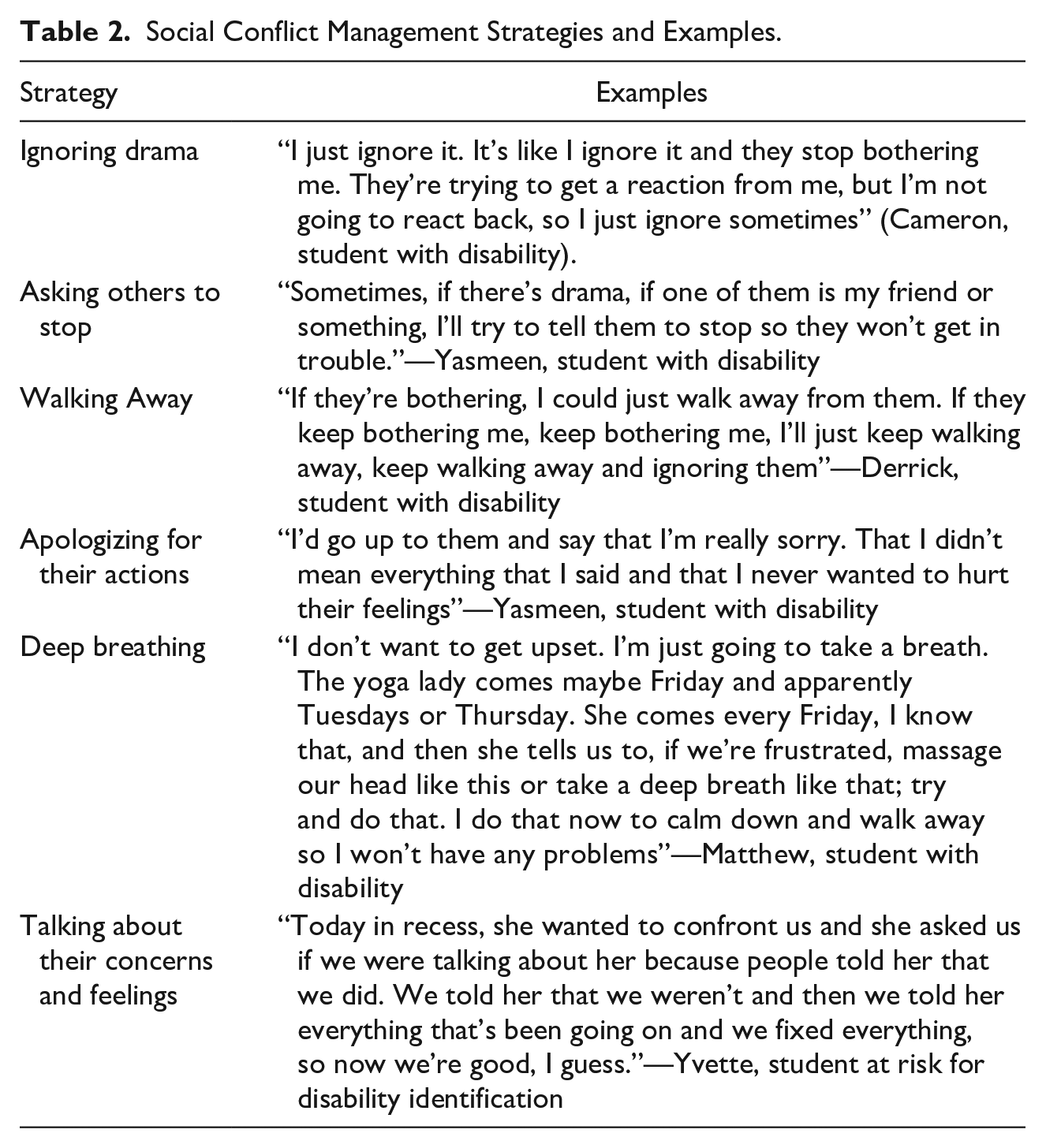
Students learned a variety of strategies through the Bulldog Solution Inc. “Peace Over Drama” leadership program to help them avoid or prevent instances of peer victimization and manage conflict. The students would often share a story about conflict that they experienced and then the counselor would work with the student to identify strategies to prevent similar conflicts in the future. One of the most common strategies present in the interviews was helping the students to ignore other students who are trying to start drama or a conflict. The students were also taught emotional regulation techniques that helped them to control their emotions and avoid drama. An excerpt from one student with a disability, Derrick, shows how these strategies helped to prevent conflict.
Yeah it sounds like that’s, it’s too much. I understand, it is a lot. So, when you’re frustrated, and that’s one of those things that makes you real frustrated, will counting, like breathing, like deep breathing with it, could that maybe, could that help you calm down?
I guess. It helps me calm down and it helps me refocus.
Absolutely.
It helps me calm
Absolutely. That’s a big deal. That’s really important. And then what could you do after that? What could you—somebody’s in your conversation and you’ve calmed yourself down a little bit, you’re able to refocus and concentrate, what can you do if they’re still in your conversation?
I can, I can walk away from it, walk away from the situation so I, so I won’t get in trouble. And he will probably get in trouble.
Yeah!
and I just walk away and did my work or, or anything.
The student was able to discuss multiple strategies that would help them avoid conflict in the future with the facilitator. The student realized that by using deep breathing techniques to help them regulate their emotions and by walking away from certain situations that they would be more likely to stay out of conflicts with their peers.
Some of the students also discussed how they were having problems with their teachers in class. The program staff worked with the students to apply the same drama strategies to reduce conflict with their teachers. In one interview, a student, Anna, was asked to identify strategies they could use to prevent problems with their teachers from happening again. Anna stated various strategies that she could use and said, “Think before I speak. Don’t talk back. Treat people the way I want to be treated.” The student’s response shows how the counselor helped the student to think about ways to change their behavior and avoid conflict with the teacher in the future. Additionally, the students were often frustrated by the rules that their teachers had and they sometimes felt that they were singled out unfairly. The following excerpt gives an example of conflict between one of the students and their teacher:
After lunch, they started an argument because she [Mrs. Rice] wasn’t listening to me. She was telling me that I had a hard time understanding. I was like, “That’s not true. You have a hard time listening.”
I was like, “You never listen to anything anybody else has to say. You want to get your point across and not hear anybody else’s opinions.”
I was like, “Just like Donald Trump.” Anyway, then that’s when she got mad.”
The student then goes on to discuss further with their facilitator:
It seems like you and Mrs. Rice may have gotten into it yesterday and you might’ve said-
I apologized yesterday, though.
You did apologize to her? What did you say? How did that all go down?
I told her, I was like, “I’m sorry for being disrespectful. I know it wasn’t right.” I was just telling her about stuff, and stuff.
About stuff? What kind of stuff?
We were just talking. It wasn’t anything important.
Did she accept your apology? Yes. A couple of things. I’m super proud of you for apologizing to her and recognizing that the behavior you took with her was not respectful.
Miss Davies helped me realize that.
This conflict was based on a misunderstanding between the student and the teacher. The conflict was eventually resolved, and the student apologized. The counselor helped the student to work on strategies in future sessions to avoid conflict with their teachers. There were many common strategies that were mentioned across the interviews. The following table lists each strategy and provides examples from the transcript (Table 2).
Social Conflict Management Strategies and Examples.
Motivational Interviewing and Progress Over Time
Aside from leadership strategies and social conflict management, the session transcripts suggest that students experienced changing behaviors and beliefs about themselves and others after attending the motivational interviewing sessions and activities with facilitators. Providing an example of the indirect influence the program had on his behavior, Derrick mentioned, “I do [tease people] sometimes, when they tease me I’ll just tease them back. That was before when I didn’t ignore them. Now I just ignore them now I don’t always respond to them and tease them back I don’t respond to them.” Another student, Natalie, shared a powerful reflection about her own personal growth over the time of the program. She explained, “When we first started this, I wasn’t as good as a person as I am now. I used to explode over things very quickly and things like that but now I just leave it alone. I just try to ignore it and try to solve the problem instead of increasing the problem.” On a different note, some students, like Matthew, expressed that while they had learned strategies from the motivational interviewing sessions, managing drama and conflict was still a challenge. Matthew shared, “Sometimes if I’m not triggered triggered, I’m going to just walk away. If it’s at the point I’m triggered and they put they hands on me and I don’t like it, I’m probably going to do something that I’m going to regret.” After mentioning regretful feelings for not being able to manage conflict in a positive manner, Matthew also provided an example of using a specific strategy that helped him in practice.
You also told me sometimes you rub your temples when you’re feeling stressed out or angry and it helps you. What about walking away from a situation? Did you ever walk away from a situation?
Yes.
Did that help?
Yes. It’s just that one time when I told you that I had with Gil, when I was sitting down talking to another friend. I didn’t have a thought to get up and just do anything. I did confront him about what he said, but I didn’t get up on my seat, though. I was still sitting down. All I said was, he didn’t really have to say anything because I wasn’t talking to him. He just came out of nowhere and said something that not at all had any part. He had no part in the conversation because I wasn’t talking to him or he wasn’t even near me. He’s like two tables away from me. I don’t even know why he said anything to me. I was not even talking to him at all.
That sounds like a frustrating situation to be in.
I got over it though. I don’t even care about it anymore.
This progress over time was also evident in students’ reflections about the program as a whole. For example, Jessica shared her learning about trying to be a positive person in order to become a positive person, as well as the influence of learned drama management techniques for bringing this learning to life.
What have you learned about yourself in the past eight weeks?
That you got to always be a positive person unless you try.
You can’t be a positive person unless you try.
You can’ be a positive person unless you try.
You can be a positive person unless you try. Like try not to?
Some people try not to be a positive person but if you try to be a positive person you will become a positive person.
Okay, good. If you try to be a positive person you’ll be a positive person. What else have you learned?
A lot of techniques to help you resolve drama and there’s always somebody to talk to.
Matthew and Jessica’s experiences serve as prime examples of application of drama management strategies and the influence motivational interviewing over the course of the 9-week program had on some of the participants, respectively. These elements will be discussed in the next section.
Discussion
Findings suggest that the presence of a trusted adult in the students’ lives as being meaningful for social, emotional, and academic development. In this study, these adults talked with students rather than telling them what to do. This allowed for open dialogue and collaboration enacted with equity. The relationship was nonhierarchical, even though the trusted adult was older than the student. The feeling of equity stemmed from the approach the trusted adult took with the conversations with the student. In addition, these conversations were voluntary, and a student was not forced to participate if he/she/they opted out. Furthermore, having an individual to have proactive dedicated conversations with about navigating peer relationships, developing skills as a leader and managing one’s emotions seemed to help students. It is important to note, however, that the facilitators for the program were outside facilitators coming into the school for this program. The literature points to the importance of students having a trusted adult they can count on who is regularly in the school building (Hawkins & Weis, 1985; Masten et al., 1990; Osterman, 2000). For SEL techniques like MI to have the most transformative effect it should be utilized by the full-time faculty of the school such as teachers or school counselors. When teachers and school counselors use techniques such as MI, they form and sustain better relationships with students which positively impacts psychological health and well-being.
The technique of motivational interviewing, while not new, is used as an intervention to translate skills into practice and to proactively provide students with tools to navigate challenging situations as opposed to waiting until an incident occurs and having to react or respond to that incident. Yet, the time it takes to do a motivational interviewing intervention with students is time that school-level staff, such as school counselors, often are not given. This creates a conundrum of then relying on outside facilitators for this type of intervention. However, this intervention has promise at improving overall mental health for students in school (Frey et al., 2011). More often, motivational interviewing has been used to help students with disabilities as they explore career options focused on increasing self-determination and critical consciousness as they develop various vocational skills (Sheftel et al., 2014). Sheftel et al.’s (2014) work focused similarly to this study on individuals with high incidence disabilities.
While some researchers have argued that motivational interviewing requires a certain level of cognitive ability and abstract reasoning (Lundahl & Burke, 2009), others have seen significant promise in this intervention even with individuals with intellectual disability (e.g., Frielink & Embregts, 2013; Hensel et al., 2007; D. F. McLaughlin et al., 2007; Taggart et al., 2007). Further, there has been promising research that has included motivational interviewing techniques for adolescents with diabetes (Channon et al., 2003). Motivational interviewing has also been dubbed a promising practice for school reform efforts, particularly when it comes to school-based mental health interventions (Frey et al., 2011). In this particular study, all students either had a documented disability or were identified by the school screening processes as being at-risk for disability identification. These results suggest that motivational interviewing could be an appropriate intervention to develop leadership skills and strategies to diffuse situations that might lead to behavioral issues in school.
These data showed that participants learned a variety of strategies to reduce their involvement in interpersonal conflict with their peers and teachers through the program. A few of these strategies included, walking away from situations that could lead to conflict with others, talking about their emotions with people they trust, and apologizing to others. These results indicate that these drama strategies may be a helpful component of SEL interventions for students with disabilities. Additionally, more research should be conducted to see if these drama strategies can be used to help reduce the high rates of peer victimization that students with disabilities face (Rose et al., 2009). Overall, these strategies seemed to be useful tools that helped many of the participants to reduce instances of conflict with their peers and teachers. Some of the participants discussed how they were able to successfully implement the drama and leadership strategies in their lives. Furthermore, some participants reported that they were able to resolve or avoid conflicts with their peers and teachers, which shows significant promise with the ability to translate these skills to other settings. During the last session, many participants said that they planned on continuing to use these strategies in the future.
Limitations
As with any research study, there were several limitations that are important to note. Specifically, the researchers who completed these analyses were not involved with the design of the motivational interviewing program or the curriculum design of the “Peace over Drama” leadership program. This had various implications—one of which is that there were not explicit questions in the interview protocol about disability, rather the focus was on developing their leadership skills. Related, we were also not the interviewers, so we were not able to ask probing or follow up questions of the students who participated. Other minor limitations included: changes in meeting schedules because of testing, field trips, or student absences. Similarly, lack of consistency in location and availability of meeting spaces was also a challenge, which might have influenced program implementation. Some students had a stronger rapport with their interviewer than others. Related, it is possible that characteristics of the interviewer such as gender or race may have affected the rapport the students had. For the most part, the interviewers stayed the same throughout the duration of the program, which was a strength. However, some interviewers were more skilled than others in terms of being able to ask follow-up questions and the perceived comfort level of the student with the interviewer. This is a common limitation with teams of interviewers. However, all interviewers were trained by Author 5 and the interviewers participated in team-debriefing meetings to reflect on the interview process and make improvements. Another layer of this rapport was that many students looked up to the interviewers as their personal counselors or leaders which could have influenced the way they responded to questions—potentially holding back in some cases or sharing more than you would expect. A benefit of this study and this program was the ability to witness the growth over time of the participants with 9 weeks of touch points with the students, however, it is more difficult to quantify the growth over time without regular or specific quantitative measures at specific time points. This could be a rich area for future research to use these findings to design a more expanded experimental study at scale with this intervention.
Implications for Practice
This study suggests that motivational interviewing is a promising approach to help students with disabilities or who are at risk for disability identification to develop SEL competencies that are consistent with their long-term goals and core values. Although MI is a technique taught in counseling graduate programs, many school counselors struggle with having access and time to effectively implement this technique with students. School counselors are well positioned to be a trusted adult to students and to implement MI. School administration should consider the amount of time school counselors are involved in non-counseling duties which would prohibit them from having time to implement these types of interventions with students. Further, there may be other community members outside of the school building who could be trained in MI techniques such as coaches, clergy, or counselors from the community.
Conclusions and Future Directions
This study presents empirical evidence and some support for motivational interviewing as an appropriate intervention strategy for students with disabilities and/or at risk for disability identification to develop social emotional learning skills including leadership skills and strategies to diffuse complex peer-to-peer situations in school. From a prevention science lens, this study yields promising results in particular for students with disabilities who are known to be at greater risk for bullying and victimization and often are neglected in leadership skill development programs. Future research ought to consider students with disabilities with higher support needs to explore how the motivational interviewing technique could be adapted or modified for this subpopulation. Additionally, a randomized controlled trial of this program may be useful to further test the efficacy of this promising intervention. Moreover, future studies should examine which aspects of this program were most effective in helping the students to make positive changes over time. Furthermore, longitudinal work to follow these students beyond one grade level would be beneficial to better gauge the magnitude of change, however, having multiple weeks’ worth of data on from these students throughout the school year was helpful to see the growth and development of these complex skills.
Footnotes
Acknowledgements
This work was completed when Forber-Pratt was a faculty member at Vanderbilt University. We would like to thank the staff from Bulldog Solution, Inc., who served as facilitators for this program under Dr. Kortney Peagram’s leadership: Michael Althouse, MA, Katrina Perry, MA, John Harris MA, and Alison Lueder, PhD
Declaration of Conflicting Interests
The author(s) declared no potential conflicts of interest with respect to the research, authorship, and/or publication of this article.
Funding
The author(s) received no financial support for the research, authorship, and/or publication of this article.
