



Abstract
Mindfulness is increasingly found in many educational settings in the United Kingdom, but existing research has focused primarily on clinical efficacy or implementation issues, rather than sociological interests. This article draws on data from the ‘Mapping Mindfulness in the UK’ study to help explain the successful growth of mindfulness in education, by exploring the discursive strategies through which practitioners construct, promote and solicit support for the practice among policymakers and educational leaders. The analysis highlights the significance of certain authorities or epistemic capitals, and logics of ‘scientisation’, for positioning mindfulness as a credible and legitimate practice for educational contexts, yet also reveals competing discourses and alternative conceptualisations. In doing so, it extends theories of ‘scientisation’ by explicating the role of ‘harder’ and ‘softer’ forms of psychology within these processes. The research makes original contributions to sociological understandings of mindfulness and education, while offering new insights on broader theories concerning science and society.
Introduction
Mindfulness is increasingly found in many educational settings in the United Kingdom, including schools and universities (Swain, 2016), often taking the form of organised initiatives, either within, or in addition to, formal curricula, delivered by existing staff or visiting practitioners. This situation reflects wider global trends, whereby ‘mindfulness education programmes have reached millions of children and teens in over a hundred countries on five continents’ (Kucinskas, 2018: 86), as well as developments across other institutional fields in the United Kingdom and internationally, such as healthcare, business, politics and criminal justice, within which mindfulness maintains a growing presence (Creswell, 2017; Wilson, 2014). It also aligns with significant levels of public engagement, with 15% of adults in Britain (almost 8 million) reporting they had learnt how to practise mindfulness meditation in a 2018 survey (Simonsson et al., 2021). While the practice is employed for a variety of purposes, in education, its popularity is often attributed to concerns about declining levels of wellbeing and increasing mental ill health among the young (Ecclestone and Hayes, 2009).
The expansion of mindfulness in UK education has been supported by several policy developments, such as the ‘Mindful Nation UK’ report, published by the Mindfulness All-Party Parliamentary Group (2015), which recommended a greater role for mindfulness in education, as well as the new Curriculum for Wales, which explicitly mentions ‘focusing attention’ and ‘regulating emotions’ in the Health and Wellbeing section of the school guidance (Welsh Government, 2020). However, as Hailwood (2020) points out, the growth of mindfulness in UK education has not been in the form of government-led interventions but can instead be understood as a kind of ‘grassroots’ movement that comprises a range of public, private and voluntary sector organisations and networks involved in teaching, training and advocacy. For example, some associations have published strategies for the further development of mindfulness in education (e.g. Mindfulness Initiative, 2020).
Despite the growing presence of mindfulness in educational contexts, sociologists have given it relatively little attention, with existing research focusing primarily on clinical efficacy or implementation issues (e.g. Carsley et al., 2018; Montero-Marin et al., 2022; Wilde et al., 2019). This article draws on data from a major research study, entitled ‘Mapping Mindfulness in the UK’, to help explain the successful growth of mindfulness in education (broadly defined), by exploring the discursive strategies through which practitioners construct, promote and solicit support for the practice among policymakers and educational leaders. The analysis highlights the significance of certain authorities or epistemic capitals, and logics of ‘scientisation’, for positioning mindfulness as a credible and legitimate practice for educational contexts, yet also reveals competing discourses and alternative conceptualisations. In doing so, it extends theories of ‘scientisation’ (Drori and Meyer, 2006; Meyer et al., 1997) by explicating the role of ‘harder’ and ‘softer’ forms of psychology within these processes. The research makes original contributions to sociological understandings of mindfulness and education, while offering new insights into broader theories concerning science and society.
An emerging sociology of mindfulness
Mindfulness can be defined as ‘moment-to-moment, non-judgemental awareness’, and as an innate, universal capacity that all humans possess (Kabat-Zinn, 2005: 58). It is typically framed as a self-help technique for the pursuit of a variety of goals, including stress relief, pain reduction, treatment of anxiety and depression and enhanced concentration (Cho, 2016). In educational settings, students are most likely to encounter mindfulness through directed activities that introduce them to certain meditation techniques. These can take a variety of forms, from a few minutes of focused breathing at the start of a learning session, to a more substantial programme of training in contemplative practices such as body and sense awareness, walking meditation and mindful yoga. However, understandings of mindfulness are typically quite diverse, especially given its Buddhist roots (Wilson, 2014). While many proponents emphasise the secular and evidenced-based nature of the practice (Sun, 2014), others highlight its potential for supporting personal growth and development (Harrington and Dunne, 2015). As such, the term ‘mindfulness’ captures a spectrum of meanings, from the harder (neuro-)scientific and clinical to the softer therapeutic and spiritual.
The multiplicity of meanings attached to mindfulness have been central to a recent wave of sociological studies that seek to examine how, and for what purposes, the practice is constructed within particular social contexts (e.g. Islam et al., 2022; Sauerborn et al., 2022; Stanley and Kortelainen, 2019; Wiles, 2023). This emerging body of work moves beyond ideological etic critiques, which theorise about the possible role of mindfulness in supporting neoliberal and capitalist structures through individualised technologies of self-governance (e.g. Forbes, 2019; Purser, 2019), to focus instead on empirically led emic analyses of how mindfulness is conceptualised on the ground. These studies typically identify several competing discourses or paradoxes associated with the practice: is mindfulness about wellbeing or performance, (neuro)science or embodied spirituality, the individual or the collective, contemplation or action, aimlessness or optimisation, authenticity or emotional manipulation? Such diverse understandings may co-exist within spaces of mindfulness training, helping to account for its widespread popularity (Sauerborn et al., 2022). However, Islam et al. (2022) argue that the ambiguous nature of these oppositional discourses may ensure continued support for mindfulness while simultaneously enabling dominant meanings to subtly assert themselves in the service of certain institutional and managerial agendas.
A notable contribution to this new body of research is the work of Kucinskas (2018), which describes the rise of mindfulness in the United States and documents the various tactics used by ‘insider’ professionals to build legitimacy for the mainstreaming of meditation practices, by adapting them for, and embedding them within, institutional fields such as business, law and the military. By emphasising the scientifically proven benefits of mindfulness, and downplaying its spiritual underpinnings, practitioners were able to shape their offerings in ways that best targeted the needs and interests of specific professional audiences. In the case of schools, for example, a concerted effort was made to emphasise the ‘brain science’ of mindfulness over its links with Buddhist meditation, as well as its potential application for learning and classroom management. The growing institutional presence of mindfulness, and the associated increase in attention from the scientific research community, both worked to attach credibility to the practice among the public, further fuelling its popularity. Here, certain constructions of mindfulness were essential not only for positioning the practice within institutions but also for facilitating its initial access to those same institutions, a theme taken up by this present study but with a more in-depth focus on the education sector.
Scientisation, psychology and epistemic capital
Many of the studies discussed above highlight the centrality of science in constructions of mindfulness in education and other institutional fields. Scholars of world society theory (e.g. Meyer et al., 1997) have highlighted the growing significance of scientific discourses, practices and institutions for global cultures and norms that are shared across national boundaries, including in realms of life that were previously viewed as having little relevance to science. Drori and Meyer (2006: 50) show how this process of ‘scientisation’ is evident through a range of international trends, from the growth of national science ministries and policies to the proliferation of science-based inter- and non-governmental organisations. The influence of science has also expanded beyond the traditional boundaries of science-orientated institutions and professions, to permeate a range of social organisations and citizen groups, which increasingly engage with science to support and justify their activities. Drori and Meyer (2006: 63–66) argue that the cultural logic of scientisation has had a number of effects on dominant models of organisation within society, including the expansion of professionalisation (e.g. managerialism, strategy, training, certification), rationalisation (e.g. standardisation, categorisation, auditing, compliance) and actorhood (e.g. identity formation, voice, human resources, corporate responsibility).
Science can be understood as possessing significant epistemic authority and is frequently evoked as a rhetorical strategy in parliamentary debates around the world to attach credibility to policy proposals and to justify decision-making (Qadir and Syväterä, 2021). For example, Karjalainen et al. (2021: 492) point to the role of scientific evidence in positioning mindfulness as a ‘form of knowledge or expert authority’ in the corporate workplace (see also Kucinskas, 2018). Alasuutari (2018) conceptualises authority as relational, in that it relies on the extent to which others recognise its worth, and as a type of capital, in that it can be viewed as cumulative. ‘Epistemic capital’, as he defines it, can be understood as a cross between Bourdieu’s (1990) concepts of symbolic capital and social capital, through its capacity to signal power and authority within a specified field. Alasuutari (2018) goes on to identify four kinds of authority or epistemic capital – ontological (respected views of reality or truth such as science or religion), moral (accepted principles, norms, rules or laws), capacity-based (power, wealth or ability to affect change) and charismatic (prestige attached to famous individuals or organisations). The concept of epistemic capital offers a useful tool for interrogating how practitioners construct, promote and solicit support for mindfulness in education. It can help identify the different authorities and ‘dominant discourses’ (Foucault, 1980) practitioners may draw upon to make their case for adoption of the practice, but also highlights how they themselves can attract legitimacy through possession of epistemic capital. Furthermore, it provides for the possibility of conversion to other types of capital (e.g. economic, social and cultural) in support of the promotion of mindfulness in educational settings.
A strand of science with particular authority in the education sector is psychology, which has had a profound effect on the evolution of schooling systems around the world. Psychological understandings of children’s cognitive development have influenced the grouping of students by age, the establishment of an educational ‘norm’ and provision for ‘special education’, as well as the nature of curriculum and pedagogy (Burman, 2007). While writers such as Illouz (2008) and Madsen (2019) discuss the psychologisation of social life and the increasing influence of therapeutic cultures across a range of institutional sectors and over citizens’ everyday lives and identities, the significance of psychology in education also continues to grow. The linking of educational goals with hi-tech neuroscience is arguably one of the hardest, most objective articulations of psychology in education, despite the many issues raised with this emerging relationship (e.g. Bowers, 2016). Yet, softer more subjective forms of psychology also play an increasing role in educational settings, such as the teaching of positive thinking, and the provision of counselling and mediation schemes (Ecclestone and Hayes, 2009). This hard/soft duality reflects the contested nature of psychology itself, including debates over which topics of enquiry can be considered suitably ‘scientific’, and the porous boundaries between the academic and applied discipline and wider therapeutic cultures and movements (Richards, 2009). As explored further in the sections below, psychologically influenced constructions of mindfulness (of both the harder and softer kind) add an important extra dimension to practitioners’ use of epistemic capital to position the practice as credible and legitimate for educational contexts.
Sample and method
The aim of this article is to help explain the successful growth of mindfulness in education (broadly defined), by exploring the discursive strategies through which practitioners construct, promote and solicit support for mindfulness among policymakers and educational leaders. The featured data forms part of a larger study, entitled ‘Mapping Mindfulness in the UK’, which took place between 2017 and 2021 and aimed to provide a detailed account of the ‘who’, ‘what’, ‘where’, ‘why’ and ‘how’ of UK mindfulness provision, across a variety of sectors, and evaluate this in relation to wider socio-cultural trends. The project included a nationwide online survey of 768 self-defined, trained teachers of mindfulness, distributed through practitioner networks, along with 82 in-depth online interviews (20–75-minute duration, averaging 45 minutes) and 4 online discussion groups (comprising 4–7 members and lasting 110–115 minutes) with selected mindfulness teachers, trainers and advocates. Ethnographic fieldwork also took place in 28 settings across the United Kingdom, including larger-scale public conferences and networking events and smaller-scale private classes and training courses, representing a range of sectors. Fieldwork lasted anywhere between 1.5 hours and 8 days at each setting, and observations focused primarily on the actions of mindfulness practitioners rather than their client groups.
Informed consent was sought from all survey respondents, interviewees, discussion group members, event organisers in larger-scale public settings and mindfulness teachers in smaller-scale private settings (where researcher presence was also publicised to attendees/students, as well as parents/carers in the case of school-based fieldwork). All participants have been attributed pseudonyms to maintain anonymity. The study was granted approval from the ethics committee at Cardiff University’s School of Social Sciences.
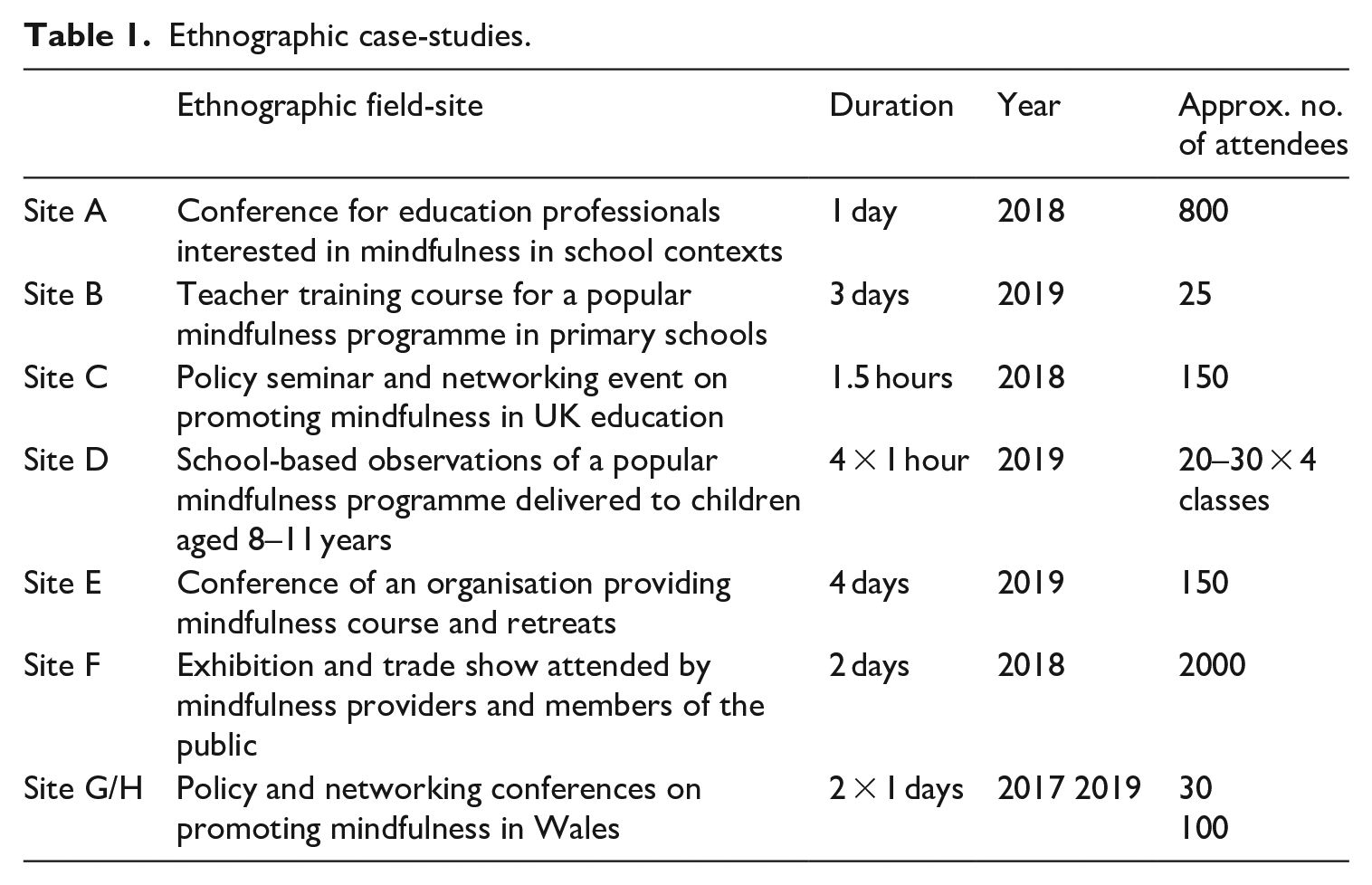
The present article draws on a subsection of the larger dataset, focusing on material that holds relevance for the education sector (schools, colleges, universities, childcare and youthwork). This includes qualitative data from the interviews, open-ended survey questions, and one of the discussion groups that focused specifically on education, supported with brief reference to 8 of the ethnographic case-studies that were most relevant to education, as detailed in Table 1. It also includes quantitative data from a sub-sample of survey participants who reported that they had taught mindfulness in the education sector (see below for details). Quantitative data was analysed descriptively, while qualitative data was analysed thematically, through an interpretivist framework. Quotes from participants and ethnographic notes, and figures from the education survey subsample, are presented throughout the subsequent sections to illustrate the points made.
Ethnographic case-studies.
The interview sample of 82 mindfulness teachers, trainers and advocates comprised 44 women and 38 men, working in a variety of fields, including health, psychology/therapy, coaching, education, workplace training, religious/spiritual settings, politics/policy, technology, social work/addiction, criminal justice, mindful products, social change initiatives and with the general public. The education-themed discussion group comprised six participants, including four women and two men, all of whom were leading figures in the mindfulness and education sector, working with schools, families, higher education and youth work. As such, participants referred to a range of different forms of mindfulness teaching and types of educational setting and had various levels of personal involvement with mindfulness in education.
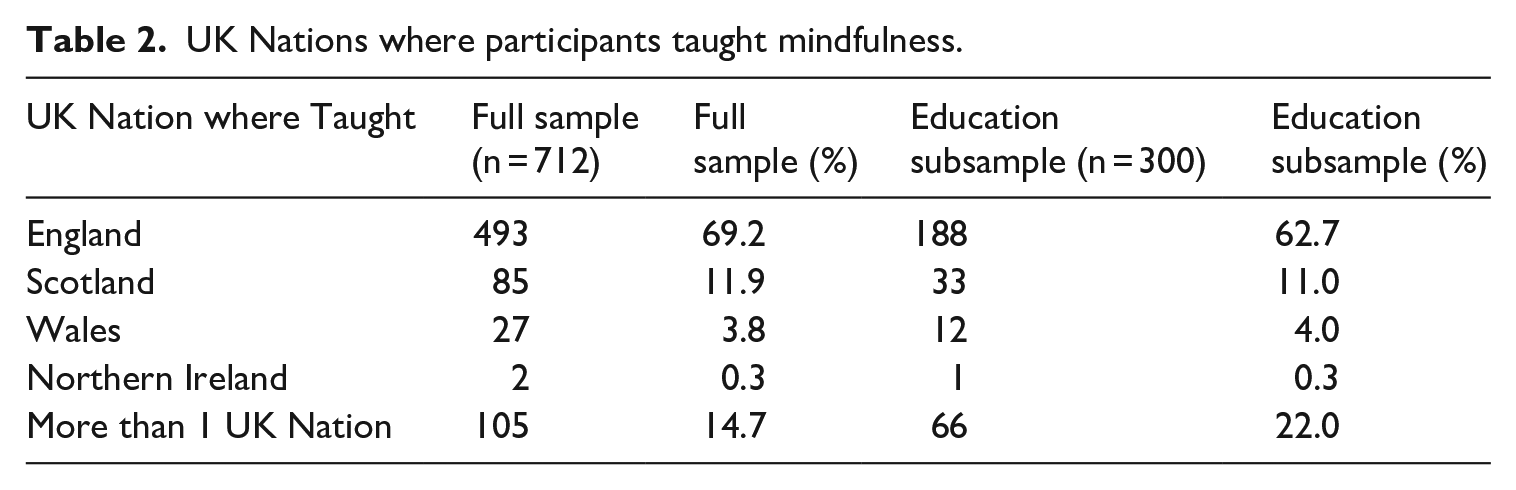
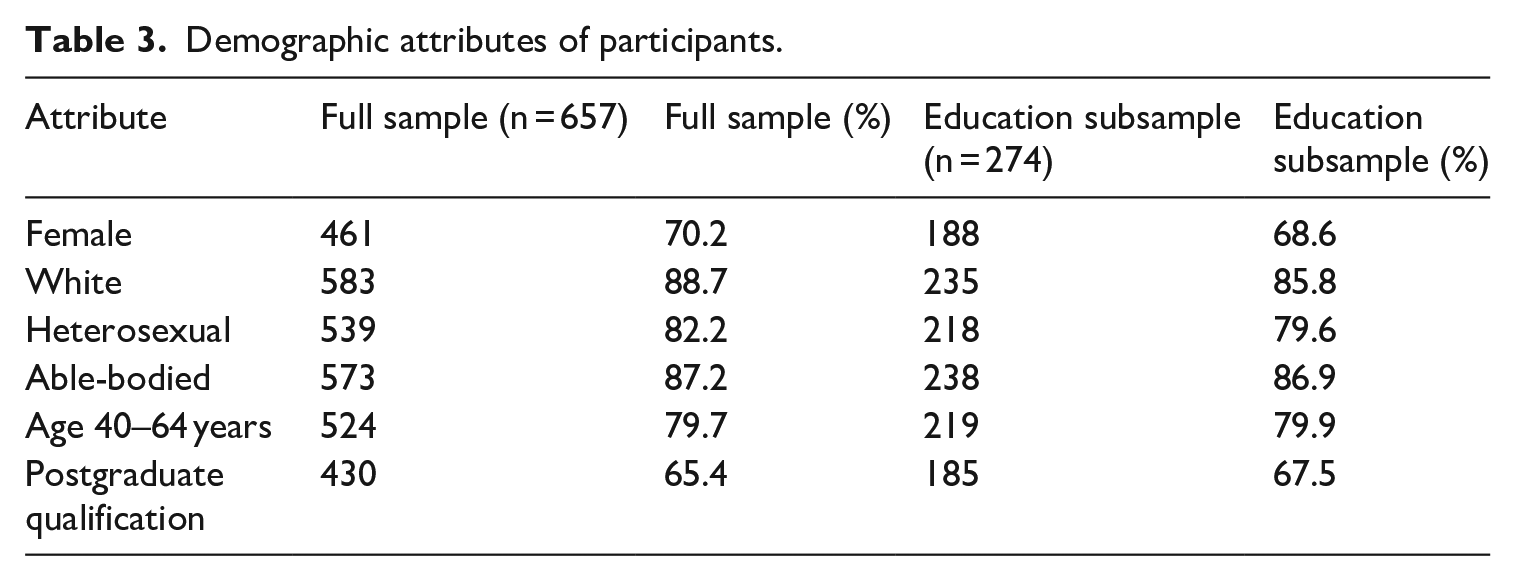
Of the full survey sample, 41.7% of respondents (303 of 727) reported that they had taught mindfulness in the education sector (alongside other sectors in many instances) and 21.6% (166 of 768) had trained in programmes that were specifically education or childhood and youth related. These included courses run by the Mindfulness in Schools Project, 1 such as dot B, Paws B and dot B Foundations, as well as Youth Mindfulness 2 (including Youth Mindfulness Kids). Other courses included The Present, 3 Myriad Teachers’ Programme, 4 Mindful Schools 5 and Mind Up. 6 Both the full survey sample, and the ‘education survey subsample’ (the 41.7% who reported teaching mindfulness in the education sector) included representation from across the United Kingdom. The demographics of both the full sample and the education subsample were predominantly female, white, heterosexual, able-bodied, middle-aged at 40–64 years, and highly educated to postgraduate level. Please see Tables 2 and 3 for further details about the full survey sample and education subsample. 7
UK Nations where participants taught mindfulness.
Demographic attributes of participants.
Expansion and promotion
At the time of data collection, mindfulness in UK education was experiencing considerable expansion. Many participants expressed support for this, and some highlighted the growth of specific mindfulness programmes or organisations. One interviewee pointed to increased levels of institutionalisation for mindfulness in public services such as education, comparing this favourably with other countries: I do travel around the world offering mindfulness and certainly in terms of the actual sort of integration of mindfulness into our mainstream health and education context [. . .] that is definitely not happening in the same way in other countries. (Interview Participant 26)
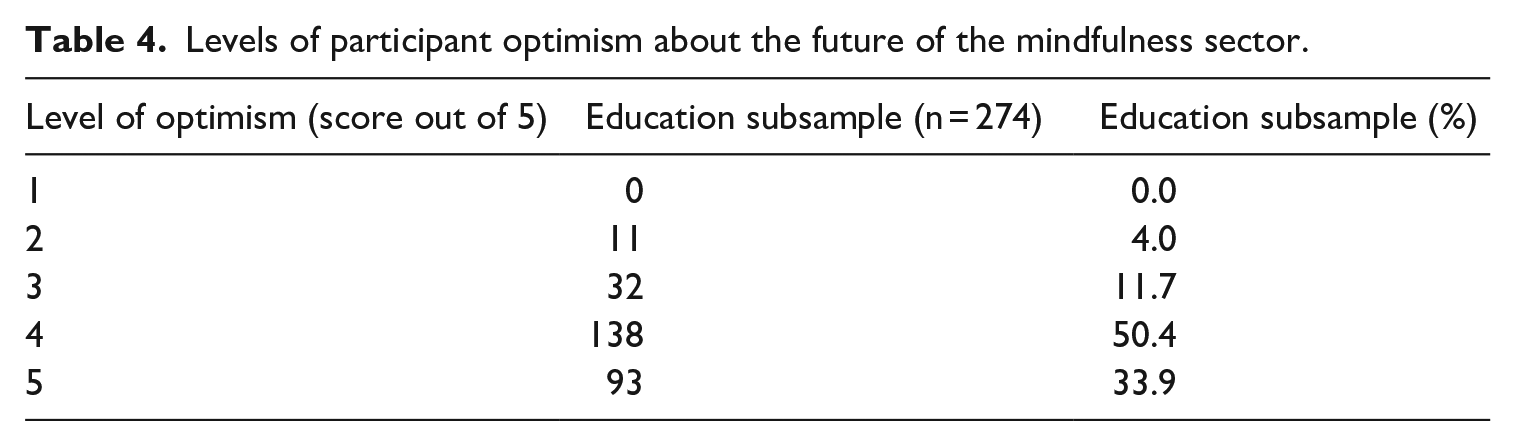
The above developments were celebrated in talks at conference and policy events such as Sites A and C. They were also reflected in answers from the education survey sub-sample, with 84.3% (231 of 274) selecting 4 or 5 out of 5 when scoring their level of optimism about the mindfulness sector’s future (see Table 4).
Levels of participant optimism about the future of the mindfulness sector.
Many participants felt there was a need and potential for further development of mindfulness in UK education but noted there were considerable barriers in attracting interest from education providers. Significant problems included lack of funding, curriculum time and institutional priority, all frequently mentioned by survey and interview respondents and presenters at conference and policy events such as Sites A and C: The main challenges are around time and resource. [. . .] If you’re talking to an individual teacher, they’re thinking: How am I going to find the time? And who’s going to pay for it? And then if you’re talking to school leaders about implementing it within their school, they, surprisingly, are also thinking: Where am I going to find the time and who’s going to pay for it? (Interview Participant 38)
Promoting mindfulness to policymakers was thus viewed as essential for gaining political and financial support for its continued expansion in education. Some participants talked about policy advocacy work they were involved with or aware of. Wales and Scotland were often held up as offering special potential for this due to recent favourable curriculum or policy changes (e.g. at Sites B, C, G and H): In Scotland, I know there’s a group of mindfulness trainers, practitioners working with Parliament, and they’re going to be delivering mindfulness for the MSPs. [Members of the Scottish Parliament]. And I think if that’s successful, then we’ll see what happens. You know, because then they might be like, okay, we want this in our schools, and we want to fund us. (Interview Participant 53)
The value attributed to advocacy was also reflected in the quantitative data. In the education survey subsample, 14.9% (45 of 303) reported they were involved in mindfulness-related advocacy activities (see Table 5).
Levels of participant involvement in mindfulness-related activities (multiple options available).
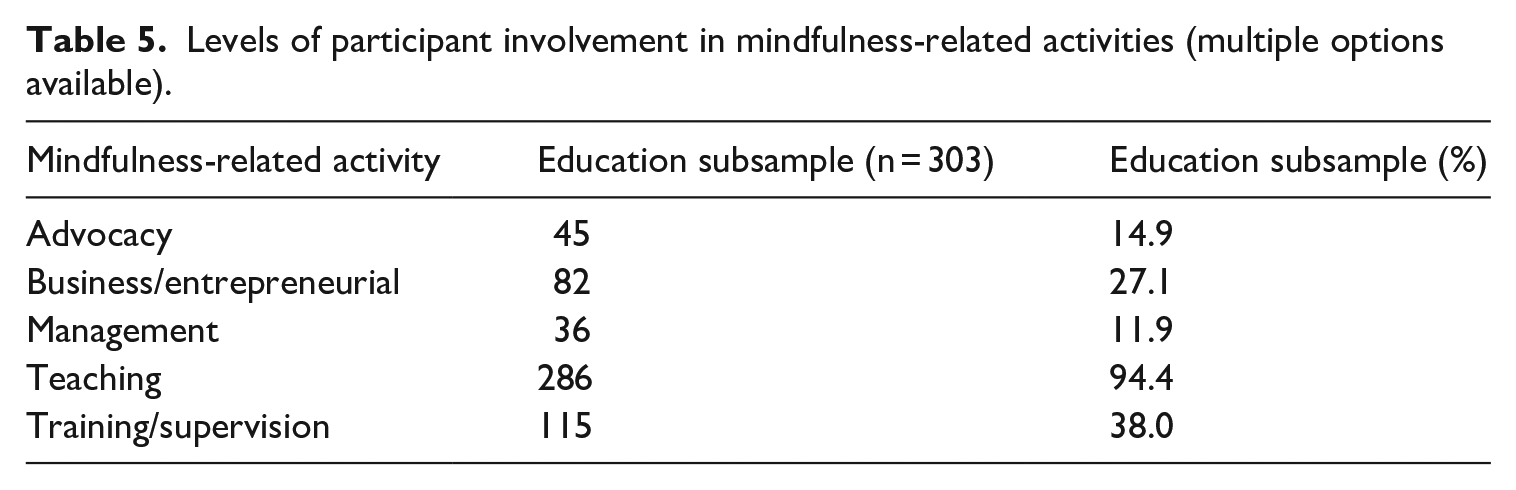
As potential adopters of mindfulness, educational leaders and organisations were also a significant target audience. Individual pioneers and entrepreneurs were frequently highlighted for their development of programmes and innovations that might appeal to this group (e.g. at Site B). Of the education survey subsample, 27.1% (82 of 303) reported involvement in mindfulness-related business or entrepreneurship (see Table 2). However, innovators could encounter challenges in an increasingly crowded ‘market’, necessitating a range of strategies to try and ‘sell’ mindfulness to education providers: I found an organization also that is struggling in a landscape which is increasingly busy with commercial newcomers and high-tech stuff [. . .] That means actually we need to do more to be speaking with schools to promote what we do and how it’s different from the other products, for want of a better word, that are on the market. (Interview Participant 38)
In summary, the data highlighted a desire among practitioners to promote mindfulness to policymakers and educational leaders to aid its further expansion. The next section considers the discursive strategies used to achieve this, specifically the various authorities drawn upon to construct mindfulness in ways that might convince audiences of its merits.
Authority and legitimacy
Following Alasuutari’s (2018) work on epistemic capital, participants drew on several authorities to promote the value of mindfulness in education, the most basic of which was capacity-based. The idea that mindfulness had the power to ‘make a difference’ to children and young people was a central theme in the data, and the various aspirations that practitioners held in this regard are the focus of a complementary research article, which explores these issues in more detail (Hemming, 2023). In summary, participants collectively argued that mindfulness in education could provide a range of diverse benefits to both individual students (including improved wellbeing, concentration, educational performance, emotional regulation and human flourishing), and the wider community (including stronger relationships, kinder citizens and a more progressive society).
Claims concerning many of the purported benefits summarised above also drew on ontological authority, primarily of the scientific kind. There was wide recognition among participants that scientific and psychological research showing the effectiveness of mindfulness for enhancing wellbeing and facilitating learning could lend credibility to the practice and help to promote it among policymakers and educational leaders (see also Karjalainen et al., 2021; Kucinskas, 2018). Conference and policy events including Sites A, C, E, F and G typically included presentations on the science of mindfulness in education and the positive outcomes reported in relevant research studies. The teacher training course (Site B) drew extensively on science and research to frame the programme as an effective intervention, and scientific content and understandings (such as ‘brain science’) also featured heavily in teaching and promotional materials: Trainer 2 [. . .] highlighted the research section on the website’s online hub, which contained a range of useful articles that could provide evidence for the benefits of mindfulness. Trainer 2 said that [organisation name] took scientific research very seriously and had a specific research email address. (Fieldwork Site B, Wednesday, 3 April 2019)
Some participants were, or had been, engaged themselves in scientific research projects and networks about mindfulness or wider wellbeing initiatives, attaching further authority and epistemic capital to their professional profiles. Several interviewees mentioned the benefit of conducting longer term studies to test the impact of mindfulness in educational contexts. It was clear that many participants wished to convey a strong interest in harder (neuro)scientific and clinical understandings of mindfulness, foregrounding these over softer therapeutic or spiritual meanings, and reflecting some of the wider epistemological debates in psychology introduced earlier in the article: I’m really keen on the neuroscience behind it as well. [. . .] I always like to link mindfulness into a lot of Paul Gilbert’s work about, you know, fight, flight, freeze and reactivity and responsibility and stuff like that. And it makes sense, and I really wish somebody told me that when I was a teenager. (Interview Participant 48)
Working alongside this scientific narrative was a related discourse of secularism. To establish the scientific credentials of mindfulness and to help it gain acceptance in educational settings, it was seemingly important to distance the practice as much as possible from its Buddhist roots. Many of the participants emphasised how they maintained a secular approach to their mindfulness teaching to avoid any concern or opposition from educational institutions and stakeholders about religious or spiritual influences, as has been previously documented in the US context (Brown, 2019). This also had the effect of enhancing their own authority and epistemic capital within the field of education: It’s really important that this is secular mindfulness. This is absolutely based on science and clinical tests. And it’s absolutely nothing to do with any kind of religion. And it’s really important for me personally, that elements of mindfulness and contemplative traditions are present in all of the major religions. But I can imagine that that might be a concern if you were a particularly religious person, and you didn’t understand that this is secular. (Interview Participant 38)
This commitment to a secular approach was also illustrated in the education survey subsample, with 53.9% (152 of 282) reporting that their professional engagement with mindfulness was primarily secular, with a further 33.3% (94 of 282) reporting it was at least partly secular, for example, in settings where this was most appropriate (see Table 6).
Nature of participants’ professional engagement in mindfulness.
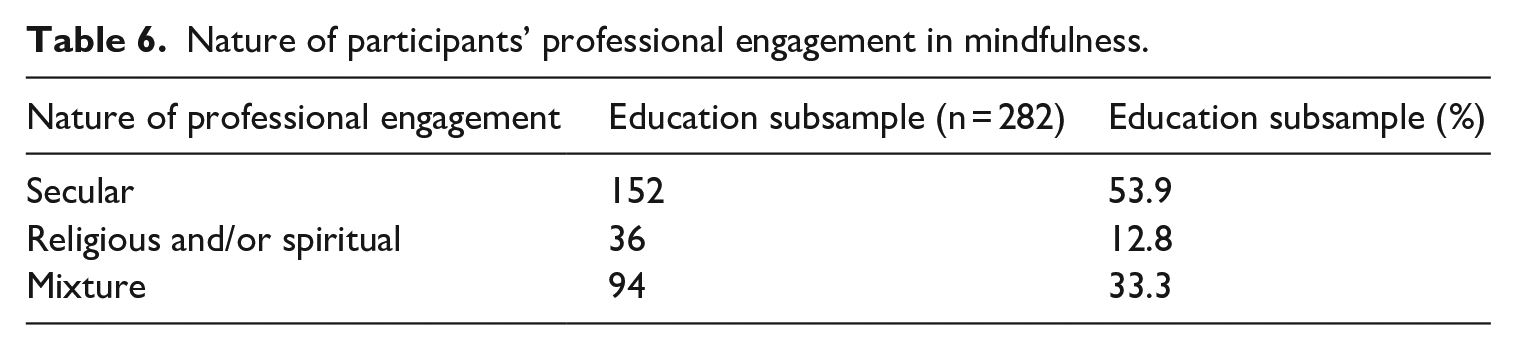
Despite the prominence of science and secularism in participants’ constructions of mindfulness in education, there was evidence that some also considered it to be rooted in alternative ontologies of a more spiritual nature. These aspects may have been deliberately downplayed to facilitate the successful promotion and uptake of mindfulness among education providers, but they nevertheless maintained a subtle presence. Of the education survey subsample, 12.8% (36 of 282) reported their professional engagement in mindfulness was spiritual and/or religious in nature (see Table 6). As discussed earlier, this was also reflected in practitioners’ aspirations for mindfulness in education, some of which focused on human flourishing and wider social change (see Hemming, 2023). Such discourses were, however, relatively marginalised (at least publicly) and one participant expressed regret that mindfulness in schools was not well positioned to fully engage with its deeper ethical and Buddhist roots: It concerns me that certainly the mindfulness in schools stuff [. . .] it’s sort of between a rock and a hard place really, you know. You want to make this tool available to all kinds and conditions of people and in order to do that, you know, you mustn’t scare the horses, you mustn’t make it look too intimidating or too demanding. On the other hand, that comes with a cost [. . .] to lose the moral or the ethical aspect of mindfulness, you know, that’s right there at the heart of Buddhism. (Interview Participant 78)
Alongside capacity-based and ontological authorities, participants also drew on two other types of epistemic capital in their accounts, the first of which was moral authority. A strong moral component was evident in calls for attendees at conference and networking events such as Sites A, B, C and H to act as advocates and ‘spread the word’ about mindfulness in education to help maximise its availability to children and young people, so that the ‘next generation’ would have the opportunity to benefit from it. There was also a particular moral concern to make mindfulness in education more available to different communities. Some participants were optimistic that the practice was already becoming more accessible to a wider demographic, including through programmes offered to specific groups such as working-class families and parents with disabled children. However, there was considerable support for increasing its presence in state-maintained schools, including by funding mindfulness training for teachers: I would love to see more funding in education [. . .] and youth agencies, as well as charities to enable the growth of mindfulness provision and to improve the accessibility for those who are underprivileged. My concern is that those taking up training and courses are largely, well-off, middle class and white. (Survey Respondent 658)
Charismatic authority also played a role in the construction of mindfulness as a suitable practice for educational settings. At events where mindfulness in education was promoted (e.g. Sites A and C), well-known and authoritative speakers took centre stage to champion its purported benefits and further inspire attendees. In these same contexts, testaments or confessionals, reminiscent of the increasingly therapeutic and reflexive nature of public culture (Illouz, 2008) and reflecting ‘softer’ psychological epistemologies, were often used to attach further legitimacy to claims about the value and efficacy of mindfulness. Personal accounts from individuals who had gained from the practice were central to the proceedings at Site A, where children, young people, parents, teachers and school leaders all shared their moving stories of transformation and overcoming hardship through mindfulness: The conference continued and testaments were given from people who said mindfulness had changed their life [. . .] This was usually due to experiences of stress, anxiety, depression or trauma. The people involved were able to deal with their fear and return to their ‘authentic selves’. (Fieldwork Site A, Saturday, 16 June 2018)
In summary, participants drew on and made use of several types of epistemic capital to construct mindfulness in education as a credible practice, including ontological, capacity-based, moral and charismatic authorities. At the centre of these discursive strategies was the dominant narrative of science, with its strong emphasis on research evidence, clinical terminology and a secular approach. Science and scientific expertise represented a key ontological authority employed and accumulated by practitioners to distance mindfulness from its Buddhist roots and render it more acceptable to policymakers and educational leaders. While alternative therapeutic or spiritual ontologies were somewhat marginalised in favour of (neuro)scientific and clinical ones (and their association with hard psychology), softer forms of psychology nevertheless featured in the form of personal testimonials at events, representing a key form of charismatic authority that could also help to legitimise the presence of mindfulness in education.
Quality and authenticity
In addition to the discursive strategies discussed above, practitioners were also aware of the need to establish and maintain mechanisms to ensure quality, especially if policy makers and educational leaders were to be persuaded of the value of mindfulness. Participants pointed out that while there was a busy landscape of ‘mindful products’ that could be offered in education, not all of these were of the same quality: So increasingly, there are you know, a million different mindful books, mindful colouring, mindful this, mindful that, that people can introduce as interventions in school, you know, but there’s also apps and there’s a much broader understanding of wellbeing as a catchword. [. . .] And so, I sort of try and have to think, how do I explain how that fits into what I now understand mindfulness to be? (Interview Participant 38)
Given the central importance of science to the field, emerging approaches to quality assurance could fruitfully be understood through the cultural logics of scientisation, as outlined by Drori and Meyer (2006). Starting with ‘professionalisation’ and ‘rationalisation’, the weight attached to ‘proper’ training for delivering mindfulness in education was discussed widely at conference and networking events such as Sites A and C and reflected in participant responses. Training could also be viewed as another mechanism by which practitioners could enhance their personal epistemic capital through increased knowledge (ontological authority) and competence (capacity-based authority): If you’re going to ask a government or ministers to adopt mindfulness, say for the prisons or for the schools or that, they will want to know that there’s a certain level of experience. I think the person introducing it [should] have good intentions and has been trained properly. (Interview Participant 74)
Qualifications and use of well-established programmes were viewed as essential for establishing mindfulness as suitable for educational settings. At the teacher training course (Site B), the emphasis given to quality was very evident in many of the activities and materials provided, with attendees discouraged from sharing them outside of the formal sequence of sessions. Of the education survey subsample, 38.0% (115 of 303) reported that they were currently involved in providing training and/or supervision (see Table 5), and a few interviewees also discussed the importance of professional supervision and development for mindfulness teachers: I think they need some sort of supervision and development. [. . .] It’s just like any teacher, so you know, a teacher in a mainstream school is observed and given feedback, [. . .] but in a more nurturing, mindful way. Teachers need to develop. (Interview Participant 29)
While the harder logics of professionalisation and rationalisation were clearly important, quality was also viewed through a softer, more subjective lens, which somewhat aligned with the ‘actorhood’ dimension of scientisation. For many participants, just as valuable as formal training for ensuring quality among teachers, was authentic experience and the maintenance of a regular personal meditative practice. Previously recognised as a key source of authority within meditative communities (Arat, 2016), the notion of authentic experience emphasises empiricism and firsthand experiential knowledge of the self, evoking attempts by early psychologists to observe themselves scientifically through techniques of introspection (Stanley and Kortelainen, 2019). Authentic experience could also be understood as a type of ontological epistemic capital, albeit of a softer and more embodied kind than the formal training discussed earlier: The quality of teaching needs to remain high in order that people attending mindfulness courses are taught by teachers who have their own personal practice and can teach authentically. (Survey Respondent 384)
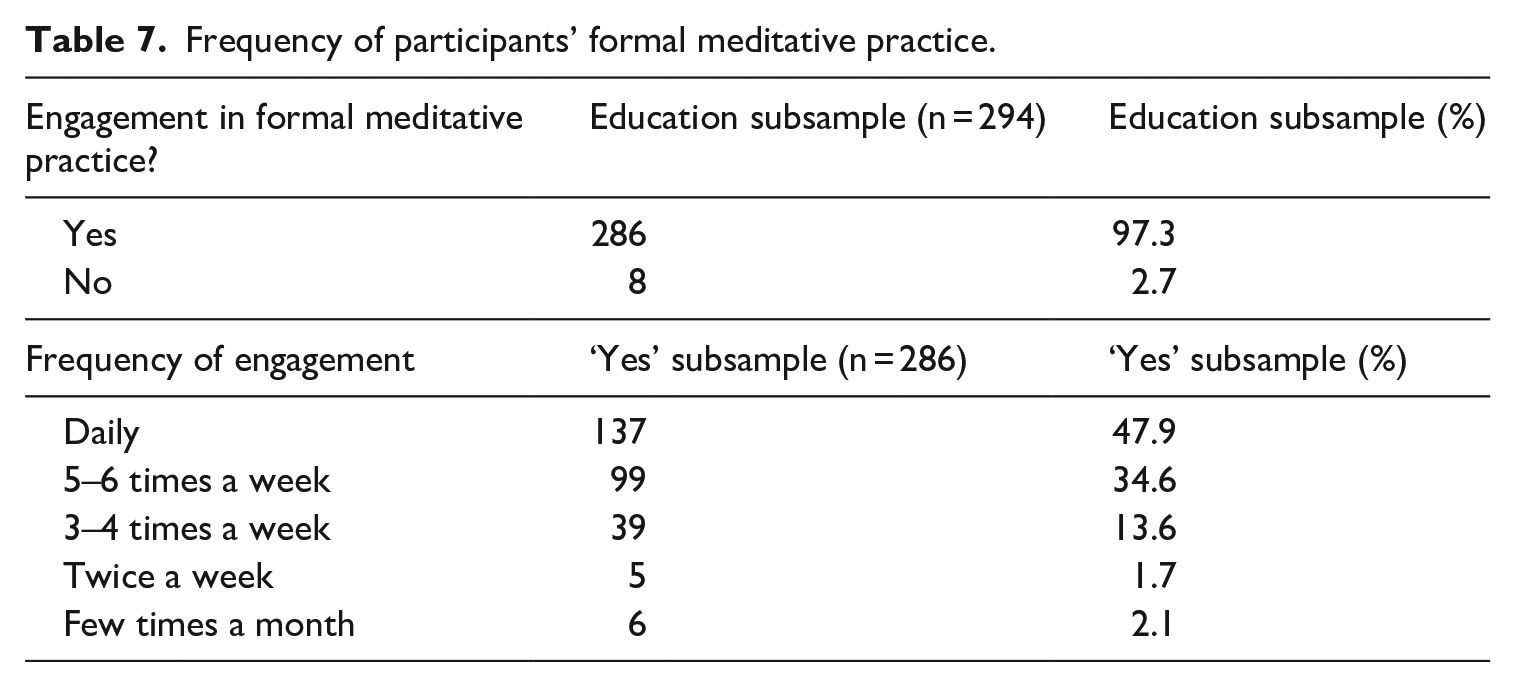
The importance of authentic experience and maintaining personal practice was continually emphasised at the teacher training course (Site B) so that, in the words of one of the facilitators, ‘children can hear the music and not just the words’. In this respect, participants claimed to ‘walk the talk’, with 97.3% of the education survey subsample (286 of 294) reporting that they followed a formal practice of sitting meditation. From this specific group, 47.9% (137) indicated that they engaged in formal practice on a daily basis, 34.6% (99) on 5–6 occasions a week, and 13.6% (39) on 3–4 occasions a week (see Table 7).
Frequency of participants’ formal meditative practice.
There was widespread concern among participants that lack of regulation, training and supervision might enable those without their own personal practice to teach mindfulness in ways that did not uphold the kind of quality they felt was necessary. Without adequate preparation and authentic experience, it was felt that teachers would find it difficult to embody mindfulness in an educational environment, as it was not comparable with delivering other curriculum subjects. This could result in ‘watered down’ content, ‘inappropriate’ activities, false impressions about the efficacy of mindfulness and/or safeguarding concerns if students raised sensitive personal issues during meditation sessions. Such practices threatened to undermine the credibility and epistemic capital that ‘good’ practitioners had strived to accumulate: A lot of schools just play videos. And they say ‘oh, we’re doing mindfulness, we play this video off YouTube’. And they haven’t got any training or really any real understanding of what mindfulness is. I do think that is a risk actually in the field. [. . .] A lot of schools are just, uh, just using free resources and having no training. (Interview Participant 64)
Despite the above concerns, there was recognition that it could take a lot of time and money to train individuals and educators to teach mindfulness. These drawbacks had led to some innovative solutions that aimed to reduce prices and make the training more accessible to a wider cohort of people, such as online group-based courses. Most participants also agreed that it could be difficult to strike a balance between ensuring professionalisation and rationalisation, while also avoiding putting up barriers to authenticity and the development of innovative approaches to mindfulness in education: I do think it’s really important to have some way of assessing, okay, how much does this person really understand what they’re teaching? How much do they embody it in their own practice? And, you know, and then how do you do that in a way that doesn’t put too many roadblocks in the way and doesn’t create an organization that is just there to make money? (Interview Participant 51)
In summary, the logics of scientisation were very apparent in participants’ accounts of the emerging mechanisms used to establish and maintain quality in the field of mindfulness in education. These included training, qualifications, supervision, and well-established programmes, corresponding with professionalisation and rationalisation, but also practitioners’ authentic experience and creative innovation, aligning more with actorhood. Although the former relied on a harder and more rational understanding of quality, the latter made space for a softer, more reflexive imagining, but both offered the opportunity for practitioners to enhance their epistemic capital. Collectively, these mechanisms worked to attach further credibility and legitimacy to mindfulness in education, thus helping to promote the practice to potential audiences.
Discussion and conclusion
This article has drawn on findings from the ‘Mapping Mindfulness in the UK’ study to help explain the successful growth of mindfulness in education (broadly defined), by exploring the discursive strategies through which practitioners construct, promote and solicit support for mindfulness among policymakers and educational leaders. Participants were optimistic about the growth of mindfulness in UK education but identified several barriers to its continued expansion, including lack of funding, curriculum time and institutional priority. Promoting the practice to policymakers to gain their support, as well as developing new offerings for education providers through innovation and entrepreneurialism, were therefore viewed as essential. The study utilised data from multiple sources, and employed theories of scientisation, psychologisation and epistemic capital to make sense of how practitioners approach this task, allowing for an analysis that makes original contributions to sociological understandings of mindfulness and education, while also offering new insights on broader theories concerning science and society.
Practitioners’ discursive constructions of mindfulness drew on several epistemic capitals to highlight the credibility of mindfulness to potential audiences, while simultaneously enhancing their own professional legitimacy through the accumulation of some of these capitals. Central to this process was the ontological authority of science and an emphasis on research evidence and clinical terminology, along with a related discourse of secularism. Other authorities or epistemic capitals included capacity-based (purported benefits of mindfulness), moral (improving access for all social groups) and charismatic (well-known figures and individual testimonials). The cultural logic of scientisation was evident in mechanisms developed to maintain quality in the field, including professionalisation and rationalisation (training, supervision and well-established programmes), and actorhood (authentic experience). These emerging standards also had the potential to further develop practitioners’ own levels of epistemic capital, perhaps helping to explain why participants expressed widespread commitment to them and concern about individuals who did not adhere to these expectations.
The emphasis that practitioners placed on science in their constructions of mindfulness was not a random occurrence but reflected a specific agenda. This was to demonstrate the potential effectiveness of mindfulness in helping providers to meet various educational goals such as enhancing wellbeing and facilitating learning among students, while distancing mindfulness from its Buddhist roots, to reassure providers that it was a suitable practice to implement in educational settings. The employment of epistemic capital framed practitioners as scientific experts, rather than spiritual seekers, enabling them to portray mindfulness as credible and legitimate. This in turn facilitated the conversion of epistemic capital into other types of capital, such as economic (funding for mindfulness interventions), social (support from policymakers and educational leaders) and cultural (development of mindfulness-based educational programmes and resources) (see Bourdieu, 1986). Similarly, the foregrounding of mechanisms such as professionalisation and rationalisation revealed a desire among practitioners to closely align mindfulness with an education sector already replete with similar logics of scientisation, particularly concerning the value of ‘evidence-based practice’ and the ongoing training and development of education professionals, enacted through decades of neoliberal education policy (Ball, 2021).
Although science could clearly be described as a ‘dominant discourse’ among study participants, contributing to a powerful ‘regime of truth’ in the field of mindfulness and education, it would be wrong to claim it was all encompassing. Foucault (1980) argued that dominant knowledges and worldviews are usually accompanied by alternative, more peripheral discourses, and this was certainly the case here. While most participants focused on the scientific basis of mindfulness in education, a few expressed the desire for a more spiritual application of the practice that was closer to Buddhist ontologies. Similarly, while many participants emphasised the need for more regulation to ensure quality in the field, a few were concerned this could stifle authenticity, creativity and innovation. Scientific constructions of mindfulness in education were not, therefore, ubiquitous and left space for alternative imaginings.
The study’s findings confirm the epistemic value attached to science in globalised societies such as the United Kingdom (Meyer et al., 1997), given its widespread authority in the field of mindfulness and education, and thus offer considerable support for theories of scientisation. The irony of this situation is that the scientific evidence base for mindfulness in education is arguably less conclusive than some advocates claim. Purser (2019) has argued that the efficacy of mindfulness in some scientific studies has been overstated due to problems with methodology and positive reporting bias. The recent large-scale MYRIAD study (see Note 4), found that a universal approach to school-based mindfulness training did not result in positive impacts on young people’s mental health or wellbeing (Montero-Marin et al., 2022). Even commentators more sympathetic to mindfulness in education concede that existing research has only found moderate benefits in certain areas with more research required in others (e.g. Roeser et al., 2023).
This article also offers new insights into the way that psychology can operate as part of scientisation processes. Reflecting epistemological tensions within the discipline of psychology itself, psychologisation relates not only to the influence of harder forms of psychology like neuroscience, but also softer forms such as therapeutic cultures. While science is typically associated with modern imperatives such as rationality, reason and objectivity, the presence of softer psychologies also makes space for postmodern sensibilities, such as identity, subjectivity and reflexivity. Psychology therefore acts as a vehicle for discourses and practices that might otherwise be viewed as inconsistent with the ethos and philosophy of scientisation to be incorporated into the project. It works paradoxically with scientisation against scientisation, to enable certain softer aspects of human behaviour to maintain value within a scientised context. In the case of mindfulness in education, this allowed subjective factors such as the charismatic authority of testimonials, and the quality assurance of authentic experience, to co-exist alongside other more objective authorities and logics. These multiple types of scientisation reflect internal struggles within scientific forms of legitimation, and the study of mindfulness offers a unique viewpoint on this wider dynamic, given its somewhat ambiguous positioning in relation to science. Future studies on scientisation in different contexts should attend further to the way it may operate through multiple forms, reflecting the diverse nature of science itself.
The epistemic agility of mindfulness, represented in simultaneously hard and soft, objective and subjective, and rational and reflexive constructions, and supported through reference to different psychological authorities, can perhaps provide further explanation for its success and popularity in education. Given the current obsession with ‘objective’ measurement of performance and attainment in UK education (Ball, 2021), mindfulness sits quite easily alongside existing institutional discourses and practices, while also potentially appealing to those professionals who value more subjective educational goals, such as student welfare and the development of character and creativity. These findings further contribute to the emerging body of sociological work on constructionist approaches to mindfulness (e.g. Islam et al., 2022; Sauerborn et al., 2022), which highlights the power of multiple ambiguous and oppositional meanings for ensuring support for the practice across a range of institutional settings. As mindfulness expands its global reach beyond the United Kingdom and the United States, there is need for further interdisciplinary, multi-sectoral and cross-national comparative research, which also foregrounds such critical, emic analyses.
Footnotes
Acknowledgements
Credit goes to Elena Hailwood, Richard King and Steven Stanley for their contributions at earlier stages of the project. Sincere thanks to the many research participants who made this study possible, and to the anonymous referees for their helpful comments on earlier drafts of the article.
Data accessibility statement
The data underlying this article is not available because participants of this study did not give written consent for their data to be shared publicly.
Funding
The authors disclosed receipt of the following financial support for the research, authorship and/or publication of this article: Gratitude is extended to the Leverhulme Trust for funding the research (Grant RPG-2017-250).
