



Abstract
This research aimed to examine the association between body-worn camera (BWC) footage and the substantiation of use-of-force allegations within the New York Police Department (NYPD) by analyzing data from the New York City Civilian Complaint Review Board (CCRB) between August 2019 and December 2022. The results of the regression models indicate that BWC footage significantly increases the probability of substantiating allegations, particularly for victims from racial minority groups, suggesting that BWCs can help address racial disparities in police oversight. These findings emphasize the importance of BWCs in improving transparency, accountability, and fairness in police investigations, with particular benefits for minority victims, and call for continued efforts to enhance cooperation between the CCRB and the NYPD in the oversight process.
Keywords
Introduction
Police use-of-force policies, tactics, and practices have come under intense scrutiny from the public and the media over the past decade due to the killings of young African Americans in various cities across the U.S. The deaths of Michael Brown, an 18-year-old in Ferguson, Missouri, and Eric Garner, a 41-year-old in Staten Island, New York, ignited major protests in both cities over the killing of unarmed African American men by police in the summer of 2014 (Cobbina, 2019). These tragic events and the resulting demonstrations gained national prominence and fueled a heated debate about the fairness and effectiveness of American policing. High-profile incidents of excessive force in various U.S. cities have drawn attention to racial disparities in police interactions with citizens and renewed calls for comprehensive reforms in policing, particularly in use-of-force policies and practices (Freilich & Chermak, 2022; Smith, 2022).
The American public quickly began discussing the use of body-worn cameras (BWCs) in policing as a potential solution for preventing and documenting police misconduct (Jennings et al., 2014). Although many police departments across the U.S. were already experimenting with and using BWCs, these incidents of police killings accelerated their adoption. In response to widespread public demand, there has been a greater emphasis on using BWCs to document interactions between officers and citizens, with the aim of regulating behaviors and reducing misconduct. This approach seeks to improve relations between the public and the police by decreasing the likelihood of inappropriate actions or excessive force (Headley et al., 2017). With advancements in video recording technologies and the ease of managing recorded data, many police departments across the U.S., including the NYPD, began to adopt these cameras.
Previous research on police use-of-force and BWCs has yielded mixed findings. Several randomized controlled trials and quasi-experimental evaluations have assessed the effects of BWCs on citizen complaints regarding inappropriate police behavior and misconduct during interactions with officers (Braga et al., 2022). While some studies reported reductions in police use-of-force outcomes for officers using BWCs (Ariel et al., 2015; Braga et al., 2018; Hedberg et al., 2017; Jennings et al., 2015; Mesa Police Department, 2013), others found no differences at all (Headley et al., 2017; Peterson et al., 2018; White et al., 2018; Yokum et al., 2019). Lum et al. (2020) concluded in their systematic review that the use of BWCs does not significantly impact most officer or citizen behaviors, showing inconsistent effects on officers’ use-of-force, arrest activities, and proactive engagements, as well as on citizens’ calls to police or resistance against officers. The systematic review indicated that limiting officers’ discretion to turn BWCs on and off might help reduce police use-of-force, though further evaluation is required. Additionally, while BWCs may lead to a decrease in citizen complaints against officers, the reasons for this decline remain unclear (Lum et al., 2020). Previous research on BWCs has mostly focused on their usage by police officers and the effects on officers’ use-of-force practices and citizen complaints (Lum et al., 2019), but limited research has examined the role of BWC footage in use-of-force complaints and investigations. This study addresses that gap by assessing whether BWC footage improves the quality and fairness of use-of-force investigations. By focusing on substantiation outcomes, the study evaluates whether BWCs provide stronger evidentiary support to uphold civilian complaints and whether this effect varies across racial groups, particularly for those who have historically had more complaints and a more contentious relationship with police.
To respond to the call for further empirical research and contribute to the existing body of work on this topic, this study aims to provide empirical findings on the relationship between the use-of-force and BWCs by analyzing citizen use-of-force allegation data related to NYPD officers after the full implementation of BWCs across NYPD units in 2019. Specifically, this study examined the effects of BWC footage on use-of-force allegations within the NYPD by analyzing data from the New York City (NYC) CCRB between August 2019 and December 2022.
Literature Review
NYPD and BWCs
The NYPD was one of the first major police departments to implement BWCs in 2013, following a federal court ruling that found police had improperly targeted minorities with their stop-and-frisk program (Whitehurst, 2023). In August 2013, a federal judge mandated that the NYPD implement a 1-year BWC pilot program in five precincts to address its unconstitutional stop-and-frisk practices (Floyd et al. v. City of New York, et al., 2013). Before this BWC program began, Eric Garner was killed in July 2014 by an NYPD officer’s chokehold in Staten Island. Garner’s death, recorded by bystanders’ cellphones, gained national and international attention. On December 3, 2014, a grand jury decided not to indict the officer, leading to widespread non-violent protests across the city (Walz et al., 2017).
After the pilot study of the BWCs, the NYPD initiated one of the largest BWC programs in the U.S., beginning with a pilot program and expanding to all precincts and specialized units in three phases from April 2017 to August 2019, involving more than 24,000 officers (NYPD, 2025). Phase 1 began in April 2017, providing cameras to approximately 1,300 officers working evening shifts in 20 precincts for an impact study. Phase 2 expanded coverage to all shifts and precincts, including transit districts and public housing areas, adding over 18,000 officers, and was completed by March 2019. Phase 3 was completed by August 2019, providing approximately 4,000 officers in specialized units such as Emergency Services, Highway Patrol, and commanding executives. The NYPD (2025) official website states that BWCs are designed to capture recordings of police enforcement, investigative actions, and other interactions with the public. The website also notes that BWCs offer an immediate and unbiased record of these encounters, allow for supervisory review of events, promote accountability, and help ensure that interactions between the public and the police are lawful and respectful.
The NYPD (2020) Patrol Guide instructs that uniformed NYPD officers are required to activate their BWCs in situations involving potential crimes, such as disturbances or weapon incidents, and during patrols inside the NYC Housing Authority (public housing authority in NYC) and privately owned buildings, with cameras remaining on from entry until exit. Officers must also activate BWCs for adversarial public interactions, engagements with emotionally disturbed persons, or suspected criminal activity. Additionally, cameras should be activated during searches, vehicle stops, checkpoints, arrests, and while issuing summonses (except for parking violations when the vehicle owner or operator is not present).
Braga et al. (2021) studied the NYPD BWC pilot program using a cluster-randomized controlled trial design. They found that BWCs on officers led to a reduction in citizen complaints but an increase in stop reports compared to officers without BWCs. Additionally, stop reports from officers with BWCs were more likely to document unlawful stops, frisks, and searches, particularly involving younger minority males. These results suggest that BWCs may enhance officers’ adherence to NYPD directives for documenting all citizen stops. In follow-up research, Braga et al. (2024) assessed the impact of BWCs on NYPD housing officers and found that BWC deployment reduced excessive enforcement, citizen complaints, and use-of-force between 2015 and 2019.
Theory and Research Hypotheses
Police Use-of-Force and BWCs
Engel (2008) argues that the lack of consistency in how police use-of-force is conceptualized and measured makes it difficult to interpret research findings. Law enforcement agencies provide different definitions of coercive actions within use-of-force continuums. The International Association of Chiefs of Police (IACP) defines police use-of-force as the “amount of effort required by police to compel compliance by an unwilling subject.” While police use-of-force is commonly associated with physical force, it can also include verbal commands from officers intended to direct individuals’ behavior. In the U.S., the Fourth Amendment outlines constitutional standards for police use-of-force, as established in two landmark Supreme Court cases: Tennessee v. Garner (1985) and Graham v. Connor (1989). The Court has ruled that any force used by police to seize an individual must be “objectively reasonable” based on the circumstances. This assessment requires balancing the individual’s rights under the Fourth Amendment with the government’s interests in using force (Logel, 2018).
BWCs have been proposed as a technological solution to address issues in police-community relations by increasing police legitimacy through greater transparency, accountability, civility, and adherence to the law in interactions between police and citizens (Braga et al., 2021; Ready & Young, 2015). Two major theories, deterrence theory, and self-awareness theory, provide justifications for the implementation of BWCs to influence officer behavior during interactions with citizens and enhance police legitimacy regarding citizen complaints of police misconduct. First, deterrence theory offers a framework for understanding how specific interventions or technologies can influence behavior by creating a sense of deterrence in police-citizen interactions (Akers et al., 2016; Kula & Guler, 2016; Lum et al., 2017). When considering BWCs, deterrence theory proposes that officers and citizens weigh the pros and cons of using these cameras and behave more carefully, adhering to the law and impacting citizens’ trust and willingness to collaborate with law enforcement. Various studies have explored the concept of deterrence regarding BWCs and their impact on police officer behavior (e.g., reduced use-of-force, citizen complaints, and lawsuits) and community perceptions. Ariel et al. (2015) investigated whether BWCs reduce police use-of-force and citizen complaints by comparing incidents during shifts when officers were equipped with cameras to those without. Results showed that the likelihood of force was about twice as high in control conditions, and complaints dropped significantly from 0.7 per 1,000 contacts to 0.07 per 1,000 contacts when cameras were in use, suggesting a positive impact of BWCs on police accountability and supporting deterrence theory. However, Ariel et al. (2016) found that BWCs did not have a significant overall effect on police use-of-force, and officers wearing cameras were more likely to be assaulted during their shifts compared to those who were not wearing them.
Researchers have also introduced the idea of the deterrence spectrum to explain why BWCs may have a positive effect or lead to adverse outcomes in aggressive police-public encounters. This spectrum considers how BWCs can de-escalate or escalate such encounters (Ariel, Sutherland, Henstock, Young, Drover, et al., 2017). The impact of BWCs on deterring incidents depends on the discretion exercised by officers. When officers have a high level of discretion, the deterrent effect may weaken, potentially leading to increased use-of-force. Conversely, when discretion is limited, the deterrent effect is strengthened, resulting in less forceful police responses. The range of the deterrence effect can vary from minimal to maximum, and there is a possibility of over-deterrence or even police withdrawal at the extremes (Ariel, Sutherland, Henstock, Young, & Sosinski, 2017). In a 2023 study in Philadelphia, researchers quantified citizen and police reactions when being recorded by BWCs. The findings varied based on factors such as officer and citizen habits as well as the situation (Wood et al., 2023). The study also found that paying attention to officers’ discretion, providing comprehensive training on BWC use, and implementing technological solutions are crucial factors in maximizing the positive impact of BWCs.
BWCs are designed to discourage the escalation of criminal activities by recording interactions between law enforcement officers and the public from the officers’ perspective. They also aid in prosecuting offenders (Petersen et al., 2023). The visible cameras and the understanding that actions are being recorded communicate clearly to those involved that they are under scrutiny. BWCs foster greater self-awareness than closed-circuit television, dashcams, and everyday smartphone cameras, resulting in more composed behavior from suspects and officers (Ariel et al., Ariel, Sutherland, Henstock, Young, & Sosinski, 2017). Farrar (2013) examined the impact of BWCs on police officers’ behavior by systematically recording interactions and analyzing their effects on the use-of-force, self-awareness, compliance, and deterrence theory in a large randomized-controlled field experiment with the Rialto Police Department. The study found a more than 50% decrease in use-of-force incidents compared to control conditions, along with nearly 10 times more citizen complaints in the year prior to the experiment. Moreover, Ready and Young (2015) found that officers tend to be more self-aware when the camera is recording, as the footage can be reviewed internally by supervisors or requested by the public under the Freedom of Information Act. In a follow-up study, Sutherland et al. (2017) found that the implementation of BWCs in Rialto resulted in a notable reduction in complaints and instances of use-of-force, with this decline continuing for 3 years after the experiment. Awareness of their actions being recorded may also motivate officers to act in accordance with established guidelines (White et al., 2017). BWCs also help mitigate biases by recording interactions in real-time. Officers who know their actions are being documented are more likely to treat individuals impartially.
Over the past decade, the incidents of excessive force and police misconduct have highlighted racial disparities in police practices and renewed demands for major changes in policing practices in the U.S. (Cobb, 2016; Freilich & Chermak, 2022; Guler & Onat, 2024; Ray, 2020). As one of the policy responses to public demand, U.S. law enforcement agencies have quickly adopted BWCs to improve police behavior, accountability, and transparency, particularly regarding the use-of-force (Lum et al., 2020). The primary goal of BWCs is to decrease the use-of-force by police and reduce the number of complaints made against them (Ariel et al., 2016). In addition to meeting community demands for equipping police officers with BWCs, police departments have practical motivations for rapidly adopting this technology. BWC footage records the officers’ perspective, helping to reduce organizational liability by providing evidence that can challenge accounts created by citizens who record police interactions with their smartphones. However, the visual elements in brief video clips of police use-of-force incidents significantly shape public perceptions, often leading many to view the officers’ actions as excessive and unjustifiable (Miethe et al., 2019). Both police departments and community advocates understand the value of recording encounters from the officers’ perspectives to safeguard against unjust misconduct accusations. BWC footage can counter false claims or incomplete recordings that might exclude key details influencing officers’ decisions to use force. Thus, the increased visibility offered by BWC videos serves as an accountability tool for both officers and citizens during interactions (Braga et al., 2021). Hyatt et al. (2017) discuss several benefits of BWCs in policing. First, they provide an objective record of events from the officer’s perspective before any use-of-force or aggression occurs, allowing for a contextual understanding of police-public interactions. In high-stress situations, such as the Ferguson shooting, even limited video records could clarify events and influence public response. Second, unlike citizen recordings, which typically capture confrontations after they have escalated, BWCs can document the entire encounter, whether it begins benignly or confrontationally. Third, video evidence can be more reliable than officers’ statements, boosting perceptions of police accountability when official reports are supported by visual documentation. This comprehensive recording helps mitigate the shortcomings of human memory, which can often be unreliable.
A few previous studies (Cubukcu et al., 2023; Huff, 2022; Huff et al., 2021) have examined the impact of BWCs on the quality and fairness of police-citizen interactions and investigations into citizen complaints, particularly for racial minority groups that have historically experienced disparities in oversight outcomes. Cubukcu et al. (2023) analyzed citizen complaint data from Chicago and found that BWCs significantly reduce the number of investigations dismissed due to insufficient evidence while increasing the rate of disciplinary actions against officers. Furthermore, the implementation of BWCs by the Chicago Police Department helped reduce racial disparities in “not sustained” cases, suggesting improved fairness in investigation outcomes. However, Huff et al. (2021) examined how defendant race/ethnicity and BWCs influence dismissals and guilty pleas in traffic violations, finding that Black and Hispanic defendants are less likely to have violations dismissed, and Hispanic defendants are more likely to plead guilty compared to White defendants. While BWCs reduced guilty pleas for some groups, they did not significantly affect racial disparities in dismissals or guilty pleas, suggesting a limited impact on addressing racial/ethnic disparities in traffic violation outcomes. Additionally, Huff (2022) found that although BWCs reduce arrests by 38% in Black neighborhoods, they do not affect arrest disparities in Hispanic neighborhoods or the use of force across racial contexts. These findings suggest that, while BWCs have positive effects, they alone are insufficient to address racial disparities in policing, highlighting the need for more targeted strategies that leverage BWC data to identify and hold accountable officers engaging in racially disparate practices.
Based on the discussions above, this study tested the following two hypotheses:
Data and Methods
Data
To test the association between the use of BWC footage and substantiation outcomes in police use-of-force investigations, we conducted a logistical regression analysis using data from the NYC CCRB. The data were downloaded from NYC Open Data, an online platform that provides open access to data produced by NYC agencies. The dataset was compiled from four different publicly available datasets provided by the NYC CCRB: CCRB: Police Officers, CCRB: Complaints Against Police Officers, CCRB: Allegations Against Police Officers, and CCRB: Penalties. 1 Following a thorough examination of CCRB records, the study focused exclusively on use-of-force allegations from August 2019 to December 2022 to maintain data accuracy and consistency. Additionally, the CCRB also provided data on the utilization of BWC footage and other videos in each investigation related to use-of-force allegations from August 2019 to December 2022. All data analyses were conducted using STATA 19, a statistical software package for data analysis.
The CCRB (2024a) defines use-of-force allegation as “when an officer uses excessive or inappropriate force against a victim,” and the CCRB investigates use-of-force complaints by assessing the circumstances to determine whether the actions align with the NYPD Patrol Guide. According to the NYPD (2016) Patrol Guide, force may be used by an officer when it is reasonable under the circumstances. It is defined as excessive when the use-of-force is deemed greater than what a reasonable officer would use in the same situation. According to the NYPD (2022) Use of Force Report, the department’s use-of-force policy is structured into four levels. Level 1 encompasses techniques such as hand and foot strikes, forcible takedowns, the use of Oleoresin Capsicum (OC) spray, deployed conducted electrical weapons (CEWs) in cartridge mode, and the application of mesh restraining blankets. Level 2 involves more forceful actions, including intentional strikes with various objects (such as batons), bites from police canines, and the use of CEWs in “drive-stun” mode. Level 3 pertains to physical force that could potentially result in death or serious injury, with the exception of any firearm discharges. Finally, Level 4 covers all instances of firearm discharges by service members, whether from their personal firearms or issued ones.
The CCRB dataset includes all complaints and allegations (N = 383,192), such as force, abuse of authority, discourtesy, offensive language, and untruthful statements from 1999 to 2025; however, only the use-of-force allegations (n = 9,445) from August 2019 to December 2022 were filtered from the dataset to examine the association between BWC footage and the substantiation of such allegations. As previously discussed, the NYPD implemented BWCs in three phases as part of a multi-phase rollout, starting in April 2017 and completing in August 2019, gradually equipping officers across precincts and specialized units. Including transition periods in the analysis can distort observed effects due to uneven exposure and anticipatory behaviors, whereas excluding them helps reduce overfitting and misinterpretation (Kuhn & Johnson, 2013). Previous research (Ariel et al., 2019; Braga et al., 2020, 2021) suggests that officers wearing BWCs can influence the behavior of officers without cameras when they work together in the same area and interact with the same individuals. Ariel et al. (2019) criticize the potential for treatment spillover effects in police body-worn camera experimental research, as multiple officers may handle police-public encounters involving force or complaints, leading to “spillover” effects. Officers in the control group who interact with camera-wearing officers may be influenced by the presence of cameras, undermining the independence of the control group and potentially affecting the study’s validity. Therefore, our regression models include the data only after the full implementation of BWCs in NYPD (August 2019) to minimize the effects of confounding variables, the ambiguity of gradual adaptation, and mixed effects.
Variables and Measures
Dependent Variable
The unit of analysis in this research was the individual use-of-force allegation investigated by the CCRB. The dependent variable was a binary indicator of whether a use-of-force allegation was substantiated, based on cases received by the CCRB between August 2019 and December 2022. Examples of force used by NYPD officers include physical strikes, guns pointed, tackles, punches, kicks, and the use of equipment such as chemical sprays, Tasers, shields, or batons. Compared to the total allegations received by the CCRB from August 2019 to December 2022, the use-of-force allegations constitute approximately 28.3% (9,445 out of 33,327) of total allegations.
Allegations investigated by the CCRB typically yield one of five outcomes: substantiated, within NYPD guidelines, unfounded, officer unidentified, and unable to determine. According to the CCRB (2023), an allegation is considered “substantiated” if the conduct in question is found to have occurred and is deemed improper based on a preponderance of evidence. Using the CCRB 2023 Annual Report as a guideline, substantiated use-of-force allegations were filtered from all use-of-force allegations by identifying various types of substantiated allegations, including substantiated (charges), substantiated (command discipline A), substantiated (command discipline B), substantiated (formalized training), substantiated (command-level instructions), substantiated (instructions), and substantiated (no recommendations).
Independent Variables
The main independent variable of this study was the utilization of BWC footage in the CCRB investigations (BWC footage: 0 and 1). In CCRB investigations, information is routinely requested from the NYPD, typically including two main sources: body-worn camera footage and other police records such as roll calls, memo books, and officer photographs (CCRB, 2024a). When the CCRB receives a complaint, one of the key steps in its investigation process is requesting BWC footage from the NYPD. Investigators begin by identifying the officers involved in the incident and determining whether they were likely equipped with body cameras. The CCRB then submits a formal request to the NYPD, providing details such as the time, location, and nature of the incident. The NYPD reviews the request, locates the relevant footage, and may redact sensitive information before releasing it. Once received, CCRB investigators analyze the footage to evaluate the actions of the officers and determine whether the complaint can be resolved based on the evidence. This footage often plays a crucial role in strengthening the investigation and helping determine outcomes based on merit. According to the 2023 CCRB Report, the CCRB requested BWC footage and other police documents during investigations, and BWC footage was obtained in 70% of fully investigated complaints in 2023. According to CCRB, the availability of BWC footage significantly improves case outcomes by reducing the number of cases closed as “Unable to Determine” or “Officer Unidentified,” and increases the likelihood of resolving allegations based on their merits.
Control Variables
Several control variables are included in the model to account for contextual factors that may influence the likelihood of substantiating use-of-force allegations. These controls are essential for isolating the effect of BWC footage from other external influences and case-specific characteristics that could otherwise bias the results. One such factor is the presence of other forms of video documentation. In addition to BWC footage, the CCRB may use other available video evidence, such as surveillance footage, bystander recordings, or dashboard camera footage, during investigations. This is captured in the variable “Video evidence,” a binary indicator coded as 1 if any non-BWC video footage is present in the case, and 0 if not. Including this variable allows the model to distinguish the independent impact of BWC footage from the broader influence of visual evidence in substantiating allegations (see Korva et al., 2022). Other control variables include “Covid-19,” representing whether the incident occurred during the COVID-19 pandemic (see Boehme & Schnell, 2022); “National protests,” indicating whether the incident took place during the period of heightened national protests in 2020 after the killing of George Floyd (see Boehme & Schnell, 2022); “Incident hour,” which measures whether the incident occurred during daytime hours between 06:00 a.m. and 7:00 p.m. (coded as 0) or between 7:00 p.m. and 06:00 a.m.(coded as 1; see Yokum et al., 2019); and “Investigation day,” a continuous variable capturing the number of days taken to complete the investigation by the CCRB (see Petersen et al., 2023). Due to its wide range and high variance (Min = 10.1, Max = 1,588.3, SD ≈ 239.6), the variable was standardized (z-scored) to improve interpretability and comparability. The variable “Victim race” categorizes the race of the complainant into four groups: White (reference category), African American, Hispanic, and Other racial backgrounds. Interaction terms between “BWC footage” and “Victim race” are also included to examine whether the impact of BWC footage varies by race.
To minimize the potential impact of multicollinearity among the independent variables, variance inflation factors (VIFs) were examined. All VIF values were well below the commonly accepted threshold of 5, with the highest VIF being 3.52 for “BWC footage” and a mean VIF of 2.03, indicating that multicollinearity is not a major concern in the regression models. This conclusion is further supported by the pairwise correlation matrix, where most independent variables showed low to moderate correlations. The final logistic regression formula of the research is presented below:
logit(P(Substantiated = 1)) = β₀ + β₁·BWC footage + β₂·Video evidence + β₃·COVID-19 + β₄·National protest + β₅·Incident hour + β₆·Investigation day_z + β₇·Victim race_African American+ β₈·Victim race_Hispanic + β₉·Victimrace_other + β₁₀·(BWC footage × Victim race_African American) + β₁₁·(BWC footage × Victim race_Hispanic + β₁₂·(BWC footage × Victim race_other) + ε
Descriptive Statistics
The results of the descriptive statistics are presented in Table 1. The dependent variable, Use of force, has a mean of approximately 0.29, indicating that about 29% of the cases in the sample resulted in substantiated use-of-force allegations. BWC footage is present in roughly 68.6% of cases, suggesting that body-worn camera footage is commonly available in CCRB investigations. Video evidence, which captures other forms of video documentation such as surveillance or bystander footage, appears in about 48.9% of cases. The COVID-19 variable, indicating whether the incident occurred during the COVID-19 pandemic period (March 2020–June 2021), is coded as 1 in 41.2% of cases. Meanwhile, National protests, representing incidents during the 2020 national protests (May 25–July 1, 2020), are present in approximately 10% of observations.
Descriptive Statistics.
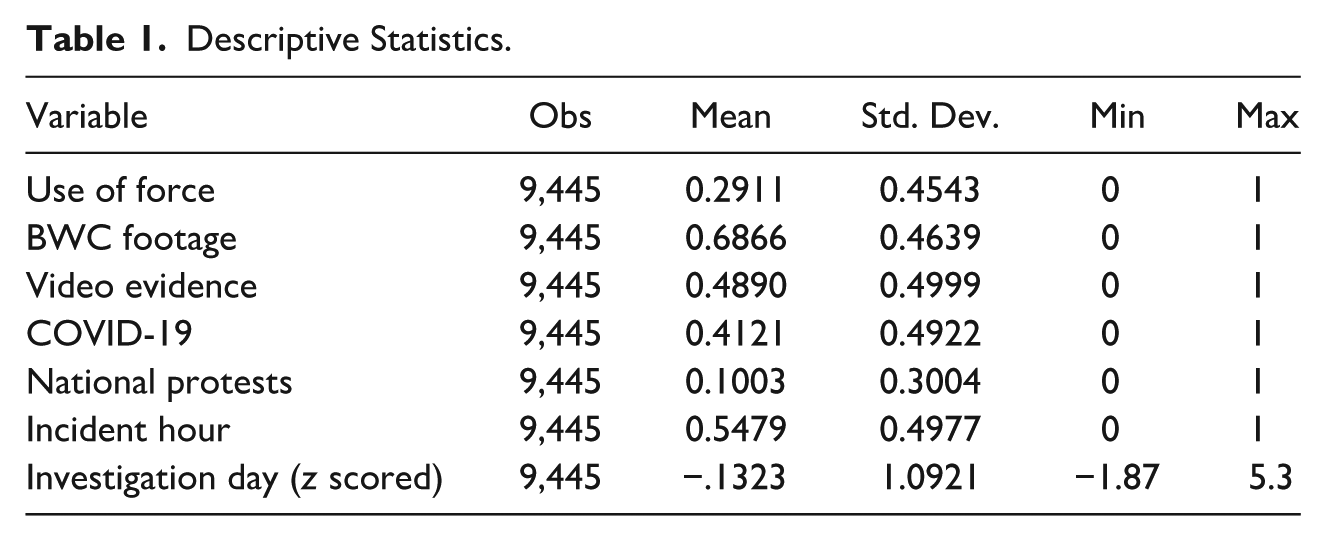
The variable Incident hour, which distinguishes between day and night incidents, shows a relatively even split with a mean of 0.55. The Investigation day variable represents the number of days the CCRB took to complete an investigation and has been standardized (z-scored) to improve interpretability and reduce scale-related distortion in the regression analysis. In its standardized form, it has a mean of −0.13, a standard deviation of 1.09, and ranges from −1.87 to 5.31.
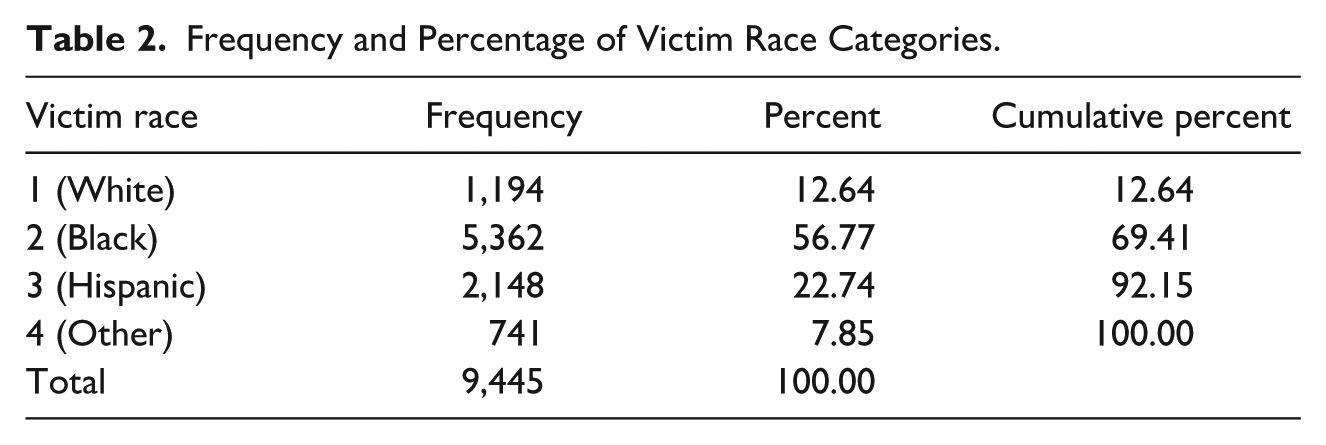
Finally, the race of the alleged victim (Victim race) is a categorical variable with four groups.
As shown in Table 2, the majority identified as African American (56.77%), followed by Hispanic (22.74%), White (12.64%), and Other racial groups (7.85%).
Frequency and Percentage of Victim Race Categories.
Results
Results of Logistic Regression Analyses
The following logistic regression models (see Table 3) aim to explore the factors influencing the likelihood of substantiating use-of-force allegations in the context of civilian complaints. The models examine the role of BWC footage in shaping outcomes, alongside several control variables such as the availability of other video evidence, the presence of COVID-19 restrictions, national protests, the time of day an incident occurred, and the duration of investigations. Additionally, racial disparities in substantiation rates are assessed through the inclusion of a racial demographic variable, while interaction terms between BWC footage and race further investigate whether the impact of video footage varies by racial group. By employing four progressive logistic regression models, this analysis aims to provide a deeper understanding of how BWC footage and other contextual and demographic factors, including race, influence the likelihood of substantiated use-of-force allegations in civilian oversight investigations.
Substantiated Use-of-Force Allegations and BWC Footage, Main Models.
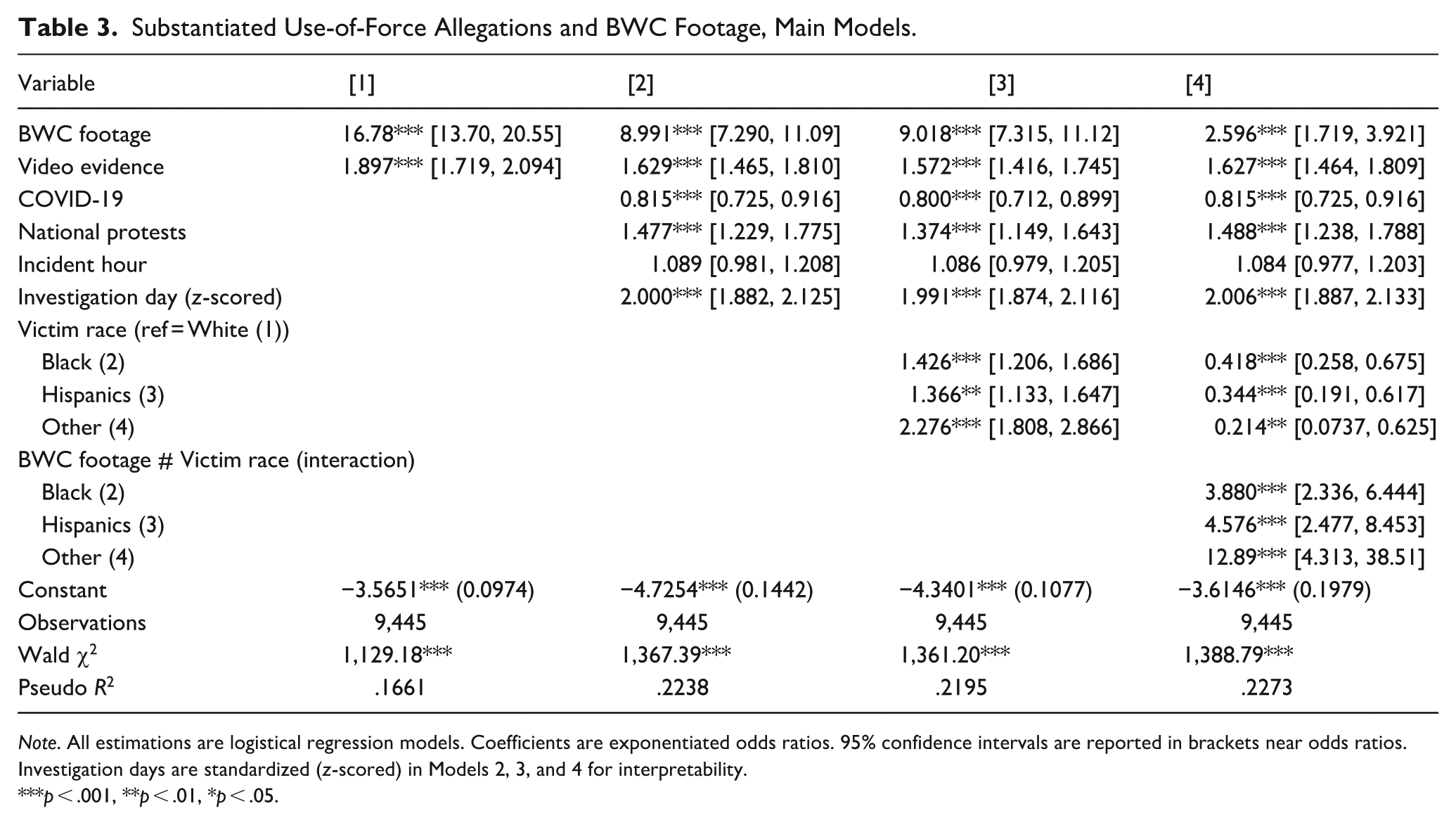
Note. All estimations are logistical regression models. Coefficients are exponentiated odds ratios. 95% confidence intervals are reported in brackets near odds ratios. Investigation days are standardized (z-scored) in Models 2, 3, and 4 for interpretability.
p < .001, **p < .01, *p < .05.
In the base model (Model 1), the analysis begins by examining the impact of BWC footage and other video footage on the likelihood of substantiating use-of-force allegations. Results show that both forms of video evidence are positively and significantly associated with substantiation. BWC footage, in particular, has a strong effect: it increases the odds of substantiation by a factor of 16.78 (OR = 16.78, p < .001). Other video footage (e.g., surveillance or bystander video) increases the odds by 89.7% (OR = 1.897, p < .001). These large effects are consistent with
Model 2 builds upon Model 1 by including control variables: COVID-19 restrictions, national protests, incident hour, and investigation length. The effect of BWC footage remains robust, with odds of substantiation still nearly nine times higher (OR = 8.991, p < .001). COVID-19 restrictions are associated with a 18.5% reduction in odds (OR = 0.815, p < .001), likely reflecting delays or disruptions in investigative processes. National protests are linked to 47.7% higher odds (OR = 1.477, p < .001), possibly reflecting increased public scrutiny after high-profile incidents. Investigation days are strongly related to substantiation (OR = 2.000, p < .001), suggesting more thorough investigations yield more substantiations. Incident hour remains statistically non-significant (OR = 1.089, p > .05). Model fit improves (Pseudo R2 = .2238), reflecting the added explanatory power of these contextual variables.
Model 3 introduces the race of the alleged victim, using White individuals as the reference category. Results indicate clear racial differences in substantiation outcomes when compared to White complainants. Allegations involving Black victims are 42.6% more likely to be substantiated (OR = 1.426, p < .001), and those involving Hispanic victims are 36.6% more likely (OR = 1.366, p < .01). The greatest disparity is observed among "Other" racial minority groups, with odds more than double that of White victims (OR = 2.276, p < .001). These findings support H2, which predicts that substantiation outcomes vary by race. Importantly, even after accounting for racial differences, the effect of BWC footage remains strong and statistically significant (OR = 9.018).
The final model includes interaction terms between BWC footage and victim race to determine whether the effect of BWC varies by racial group. The interactions are both statistically significant and substantively meaningful, supporting the hypothesis that BWC footage has an amplified effect for racial minorities. Notably, the inclusion of these interaction terms changes the direction of the main effects for race observed in Model 3. While race alone was positively associated with substantiation in Model 3, the coefficients flip in Model 4 once BWC interactions are added. This shift highlights that race itself does not fully explain variation in substantiation outcomes. Rather, it is the combination of race and BWC evidence that is more informative. For White victims, the baseline effect of BWC footage remains strong (OR = 2.596, p < .001). For Black victims, the interaction term (OR = 3.880) indicates that BWC footage increases the odds of substantiation by nearly four times more than it does for White victims. For Hispanic victims, the multiplier is even greater (OR = 4.576), and for Other racial minorities, the effect is most dramatic, increasing the odds by nearly 13 times (OR = 12.89) relative to White victims. These results support
Using Model 4, we further conducted a post-estimation margins analysis to calculate predicted probabilities of substantiating a use-of-force allegation given the presence of BWC footage. This analysis indicated that, controlling for all other variables, the probability of substantiation was approximately 26% for White civilians, 35% for Black civilians, 35% for Hispanic civilians, and nearly 46% for civilians from other racial groups. These differences in predicted probabilities further support
In summary, across all four models, the presence of BWC footage is associated with dramatically higher odds of substantiating use-of-force complaints. Other video evidence also contributes positively, though to a lesser extent. Racial differences are evident: allegations involving Black, Hispanic, and Other non-White victims are more likely to be substantiated than those involving White victims. These disparities are magnified when BWC footage is present, as the interaction terms show larger effects for racial minorities. Together, these results highlight the potential for BWC evidence to advance racial equity in civilian oversight processes, particularly by increasing substantiation rates in use-of-force cases involving non-White complainants.
Discussion
This study aimed to examine the association between BWC footage on the substantiation of use-of-force allegations within the NYPD, using data from the NYC CCRB. The results from the logistic regression models offer valuable insights into the role of BWC footage, video evidence, and a range of social and contextual factors such as race, COVID-19 restrictions, and national protests in influencing the likelihood of substantiating use-of-force allegations. The findings suggest that both BWC footage and other video evidence significantly increase the probability of substantiating these allegations. However, they also highlight significant differences based on the racial composition of the victims involved. We will discuss these findings below, along with their contributions to the literature and their implications for policy and future research.
Consistent with prior research, our findings show that the presence of BWC footage is strongly associated with substantiating use-of-force allegations, emphasizing the potential of BWCs to enhance transparency and accountability in police oversight (Ariel et al., 2016; Braga et al., 2024; Cubukcu et al., 2023; Sutherland et al., 2017). Interestingly, the analysis also reveals that racial differences play a significant role in the likelihood of substantiating use-of-force allegations. Allegations involving African American, Hispanic, and other non-White racial minorities were more likely to be substantiated than those involving White victims. This aligns with previous literature suggesting that the presence of BWC footage might disproportionately benefit racial minority victims, potentially mitigating biases in the investigation process (Cubukcu et al., 2023; Hyatt et al., 2017). These findings support the idea that BWCs may serve as an important tool for addressing racial disparities in police accountability.
The interaction between BWC evidence and race further suggests that the positive impact of BWC footage on substantiating allegations is stronger for racial minorities. Specifically, the effect is most pronounced for African American, Hispanic, and other non-White victims, which raises important implications for addressing systemic biases within law enforcement. The role of BWC evidence in increasing the likelihood of substantiation for racial minorities suggests that these cameras could be particularly effective in ensuring that allegations involving marginalized groups are not overlooked or dismissed, contributing to a more equitable system of police oversight.
Furthermore, the results underscore the significant role of contextual factors in shaping the substantiation of use-of-force allegations. COVID-19 restrictions, which disrupted law enforcement practices (Demir & Cassino, 2022) and investigation processes, were associated with a decreased likelihood of substantiation, highlighting the challenges faced by oversight bodies during the pandemic (Boehme & Schnell, 2022). On the other hand, national protests, particularly those sparked by George Floyd’s killing, had a positive effect on the likelihood of substantiation, possibly due to increased public scrutiny and pressure for accountability (Boehme & Schnell, 2022). These findings suggest that external social and political factors may influence the outcomes of investigations into police misconduct, further emphasizing the importance of a context-sensitive approach to understanding police oversight.
In addition to these findings, our analysis suggests that longer investigation durations are positively associated with the likelihood of substantiation. This supports the notion that thorough investigations, which take more time to complete, are more likely to result in accurate and substantiated outcomes. This is consistent with the argument that a careful and systematic review of evidence is crucial for ensuring accountability in police misconduct investigations (Engel et al., 2020).
From a policy perspective, the findings of this study reinforce the importance of continued support for BWC implementation, not only as a means of reducing use-of-force incidents but also as a tool for improving the transparency and fairness of the investigative process. Ensuring that BWCs are actively used and properly integrated into the investigative process is key to maximizing their effectiveness. Moreover, the results suggest that improving the accessibility and use of BWC footage by oversight bodies such as the CCRB is critical for enhancing police accountability. According to the CCRB’s (2024b) Executive Director’s Report from November 2024, the NYPD’s fulfilment rate for BWC requests rose from 70% in 2023 to 76% in 2024. Additionally, the average time taken to receive a positive response to BWC requests decreased from 7.5 days in 2023 to 6 days in 2024. This positive trend in collaboration between the NYPD and CCRB should continue, particularly through the establishment of a shared facility where both agencies can access and review BWC footage, as stipulated in the 2019 Memorandum of Understanding (MOU). The MOU outlines the commitment between the CCRB and NYPD to improve the process for obtaining BWC footage in investigations of excessive force, abuse of authority, discourtesy, and offensive language.
Furthermore, the enactment of the NYC Council Direct Access Bill (Int 0938-2023) will ensure enhanced transparency and accountability in police conduct by allowing designated CCRB employees to connect in real-time to the network servers that store the BWC footage. The bill mandates that the NYPD provide the CCRB with direct access to officer BWC footage, enabling the CCRB to search, view, and utilize the footage for investigating and prosecuting allegations of police misconduct. This direct access will significantly streamline the oversight process, facilitating more efficient and timely investigations.
However, this study also has several limitations that warrant consideration. The data used in this analysis is limited to complaints filed with the CCRB, which do not capture unreported use-of-force incidents. As such, the findings may not fully reflect the true scope of police misconduct. Additionally, the selective use of BWC footage in CCRB investigations may result from several constraints, including the inability to request footage until the involved officer is identified, as well as delays in complaint filing that exceed footage retention periods. Technical barriers such as NYPD delays or redacted footage may further limit access and introduce selection bias. Furthermore, complaints resolved through mediation or closed due to insufficient cooperation from complainants are excluded from the dataset, potentially affecting the generalizability of the results. Most importantly, because the study does not control for all potential explanatory factors influencing substantiation, the associations reported should not be interpreted as causal effects. Lastly, while this analysis offers valuable insights into the role of BWCs in substantiating use-of-force allegations, future research using national datasets and data from more diverse law enforcement agencies is essential to provide a more comprehensive understanding of how BWCs impact police accountability across different contexts.
In summary, the findings of this study contribute to the growing body of literature on the effectiveness of BWCs in police oversight. The analysis highlights the importance of BWC footage in substantiating use-of-force allegations and underscores its role in reducing racial disparities in investigative outcomes. These insights are critical for informing future policy decisions and ensuring that the implementation of BWCs continues to promote greater transparency, accountability, and equity in policing practices.
Conclusion
This research examined the impact of BWC footage on use-of-force cases within the NYPD by analyzing data from the NYC CCRB from August 2019 to December 2022. The study found that BWC footage significantly increased the likelihood of substantiating use-of-force allegations, especially for racial minority victims, highlighting the potential of BWCs to address racial disparities in police oversight. The findings also indicated that other video evidence, longer investigation durations, and factors like COVID-19 restrictions and national protests influenced substantiation rates. Overall, BWCs were found to enhance transparency, accountability, and fairness in investigations, particularly for allegations involving non-White victims, contributing to greater equity in the process. Furthermore, this research highlights the need for continued improvement in cooperation and collaboration between the CCRB and the NYPD to ensure effective oversight and accountability in use-of-force investigations.
Footnotes
Declaration of Conflicting Interests
The authors declared no potential conflicts of interest with respect to the research, authorship, and/or publication of this article.
Funding
The authors received no financial support for the research, authorship, and/or publication of this article.
Ethical Approval and Informed Consent Statements
There are no human participants in this article, and informed consent is not required.

Data Availability Statement
The datasets generated during and/or analyzed during the current study are included in this published article and are also available from the corresponding author upon reasonable request.