




Abstract
Although family violence increases juvenile delinquency, few studies have assessed whether its effects differ by gender in cultures emphasizing family hierarchy and gendered expectations. This study examines how interparental violence and parental abuse relate to delinquency using nationally representative longitudinal data from South Korea. Mixed effects Poisson regression results show that both forms of violence significantly predict increased delinquency. Gender interaction terms indicate that the effects of parental abuse and depression on delinquency are significantly stronger for girls than for boys. These findings suggest that female adolescents may be more emotionally vulnerable to family based strain, especially in contexts where they are socialized to prioritize emotional restraint and family cohesion. Policy responses should account for these gendered differences.
Introduction
Family violence, which is one of the most prevalent adverse conditions affecting families, such as interparental conflict and parental abuse, is associated with a wide range of negative developmental outcomes in children (Fergusson & Horwood, 1998; Ghazarian & Buehler, 2010; Herrera & McCloskey, 2001; Moylan et al., 2010; Widom et al., 2001). Such experiences can compromise adolescents’ emotional security and psychological functioning, particularly when exposure is repeated or prolonged (Cicchetti & Toth, 2005; Cook et al., 2005). Prior research has found that adolescents exposed to family violence are more likely to engage in externalizing behaviors, including aggression, status deviance, and school-related misconduct (Buehler et al., 1997; Smith & Thornberry, 1995; Teicher & Samson, 2016). Although these associations are well established, relatively less attention has been paid to whether the effects of family violence on delinquency differ by gender (for notable exceptions, see Herrera & McCloskey, 2001; Herrera & Stuewig, 2017). In particular, although it is well-known that more boys are more likely to engage in delinquent behavior, different family dynamics and environments can influence this pattern and its pathway to delinquency (Herrera & Stuewig, 2017).
General Strain Theory (GST; Agnew, 1992, 2001) provides a conceptual framework for understanding the potential mechanisms linking family violence and delinquency. The theory suggests that strains perceived as severe, unfair, and inescapable can generate negative emotional responses that increase the likelihood of behavioral problems when coping resources are insufficient (Agnew et al., 2002; Broidy & Agnew, 1997). Family violence may function as a critical strain, particularly during adolescence, when individuals have limited autonomy and emotional regulation is still developing (Agnew, 2006; Aseltine et al., 2000). In this regard, GST framework can be useful for interpreting variation in behavioral outcomes in response to family adversity. The increased degrees of strains from family violence can drive adolescent to take more violent coping strategy through negative emotions (Hollist et al., 2009; Moon & Morash, 2017).
Prior research indicates that boys and girls may differ in degrees of strain they perceived, how they respond to such a strain in terms of negative emotion, and types of coping strategies they utilize to deal with strain and negative emotion (see Broidy & Agnew, 1997). For instance, girls are more likely to display internalizing symptoms or relational aggression, whereas boys tend to engage in overt behavioral problems such as physical aggression or rule-breaking (Calvete et al., 2018; J. Kim & Cicchetti, 2010). These patterns may reflect differences in emotional processing and socialization, shaped by gender norms in both the family and broader culture responding to family violence as well (Herrera & McCloskey, 2001; Karlsson et al., 2016; Moon & Morash, 2017). However, the results regarding the gender gap highlighted by the GST framework have been inconclusive and generally mixed (Jang, 2007; Piquero & Sealock, 2004).
Taken together, this study examines whether interparental violence and parental abuse are differently associated with juvenile delinquency for boys and girls in a Korean context. In South Korea, traditional family structures and Confucian values emphasize emotional restraint, gender role differentiation, and family harmony, which may influence both exposure to violence and subsequent behavioral responses (Cho, 2019; Y. I. Kwon et al., 2015; H. Park & Kim, 2006). Using nationally representative survey data, the analysis estimates the associations between these two forms of family violence and self-reported delinquency among Korean adolescents. Gender interaction terms are included to assess whether these relationships vary between boys and girls. This study aims to improve understanding of how family violence relates to delinquency within a specific cultural setting within the GST framework, considering gender as a potential moderating factor.
Literature Review
Theoretical Framework—General Strain Theory Focus
General Strain Theory (GST), introduced by Agnew (1992), offers a broad framework for understanding how diverse stressors can lead to delinquent behavior. Departing from classical theories focused on economic strain or goal blockage, GST conceptualizes strain as arising from failure to achieve valued goals, removal of positive stimuli, or exposure to negative stimuli (Agnew, 1992, 2006; Broidy & Agnew, 1997). Adolescents, with still-developing emotional regulation, are especially susceptible to strain-induced emotions like anger or frustration, which can escalate into delinquency when coping resources are limited (Agnew, 1992; Agnew et al., 2002). This makes GST particularly suitable for explaining delinquency during adolescence (Agnew, 2001; Aseltine et al., 2000).
Among various sources of strain, family-related stressors are considered among the most impactful. Persistent interparental conflict, inconsistent discipline, and emotional neglect can undermine adolescents’ basic psychological needs for safety, attachment, and emotional support (Cummings & Davies, 2010; Doh et al., 2012; Fosco & Feinberg, 2015). These stressors often meet Agnew’s (2001) criteria for strain most likely to lead to delinquency: high in magnitude, perceived as unfair, and inescapable. Rather than occurring in isolation, such stressors typically interact and accumulate, intensifying psychological vulnerability over time (Appleyard et al., 2005). This accumulation may particularly impact youth who lack access to prosocial supports, such as trusting relationships with caregivers, teachers, or peers (Appleyard et al., 2005; Evans et al., 2013; Hagan et al., 2016).
Unlike acute stressors, family-based strains are typically chronic and developmentally salient. Because adolescents are generally unable to remove themselves from dysfunctional family environments, the strain is more enduring and psychologically damaging (Agnew et al., 2002). Empirical research strongly supports the link between family strain and delinquent behavior. Adolescents who are exposed to cumulative forms of family adversity, including parental abuse, neglect, or ongoing conflict, tend to exhibit higher levels of delinquency, particularly when such adversity begins early and persists over time (Adjei et al., 2025; Han et al., 2025; Pierce & Jones, 2021; Shader, 2001; Thornberry et al., 1991). These findings reinforce GST’s assertion that recurring, high-magnitude, and inescapable strains within the family context are particularly criminogenic (Agnew, 2006).
Family Violence and Juvenile Delinquency
Family violence, which includes both interparental violence and direct parental abuse, has been widely recognized as a critical risk factor for juvenile delinquency (Herrera & McCloskey, 2001; Widom et al., 2001). Exposure to violence within the family undermines a child’s emotional security, disrupts normative development, and increases the likelihood of adopting maladaptive coping behaviors, including delinquency (Grych & Fincham, 2001; Moylan et al., 2010). Witnessing interparental violence can be particularly destabilizing, as it violates the expectation of the family as a safe and supportive environment (Davies & Cummings, 1994; Kitzmann et al., 2003). Moreover, children who observe repeated conflict or aggression between parents may come to view violence as a legitimate means of resolving disputes, thereby normalizing aggressive behavior in peer or community settings (Margolin & Gordis, 2000).
Direct experiences of parental abuse or maltreatment, including physical punishment, emotional abuse, and neglect, can have even more immediate and damaging effects (Cicchetti & Toth, 2005; Teicher & Samson, 2016). These experiences compromise trust in caregivers and erode basic psychological needs for safety and attachment (Bowlby, 1988; Cook et al., 2005). Repeated victimization within a family is associated with heightened emotional dysregulation, increased irritability, and impulsivity, all of which are linked to externalizing behaviors such as aggression, theft, and truancy (Ford & Courtois, 2021; Smith & Thornberry, 1995; Teicher & Samson, 2016;). Adolescents exposed to chronic abuse are more likely to adopt antisocial coping strategies, including delinquent acts, as a way to assert control or retaliate against perceived injustices in their environment (Agnew, 2001).
Family Violence and Gender Differences
Family violence, including interparental conflict and direct parental abuse, represents a chronic, high-magnitude, and often inescapable form of interpersonal strain during adolescence (Lee, 2024; Moon & Morash, 2017). This type of strain threatens adolescents’ psychological security and disrupts their attachment to caregivers, satisfying GST’s criteria for strains most likely to lead to deviant coping (Agnew, 2001). GST further emphasizes that the effect of strain depends not only on its objective characteristics but also on how individuals subjectively interpret and emotionally respond to it. Gender plays a critical moderating role in this process, shaping both the type of emotional response and the selection of coping strategies (Broidy & Agnew, 1997).
Empirical research consistently shows that female adolescents are more likely than males to internalize the emotional consequences of family-related strain. Girls exposed to family conflict tend to report higher levels of depression, anxiety, and guilt, reflecting a gendered pattern of emotional processing (Broidy, 2001; Hay, 2003; Jang & Johnson, 2005). For example, Jang and Johnson (2005) found that female adolescents reacted to family stress with significantly greater levels of internalizing emotions than their male counterparts. These findings have been confirmed in cross-cultural contexts. In a study of Korean adolescents, Lee (2024) demonstrated that exposure to parental abuse and academic pressure significantly increased depressive symptoms among girls, which in turn predicted higher levels of substance use. Similarly, Moon and Morash (2017) found that female adolescents were more likely to interpret interpersonal strain as emotional vulnerability, increasing the risk of maladaptive coping. These results support GST’s proposed pathway wherein strain generates negative affect, which subsequently leads to deviance, particularly when social support is insufficient (Agnew, 2006; Sigfusdottir et al., 2004).
Depression, in particular, has been identified as a key mediator in the strain-delinquency relationship among girls. Internalized emotions can escalate over time when not effectively regulated, leading to self-destructive behaviors such as substance misuse, self-harm, and withdrawal from school or family (Robbers, 2004; Sharp et al., 2012). Skeer et al. (2011), using longitudinal U.S. data, found that family conflict was significantly associated with substance use disorders among adolescent girls but not boys, and that this relationship was partially mediated by conduct problems. These findings indicate that unresolved emotional strain among girls can manifest in both internalizing and externalizing outcomes, underscoring the psychological cost of unaddressed family violence.
In contrast, male adolescents are more likely to externalize strain-induced emotions such as anger, hostility, and defiance, often resulting in more overt forms of delinquency (Broidy & Agnew, 1997). Observational learning mechanisms also play a more prominent role among boys; exposure to interparental violence may normalize aggression, which is then modeled in peer interactions or social situations (Karlsson et al., 2016). Boys are also more likely to cope through confrontational behaviors and impulsive risk-taking, particularly in environments where peer reinforcement of aggression is common (Hébert et al., 2016; H. K. Kim et al., 2009). Thus, although both genders may experience similar levels of strain from family violence, their emotional reactions and behavioral outcomes often follow divergent pathways, shaped by broader patterns of gender socialization.
Taken together, these findings suggest that female adolescents are more likely than males to respond to family violence with internalized emotions, particularly depression, which subsequently elevates the risk of delinquent behavior. This gendered pathway is consistent with GST’s theoretical framework, which posits that emotional responses mediate the effects of strain and that these responses are conditioned by individual characteristics, including gender (Agnew, 2001; Broidy, 2001).
Current Study
Although a substantial body of research has demonstrated the criminogenic impact of family violence on adolescent behavior (Herrera & McCloskey, 2001; Moylan et al., 2010; Widom et al., 2001), fewer studies have examined how such effects vary by gender, especially within East Asian cultural contexts. Drawing on General Strain Theory (Agnew, 1992, 2001), the current study investigates the relationship between two distinct types of family violence—interparental violence and parental abuse—and juvenile delinquency, with particular attention to gender differences in both magnitude and mechanism. This study further considers how gender moderates these effects. Existing research suggests that girls and boys may respond to family violence through distinct psychological and behavioral pathways (Calvete et al., 2018; J. Kim & Cicchetti, 2010; Smith-Darden et al., 2017). For instance, girls tend to exhibit internalized coping patterns (e.g., emotional withdrawal, relational aggression), while boys more often display externalized behaviors (e.g., physical aggression) shaped by aggressive role modeling (Karlsson et al., 2016; R. X. Liu et al., 2018).
These gendered responses are further shaped by cultural norms in South Korea, where patriarchal family structures and academic pressure may amplify the emotional burden of family conflict, especially for girls (Cho, 2019; Y. I. Kwon et al., 2015; H. Park & Kim, 2006). In South Korea, values rooted in Confucianism emphasize hierarchy, filial piety, and emotional control (H. Park & Kim, 2006). These norms discourage disclosure of family conflict and may delay intervention (Y. I. Kwon et al., 2015). Adolescents may suppress emotional reactions or normalize family violence to preserve family unity (S. Lee et al., 2010). Emphasis on family harmony and hierarchical family roles also can intensify internalizing responses among girls and externalizing tendencies among boys (K. A. Kwon et al., 2021).
Parenting practices are also gendered in South Korea. Korean parents often apply different disciplinary standards to sons and daughters, with boys receiving more physical discipline and girls facing stricter behavioral monitoring (Cho, 2019). Although societal attitudes are shifting, remnants of these practices persist (Sung, 2014). Moreover, academic pressure may compound the psychological impact of family violence. Adolescents exposed to both family conflict and school-related stress are at heightened risk for delinquent outcomes (H. Park et al., 2010). Girls may be particularly vulnerable given expectations to maintain both academic excellence and relational harmony. Girls are often socialized to prioritize emotional maturity and household cohesion, while boys may be encouraged to suppress vulnerability and assert dominance (Yun et al., 2019). These patterns may help explain why girls, despite lower baseline rates of delinquency, sometimes show greater relative increases in delinquent behavior following family violence exposure (Doom et al., 2016; Fang & Corso, 2007). Therefore, in the South Korean context, traditional cultural norms may further reinforce these gendered responses.
Building on these insights, the current study uses mixed-effects Poisson regression models to examine the direct effects of interparental violence and parental abuse on delinquency and the moderating role of gender in these relationships. Based on the theoretical framework and empirical findings summarized above, we propose the following hypotheses:
Methods
Data
This study draws upon the Korea Youth Panel Survey (KYPS), administered by the National Youth Policy Institution from 2003 to 2008. The KYPS employed rigorous probability sampling techniques, utilizing a stratified multi-stage cluster approach that divided South Korea into three regional classifications: the Seoul metropolitan area, six additional metropolitan centers, and various cities and rural districts across nine provinces. Random selection identified 104 educational institutions, with a single classroom selected randomly from each participating school. The baseline assessment in 2003 captured data from 3,449 adolescents and their respective parents. Student participants completed comprehensive questionnaires in educational settings, while parents provided family background information through telephone interviews, including details on educational attainment, family structure, and economic circumstances.
The KYPS dataset presents several advantages for examining our research questions. It contains detailed measurements of interparental violence, parent abuse, self-reported delinquent behaviors, and relevant covariates, including academic achievement, peer influences, and socioeconomic indicators. The observation period (ages 14–18) encompasses a critical developmental window from early adolescence through the transition to late adolescence, providing valuable insights into how these relationships may evolve during this formative period.
Measures
Dependent Variable
Our dependent variable measured adolescent delinquent behavior through a seven-item variety score, capturing both criminal violations (e.g., theft, robbery) and status offenses (e.g., underage drinking, smoking), consistent with established criminological approaches (Monahan & Piquero, 2009; Sweeten, 2012). Participants reported their engagement (yes = 1, no = 0) in smoking, alcohol consumption, group fighting, physical assault, peer intimidation, robbery, and theft in the past year, which were summed to create a composite score ranging from 0 to 7, with higher scores indicating involvement in a greater variety of delinquent behaviors. 1 We employed this variety-based measurement approach instead of frequency counts due to its enhanced stability and reliability (Sweeten, 2012), as variety scores are less susceptible to being skewed by frequent but minor infractions while still effectively capturing the breadth of delinquent involvement among Korean adolescents, an approach also utilized in recent research with similar populations (Han et al., 2025).
Independent Variables
Our independent variables assessed domestic violence experiences through two components. Interparental Violence was measured using a two-item scale capturing adolescents’ exposure to violence between parents. Participants responded to statements “I have often seen my parents verbally abuse each other in the past year” and “I have often seen my parents hit each other in the past year” on a 5-point Likert scale (1 = strongly disagree, 2 = somewhat disagree, 3 = neutral, 4 = somewhat agree, 5 = strongly agree). The mean score was calculated with higher scores indicating greater exposure to interparental violence (α = .775). Parental Abuse was measured using a two-item scale assessing direct abuse experienced from parents. Participants responded to statements “I often received severe verbal abuse from my parents in the past year” and “I have often been severely hit by my parents in the past year,” using the same 5-point Likert scale. The mean score was calculated with higher scores indicating greater experiences of parental abuse (α = .813).
In addition, the analysis includes two mediating variables related to negative emotions within the framework of GST. Anger was assessed using Four items: “I engage in physical fights more often than others,” “When I’m upset, I feel like throwing things,” “I sometimes feel like being physically aggressive toward others,” and “I feel like a powder keg ready to explode.” Each item was rated on a 5-point Likert scale ranging from 1 (strongly disagree) to 5 (strongly agree). The total score was calculated by summing all responses and dividing by the number of items, with higher scores indicating greater levels of anger (α = .738). Depression was measured using five items: “I worry about everything,” “I sometimes feel very nervous for no particular reason,” “I sometimes feel very lonely for no particular reason,” “I sometimes feel very sad for no particular reason,” and “I sometimes feel suicidal for no particular reason.” Respondents rated each item on the same 5-point Likert scale. As with anger, responses were summed and averaged to create a composite depression score, with higher values indicating more severe depressive symptoms (α = .865). These measures have been previously employed in research using the KYPS dataset to examine emotions as mediators (J. Kim et al., 2023; Y. Lee et al., 2022; Y. Park & Metcalfe, 2020).
To examine whether the effects of interparental violence and parental abuse differ by gender, interaction terms were created by multiplying each independent variable with gender (0 = male, 1 = female). These interactions allow for the assessment of whether the relationship between domestic violence experiences and delinquency varies between males and females.
Control Variables
Our analysis included key control variables known to influence delinquent behavior. Peer delinquency was measured as a composite index capturing the presence of delinquent behaviors among close friends based on whether respondents reported having friends who engaged in alcohol use, smoking, physical assault, peer intimidation, or theft in the past year. Each behavior was coded as binary (0 = no, 1 = yes), and the sum created a variety score ranging from 0 to 5, which was lagged to address potential endogeneity. Prior delinquency, also lagged for temporal precedence, was measured using the same seven-item variety index as the dependent variable but captured from the previous year’s data. Household income was reported by parents or caregivers as average monthly income, categorized as follows: (1 = US$0–1,000, 2 = US$1,001–2,000, 3 = US$2,001–3,000, 4 = US$3,001–4,000, 5 = US$4,001–5,000, 6 = US$5,001–6,000, 7 = US$6,001–7,000, 8 = US$7,001 and above), with higher scores indicating more significant income. Academic performance was measured using respondents’ self-reported grades from the previous semester in five major subjects (National Language, English, Mathematics, Social Studies, and Sciences), rated on a scale from 1 (very poor) to 5 (very good). The five items were averaged to create a composite measure (α = .739). For more details on all variables, see Table 1.
Descriptive Statistics on Variables.
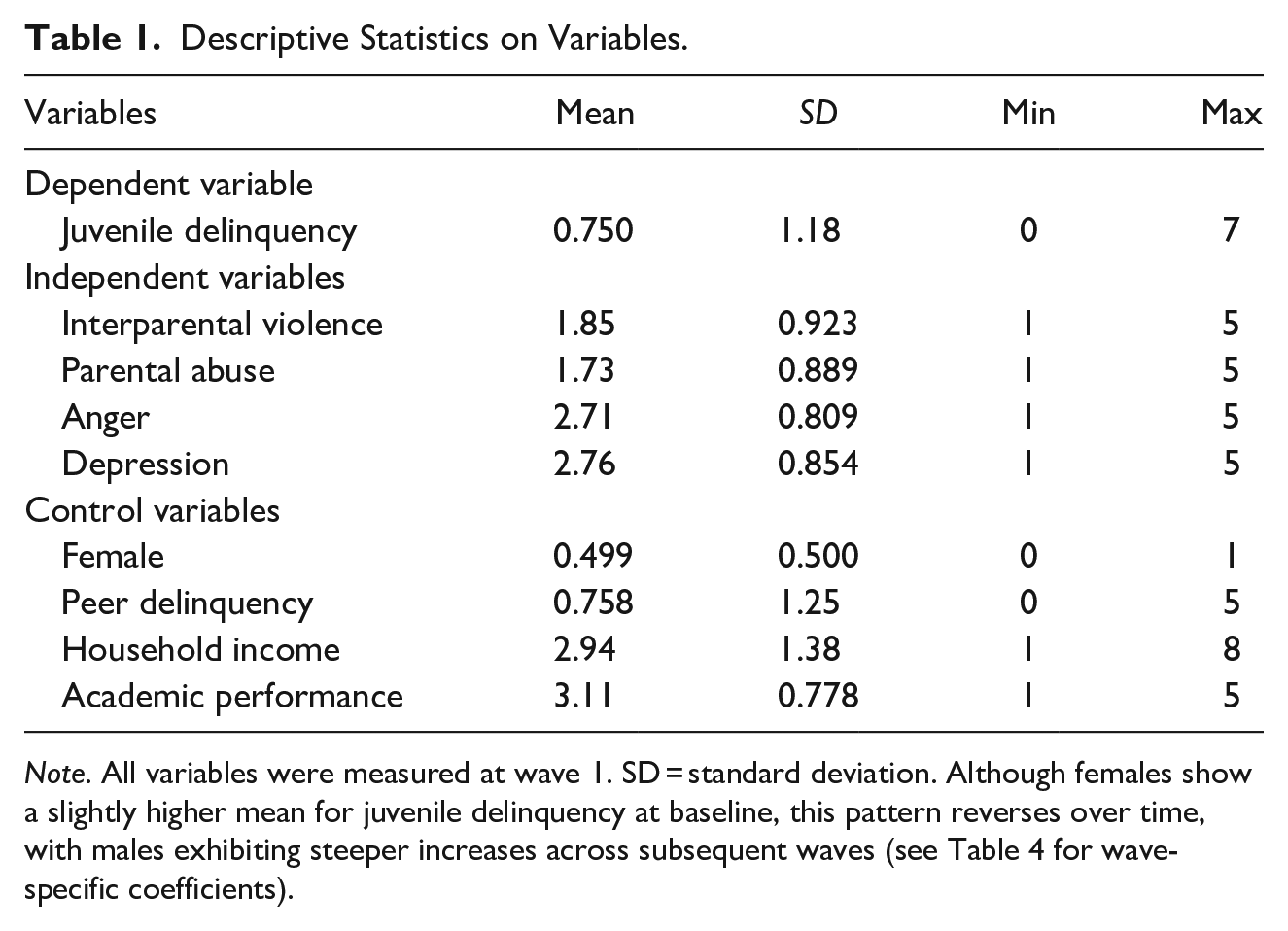
Note. All variables were measured at wave 1. SD = standard deviation. Although females show a slightly higher mean for juvenile delinquency at baseline, this pattern reverses over time, with males exhibiting steeper increases across subsequent waves (see Table 4 for wave-specific coefficients).
Analytical Strategy
Mixed-effects Poisson Regression Modeling
To examine the relationship between family violence and juvenile delinquency and its varying relationship by gender, we employed mixed-effects Poisson regression models with robust standard errors. This approach accounts for the longitudinal structure of our panel data, where repeated observations are collected from the same individuals over time (Singer & Willett, 2003). The random intercepts component addresses the within-individual correlation of repeated measures, allowing us to properly model the non-independence of observations from the same individual (Rabe-Hesketh & Skrondal, 2012).
Our modeling approach accommodates the count nature of delinquency measures through the Poisson distribution while including random effects to help capture unobserved heterogeneity between individuals. Diagnostic testing revealed evidence of overdispersion in our count data. While a negative binomial model would theoretically be more appropriate for overdispersed count data (Hilbe, 2011), we encountered convergence challenges with the complex data structure. 2 Therefore, we implemented robust standard errors with our Poisson models, which provide consistent estimates even under overdispersion conditions (Cameron & Trivedi, 2009; Wooldridge, 2010).
The coefficients are reported as incidence rate ratios (IRR), representing the multiplicative effect on the expected count of delinquent behaviors for a one-unit increase in the predictor (Long & Freese, 2006). We built our models progressively to test our hypotheses. First, we examine the effects of family violence on two mediating variables. To test the mediating effects of negative emotion, we follow Baron and Kenny’s (1986) conventional approach by estimating significant effects of an independent variable on the mediating variable. In addition, interaction terms between gender and the family violence variables are included in the baseline model to assess the moderating effect of gender on the relationship between family violence and negative emotion.
Second, we estimate models predicting juvenile delinquency. Model 1 includes only the family violence variables along with control variables to assess the direct effects of family violence on juvenile delinquency. In Model 2, only the negative emotion variables are included, replacing the family violence variables, to examine their effects on the dependent variable. Model 3 incorporates both family violence and negative emotion variables to test for mediation. Finally, to assess potential moderating effects, we create a series of interaction terms for family violence and negative emotion with gender and include them in a separate model to further explore conditional relationships. To address potential endogeneity and establish temporal precedence, prior delinquency and peer delinquency were lagged by one wave (Allison, 2009). Therefore, the analyses were conducted on a sample of 2,598 individuals across five waves, resulting in 10,392 person-wave observations, with Wave 2 serving as the reference category for temporal effects. Multicollinearity diagnostics revealed no concerning issues, with variance inflation factors (VIF) not exceeding 1.75 for any variable (excluding interaction terms) and an average VIF of 1.40.
Missing Data
Although there was missing data across most variables in our dataset, income contained significantly more missing data than others. For example, in wave 5, income measurements were missing in approximately 24% of cases, considerably higher than in earlier waves. While multilevel modeling is generally robust to missing data, proceeding with complete case analysis would have substantially reduced sample size (Enders, 2010). Therefore, to maintain statistical power and reduce the likelihood of introducing significant bias due to sample attrition, we employed multiple imputation by chained equations in Stata 18.5. This matches variables with missing data to variables without missing data and generates imputations by performing a series of univariate regressions (Royston & White, 2011). Using the results of these chained equations, missing data were imputed on a case-by-case basis. After imputation, our analytic sample consisted of 2,598 respondents with 10,392 person-wave observations for our primary analyses (Models 2–4).
Results
Mixed-Effects Poisson Regression Analysis
As shown in Table 2, both interpersonal violence and parental abuse were significant predictors of anger and depression. In models 1 and 3, higher levels of family violence were associated with increased negative emotions. These findings suggest that family violence elevates both externalizing (anger) and internalizing (depression) emotional responses among adolescents. However, no significant gender interaction effects were found. The interaction terms for interpersonal violence × female and parental abuse × female were not statistically significant in predicting either anger (Model 2) or depression (Model 4), indicating that even though girls tend to experience higher levels of depression, the effects of family violence on negative emotions do not differ meaningfully by gender (Table 2).
Mixed Effects Regression Models Predicting Negative Emotions.
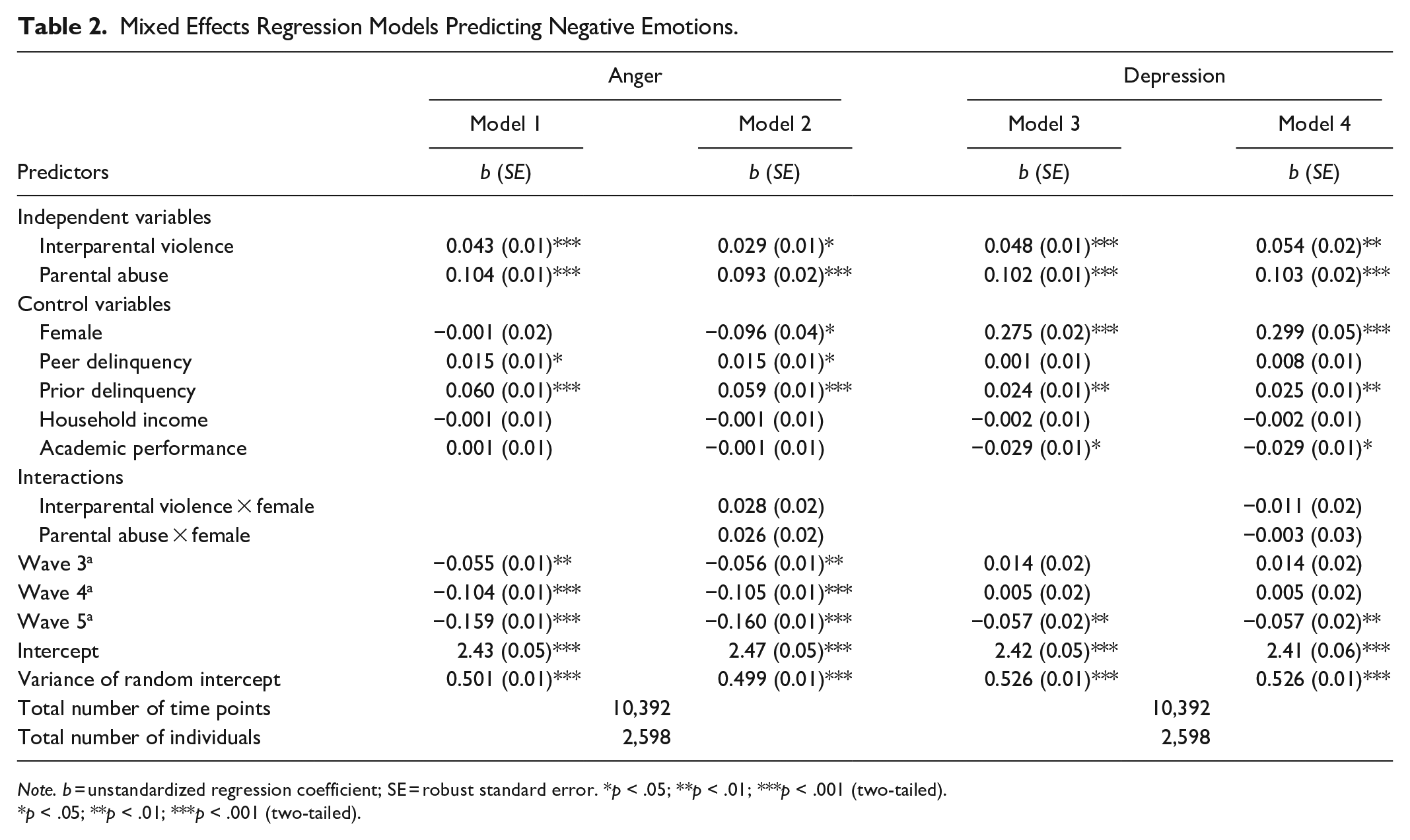
Note. b = unstandardized regression coefficient; SE = robust standard error. *p < .05; **p < .01; ***p < .001 (two-tailed).
p < .05; **p < .01; ***p < .001 (two-tailed).
Table 3 presents results from mixed-effects Poisson regression models examining the relationship between family violence, negative emotions, and juvenile delinquency. In Model 1, both interparental violence (IRR = 1.04, p < .01) and parental abuse (IRR = 1.08, p < .001) were significantly associated with higher levels of delinquency. In Model 2, anger (IRR = 1.20, p < .001) and depression (IRR = 1.07, p < .001) were both significantly associated with increased delinquency. However, in Model 3, after accounting for anger and depression, the direct effect of parental abuse remained statistically significant, although reduced in magnitude (IRR = 1.04, p < .05). In contrast, the effect of interparental violence was no longer significant in Model 3.
Mixed-Effects Poisson Regression Models Predicting Juvenile Delinquency.
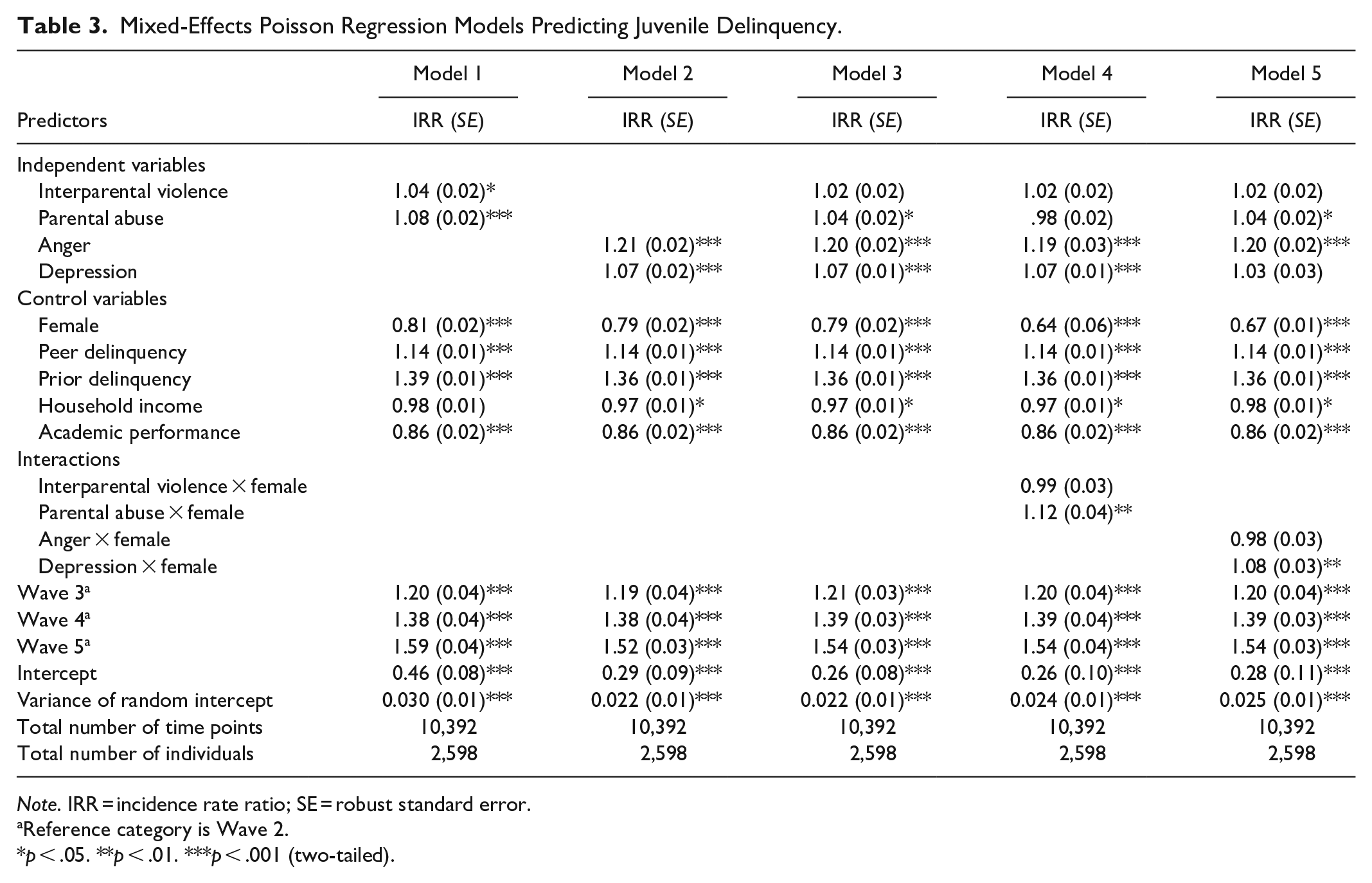
Note. IRR = incidence rate ratio; SE = robust standard error.
Reference category is Wave 2.
p < .05. **p < .01. ***p < .001 (two-tailed).
To assess gender differences in these pathways, interaction terms were included in Models 4 and 5. Two interaction terms reached statistical significance: parental abuse × female (IRR = 1.12, p < .01) in Model 4 and depression × female (IRR = 1.08, p < .01) in Model 5. These findings suggest that the effect of parental abuse and depressive symptoms on delinquency is stronger among female adolescents. The line graphs in Figure 1 also show that girls are more sensitive to the effects of parental abuse and depression, while boys tend to exhibit relatively stable predicted delinquency as levels of parental abuse and depression increase.
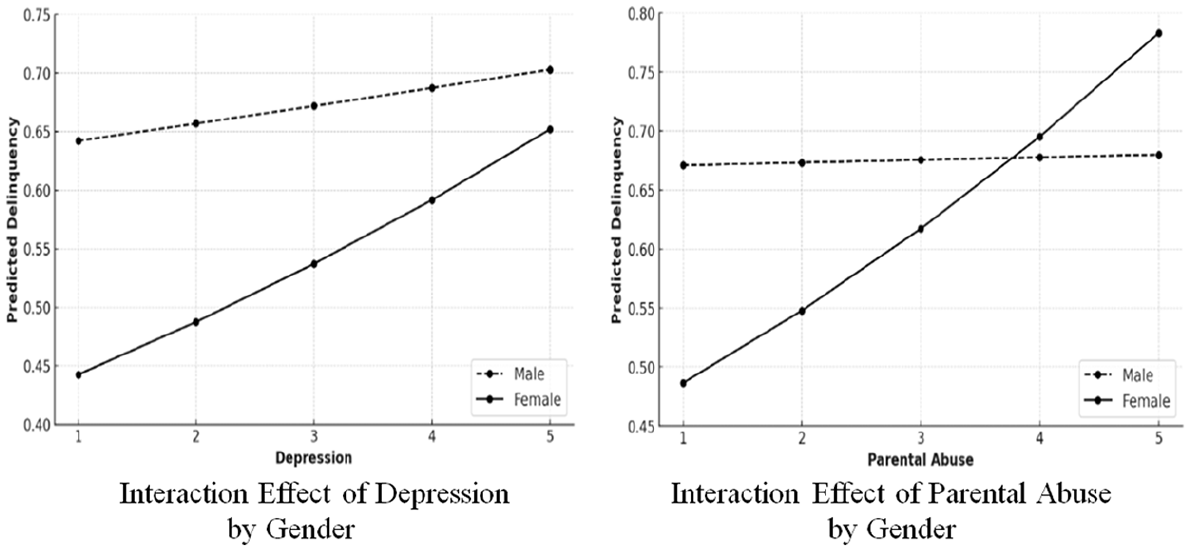
Interaction effect of depression and parental abuse by gender.
Across all models, control variables consistently showed significant associations with delinquency. For example, in Model 3, peer delinquency (IRR = 1.14, p < .001) and prior delinquency (IRR = 1.36, p < .001) were positively associated with increased delinquency. In contrast, academic performance showed a protective effect (IRR = 0.86, p < .001), and household income was also significantly associated with reduced delinquency (IRR = 0.97, p < .05). Wave dummy variables showed significant effects across all models, indicating a general increase in delinquency in subsequent waves compared to Wave 2 (reference category). The variance of the random intercept ranged from 0.030 to 0.022 across all models, reflecting relatively low but statistically significant between-individual differences in delinquency.
Supplementary Analysis
To further explore the significant gender interaction effects observed in Models 4 and 5 (Table 2), we conducted a gender-stratified analysis by estimating separate models for male and female adolescents. This supplementary analysis was designed to clarify the distinct patterns through which different forms of domestic violence and negative emotion affect delinquent behavior across gender groups. Descriptive statistics by gender are presented in Table A1.
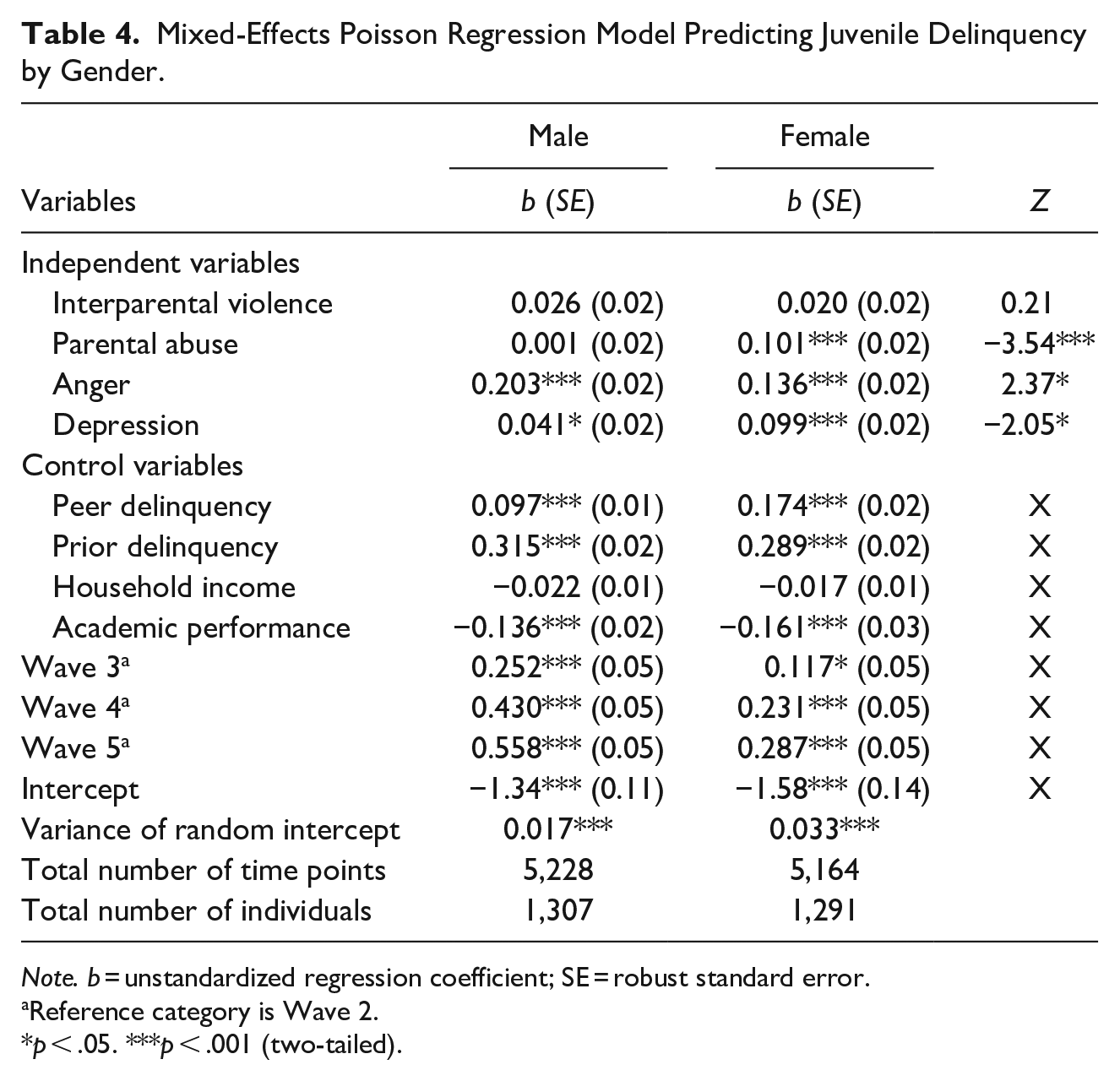
Using the same mixed-effects Poisson regression framework with robust standard errors, we estimated gender-specific models while maintaining the same set of predictors as in the full sample analysis. Unlike Table 3, which presents incidence rate ratios (IRR), Table 4 presents unstandardized regression coefficients (b) to facilitate direct comparison between gender groups using the coefficient equality test proposed by Paternoster et al. (1998). This approach allowed us to directly test whether the differences in effects between males and females were statistically significant.
Mixed-Effects Poisson Regression Model Predicting Juvenile Delinquency by Gender.
Note. b = unstandardized regression coefficient; SE = robust standard error.
Reference category is Wave 2.
p < .05. ***p < .001 (two-tailed).
Table 4 presents gender-stratified results from mixed-effects Poisson regression models examining the effects of family violence and negative emotions on juvenile delinquency. Interparental violence was not a significant predictor for either males (b = .026, p > .05) or females (b = .020, p > .05), and the difference between the two was not statistically significant (Z = 0.21, p > .05). In contrast, parental abuse significantly predicted delinquency among females (b = .101, p < .001) but not males (b = .001, p > .05), with a statistically significant gender difference (Z = –3.54, p < .01). Anger was positively associated with delinquency for both males (b = .203, p < .001) and females (b = .136, p < .001), but the effect was significantly stronger among males (Z = 2.37, p < .05). Depression was significant for both females (b = .099, p < .001), and males (b = .041, p < .05), The difference between genders was also statistically significant (Z = −2.05, p < .05). These findings highlight gender-specific pathways, indicating that female adolescents are more strongly affected by parental abuse and internalizing emotions such as depression, whereas male adolescents are more influenced by externalizing responses like anger.
Sensitivity Analysis
To assess the robustness of our findings, we conducted a sensitivity analysis using generalized estimating equations (GEE). Unlike mixed-effects models that include random effects for capturing within-individual correlation, GEE directly models the correlation structure between repeated observations through a working correlation matrix (Liang & Zeger, 1986). This approach provides population-averaged estimates rather than subject-specific effects and is known for producing consistent parameter estimates even when the correlation structure is misspecified (Zeger & Liang, 1986).
We applied the GEE approach with a Poisson family, log link function, and exchangeable correlation structure, maintaining the same predictor variables as in our primary analysis. This alternative modeling strategy addresses potential concerns about the robustness of findings to different statistical approaches, particularly in the context of overdispersed count data where negative binomial models face convergence challenges (Ver Hoef & Boveng, 2007).
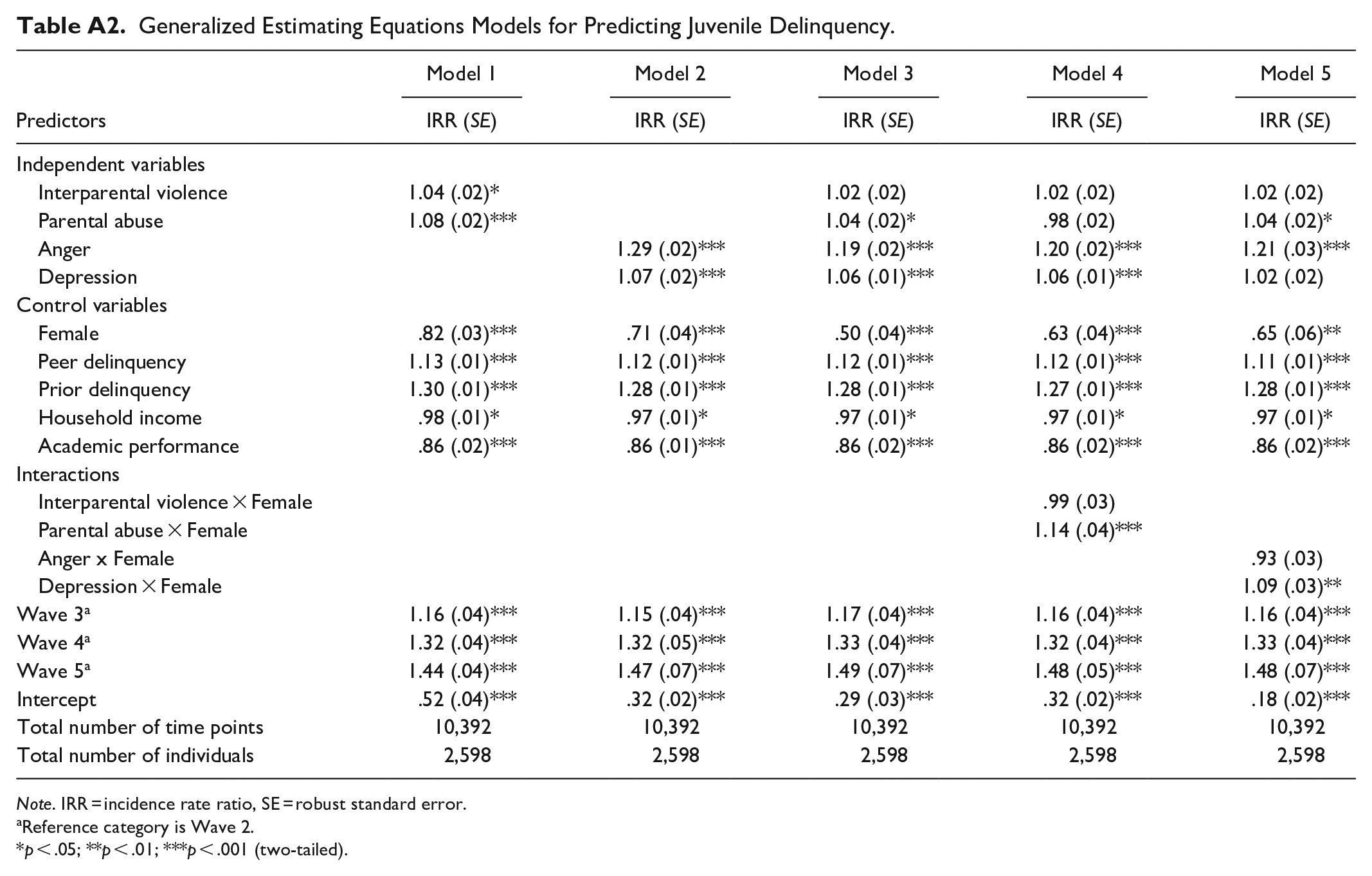
The results from the GEE analysis were highly consistent with our primary findings (see Table A2). The interaction effect between parental abuse and female was statistically significant (IRR = 1.14, p < .001), indicating that the effect of parental abuse on delinquency is more pronounced among female adolescents. Similarly, the interaction between depression and female was significant (IRR = 1.09, p < .01), suggesting that depressive symptoms more strongly predict delinquency among females. In contrast, the interaction terms for interparental violence × female and anger × female were not statistically significant. These consistent findings across modeling approaches strengthen confidence in our conclusion that the effects of parental abuse and internalizing emotional responses on delinquency are particularly salient for female adolescents (Ballinger, 2004).
Discussion
This study confirms that exposure to family violence, including both interparental conflict and direct parental abuse, significantly increases the likelihood of juvenile delinquency. Furthermore, our study suggests that the impact of family-related strain is not uniform across adolescents. Girls exposed to family violence may experience intensified emotional responses, reflecting gendered socialization and cultural expectations. These effects highlight the importance of considering gender as a moderating factor in the link between strain and delinquency, especially within highly gendered social contexts like South Korea. However, it is important to note that our findings only partially support GST’s theoretical framework. While strain variables significantly predicted negative emotions, these emotions did not substantially mediate the relationship between strain and delinquency. The minimal reduction in strain coefficients after controlling for negative emotions suggests that negative emotions represent only one of multiple pathways through which strain influences delinquency, rather than serving as the primary mediating mechanism proposed by GST. This finding indicates the need to explore alternative mediating processes in future research.
Importantly, our results reveal that these effects are not gender-neutral. Interaction effects in our models indicate that female adolescents are more strongly affected by experiencing direct parental abuse. These effects were associated with greater marginal increases in delinquency than those observed for their male counterparts. Our gender-stratified analysis further illustrates that parental abuse significantly predicted delinquency for girls but not for boys. These findings suggest that gender moderates the behavioral consequences of family violence. Girls appear to be particularly vulnerable to its criminogenic effects. This pattern aligns with prior research emphasizing the heightened impact of chronic strain and emotional victimization on girls (Pierce & Jones, 2021; Smith-Darden et al., 2017). It also confirms a broader empirical trend: females, despite lower overall delinquency rates, often exhibit more pronounced behavioral disruption when exposed to intense family-based adversity (Calvete & Orue, 2011; Doom et al., 2016).
The gendered patterns observed in this study are also situated within the unique cultural context of South Korea. Confucian family values emphasize hierarchy, emotional restraint, and strict gender roles (Cho, 2019; H. Park & Kim, 2006). Korean parents often impose stricter behavioral control on daughters and employ more physical discipline with sons (Sung, 2014). These gendered parenting practices may shape how adolescents interpret and respond to violence within the family. For girls, who are socialized to maintain relational harmony, obedience, and emotional suppression, direct parental abuse may be perceived as a deeper violation of familial trust and identity. This sense of betrayal may intensify the emotional strain, leading to more disruptive or retaliatory behaviors as coping responses. Additionally, girls in Korean society may have fewer acceptable outlets for expressing distress, particularly in environments that discourage emotional disclosure, pushing some toward externalizing behaviors as a form of suppressed expression.
Furthermore, daughters are often expected to bear a greater burden of family cohesion and reputation (H. Park & Kim, 2006). When that stability is compromised by interparental conflict or parental abuse, the emotional dissonance may be particularly acute, given the cultural pressure to uphold family honor while simultaneously experiencing victimization. In contrast, boys may be afforded more emotional independence and greater latitude in expressing aggression, which may moderate the internal strain experienced from family violence. These broader structural and normative gender expectations in South Korea help contextualize why girls in our study appeared more behaviorally affected by family violence than boys, despite lower average delinquency rates. These cultural dynamics thus reinforce the importance of culturally informed interpretations of gendered behavioral responses to strain (K. A. Kwon et al., 2021).
These interpretations are further supported by a growing body of research that highlights gendered responses to victimization. While overall delinquency rates tend to be higher among boys, some studies have found that exposure to family violence may be more strongly associated with behavioral and emotional disruption among girls, particularly in societies with rigid gender hierarchies and patriarchal family norms (Doom et al., 2016; Fang & Corso, 2007). Girls are often more likely to report emotional dysregulation, relational strain, and psychological distress following family conflict and abuse, factors closely linked to delinquent behavior (Calvete & Orue, 2011; Smith-Darden et al., 2017). Our findings reinforce these gendered patterns, illustrating how sociocultural expectations around emotion, loyalty, and identity may amplify the consequences of family violence for adolescent girls in South Korea.
These findings also have important theoretical implications. By highlighting gender differences in adolescents’ behavioral responses to family violence, our study contributes to a more nuanced understanding of how strain operates in context. General Strain Theory (Agnew, 1992, 2001) allows for variation in the experience and expression of strain, depending on personal, situational, and cultural factors. Our findings suggest that gender functions as a key moderator in this process, with girls displaying heightened behavioral responses to family-based stressors. This insight supports prior theoretical refinement to GST, which emphasizes that individual traits and social expectations shape the likelihood of strain leading to delinquency (Agnew et al., 2002; Broidy & Agnew, 1997). Cultural factors such as emotional suppression, gendered expectations, and family honor norms likely intensify the strain that Korean girls experience from family violence.
These findings also offer several policy implications. First, early intervention and prevention programs should be gender responsive. School-based mental health services should be equipped to identify and address trauma responses among students exposed to family violence. Girls may benefit more from emotionally supportive and trauma-informed counseling services, while boys may respond better to structured, skills-based interventions such as anger management or conflict resolution programs (Hébert et al., 2016; Karlsson et al., 2016). Second, community-based parental support programs should be expanded, particularly those that teach non-violent disciplinary strategies and support effective co-parenting. Evidence shows that such programs can strengthen parental supervision and mitigate the behavioral risks associated with family conflict (Carlson & Berger, 2013). Finally, national policy should prioritize integrated responses that link schools, child welfare services, and family counselors to provide coordinated care for at-risk youth.
Despite its notable findings of the study, this study also has several limitations. First, our measures of interparental violence and parental abuse relied on brief self-report scales. While the five-point Likert items reflected general frequency of exposure and experience, they did not capture the severity of incidents, chronicity over time, or the identity of the perpetrating parent. Second, because our data begin in early adolescence, we could not assess earlier exposure to violence in childhood, which may have cumulative effects on delinquency (Juby & Farrington, 2001; Kroese et al., 2021). Third, although we adjusted for major covariates, omitted variable bias remains a concern. Factors such as parental mental health or community-level disadvantage may confound the observed relationships. Lastly, while our dependent variable is a delinquency variety score that captures the breadth of adolescents’ deviant behaviors, it does not reflect the frequency or severity of specific acts. Although variety scores provide greater stability and are less affected by outliers, they may overlook differences between frequent minor infractions and rare but serious offenses (Bendixen et al., 2003; Thornberry & Krohn, 2000). Future studies may benefit from incorporating both variety and frequency indicators to more comprehensively capture delinquent behavior.
Future studies should build on these findings by identifying the mechanisms through which family violence leads to delinquency. Longitudinal analyses incorporating measures of emotional regulation, attachment, and peer influence could help clarify the psychological and social pathways involved. Research should also examine how the timing and duration of exposure to violence affect youth outcomes, and whether different forms of violence (emotional, psychological, or sexual abuse) produce different behavioral trajectories. Moreover, future work should investigate how gender norms evolve and interact with family processes to shape adolescent behavior in various cultural contexts.
Footnotes
Appendix
Generalized Estimating Equations Models for Predicting Juvenile Delinquency.
| Predictors | Model 1 | Model 2 | Model 3 | Model 4 | Model 5 |
|---|---|---|---|---|---|
| IRR (SE) | IRR (SE) | IRR (SE) | IRR (SE) | IRR (SE) | |
| Independent variables | |||||
| Interparental violence | 1.04 (.02)* | 1.02 (.02) | 1.02 (.02) | 1.02 (.02) | |
| Parental abuse | 1.08 (.02)*** | 1.04 (.02)* | .98 (.02) | 1.04 (.02)* | |
| Anger | 1.29 (.02)*** | 1.19 (.02)*** | 1.20 (.02)*** | 1.21 (.03)*** | |
| Depression | 1.07 (.02)*** | 1.06 (.01)*** | 1.06 (.01)*** | 1.02 (.02) | |
| Control variables | |||||
| Female | .82 (.03)*** | .71 (.04)*** | .50 (.04)*** | .63 (.04)*** | .65 (.06)** |
| Peer delinquency | 1.13 (.01)*** | 1.12 (.01)*** | 1.12 (.01)*** | 1.12 (.01)*** | 1.11 (.01)*** |
| Prior delinquency | 1.30 (.01)*** | 1.28 (.01)*** | 1.28 (.01)*** | 1.27 (.01)*** | 1.28 (.01)*** |
| Household income | .98 (.01)* | .97 (.01)* | .97 (.01)* | .97 (.01)* | .97 (.01)* |
| Academic performance | .86 (.02)*** | .86 (.01)*** | .86 (.02)*** | .86 (.02)*** | .86 (.02)*** |
| Interactions | |||||
| Interparental violence × Female | .99 (.03) | ||||
| Parental abuse × Female | 1.14 (.04)*** | ||||
| Anger x Female | .93 (.03) | ||||
| Depression × Female | 1.09 (.03)** | ||||
| Wave 3 a | 1.16 (.04)*** | 1.15 (.04)*** | 1.17 (.04)*** | 1.16 (.04)*** | 1.16 (.04)*** |
| Wave 4 a | 1.32 (.04)*** | 1.32 (.05)*** | 1.33 (.04)*** | 1.32 (.04)*** | 1.33 (.04)*** |
| Wave 5 a | 1.44 (.04)*** | 1.47 (.07)*** | 1.49 (.07)*** | 1.48 (.05)*** | 1.48 (.07)*** |
| Intercept | .52 (.04)*** | .32 (.02)*** | .29 (.03)*** | .32 (.02)*** | .18 (.02)*** |
| Total number of time points | 10,392 | 10,392 | 10,392 | 10,392 | 10,392 |
| Total number of individuals | 2,598 | 2,598 | 2,598 | 2,598 | 2,598 |
Note. IRR = incidence rate ratio, SE = robust standard error.
Reference category is Wave 2.
p < .05; **p < .01; ***p < .001 (two-tailed).
Declaration of Conflicting Interests
The author(s) declared no potential conflicts of interest with respect to the research, authorship, and/or publication of this article.
Funding
The author(s) received no financial support for the research, authorship, and/or publication of this article.
