



Abstract
This study explores how sex workers’ gender, ethnicity, and immigration status influence public attitudes toward sex work in the United States. Using a randomized experiment, 1,193 respondents evaluated a hypothetical news story featuring a sex worker as either a “Caucasian woman,” “Caucasian man,” or “undocumented Mexican woman.” Respondents rated the acceptability of sex work, worker agency, venue liability, and preferences for supportive or punitive interventions. Sex work by a Caucasian man was viewed least favorably, and the undocumented Mexican woman was perceived as having the lowest agency. Supportive interventions were endorsed more for women, while punitive measures, particularly fines, were favored for the man. Results highlight how the intersecting factors shape perceptions of agency, culpability, deservingness, and intervention preferences.
Keywords
Introduction
Public attitudes toward sex work have been an increasingly important area of inquiry, especially as debates surrounding the legality, morality, and regulation of sex work continue to evolve globally (Hansen & Johansson, 2022, 2023; Johansson & Hansen, 2024a, 2024b, 2024c; Valor-Segura et al., 2011; Vlase & Grasso, 2021). However, several studies have focused on broad attitudes toward sex work, neglecting the complex ways in which the identities of sex workers themselves affect how they are perceived by the public. This gap is striking since sex work intersects with larger social issues, such as human rights, gender inequality, and migration (Brooks-Gordon et al., 2021; Macioti et al., 2022; Skilbrei, 2019). Understanding how factors like sex workers’ background, gender, and legal status influence attitudes is crucial given the central role of public sentiment in shaping policy, policing, and the social treatment of sex workers.
Our study addresses this gap by experimentally manipulating the gender, ethnicity, and immigration status of a sex worker in a hypothetical news story to examine how study respondents’ attitudes change, offering a unique contribution to the literature on public attitudes toward sex work. In this study, we surveyed 1,193 respondents in the United States (U.S.) using a randomized experimental design. Respondents were randomly assigned one of three vignette conditions describing a sex worker as either a “Caucasian woman,” “a Caucasian man,” or “undocumented Mexican woman.” After reading the story, respondents were asked to evaluate several aspects, including the acceptability of the sex work, the extent to which it appeared voluntary, the liability of the hotel where the activity occurred, and the appropriateness of punishment. Respondents were also asked to indicate whether supportive or punitive interventions were warranted. This design allows us to explore the intersectional dynamics that shape public responses to sex work.
The study is structured as follows. We begin with a review of the existing literature on public attitudes toward sex work. Then, we discuss on the potential impact of the sex worker’s gender, ethnicity, and immigration status on these attitudes. 1 Next, we present our hypotheses and provide an overview of the data and methods used in the study, detailing the experimental design and the statistical models employed for analysis. We then present the results of the study while highlighting key differences in public perceptions based on these factors. Finally, we discuss the implications of our findings for future research as well as the limitations of our study, emphasizing the complex ways in which sex workers’ identity markers intersect with public attitudes toward sex work and interventions.
Public Attitudes Toward Sex Work
Public attitudes toward sex work shape not only policy decisions but also the lived realities of sex workers, influencing stigma, policing, and access to services (Brooks-Gordon et al., 2021; Skilbrei, 2019). Studies have shown that these attitudes can range from viewing sex work as a legitimate form of labor deserving of rights and protections to seeing it as inherently exploitative or immoral (Johansson & Hansen, 2024a; Sanders et al., 2018). Various individual-level factors have been identified as key in shaping public attitudes toward sex work. Socio-demographic patterns indicate that age is positively associated with support for the exchange of sexual services, with older individuals more likely to express approval (Cosby et al., 1996; Hansen & Johansson, 2022; May, 1999). The relationship between education and support for sex work is more complex, with studies reporting both positive (Jakobsson & Kotsadam, 2011; May, 1999; Vlase & Grasso, 2021) and negative (Hansen & Johansson, 2022) associations. A consistent finding across the literature is that women tend to hold more negative views on the exchange of sexual services compared to men (Cosby et al., 1996; Cotton et al., 2002; Hansen & Johansson, 2022; May, 1999).
Legal frameworks have also been found to influence attitudes, with negative views being prominent in countries where the sex industry is largely criminalized, such as the Sweden and Norway (Johansson & Hansen, 2024b). Sex work criminalization is generally characterized by an emphasis on punishment, stigmatization, and limited support interventions (Östergren, 2018). Legalization by contrast, permits sex work but imposes strict regulations that often exclude or marginalize vulnerable workers. For example, in Germany and the Netherlands, legalized sex work has coexisted with exclusionary systems that maintain high levels of informal, unregulated labor. Decriminalization, as observed in Belgium, New Zealand, and parts of Australia, removes penalties to instead focus on safeguarding the rights and wellbeing of sex workers, but these efforts do not necessarily apply to all sex workers, with migrants being one notable exception (Armstrong, 2016; Macioti et al., 2022; Östergren, 2018).
Political ideology and moral beliefs also play critical roles in attitudes toward sex work. Individuals with liberal political views are more likely to support decriminalization and view sex work as a legitimate profession, whereas conservative individuals may oppose it on moral or religious grounds (Valor-Segura et al., 2011; Vlase & Grasso, 2021). Additionally, personal experiences and exposure to sex work, either directly or indirectly, can influence attitudes, with greater familiarity often leading to more nuanced or accepting views (Cotton et al., 2002).
Attitudes toward sex work depend on how the activity is framed. Survey question wording and terminology play a crucial role in affecting respondents’ answers. Terms like “prostitution” carry more negative connotations than “sex work” or “transactional sex,” leading to higher rates of disapproval from respondents (Hansen & Johansson, 2023). Questions emphasizing legality, morality, or health implications can also elicit different responses, highlighting the importance of careful wording in research instruments to avoid bias and accurately capture public sentiment.
Moreover, abstract questions about the acceptability of sex work may yield different results compared to those that contextualize it within specific scenarios or highlight certain aspects, such as coercion or economic necessity. Johansson and Hansen (2024a) find that framing sex work using positive and negative associations, like empowerment or exploitation, significantly affects perceived acceptability. Attitudes also vary depending on what activities people classify as sex work. Johansson and Hansen (2024c) show that people associate sex work with activities like webcamming, erotic dancing, and sexual intercourse to varying degrees, which shape their overall judgments. Given the way framing can alter attitudes on the subject, it stands to reason that identity markers, such as gender, ethnicity, and immigration status, may also shape the public’s evaluations of sex work. Yet, these aspects remain undertheorized and empirically understudied in survey-based research.
Sex Worker Identities and Public Attitudes
Scholars have long argued that sex work tends to be understood through a gendered and racialized moral lens (Bernstein, 2007; Chapkis, 2003; Gonzalez-López, 2005). Studies have shown that female sex workers are frequently portrayed through a lens of victimhood, especially when framed as economically vulnerable or coerced (Abel, 2021; Sanders, 2005). These portrayals are often reflected in protective or rehabilitative policy approaches and media coverage, which suggests an underlying public perception of women in sex work as passive or exploited. In contrast, male sex workers tend to receive less public empathy and may be viewed as more agentic or even deviant (Kaye, 2014; Minichiello et al., 2015). Male sex workers may experience distinct forms of stigma related not only to their involvement in sex work but also to perceived violations of gender and sexual norms. Assumptions that male sex workers are gay or bisexual can activate homophobic stigma, especially in conservative contexts (Bacio & Rinaldi, 2022). This intersection of stigma tied to masculinity, sexuality, and sex work itself may result in a lower perceived need for support. However, there is little empirical research that directly examines how the public interprets and responds to these narratives.
Sex workers’ ethnicity and immigration status add complexity to public attitudes toward sex work. Ethnic minority sex workers often face compounded stigma due to racial stereotypes, affecting perceptions of their involvement in sex work (Chandler et al., 2022; Kulick, 1998). Narratives of “otherness” can lead to assumptions that minority individuals are victims of trafficking or coercion, while majority-group members are more often viewed as acting by choice (Johansson & Östergren, 2021). Rangel-Medina (2024) uses the concept of “citizensim” to describe how citizenship status becomes a proxy for exclusion, reinforcing structural racism through heightened surveillance and social marginalization of those perceived as non-citizens. In the context of sex work, this framework is especially relevant as individuals marked by both ethnic and legal outsider status will likely face increased scrutiny, particularly when undocumented—a designation that carries significant legal and social stigma (Bolivar, 2017, 2021; Cheng & Kim, 2014; Chin & Finckenauer, 2012; Flores et al., 2022; Merolla et al., 2013). In the U.S., among the most heavily stigmatized and vulnerable populations within the sex industry are undocumented Mexican and other Latina/o sex workers (Bolivar, 2017; Gonzalez-López, 2005; Moslimani & Passel, 2024). These individuals are situated at the nexus of multiple stigmatized identities: as migrants, as racialized others, and as participants in a criminalized economy. The intersection of these markers not only influences the risk of criminalization and deportation but also likely plays a role in how the public perceives them.
Public attitudes are shaped partly by the widespread conflation of sex work and sex trafficking, a narrative promoted by the U.S. through its dominant role in global anti-trafficking discourse. These global efforts often frame sex workers, particularly those who are racialized or non-citizens, as victims lacking agency, reinforcing narratives that justify over-policing under the guise of protection. Scholars have documented how anti-trafficking initiatives are imbued with white supremacist and colonial legacies, perpetuating racial hierarchies and marginalizing communities of color. For instance, Kempadoo and Shih (2023) explored how contemporary anti-trafficking efforts are rooted in historical racial injustices, often reinforcing systemic racism. Additionally, Shih (2021) examined how training programs designed to identify trafficking victims can perpetuate racist surveillance practices, disproportionately targeting marginalized groups. Furthermore, Brooks (2021) discussed how anti-trafficking laws often portray white women as “innocent victims” while depicting Black women as morally suspect, thereby perpetuating racial biases. These practices contribute to the over-policing of sex workers from marginalized communities, under the guise of protection and rescue.
While researchers have examined how sex workers are portrayed in media, policy, and advocacy contexts, few have directly tested how the public evaluates sex workers with differing identities. If public attitudes toward sex work reflect these broader gendered and racialized patterns, we expect undocumented Mexican women to be perceived as having less agency and as more in need of intervention when compared to Caucasian women and men in sex work. We posit two broad hypotheses to initiate inquiry into this area of research.
Hypotheses
H1: Attitudes toward sex work and punishment will differ based on sex worker gender, ethnicity, and immigration status.
H2: Views on support or punishment for the individual engaging in sex work will differ based on their gender, ethnicity, and immigration status.
Data and Method
This study surveyed 1,193 individuals in the U.S. to inquire about their attitudes regarding a sex work scenario. The survey was conducted on 18 July 2024 through Prolific’s platform. Respondents provided informed consent and had the option to skip questions or exit the survey at any time. Potential participants undergo a rigorous recruitment process, which can take several months, requiring verification of identity, proof of residency, and confirmation of key socio-demographics. Respondents were sampled using a representative online panel of adults residing in the U.S., 18 years of age or older. All respondents were compensated at an average rate of around $10.00/hr. The median amount of time it took to complete the survey was 13 min and 34 s, when accounting for individuals who engaged in survey interruption and resumption. The study received approval from Sam Houston State University’s Institutional Review Board.
The stratified sampling strategy aimed to recruit respondents in a manner that closely mirrors the socio-demographic composition of the U.S. population, including variables such as age, gender, education, and income. Additionally, to address the increasingly partisan nature of the legal system, the sample was designed to reflect a representative distribution of partisan identification. To ensure data quality, responses to socio-demographic questions were compared with data previously provided to the survey research recruitment firm, and the matches were found to be perfect. Our analysis plan ends with estimating regression models after a discussion of descriptive statistics and binary statistical tests.
Experimental Design
To assess how sex worker gender, ethnicity, and immigration status impact views on the activity, this study implements an experimental survey design.
2
The experiment was pre-registered through the Center for Open Science: https://osf.io/pbu86 (Hansen et al., 2024). The experiment was registered on 18 March 2024, prior to data collection. Pre-registration helps enhance the transparency and credibility of the research by specifying hypotheses, data collection procedures, and analysis plans in advance, reducing the risk of post hoc modifications or selective reporting. The survey includes a hypothetical newspaper story about an individual arrested for engaging in sex work. The individual was arrested by the sheriff’s department following an anonymous tip about prostitution at a hotel and their subsequent admission of involvement in the activity. The story was crafted to align with the typical content and length of local newspaper articles, ensuring realism in the experimental design. To further enhance this realism, the vignette uses legal terminology such as “prostitution” to reflect how these cases are commonly reported in news media. Additionally, the selection of treatments and the inclusion of comparative gender and ethnicity groups were determined to provide a balanced and methodologically appropriate basis for analysis (Navarro & Hansen, 2023). The prompt prior to reading the newspaper story begins: “Please read closely the following story about a recent incident that had been reported on in a local news outlet. After you read the story, we are going to ask you questions about the story, which include your opinions. We ask that you please read the story closely to guarantee the accuracy of your responses.”
Respondents were asked to confirm their understanding of the instructions, and all indicated comprehension. They were then randomly assigned to one of three treatment groups (based on the sample size that could be obtained), with the only variation being the gender and/or ethnicity and immigration status of the individual engaging in sex work in the story: a Caucasian woman, a Caucasian man, and a Mexican woman described as undocumented. 3 We selected a Mexican woman as a comparison due to the predominance of Mexican individuals within the U.S. immigrant population (Moslimani & Passel, 2024). Drawing on scholarship pointing to the importance of labels and framing, we specifically chose to include the descriptor undocumented to reflect current U.S. discourses in which Mexican identity and undocumented immigration status are often conflated, as well as common societal narratives that associate immigration status with vulnerability in the context of sex work. This decision also reflected a practical concern: in a pre-test of the experiment, respondents assumed the Mexican woman was undocumented even when her immigration status was not specified. This assumption resonates with contemporary U.S., discourses where the terms “Mexican” and “undocumented” are frequently paired in media, political rhetoric, and public imagination, often with negative connotations (Flores et al., 2022; Moslimani & Passel, 2024). To avoid inconsistent interpretations and enhance internal validity, we chose to explicitly include the descriptor in the finalized version of the experiment. Moreover, this approach ensured that all respondents reacted to a clearly defined treatment condition, rather than projecting varying assumptions about immigration status. While this condition includes an additional characteristic relative to the other two, it remains analytically meaningful because the primary point of comparison is to the Caucasian woman, enabling an examination of how perceptions shift when the individual is racialized and perceived as undocumented. The inclusion of a Caucasian woman as a baseline allows us to assess the degree to which origin and immigration status shape perceptions, just as the Caucasian man condition isolates gender-based effects. We acknowledge that additional experiments including more descriptors would further enrich the analysis, but this design choice provides a first important step for understanding the intersection of gender, ethnicity, and immigration status in shaping public opinion.
Figure 1 presents these stories. The randomization process ensured approximately equal proportions of respondents in each group. After accounting for item non-response and incomplete surveys, 403 respondents were assigned to the story about the Caucasian woman, and 401 respondents to each of the stories about the Caucasian man and the Mexican woman. Following the story and related questions, respondents were asked to recall the gender, ethnicity, and immigration status of the person in the story as an attention check, without the option to revisit the material. Only 3.65% of respondents failed to correctly identify the experimental manipulation, with similarly low error rates across treatments.
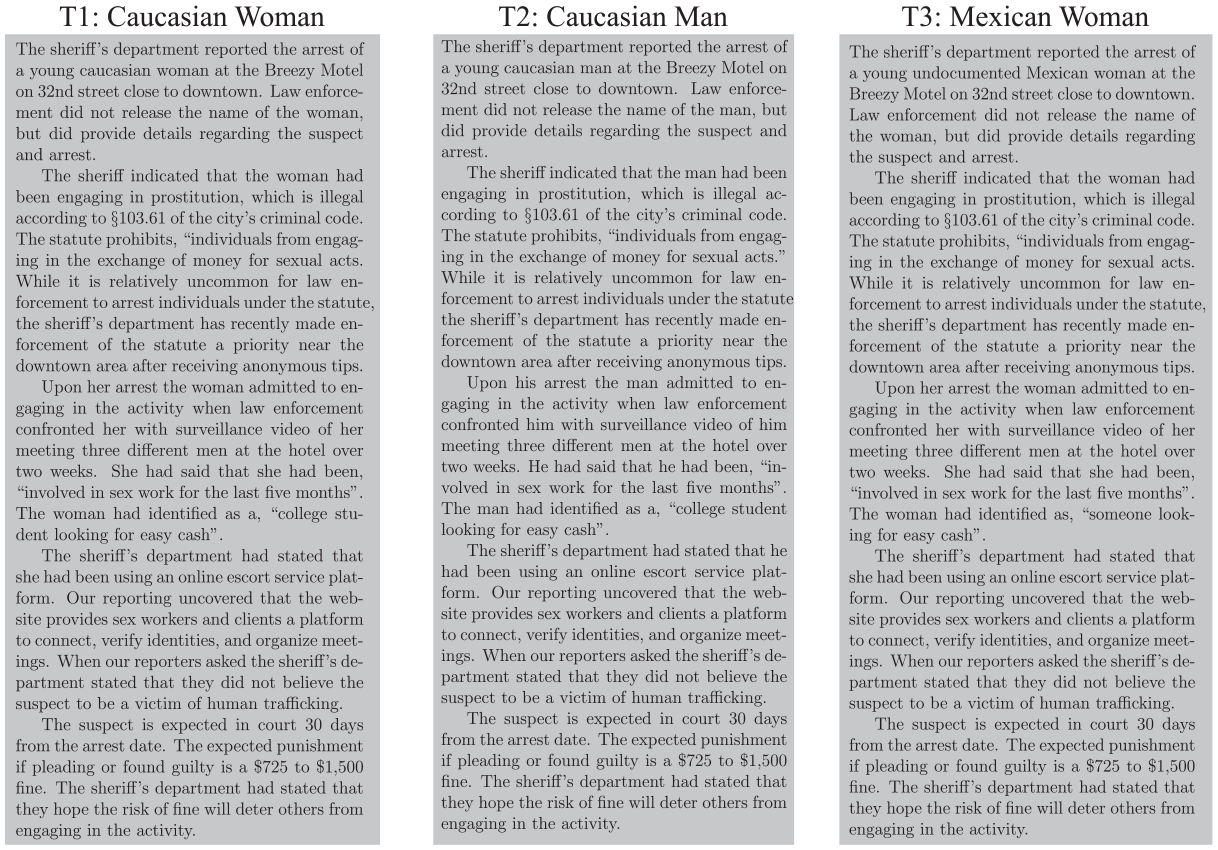
Sex worker story treatments.
Dependent Variables and Methods
There are two sets of dependent variables. First, after the module containing the news story, respondents were asked questions about their perceptions of the story. The next survey page began with: “Please answer the following four questions pertaining to the local news story on a scale from 0 = greatly disagree to 10 = greatly agree (note: 5 = neutral).” Respondents were then provided with four questions related to the story: 1. How acceptable do you find the activity the individual admitted to engaging in? 2. How likely do you think it is that the individual engaged in the activity voluntarily? 3. To what extent do you think the hotel is liable for this type of activity? and 4. To what extent do you think the punishment for the activity is appropriate? Since the response options were based on a continuous (dis)agreement scale, we utilized OLS linear regression to predict responses. The term “acceptability” was retained in Question 1 to ensure comparability with large-scale cross-national surveys on public attitudes toward sex work (see, e.g., the European Social Survey and World Values Survey). Regarding Question 2, while perceptions of voluntariness may reflect some conflation between sex work and trafficking, this measure captures broader public perceptions of agency rather than directly assessing beliefs about coercion or trafficking, allowing for meaningful analysis of attitudinal patterns.
Then, on the next page of the survey, respondents were asked the following question: “Which type of support or punishment should be given to an individual engaging in this type of activity?” The respondents were offered seven response options with the possibility to select more than one: 1. no action, 2. job training program enrollment, 3. social worker counseling, 4. peer support from sex workers’ rights organization, 5. law enforcement warning, 6. monetary fine, and/or 7. incarceration in jail. The order of the items was randomized to minimize potential priming effects and ensure that respondents were not systematically directed toward considerations of support or punishment initially. While no list of response options can be entirely exhaustive, the included options reflect common strategies identified through our interviews with sex workers and sex workers’ rights groups. To our knowledge, there has been no research agenda that has explored public attitudes in the type of support or punishment that individuals engaging in sex work should receive. Thus, beyond the experimental design’s inquiry, we also contribute to the literature by exploring these outcomes. Since the variables represent a binary selection/non-selection, we estimate logistic regression models to predict responses.
Independent Variables
Descriptive statistics and bivariate tests provide initial insights into attitudes toward the story and sex work in general. To further examine the effect of sex worker gender and ethnicity, models were estimated to incorporate key individual-level predictors that may affect responses, along with a nominal-level variable representing the experimental manipulation. The empirical analysis includes several predictor variables with either established relationships to attitudes toward sex work or that are commonly controlled for in American attitudinal studies. Specifically, the multiple regression analysis accounts for socio-demographics such as age, gender, income, education, and race.
The analysis also includes two attitudinal variables. First, respondents’ self-reported political ideology on a left-right scale is examined. It is expected that liberals will be more accepting of sex work and less supportive of severe punishment (Hansen & Navarro, 2023, 2024). Second, partisan identification is considered as a predictor variable. Partisanship has become a significant predictor of attitudes on various issues in the U.S., including views on the legal system (Hansen & Navarro 2022, 2025). It is anticipated that Democrats will exhibit a higher level of acceptability, while Republicans will show lower levels. Conversely, Republicans are expected to have greater support for punishments toward sex work. In this analysis, respondents who indicated they lean toward a party were coded as partisan identifiers of that party. This choice was made to not overinflate the impact of partisanship by only having strong identifiers coded as partisans. Variable coding and descriptive statistics for all variables utilized in the analysis here are presented in Appendices A and B.
Results
Descriptive Statistics and Bivariate Statistical Tests: General Views on Stories
In Table 1, mean responses levels are provided for each of the news stories and the full sample. Overall, the full sample mean acceptability score was 4.12, which indicates that respondents generally expressed a view that leaned toward negativity. However, respondents’ views on the acceptability of the activity varied slightly depending on the gender, ethnicity, and immigration status of the sex worker in the story. The mean acceptability score for the Caucasian woman was 4.31, and the score for the Mexican woman was 4.21; these values were not significantly different from one another. However, the Caucasian man’s acceptability score was statistically significantly lower than that of a Caucasian woman, at 3.85. Thus, the activity was viewed as less acceptable when performed by a Caucasian man compared to a Caucasian woman. The negative perceptions of Caucasian men engaged in sex work might reflect societal biases against male sex work, particularly assumptions about homosexuality or deviations from traditional gender roles.
Mean Responses for Questions by Sex Worker Gender and Race.
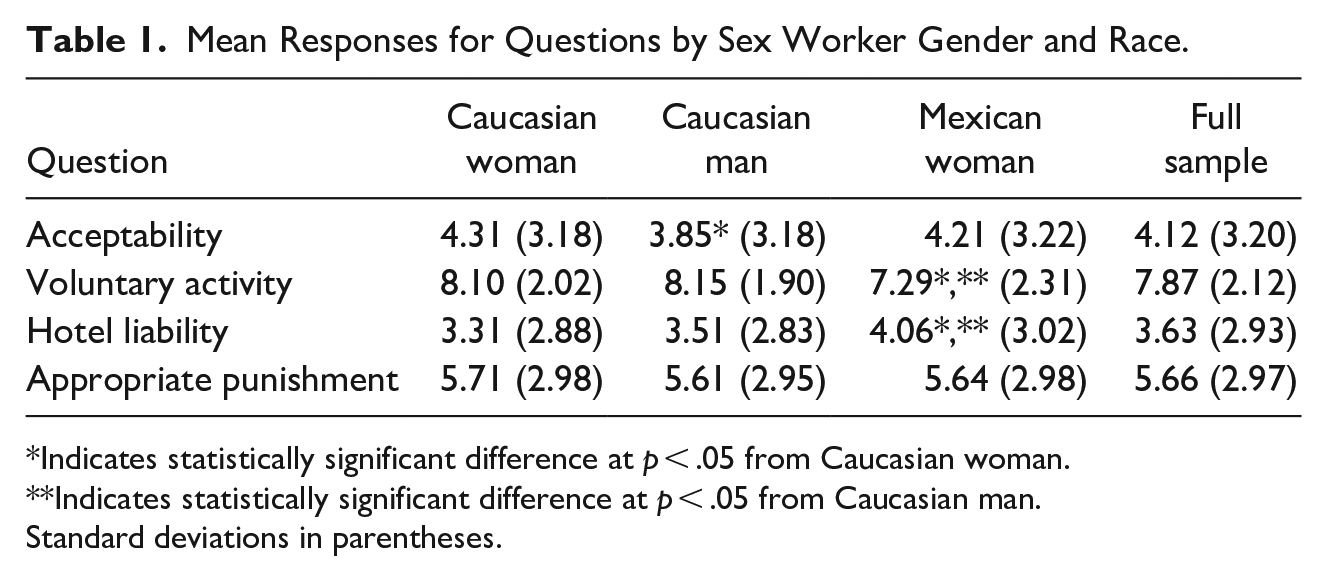
Indicates statistically significant difference at p < .05 from Caucasian woman.
Indicates statistically significant difference at p < .05 from Caucasian man.
Standard deviations in parentheses.
For the full sample, the mean score for perceptions of whether the sex worker voluntarily engaged in the activity was 7.87 on the 0 to 10 agreement scale, indicating a generally high level of agreement that the individual acted voluntarily. Both the Caucasian man and woman received similarly high scores, with means of 8.15 and 8.10, respectively. In contrast, the Mexican woman was perceived as engaging in the activity less voluntarily, with a statistically significantly lower mean score of 7.29 compared to both the Caucasian woman and man. These findings suggest that respondents may attribute different levels of agency to individuals based on ethnicity in the context of sex work.
When it came to judgments about the hotel’s liability for allowing the activity, the full sample had an average score of 3.63, which indicates a low degree of liability assigned to the hotel. However, perceptions of liability varied depending on the gender, ethnicity, and immigration status of the sex worker. Both the Caucasian woman and man were associated with similar mean liability scores of 3.31 and 3.51, respectively. In contrast, the Mexican woman elicited a statistically significantly higher perceived liability, with a mean score of 4.06, differing from both the Caucasian woman and man. While this finding may align with perceptions of reduced agency, it could also reflect broader societal biases or stereotypes linking certain ethnic or nativity groups with coercion or trafficking. Future studies could explore these dynamics more explicitly by including additional experimental conditions to isolate these effects.
Regarding the appropriateness of the punishment, the full sample had a mean score of 5.66, suggesting that respondents leaned slightly toward agreement that the punishment was appropriate. The mean scores for this measure did not differ significantly across treatments, with scores of 5.71 for the Caucasian woman, 5.61 for the Caucasian man, and 5.64 for the Mexican woman. The consistency of these scores across treatments indicates that respondents’ attitudes of the appropriate punishment were not influenced by the gender, ethnicity, or immigration status of the sex worker. While these mean scores are close to the neutral midpoint of 5, potentially reflecting some uncertainty or ambivalence among respondents, the modal response was 7, indicating general agreement with the punishment.
Descriptive Statistics and Bivariate Statistical Tests: General Views on Stories
To explore attitudes toward support or punishment for sex workers, respondents were asked to indicate which interventions they believed were appropriate for the individual depicted in the story. The results from Table 2 reveal significant differences in support preferences based on the gender, ethnicity, and immigration status of the individual, while preferences for punishment remained largely consistent. Notably, there were no statistically significant differences in the number of respondents advocating for no action to be taken, with just over 10% supporting this option.
Appropriate Support or Punishment Percentages.
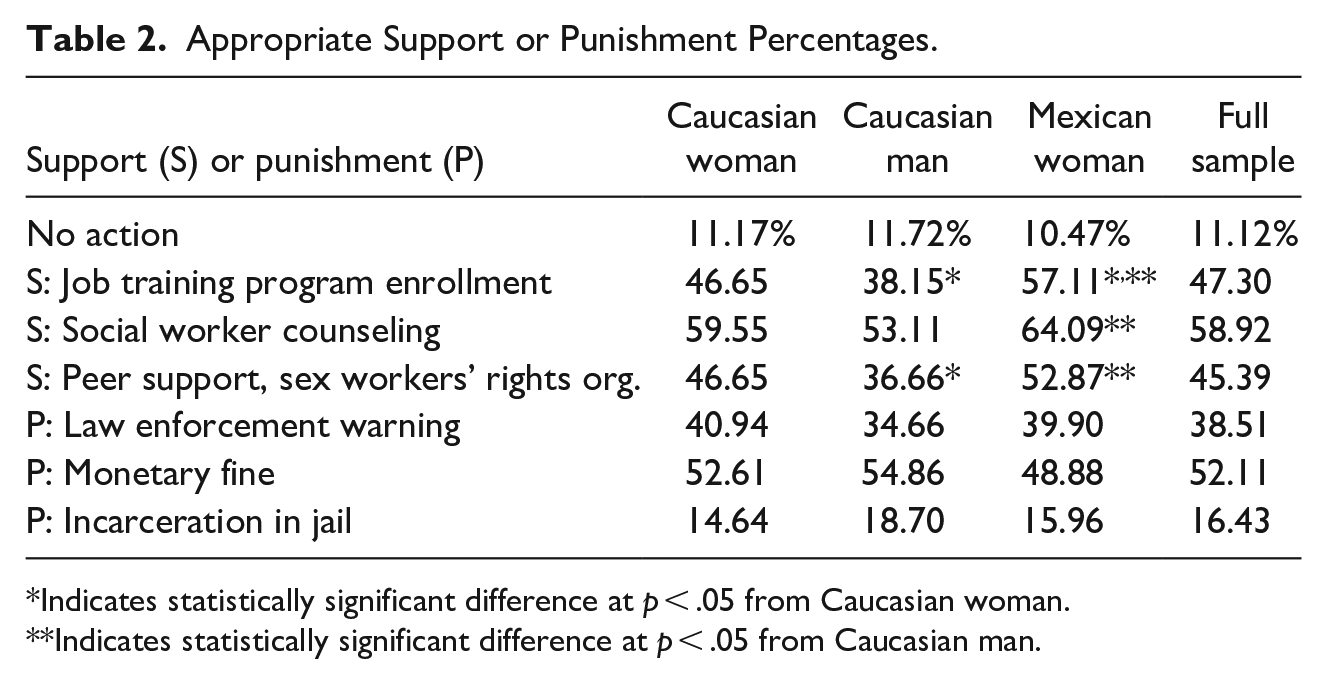
Indicates statistically significant difference at p < .05 from Caucasian woman.
Indicates statistically significant difference at p < .05 from Caucasian man.
Across all three conditions, social worker counseling emerged as the most favored intervention, receiving support from 58.92% of respondents. Notably, the rate of selection for social worker counseling was statistically similar for both the Caucasian woman and Caucasian man. However, a statistically significantly larger share of respondents (approximately 9%) indicated that the Mexican woman should receive social worker counseling compared to the Caucasian man.
When examining additional support options, job training program enrollment was the second most preferred response, with an overall endorsement of 47.30%. This option received significantly higher support for the Mexican woman at 57.11%, compared to both the Caucasian woman and man. In contrast, the Caucasian man garnered lower support for job training, at 38.15%, compared to the Caucasian woman (46.65%), indicating that respondents perceived the need for support differently based on the gender, ethnicity, and immigration status of the sex worker. Peer support from sex workers’ rights organizations also gained traction, with 45.39% of total responses favoring this option. The Caucasian woman and Mexican woman received statistically significantly higher support at 46.65% and 52.87%, respectively, compared to the Caucasian man, who received only 36.66%. Overall, these results suggest that respondents’ support for interventions varied by the gender, ethnicity, and immigration status of the sex worker, highlighting disparities in perceived needs and appropriate responses.
Among the punitive measures assessed, a monetary fine emerged as the most frequently selected response, receiving an overall endorsement of 52.11%. This option was particularly favored in the condition featuring the Caucasian man, which garnered the highest support at 54.86%, making it the most selected intervention for Caucasian men across all available items. The Caucasian woman received a slightly lower endorsement at 52.61%, while the Mexican woman had the least support for this measure at 48.88%. Importantly, the differences in the percentage of respondents selecting a monetary fine were not statistically significant across the three conditions. Additionally, law enforcement warnings received support from 38.51% of the full sample. Incarceration was the least favored response overall, endorsed by just 16.43% of respondents. Notably, there were no statistically significant differences in the selection of punitive measures based on the gender, ethnicity, and immigration status of the sex worker.
The findings reveal important nuances in public attitudes toward sex work, characterized by significant differences in preferences for support interventions based on the gender, ethnicity, and immigration status of the individual depicted. Social worker counseling emerged as the most favored intervention across all conditions, particularly for the Mexican woman, indicating respondents’ strong preference for supportive measures for sex workers. In contrast, while monetary fines were the preferred punitive measure, particularly for the Caucasian man, there were no statistically significant differences in the selection of punitive measures based on the gender or ethnicity of the sex worker. The results suggest a similar level of views on punitive accountability across all conditions, while simultaneously underscoring the varying attitudes of support needs for women and different ethnicities.
Regression Analysis: General Views on Stories
In Table 3, outputs from OLS linear regression models predicting the four more general questions related to the stories are presented. The results reveal significant socio-demographic influences on attitudes toward sex work. Age is negatively associated with the acceptability of sex work, indicating that older respondents tend to view it less favorably. Conversely, age is positively related to believing the activity was voluntarily, the hotel holds liability, and the punishment is appropriate. Gender significantly influences attitudes toward sex work, with women demonstrating a statistically lower level of acceptability regarding the act. Notably, the gender gap in perceptions is smallest when evaluating the acceptability of sex work in the context of the story featuring the Caucasian man. Conversely, the gap is most pronounced when considering the Mexican woman. Race appears to have mixed effects; White respondents showed no significant differences in acceptability but were less supportive of hotel liability and appropriate punishment. Education has a positive correlation with the acceptability of sex work, highlighting that individuals with higher educational attainment are generally more progressive on this issue. However, people with greater education have a statistically lower belief that the activity was voluntary and greater agreement that the hotel is liable. Conversely, income only has a small negative relationship with views on acceptability.
Models Predicting Views on the Stories.
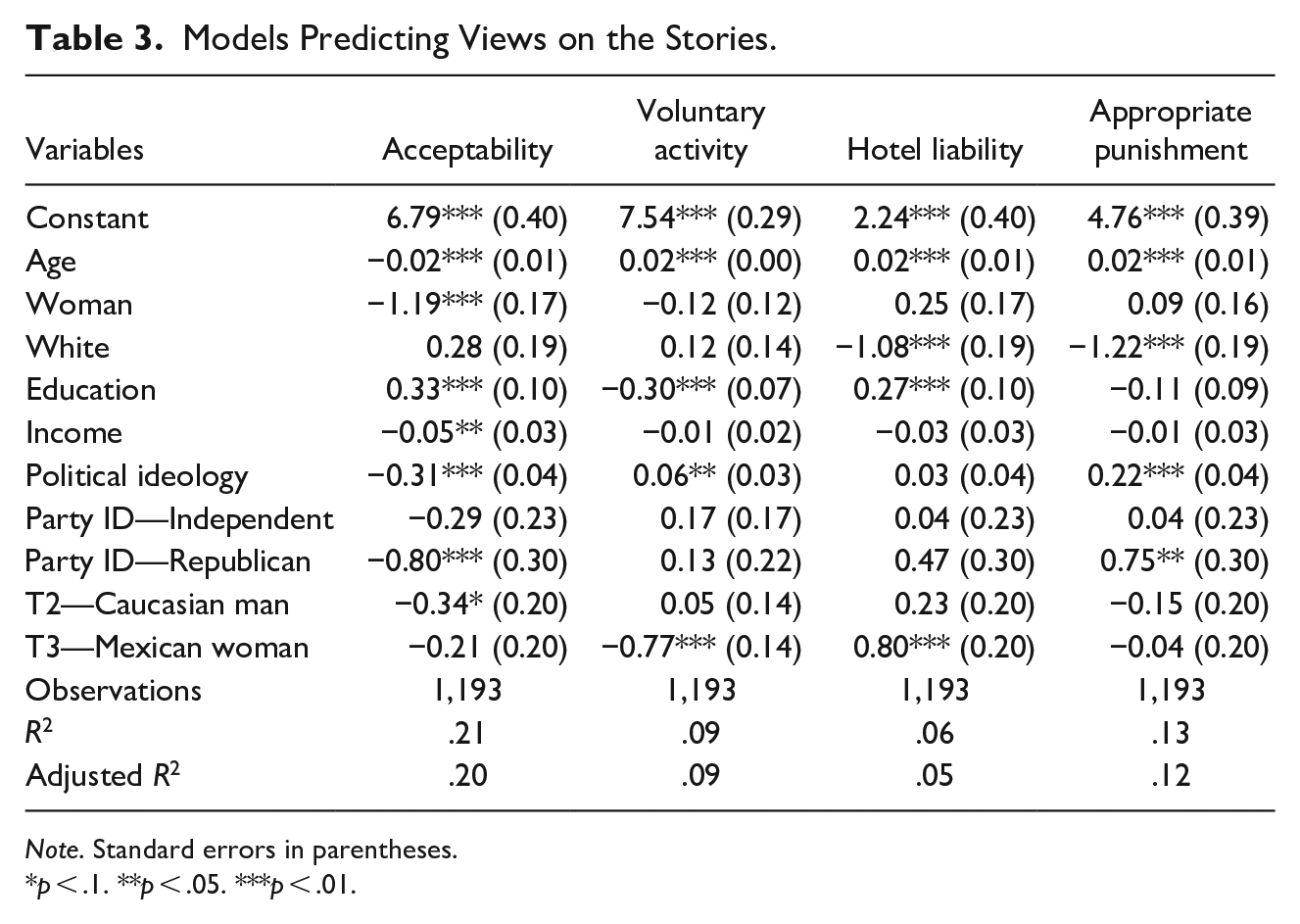
Note. Standard errors in parentheses.
p < .1. **p < .05. ***p < .01.
Political ideology and partisan identification significantly shape individual attitudes toward sex work. Conservative respondents exhibit a statistically lower level of acceptability compared to those identifying as liberal. Furthermore, conservatives are more likely to perceive the activity as voluntary and to endorse the appropriateness of punishment. Notably, ideological disparities in beliefs about the voluntary nature of sex work are present only in models examining the story featuring the Caucasian woman. In terms of partisanship, Republicans demonstrate significantly lower acceptance of sex work compared to Democrats, while Independents show no significant differences in their views. Further analysis reveals that the partisan gaps in acceptability are primarily driven by Republicans’ substantially lower acceptance of the condition involving the Caucasian man, with no significant partisan differences observed for the other two conditions. Additionally, Republicans are more inclined than Democrats to deem the punishment as appropriate; however, this finding is context-dependent, arising specifically in relation to the story featuring the Caucasian woman.
The experimental treatments also played a role in shaping respondents’ attitudes. The condition featuring the Caucasian man (T2) resulted in lower acceptability scores compared to the reference category, the Caucasian woman. However, this difference was only statistically significant at p < 0.1. Conversely, the story involving the Mexican woman (T3) resulted in significantly lower agreement regarding the voluntary nature of the activity and a higher endorsement of hotel liability. These findings suggest that respondents perceive issues of coercion and external liability as more probable in the condition involving the Mexican woman. Overall, these results underscore the importance of narrative context in shaping public attitudes, indicating that the framing of individuals depicted in the stories can profoundly affect perceptions of sex work.
Regression Analysis: Support/Punishment Interventions
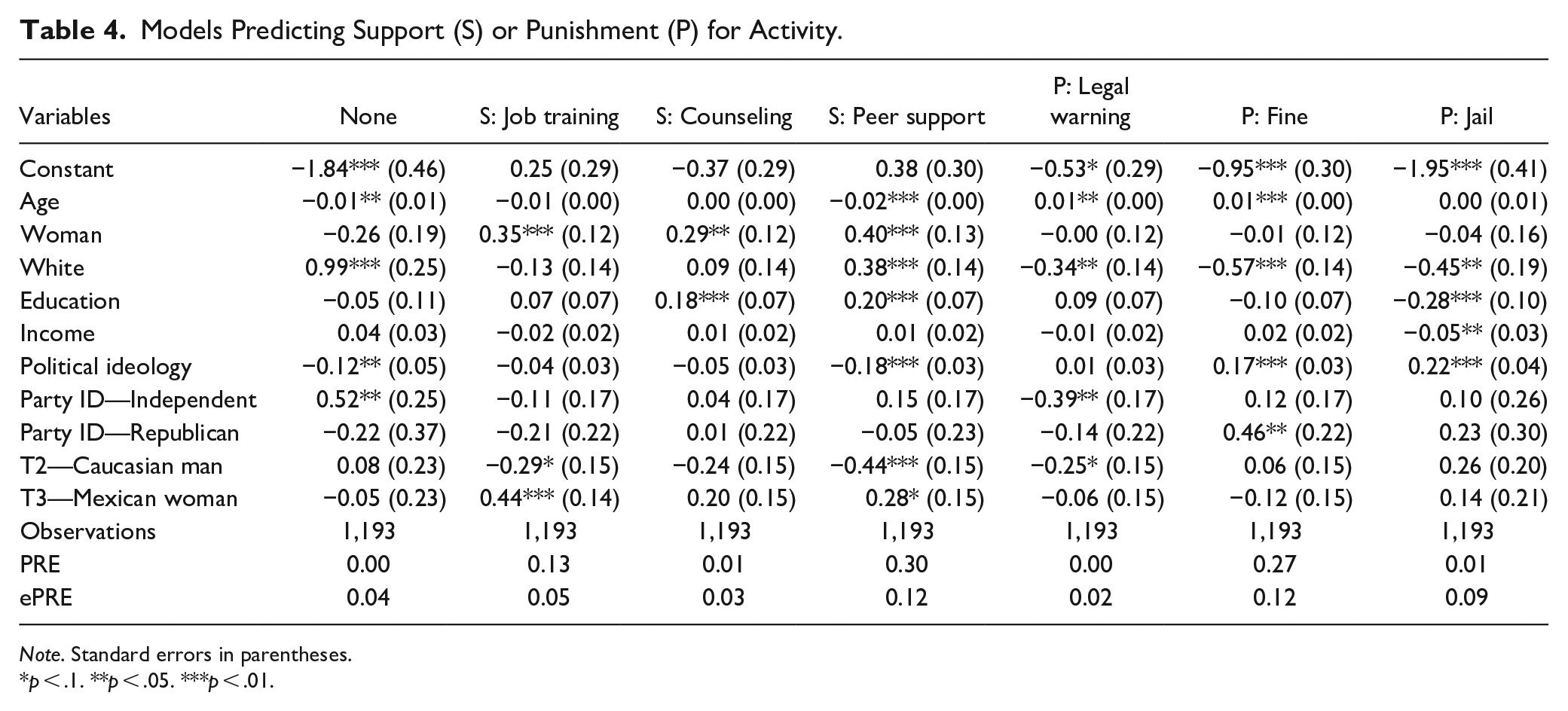
In Table 4, the results from the logistic regression models predicting support or punishment for various responses to the sex work activity are presented. The findings highlight notable socio-demographic influences on support for intervention measures. Age exhibits a negative relationship with the likelihood of endorsing non-punitive responses such as peer support or no intervention, suggesting that older respondents are less inclined to support these alternatives. In contrast, older individuals are more likely to endorse punitive measures, particularly legal warnings and fines. Women are statistically more likely to choose each of the three support interventions, while there are no gender gaps in punishment or selecting no interventions. White respondents are statistically more likely to choose no intervention or peer support and less likely to choose punitive measures. Education is statistically significant and positively related to selecting counseling or peer support and negatively related to selecting jail. Lastly, income is only negatively related to selecting jail time.
Models Predicting Support (S) or Punishment (P) for Activity.
Note. Standard errors in parentheses.
p < .1. **p < .05. ***p < .01.
Political ideology and partisan identification significantly influence attitudes toward support and punishment for sex work-related activities. Conservative respondents exhibit a statistically lower propensity to endorse peer support or to advocate for no interventions. The analysis reveals pronounced ideological disparities, with conservatives showing a greater inclination toward more extreme punitive responses, such as fines or jail time. Regarding partisanship, Independents are more likely to support no intervention and less likely to favor legal warnings. In contrast, Republicans demonstrate stronger support for fines compared to Democrats.
Additionally, the experimental treatments also shape responses to preferred interventions. Respondents were less likely to indicate job training, peer support, or legal warning when presented with the Caucasian man story compared to the Caucasian woman. However, it is worth noting that the differences in selecting job training and legal warning were only significant at p < 0.1. In addition, respondents were more likely to indicate the supportive intervention of job training and peer support when presented with the story of the Mexican woman when compared to the Caucasian woman (the latter at p < 0.1). These results point to differing intervention expectations of the public based on the identity markers of the sex worker.
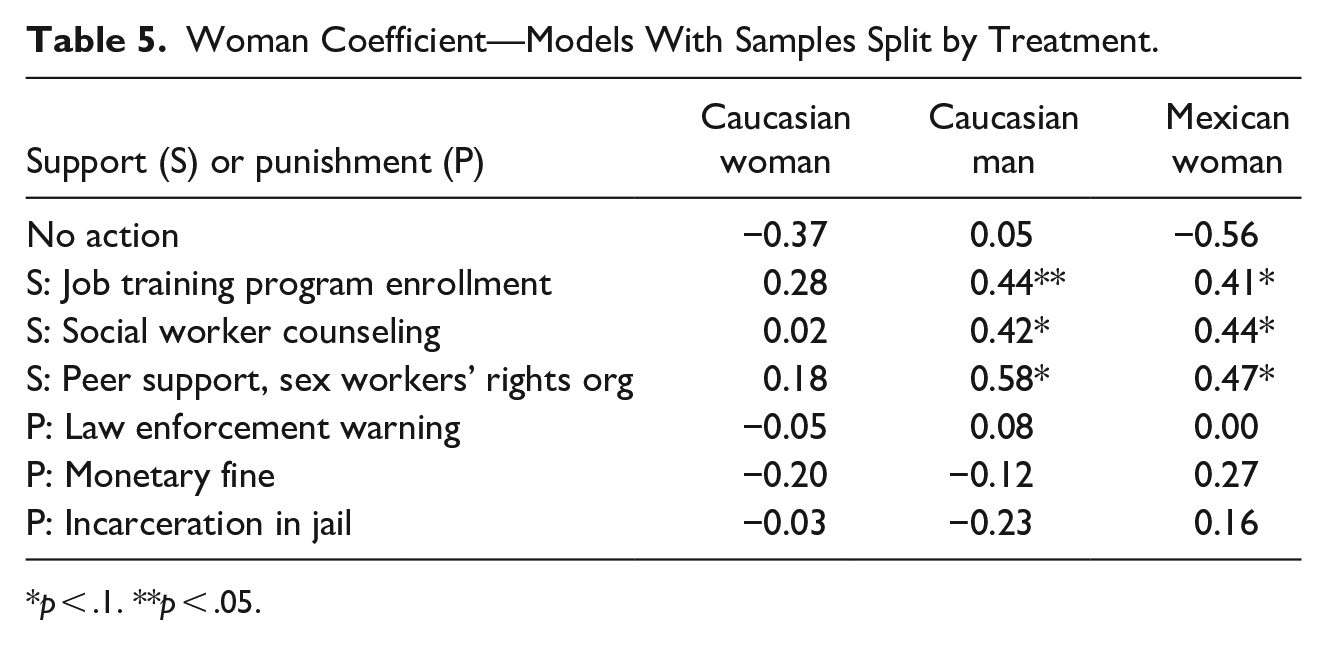
To further investigate the results, logistic regression models were estimated with samples split by treatment, focusing specifically on gender gaps in supportive interventions. Table 5 presents the women coefficients based on support or punishment by treatment. The findings indicate that gender gaps in supportive interventions exist only for the conditions involving the Caucasian man and the Mexican woman, and these gaps arise from different factors. For the condition featuring the Caucasian man, the gender gap occurs because men are much less likely to select supportive interventions compared to their responses to the story of the Caucasian woman. Conversely, the gender gap in the condition with the Mexican woman is driven by women showing a greater propensity to select supportive interventions when compared to their responses to the Caucasian woman. These results highlight the complex relationships among predictors, scenarios, and attitudes toward sex work.
Woman Coefficient—Models With Samples Split by Treatment.
p < .1. **p < .05.
Conclusion
This study set out to examine how attitudes toward sex work and punishment vary based on the gender, ethnicity, and immigration status of the sex worker, as well as public preferences for supportive versus punitive interventions. Utilizing a sample of 1,193 U.S. respondents, the study tested two key hypotheses: 1. that attitudes toward sex work and punishment would differ depending on the gender, ethnicity, and immigration status of the sex worker, and 2. that views on support or punishment for the individual engaging in sex work would vary similarly. Through a randomized experimental design featuring stories about a Caucasian woman, Caucasian man, and an undocumented Mexican woman involved in sex work, the study explored public attitudes across a range of measures.
The results largely supported the first hypothesis. Attitudes toward sex work and punishment do indeed differ based on the gender, ethnicity, and immigration status of the sex worker. Respondents found sex work performed by a Caucasian man significantly less acceptable than when performed by a Caucasian or undocumented Mexican woman. Furthermore, respondents attributed lower levels of voluntariness to the undocumented Mexican woman, which was accompanied by higher perceptions of hotel liability for the action. The result suggests that respondents were more likely to attribute coercion and external responsibility when the individual was an undocumented Mexican woman, reflecting potential biases in how the public perceives agency or vulnerability based on different identity markers in the context of sex work.
The findings for the second hypothesis were more nuanced. Supportive interventions, such as social worker counseling and job training, were favored for both the Caucasian and Mexican women, with the undocumented Mexican woman receiving significantly higher support for these options. In contrast, monetary fines were the most favored punitive measure across all groups but were particularly supported for the Caucasian man. Importantly, there were no statistically significant differences in the selection of punitive measures based on the gender, ethnicity, or immigration status of the sex worker, suggesting that punitive accountability was viewed similarly regardless of these characteristics. However, disparities in support for rehabilitation highlight the varying public attitudes of the needs of sex workers based on their gender, ethnicity, and immigration status.
Socio-demographics such as age, gender, education, and political ideology further shaped these attitudes. Older respondents were generally less supportive of non-punitive interventions and more likely to favor punitive measures like fines and legal warnings. Women were more inclined to endorse supportive interventions across most conditions, although further investigation showed this was only the case for the Caucasian man and undocumented Mexican woman. Ideological conservatives and Republicans exhibited stronger preferences for punitive measures.
While this study offers valuable insights into how gender, ethnicity, and immigration status shape public attitudes toward sex work, some limitations should be noted. A key limitation of this study is the conflation of ethnicity and immigration status in the vignette featuring the Mexican woman described as undocumented. This decision was informed by both theoretical considerations and empirical evidence from a pre-test, which revealed that many respondents assumed the Mexican woman was undocumented even when that detail was omitted. The inclusion of the term undocumented in the description of the Mexican woman may influence perceptions by activating stereotypes related to immigration or trafficking. While this design choice was intended to enhance internal validity, ensure consistent interpretation across respondents, and reflect real-world narratives, it may have introduced complexity in disentangling ethnicity from immigration status.
Additionally, the study focuses on three specific groups—Caucasian women, Caucasian men, and undocumented Mexican women—due to practical constraints in sample size and design. Including additional groups, such as documented Mexican women or undocumented Mexican men, could further enrich future findings and provide a more comprehensive understanding of how these factors intersect. Another possibility would be to describe sex workers using labels like “Black” and “White.” We also want to emphasize the need for future studies that directly explores public perceptions of trans sex workers. By continuing to manipulate these identity markers we can better disentangle their distinct and combined effects on perceptions of sex work and intervention preferences.
Overall, this study contributes to the growing body of literature on public attitudes toward sex work by highlighting the complex interplay between respondents’ socio-demographics, political orientations, and the gender, ethnicity, and immigration status of the individuals involved in sex work. Future research should continue to explore these dynamics, particularly in relation to different socio-cultural contexts and other dimensions of sex work, to better understand the mechanisms shaping public attitudes. For instance, the interaction between the type of sex work and the location where it occurs, alongside sex worker identities, could lead to significantly different attitudes and warrants further investigation. Moving forward, researchers should keep in mind that question design can shape the attitudes that are measured. Researchers must be reflexive about their own framing choices and see survey data as interactional products when interpreting results. Another aspect to consider is that many sex worker-led movements resist victimizing or criminalizing narratives and work actively to reshape public understanding of sex work as legitimate labor (Majic, 2014). These efforts foreground agency, demand policy reform, and disrupt racialized and gendered assumptions about sex workers, offering alternative frameworks grounded in rights, dignity, and lived experience.
Footnotes
Appendix A: Variable Coding
Appendix B: Descriptive Statistics
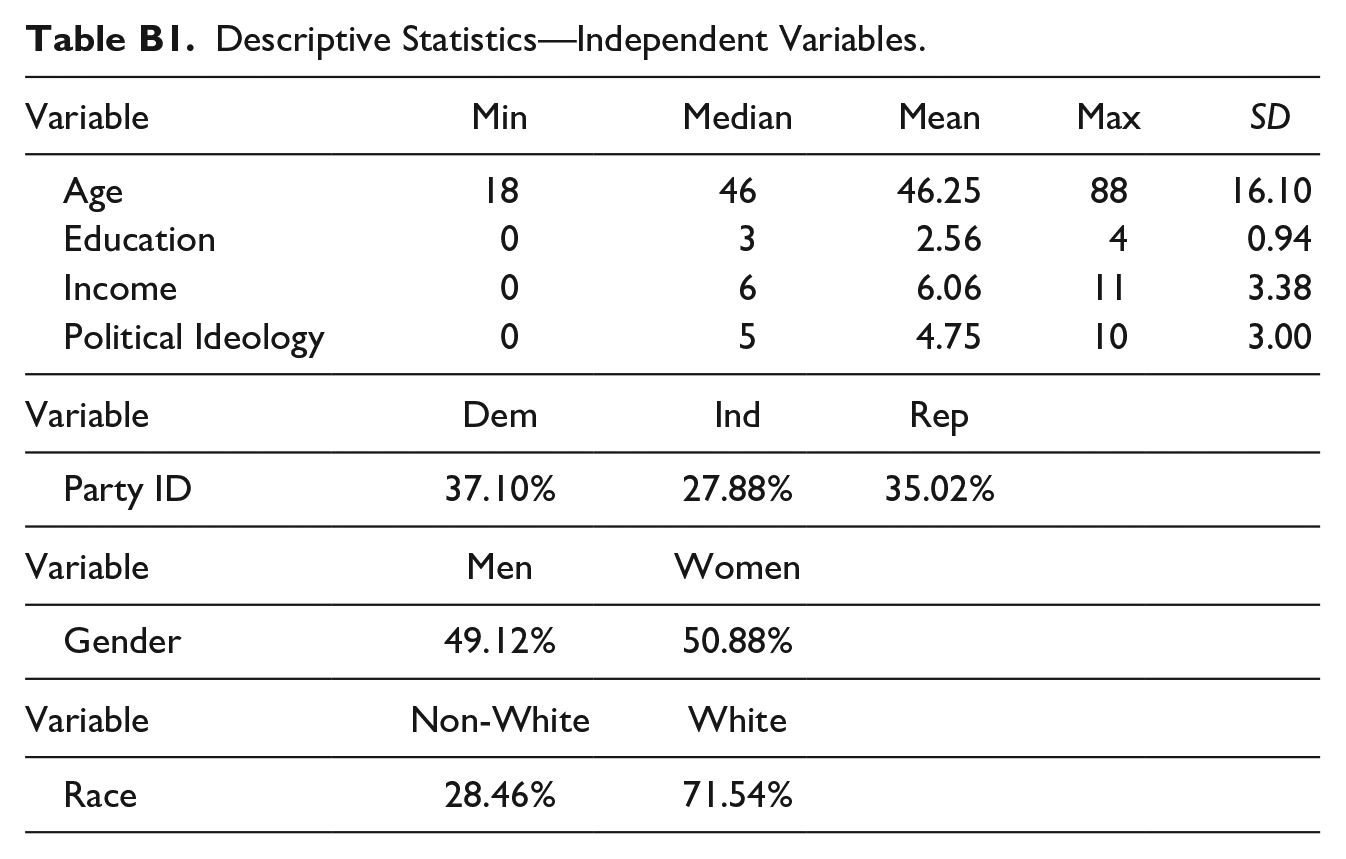
Descriptive Statistics—Independent Variables.
| Variable | Min | Median | Mean | Max | SD |
|---|---|---|---|---|---|
| Age | 18 | 46 | 46.25 | 88 | 16.10 |
| Education | 0 | 3 | 2.56 | 4 | 0.94 |
| Income | 0 | 6 | 6.06 | 11 | 3.38 |
| Political Ideology | 0 | 5 | 4.75 | 10 | 3.00 |
| Variable | Dem | Ind | Rep | ||
| Party ID | 37.10% | 27.88% | 35.02% | ||
| Variable | Men | Women | |||
| Gender | 49.12% | 50.88% | |||
| Variable | Non-White | White | |||
| Race | 28.46% | 71.54% |
Acknowledgements
Authors are listed in alphabetical order and contributed equally. The authors thank the editors of Crime & Delinquency and the three anonymous reviewers for their thoughtful suggestions.
Declaration of Conflicting Interests
The author(s) declared no potential conflicts of interest with respect to the research, authorship, and/or publication of this article.
Funding
The author(s) disclosed receipt of the following financial support for the research, authorship, and/or publication of this article: The Field Impact Grant from the College of Criminal Justice and Criminology at Sam Houston State University supported this work.
Informed Consent
Obtained.
IRB Approval Number
IRB-2024-96.
