



Abstract
Using an environmental corrections and opportunity-reduction framework, this study examined whether offender relapse, new crimes and revocation outcomes would improve if supervision officers utilized personality instrument results during individual meetings. Adult male and female offenders on federal supervised release (245 in the treatment group and 271 in the comparison group) were tracked for a minimum of 2 years. Revocation rates for the treatment/PRINT group were significantly lower than the comparison group. Results suggested that opportunity reduction strategies from the PRINT instrument may have contributed to lower revocation rates. However, the techniques learned may not have been strong enough to offset the strong habitual and reactionary pull of relapse, or complications caused by involvement in a new crime.
Traditional community supervision practices have long embraced combining treatment/assistance and control/authority philosophies beginning with officer typologies that were introduced over 50 years ago (Glaser, 1969; Klockars, 1972). While the emphasis between treatment and control philosophies has shifted over time, recent research has shown that community supervision practices designed for deterrence, such as swift, certain and fair control techniques, have too small of an impact on recidivism to consider the approach to be effective (MacKenzie 2006; Pattavina et al., 2023). Researchers agree that a different approach was necessary to increase supervision effectiveness and move beyond the outdated dynamic (Miller, 2015; J. Skeem & Manchak, 2008; Whetzel et al., 2011). The Environmental Corrections paradigm introduced the idea that reducing propensity or motivation to offend, along with reducing an offender’s opportunity to offend will lower recidivism below traditional community supervision techniques (Cullen et al., 2002). Oftentimes, correctional practitioners must make broad generalizations for how opportunity reduction is accomplished largely based on inadequate information about an individual’s unique temperament or factors that motivated their behavior. This study examines whether client behavioral outcomes would be improved if probation officers had access to personality instrument results of individuals they supervised.
Tools to Improve Quality of Officer-Client Relationship
Research has consistently found that positive rapport and quality client officer interactions are essential to improving client behavioral outcomes during community supervision. Quality interactions were defined in one study by client perceptions as having consistent and supportive contact (Chamberlain et al., 2018). In other studies, quality interactions were measured by whether a strong alliance was created using perceptual measures validated by the Working Alliance Inventory (Horvath & Greenberg 1989; Walters 2016) or the Dual Relationship Inventory-Revised (Blasko et al., 2015; J. L. Skeem et al., 2007). Most studies concluded that a quality working or therapeutic alliance between a client and a parole or probation officer was associated with less substance use, and less violations during supervision. Only one study found the opposite—that a community supervision officer’s relationship style and behavior had no direct bearing on new offenses for women offenders (Morash et al., 2015, 2016) likely due to the lack of discretion that officers have when new crimes are committed.
Programs were developed that trained probation and parole officers how to incorporate rehabilitative and/or core correctional content into their individual client meetings. The most common staff training curricula include Effective Practices in Community Supervision (EPICS) model (Smith et al., 2012), Staff Training Aimed at Reducing Re-arrest (STARR) program (Alarid & Jones, 2018; Labrecque & Viglione, 2021), and Strategic Training Initiative in Community Supervision (STICS) program (Bonta et al., 2011, 2021). At least one random control trial of the STICS curriculum found client recidivism to be no different between the STICS-trained group and its comparison (Bonta et al., 2019). However, a meta-analysis of 25 studies assessing the impact of these training programs in general found lower client recidivism among trained officers, compared to client recidivism among untrained officers (Labrecque et al., 2023). The researchers attributed these reductions to increased session quality, officer helpfulness, and focus on criminogenic needs during the officer-client sessions.
In reality, most local and state level probation officers have had limited exposure to formalized and structured training sessions due to expense, time, and lack of agency training budgets. Relatedly, many probation officers lack sufficient background in counseling and social work skills or may not be able to identify environmental contributors to criminal behavior. Furthermore, the typical risk/need assessment identifies potential problem areas for an offender, but only on a superficial level. Most officers can determine a plan of supervision, such as reporting requirements and restrictions to be imposed, but fewer tools exist that offer both the officer and the client to have more information about the client to work toward their own success as a partner in the process.
Environmental Corrections
Francis Cullen et al. (2002) introduced environmental corrections as a concept that applied elements of routine activities theory and environmental criminology to probation and parole supervision. Routine activity theory assumes that a criminal event requires the simultaneous intersection of a criminally motivated offender, a suitable target for victimization, and the absence of capable guardians at the location (L. E. Cohen & Felson, 1979). In addition to these three elements, there must also be an absence of “handlers” defined as significant others important to the offender. Environmental criminology assumes that the environment is comprised of space, time, social, cultural, and legal aspects. An individual’s immediate environment can contribute to criminality if the environment itself or a specific location is criminogenic (Brantingham & Brantingham, 1981).
Thus, it stands to reason that to disrupt a criminal event, crime opportunity-reduction strategies could be combined with reducing the propensity or motivation the offender has to commit crime in the first place. In applying these theories, probation officers could reduce propensity by helping the probationer learn how to reduce exposure to crime opportunities and to develop positive habits and prosocial behavior (Schaefer et al., 2016). In a nationwide survey of 1,727 probation officers, Miller (2014) found that officers commonly talked with offenders about how to avoid risky activities, locations, and not to associate with friends with criminal records. However, garnering support from family members and other place managers was less common.
Only one known empirical study tested the effectiveness of specific opportunity reduction strategies with probationers to measure recidivism between two groups (Schaefer & Little 2020). The probation officer determined the precise people and locations that contributed to criminal behavior for that individual, and those environmental conditions were integrated into the treatment plan. The second strategy was the probation officer focused the client officer meetings on criminogenic needs or primary problems that are crime-related for that individual. Of the probation group receiving opportunity-reduction strategies, one-fourth re-offended, compared with 35% of probationers in a matched comparison group, leading the researchers to conclude that opportunity strategies can effectively reduce recidivism (Schaefer & Little 2020). Given that the idea is to reduce both the propensity and the opportunity to commit the crime, the current study is not testing theories. Rather, our research seeks to examine the extent to which a personality instrument called PRINT® can be used as an environmental corrections strategy alongside existing risk assessment instruments to help officers recognize motivators and triggers for each individual.
The Current Study
This research sought to determine the feasibility and potential for a personality instrument called PRINT® to be used during the community supervision of offenders to help reduce crime opportunities. While the PRINT instrument has been administered to probation officers, the instrument has not been empirically studied with offenders on community supervision, nor has this instrument been validated for the purposes of propensity to commit crime. Supervision of the PRINT group is assumed to reduce exposure to environmental factors or triggers conducive to drug and alcohol use and other criminogenic situations—making these measures ideal as outcome variables. In this study, we examine whether clients who have taken the PRINT have different behavioral outcomes compared to clients who were supervised without completing the PRINT. Through the information gleaned from PRINT, we hypothesize that probation officers will be better able to recognize environmental stress triggers that may lead to alcohol/drug use and/or contribute to criminogenic situations for clients who complete PRINT than for the comparison group that does not complete the assessment. Consistent with opportunity reduction strategies, the probation officer is using the knowledge gained from the PRINT and trigger reports to better understand their clients, and to suggest options that may motivate change.
Hypothesis 1: Clients who complete the PRINT survey will have lower rates of alcohol/drug use than clients who do not complete the PRINT survey.
Hypothesis 2: Clients who complete the PRINT survey will be less likely to engage in new crimes during supervision compared to clients who do not complete the PRINT survey.
Hypothesis 3: Due to an increased understanding of their clients, Probation officers will be less likely to recommend revocation of offenders from the PRINT group compared to clients who did not complete PRINT.
Method
Participants
Secondary data was obtained from one federal probation district in which all officers were trained and proficient in the STARR curriculum. Most clients began post-release supervision during 2019 following a term in federal prison. 1 Behavior on supervision was tracked by the probation department until November 2021, and then de-identified data was provided to researchers.
Two years prior to data release, clients were selected at random for participation. Clients being supervised for sex offenses were excluded due to imposed restrictions on computer use. A probation staff member with data access divided the eligible offenders randomly into two groups: the treatment group who were administered a PRINT survey (discussed in the next section) and a comparison group of similar offenders who did not take the PRINT survey. After the groups were divided and prior to distributing the assessment, statistics were run on the two groups to assure that the distribution of risk level, sex, age, and race/ethnicity were not significantly different as a group. Twenty offenders could not complete the PRINT instrument due to reading comprehension or language barriers that prohibited their full understanding of the questions, so they were removed without replacement from the study. The final sample sizes were 245 offenders in the PRINT group and 271 offenders in the comparison group for a total 516 clients under community supervision.
PRINT® Personality Survey
The Paul Hertz Group created and validated a proprietary online personality assessment instrument to uncover root causes of environmental stressors and inner motivations for use in various professional settings. The PRINT has three primary goals. The first goal is for respondents to better understand what factors stresses or “triggers” them, so that these triggers do not become dysfunctional “shadow behaviors.” Triggers are environmental stressors that can cause intense reactions and unpleasant thoughts that can become a negative situation or turn into dysfunctional behaviors. A second goal of the PRINT is to determine what motivates each person so that they can maximize their optimal state and be their “best self” as often as possible. Individuals have two Unconscious Motivators® that guide their behavior at a deeper level and explain how they are likely to interpret certain situations. Most people are not aware of these automatic and unintentional motivators until they complete the survey. Since most people vacillate between shadow behaviors and being their best self, a third goal is that the report shows how handlers (probation officers, employer, family, and friends) can help the client be their best self. There are 72 distinct combinations that are categorized into one of nine “major” typologies and one of nine “minor” typologies. The strength of the minor Unconscious Motivator is indicated as having a low, medium, or high relationship with that person’s major Unconscious Motivator to indicate how much influence the minor has on the major motivator.
The PRINT survey has been used with over 300 agencies including government, private sector, and higher education. In the justice system, PRINT has been used with at least 10 U.S. Probation districts and 6 Federal Courts (The Paul Hertz Group, 2023). The PRINT was found to be reliable and valid in its accurate depictions of respondents (Testa, 2004). However, PRINT has not been designed or validated for the purposes of predicting propensity to commit crime. Like with all personality inventories, the accuracy of PRINT depends on an individual’s truthfulness and response consistency (Gall et al., 2007).
Procedure
The study was approved by the East Carolina University Institutional Review Board (IRB) and by the University of Texas at El Paso IRB. The Paul Hertz Group provided probation officer training in the PRINT instrument goals, explanation of concepts such as Unconscious Motivators® “best self” and “triggers,” and how to interpret and apply to their case management practices. Probationers in the PRINT group voluntarily completed the PRINT instrument using a computer in a private room in the probation department. Each probation officer logged into the PRINT survey and obtained informed consent prior to departing the room to allow the offender to complete and submit the PRINT survey privately. Each PRINT and trigger report was generated following survey completion and shared with the client and his or her probation officer. Officers used the results of the PRINT report in their supervision of the treatment group between October 2020 and November 2021. The comparison group received supervision as usual.
Measures
The three outcome variables were the number of positive drug tests while on supervision (continuous variable ranging from 0 to 12); whether a new crime had been committed while on supervision (0 = no; 1 = yes); and whether the offender was revoked from supervision (0 = no; 1 = yes). A client’s continued use of drugs or alcohol was measured by the number of positive urinalysis screenings that confirmed the presence of drugs or alcohol in the body. The dependent variables measured in this study were similar to measures of community supervision noncompliance in other studies (Lowder et al., 2022).
Sex was coded as 0 = female and 1 = male. Age was a continuous variable with a range between 21 and 75 years and a median of 40 years old. Race/ethnicity was initially coded as four groups (African American, Caucasian, Latino, and American Indian). Due to their small numbers, Latino and American Indian individuals were collapsed with Caucasian, so that 1 = African American and 0 = all other racial/ethnic groups. Marital status was defined as 0 = single/separated or divorced; and 1 = married or cohabitating with a significant other. Formal education level was separated into 0 = below high school; 1 = GED or high school; and 2 = vocational technical school or some college. Current employment (0 = no; 1 = yes) was defined as whether a client was working part-time or full-time while on community supervision.
Each client’s criminal history was measured by whether they had previously been on federal supervision (0 = no and 1 = yes). In addition, the type of crime they committed to get on the current supervision period was coded into four categories: drug, violent, property/financial, and public order, and the presence of a weapon (0 = no; 1 = yes) during their most recent crime.
Given that risk factors are strongly associated with propensity for recidivism, there were three measures of risk. The Post-Conviction Risk Assessment (PCRA) is a validated instrument that is a numerical sum of 15 variables shown to predict recidivism, where a value of 1 is scored if the item is present or 0 if absent. The 18-point scale denotes the general recidivism risk score coinciding with the supervision level (0–5 points = low risk; 6–9 points = low/moderate; 10–12 = moderate; 13–18 = high risk). These risk levels are systematically used by every federal probation district as defined by the Administrative Office of the U.S. Courts as a guide for monitoring and intervention levels (T. H. Cohen & Bechtel, 2017; VanBenschoten et al., 2016).
The criminal thinking/cognitions domain is a separate item that measures the presence of antisocial attitudes (0 = no; 1 = yes). Substance abuse as a risk factor (0 = no; 1 = yes) measures whether drug or alcohol use resulted in disruptions at work/school/home and/or whether drug use continued despite legal or interpersonal problems. Both of these domains are scored separately from the PCRA and frequently integrated into probation and parole supervision plans (Alexander et al., 2014; T. H. Cohen & Bechtel, 2017).
Sample
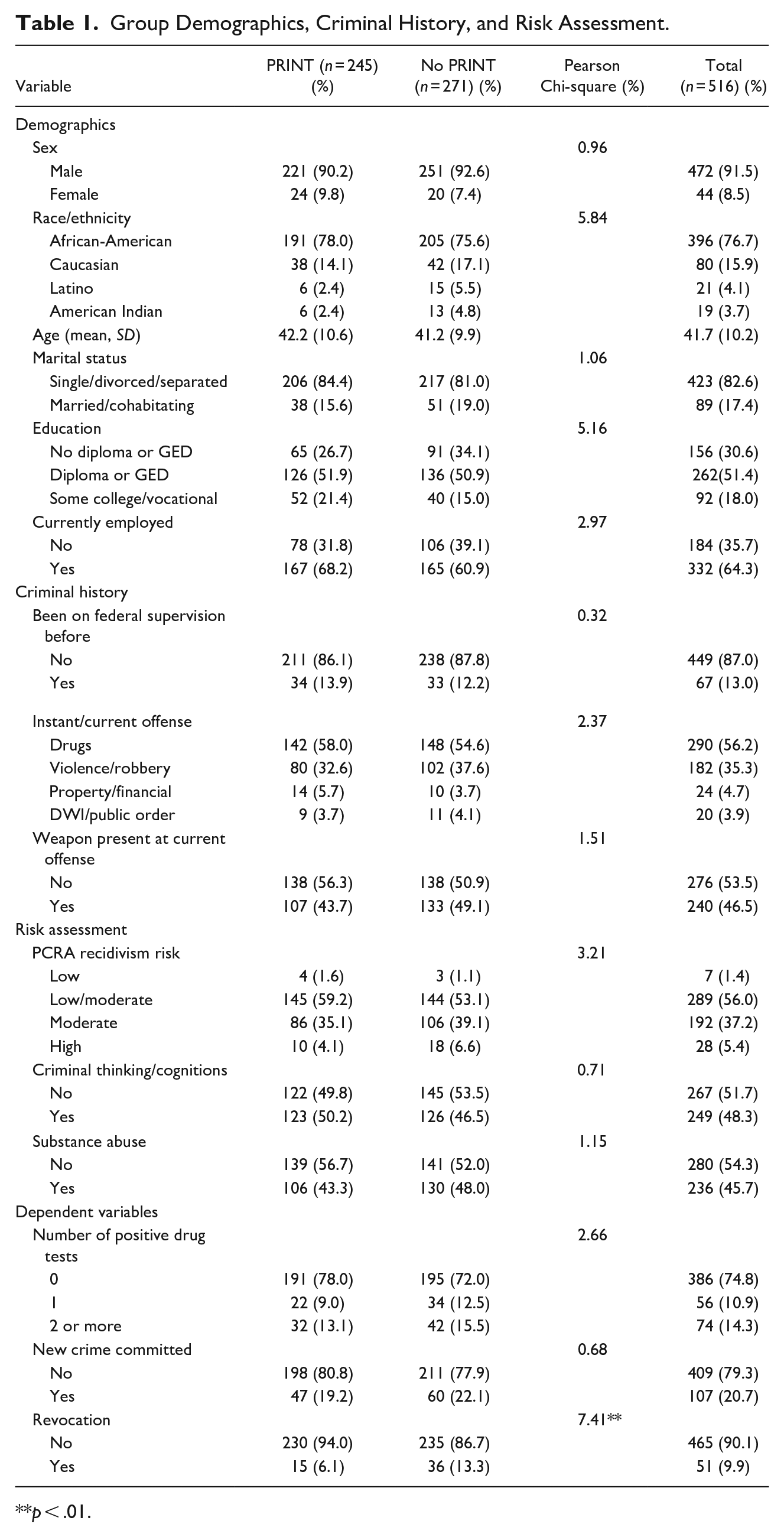
According to Table 1, over 90% of clients were male, 7 out of 10 clients were African American, with 82% of clients reporting themselves to be single, separated, or divorced. The average client age was 41.7 years old, with a standard deviation of 10 years. These sample characteristics were representative of the larger group of federal probation clients supervised in the Eastern District of North Carolina. About 95% of clients had served time in prison ranging between 1 and 30 years, with an average time served of 7.5 years before their release to community supervision. Drug offenses comprised over half of all convictions, with violent offenses (namely assault and robbery) at 35%. The remaining convictions were financial crimes, property offenses, and public order. Weapons were present in almost half of all crimes. About 87% of offenders were on post release supervision for the first time. For this reason, over half of all clients were categorized with a “low/moderate” risk of recidivism despite having problems with substance abuse and criminal thinking patterns. One positive attribute was that 64% of clients on supervision were employed.
Group Demographics, Criminal History, and Risk Assessment.
p < .01.
Data Analytic Strategy
Chi-square crosstabulations confirmed no treatment and comparison group differences with respect to any of the demographic variables, criminal history, or risk level. The similarities between the two groups (n = 245 treatment and 271 comparison) thus help to isolate the treatment effects of the PRINT instrument during supervision as much as possible. A Pearson correlation matrix table of all variables showed that correlations between two variables were weak or non-existent, except for one pair of moderately correlated variables (.47) between substance abuse and PCRA recidivism risk. A variance inflation factor (VIF) test between the variables confirmed that multicollinearity did not exist. The VIF was 1.30 for substance abuse and 1.34 for PCRA recidivism risk, and at 1.0 for all other variables indicating no concerns.
Given that the number of positive drug tests was a continuous variable, ordinary least squares (OLS) regression model was used with both treatment and comparison groups together to measure which variables may be significant predictors of alcohol or drug use during community supervision. Logistic regression models were used with two binary dependent variables: new crime committed on supervision (no/yes) and whether supervision was revoked (no/yes).
Results
Continued Alcohol and Drug Use on Supervision
Bivariate analyses in Table 1 indicate that the PRINT group had less positive drug tests over a one-year period than the comparison group, although the difference was not statistically significant. Although not shown in any of the tables, other common forms of noncompliance included failure to attend treatment and failure to show for probation officer appointments. Clients with technical violations accrued between 1 and 22 different forms of misconduct. About 53% of all clients had no technical violations over the course of a year, with no differences between the treatment and comparison groups.
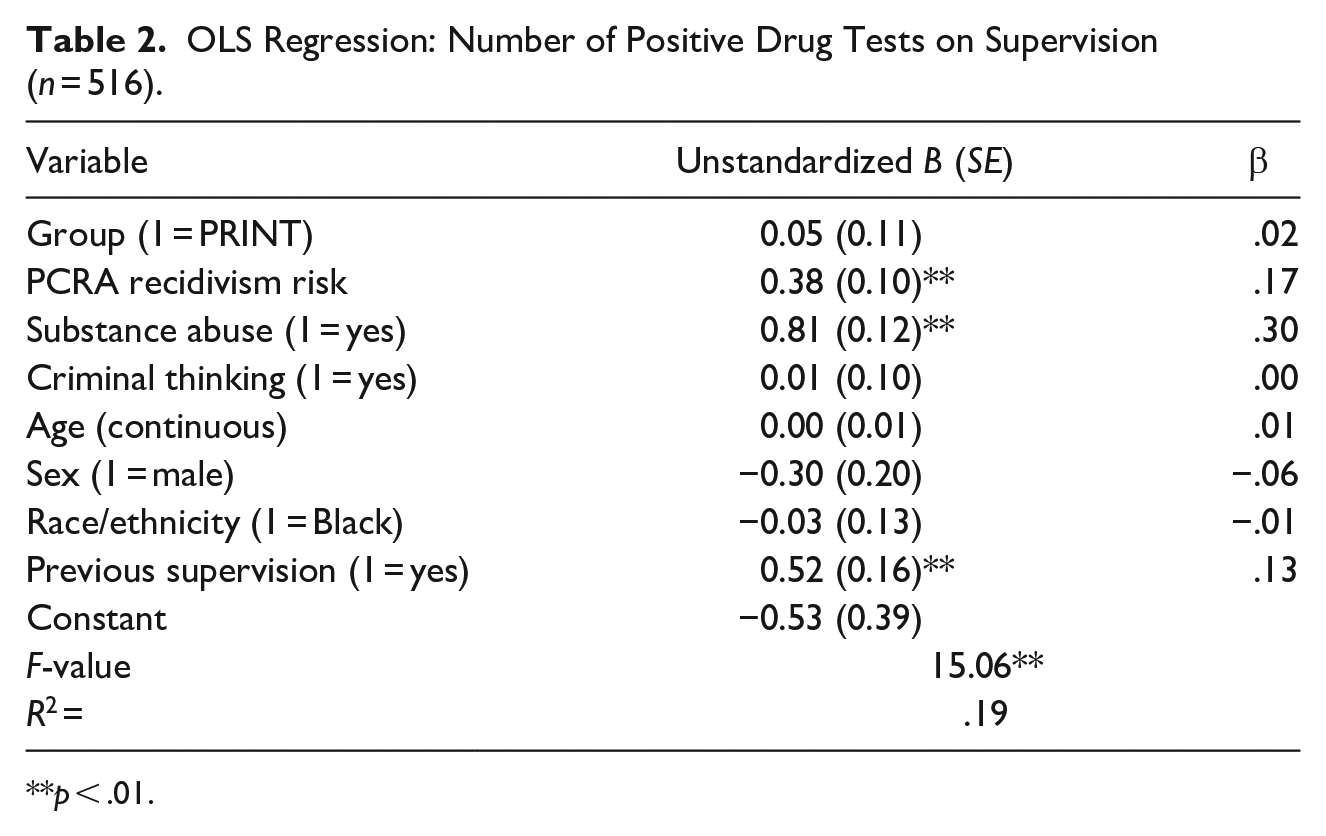
Table 2 shows the results of the OLS regression model that determined which variables predicted clients who continued to use alcohol and drugs on supervision. Clients with pre-existing substance abuse issues and clients who had been on supervision before were significantly more likely to use drugs and alcohol. As PCRA risk level rose, so too did the likelihood that clients would use drugs and alcohol during supervision. Sex, age, race/ethnicity, and problems with criminal thinking cognitions did not predict drug use.
OLS Regression: Number of Positive Drug Tests on Supervision (n = 516).
p < .01.
New Crimes Committed During Supervision
Bivariate analyses found no overall group differences on the rate of commission of new crimes while on supervision. Sixty individuals out of 271 (22.1%) in the comparison group and 47 out of 245 (19.2%) in the PRINT group committed a new crime while on supervision. The most frequently occurring new crime was traffic/driving while intoxicated/public order offenses (42% of all new crimes), followed by violent crimes (32.7% of the total). There were group differences, however, in the type of new crimes committed. The PRINT group was significantly less likely to have committed a new drug, or robbery/violent crime than the comparison group, but more likely to be involved in new financial/property crimes.
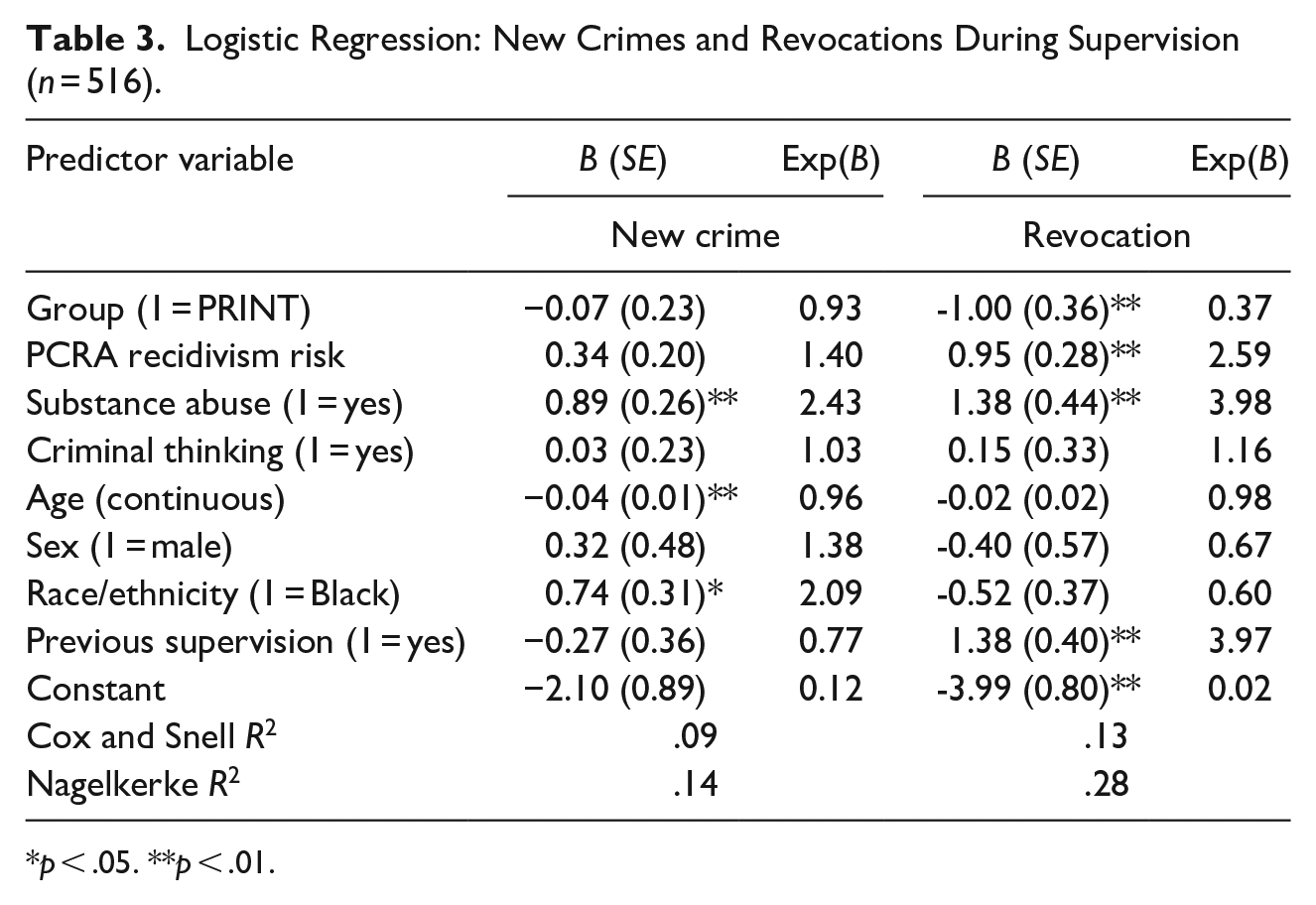
In Table 3, the outcome of whether a new crime was committed (0 = no; 1 = yes) was regressed on group type, substance abuse, PCRA recidivism risk, previous supervision, and criminal thinking. Control variables included sex, age, and race/ethnicity. When both treatment and comparison groups were analyzed together, group membership was not significantly different in who committed a new crime. Having a pre-existing substance abuse problem was the strongest predictor of committing a new crime (Wald = 11.3), with age (Wald = 7.4) and race/ethnicity (Wald = 5.5) also being important predictors. The odds that having a pre-existing substance abuse problem would result in a new crime being committed were 2.43 times greater than the odds of someone without a substance abuse problem. As age increases by 1 year, the odds that an individual will commit a new crime decreases by 4%. The odds that an individual who is African American would commit a new crime was 2.09 times greater than the odds of a new crime by someone who was not Black (a member of another race or ethnicity).
Logistic Regression: New Crimes and Revocations During Supervision (n = 516).
p < .05. **p < .01.
Revocation of Community Supervision
More offenders in the PRINT group (71%) ended supervision successfully compared to the comparison group (52.6%) and this difference was significant. Out of the total number of 516 clients, 130 individuals successfully completed supervision (cases closed) during the study period or they were revoked. Out of the 130 closed cases, the overall revocation rate was 39.2% compared to a 30% overall revocation rate district-wide at that same time. The rates for the PCRA-defined moderate (50%) and high-risk clients (73.7%) were higher than the low-risk clients, as supported by nationwide recidivism statistics on this population (Johnson, 2023).
The four variables that were significant in the logistic regression model were group membership, previous federal supervision, PCRA recidivism risk and pre-existing substance abuse. In the case of group membership, the odds of revocation decreased by 63% for those in the PRINT group. The odds that having a pre-existing substance abuse problem would result in a revocation were nearly four times greater than the odds of someone getting revoked who did not have a substance abuse problem. The odds of revocation occurred nearly four times as often for individuals previously under federal supervision when compared to individuals under supervision for the first time. Finally, the odds of revocation increased by 2.6 times as each level of PCRA recidivism risk increased by one level, such as between the “low/moderate” level and the “moderate” level.
Discussion
Using the environmental corrections theoretical framework, we assessed the utility of the PRINT® survey in community corrections supervision (Cullen et al., 2002). The PRINT had previously been used to improve employee outcomes in corporate and government settings, but this study was the first known attempt at determining whether outcomes improved with convicted offenders on post-prison supervision. Clients who were supervised using PRINT had the same meeting frequency compared with similar clients who experienced regular supervision techniques. However, the meetings for the PRINT group centered around how to use unconscious motivators to be the most functional person possible and how to avoid criminogenic opportunities for that offender’s unique situation.
This study assumed in Hypothesis 1 that engaging in a thought process of avoiding triggers and environmental stressors would in turn reduce alcohol and drug use for the PRINT group during supervision. While the PRINT group engaged in less drug use, the difference was not significant. In other words, the PRINT group performed no better or worse than the comparison group when it came to drug use. Clients who had problems with criminal thinking also performed similarly to clients without this problem. Instead, justice-involved offenders with higher risk scores, pre-existing substance abuse issues and clients who had been on supervision before were significantly more likely to use drugs and alcohol. While these significant variables have found support elsewhere (Galvin et al., 2022; Kopak et al., 2016), these results taken together suggest two possibilities. First, the techniques learned from the PRINT reports may not have been strong enough to offset the strong habitual and reactionary pull of relapse. Second, the information from the PRINT and trigger reports weren’t utilized often enough by probation officers to make the difference. Irrespective of the reason, Hypothesis 1 was not supported.
Using the same rationale as Hypothesis 1, Hypothesis 2 predicted that PRINT clients would be less likely to engage in new crimes during supervision compared to clients who did not complete the PRINT survey. Hypothesis 2 was rejected when we found that being in the PRINT group did not matter whether a new crime was committed. Like with alcohol and drug use, the presence of pre-existing substance abuse problems resulted in a greater likelihood of a new crime being committed in previous studies (Kopak et al., 2016), so that finding is expected. However, for individuals who committed a new crime, we are uncertain if the type of crime was merely a coincidence or if involvement in new financial/property crimes was intentional by individuals in the PRINT group over committing a more serious violent or drug-related crime.
The only group differences were found in the rate of revocation that supported Hypothesis 3. The PRINT group was less likely than the comparison group to be recommended for revocation. One possibility could be that opportunity reduction strategies reduced recidivism, consistent with previous research (Schaefer & Little, 2020). Another possibility could be that revocation decisions were discretionary compared to the actual reports of client alcohol and drug use and new crimes. Our analysis suggests two possibilities. First, due to the extra knowledge or understanding they had about their client, probation officers may have had a stronger working alliance and been more determined to work longer or harder with PRINT clients than with the comparison group for minor infractions or for discretionary misconduct (Chamberlain et al., 2018; Walters, 2016). Another possibility is that the difference may have been caused by the “Hawthorne effect”—that the officers may have behaved differently because they knew they were being watched (Brannigan & Zwerman, 2001; Merrett, 2006). In sum, our results to date suggest that the PRINT instrument may not significantly change client behavior on supervision, but it does change probation officer behavior. Probation officers who better understand their clients may be more willing to work with them to decrease revocation, especially for discretionary forms of misconduct.
Limitations
This study is not without its limitations. First, while the probation officers had access to the personality scores and descriptives for all clients in the PRINT group, the current study did not measure how often and/or how extensively the probation officers actually used the results during client meetings. Another study limitation applies to most personality instruments in general. There is the possibility that some respondents in the PRINT group may have been dishonest or deceptive when they answered one or more questions, in an attempt to make themselves seem more socially acceptable or fit some different version of themselves than who they actually are. The next two limitations refer to the generalizability of the results to other jurisdictions. All probation officers in the district in the present study received STARR training two or more years prior to the implementation of the current study. Findings may not be generalizable to another district or agency that received no additional training or may have been trained in another curriculum. The data were also collected in a single federal jurisdiction using risk categories and policies of revocation that may not be generalizable to clients supervised in a different jurisdiction or by a state or local probation agency.
Policy Implications
The results of the current study do not suggest that the PRINT instrument by itself was the only factor that contributed to a difference in revocation, as there may be other variables in the model that contribute to success but were not measured. These include using an inventory to measure perceptions of the working alliance (Horvath & Greenberg, 1989). Preliminary results such as these should be viewed with caution, just as would have been the case had the findings pointed in the opposite direction. The factors affecting probationer behavior are too numerous to be captured in a single jurisdiction cross-sectional study. More succinctly, there is never just one factor or one intervention that by itself, contributes to failure or success on community supervision. A healthy therapeutic alliance is important to helping clients on community supervision, but it is not sufficient by itself (Bonta et al., 2019). Other factors that may increase client outcomes are the way that the officer conveys information/ language used (Moyers & Martin 2006) or how the treatment services are delivered in the community (Taxman & Ainsworth, 2009).
As community corrections agencies seek to further improve the quality of the client officer relationship, one policy implication is that the PRINT instrument should be further tested to determine its merit. Other agencies might consider using PRINT results to test the effectiveness of different positive reinforcements or consequences tailored to fit individuals in each of the nine PRINT typologies. A second policy implication and potential avenue of research is to evaluate behavioral outcomes according to each PRINT major and/or minor typology. The PRINT survey has shown that it can help clients realize situations that trigger negative behaviors as well as what motivates positive behavioral change—all of which can be an effective tool in community corrections supervision.
Footnotes
Declaration of Conflicting Interests
The authors wish to thank all participating EDNC officers, especially retired Chief Officer James Corpening, Chief Officer Van Freeman, Supervising Officer David Leake, and Programming Manager Rick Sanchez. The Paul Hertz Group provided the personality instruments and reports for this project. The opinions, findings, and conclusions in this report are those of the authors and do not reflect the U.S. Probation Office EDNC or The Paul Hertz Group.
Funding
The author(s) disclosed receipt of the following financial support for the research, authorship, and/or publication of this article: This research was funded by the U.S. Probation Office, Eastern District of North Carolina (EDNC).
