



Abstract
Childhood experiences influence individuals’ perceptions of themselves and their future. This study aimed to analyze the relationship between benevolent childhood experiences (BCEs), adverse childhood experiences (ACEs), and attachment in adulthood, compare the general population with sex offenders and assess the variables that impact attachment. The sample comprised 171 participants. A relationship between ACEs and attachment was found. Sexual offenders had higher scores of childhood victimization. BCEs, education level, and emotional and physical abuse are significant predictors of attachment anxiety. BCEs and divorce/parental separation are significant predictors of attachment dependence. ACEs conduct to more difficulty trusting others, and fewer BCEs lead to more anxiety about thoughts of abandonment or rejection.
Keywords
Introduction
Childhood experiences influence the individual’s functioning as an adult (Parra et al., 2015), with family experiences being predominant factors for individuals’ perceptions of themselves and the future (Galea, 2010). The environment in which children grow up is considered a key variable in their development (Galea, 2010), with family structure and its dynamics underpinning psychological and cognitive well-being and development (Abbiati et al., 2014). The literature indicates that both the absence of benevolent childhood experiences—BCEs (Almeida et al., 2021, 2023b) and adverse childhood experiences—ACEs—can negatively affect an individual’s psycho-affective development (Almeida et al., 2023a; Larkin et al., 2011).
Healthy development involves environments that include internal (e.g., feeling comfortable with oneself) and external (e.g., having a caregiver with whom one feels comfortable) positive experiences such as protection and safety, supportive relationships, and quality of life (Narayan et al., 2018). It is associated with progressive emotional maturity characterized by self-confidence (Zupančič & Kavčič, 2014), independence, problem-solving skills, and healthy attachment (Galea, 2010). Positive and quality relationships with attachment figures contribute to personal growth, self-confidence, appreciation, and ease in creating adaptive social relationships (Assunção & Matos, 2010). Positive attachment with caregivers may also be important for developing healthier relationships and a more remarkable ability to integrate into society (Cicchetti & Toth, 2009). On the other hand, ACEs are youth experiences that can occur in several environments (Rodriguez et al., 2021), harming the individual mental and physical health (Almeida et al., 2023b; Narayan et al., 2021). These ACEs can be traumatic and include experiences such as emotional, physical, or sexual abuse, neglect, exposure to violence, parental divorce, mental illness or suicide, or imprisonment of a family member (Pinto et al., 2014). Individuals who experienced ACEs show maladaptive behaviors (Costa et al., 2013), difficulties relating to others (Abbiati et al., 2014; Levenson et al., 2016), attachment problems in adulthood (Yoder et al., 2018b), and delinquent behavior (Pires & Almeida, 2023).
The developmental psychopathology theory (Toch & Cicchetti, 2013) studies how ACEs or BCEs influence an individual’s development. The authors state that when there is a greater number of negative experiences, children are deprived of a more favorable environment for their development and are, therefore, more susceptible to risk factors. These ACEs (e.g., maltreatment; insecure attachment) can lead to depression, antisocial behavior, or victimization in the future (Toch & Cicchetti, 2013). Furthermore, Bowlby’s (1969) Attachment Theory highlights attachment as a primordial process in establishing bonds, ensuring the child’s safety and protection throughout its development. Individuals with a childhood characterized by insecure attachment, separation anxiety, or inhibition of affection have a destructured perception of the world in adulthood and are more likely to be distrustful, ambivalent, and devalued (Bowlby, 1973). On the other hand, BCEs and secure relationships foster healthier relationships in the future and a greater number of positive social experiences (Toch & Cicchetti, 2013).
More positive experiences are expected to occur during childhood and adolescence than negative ones, implying fewer experiences of victimization and adversity in adulthood (Almeida et al., 2021). However, studies of people in prison for sexual offenses tend to identify more ACEs than BCEs (Abbiati et al., 2014; Kahn et al., 2021), with these individuals showing signs of trauma and abuse during their childhood (DeLisi et al., 2021).
When adverse childhood experiences (ACEs) come at a very early age, there is also a weak attachment to parents and poorly functioning family environments (Thornton et al., 2008), and there is a greater propensity to develop anxiety (Kahn et al., 2021). Positive life events can help to alleviate this feeling (Labella et al., 2019). The unstable family structure and the weakened bond between children and caregivers are related to a decrease in the quality of life of these subjects. These factors contribute to a decline in BCEs (Yoder et al., 2018a). The literature points to the fact that people in prison for sexual offenses have unstable family structures (Burton et al., 2011), characterized by conflicts, communication difficulties (Costa et al., 2013), neglect or rejection by caregivers, as well as poor affection from them (Abbiati et al., 2014; Galea, 2010). These experiences of conflict may be related to juvenile delinquency (Yoder et al., 2016), criminal activity, and antisocial behavior in adulthood (Etzler et al., 2020). Maladaptive sexual activity (Seto & Lalumière, 2010), and these factors, can be at the root of sexual abuse experiences (Levenson et al., 2016; Yoder et al., 2018a).
Sexual offenders tend not to be stimulated to bond with their parents or significant others during childhood and, therefore, tend not to show secure attachment in their adolescence or adulthood. Thus, they become children who have difficulty bonding with peers or adult caregivers, living with feelings of isolation, social inadequacy, or rejection (Bastos et al., 2021), giving rise to feelings of loneliness (Langton et al., 2017; Ward et al., 2000). The difficulty in creating attachment accompanies this type of offender throughout life, increasing difficulties relating to others and adulthood (Abbiati et al., 2014). Attachment deficits are pointed out in the literature as an explanatory factor for abusive sexual behavior since secure attachment with parents or peers leads to trust and healthy dependence on others which is usually not the case with people in prison for sexual offenses (Yoder et al., 2016).
Studies indicate that people in prison for sexual offenses have more deficits in secure attachment with the mother and father than other offenders (e.g., Yoder et al., 2016). They receive little discipline and rules regarding their daily lives from caregivers (Costa et al., 2013), growing up with poor guidance, which is reproduced in more behavioral problems (Latzman & Latzman, 2013). These weak bonds with parents or caregivers increase the likelihood of having greater affective neediness (Burton et al., 2011) and a pessimistic view of everything around them (Felizzi, 2015). The less secure attachment style with their primary caregivers causes some of their characteristics to be developed, such as coldness (Felizzi, 2015) and indifference toward others (Costa et al., 2013; Teixeira et al., 2020) or lack of intimacy (Langton et al., 2017). Sexual offenders are typically immature, emotionally, and affectively unstable individuals (Teixeira et al., 2020) and have difficulty dealing with negative emotions, such as frustration and anger (Abbiati et al., 2014). Their lack of secure attachment in childhood affects their adult life, leading to difficulties relating to peers for fear of experiencing rejection (Ward et al., 2000).
Individuals with fewer benevolent childhood experiences (BCEs), such as people in prison for sexual offenses, are more likely to experience victimization throughout their lives (DeLisi et al., 2021; Teixeira et al., 2020). Offenders sometimes blame their parents for the victimization they have experienced throughout their lives. Either because they were the perpetrators of the victimization or because they did not empower to cope adaptively with everyday adversity (Ward et al., 2006). Dissimilar results are found in the literature regarding whether individuals being victims of sexual assault during their childhood is a predictor of perpetuating this type of behavior (Abbiati et al., 2014; Chan, 2021; DeLisi et al., 2021; Kahn et al., 2021; Seto & Lalumière, 2010; Teixeira et al., 2020; Thornton et al., 2008; Yoder et al., 2018b). Some studies indicate that experiencing sexual victimization predicts the reproduction of this maladaptive behavior (Abbiati et al., 2014; Teixeira et al., 2020; Thornton et al., 2008).
The literature indicates that individuals who commit sexual crimes have victimization histories five times higher and greater exposure to sexual and non-sexual violence than other offending individuals (Seto & Lalumière, 2010). A study conducted with prisoners showed that emotional abuse and neglect in childhood predict sexual offending behavior (Jennings et al., 2014). This information is corroborated by another study that indicates that individuals who have been victims of sexual abuse and have witnessed instances of abuse can lead to becoming sexual offenders (Yoder et al., 2018a). A recent study indicated a relationship between the fact that victims and perpetrators of this type of crime can be the same person, stating a link between being abused in childhood and becoming an offender in adulthood (Chan, 2021). On the other hand, another study indicated that a tiny portion of offenders in their study reported being sexually abused in childhood. Some individuals experience various traumas in their childhood and do not become abusers but rather subjects with problems in their clinical conduct throughout their lives (DeLisi et al., 2021).
ACEs have an impact on coping strategies used by individuals regarding emotions and facing psychosocial stressors. Sex offenders with ACEs identify themselves with the offenses’ perpetrator, compensating for their perception of vulnerability or powerlessness (Abbiati et al., 2014). In maladaptive developmental environments, a deficit of behavioral and emotional role models can damage social skills’ healthy development, creating behavior problems (Cicchetti & Banny, 2014). Some individuals end up using sexuality coping to achieve attention and intimacy, with these types of strategies being most commonly used by sexual offenders with histories of childhood abuse (Levenson, 2014). Other variables, such as violence acceptance beliefs, emotional regulation difficulty, interpersonal and intimacy difficulties, and the tendency for deviant sexual attraction, are linked to insecure attachments (Benoit, 2004), contributing to sexual offending behavior (Ward, 2014).
Recent literature points to sexual behavior as a significant risk factor (e.g., unprotected sexual intercourse or intercourse with multiple partners; sexual encounters with strangers; drug use; involvement in sexual crimes) for developing sexual assault or sexual victimization behaviors (Chan, 2021; DeLisi et al., 2021). Childhood victimization may increase psychological disorders evolving sexual functioning, and intrusive sexual behaviors (Latzman & Latzman, 2013). Childhood victimization also may lead to social adjustment difficulties, confusion about sexual identity, or recidivism of sexual victimization perpetration (Teixeira et al., 2020; Ward & Beech, 2016).
The literature indicates that although they do not recognize themselves as victims, these individuals were victimized in some way during their childhood or adolescence (Costa et al., 2013; Teixeira et al., 2020). Individuals who experience violence and experience deficits such as low relational attachment, indifference to others, coldness, or loneliness (Ward et al., 2006) during their childhood are more likely to become perpetrators in adulthood, especially sexual offenders (Abbiati et al., 2014). In this sense, this study aims to verify the relationship between benevolent childhood experiences (BCEs), adverse childhood experiences (ACEs), and attachment in adulthood. We also intended to verify the differences between the general and sex offender populations concerning BCEs, ACEs, and attachment in adulthood and assess the variables that impact attachment in adulthood.
Method
Participants
The sample comprises 171 men adults aged between 19 and 70 (M = 40.82, SD = 12.36). Of the total sample, 89 (52%) participants served time in prison for sexual offenses. The remaining 82 (48%) participants belonged to the general population.
The general population ranges from 19 to 69 years (M = 38.34, SD = 13.19), all participants are male and have Portuguese nationality. Most are single (n = 33, 40.2%), followed by married (n = 30, 36.6%). Most participants indicated they have a high school (n = 36, 43.9%), followed by a bachelor’s degree (n = 22, 26.8%). Table 1 presents more detail about the general population sample.
Descriptive Analysis (n = 171).
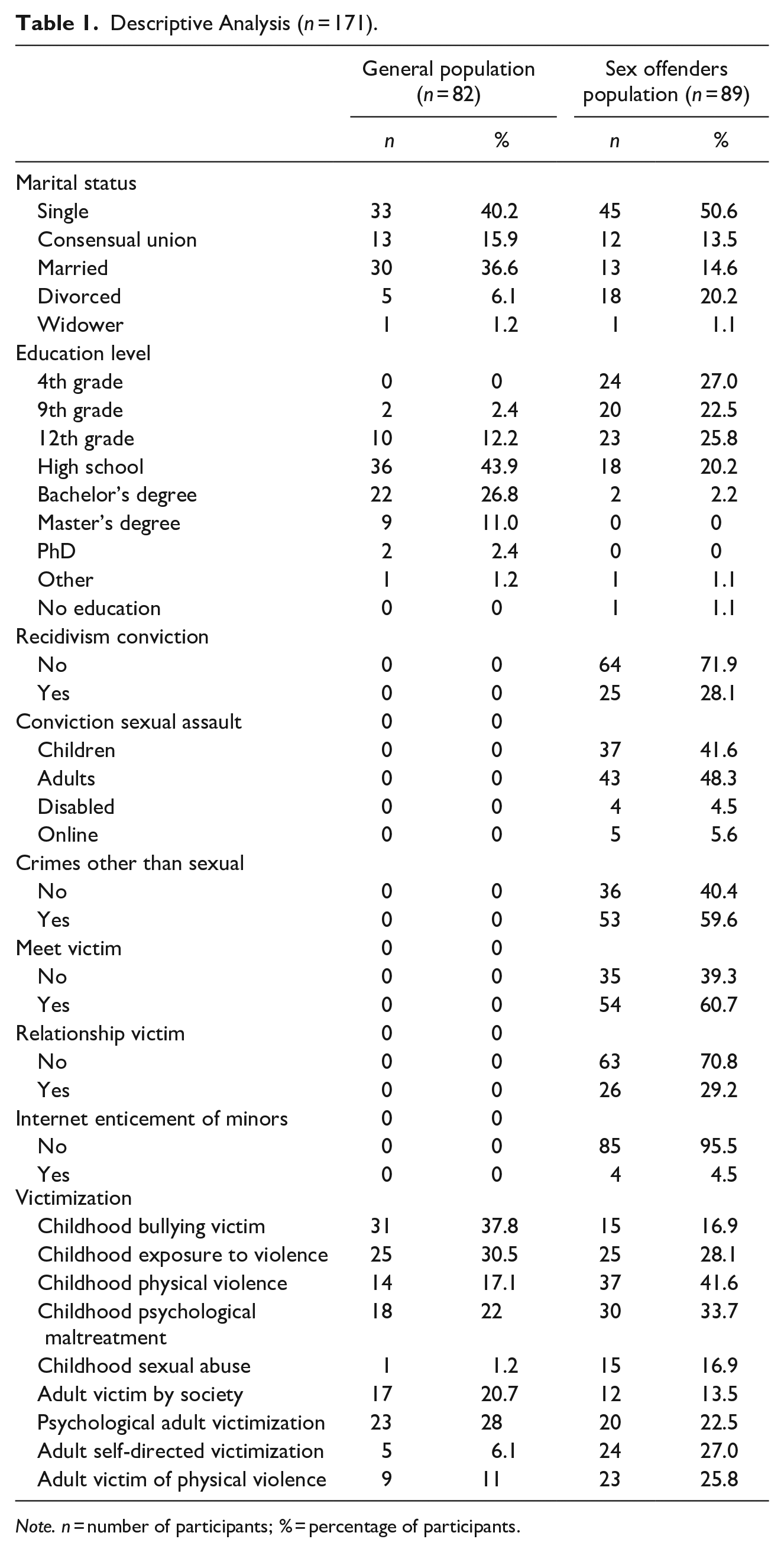
Note. n = number of participants; % = percentage of participants.
In the sex offender sample, all participants are prisoners, and most participants are of Portuguese nationality (n = 84, 94%). From this sample, all participants are male, aged between 25 and 70 (M = 43.10, SD = 11.14). The predominant marital status is single (n = 45, 50.6%), followed by divorced (n = 18, 20.2%). Most participants indicated they had 4th grade (n = 24, 27%), followed by 12th grade (n = 23, 25.8%). Their crimes ranged from 1 to 51 (M = 4.35, SD = 6.45). Of the sample of people in prison for sexual offenses, 64 (71.9%) are not repeated offenders, and 25 (28.1%) have served jail time previously. Of the 89 people in prison for sexual offenses, 53 (59.6%) indicate they have been convicted of crimes other than sex crimes. The remaining 36 (40.4%) indicate they have been convicted only of sexual assault. Conviction of sexual assault varies among adult victims (n = 43, 48.3%), child victims (n = 37, 41.6%), online victims (n = 5, 5.6%), and disabled victims (n = 4, 4.5%). Of the sample, 54 (60.7%) indicated they knew the victim, and 35 (39.3%) did not. It should be noted that 26 individuals (29.2%) reported having a family relationship with the victim. Regarding the grooming of minors through the Internet, only 4 (4.5%) responded positively. Table 1 presents more details of the sample of sex offenders.
Instruments
Procedure
To collect the data with prisoners, authorization was requested from the General Directorate of Reintegration and Prison Services—Ministry of Justice (DGRSP) for data collection in prisons. Then, we contacted the prison directors, explaining the study objectives, methodology, and data collection schedule. Potential participants identified by the prison staff were contacted. All of them were informed about the nature of the study, were asked to participate voluntarily, and signed informed consent. Measures were completed individually in a paper-and-pencil format in a private room inside the prison to guarantee the confidentiality of data.
To collect the data from the general population, we used an online protocol in Google Forms. Dissemination of the online protocol was conducted through social media. All participants signed informed consent, and all ethical issues underlying data collection were strictly followed, including participant anonymity.
The protocol consists of a sociodemographic questionnaire where a set of questions that assess victimization suffered throughout life and attachment are found through the instruments: Childhood History Questionnaire (ACE: Felitti et al., 1998; Portuguese Version; Pinto et al., 2014); Benevolent Childhood Experiences Scale (BCEs: Narayan et al., 2018; Portuguese Version; Almeida et al., 2021); and Adult Attachment Scale (AAS-R: Collins & Read, 1990; Portuguese Version; Canavarro et al., 2006).
The sex offender sample included adults serving prison sentences for sexual crimes (e.g., sexual abuse of children; sexual abuse of persons incapable of resisting; rape; pimping; child pornography) in mainland Portugal. The general population sample included adults with Portuguese nationality who could read and write. The study was conducted following the ethical principles outlined in the Declaration of Helsinki (World Medical Association, 2013), and the protocol was approved by the Institutional Review Board of the Egas Moniz School of Health and Science.
Statistical Analysis
To analyze the data obtained in the protocol application, the IBM Statistical Version SPSS v.28 program was used. Pearson correlations were performed between the scales and subscales used to verify the relationship between variables. Next, ANCOVA tests were performed to examine differences between the sample of the general population and the sample of sex offenders in each scale and subscale used in this study. Finally, multiple linear regressions were also performed to analyze the predictive validity of attachment.
Results
Descriptive Analysis
In the general population, descriptive analysis (Table 1) showed that the main types of childhood victimization suffered were bullying (n = 31, 37.8%), exposure to violence (n = 25, 30.5%), and psychological maltreatment (n = 18, 22%). In adulthood, psychological victimization (n = 23, 28%) and violence by society (n = 17, 20.7%) stand out. The descriptive analysis also reveals the scores obtained in the BCEs (M = 8.28, SD = 1.93), ACEs (M = 2.63, SD = 3.12), and in the respective subscales Emotional Abuse (M = 0.53, SD = 0.79), Physical Abuse (M = 0.33, SD = 0.67), Sexual Abuse (M = 0.13, SD = 0.44), Maltreatment (M = 1.52, SD = 2.00), Exposure to Family Dysfunction (M = 1.11, SD = 1.74), AAS-R (M = 51.80, SD = 5.90), and its respective subscales AAS-R Anxiety (M = 14.54, SD = 5.46), AAS-R Depend (M = 18.68, SD = 4.21).
In the sex offender population (Table 1), the descriptive analysis showed that the main types of victimization suffered were physical abuse (n = 37, 41.6%), followed by psychological abuse (n = 30, 33.7%), and exposure to violence (n = 25, 28.1%). Of the sample, 15 individuals (16.7%) reported having been sexually abused in their childhood. In adulthood, self-directed victimization (e.g., self-mutilation, suicide attempt) stands out, with 24 (27%) participants responding positively. Physical victimization (n = 23, 25.8%) and psychological victimization (n = 20, 22.5%) also stand out. The descriptive analysis also reveals the scores obtained in the BCEs (M = 7.93, SD = 2.14), ACEs (M = 4.66, SD = 4.26), and in the respective subscales Emotional Abuse (M = 0.72, SD = 0.86), Physical Abuse (M = 0.69, SD = 0.87), Sexual Abuse (M = 0.37, SD = 0.73), Maltreatment (M = 2.69, SD = 2.73), Exposure to Family Dysfunction (M = 1.98, SD = 1.98), AAS-R (M = 52.67, SD = 6.22), and its respective subscales AAS-R Anxiety (M = 14.29, SD = 5.14), AAS-R Depend (M = 20.38, SD = 3.77).
Correlation Analysis
General Population
Results in the general population (Table 2) point to statistically significant negative correlations between the BCEs, Emotional Abuse, Child Maltreatment, the total ACE, and AAS-R Anxiety. The data also indicated a statistically significant positive correlation between the BCEs and AAS-R Depend. Statistically significant positive correlations were found between all forms of maltreatment, Family Dysfunction Exposure, and AAS-R Anxiety. The results also indicated statistically significant negative correlations between all forms of maltreatment, Exposure to Family Dysfunction, and AAS-R Depend. There are statistically significant positive correlations between the AAS-R Anxiety and the AAS-R total. The results further indicated a statistically significant negative correlation between AAS-R Anxiety and AAS-R Depend. Statistically significant positive correlations were also found between AAS-R Depend and the total AAS-R.
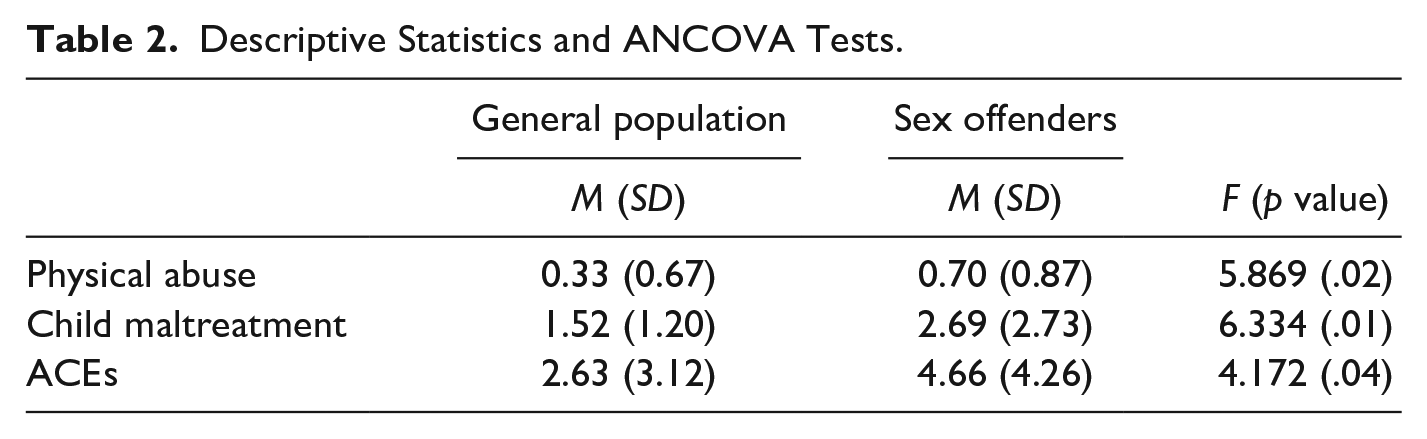
Descriptive Statistics and ANCOVA Tests.
Sex Offenders
In the sex offender population (Table 2), statistically significant negative correlations were found between the BCEs, the AAS-R Anxiety, and all ACE subscales except Sexual Abuse. The results also indicated a statistically significant positive correlation between the BCEs and the AAS-R Depend. Statistically significant positive correlations were found between all maltreatment forms and Family Dysfunction exposure. Statistically significant positive correlations were found between AAS-R Anxiety and total AAS-R. The results indicate a statistically significant negative correlation between AAS-R Anxiety and AAS-R and statistically significant positive correlations between AAS-R Depend and total AAS-R.
Group Difference
The sample of the general population was compared with the sample of sexual offenders (Table 3). To compare the samples, education level and marital status were included as covariates in the analysis. Results showed that people in prison for sexual offenses scored significantly higher than the general population sample on Physical Abuse, Child Maltreatment, and total ACEs.
Pearson’s Correlations Between the BCEs, ACEs, and AAS-R (n = 171).
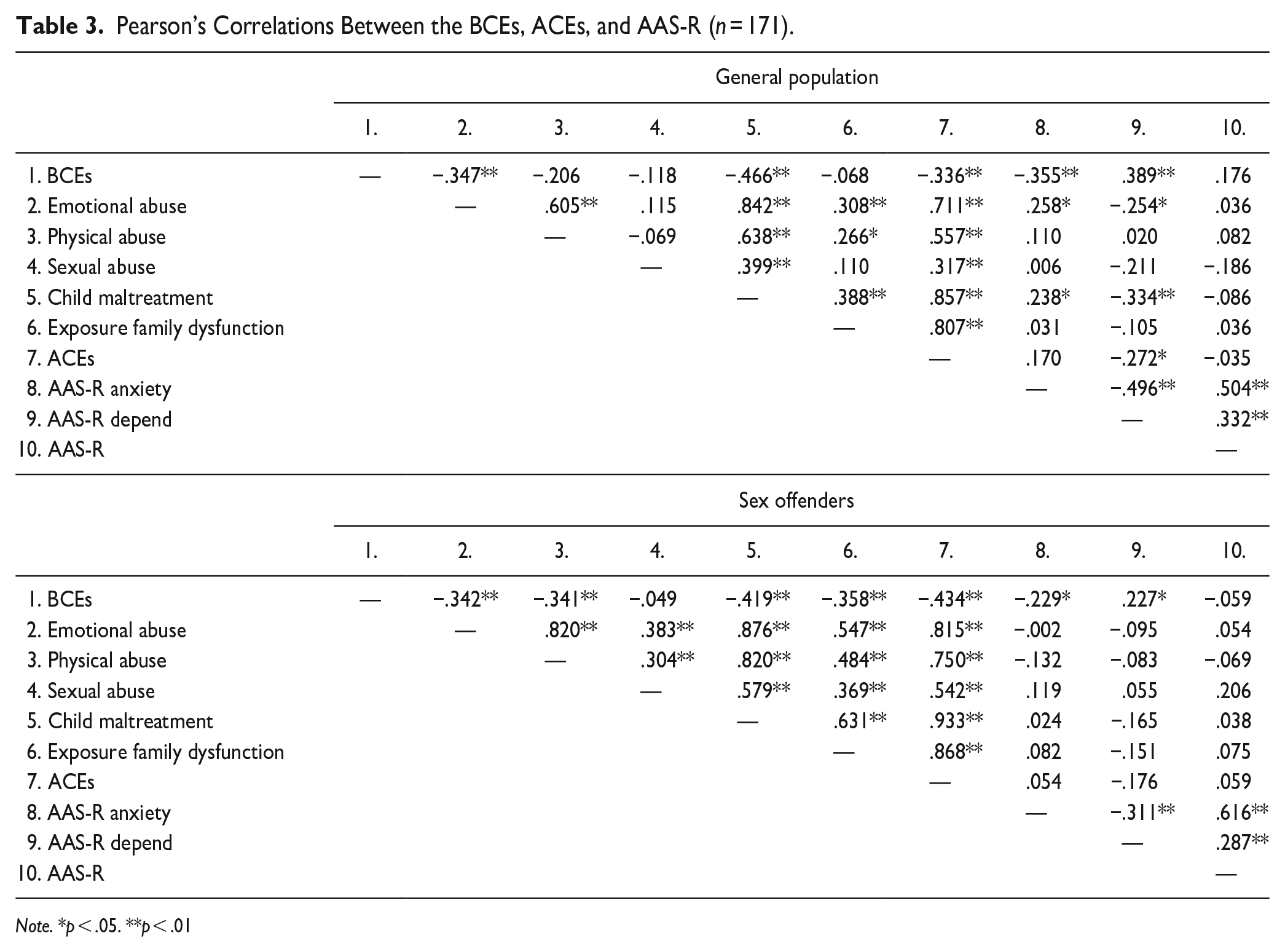
Note. *p < .05. **p < .01
Regression Analysis
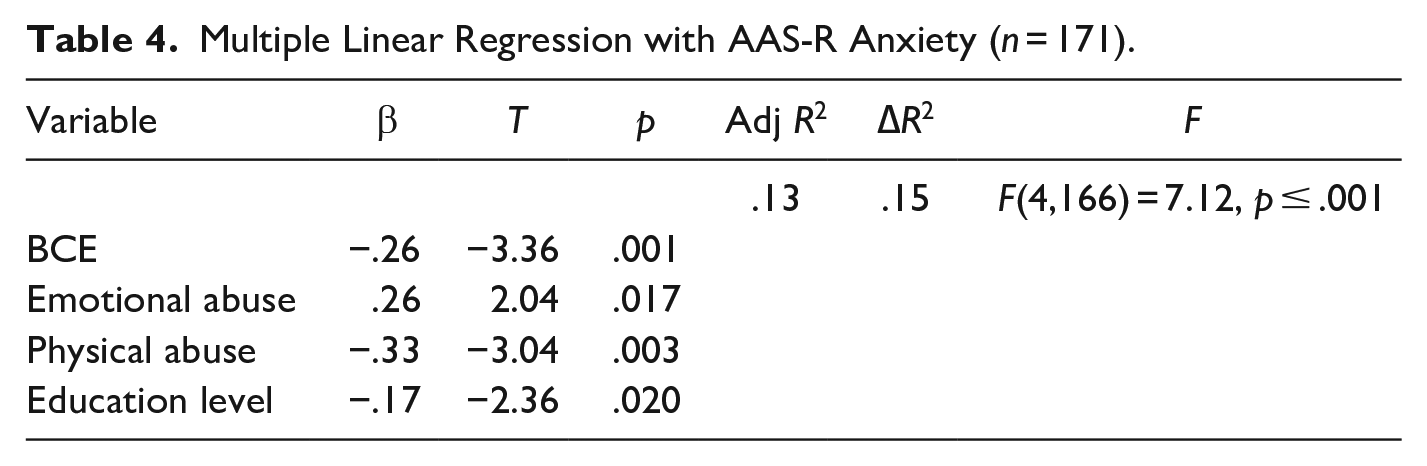
The explanatory model of AAS-R Anxiety using a Multiple Linear Regression showed that the model is significant. Durbin-Watson was 2.09, and VIF was <3. Age, Marital Status, Reclusion, Sexual Abuse, Divorce/Parental Separation, Exposure to Domestic Violence, Substance Abuse in the Family Environment, Mental Illness or Suicide, and Arrest of a Family Member are not significant. For this reason, we performed a new model (Table 4) only with significant paths. The model is significant (F(4,166) = 7.12, p ≤ .001) and explains 15% of the variance of AAS-R Anxiety. BCEs (β = −.26, p = .001), Emotional Abuse (β = .26, p = .017), and Physical Abuse (β = −.33, p = .003), and Education Level (β = −.17, p = .020) are significant predictors of AAS-R Anxiety.
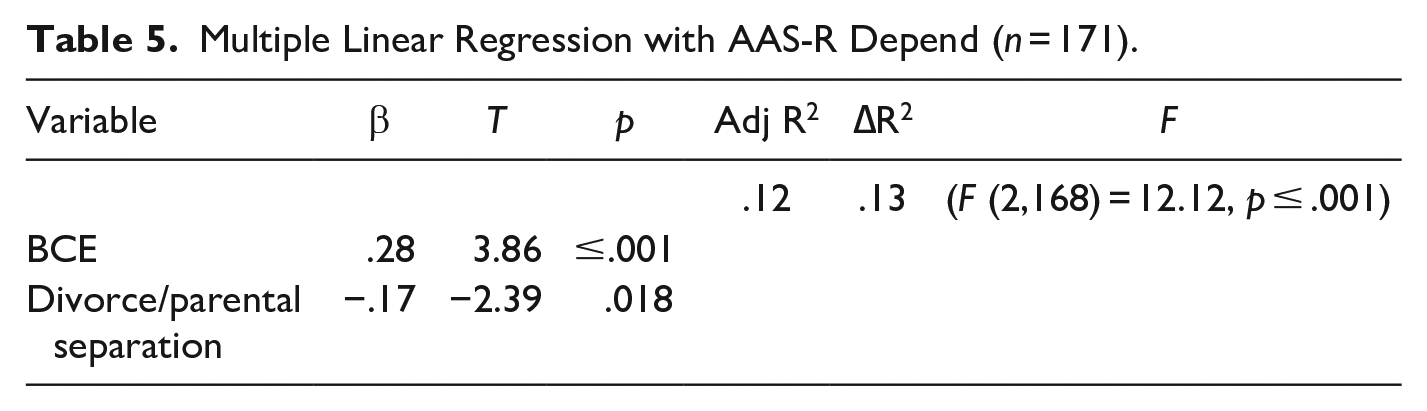
The explanatory model of AAS-R Depend using a Multiple Linear Regression showed that the model is significant. Durbin-Watson was 2.02, and VIF was <3. Age, Education Level, Reclusion, Emotional Abuse, Physical Abuse, Sexual Abuse, Substance Abuse in the Family Environment, Exposure to Domestic Violence, Family Mental Illness or Suicide, and Arrest of a Family Member are not significant. For this reason, we performed a new model (Table 5) only with significant paths. The model is significant (F(2,168) = 12.12, p ≤ .001) and explains 13% of the variance of AAS-R Depend. BCEs (β = .28, p ≤ .001), and Divorce/Parental Separation (β = −.17, p = .018) are significant predictors of AAS-R Depend.
Multiple Linear Regression with AAS-R Anxiety (n = 171).
Multiple Linear Regression with AAS-R Depend (n = 171).
Discussion
This study aims to verify the relationship between benevolent experiences (BCEs), adverse childhood experiences (ACEs), and attachment in adulthood. We also intended to verify the differences between the general and sex offender populations concerning BCEs, ACEs, and attachment in adulthood and assess the variables that impact attachment in adulthood.
Our results show no statistical differences between the sex offender and general populations regarding the mean scores of experiencing childhood sexual victimization. However, in the general population sample, only one participant indicated that they had been a victim of childhood sexual victimization, and in the sex offender population, 15 participants indicated that they had experienced childhood sexual abuse. Controversies are found in the literature about whether being a victim of childhood sexual abuse predicts sexual assault behavior in adulthood (e.g., Chan, 2021; DeLisi et al., 2021). However, sexual offenders who were abused in childhood indicate that experience is the direct cause of their sexual offenses. Some sexual offenders indicated that their childhood sexual victimization experience shaped what they considered normal and adequate sexual conduct and misstated how they considered sex with others (Steely, 2022).
The results of this study indicate that, regarding childhood victimization, the sex offender sample, compared to the general population, shows higher levels of punishment and maltreatment, which is in line with the results of other international studies (e.g., Abbiati et al., 2014; Kahn et al., 2021; Teixeira et al., 2020). Other studies show that sex offender samples indicate higher levels of family dysfunction, with more unstable family structures in which there is difficulty in communication and a prevalence of conflict (Burton et al., 2011; Costa et al., 2013). When individuals experience more ACEs, they tend to present a pessimistic view of everything around them (Felizzi, 2015). Our study does not identify differences between the sex offender group and the general population regarding BCEs. According to Toch and Cicchetti (2013), ACEs and BCEs can coexist, impacting individual development. However, the study of BCEs in offenders is still very scarce (Almeida et al., 2023b), specifically the study of BCEs in sexual offenders.
Positive experiences foster healthier relationships in the future and more positive social experiences (Toch & Cicchetti, 2013). From our study, we conclude that when an individual has fewer BCE, they have more anxiety about thoughts of abandonment of others that are significant from them and more difficulty feeling reliant on others in case of need. The more BCEs an individual has, the easier it is to trust others (Yoder et al., 2016).
Attachment is built from experiences established throughout life. The literature points out several variables as having implications on how the individual establishes bonds with others (e.g., parents, teachers, and friends) (Feeney & Monin, 2016). Attachment is linked with education and the process of learning. For instance, a secure attachment to teachers is associated with better linguistic development and fewer learning difficulties (Commodari, 2013). Safe experiences with the attachment figure lead to reduced anxious state attachment (Camerman et al., 2023). Our study identifies the importance of education level on anxious attachment, showing that a higher educational level may influence the perception of less anxious attachment.
When experiencing ACEs, individuals have more difficulty relating to and trusting others. The literature indicates that the earlier adverse experiences occur in an individual’s life, the more likely he/she is to have greater anxiety relating to others (Kahn et al., 2021). Our results align with this study’s findings, indicating the impact of childhood experiences on attachment anxiety. When individuals experience adversity at an early age, having few protective factors, there is a greater tendency to feel anxious when creating social relationships as adults. Although the positive attachment is the basis for the development of healthier relationships in the future (Cicchetti & Toth, 2009), the lack of it can lead individuals to a greater need to bond with others in adulthood, even with the fear of experiencing rejection (Ward et al., 2000).
A recent study revealed that emotional and physical abuse significantly influences anxious attachment (Silva et al., 2023). Although our results also indicated the influence of these two forms of maltreatment on anxious attachment, contrary to the referenced study, our results show that physical abuse negatively predicts anxious attachment. The difference in results may be related to the fact that our sample also includes sexual offenders. Sex offenders tend to have low levels of empathy and lack of concern for others, being less vulnerable to feel of abandoned (Loinaz et al., 2021). Furthermore, individuals who have experienced emotional abuse tend to have more internalizing problems (Duprey et al., 2021), and individuals who have been physically abused tend to have more externalizing problems (Chen et al., 2023). Since childhood, those with externalizing problems are less likely to perceive concern about their relationship with others (Hastings et al., 2000). This may explain the lack of concern about possible abandonment or rejection by others.
We verified that experiencing divorce or parental separation impacts the dependent attachment since those individuals who had that experience feel that they depend less on others in situations of need. Other research also indicates that individuals with more negative experiences have more difficulty trusting and depending on others (Bastos et al., 2021). After the divorce, parents might fail to appropriately caregiver for the youth. In some cases, the youth becomes the parent's caregiver; in other cases, parents become unavailable to the youth—psychologically and physically (Feeney & Monin, 2016).
Limitation
This study has some limitations that must be identified. One of the limitations is the difficulty in accessing the sample of sex offenders with little willingness to participate in the study. We also highlight that the sample of sex offenders is smaller than in other international studies, which may influence the results. Another limitation is that the samples used in this study show differences in some sociodemographic variables, such as marital status and education level. These differences in some sociodemographic variables may have some implications for the results of differences between the sex offender sample and the general population sample. Furthermore, the online study has no control over the environment in which practitioners respond. In the case of sex offender participants, some responses may be omitted or altered depending on how the participant wishes to be perceived in front of others sex offenders.
Conclusion
Despite the limitations, this is a pertinent study for Psychology and Criminology. This research suggests that adversity was present in the childhood of a large portion of the individuals with deviant behavior in adulthood. Our findings highlight the relationship between the studied variables, reinforcing other studies’ results. Furthermore, this is the first study to demonstrate the importance of BCEs in attachment in adulthood.
This research indicates the importance of implementing intervention programs for victims of child maltreatment or exposure to family dysfunction to mitigate these consequences or for youth with violent behaviors to contain them. We consider crucial the development of skills with children or young people who have suffered victimization to work on their attachment to reference figures, trying to circumvent the difficulty of attachment (Yoder et al., 2018b) and trust in others described by the literature (Abbiati et al., 2014; Levenson et al., 2016). We suggest working on skills (e.g., adaptive behaviors, peer relationships, attachment) with adult individuals to modify their patterns of relationships, attachment, and trust in others since the literature points to ACEs as a risk factor for maladaptive behaviors (Costa et al., 2013; Pires & Almeida, 2023) and difficulties in relationships (Abbiati et al., 2014; Levenson et al., 2016), and attachment in adulthood (Yoder et al., 2018b).
Considering the importance of BCEs in lifespan, preventive programs with parents should be developed with parents that use psychoeducation to explain the importance of a healthy environment throughout the child’s development. These interventions can develop a healthier environment for children and youth, decreasing the likelihood that they will experience ACEs and increasing the likelihood that they will establish adaptive attachment relationships in adulthood as well. This way, a decrease in maladaptive behaviors such as sexual offending behaviors is expected.
In future research, we suggest collecting more information on the sex offender population, considering that the literature indicates that experiences of victimization while growing up can lead to psychological disorders, which can evolve into disturbed sexual functioning (Latzman & Latzman, 2013), we suggest including variables on beliefs about sexual abuse and rape.
Footnotes
Acknowledgements
The authors would like to express the most profound gratitude to all the participants who voluntarily provided the information to this study, the DGRSP-MJ, and the national prisons that consent to participate in the study.
Author’s Note
Telma Catarina Almeida is also affiliated to CiiEM – Centro de Investigação Interdisciplinar Egas Moniz, IUEM, Caparica, Portugal and LabPSI – Laboratório de Psicologia Egas Moniz, IUEM, Caparica, Portuga.
Declaration of Conflicting Interests
The author(s) declared no potential conflicts of interest with respect to the research, authorship, and/or publication of this article.
Funding
The author(s) disclosed receipt of the following financial support for the research, authorship, and/or publication of this article: This work was supported by the FCT—Foundation for Science and Technology, I.P., under the project UIDB/04585/2020.
