




Abstract
The current study used an experimental vignette (n = 1,093) to examine the effects of perpetrator sex and age, and victim sex and age, on simulated juror sentencing recommendations for individuals convicted of sexual offenses (ICSO). Path analyses were used to see if differences in punitive attitudes could be explained by perceptions of dangerousness participants attached to experimentally manipulated variables, as hypothesized by attribution theorists. Results show that participants consistently recommended longer sentences, higher fines, and indicated greater support for post-release sanctions for male offenders, older perpetrators, and for offenders who victimized younger adolescents. Path analysis demonstrated that perceptions of dangerousness partially mediated the relationship between experimentally manipulated predictor variables and recommended sentence length, providing partial support for attribution theory.
Introduction
Empirical research demonstrates that legally irrelevant characteristics including defendants’ and victims’ sex and age can influence punitive attitudes and sentencing outcomes (Butcher et al., 2017; Cassidy & Rydberg, 2020; Curry et al., 2004; Flynn et al., 2011; Socia et al., 2021; Steffensmeier & Demuth, 2006; Steffensmeier et al., 1998). Regarding defendants’ sex, research consistently finds males who commit offenses are more likely to be arrested, charged, convicted, sentenced to incarceration, and receive longer sentences than females, even when controlling for relevant case-related variables (Baker & Hassan, 2021; Butcher et al., 2017; Cassidy & Rydberg, 2020; Prison Policy Initiative, 2019; Romain & Freiburger, 2016; Shaw et al., 2022; Starr, 2015). Research on sentencing recommendations (e.g., fines, post-release sanctions) indicates individuals show greater punitivity toward males who commit crime than females (Socia et al., 2021), as well as toward adults who commit crime compared to younger individuals (Sahl & Keene, 2012; Salerno et al., 2010) and these differences are particularly pronounced for sex offenses (Shields & Cochran, 2020). Similarly, crimes against children are viewed more negatively by society and this is especially true of sex crimes. More severe punishments are generally imposed on those who persistently abuse children (Levesque, 2000). This criminal justice response is consistent with public attitudes. For instance, one study examining fear of seven types of sex offenders (e.g., spousal rape, juvenile offender, statutory rape, date rape) found pedophiles elicited the most fear from respondents (Kernsmith et al., 2009).
Some researchers argue that female offenders broadly, and female individuals convicted of sexual offenses (ICSO) specifically, receive more lenient treatment because they are seen as less dangerous and more amenable to rehabilitation than their male counterparts (Frei, 2008; Shields & Cochran, 2020, Steffensmeier et al., 1998; Vandiver et al., 2016; Wijkman et al., 2010). Consistent with the notion of reduced dangerousness, research finds women recidivate at lower rates than men, and the gender gap is greater for violent crimes (Olson et al., 2016). Studies examining sex offenders 5-year recidivism rates indicate women recidivated at lower rates (1%–3%; Cortoni & Hanson, 2005) than men (10%–15%; Hanson & Bussière, 1998).
Regarding the influence of age, the juvenile justice system reflects societal support for more lenient punishment for youth, who are generally deemed more innocent and more responsive to rehabilitation (Bernard & Kurlychek, 2010; Thompson et al., 2016). Research on public attitudes finds youthful offenders are viewed more favorably (Harper, 2012; Sparks & Wormith, 2021), than adults who are considered more dangerous and of greater public threat (Sahl & Keene, 2012; Salerno et al., 2010). For instance, Comartin et al (2013) found approval for sex offender registration increased with offender age. Some researchers speculate that this increased punitiveness may be related to perceived culpability, which has also been shown to increase with age (Sherrill et al., 2011).
Steffensmeier et al. (1998) argued that sentencing decisions are influenced by three focal concerns of actors within the system: (1) perceptions of offender blameworthiness (e.g., culpability) and degree of harm caused, (2) the need for punishment or containment to ensure community protection, and (3) any case-specific practical constraints and consequences of actions, which also should be considered. Similarly, using attribution theory researchers have long speculated that dangerousness and culpability can help explain sex and age differences in perceptions of offenders, and subsequently, differences in sentencing, especially of sexual crimes (Shields & Cochran, 2020). To date, however, there has been little effort to explore these contentions despite scholars’ calls for research in this area (Shields & Cochran, 2020). To that end, the current study uses self-report data (n = 1,093) to measure punitive attitudes toward sentencing ICSO under different simulated conditions. Specifically, an experimental vignette is used to examine the effects of perpetrator age and sex, and victim age and sex on simulated juror sentencing recommendations for ICSO. Further advancing theory on sex differences in punitivity, we also examine the effect perceptions of offender dangerousness has on simulated juror sentencing recommendations to see if gendered differences in perceptions of punitivity are mediated by perceptions of offender dangerousness, as hypothesized by attribution scholars.
Literature Review
Sex and ICSO
Although men commit the vast majority of all sex crimes (Cortoni et al., 2017; Smith et al., 2017), women commit a non-trivial number of sexual offenses, which have significant ramifications for victims equal to those victimized by male offenders, including depression and other posttraumatic symptoms, substance abuse issues, self-injury and suicide ideation, revictimization, problems with sexuality and relationships, and more (Denov, 2004; Elliot, 1993; Munroe & Shumway, 2022; Sgroi & Sargent, 1993). While globally females account for the perpetration of approximately 2% of all officially reported sex crimes, victimization data show they represent closer to 12% of all sexual offense cases (Cortoni et al., 2017) and Children and Youth Services data indicate they comprise approximately 20% of substantiated cases against children in the United States (Mcleod, 2015).
The actual prevalence of female sexual offending is difficult to determine for several reasons, including underreporting and diversion from the justice system (Munroe & Shumway, 2022; Shields & Cochran, 2020). For instance, a study of 138 community adults found only 54% of victims of female-perpetrated sexual assault ever disclose the incident to anyone (Munroe & Shumway, 2022) and the most recent NCVS (Bureau of Justice Statistics [BJS], 2022) data finds only 21.5% of all victims report to the police. This may be partially attributable to societal perceptions of sex roles related to sexuality, the fear of perceived-stigma, and concern over being disbelieved if victims, especially males, disclose that they were victimized by a female (Cortoni et al., 2017; Denov, 2003).
There is also evidence that females who offend are more likely to be diverted away from punishment, and, thus, underrepresented in official statistics on conviction and punishment (Vandiver & Walker, 2002). There are legally relevant characteristics that could account for some of the difference in punishment. For instance, sexual offenses committed by women are less likely to involve penetration than those committed by men (Peter, 2009) and are more likely to involve a co-defendant, usually a male accomplice, than male-perpetrated sexual offenses (Vandiver, 2006; Wijkman et al., 2010; K. S. Williams & Bierie, 2015; R. Williams et al., 2019). Still, the “typical” female-perpetrated sexual assault case is perpetrated by an offender acting alone (Munroe & Shumway, 2022), thereby reducing the potential influence of these legally relevant characteristics in many cases. Further, even controlling for relevant case-related variables, such as severity of crime and judicial circuit, research consistently finds female ICSO are significantly less likely to be charged with sexual assault and receive less severe punishments when convicted than their male counterparts (Patterson et al., 2019; Shields & Cochran, 2020).
The Influence of Sex and Age on the Legal Treatment of ICSO
Prior research using experimental simulations and analyses of official data to assess the influence of offenders’ and victims’ sex and age on the treatment of ICSO, generally finds female ICSO are viewed less punitively and are treated more leniently than male ICSO. For instance, in simulated sentencing scenarios, King and Roberts (2017) found participants voiced greater support for shorter prison sentences and less support for sex offender registry in cases involving female than those involving male ICSO. In a similar vignette experiment, Socia et al. (2021) examined simulated juror sentencing recommendations for ICSO and found males received the harshest sentencing recommendations, with sentencing recommendations that were, on average, 1.7 years longer than female perpetrators. Respondents indicated greater support for post-release policy conditions, such as home registration and internet bans for male perpetrators as well. Research concerning the influence of victim’s sex on punitivity is mixed. For instance, while some vignette studies find perpetrators with female victims are considered more blameworthy (Gerber et al., 2004), other studies find no affect for victim sex (King & Roberts, 2017).
Scholarly work on actual punishments also finds ICSO’s and victim’s sex and age matter (Embry & Lyons, 2012; Sandler & Freeman, 2011; Weinsheimer et al., 2017). For instance, Vandiver and Teske (2006) examining sex differences of ICSO in the juvenile justice system in Texas found girl ICSO were arrested at a younger age, their victims were younger and more likely of the same sex, and their sentences were shorter than boy ICSO. In their logistic regression analysis predicting offender sex, controlling for offender age, victim age and sex, whether or not the crime was a sexual assault, as well as sentencing information (e.g., type and length), they found victim sex and length of sentence were significant. Compared to boys, girls were significantly less likely to victimize female children and they received shorter sentences. However, it should be noted that they did not control for potential mitigating factors including seriousness of the offense or the presence of aggravating circumstances.
Similar results were obtained among adult offenders using more than 20 years of official data from the National Judicial Reporting Program. Specifically, female ICSO were charged less harshly than male ICSOs, their victims were younger and were less likely to be females (Hassett-Walker et al., 2014). Further, sex differences were most pronounced in cases involving noncustodial adolescent victims, with female ICSO who victimized adolescents outside of their care treated more favorably than their male counterparts. Most recently, Shields and Cochran (2020) used precision matching to analyze sex differences in the punishment of sexual offenders over a 15-year period in Florida. Even controlling for relevant case-related variables, such as offense severity, judicial circuit, and whether the case involved a minor, their findings showed male ICSOs were significantly more likely to be sentenced to prison and were given longer sentences than female ICSOs. The effects of victim’s sex are also less consistent in actual sentencing research. For instance, Curry et al. (2004) found that males who perpetrated against females received the longest sentence of any offender/victim combination, whereas no effects of victim sex were found regarding whether or not a sentence of incarceration was received. Interestingly, one of the few studies that assessed gendered disparities in the punishment of educators who had inappropriate sexual relationships with students (Knoche & Russell, 2021), found no significant differences in sentencing outcomes between male and female perpetrators. The study used data from cases that received exceptional media coverage, involved adolescents over the age of 13 years, where victim “consent” was present (although legally they could not consent), and as such, findings may not be generalizable to other cases. However, they did find that perpetrator and victim age and number of victims significantly impacted sentencing outcomes.
In addition to sex, age also influences sanctions and attitudes regarding ICSOs. In general, older people who offend and those who assault children are considered more dangerous than their younger counterparts (Sahl & Keene, 2012; Salerno et al., 2010; Socia et al., 2021). For example, one study found 42-year-old rapists were more likely to be considered sexual predators than 22-year-old rapists (Sahl & Keene, 2012). Research by Sparks and Wormith (2021) using vignettes found adult ICSO elicited more punitive and negative attitudes than their juvenile counterparts. Support for sex offender registration has also been shown to increase with age. Comartin et al. (2014) found respondents recommended more lenient treatment (e.g., counseling, community service, and probation) when ICSO were 15 years of age, whereas they recommended more punitive treatment (e.g., prison) when ICSO were described as 22 years of age. Thus, both simulation and sentencing data suggest ICSO who are male, older, and assault children warrant harsher punishments, and perceived dangerousness and culpability may provide some explanation for these findings.
Theoretical Explanation
Attribution theory can be used to explain sex and age disparities observed above among ICSO. From this conceptual vantage point, individuals in society socially construct a vast array of frameworks for people, events, and phenomena by assigning certain qualities or characteristics (i.e., attributes) to themselves as well as to others as a subjective, mental shorthand to aid them as they seek to make sense of themselves, others, and the world around them (Hawkins, 1981; Shaver, 2016). Attribution theory is a robust theoretical explanation for how individuals make sense of their own behavior and, germane to this study, the behavior of others, as well as how individuals interpret both the cause and consequences of human behavior. From this perspective, scholars can empirically capture the subjective understandings of individuals as they make socially constructed assessments of, for example, the appropriateness of an event or whether an action was justified or unjustified, legitimate or illegitimate, and so on (Shaver, 2016). For the most part, individuals view and judge others’ actions and intentions through socially constructed typologies unconsciously, thus, making sense of actions and intentions as the product of environmental stimuli, circumstantial forces, or personal disposition (Hawkins, 1981).
Attribution theory has been used to explain perceptions of criminal behavior and perceptions of appropriate sanctions or punishments. For example, Shields and Cochran (2020) used attribution theory to explain why females received more lenient sentences than males ICSO, even when using rigorous precision matching procedure to account for legally relevant factors like severity of the crime and prior record. Their results indicate that while the average female ICSO may be “white, young, and less criminally entrenched” (p. 112), all female sex offenders benefit from being perceived as less culpable and threatening than men. Similarly, juvenile offenders are seen as less dangerous, blameworthy, and more amenable to treatment compared to adults (Comartin et al., 2013; Harper, 2012; Sahl & Keene, 2012; Salerno et al., 2010; Sparks & Wormith, 2021). At the societal level, and, consequently, among courtroom actors, these perceptions influence decision-making by both professionals in the criminal justice system and those called upon to serve it (e.g., jurors) and may lead to implicit and explicit bias (Shields & Cochran, 2020). Research on the punishment of ICSO suggests male perpetrators and those who are adults are viewed as more dangerous than female perpetrators and youth, and, thus, more deserving of harsher punishment (Shields & Cochran, 2020; Vandiver et al., 2016; West et al., 2011; Wijkman et al., 2010). To date, however, no research known to the authors has provided a direct test of these hypotheses, specifically, research that estimates to what extent perceptions of dangerousness can explain differences in punishment of ICSO. The current study intends to help fill this gap.
Current Study
This study aimed to contribute to the scholarly work in this area by further assessing whether, and to what degree, sentencing recommendations for ICSO are influenced by characteristics about individuals involved in such cases. This research expands upon the work of Socia et al. (2021) and King and Roberts (2017) by simultaneously analyzing the effects of perpetrator age and sex, and victim age and sex, on simulated juror sentencing recommendations for ICSO, and by examining whether differences in perceptions of punitivity, if present, are influenced by levels of perceived dangerousness attached to perpetrators, as suggested by attribution theorists. Specifically, this project used survey data collected from a nation-wide sample of Americans to measure punitive attitudes toward sentencing a hypothetical ICSO under different simulated conditions. An experimental design was used to randomly vary factors about the offender (i.e., sex and age) and victim (i.e., sex and age) to answer the following research questions:
RQ1: Do variations in sex or age of perpetrator or victim influence punitive attitudes toward ICSO?
RQ2: Do differences in perceptions of perpetrator “dangerousness" influence punitive attitudes toward ICSO?
Given findings from prior research in this area, it was hypothesized that female sexual offenders would receive less severe sentencing recommendations and less support for post-release sanctions than their male counterparts. It was also hypothesized that older offenders and those who committed crimes against younger victims, would receive more severe sentencing recommendations and have greater support for post-release sanctions than those in comparison groups. We further anticipated that perceived offender dangerousness would mediate the relationship between our experimentally varied predictors and sentencing recommendations, as suggested by attribution theorists. The following section describes the methodology used to test these hypotheses.
Methods
Research Design
This project was approved by the Pennsylvania State University Institutional Review Board (IRB). A vignette survey experiment using a nationally representative sample was used to assess how experimentally varied conditions of a simulated sexual offense case influenced hypothetical juror sentencing recommendations and respondent support for post-release sanctions. Specifically, this study utilized a Qualtrics research panel to administer an original survey to a nationwide sample of non-institutionalized, English speaking, adults (i.e., 18-years-old, or older). Participants accessed the survey via invitation through a reusable Qualtrics link. The survey included a vignette experiment (see below). Responses to survey questions consisted of Likert-scale questions, text entry responses, and slider scales designed to assess participants’ perceptions of appropriate sentencing for ICSO as well as attitudes toward various other social phenomena.
Quota based sampling methodology employed by the Qualtrics marketing research team was used to ensure sample representativeness in terms of age, race, and biological sex. Target demographics for the sample were based on Census data available at the time of data collection. Panelists meeting criteria were sent an invitation link inviting them to participate in the study. Panelists who expressed interests were then directed toward Qualtrics screening procedures and asked a series of questions to measure age, sex, and race. 1 If eligible, participants were then directed to the survey and compensated for their time with a small point-based incentive (e.g., airline miles and gift card). Studies have found Qualtrics panels to be diverse, demographically representative, and to produce higher quality data than other platforms that use crowdsourcing methodologies, such as Mturk (Boas et al., 2020; Zack et al., 2019). Data were collected during the summer of 2021. Table 1 provides a visual display of participant demographic information (n = 1, 093).
Participant Demographic Information and Descriptive Statistics (N = 1,093).
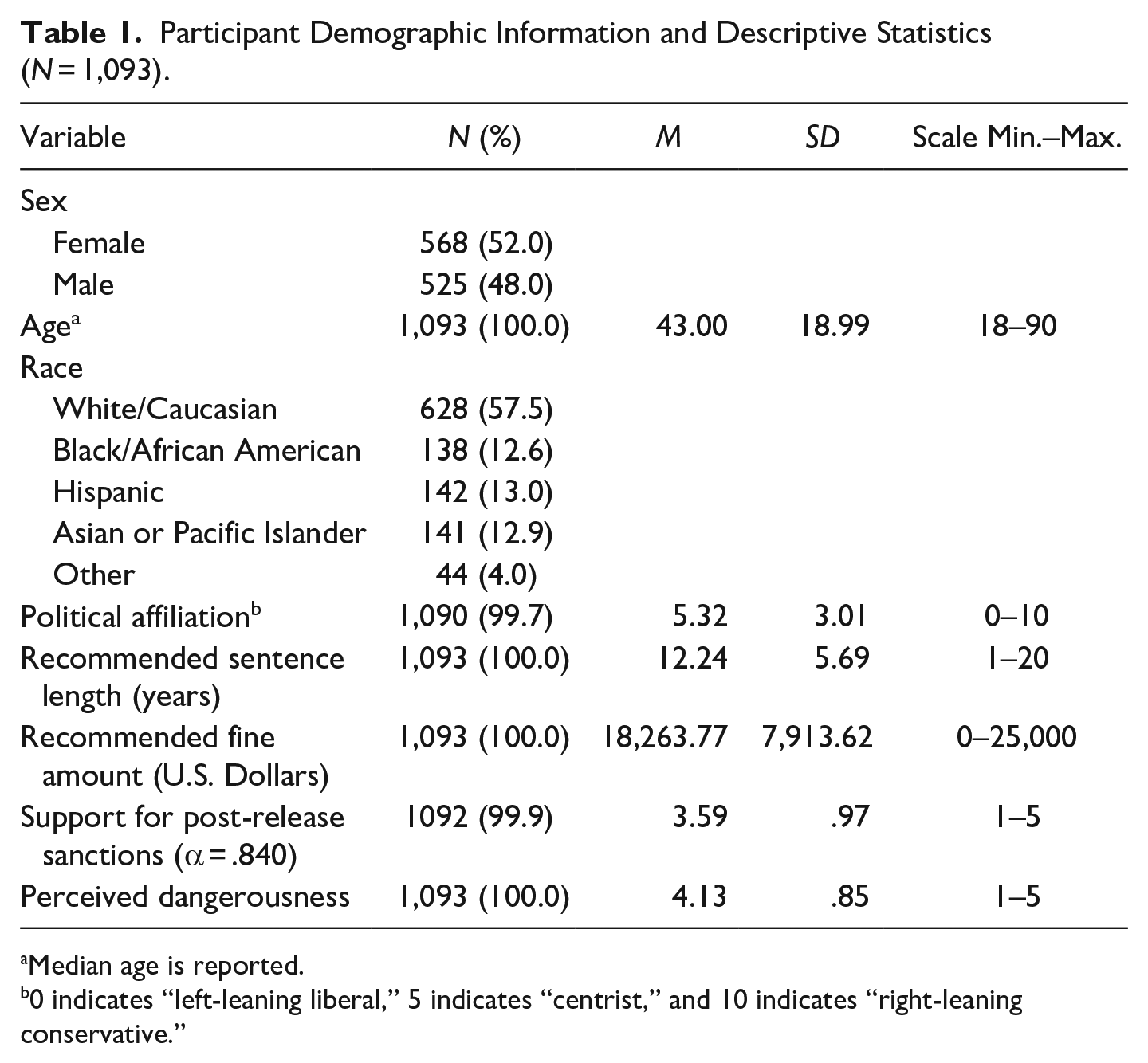
Median age is reported.
0 indicates “left-leaning liberal,” 5 indicates “centrist,” and 10 indicates “right-leaning conservative.”
Vignette Scenario
Similar to Socia et al. (2021), we presented participants with a short vignette scenario in which they were asked to serve as a hypothetical jury foreman for a case involving an ICSO. The vignette introduced participants to Taylor Phillips, a teacher who had been convicted of statutory sexually assaulting a student they had been tutoring for a prolonged period of time. Participants were randomly assigned different treatment conditions in the vignette for perpetrator sex (“male” vs “female”), perpetrator age (“40-years old” vs. “23-years old”), victim age (“13-years-old” vs. “16-years-old”), and victim sex (“male” vs. “female”). The specific wording of the vignette was as follows:
Ex: “Taylor Phillips, a [Perpetrator Age] year-old White [Perpetrator Sex] teacher, has been charged with statutory sexual assault for having sexual contact with a [Victim Age] year-old White [Victim Sex] student. Court records indicated that their sexual interactions occurred over a period of 10 months while the student received private tutoring lessons from Phillips. The jury in which you serve found Phillips guilty of the charges. As jury foreman, the judge is now asking for your opinion on appropriate sentencing in the Phillips case.”
Dependent Measures
Recommended Sentence Length
The first dependent measure assessed in this study was recommended sentence length. After reading the vignette participants were asked to indicate the length of sentence, ranging from 1 to 20 years, they thought Taylor Phillips should serve. Specifically, participants were asked:
“Although the average sentence for a case like this is 10 years, Phillips can be sentenced from a minimum of 1 year in prison to a maximum of 20 years in prison. Please use the slider below to indicate the sentence that you believe is most appropriate for Phillips.”
Recommended Fine Amount
Participants were also asked to indicate an appropriate fine amount, ranging from either $0 or $25,000, that they thought Taylor Phillips should have to pay. Specifically, they were asked:
“Phillips can also be sentenced with up to a $25,000 fine. Please use the slider below to indicate the fine that you believe is most appropriate for Phillips.”
Support for Post-Release Sanctions
Participants were also asked a series of questions designed to measure their support for post-release sanctions imposed on Taylor Phillips. Specifically, they were asked to report their level of support for the following post-release sex offender programs for Phillips: (1) “releasing home and work information to the public,” (2) “lifetime electronic monitoring via a Global Positioning Unit (GPS),” (3) “prohibit living within 500 feet of a K-12 school or daycare,” (4) “forced sterilization and or state mandated castration,” (5) “Banning from online social networking sites,” and (6) “banning from using the internet entirely.” Responses were followed by a 5-point Likert scale ranging from “Strongly Disagree” (1) to “Strongly Agree” (5). Responses were summed and averaged to create a continuous measure with larger numbers indicative of greater support for post-release sanctions (α = .840).
Theoretical Mediating Variable
Perceived Dangerousness
To measure participants’ perception of Taylor Phillips’ dangerousness, they were asked a series of questions adapted from prior stigma literature assessing perceptions of dangerousness (Kruis et al., 2021). Specifically, they were asked to report their level of agreement/disagreement to the following statements: (1) “If I knew that someone like Phillips lived nearby, I would not allow my children to play alone outside,” (2) “If I knew someone like Phillips personally, I would be less likely to trust them,” (3) “Someone like Phillips is a threat to the safety of our community,” (4) Although someone like Phillips may seem all right, it is dangerous to forget that they are a criminal,” (5) “The main purpose of prisons should be to protect the general public from people like Phillips,” and (6) “One important thing about criminals like Phillips is that you cannot tell what they will do from one minute to the next.” Responses were followed by a 5-point Likert scale ranging from “Strongly Disagree” (1) to “Strongly Agree” (5). Responses were summed and averaged to create a continuous measure with higher scores suggesting the participant perceived Phillips as being more dangerous than lower scores (α = .885).
Experimental Conditions
The independent variables in the vignette included four dichotomous treatment conditions related to the perpetrator sex (0 = “male” vs. 1 = “female”), perpetrator age (0 = “40-years old” vs. 1 = “23-years old”), victim age (0 = “13-years-old” vs. 1 = “16-years-old”) and victim sex (0 = “male” vs. 1 = “female”). These conditions were randomly varied between subjects. Although prior research has examined attitudinal differences between child and adult victims (King & Roberts, 2017; Socia et al., 2021), the current study chose to explore whether any distinctions would be observed among two adolescent victims of different ages, given in some states (e.g., Pennsylvania), severity and punishment for certain sex crimes are augmented for younger victims. We should note that we did not alter Taylor Phillips’ or the victim’s race or ethnicity and instead indicated they were White. Similarly, although we obtained participants’ demographic information in the interest of statistical power, this information also was not included to reduce the number of experimental conditions in our final analyses reported below.
Analytic Approach
Data were analyzed using SPSS version 28. The analysis consisted of four key steps. First, factor analysis (i.e., Principal Axis Factor Analysis) and reliability estimations were used during preliminary analyses to help create our scale measures. Second, t-tests were used to examine differences in mean scores for recommended punishment imposition (i.e., sentence length and fine amount), perceived dangerousness, and support for post-release sanctions at the bivariate level. Third, ordinary least squares (OLS) regression models were estimated to assess the direct effects of experimental conditions on dependent measures at the multivariable level. The OLS regressions were completed in two steps; without and then adding “dangerousness” in order to isolate the influence of this construct. Fourth, to test for attribution effects, path analysis completed in SPSS AMOS was used to assess the potential mediation effects perceived dangerousness exhibited on the relationship between our independent and dependent measures. 2
Results
R1: Bivariate Findings
Table 2 shows results from t-tests of the statistical significance in mean differences scores for our dependent measures by each of the experimental conditions assessed. Regarding sentence length, statistically significant mean differences were found for perpetrator sex, perpetrator age, and victim age (p ≤ .001). Findings indicated that participants recommended statistically significantly longer sentences for cases involving male perpetrators, older perpetrators, and younger victims. For fine imposition, significant differences in mean scores were found for all experimental conditions (p ≤ .05). Participants imposed larger fines in cases involving male perpetrators, female victims, older perpetrators, and younger victims. Statistically significant mean differences were also found for perpetrator sex, perpetrator age, and victim age in support for post-release sanctions (p ≤ .01). Similar to other findings, participants indicated greater support for post-release sanctions in cases involving male perpetrators, older perpetrators, and younger victims.
Descriptive Statistics and Results From t-tests Comparing Mean Scores for Recommended Sentence, Recommended Fine, and Support for Post-release Sanctions.
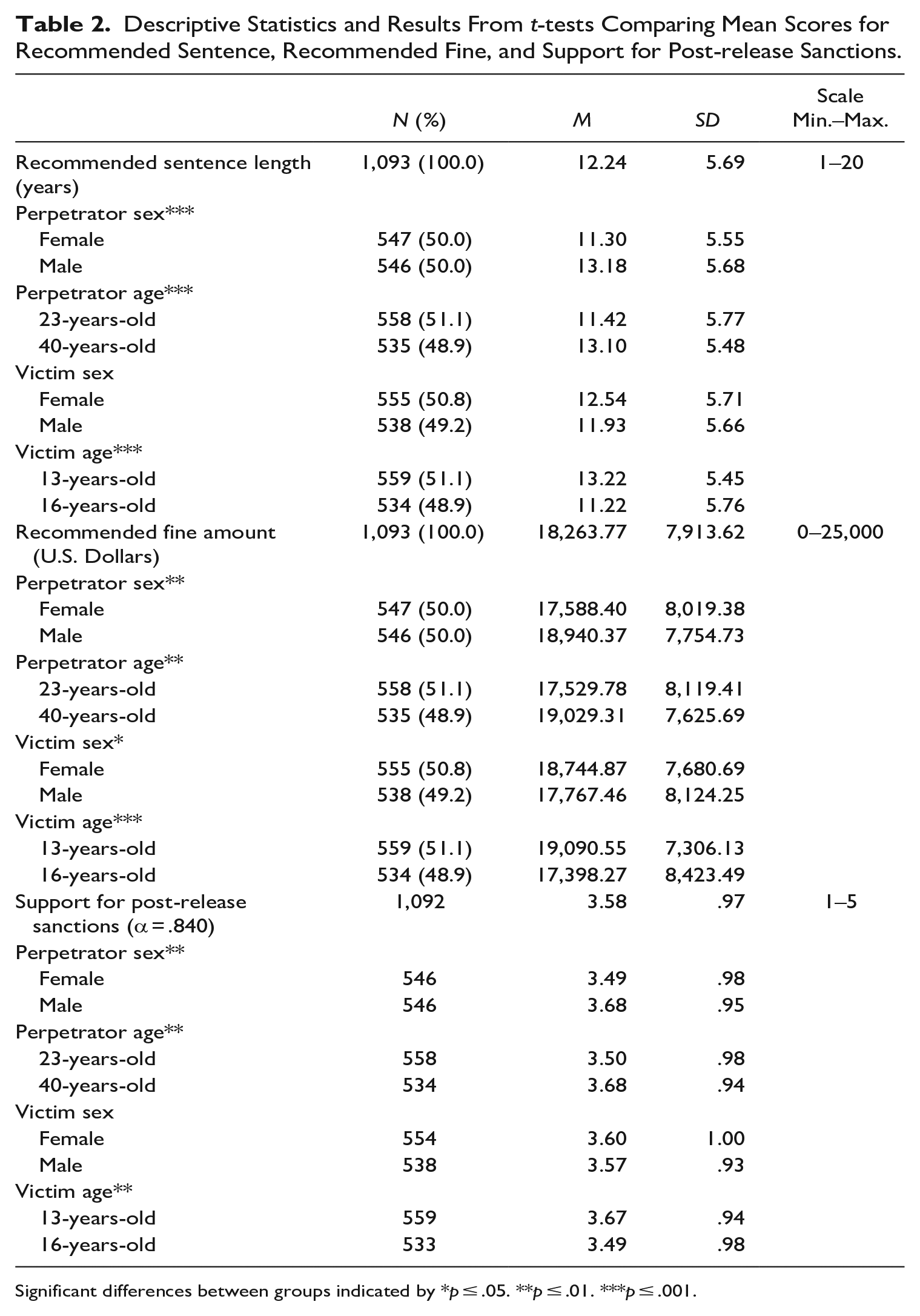
Significant differences between groups indicated by *p ≤ .05. **p ≤ .01. ***p ≤ .001.
R1: Multivariate Baseline Models
Table 3 displays results from the OLS regression models testing for the main effects of treatment conditions on each of the dependent measures assessed. Step 1 of the analysis examined the effects of variables on outcomes independent of perceptions of dangerousness. For recommended sentence, participants imposed significantly longer sentences in cases involving male perpetrators (b = 1.85, p ≤ .001), older perpetrators (b = 1.44, p ≤ .001), and younger victims (b = −1.84, p ≤ .001). Compared to female perpetrators, males received sentences that were more than 1.8 years longer. Compared with younger victims, older victims yielded sentences that were more than 1.8 years shorter. Older perpetrators (i.e., those aged 40 years) received sentences that were on average 1.4 years longer than those imposed on younger perpetrators (i.e., those aged 23 years). Similar results were found in models assessing fine imposition and support for post release sanctions. Specifically, compared to female perpetrators, male perpetrators received fines that were on average $1,307 higher (b = 1,307.31, p ≤ .01) and had greater support for post-release sanctions placed on them (b = 0.18, p ≤ .01). Older perpetrators received fines that were approximately $1,271 higher than those recommended for younger perpetrators (b = 1,271.83, p ≤ .01) and were also found to have greater support for post-release sanctions placed on them (b = 0.16, p ≤ .01). In cases involving older victims, perpetrators received fine recommendations that were on average $1,530 less than cases involving younger victims (b = −1,530.15, p ≤ .001). Similarly, participants indicated greater support for post-release sanctions in cases involving perpetrators who victimized younger adolescents than in cases in which perpetrators victimized older adolescents (b = −0.17, p ≤ .01).
Main Effects on Recommended Sentence, Fine, and Post-Release Sanctions.
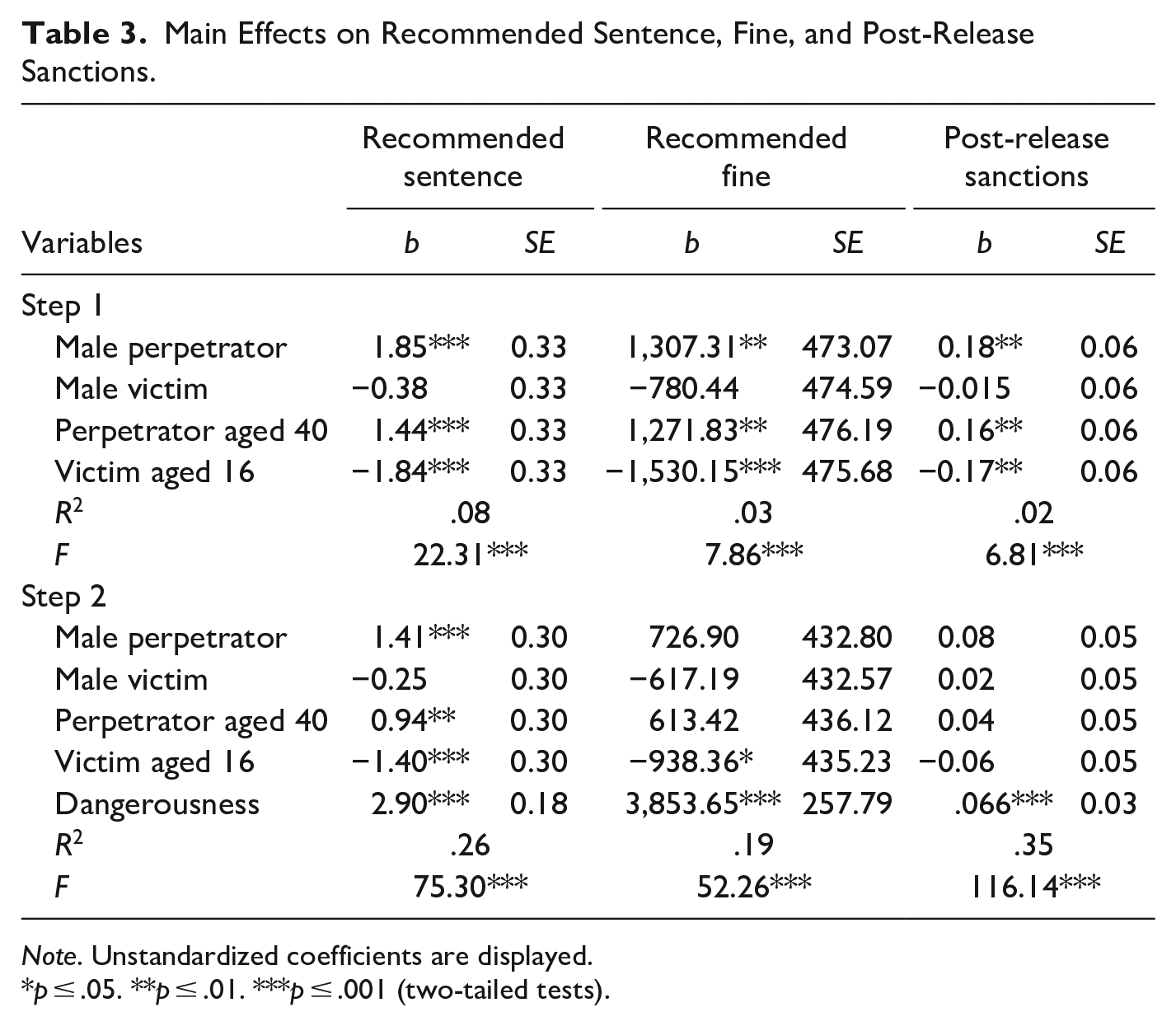
Note. Unstandardized coefficients are displayed.
p ≤ .05. **p ≤ .01. ***p ≤ .001 (two-tailed tests).
R2: Bivariate Findings
Our second research question concerned measuring differences in perceived dangerousness between our experimentally varied predictor variables and determining if these differences explained differences in sentencing recommendations. Figures 1 and 2 provide a visual display of these differences. As displayed in Figure 1, and consistent with our hypothesis, participants perceived Taylor Phillips as being more dangerous when described as a male (M = 4.20) than when described as a female (M = 4.05). An independent samples t-test found this difference to be significant at the .05 alpha level. Participants also perceived Phillips to be more dangerous when Phillips was described as victimizing a female adolescent (M = 4.16) than when described as victimizing a male adolescent (M = 4.10); when described as being an older perpetrator (i.e., 40 years of age; M = 4.23) than when described as being a younger perpetrator (i.e., 23 years of age; M = 4.04); and when described as victimizing a younger adolescent (i.e., 13 years of age; M = 4.21) than when described as victimizing an older adolescent (i.e., 16 years of age; M = 4.04). Although, t-tests revealed statistically significant differences (p ≤ .05) to exist for perpetrator age and victim age, no statistically significant difference in mean scores was found for victim sex.
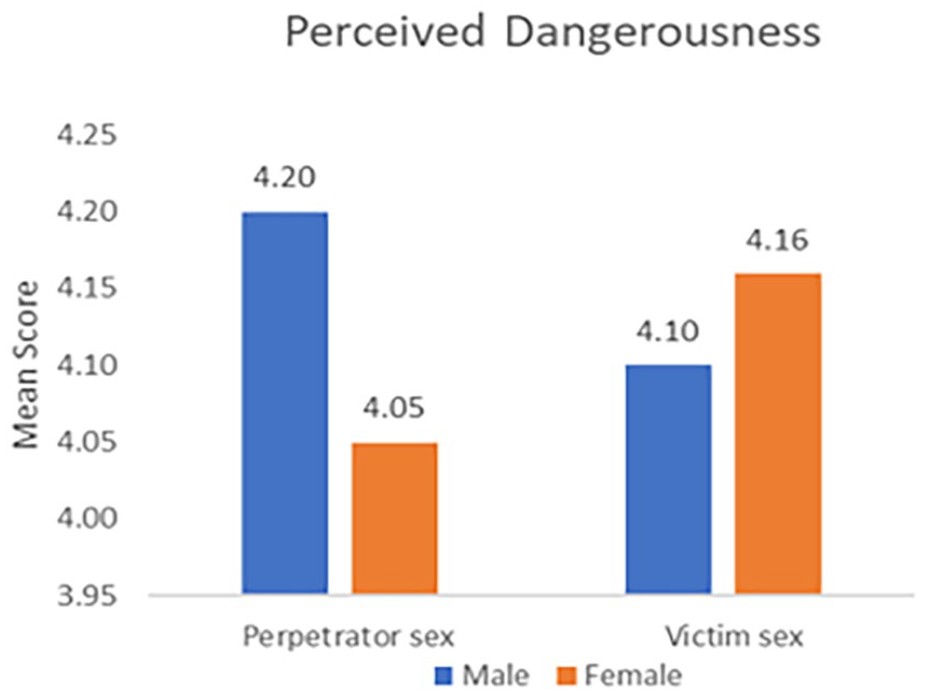
Visual display of differences in mean scores for perceived dangerousness associated with victim and perpetrator sex.
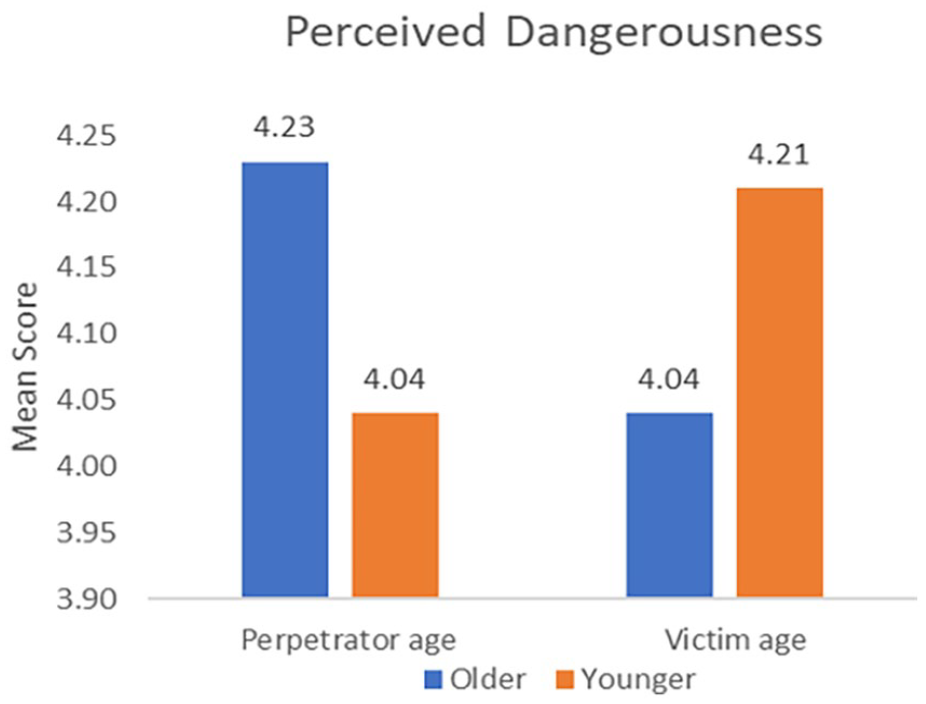
Visual display of differences in mean scores for perceived dangerousness associated with victim and perpetrator age.
R2: Mediation Effects
The final stage of our analysis involved examining the mediation effects of perceived dangerousness on punitive attitudes. Step 2 in Table 3 provides findings from the first part of this analysis. Specifically, our measure of perceived dangerousness was added into the OLS models alongside experimental stimuli in Step 2 of Table 3. The inclusion of the variable resulted in an increase in the R2 values in all models and diminished the effects of the experimentally manipulated stimuli on outcome measures. Regarding recommended sentence, significant predictors remained the same; participants imposed significantly longer sentences in cases involving male perpetrators (b = 1.41, p ≤ .001), older perpetrators (b = 0.94, p ≤ .01), and younger victims (b = −1.40, p ≤ .001). However, perceived dangerousness was the strongest significant predictor in the model (b = 2.90, p ≤ .001). For recommended fine, the inclusion of perceived dangerousness rendered the effects of perpetrator sex (b = 726.90, p > .05) and age (b = 613.42, p > .05) insignificant, and reduced the significance level for victim age (b = −938.36, p ≤ .05), suggesting a potential mediation effect for perceived dangerousness (b = 3,853.65, p ≤ .001). Similar findings were observed for support for post-release sanctions with findings showing all significant effects for experimental stimuli were reduced to insignificant levels with the inclusion of perceived dangerousness (b = 0.66, p ≤ .001) in the model.
Table 4 displays results from the path analysis estimating the mediating effects of perceived dangerousness on recommended sentence length. 3 The first model in the table uses perceived dangerousness as the outcome measure, whereas the second model uses recommended sentence length. Consistent with bivariate findings, male perpetrators were perceived as being more dangerous than female perpetrators at the multivariable level (b = 0.15, p ≤ .01). Older perpetrators (b = 0.17, p ≤ .001) and those who victimized younger adolescents (b = −0.15, p ≤ .01) were also perceived as being more dangerous.
Results From Path Analysis Estimating Mediating Effects of Perceived Dangerousness on Recommended Sentence.
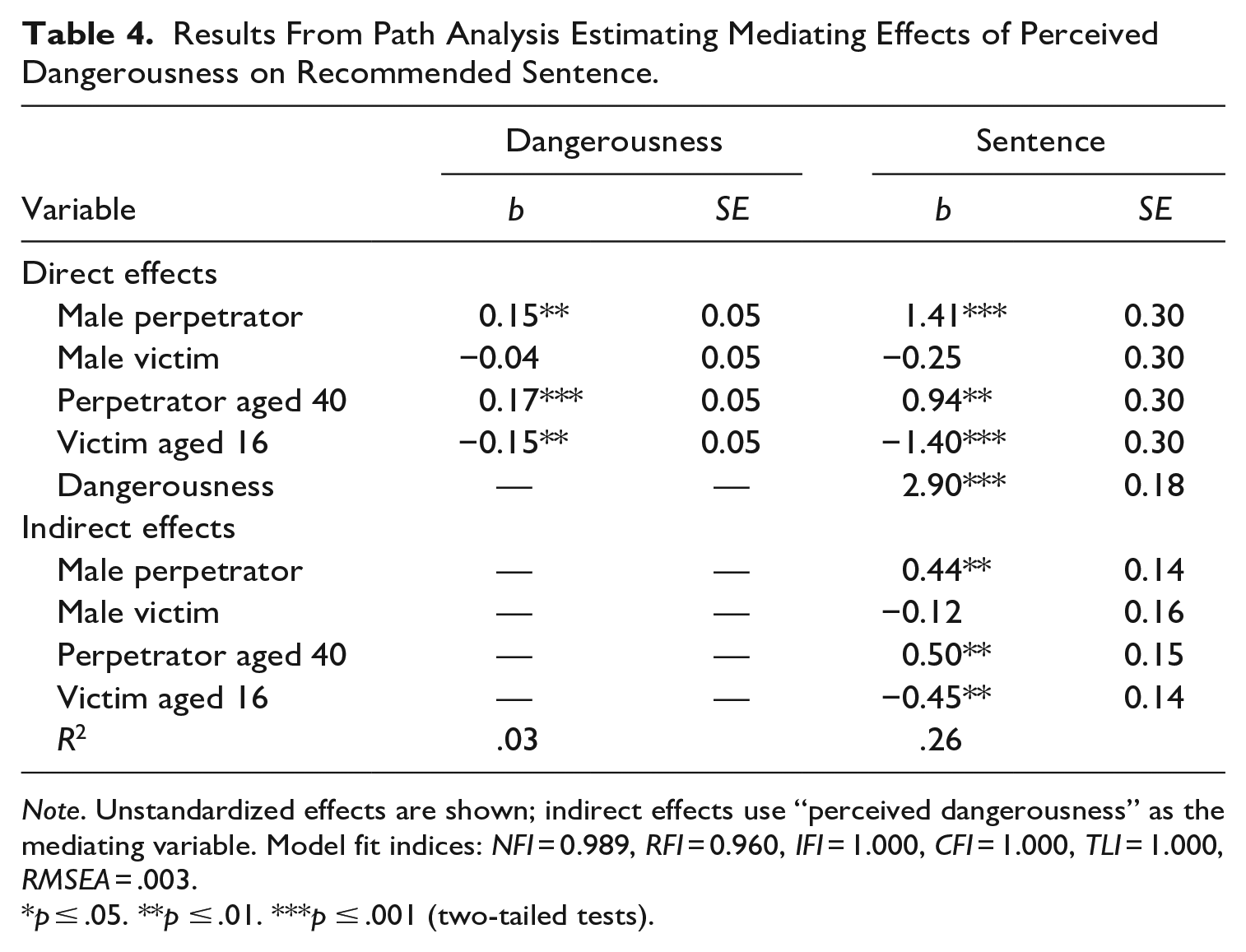
Note. Unstandardized effects are shown; indirect effects use “perceived dangerousness” as the mediating variable. Model fit indices: NFI = 0.989, RFI = 0.960, IFI = 1.000, CFI = 1.000, TLI = 1.000, RMSEA = .003.
*p ≤ .05. **p ≤ .01. ***p ≤ .001 (two-tailed tests).
As depicted in the final model, findings further revealed a partial mediation effect for perceived dangerousness. Specifically, perceptions of dangerousness partially mediated the effects of perpetrator sex, perpetrator age, and victim age on recommended sentence length (p ≤ .01). However, even with the inclusion of perceived dangerousness in the final model, each of these variables exhibited a direct effect on recommended sentence length that was substantively larger than the indirect effect they had on recommended sentence length through perceived dangerousness, suggesting that differences in recommended sentence lengths are only partially due to differences in perceptions of dangerousness applied to experimental varied conditions. Figure 3 provides a visual display of the path analysis examining these relationships.
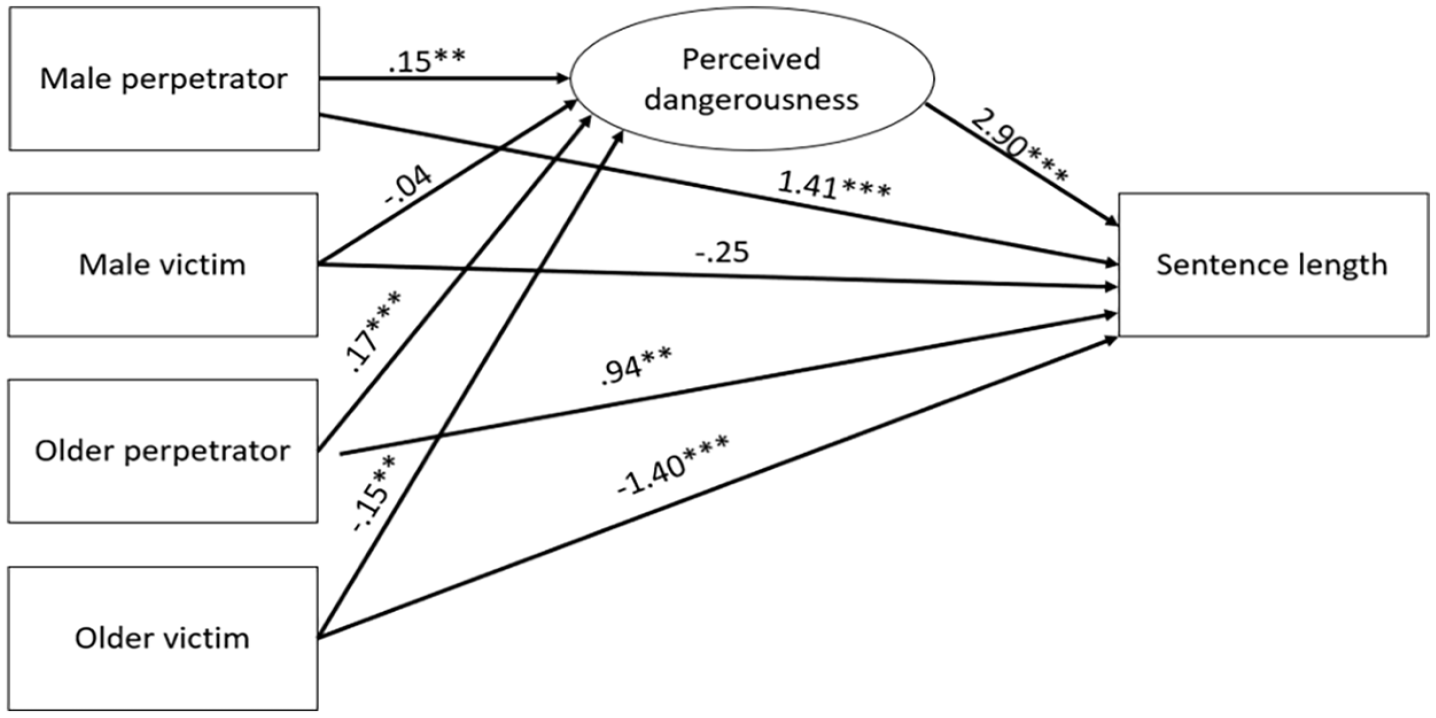
Visual display of path analysis examining mediation effects of perceived dangerousness on recommended sentence length.
Discussion and Conclusion
Guided by attribution theory, the objective of this study was to expand upon the work of Socia et al. (2021) and King and Roberts (2017) by simultaneously analyzing the effects of perpetrator sex and age, and victim sex and age, on simulated juror sentencing recommendations for ICSO, and by examining whether differences in sentencing recommendations are accounted for by levels of perceived dangerousness participants attributed to perpetrators. Mostly consistent with attribution theory, prior research, and our first hypothesis, perpetrator sex and age and victim age influenced participants’ punitivity. Notably, consistent with our second hypothesis, we found that dangerousness partially mediated these effects on participants’ recommendations, conforming to the tenets of attribution theory and focal concerns. These two key findings, along with their policy implications, the study’s limitations, and direction for future research are discussed next.
First, consistent with prior research, participants recommended longer sentences, higher fines, and indicated greater support for post-release sanctions for male perpetrators, older perpetrators, and for those who victimized younger adolescents (Cassidy & Rydberg, 2020; King & Roberts, 2017; Socia et al., 2021). In this study, sex of the victim was not significantly associated with participants punitivity, which is consistent with some prior research (King & Roberts, 2017; Socia et al., 2021). Interestingly, in terms of substantive findings, the direct effects of being male nearly mirrored the direct effects of victimizing a younger adolescent (i.e., 13 years of age). On average, male ICSO and those who victimized younger individuals received sentence recommendations that were more than 1.8 years longer than female offenders and those who victimized older adolescents. These findings replicate prior research and demonstrate that males and those with younger victims are viewed and treated differently than females and those with older victims (Embry & Lyons, 2012; Hassett-Walker et al., 2014; Sandler & Freeman, 2011; Shaw et al., 2022; Shields & Cochran, 2020; Vandiver & Teske, 2006; West et al., 2011).
Second, consistent with the notion of focal concerns and attribution theory, which suggested that certain types of offenders are viewed as more blameworthy and dangerous than other types of offenders, and as such, are more deserving of harsher punishment (Shields & Cochran, 2020; Steffensmeier et al, 1998; Vandiver et al., 2016; West et al., 2011; Wijkman et al., 2010), we found perceptions of offender dangerousness to be higher for male offenders, older perpetrators, and for those who victimized younger adolescents. Most importantly, we found that perceptions of dangerousness partially mediated the effects of perpetrator sex, perpetrator age, and victim age on recommended sentence length in the path analysis. Further, the inclusion of the direct and indirect effects of perceived dangerousness in the path analysis accounted for substantially more variance in sentencing than the main effects model (R2 = .08 vs. R2 = .26). This finding demonstrates that perceived dangerousness is a salient attribute used in criminal justice decision making. However, even controlling for perceived dangerousness, males still received sentencing recommendations that were more than 1.4 years longer than those received by female ICSOs, suggesting that differences in perceptions of dangerousness alone cannot explain the disparities found in baseline modeling. Future studies should include measures of culpability and dangerousness to allow researchers to tease apart the role that each may play on recommended punitivity. Regardless, our findings demonstrate that differences in perceptions of dangerousness of ICSO at least partially explain differences in perceptions of punitive treatment.
The practical implications of these findings are simple but significant: Certain groups of offenders experience bias because of who they are and not what they did. Additionally, these latent biases within individual decision makers in the justice system can contribute to documented disparities in outcomes for those who become involved with the system. As noted above, research on sentencing clearly shows that males, who are older, and assault children receive harsher punishments than their respective counterparts (Embry & Lyons, 2012; Hassett-Walker et al., 2014; Weinsheimer et al., 2017) even when cases are carefully matched (Shields & Cochran, 2020), demonstrating the system is biased against these offenders. Although legally relevant factors may account for some sex differences in sentencing, including that female ICSO are more likely to have (male) accomplices thereby possibly reducing perceptions of culpability to some (K. S. Williams & Bierie, 2015; R. Williams et al., 2019) and that they recidivate at lower rates than male ICSO thereby potentially reducing perceptions of long-term dangerousness (Cortoni & Hanson, 2005; Hanson & Bussière, 1998), extralegal factors, including offender sex and age and victim age still matter. And while jurors in many states may not make direct “sentencing recommendations” to judges, these biases are still present and can manifest earlier on in the decision-making process, potentially even influencing conviction decisions. As such, future work should explore this more directly. Additionally, greater effort needs to be made to increase parity in sentencing among ICSO. Research finds that in addition to the public, criminal justice professionals (e.g., police officers, probation officers, prison officer) also have negative attitudes toward ICSO (Hogue, 1993) which can harbor bias. Although not all training has been shown effective at changing attitudes (Harper, 2012), compared to those without training, extensive training has been found to improve attitudes among those working with ICSO (Simon & Arnaut, 2011), suggesting this may be a productive avenue to reduce biased sentencing practices among criminal justice professionals. We want to be clear that we are advocating for efforts to eliminate bias in decision making against certain types of offenders (i.e., males, racial minorities, etc) in the justice system and the promotion of equity in sentencing for all offenses; offenders should be punished for the crimes they commit, not their demographic makeup. No one should receive a more punitive sentence or a less punitive sentence simply because of their biological sex. For instance, when women commit sexual offenses, they should face the same consequences that male offenders face and both groups of offenders should receive equal access to the treatment they so desperately need to better protect the public.
Public education may also help to reduce bias in ICSO sentencing. Media attention around celebrity cases has impacted sex offender legislations (e.g., 1996 Megan’s Law; 1996 Pam Lychner Sexual Offender Tracking and Identification Act; 2006 Adam Walsh Child Protection and Safety Act) including sex offender notification and registration laws, and created a mythology that, for example, child abusers are strangers and men, resulting in two problems. First, the use of celebrity cases instead of evidence-based practices results in ineffective policies. Sex offender registries do not reduce recidivism and are often not up to date (Anderson & Sample, 2008; Letourneau, Bandyopadhyay, et al., 2010; Letourneau, Levenson, et al., 2010), and residency restrictions also do not reduce recidivism and may in may have collateral consequences (Levenson et al., 2007; Socia, 2011).
Second, the “stranger danger” mythology hides the reality that most child/adolescent sexual abuse is perpetrated by someone known to the victim, the assault may not be physically violent, and the offender may be a woman (U.S. Department of Health and Human Services [US DHHS], 2023; K. S. Williams & Bierie, 2015). To be clear, this does not mean the assault is any less traumatizing for victims, as research finds these cases are often equally or more traumatic than stranger assaults (Finkelhor & Browne, 1985; Ullman et al., 2006). However, from this biased “stranger danger” lens women may be perceived as a lesser threat when compared to men (Cain et al., 2017). Consequently, from a victim rights and retribution perspective, victims of female ICSO are denied the same belief, support, and justice as those assaulted by men (Garza & Franklin, 2021; Venema et al., 2021). From an offender rights perspective, some male ICSO may be denied more appropriate correctional interventions. For instance, West et al. (2011) found no male ICSO in their sample were referred for evaluations, whereas a third of females were referred for evaluations that could reduce and/or eliminate the legal consequences associated with their crimes (i.e., mitigation of penalty, diversion program, and/or assessment of competency to stand trial). The resulting difference in sanctions is noteworthy because research finds community-based programs (i.e., Communities of Support and Accountability; Fox, 2014; Richards et al., 2020) are more effective at reducing recidivism than incarceration. Therefore, it may be that women’s lower recidivism rates stem in part from receiving more effective correctional sanctions. Moreover, bias against male offenders could contribute to reductions in public safety, by diverting them away from needed treatment
Research with both juvenile and adult ICSO finds they are a heterogeneous group (Robertiello & Terry, 2007; Van Wijk et al., 2006). Although some actuarial tools have been shown to be reliable at predicting ICSO recidivism (Helmus et al., 2021), these instruments have limitations. For instance, research finds age effects the predictive ability of these measures necessitating the use of age-stratified actuarial tables (Wollert et al., 2010). Further, because most actuarial instruments have been created and tested primarily on men, some scholars question how well they perform on women ICSO (Abulafia et al., 2015; Cortoni et al., 2010). Therefore, to better protect society, efforts should be made to provide all ICSO with access to the most effective and appropriate treatment for their individual criminogenic risk and needs according to evaluation research (Kim et al., 2016). Although brief 5-year follow-up studies find relatively low rates of recidivism, one long-term study that followed ICSO for 25-years found 88% recidivated when self-reported undetected crimes were included (Langevin et al., 2004). Regardless, recidivism rates may not adequately capture ICSO degree of dangerousness, as those who are convicted represent just the “tip of the crime iceberg” because few victims report (BJS, 2022), leaving many offenders free to continue their crimes undetected (Foubert et al., 2020; Groth et al., 1982; Lisak & Miller, 2002) and making it all the more imperative to provide evidence-based effective treatment to those ICSO who are under criminal justice supervision.
Although this study has several strengths including a large sample size, robust statistical analysis, and guided by attributional theory, as with all research there are limitations to note. The most concerning limitation of this study is that we were only able to control for one attribution or focal concern in statistical modeling, perceived dangerousness. It is possible that the remaining direct effects our experimentally manipulated variables had on recommended sentence length would be further diminished in models that included other focal concerns discussed in the literature on ICSOs sentencing, such as perceived culpability and potential for rehabilitation. For instance, research finds that perpetrator culpability increases with age (Sherrill et al., 2011). Thus, we encourage future work to include measures of these variables in analyses. Further, we measured offender and victim sex and age, but we did not include that of participants in our final analyses. Future research may want to include these, as well examining the effects of various gender identities too. Also, given studies find that victim-offender relationship can influences perceived attributions of blame and responsibility (Bieneck & Krahé, 2011), varying relationship status across vignettes would also be informative and should be considered in future research. Although we had a large sample from across the nation, we did not have participants’ location data and so were not able to control for regional differences that may arise given sex offender laws vary by state. Additionally, our sample may not be representative of jurors, as many individuals may never serve on actual juries. Indeed, a recent report from the Pew Research Center (Gramlich, 2019) shows that jury trials now only account for 2% of federal and less than 3% of state criminal cases. However, public attitudes about ICSO affect sex offender treatment in the criminal justice system including through legislative changes (e.g., Adam Welsh Act) and so warrants investigation even as jury trials diminish. Further, as the research reviewed above illustrates, public attitudes regarding male and female ICSO dangerousness do align with sentencing data (Shields & Cochran, 2020; Vandiver et al., 2016; West et al., 2011), indicating simulated juror recommendation may serve as an adequate proxy for professional actors in the criminal justice system (e.g., prosecutors and judges), which is consistent with research that finds courts reflect community standards (Eisenstein et al., 1988). Finally, we did not control for other extralegal variables that have been found to influence sentencing outcomes, such as offender and victim race (Albonetti, 1997; Spohn, 2018; Steffensmeier & Demuth, 2006; Ulmer et al., 2020; M. R. Williams et al., 2007). We encourage future experimental research to explore the effects of these variables on sentencing recommendations for ICSO.
Nonetheless, our results contribute to a growing body of research that finds male offenders, especially male sexual offenders, are perceived as being worthy of greater punishment than female offenders and receive harsher treatment than do women in the criminal justice system. Moreover, our research demonstrates that part of this heightened punitivity is related to the perceived dangerousness of older, male ISCO, who assault younger children consistent with attributional theory. Thereby, underscoring the need for greater public knowledge about ICSO and greater efforts by members of the criminal justice system to reduce sentencing disparity among ICSO of different demographics (e.g., sex and age).
Supplemental Material
sj-docx-1-cad-10.1177_00111287231170106 – Supplemental material for Perceived Dangerousness Mediates Punitive Attitudes Toward Sex Offenders: Results From a Vignette Experiment
Supplemental material, sj-docx-1-cad-10.1177_00111287231170106 for Perceived Dangerousness Mediates Punitive Attitudes Toward Sex Offenders: Results From a Vignette Experiment by Nathan E. Kruis, Kim S. Ménard, Jaeyong Choi, Nicholas J. Rowland, Tyler Frye, Rachel Kosaka and Alicia Williams in Crime & Delinquency
Footnotes
Declaration of Conflicting Interests
The author(s) declared no potential conflicts of interest with respect to the research, authorship, and/or publication of this article.
Funding
The author(s) received no financial support for the research, authorship, and/or publication of this article.

Supplemental Material
Supplemental material for this article is available online.
Notes
Author Biographies
References
Supplementary Material
Please find the following supplemental material available below.
For Open Access articles published under a Creative Commons License, all supplemental material carries the same license as the article it is associated with.
For non-Open Access articles published, all supplemental material carries a non-exclusive license, and permission requests for re-use of supplemental material or any part of supplemental material shall be sent directly to the copyright owner as specified in the copyright notice associated with the article.
