




Abstract
This paper analyzes trajectories of harm across repeat domestic abuse (DA) incidents using data from one police force in England and Wales matched with the Crime Harm Index. We use growth curve modeling to identify incident and offender-victim (dyad) predictors of harm. High Incident dyads with four or more DA cases (N = 2,610) have a non-linear decrease in harm across incidents, with distinct trajectories for Intimate Partners and male offenders. The Power Few dyads, the 5% of dyads responsible for 85% of cumulative harm, (N = 133) show a decrease in harm across incidents, with distinct trajectories for DA specialists who are only known to police for DA. While acknowledging the limitations, this study suggests important policy implications.
Introduction
The Crime Survey for England and Wales (CSEW) from 2017 estimated that in the year prior, 6 in 100 adults 1 experienced Domestic Abuse (DA), and the majority of victims did not report their case(s) to the police. Despite the large proportion of cases that are unknown to the police, DA is identified as a high-volume crime accounting for 11% of crimes recorded by the police across England and Wales, 2 and accounting for 32% of violent crimes in 2017 (Office for National Statistics, 2017) and affects people across ethnicities, sexual orientations, economic status, and regions (Groves & Thomas, 2013). DA is often characterized by patterns of behavior involving physical and/or psychological violence and coercion, and is often associated with repeat incidents. These incidents, however, are not all the same. The harm of a DA incident ranges from exceptionally severe incidents, like homicides, to less severe violent incidents, and to cases that are non-violent. This distinction is by no means meant to minimize the personal harm and impact from less physically severe cases, but rather to consider whether there is a pattern in DA harm across repeat incidents. This study assesses two related research questions: what is the trajectory of harm across repeat DA incidents, and are there distinct trajectories of DA harm for different types of offenders and victims?
There is a new and growing body of literature investigating harm in DA incidents across England (Barnham et al., 2017; Bland, 2015; M. Bland & Ariel, 2015; Phoenix, 2021; Sherman et al., 2017) and elsewhere (Kerr et al., 2017). These studies have found disproportionate harm associated with few offenders and victims (Barnham et al., 2017; Bland & Ariel, 2015), and a lack of increasing harm across repeat DA incidents reported to the police (Bland & Ariel, 2015). While informative, there appear to be methodological limitations to the existing literature that this study seeks to address. Namely, these studies uses descriptive or bivariate statistics to show patterns and relationships, but do not include predictor variables to identify variations in harm across incidents or individuals, let alone control for the influence of confounding factors. There also remains a gap in the literature analyzing the trajectory of harm across DA incidents using multivariate modeling that accounts for the impact of incident characteristics and offender-victim characteristics that may impact DA harm.
The current study uses growth curve modeling with police DA data from one of the 43 police forces in England and Wales to track the trajectory of harm across repeat incidents of DA. The analysis includes incident and individual factors in the analysis to assess how they affect the trajectories of DA harm. In contrast to previous literature, our results show a decelerating decrease in harm across repeat incidents for people with at least four DA incidents as well as a sub-sample, referred to as the “Power Few,” who are responsible for disproportionate cumulative harm. In fact, contrary to an assumption held by many police officers and practitioners, our results show the number of incidents between two people is not associated with more DA harm. We also show distinct trajectories of harm for male offenders, intimate partners, and DA specialists (offenders who are only known to the police for DA). This study, while acknowledging the limitations of police records and the underreporting of DA incidents, has policy implications for how certain types of individuals involved in DA incidents may be better prioritized by police attempting to reduce harm in DA.
Definitions of Terms
The UK Home Office (2016) provides the legal definition for domestic violence and abuse as: “any incident or pattern of incidents of controlling, coercive, threatening behavior, violence, or abuse between those aged 16 or over who are, or have been, intimate partners or family members regardless of gender or sexuality.” The government specifies that DA includes psychological, physical, sexual, financial, or emotional abuse. DA is not a specific crime or offense, but rather a classification that can be attributed to a variety of crimes and behaviors (e.g., rape, homicide, assault, harassment) where the perpetrator and victim are “personally connected” by an intimate or family relationship (Crown Prosecution Service, 2022). The legal definition of DA in the UK, therefore, is not limited to cases between current and former intimate partners, but also includes abuse between adult family members, such as adults abusing their parents or adult siblings abusing one another. 3 Thus, due to the different types of relationships included in DA incidents, the paired offender and victim listed in a case are referred to as a dyad rather than a couple.
Literature Review
The following sections of this literature review discuss how harm has been measured for crime with related limitations, the literature on change in harm across repeat DA incidents, and variations in DA harm.
Measuring Harm
The harm caused by a crime can be difficult to assess or measure. Harm, often referred to as the severity of a crime (see Sherman et al., 2016, who uses these terms synonymously), is meant to capture the seriousness of a crime and varies significantly based on the type of crime conducted. However, harm is also related to the physical injury, and/or emotional impact of the crime on the victim(s), both direct and indirect (e.g., family, society), and may include the larger financial costs to society caused by a crime. The harm caused by crime, in particular DA, can vary significantly across victims as it can involve a variety of crimes and patterns of behavior. The same crime can result in differing degrees of harm experienced by different victims (Kilpatrick et al., 1989).
The complications with varying factors and perceptions contributing to the harm caused by crime are reflected in different methods used to measure harm. For example, the Conflict Tactics Scale (CTS) was created to measure severity in domestic abuse by interviews with victims. Wolfgang et al. (1977, 1985) surveyed individuals to rank crimes by their severity to create The Index of Crime Severity. Ignatans and Pease (2016) used a crime victims’ judgment of harm from the Crime Survey for England and Wales (CSEW) as weights for counts of crime. Often for the purposes of police justifying prioritization efforts toward vulnerable persons, efforts have been made to standardize a measure of harm based on judicial outcomes. The judicial outcomes are meant to reflect a society’s agreed perception of the seriousness of each crime, relative to other crimes. These include the Crime Severity Index (CSI) generated in Canada (Wallace et al., 2009) and the New Zealand Justice Sector Seriousness Score (Sullivan et al., 2016), both of which weight a crime by the corresponding court sentence. Similarly, the Crime Severity Score (CSS) created by the Office for National Statistics in the UK, derives a score for each crime from the average sentence given to those convicted of that offense. The Crime Harm Index (CHI) consists of scores given to each crime as a measure of harm based on the number of days in prison the National Sentencing Guidelines in England and Wales designates for that crime (Sherman, 2007; Sherman et al., 1992, 2016).
Each of these measures has benefits and limitations. The CTS, for example, may be useful at capturing the individual perception of harm which may vary across victims experiencing similar incidents, but this measure may suffer from underreporting, a common occurrence among victims of DA, and methodological complications of providing generalizable data. Ignatans and Pease’s (2016) approach using victimization surveys does not necessarily capture the rare, high harm incidents, such as homicide cases. Wolfgang et al.’s (1985) measure depends on subjective individuals’ opinions and lacks consensus. While these measures of harm come directly from the victim, it is worth noting that reports of harm could also be subject to minimization by the victim.
In contrast, harm scores associated with sentencing and judicial outcomes do not include subjectivity or nuanced perceptions of harm. Despite relying on an objective index, the CHI, CSI, and CSS all derive the harm score from the crime listed by the police, which may be less capable of identifying psychological and emotional abuse than physical injury. 4 The CSI and CSS have also been criticized because the mitigating and aggravating factors that influence sentencing for individuals in court (e.g., criminal history of the perpetrator) necessarily influence these harm scores for the crime. As such, a crime may measure with greater severity simply due to the individuals who committed this crime, rather than due to the severity of the crime itself. These measures are also subject to change over time as more offenders are sentenced, which may alter the measure and make it less consistent for comparison over time. Additionally, these measures are frequently used in conjunction with police recorded DA data, which pose limitations. For example, DA is known to be underreported to the police, DA cases recorded by the police are subject to police biases and interpretations, and the involvement of the police can potentially change the dynamics of a DA incident resulting in more or less violence than may have occurred otherwise.
While individual victims’ perceptions of harm may be important for some research purposes (see Ignatans & Pease, 2016), Ashby (2018) notes four advantages of more objective measures for policing purposes: (1) these indices allow one to compare the harm of different crimes with a standard measure, (2) the measures are consistent for use across studies in different locations, (3) there is a transparent method of assigning the estimate of harm to each crime, and (4) the method for generating the index is affordable for public sectors. Measures, such as the CHI and CSS, are noted as being objective and relying on the consensus of law, which is assumed to dictate sentencing based primarily on the severity of the offense (Sentencing Guidelines Council, 2004), such that it captures the public’s impression of the physical and emotional impacts to direct and indirect victims of the crime. Despite being more objective, these measures have significant differences in harm measures for certain crime categories as shown by Ashby’s (2018) comparison of the CHI and CSS. Controlling for other factors, Ashby shows that these two methods for measuring harm result in significantly different harm weighted counts of crime categories, which could result in prioritizing different crimes and different force areas. Clearly, the measure of harm has significant ramifications for analysis purposes and the conclusions that can be drawn from results, which has affected the findings on harm in DA in the extant literature.
Harm in DA
Much of the prior research on harm across repeat DA incidents suggests that harm, the seriousness of the offense, increases over time. The increase in harm is often referred to as an escalation in DA harm or severity. 5 Bland (2015) thoroughly summarized the literature on harm in DA noting the frequent citing of harm escalation, but with little or weak empirical evidence. For example, some studies that have found an increase in harm often did not include a standardized measure of harm or severity (e.g., Walker, 1984) which confounds comparing harm across incidents. Other studies used samples of women in shelters, which may not generalize to experiences of DA more broadly (see Pagelow, 1981; Walker, 1979, 1984), or suffer from high rates of attrition in longitudinal studies (e.g., Feld & Straus, 1989). The strongest empirical study to identify an increase in harm across DA incidents was conducted by Chambers-McClellan (2002) who investigated DA incidents reported to emergency services in Georgia, USA, throughout the year in 1997. She measured harm using the Conflict Tactics Scale (CTS) (Straus, 1979) in relation to notes taken by the 911 operators, which was more standardized than prior studies. The findings showed that violence increased, on average, with each call. There are two relevant limitations of this study. First, the CTS scale does not weight items equally for ready comparison and second, the sampling was limited to only those households that had repeat incidents (>6,000 households) in a single year. The trajectory of harm, arguably, may be difficult to see accurately within such a short timeframe. Despite the empirical limitations, the idea of harm increasing across repeat DA incidents became a common assumption held by police and the public (Bland, 2015; Bland & Ariel, 2015), and was even alluded to without citation by the authors of the Domestic Abuse, Stalking and Honour Based Violence (DASH) risk assessment for DA that is used in England and Wales (Richards et al., 2008).
Contrary to this commonly held belief, there are studies that have not found an increase in harm across repeat DA incidents. Piquero et al. (2006) reviewed the 1984 Minneapolis experiment in conjunction with replications in four other areas and found no consistent evidence of increasing harm. This study was limited, however, to a binary outcome (i.e., injury, no injury), and few time point measures in the short timeframe of the experiments. Bland and Ariel (2015) looked at 5 years of police data from Suffolk Constabulary (UK) and used an ANOVA to find no significant change in harm across incidents for dyads with five or more incidents in the timeframe. Barnham et al. (2017) evaluated harm across Intimate Partner Violence (IPV) incidents in the Thames Valley police region (England) showing similar results with “no evidence of increasing seriousness of harm caused to victims” (p. 117). A similar study on IPV incidents in the Northern Territory of Australia found no increase of harm among white dyads, but did find an increase in harm among aboriginal dyads (Kerr et al., 2017). A study of Domestic Violence and Abuse (DVA) data from the Lancashire police force in the UK used latent trajectory analysis to investigate escalation of harm, but was unable to identify distinct trajectory patterns, likely due to the small sample size (Phoenix, 2021). These recent studies of the change in harm have used the Cambridge Crime Harm Index (CHI) as a standardized measure of harm (Sherman et al., 2016). The difference in measures of harm, in addition to other methodological limitations, may contribute to conflicting results across studies evaluating change in harm across repeat DA incidents.
Variations in DA Harm
It is possible the differences in results for change in harm across repeat DA incidents is due to the differences in the measurement of harm, but it is also possible that this is related to distinct subgroups of DA offenders that are associated with distinct patterns of DA offending and harm. Research has found there is an exceptionally small percentage of dyads and offenders responsible for the majority of cumulative DA harm, which follows the general criminological research that has found the “power few” who are disproportionately responsible for the majority of crime (Sherman, 2007). Bland and Ariel (2015) found that 1.7% of the dyads accounted for 80% of the cumulative DA harm, while Barnham et al. (2017) found 3% of IPV offenders were associated with 90% of the total harm. It is important to determine if those “power few” who are repeat offenders are distinct from other repeat DA dyads, and if the trajectory for harm across repeat incidents is distinct for those responsible for the majority of harm.
Harm in DA may also differ based on characteristics of the dyad. For example, Johnson (1995) theorized four subgroups of DA: situational couple violence, intimate terrorism, violent resistance, and mutual violent control. These subgroups are characterized by differing power dynamics in a dyad and, Johnson suggests, often fall along traditional gender roles. Intimate terrorism, sometimes referred to as “Patriarchal Terrorism,” is exclusively perpetrated by men who justify violent, coercive and controlling behavior toward female partners based on old-fashioned patriarchal norms. Violent resistance, Johnson argued, is almost exclusively found among females, while the other two categories (situational couple violence, which involves a party being violent but not controlling, and mutual violent control, which describes co-abusive violent and controlling dyads) occur across both genders. These subgroups suggest that DA harm may be affected by the gender of the parties involved and whether a dyad is co-abusive.
Johnson suggests that the sampling strategies used for studies impacts the likelihood of sampling specific groups of DA offenders, which influences the results comparing genders in DA. Likewise, we argue, sampling of specific groups would impact the perception and trajectories of DA harm. For example, studies that survey women in abuse shelters will disproportionately obtain DA data on intimate terrorism violence, while studies that use representative sampling of a specific population are more likely to capture situational couple violence and mutual violent control, especially because individuals involved in intimate terrorism may fear engaging in general surveys. Gender differences and characteristics of the individuals in the dyad may impact the types of DA crimes inflicted, as well as a change in harm across repeat incidents. Therefore, it is important to include this information in a multivariate model to provide a thorough analysis of DA harm.
Data and Methodology
This paper adds to the literature on change in harm across DA incidents in multiple ways, both theoretically and methodologically. First, this study uses police data of DA incidents over two years and four months, or 883 days, to better assess repeat incidents and potential change in harm that may not be identified over a shorter time period. While there are significant limitations associated with underreporting or minimizing DA harm to the police, we argue that our analysis of harm across repeat incidents may suffer less bias due to underreporting by focusing on dyads with at least four DA incidents involving the police in this timeframe. As previously discussed, there are limitations for each measure of harm, but this study uses the CHI because it is quite objective, consistent over time, corresponds easily to police records, and the CHI is comparable across studies and has been commonly used in recent DA harm literature. Additionally, there is significant variation in CHI harm scores for specific crimes that allow this study to compare a range in harm across incidents. Based on the previous literature using police data, we hypothesize: (H1) DA harm (CHI score) will not increase across repeat incidents.
Second, rather than using longitudinal surveys with limited time points that rely on the recollection of victims and/or perpetrators, DA incidents in police data can come to police attention through people besides those directly involved (e.g., family members, neighbors), which may include more DA subtypes than other sampling methods. This study expands on the literature by including variables about the dyad and individuals involved in DA to assess if these factors impact DA harm and the trajectory of harm. Based on the previous literature we hypothesize: (H2) Male offenders will be associated with greater harm in DA, and (H3) Male offenders are associated with an increase in harm across DA incidents. Prior research tends to focus on Intimate Partners, so this study also includes a variable distinguishing IP dyads from those of family relations. We hypothesize: (H4) IPV dyads will be associated with greater harm and an increase in harm than dyads of other family relations. This study also distinguishes co-abusive dyads where both parties in a dyad have been deemed the offender and the victim in different DA incidents. These co-abusive dyads with four or more incidents in this timeframe likely represent Johnson’s (1995) “mutual violent control” DA group (compared to the co-abusive “situational couple violence” group, which is thought to be rare and sporadic). Based on the theorized power differentials for individuals involved in co-abusive DA, compared to when a single individual in the dyad perpetrates abuse, we hypothesize: (H5) Co-abusive relationships will be associated with less harm in DA.
Relatedly, we identify the Power Few dyads that are responsible for the majority of cumulative harm in our dataset. This subsample, particularly those offenders who are only known to the police for DA offenses (DA specialists), may represent the “Intimate Terrorism” subgroup theorized by Johnson (1995). Bland and Ariel (2020) previously looked at the differences between these DA specialists and those who are involved in other forms of crime and found that the latter group were over 50% more harmful in DA incidents than DA specialists. However, they never looked at the impact of DA specialist behavior on harm across repeat incidents of DA. DA offenders who are not known to police to be involved in any other sort of crime may be more representative of the “Patriarchal Terrorism” offender, so we hypothesize: (H6) The DA specialist is associated with greater harm in DA and an increase in harm across incidents. This study contributes to the literature by assessing the impact of DA specialists on harm and analyzing if the Power Few dyads have a distinct trajectory of harm compared to other DA dyads with four or more incidents.
Lastly, this paper contributes to the literature by utilizing multivariate analysis that includes data at the incident and dyad level to assess the change in harm across repeat DA incidents using growth curve modeling. This methodology allows us to identify the impact of each variable on the level of harm (intercept) and the change in harm (slope), controlling for other variables in the model. The findings can therefore contribute to the growing field of research in this area that has often relied on bivariate analyses (Barnham et al., 2017; Bland & Ariel, 2015; Bridger et al., 2017; Kerr et al., 2017; Strang et al., 2017).
Police Domestic Abuse Data
For this project we used incident data from one of the 43 police forces in England and Wales that were tagged as domestic abuse cases and reported between June 1, 2014 and October 31, 2016. 6 It should be noted that the police go through training specifically for DA as part of the initial recruitment that is evidence-based. 7 There is also an accredited training program run nationally called Domestic Abuse Matters for frontline responders, call handlers, DA investigators and supervisors. This program is a product of the College of Policing in the UK and run with Women’s Aid and Safe Lives organizations. A proportion of relevant officers and staff are required to complete the DA Matters training. Additionally there are individuals identified as DA specialists (who have received additional DA Matters training as DA Matters Champions/Mentors) who make up a network across forces and support people working in this area, while also identifying training needs. There is also a force delivery plan for the Violence Against Women and Girls (VAWG) initiative. While there are limitations inherent in police data, the training and focus on DA by the police force provide context to the validity of the DA data for this study.
The police force records each case with information about the incident (e.g., location, time), the offender (e.g., name, DOB, occupation), victim (e.g., name, DOB, occupation), and a DASH risk assessment. The identification of which party is the offender and which is the victim is the task of the reporting officer. 8 The original data totaled 71,201 records that were reduced to 62,143 DA incidents after removing duplicates and cases where the victim and/or offender were less than 16 years old at the time of offense (to match the legal criteria).
These DA records include crimes and non-crimes. “Non-crimes” are enquiries that involve the police and are recorded as DA cases on file due to the behavior and relationship criteria meeting the definition described above, but are not identified as crimes. For example, the police may arrive to a domestic argument call made by neighbors next door, and while there appears to be a domestic issue (e.g., emotional abuse), the police did not identify evidence of a known crime. This could be due to a number of different factors, such as the victim being unwilling to provide evidence or a statement with a lack of other physical evidence, or the incident may be a verbal argument between individuals who have previously been involved in DA incidents and the police arrived before the argument resulted in a crime. Despite these incidents not involving clear violations of the law, these cases are filed and tracked by the police to build an intelligence picture relating to the individuals and dyad, and can contribute to multi-agency support efforts to support vulnerable persons. The record of these cases in addition to DA crime incidents is valuable for explaining the volume of DA cases the police are responsible for addressing. For our purposes, excluding these cases would be underreporting DA behavior identified by the police, so we believe it is important to include both crime and non-crime DA cases when estimating the variation in harm across repeat domestic abuse incidents. Including these cases is also in line with prior research of harm in DA (see Bland & Ariel, 2015; Bland & Ariel, 2020).
High Incident dyads
To assess changes in harm across repeat incidents, we restricted our sample to High Incident dyads with four or more DA incidents in this timeframe, which totaled 2,622. 9 The final analysis includes 9,732 DA incidents by 2,610 dyads, after removing cases with missing information. 10
Power Few Dyads
Next, we identified the Power Few within the subset of dyads with four or more incidents in this timeframe. Following the Pareto principle, also called the 80/20 rule, which suggests roughly 80% of consequences are due to 20% of causes, we sought to identify dyads responsible for the majority of DA harm. We totaled the harm across all of the incidents and found that a CHI score of 1283.1 or greater represents 85% of the cumulative harm among the High Incident dyads. 133 dyads had a total harm score across the first four incidents that met or surpassed this threshold and constitute our Power Few dyads. These Power Few dyads are 5% of the total 2,622 dyads in this dataset, showing that, as the literature suggests, a small percentage of the High Incident dyads are disproportionately responsible for DA harm.
Variables
Cambridge Crime Harm Index
We matched each crime 11 with the corresponding CHI score to serve as the dependent variable. 12 Utilizing the CHI, each DA incident has a corresponding harm score to reflect the publicly recognized seriousness of the incident relative to other incidents based on the sentencing guidelines for the crime. The CHI also provides a score for each DA incident that can be objectively compared to other incidents the dyad has experienced and to incidents by other dyads. Following the methods of prior studies (Bland & Ariel, 2015), non-crimes were assigned a 0.1 CHI score. These cases are not crimes and therefore do not have any sort of sentence associated with them, but the CHI score must be greater than zero for evaluation purposes.
Incident Variables
To assess a change in harm across repeat DA incidents, the slope, we included the incident count (0–3) to capture the first four incidents by these dyads. We also included a quadratic term, the incident count squared, to account for a non-linear change in harm across repeat incidents. In our study, the quadratic term accounts for measuring an inconsistent rate of change in harm, meaning an acceleration or deceleration in the change of harm across repeat incidents. The number of days between incidents is included for each incident as well as binary indicators (0, 1) noted by the police about the incident, which include a mental health indicator, alcohol indicator, child present indicator, repeat victimization indicator, and a risk level measure (1–3). Additionally, each incident is coded to indicate if it was in an urban (1) or rural (0) setting in the force area.
Dyad Variables
These incidents are clustered within dyads, which have distinguishing characteristics that were included in the model to assess how they impact DA harm. For example, while all of these dyads have at least four DA incidents in this timeframe, there are 1,603 dyads with five or more incidents and more than a thousand with six or more. Therefore, we included the total number of incidents the dyad had in this timeframe in the analysis. As previously stated, DA in England and Wales is not exclusive to Intimate Partner (IP), so we have a binary indicator if the dyad is IP (reference category being familial). We include binary measures (0,1) to indicate if the victim is a victimized by another domestic abuser in this time period (i.e., is a serial DA victim), and if the offender has committed DA against another victim in this timeframe (i.e., is a serial DA offender). Similarly, we have dichotomous measures if the offender is male (1), the victim is male (1), and to indicate if the victim and offender are the same sex (1). We also include a measure of the age difference between the victim and offender (the average across their incidents reported in this timeframe). Next, we include a series of measures to capture the offender’s involvement in crime besides DA. For example, we have the number of drug crimes the offender was involved in during this time frame as well as the number of other non-DA related crime. To capture this criminal activity relative to DA offending, we have an indicator if the offender is a DA specialist (1) if he/she has committed no other known crimes in this timeframe besides DA, and we include a measure of the proportion of offending in this timeframe that is DA compared to non-DA offenses. Similarly, we include a measure of the number of non-DA victimizations the victim reported in this timeframe.
Analysis Methods
Using the original full dataset, the conditional probability was produced to determine if the likelihood of a subsequent incident increases with each sequential case. To address our main hypotheses, we used growth curve modeling to assess the change of harm across repeat DA incidents for the High Incident dyads with four or more DA cases in this timeframe and for the Power Few dyads. 13 There are plenty of detailed resources about hierarchical growth-curve models and examples of research using this method to assess a variety of outcomes (e.g., student test scores; mental health assessments) across a series of time points (see Bryk & Raudenbush, 1992; Buxton, 2008; Cherlin et al., 1998; Duncan & Duncan, 2004; Greenberg & Phillips, 2013; Raudenbush, 2002; Sun & Li, 2009). The level 1 unit of measurement is the observation at a single time point and the level 2 unit of measurement is the unit being analyzed over time, such as an individual or, in our case the dyad. Hierarchical growth curve models can include time-dependent variables that may impact the outcome at each time point (within-subject), as well as variables that characterize the unit being analyzed (between-subject). The harm in a DA incident may be impacted by the characteristics of the dyad (e.g., gender of the offender), as well as characteristics of the specific incident (e.g., a child is present in the incident) and growth curve modeling is optimal to assess these factors as well as whether and how harm changes over time. The growth curve models in this study have the individual DA incidents at level one nested within the dyad at level two as depicted in the following equations:
Level 1:
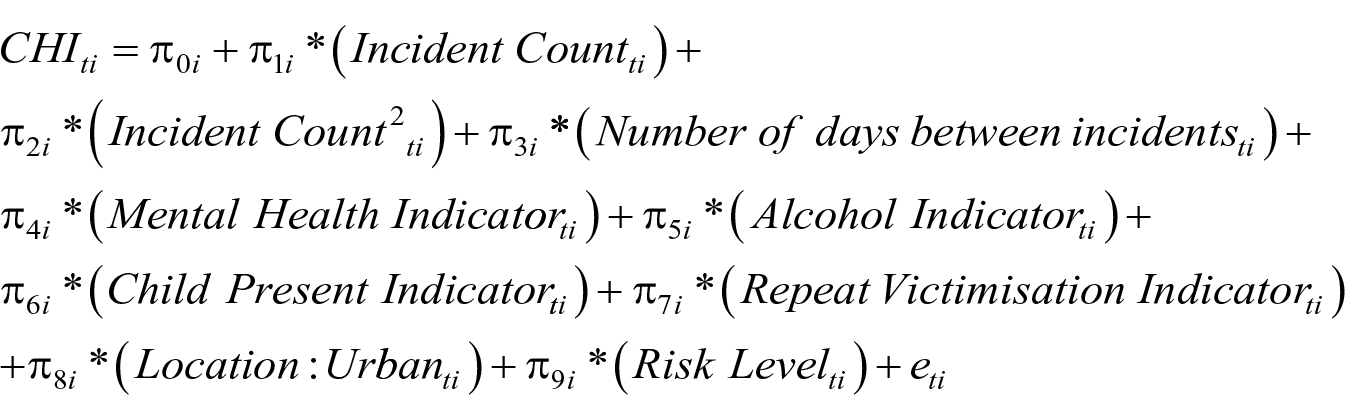
Level 2:
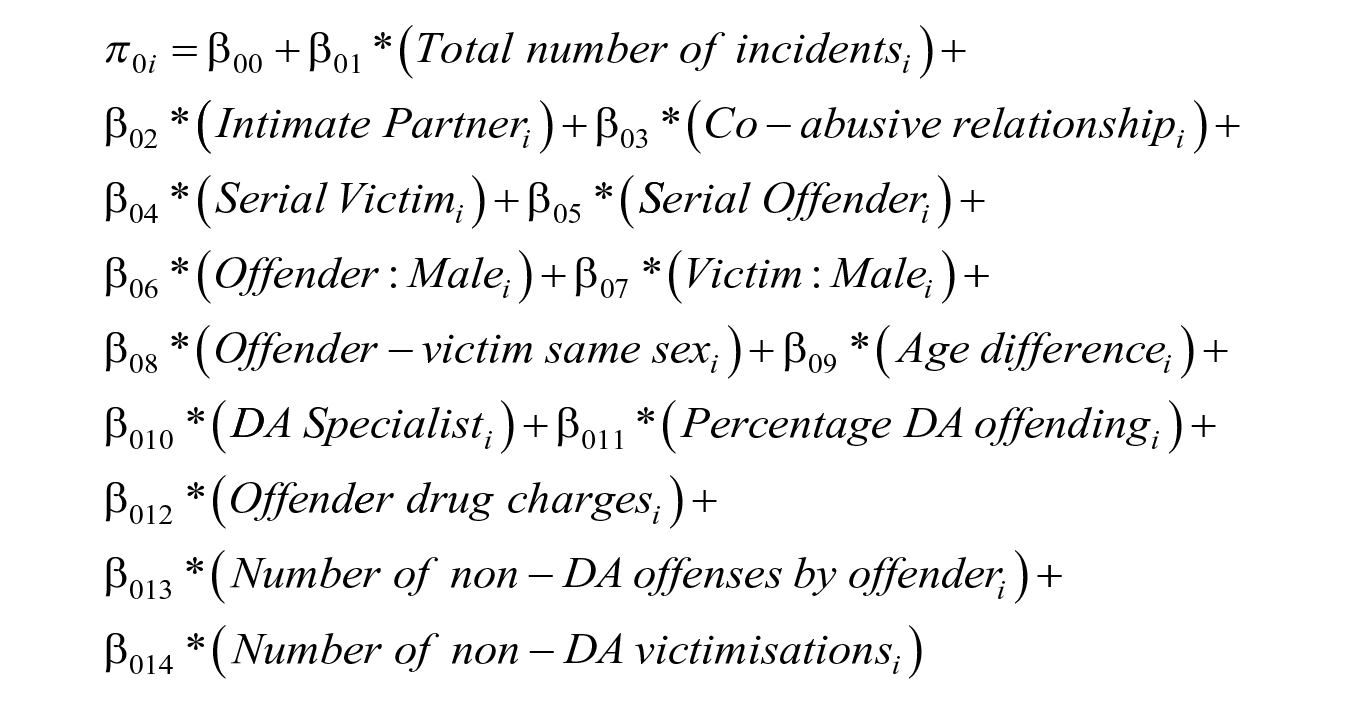


The last equations show error terms included to allow the slope and quadratic term to vary for the incident count variable. Growth curve models can also assess cross-level interactions. We ran models with cross-level interactions to test hypotheses (H3, H4, H6) looking at how characteristics of the dyad may impact the slope (increase or decrease in harm over time) and the quadratic term (acceleration or deceleration in the change in harm over time). While we trialed a number of different interactions, our final model for the High Incident dyads includes the following equations to assess H3 and H4:


The first equation assesses whether a dyad having a male offender and/or being intimate partners has a significant impact on the slope, or change in harm across repeat incidents (Incident count). Similarly, the second equation assesses if the dyad being intimate partners impacts the rate of change in harm (acceleration or deceleration) across incidents (Incident count 2 ).
The growth curve models for the Power Few dyads subsample uses the same level 1 and level 2 equations, except the models do not include the level two variables Intimate Partner and Same Sex because there is too little variation in these variables for the smaller dataset. After trailing interactions with the Power Few, we include the following cross-level interaction to test H6:


We use these equations to assess if DA Specialists have a significantly different slope (increase or decrease in harm, i.e., Incident count) and a different rate of acceleration or deceleration (Incident count 2 ) than offenders who police know have committed other types of crime.
The results are presented for each sample, the High Incident dyads and the Power Few dyads, separately with tables each showing three models—the first includes incident level variables alone, the second adds dyad level variables, and the third model adds the cross-level interaction results. 14
Results
Descriptive Statistics
In line with previous studies, most dyads in the original dataset only had one incident (28,464 which is 72.98%) and only 6.8% of the dyads have four or more incidents in this timeframe (see Barnham et al., 2017; Bland & Ariel, 2015). It should be noted that the force area has significantly more records of DA than previous studies using DA data in the UK (e.g., Bland & Ariel, 2015; Barnham et al., 2017—though this paper focused on Intimate Partner Violence, a subset of DA). The specific region covered by this police force differs from many parts of England and Wales because of the seasonal fluctuation in population. Therefore, it is likely there are people who, while not necessarily residing in this area and only have a single incident in this dataset, may have other DA incidents in this time period in other jurisdictions.
The descriptive statistics for the incidents (level 1) and dyads (level 2) for the High Incident dyads and the Power Few dyads are shown together in Table 1 for comparison. 15 These results show the mean CHI score per incident for the High Incident dyads is 24.57, which suggests a sentence of about three and a half weeks. In comparison, for the first four incidents reported by the Power Few, the mean CHI score per incident is significantly higher at 427.83, which would be a sentence of incarceration for over a year. The incident count spans from 0 to 3 (the first four incidents), and the quadratic term is the incident count squared. The mean number of days between incidents is 98.33 for High Incident dyads and 235.28 for the Power Few dyads, but the range and variation are quite large for both because there are some DA incidents reported to police in this time period that occurred in the past. Most of the incidents occurred in urban locations (compared to rural) for both the High Incident dyads and the Power Few dyads. Understandably, the mean risk measure is higher for the Power Few dyads.
Descriptive Statistics for Incidents and Dyads.
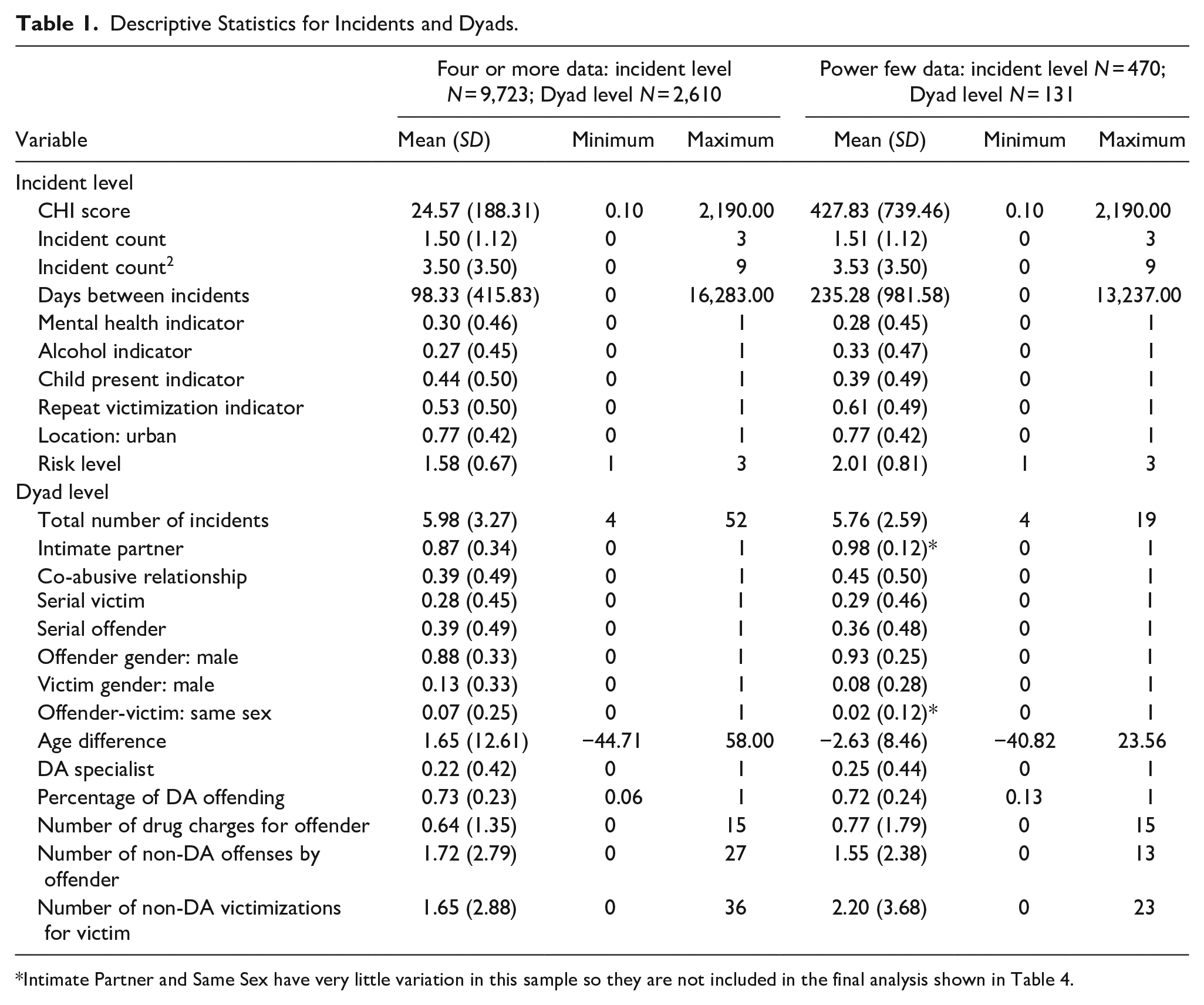
Intimate Partner and Same Sex have very little variation in this sample so they are not included in the final analysis shown in Table 4.
At the dyad level, the mean number of incidents these dyads reported in this timeframe is comparable for the High Incident dyads and the Power Few dyads (5.98; 5.76, respectively). The majority of both High Incident dyads and the Power Few dyads are intimate partners (compared to familial relations), which have male offenders and female victims, with few same sex dyads. 39% of dyads are co-abusive where both parties have been identified as offender and victim within this timeframe among High Incident dyads, while 45% of the Power Few dyads were co-abusive during this timeframe. Both groups have more dyads with serial offenders than serial victims. While the age difference between individuals in a dyad is quite broad, it is normally distributed with victims being, on average, 1.65 years older than offenders for the High Incident dyads and 2.63 years younger than offenders for the Power Few dyads. In terms of criminal behavior, few offenders are DA specialists (only involved in DA crime in this timeframe) and the mean percentage of DA offending in this timeframe is comparable for High Incident and Power Few dyads (73% and 72%, respectively). The mean number of drug offenses for the offender in the dyad is less than one for both groups, while the number of other non-DA offenses for the offender in the dyad during this timeframe is also similar. In comparison, the victim in the dyad is victimized on average 1.65 times in this timeframe by non-DA offenses, and 2.2 times for the victims in the Power Few sample.
In terms of crimes, the High Incident dyads have 44 different Home Office offense groups, 16 while the Power Few have 26 different crimes with the CHI ranging from 1.00 to 3285.00 for attempted murder. The most common crime for both groups is assault with injury (31.7% and 22.2% of the samples, respectively) which has a CHI of 10. There are some significant differences in terms of crimes between these two groups. For example, the Power Few dyads have a significantly larger proportion of crimes that are rape of a female (24.5%) compared to the High Incident dyads (2.0%). Similarly, assault with intent to cause serious injury, which has a CHI score of 1460, is found in 1.0% of the incidents by High Incident dyads, while it is 10.7% of cases for the Power Few dyads. Non-crimes make up 62.9% of incidents in the High Incident dyad sample, while the Power Few dyads have 48.3% of incidents that are non-crimes.
Conditional Probability
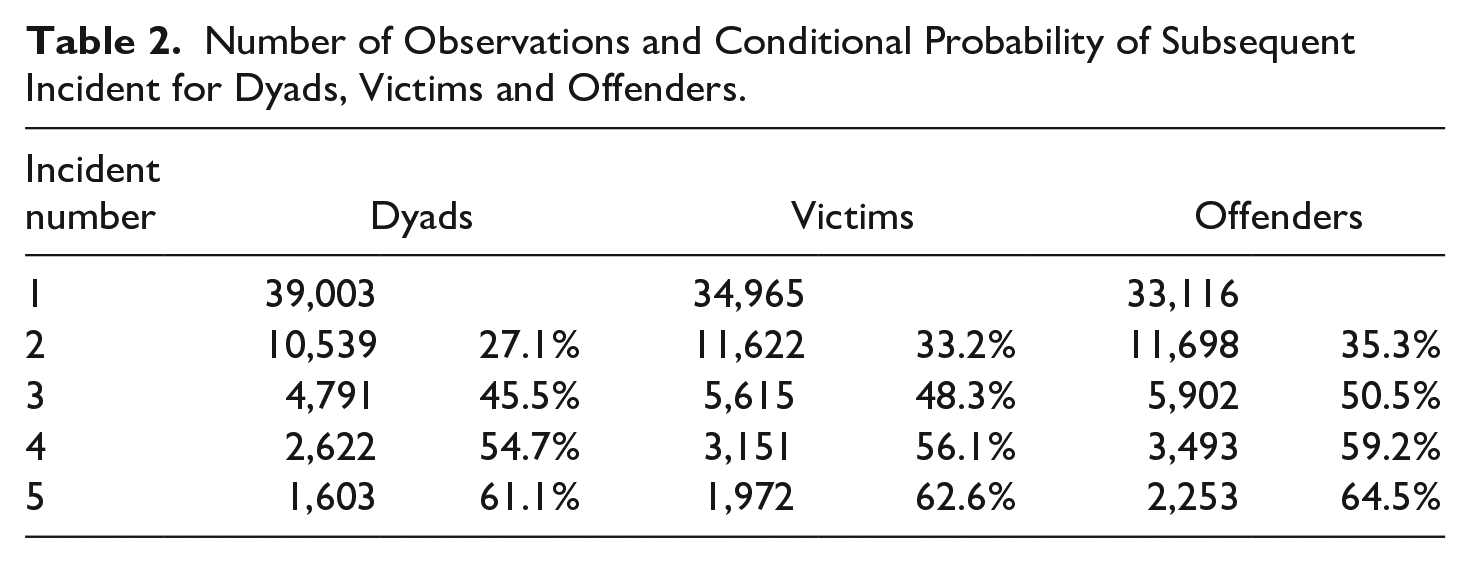
In this police force, 27% of the dyads reported a second incident in this time span. 17 We calculated the probability of a repeat incident finding it increases with each incident for dyads, victims, and offenders (see Table 2).
Number of Observations and Conditional Probability of Subsequent Incident for Dyads, Victims and Offenders.
Growth Curve Models: Measuring Change in Harm
High Incident Dyads
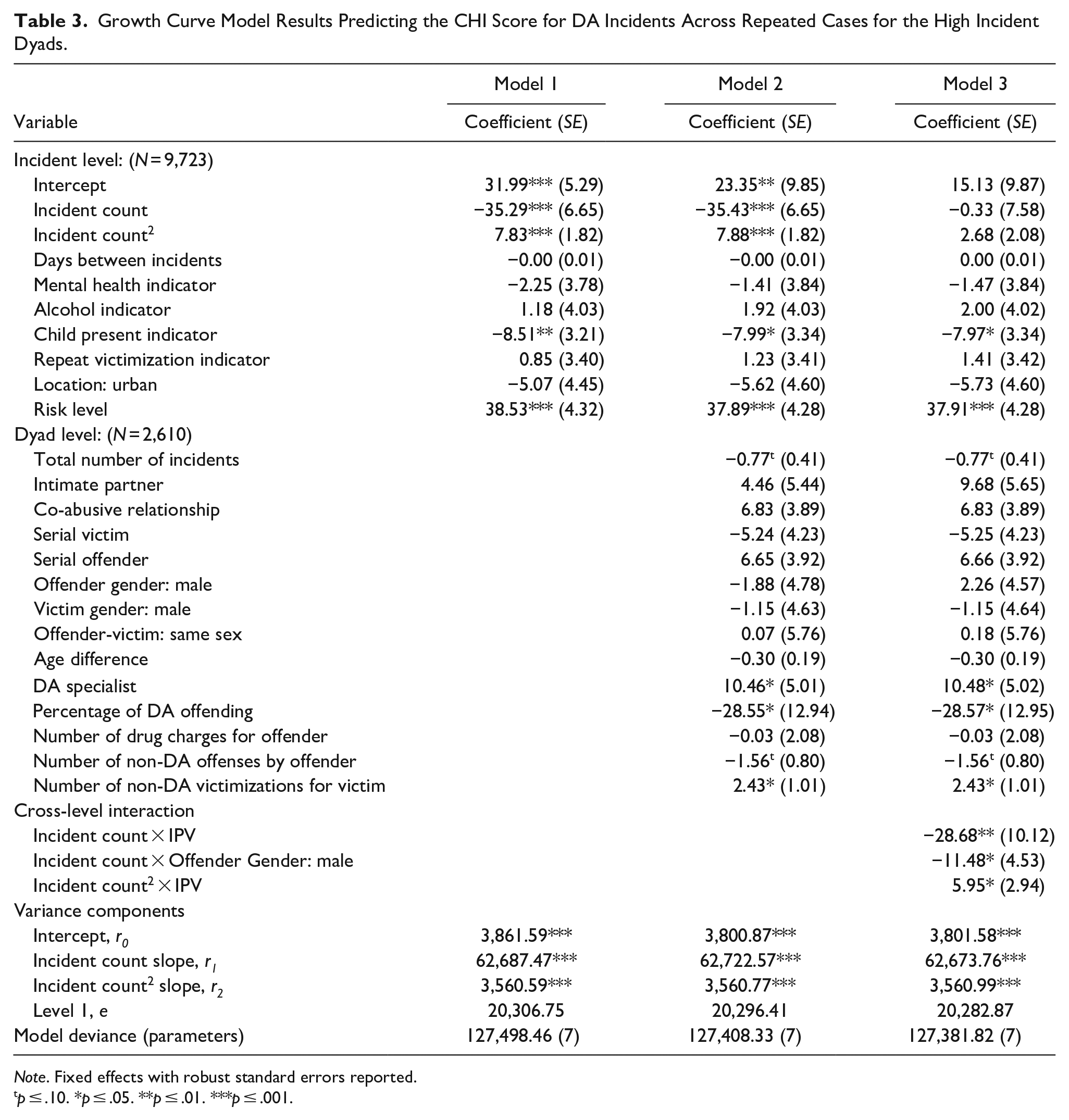
Using growth curve modeling, we analyzed the level of harm for repeat calls for all the eligible dyads that had at least four incidents reported to police in this time period. Table 3 shows the results for Model 1 with only incident level variables, Model 2 that also includes dyad level variables, and Model 3 that include cross-level interactions. The models show rather consistent results for variables, so the results reported are for Model 3.
Growth Curve Model Results Predicting the CHI Score for DA Incidents Across Repeated Cases for the High Incident Dyads.
Note. Fixed effects with robust standard errors reported.
p ≤ .10. *p ≤ .05. **p ≤ .01. ***p ≤ .001.
To evaluate the trajectory of harm we look to the incident count results. Across all three models, the coefficient of incident count is negative, indicating that as the incident count increases, the CHI harm score decreases, controlling for all other variables in the equation. In contrast, the quadratic term (Incident count 2 ) has a positive coefficient indicating that as the count increases the rate of decreasing harm also decreases. The coefficients for both of these variables are smaller in the third model than in prior two models and no longer statistically significant. This is due to the cross-level interactions, the results of which are discussed below.
At the incident level, the only significant predictor of greater harm in an incident is the risk level assigned by the police to the incident, which suggests that as the risk level increases by one, the harm score increases by 37.91. Based on the logic of the CHI score, this would mean that for each 1-point increase in the risk level, the incident is associated with over a month of additional incarceration time. While the indicators of repeat victimization and alcohol are both associated with positive coefficients, they are not statistically significant. In contrast, the child present indicator is associated with less harm in an incident, more than a week’s less time incarcerated (−7.97), controlling for other variables). The mental health indicator and the incident taking place in an urban location are both associated with less harm, but are not statistically significant. The number of days between incidents has no substantive impact on the level of harm in an incident.
At the dyad level, the offender being associated with only DA offenses is associated with more harm, more than 10 additional days incarcerated, controlling for all other variables. This result supports our sixth hypothesis. Similarly, the victim being victimized in a non-DA related offense is associated with an increase of 2.43 in CHI score. The dyad being intimate partner (compared to familial), a co-abusive relationship, having a serial offender, a male offender, and the offender being the same sex as the victim are all associated with greater harm, but are not statistically significant. Our second and fourth hypotheses suggested male offenders and intimate partner dyads would be associated with greater harm, but we cannot reject the null hypotheses based on these findings. 18 Co-abusive relationships being associated with greater harm is contrary to our fifth hypothesis, however this is not statistically significant. Following the main finding that harm decreases across repeat incidents, the total number of incidents a dyad experienced in this timeframe is associated with less harm, controlling for other variables in the model. While the effect size is small (−0.77) the finding suggests that for each additional incident the offender in the dyad would have almost one day less incarcerated across repeat offenses. This finding is contrary to assumptions about the prevalence of DA and harm. The number of non-DA offenses committed by the offender in this timeframe is also associated with a small decrease in harm, a day and half less incarcerated (−1.56) for each of these non-DA offenses. Having a much stronger effect size, however, is the offender’s non-DA offenses in relation to the number of DA offenses. Specifically, as the offender’s percentage of DA offending increases (relative to non-DA offending) in this timeframe, there is a statistically significant decrease in harm. For each percentage increase in DA offending, the harm score represents incarceration being reduced by almost a month (28.57). The results show that the dyads with a serial victim or a male victim are all associated with greater harm, but these results are not statistically significant. Similarly, dyads with a greater age difference and offenders with more drug charges in this timeframe are both associated with less harm, but these results are also not statistically significant.
Model three includes significant cross-level interactions that show predictors impacting the change in harm across incidents (slope). Intimate partner dyads, for example, have a negative coefficient associated with the incident count suggesting that, as the count increases, the harm decreases by 28.68 for intimate partners compared to familial dyads. Similarly, male offenders are associated with a decrease in harm greater than female offenders across repeat DA incidents. Comparing Model 2 to Model 3, we see that the incident count is significant without the cross-level interaction, indicating a statistically significant decrease in harm across repeat incidents. However, the cross-level interaction shows that the decrease in harm is explained by the type of dyads, specifically intimate partner and male offenders, both of which constitute the majority of cases in this sample. The last cross-level interaction, intimate partner with the quadratic term, indicates that the rate, or amount, of change in harm over time is less consistent for intimate partners compared to familial dyads. The positive coefficient for this interaction indicates that, while intimate partners have a greater decrease in harm across repeat incidents, this decrease gets smaller or decelerates, relative to familial dyads.
Figure 1 shows the predicted values of harm (CHI score) across the four incidents for the High Incident dyads illustrating the comparison of male and female offenders in intimate partner and familial dyads calculated using the output of growth curve model 3. The figure shows how male offenders have greater harm than female offenders, as the positive coefficient in the table suggests, and that male offenders have a steeper slope, a greater drop in harm across incidents compared to female offenders. Intimate partners (IP) have a greater drop in harm than familial dyads and the difference in harm between incidents decreases for IP more than familial. It should be noted that the majority of dyads in this sample are IP with male offenders (77.7%), whereas there are significantly fewer familial dyads with female offenders (2.7%). Overall, these results support our first hypothesis that harm does not increase across repeat incidents for the large majority of dyads, though we discuss how these results should be qualified by the limitations of the data below.
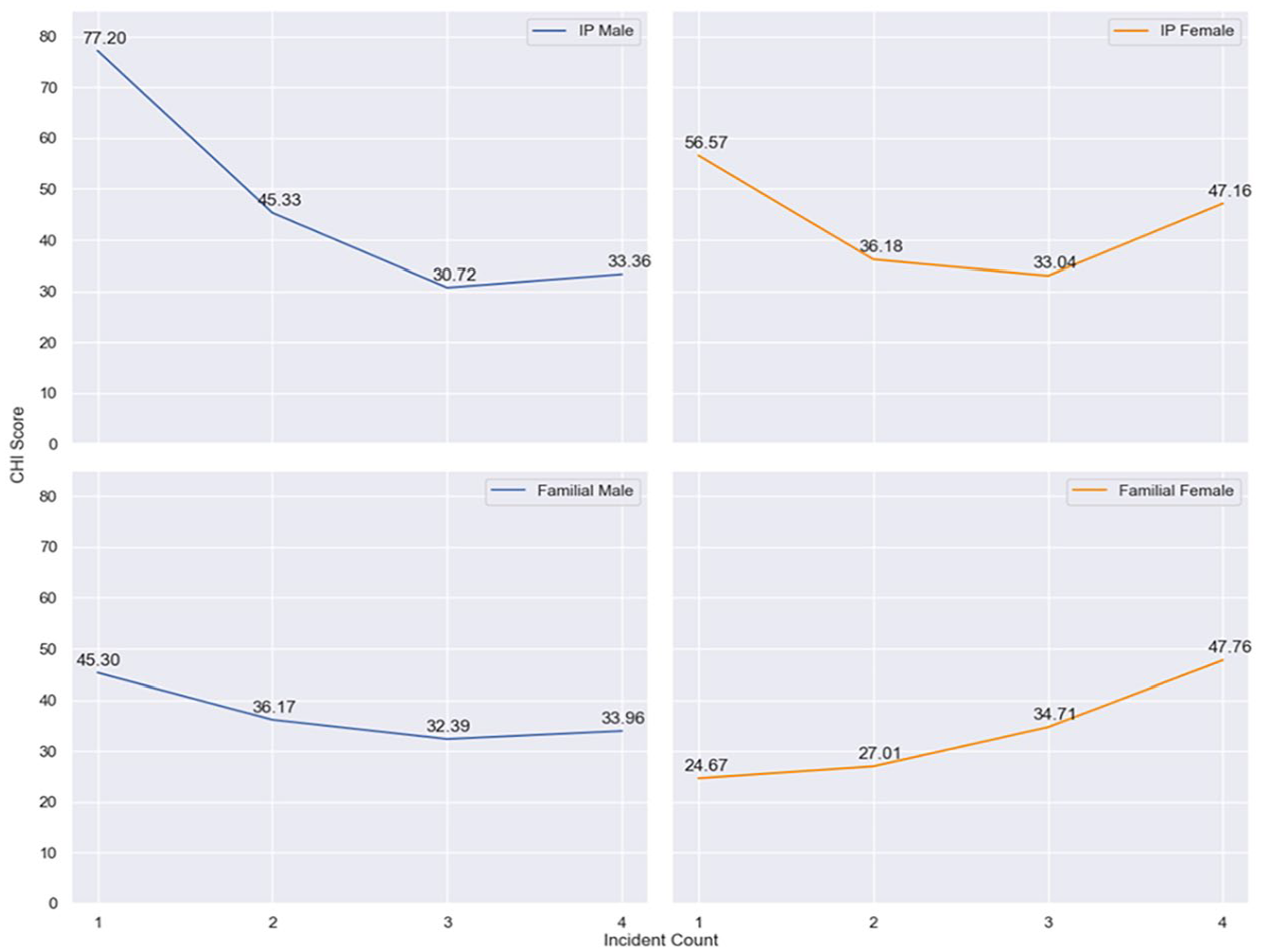
Predicted values for CHI score across incidents for High Incident dyads: comparing Intimate Partner and familial dyads with male and female offenders.a Intimate Partners with Male offenders N = 2,037 (77.7%); Familial dyads with Male offenders N = 267 (10.2%); Intimate Partners with Female offenders N = 246 (9.4%); Familial dyads with Female offenders N = 72 (2.7%).
Power few dyads
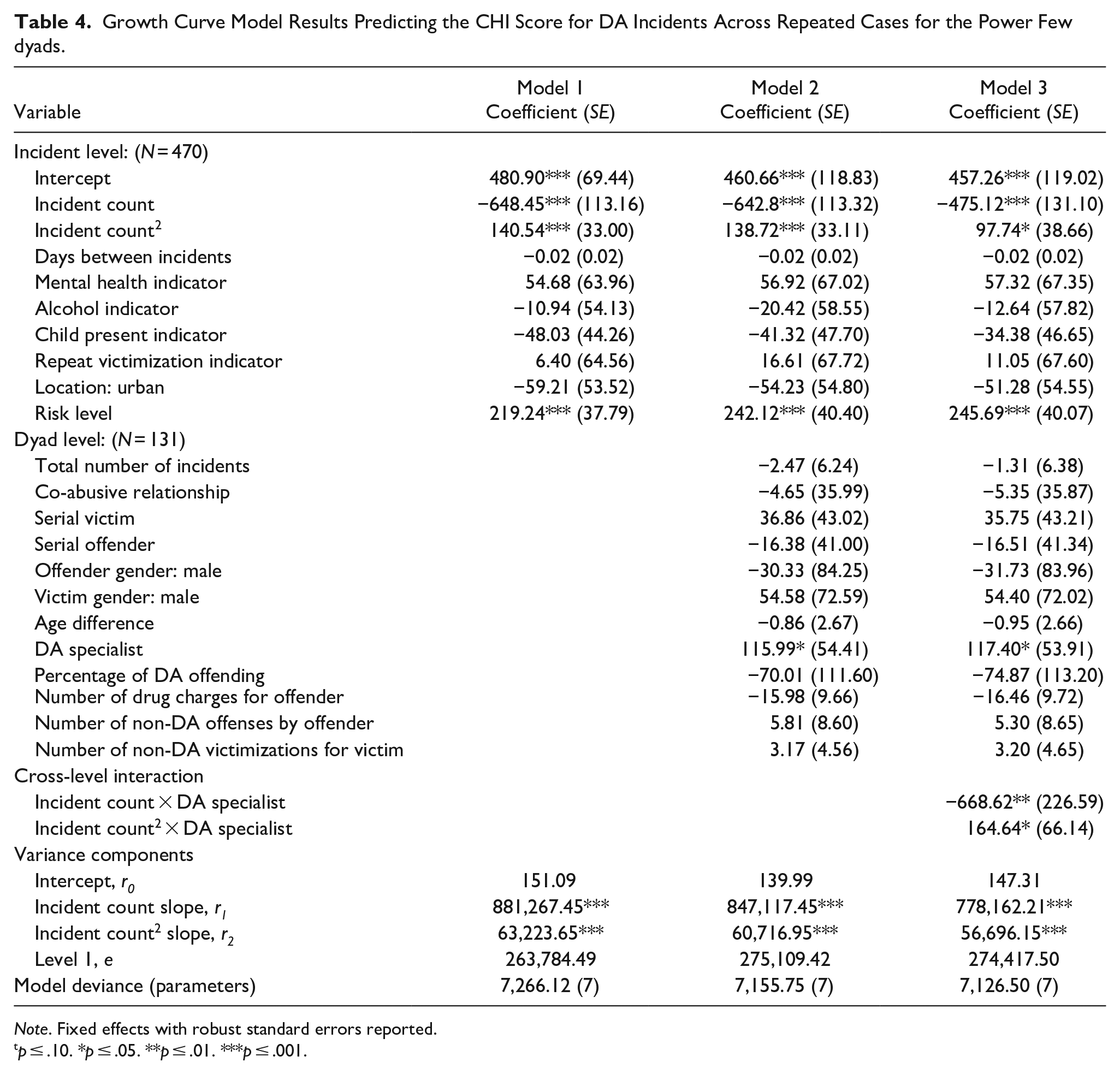
For comparison, we ran growth curve models with the 133 dyads identified as the Power Few. The results in Table 4 show consistent and robust findings across models, so we report those from model 3. There are similar findings to the High Incident dyads, except the magnitude of harm is significantly greater, with the intercept harm score equating to more than 15 months incarcerated. Most importantly, the incident count variable has a large negative coefficient (−475.12), indicating that harm decreases across repeat incidents, controlling for all other variables in the equation, again supporting our first hypothesis. The quadratic term is also significant with a positive coefficient, like the High Incident dyads, indicating that while harm decreases across repeat incidents, the rate, or amount, of change decreases showing a deceleration. The child present indicator is associated with less harm, like the High Incident dyads; however, it is not statistically significant. The risk level is associated with more harm, as it was in the models with the original dataset, however the effect size is significantly greater with each 1-point increase in level of risk equating to over eight months of additional time incarcerated.
Growth Curve Model Results Predicting the CHI Score for DA Incidents Across Repeated Cases for the Power Few dyads.
Note. Fixed effects with robust standard errors reported.
p ≤ .10. *p ≤ .05. **p ≤ .01. ***p ≤ .001.
At the dyad level, there is only one statistically significant variable, DA specialist. The result indicates that offenders who are only known to the police for DA incidents and no other criminal activity are associated with significantly greater harm, almost four months of additional time incarcerated, than DA offenders who are known to police for other types of crime. This result supports our sixth hypothesis. While not statistically significant, it is worth noting that the total number of incidents a dyad experienced in this timeframe is associated with a negative coefficient, as it was in the original model. This suggests that dyads involved in more incidents are not associated with greater harm. For the Power Few, the offender being male is not a significant predictor and has a negative coefficient, which is contrary to our second hypothesis. Interestingly, however, the dyad having a co-abusive relationship has a negative coefficient in the Power Few sample and a positive coefficient in the High Incident dyads sample. These results suggest that co-abusive relationships are associated with less harm among the Power Few dyads, though we cannot draw accurate conclusions in either case because the variable is not statistically significant in either model.
The DA specialist offender, who is associated with greater harm, is also shown to have a significant impact on the change in harm across repeat incidents. Specifically, the cross-level interaction of DA specialists and the incident count has a large negative coefficient. This indicates that harm decreases significantly more for the DA specialist than for DA offenders who are involved in other types of crime. The second cross-level interaction shows that DA specialists significantly differ in their rate of deceleration in harm. These results are depicted in Figure 2 showing the predicted values of harm (CHI score) across the four incidents for the Power Few DA specialists, who constitute 25.6% of the Power Few dyads, and non-DA specialists. Figure 2 helps show the DA specialists starting with greater harm in the initial DA incident (higher intercept), but having a greater drop in harm, a steeper slope, than the non-DA specialists. The predicted values show that, while there is a decrease in harm for non-DA specialists, the rate of deceleration in harm across incidents differs significantly for DA specialists who have a greater curvilinear effect. While the results support the sixth hypothesis that DA specialists are associated with greater DA harm, the cross-level interaction does not support the hypothesis that DA specialists are associated with an increase in harm across incidents. Overall, comparing the predicted values figures, we see support for our first hypothesis that DA harm does not increase across repeat incidents, though the magnitude is dramatically greater for Power Few dyads.
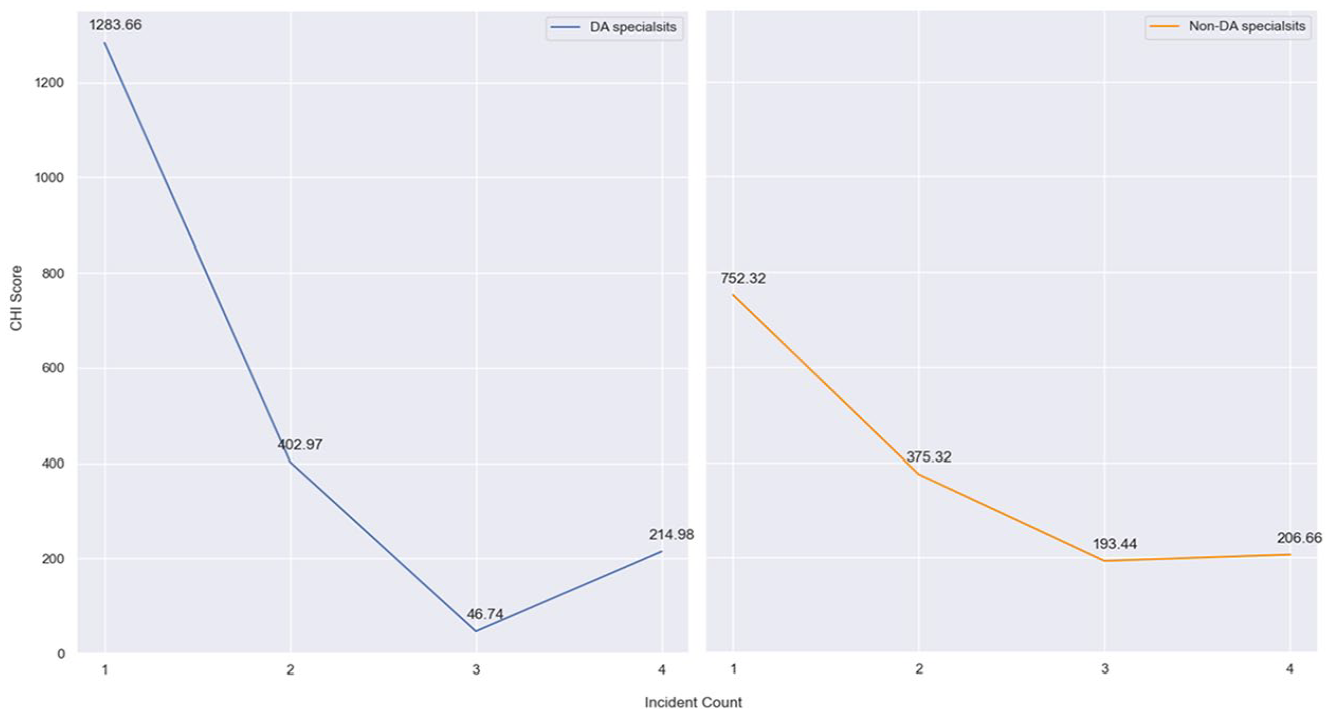
Predicted values for CHI score across incidents Power Few dyads: comparing DA specialist to non-DA specialist harm trajectories.a DA specialists N = 34 (25.6%) and non-DA specialists N = 99 (74.4%).
Discussion
Domestic abuse encompasses a variety of crimes affecting millions of people worldwide. On average, there were 70 DA incidents per day recorded by the police within the force area analyzed in this study. The large majority of these DA cases were individuals involved in a single incident without a repeat incident known to the police. However, the high volume of this crime provides a large sample of dyads with repeat offenses to assess trajectories of harm. We conducted complex multivariate analysis to add to the literature on changes in harm across repeat DA cases with High Incident dyads that experienced four or more DA incidents recorded by police in this timeframe and separate models with the Power Few dyads (5% of High Incident dyads) who were responsible for a disproportionate amount of cumulative harm (85%). Controlling for characteristics of each incident and characteristics of the dyad, we found that the large majority of cases show a general decrease in harm across repeat incidents, which supports our first hypothesis. This contributes to a contested literature that has historically found an increase in harm, though these studies often used weak empirical evidence or limited samples. Similarly, this contributes to recent research that has found little evidence of an increase in harm, but has not utilized complex modeling to assess what factors influence harm in repeat DA incidents. By isolating the impact of each variable, at the incident and dyad level, this study contributes to better understanding of what factors contribute to DA harm and changes in the level of harm.
Specifically, this study shows how offenders who are not involved in other crimes known to the police, but only engage in DA (DA specialists) are associated with greater harm for both High Incident dyads and the Power Few dyads. DA specialists are associated with more harm, supporting our sixth hypothesis, but those that are in the Power Few dyads subsample, show a greater drop in harm, which does not support our sixth hypothesis that DA specialists are associated with an increase in harm. This has implications for how police may try to prioritize offenders and victims who are not otherwise known to them, as this may indicate vulnerability. While we do not have enough data to properly model the various DA groups theorized by Johnson (1995), the DA specialist, especially in a Power Few dyad, may represent the “intimate terrorism” typology. This typology is associated with more chronic coercive and controlling behaviors, so police should consider probing for evidence of coercive control in this population. Interestingly, the co-abusive indicator, which likely represents the “mutually violent control” group, is not statistically significant for either sample, which does not support our fifth hypothesis. Future research should investigate this category, which was created in reference to Intimate Partners, to identify distinctions in familial dyads. Relatedly, it is worth noting that while the majority of High Incident dyads were Intimate Partners, almost all of the Power Few dyads were of this relationship type. This may be because rape, which has significant harm and is disproportionately found among Power Few dyads, is more common in IP relationships than familial DA cases. While the fact that the Power Few dyads are almost entirely IP supports the fourth hypothesis, the results for High Incident dyads show that IP dyads are associated with a greater decrease in harm and greater rate of deceleration compared to familial dyads. These results, as shown in Figure 1, do not support our fourth hypothesis that IP are associated with a greater increase in harm. This study contributes to the literature on harm and the change in DA harm by showing how familial dyads follow distinct harm trajectories from IP dyads.
This study shows that, contrary to our second hypothesis, the offender being male is not a statistically significant predictor for harm in either sample. However, among the High Incident dyads it is a significant predictor of a decrease in harm across repeat incidents, contrary to our third hypothesis. Prior research that suggests male offenders, who are associated with committing more incidents, are also associated with greater harm is bivariate and does not account for this variable relative to other control variables. The results from the multivariate model, however, indicate that this influence is reduced with the inclusion of other variables. It is relevant to note that despite there being no statistically significant difference in harm for the offender’s gender in the multivariate model, there are by far disproportionately more male offenders in our samples (88% of the High Incident dyads and 93% of the Power Few dyads). Police consultation on these results suggest that underreporting of DA is not likely to be equal across genders, and nor is it likely to be consistent for types of DA incidents for each gender, which may impact these results. Specifically, it is likely that male victims report DA by female offenders when it reaches a level of seriousness with possible injury, thus increasing the average harm perpetrated by females in police data. In comparison, female victims may be more inclined to report DA by males for a variety of incidents, some of which are of lesser harm. The difference in the degree of harm in reported cases may impact the average harm of DA that is perpetrated by male offenders relative to female offenders in police data.
While Figure 1 shows female offenders, especially in familial dyads, displaying an increase in harm, it is important to note that there are comparably few cases with female offenders in police data. In contrast, male offenders being associated with a distinct drop in harm may be due to victims, disproportionately female, reaching out to police earlier to allow police to intervene before an incident progresses to greater harm. The decrease in harm, shown for male offenders in IP relationships and for DA specialist offenders in the Power Few, may also be due to a strategic change in DA tactics. These offenders are associated with significantly more harm in the initial incident compared to their counterparts (i.e., female offenders and non-DA specialists), followed by incidents of less harm. This may reflect the “patriarchal terrorism” typology where an initial, severe incident serves as a show of force that generates fear and initiates a coercive and controlling environment maintained by DA incidents that register with lower harm scores. Hayes (2012) showed that female victims reported a decrease in physical DA, but no change in coercive control in the process of separation, suggesting offenders may alter DA tactics strategically. In contrast, the predicted values for female offenders does not show the same trajectory and this may be because female show of force does not exert the same long-term, fear inducing impact.
While the results of this study show relationships between variables and DA harm in a more robust fashion than prior research, it should be noted that this study focuses on dyads with four or more incidents, which is a minority of DA dyads. The large majority had a single incident in this time frame, which is consistent with the literature (Bland & Ariel, 2015; Sherman et al., 2017), so the results of this study should not be assumed to apply to all DA dyads, but rather to those with many repeat incidents known to police and to the Power Few among those dyads.
While it may be surprising that the large majority of dyads experience a single incident, the assumption that dyads with more incidents experience more DA harm is also questioned from the results of this study. The High Incident dyads model shows that the total number of incidents for a dyad is inversely related to the cumulative harm for that dyad. 19 While the effect size is small, this is still an important finding as the current practice of many police forces is to prioritize DA dyads by frequency of DA incidents. The results of this study suggest there are other characteristics that may identify those vulnerable to greater DA harm than frequency of incidents.
Like prior research (Barnham et al., 2017; Bland & Ariel, 2015; Kerr et al., 2017), this study found that few dyads were responsible for disproportionate harm. Comparing the results for the High Incident dyads and the Power Few, we find some factors are consistent in the prediction of harm (e.g., risk level and DA specialist) and some factors are predictors in just one sample (e.g., child present and percentage of DA offending), however, the cross-level interactions are distinct. 20 While the descriptive statistics showed similarities and differences between High Incident dyads and the Power Few, future research should use multivariate modeling to investigate if there are key characteristics that distinguish dyads, offenders, and victims associated with disproportionate harm in an effort to help police target their DA efforts.
However, the results of this study should be considered in relation to the limitations of the data. The study is based on incidents reported to the police, so it is unknown whether there were other incidents of increasing harm that occurred prior to the initial contact with the police. Therefore, we cannot say that domestic abuse is initiated with serious harm. Burris and Jaffe (1984) claimed that victims suffered 34 DA incidents on average before reporting to the police. It must be stated that this claim has been disputed due to the methodological limitations of the paper (see Strang et al., 2014), but regardless of this claim’s accuracy, this study cannot account for underreporting before the first incident or between incidents during this timeframe. Similarly, this study is limited to the timeframe under study so we cannot say whether dyads had incidents prior to the start of this data collection (June 2014). It is possible that dyads had reported DA incidents before the initial incident in this dataset.
Relatedly, we cannot assume that this study includes all of the DA incidents that occurred between these dyads within the timeframe. One of the largest limitations of police data is the issue of underreporting. This is of particular concern for cases of DA where people do not report incidents for a variety of reasons, ranging from love for the offender, fear of the offender, dependency on the offender, feeling responsibility for one’s own victimization, and not trusting law enforcement. Although the CSEW in recent years suggests DA reporting is increasing (Woodhouse & Dempsey, 2016), there are surely DA cases that are not reported to the police. While this study shows a decrease in harm across incidents, it does rely on dyads with at least four incidents known to police and it should be noted that we do not know if there were DA incidents with greater harm that were not reported to the police. However, having four or more incidents may suggest less underreporting than for other dyads.
There are also limitations associated with the CHI measure of harm that is based on the crime listed for the offense. The crime listed is often related to victim reporting and there are many cases where victims minimize harm and events (Heckert & Gondolf, 2004). Similarly, the crime, and therefore harm, assigned may be influenced by the officer’s perceptions of events, which may not be entirely accurate. The involvement of the police may also impact the dynamics of a DA incident, and relying on police data does not allow for a comparison to incidents where police are not involved. Therefore, the results of this study cannot be assumed to generalize to DA incidents without police involvement. Future research should compare a sample of dyads’ perceptions of harm using the CTS to the harm measured by the CHI in DA cases that have and have not been reported to the police.
Importantly, it must be noted that coercive control and other forms of psychological abuse in domestic relationships are less likely to be measured well in this data. This is a significant limitation since coercive controlling aspects of DA are a stronger predictor of intimate partner homicide than prior assault (see Stark, 2012). These incidents in the past were often recorded as verbal abuse or minor disputes between people, which often seriously undermines the degree of harm such incidents, or series of incidents, may entail. Since coercive control has been recognized by Section 76 of the Serious Crime Act 2015—Controlling or Coercive Behavior in an Intimate or Family Relationships, it would be acknowledged within the CHI as a significant incident, however, we should not assume such behavior was accurately recognized by the police on the ground in this timeframe, even once proper training had been carried out. Therefore, it is important to acknowledge that this study better accounts for harm from physical injury, than psychological harm.
Conclusion
The results of this study reinforce and expand on previous research findings both methodologically and substantively. Specifically, this study expands upon prior research in four important ways. First, we include dyad characteristics to identify how various factors, such as the offender being a DA specialist, impacts DA harm and changes in the level of harm across repeat incidents. Second, we showed that few dyads with four or more incidents in the timeframe were responsible for the large majority of harm in the timeframe. The policy implications from this finding are that such individuals should be prioritized for proactive services to prevent future incidents and targeted measures should be put in place to safeguard vulnerable victims. Third, this study adds to the existing literature by using more robust analytical methods to isolate the impact of variables on the outcome measure. Finally, the results of this study show that harm decreased across repeat incidents with a decreasing rate of change for the majority of dyads. This information may be important for further evaluating safeguarding strategies and DA policy. More research is needed to investigate what may be causing this decrease in harm and it must be emphasized that police and practitioners should not reduce efforts to support victims of DA. It is possible that there are safeguarding measures for victims put in place with the police that are contributing to the decrease in reported harm, but this needs to be further analyzed.
The current study provides interesting and informative results that counter commonly held beliefs of harm increasing across DA incidents. We do not claim that harm increasing in domestic abuse is inaccurate as we acknowledge the limitations of police data and biases due to selective reporting. That said, this study provides initial insights that can guide future research to help police target their actions and safeguard those vulnerable to serious harm in an effort to better understand the relationship between DA and harm.
Footnotes
Declaration of Conflicting Interests
The author(s) declared no potential conflicts of interest with respect to the research, authorship, and/or publication of this article.
Funding
The author(s) received no financial support for the research, authorship, and/or publication of this article.
