




Abstract
This research quantitatively explored different police-flagged domestic violence and abuse (DVA) offense reports in one English police force, and their suspect- and victim-level associations. Most reports were of males committing offenses against females. Violence with and without injury were the most common offenses (61.0%). Demographic variables (age, sex, relationship) were associated with different offense types. Suspects 36 years old and older had higher odds of being associated with sex offenses. While younger victims had higher odds of sexual victimization and stalking and harassment, both suspects and victims 45 years old and younger were mostly associated with reports of violence with injury. Most suspects and victims were partners/ex-partners (70.3%), with a third of the reports being for violence with injury. Stalking/harassment was mostly reported against acquaintances, whereas relatives were more likely to be suspects of violence without injury. Research and practice implications for police and Criminal Justice System are discussed.
Introduction
In England and Wales, domestic violence and abuse (DVA) is “any incident or pattern of incidents of controlling, coercive or threatening behaviour, violence or abuse between those . . . who are or have been intimate partners or family members regardless of gender or sexuality” (Home Office, 2013, para. 4). The victim-perpetrator relationship is not restricted to a previous/current intimate one, and so DVA perpetrators and/or victims 1 can be directly related, in-laws, or stepfamily. Except for “Controlling and Coercive Behaviours in an Intimate or Family Relationship”–recorded as a notifiable offense under the Violence Against the Person class (Home Office, 2023)—“domestic abuse is not currently a specific criminal offense” (Office for National Statistics [ONS], 2022, p. 6). Instead, police officers manually label reports as DVA using “flags” (Home Office, 2023). This means that “Offences that are domestic abuse-related will be recorded under the respective offence that has been committed, for example, assault with injury” (Office for National Statistics [ONS], 2017, p. 12). From an analytical perspective, this allows researchers to investigate the range and variety of domestic-related criminal offenses taking place and DVA-related reports being made to police forces across England and Wales. However, there can be wide discrepancies between police forces regarding how DVA cases are flagged (Barbin et al., 2025) and there is a general lack of clarity on how the DVA definition is implemented within each force (Phoenix, 2023). Yet, flagging DVA-related offenses, if done accurately and consistently, can allow the police and wider Criminal Justice System (CJS) to analyze patterns of abuse, repeat offending, and victimization. For example, longitudinal studies have indicated that individuals who are already involved in general criminality (e.g., not perpetrating only one crime type), are exponentially more likely to also be involved in DVA offenses, with more diversified general offending associated with higher incidence of interpersonal violence (IPV) and more severe abuse, causing substantial psychological and physical damage to their victims (Verbruggen, Blokland et al., 2022; Verbruggen, Maxwell, & Robinson, 2022).
Efforts to understand the wide range of offenses occurring in domestic contexts and the factors contributing to victimization and perpetration have advanced, yet significant gaps remain. Research predominantly focuses on intimate partner violence (IPV; Zhang & Howard, 2020), and DVA is often used as a synonym for IPV, which limits the overall understanding of the crime’s complexity. In addition, DVA victims can experience multiple types of abuse (Karystianis et al., 2019). In England and Wales, for instance, five in 25 people experienced DVA-related offenses across various crime types in the year ending March 2023 (Office for National Statistics [ONS], 2023). This underscores the need to examine DVA beyond IPV and within broader relationship contexts. Given its multifaceted nature and the interplay of numerous factors shaping complex abusive dynamics (Dutton, 2006), research on how sex, age, and victim−suspect relationships influence abuse patterns is important. Addressing these interactions is essential for a deeper understanding of DVA and the development of more effective prevention strategies.
Sex
While male victims of DVA exist, it is predominantly perpetrated by males against females (ONS, 2023). Research also suggests distinct offending patterns between male and female perpetrators. Males are more likely to engage in persistent coercive control, harassment, stalking, and sexual abuse (Burczycka & Conroy, 2018; Hester, 2013). In contrast, while females commit physical violence at similar rates—potentially for self-defense, retaliation, or control (James & Shackelford, 2021)—their actions are less likely to cause serious injury (Temple et al., 2005). Female-perpetrated IPV tends to be situational rather than characterized by the concrete patterns of control that males display (Muftić et al., 2015). In addition, females appear more likely to stalk family members compared to male offenders (Burczycka & Conroy, 2018). However, sex-based differences in DVA outside IPV contexts remain underexplored, despite evidence that sex influences both how DVA manifests and how it is handled by the CJS (Hine et al., 2022). Examining these differences could enhance understanding of DVA and improve responses to reported cases.
Victim−Suspect Relationship
While a significant proportion of DVA is perpetrated by current or former intimate partners (Zhang & Howard, 2020), it also occurs in other relationships, including within families. The prevalence of DVA beyond partner violence highlights the need for a broader examination of how victim−suspect relationships shape its manifestation (Barbin et al., 2025). For instance, DVA is committed within other, under-researched and under-reported abusive family dynamics, like that of child-to-parent violence (CPV) (Holt, 2022). In addition, nearly half (49.0%) of Canadian stalking victims identified a family member as the perpetrator, with male relatives—excluding parents—being the second most common perpetrators of homicide (Burczycka & Conroy, 2018). The victim−suspect relationship is essential for understanding DVA, prompting calls for more research into victim−suspect characteristics and the forms of violence perpetrated (Miethe et al., 2006). Further evidence is needed to refine how DVA incidents are classified and investigated, informing best practices in policy and law enforcement.
Age
The age-crime curve (Hirschi & Gottfredson, 1983) highlights a peak in criminal behavior during late adolescence, followed by a decline in adulthood—a pattern observed for both victims and perpetrators (Rocque et al., 2016). Among offenders, younger DVA perpetrators have a higher risk of violent DVA reconviction than older perpetrators (Fitzgerald & Graham, 2016). However, questions remain regarding the relationship between age and crime type (Rocque et al., 2016). Longitudinal studies suggest that early adult antisocial behavior and general offending may evolve into IPV later in life (Farrington, 1994). Some DVA perpetrators escalate their abusive behaviors with age while disengaging from other crimes, indicating potential criminal specialization (Dowling et al., 2021). Older male perpetrators also seem more likely than younger ones to murder their female partners (Elisha et al., 2010), while older female victims face a higher risk of femicide, despite IPV and DVA more broadly being more prevalent among younger women (Cui et al., 2013; ONS, 2017). Violence against women appears to intensify with age, shifting from controlling behaviors and stalking in youth to more severe physical abuse later in life (Monckton-Smith, 2020). However, patterns of male victimization and potential escalation in crime severity across age groups remain under-researched. The type of violence suffered, and by whom, may differ depending on age at crime commission. Understanding how is crucial for developing targeted interventions.
The Current Study
Paying attention to both frequency and type of DVA offending experienced and perpetrated across age groups, sexes, and relationships is needed if comprehensive prevention and intervention strategies are to be developed. Understanding the association between age, sex, victim−suspect relationships, and type of offense is a first step in expanding this knowledge base. The aim of the present study was to explore if, and how, different types of DVA-flagged reports 2 are associated with different suspect- and victim-level criminogenic factors: age, sex, and victim−suspect relationship.
Research Questions
This study explored the following: (a) What offenses are being reported and flagged as DVA? (b) Is there a difference in DVA-flagged offense types depending on suspect and victim demographic variables? And, (c) is the victim−suspect relationship associated with the DVA-flagged offenses reported?
Method
Sample
Police data were used to investigate all reports flagged as DVA recorded by one English police force between January 1, 2018, and December 31, 2020. For this project, “police data” were defined as details extracted from crime records input and stored on police record management systems (RMS; Spence & Crivatu, 2025). The data were obtained as part of Operation Soteria Bluestone (OSB). 3 In line with the agreement between the Universities undertaking the research and the police forces, police data regarding DVA were provided separately from other sexual violence data. The data were stored on Sharepoint, with access limited to those directly involved in data analysis.
The data included suspect and victim demographic details, as well as crime details such as outcome and type. It was extracted from the RMS by the force’s data analysts and provided in an anonymized format in Microsoft Excel, with details about victims and suspects separated in different sheets which were combined by the researchers, through linking suspect, victim, and report IDs, before exporting the data into SPSS. The police provided the following variables relating to both suspects and victims: age at the time of reporting; age at the time of crime commission; sex; and victim−suspect relationship. Regarding the crime, offense class and subclass were shared. 4 These variables were not specifically requested, but instead represented the type of information usually recorded by the force in DVA cases. Ethical approval was granted by the Research Ethics Committees of University of Suffolk (RETH21/006) and Bournemouth University (ID 39633).
Procedure
The original dataset contained 232,870 crimes, 161,203 suspects, and 175,538 victims (see Barbin et al., 2025 for an in-depth description of the data). As aforementioned, the legal criteria for DVA (Domestic Abuse Act, 2021) are not consistently implemented when police officers flag cases as DVA. For example, reports should not be flagged as DVA where victims are less than the age of 16 or when involving victim−suspect relationships other than those specified by law. However, the data given to us included both. Consequently, the dataset was refined in some respects, as explained in the following section.
At the time the analysis was conducted (2022), anyone less than the age of 16 could not legally be considered a DVA suspect or victim (Domestic Violence Act, 2021). Despite this, some of the DVA-flagged offenses in this dataset had victims or suspects less than the age of 16. Although the authors recognize the limitation of the legal definition, a cap was applied on the data to remove victims and suspects less than the age of 16 (victim n = 4,502, suspect n = 9,414), as no rationale on the flagging was provided by the police force and it was not possible for the researcher to assess its accuracy as to whether the flag had been mistakenly applied or the age incorrectly entered (as opposed to being a deliberate flagging of an offense outside the scope of the current definition by the officer). Other exclusions were made per analysis, that is, anyone above the age of 100 (n = 27) was removed from the age analyses due to concerns about accuracy. Ages were categorized as follows: 16 to 25, 26 to 35, 36 to 45, 46 to 55, 56 to 65, and 66 and above. For the regression analysis, ages above 45 were collapsed into one category (46 and older) due to small numbers for some crime types. The dataset included nearly 80 different relationships, some consistent with the legal definition, some not. Legally, DVA applies to several relationships where the victim and suspect are “personally connected.” This includes partners, ex-partners, relatives, individuals having a shared custody of a child, or more broadly, people who have been intimate. However, police forces lack clear, specific guidance on how to classify DVA based on personal connections and as a result there are variations in how this is done between forces. A decision was made to not exclude cases based on relationship (e.g., dentist, employer) for several reasons. First, relationships are multifaceted and their classifications might overlap (e.g., someone labeled as carer might have also been a family member; a victim might have been intimate with an acquaintance). Second, relationship statuses are dynamic and can change over time. As such, the way police flag cases as DVA may evolve as relationships shift. For example, even if the DVA definition provided in the Domestic Abuse Act (2021) does not extend to figures like paid or unpaid carers, they might still be flagged in the system as DVA perpetrators if they are also family members. This specific category has been referred to as “position of authority.” Moreover, specific categories might have been used by police forces to highlight that the DVA incident was perpetrated by a suspect in a “position of authority” to underline the severity of the crime. Finally, and crucially, although relationship is central to the definition of DVA, a gap remains in our understanding of how it is associated with DVA (Miethe et al., 2006). It is possible that police officers might interpret this “personal connection” classification as anyone that had a connection (i.e., is not a stranger) to the victim, which may be simultaneously form a domestic relationship (e.g., ex-partner) and another relationship type (e.g., co-worker), and that officers made a choice to record what is now the predominate relationship type while simultaneously acknowledging the domestic nature of the historic relationship, even if the victim themselves would not categorize it as such. Differently from age, which had a specific limitation for inclusion (>16 years of age), the discriminants for relationships are therefore more open for interpretation. Consequently, given the fluid nature of relationships, the potential for reclassification over time, and the centrality of relationship to DVA, this study took an exploratory approach and chose not to exclude cases based solely on the classification of victim−suspect relationships. Relationships were recoded into four overarching categories based on the degree of closeness and socialization to the victim: Partner/Ex-partner (e.g., boyfriend, spouse, same sex civil partner), Family (e.g., aunt, stepson, mother, sister in law), Acquaintance (e.g., colleague, employee, neighbor), 5 and Position of Authority where it was considered that the suspect could exert power and influence over the victim due to their relative social standing (e.g., victim’s teacher, employer, babysitter or nanny). The latter category was excluded from the regression analyses due to small numbers (n = 84). All victim−suspect relationship recoding is presented in Supplementary Material A (available in the online version of this article). There were a variety of different offenses in the dataset because DVA is not a crime in itself in England and Wales; therefore, all offenses were kept in the dataset. Offenses were recoded into higher-order categories based on the official Home Office classes of offenses (Home Office, 2023), except for Violence Against the Person, which was broken down into two subclasses (violence with injury; violence without injury) due to the broad nature of the offenses involved. Thus, the analysis was conducted on 13 types of offenses. However, the dataset did not contain the official Home Office Codes for counting notifiable offenses—and these could not be obtained from the analysts—therefore some nuances were lost with respect to some of the offenses. For example, for 33 6 out of a total 60 reports of “Assault on Constable” an offense description of either violence with or without injury was not provided; a decision was made to categorize these reports as “violence with injury” after looking at other features of the offense (e.g., if weapons were used); when features were not completed (n = 22), we prioritized coding consistency and so all 60 “Assault on Constable” cases were coded as “violence with injury.” Where offense class and subclass did not match, we prioritized subclass information when the offense class was unclear (e.g., “minor text pending”) or too broad (e.g., “other violence”). For example, some offenses under the “other violence” class related to homicides or coercive and controlling behaviors were recategorized into their more appropriate categories. Supplementary Material B (available in the online version of this article) presents an account of the full recoding of all offenses in the dataset, and Supplementary Material C (available in the online version of this article) presents the recoding of “other violence” only.
Crimes involving drug offenses (n = 73), homicides (n = 81), and possession of weapons (n = 172) were excluded from the regression analyses due to small numbers. After exclusions, the final dataset included 193,930 DVA reports, involving 144,596 suspects and 151,070 victims. The data were mostly complete: only 7.1% (n = 10,296) of suspect sex, 0.1% (n = 158) of victim sex, and 2.9% (n = 5,660) of victim−suspect relationship were missing; no suspect or victim ages were missing. The analysis used pairwise deletion, and results are presented without missing data.
Analysis
Descriptive statistics were used to explore the frequency of DVA-flagged offenses victim and suspect characteristics (age, sex, victim−suspect relationship). A series of multinomial logistic regression models were performed to investigate the relationship between each of the victim and suspect characteristics (entered as independent variables) and the type of DVA (offense type was entered as the dependent variable). The results are presented as unadjusted odds ratios (ORs) and 95% confidence intervals (95% CIs) with respect to violence with injury. This category was chosen as the reference group because it was the largest, representing 31.5% of all reports. Analyses were carried out using SPSS software, version 28.
Results
What Offenses Are Being Reported and Flagged as DVA?
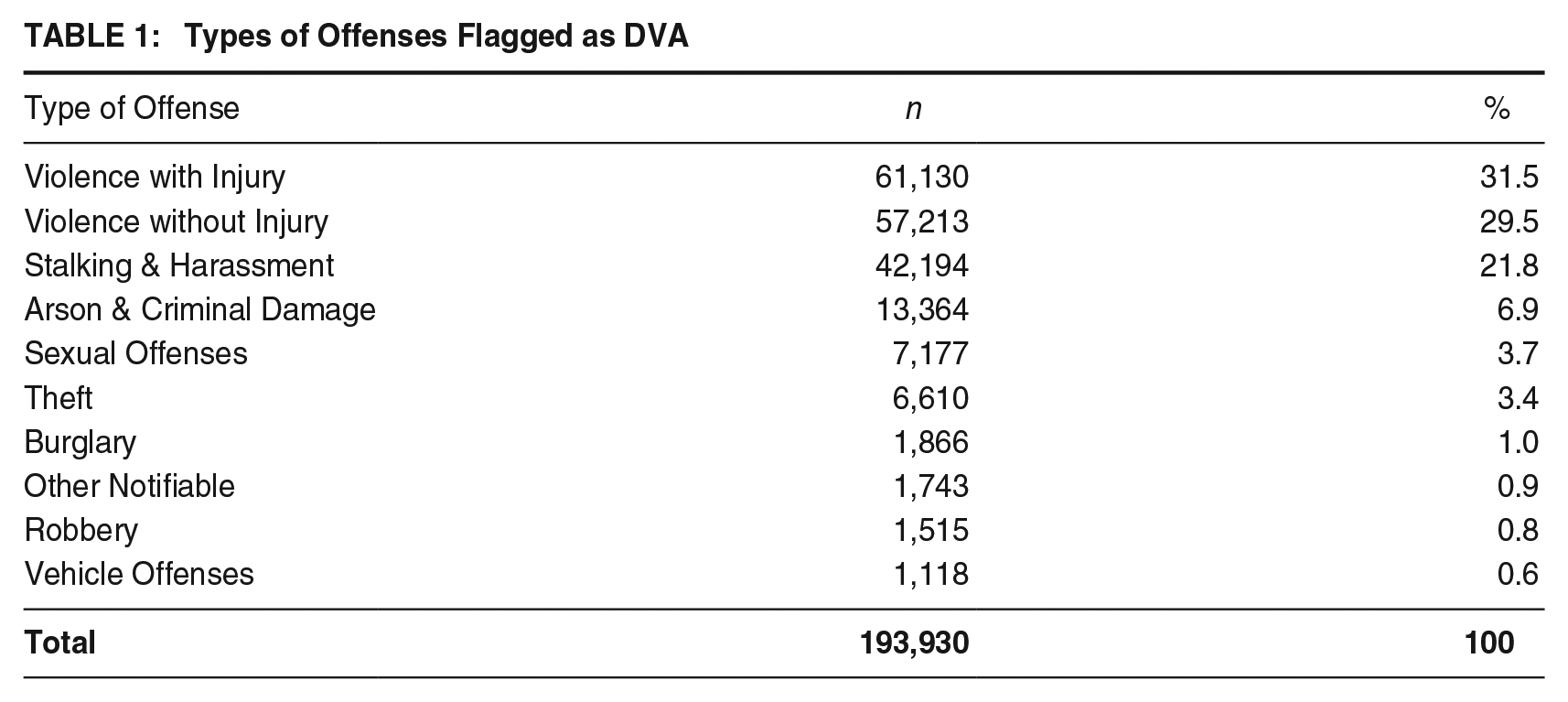
Violence, with and without injury, accounted for almost two-thirds (61.0%) of all DVA reports. Stalking and harassment accounted for approximately another fifth of reports (21.8%). Most DVA-flagged offense types accounted for less than five percent of all reports (see Table 1).
Types of Offenses Flagged as DVA
Is There a Difference in DVA-Flagged Offense Types Depending on Suspect and Victim Demographic Variables?
Sex
Most suspects were male (77.6%) and most victims were female (73.7%). The proportion of male and female suspects tended to be similar across the different report types, however, sexual offenses were more common for male suspects, and theft was more common for female suspects. There were differences in the proportion of male and female victims across the report types; more males were victims of theft and violence with injury, whereas females were victims of sexual offenses and stalking and harassment more often (see Table 2).
Suspect and Victim Sex by Type of Offense
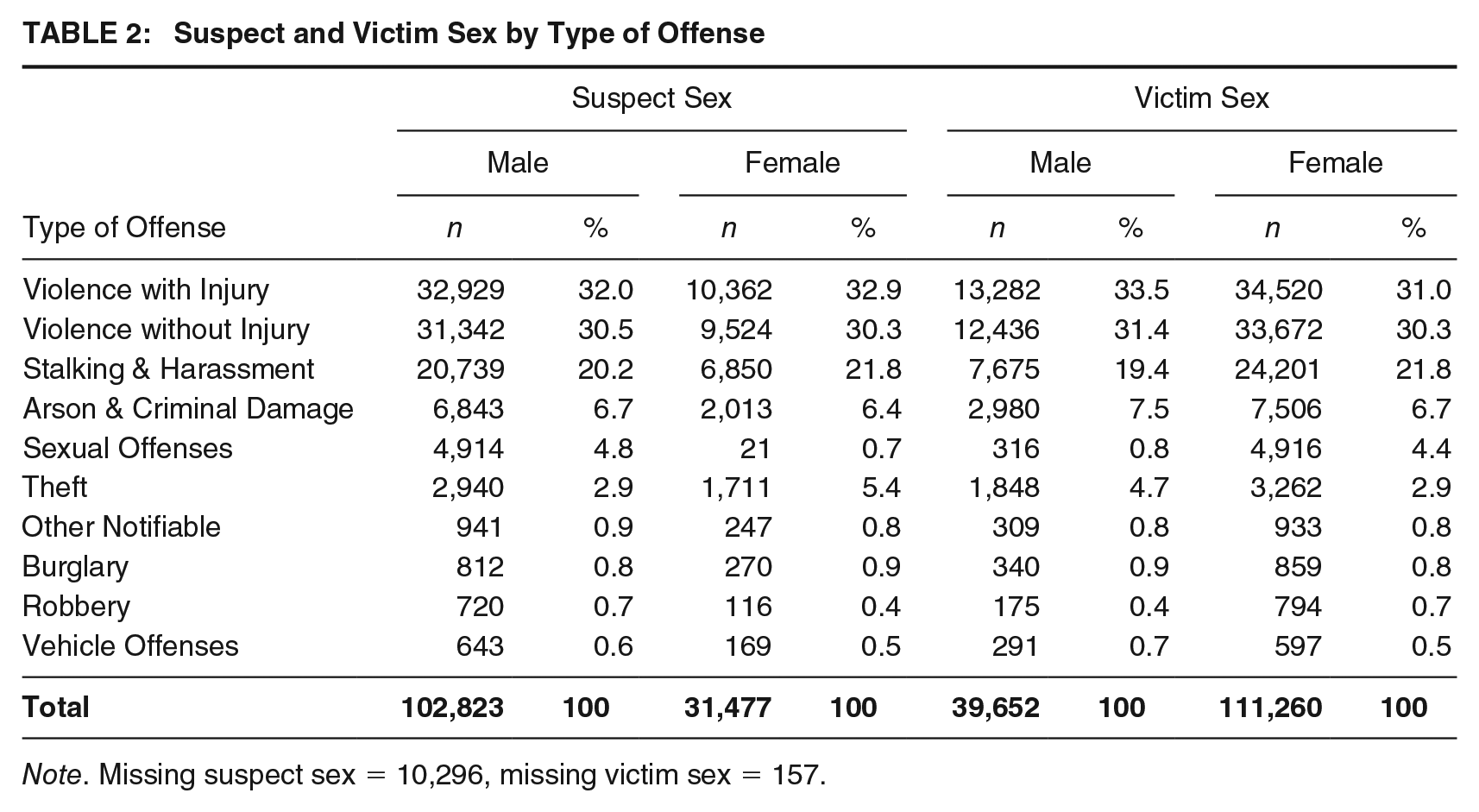
Note. Missing suspect sex = 10,296, missing victim sex = 157.
A multinomial logistic regression model with suspect sex as the independent variable and offense type was conducted. Model fit statistics indicated a good fit to the data, although the model’s fit was only improved over a baseline model with no predictors by 2%, χ2(9) = 1,957.18, p < .001; Nagelkerke R2 = .02. The regression demonstrated that compared with males, females had 86.1% lower odds of being reported for sexual offenses (OR = .139, 95% CI = [.12, .16]), 48.8% lower odds for robbery (OR = .512, 95% CI = [.42, .62]), 16.6% lower odds for other notifiable offenses (OR = .834, 95% CI = [.72, .96]), 16.5% lower odds for vehicle offenses (OR = .835, 95% CI = [.70, .99]), 6.5% lower odds for criminal damage (OR = .935, 95% CI = [.89, .99]), and 3.4% lower odds for violence without injury (OR = .966, 95% CI = [.94, .99]. Females had 84.9% higher odds of being reported for theft (OR = 1.849, 95% CI = [1.74, 1.97]) and 5.0% higher odds for stalking and harassment (OR = 1.050, 95% CI = [1.01, 1.09]) than of being reported for violence with injury (see Table 5).
When victim sex was the independent variable—χ2(9) = 1,927.82, p < .001; Nagelkerke R2 = .01—males had 83.3% lower odds than females of being a victim of a sexual offense (OR = .167, 95% CI = [.15, .19]), 42.7% lower odds for robbery (OR = .573, 95% CI = [.49, .68]), 17.6% lower odds for stalking and harassment (OR = .824, 95% CI = [.80, .85]), 13.9% lower odds for other notifiable offenses (OR = .861, 95% CI = [.76, .98]), and 4.0% lower odds for violence without injury (OR = .960, 95% CI = [.93, .99]). Male victims had 47.2% higher odds of being a victim of theft (OR = 1.472, 95% CI = [1.39, 1.56]) and 26.7% higher odds for vehicle offenses (OR = 1.267, 95% CI = [1.10, 1.46]) than of being a victim of violence with injury (see Table 5).
Age
The mean age of all suspects was 35.62 (min = 16, max = 100, SD = 12.19) and victims’ mean age was 36.72 (min = 16, max = 100, SD = 13.64). Violence with injury was the most frequently recorded DVA for ages below 46; after this, violence without injury took precedence (see Table 3).
Distribution of Reports Across DVA-Flagged Offense Types by Suspect and Victim Ages
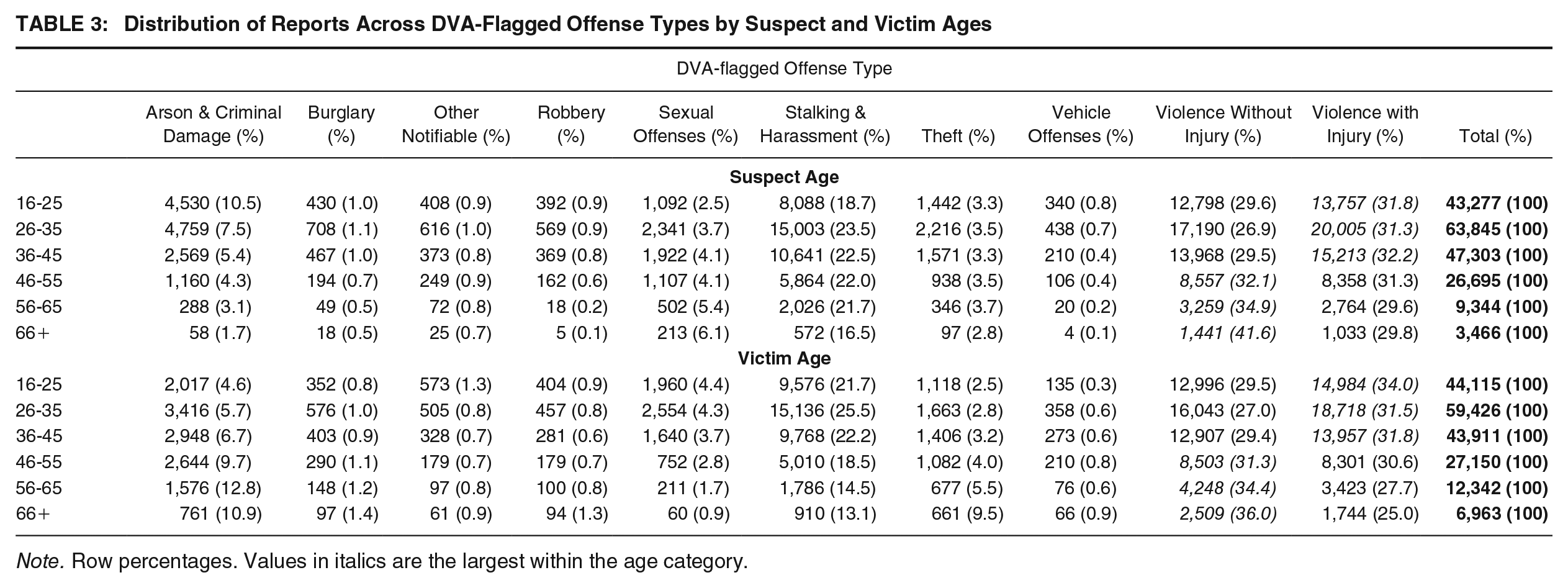
Note. Row percentages. Values in italics are the largest within the age category.
Both victim and suspect ages explained two percent of the variance in the regression models, which were a good fit—victim age: χ2(27) = 4,075.89, p < .001, Nagelkerke R2 = .02; suspect age: χ2(27) = 2,734.07, p < .001, Nagelkerke R2 = .02. The regression demonstrated that, compared with violence with injury, individuals aged 16 to 25 years old had 52.9% lower odds of being victims of vehicle offenses (OR = .471, 95% CI = [.39, .56]), 26.2% lower odds for arson and criminal damage (OR = .738, 95% CI = [.70, .78]), 23.7% lower odds for burglary (OR = .763, 95% CI = [.67, .87]), 21.0% lower odds for stalking and harassment (OR = .790, 95% CI = [.76, .82]), and 16.0% lower odds for theft (OR = .840, 95% CI = [.78, .91]), and 41.7% higher odds for other notifiable offenses (OR = 1.417, 95% CI = [1.26, 1.60]) than 26- to 35-year-olds. Compared with violence with injury, 36- to 45-year-olds had 17.5% lower odds of being victims of robbery (OR = .825, 95% CI = [.71, 96]), 13.9% lower odds for sexual offenses (OR = .861, 95% CI = [.81, .92]), and 13.5% lower odds for stalking and harassment (OR = .865, 95% CI = [.84, .90]), and 15.7% higher odds for arson and criminal damage (OR = 1.157, 95% CI = [1.10, 1.22]), 13.4% higher odds for theft (OR = 1.134, 95% CI = [1.05, 1.22]) and 7.9% higher odds for violence without injury (OR = 1.079, 95% CI = [1.05, 1.11]) than 26- to 35-year-olds. In addition, compared with violence with injury, individuals aged 46 and older had 44.3% lower odds of being victims of sexual offenses (OR = .557, 95% CI = [.52, .60]) and 29.2% lower odds for stalking and harassment (OR = .708, 95% CI = [.68, .73]), and 102.7% higher odds for arson and criminal damage (OR = 2.027, 95% CI = [1.93, 2.13]), 102.2% higher odds for theft (OR = 2.022, 95% CI = [1.19, 2.16]), 36.7% higher odds for vehicle offenses (OR = 1.367, 95% CI = [1.18, 1.59]), 32.2% higher odds for violence without injury (OR = 1.322, 95% CI = [1.28, 1.36]), and 29.1% higher odds for burglary (OR = 1.291, 95% CI = [1.15, 1.46]) than 26- to 35-year-olds.
Compared with violence with injury, suspects aged 16 to 25 years old had 32.2% lower odds of committing sexual offenses (OR = .678, 95% CI = [.63, .73]), 21.6% lower odds for stalking and harassment (OR = .784, 95% CI = [.76, .81]), and 11.7% lower odds for burglary (OR = .883, 95% CI = [.78, .99]), and 38.4% higher odds for arson and criminal damage (OR = 1.384, 95% CI = [1.32, 1.45]) and 8.3% higher odds for violence without injury (OR = 1.083, 95% CI = [1.05, 1.18]) than suspects aged 26 to 35 years. Compared with violence with injury, suspects aged 36 to 45 years had 37.0% lower odds of committing vehicle offenses (OR = .630, 95% CI = [.53, .74]), 29.0% lower odds for arson and criminal damage (OR = .710, 95% CI = [.67, .75]), 20.4% lower odds for other notifiable offenses (OR = .796, 95% CI = [.70, .91]), 14.7% lower odds for robbery (OR = .853, 95% CI = [.75, .97]), 13.3% lower odds for burglary (OR = .867, 95% CI = [.77, .98]), 6.8% lower odds for theft (OR = .932, 95% CI = [.87, .99]), and 6.7% lower odds for stalking and harassment (OR = .933, 95% CI = [.90, .96]), and 8.0% higher odds for sexual offenses (OR = 1.080, 95% CI = [1.01, 1.15]) and 6.9% higher odds for violence without injury (OR = 1.069, 95% CI = [1.04, 1.10]) than 26- to 35-year-olds. Compared with violence with injury, suspects 46 and older had 51.2% lower odds of committing vehicle offenses (OR = .488, 95% CI = [.40, .60]), 47.9% lower odds for arson and criminal damage (OR = .521, 95% CI = [.49, .55]), 46.5% lower odds for robbery (OR = .535, 95% CI = [.45, .63]), 39.3% lower odds for burglary (OR = .607, 95% CI = [.53, .70]), and 7.2% lower odds for stalking and harassment (OR = .928, 95% CI = [.90, .95]), and 28.0% higher odds for sexual offenses (OR = 1.28, 95% CI = [1.20, 1.37]) and 26.9% higher odds for violence without injury (OR = 1.269, 95% CI = [1.23, 1.31]) than 26- to 35-year-olds (see Table 5).
Is the Victim−Suspect Relationship Associated With the DVA-Flagged Offenses Reported?
Our exploratory analysis demonstrated that partners were involved in the majority (70.3%) of DVA reports. Of these, almost a third were for violence with injury, over a quarter were violence without injury, and just under a quarter were stalking and harassment reports. Over a third of reports involving relatives were for violence without injury and almost a third were for violence with injury. Acquaintances were mostly involved in stalking and harassment and violence with injury, while position of authority were mostly involved in violence without injury (see Table 4). Notably, acquaintance suspects and position of authority suspects only accounted for four percent and less than one percent of the DVA-flagged offenses respectively, highlighting that the formal definition of DVA does not usually cover these relationship types and that they are rarely used by officers within the context of DVA.
Victim−Suspect Relationship by Type of Offense
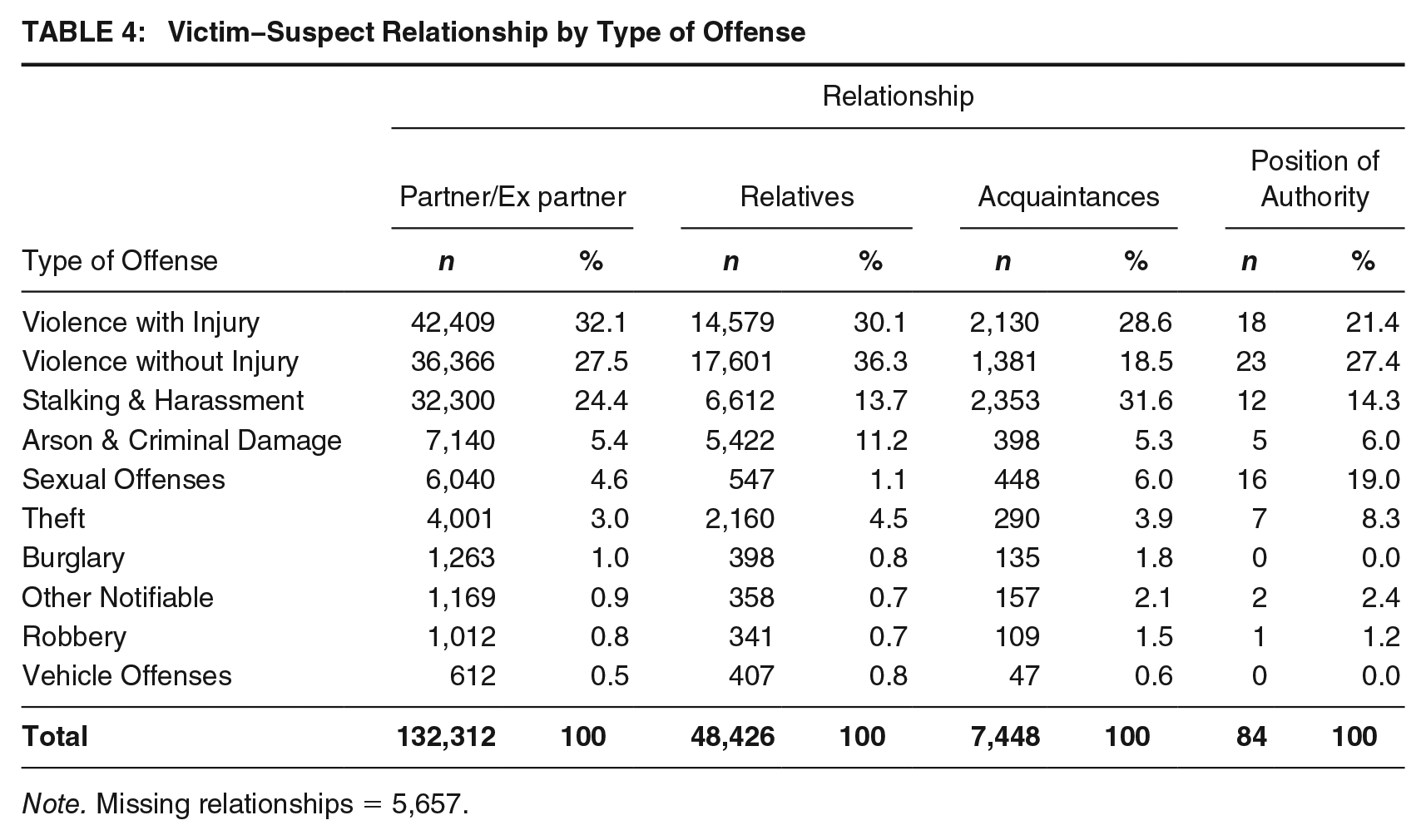
Note. Missing relationships = 5,657.
A multinomial logistic regression model with relationship as the independent variable was conducted and the model was a good fit, χ2(27) = 7,344.74, p < .001. Victim−suspect relationship improved the model by four percent (Nagelkerke R2 = .04), which was more than any of the other demographic variables (as aforementioned, “Position of Authority” relationships were excluded from the regression analyses due to low numbers). Results indicated that compared with being reported for committing violence with injury, acquaintances had 167% higher odds of being reported of other notifiable offenses (OR = 2.674, 95% CI = [2.25, 3.18]), 114% higher odds for robbery (OR = 2.144, 95% CI = [1.75, 2.63]), 113% higher odds for burglary (OR = 2.128, 95% CI = [1.77, 2.56]), 53% higher odds for vehicle offenses (OR = 1.529, 95% CI = [1.13, 2.06]), 48% higher odds for sexual offenses (OR = 1.477, 95% CI = [1.33, 1.64]), 45% higher odds for stalking and harassment (OR = 1.450, 95% CI = [1.37, 1.54]), and 44% higher odds for theft (OR = 1.443, 95% CI = [1.27, 1.64]) than partners. Compared with being reported for violence for injury, relatives had 121% higher odds of being reported for committing arson and criminal damage (OR = 2.209, 95% CI = [2.12, 2.30]), 94% higher odds for vehicle offenses (OR = 1.935, 95% CI = [1.70, 2.20]), 57% higher odds for theft (OR = 1.570, 95% CI = [1.49, 1.66]), and 41% higher odds for violence without injury (OR = 1.408, 95% CI = [1.37, 1.45]) than partners. Relatives also had 74% lower odds of being reported for sexual offenses (OR = .263, 95% CI = [.24, .29]) and 40% lower odds for stalking and harassment (OR = .595, 95% CI = [.58, .62]) than partners (see Table 5).
Multinomial Logistic Regression Models of Suspect and Victim Characteristics and DVA-Flagged Offense Types
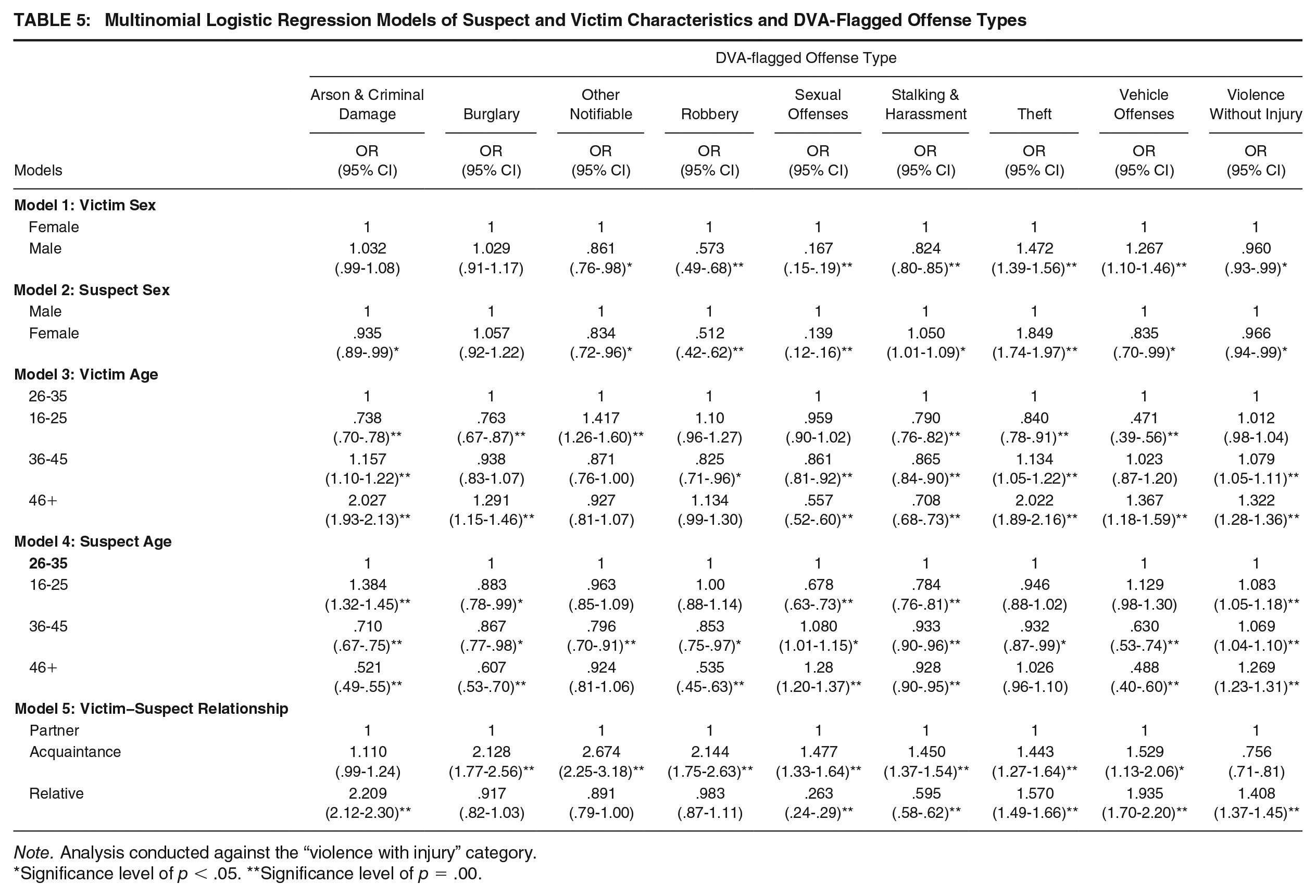
Note. Analysis conducted against the “violence with injury” category.
Significance level of p < .05. **Significance level of p = .00.
Discussion
This research explored how 13 types of DVA-flagged offenses reported to one English police force were associated with suspect and victim demographic variables: sex, age, and victim−suspect relationship. 193,930 DVA reports, 144,596 suspects, and 151,070 victims were investigated, with the multinomial logistic regression models indicating that each variable was individually associated with the offense types. This study uniquely leverages a large-scale police dataset of DVA-flagged reports, irrespective of arrests or charges, enhancing ecological validity and reflecting contemporary challenges in charging and convicting DVA perpetrators in England and Wales (e.g., variability in recording, flagging, and investigating DVA cases, high attrition, low charge and conviction rates, and an investigative overfocus on physical violence; Barbin et al., 2025; McPhee et al., 2022). By examining the relationship between reported DVA offenses and the demographic characteristics of victims and suspects, it contributes to the literature by identifying the most frequently reported offenses and highlighting populations at higher risk of perpetration and victimization. In addition, it complements Barbin and colleagues (2025), which explored how victim and suspect characteristics influence charge rates and victim attrition in DVA cases. Findings from these two studies provide new insights into under-researched aspects of DVA, helping policymakers and law enforcement enhance support for victims.
An Overview of DVA-Flagged Offenses
Violence with and without injury accounted for the majority of offenses, followed by stalking and harassment offenses, in line with nationwide statistics in England and Wales (ONS, 2023). 7 Research suggests that police responses to DVA, including risks-based case prioritization, whether to make arrests and/or offer interventions, are influenced by the perceived seriousness of the violence committed (Myhill, 2019). Yet, there were a range of offenses being flagged in our study, from theft to sexual offenses. These offenses may form patterns of DVA violence with a potential increase in the type and amount of violence (Monckton-Smith, 2020). The police and the CJS, including the Crown Prosecution Service (CPS), need to be aware of the broad spectrum of behaviors which may constitute DVA and recognize all reports as serious, if effective disruption, intervention strategies, and risk assessments are to be implemented.
The Influence of Victim and Suspect Characteristics on DVA-Flagged Offense Types
Most suspects were men and most victims were women, but male and female suspects and victims were associated with different offenses. Male suspects committed proportionally more sexual offenses, criminal damage, violence with and without injury, and other notifiable offenses. Female suspects were mostly associated with theft and stalking and harassment offenses. It may be that when men are victims of violence, this violence is perpetrated by male suspects, and that when they are victims of theft or vehicle offenses, the suspects are female. On the other hand, women could be DVA victims of sexual offenses and violence by male suspects but stalking and harassment victims by female suspects. The overall results add to the current knowledge on sex differences in DVA victimization and perpetration. Particularly, they indicate that female suspects are less likely to engage in physically violent DVA (Temple et al., 2005), but more likely to engage in stalking and harassment (Burczycka & Conroy, 2018). Hester (2013) found that men are more often the aggressors, are more violent than female perpetrators, and are, as found in our study, the ones engaging in sexual offending in a DVA context. When female DVA perpetrators are violent, they show more violence toward partners than other family members (Douglass et al., 2020). Previous research suggests that suspect and victim sex might play an important role throughout the policing process, influencing DVA flagging, arrest likelihood, resources distribution, and guilty verdicts (Fagerlund, 2021; Hester, 2013). Our research accords with the idea that considering suspect and victim sex is an important factor. The police and the CPS need to be aware of potential trends in DVA perpetration and victimization to assist with overcoming such biases (Hester, 2013; Myhill, 2019). For example, it is possible that the higher odds of female suspects being associated with stalking and harassment might be due to investigative police bias, with agencies being “quicker” in noticing female-perpetrated harassment due to a possible normalization–to the point of overlooking–and under-reporting of male-on-female harassment. For this reason, it is crucial that police officers accurately record, investigate, and deal with DVA reports as objectively as possible, regardless of the type of offense, victim, and suspect encountered.
Suspects and victims were, on average, in their 30s, and different age groups of both suspects and victims were associated with different offense types. Suspects and victims 45 years old and younger were mostly associated with violence with injury, while 46 years old and older were mostly associated with violence without injury. The regression analysis further indicated that the 26 to 35 age group had higher odds of being victims of violence with injury and sexual offenses. The findings also show that victims aged 16–35, had the highest odds of experiencing both stalking and harassment and sexual offenses. On the other hand, victims aged 36 years old and older had higher odds of being associated with burglary, criminal damage, robbery, theft, and vehicle offenses. Altogether, these associations indicate a trajectory in victims’ lives, with more violent DVA, including sexual victimization, occurring before the age of 46, and a shift to violence without injury and other “minor” offenses afterwards. While this may reflect trends in reporting, with younger victims coming forward to the police more often, these associations indicate age-based victim vulnerabilities underlying the offenses, which may further differ based on the victim−suspect relationship and the offense context. Repeat victimization, alongside its trajectories and dynamics across time in the dyad (victim and suspect), must also be considered. It is possible that a small proportion of victims and suspects make up the majority of reports, and that these victims suffer a trajectory of more and increasingly violent offenses (Bland & Ariel, 2015). It could also be that police forces may prioritize action in higher harm offenses, despite many prolific DVA offenders causing a large volume of “lower harm” offenses (Dudfield et al., 2017).
The suspect’s offending patterns also change across ages, suggesting that the police should use evidence-based research to target early DVA disruption and harm reduction (Sherman et al, 2016). While the younger suspects, aged 16 to 25 years old, were likely to commit offenses such as arson and criminal damage and violence without injury, the 26 to 35 age group had higher odds of committing violence with injury as well as a broad range of offending, including burglary, other notifiable offenses, robbery, stalking and harassment, theft, and vehicle offenses. Notably, in this dataset, sexual offenders were the oldest, with those aged 36 years old and older having the highest odds of committing this offense, despite the overall odds of perpetrating violence with injury declining after the age of 45. These results echo findings from the general offending literature, indicating that teenagers are likely to engage in a range of antisocial behaviors which can then escalate and persist across their lifetimes (Moffitt, 2017). The results suggest that, similarly to other crimes, DVA seriousness escalates over time (Monckton-Smith, 2020). Nonetheless, the DVA escalation trends are nonlinear and influenced by crime type. For instance, while general violence seriousness in DVA incidents may decrease after the age of 45, sexual offending in DVA seems constant across time.
Associations Between DVA-Flagged Offenses and Victim−Suspect Relationships
The majority of the DVA reports involved current or previous partners, in line with research indicating IPV is the most widespread form of DVA (Zhang & Howard, 2020). Partner suspects were involved in all types of offenses, especially violence with and without injury and stalking and harassment. However, statistically, acquaintances had higher odds than partners of being DVA suspects of burglary, other notifiable offenses, robbery, sexual offenses, stalking and harassment, theft, and vehicle offenses. This is of particular interest given that acquaintances should, by the formal definition of DVA, be excluded from being labeled as DVA suspects and victims, and highlights a potential disjunct between this definition in theory and how it is operationalized by police officers in practice. In some respects, our findings contradict previous research (e.g., Sardinha et al., 2022) highlighting the high propensity of sexual offending in IPV. The current results may be due to the broader spectrum of relationships included in the overall “acquaintances” category. Nonetheless, acquaintances made up only four percent of the dataset; therefore, results for this category might be less robust compared with categories with larger sample sizes, such as partners/ex-partners or relatives. A clear understanding of who does what to whom in DVA—and how this is recorded by police officers—is crucial for identification of patterns, trajectories, and risks, and for the implementation of action plans and wider policies. It is therefore important that the police clearly and consistently flag offenses as DVA (Phoenix, 2023), including being specific about how and why relationships which may not necessarily fall under the Domestic Abuse Act (2021) (e.g., neighbor) are flagged as DVA. Not only would this help with resource allocation but also the prosecution process through dispelling potential myths about DVA and highlighting vulnerabilities, risks, and escalation through understanding how the relationship impacts the abuse. In addition, our results indicate that relatives had higher odds of being suspects of arson and criminal damage, theft, vehicle offenses, and violence without injury, but lower odds than partners of being suspects of sexual offenses, as well as stalking and harassment. Together, these associations support both the broad spectrum of DVA-related offenses victim−suspect relationships and highlight DVA as a complex, dynamic crime. The exploration of victim−suspect relationship is also important as most research on female-perpetrated DVA focuses on victims who are intimate partners (Babcock et al., 2003), highlighting a current gap in the literature this study starts to address. These findings underline the need for the police and the CJS to be aware of DVA patterns and characteristics of how it may present itself at crime recording stage. Research has established that victim−suspect relationship, age, sex, and crime type are all predictors of DVA risk of victimization as well as potential factors impacting if, and how, DVA reports are policed and prosecuted (Barbin et al., 2025). Investigative agencies must therefore question and address whether the victim−suspect relationship impacts or influences their response to the DVA offense reported.
Limitations and Future Work
Future research should investigate interactions between age, offending type, and relationship to untangle more nuanced dynamics of DVA incidents. While it is clear that police personnel should intervene early and adequately to prevent further victimization and disrupt potential patterns of abuse, more evidence-based training on DVA biases and characteristics might be needed. Attention also needs to be paid to the dynamics of sexual offending in DVA dyads, particularly when older suspects offend against younger victims, where there is a potential for grooming. As recent literature suggests, the police must take context-led, victim-led, and suspect-focused approaches to DVA investigations (College of Policing, 2024). Understanding the role violence plays in the dynamics of the abuse within that victim−suspect relationship and aiming to disrupt repeat offending/victimization is also important. Police forces and the CJS must recognize that DVA can vary depending on suspect and victim’s age, their sexes, and relationships, and pay attention to the leading factors and the abuse progression to devise tailored interventions and inform police personnel and judges’ DVA training.
Using police data can be advantageous in exploratory studies focused on predictors of crime; however, official records can be unrepresentative of the realities of offending given the general under-reporting of DVA and low conviction rates (McPhee et al., 2022). This dataset included all reports of DVA-flagged offenses of persons at least 16 years of age. This decision was informed by England and Wales legislation at the time of data collection. The researchers acknowledge that, while the decision does not affect the accuracy of the analyses, there may be offenses or DVA victim/suspect characteristics that were not fully represented in the dataset. In agreement with Day and colleagues (2018), it is likely that the types of victims who report the offense are different from those who do not (e.g., socio-economic and cultural or sexual background). DVA severity between reported and not reported offenses may also differ. The present study captured only a proportion of the offenses, and their severity in the context of persistent and recurring abuse, for example, is not known. In addition, although the dataset was large, it only contained reports from one English police force. Suspect and victim profiles, and the DVA-flagged offenses they are associated with, might differ in other forces. It would thus be beneficial for future research to either compare findings across several police forces or to analyze a combined, national dataset of reports from across police forces in England and Wales.
Previous research has highlighted that the DVA flag is used discretionarily in police databases (Phoenix, 2023). To adhere to the DVA legislation in England and Wales, suspects and victims less than 16 years old were removed from analysis. While this was appropriate for this project, it nonetheless leaves this young population under-explored. Future research could use a more inclusive definition of DVA, to more thoroughly investigate DVA involving minors, perhaps in conjunction with databases of child abuse in a domestic context. In recognition of the fact that relationship can be complex to categorize and may encompass multiple “types,” all relationship types were retained, on the basis that a connection with the suspect was likely reported by the victims and to explore how police officers may have subjectively labeled and interpreted this, based on what they thought was the most appropriate at reporting stage. The authors, however, were not provided with force-specific criteria on how police forces flag relationship type, and there was no way of verifying whether certain offenses were flagged as DVA in error, so the findings need to be interpreted with this in mind. As Lovett et al. (2022) recently reported, relationship data are consistently overlooked in police recordings, so it is advised that future research should access police case files to better understand the context of the abuse, and, if possible, obtain a clear explanation of how and why the DVA flags were used. It would also be of interest to investigate the type of abuse happening in contexts where the victim and suspect share multiple relationships, such as family members who are also guardians of the victim. Here, longitudinal studies are advised to bring to the surface potential patterns and escalations. The intersection between outcome, age, and victim−suspect relationships in suspects and victims less than 16 years old also needs investigating for a comprehensive overview of DVA within these age groups.
Finally, DVA is an interplay of both static and nonstatic factors, meaning that age, sex, and relationship type can interact in creating the context leading to the crime (Dutton, 2006). This study investigated these variables in isolation as a first step. It is worth bearing in mind that the Nagelkerke pseudo R2 used in the multinomial logistic regression models does not represent the proportion of variance explained by the predictors, but rather quantifies the proportion of improvement in the model’s likelihood compared with a null, baseline model. The investigated variables’ variations in how much they improved the baseline models were small, ranging from one to four percent, likely due to the large dataset as well as the potential contribution of variables not examined in this article. The current study is, however, a stepping stone in showing the significant influence of the suspect-victim demographic variables on DVA offense type. A four-way interaction analysis between these factors could shed further light on the complex DVA dynamics highlighted here. Ordinary least square regressions would also be useful in directly measuring the proportion of variability in offense type explained by the demographic variables. Nonetheless, despite limitations, the results can be used as guidance in prevention strategies and individual case investigations.
Conclusion
DVA remains under-reported in police records. Understanding the spectrum of DVA-flagged offenses and their potential associations with suspect and victim characteristics are important milestones for prevention and investigation. This research indicated that a range of DVA-flagged offenses are reported to the police, and that demographic suspect and victim characteristics, including victim−suspect relationships, are associated with different offense types. In line with the findings, investigators, police personnel, and victim support agencies should take a holistic perspective to DVA prevention and disruption, with a focus on recognizing patterns of abuse encompassing a range of offenses.
Supplemental Material
sj-docx-1-cjb-10.1177_00938548251343816 – Supplemental material for Types of Domestic Violence and Abuse-Flagged Offenses and Their Associations: A Quantitative Exploration Using English Police Data
Supplemental material, sj-docx-1-cjb-10.1177_00938548251343816 for Types of Domestic Violence and Abuse-Flagged Offenses and Their Associations: A Quantitative Exploration Using English Police Data by Ioana M. Crivatu, Arianna Barbin, Miranda A. H. Horvath, Kari Davies and Ruth Spence in Criminal Justice and Behavior
Footnotes
Authors’ Note:
The authors declare no personal, commercial, or financial conflicts of interest. The research team received no funding for the production and publication of this paper.

Supplemental Material
Notes
References
Supplementary Material
Please find the following supplemental material available below.
For Open Access articles published under a Creative Commons License, all supplemental material carries the same license as the article it is associated with.
For non-Open Access articles published, all supplemental material carries a non-exclusive license, and permission requests for re-use of supplemental material or any part of supplemental material shall be sent directly to the copyright owner as specified in the copyright notice associated with the article.
