




Abstract
Racial/ethnic disparity in criminal sentencing is a major area of interest in criminal justice research. However, little research has examined the potential importance of the presentence investigation report (PSI) despite its wide-ranging use in criminal justice decision-making from sentencing onward. These reports are typically compiled by a probation officer post-conviction but before sentencing and provide relevant contextual information about offense and offender to aid the sentencing judge’s decision. Using data from the Pennsylvania Commission on Sentencing (PCS) (2006–2016), we examine the association between PSI completion and racial/ethnic disparities in sentencing. Results suggest that PSI completion is associated with more severe sentencing outcomes overall, but findings regarding racial/ethnic disparities are mixed.
Introduction
Making sense of racial/ethnic disparities in criminal punishment is an active area of scholarly interest and a continuing concern that transcends criminology. That people of color are overrepresented at all stages of the criminal justice system is well-established and scholars have long sought to understand the association between defendant race/ethnicity and punishment outcomes (Kutateladze et al., 2014; Zatz, 2000). A sizeable literature has developed examining racial/ethnic disparities in court outcomes, particularly at the final sentencing stage (Ulmer, 2012). Contemporary studies in this line of research generally find that Black and Hispanic defendants receive more severe sentences than similarly situated white defendants and that racial/ethnic disparities are most pronounced in incarceration decisions (King & Light, 2019). While a considerable amount of research has focused on final sentencing decisions, the potential impact of earlier court processes on racial/ethnic disparities in sentencing has received far less attention (Ulmer, 2012). To the extent that defendant race/ethnicity factors into decision-making at earlier stages, disparities observed in sentencing outcomes may be due, at least in part, to these earlier processes (Kutateladze et al., 2014; Wooldredge et al., 2015; Zatz, 2000).
Over the past few decades, sentencing scholars have started to more seriously consider questions of where and under what conditions are racial/ethnic disparities most pronounced (Spohn, 2000). This body of research reflects the growing recognition that failing to consider the role of earlier court processes may obscure potential mechanisms through which racial/ethnic inequalities enter the sentencing process (Spohn, 2000; Ulmer, 2012; Zatz, 2000). The present study aims to determine whether presentence investigation reports (PSIs), compiled by a probation officer to provide more information about the offense and defendant prior to sentencing, may be one such mechanism. Two prominent theoretical perspectives applied to judicial decision-making at sentencing differ in their treatment of the role of informational constraints in contributing to observed racial/ethnic disparities in punishment outcomes. Albonetti’s (1991) causal attribution perspective suggests that the information provided in PSIs may reduce judges’ reliance on stereotypes and other heuristics and thus reduce racial/ethnic disparities in sentencing. In contrast, Steffensmeier et al.’s (1998) focal concerns perspective posits that judicial decisionmakers rely on a “perceptual shorthand” that may be biased by stereotypes regardless of how much information they have at their disposal. As such, the more detailed information available through the PSI is not expected to reduce disparities, but it may, in fact, worsen disparities should the PSI contain information that judges interpret unfavorably in light of the focal concerns.
Understanding whether racial/ethnic disparities in sentencing are conditioned by PSI completion has important implications that extend far beyond their use at sentencing. PSIs follow individuals throughout their involvement with the criminal justice system, as they are available to the institutions involved in carrying out one’s sentence (e.g., the department of corrections, probation offices, and parole department) and are used to make a wide range of assessments. 1 PSIs are often referenced when making decisions regarding supervision conditions for defendants placed on probation and initial security classifications for those sentenced to incarceration (Spohn, 2009). In Pennsylvania, PSIs are often used in correctional settings to determine eligibility for certain treatment programs, as well as eligibility for early-release programs later on. 2 Thus, PSIs represent a potentially highly consequential, yet understudied mechanism through which racial/ethnic disparities may enter the criminal justice process. To address this gap, we use data from the Pennsylvania Commission on Sentencing (PCS) from 2006 to 2016 to investigate whether racial/ethnic disparities in incarceration and sentence length decisions vary depending on PSI completion.
Background
Research on the Role of Presentence Investigation Reports at Sentencing
PSIs are usually conducted by a probation officer after conviction but prior to sentencing in order to provide the court with information on the circumstances and context surrounding the offense in question, as well as information on the offender not present in their offense file, such as employment and family. PSIs can potentially play a large role in sentencing decisions, as they often provide the most information on the offense context and defendant that the judge will be exposed to prior to sentencing. Most convictions come by way of a plea agreement, so the information contained in the PSI is rarely heard in court.
Prior research on PSIs is limited and primarily focused on whether they impact judges’ decision making. This body of research has produced mixed findings. Some studies suggest that PSIs influence judge decision making, allowing probation officers to play a “quasi-judicial” role in sentencing (Leiber et al., 2011, 2018; Leifker & Sample, 2010, 2011). Other research suggests that PSIs only play a “ceremonial” role in sentencing, providing an illusion of individualized justice while not having a meaningful impact on court decision making (Hagan et al., 1979; Kingsnorth et al., 2002; Rosecrance, 1985, 1988). Similarly, more recent accounts point to the likelihood that a number of constraints tied to organizational realities severely limit the influence that PSIs have on judicial decision-making, such as emphasis on conflicting or ambiguous sentencing goals, heavy probation caseloads, limited probation funding, and the widespread use of plea bargaining (including sentence negotiations) (Clear et al., 2012).
Past research on PSIs has typically relied on data from a single court where PSIs are routinely ordered for all cases. This limits the interpretation of these findings in two ways: First, generalizability is an obvious issue when using data from a single court, especially when considering the uniqueness of local court environments (Flemming et al., 1992). Second, using data with no variation in PSI use means that there is no comparison group (i.e., cases for which a PSI is not completed) from which to draw meaningful inferences about their influence. That is, no research to our knowledge has considered how PSIs impact sentencing outcomes compared to cases without PSIs. As such, more research is needed to clarify the potential impact that PSIs may have on sentencing outcomes.
Theoretical Perspectives on Judicial Decision-making
Causal attribution/uncertainty avoidance
Drawing on insights from social psychology and organizational sociology, Albonetti (1991) argues that judges frequently make sentencing decisions with insufficient information and thus operate in a context of bounded rationality. This perspective recognizes that judges are called upon to make decisions with respect to future events that cannot be predicted with certainty and often must do so with limited information about the defendant at hand. In response to informational constraints, judges engage in satisficing behavior and make efforts to manage uncertainty, which include the development and use of patterned responses to aid decision-making (Albonetti, 1991). Such patterned responses reflect attribution processes as well as their prior experiences and earlier judgments, which are also shaped by causal attributions linked to stereotypes about defendant social statuses, such as sex, race, and ethnicity (Albonetti, 1991).
Uncertainty surrounding future offending and potential for rehabilitation is particularly a particularly salient concern for court actors due to its implications for public safety and the effective use of limited correctional resources (Albonetti, 1991). Albonetti (1991) suggests that extralegal disparities in sentencing may reflect this process: as judges attempt to make rational enough decisions under informational constraints, their decision-making may rely, at least in part, on stereotyped attributions about who is likely to re-offend. Stereotypes about the criminality of certain groups—namely, young Black and Hispanic men—may be especially pernicious in the absence of sufficient information about the defendant and case at hand, as judges are likely to be particularly susceptible to developing patterned responses based on their subjective perceptions of offender risk and the perceived threat to public safety (Steffensmeier et al., 1998; Zatz, 2000). To the extent that PSIs provide the sentencing judge with information that helps reduce reliance on patterned responses and stereotyped attributions when assessing risk of future offending and potential for rehabilitation, PSI completion may be associated with decreased sentencing disparities.
Focal concerns
Building on Albonetti’s (1986, 1987, 1991) theoretical work, the focal concerns perspective recognizes that judges operate in a decision-making environment that is both complex and repetitive, in addition to being characterized by a high degree of uncertainty (Kramer & Ulmer, 2009; Steffensmeier et al., 1998). Steffensmeier et al. (1998) posit that court actors develop “cognitive filters” or a “perceptual shorthand” to manage the uncertainties and unique occupational pressures of the sentencing environment and that these are informed by stereotypes about certain kinds of offenses and offenders. While Steffensmeier and colleagues acknowledge that informational deficits may be one source of uncertainty in judicial decision-making, they do not share Albonetti’s assessment of such deficits as the impetus for reliance on factors like attributions or stereotypes. In contrast, proponents of the focal concerns perspective have often downplayed the role of informational constraints, arguing that limited information “is not the only or main source of uncertainty, nor the necessary or important cause of reliance on attributions, stereotypes, and other perceptual shortcuts” (Steffensmeier et al., 2017, p. 196). Key considerations, such as risk of recidivism and defendant character, are “never fully knowable” even when detailed information is available (Ulmer & Johnson, 2004, p. 142). While these two perspectives are often treated similarly, the two perspectives differ in their treatment of how information is used to aid judicial decision-making.
The focal concerns perspective proposes that judges generally rely on three focal concerns at sentencing: (1) blameworthiness, or culpability of the defendant, (2) dangerousness or protection of the community, and (3) the practical constraints or social costs associated with their sentencing decisions (Steffensmeier et al., 1998). According to a recent statement of the theory, the focal concerns perspective argues that “whatever the level of information at their disposal (a little or a lot), judges and other criminal justice actors make situational imputations and attributions about defendants’ character and expected future behavior and assess the implications of these imputed attributes” in relation to the three focal concerns (Steffensmeier et al., 2017, p. 197). For instance, it may be the case that PSIs yield more detailed information than court actors are able to cognitively process and use efficiently (Steffensmeier & Painter-Davis, 2017).
In general, PSIs provide the sentencing judge with more information about individual cases and defendants than would otherwise be available. PSIs generally include a written description of the offense, more detailed information about the defendant’s history of offending, and a victim impact statement (as required by Pennsylvania law). Commonly included elements of PSIs such as these may bring out what Kramer and Ulmer (2009) call “bad facts.” That is, facts about crimes or defendants that could increase their perceived culpability or blameworthiness in the eyes of the judge. The availability of such information at sentencing may operate similarly to the judge’s exposure to certain aspects of cases or defendant histories that may occur at trial. Some theorize that the more detailed information judges learn at trial is a contributing factor underlying observed plea-trial disparities, as this information may “mobilize” more negative emotional responses and criminal stereotypes (Kramer & Ulmer, 2009; Ulmer et al., 2010). To the extent that such stereotypes are racialized, such as those that portray Black and Hispanic defendants as particularly threatening, violent, or prone to criminal lifestyles, there may be increased racial disparities among defendants with PSIs compared to those without because PSIs may reveal more damaging information that shapes judges’ subjective assessments of the three focal concerns (Steffensmeier et al., 1998). The PSI might also include information that is mobilized differently depending on a defendant’s race. For example, the inclusion of juvenile court records in PSIs likely facilitates the discretionary use of juvenile offending information at sentencing, which may serve to uniquely disadvantage black defendants—particularly young, black males—at sentencing (Ulmer & Laskorunsky, 2016).
It is also possible that PSIs may be associated with increased racial/ethnic disparity due to both increasing punishment severity for Black and Hispanic defendants, while simultaneously reducing punishment severity for white defendants. While information included in a PSI may be interpreted in ways that reaffirm existing implicit biases that disadvantage Black and Hispanic defendants at sentencing, it is also possible that such information may help white defendants. To the extent that judges are predisposed to attribute criminality of white defendants to external factors, the information contained in a PSI may serve to neutralize their criminal acts by increasing judges’ perceptions of them as more sympathetic, salvageable, and amenable to rehabilitation (Galvin & Ulmer, 2021; Painter-Davis & Ulmer, 2020). Past research in Pennsylvania suggests that Black defendants in particular may be disadvantaged in decisions regarding sentencing to alternatives to incarceration that involve more explicit consideration of defendants’ rehabilitative potential (Galvin & Ulmer, 2021; Painter-Davis & Ulmer, 2020).
Presentence Investigations in Pennsylvania
According to 234 Pennsylvania Code 702(A)(3), a PSI “shall include information regarding the circumstances of the offense and the character of the defendant sufficient to assist the judge in determining sentence.” Though not specified in the code, Pennsylvania case law outlines the essential elements of a PSI as including, but not limited to: a complete description of the offense and the circumstances surrounding it, a full description of prior criminal record of the offender, a description of the educational and employment history, a social history of the offender (family relationships, marital status, residence history, religious affiliations, etc.), a physical and mental health history of the offender, and information about the environments the offender might return to if probation is granted (see e.g., Commonwealth v. Carrillo-Diaz, 2013).
PSIs are completed by a probation officer, who may or may not include a sentencing recommendation. Judges are permitted to order a PSI at their discretion but are required to order one when incarceration for over a year is a possibility under applicable sentencing guidelines, the defendant is under 21 at the time of conviction or guilty plea, or if the defendant is a first-time offender. If the sentencing judge chooses not to order a PSI in a case with one or more of these conditions, the statute states that they must provide their reasoning on record. However, this operates much differently in practice than implied by the statute.
Although most cases that make it to the final sentencing stage meet at least one of the three statutory conditions that require a PSI, only about one-quarter of all cases sentenced in Pennsylvania’s trial courts over an 11-year period received one. This is because Pennsylvania case law gives considerable latitude to the sentencing judge when deciding whether or not to order a PSI, stating that “a court may sentence without the benefit of a PSI if it possesses the necessary information from another source” (Commonwealth v. Tejada, 2017). In other words, courts are granted discretion over ordering PSIs, even for cases that clearly fall within the scope of the statute. Moreover, although the statute requires judges to document their reasons for not ordering a PSI when a statutory offender circumstance is met, case law has determined that “sentencing courts have some latitude in how this requirement is fulfilled” so how judges provide their required explanations for not ordering PSIs is also subject to their discretion (Commonwealth v. Carrillo-Diaz, 2013). As such, Pennsylvania case law to date affords judges and courts enormous discretion to use—or not use—PSIs to the extent that they see fit.
The vast discretion that judges have over who gets a PSI—and how they consider, prioritize, and use the information it contains—suggests that PSIs are an under-recognized potential “window of discretion” through which disparities may enter the sentencing process (Kramer & Ulmer, 1996). Bushway and Forst (2013) differentiate between two types of discretion. Type A discretion refers to the type of discretion that individual court actors have to make decisions within a set of rules or policies, while Type B discretion refers to the discretion that legislators and criminal justice policymakers have to create rules or policies (Bushway & Forst, 2013). Thus, “Type B discretion shapes and provides the ‘windows’ for Type A discretion” (Ulmer et al., 2016). In the context of PSI use in Pennsylvania sentencing, the window for Type A discretion appears to be quite large.
The Current Study
The present study examines whether PSI completion conditions racial/ethnic disparities in sentencing outcomes. As outlined above, there are two distinct theoretical mechanisms through which PSI completion may be associated with racial/ethnic disparities in sentencing. Two popular theories of judicial decision-making—causal attribution/uncertainty avoidance theory and the focal concerns perspective—suggest the following competing hypotheses:
Hypothesis 1. Racial/ethnic disparities will be less pronounced among cases with a completed PSI.
Hypothesis 2. Racial/ethnic disparities will be more pronounced among cases with a completed PSI.
This study contributes to the vast literature on racial/ethnic disparities in sentencing, as well as the modest literature on presentence investigations. Notably, we are the first to empirically consider the potential impact of PSI completion on sentencing disparities. Given the prevalence of PSIs, their potential for informing sentencing decisions, and their use in downstream criminal justice processes, the potential for PSIs to serve as an avenue of disparity is a significant gap in the literature. We also contribute to the existing literature on PSIs by being the first to consider their impact compared to cases in which a PSI was not completed. In addition, past research on PSIs generally relied on data from a single court or jurisdiction, whereas the present study examines state-wide data from criminal courts across Pennsylvania that spans an 11-year period. Finally, we highlight an underrecognized point of distinction between two prominent theoretical perspectives—causal attribution theory and the focal concerns perspective—that are commonly treated as complementary to one another: the role of information in sentencing decisions.
Data and Methods
Data
To test our hypotheses, we use criminal sentencing data from the Pennsylvania Commission on Sentencing (PCS) that span an 11-year period (CY 2006–2016). Pennsylvania’s trial courts are required to report sentencing information to the PCS for nearly all misdemeanor and felony convictions statewide. Prior to analysis, we restricted the dataset to the most serious offense per judicial proceeding and non-DUI and traffic offenses (Ulmer et al., 2016). 3 This yielded a final analytic sample of 717,163 individual cases, 303,412 of which resulted in a sentence of incarceration in state prison or county jail.
Dependent Variables
Sentencing research generally treats sentencing as consisting of two distinct decisions: the decision to incarcerate (i.e., the in/out decision) and the sentence length decision for those sentenced to confinement (Johnson, 2006; Kramer & Ulmer, 2009). The in/out decision is measured as a binary indicator that captures whether the defendant was sentenced to confinement in county jail or state prison (=1) or received a non-custodial sanction (=0) (e.g., probation, restitution, or other restorative sanction). The decision regarding sentence length only applies to those sentenced to confinement. Sentence length is measured as the number of months corresponding to the minimum length of incarceration ordered, top-coded at 240 months and logged to address skewness. 4
Independent Variables
The focal independent variables are PSI completion and defendant race/ethnicity. PSI completion is measured as a dichotomous indicator that identifies whether the defendant received a PSI (1 = yes, 0 = no). Defendant race/ethnicity is measured as a set of dummy variables (1 = yes, 0 = no): Black, Hispanic, and white (reference). 5 Defendants with last names that the U.S. Census Bureau considers a “Heavily Hispanic” surname are coded as Hispanic in addition to those identified as Hispanic in the PCS data (Word & Perkins, 1996).
Control Variables
We control for a number of extralegal, legally relevant, and case-processing factors known to influence sentencing outcomes. Regarding extralegal factors, we control for two defendant characteristics: sex and age. Defendant sex is measured using a dichotomous indicator that indicates whether a defendant is female (1 = yes, 0 = male). Age is operationalized as a series of dummy variables (1 = yes, 0 = no) that capture the defendant’s age at sentencing: 23 years old or younger, 24 to 34 years old (reference), 35 to 49 years old, or 50+ years old. We also include controls for several legally relevant and case-processing factors. Prior criminal history is measured using the defendant’s Prior Record Score (PRS), a PCS measure that takes into account all prior adult convictions and certain juvenile adjudications. 6 Offense type is measured as a set of dummy variables that capture whether the defendant’s most serious conviction was a drug, violent, property, or other (reference) offense. Multiple convictions in the current judicial proceeding are captured by a dichotomous indicator (1 = multiple convictions, 0 = single conviction). We also control for the presumptive sentence according to the Pennsylvania sentencing guidelines, measured as the natural log of the minimum sentence length recommended by the guidelines (in months). 7 Mode of conviction is measured as a set of dummy variables (1 = yes, 0 = no): jury trial, bench trial, plea (reference), and other/unknown. Finally, eligibility for a mandatory minimum is measured as a dichotomous indicator (1 = eligible, 0 = not eligible).
Fixed effects dummy variables for judicial districts and the year of sentencing are included in all models. Judicial district dummy variables are included to account for variation in local sentencing norms and practices across courts—such as those that might exist around PSI use—and other unobserved similarities that cases sentenced in the same jurisdiction might share. 8 Because these data cover a relatively long period, dummy variables for the year of sentencing are included to control for any potential macro-shocks that may affect state-wide sentencing practices (e.g., changes to sentencing policies). This also accounts for issues like trending, changes in the guidelines, and unmeasured forces over time (Lu, 2018).
Plan of Analysis
We estimate a logistic regression model for the dichotomous in/out decision and an OLS regression model for the continuous sentence length outcome (Ulmer & Johnson, 2004; Ulmer et al., 2016). To assess whether the magnitude of racial/ethnic disparities differ depending on PSI completion, we include two interaction terms to examine the interaction between PSI completion and the Black and Hispanic dummy variables (i.e., PSI completion × Black and PSI completion × Hispanic). For all models we report cluster-robust standard errors that account for the clustering of cases within judicial districts.
Results
Descriptive Statistics
The means and standard deviations of all variables are displayed by sentencing outcome in Table 1. The incarceration analysis includes the full analytic sample (N = 717,163) while the sentence length analysis only includes cases that received a sentence of incarceration (N = 303,412). While a straight reading of Rule 702 would require that a PSI be ordered in the vast majority of cases, only about 25% of cases in the full analytic sample received a PSI. That PSIs are completed in only about one-fourth of all cases reflects the broad discretion that Pennsylvania case law grants judges in deciding whether or not to order a PSI in a given case.
Descriptive Statistics by Model (In/Out and Sentence Length).
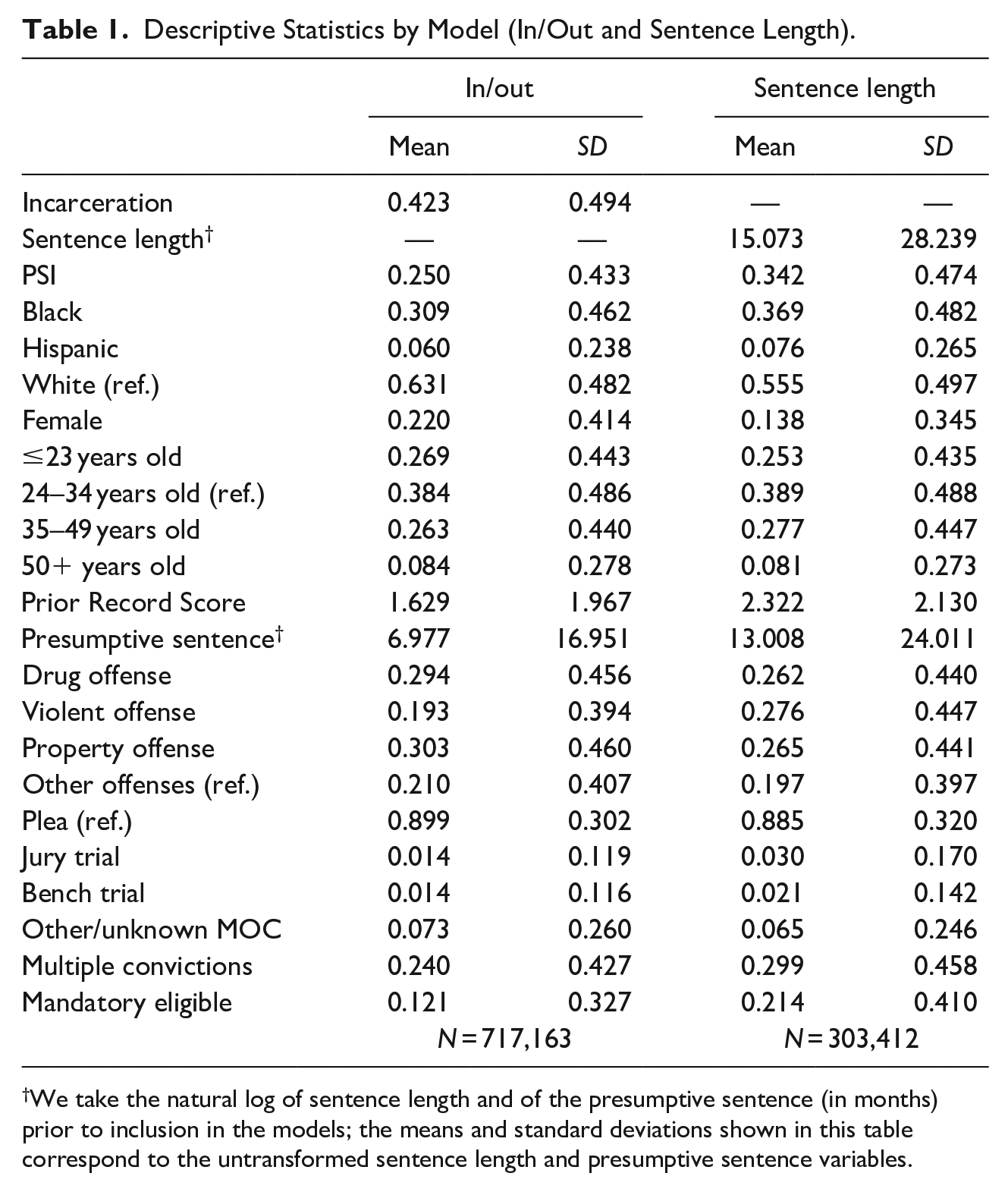
We take the natural log of sentence length and of the presumptive sentence (in months) prior to inclusion in the models; the means and standard deviations shown in this table correspond to the untransformed sentence length and presumptive sentence variables.
Turning to the racial/ethnic composition of the full study sample, Black and Hispanic defendants account for about 31% and 6% of cases, respectively. Fewer than 3% of all convictions are obtained via bench or jury trial, while just about 90% of all convictions were the result of a plea. This stark difference highlights the potential importance of the information contained in a PSI, as the overwhelming majority of cases do not make it to trial where the judge would be presented with detailed information about the offense, defendant, and harm to victims. As such, in many cases the PSI likely provides the most information that the judge will be exposed to prior to sentencing.
Among those sentenced to incarceration, PSIs were completed in 34% of cases. This comparatively larger percentage may reflect judges’ desire for more information before deciding to sentence a defendant to confinement as opposed to a less punitive sanction. It could also reflect utilitarian concerns related to the defendant’s supervision and appropriate use of correctional resources, as PSIs are often used in institutional settings to inform decisions regarding initial custody level, program placement, and treatment planning (Spohn, 2009). The average incarceration length is around 15 months, though it is important to note that this average is skewed by a relatively small number of cases receiving particularly long sentences. The median incarceration length is 6 months. Black and Hispanic defendants account for a slightly larger proportion of the subsample sentenced to incarceration compared to the overall sample. Black and Hispanic defendants account for about 37% and 8% of those sentenced to incarceration, respectively. Among those sentenced to incarceration, about 5% were convicted at trial, a slightly larger percentage than in the overall sample. As in the full sample, the vast majority resulted from a guilty plea.
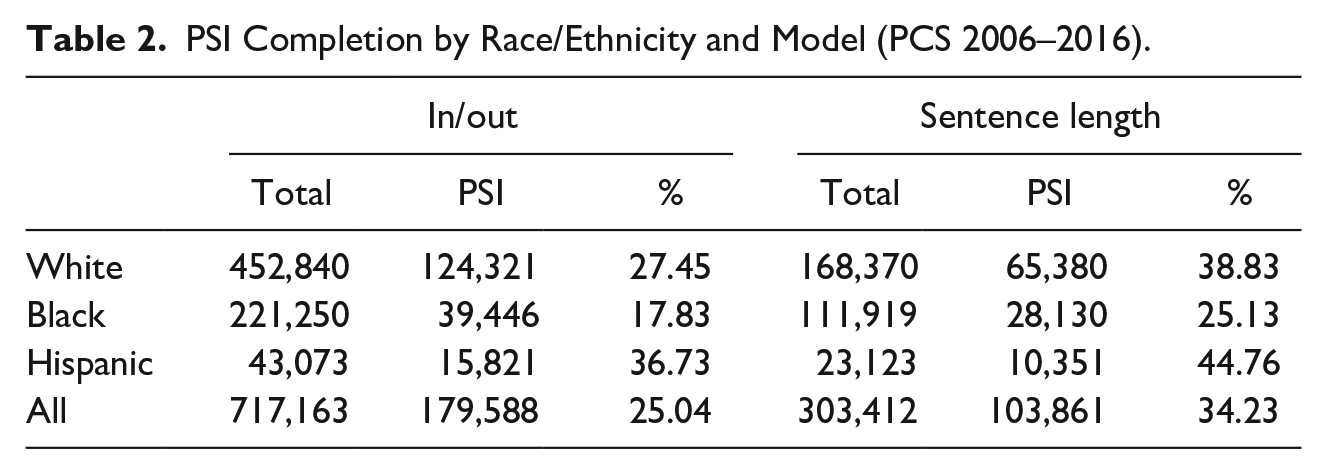
Table 2 shows the prevalence of PSI completion by defendant race/ethnicity. Just under 18% of Black defendants received a PSI, compared to 37% of Hispanic defendants and 27% of white defendants. 9 Among those sentenced to incarceration, a larger percentage of defendants in each racial/ethnic group received a PSI than in the overall sample. However, the percentage of Black defendants sentenced to incarceration who received a PSI (25%) is still smaller than the percentage of white defendants that received a PSI in the overall sample (27%). Among Hispanic defendants sentenced to incarceration, nearly 45% received a PSI, as did 39% of white defendants sentenced to incarceration.
PSI Completion by Race/Ethnicity and Model (PCS 2006–2016).
Multivariate Analysis
Table 3 presents the results of the logistic regression analysis of the incarceration (in/out) decision and the OLS regression model of sentence length, respectively. For each outcome, we will first review the main effects of race/ethnicity and PSI completion before moving on to discuss the interaction effects. First, consistent with past research on racial/ethnic disparities in Pennsylvania sentencing, Black and Hispanic defendants are significantly more likely to be incarcerated than white defendants (Ulmer et al., 2016). Relative to white defendants, the odds of receiving an incarceration sentence are about 33% higher for Black defendants (b = 0.288, p < .001) and 29.5% higher for Hispanic defendants (b = 0.259, p < .001). Second, PSI completion is significantly associated with a substantial increase in the odds of incarceration. Specifically, the odds of being sentenced to incarceration are about 87% higher for those who received a PSI compared to those cases for which a PSI was not completed (b = 0.626, p < .001). This is a substantial effect size, especially when considering that there are variables included that account for offender criminal history and the presumptive sentence, which factors in the severity of the current offense.
Logistic Regression of Incarceration and OLS Regression of Sentence Length.
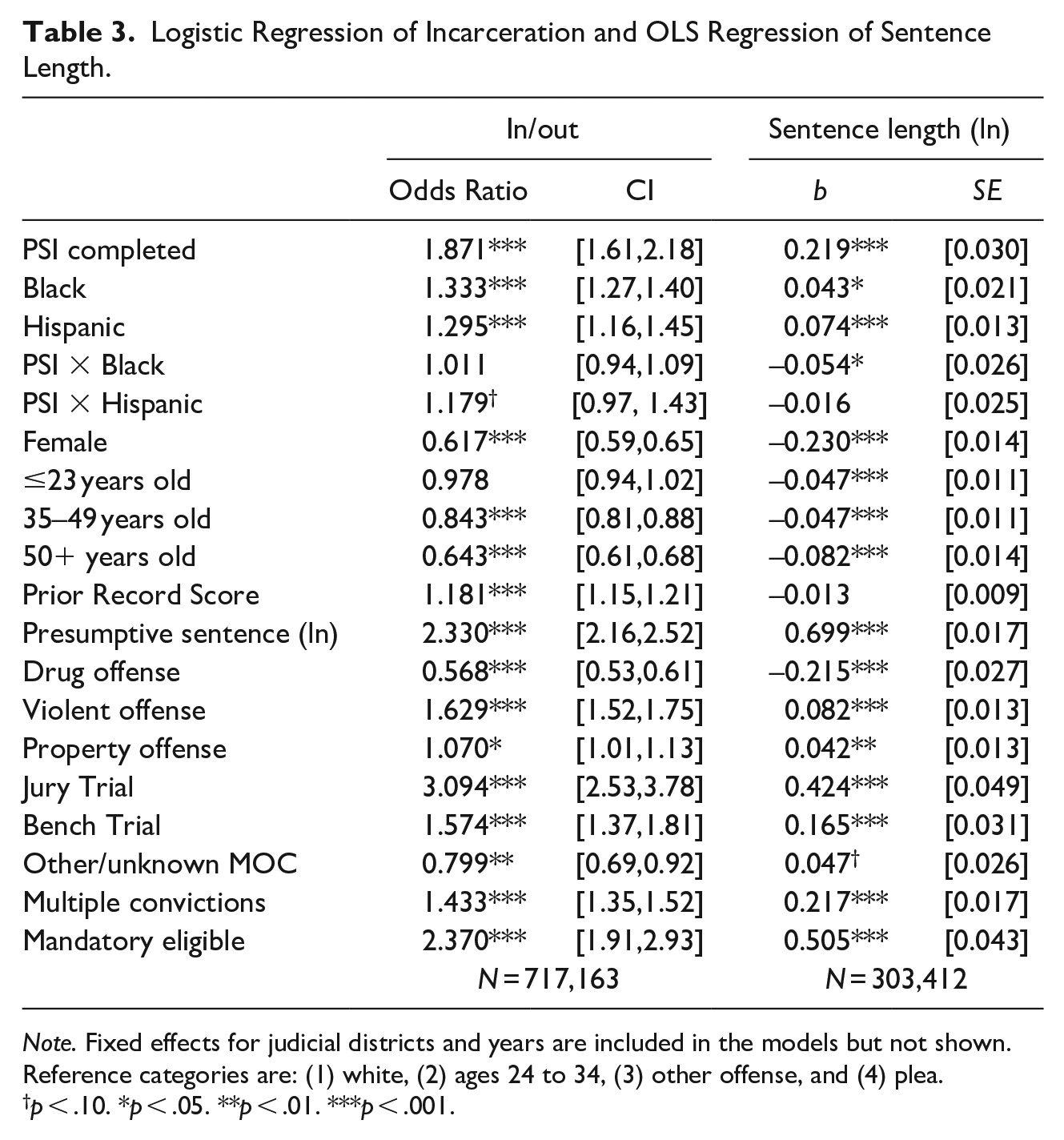
Note. Fixed effects for judicial districts and years are included in the models but not shown. Reference categories are: (1) white, (2) ages 24 to 34, (3) other offense, and (4) plea.
p < .10. *p < .05. **p < .01. ***p < .001.
Turning now to the interaction effects, the interaction terms between PSI and defendant race/ethnicity yield mixed results. The interaction term for Black defendants and PSI completion is not statistically significant: the odds of incarceration do not differ significantly between Black defendants who received a PSI and White defendants who received a PSI (b = 0.011, p = .762). Put differently, the impact of having a PSI on the odds of incarceration does not differ significantly between Black and white defendants. The interaction term for Hispanic defendants and PSI completion is marginally significant (b = 0.163, p < .10). This suggests that PSI completion may widen the Hispanic-white disparity in the odds of incarceration, however, this finding should be interpreted with caution given its marginal significance.
To illustrate these results, Figure 1 depicts the predicted probabilities of incarceration by PSI completion and defendant race/ethnicity based on the model in Table 3, with all other predictors held at their means. There are two points worth noting. First, PSI completion is associated with a substantial increase in the predicted probability of incarceration across all three racial/ethnic groups. Second, Black and Hispanic defendants have higher predicted probabilities of incarceration than White defendants regardless of whether a PSI was or was not completed. Put another way, racial/ethnic disparities in incarceration persist regardless of PSI completion, though in some instances the magnitude of this disparity may change slightly. The interaction effects can be seen in the difference between the predicted probabilities for each racial/ethnic group. Across all three groups, the predicted probability of incarceration is greater for defendants with a PSI versus without, however, the slope of this increase is slightly steeper for Hispanic defendants than it is for white or Black defendants.
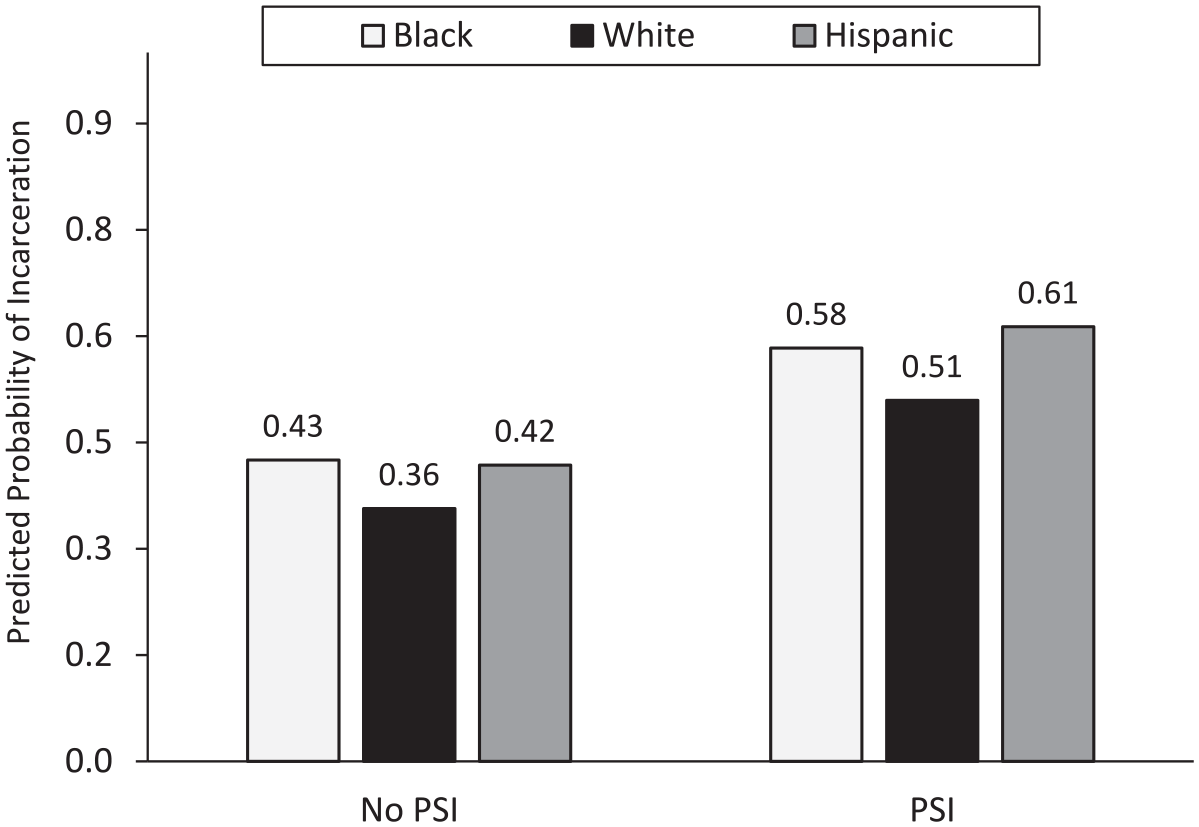
Predicted probability of incarceration for defendants with versus without a PSI, by defendant race/ethnicity.
Turning now to the sentence length model and looking first at the main effects of race/ethnicity and PSI, as was the case with the incarceration decision model, Black and Hispanic defendants receive significantly longer sentences than white defendants. On average, Black defendants receive sentences that are 4.4% longer than white defendants (b = 0.043, p < .05), while Hispanic defendants receive sentences that are about 7.7% longer (b = 0.074, p < .01). Just as PSI completion was associated with a substantial increase in the odds of incarceration, PSI completion is also associated with a sizeable increase in sentence length. PSI completion was associated with a 24.5% increase in sentence length (b = 0.219, p < .01). Turning now to the interaction effects, the coefficient for the interaction term for Black defendants and PSI completion is negative and statistically significant (b = −0.054, p < .05). This suggests that having a PSI may decrease the Black-white disparity in sentence length. However, the size of the coefficient is quite small, which suggests that this interaction may not be substantively significant. The coefficient for the PSI × Hispanic interaction term is not statistically significant (b = −0.016, p < .538).
Figure 2 displays predicted sentence lengths (in months) by race/ethnicity based on the sentence length model in Table 3. As was seen in Table 3, among those sentenced to incarceration, PSI completion is associated with longer sentence lengths, independent of defendant race/ethnicity, and Black and Hispanic defendants, for the most part, receive more severe sentences than their white counterparts. The significant PSI × Black interaction term can be seen in the differences in the predicted sentence lengths for Black and white defendants who received a PSI and those who did not. The predicted sentence lengths for Black and white defendants who received PSIs are nearly identical, virtually eliminating the disparity between the two groups seen for those who did not receive a PSI.
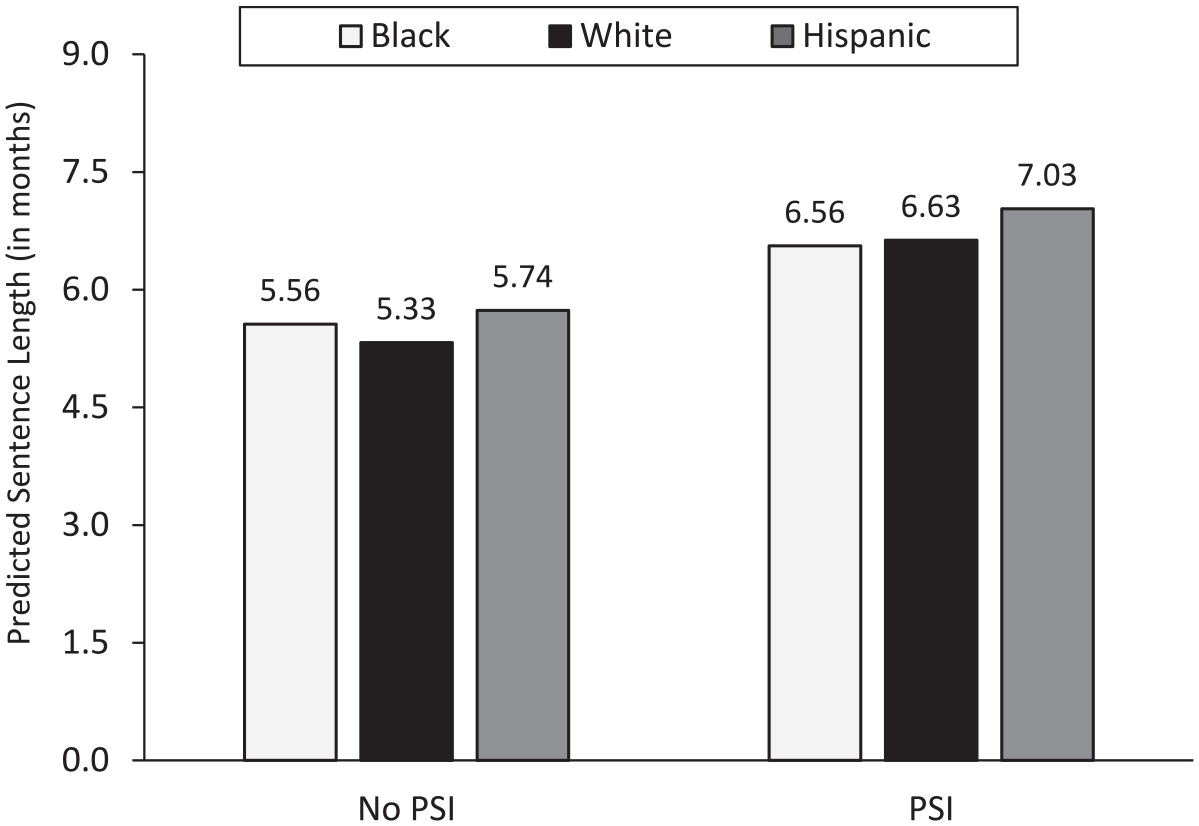
Predicted sentence length (in months) for defendants with versus without a PSI, by defendant race/ethnicity.
Discussion
In light of recent efforts to better understand where and under what conditions racial/ethnic disparities in court processes are most pronounced, the present study examined whether racial/ethnic disparities in sentencing are conditioned by PSI completion. Understanding the role that PSIs play in sentencing is important, not only because of their potential influence on court actor decision-making and sentencing decisions, but also because of the potential for PSIs to have downstream consequences. PSIs follow individuals throughout their criminal justice system involvement and are made available to the state department of corrections, as well as probation and parole departments. Despite their potential importance, the role that PSIs may play in criminal justice decision-making has been largely neglected beyond a few narrow contexts. This study builds on existing research on PSIs in four key ways: (1) by assessing how PSI completion conditions racial/ethnic disparities in sentencing outcomes, (2) by including cases that did not receive a PSI to serve as a point of comparison, (3) by examining PSI use using data that covers an entire state over an eleven-year period, and (4) by highlighting a key point of distinction between causal attribution theory and the focal concerns perspective: the role of information in sentencing.
Informed by past research on judicial decision-making, we hypothesized two ways that PSIs could be associated with racial/ethnic disparities in sentencing. Drawing on causal attribution theory, we hypothesized that racial/ethnic disparities might be less pronounced among cases that received a PSI. Conversely, drawing on the focal concerns perspective, we hypothesized that racial/ethnic disparities might be more pronounced among cases with PSIs. On this point, the present analysis produced mixed findings. Regarding the in/out decision, there was little evidence to suggest that PSI completion conditioned racial/ethnic disparities beyond a marginally significant positive interaction for Hispanic defendants with a PSI completed. Regarding the sentence length decision, there was a statistically significant but small negative interaction for Black defendants with a PSI. While these mixed results lead us to conclude that results of the present analysis do not provide consistent support for either hypothesis, the implications of these two findings each warrant discussion.
While the interaction found in the incarceration analysis could suggest that PSI completion may exacerbate Hispanic-white disparities, this finding should be interpreted with caution because this association was only marginally significant with a large dataset. That is, we can be confident that the statistical power afforded by the large analytic sample would allow us to detect a strong interaction effect, if one existed. As such, we do not believe that this finding offers convincing evidence that PSIs condition Hispanic-white sentencing disparities. However, taken in the context of other findings, this result may speak to another substantive issue. The results of this analysis also suggest that Hispanic-white incarceration disparities are nearly as large as Black-white disparities, while Hispanic-white sentence length disparities are even more pronounced. Taken together, these findings suggest that Hispanic defendants in Pennsylvania may be subject to particularly punitive treatment at sentencing. One possibility is that stereotypes about Hispanic criminality may be particularly salient among Pennsylvania judges and other court decision-makers, leading them to perceive Hispanic defendants as especially dangerous or culpable for their crimes (Steffensmeier et al., 1998). While beyond the scope of the present study, future research should investigate this possibility, as well as other factors that may contribute to the relatively severe sentences imposed on Hispanic defendants in Pennsylvania.
The small but significant interaction found in the sentence length analysis suggests that PSI completion may reduce sentence length disparities between Black and white defendants. As previously noted, the disparity between Black and white defendants in predicted sentence length is not only reduced, but virtually eliminated among those who received a PSI. We are hesitant to present this finding as support for Albonetti’s (1991) causal attribution theory, as the same reduction is not seen for Black-white disparities in incarceration or for Hispanic-white disparities in either outcome. However, this could suggest that under certain circumstances, the information provided in a PSI may counteract the influence of other factors that give rise to racial/ethnic disparities. Because the sentence length decision only applies to those who judges have decided to confine, it is possible that judges use or weigh the information in the PSI differently at this stage than at the decision to incarcerate, where concerns about community protection may loom especially large.
Interestingly, there were marked and substantively significant differences in sentence severity depending on whether a PSI was completed. This difference is seen across—and largely felt equally by—defendants in all three racial/ethnic groups. This finding appears to suggest that PSIs do not necessarily create unwarranted racial/ethnic disparities in sentencing, and that the information reported in the PSIs by the probation officer or how the information is used by the judge at sentencing does not exacerbate existing racial/ethnic disparities. Had we not relied on a dataset that includes cases with and without PSIs, we would not have been able to identify the marked increase in sentencing severity associated with PSI completion. Because our analyzes included both county and time fixed-effects, this suggests that this relationship is prevalent across state courts and over a relatively long period of time. This highlights the salience of PSIs in the sentencing process across time and place. We hope that the present analysis demonstrates the value of examining data with variation in PSI use and encourage others to further investigate the nature of this association and the role of PSIs in criminal justice decision-making more broadly.
Within these models, case characteristics typically predictive of increased sentencing severity such as offense type, offense severity, mode of conviction, and criminal history are controlled for. This suggests that the information within the PSI, such as offender social history, residential history, work history, marital status, family information, and a victim impact statement—all of which are not available in PCS data—could be influencing judicial decisions. As is often the case with large administrative datasets, there are no variables in the PCS data that reflect defendant socioeconomic status (SES), which has been hypothesized to influence sentencing severity (Zatz, 2000). Some of the information included in PSIs, such as social history, work history, and residential history, could indicate SES and potentially influence sentencing decisions. Moreover, any “bad facts” presented to the judge about the defendant and offense in the PSI could increase their perceived culpability or blameworthiness (Kramer & Ulmer, 2009) without increasing racial disparities. Especially when considering victim impact statements, information that evokes emotional responses from judges might have a positive effect on sentencing severity independent of defendant race/ethnicity. To explore such possibilities further, more information on the content of PSIs beyond what is available in PCS data is needed. This is also an area where qualitative research could provide valuable insight into how court actors use and think about PSIs.
It should not be forgotten that there were significant racial/ethnic disparities observed across models: compared to their white counterparts, Black and Hispanic defendants have significantly higher odds of incarceration and receive longer sentences when incarceration is imposed. This is consistent with a large body of sentencing literature that indicates racial/ethnic minority defendants receive more severe sentences than white defendants. Scholars should continue to investigate when and where these disparities can enter the sentencing process. Whether PSI completion is associated with the use (or disuse) of more rehabilitative sanctions such as probation and intermediate punishments may be a particularly promising avenue for future research to consider.
There are two significant limitations to the present study that should be noted, and that future research should aim to address. First, this study relies on a crude measure of PSI completion that is available in the PCS data. Although certain types of content, such as victim impact statements, must be included in PSIs and case law provides some general guidance regarding information to include in a PSI, PSIs in Pennsylvania are not standardized and most elements (including probation officers’ sentence recommendations) are permitted, but not required. Given that PSIs likely vary in terms of their length and scope, as well as the type and quality of information included, the lack of direct measures of PSI content or structure is a significant limitation of the present analysis. Future research should aim to incorporate more detailed or precise measures of PSI content. Exploring variation in PSI use and content across courts is another promising avenue for future research.
Second, PSIs likely contain several important pieces of information that are often cited in sentencing research as key omitted variables, such as defendant SES, the extent and nature of harm to victims, obligations to family and family status characteristics (e.g., number of dependents, marital status, minor children), and other social factors (e.g., treatment needs, community ties). Thus, it is possible that observed differences in outcomes between cases with a PSI versus those without may reflect the influence of one or more of these otherwise unmeasured factors. Because the PCS does not collect such information, we cannot determine the independent effect of having a PSI net of such factors by controlling for them in a model. This is a significant limitation of the present analysis. A final concern is the lack of direct indicators for the theorized process described by the focal concerns perspective. Unfortunately, as Lynch (2019) recently noted, much of the sentencing literature shares this limitation. Thus, while the focal concerns perspective is useful for conceptualizing decision-making at sentencing, it is important to recognize the limits of its ability to provide direct and testable research propositions (Hartley et al., 2007; Lynch, 2019).
The multi-faceted role and potential for long-lasting influence of PSIs across stages of the criminal justice system suggests a need for researchers to develop a more comprehensive understanding of the impact of PSIs on the sentencing process and beyond. This need becomes clearer still when one considers that such reports are subjected to limited appellate scrutiny. In Pennsylvania, the default assumption that PSIs are compiled effectively by probation officers and are carefully considered by judges at sentencing is firmly established in case law (see e.g., Commonwealth v. Devers, 1988). Moreover, under Pennsylvania Criminal Procedure, Rule 703 explicitly spells out the rights of various criminal justice officials to have access to the information contained in the PSI throughout one’s duration of contact with the justice system, yet does not establish any such right for individuals themselves. As such, it is often difficult for one to gain access to or challenge inaccuracies in the content of their PSI at any point post-sentencing, even as it is used to make consequential decisions about their life and liberty. Little known, yet highly consequential policy prescriptions such as these demonstrate how important it is for researchers, scholars, and practitioners to better understand PSIs and the implications associated with their use.
Footnotes
Declaration of Conflicting Interests
The author(s) declared no potential conflicts of interest with respect to the research, authorship, and/or publication of this article.
Funding
The author(s) received no financial support for the research, authorship, and/or publication of this article.
