




Abstract
Pretrial detention, the use of detention to ensure youth attend court hearings, makes up 75% of all juvenile detention admissions. Research investigating the impact of detainment on youth outcomes is limited and, when available, does not distinguish between different uses of detention. Consequently, little is known about the effects of detaining youth for this purpose. The current study examines the impact of pretrial detention on more than 46,000 juvenile cases across 32 jurisdictions. Using propensity score matching, analyses found that pretrial detention was associated with a 33% increase in felony recidivism and 11% increase in misdemeanor recidivism within one year, and a small effect for length of stay (1% increased risk per day). The analyses also revealed an interaction effect with prior criminal history indicating that this relationship shifts once a youth has a number of previous criminal filings.
Introduction
The detainment of youth in local facilities for criminal offending has dropped by roughly half over the last 20 years (Puzzanchera, 2009). This drop reflects significant policy changes in the way juvenile detention is used, with increasingly stringent criteria regarding the types of offenses and criminal history that make youth eligible for placement (Annie E. Casey Foundation, 2009a). Decreases in detention have been further accelerated by the development of alternative sanctions for court dispositions (e.g., day programs, electronic home monitoring, and community programs) and violations of court orders (Hamilton et al., 2007). However, pretrial detainment has remained fairly steady despite targeted national efforts to reduce use (Annie E. Casey Foundation, 2009a). With other detention uses decreasing, pretrial detainment now makes up 75% of all local detention encounters for juveniles (U.S. Department of Justice et al., 2017). The pretrial use of detention likely persists because courts view confinement as a measure to ensure accountability and reduce failures to appear (Walker & Bishop, 2016). However, little is known about the individual effects of detaining youth prior to trial and whether relatively short-term detention affects longer term youth and community outcomes. Most past detention studies, and the estimated effects of detention on recidivism found in those studies, broadly see detention as “any detention time” and do not distinguish pretrial from other types of detention exposure when estimating the effect of detention on recidivism (Dowden & Andrews, 2000; Loughran et al., 2009). Given its prevalence, disaggregating the effect of pretrial detention is important as it is a distinct function of a criminal justice response and should be studied independently of other uses of detention.
Pretrial detention plays a complicated and contested role in the continuum of justice interventions. The criteria for determining whether a juvenile defendant should be detained pretrial is at the discretion of individual courts and varies widely, as does the allowability of juvenile cash bail (National Juvenile Defender Center, 2019). The use of pretrial detention mostly operates in a theoretical vacuum as most research on detention focuses on the use of detention as a deterrent (Aizer & Doyle, 2015; Pyrooz et al., 2017) and not as a method to ensure legal compliance. Activist efforts to reduce pretrial detention through the use of risk tools and alternative monitoring methods tend to cite the potential harms of confinement (Annie E Casey Foundation, 2009b, 2017), although these are often based on literature studying longer term facilities or are extrapolated from the literature on trauma, peer contagion, and labeling theory (Dishion & Dodge, 2005; Langton et al., 2012; Schnittker & John, 2007; Schwalbe et al., 2013). Meanwhile, there is compelling evidence that communities can drastically reduce the rate of juvenile detention use, presumably also including pretrial detention, with no attendant increases in juvenile crime levels (Chief Justice Earl Warren Institute on Law and Social Policy, 2012; Stahlkopf et al., 2010). This suggests the presumed benefits of pretrial detention to address safety concerns are overestimated. Furthermore, the small but available literature demonstrates the role pretrial detention can play in deepening the negative collateral consequences of court involvement, including more severe sanctions, which appear to particularly affect racial and ethnic minorities (Armstrong & Rodriguez, 2005; Bishop & Frazier, 2000; Rodriguez, 2010; Secret & Johnson, 1997). As a result, any negative collateral effects of pretrial detention through higher numbers of filed petitions and home removal disproportionately impact minority groups (Rodriguez, 2010). Given the limited theoretical and empirical literature on juvenile pretrial detainment, we briefly review the relevant literature on juvenile detention overall and highlight findings of particular relevance for the likely impact of pretrial detention on youth recidivism.
Deterrence
The primary theoretical model guiding studies of the effects of detention is deterrence, which views detention as an individual behavior change tool within a utilitarian framework (specific deterrence) or as a community deterrent to crime with a focus on prevention (deterrence or general deterrence, Cook & Zarkin, 1985; Nagin & Weisburd, 2013). As there are no theoretical frameworks to guide research on the impact of pretrial detention separate from other types of juvenile detainment, we briefly review deterrence theory as the most developed area of scholarship. It is important to note, however, that most research in this area does not distinguish between pretrial and other uses of detention and there are likely to be meaningful differences in the way deterrence would be expected to operate among these different uses.
General deterrence describes the use of incarceration for the purpose of dissuading others in the community from committing crimes. It has been a focal point of study for decades and syntheses of this literature suggest the mere threat and severity of punishment is not sufficient to halt crime (Nagin & Weisburd, 2013). General deterrence was the primary theory guiding Levitt’s (1996, 1998) early studies of adult and juvenile incarceration in the mid-1990s which found that juvenile incarceration was related to lower juvenile crime but not adult crime. Work by Stahlkopf et al. (2010) cast further doubt on the effect of deterrence on community outcomes for juveniles. Their study compared juvenile imprisonment and juvenile arrests rates between California and Texas for the years 1995 through 2006. Both states saw decreases (−51%) in youth arrests over the 10-year time period despite different imprisonment patterns suggesting that the higher imprisonment rate in Texas did not accelerate reductions in recidivism. This body of research suggests that detention is unlikely to impact prevention of youth crime at a community level.
Specific deterrence describes the effect of incarceration on the individual who is apprehended. Some studies of deterrence with adult populations show modest reductions in crime due to “swift and certain” approaches to arrest following crime or violations (Braga & Weisburd, 2012). However, these models have not been replicated for juveniles and more recent research finds that specific deterrence has mixed effects. Using longitudinal data set from the Pathways to Desistance Study, Loughran et al. (2012) found that youth with high rates of offenses viewed detention as less onerous and the rewards from crime more beneficial than youth with relatively low rates of offenses. They further identified heterogeneity in the way youth responded to the perceived threat of detention that made “expecting a uniform effect of deterrence in serious adolescent offenders . . . unrealistic” (Loughran et al., 2012, p. 19). In sum, if juvenile pretrial detention has any crime suppression effects it is unlikely that it would be due to deterrence mechanisms given the observed weak or negative associations between specific deterrence and general deterrence on general juvenile crime.
Iatrogenic Effects: Contagion, Stigma, and Abuse
Peer contagion, stigma, and facility disorganization theories are more empirically supported than deterrence in explaining how detention affects youth recidivism and are specifically used to explain observed increases in delinquent behavior following time spent in congregate care or other group programming (Dishion & Dodge, 2005; Gifford-Smith et al., 2005; Huefner & Ringle, 2012). As with deterrence research, studies in these areas to date have not distinguished between pretrial detention and court-ordered detention as a sanction. It is possible that these influences would function differently by type of detention use. Peer contagion describes a process wherein charismatic and more delinquent-involved youth influence less delinquent youth to engage in risky activities (Bernburg et al., 2006; Dishion & McCord, 1999). The strongest support for peer contagion comes from community and school settings (Cho et al., 2005; Dishion & Tipsord, 2011); however, a number of early studies found that youth placed in correctional settings develop friend networks that increase knowledge of new forms of crime (Andrews, 1980; Bayer et al., 2004) and a more recent study found that group residential care was associated with increases in the number of delinquent peers compared to community treatment (Leve & Chamberlain, 2005).
The stigma from a stay in detention setting is another peer or socially mediated factor that is expected to increase the likelihood of re-offense. Stigma is theorized to operate through the social networks of the detained child’s community as parents are presumed to actively steer their children away from socializing with peers who are considered delinquent (Schwalbe et al., 2013). Youth labeled as delinquent then tend to socialize with each other as they are excluded or feel judged by these influential social forces. In a study of youth in the country of Jordan, Schwalbe and colleagues (2013) found that parents of other children in the community were more likely to report a willingness to accept a justice-involved youth as a member of their child’s school if the youth had successfully participated in one of three diversion program types rather than detention.
Finally, a robust iatrogenic effect of congregate care is the possible exposure to abuse from staff or other youth, particularly in settings with poor regulation and oversight (Friedman et al., 2006). In long-term settings, Dierkhising et al. (2014) found a very high rate of direct or witnessed abuse during the period of incarceration. Nearly 80% of youth directly experienced some form of abuse, most often from peers, and these experiences were linked to higher incidences of mental health need and recidivism post incarceration (for example, Delisi et al. (2010)). There is no comparable literature examining the incidences of victimization for short-term detention but similarities in function and operations to long-term facilities suggests some risk for direct harm through victimization is likely.
Previous Controlled Studies of Juvenile Detention
There are surprisingly few studies examining the specific effects of local detention stays on youth recidivism. Local detention and longer term institutions are often collapsed in studies of youth incarceration despite differences in purpose and environment. In a review of more than 1,000 studies using search terms designed to identify empirically controlled studies of incarceration, the authors found only two studies that examined the impact of youth detainment in facilities designed for short-term stays on individual youth outcomes. Using data from cohorts of eighth graders over 16 years, Aizer and Doyle (2015) found that, controlling for available baseline factors, youth who experienced detention were 9% less likely than other justice-involved youth to graduate high school and 16% more likely to be incarcerated as an adult. In a study of gang membership, Pyrooz et al. (2017) found that detention stays were a contributing factor in strengthening gang affiliations in one study site, suggesting an iatrogenic effect nested within location. As noted, neither study examined the likelihood of re-offense as a primary outcome or distinguished pretrial detention from other types of stays. This is a significant limitation of previous literature that our study attempts to address as the population of youth who experience pretrial detention is likely to include youth with little previous criminal history as compared with adjudicated youth who tend to have longer criminal histories and more complex needs (Cauffman et al., 1998; Ford et al., 2013; Teplin et al., 2002). The present study contributes to this literature by focusing on the effect of pretrial detention, as opposed to detention in general, on youth recidivism. In addition to the focus on pretrial detention, the approach used in our study advances the field by controlling for individual and placement heterogeneity.
Method
Sample and Data Sources
Data for this study takes advantage of an administrative data set developed to study a juvenile detention reduction initiative that was implemented in stages over 13 years; a total of eight of the 32 total court jurisdictions (either a county or group of counties) received funds/program efforts to reduce detention. These eight jurisdictions started program funding in 2003 (one court), 2004 (two courts), 2007 (one court), 2009 (one court), 2010 (one court), 2012 (one court), and 2013 (one court). Youth with any filed offense in juvenile court for each of these courts were gathered over 5 years: 2 years prior and 3 years post start-up of program efforts. For example, if a jurisdiction started their program in 2010, records of juveniles were gathered in 2008, 2009 (preintervention) and in 2010–2012 (postprogram). The nonintervention court jurisdictions (n = 24) were assigned to one of the eight intervention courts time periods as controls (3 × 8 = 24 control jurisdictions). Juvenile filings were gathered for 5 years in the same manner as each intervention court (i.e., 2 years prior to start-year and then 3 years post including the start-year). This method insured there were control jurisdictions captured during the same temporal periods as the intervention courts. In total, the data represent 32 court jurisdictions in a northwest state from January 2002 through December 2015, and a total base sample of court filings of 46,124.
Detention centers included in the sample were all similar in design and function as security-focused institutions with pod-level residential units and centralized detention officers who acted primarily as surveillance and control staff. Although the data were initially collected for a different purpose (to evaluate a systems level initiative), it is well-suited for our analyses as the emphasis on reducing juvenile detention ensured youth with similar risk levels received different levels of detention exposure across counties. The resulting sample was primarily male (73%) and had a mean age at first offense of about 15.1 years. Youth race/ethnicity included White-non-Latinx (68%), Black (9%), Latinx (16%), American Indian/Alaskan Native (4%), Asian (3%), and Pacific Islander (0.003%).
For all analyses, cases with long-term sentence disposition attached to their qualifying offense (n = 1,153) were removed as these youth did not have the same available time in the community to reoffend. This resulted in a final analytic sample size of 44,971.
Measures
Qualifying offense (QO) and court filings
Each youth’s first observed offense in the sampled 5-year period was designated as a QO from which to gauge priors and 1-year recidivism. Offenses were measured as recorded court filing. A filing indicates the prosecutor judged the event to meet the minimal standard of probable cause and is thus a more reliable measure than referral (in which referred offenses may not meet probable cause) or dispositions/sentences (as courts may vary in their use of diversion and other court policies that affect how many youth are formally sentenced). Arrests that do not make it to the filing stage indicate either a lack of evidence or the prosecutors’ decision to not pursue the case due to low interest from the plaintiff or, in some counties, diversion strategies for low level offenses.
Criminal history and recidivism
Criminal history and recidivism were defined as incidences of court filings occurring before or after the youth’s QO as defined above. Recidivism data were provided as two separate, binary variables indicating whether the youths had any misdemeanor filings (0/1) or felony filings (0/1) within 12 months from the QO start date; probation violations were not included in recidivism. Recidivism included any adult court filings during the follow up period. The study was limited to 12 months due to the sampling frame constructed for the original study focused on assessing the effects of a system-level intervention.
Offense seriousness
Offense severity was measured using a continuous law severity scale (−1 to 142) provided by the administrative data set, ranging from status offense (not included in our study) to class A felonies, including homicide. The offense seriousness was recorded for the QO only.
Demographics
Youth characteristics included information collected at the time of court filing including gender (male/female) race/ethnicity (captured in six categories collapsed to White-non Latinx/non-White-any), years of age at the QO (continuous), and age at first offense (continuous).
Pretrial detention
Whether a youth’s detainment was a pretrial stay had to be inferred from the dates of the QO and the dates the youth was detained. The distribution of days between QO and detention admission date was extremely right skewed with a median of 5 days from QO to detention admission, a mean of 65 days and a range of 0–365 days (observations ended at 365 days). It was assumed that youth detained immediately after the QO were detained in response to the QO and thus prior to court hearings rather than a probation violation or as a sentence following court hearings. Over half (51%) of the detained sample was placed in detention within 5 days of the QO and only 800 cases (3% more) were gained by extending the lapsed time to 10 days. Given this distribution and the logic of how soon a detention event would likely follow the offense date, we counted any detention admissions occurring no longer than 7 days after the offense date as a pretrial detention admission.
Analytic Models
Preliminary analyses were performed in SPSS 21.0 and STATA 14.0 to examine the distribution of variables. Our outcome variables are dichotomous, hence we fit logistic models, and the results are reported in terms of covariate adjusted odds ratios. Given the nested structure (within court jurisdictions’) we calculated interclass correlation coefficients (ICC) for court jurisdictions recidivism to assess whether the degree of recidivism might be attributable to court-level factors. We calculated the ICC using the covariance parameter matrix output from SPSS mixed models (between group variance for court/between group + residual/within group variance) = (.000008/.000008/.25) = .0003. The court jurisdiction level variance fell well below a level that would indicate a need to adjust standard errors to control for clustering (Koo & Li, 2016). As a result, we deemed it unnecessary to address any court level factors as predictors and used nonhierarchical regression-based analyses to test effects. We subsequently controlled for fixed effects of court jurisdictions and observed no major changes in our results and thus do not report these findings.
Initial descriptives revealed that baseline covariates were significantly imbalanced among youth with and without pretrial detention (Table 1). Patterns of differences showed youth with pretrial detention to have the highest baseline risk factors for recidivism including more serious QOs, earlier age at QO, and prior offenses for both misdemeanors and felonies. Youth with pretrial detention were also more likely to be youth of color and male. The significant imbalance in the characteristics of youth pretrial detained and nondetained for pretrial indicated the need to statistically adjust the sample to create a balanced comparison group. We examined the overlap in distributions for prior cases between the detention status groups to assess whether there was sufficient overlap to support matching. Figure 1 shows the distributions of prior cases for pretrial and no pretrial groups, indicating a high degree of overlap which supported the use of matching methods to facilitate comparison between groups. Overlap on other variables also suggested use of matching methods would be appropriate.
Baseline Variables in Unmatched and Matched Samples.
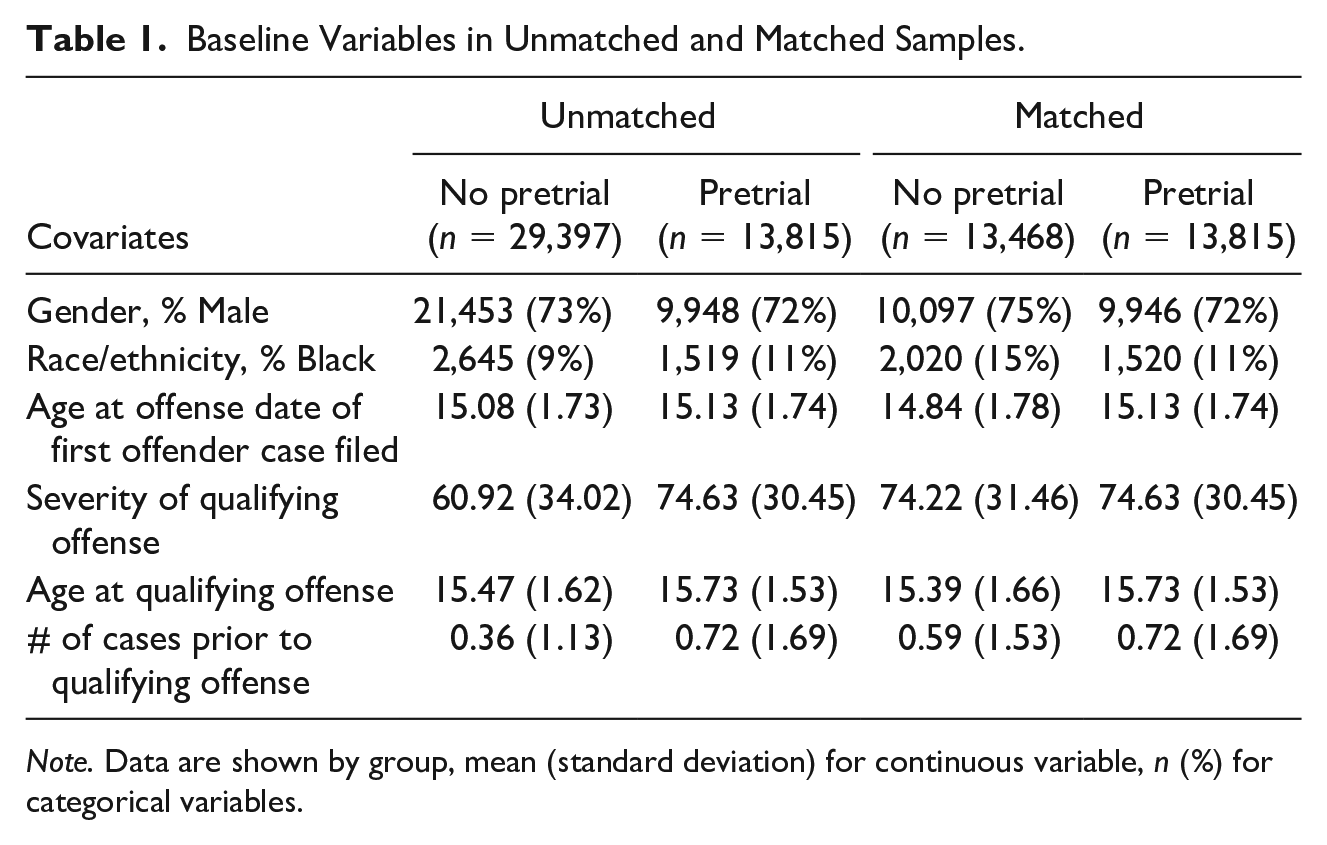
Note. Data are shown by group, mean (standard deviation) for continuous variable, n (%) for categorical variables.
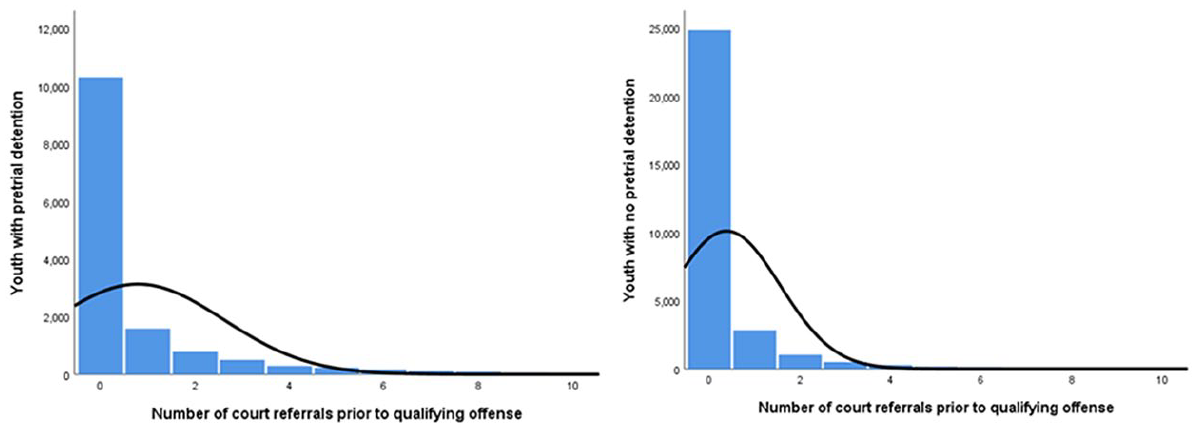
Distribution of prior court referrals in youth with and without pretrial detention.
We conducted matching using both propensity scores and coarsened exact matching (CEM) to compare balance and provide a check against potentially biased postmatched samples. Both statistical methods are used to balance comparison groups on confounding variables to mimic the conditions of random assignment in observational studies. Because critiques of both methods are cited in the literature, we used both methods to examine the consistency of results (Iacus et al., 2012; Rosenbaum & Rubin, 1983). We present the results from the propensity score method supplemented by the coarsened matching approach.
A propensity score is the probability of group assignment, in this case pretrial detention, conditional on observed baseline covariates (Rosenbaum & Rubin, 1983). In observational studies, the true propensity is not known and can only be estimated by the available data. Similar to randomized trials, residual differences may still exist in the observed baseline covariates between groups after matching and regression adjustment is commonly used to increase precision (Lunceford & Davidian, 2004). All of the baseline covariates available to our study (Table 2), including age at first offense, number of prior offenses, severity of quality offense, age at QO, gender (male/female) and race (non-White, White), were used to develop a matched data set using nearest neighbor matching. The intervention variable used as the dependent variable in the logistic model was whether a youth experienced pretrial detention. Nearest neighbor matching ensures that all matches are within an acceptable distance, or probability, from the intervention group. Following recommendations for setting the distance (caliper) for acceptable matches (Austin, 2011), we computed 0.20 of the standard deviation of the logit of the propensity score (0.16), which resulted in a caliper of 0.03. Matching was used rather than covariate adjustment given some evidence that matching provides better balance (Austin, 2011).
Models for Felony Recidivism.
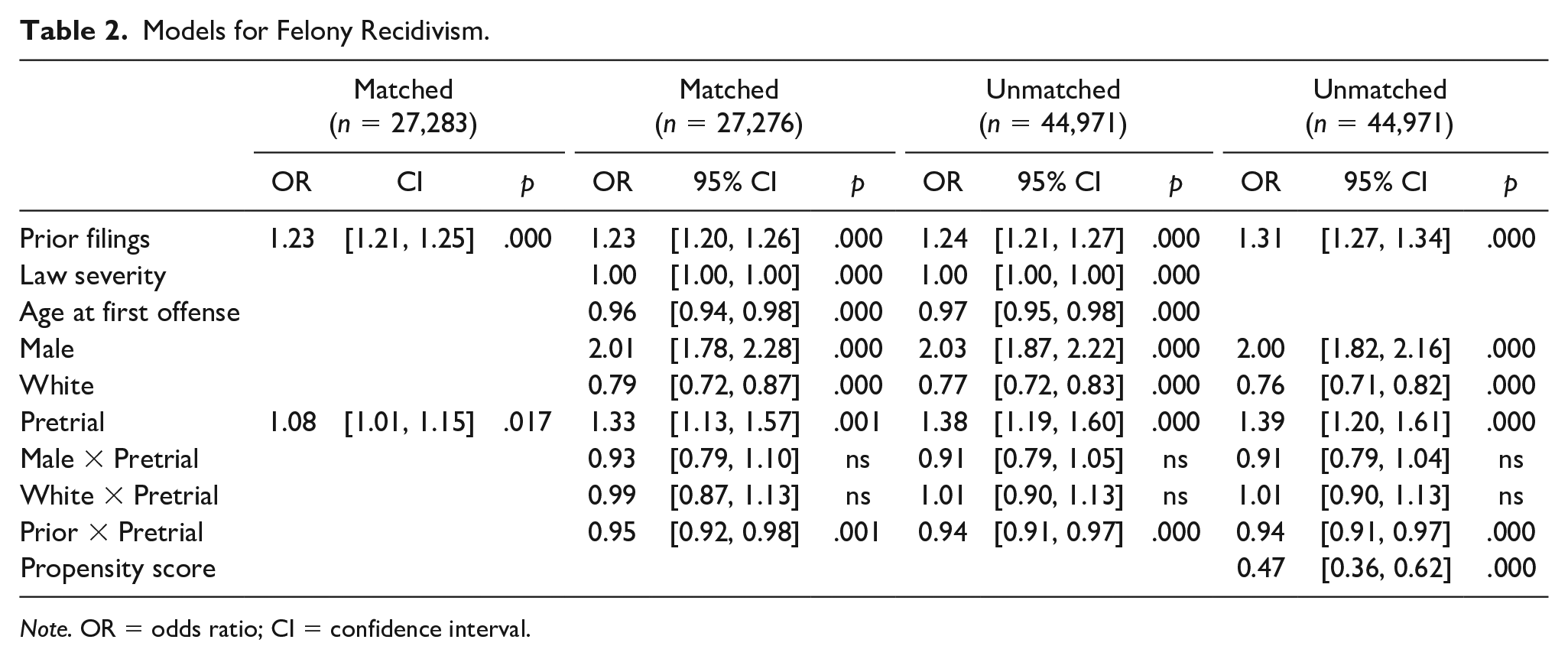
Note. OR = odds ratio; CI = confidence interval.
The resulting propensity score-matched database included n = 27,276 observations. The predicted probability of being placed in detention pretrial was balanced for pretrial, m = 0.36 or no pretrial detention, m = 0.35. Balance was also determined by observing the mean distributions of all the baseline covariates between those with pretrial and no pretrial detention. Testing for statistical significance was not used given our large sample, which would have produced significant results with very low effect sizes, and is discouraged as a test for balance (Austin, 2011). We also ran a number of other propensity score models to see whether precision could be improved. These additional approaches did not improve balance; consequently, the original model was retained for the study analyses. We additionally ran logistic regression models with and without covariates as a sensitivity check on results and report these in the tables of model estimates.
As another sensitivity check, we ran CEM using the same covariates (Table 1). Coarsened exact matching uses groups of covariate values, which retains more cases for matching and uses the noncoarsened values of the covariates to adjust for resulting differences due to the matching on less specific values (Blackwell et al., 2009). Mean differences after matching across the covariates were minimal and percent balance improvement was between 90% and 100% for all matched covariates; the largest mean difference after matching was for the severity of the QO (75.06 pretrial vs. 74.96 non-pretrial). All matched cases (n = 38,881) were used in running the coarsened results; covariates were added, mimicking the propensity score analyses, to adjust for remaining covariate differences.
Results
Felony Recidivism
Matched sample
Using the matched sample derived from the propensity score described above, n = 27,283, we conducted multivariate logistic regression models with pretrial detention predicting any new felony and any new misdemeanor recidivism, respectively. We added variables with statistically significant bivariate association with felony or misdemeanor outcomes as covariates in each of the respective models. Model 1 included only number of prior court filings and pretrial detention as predictors. Results indicated a 1.08 higher odds of felony recidivism associated with pretrial detention, p < .05. Model 2 included covariates with a significant relationship to felony recidivism and two-way interaction terms between pretrial detention and race (non-White referent), gender (female referent), and prior filings. Results indicated a 1.33 higher odds of felony recidivism associated with pretrial detention, p < .0001 and a significant interaction term for prior filings, odds ratio (OR) = 0.95, p < .0001. The interaction term indicated that pretrial detention was associated with higher felony recidivism for those with no or few priors, but as priors increased beyond four, youth with pretrial detention had very low or near 1.0 odds of felony recidivism compared with no pretrial detention. No significant interactions were found for gender or race with pretrial detention.
Full sample
Using the full sample with regression adjustment, n = 44,971, we entered baseline covariates significantly related to recidivism and selected to reduce collinearity (prior cases, law severity, and age at offense) in Model 3 and removed these controls, retaining only interaction terms and including a propensity adjustment score in Model 4. In Model 3, pretrial detention was positively associated with a 1.38 higher odds of a felony offense, p < .0001 and the interaction term for prior filings and pretrial detention was significant, OR = 0.94, p < .0001. In Model 4, pretrial detention was positively associated with a 1.39 higher odds of felony offense, p < .0001 and the interaction term for prior filings and pretrial detention was significant, OR = 0.94, p < .0001. Again, no significant interactions were found for gender or race with pretrial detention.
Misdemeanor Recidivism
Matched sample
A multivariate logistic regression model controlling for prior court filings and pretrial detention, Model 1, found a 1.14 higher odds of misdemeanor recidivism associated with pretrial detention, p < .0001. Model 2 included covariates with a significant relationship to recidivism and interaction terms for race (non-White referent), gender (female referent) and prior filings. Results indicated a 1.26 higher odds of misdemeanor recidivism associated with pretrial detention, p < .0001 and a significant interaction term for prior filings, OR = 0.95, p < .001. The interaction term was consistent with the interaction effect for felony recidivism. For misdemeanors, the pretrial effect on increased recidivism weakened as the number of prior filing increased with an odds ratio of 1.0 at six prior filings. Figure 2 depicts the impact of this interaction between pretrial detention and priors for new misdemeanors. The probability is calculated holding values/categories across covariates constant (non-White, male, 70 points on severity, age 15 years at first offense) and then varying pretrial detention status and number of priors (from 0 to 15). The effect of the interaction is to create a cross-over at about five priors where the probability of recidivism for pretrial detention shifts and youth have a decrease probability of recidivism. No significant interactions were found for gender or race with pretrial detention.
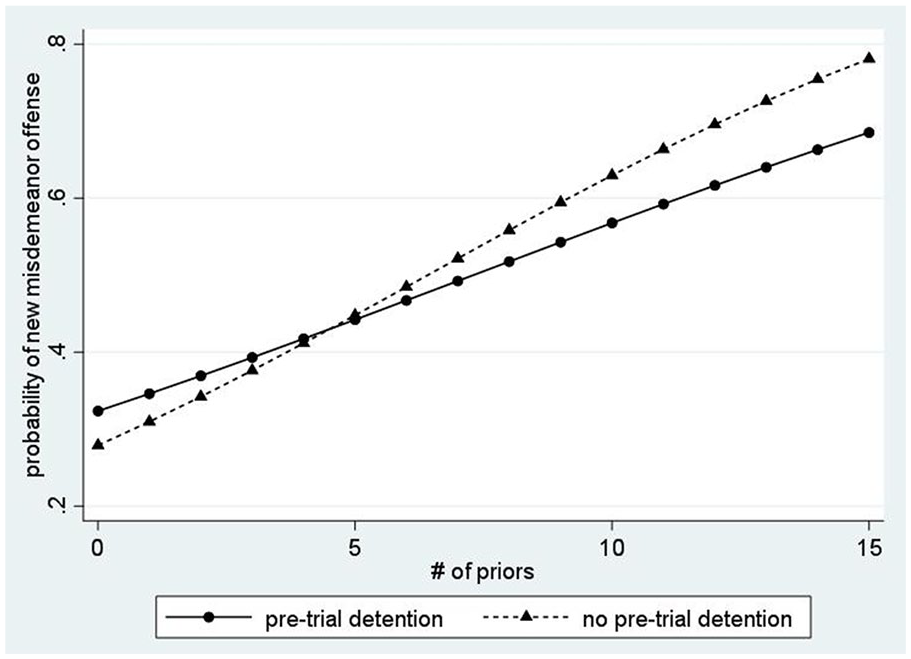
Interaction of prior criminal history and pretrial detention on 12-month misdemeanor recidivism.
Full sample
As a sensitivity check, we also ran the models with the nonmatched, full sample using regression adjustment, n = 44,971. We entered baseline covariates significantly related to recidivism and selected to reduce collinearity (prior cases, law severity, and age at offense) in Model 3 and removed these controls, retaining only interaction terms and including a propensity adjustment score in Model 4. The results were consistent with the matched sample results as displayed in Table 3.
Models for Misdemeanor Recidivism.
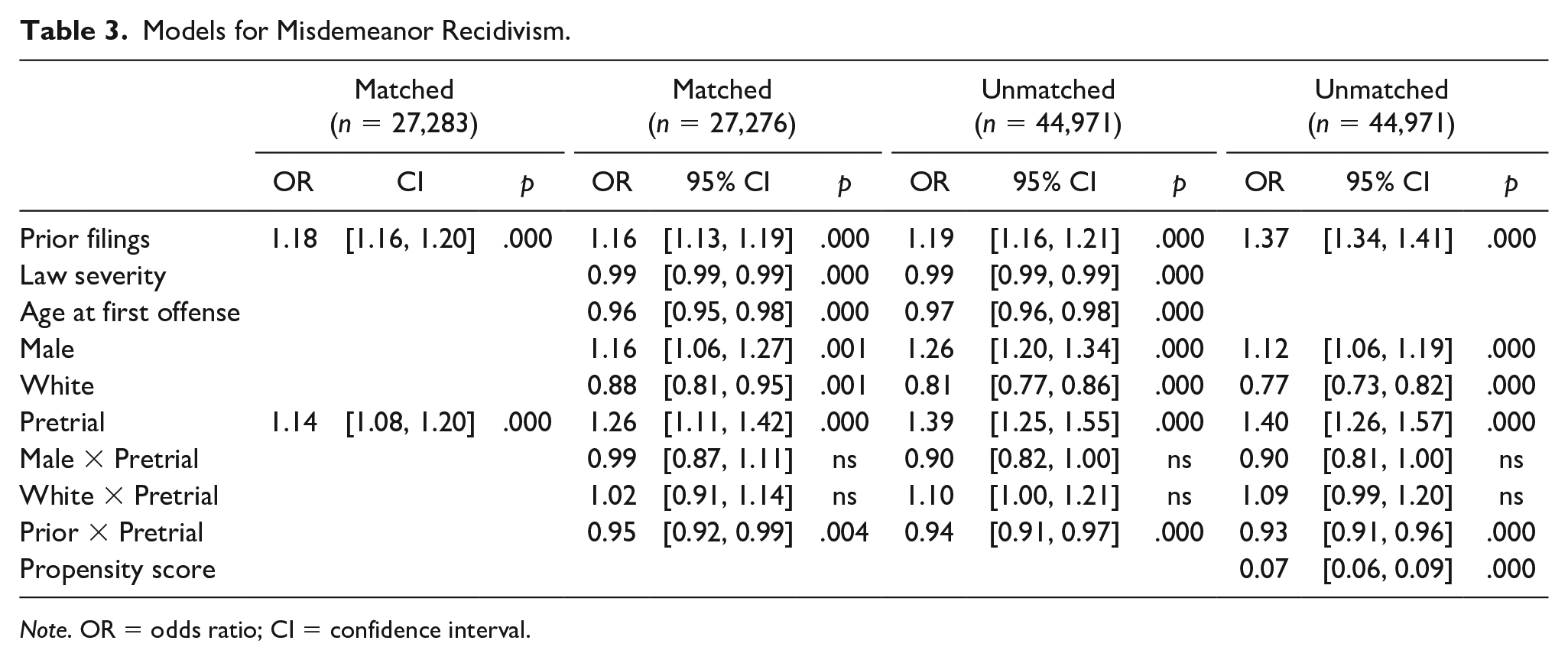
Note. OR = odds ratio; CI = confidence interval.
Sensitivity check using CEM results
Similarly, results from the matched sample using CEM show higher odds of a new felony (OR = 1.18) with pretrial detention exposure; this effect held when the original covariates (not coarsened) were, as recommended, added to the model to account for any remaining imbalance (OR = 1.18) (Blackwell et al., 2009). Effects also held with automated coarsening rather than predetermined binning of the covariates. The coarsened matching results also showed higher odds of pretrial detention on any new misdemeanor (OR = 1.26) and, again, these effects held when introducing noncoarsened covariates to account for remaining imbalance. This model replicated the interaction with prior filings indicating the effect of pretrial detention was present and had a positive effect for 0 and low levels of prior offenses but changed to where no pretrial detention increased the odds of recidivism at greater numbers of priors (4–6).
Length of stay
To assess whether the length of stay associated with pretrial detention affected youth recidivism, we used the matched sample, n = 27,276, and entered baseline covariates significantly related to recidivism (age at offense, prior cases, race/ethnicity, and gender) and the number of days the youth stayed in detention over the 12 months observation period post QO. The length of stay range in units of days ranged from 0.03 to 362.88 days, m = 8.14, mode = 2 days. The effect of days on felony recidivism was significant, OR = 1.01, p < .0001, indicating a positive but weak association between days in pretrial detention and increases in felony recidivism; and nonsignificant for misdemeanor offenses, OR = 1.0, p < .22. In all cases, effects observed for pretrial detention remained consistent with results above indicating pretrial detention effects were present net of total days in detention.
Discussion
Our study aimed to demonstrate the effect of pretrial detention on juvenile risk of felony and misdemeanor recidivism. Results showed that pretrial detention exposure was modestly predictive of felony and misdemeanor recidivism within 1 year. The effects were observed using a number of statistical models aimed at matching and accounting for being assigned to pretrial detention and the results appear to be robust after sensitivity checks. Significant interaction effects found that the effect of pretrial detention on recidivism was stronger for first time or limited repeat offenders (e.g., 1–4 priors).
Our results appear to partially support iatrogenic theories of detention. The observed interaction effects suggest criminogenic risks associated with pretrial detention is highest for first time offenders and decreases as youth with longer criminal history are detained. This aligns with the general concept of risk-need-responsivity (RNR) and contagion theories (Dishion & Tipsord, 2011; Gatti et al., 2009) which suggest that lower risk youth will learn deviant behaviors, experience disruption in important protective influences, or be exposed to traumatic experiences when placed in secure care even for a very limited duration. The effects are also consistent with Sherman (1993) suggesting defiance may play a role especially given the persistent interaction between pretrial detention and number of priors. A positive effect of pretrial detention on recidivism at no or low levels of priors could be a response to the illegitimacy of or unjust nature of the detention which is indicated by Sherman to lead to additional criminal activity.
Our study did not have data on specific features of detention environments or youth characteristics that would allow for empirical tests of these possible mechanisms nor do we have any attitudinal/cognitive assessments of the youth to understand their view of their detention process. During the study period, the detention centers all operated traditional security-focused milieus with law enforcement-oriented detention staff. Settings differed in the degree to which youth had access to libraries, therapeutic groups, quality day schools and individual counseling but were relatively consistent in having heavily monitored physical environments, frequent room time and compliance-oriented social climates. Our findings suggest that, on average, these types of environments pose risks for youth with few previous offenses and that this iatrogenic effect decreases as youth have repeated justice system contact. Although this is consistent with RNR theory, it does not clearly reconcile with the predictions of deterrence theory.
If deterrence effects were operating, we might expect to see a reduction in referrals following detention. Our study did not have population level rates of juvenile crime and we could not assess whether total rates of juvenile detention were related to total rates of juvenile crime. This was Levitt’s (1998) approach in his study of deterrence in which he found that juvenile arrests rates were negatively related to juvenile crime rates for jurisdictions forced to reduce detention use through consent decrees. However, observational studies using more direct measures of perceived sanctions and deterrence find only weak effects supporting deterrence (Pratt et al., 2006; Wikström & Shoham, 2008) and typically only when sanctions are consistent and assured (Loughran et al., 2012). The strength of deterrence effects also vary significantly within youth and can be modestly predicted by whether a youth has less or more previous offending history (Loughran et al., 2012). Our findings do not appear to be well explained by deterrence theory in that youth with few prior offenses benefited the least from sanctions.
Our findings are consistent with contagion and labeling theories for youth at lowest risk for reoffending, which suggest congregate settings will encourage more deviant or offending behavior. However, our additional finding that length of stay did not add any meaningful predictive value to the models suggests that contagion effects may not be due to the specific “deviancy” training with the institution in the sense of exposure or duration but, possibly, a strengthened sense of oneself as a “deviant” individual. We identified only a modest (1% increase in risk) effect on felony recidivism and no effect on misdemeanor recidivism attributable to length of stay, which is consistent with other well-controlled studies of placement dosage that also failed to find length of stay effects for typical secure placement settings (Loughran et al., 2009) or settings adopting therapeutic models (Walker & Bishop, 2016). For pretrial detention, we observed a mode of 2 days with some stays lasting nearly a year. However, incidences of extended stays were very infrequent, and it is possible that analyses with a narrower sample of youth and lengths of stay could uncover interactions we did not detect in our study.
Our study was limited to detention in settings considered to be traditional and our findings should not be extrapolated to other types of residential settings. Arguably our findings support the policies to both eliminate detention for low risk cases and to ensure higher intensity models are available for youth with more criminal justice involvement, although it is not clear that these need to be residential. Nonresidential methods of monitoring youth as an alternative to detention are cost beneficial (Chief Justice Earl Warren Institute on Law and Social Policy, 2012) and limit peer contagion risks (Leve & Chamberlain, 2005). Quality of care research in residential placement is sparse for youth services, generally, and particularly so for juvenile detention. The legitimate concerns over incarceration have dominated both policy and academic focus, and few evidence-based models for adolescent residential care are available. More empirical studies of brief and therapeutically oriented residential models and nonresidential options for pretrial detention are needed to move the field forward.
Limitations
Our study is limited to a 1-year observation window for recidivism and may underestimate longer term effects of pretrial detention on youth or adult outcomes. We also had to infer whether detention stays were pretrial stays and it is likely that a proportion of the cases designated by us as pretrial were a different type of detention stay or were mixed purpose. This is more likely to be true for youth with more extensive justice contact as they may be involved in multiple active cases at once.
Conclusion
Pretrial detention remains a common practice in the justice system even as long-term incarceration and detainment for post-adjudication matters trend downward. To date, only a few studies have examined the effect of local detention on individual level youth outcomes, specifically, and no studies have examined the individual effects of pretrial detention on youth recidivism. Our study took advantage of a large data set from youths sampled over a 13-year window and with multiple jurisdictions to estimate this risk. Our findings suggest pretrial detention weakly increases the odds of re-offense for youth with little or no previous criminal history but this effect further weakens and even has an inverse effect once criminal history increases beyond four or five prior criminal events. We view this finding as challenging deterrence theory and supporting iatrogenic theories of detention for youth with little prior criminal history. This finding supports the need for system interventions that might lessen the need for pretrial detention, especially for youth who have only been lightly involved in the justice system, while continuing to address the needs of youth with higher levels of criminal justice involvement.
Footnotes
Declaration of Conflicting Interests
The author(s) declared no potential conflicts of interest with respect to the research, authorship, and/or publication of this article.
Funding
The author(s) disclosed receipt of the following financial support for the research, authorship, and/or publication of this article: The first author received funding from the Annie E Casey Foundation, grant: 216.0054.
