



Abstract
Despite efforts to diversify the mental health provider workforce, significant gaps remain, particularly in the representation of Students of Color in graduate programs. This systematic review examines programs designed to prepare Students of Color to successfully navigate the admissions process for graduate training in professional psychology. A preferred reporting items for systematic reviews and meta-analyses (PRISMA) guided approach was used to screen 962 studies, leading to the identification of three key programs. These programs targeted barriers such as financial constraints, implicit bias, and limited access to culturally responsive support. Common strategies included mentorship, research opportunities, and graduate application guidance to enhance participants’ readiness for advanced education. Some programs showed improvements in application rates and participant confidence. However, methodological limitations and inconsistent evaluation frameworks reduce the generalizability of findings. This review highlights the need for evidence-based practices to foster diversity. Further research is essential to develop and evaluate interdisciplinary approaches to create a more equitable pathway in mental health professions.
The current literature review identified three undergraduate programs designed to prepare Students of Color to apply for and successfully navigate admission to graduate programs in professional psychology. Although inconsistent evaluation frameworks limit the generalizability of program outcomes, all programs included aspects of mentorship, research opportunities, and graduate application guidance. This review identifies current education, and career supports for Students of Color in psychology and provides a useful framework for professionals looking to develop similar programs.Significance of the Scholarship to the Public
Although the demographic distribution of professional psychologists is becoming more diverse, data from the American Psychological Association (APA) indicate that the workforce of professional psychologists is not representative of the demographics they serve. The proportion of White practitioners decreased from 86% in 2011 to just under 81% in 2020, which has corresponded with small increases in the proportion of practitioners who are People of Color (people from historically underrepresented ethic and racial groups; APA, 2022). The overrepresentation of White practitioners seems to be most apparent in the subfield of school psychology. School psychologists are overwhelmingly White (86%), female (87%), and solely English speaking (92%), serving communities that are increasingly racially and ethnically diverse, increasingly gender expansive, and who speak up to 100 different languages in urban school districts (Goforth et al., 2021). Little data is available on the demographics of counseling psychology professionals. A study published in 2018 (Lichtenberg et al., 2018), consisting of a survey administered in 2014 to counseling psychologists with APA membership, found that 86% of respondents identified as non-Latino White. Recent demographic data of counseling psychology graduate student enrollees provides a forecast of the early career workforce. According to the annual Graduate Study in Psychology Demographics Data Tool (Society of Counseling Psychology, n.d.), 49% of counseling psychology master’s and doctoral graduate students were White in 2019, and 54% in 2024. This data indicates that People of Color are underrepresented in counseling psychology relative to national racial and ethnic demographics in the United States.
The Centers for Disease Control and Prevention published a report on adults who received therapy (Terlizzi & Zablotsky, 2020). Based on data from the 2019 National Health Interview Survey, non-Hispanic White adults were most likely to have received counseling or therapy in the past 12 months (10.9%) compared with Hispanic adults (6.6%), and non-Hispanic Black adults (8.1%). Given the acknowledged barriers to help-seeking, including cultural bias against mental health concerns, undertreatment, inadequate cultural understanding (e.g., Taylor & Kuo, 2019), and historical mistrust of White service providers (e.g., Grant-Thompson & Atkinson, 1997), there has been a clear call for increasing diversity in the mental health workforce (Armstrong et al., 2022; Rogers & Molina, 2006).
The proportion of Students of Color enrolled in clinical and counseling psychology programs has increased in the past 2 decades. Norcross and Sayette (2022) reported an increase from 25% in 1995 to 33% in 2015 of Students of Color enrolled in APA-accredited counseling psychology programs; similarly, the enrollment of Students of Color in APA-accredited clinical psychology programs grew from 16% in 1993 to 23% in 2013 (Norcross & Sayette, 2022). These trends suggest that system and profession-wide efforts to increase diversity within professional ranks have resulted in moderate but steady progress. Counseling psychology has achieved notable gains in the recruitment and retention of Students of Color , possibly a product of its academic and philosophical orientation championing multicultural attunement and competence. However, counseling psychology, as with health service graduate psychology programs and the professional psychology workforce generally, has increased steadily in the proportion of female graduate enrollees and degree awardees; according to the APA Center for Workforce Studies, 80% of health service psychology doctorates were awarded to women in 2023 (up from 69% in 2004; Society of Counseling Psychology, n.d), and women comprised 72% of the professional psychology workforce in 2023 (up from 61% in 2011; APA, 2022). In sum, although a greater ratio of Students of Color are enrolling in graduate psychology programs, the ratio of male enrollees has decreased, which may indicate marginal-to-no progress in the enrollment of Men of Color, and consequently the professional psychology workforce after the acquisition of graduate psychology degrees.
Importance of a Diverse Psychology Workforce
Diversifying the professional psychology workforce is a key component of the strategic plans of both the APA (APA, n.d.) and the National Association of School Psychologists (Goforth et al., 2021). However, efforts to increase pathways for scholars from historically underrepresented groups are facing legal and political headwinds. First, the Supreme Court of the United States decisions in 2023 (Students for Fair Admissions Inc. v. President and Fellows of Harvard College, 2023; Students for Fair Admissions Inc. v. University of North Carolina, 2023) effectively ended the ability of institutions of higher education (public or private) from using race as a factor for admissions decisions. More recently, Donald Trump’s January 21, 2025 executive order (EO; Exec. Order No. 14173, 2025) “Ending Illegal Discrimination and Restoring Merit-based Opportunity” significantly broadens restrictions on efforts to increase diversity, expanding the impact beyond higher education admissions. At the time of this writing, litigation challenging this EO is pending. However, recently (March 14, 2025) the Fourth Court of Appeals upheld the EO, making it current law. In response to the EO, Appeals Court decision, and pressure from the Trump Administration, the APA voted to temporarily suspend its accreditation requirement that graduate programs demonstrate a commitment to diversity (see Barry, 2025). In the context of these rapid changes to the political and legal landscape pertaining to the diversification of professional psychology, it seems timely to examine efforts to prepare students from traditionally underrepresented groups for admissions to graduate programs in professional psychology. The need to diversify the mental and behavioral health workforce is critically important for several reasons. First, diverse perspectives are supportive of a workforce that is attuned to the diverse experiences of clients’ different cultural backgrounds (Galán et al., 2023). Second, traditionally underrepresented groups may face barriers to accessing mental and behavioral health services when practitioners do not reflect their cultural or linguistic backgrounds (Brown et al., 2010; Hankerson & Weissman, 2012; Kugelmass, 2016), as data suggest that People of Color prefer to have a cultural and/or racial match with their therapist (Cabral & Smith, 2011; Kim & Kang, 2018; Smith & Trimble, 2016). Third, a lack of diversity in those contributing to research in psychology can limit the field’s understanding of mental health issues among diverse populations and the development of culturally appropriate interventions (Henrich et al., 2010; Medin & Lee, 2012). Finally, the lack of diversity in the ranks of faculty and research scientists also hinders the recruitment and retention of Students of Color, as many Scholars of Color have a vested and personal interest in studying their own populations in search of healing and liberatory solutions (Goold et al., 2018; Rogers & Molina, 2006).
Following the advent of affirmative action in the 1980s and increased visibility of issues relating to People of Color in the 1990s, the APA began to investigate and publish in earnest on the topic of workforce diversity (see APA, 2015). These works prompted program development and evaluation in institutions across the United States (Joseph et al., 2022; Mitchell & Crosby, 2016; Yutrzenka et al., 1999). Although the proliferation of supportive programs for prospective Students of Color appears promising, nearly 30 years after APA’s Commission report, Visions and Transformation (APA, 1997) for field diversity, psychology still lags behind the general population in terms of racial and ethnic diversity.
Barriers to Graduate Education in Psychology for People of Color
The pathway from high school to a career in professional psychology is long, with many obstacles for People of Color along the way (Galán et al., 2023). Huff (2021) detailed several barriers faced by undergraduate Students of Color when considering graduate study in psychology. Many Students of Color are first-generation college students who may have difficulty navigating the prerequisites and process of applying to graduate programs (e.g., need for research experience, honing a research focus). Students of Color may not view professional psychology as a field with adequate cultural competence and may have had negative early experiences with psychologists or no experience with psychologists that look like them. Huff also noted financial challenges, including the accumulation of undergraduate student debt and the challenge of creating time to gain research experience when having to work to pay tuition. Notably, Huff cited research pointing to discrimination in the application process. For example, Milkman et al. (2015) conducted a study of over 6,500 professors across 89 disciplines from 259 universities in the United States. Professors were sent emails from prospective students who were interested in the professors’ research and interested in meeting with them. Emails were all the same except that race and gender were manipulated (signaled by the name of the fictitious prospective student). Milkman et al. found faculty to be significantly more responsive to White males than to any of the other categories of prospective students, and the bias was more pronounced in the higher paying disciplines and at private institutions.
Despite the long record of barriers to People of Color achieving upward mobility and seeking careers in mental health, many solutions have been explored in the literature (Fix et al., 2020; Mitchell & Crosby, 2016; Rogers & Molina, 2006). Unsurprisingly, examinations of effective strategies to recruit Students of Color to graduate psychology programs have largely focused on addressing the aforementioned barriers. Across counseling, clinical, and school psychology graduate programs, the extant literature underscores the efficacy of early exposure to the applied psychology disciplinary field and community connections to increase recruitment of Students of Color (Grapin et al., 2015; Hipolito-Delgado et al., 2017; Ju et al., 2020; Luedke, 2019). For example, McCallum (2015, 2016) found that although the negative family and social messaging surrounding the viability of doctoral studies deterred Black students from applying to doctoral-level programs, mentorship and exposure to professionals within the field renewed interest. Similarly, a study by Ju et al. (2020) highlighted partnerships with community agencies and institutions serving Students of Color as facilitating the recruitment of Students of Color. Thus, exposure to the field of applied psychology through professional mentorship opportunities and community partnerships presents as an effective strategy for increasing recruitment of diverse students.
Other recruitment strategies present in the literature include clear program commitment to diversity and responsiveness to student needs (Hsueh et al., 2021; Kim et al., 2024). When surveying current graduate students in school psychology, Aspiranti et al. (2024) found that program costs and diversity issues were rated as two of the three most important factors influencing students’ decisions to attend a particular program. Importantly, program commitment to diversity must be substantiated through material action (Hsueh et al., 2021). Research suggests that Students of Color prefer identify-affirming environments with funding availability for them, diverse faculty identities and research interests, and multicultural curricular components (Hipolito-Delgado et al., 2017; Malone & Ishmail, 2020).
Although the research cited above describes important factors influencing the recruitment of graduate Students of Color, to date, there has been no systematic review of specific programs preparing Students of Color to successfully apply to graduate programs in professional psychology and related fields. These programs seek not only to increase exposure to professional psychology careers and programs, but also to prepare students to be competitive applicants for graduate school. As such, a systematic review of said programs facilitates better understanding of the interaction between program admission expectations and prospective students’ needs in a graduate program. Thus, scholars looking to develop similar programs can gain insight into the effective integration of recruitment and training strategies.
Current Study
Our original, exploratory review of the literature concerning the diversification of mental health service providers revealed many inconsistencies in terminology and theoretical and conceptual frameworks, and a wide variety of methodological approaches. Our research team utilized a conceptual framework that divided diversification efforts into three stages of the pathway from secondary school to professional practice: (a) preparation for graduate training with a target audience of high school and undergraduate Students of Color (recruitment), (b) the retention and support of Students of Color in mental health graduate programs (retention), and c) the successful matriculation and success of early career mental health Professionals of Color (early career).
In this paper, we present the methods underlying this systematic literature review and the findings related to this first segment of the pathway. In other words, the current study focuses on this first stage of the pathway, recruitment. We conceptualize recruitment as efforts to increase the number of Students of Color who are successful in gaining admission to graduate programs in mental health professions. Although papers related to the preparation and recruitment of Students of Color to graduate programs in these fields were overwhelmingly conceptual in nature, several papers evaluating specific programs to support these students emerged. The aim of this comprehensive review is to present and describe these programs, synthesize findings on program efficacy, and identify core elements of successful programs. This study was guided by the following research questions: 1. What efforts have been described in the literature to support Students of Color in gaining admission to graduate programs in mental health? 2. What specific best practices, initiatives, or programs have been studied related to the preparation and recruitment of Students of Color to graduate programs in mental health? 3. What is the evidence base supporting the use of these programs?
Method
The current review followed guidelines from the preferred reporting items for systematic reviews and meta-analyses (PRISMA; Page et al., 2021). Institutional research ethics review was not sought because the current study is a systematic review of published studies and did not involve human research participants.
Our aim was to identify empirical studies of programs and practices concerned with recruiting Students of Color in mental health profession graduate programs during the prebaccalaureate stage of their education (i.e., prior to completing a bachelor’s degree). Therefore, studies were eligible for inclusion if they: (a) collected and reported data concerning the efficacy of the program, (b) investigated clearly defined recruitment and retention programs and practices, (c) focused on the recruitment or retention of Students of Color into master’s or doctoral programs in one or more of a broad range of mental health disciplines (e.g., school psychology, clinical psychology, social work, counselor education), (d) targeted students prior to their enrollment in graduate education, (e) were published during or after 1997, and (f) peer-reviewed and published in an academic journal (e.g., dissertations and theses excluded).
An initial search was conducted during the summer of 2022 to explore the application of keywords related to Students of Color in higher education, and recruitment and retention of Students of Color in clinical mental health graduate training. The timeframe of the literature review was selected based on the growing focus on the diversification of professional psychology training programs in the late 1990s (APA, 1997). A review of relevant articles and keywords produced four primary keyword categories implemented in the search strategy: (a) underrepresented minority, (b) graduate education, (c) recruitment and retention, (d) psychology and mental health. A search was conducted on January 10th of 2023 in ERIC, MEDLINE, APA PsycINFO, and the Psychology and Behavioral Sciences Collection using derivatives of the keyword categories and the Boolean classifiers “AND” and “OR.” Given the diversity of keywords and concepts prevalent in equity-focused research (Hosking et al., 2019; Prady et al., 2018), as well as the diversity of master’s and doctoral graduate programs that train mental health practitioners, an additional citation review was conducted to further identify relevant studies that were missed from the keyword search. Citation chaser (Haddaway et al., 2022), a web application that receives an article input and returns all articles that have cited the input article, was used for citation review. Twenty-one articles were selected for input into citation chaser based on their representativeness of the concepts relevant to the current study.
Systematic review screening and data extraction software (Covidence) was used for the screening and article review phase of this research (Babineau, 2014). Results from the keyword and citation searches produced 962 references (see Figure 1 for the PRISMA flow diagram for the search and article review process). Two faculty members and three doctoral students in counseling and school psychology contributed to screening, reviewing, and extracting data from the articles. Screening consisted of a brief review of the article title and abstract to determine relevance, the reviewing phase consisted of a full-text review of each article to further eliminate irrelevant articles, and the extraction phase consisted of extracting relevant data from the articles (e.g., study aim, sample size, study design). At each phase, each article was reviewed by at least two researchers, and disagreements were resolved by both reviewers in a discussion mediated by the two faculty members on the research team. PRISMA flow diagram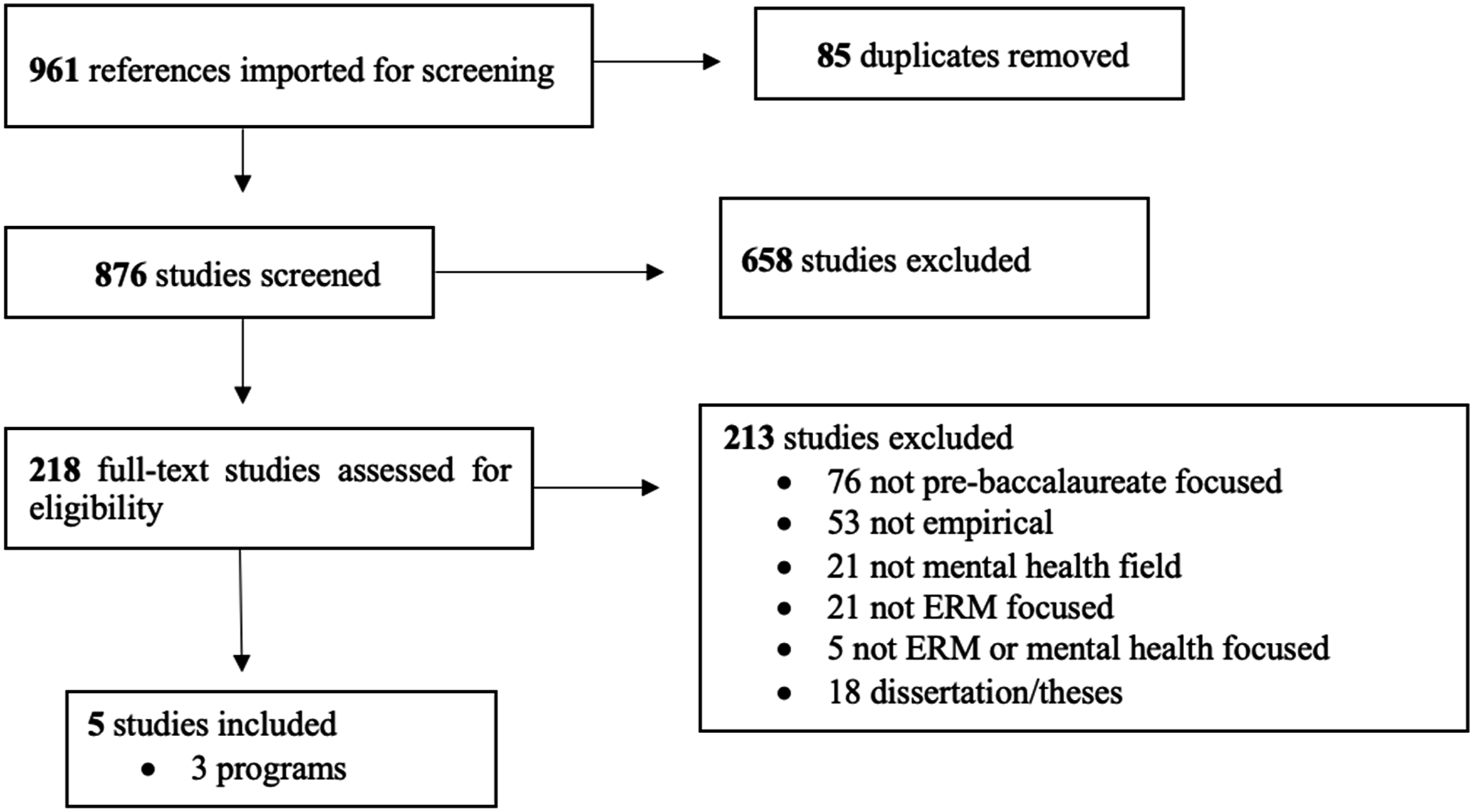
Risk of Bias Assessment
Risk of bias for each of the included articles was assessed using the Mixed Methods Appraisal Tool prepared by Hong et al. (2018). This tool allows users to appraise the methodological quality of various empirical study designs, including qualitative research, randomized controlled trials, nonrandomized studies, quantitative descriptive studies, and mixed methods studies. All studies are first assessed using the two screening questions, “Are there clear research questions?” and “Do the collected data allow one to address the research questions?” with answer options Yes, No, and Can’t tell. If the answer to both questions for a given study is Yes, then five additional questions with the same answer options are asked based on the study design. All studies in the current review met the risk of bias screening criteria. Two doctoral students in school psychology independently appraised each study and any disagreements were resolved in discussion with the two faculty members on the research team.
Results
Program Details
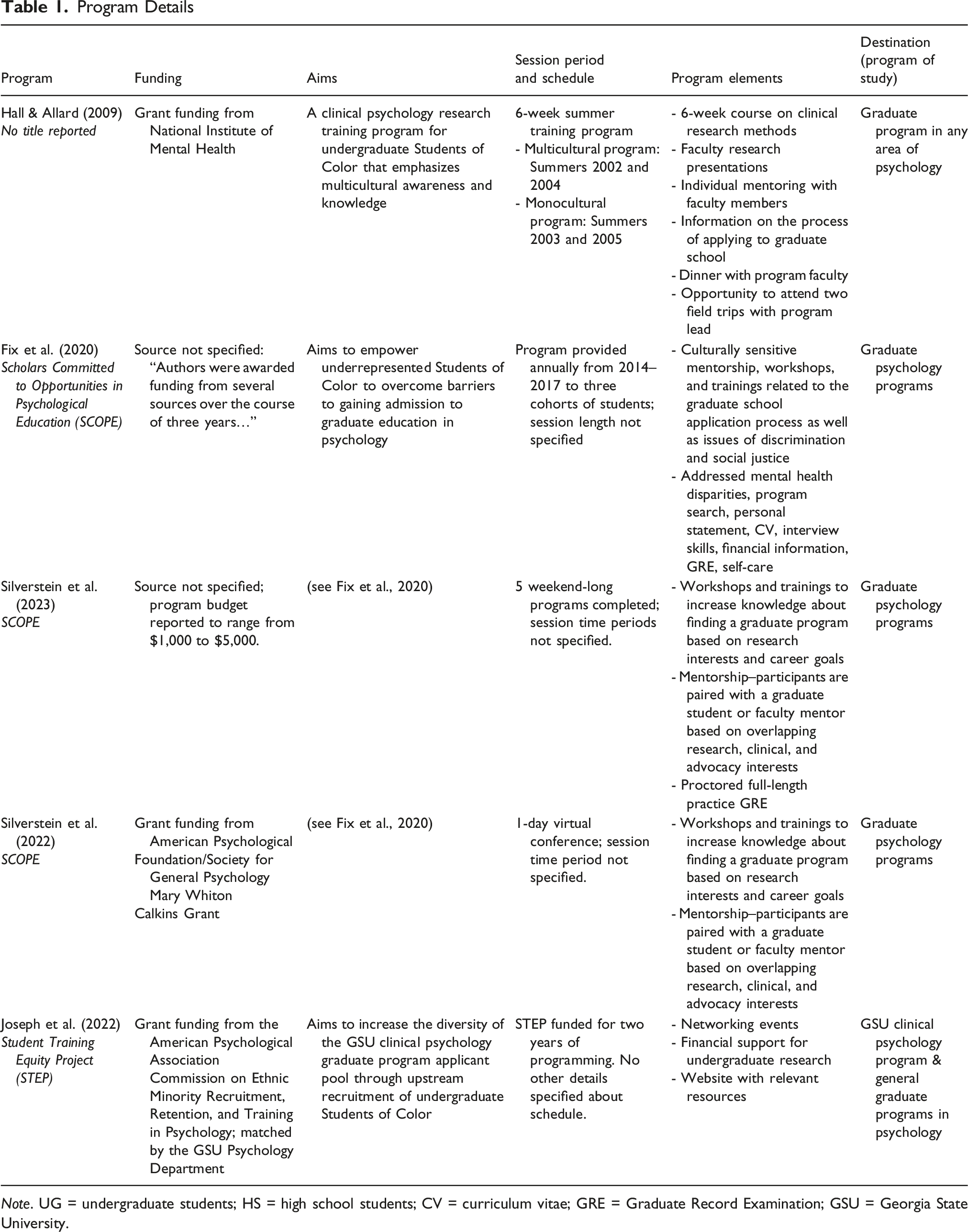
Note. UG = undergraduate students; HS = high school students; CV = curriculum vitae; GRE = Graduate Record Examination; GSU = Georgia State University.
Participants and Implementers
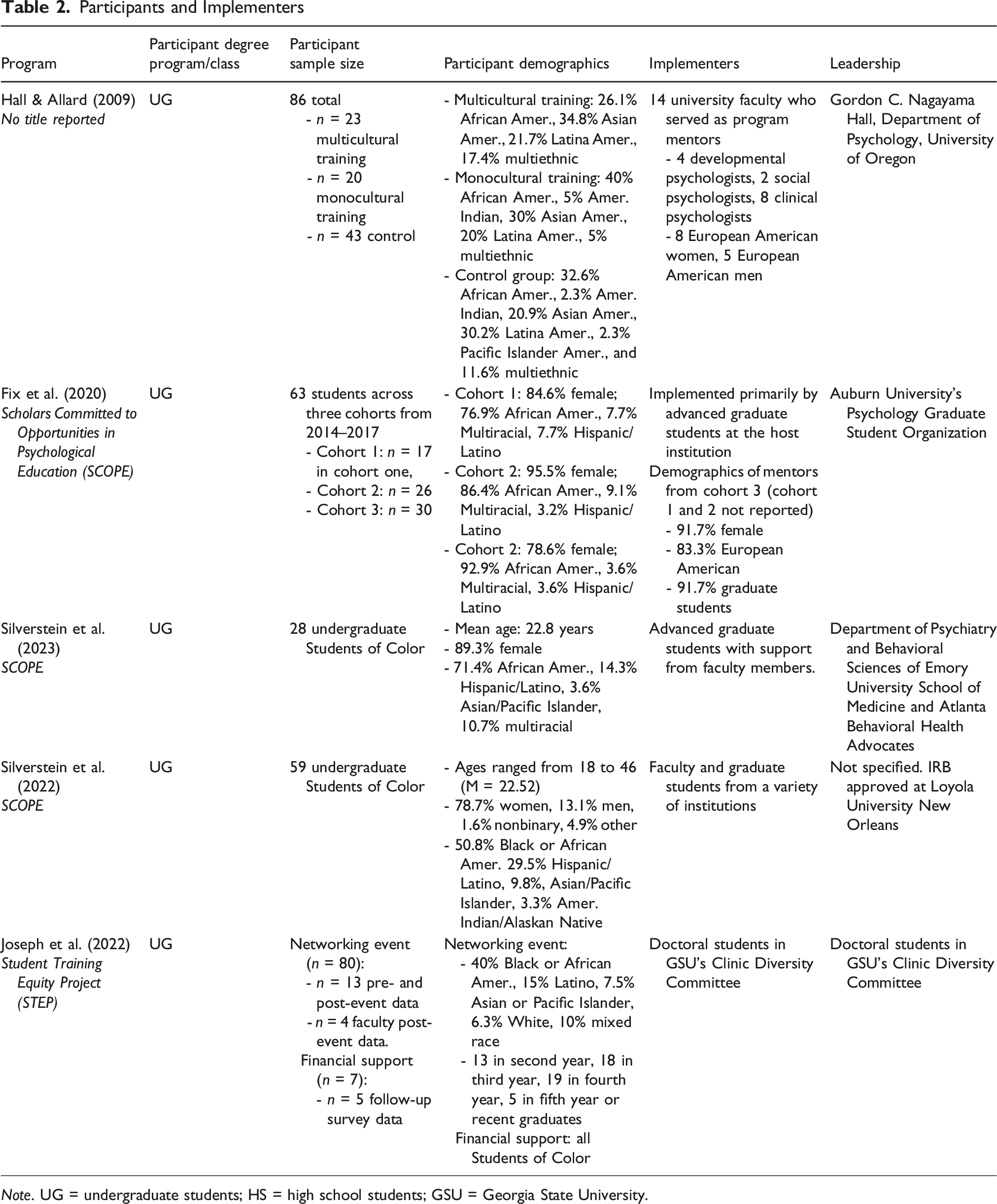
Note. UG = undergraduate students; HS = high school students; GSU = Georgia State University.
Review of Programs
Summer Clinical Psychology Research Training Program
Research Design
Evaluation of Clinical Psychology Research Training Program
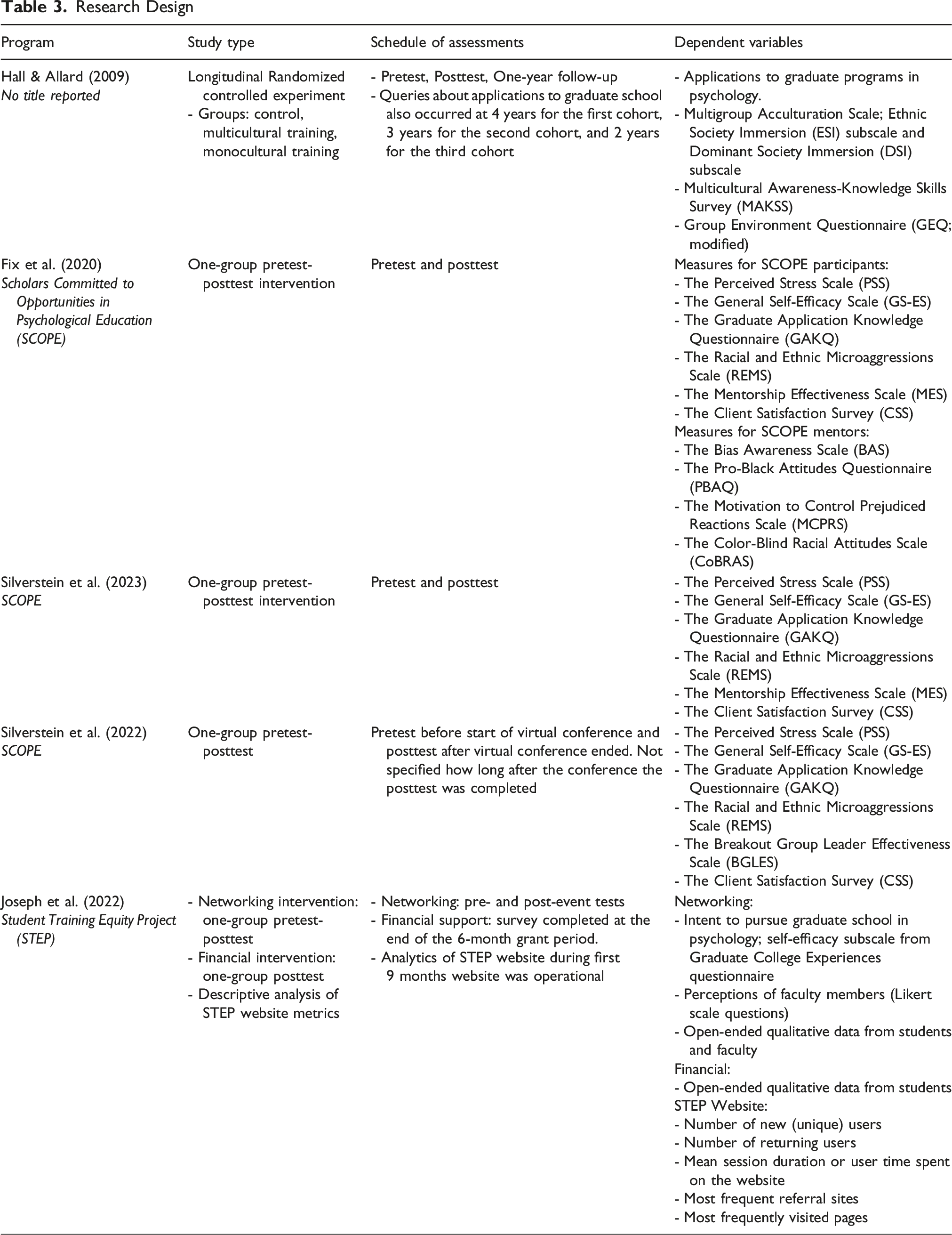
The program was delivered to three experimental groups: (a) a multicultural group, (b) a monocultural group, and (c) a control group. The program for the multicultural group arm “emphasized the cultural context of psychology in all areas of training,” whereas cultural context was omitted from the monocultural group training arm (Hall & Allard, 2009, p. 226). The interventions were administered as follows: (a) multicultural training groups during summers of 2002 and 2004 (n = 23); b) monocultural training groups during summers of 2003 and 2005 (n = 20); (c) control group that did not receive any training (n = 43). The Multigroup Acculturation Scale (Stephenson, 2000), the Multicultural Awareness-Knowledge-Skills Survey (D’Andrea et al., 1991), and the Group Environment Questionnaire (Carron et al., 1985) were delivered to each group at pre- and post-training and at a 1-year follow-up, with response rates ranging from 80%–96% across groups at posttest. Data about applications to graduate psychology programs were collected for 4 years after the first cohort completed the program in summer, 2002. Compensation was provided to each group at varying times for assessment completion.
In reporting the magnitude of effects below, we apply the appropriate criteria based on Cohen (1988), which is different for the two types of analyses reported by Hall and Allard. Results of χ2 analyses indicated that students in either intervention group were significantly more likely to apply to graduate psychology programs than those in the control group (w = 0.53, large effect); however, there was no statistically significant difference between the multicultural and monocultural groups in graduate school applications (w = 0.11, small effect). An analysis of covariance (ANCOVA) controlling for pretest scores on the Multicultural Awareness-Knowledge-Skills Survey found between group differences in self-perceived multicultural competence at posttest (η2 = 0.29, large effect) and 1-year follow-up (η2 = 0.08, medium effect). Significant differences were found in self-perceived multicultural competence between the intervention groups and the control group at posttest (p < 0.001) and 1-year follow-up (p < 0.05), but not between the multicultural group and the monocultural group. An ANCOVA controlling for pretest scores on the perceptions of Dominant Society Immersion subscale of the Multigroup Acculturation Scale found between group differences at posttest (η2 = 0.08, medium effect). Results indicated that the monocultural training group perceived themselves to be more immersed in the dominant society compared to the multicultural training group at posttest (p < 0.05).
Risk of bias for the current study was assessed using the methodological quality criteria for a quantitative randomized controlled trial (Hong et al., 2018). Randomization was determined to be appropriately performed, and groups were comparable at baseline. The study did not include complete outcome data, and no information was provided regarding blinding of outcome assessors or participant adherence to the assigned intervention.
Scholars Committed to Opportunities in Psychological Education
Scholars Committed to Opportunities in Psychological Education (SCOPE: Fix et al., 2020) is a multifaceted program designed to be administered to undergraduate students seeking admission to graduate programs in psychology. SCOPE was designed to address three principal barriers to Students of Color entering graduate study in psychology: (a) implicit bias in the admissions process, (b) poor mentorship, and (c) inadequate knowledge of the application process . The program is administered primarily by advanced graduate students over 1 week and consists of three components: (a) workshops and training sessions; (b) mentorship with an advanced graduate student or faculty with overlapping research, clinical or advocacy interests; and (c) practice on the Graduate Record Exam (GRE). Workshops and training target skills and knowledge necessary for the graduate application process and to address the aforementioned barriers to graduate school entry for Students of Color. Titles of workshops include; (a) Disparities in Mental Health and Education, (b) Program Search for Racial/Ethnic Minorities, (c) Personal Statement, (d) Curriculum Vitae, (e) Interview Skills, and (f) Financial Information and Fee Waivers. Each participant in SCOPE is paired with a graduate student or faculty mentor who has been trained by program staff. Assignment of mentors is based on overlapping interests, and mentors meet with participants to help them identify opportunities to advance their academic-, practical-, and vocational- experiences, to identify programs that are a good match, and to provide feedback on application materials including the curriculum vitae and personal statement. Finally, students are provided with study materials for the GRE and take a full-length practice test as part of the program.
Evaluation of the SCOPE Program
We identified a total of three studies examining the impact of the SCOPE program. In the sections below, we summarize findings from each study. Each study employed dependent samples t tests to examine outcomes. Below, we report the statistical significance (p < .05) and calculate effect sizes using the original means and standard deviations (see Dunlap et al., 1996). Categorization of effect sizes are based on Cohen’s (1988) criteria wherein effect size correlation of .10 is considered weak or small, a correlation of .30 is considered moderate and a correlation of .50 or higher is considered large. Positive effect sizes indicate that changes were in the expected direction.
Study 1
Fix et al. (2020) examined the impact of the SCOPE program on three cohorts of undergraduate students (n’s = 13, 22, and 28). The mentorship component was a recent program enhancement and was only available for the third cohort. Across cohorts, the majority of participants were female (79%–95%) and African American (77%–93%), followed by Multiracial American (4%–8%) and Hispanic/Latino (4%–8%). Mentors (cohort 3 only) were overwhelmingly comprised of graduate students (92%), with the remainder being faculty. The overwhelming majority of mentors were female and European American (91% and 83%, respectively).
Fix et al. employed a pretest–posttest design to explore the impacts of the program on GRE knowledge, application knowledge, application confidence, general self-efficacy, and perceived stress. Dependent-samples t tests yielded significant mean differences with moderate to large effect sizes (ES) in GRE knowledge (ES = .30–.50), moderate effect sizes for application knowledge (ES = .20–.39), and moderate effect sizes for application confidence (ES = .18–.44); all outcomes were assessed using the Graduate Application Knowledge Questionnaire, designed by Fix et al. Statistically significant mean differences and large effect sizes for perceived stress also were found across all three cohorts (ES = .47–.76). Statistically significant mean differences in self-efficacy only were found for Cohort 2 (ES = .01–.25).
Risk of bias for the SCOPE program report by Fix et al. (2020) was assessed using the methodological quality criteria for a quantitative nonrandomized study (Hong et al., 2018). Although all participants were undergraduate Students of Color, the representativeness of the sample could not be determined due to unclear inclusion criteria and unspecified sampling strategies. Measurement was determined to be appropriate regarding both the outcome and intervention; however, outcome data were incomplete. Finally, no information was provided regarding assessment of intervention fidelity or how confounders were accounted for.
Study 2
Silverstein et al. (2023) evaluated the impact of the SCOPE program administered to a sample of 28 undergraduate Students of Color that were recruited from multiple institutions of higher education. Most participants were female (89.3%) and African American (71.4%), followed by Hispanic/Latinx (14.3%), Asian/Pacific Islander (3.6%) and Multiracial (10.7%). No details were provided concerning the demographics of mentors, but the authors report that the program was administered primarily by graduate students at the host institution.
Like Fix et al. (2020), Silverstein et al. (2023) employed a pretest–posttest design to explore the impacts of the program on GRE knowledge, application knowledge, application confidence, general self-efficacy, and perceived stress. A dependent samples t test yielded significant mean differences and large effect sizes for GRE knowledge (ES = .60) and application knowledge (ES = .59), and a moderate effect size for application confidence (ES = .32), which were all assessed via the Graduate Application Knowledge Questionnaire designed by Fix et al. (2020). Statistically significant results were also found for general self-efficacy, as assessed by the General Self-Efficacy Scale (Schwarzer et al., 1995), and perceived stress, as assessed by the Perceived Stress Scale (Cohen & Williamson, 1998), with small and large effect sizes respectively (ES = .25, & .62). The authors reported high levels of satisfaction with the program, with the mean item score on a modified version of the Client Satisfaction Survey (McMurtry & Hudson, 2000) being 6.38 out of a possible 7. Finally, two of the 28 student participants reported microaggressions during the program on the Racial and Ethnic Microaggressions Scale (Nadal, 2011)—each student reporting one instance.
Risk of bias for the SCOPE program was assessed using the methodological quality criteria for a quantitative nonrandomized study (Hong et al., 2018). Although all participants were undergraduate Students of Color, the representativeness of the sample could not be determined due to unclear inclusion criteria and unspecified sampling strategies. Measurement was determined to be appropriate regarding both the outcome and intervention; however, confounders were not accounted for in study design and analysis. No information was provided regarding assessment of intervention fidelity or the completeness of outcome data.
Study 3
Silverstein et al. (2022) conducted an evaluation of an online administration of the SCOPE program in a sample of 59 undergraduate Students of Color recruited from multiple institutions of higher education in the Southeastern United States. Participants in this study ranged from college freshmen to seniors. The majority of participants identified as women (78.7%), with 1.6% identifying as nonbinary and 4.9% as other. The majority (50.8%) identified as Black or African American, with 29.5% identifying as Hispanic/Latinx, 9.8% as Asian/Pacific Islander, and 3.3% identifying as American Indian/Alaskan Native. It appears that 7.6% of participants did not report race/ethnicity. The SCOPE program was administered by trained graduate students and faculty as a web-conference over 1 day.
Consistent with the above evaluations of the SCOPE program, the investigators employed a pretest–posttest within-subjects design and used Wilcoxon signed-rank tests to test statistical significance. These analyses yielded significant mean differences and small to large effect sizes for GRE knowledge (ES = .61), application knowledge (ES = .26), and application confidence (ES = .50), which were all assessed via the Graduate Application Knowledge Questionnaire designed by Fix et al. (2020). Statistically significant results and small to large effect sizes also were found for general self-efficacy, as assessed by the General Self-Efficacy Scale (ES = .18; Schwarzer et al., 1995), and perceived stress as assessed by the Perceived Stress Scale (Cohen & Williamson, 1998; ES = .70). Student satisfaction for the program was high, as indicated by a high mean score of 147.56 (out of a possible 160) on a modified version of the Client Satisfaction Survey (McMurtry & Hudson, 2000). The effectiveness of breakout group leaders was rated high by students, with a mean score of 68.68 (out of a possible 72) on a modified version of the Mentorship Effectiveness Scale (Berk et al., 2005). Finally, no microaggressions were reported by student participants.
Risk of bias for the SCOPE program report by Silverstein et al. (2022) was assessed using the methodological quality criteria for a quantitative nonrandomized study (Hong et al., 2018). Although all participants were undergraduate Students of Color, the representativeness of the sample could not be determined due to unclear inclusion criteria and unspecified sampling strategies. Measurement was determined to be appropriate regarding both the outcome and intervention; however, outcome data were incomplete, and confounders were not accounted for in study design and analysis. Finally, no information was provided regarding intervention fidelity.
Student Training Equity Project
The Student Training Equity Project (STEP; Joseph et al., 2022) was developed at Georgia State University (GSU), an institution where students from racially and ethnically minoritized backgrounds constitute the majority in urban Atlanta (Joseph et al., 2022). The program’s aim was to increase the diversity of the applicant pool, specifically for the GSU clinical psychology program, but also for graduate psychology programs generally, through recruitment and graduate school preparation interventions. The program was targeted for Students of Color at GSU at all undergraduate grade levels. STEP was developed by doctoral students in the clinical psychology program at GSU and who served on the GSU Clinic Diversity Committee for GSU undergraduate Students of Color.
STEP was comprised of three main components: (a) networking events, (b) financial support for undergraduate research, and (c) a website with relevant resources (doctoral program, information about networking events, financial support for undergraduate research, and a database of resources). The networking events were advertised and designed for undergraduate Students of Color but were open to all students and consisted of general networking with graduate students and faculty in GSU’s clinical psychology program. Undergraduate students were able to discuss with graduate students their experiences in graduate school, and network with faculty about research opportunities and mentoring. The second component of STEP, financial support, granted seven undergraduate students a $500 stipend to pursue research objectives and offset costs for applying to graduate school. Awarded students identified as Students of Color, intended on applying to graduate psychology programs, and had an established research and faculty mentor in a psychology lab. Finally, the third element of STEP was a website containing information about STEP and a database of resources for undergraduate students. The researchers developed the website to support and guide Students of Color intending on applying to graduate psychology programs.
Evaluation of the STEP
STEP was evaluated with dependent samples t tests. Surveys were administered to undergraduate students before and after each networking event, and they were comprised of Likert-type questions, including the Self-Efficacy For Professional Success Measure from the Graduate College Experience questionnaire (Hardré & Hackett, 2015) and open-ended questions. Sixty-three undergraduate students completed either the pre- or posttest at the networking event (32 Black or African American, 12 Latinx, 6 Asian or Pacific Islander, 5 White, 8 mixed-race; 8 first-year, 13 second-year, 18 third-year, 19 fourth-year, and 5 were either in thier 5th year or had already earned their bachelor's degree). Thirteen undergraduate students completed both the pre- and post-event surveys from the networking events, although the demographics of the pretest and posttest completers were not reported. Results of paired sample t tests comparing pre- and post-program data showed no statistically significant difference in intent to pursue a graduate degree in psychology from pretest to posttest (ES = 0.11, small effect), nor in self-efficacy (ES = 0.13, small effect). The STEP website was visited 1,590 times in the first 9 months of its operation, and for an average of 1 minute and 39 seconds.
Risk of bias for the STEP program report was assessed using the methodological quality criteria for a mixed methods study (Hong et al., 2018). The study authors did not provide adequate rationale for conducting a mixed methods study. Nonetheless, the different components of the study were effectively integrated to answer the research questions, and the outputs of the integration were adequately interpreted. Divergences and inconsistencies between quantitative and qualitative results were not adequately addressed, and the different components of the study did not adhere to the quality criteria of each method’s tradition.
Summary and Discussion
Our aims for this study were to identify programs that were designed to support Students of Color in gaining admission to graduate programs training mental health practitioners, to examine what specific practices were employed by these programs, and to summarize the empirical evidence available to support their use. The three programs identified in our review (Hall and Allard’s summer training program, SCOPE, and STEP) differed in several ways including delivery format of the program (e.g., summer training program, online training), program length (1 day, 1 week, several months), and key program components.
Although our literature review included a broad focus on masters- and doctoral-programs across a broad range of disciplines related to mental health (e.g., marriage and family counseling, clinical social work), all the programs we identified were focused on graduate programs in psychology. Given that the lack of knowledge of career options in mental health fields has been identified as a barrier to pursuing graduate studies (e.g., Garcia & Stephens, 2019; Grapin et al., 2015), and since professional misalignment has been identified as a common reason for program noncompletion for Students of Color (see Proctor & Truscott, 2012), a broader interdisciplinary focus may be warranted. Nevertheless, we hope our review of this literature will be a resource to those who wish to develop programs for aspiring students drawn to related disciplines.
Program Components
Programs designed to support Students of Color in gaining admission to graduate programs in mental health should incorporate key components to address systemic barriers to program entry for Students of Color (e.g., Galán et al., 2023; Huff, 2021). Our review identified three primary elements commonly employed across such programs: (a) mentorship, (b) research or clinical experiences, and (c) guidance on graduate school applications. Mentorship plays a foundational role by offering academic guidance and culturally sensitive support, fostering meaningful relationships that address the unique challenges faced by Students of Color (Fix et al., 2020; Pierszalowski et al., 2021). Research and clinical experiences further enhance participants’ skills and interest in graduate education, although these experiences must account for the stigma and isolation that underrepresented students encounter (Hurtado et al., 2008). Lastly, guidance on graduate school applications has been found to help first-generation students navigate higher education, addressing knowledge gaps and building cultural capital through workshops and tailored resources (Richards, 2020).
A core component of the majority of the reviewed programs was faculty or graduate student mentorship. Indeed, all programs indicated that direct contact between participants and implementers was present in some form. Many of the programs included longitudinal, one-to-one mentorship of participants (range: 1-day to 3-years), except for programs designed to be completed in a single session, which did not endorse mentoring relationships lasting beyond the single-day program event (Joseph et al., 2022; Silverstein et al., 2022). The extant literature highlights mentorship as a source of academic guidance and moral support for students that facilitates pathways through higher education (Brooms & Davis, 2017; McCoy et al., 2015). Mentorship is a particularly salient point of intervention for Students of Color, who tend to receive less impactful mentoring than their peers in typical undergraduate settings, particularly when receiving mentorship from racial-majority advisors and supervisors (Luedke, 2017, 2019; Luedke et al., 2023; McCoy et al., 2015). The endorsement of experiencing microaggressions in Silverstein et al.’s (2022) SCOPE program underscores the importance of incorporating culturally-sensitive mentorship into similar programs to facilitate the formation of holistic and authentic relationships (Leudke, 2017). Furthermore, programs should incorporate measures of mentor bias like those used in Fix et al.’s (2020) SCOPE program to assess and minimize cultural misalignment between mentors and mentees.
A second component present across many programs was research or clinical experience. The format of these experiences varied across programs, from courses on research methods (Hall & Allard, 2009) to paid undergraduate research experiences (Joseph et al., 2022). Research experiences have been shown to increase interest in and access to graduate education (McCoy et al., 2015; Pierszalowski et al., 2021). Nonetheless, experiences of stigma and racial isolation faced by Students of Color may decrease social self-concept and peer connection, which in turn decreases likelihood of research participation (Hurtado et al., 2008; Wayment & Dickson, 2008). As such, programs intending to increase access to graduate education for Students of Color will benefit from incorporating research and clinical experiences these students may otherwise be unable to access.
A final shared component across programs was instruction on graduate program applications and related materials. Although all programs included some guidance on graduate program applications, this guidance varied in form. For example, Hall and Allard’s summer program and the SCOPE program included workshops on searching for a graduate program based on research and career interests (Fix et al., 2020; Hall & Allard, 2009), and the STEP program included a website with resources related to graduate school (Joseph et al., 2022). Undergraduates of Color are more likely to be first-generation students and thus enter college with less knowledge on navigating the landscape of higher education (Schuyler et al., 2021). Programs like those reviewed in the current study can increase the cultural capital of participants, and the skills and knowledge necessary to succeed in the field (Luedke, 2017), through instruction on application and test-taking strategies that continuing-generation students may otherwise obtain from parental guidance and knowledge related to college (Dumais & Ward, 2010; Richards, 2020).
Evidence to Support Reviewed Programs
Each of the reviewed studies reported some statistical support for program efficacy. However, Hall & Allard’s (2009) study was the only one that utilized a control group, albeit in a sequential design. Both SCOPE (Fix et al., 2020) and STEP (Joseph et al., 2022) were evaluated via pretest-posttest designs.
Hall and Allard found that students in the intervention groups were more likely to apply to graduate programs than students in the control group, with this finding being statistically significant and having a large effect size. They also found a large effect for multicultural competence between intervention and control groups at posttest and 1-year follow-up. We reviewed three studies evaluating the SCOPE program. These studies found consistent support for GRE knowledge, application confidence, perceived self-efficacy and perceived stress, and participant satisfaction with the program was consistently high across the three studies.
Results from the STEP program (Joseph et al., 2022), which focused largely on paid research opportunities, did document engagement in research activities and the website containing resources for advanced study in psychology. However, results did not indicate statistically significant differences in outcomes such as increased applications to graduate programs. Although the question has not been empirically studied, in the context of this literature review, these findings suggest the importance of mentorship and training purposefully guided toward the graduate application process and career development.
Summary of Risk of Bias Assessment
The included studies varied in terms of their methodological rigor and overall risk of bias. For the five quality criteria questions asked of each study, all studies had a response of Can’t tell for at least two of the questions. As such, the program write-ups prevent adequate assessment of bias, and future articles of similar scopes may benefit from more detailed reporting of participant characteristics, confounding variables, and intervention fidelity. Of note, a methodological limitation of four of the six studies was a lack of description of participant representativeness of the target population. Specifically, information was not provided regarding inclusion and exclusion criteria, sampling strategies, and reasons for nonparticipation. Because experiences of stigma and racial isolation may dissuade Students of Color from participating in research (Hurtado et al., 2008; Wayment & Dickson, 2008), understanding student reasons for nonparticipation is particularly relevant when attempting to increase access to these types of programs for the target population.
Implications for Training
The present literature review introduces readers to three programs intended to enhance the training and recruitment of Students of Color to graduate programs in professional psychology. Although the programs varied greatly in their schedule and components, they contained elements of mentorship, research and clinical training, and instruction on graduate application and related materials. Although variation in study methodologies prevents direct comparison of strategies for incorporating these elements, some general recommendations can be gleaned for scholars looking to implement similar programs.
First, programs must ensure that mentorship is culturally sensitive to prevent participants from experiencing microaggressions that may dissuade them from entering the field. The finding that two participants in Silverstein et al.’s (2022) SCOPE program reported experiencing microaggressions through mentorship underscores the need for mentor training in cultural sensitivity prior to program initiation. Additionally, programs should incorporate venues for participants to report said incidents. For researchers examining program efficacy, measures of mentor bias and participant reports of mentor efficacy should be examined as potential confounders.
Regarding the educational components of these training programs, the study results suggest that participants benefit most from learning that is directly related to the graduate application process. For example, Hall and Allard (2009) found that program participants in a training group receiving instruction in multicultural competence in addition to research skills and graduate application information were no more likely to apply to graduate school than participants only receiving the research skills and application information components of training. Similarly, the STEP program developed by Joseph et al. (2022) found that attendance of general networking events did not increase student intent to apply to graduate school or perceived self-efficacy. These findings suggest that programs intended solely to increase application of Students of Color to graduate programs will most benefit from concrete skills training regarding research skills and graduate applications components. Research is needed to determine whether program components such as training in multicultural competence and networking, although unrelated to later graduate school applications, promote better understanding of the field and career options.
Counseling Psychology as a Pathway to Increased Diversity
Notably, each of the programs reviewed sought to prepare Students of Color for applications and enrollment in clinical psychology graduate programs, albeit the studies’ outcomes concerned enrollment into any graduate psychology program. Counseling psychology, however, has obtained the strongest gains in the enrollment of Students of Color, and retains the highest proportion of graduate Students of Color among health service psychology disciplines (Norcross & Sayette, 2022). Therefore, the counseling psychology specialty itself may be more informative for understanding recruitment and retention in professional psychology than some of the promotive factors identified in the programs reviewed (i.e., mentorship, graduate and research skills training). Norcross et al. (2021) discuss several key factors distinguishing counseling psychology from clinical psychology including: counseling psychologists are more likely to endorse humanistic or person-centered theoretical orientations; and counseling psychologists are more likely to report research involvement in multicultural topics.
Based on our understanding of the current professional psychology graduate student demographics, and the factors highlighted in Norcross et al. (2021), counseling psychology may be more attractive for prospective students who wish to investigate and address the societal issues that affect marginalized and disenfranchised communities. Counseling psychologists aim to understand psychological pain and suffering in the context of the socioeconomic, environmental, and cultural factors that influence individuals’ well-being (Society of Counseling Psychology, n.d). Although not ignoring the intrapersonal factors that contribute to clinical impairment, counseling psychology emphasizes the totality of the human experience—particularly ecological factors—which differs from individualistic orientations to clinical impairment or mental illness in health service psychology. Given the social and economic burdens that People of Color endure in society, the counseling psychology specialty may provide Students of Color with the philosophical and practical skillset for engaging with Communities of Color in their professional work (e.g., counseling psychologists more likely to endorse humanistic and multicultural orientations).
The counseling psychology pathway for Students of Color may indeed be more a matter of training structure. Norcross et al. (2021) found that counseling psychology doctoral programs are also more likely to require a master’s degree as a prerequisite for enrollment. In terms of numbers alone, fewer students are likely to meet the requirement for enrollment in any graduate psychology doctoral program when a master’s degree is required, and therefore the applicant pool for counseling psychology programs may be less competitive as it concerns the total number of competing applicants. Note that counseling psychology is still very competitive in terms of acceptance rate (8%), which is similar to the acceptance rate in clinical psychology (6%; Norcross & Sayette, 2022). Furthermore, given that Students of Color are more likely to experience socioeconomic disadvantages during undergraduate education, and therefore underperform compared to their ethnic majority counterparts (Al-Tameemi et al., 2023), the master’s first structure may offer Students of Color additional and essential training to be successful for doctoral education.
The programs reviewed in this study provided insight into the factors that promote the recruitment of Students of Color into graduate psychology programs. However, we discovered little in our review of the recruitment programs, and in our broader literature search for recruitment and retention programs, discussing how gains in counseling psychology can be applied more broadly across applied psychology disciplines. This appears to be a gap in our understanding of the recruitment and retention pathway for Students of Color given that counseling psychology enrolls a greater ratio of Students of Color compared to other health service psychology professions. Future programs deploying recruitment and retention initiatives may benefit from investigating the success of efforts across all health service psychology subspecialties, with particular focus on counseling psychology. Furthermore, counseling psychology and health service psychology in general have enrolled and graduated a decreasing proportion of men in the past 30 years, and consequently the professional psychology workforce was just 28% men in 2023, down from 39% in 2011 (APA, 2022). We celebrate the strides that counseling psychology has made in diversifying its ranks; however, these trends suggest counseling psychology and the professional psychology workforce broadly has made little to no progress in recruiting Men of Color. Therefore, in addition to qualities of the counseling psychology subspecialty, we advocate that future programs investigate recruitment and retention as it concerns gender in addition to race and ethnicity.
Navigating Current Legal and Political Barriers
Both the Supreme Court decisions of 2023 and the more recent (January 2025) executive order have created significant obstacles for those seeking to support Students of Color in the pursuit of graduate study in professional psychology. Moreover, funding for the McNair Scholars Program, which provides funding for doctoral study, has been dramatically scaled back in the 2025 budget of U.S. Department of Education, therefore several institutions have discontinued their McNair Programs because of federal funding cuts. Despite these challenges, the work to support Students of Color must continue.
In Summer of 2024 we piloted an 8-week summer program that was informed by our review of the literature. In developing our admissions survey and program website we worked closely with our university’s Office of General Counsel to ensure that our materials and practices followed the recent 2023 Supreme Court decisions pertaining to race-conscious admissions decisions. We suggest consulting with your own Office of General Counsel early in the process of program development. Including consideration of race in program admission is no longer permissible, as it would be to advertise a program as one focused on particular racial groups, sexual identity, immigration status, disability status, or primary language. Even asking about these demographics in admissions materials creates legal risk for the institution. Beyond such legal exposure, there is the issue of how cautious many institutions of higher education are becoming in light of the increasing pressure placed on them by the Trump Administration’s plan to end diversity, equity, and inclusion programs (see Binkley, 2024). In the past year, Auburn University chose not to fund the SCOPE and removed the program’s information webpage from their university website. The program still ran in the Spring of 2025 at Loyola University, New Orleans, but the loss of funding had a negative impact on staffing. The SCOPE website is now hosted by Loyola University (M. W. Silverstein, personal communication, June 18, 2025). Although the current legal and political landscape has presented new challenges to those seeking to implement programs to support Students of Color in their application to graduate school, there are some strategies that can be employed to mediate them. Coleman et al. (2019) offered several useful guidelines that can be applied to the recruitment of a diverse group of students for mentorship programs. First, recruitment materials (e.g., websites and brochures) can be used to signal a program’s mission to equity and inclusion. This can be achieved through visuals, stories, and an expression of values. Also, recruiting a diverse group of graduate students and faculty to serve as mentors is helpful in conveying inclusive messaging. Second, recruitment targets should be based on place, school, and population. Targeting recruitment on places where there are greater barriers to access, are race neutral, and are likely to increase rates of application from Student of Color. Third, building partnerships with institutions serving high proportions of Students of Color can help build a sustainable flow of applications. Useful strategies could include outreach to faculty to help identify interested students or presenting a program overview to a class or student interest group. Fourth, contextual indicators can be used in a holistic admissions process. That is, race-neutral indicators can be included in applications, such as first-generation college student status, socioeconomic status or income, and life experiences.
To address barriers to funding, those seeking to run programs supporting Students of Color should seek to diversify the sources of funding beyond university and federal funding to include private and foundation funding. Our pilot program was funded by a foundation and was part of a broader initiative involving several universities across our region.
It is important to consider how the current legal and political climate around diversity, equity, and inclusion is likely to impact students. Our review of the literature has highlighted the central role of mentorship in supporting Students of Color. We argue that it has never been more important to ensure that programs designed to support Students of Color provide a nurturing and supportive intellectual environment is provided. As such, this should be a central focus on the recruitment, training, and evaluation of mentors. It is important to consider the impacts of the current legal and political climate on mentors that are People of Color, who may be asked to participate in these programs. Such impacts could affect their interest in or energy to bring students into settings that could be viewed as increasingly hostile. Program developers and directors must consider how they will support potential mentors to ensure that their work is being compensated. Ongoing input from these mentors is essential in making their participation valuable to them.
Conclusions
Although the current literature review identifies relevant programs and program features that support underrepresented students early in their pursuit of graduate education, this review is limited in that it only includes programs engaging students prior to graduate training. Unaddressed in this review are programs designed to support the retention of Students of Color in mental health graduate programs and the successful matriculation and success of early career mental health professionals who are People of Color. As about one half of students who enter all doctoral programs in the United States do not persist to degree completion (Lovitts, 2001), future work should be dedicated to understanding components of graduate programs that may differentially affect program retention for Students of Color in comparison to racial-majority students. It should be noted that the current study and each of the programs reviewed, to our knowledge, do not tie or relate program outcomes to the overarching goal of diversifying the professional psychology and mental health workforce, i.e., licensed practitioners delivering services in a professional capacity. Although individual programs deploying and investigating recruitment strategies to enroll Students of Color are valuable, comprehensive, longitudinal evaluations incorporating multilevel strategies and spearheaded by the APA or other national organizations may be the most useful and (possibly the only) effective method for understanding and rectifying the pathway problem. Nonetheless, the current review remains an important step in identifying the educational and career supports that exist for Students of Color pursuing a career in the field of mental health. It is our hope that this review will provide a useful framework for other professionals looking to adapt and implement similar programs.
Footnotes

Funding
The authors disclosed receipt of the following financial support for the research, authorship, and/or publication of this article: This work was support by Accelerate the Future Foundation; NA.